
Articles | Volume 20, issue 7
https://doi.org/10.5194/tc-20-4117-2026
© Author(s) 2026. This work is distributed under
the Creative Commons Attribution 4.0 License.
the Creative Commons Attribution 4.0 License.
https://doi.org/10.5194/tc-20-4117-2026
© Author(s) 2026. This work is distributed under
the Creative Commons Attribution 4.0 License.
the Creative Commons Attribution 4.0 License.
Research article
| 
27 Jul 2026
Research article |
| 27 Jul 2026
| 27 Jul 2026
Evolution of Maud Rise Polynya during the last 250 years – a multiproxy ice core reconstruction from coastal Dronning Maud Land, Antarctica

National Centre for Polar and Ocean Research (NCPOR), Ministry of Earth Sciences, Vasco da Gama, Goa 403804, India
Physics of Ice, Climate and Earth, Niels Bohr Institute, University of Copenhagen, Copenhagen N 2200, Denmark
Chavarukonam M. Laluraj
National Centre for Polar and Ocean Research (NCPOR), Ministry of Earth Sciences, Vasco da Gama, Goa 403804, India
Kenichi Matsuoka
Norwegian Polar Institute, Framsentret, Postboks 6606, Langnes, 9296 Tromsø, Norway
Ashish Paiguinkar
National Centre for Polar and Ocean Research (NCPOR), Ministry of Earth Sciences, Vasco da Gama, Goa 403804, India
Bhikaji L. Redkar
National Centre for Polar and Ocean Research (NCPOR), Ministry of Earth Sciences, Vasco da Gama, Goa 403804, India
Meloth Thamban
National Centre for Polar and Ocean Research (NCPOR), Ministry of Earth Sciences, Vasco da Gama, Goa 403804, India
Related authors
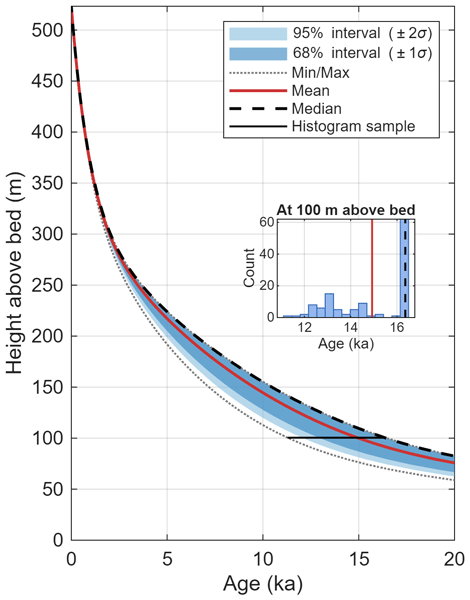
Vikram Goel, Carlos Martín, Kenichi Matsuoka, Bhanu Pratap, Geir Moholdt, Rahul Dey, Chavarukonam M. Laluraj, and Meloth Thamban
The Cryosphere, 20, 1363–1378, https://doi.org/10.5194/tc-20-1363-2026, https://doi.org/10.5194/tc-20-1363-2026, 2026
Short summary
Short summary
We identified an ideal site in coastal East Antarctica for extracting ice core that contain detailed climate records dating back 20 000 years. We surveyed two ice rises combining radar measurements with ice flow modeling to assess their suitability. One site emerged as optimal, offering well-preserved climate history with high temporal resolution. An ice core record from this site could help us understand historical interactions between sea ice, winds, and precipitation patterns in the region.
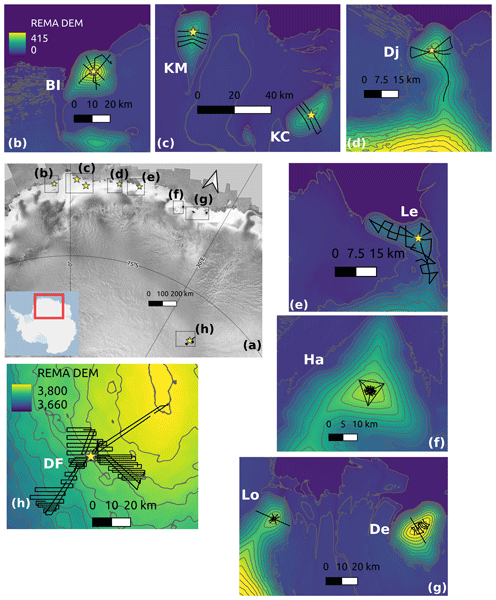
Marie G. P. Cavitte, Hugues Goosse, Kenichi Matsuoka, Sarah Wauthy, Vikram Goel, Rahul Dey, Bhanu Pratap, Brice Van Liefferinge, Thamban Meloth, and Jean-Louis Tison
The Cryosphere, 17, 4779–4795, https://doi.org/10.5194/tc-17-4779-2023, https://doi.org/10.5194/tc-17-4779-2023, 2023
Short summary
Short summary
The net accumulation of snow over Antarctica is key for assessing current and future sea-level rise. Ice cores record a noisy snowfall signal to verify model simulations. We find that ice core net snowfall is biased to lower values for ice rises and the Dome Fuji site (Antarctica), while the relative uncertainty in measuring snowfall increases rapidly with distance away from the ice core sites at the ice rises but not at Dome Fuji. Spatial variation in snowfall must therefore be considered.
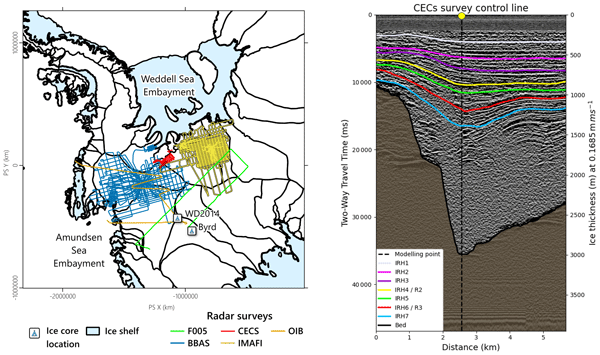
Felipe Napoleoni, Michael J. Bentley, Neil Ross, Stewart S. R. Jamieson, José A. Uribe, Jonathan Oberreuter, Rodrigo Zamora, Andrés Rivera, Andrew M. Smith, Robert G. Bingham, and Kenichi Matsuoka
The Cryosphere, 20, 2793–2824, https://doi.org/10.5194/tc-20-2793-2026, https://doi.org/10.5194/tc-20-2793-2026, 2026
Short summary
Short summary
We mapped buried layers inside West Antarctic ice across 13,000 km² near the Amundsen–Weddell divide using radar. Some layers may be up to 17 kyr old. The layers remain well preserved in slow-moving ice but become distorted where ice flows faster. Snowfall has long been greater on one side of the divide, suggesting the ice divide has remained stable for thousands of years. Our study helps connect climate records across West Antarctica and improve models used to predict future ice-sheet change.
Calvin Shackleton, Kenichi Matsuoka, Brett Fraysher, Joohan Lee, Jørgen Dall, Allain Rapadas, Prasad Gogineni, Drew Taylor, Hyeon Tae Ju, Changhyun Chung, and Anders Kusk
EGUsphere, https://doi.org/10.5194/egusphere-2026-2357, https://doi.org/10.5194/egusphere-2026-2357, 2026
Short summary
Short summary
We map new details of the landscape beneath the Antarctic Ice Sheet near Dome C using radar data and simulation methods. The terrain is rougher than previously thought, and we identify where water flow is either well or poorly understood. We also show that valleys and ridges could amplify or reduce geothermal heating, impacting melting at the ice sheet base. These results improve confidence in locating sites where ancient ice may be preserved for drilling and studying past climates.
Vikram Goel, Carlos Martín, Kenichi Matsuoka, Bhanu Pratap, Geir Moholdt, Rahul Dey, Chavarukonam M. Laluraj, and Meloth Thamban
The Cryosphere, 20, 1363–1378, https://doi.org/10.5194/tc-20-1363-2026, https://doi.org/10.5194/tc-20-1363-2026, 2026
Short summary
Short summary
We identified an ideal site in coastal East Antarctica for extracting ice core that contain detailed climate records dating back 20 000 years. We surveyed two ice rises combining radar measurements with ice flow modeling to assess their suitability. One site emerged as optimal, offering well-preserved climate history with high temporal resolution. An ice core record from this site could help us understand historical interactions between sea ice, winds, and precipitation patterns in the region.
Guojun Li, Tong Hao, Zhongbo Huang, Chen Lv, Liang Tang, Shi Li, Xiangbin Cui, Bo Sun, Kenichi Matsuoka, and Rongxing Li
Int. Arch. Photogramm. Remote Sens. Spatial Inf. Sci., XLVIII-4-W14-2025, 113–119, https://doi.org/10.5194/isprs-archives-XLVIII-4-W14-2025-113-2025, https://doi.org/10.5194/isprs-archives-XLVIII-4-W14-2025-113-2025, 2025
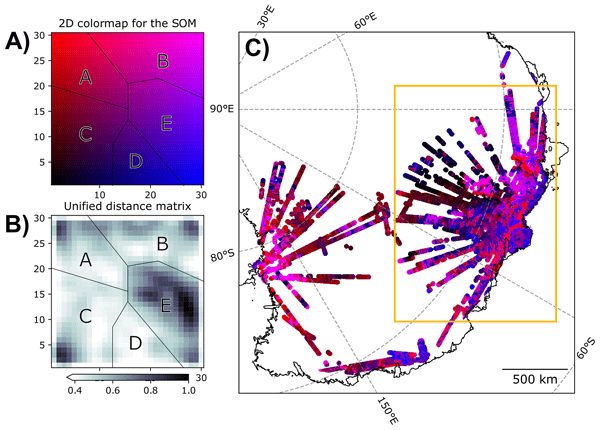
Jonas Liebsch, Jörg Ebbing, and Kenichi Matsuoka
Solid Earth, 16, 1401–1420, https://doi.org/10.5194/se-16-1401-2025, https://doi.org/10.5194/se-16-1401-2025, 2025
Short summary
Short summary
The evolution of the Antarctic ice sheets depends, in addition to factors representing the warming climate, on the earth structure beneath the ice. What’s beneath the ice is largely inaccessible for direct sampling, but can be interpreted with the use of airborne measurements. We apply an unsupervised machine learning method to such data in East Antarctica to test whether this can ease interpretation and hence our understanding of what rocks types are beneath the ice.
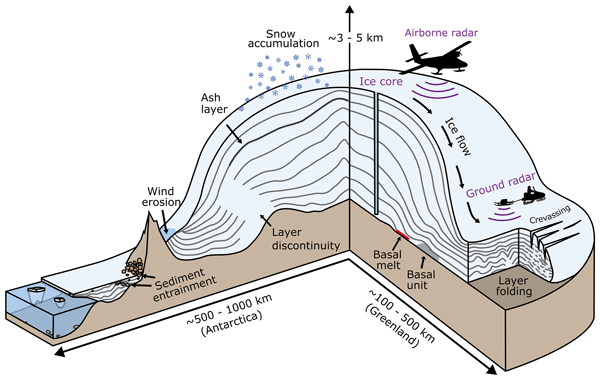
Robert G. Bingham, Julien A. Bodart, Marie G. P. Cavitte, Ailsa Chung, Rebecca J. Sanderson, Johannes C. R. Sutter, Olaf Eisen, Nanna B. Karlsson, Joseph A. MacGregor, Neil Ross, Duncan A. Young, David W. Ashmore, Andreas Born, Winnie Chu, Xiangbin Cui, Reinhard Drews, Steven Franke, Vikram Goel, John W. Goodge, A. Clara J. Henry, Antoine Hermant, Benjamin H. Hills, Nicholas Holschuh, Michelle R. Koutnik, Gwendolyn J.-M. C. Leysinger Vieli, Emma J. MacKie, Elisa Mantelli, Carlos Martín, Felix S. L. Ng, Falk M. Oraschewski, Felipe Napoleoni, Frédéric Parrenin, Sergey V. Popov, Therese Rieckh, Rebecca Schlegel, Dustin M. Schroeder, Martin J. Siegert, Xueyuan Tang, Thomas O. Teisberg, Kate Winter, Shuai Yan, Harry Davis, Christine F. Dow, Tyler J. Fudge, Tom A. Jordan, Bernd Kulessa, Kenichi Matsuoka, Clara J. Nyqvist, Maryam Rahnemoonfar, Matthew R. Siegfried, Shivangini Singh, Vjeran Višnjević, Rodrigo Zamora, and Alexandra Zuhr
The Cryosphere, 19, 4611–4655, https://doi.org/10.5194/tc-19-4611-2025, https://doi.org/10.5194/tc-19-4611-2025, 2025
Short summary
Short summary
The ice sheets covering Antarctica have built up over millenia through successive snowfall events which become buried and preserved as internal surfaces of equal age detectable with ice-penetrating radar. This paper describes an international initiative working together on these archival data to build a comprehensive 3-D picture of how old the ice is everywhere across Antarctica and how this is being used to reconstruct past and to predict future ice and climate behaviour.
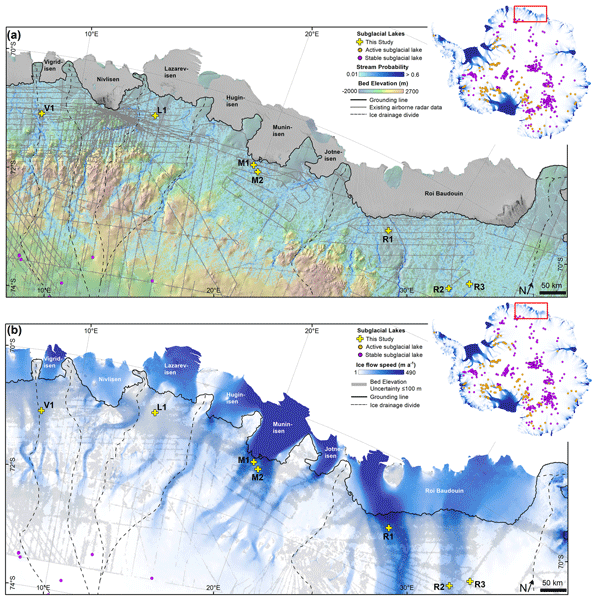
Jennifer F. Arthur, Calvin Shackleton, Geir Moholdt, Kenichi Matsuoka, and Jelte van Oostveen
The Cryosphere, 19, 375–392, https://doi.org/10.5194/tc-19-375-2025, https://doi.org/10.5194/tc-19-375-2025, 2025
Short summary
Short summary
Lakes can form beneath the large ice sheets and can influence ice-sheet dynamics and stability. Some of these subglacial lakes are active, meaning that they periodically drain and refill. Here we report seven new active subglacial lakes close to the Antarctic Ice Sheet margin using satellite measurements of ice surface height changes in a region where little was known previously. These findings improve our understanding of subglacial hydrology and will help refine subglacial hydrological models.
Eledath M. Gayathri, Chavarukonam M. Laluraj, Karathazhiyath Satheesan, Kenichi Matsuoka, Mahalinganathan Kanthanathan, and Meloth Thamban
EGUsphere, https://doi.org/10.5194/egusphere-2024-1666, https://doi.org/10.5194/egusphere-2024-1666, 2024
Preprint archived
Short summary
Short summary
Here, we study the effects of short–term atmospheric warming events on the ice sheet surface and subsurface temperatures of coastal Dronning Maud Land during 2014–2018. Our results revealed that the impact of warming events over ice sheet surface and subsurface temperatures varies with the mechanism of warming and prevailing meteorological conditions. The frequency and duration of such events are important for the surface and sub-surface processes of ice sheets.
Eledath M. Gayathri, Chavarukonam M. Laluraj, Karathazhiyath Satheesan, Kenichi Matsuoka, and Meloth Thamban
EGUsphere, https://doi.org/10.5194/egusphere-2023-2515, https://doi.org/10.5194/egusphere-2023-2515, 2023
Preprint archived
Short summary
Short summary
Episodic Antarctic Ice Sheet Surface Warming events can affect the mass balance of ice sheets by sublimation and melting during summer. Our study using five-year borehole thermistor measurements revealed two types of events over the coastal Dronning Maud Land region: cloud-induced and wind-induced. Understanding the frequency and duration of these events is important for predicting their future impacts on ice shelves and ice sheets.
Marie G. P. Cavitte, Hugues Goosse, Kenichi Matsuoka, Sarah Wauthy, Vikram Goel, Rahul Dey, Bhanu Pratap, Brice Van Liefferinge, Thamban Meloth, and Jean-Louis Tison
The Cryosphere, 17, 4779–4795, https://doi.org/10.5194/tc-17-4779-2023, https://doi.org/10.5194/tc-17-4779-2023, 2023
Short summary
Short summary
The net accumulation of snow over Antarctica is key for assessing current and future sea-level rise. Ice cores record a noisy snowfall signal to verify model simulations. We find that ice core net snowfall is biased to lower values for ice rises and the Dome Fuji site (Antarctica), while the relative uncertainty in measuring snowfall increases rapidly with distance away from the ice core sites at the ice rises but not at Dome Fuji. Spatial variation in snowfall must therefore be considered.
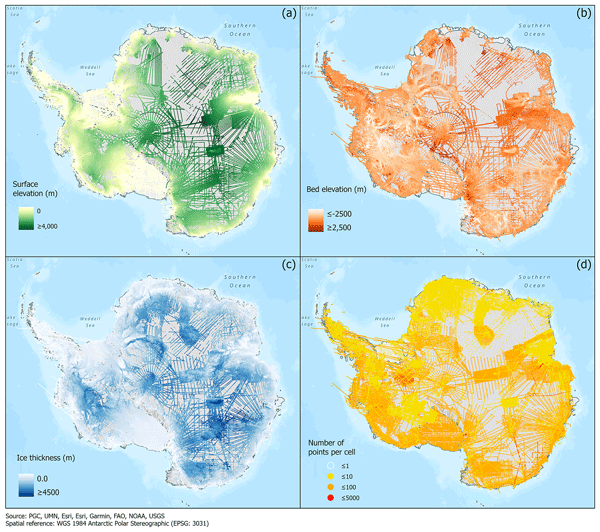
Alice C. Frémand, Peter Fretwell, Julien A. Bodart, Hamish D. Pritchard, Alan Aitken, Jonathan L. Bamber, Robin Bell, Cesidio Bianchi, Robert G. Bingham, Donald D. Blankenship, Gino Casassa, Ginny Catania, Knut Christianson, Howard Conway, Hugh F. J. Corr, Xiangbin Cui, Detlef Damaske, Volkmar Damm, Reinhard Drews, Graeme Eagles, Olaf Eisen, Hannes Eisermann, Fausto Ferraccioli, Elena Field, René Forsberg, Steven Franke, Shuji Fujita, Yonggyu Gim, Vikram Goel, Siva Prasad Gogineni, Jamin Greenbaum, Benjamin Hills, Richard C. A. Hindmarsh, Andrew O. Hoffman, Per Holmlund, Nicholas Holschuh, John W. Holt, Annika N. Horlings, Angelika Humbert, Robert W. Jacobel, Daniela Jansen, Adrian Jenkins, Wilfried Jokat, Tom Jordan, Edward King, Jack Kohler, William Krabill, Mette Kusk Gillespie, Kirsty Langley, Joohan Lee, German Leitchenkov, Carlton Leuschen, Bruce Luyendyk, Joseph MacGregor, Emma MacKie, Kenichi Matsuoka, Mathieu Morlighem, Jérémie Mouginot, Frank O. Nitsche, Yoshifumi Nogi, Ole A. Nost, John Paden, Frank Pattyn, Sergey V. Popov, Eric Rignot, David M. Rippin, Andrés Rivera, Jason Roberts, Neil Ross, Anotonia Ruppel, Dustin M. Schroeder, Martin J. Siegert, Andrew M. Smith, Daniel Steinhage, Michael Studinger, Bo Sun, Ignazio Tabacco, Kirsty Tinto, Stefano Urbini, David Vaughan, Brian C. Welch, Douglas S. Wilson, Duncan A. Young, and Achille Zirizzotti
Earth Syst. Sci. Data, 15, 2695–2710, https://doi.org/10.5194/essd-15-2695-2023, https://doi.org/10.5194/essd-15-2695-2023, 2023
Short summary
Short summary
This paper presents the release of over 60 years of ice thickness, bed elevation, and surface elevation data acquired over Antarctica by the international community. These data are a crucial component of the Antarctic Bedmap initiative which aims to produce a new map and datasets of Antarctic ice thickness and bed topography for the international glaciology and geophysical community.
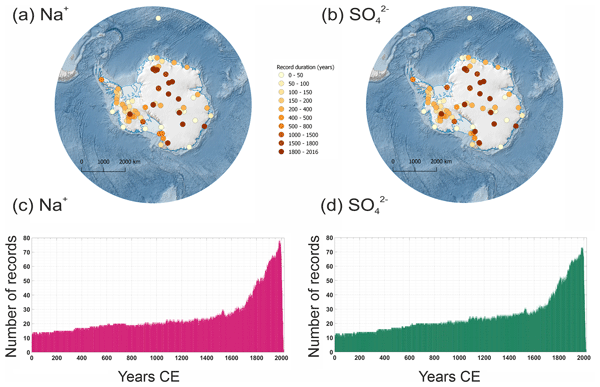
Elizabeth R. Thomas, Diana O. Vladimirova, Dieter R. Tetzner, B. Daniel Emanuelsson, Nathan Chellman, Daniel A. Dixon, Hugues Goosse, Mackenzie M. Grieman, Amy C. F. King, Michael Sigl, Danielle G. Udy, Tessa R. Vance, Dominic A. Winski, V. Holly L. Winton, Nancy A. N. Bertler, Akira Hori, Chavarukonam M. Laluraj, Joseph R. McConnell, Yuko Motizuki, Kazuya Takahashi, Hideaki Motoyama, Yoichi Nakai, Franciéle Schwanck, Jefferson Cardia Simões, Filipe Gaudie Ley Lindau, Mirko Severi, Rita Traversi, Sarah Wauthy, Cunde Xiao, Jiao Yang, Ellen Mosely-Thompson, Tamara V. Khodzher, Ludmila P. Golobokova, and Alexey A. Ekaykin
Earth Syst. Sci. Data, 15, 2517–2532, https://doi.org/10.5194/essd-15-2517-2023, https://doi.org/10.5194/essd-15-2517-2023, 2023
Short summary
Short summary
The concentration of sodium and sulfate measured in Antarctic ice cores is related to changes in both sea ice and winds. Here we have compiled a database of sodium and sulfate records from 105 ice core sites in Antarctica. The records span all, or part, of the past 2000 years. The records will improve our understanding of how winds and sea ice have changed in the past and how they have influenced the climate of Antarctica over the past 2000 years.
Sourav Laha, Argha Banerjee, Ajit Singh, Parmanand Sharma, and Meloth Thamban
Hydrol. Earth Syst. Sci. Discuss., https://doi.org/10.5194/hess-2021-499, https://doi.org/10.5194/hess-2021-499, 2021
Revised manuscript not accepted
Short summary
Short summary
A study of two glacierised Himalayan catchments reveals that the summer runoff from the glacierised parts of the catchments responds strongly to temperature forcing and is stable to precipitation forcing, while that of the non-glacierised parts has an exactly opposite behaviour. The pattern of changes in mean runoff and its variability under a warming climate is determined by the response of glaciers to temperature forcing, and that of off-glacier areas to precipitation perturbations.
Cited articles
Akitomo, K.: Thermobaric deep convection, baroclinic instability, and their roles in vertical heat transport around Maud Rise in the Weddell Sea, J. Geophys. Res.-Oceans, 111, https://doi.org/10.1029/2005JC003284, 2006.
Arrigo, K. R. and van Dijken, G. L.: Phytoplankton dynamics within 37 Antarctic coastal polynya systems, J. Geophys. Res.-Oceans, 108, https://doi.org/10.1029/2002JC001739, 2003.
Årthun, M., Holland, P. R., Nicholls, K. W., and Feltham, D. L.: Eddy-Driven Exchange between the Open Ocean and a Sub–Ice Shelf Cavity, J. Phys. Oceanogr., 43, 2372–2387, https://doi.org/10.1175/JPO-D-13-0137.1, 2013.
Bennetts, L. G., Shakespeare, C. J., Vreugdenhil, C. A., Foppert, A., Gayen, B., Meyer, A., Morrison, A. K., Padman, L., Phillips, H. E., Stevens, C. L., Toffoli, A., Constantinou, N. C., Cusack, J. M., Cyriac, A., Doddridge, E. W., England, M. H., Evans, D. G., Heil, P., Hogg, A. M., Holmes, R. M., Huneke, W. G. C., Jones, N. L., Keating, S. R., Kiss, A. E., Kraitzman, N., Malyarenko, A., McConnochie, C. D., Meucci, A., Montiel, F., Neme, J., Nikurashin, M., Patel, R. S., Peng, J.-P., Rayson, M., Rosevear, M. G., Sohail, T., Spence, P., and Stanley, G. J.: Closing the Loops on Southern Ocean Dynamics: From the Circumpolar Current to Ice Shelves and From Bottom Mixing to Surface Waves, Rev. Geophys., 62, e2022RG000781, https://doi.org/10.1029/2022RG000781, 2024.
Berman, E. S. F., Levin, N. E., Landais, A., Li, S., and Owano, T.: Measurement of δ18O, δ17O, and 17O-excess in Water by Off-Axis Integrated Cavity Output Spectroscopy and Isotope Ratio Mass Spectrometry, Anal. Chem., 85, 10392–10398, https://doi.org/10.1021/ac402366t, 2013.
Campbell, E. C., Wilson, E. A., Moore, G. W. K., Riser, S. C., Brayton, C. E., Mazloff, M. R., and Talley, L. D.: Antarctic offshore polynyas linked to Southern Hemisphere climate anomalies, Nature, 570, 319–325, https://doi.org/10.1038/s41586-019-1294-0, 2019.
Carsey, F. D.: Microwave Observation of the Weddell Polynya, Mon. Weather Rev., 108, 2032–2044, https://doi.org/10.1175/1520-0493(1980)108<2032:MOOTWP>2.0.CO;2, 1980.
Comiso, J. C. and Gordon, A. L.: Recurring polynyas over the Cosmonaut Sea and the Maud Rise, J. Geophys. Res.-Oceans, 92, 2819–2833, https://doi.org/10.1029/JC092iC03p02819, 1987.
Comiso, J. C. and Nishio, F.: Trends in the sea ice cover using enhanced and compatible AMSR-E, SSM/I, and SMMR data, J. Geophys. Res.-Oceans, 113, https://doi.org/10.1029/2007JC004257, 2008.
de Lavergne, C., Palter, J. B., Galbraith, E. D., Bernardello, R., and Marinov, I.: Cessation of deep convection in the open Southern Ocean under anthropogenic climate change, Nat. Clim. Change, 4, 278–282, https://doi.org/10.1038/nclimate2132, 2014.
Dey, R.: Reconstruction of Antarctic climate variability using high resolution ice core stratigraphy, PhD Thesis, Goa University, India https://doi.org/10.5281/zenodo.12705334, 2023.
Dey, R., Thamban, M., Laluraj, C. M., Mahalinganathan, K., Redkar, B. L., Kumar, S., and Matsuoka, K.: Application of visual stratigraphy from line-scan images to constrain chronology and melt features of a firn core from coastal Antarctica, J. Glaciol., 69, 179–190, https://doi.org/10.1017/jog.2022.59, 2023.
Dixon, D. A., Mayewski, P. A., Goodwin, I. D., Marshall, G. J., Freeman, R., Maasch, K. A., and Sneed, S. B.: An ice-core proxy for northerly air mass incursions into West Antarctica, Int. J. Climatol., 32, 1455–1465, https://doi.org/10.1002/joc.2371, 2012.
Dorling, S. R. and Davies, T. D.: Extending cluster analysis – synoptic meteorology links to characterise chemical climates at six northwest European monitoring stations, Atmos. Environ., 29, 145–167, https://doi.org/10.1016/1352-2310(94)00251-F, 1995.
Draxler, R.: NOAA-Air resources laboratory-FAQ-How do i estimate the absolute (in km) and relative (%) errors when using the HYSPLIT trajectory model. Available online: https://hysplitbbs.arl.noaa.gov/viewtopic.php?t=2368&hilit=absolute and relative errors (last accessed: 14 July 2026), 2008.
Drews, R., Matsuoka, K., Martín, C., Callens, D., Bergeot, N., and Pattyn, F.: Evolution of Derwael Ice Rise in Dronning Maud Land, Antarctica, over the last millennia, J. Geophys. Res.-Earth, 120, 564–579, https://doi.org/10.1002/2014jf003246, 2015.
Ejaz, T., Rahaman, W., Laluraj, C. M., Mahalinganathan, K., and Thamban, M.: Sea Ice Variability and Trends in the Western Indian Ocean Sector of Antarctica During the Past Two Centuries and Its Response to Climatic Modes, J. Geophys. Res.-Atmos., 126, e2020JD033943, https://doi.org/10.1029/2020JD033943, 2021.
Ejaz, T., Rahaman, W., Laluraj, C. M., Mahalinganathan, K., and Thamban, M.: Rapid Warming Over East Antarctica Since the 1940s Caused by Increasing Influence of El Niño Southern Oscillation and Southern Annular Mode, Front. Earth Sci., 10, 799613, https://doi.org/10.3389/feart.2022.799613, 2022.
Firn Symposium team: Firn on ice sheets, Nature Reviews Earth and Environment, 5, 79–99, https://doi.org/10.1038/s43017-023-00507-9, 2024.
Frey, M. M., Norris, S. J., Brooks, I. M., Anderson, P. S., Nishimura, K., Yang, X., Jones, A. E., Nerentorp Mastromonaco, M. G., Jones, D. H., and Wolff, E. W.: First direct observation of sea salt aerosol production from blowing snow above sea ice, Atmos. Chem. Phys., 20, 2549–2578, https://doi.org/10.5194/acp-20-2549-2020, 2020.
Goel, V., Brown, J., and Matsuoka, K.: Glaciological settings and recent mass balance of Blåskimen Island in Dronning Maud Land, Antarctica, The Cryosphere, 11, 2883–2896, https://doi.org/10.5194/tc-11-2883-2017, 2017.
Goel, V., Matsuoka, K., Berger, C. D., Lee, I., Dall, J., and Forsberg, R.: Characteristics of ice rises and ice rumples in Dronning Maud Land and Enderby Land, Antarctica, J. Glaciol., 66, 1064–1078 https://doi.org/10.1017/jog.2020.77, 2020.
Goel, V., Martín, C., Matsuoka, K., Pratap, B., Moholdt, G., Dey, R., Laluraj, C. M., and Thamban, M.: A new coastal ice-core site identified in Dronning Maud Land, Antarctica, for high-resolution climate reconstructions to the Last Glacial Maximum, The Cryosphere, 20, 1363–1378, https://doi.org/10.5194/tc-20-1363-2026, 2026.
Goosse, H., Dalaiden, Q., Cavitte, M. G. P., and Zhang, L.: Can we reconstruct the formation of large open-ocean polynyas in the Southern Ocean using ice core records?, Clim. Past, 17, 111–131, https://doi.org/10.5194/cp-17-111-2021, 2021.
Gordon, A. L. and Comiso, J. C.: Polynyas in the Southern Ocean, Sci. Am., 258, 90–97, https://doi.org/10.1038/scientificamerican0688-90, 1988.
Goursaud, S., Masson-Delmotte, V., Favier, V., Preunkert, S., Fily, M., Gallée, H., Jourdain, B., Legrand, M., Magand, O., Minster, B., and Werner, M.: A 60-year ice-core record of regional climate from Adélie Land, coastal Antarctica, The Cryosphere, 11, 343–362, https://doi.org/10.5194/tc-11-343-2017, 2017.
Gülk, B., Roquet, F., Naveira Garabato, A. C., Bourdallé-Badie, R., Madec, G., and Giordani, H.: Impacts of Vertical Convective Mixing Schemes and Freshwater Forcing on the 2016–2017 Maud Rise Polynya Openings in a Regional Ocean Simulation, J. Adv. Model. Earth Sy., 16, e2023MS004106, https://doi.org/10.1029/2023MS004106, 2024.
Heuzé, C., Heywood, K. J., Stevens, D. P., and Ridley, J. K.: Southern Ocean bottom water characteristics in CMIP5 models, Geophys. Res. Lett., 40, 1409–1414, https://doi.org/10.1002/grl.50287, 2013.
Heuzé, C., Zhou, L., Mohrmann, M., and Lemos, A.: Spaceborne infrared imagery for early detection of Weddell Polynya opening, The Cryosphere, 15, 3401–3421, https://doi.org/10.5194/tc-15-3401-2021, 2021.
Holland, D. M.: Explaining the Weddell Polynya – a Large Ocean Eddy Shed at Maud Rise, Science, 292, 1697–1700, https://doi.org/10.1126/science.1059322, 2001.
Jacobs, S. S., Gordon, A. L., and Ardai, J. L.: Circulation and Melting Beneath the Ross Ice Shelf, Science, 203, 439–443, https://doi.org/10.1126/science.203.4379.439, 1979.
Jena, B., Ravichandran, M., and Turner, J.: Recent Reoccurrence of Large Open-Ocean Polynya on the Maud Rise Seamount, Geophys. Res. Lett., 46, 4320–4329, https://doi.org/10.1029/2018GL081482, 2019.
Jones, T. R., Cuffey, K. M., Roberts, W. H. G., Markle, B. R., Steig, E. J., Stevens, C. M., Valdes, P. J., Fudge, T. J., Sigl, M., Hughes, A. G., Morris, V., Vaughn, B. H., Garland, J., Vinther, B. M., Rozmiarek, K. S., Brashear, C. A., and White, J. W. C.: Seasonal temperatures in West Antarctica during the Holocene, Nature, 613, 292–297, https://doi.org/10.1038/s41586-022-05411-8, 2023.
Klein, F., Abram, N. J., Curran, M. A. J., Goosse, H., Goursaud, S., Masson-Delmotte, V., Moy, A., Neukom, R., Orsi, A., Sjolte, J., Steiger, N., Stenni, B., and Werner, M.: Assessing the robustness of Antarctic temperature reconstructions over the past 2 millennia using pseudoproxy and data assimilation experiments, Clim. Past, 15, 661–684, https://doi.org/10.5194/cp-15-661-2019, 2019.
Lenaerts, J. T. M., Brown, J., Van Den Broeke, M. R., Matsuoka, K., Drews, R., Callens, D., Philippe, M., Gorodetskaya, I. V., Van Meijgaard, E., Reijmer, C. H., Pattyn, F., and Van Lipzig, N. P. M.: High variability of climate and surface mass balance induced by Antarctic ice rises, J. Glaciol., 60, 1101–1110, https://doi.org/10.3189/2014JoG14J040, 2014.
Lindsay, R. W., Holland, D. M., and Woodgate, R. A.: Halo of low ice concentration observed over the Maud Rise seamount, Geophys. Res. Lett., 31, https://doi.org/10.1029/2004GL019831, 2004.
Mahalinganathan, K., Thamban, M., Ejaz, T., Srivastava, R., Redkar, B. L., and Laluraj, C. M.: Spatial variability and post-depositional diffusion of stable isotopes in high accumulation regions of East Antarctica, Front. Earth Sci., 10, 925447, https://doi.org/10.3389/feart.2022.925447, 2022.
Markle, B. R., Bertler, N. A. N., Sinclair, K. E., and Sneed, S. B.: Synoptic variability in the Ross Sea region, Antarctica, as seen from back-trajectory modeling and ice core analysis, J. Geophys. Res.-Atmos., 117, https://doi.org/10.1029/2011JD016437, 2012.
Matsuoka, K., Hindmarsh, R. C. A., Moholdt, G., Bentley, M. J., Pritchard, H. D., Brown, J., Conway, H., Drews, R., Durand, G., Goldberg, D., Hattermann, T., Kingslake, J., Lenaerts, J. T. M., Martín, C., Mulvaney, R., Nicholls, K. W., Pattyn, F., Ross, N., Scambos, T., and Whitehouse, P. L.: Antarctic ice rises and rumples: Their properties and significance for ice-sheet dynamics and evolution, Earth-Sci. Rev., 150, 724–745, https://doi.org/10.1016/j.earscirev.2015.09.004, 2015.
Mchedlishvili, A., Spreen, G., Melsheimer, C., and Huntemann, M.: Weddell Sea polynya analysis using SMOS–SMAP apparent sea ice thickness retrieval, The Cryosphere, 16, 471–487, https://doi.org/10.5194/tc-16-471-2022, 2022.
McPhee, M. G.: Is thermobaricity a major factor in Southern Ocean ventilation?, Antarct. Sci., 15, 153–160, https://doi.org/10.1017/S0954102003001159, 2003.
Meier, W. N., Gallaher, D., and Campbell, G. G.: New estimates of Arctic and Antarctic sea ice extent during September 1964 from recovered Nimbus I satellite imagery, The Cryosphere, 7, 699–705, https://doi.org/10.5194/tc-7-699-2013, 2013.
Moore, G. W. K., Alverson, K., and Renfrew, I. A.: A Reconstruction of the Air–Sea Interaction Associated with the Weddell Polynya, J. Phys. Oceanogr., 32, 1685–1698, https://doi.org/10.1175/1520-0485(2002)032<1685:AROTAS>2.0.CO;2, 2002.
Naik, S. S., Thamban, M., Laluraj, C. M., Redkar, B. L., and Chaturvedi, A.: A century of climate variability in central Dronning Maud Land, East Antarctica, and its relation to Southern Annular Mode and El Niño-Southern Oscillation, J. Geophys. Res.-Atmos., 115, https://doi.org/10.1029/2009JD013268, 2010.
Narayanan, A., Roquet, F., Gille, S. T., Gülk, B., Mazloff, M. R., Silvano, A., and Naveira Garabato, A. C.: Ekman-driven salt transport as a key mechanism for open-ocean polynya formation at Maud Rise, Science Advances, 10, eadj0777, https://doi.org/10.1126/sciadv.adj0777, 2024.
Neff, P. D. and Bertler, N. A. N.: Trajectory modeling of modern dust transport to the Southern Ocean and Antarctica, J. Geophys. Res.-Atmos., 120, 9303–9322, https://doi.org/10.1002/2015jd023304, 2015.
Philippe, M., Tison, J.-L., Fjøsne, K., Hubbard, B., Kjær, H. A., Lenaerts, J. T. M., Drews, R., Sheldon, S. G., De Bondt, K., Claeys, P., and Pattyn, F.: Ice core evidence for a 20th century increase in surface mass balance in coastal Dronning Maud Land, East Antarctica, The Cryosphere, 10, 2501–2516, https://doi.org/10.5194/tc-10-2501-2016, 2016.
Pratap, B., Dey, R., Matsuoka, K., Moholdt, G., Lindbäck, K., Goel, V., Laluraj, C. M., and Thamban, M.: Three-decade spatial patterns in surface mass balance of the Nivlisen Ice Shelf, central Dronning Maud Land, East Antarctica, J. Glaciol., 68, 174–186, https://doi.org/10.1017/jog.2021.93, 2022.
Rignot, E., Mouginot, J., Scheuchl, B., van den Broeke, M., van Wessem, M. J., and Morlighem, M.: Four decades of Antarctic Ice Sheet mass balance from 1979–2017, P. Natl. Acad. Sci. USA, 116, 1095–1103, https://doi.org/10.1073/pnas.1812883116, 2019.
Sallée, J.-B., Shuckburgh, E., Bruneau, N., Meijers, A. J. S., Bracegirdle, T. J., Wang, Z., and Roy, T.: Assessment of Southern Ocean water mass circulation and characteristics in CMIP5 models: Historical bias and forcing response, J. Geophys. Res.-Oceans, 118, 1830–1844, https://doi.org/10.1002/jgrc.20135, 2013.
SO-CHIC consortium: Southern ocean carbon and heat impact on climate, Philos. T. Roy. Soc. A, 381, 20220056, https://doi.org/10.1098/rsta.2022.0056, 2023.
Visbeck, M., Marshall, J., and Jones, H.: Dynamics of Isolated Convective Regions in the Ocean, J. Phys. Oceanogr., 26, 1721–1734, https://doi.org/10.1175/1520-0485(1996)026<1721:DOICRI>2.0.CO;2, 1996.
Wauthy, S., Tison, J.-L., Inoue, M., El Amri, S., Sun, S., Fripiat, F., Claeys, P., and Pattyn, F.: Spatial and temporal variability of environmental proxies from the top 120 m of two ice cores in Dronning Maud Land (East Antarctica), Earth Syst. Sci. Data, 16, 35–58, https://doi.org/10.5194/essd-16-35-2024, 2024.
Wilson, E. A., Riser, S. C., Campbell, E. C., and Wong, A. P. S.: Winter Upper-Ocean Stability and Ice–Ocean Feedbacks in the Sea Ice–Covered Southern Ocean, J. Phys. Oceanogr., 49, 1099–1117, https://doi.org/10.1175/JPO-D-18-0184.1, 2019.
Winstrup, M., Svensson, A. M., Rasmussen, S. O., Winther, O., Steig, E. J., and Axelrod, A. E.: An automated approach for annual layer counting in ice cores, Clim. Past, 8, 1881–1895, https://doi.org/10.5194/cp-8-1881-2012, 2012.
Wolff, E. W., Rankin, A. M., and Röthlisberger, R.: An ice core indicator of Antarctic sea ice production?, Geophys. Res. Lett., 30, 2003GL018454, https://doi.org/10.1029/2003GL018454, 2003.
Xu, Y., Zhang, W., Maksym, T., Ji, R., and Li, Y.: Stratification Breakdown in Antarctic Coastal Polynyas. Part I: Influence of Physical Factors on the Destratification Time Scale, J. Phys. Oceanogr., 53, 2047–2067, https://doi.org/10.1175/JPO-D-22-0218.1, 2023.
Zheng, W. E. I., Zhaoru, Z., Timo, V., Xiaoqiao, W., and Yuanjie, C.: An overview of Antarctic polynyas: sea ice production, forcing mechanisms, temporal variability and water mass formation, Advances in Polar Science, 32, 295–311, https://doi.org/10.13679/j.advps.2021.0026, 2021.
Zhou, L., Heuzé, C., and Mohrmann, M.: Sea ice production in the 2016 and 2017 Maud Rise polynyas, J. Geophys. Res.-Oceans, 128, e2022JC019148, https://doi.org/10.1029/2022JC019148, 2023.
Zwally, H. J., Comiso, J. C., and Gordon, A. L.: Antarctic offshore leads and polynyas and oceanographic effects, in: Oceanology of the Antarctic continental shelf, Antarct. Res. Ser., 43, 203–226, https://doi.org/10.1029/AR043p0203, 1985.
Short summary
We present a 250-year reconstruction of the Maud Rise Polynya opening, using an ice core collected from coastal Antarctica. This polynya is considered a rare phenomenon in the Weddell Sea, with only two well-documented openings since the 1970s. However, our 250-year record reveals numerous past polynya events, including occurrences possibly comparable in scale to the Great Weddell Polynya of 1974–1976, suggesting that these openings are a part of the Southern Ocean's natural variability.
We present a 250-year reconstruction of the Maud Rise Polynya opening, using an ice core...


