
Articles | Volume 20, issue 7
https://doi.org/10.5194/tc-20-4049-2026
© Author(s) 2026. This work is distributed under
the Creative Commons Attribution 4.0 License.
the Creative Commons Attribution 4.0 License.
https://doi.org/10.5194/tc-20-4049-2026
© Author(s) 2026. This work is distributed under
the Creative Commons Attribution 4.0 License.
the Creative Commons Attribution 4.0 License.
Brief communication
| 
23 Jul 2026
Brief communication |
| 23 Jul 2026
| 23 Jul 2026
Brief communication: Two-year MRR observations at Great Wall Station, Antarctic Peninsula region
Jiayi Sun
State Key Laboratory of Severe Weather Meteorological Science and Technology, Chinese Academy of Meteorological Sciences, Beijing, China
Junmei Lv
State Key Laboratory of Severe Weather Meteorological Science and Technology, Chinese Academy of Meteorological Sciences, Beijing, China

State Key Laboratory of Severe Weather Meteorological Science and Technology, Chinese Academy of Meteorological Sciences, Beijing, China
Wenqian Zhang
State Key Laboratory of Severe Weather Meteorological Science and Technology, Chinese Academy of Meteorological Sciences, Beijing, China
Biao Tian
State Key Laboratory of Severe Weather Meteorological Science and Technology, Chinese Academy of Meteorological Sciences, Beijing, China
State Key Laboratory of Severe Weather Meteorological Science and Technology, Chinese Academy of Meteorological Sciences, Beijing, China
Key Laboratory of Polar Atmosphere–Ocean–Ice System for Weather and Climate, Ministry of Education, Shanghai, China
Related authors
No articles found.
Biao Tian, Minghu Ding, Kongju Zhu, Xu Yao, Yixi Zhao, Wenqian Zhang, Diyi Yang, Weijun Sun, Yining Yu, Shoudong Zhao, Yige Cui, Chuanjin Li, Jie Tang, Cunde Xiao, Tong Zhu, and Renhe Zhang
Atmos. Meas. Tech., 19, 5683–5695, https://doi.org/10.5194/amt-19-5683-2026, https://doi.org/10.5194/amt-19-5683-2026, 2026
Short summary
Short summary
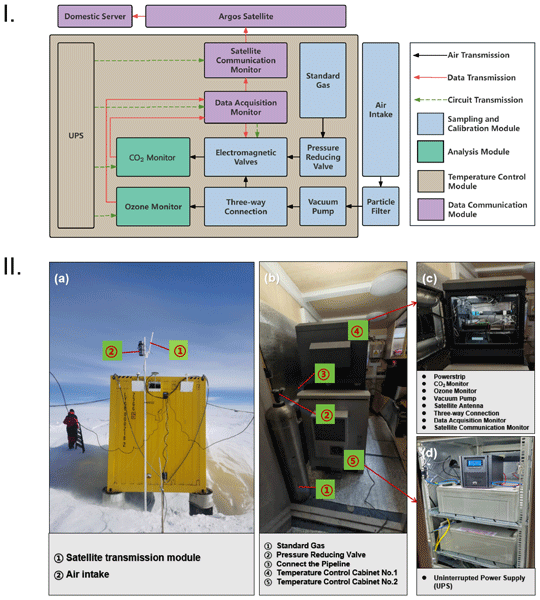
Scarce reliable greenhouse‑gas observations plague inland Antarctica. The low‑power (<350 W) CRUX‑1.0 integrates four subsystems for simultaneous CO₂‑O₃ monitoring. Its one‑month Taishan Station test shows stable performance, with post‑calibration CV (coefficient of variation) < 5.6 %. Measured mixing ratios exhibit good comparability with South Pole Station data. Capable of unattended operation, CRUX‑1.0 is promising for data‑scarce polar inland deployment.
Bo Liu, Jian Shang, Haoran Li, Yunshu Zeng, Bosen Jiang, Bo Xu, Shi Liu, Mei Yuan, and Honggang Yin
EGUsphere, https://doi.org/10.5194/egusphere-2026-4804, https://doi.org/10.5194/egusphere-2026-4804, 2026
This preprint is open for discussion and under review for Atmospheric Measurement Techniques (AMT).
Short summary
Short summary
Spaceborne precipitation radars provide valuable three-dimensional views of storms, but their infrequent coverage limits the monitoring of rapidly evolving weather systems. This study proposes a new radar concept that uses a small number of separated beams and combines radar and microwave satellite observations with artificial intelligence to reconstruct the gaps between them. Results show that the approach can recover precipitation structures accurately even with sparse radar sampling.
Xiyue Zhang, Minghu Ding, Diyi Yang, Bin Cheng, Ian Allison, Kongju Zhu, Yuande Yang, Xiangbin Cui, Petra Heil, Chuanjin Li, and Cunde Xiao
EGUsphere, https://doi.org/10.5194/egusphere-2026-2150, https://doi.org/10.5194/egusphere-2026-2150, 2026
Short summary
Short summary
Stake measurements underestimate Antarctic surface mass balance (SMB) due to firn compaction. Using a firn densification model, we correct 2008-2024 stake records from Dome A. The corrected mean annual SMB is 24.14 kg m-2 yr-1, 8.8 % higher than uncorrected values, whereas RACMO2.4p1 gives 17.50 kg m-2 yr-1. The net vapor flux is equivalent to 5.7 % of the total mass input. This framework provides observational benchmarks for climate models, and supports oldest‑ice drilling at Dome A.
Chengyan Liu, Zhaomin Wang, Dake Chen, Xianxian Han, Hengling Leng, Xi Liang, Liangjun Yan, Xiang Li, Craig Stevens, Andrew McC. Hogg, Kazuya Kusahara, Kaihe Yamazaki, Kay I. Ohshima, Meng Zhou, Xiao Cheng, Dongxiao Wang, Changming Dong, Jiping Liu, Qinghua Yang, Xichen Li, Ruibo Lei, Minghu Ding, Zhaoru Zhang, Dujuan Kang, Di Qi, Tongya Liu, Jihai Dong, Lu An, Ru Chen, Tong Zhang, Xiaoming Hu, Bo Han, Haibo Bi, Qi Shu, Longjiang Mu, Shiming Xu, Hu Yang, Hailong Liu, Tingfeng Dou, Zhixuan Feng, Lei Zheng, Xueyuan Tang, Guitao Shi, Yongqing Cai, Bingrui Li, Yang Wu, Xia Lin, Wenjin Sun, Yu Liu, Kai Yu, Yu Zhang, Weizeng Shao, Xiaoyu Wang, Shaojun Zheng, Chengyi Yuan, Chunxia Zhou, Jian Liu, Yang Liu, Yue Xia, Xiaoyu Pan, Jiabao Zeng, Kechen Liu, Jiahao Fan, Chen Cheng, and Qi Li
Geosci. Model Dev., 19, 2985–3033, https://doi.org/10.5194/gmd-19-2985-2026, https://doi.org/10.5194/gmd-19-2985-2026, 2026
Short summary
Short summary
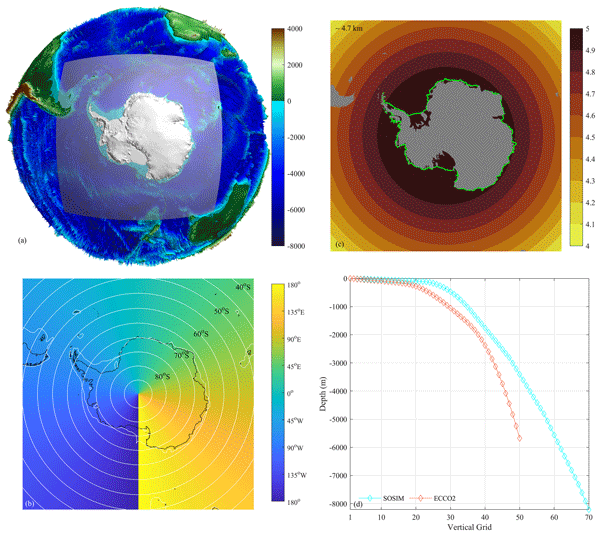
We developed a high-resolution computer model to simulate how the ocean, sea ice, and ice shelves interact around Antarctica. This helps us understand their critical role in global climate and sea-level rise. Our model successfully captures essential features like major currents and seasonal ice changes. Despite some remaining biases, it provides a useful tool for predicting future changes in this vital and rapidly evolving region.
Qinghui Li, Haoran Li, Xuejin Sun, Yun Zhang, Weitao Lyu, Zheng Ruan, Liping Liu, Aiming Liu, and Chunsheng Zhang
Atmos. Chem. Phys., 26, 1249–1264, https://doi.org/10.5194/acp-26-1249-2026, https://doi.org/10.5194/acp-26-1249-2026, 2026
Short summary
Short summary
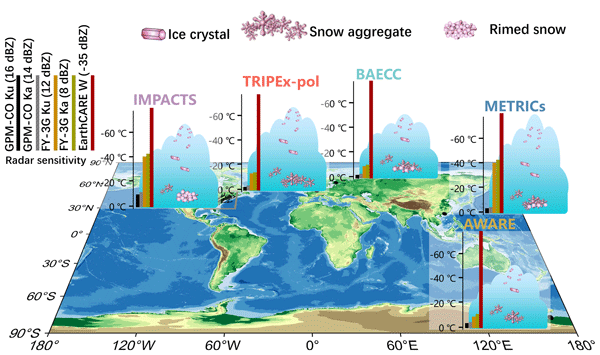
Despite the increasing complexity of snow microphysics schemes employed in numerical models, whether the dominant snow microphysical process is reasonably identified remains an open question. This study using unprecedented triple-frequency radar observations for the first time unravels the key snow growth processes over diverse geographies. The unique cross-continental datasets from triple-frequency campaigns shed new insights for model evaluation and future satellite missions.
Ruiqi Nan, Biao Tian, Xinfeng Ling, Weijun Sun, Yixi Zhao, Dongqi Zhang, Chuanjin Li, Xin Wang, Jie Tang, Bo Yao, and Minghu Ding
Earth Syst. Sci. Data, 17, 6097–6111, https://doi.org/10.5194/essd-17-6097-2025, https://doi.org/10.5194/essd-17-6097-2025, 2025
Short summary
Short summary
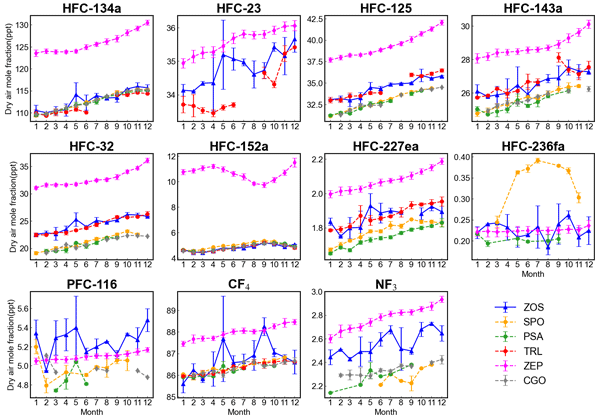
This study presents the first dataset of 11 fluorinated greenhouse gases observed in 2021 at Zhongshan Station, Antarctica. The concentrations of most gases increased and were higher than at two other Antarctic stations. Their sources were linked to industrial activities such as refrigeration and electronics. Although limited to one year, the data provide important background information for detecting future changes in the Antarctic atmosphere.
Shuyu Zhao, Tian Feng, Xuexi Tie, Biao Tian, Xiao Hu, Bo Hu, Dong Yang, Sinan Gu, and Minghu Ding
Atmos. Chem. Phys., 25, 12483–12496, https://doi.org/10.5194/acp-25-12483-2025, https://doi.org/10.5194/acp-25-12483-2025, 2025
Short summary
Short summary
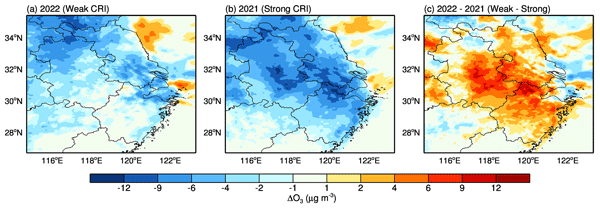
This study investigated how cloud–radiation interactions influence ozone formation in a warming climate. Using measurements, reanalysis data, and models, we found that cloud–radiation interactions can worsen O3 pollution, and climate warming will amplify the influence. We highlight that climate change will pose greater challenges for China's O3 pollution prevention and control, and actions such as reducing O3 precursors emissions and mitigating climate change are urgently needed.
Shuai Zhang, Haoran Li, Dmitri Moisseev, and Matti Leskinen
Atmos. Meas. Tech., 18, 4839–4855, https://doi.org/10.5194/amt-18-4839-2025, https://doi.org/10.5194/amt-18-4839-2025, 2025
Short summary
Short summary
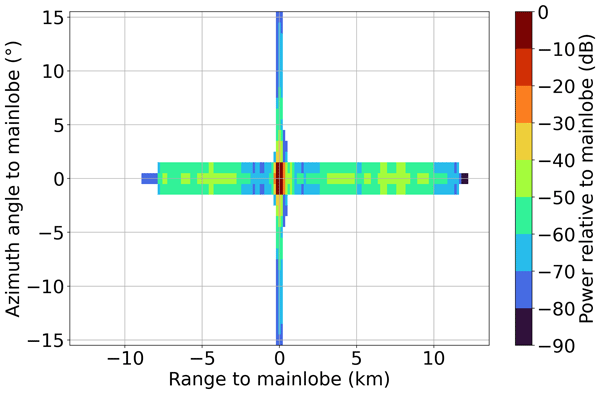
The data quality of weather radar near coastlines can be affected by echoes from ships, and this interference is exacerbated when pulse compression technology is used. This study developed a hybrid ship clutter identification algorithm based on artificial intelligence and heuristic criteria, effectively mitigating the issue. The successful reproduction of ship tracks in the Gulf of Finland supports this conclusion.
Yueli Chen, Yun Xie, Xingwu Duan, and Minghu Ding
Earth Syst. Sci. Data, 17, 1265–1274, https://doi.org/10.5194/essd-17-1265-2025, https://doi.org/10.5194/essd-17-1265-2025, 2025
Short summary
Short summary
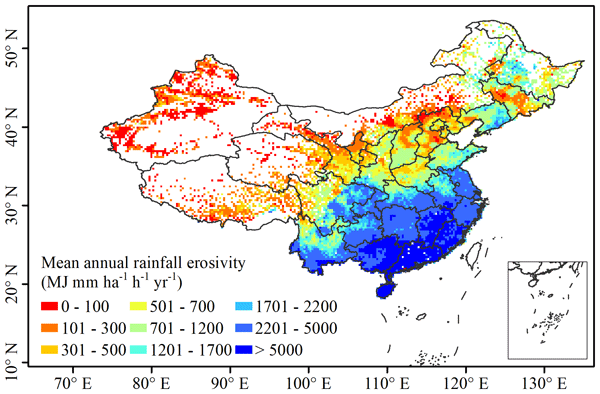
Rainfall erosivity maps are crucial for identifying key areas of water erosion. Due to the limited historical precipitation data, there are certain biases in rainfall erosivity estimates in China. This study develops a new rainfall erosivity map for mainland China using 1 min precipitation data from 60 129 weather stations, revealing that areas exceeding 4000 MJ mm ha−1 h−1yr−1 of annual rainfall erosivity are mainly concentrated in southern China and on the southern Tibetan Plateau.
Lijing Chen, Lei Zhang, Yong She, Zhaoliang Zeng, Yu Zheng, Biao Tian, Wenqian Zhang, Zhaohui Liu, Huizheng Che, and Minghu Ding
Atmos. Chem. Phys., 25, 727–739, https://doi.org/10.5194/acp-25-727-2025, https://doi.org/10.5194/acp-25-727-2025, 2025
Short summary
Short summary
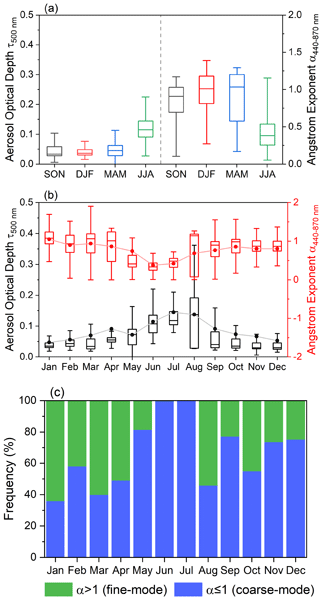
Aerosol optical depth (AOD) at Zhongshan Station varies seasonally, with lower values in summer and higher values in winter. Winter and spring AOD increases due to reduced fine-mode particles, while summer and autumn increases are linked to particle growth. Diurnal AOD variation correlates positively with temperature but negatively with wind speed and humidity. Backward trajectories show that aerosols on high-AOD (low-AOD) days primarily originate from the ocean (interior Antarctica).
Chuanhong Zhao, Yijun Zhang, Dong Zheng, Haoran Li, Sai Du, Xueyan Peng, Xiantong Liu, Pengguo Zhao, Jiafeng Zheng, and Juan Shi
Atmos. Chem. Phys., 24, 11637–11651, https://doi.org/10.5194/acp-24-11637-2024, https://doi.org/10.5194/acp-24-11637-2024, 2024
Short summary
Short summary
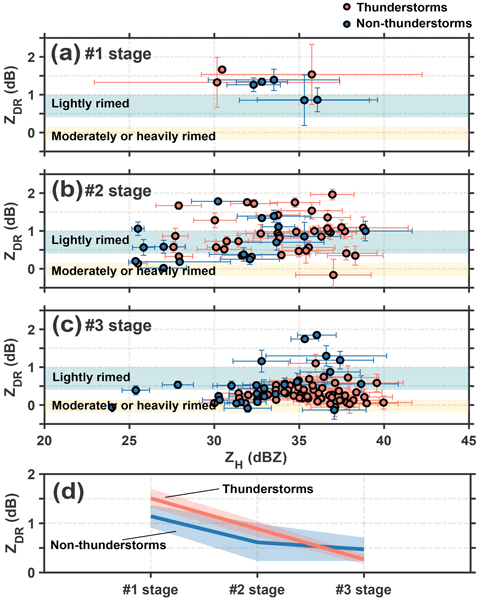
Understanding lightning activity is important for meteorology and atmospheric chemistry. However, the occurrence of lightning activity in clouds is uncertain. In this study, we quantified the difference between isolated thunderstorms and non-thunderstorms. We showed that lightning activity was more likely to occur with more graupel volume and/or riming. A deeper ZDR column was associated with lightning occurrence. This information can aid in a deeper understanding of lighting physics.
Tianming Ma, Zhuang Jiang, Minghu Ding, Pengzhen He, Yuansheng Li, Wenqian Zhang, and Lei Geng
The Cryosphere, 18, 4547–4565, https://doi.org/10.5194/tc-18-4547-2024, https://doi.org/10.5194/tc-18-4547-2024, 2024
Short summary
Short summary
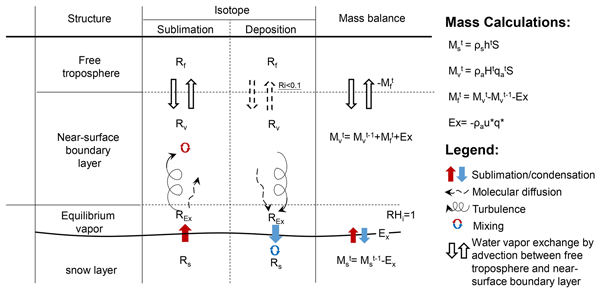
We constructed a box model to evaluate the isotope effects of atmosphere–snow water vapor exchange at Dome A, Antarctica. The results show clear and invisible diurnal changes in surface snow isotopes under summer and winter conditions, respectively. The model also predicts that the annual net effects of atmosphere–snow water vapor exchange would be overall enrichments in snow isotopes since the effects in summer appear to be greater than those in winter at the study site.
Deli Meng, Jianping Guo, Xiaoran Guo, Yinjun Wang, Ning Li, Yuping Sun, Zhen Zhang, Na Tang, Haoran Li, Fan Zhang, Bing Tong, Hui Xu, and Tianmeng Chen
Atmos. Chem. Phys., 24, 8703–8720, https://doi.org/10.5194/acp-24-8703-2024, https://doi.org/10.5194/acp-24-8703-2024, 2024
Short summary
Short summary
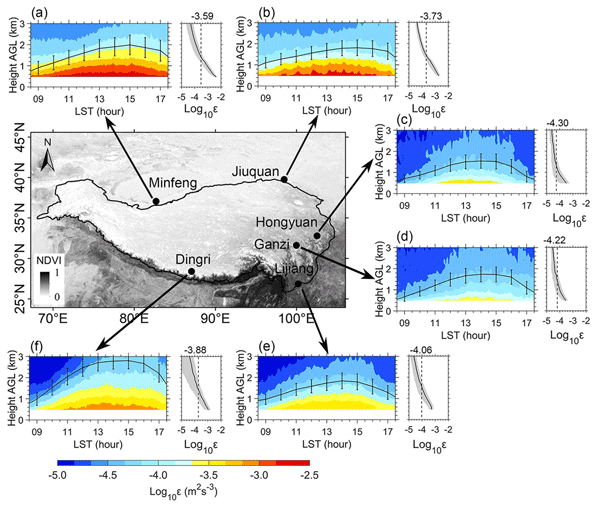
The turbulence in the planetary boundary layer (PBL) over the Tibetan Plateau (TP) remains unclear. Here we elucidate the vertical profile of and temporal variation in the turbulence dissipation rate in the PBL over the TP based on a radar wind profiler (RWP) network. To the best of our knowledge, this is the first time that the turbulence profile over the whole TP has been revealed. Furthermore, the possible mechanisms of clouds acting on the PBL turbulence structure are investigated.
Siyang Cheng, Xinghong Cheng, Jianzhong Ma, Xiangde Xu, Wenqian Zhang, Jinguang Lv, Gang Bai, Bing Chen, Siying Ma, Steffen Ziegler, Sebastian Donner, and Thomas Wagner
Atmos. Chem. Phys., 23, 3655–3677, https://doi.org/10.5194/acp-23-3655-2023, https://doi.org/10.5194/acp-23-3655-2023, 2023
Short summary
Short summary
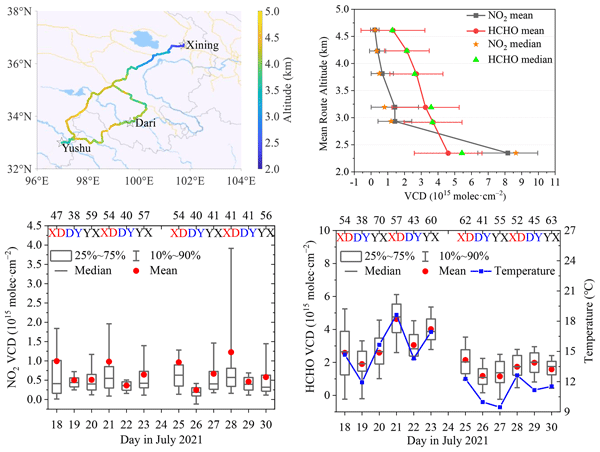
We made mobile MAX-DOAS measurements in the background atmosphere over the Tibetan Plateau in summer 2021. We retrieved the tropospheric NO2 and HCHO vertical column densities (VCDs) along extended driving routes and found a decreasing trend of the VCDs with altitude. Elevated NO2 VCDs along the driving routes could be attributed to enhanced traffic emissions from the towns crossed. The spatio-temporal distribution of the HCHO VCDs correlated strongly with the surface temperature.
Haoran Li, Dmitri Moisseev, Yali Luo, Liping Liu, Zheng Ruan, Liman Cui, and Xinghua Bao
Hydrol. Earth Syst. Sci., 27, 1033–1046, https://doi.org/10.5194/hess-27-1033-2023, https://doi.org/10.5194/hess-27-1033-2023, 2023
Short summary
Short summary
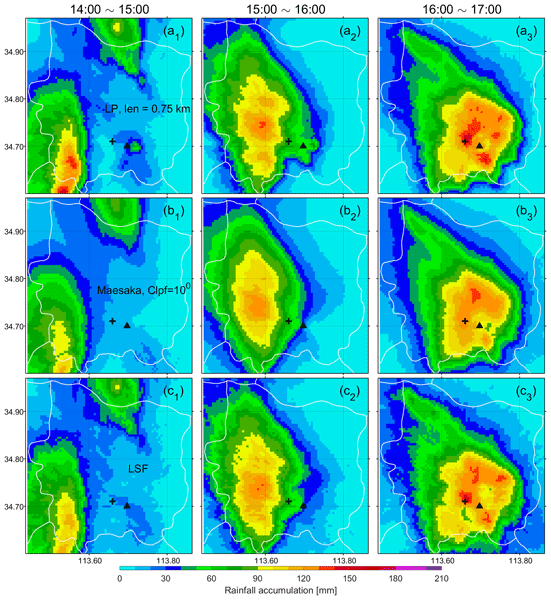
A rainfall event that occurred at Zhengzhou on 20 July 2021 caused tremendous loss of life and property. This study compares different KDP estimation methods as well as the resulting QPE outcomes. The results show that the selection of the KDP estimation method has minimal impact on QPE, whereas the inadequate assumption of rain microphysics and unquantified vertical air motion may explain the underestimated 201.9 mm h−1 record.
Na Li, Ruibo Lei, Petra Heil, Bin Cheng, Minghu Ding, Zhongxiang Tian, and Bingrui Li
The Cryosphere, 17, 917–937, https://doi.org/10.5194/tc-17-917-2023, https://doi.org/10.5194/tc-17-917-2023, 2023
Short summary
Short summary
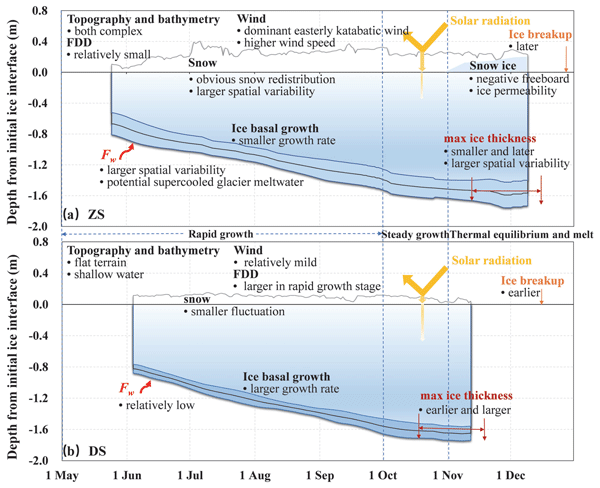
The observed annual maximum landfast ice (LFI) thickness off Zhongshan (Davis) was 1.59±0.17 m (1.64±0.08 m). Larger interannual and local spatial variabilities for the seasonality of LFI were identified at Zhongshan, with the dominant influencing factors of air temperature anomaly, snow atop, local topography and wind regime, and oceanic heat flux. The variability of LFI properties across the study domain prevailed at interannual timescales, over any trend during the recent decades.
Yetang Wang, Xueying Zhang, Wentao Ning, Matthew A. Lazzara, Minghu Ding, Carleen H. Reijmer, Paul C. J. P. Smeets, Paolo Grigioni, Petra Heil, Elizabeth R. Thomas, David Mikolajczyk, Lee J. Welhouse, Linda M. Keller, Zhaosheng Zhai, Yuqi Sun, and Shugui Hou
Earth Syst. Sci. Data, 15, 411–429, https://doi.org/10.5194/essd-15-411-2023, https://doi.org/10.5194/essd-15-411-2023, 2023
Short summary
Short summary
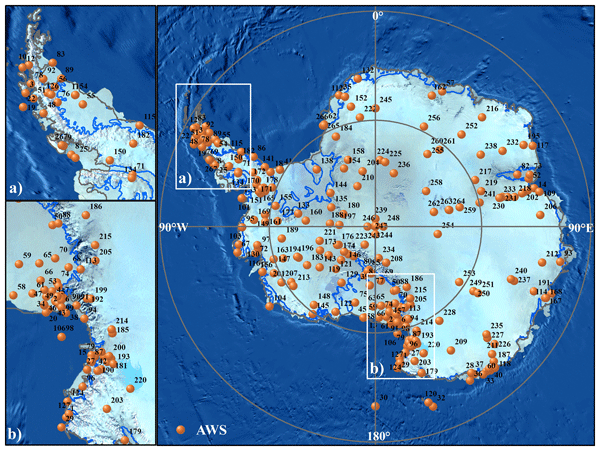
Here we construct a new database of Antarctic automatic weather station (AWS) meteorological records, which is quality-controlled by restrictive criteria. This dataset compiled all available Antarctic AWS observations, and its resolutions are 3-hourly, daily and monthly, which is very useful for quantifying spatiotemporal variability in weather conditions. Furthermore, this compilation will be used to estimate the performance of the regional climate models or meteorological reanalysis products.
Minghu Ding, Xiaowei Zou, Qizhen Sun, Diyi Yang, Wenqian Zhang, Lingen Bian, Changgui Lu, Ian Allison, Petra Heil, and Cunde Xiao
Earth Syst. Sci. Data, 14, 5019–5035, https://doi.org/10.5194/essd-14-5019-2022, https://doi.org/10.5194/essd-14-5019-2022, 2022
Short summary
Short summary
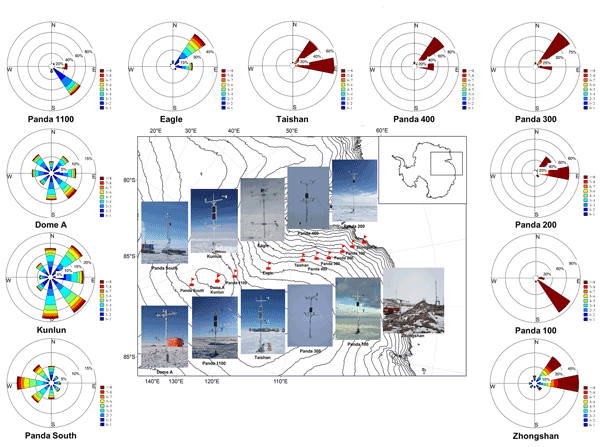
The PANDA automatic weather station (AWS) network consists of 11 stations deployed along a transect from the coast (Zhongshan Station) to the summit of the East Antarctic Ice Sheet (Dome A). It covers the different climatic and topographic units of East Antarctica. All stations record hourly air temperature, relative humidity, air pressure, wind speed and direction at two or three heights. The PANDA AWS dataset commences from 1989 and is planned to be publicly available into the future.
Han Ding, Haoran Li, and Liping Liu
Atmos. Meas. Tech., 15, 6181–6200, https://doi.org/10.5194/amt-15-6181-2022, https://doi.org/10.5194/amt-15-6181-2022, 2022
Short summary
Short summary
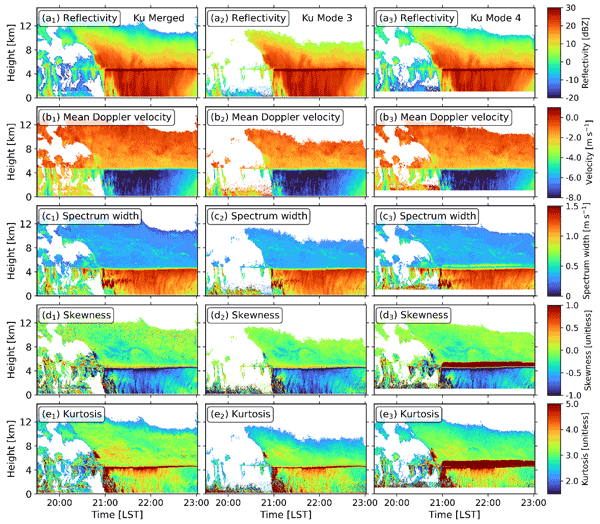
In this study, a framework for processing the Doppler spectra observations of a multi-mode pulse compression Ka–Ku cloud radar system is presented. We first proposed an approach to identify and remove the clutter signals in the Doppler spectrum. Then, we developed a new algorithm to remove the range sidelobe at the modes implementing the pulse compression technique. The radar observations from different modes were then merged using the shift-then-average method.

Yueli Chen, Xingwu Duan, Minghu Ding, Wei Qi, Ting Wei, Jianduo Li, and Yun Xie
Earth Syst. Sci. Data, 14, 2681–2695, https://doi.org/10.5194/essd-14-2681-2022, https://doi.org/10.5194/essd-14-2681-2022, 2022
Short summary
Short summary
We reconstructed the first annual rainfall erosivity dataset for the Tibetan Plateau in China. The dataset covers 71 years in a 0.25° grid. The reanalysis precipitation data are employed in combination with the densely spaced in situ precipitation observations to generate the dataset. The dataset can supply fundamental data for quantifying the water erosion, and extend our knowledge of the rainfall-related hazard prediction on the Tibetan Plateau.
Cited articles
Agosta, C., Fettweis, X., and Datta, R.: Evaluation of the CMIP5 models in the aim of regional modelling of the Antarctic surface mass balance, The Cryosphere, 9, 2311–2321, https://doi.org/10.5194/tc-9-2311-2015, 2015.
Alexander, S. P., Protat, A., Berne, A., and Ackermann, L.: Radar-derived snowfall microphysical properties at davis, antarctica, J. Geophys. Res.-Atmos., 128, e2022JD038389, https://doi.org/10.1029/2022JD038389, 2023.
DeConto, R. M. and Pollard, D.: Contribution of antarctica to past and future sea-level rise, Nature, 531, 591–597, https://doi.org/10.1038/nature17145, 2016.
Ding, H., Li, H., and Liu, L.: Improved spectral processing for a multi-mode pulse compression Ka–Ku-band cloud radar system, Atmos. Meas. Tech., 15, 6181–6200, https://doi.org/10.5194/amt-15-6181-2022, 2022a.
Ding, M., Han, W., Zhang, T., Yue, X., Fyke, J., Liu, G., and Xiao, C.: Towards more snow days in summer since 2001 at the great wall station, antarctic peninsula: The role of the amundsen sea low, Adv. Atmos. Sci., 37, 494–504, https://doi.org/10.1007/s00376-019-9196-5, 2020.
Ding, M., Zou, X., Sun, Q., Yang, D., Zhang, W., Bian, L., Lu, C., Allison, I., Heil, P., and Xiao, C.: The PANDA automatic weather station network between the coast and Dome A, East Antarctica, Earth Syst. Sci. Data, 14, 5019–5035, https://doi.org/10.5194/essd-14-5019-2022, 2022b.
Grazioli, J., Madeleine, J.-B., Gallée, H., Forbes, R. M., Genthon, C., Krinner, G., and Berne, A.: Katabatic winds diminish precipitation contribution to the antarctic ice mass balance, P. Natl. Acad. Sci. USA, 114, 10858–10863, https://doi.org/10.1073/pnas.1707633114, 2017a.
Grazioli, J., Genthon, C., Boudevillain, B., Duran-Alarcon, C., Del Guasta, M., Madeleine, J.-B., and Berne, A.: Measurements of precipitation in Dumont d'Urville, Adélie Land, East Antarctica, The Cryosphere, 11, 1797–1811, https://doi.org/10.5194/tc-11-1797-2017, 2017b.
Grazioli, J., Berne, A., Ferrone, A., and Gehring, J.: Weather radar measurements in antarctica, in: Advances in Weather Radar. Volume 2: Precipitation science, scattering and processing algorithms, edited by: Bringi, V. N., Mishra, K. V., and Thurai, M., Institution of Engineering and Technology, 409–438, https://doi.org/10.1049/SBRA557G_ch10, 2023.
Li, H. and Moisseev, D.: Two layers of melting ice particles within a single radar bright band: Interpretation and implications, Geophys. Res. Lett., 47, e2020GL087499, https://doi.org/10.1029/2020GL087499, 2020.
Li, H., Tiira, J., von Lerber, A., and Moisseev, D.: Towards the connection between snow microphysics and melting layer: insights from multifrequency and dual-polarization radar observations during BAECC, Atmos. Chem. Phys., 20, 9547–9562, https://doi.org/10.5194/acp-20-9547-2020, 2020.
Maahn, M. and Kollias, P.: Improved Micro Rain Radar snow measurements using Doppler spectra post-processing, Atmos. Meas. Tech., 5, 2661–2673, https://doi.org/10.5194/amt-5-2661-2012, 2012.
Matsuoka, K., Skoglund, A., Roth, G., de Pomereu, J., Griffiths, H., Headland, R., Herried, B., Katsumata, K., Le Brocq, A., Licht, K., Morgan, F., Neff, P. D., Ritz, C., Scheinert, M., Tamura, T., Van de Putte, A., van den Broeke, M., von Deschwanden, A., Deschamps-Berger, C., Van Liefferinge, B., Tronstad, S., and Melvær, Y.: Quantarctica, an integrated mapping environment for antarctica, the southern ocean, and sub-antarctic islands, Environ. Model. Softw., 140, 105015, https://doi.org/10.1016/j.envsoft.2021.105015, 2021.
Planat, N., Gehring, J., Vignon, É., and Berne, A.: Identification of snowfall microphysical processes from Eulerian vertical gradients of polarimetric radar variables, Atmos. Meas. Tech., 14, 4543–4564, https://doi.org/10.5194/amt-14-4543-2021, 2021.
Roussel, M., Wiener, V., Genthon, C., Vignon, E., Bazile, E., Agosta, C., Berne, A., Durán-Alarcón, C., Dufresne, J., and Claud, C.: Assessing the simulation of snowfall at dumont d'urville, antarctica, during the YOPP-SH special observing campaign, Q. J. Roy. Meteor. Soc., 149, 1391–1406, https://doi.org/10.1002/qj.4463, 2023.
Scarchilli, C., Ciardini, V., Grigioni, P., Iaccarino, A., Silvestri, L. D., Proposito, M., Dolci, S., Camporeale, G., Schioppo, R., Antonelli, A., Baldini, L., Roberto, N., Argentini, S., Bracci, A., and Frezzotti, M.: Characterization of snowfall estimated by in situ and ground-based remote-sensing observations at terra nova bay, victoria land, antarctica, J. Glaciol., 66, 1006–1023, https://doi.org/10.1017/jog.2020.70, 2020.
Schoger, S. Y., Moisseev, D., Lerber, A. von, Crewell, S., and Ebell, K.: Snowfall-rate retrieval for K- and W-band radar measurements designed in hyytiälä, finland, and tested at ny-ålesund, svalbard, norway, J. Appl. Meteorol. Climatol., https://doi.org/10.1175/JAMC-D-20-0095.1, 2021.
Souverijns, N., Gossart, A., Lhermitte, S., Gorodetskaya, I. V., Kneifel, S., Maahn, M., Bliven, F. L., and van Lipzig, N. P. M.: Estimating radar reflectivity – snowfall rate relationships and their uncertainties over antarctica by combining disdrometer and radar observations, Atmos. Res., 196, 211–223, https://doi.org/10.1016/j.atmosres.2017.06.001, 2017.
van Wessem, J. M., van de Berg, W. J., Noël, B. P. Y., van Meijgaard, E., Amory, C., Birnbaum, G., Jakobs, C. L., Krüger, K., Lenaerts, J. T. M., Lhermitte, S., Ligtenberg, S. R. M., Medley, B., Reijmer, C. H., van Tricht, K., Trusel, L. D., van Ulft, L. H., Wouters, B., Wuite, J., and van den Broeke, M. R.: Modelling the climate and surface mass balance of polar ice sheets using RACMO2 – Part 2: Antarctica (1979–2016), The Cryosphere, 12, 1479–1498, https://doi.org/10.5194/tc-12-1479-2018, 2018.
Wiener, V., Roussel, M.-L., Genthon, C., Vignon, É., Grazioli, J., and Berne, A.: A 7-year record of vertical profiles of radar measurements and precipitation estimates at Dumont d'Urville, Adélie Land, East Antarctica, Earth Syst. Sci. Data, 16, 821–836, https://doi.org/10.5194/essd-16-821-2024, 2024.
Zhang, W., Wang, X., Wu, L., Bian, L., Lu, C., and Ding, M.: Meteorological observation data from the Great Wall station and Zhongshan station in Antarctica during the past 35 years. V2, Science Data Bank [data set], https://doi.org/10.57760/sciencedb.j00001.00980, 2024.
Short summary
This study reports two years of Micro Rain Radar observations from Great Wall Station, from March 2024 to February 2026. Near-surface precipitation and snowfall occurred during 32 % and 21 % of the time. The signal changed little with height, suggesting frequent shallow snowfall. Weak winds had little effect, while stronger winds likely affected radar observations below 0.7 km. A radar-based snowfall estimate shows that the ERA5 reanalysis product underestimates cumulative snowfall.
This study reports two years of Micro Rain Radar observations from Great Wall Station, from...


