
Articles | Volume 20, issue 4
https://doi.org/10.5194/tc-20-2257-2026
© Author(s) 2026. This work is distributed under
the Creative Commons Attribution 4.0 License.
the Creative Commons Attribution 4.0 License.
https://doi.org/10.5194/tc-20-2257-2026
© Author(s) 2026. This work is distributed under
the Creative Commons Attribution 4.0 License.
the Creative Commons Attribution 4.0 License.
Research article
| 
21 Apr 2026
Research article |
| 21 Apr 2026
| 21 Apr 2026
Glacial decline next to stable permafrost in the Dry Andes? Vertical glacier surface changes and rock glacier kinematics based on Pléiades imagery (Rodeo basin, 2019–2025)

Department of Geography, University of Bonn, Bonn, 53115, Germany
Jan Blöthe
Faculty of Environment and Natural Resources, University of Freiburg, Freiburg, 79104, Germany
Diego Cusicanqui
Institut des Sciences de la Terre (ISTerre) CNES, CNRS, IRD, Univ. Grenoble Alpes, Grenoble, 38000, France
Simon Ebert
Faculty of Environment and Natural Resources, University of Freiburg, Freiburg, 79104, Germany
current address: Department of Earth and Planetary Sciences, ETH Zurich, Zurich, 8092, Switzerland
Rainer Bell
Department of Geography, University of Bonn, Bonn, 53115, Germany
Xavier Bodin
Laboratoire EDYTEM, CNRS/Université Savoie Mont Blanc, Le Bourget du Lac, 73370, France
Lothar Schrott
Department of Geography, University of Bonn, Bonn, 53115, Germany
Related authors
Verena Bischoff, Pia Petzold, and Melanie Stammler
Polarforschung, 94, 11–15, https://doi.org/10.5194/polf-94-11-2026, https://doi.org/10.5194/polf-94-11-2026, 2026
Short summary
Short summary
The International Conference on Permafrost 2024 brought together researchers and local voices in Whitehorse, Canada, to explore diverse perspectives on permafrost thaw and adaptation to the changing Arctic environments. With support from the German Society for Polar Research, three early career researchers from Germany joined this global exchange, gaining insight, inspiration, and valuable new connections within the scientific community.
Verena Bischoff, Pia Petzold, and Melanie Stammler
Polarforschung, 94, 11–15, https://doi.org/10.5194/polf-94-11-2026, https://doi.org/10.5194/polf-94-11-2026, 2026
Short summary
Short summary
The International Conference on Permafrost 2024 brought together researchers and local voices in Whitehorse, Canada, to explore diverse perspectives on permafrost thaw and adaptation to the changing Arctic environments. With support from the German Society for Polar Research, three early career researchers from Germany joined this global exchange, gaining insight, inspiration, and valuable new connections within the scientific community.
Simon Filhol, Clément Misset, Noélie Bontemps, Diego Cusicanqui, Emmanuel Paquet, Marie Dumont, Olivier Gagliardini, Pascal Lacroix, Simon Gascoin, Guillaume Thirel, Julien Brondex, Pascal Hagenmuller, Eric Larose, Philipp Schoeneich, Denis Roy, Emmanuel Thibert, Nicolas Eckert, Félix de Montety, Robin Mainieri, Alexandre Hauet, Frédéric Gottardi, Johan Berthet, Alexandre Baratier, Frédéric Liébault, Małgorzata Chmiel, Guillaume Piton, Guillaume Chambon, Guillaume James, Philippe Frey, Philip Deline, Laurent Astrade, Christian Vincent, Dominique Laigle, Alain Recking, Fatima Karbou, Adrien Mauss, Mylène Bonnefoy-Demongeot, Firmin Fontaine, Mickael Langlais, Etienne Berthier, and Antoine Blanc
EGUsphere, https://doi.org/10.5194/egusphere-2026-971, https://doi.org/10.5194/egusphere-2026-971, 2026
Short summary
Short summary
On June 21 2024, the village of La Bérarde, in the French Alps, was devastated by a flood destroying centuries old buildings. This study is an interdisciplinary work to decipher the causes and chronology of the event. The flood started with decadal rain falling on a thick snowpack. A lake observed on top of a glacier few days prior, had drained post event. With climate change, should we expect more similar compound events for alpine communities?
Laurane Charrier, Nathan Lioret, Fanny Brun, Amaury Dehecq, Romain Millan, Anuar Togaibekov, Andrea Walpersdorf, Diego Cusicanqui, and Antoine Rabatel
EGUsphere, https://doi.org/10.5194/egusphere-2026-946, https://doi.org/10.5194/egusphere-2026-946, 2026
Short summary
Short summary
Sub-annual glacier surface velocity derived from remote sensing images are receiving increasing attention. In the meantime, systematic seasonal errors (i.e. biases) have been reported in time series derived from optical images on various landforms, such as landslides or dunes. The extent to which such biases affect glacier velocity maps remains poorly investigated. Here, we propose characterizing the amplitude and spatial distribution of these seasonal biases.
Katy Medina, Hairo León, Edwin Badillo-Rivera, Edwin Loarte, Xavier Bodín, and José Úbeda
Earth Syst. Sci. Data, 18, 345–369, https://doi.org/10.5194/essd-18-345-2026, https://doi.org/10.5194/essd-18-345-2026, 2026
Short summary
Short summary
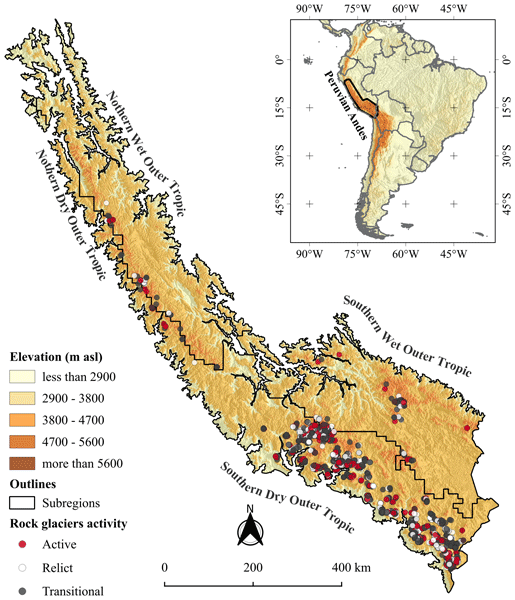
We created the first comprehensive inventory of Peru's rock glaciers: 2338 landforms in the Andes and filling the information gap in this mountainous region. Using satellite imagery, we mapped their distribution, finding most of them in southern Peru, above 4800 m a.s.l. and conditioned mainly by low temperature and precipitation. This dataset helps scientists to follow the evolution of permafrost and local planners to manage water resources and risks in the mountains.
Ikram Zangana, Rainer Bell, Lucian Drăguţ, Flavius Sîrbu, and Lothar Schrott
Nat. Hazards Earth Syst. Sci., 25, 4787–4806, https://doi.org/10.5194/nhess-25-4787-2025, https://doi.org/10.5194/nhess-25-4787-2025, 2025
Short summary
Short summary
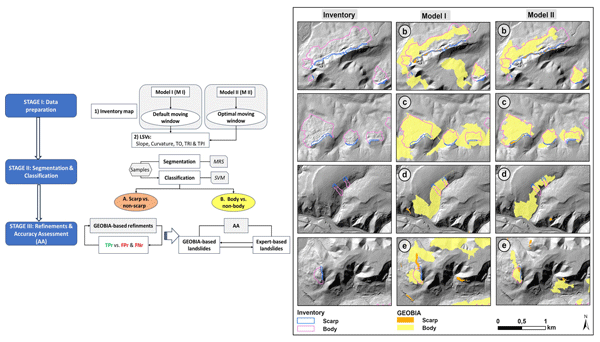
Mapping landslides is essential for understanding hazards and risk assessment. This study used a geographic object-based image analysis (GEOBIA) approach with high-resolution lidar data to map forest-covered historical landslides in Jena, Germany. Optimizing the moving-window size for lidar derivatives improved accuracy, detecting more landslides and reducing errors. This method showcases the potential of lidar-based approaches for global landslide inventory and hazard assessment.
Annette Sophie Bösmeier and Jan Henrik Blöthe
E&G Quaternary Sci. J., 74, 301–324, https://doi.org/10.5194/egqsj-74-301-2025, https://doi.org/10.5194/egqsj-74-301-2025, 2025
Short summary
Short summary
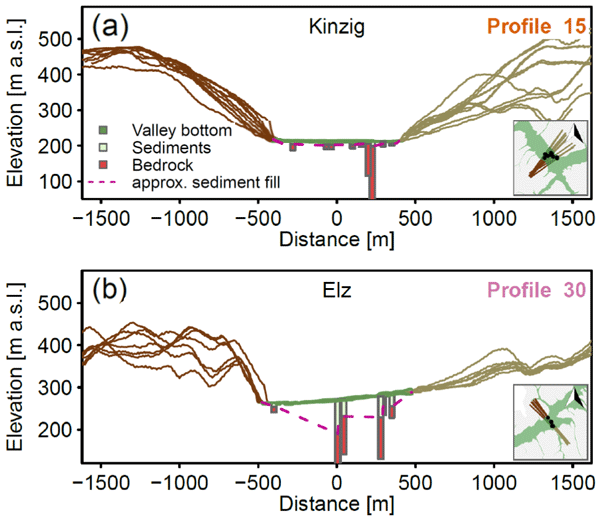
We estimated the thickness, spatial distribution, and volumes of alluvial valley fills in the southwestern Black Forest utilizing an extensive borehole database to compile local valley cross sections and model sediment depth above bedrock. Our results reveal considerable spatial heterogeneity and underscore the importance of tectonic boundary conditions on the valley infill in addition to further geologic, hydrologic, and climatologic conditions and processes interacting with fluvial dynamics.
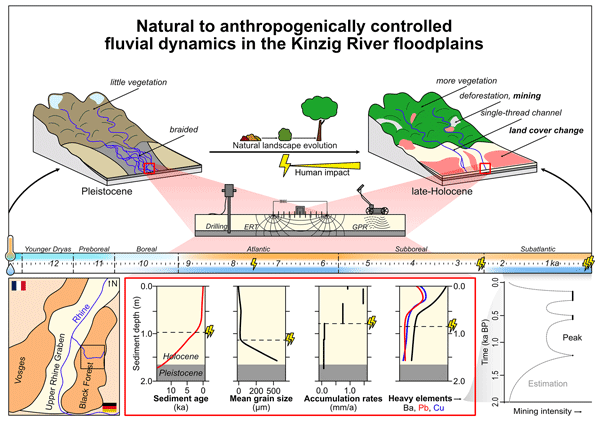
Charlotte E. Engelmann, Frank Preusser, Alexander Fülling, Jakob Wilk, Elisabeth Eiche, Dennis Quandt, Stefan Hergarten, and Jan H. Blöthe
E&G Quaternary Sci. J., 74, 235–262, https://doi.org/10.5194/egqsj-74-235-2025, https://doi.org/10.5194/egqsj-74-235-2025, 2025
Short summary
Short summary
It is unclear since when and how meso-scale central European river systems have been dominated by human instead of natural influences. Here, the floodplain sediments of the Kinzig River, southwestern Germany, were studied as they recorded natural and human landscape changes. Sediment deposition phases were found, the modern phase of which coincides with increased deposition and heavy metal contaminations that correlate with mining records, indicating that the river system has shifted intensely over 1000 years.
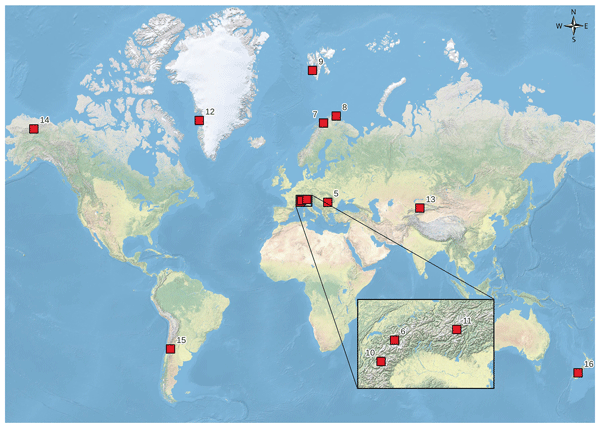
Line Rouyet, Tobias Bolch, Francesco Brardinoni, Rafael Caduff, Diego Cusicanqui, Margaret Darrow, Reynald Delaloye, Thomas Echelard, Christophe Lambiel, Cécile Pellet, Lucas Ruiz, Lea Schmid, Flavius Sirbu, and Tazio Strozzi
Earth Syst. Sci. Data, 17, 4125–4157, https://doi.org/10.5194/essd-17-4125-2025, https://doi.org/10.5194/essd-17-4125-2025, 2025
Short summary
Short summary
Rock glaciers are landforms generated by the creep of frozen ground (permafrost) in cold-climate mountains. Mapping rock glaciers contributes to documenting the distribution and the dynamics of mountain permafrost. We compiled inventories documenting the location, the characteristics, and the extent of rock glaciers in 12 mountain regions around the world. In each region, a team of operators performed the work following common rules and agreed on final solutions when discrepancies were identified.
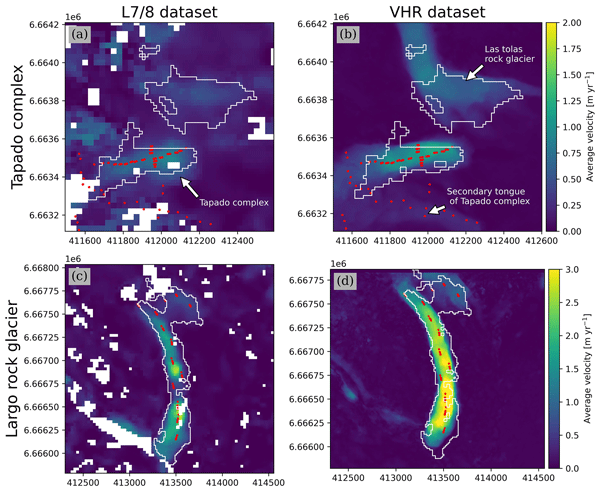
Diego Cusicanqui, Pascal Lacroix, Xavier Bodin, Benjamin Aubrey Robson, Andreas Kääb, and Shelley MacDonell
The Cryosphere, 19, 2559–2581, https://doi.org/10.5194/tc-19-2559-2025, https://doi.org/10.5194/tc-19-2559-2025, 2025
Short summary
Short summary
This study presents a robust methodological approach to detect and analyse rock glacier kinematics using Landsat 7/Landsat 8 imagery. In the semiarid Andes, 382 landforms were monitored, showing an average velocity of 0.37 ± 0.07 m yr⁻¹ over 24 years, with rock glaciers moving 23 % faster. Results demonstrate the feasibility of using medium-resolution optical imagery, combined with radar interferometry, to monitor rock glacier kinematics with widely available satellite datasets.
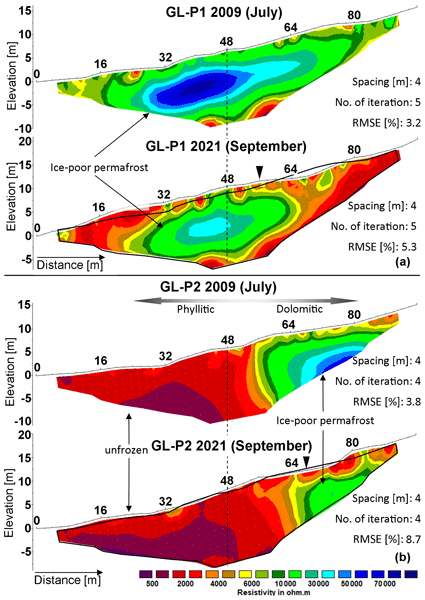
Johannes Buckel, Jan Mudler, Rainer Gardeweg, Christian Hauck, Christin Hilbich, Regula Frauenfelder, Christof Kneisel, Sebastian Buchelt, Jan Henrik Blöthe, Andreas Hördt, and Matthias Bücker
The Cryosphere, 17, 2919–2940, https://doi.org/10.5194/tc-17-2919-2023, https://doi.org/10.5194/tc-17-2919-2023, 2023
Short summary
Short summary
This study reveals permafrost degradation by repeating old geophysical measurements at three Alpine sites. The compared data indicate that ice-poor permafrost is highly affected by temperature warming. The melting of ice-rich permafrost could not be identified. However, complex geomorphic processes are responsible for this rather than external temperature change. We suspect permafrost degradation here as well. In addition, we introduce a new current injection method for data acquisition.
Thomas O. Hoffmann, Yannik Baulig, Stefan Vollmer, Jan H. Blöthe, Karl Auerswald, and Peter Fiener
Earth Surf. Dynam., 11, 287–303, https://doi.org/10.5194/esurf-11-287-2023, https://doi.org/10.5194/esurf-11-287-2023, 2023
Short summary
Short summary
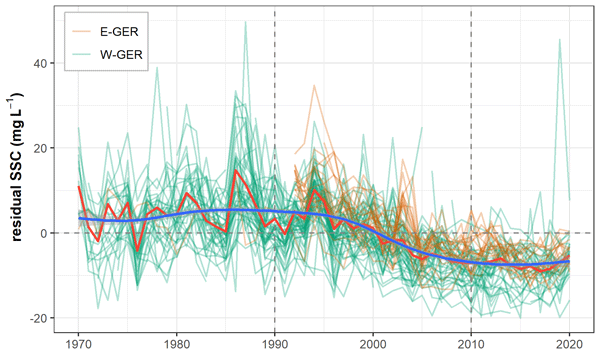
We analyzed more than 440 000 measurements from suspended sediment monitoring to show that suspended sediment concentration (SSC) in large rivers in Germany strongly declined by 50 % between 1990 and 2010. We argue that SSC is approaching the natural base level that was reached during the mid-Holocene. There is no simple explanation for this decline, but increased sediment retention in upstream headwaters is presumably the major reason for declining SSC in the large river channels studied.
Suvrat Kaushik, Ludovic Ravanel, Florence Magnin, Yajing Yan, Emmanuel Trouve, and Diego Cusicanqui
The Cryosphere, 16, 4251–4271, https://doi.org/10.5194/tc-16-4251-2022, https://doi.org/10.5194/tc-16-4251-2022, 2022
Short summary
Short summary
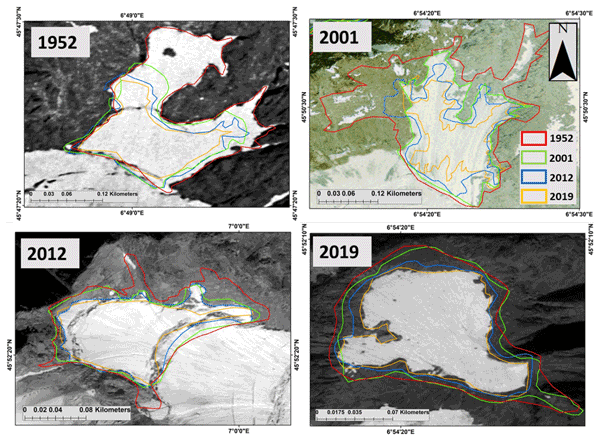
Climate change impacts all parts of the cryosphere but most importantly the smaller ice bodies like ice aprons (IAs). This study is the first attempt on a regional scale to assess the impacts of the changing climate on these small but very important ice bodies. Our study shows that IAs have consistently lost mass over the past decades. The effects of climate variables, particularly temperature and precipitation and topographic factors, were analysed on the loss of IA area.
Aldo Bertone, Chloé Barboux, Xavier Bodin, Tobias Bolch, Francesco Brardinoni, Rafael Caduff, Hanne H. Christiansen, Margaret M. Darrow, Reynald Delaloye, Bernd Etzelmüller, Ole Humlum, Christophe Lambiel, Karianne S. Lilleøren, Volkmar Mair, Gabriel Pellegrinon, Line Rouyet, Lucas Ruiz, and Tazio Strozzi
The Cryosphere, 16, 2769–2792, https://doi.org/10.5194/tc-16-2769-2022, https://doi.org/10.5194/tc-16-2769-2022, 2022
Short summary
Short summary
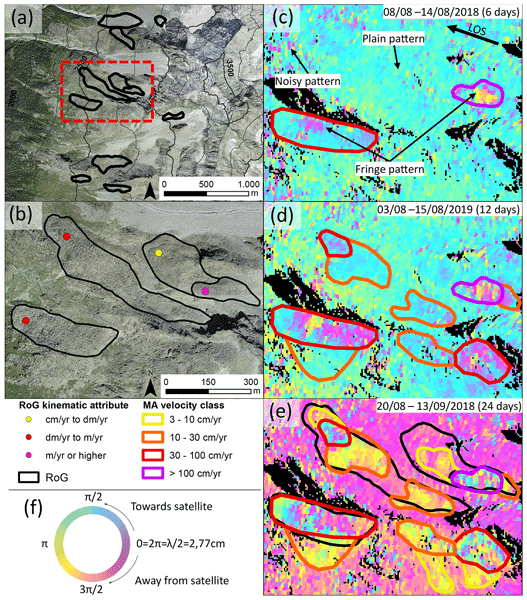
We present the guidelines developed by the IPA Action Group and within the ESA Permafrost CCI project to include InSAR-based kinematic information in rock glacier inventories. Nine operators applied these guidelines to 11 regions worldwide; more than 3600 rock glaciers are classified according to their kinematics. We test and demonstrate the feasibility of applying common rules to produce homogeneous kinematic inventories at global scale, useful for hydrological and climate change purposes.
Benjamin Lehmann, Robert S. Anderson, Xavier Bodin, Diego Cusicanqui, Pierre G. Valla, and Julien Carcaillet
Earth Surf. Dynam., 10, 605–633, https://doi.org/10.5194/esurf-10-605-2022, https://doi.org/10.5194/esurf-10-605-2022, 2022
Short summary
Short summary
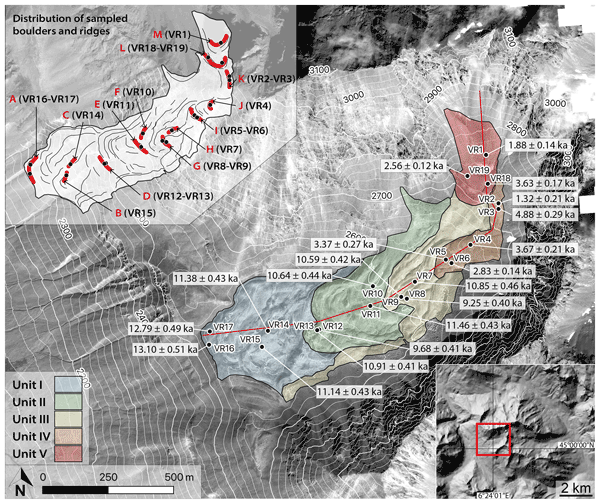
Rock glaciers are some of the most frequently occurring landforms containing ice in mountain environments. Here, we use field observations, analysis of aerial and satellite images, and dating methods to investigate the activity of the rock glacier of the Vallon de la Route in the French Alps. Our results suggest that the rock glacier is characterized by two major episodes of activity and that the rock glacier system promotes the maintenance of mountain erosion.
Michael Dietze, Rainer Bell, Ugur Ozturk, Kristen L. Cook, Christoff Andermann, Alexander R. Beer, Bodo Damm, Ana Lucia, Felix S. Fauer, Katrin M. Nissen, Tobias Sieg, and Annegret H. Thieken
Nat. Hazards Earth Syst. Sci., 22, 1845–1856, https://doi.org/10.5194/nhess-22-1845-2022, https://doi.org/10.5194/nhess-22-1845-2022, 2022
Short summary
Short summary
The flood that hit Europe in July 2021, specifically the Eifel, Germany, was more than a lot of fast-flowing water. The heavy rain that fell during the 3 d before also caused the slope to fail, recruited tree trunks that clogged bridges, and routed debris across the landscape. Especially in the upper parts of the catchments the flood was able to gain momentum. Here, we discuss how different landscape elements interacted and highlight the challenges of holistic future flood anticipation.
Cited articles
Al-Yaari, A., Condom, T., Junquas, C., Rabatel, A., Ramseyer, V., Sicart, J.-E., Masiokas, M., Cauvy-Fraunié, S., and Dangles, O.: Climate Variability and Glacier Evolution at Selected Sites Across the World: Past Trends and Future Projections, Earth's Future, 11, e2023EF003618, https://doi.org/10.1029/2023EF003618, 2023.
Arenson, L. U., Harrington, J. S., Koenig, C. E. M., and Wainstein, P. A.: Mountain Permafrost Hydrology–A Practical Review Following Studies from the Andes, Geosciences, 12, 48, https://doi.org/10.3390/geosciences12020048, 2022.
ASTRIUM: Pléiades Imagery User Guide, Technical Report, USRPHR-DT-125-SPOT-2.0, 1–106, 2012.
Ayala, A., Pellicciotti, F., MacDonell, S., McPhee, J., Vivero, S., Campos, C., and Egli, P.: Modelling the hydrological response of debris-free and debris-covered glaciers to present climatic conditions in the semiarid Andes of central Chile, Hydrol. Process., 30, 4036–4058, https://doi.org/10.1002/hyp.10971, 2016.
Ayala, Á., Robson, B., Navarro, G., MacDonell, S., Kinnard, C., Vivero, S., Thomas, D., Moreno, F., Yáñez, E., Schaffer, N., Segovia, A., Pętlicki, M., Retamal, F., Schauwecker, S., and Casassa, G.: Monitoring the physical processes driving the mass loss of Tapado Glacier, Dry Andes of Chile, J. Glaciol., 71, e52, https://doi.org/10.1017/jog.2025.24, 2025.
Bagnardi, M., González, P. J., and Hooper, A.: High-resolution digital elevation model from tri-stereo Pleiades-1 satellite imagery for lava flow volume estimates at Fogo Volcano, Geophys. Res. Lett., 43, 6267–6275, https://doi.org/10.1002/2016GL069457, 2016.
Barsch, D.: Permafrost creep and rockglaciers, Permafrost Periglac., 3, 175–188, https://doi.org/10.1002/ppp.3430030303, 1992.
Beraud, L., Cusicanqui, D., Rabatel, A., Brun, F., Vincent, C., and Six, D.: Glacier-wide seasonal and annual geodetic mass balances from Pléiades stereo images: application to the Glacier d'Argentière, French Alps, J. Glaciol., 69, 525–537, https://doi.org/10.1017/jog.2022.79, 2023.
Berthier, E., Vincent, C., Magnússon, E., Gunnlaugsson, Á. Þ., Pitte, P., Le Meur, E., Masiokas, M., Ruiz, L., Pálsson, F., Belart, J. M. C., and Wagnon, P.: Glacier topography and elevation changes derived from Pléiades sub-meter stereo images, The Cryosphere, 8, 2275–2291, https://doi.org/10.5194/tc-8-2275-2014, 2014.
Berthier, E., Lebreton, J., Fontannaz, D., Hosford, S., Belart, J. M.-C., Brun, F., Andreassen, L. M., Menounos, B., and Blondel, C.: The Pléiades Glacier Observatory: high-resolution digital elevation models and ortho-imagery to monitor glacier change, The Cryosphere, 18, 5551–5571, https://doi.org/10.5194/tc-18-5551-2024, 2024.
Beyer, R. A., Alexandrov, O., and McMichael, S.: The Ames Stereo Pipeline: NASA's Open Source Software for Deriving and Processing Terrain Data, Earth and Space Science, 5, 537–548, https://doi.org/10.1029/2018EA000409, 2018.
Blöthe, J. H., Falaschi, D., Vivero, S., and Tadono, T.: Rock Glacier Kinematics in the Valles Calchaquíes Region, Northwestern Argentina, From Multi-Temporal Aerial and Satellite Imagery (1968–2023), Permafrost Periglac., 36, 123–136, https://doi.org/10.1002/ppp.2260, 2024.
Blöthe, J. H., Halla, C., Schwalbe, E., Bottegal, E., Trombotto Liaudat, D., and Schrott, L.: Surface velocity fields of active rock glaciers and ice-debris complexes in the Central Andes of Argentina, Earth Surf. Proc. Land., 46, 504–522, https://doi.org/10.1002/esp.5042, 2021.
Bodin, X., Rojas, F., and Brenning, A.: Status and evolution of the cryosphere in the Andes of Santiago (Chile, 33.5°S.), Geomorphology, 118, 453–464, https://doi.org/10.1016/j.geomorph.2010.02.016, 2010.
Borsdorf, A. and Stadel, C.: Die Anden. Ein geographisches Portrait, Springer, Berlin, Heidelberg, 1–465, ISBN 10 3827424577, ISBN 13 978-3827424570,, 2013.
Braun, M. H., Malz, P., Sommer, C., Farías-Barahona, D., Sauter, T., Casassa, G., Soruco, A., Skvarca, P., and Seehaus, T. C.: Constraining glacier elevation and mass changes in South America, Nat. Clim. Change, 9, 130–136, https://doi.org/10.1038/s41558-018-0375-7, 2019.
Caro, A., Condom, T., Rabatel, A., Champollion, N., García, N., and Saavedra, F.: Hydrological response of Andean catchments to recent glacier mass loss, The Cryosphere, 18, 2487–2507, https://doi.org/10.5194/tc-18-2487-2024, 2024.
Cogley, J. G., Hock, R., Rasmussen, L. A., Arendt, A. A., Bauder, 85 A., Braithwaite, R. J., Jansson, P., Kaser, G., Möller, M., Nicholson, L., and Zemp, M.: Glossary of glacier mass balance and related terms, Paris, France, IHP-VII Technical Documents in Hydrology No. 86, IACS Contribution No. 2, UNESCO-IHP, 1–114, 2011.
Cicoira, A., Beutel, J., Faillettaz, J., Gärtner-Roer, I., and Vieli, A.: Resolving the influence of temperature forcing through heat conduction on rock glacier dynamics: a numerical modelling approach, The Cryosphere, 13, 927–942, https://doi.org/10.5194/tc-13-927-2019, 2019.
Cusicanqui, D., Lacroix, P., Bodin, X., Robson, B. A., Kääb, A., and MacDonell, S.: Detection and reconstruction of rock glacier kinematics over 24 years (2000–2024) from Landsat imagery, The Cryosphere, 19, 2559–2581, https://doi.org/10.5194/tc-19-2559-2025, 2025.
Cusicanqui, D., Bodin, X., Duvillard, P.-A., Schoeneich, P., Revil, A., Assier, A., Berthet, J., Peyron, M., Roudnitska, S., and Rabatel, A.: Glacier, permafrost and thermokarst interactions in Alpine terrain: Insights from seven decades of reconstructed dynamics of the Chauvet glacial and periglacial system (Southern French Alps), Earth Surf. Proc. Land., 48, 2595–2612, https://doi.org/10.1002/esp.5650, 2023.
Dall'Asta, E., Forlani, G., Roncella, R., Santise, M., Diotri, F., and Di Morra Cella, U.: Unmanned Aerial Systems and DSM matching for rock glacier monitoring, ISPRS J. Photogramm., 127, 102–114, https://doi.org/10.1016/j.isprsjprs.2016.10.003, 2017.
Dussaillant, I., Berthier, E., Brun, F., Masiokas, M., Hugonnet, R., Favier, V., Rabatel, A., Pitte, P., and Ruiz, L.: Two decades of glacier mass loss along the Andes, Nat. Geosci., 12, 802–808, https://doi.org/10.1038/s41561-019-0432-5, 2019.
Ebert, S. and Rehn, L.: PyImageTrack. A Python library implementing feature tracking approaches based on the normalized cross-correlation and least-squares matching for usage on rock glaciers, GitHub [code], https://github.com/SimonEbert/PyImageTrack (last access: 15 April 2026), 2026.
Esper Angillieri, M. Y.: Permafrost distribution map of San Juan Dry Andes (Argentina) based on rock glacier sites, J. S. Am. Earth Sci., 73, 42–49, https://doi.org/10.1016/j.jsames.2016.12.002, 2017.
Falaschi, D., Rivera, A., Lo Vecchio Repetto, A., Moragues, S., Villalba, R., Rastner, P., Zeller, J., and Salcedo, A. P.: Evolution of Surface Characteristics of Three Debris-Covered Glaciers in the Patagonian Andes From 1958 to 2020, Frontiers in Earth Science, 9, 671854, https://doi.org/10.3389/feart.2021.671854, 2021.
Falaschi, D., Bhattacharya, A., Guillet, G., Huang, L., King, O., Mukherjee, K., Rastner, P., Yao, T., and Bolch, T.: Annual to seasonal glacier mass balance in High Mountain Asia derived from Pléiades stereo images: examples from the Pamir and the Tibetan Plateau, The Cryosphere, 17, 5435–5458, https://doi.org/10.5194/tc-17-5435-2023, 2023.
Falaschi, D., Blöthe, J., Berthier, E., Tadono, T., and Villalba, R.: Monitoring recent (2018–2023) glacier and rock glacier changes in Central Patagonia using high-resolution Pléiades and ALOS PRISM satellite data, Frontiers in Earth Science, 13, 1601249, https://doi.org/10.3389/feart.2025.1601249, 2025.
Ferri, L., Dussaillant, I., Zalazar, L., Masiokas, M. H., Ruiz, L., Pitte, P., Gargantini, H., Castro, M., Berthier, E., and Villalba, R.: Ice Mass Loss in the Central Andes of Argentina Between 2000 and 2018 Derived From a New Glacier Inventory and Satellite Stereo-Imagery, Frontiers in Earth Science, 8, 530997, https://doi.org/10.3389/feart.2020.530997, 2020.
Fleischer, F., Haas, F., Piermattei, L., Pfeiffer, M., Heckmann, T., Altmann, M., Rom, J., Stark, M., Wimmer, M. H., Pfeifer, N., and Becht, M.: Multi-decadal (1953–2017) rock glacier kinematics analysed by high-resolution topographic data in the upper Kaunertal, Austria, The Cryosphere, 15, 5345–5369, https://doi.org/10.5194/tc-15-5345-2021, 2021.
Gruber, S.: Derivation and analysis of a high-resolution estimate of global permafrost zonation, The Cryosphere, 6, 221–233, https://doi.org/10.5194/tc-6-221-2012, 2012.
Halla, C., Blöthe, J. H., Tapia Baldis, C., Trombotto Liaudat, D., Hilbich, C., Hauck, C., and Schrott, L.: Ice content and interannual water storage changes of an active rock glacier in the dry Andes of Argentina, The Cryosphere, 15, 1187–1213, https://doi.org/10.5194/tc-15-1187-2021, 2021.
Hu, Y., Arenson, L. U., Barboux, C., Bodin, X., Cicoira, A., Delaloye, R., Gärtner-Roer, I., Kääb, A., Kellerer-Pirklbauer, A., Lambiel, C., Liu, L., Pellet, C., Rouyet, L., Schoeneich, P., Seier, G., and Strozzi, T.: Rock Glacier Velocity: An Essential Climate Variable Quantity for Permafrost, Rev. Geophys., 63, https://doi.org/10.1029/2024RG000847, 2025.
Hugonnet, R., McNabb, R., Berthier, E., Menounos, B., Nuth, C., Girod, L., Farinotti, D., Huss, M., Dussaillant, I., Brun, F., and Kääb, A.: Accelerated global glacier mass loss in the early twenty-first century, Nature, 592, 726–731, https://doi.org/10.1038/s41586-021-03436-z, 2021.
IANIGLA-CONICET: ANIGLA – Inventario Nacional de Glaciares y Ambiente Periglacial: Informe de la subcuenca del río Blanco, Cuenca del río San Juan, Technical Report, 2018 (in Spanish).
Kääb, A. and Røste, J.: Rock glaciers across the United States predominantly accelerate coincident with rise in air temperatures, Nat. Commun., 15, 7581, https://doi.org/10.1038/s41467-024-52093-z, 2024.
Kellerer-Pirklbauer, A., Bodin, X., Delaloye, R., Lambiel, C., Gärtner-Roer, I., and Bonnefoy-Demongeot, M.: Acceleration and interannual variability of creep rates in mountain permafrost landforms (rock glacier velocities) in the European Alps in 1995–2022, Environ. Res. Lett., 19, 34022, https://doi.org/10.1088/1748-9326/ad25a4, 2024.
Koenig, C. E. M., Hilbich, C., Hauck, C., Arenson, L. U., and Wainstein, P.: Thermal state of permafrost in the Central Andes (27–34° S), The Cryosphere, 19, 2653–2676, https://doi.org/10.5194/tc-19-2653-2025, 2025.
Köhler, T., Schoch-Baumann, A., Bell, R., Buckel, J., Ortiz, D. A., Trombotto Liaudat, D., and Schrott, L.: Expanding cryospheric landform inventories – quantitative approaches for underestimated periglacial block- and talus slopes in the Dry Andes of Argentina, Frontiers in Earth Science, 13, 1534410, https://doi.org/10.3389/feart.2025.1534410, 2025.
Lenzano, M. G., Lenzano, L., Barón, J., Lannutti, E., Durand, M., and Trombotto Liaudat, D.: Thinning of the Horcones inferior debris-covered glacier, derived from five ablation seasons by semi-continuous GNSS geodetic surveys (Mt. Aconcagua, Argentina), Andean Geol., 43, 47–59, https://doi.org/10.5027/andgeoV43n1-a03, 2016.
Lliboutry, L., Williams, R., and Ferrigno, J. G.: Glaciers of Chilie and Argentina, Geological Survey professional paper, 1386-I-6, Washington, 1998.
Manchado, A. M.-T., Allen, S., Cicoira, A., Wiesmann, S., Haller, R., and Stoffel, M.: 100 years of monitoring in the Swiss National Park reveals overall decreasing rock glacier velocities, Communications Earth & Environment, 5, https://doi.org/10.1038/s43247-024-01302-0, 2024.
Marcer, M., Cicoira, A., Cusicanqui, D., Bodin, X., Echelard, T., and Obregon, R.: Rock glaciers throughout the French Alps accelerated and destabilised since 1990 as air temperatures increased, Communications Earth & Environment, 2, 81, https://doi.org/10.1038/s43247-021-00150-6, 2021.
Masiokas, M. H., Rabatel, A., Rivera, A., Ruiz, L., Pitte, P., Ceballos, J. L., Barcaza, G., Soruco, A., Bown, F., Berthier, E., Dussaillant, I., and MacDonell, S.: A Review of the Current State and Recent Changes of the Andean Cryosphere, Frontiers in Earth Science, 8, https://doi.org/10.3389/feart.2020.00099, 2020.
Nuth, C. and Kääb, A.: Co-registration and bias corrections of satellite elevation data sets for quantifying glacier thickness change, The Cryosphere, 5, 271–290, https://doi.org/10.5194/tc-5-271-2011, 2011.
Pabón-Caicedo, J. D., Arias, P. A., Carril, A. F., Espinoza, J. C., Borrel, L. F., Goubanova, K., Lavado-Casimiro, W., Masiokas, M., Solman, S., and Villalba, R.: Observed and Projected Hydroclimate Changes in the Andes, Frontiers in Earth Science, 8, https://doi.org/10.3389/feart.2020.00061, 2020.
Pitte, P., Masiokas, M., Gargantini, H., Ruiz, L., Berthier, E., Ferri Hidalgo, L., Zalazar, L., Dussaillant, I., Viale, M., Zorzut, V., Corvalán, E., Scarpa, J. P., Costa, G., and Villalba, R.: Recent mass-balance changes of Agua Negra glacier (30° S) in the Desert Andes of Argentina, J. Glaciol., 68, 1197–1209, https://doi.org/10.1017/jog.2022.22, 2022.
Réveillet, M., MacDonell, S., Gascoin, S., Kinnard, C., Lhermitte, S., and Schaffer, N.: Impact of forcing on sublimation simulations for a high mountain catchment in the semiarid Andes, The Cryosphere, 14, 147–163, https://doi.org/10.5194/tc-14-147-2020, 2020.
RGIK: Rock Glacier Velocity as an associated parameter of ECV Permafrost: Baseline Concepts, IPA Action Group Rock glacier inventories and kinematics, Technical Report, 12 pp., 2023.
RGIK: IPA Action Group: Rock glacier inventories and kinematics: 22 Newsletter (04.02.3022): Rock glacier velocity as an associated parameter of ECV Permafrost, https://www.unifr.ch/geo/geomorphology/en/research/ipa-action-group-rock-glacier/ (last access: 30 June 2023), 2022.
Rieg, L., Klug, C., Nicholson, L., and Sailer, R.: Pléiades Tri-Stereo Data for Glacier Investigations–Examples from the European Alps and the Khumbu Himal, Remote Sensing, 10, 1563, https://doi.org/10.3390/rs10101563, 2018.
Robson, B. A., MacDonell, S., Ayala, Á., Bolch, T., Nielsen, P. R., and Vivero, S.: Glacier and rock glacier changes since the 1950s in the La Laguna catchment, Chile, The Cryosphere, 16, 647–665, https://doi.org/10.5194/tc-16-647-2022, 2022.
Ruiz, L. and Bodin, X.: Analysis and improvement of surface representativeness of high resolution Pléiades DEMs: Examples from glaciers and rock glaciers in two areas of the Andes, in: Geomorphometry for Geosciences, edited by: Jasiewicz, J., Zwoliński, Zb., Mitasova, H., Hengl, T., Geomorphometry.org, 223–226, https://doi.org/10.13140/RG.2.1.4328.2963, 2015.
Schrott, L.: Die Solarstrahlung als steuernder Faktor im Geosystem der subtropischen semiariden Hochanden (Agua Negra, San Juan, Argentinien), Heidelberger Geographische Arbeiten, 94, ISBN 978-3-88570-094-4, 1994.
Schrott, L.: Some geomorphological-hydrological aspects of rock glaciers in the Andes (San Juan, Argentina), Z. Geomorphol., Supplementband, 104, 161–173, 1996.
Schrott, L. and Götz, J.: The periglacial environment in the semiarid and arid Andes of Argentina - hydological significance and research frontiers, in: Forschen im Gebirge/Investigating the mountains/investigando las Montanas, 53–63, ISBN 978-3-7001-7461-5, 2013.
Schwalbe, E. and Maas, H.-G.: The determination of high-resolution spatio-temporal glacier motion fields from time-lapse sequences, Earth Surf. Dynam., 5, 861–879, https://doi.org/10.5194/esurf-5-861-2017, 2017.
Shean, D. E., Alexandrov, O., Moratto, Z. M., Smith, B. E., Joughin, I. R., Porter, C., and Morin, P.: An automated, open-source pipeline for mass production of digital elevation models (DEMs) from very-high-resolution commercial stereo satellite imagery, ISPRS J. Photogramm., 116, 101–117, https://doi.org/10.1016/j.isprsjprs.2016.03.012, 2016.
Stammler, M., Cusicanqui, D., Bell, R., Robson, B., Bodin, X., Blöthe, J., and Schrott, L.: Vertical surface change signals of rock glaciers: combining UAV and Pléiades imagery (Agua Negra, Argentina), in: Proceedings of the 12th International Conference on Permafrost, Whitehorse Yukon, Canada, 16–20 June 2024, https://doi.org/10.52381/ICOP2024.138.1, 2024.
Stammler, M., Blöthe, J., Flöck, F., Bell, R., and Schrott, L.: Dos Lenguas rock glacier kinematics stable despite warming trend (2016–2024): Surface changes and the role of topography and climate in the Dry Andes of Argentina, Earth Surf. Process. Land., 50, https://doi.org/10.1002/esp.70151, 2025a.
Stammler, M., Blöthe, J., Flöck, F., Bell, R., and Schrott, L.: UAV-based optical imagery, digital elevation models and hillshades of Dos Lenguas rock glacier/Argentinean Dry Andes (30° S, 69° W; 2016, 2018, 2022, 2024) and daily static optical imagery (2023–2024), PANGAEA [data set], https://doi.org/10.1594/PANGAEA.979876, 2025b.
Stammler, M., Blöthe, J., Cusicanqui, D., Ebert, S., Bell, R., Bodin, X., and Schrott, L.: Pléiades imagery based digital elevation models and quantified surface change for (debris-covered) glaciers and rock glaciers in the Dry Andes of Argentina (30° S, 69° W; 2019, 2022, 2023, 2024, 2025), PANGAEA [data set], https://doi.org/10.1594/PANGAEA.988303, 2026.
Strozzi, T., Caduff, R., Jones, N., Barboux, C., Delaloye, R., Bodin, X., Kääb, A., Mätzler, E., and Schrott, L.: Monitoring Rock Glacier Kinematics with Satellite Synthetic Aperture Radar, Remote Sensing, 12, 559, https://doi.org/10.3390/rs12030559, 2020.
Villarroel, C., Tamburini Beliveau, G., Forte, A., Monserrat, O., and Morvillo, M.: DInSAR for a Regional Inventory of Active Rock Glaciers in the Dry Andes Mountains of Argentina and Chile with Sentinel-1 Data, Remote Sensing, 10, 1588, https://doi.org/10.3390/rs10101588, 2018.
Villarroel, C. D. and Forte, A. P.: Spatial distribution of active and inactive rock glaciers and protalus ramparts in a sector of the Central Andes of Argentina, Geographical Research Letters, 46, 141–158, https://doi.org/10.18172/cig.4272, 2020.
Villarroel, C. D., Ortiz, D. A., Forte, A. P., Tamburini Beliveau, G., Ponce, D., Imhof, A., and López, A.: Internal structure of a large, complex rock glacier and its significance in hydrological and dynamic behavior: A case study in the semi-arid Andes of Argentina, Permafrost Periglac., 33, 78–95, https://doi.org/10.1002/ppp.2132, 2022.
Vivero, S. and Lambiel, C.: Annual surface elevation changes of rock glaciers and their geomorphological significance: Examples from the Swiss Alps, Geomorphology, 467, 109487, https://doi.org/10.1016/j.geomorph.2024.109487, 2024.
Zalazar, L. V., Ferri Hidalgo, L., Castro, M. A., Gargantini, H., Giménez, M. M., Pitte, P. M., Ruiz, L. E., and Villalba, R.: Glaciares de Argentina: Resultados preliminares del Inventario Nacional de Glaciares, Revista de Glaciares y Ecosistemas de Montaña, 2, 13–22, 2017.
Zalazar, L., Ferri, L., Castro, M., Gargantini, H., Gimenez, M., Pitte, P., Ruiz, L., Masiokas, M., Costa, G., and Villalba, R.: Spatial distribution and characteristics of Andean ice masses in Argentina: results from the first National Glacier Inventory, J. Glaciol., 66, 938–949, https://doi.org/10.1017/jog.2020.55, 2020.
Short summary
Dry Andean (debris-covered) glaciers and rock glaciers are essential to river runoff by contributing meltwaters in this extremely arid area. We quantify surface lowering for 19 glaciers and 3 debris-covered glaciers, and unchanged velocities for 47 rock glaciers in a ground-truthed and Pléiades satellite imagery based integrative glacier-permafrost study on catchment-scale for 2019-2025. For this period, our findings indicate glacial decline next to permafrost stability.
Dry Andean (debris-covered) glaciers and rock glaciers are essential to river runoff by...


