
Articles | Volume 20, issue 3
https://doi.org/10.5194/tc-20-1679-2026
© Author(s) 2026. This work is distributed under
the Creative Commons Attribution 4.0 License.
the Creative Commons Attribution 4.0 License.
https://doi.org/10.5194/tc-20-1679-2026
© Author(s) 2026. This work is distributed under
the Creative Commons Attribution 4.0 License.
the Creative Commons Attribution 4.0 License.
Research article
| 
23 Mar 2026
Research article |
| 23 Mar 2026
| 23 Mar 2026
Glacier surge activity over Svalbard from 1992 to 2025 interpreted using heritage satellite radar missions and Sentinel-1

Gamma Remote Sensing, Gümligen, 3073, Switzerland
Erik Schytt Mannerfelt
Department of Geosciences, University of Oslo, Oslo, 0316, Norway
Arctic Geology, The University Centre in Svalbard, Longyearbyen, 9170, Norway
Oliver Cartus
Gamma Remote Sensing, Gümligen, 3073, Switzerland
Maurizio Santoro
Gamma Remote Sensing, Gümligen, 3073, Switzerland
Thomas Schellenberger
Department of Geosciences, University of Oslo, Oslo, 0316, Norway
Andreas Kääb
Department of Geosciences, University of Oslo, Oslo, 0316, Norway
Related authors
Tazio Strozzi, Barbara Widhalm, Nina Jones, Julia Boike, Sofia Antonova, Birgit Heim, Sebastian Westermann, Andreas Kääb, and Annett Bartsch
EGUsphere, https://doi.org/10.5194/egusphere-2026-5477, https://doi.org/10.5194/egusphere-2026-5477, 2026
This preprint is open for discussion and under review for Earth Observation (EO).
Short summary
Short summary
Monitoring long-term surface subsidence induced by ground ice thaw across the pan-Arctic is crucial to detect permafrost changes and assess impacts caused by recent atmospheric warming. Using Sentinel-1 satellite radar data, we successfully measured subsidence rates in Siberia’s Lena Delta and found that they vary remarkably among the three main geomorphological units. To enable continuous, large-scale monitoring, satellite data records must maintain coherence from one summer season to the next.
Tazio Strozzi, Nina Jones, Federico Agliardi, Alessandro De Pedrini, Othmar Frey, Philipp Bernhard, Rafael Caduff, Christian Ambrosi, and Andrea Manconi
Nat. Hazards Earth Syst. Sci., 26, 2579–2607, https://doi.org/10.5194/nhess-26-2579-2026, https://doi.org/10.5194/nhess-26-2579-2026, 2026
Short summary
Short summary
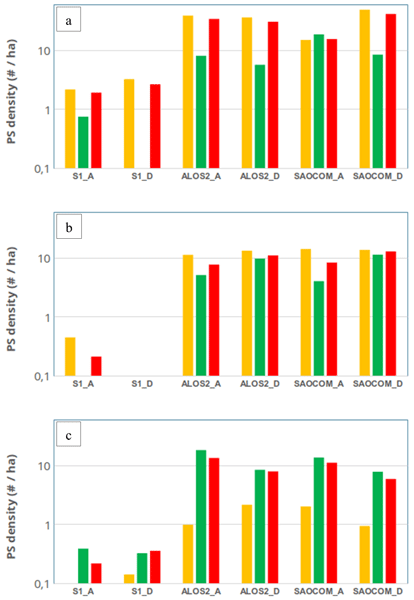
The latest satellite technology with longer wavelength radar improves our ability to detect and monitor large alpine rock slope instabilities. This approach works better than current satellite systems in forested areas and on fast-moving slopes, giving experts more reliable data to understand these major hazards. Our results from three locations in Italy and Switzerland also provide important recommendations for the preparation of future satellite radar missions.
Alexandru Onaca, Flavius Sîrbu, Valentin Poncoş, Christin Hilbich, Tazio Strozzi, Petru Urdea, Răzvan Popescu, Oana Berzescu, Bernd Etzelmüller, Alfred Vespremeanu-Stroe, Mirela Vasile, Delia Teleagă, Dan Birtaş, Iosif Lopătiţă, Simon Filhol, Alexandru Hegyi, and Florina Ardelean
Earth Surf. Dynam., 13, 981–1001, https://doi.org/10.5194/esurf-13-981-2025, https://doi.org/10.5194/esurf-13-981-2025, 2025
Short summary
Short summary
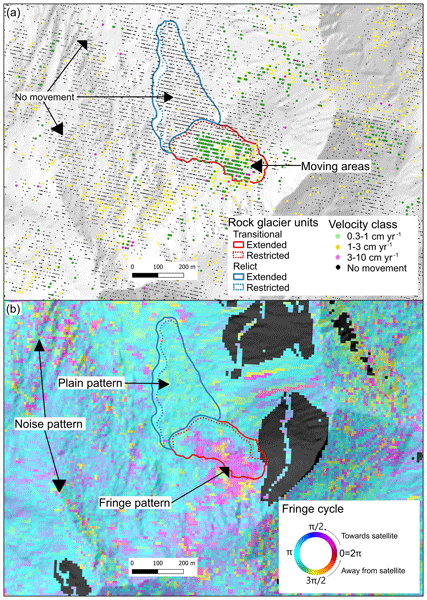
This study establishes a methodology for the study of slow-moving rock glaciers in marginal permafrost and provides the basic knowledge for understanding rock glaciers in South East Europe. By using a combination of different methods (remote sensing, geophysical survey, thermal measurements), we found out that, on the transitional rock glaciers, low ground ice content (i.e. below 20 %) produces horizontal displacements of up to 3 cm per year.
Line Rouyet, Tobias Bolch, Francesco Brardinoni, Rafael Caduff, Diego Cusicanqui, Margaret Darrow, Reynald Delaloye, Thomas Echelard, Christophe Lambiel, Cécile Pellet, Lucas Ruiz, Lea Schmid, Flavius Sirbu, and Tazio Strozzi
Earth Syst. Sci. Data, 17, 4125–4157, https://doi.org/10.5194/essd-17-4125-2025, https://doi.org/10.5194/essd-17-4125-2025, 2025
Short summary
Short summary
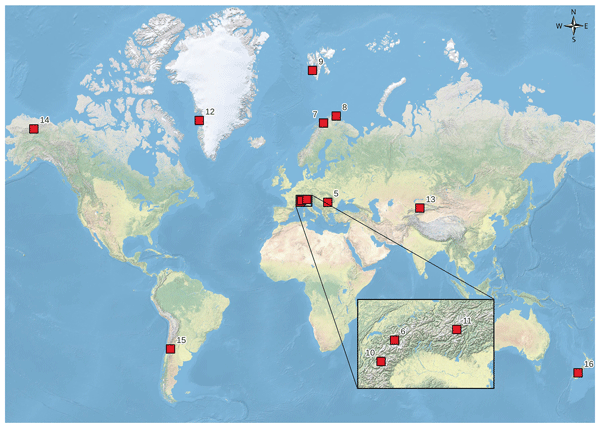
Rock glaciers are landforms generated by the creep of frozen ground (permafrost) in cold-climate mountains. Mapping rock glaciers contributes to documenting the distribution and the dynamics of mountain permafrost. We compiled inventories documenting the location, the characteristics, and the extent of rock glaciers in 12 mountain regions around the world. In each region, a team of operators performed the work following common rules and agreed on final solutions when discrepancies were identified.
Andrea Manconi, Gwendolyn Dasser, Mylène Jacquemart, Nicolas Oestreicher, Livia Piermattei, and Tazio Strozzi
Abstr. Int. Cartogr. Assoc., 9, 41, https://doi.org/10.5194/ica-abs-9-41-2025, https://doi.org/10.5194/ica-abs-9-41-2025, 2025
Barbara Widhalm, Annett Bartsch, Tazio Strozzi, Nina Jones, Artem Khomutov, Elena Babkina, Marina Leibman, Rustam Khairullin, Mathias Göckede, Helena Bergstedt, Clemens von Baeckmann, and Xaver Muri
The Cryosphere, 19, 1103–1133, https://doi.org/10.5194/tc-19-1103-2025, https://doi.org/10.5194/tc-19-1103-2025, 2025
Short summary
Short summary
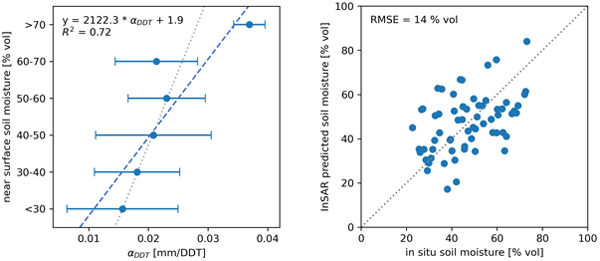
Mapping soil moisture in Arctic permafrost regions is crucial for various activities, but it is challenging with typical satellite methods due to the landscape's diversity. Seasonal freezing and thawing cause the ground to periodically rise and subside. Our research demonstrates that this seasonal ground settlement, measured with Sentinel-1 satellite data, is larger in areas with wetter soils. This method helps to monitor permafrost degradation.
Aldo Bertone, Nina Jones, Volkmar Mair, Riccardo Scotti, Tazio Strozzi, and Francesco Brardinoni
The Cryosphere, 18, 2335–2356, https://doi.org/10.5194/tc-18-2335-2024, https://doi.org/10.5194/tc-18-2335-2024, 2024
Short summary
Short summary
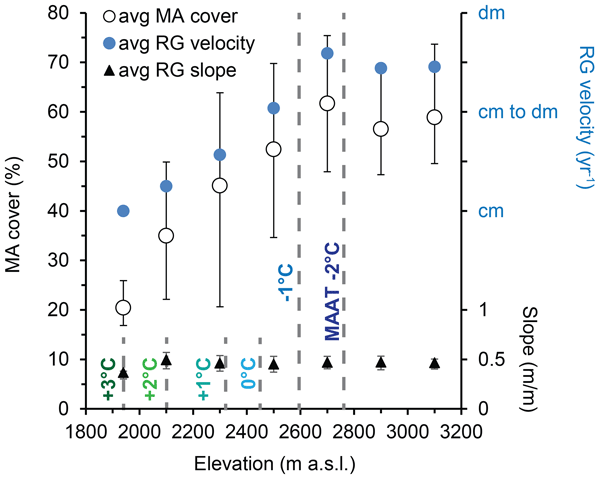
Traditional inventories display high uncertainty in discriminating between intact (permafrost-bearing) and relict (devoid) rock glaciers (RGs). Integration of InSAR-based kinematics in South Tyrol affords uncertainty reduction and depicts a broad elevation belt of relict–intact coexistence. RG velocity and moving area (MA) cover increase linearly with elevation up to an inflection at 2600–2800 m a.s.l., which we regard as a signature of sporadic-to-discontinuous permafrost transition.
Alessandro Cicoira, Samuel Weber, Andreas Biri, Ben Buchli, Reynald Delaloye, Reto Da Forno, Isabelle Gärtner-Roer, Stephan Gruber, Tonio Gsell, Andreas Hasler, Roman Lim, Philippe Limpach, Raphael Mayoraz, Matthias Meyer, Jeannette Noetzli, Marcia Phillips, Eric Pointner, Hugo Raetzo, Cristian Scapozza, Tazio Strozzi, Lothar Thiele, Andreas Vieli, Daniel Vonder Mühll, Vanessa Wirz, and Jan Beutel
Earth Syst. Sci. Data, 14, 5061–5091, https://doi.org/10.5194/essd-14-5061-2022, https://doi.org/10.5194/essd-14-5061-2022, 2022
Short summary
Short summary
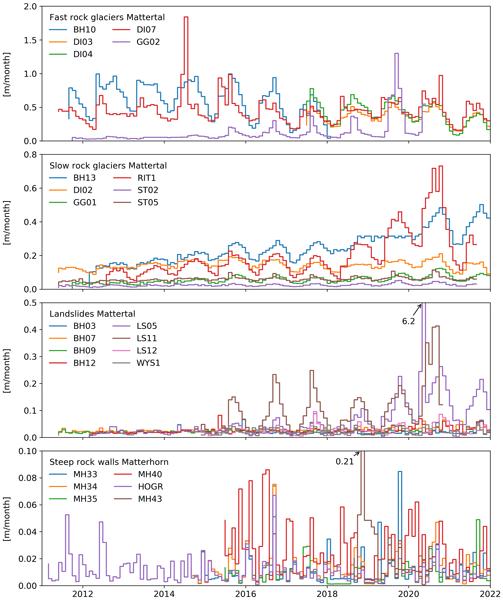
This paper documents a monitoring network of 54 positions, located on different periglacial landforms in the Swiss Alps: rock glaciers, landslides, and steep rock walls. The data serve basic research but also decision-making and mitigation of natural hazards. It is the largest dataset of its kind, comprising over 209 000 daily positions and additional weather data.
Aldo Bertone, Chloé Barboux, Xavier Bodin, Tobias Bolch, Francesco Brardinoni, Rafael Caduff, Hanne H. Christiansen, Margaret M. Darrow, Reynald Delaloye, Bernd Etzelmüller, Ole Humlum, Christophe Lambiel, Karianne S. Lilleøren, Volkmar Mair, Gabriel Pellegrinon, Line Rouyet, Lucas Ruiz, and Tazio Strozzi
The Cryosphere, 16, 2769–2792, https://doi.org/10.5194/tc-16-2769-2022, https://doi.org/10.5194/tc-16-2769-2022, 2022
Short summary
Short summary
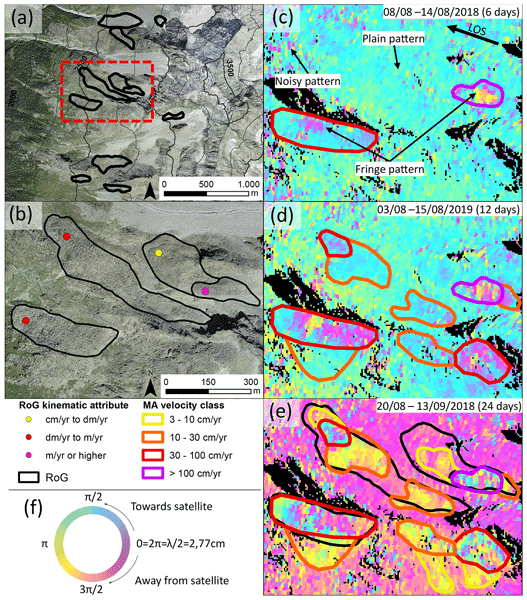
We present the guidelines developed by the IPA Action Group and within the ESA Permafrost CCI project to include InSAR-based kinematic information in rock glacier inventories. Nine operators applied these guidelines to 11 regions worldwide; more than 3600 rock glaciers are classified according to their kinematics. We test and demonstrate the feasibility of applying common rules to produce homogeneous kinematic inventories at global scale, useful for hydrological and climate change purposes.

Frank Paul, Livia Piermattei, Désirée Treichler, Lin Gilbert, Luc Girod, Andreas Kääb, Ludivine Libert, Thomas Nagler, Tazio Strozzi, and Jan Wuite
The Cryosphere, 16, 2505–2526, https://doi.org/10.5194/tc-16-2505-2022, https://doi.org/10.5194/tc-16-2505-2022, 2022
Short summary
Short summary
Glacier surges are widespread in the Karakoram and have been intensely studied using satellite data and DEMs. We use time series of such datasets to study three glacier surges in the same region of the Karakoram. We found strongly contrasting advance rates and flow velocities, maximum velocities of 30 m d−1, and a change in the surge mechanism during a surge. A sensor comparison revealed good agreement, but steep terrain and the two smaller glaciers caused limitations for some of them.
Tazio Strozzi, Andreas Wiesmann, Andreas Kääb, Thomas Schellenberger, and Frank Paul
Earth Syst. Sci. Data Discuss., https://doi.org/10.5194/essd-2022-44, https://doi.org/10.5194/essd-2022-44, 2022
Revised manuscript not accepted
Short summary
Short summary
Knowledge on surface velocity of glaciers and ice caps contributes to a better understanding of a wide range of processes related to glacier dynamics, mass change and response to climate. Based on the release of historical satellite radar data from various space agencies we compiled nearly complete mosaics of winter ice surface velocities for the 1990's over the Eastern Arctic. Compared to the present state, we observe a general increase of ice velocities along with a retreat of glacier fronts.
Erik Schytt Mannerfelt and Thomas Schellenberger
EGUsphere, https://doi.org/10.5194/egusphere-2026-6305, https://doi.org/10.5194/egusphere-2026-6305, 2026
This preprint is open for discussion and under review for The Cryosphere (TC).
Short summary
Short summary
Crevasses are deep cracks in glacier ice that route water to the glacier bed and endanger travel, yet are rarely mapped regionally. We trained a machine-learning model on satellite data to map visible crevasses on all Svalbard glaciers each year from 2017 to 2025. Three in four glaciers with a clear trend lost crevasses in their lower parts, yet the total area grew, likely as thinning snow cover exposed crevasses higher up. Yearly maps can help detect glacier surges and plan safe travel routes.
Tazio Strozzi, Barbara Widhalm, Nina Jones, Julia Boike, Sofia Antonova, Birgit Heim, Sebastian Westermann, Andreas Kääb, and Annett Bartsch
EGUsphere, https://doi.org/10.5194/egusphere-2026-5477, https://doi.org/10.5194/egusphere-2026-5477, 2026
This preprint is open for discussion and under review for Earth Observation (EO).
Short summary
Short summary
Monitoring long-term surface subsidence induced by ground ice thaw across the pan-Arctic is crucial to detect permafrost changes and assess impacts caused by recent atmospheric warming. Using Sentinel-1 satellite radar data, we successfully measured subsidence rates in Siberia’s Lena Delta and found that they vary remarkably among the three main geomorphological units. To enable continuous, large-scale monitoring, satellite data records must maintain coherence from one summer season to the next.
Ronja Lappe, Ursula Enzenhofer, Pascal E. Egli, Yongmei Gong, Liss M. Andreassen, Andreas Kääb, and Martina Calovi
EGUsphere, https://doi.org/10.5194/egusphere-2026-5025, https://doi.org/10.5194/egusphere-2026-5025, 2026
This preprint is open for discussion and under review for The Cryosphere (TC).
Short summary
Short summary
A lake dammed by a glacier in Norway floods almost every summer. Using satellite images, weather data and field measurements, we tracked its filling and draining from 2016 to 2025 to test how reliable this method is. Outdated maps of the lakebed caused the biggest errors, underestimating flood volumes by about a quarter. Floods now happen ten days earlier than a decade ago, likely from glacier melt due to warming, showing that satellites can help monitor such hazards worldwide.
Simon Besnard, Alba Viana-Soto, Henrik Hartmann, Marco Patacca, Viola H. A. Heinrich, Katja Kowalski, Maurizio Santoro, Wanda De Keersmaecker, Ruben Van De Kerchove, Martin Herold, and Cornelius Senf
Biogeosciences, 23, 5983–6002, https://doi.org/10.5194/bg-23-5983-2026, https://doi.org/10.5194/bg-23-5983-2026, 2026
Short summary
Short summary
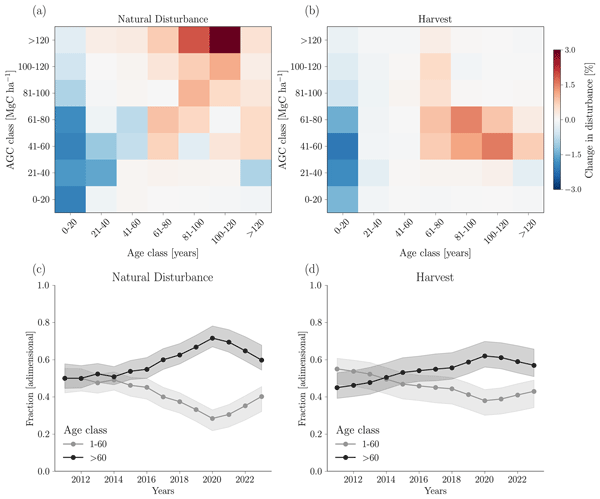
Europe’s forests store vast amounts of carbon, but climate-driven disturbances are becoming more frequent. By combining satellite records with information on forest age and structure, we show that recent disturbances increasingly affect the oldest and most carbon-rich forests, particularly spruce forests in Central Europe. This emerging pattern puts long-accumulated carbon at risk and may reduce the long-term climate benefits provided by Europe’s forests.
Siyuan Wang, Hui Yang, Sujan Koirala, Maurizio Santoro, Anna Candotti, Ulrich Weber, Ranit De, Claire Robin, Felix Cremer, Matthias Forkel, Markus Reichstein, and Nuno Carvalhais
Earth Syst. Sci. Data, 18, 5895–5913, https://doi.org/10.5194/essd-18-5895-2026, https://doi.org/10.5194/essd-18-5895-2026, 2026
Short summary
Short summary
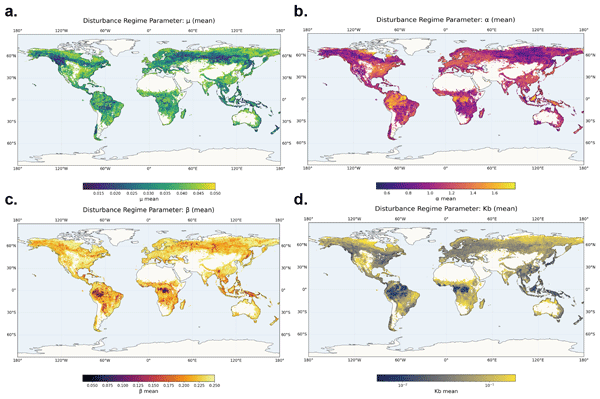
Forest disturbances are difficult to predict in models because they occur randomly. We discovered that the long-term rules of disturbance known as
regimeleave a unique footprint in a forest's spatial biomass patterns. We trained a model on millions of computer simulations to learn this link. By applying this model to detailed satellite biomass, we could read these patterns to infer the disturbance regime globally, helping make climate projections more accurate.
Loris Danjou, Eero Rinne, and Erik Schytt Mannerfelt
The Cryosphere, 20, 4133–4155, https://doi.org/10.5194/tc-20-4133-2026, https://doi.org/10.5194/tc-20-4133-2026, 2026
Short summary
Short summary
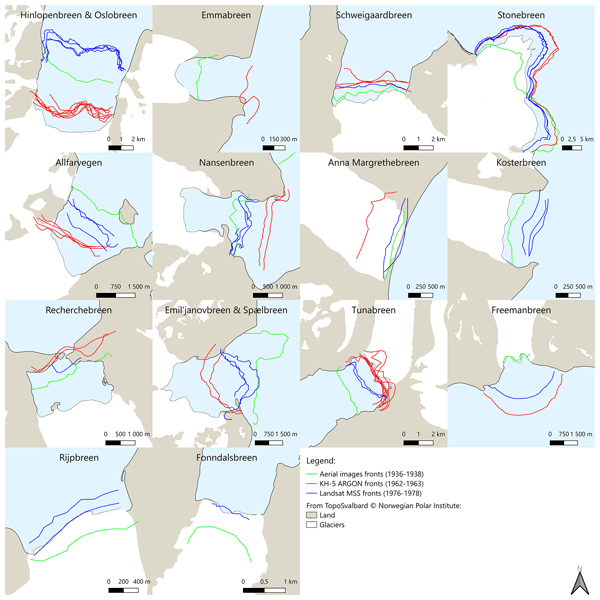
We retrieved front locations for 171 Svalbard tidewater glaciers in the 1960s and 1970s, from Landsat images and – for the first time in this region – declassified intelligence satellite photographs. We compared our results to aerial photographs from the 1930s and calculated that these glaciers retreated by about 1 km between 1936 and 1978. We also discovered one undocumented glacier surge (a rapid front advance), precised the time frames of two others, and documented two other glacier advances.
Tazio Strozzi, Nina Jones, Federico Agliardi, Alessandro De Pedrini, Othmar Frey, Philipp Bernhard, Rafael Caduff, Christian Ambrosi, and Andrea Manconi
Nat. Hazards Earth Syst. Sci., 26, 2579–2607, https://doi.org/10.5194/nhess-26-2579-2026, https://doi.org/10.5194/nhess-26-2579-2026, 2026
Short summary
Short summary
The latest satellite technology with longer wavelength radar improves our ability to detect and monitor large alpine rock slope instabilities. This approach works better than current satellite systems in forested areas and on fast-moving slopes, giving experts more reliable data to understand these major hazards. Our results from three locations in Italy and Switzerland also provide important recommendations for the preparation of future satellite radar missions.
Konstantin A. Maslov, Thomas Schellenberger, Claudio Persello, and Alfred Stein
EGUsphere, https://doi.org/10.5194/egusphere-2026-515, https://doi.org/10.5194/egusphere-2026-515, 2026
Short summary
Short summary
Glaciers are melting worldwide, but direct measurements are spatially sparse. We developed a new model that combines mechanistic physical rules with machine learning to better estimate yearly gains and losses of ice mass across Europe. By learning local corrections to a physical melt model, the machine learning component improves accuracy and works well on glaciers not used for training. This will help produce more reliable glacier assessments and support future climate studies.
Mattia Callegari, Carlo Marin, Claudia Notarnicola, and Thomas Schellenberger
EGUsphere, https://doi.org/10.5194/egusphere-2025-5779, https://doi.org/10.5194/egusphere-2025-5779, 2026
Short summary
Short summary
We introduce a new satellite-based approach to estimate annual glacier mass balance. Using data from 2000 to 2024, we produced yearly estimates for nearly three thousand glaciers in the Alps, Scandinavia, and Svalbard. Comparison with extensive field measurements shows strong agreement, demonstrating that this method can reliably track annual glacier changes across large regions.
Henning Åkesson, Kamilla Hauknes Sjursen, Thomas Vikhamar Schuler, Thorben Dunse, Liss Marie Andreassen, Mette Kusk Gillespie, Benjamin Aubrey Robson, Thomas Schellenberger, and Jacob Clement Yde
The Cryosphere, 19, 5871–5902, https://doi.org/10.5194/tc-19-5871-2025, https://doi.org/10.5194/tc-19-5871-2025, 2025
Short summary
Short summary
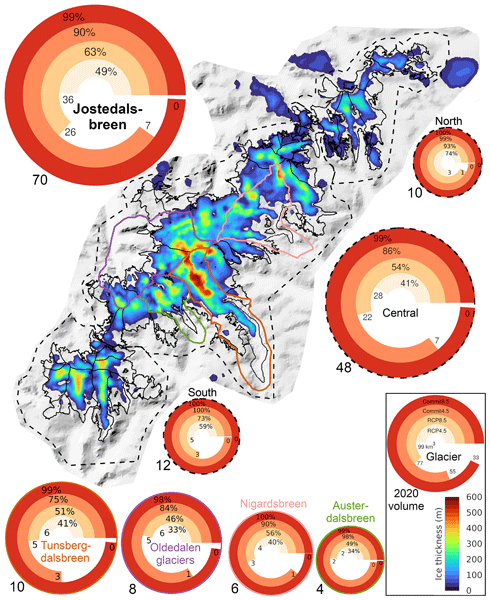
We model the historical and future evolution of the Jostedalsbreen ice cap in Norway, projecting substantial and largely irreversible mass loss for the 21st century, and that the ice cap will split into three parts. Further mass loss is in the pipeline, with a disappearance during the 22nd century under high emissions. Our study demonstrates an approach to model complex ice masses, highlights uncertainties due to precipitation, and calls for further research on long-term future glacier change.
Alexandru Onaca, Flavius Sîrbu, Valentin Poncoş, Christin Hilbich, Tazio Strozzi, Petru Urdea, Răzvan Popescu, Oana Berzescu, Bernd Etzelmüller, Alfred Vespremeanu-Stroe, Mirela Vasile, Delia Teleagă, Dan Birtaş, Iosif Lopătiţă, Simon Filhol, Alexandru Hegyi, and Florina Ardelean
Earth Surf. Dynam., 13, 981–1001, https://doi.org/10.5194/esurf-13-981-2025, https://doi.org/10.5194/esurf-13-981-2025, 2025
Short summary
Short summary
This study establishes a methodology for the study of slow-moving rock glaciers in marginal permafrost and provides the basic knowledge for understanding rock glaciers in South East Europe. By using a combination of different methods (remote sensing, geophysical survey, thermal measurements), we found out that, on the transitional rock glaciers, low ground ice content (i.e. below 20 %) produces horizontal displacements of up to 3 cm per year.
Alexandra Hamm, Erik Schytt Mannerfelt, Aaron A. Mohammed, Scott L. Painter, Ethan T. Coon, and Andrew Frampton
The Cryosphere, 19, 3693–3724, https://doi.org/10.5194/tc-19-3693-2025, https://doi.org/10.5194/tc-19-3693-2025, 2025
Short summary
Short summary
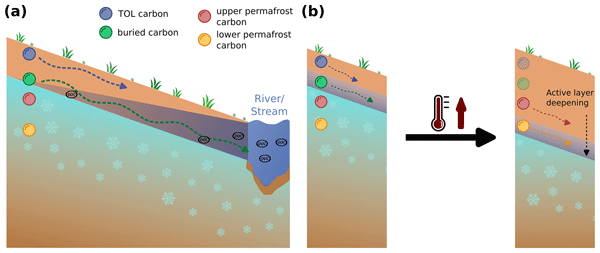
The fate of thawing permafrost carbon is essential for understanding the permafrost–climate feedback and projections of future climate. Here we study transport of organic carbon by groundwater in the active layer of a hillslope model. We find that carbon transport velocities and microbial mineralization rates are strongly dependent on liquid saturation in the seasonally thawed active layer. In a warming climate, the rate at which permafrost thaws determines how fast carbon can be transported.
Line Rouyet, Tobias Bolch, Francesco Brardinoni, Rafael Caduff, Diego Cusicanqui, Margaret Darrow, Reynald Delaloye, Thomas Echelard, Christophe Lambiel, Cécile Pellet, Lucas Ruiz, Lea Schmid, Flavius Sirbu, and Tazio Strozzi
Earth Syst. Sci. Data, 17, 4125–4157, https://doi.org/10.5194/essd-17-4125-2025, https://doi.org/10.5194/essd-17-4125-2025, 2025
Short summary
Short summary
Rock glaciers are landforms generated by the creep of frozen ground (permafrost) in cold-climate mountains. Mapping rock glaciers contributes to documenting the distribution and the dynamics of mountain permafrost. We compiled inventories documenting the location, the characteristics, and the extent of rock glaciers in 12 mountain regions around the world. In each region, a team of operators performed the work following common rules and agreed on final solutions when discrepancies were identified.
Diego Cusicanqui, Pascal Lacroix, Xavier Bodin, Benjamin Aubrey Robson, Andreas Kääb, and Shelley MacDonell
The Cryosphere, 19, 2559–2581, https://doi.org/10.5194/tc-19-2559-2025, https://doi.org/10.5194/tc-19-2559-2025, 2025
Short summary
Short summary
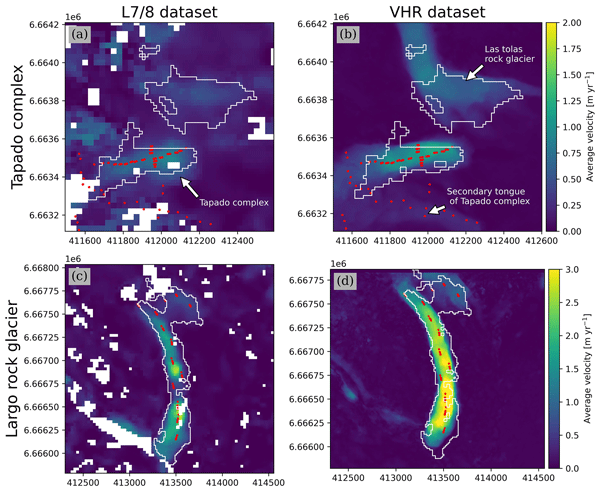
This study presents a robust methodological approach to detect and analyse rock glacier kinematics using Landsat 7/Landsat 8 imagery. In the semiarid Andes, 382 landforms were monitored, showing an average velocity of 0.37 ± 0.07 m yr⁻¹ over 24 years, with rock glaciers moving 23 % faster. Results demonstrate the feasibility of using medium-resolution optical imagery, combined with radar interferometry, to monitor rock glacier kinematics with widely available satellite datasets.
Andrea Manconi, Gwendolyn Dasser, Mylène Jacquemart, Nicolas Oestreicher, Livia Piermattei, and Tazio Strozzi
Abstr. Int. Cartogr. Assoc., 9, 41, https://doi.org/10.5194/ica-abs-9-41-2025, https://doi.org/10.5194/ica-abs-9-41-2025, 2025
Barbara Widhalm, Annett Bartsch, Tazio Strozzi, Nina Jones, Artem Khomutov, Elena Babkina, Marina Leibman, Rustam Khairullin, Mathias Göckede, Helena Bergstedt, Clemens von Baeckmann, and Xaver Muri
The Cryosphere, 19, 1103–1133, https://doi.org/10.5194/tc-19-1103-2025, https://doi.org/10.5194/tc-19-1103-2025, 2025
Short summary
Short summary
Mapping soil moisture in Arctic permafrost regions is crucial for various activities, but it is challenging with typical satellite methods due to the landscape's diversity. Seasonal freezing and thawing cause the ground to periodically rise and subside. Our research demonstrates that this seasonal ground settlement, measured with Sentinel-1 satellite data, is larger in areas with wetter soils. This method helps to monitor permafrost degradation.
Juditha Aga, Livia Piermattei, Luc Girod, Kristoffer Aalstad, Trond Eiken, Andreas Kääb, and Sebastian Westermann
Earth Surf. Dynam., 12, 1049–1070, https://doi.org/10.5194/esurf-12-1049-2024, https://doi.org/10.5194/esurf-12-1049-2024, 2024
Short summary
Short summary
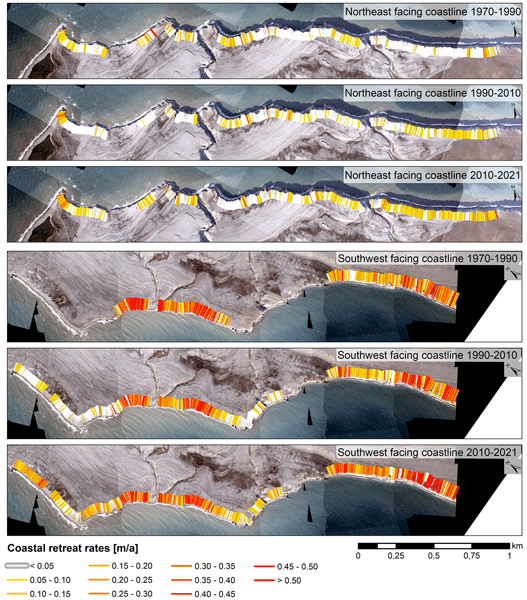
Coastal rock cliffs on Svalbard are considered to be fairly stable; however, long-term trends in coastal-retreat rates remain unknown. This study examines changes in the coastline position along Brøggerhalvøya, Svalbard, using aerial images from 1970, 1990, 2010, and 2021. Our analysis shows that coastal-retreat rates accelerate during the period 2010–2021, which coincides with increasing storminess and retreating sea ice.
Livia Piermattei, Michael Zemp, Christian Sommer, Fanny Brun, Matthias H. Braun, Liss M. Andreassen, Joaquín M. C. Belart, Etienne Berthier, Atanu Bhattacharya, Laura Boehm Vock, Tobias Bolch, Amaury Dehecq, Inés Dussaillant, Daniel Falaschi, Caitlyn Florentine, Dana Floricioiu, Christian Ginzler, Gregoire Guillet, Romain Hugonnet, Matthias Huss, Andreas Kääb, Owen King, Christoph Klug, Friedrich Knuth, Lukas Krieger, Jeff La Frenierre, Robert McNabb, Christopher McNeil, Rainer Prinz, Louis Sass, Thorsten Seehaus, David Shean, Désirée Treichler, Anja Wendt, and Ruitang Yang
The Cryosphere, 18, 3195–3230, https://doi.org/10.5194/tc-18-3195-2024, https://doi.org/10.5194/tc-18-3195-2024, 2024
Short summary
Short summary
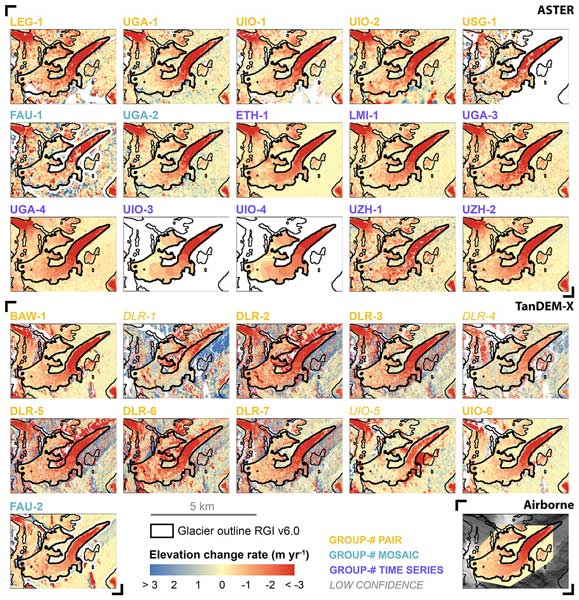
Satellites have made it possible to observe glacier elevation changes from all around the world. In the present study, we compared the results produced from two different types of satellite data between different research groups and against validation measurements from aeroplanes. We found a large spread between individual results but showed that the group ensemble can be used to reliably estimate glacier elevation changes and related errors from satellite data.
Aldo Bertone, Nina Jones, Volkmar Mair, Riccardo Scotti, Tazio Strozzi, and Francesco Brardinoni
The Cryosphere, 18, 2335–2356, https://doi.org/10.5194/tc-18-2335-2024, https://doi.org/10.5194/tc-18-2335-2024, 2024
Short summary
Short summary
Traditional inventories display high uncertainty in discriminating between intact (permafrost-bearing) and relict (devoid) rock glaciers (RGs). Integration of InSAR-based kinematics in South Tyrol affords uncertainty reduction and depicts a broad elevation belt of relict–intact coexistence. RG velocity and moving area (MA) cover increase linearly with elevation up to an inflection at 2600–2800 m a.s.l., which we regard as a signature of sporadic-to-discontinuous permafrost transition.
Andreas Kääb and Luc Girod
The Cryosphere, 17, 2533–2541, https://doi.org/10.5194/tc-17-2533-2023, https://doi.org/10.5194/tc-17-2533-2023, 2023
Short summary
Short summary
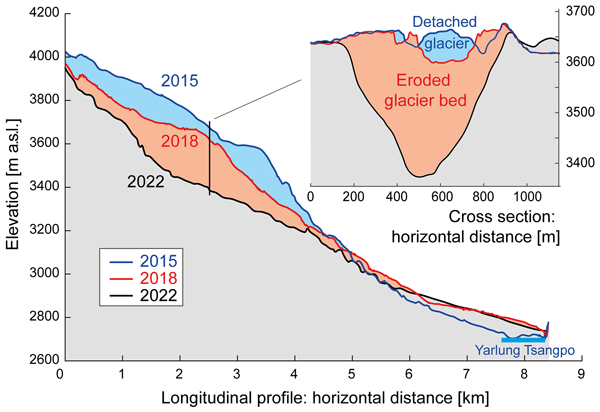
Following the detachment of the 130 × 106 m3 Sedongpu Glacier (south-eastern Tibet) in 2018, the Sedongpu Valley underwent massive large-volume landscape changes. An enormous volume of in total around 330 × 106 m3 was rapidly eroded, forming a new canyon of up to 300 m depth, 1 km width, and almost 4 km length. Such consequences of glacier change in mountains have so far not been considered at this magnitude and speed.
Sebastian Westermann, Thomas Ingeman-Nielsen, Johanna Scheer, Kristoffer Aalstad, Juditha Aga, Nitin Chaudhary, Bernd Etzelmüller, Simon Filhol, Andreas Kääb, Cas Renette, Louise Steffensen Schmidt, Thomas Vikhamar Schuler, Robin B. Zweigel, Léo Martin, Sarah Morard, Matan Ben-Asher, Michael Angelopoulos, Julia Boike, Brian Groenke, Frederieke Miesner, Jan Nitzbon, Paul Overduin, Simone M. Stuenzi, and Moritz Langer
Geosci. Model Dev., 16, 2607–2647, https://doi.org/10.5194/gmd-16-2607-2023, https://doi.org/10.5194/gmd-16-2607-2023, 2023
Short summary
Short summary
The CryoGrid community model is a new tool for simulating ground temperatures and the water and ice balance in cold regions. It is a modular design, which makes it possible to test different schemes to simulate, for example, permafrost ground in an efficient way. The model contains tools to simulate frozen and unfrozen ground, snow, glaciers, and other massive ice bodies, as well as water bodies.
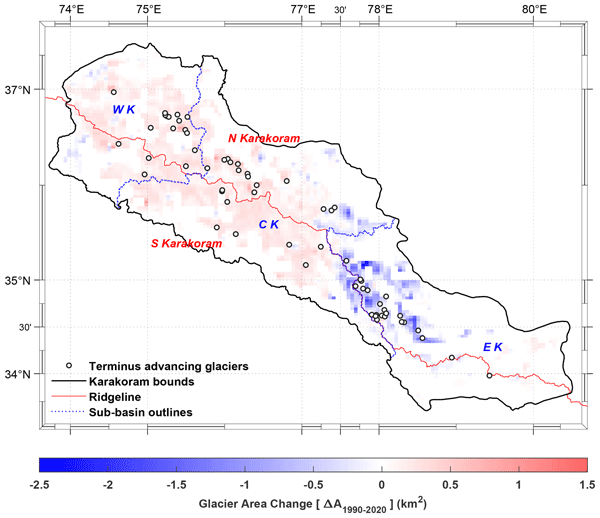
Fuming Xie, Shiyin Liu, Yongpeng Gao, Yu Zhu, Tobias Bolch, Andreas Kääb, Shimei Duan, Wenfei Miao, Jianfang Kang, Yaonan Zhang, Xiran Pan, Caixia Qin, Kunpeng Wu, Miaomiao Qi, Xianhe Zhang, Ying Yi, Fengze Han, Xiaojun Yao, Qiao Liu, Xin Wang, Zongli Jiang, Donghui Shangguan, Yong Zhang, Richard Grünwald, Muhammad Adnan, Jyoti Karki, and Muhammad Saifullah
Earth Syst. Sci. Data, 15, 847–867, https://doi.org/10.5194/essd-15-847-2023, https://doi.org/10.5194/essd-15-847-2023, 2023
Short summary
Short summary
In this study, first we generated inventories which allowed us to systematically detect glacier change patterns in the Karakoram range. We found that, by the 2020s, there were approximately 10 500 glaciers in the Karakoram mountains covering an area of 22 510.73 km2, of which ~ 10.2 % is covered by debris. During the past 30 years (from 1990 to 2020), the total glacier cover area in Karakoram remained relatively stable, with a slight increase in area of 23.5 km2.

Fabian Walter, Elias Hodel, Erik S. Mannerfelt, Kristen Cook, Michael Dietze, Livia Estermann, Michaela Wenner, Daniel Farinotti, Martin Fengler, Lukas Hammerschmidt, Flavia Hänsli, Jacob Hirschberg, Brian McArdell, and Peter Molnar
Nat. Hazards Earth Syst. Sci., 22, 4011–4018, https://doi.org/10.5194/nhess-22-4011-2022, https://doi.org/10.5194/nhess-22-4011-2022, 2022
Short summary
Short summary
Debris flows are dangerous sediment–water mixtures in steep terrain. Their formation takes place in poorly accessible terrain where instrumentation cannot be installed. Here we propose to monitor such source terrain with an autonomous drone for mapping sediments which were left behind by debris flows or may contribute to future events. Short flight intervals elucidate changes of such sediments, providing important information for landscape evolution and the likelihood of future debris flows.
Alessandro Cicoira, Samuel Weber, Andreas Biri, Ben Buchli, Reynald Delaloye, Reto Da Forno, Isabelle Gärtner-Roer, Stephan Gruber, Tonio Gsell, Andreas Hasler, Roman Lim, Philippe Limpach, Raphael Mayoraz, Matthias Meyer, Jeannette Noetzli, Marcia Phillips, Eric Pointner, Hugo Raetzo, Cristian Scapozza, Tazio Strozzi, Lothar Thiele, Andreas Vieli, Daniel Vonder Mühll, Vanessa Wirz, and Jan Beutel
Earth Syst. Sci. Data, 14, 5061–5091, https://doi.org/10.5194/essd-14-5061-2022, https://doi.org/10.5194/essd-14-5061-2022, 2022
Short summary
Short summary
This paper documents a monitoring network of 54 positions, located on different periglacial landforms in the Swiss Alps: rock glaciers, landslides, and steep rock walls. The data serve basic research but also decision-making and mitigation of natural hazards. It is the largest dataset of its kind, comprising over 209 000 daily positions and additional weather data.
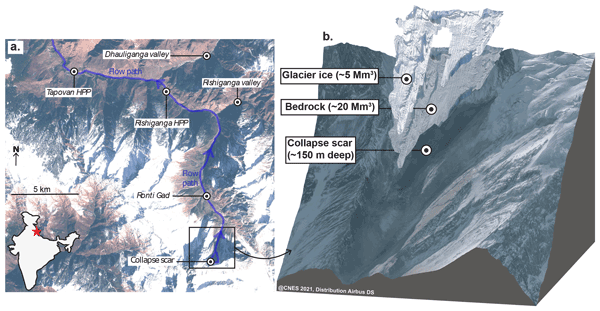
Maximillian Van Wyk de Vries, Shashank Bhushan, Mylène Jacquemart, César Deschamps-Berger, Etienne Berthier, Simon Gascoin, David E. Shean, Dan H. Shugar, and Andreas Kääb
Nat. Hazards Earth Syst. Sci., 22, 3309–3327, https://doi.org/10.5194/nhess-22-3309-2022, https://doi.org/10.5194/nhess-22-3309-2022, 2022
Short summary
Short summary
On 7 February 2021, a large rock–ice avalanche occurred in Chamoli, Indian Himalaya. The resulting debris flow swept down the nearby valley, leaving over 200 people dead or missing. We use a range of satellite datasets to investigate how the collapse area changed prior to collapse. We show that signs of instability were visible as early 5 years prior to collapse. However, it would likely not have been possible to predict the timing of the event from current satellite datasets.
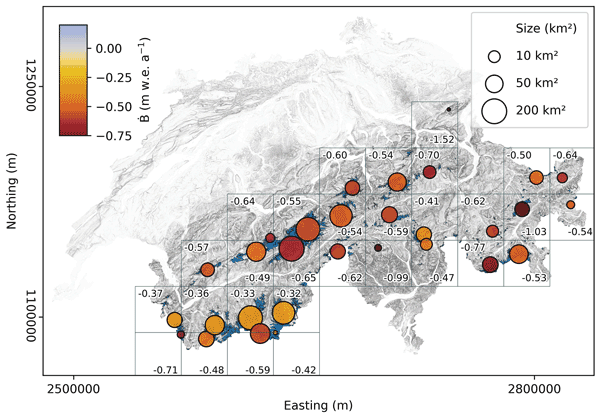
Erik Schytt Mannerfelt, Amaury Dehecq, Romain Hugonnet, Elias Hodel, Matthias Huss, Andreas Bauder, and Daniel Farinotti
The Cryosphere, 16, 3249–3268, https://doi.org/10.5194/tc-16-3249-2022, https://doi.org/10.5194/tc-16-3249-2022, 2022
Short summary
Short summary
How glaciers have responded to climate change over the last 20 years is well-known, but earlier data are much more scarce. We change this in Switzerland by using 22 000 photographs taken from mountain tops between the world wars and find a halving of Swiss glacier volume since 1931. This was done through new automated processing techniques that we created. The data are interesting for more than just glaciers, such as mapping forest changes, landslides, and human impacts on the terrain.
Aldo Bertone, Chloé Barboux, Xavier Bodin, Tobias Bolch, Francesco Brardinoni, Rafael Caduff, Hanne H. Christiansen, Margaret M. Darrow, Reynald Delaloye, Bernd Etzelmüller, Ole Humlum, Christophe Lambiel, Karianne S. Lilleøren, Volkmar Mair, Gabriel Pellegrinon, Line Rouyet, Lucas Ruiz, and Tazio Strozzi
The Cryosphere, 16, 2769–2792, https://doi.org/10.5194/tc-16-2769-2022, https://doi.org/10.5194/tc-16-2769-2022, 2022
Short summary
Short summary
We present the guidelines developed by the IPA Action Group and within the ESA Permafrost CCI project to include InSAR-based kinematic information in rock glacier inventories. Nine operators applied these guidelines to 11 regions worldwide; more than 3600 rock glaciers are classified according to their kinematics. We test and demonstrate the feasibility of applying common rules to produce homogeneous kinematic inventories at global scale, useful for hydrological and climate change purposes.
Frank Paul, Livia Piermattei, Désirée Treichler, Lin Gilbert, Luc Girod, Andreas Kääb, Ludivine Libert, Thomas Nagler, Tazio Strozzi, and Jan Wuite
The Cryosphere, 16, 2505–2526, https://doi.org/10.5194/tc-16-2505-2022, https://doi.org/10.5194/tc-16-2505-2022, 2022
Short summary
Short summary
Glacier surges are widespread in the Karakoram and have been intensely studied using satellite data and DEMs. We use time series of such datasets to study three glacier surges in the same region of the Karakoram. We found strongly contrasting advance rates and flow velocities, maximum velocities of 30 m d−1, and a change in the surge mechanism during a surge. A sensor comparison revealed good agreement, but steep terrain and the two smaller glaciers caused limitations for some of them.
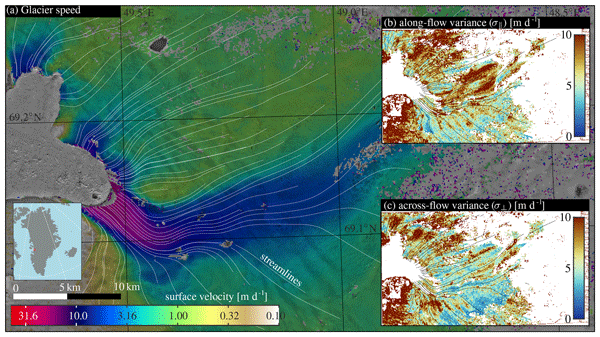
Bas Altena, Andreas Kääb, and Bert Wouters
The Cryosphere, 16, 2285–2300, https://doi.org/10.5194/tc-16-2285-2022, https://doi.org/10.5194/tc-16-2285-2022, 2022
Short summary
Short summary
Repeat overflights of satellites are used to estimate surface displacements. However, such products lack a simple error description for individual measurements, but variation in precision occurs, since the calculation is based on the similarity of texture. Fortunately, variation in precision manifests itself in the correlation peak, which is used for the displacement calculation. This spread is used to make a connection to measurement precision, which can be of great use for model inversion.
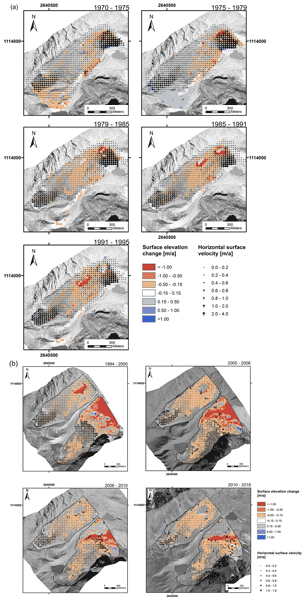
Isabelle Gärtner-Roer, Nina Brunner, Reynald Delaloye, Wilfried Haeberli, Andreas Kääb, and Patrick Thee
The Cryosphere, 16, 2083–2101, https://doi.org/10.5194/tc-16-2083-2022, https://doi.org/10.5194/tc-16-2083-2022, 2022
Short summary
Short summary
We intensely investigated the Gruben site in the Swiss Alps, where glaciers and permafrost landforms closely interact, to better understand cold-climate environments. By the interpretation of air photos from 5 decades, we describe long-term developments of the existing landforms. In combination with high-resolution positioning measurements and ground surface temperatures, we were also able to link these to short-term changes and describe different landform responses to climate forcing.
Tazio Strozzi, Andreas Wiesmann, Andreas Kääb, Thomas Schellenberger, and Frank Paul
Earth Syst. Sci. Data Discuss., https://doi.org/10.5194/essd-2022-44, https://doi.org/10.5194/essd-2022-44, 2022
Revised manuscript not accepted
Short summary
Short summary
Knowledge on surface velocity of glaciers and ice caps contributes to a better understanding of a wide range of processes related to glacier dynamics, mass change and response to climate. Based on the release of historical satellite radar data from various space agencies we compiled nearly complete mosaics of winter ice surface velocities for the 1990's over the Eastern Arctic. Compared to the present state, we observe a general increase of ice velocities along with a retreat of glacier fronts.
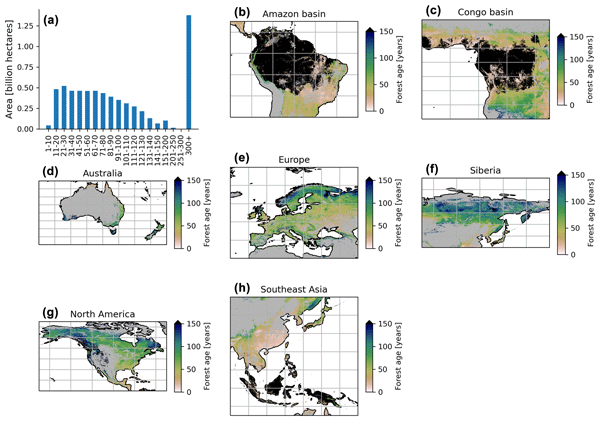
Simon Besnard, Sujan Koirala, Maurizio Santoro, Ulrich Weber, Jacob Nelson, Jonas Gütter, Bruno Herault, Justin Kassi, Anny N'Guessan, Christopher Neigh, Benjamin Poulter, Tao Zhang, and Nuno Carvalhais
Earth Syst. Sci. Data, 13, 4881–4896, https://doi.org/10.5194/essd-13-4881-2021, https://doi.org/10.5194/essd-13-4881-2021, 2021
Short summary
Short summary
Forest age can determine the capacity of a forest to uptake carbon from the atmosphere. Yet, a lack of global diagnostics that reflect the forest stage and associated disturbance regimes hampers the quantification of age-related differences in forest carbon dynamics. In this paper, we introduced a new global distribution of forest age inferred from forest inventory, remote sensing and climate data in support of a better understanding of the global dynamics in the forest water and carbon cycles.
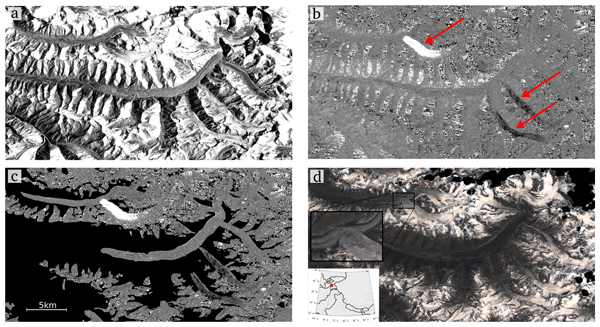
Paul Willem Leclercq, Andreas Kääb, and Bas Altena
The Cryosphere, 15, 4901–4907, https://doi.org/10.5194/tc-15-4901-2021, https://doi.org/10.5194/tc-15-4901-2021, 2021
Short summary
Short summary
In this study we present a novel method to detect glacier surge activity. Surges are relevant as they disturb the link between glacier change and climate, and studying surges can also increase understanding of glacier flow. We use variations in Sentinel-1 radar backscatter strength, calculated with the use of Google Earth Engine, to detect surge activity. In our case study for the year 2018–2019 we find 69 cases of surging glaciers globally. Many of these were not previously known to be surging.
Cited articles
Benn, D. I., Fowler, A. C., Hewitt, I., and Sevestre, H.: A general theory of glacier surges, J. Glaciol., 65, 701–716, https://doi.org/10.1017/jog.2019.62, 2019.
Cossu, R., Bally, P., Colin, O., and Fusco, L.: ESA Grid Processing on Demand for fast access to Earth Observation data and rapid mapping of flood events, Geophysical Research Abstracts, Vol. 10, EGU2008-A-09364, SRef-ID: 1607-7962/gra/EGU2008-A-09364, 2008.
Csilléry, K., Blum, M. G. B., Gaggiotti, O. E., and François, O.: Approximate Bayesian Computation (ABC) in practice, Trends Ecol. Evol., 25, 410–418, https://doi.org/10.1016/j.tree.2010.04.001, 2010.
Dowdeswell, J. A. and Benham, T. J.: A surge of Perseibreen, Svalbard, examined using aerial photography and ASTER high resolution satellite imagery, Polar Res., 22, 373–383, https://doi.org/10.3402/polar.v22i2.6466, 2003.
Dowdeswell, J. A., Hodgkins, R., Nuttall, A. -M., Hagen, J. O., and Hamilton, G. S.: Mass balance change as a control on the frequency and occurrence of glacier surges in Svalbard, Norwegian High Arctic, Geophys. Res. Lett., 22, 2909–2912, https://doi.org/10.1029/95gl02821, 1995.
Farnsworth, W. R., Ingólfsson, Ó., Retelle, M., and Schomacker, A.: Over 400 previously undocumented Svalbard surge-type glaciers identified, Geomorphology, 264, 52–60, https://doi.org/10.1016/j.geomorph.2016.03.025, 2016.
Flink, A. E., Noormets, R., Kirchner, N., Benn, D. I., Luckman, A., and Lovell, H.: The evolution of a submarine landform record following recent and multiple surges of Tunabreen glacier, Svalbard, Quaternary Sci. Rev., 108, 37–50, https://doi.org/10.1016/j.quascirev.2014.11.006, 2015.
Frey, O., Santoro, M., Werner, C. L., and Wegmuller, U.: DEM-Based SAR Pixel-Area Estimation for Enhanced Geocoding Refinement and Radiometric Normalization, IEEE Geosci. Remote, 10, 48–52, https://doi.org/10.1109/lgrs.2012.2192093, 2013.
Hagen, J. O., Liestøl, O., Roland, E., and Jorgensen, T. : Glacier atlas of Svalbard and Jan Mayen, Norsk Polarinstitutt Meddelelser, 129, 141 pp., ISBN 82-7666-066-5, 1993.
Harcourt, W. D., Pearce, D. M., Gajek, W., Lovell, H., Luckman, A., Benn, D., Kohler, J., Kääb, A., and Hann, R.: Surging glaciers in Svalbard: Current knowledge and perspectives for monitoring (SvalSurge), in: SESS report 2024 – The State of Environmental Science in Svalbard – an annual report, 84–105, Svalbard Integrated Arctic Earth Observing System, https://doi.org/10.5281/zenodo.14425522, 2025a.
Harcourt, W. D., Pearce, D., Gajek, W., Lovell, H., Mannerfelt, E. S., Kääb, A., Benn, D., Luckman, A., Hann, R., and Kohler, J.: Svalbard Surge Database 2024 (RGI2000-v7.0-G-07), Zenodo [data set], https://doi.org/10.5281/zenodo.18033216, 2025b.
Harrison, W. D., Osipova, G. B., Nosenko, G. A., Espizua, L., Kääb, A., Fischer, L., Huggel, C., Craw Burns, P. A., Truffer, M., and Lai, A. W.: Glacier Surges, Snow and Ice-Related Hazards, Risks, and Disasters, 437–485, https://doi.org/10.1016/b978-0-12-394849-6.00013-5, 2015.
Jiskoot, H.: Glacier Surging, Encyclopedia of Earth Sciences Series, 415–428, https://doi.org/10.1007/978-90-481-2642-2_559, 2011.
Jiskoot, H., Murray, T., and Boyle, P.: Controls on the distribution of surge-type glaciers in Svalbard, J. Glaciol., 46, 412–422, https://doi.org/10.3189/172756500781833115, 2000.
Kääb, A., Bazilova, V., Leclercq, P. W., Mannerfelt, E. S., and Strozzi, T.: Global clustering of recent glacier surges from radar backscatter data, 2017–2022, J. Glaciol., 69, 1515–1523, https://doi.org/10.1017/jog.2023.35, 2023.
Leclercq, P. W., Kääb, A., and Altena, B.: Brief communication: Detection of glacier surge activity using cloud computing of Sentinel-1 radar data, The Cryosphere, 15, 4901–4907, https://doi.org/10.5194/tc-15-4901-2021, 2021.
Liestøl, O.: Glaciers of Svalbard, Norway, in: Satellite Image Atlas of Glaciers of the World: Europe, edited by: Williams Jr., R. S. and Ferrigno, J. G., US Geological Survey Professional Paper 1386-E, 127–151, 1993.
Luckman, A., Murray, T., and Strozzi, T.: Surface flow evolution throughout a glacier surge measured by satellite radar interferometry, Geophys. Res. Lett., 29, https://doi.org/10.1029/2001gl014570, 2002.
Maslov, K. A., Persello, C., Schellenberger, T., and Stein, A.: Globally scalable glacier mapping by deep learning matches expert delineation accuracy, Nat. Commun., 16, https://doi.org/10.1038/s41467-024-54956-x, 2025.
Mannerfelt, E. S., Schellenberger, T., and Kääb, A. M.: Tracking glacier surge evolution using interferometric SAR coherence – examples from Svalbard, J. Glaciol., 71, https://doi.org/10.1017/jog.2025.27, 2025.
McMillan, M., Shepherd, A., Gourmelen, N., Dehecq, A., Leeson, A., Ridout, A., Flament, T., Hogg, A., Gilbert, L., Benham, T., van den Broeke, M., Dowdeswell, J. A., Fettweis, X., Noël, B., and Strozzi, T.: Rapid dynamic activation of a marine-based Arctic ice cap, Geophys. Res. Lett., 41, 8902–8909, https://doi.org/10.1002/2014gl062255, 2014.
Murray, T., Strozzi, T., Luckman, A., Jiskoot, H., and Christakos, P.: Is there a single surge mechanism? Contrasts in dynamics between glacier surges in Svalbard and other regions, J. Geophys. Res., 108, https://doi.org/10.1029/2002jb001906, 2003a.
Murray, T., Luckman, A., Strozzi, T., and Nuttall, A.-M.: The initiation of glacier surging at Fridtjovbreen, Svalbard, Ann. Glaciol., 36, 110–116, https://doi.org/10.3189/172756403781816275, 2003b.
Natsuaki, R., Motohka, T., Watanabe, M., Shimada, M., and Suzuki, S.: An Autocorrelation-Based Radio Frequency Interference Detection and Removal Method in Azimuth-Frequency Domain for SAR Image, IEEE J. Sel. Top. Appl., 10, 5736–5751, https://doi.org/10.1109/jstars.2017.2775205, 2017.
Pohjola, V. A., Christoffersen, P., Kolondra, L., Moore, J. C., Pettersson, R., Schäfer, M., Strozzi, T., and Reijmer, C. H.: Spatial distribution and change in the surface ice-velocity field of vestfonna ice cap, nordaustlandet, svalbard, 1995–2010 using geodetic and satellite interferometry data, Geogr. Ann. A, 93, 323–335, https://doi.org/10.1111/j.1468-0459.2011.00441.x, 2011.
RGI Consortium: Randolph Glacier Inventory – A Dataset of Global Glacier Outlines. (NSIDC-0770, Version 7), Boulder, Colorado USA, National Snow and Ice Data Center [data set], https://doi.org/10.5067/F6JMOVY5NAVZ, 2023.
Robert, C. P. and Casella, G.: Monte Carlo Statistical Methods, Springer New York, https://doi.org/10.1007/978-1-4757-4145-2, 2004.
Rosenqvist, A., Shimada, M., Watanabe, M., Tadono, T., and Yamauchi, K.: Implementation of systematic data observation strategies for ALOS PALSAR, PRISM and AVNIR-2, IEEE Int. Geosci. Remote Se., 7, 4527–4530, https://doi.org/10.1109/igarss.2004.1370161, 2004.
Santoro, M., Wegmüller, U., Lamarche, C., Bontemps, S., Defourny, P., and Arino, O.: Strengths and weaknesses of multi-year Envisat ASAR backscatter measurements to map permanent open water bodies at global scale, Remote Sens. Environ., 171, 185–201, https://doi.org/10.1016/j.rse.2015.10.031, 2015.
Scharroo, R. and Visser, P.: Precise orbit determination and gravity field improvement for the ERS satellites, J. Geophys. Res., 103, 8113–8127, https://doi.org/10.1029/97jc03179, 1998.
Schellenberger, T., Dunse, T., Kääb, A., Kohler, J., and Reijmer, C. H.: Surface speed and frontal ablation of Kronebreen and Kongsbreen, NW Svalbard, from SAR offset tracking, The Cryosphere, 9, 2339–2355, https://doi.org/10.5194/tc-9-2339-2015, 2015.
Schellenberger, T., Dunse, T., Kääb, A., Schuler, T. V., Hagen, J. O., and Reijmer, C. H.: Multi-year surface velocities and sea-level rise contribution of the Basin-3 and Basin-2 surges, Austfonna, Svalbard, The Cryosphere Discuss. [preprint], https://doi.org/10.5194/tc-2017-5, 2017.
Schmidt, L. S., Schuler, T. V., Thomas, E. E., and Westermann, S.: Meltwater runoff and glacier mass balance in the high Arctic: 1991–2022 simulations for Svalbard, The Cryosphere, 17, 2941–2963, https://doi.org/10.5194/tc-17-2941-2023, 2023.
Sevestre, H., Benn, D. I., Luckman, A., Nuth, C., Kohler, J., Lindbäck, K., and Pettersson, R.: Tidewater Glacier Surges Initiated at the Terminus, J. Geophys. Res.-Earth, 123, 1035–1051, https://doi.org/10.1029/2017jf004358, 2018.
Sevestre, H. and Benn, D. I.: Climatic and geometric controls on the global distribution of surge-type glaciers: implications for a unifying model of surging, J. Glaciol., 61, 646–662, https://doi.org/10.3189/2015jog14j136, 2015.
Shimada, M. and Isoguchi, O.: JERS-1 SAR mosaics of Southeast Asia using calibrated path images, Int. J. Remote Sens., 23, 1507–1526, https://doi.org/10.1080/01431160110092678, 2002.
Shimada, M. and Ohtaki, T.: Generating Large-Scale High-Quality SAR Mosaic Datasets: Application to PALSAR Data for Global Monitoring, IEEE J. Sel. Top. Appl., 3, 637–656, https://doi.org/10.1109/jstars.2010.2077619, 2010.
Shimada, M., Itoh, T., Motooka, T., Watanabe, M., Shiraishi, T., Thapa, R., and Lucas, R.: New global forest/non-forest maps from ALOS PALSAR data (2007–2010), Remote Sens. Environ., 155, 13–31, https://doi.org/10.1016/j.rse.2014.04.014, 2014.
Strozzi, T., Kääb, A., and Schellenberger, T.: Frontal destabilization of Stonebreen, Edgeøya, Svalbard, The Cryosphere, 11, 553–566, https://doi.org/10.5194/tc-11-553-2017, 2017.
Sund, M., Eiken, T., Hagen, J. O., and Kääb, A.: Svalbard surge dynamics derived from geometric changes, Ann. Glaciol., 50, 50–60, https://doi.org/10.3189/172756409789624265, 2009.
Sund, M. and Eiken, T.: Recent surges on Blomstrandbreen, Comfortlessbreen and Nathorstbreen, Svalbard, J. Glaciol., 56, 182–184, https://doi.org/10.3189/002214310791190910, 2010.
Sund, M., Lauknes, T. R., and Eiken, T.: Surge dynamics in the Nathorstbreen glacier system, Svalbard, The Cryosphere, 8, 623–638, https://doi.org/10.5194/tc-8-623-2014, 2014.
Thøgersen, K., Gilbert, A., Bouchayer, C., and Schuler, T. V.: Glacier Surges Controlled by the Close Interplay Between Subglacial Friction and Drainage, J. Geophys. Res.-Earth, 129, https://doi.org/10.1029/2023jf007441, 2024.
Wegmüller, U. and Werner, C.: Gamma SAR Processor and Interferometry Software, 3rd ERS Symposium, Florence (I), 18–21 March, ISBN 92-9092-656-2, 1997.
Wegmuller, U.: Automated terrain corrected SAR geocoding, IEEE Int. Geosci. Remote Se., 3, 1712–1714, https://doi.org/10.1109/igarss.1999.772070, 1999.
Short summary
By analysing 30 years of satellite SAR (Synthetic Aperture Radar) data, we have found that the number of glacier surges over Svalbard has tripled since 2015. We show that this increase is unlikely to be explained solely by improvements in data quality or by random fluctuations in surge frequency, suggesting that this trend is caused by an external forcing mechanism. Given our incomplete understanding of surge initiation, the cause of the observed threefold increase remains however uncertain.
By analysing 30 years of satellite SAR (Synthetic Aperture Radar) data, we have found that the...


