
Articles | Volume 19, issue 12
https://doi.org/10.5194/tc-19-6943-2025
© Author(s) 2025. This work is distributed under
the Creative Commons Attribution 4.0 License.
the Creative Commons Attribution 4.0 License.
https://doi.org/10.5194/tc-19-6943-2025
© Author(s) 2025. This work is distributed under
the Creative Commons Attribution 4.0 License.
the Creative Commons Attribution 4.0 License.
Research article
| 
19 Dec 2025
Research article |
| 19 Dec 2025
| 19 Dec 2025
A unified framework for large-scale fabric evolution models and anisotropic rheologies

The Australian Centre for Excellence in Antarctic Science, University of Tasmania, Hobart, Australia
British Antarctic Survey, Cambridge, United Kingdom
Elisa Mantelli
Department of Earth and Environmental Sciences, Ludwig-Maximillians-Universitaet, Munich, Germany
Glaciology Section, Alfred Wegener Institute Helmholtz Centre for Polar and Marine Research, Bremerhaven, Germany
Samuel S. Pegler
School of Mathematics, University of Leeds, Leeds, United Kingdom
Sandra Piazolo
School of Earth and Environment, University of Leeds, Leeds, United Kingdom
Related authors
Daniel H. Richards, Robert J. Arthern, and Oliver J. Marsh
EGUsphere, https://doi.org/10.5194/egusphere-2026-5569, https://doi.org/10.5194/egusphere-2026-5569, 2026
This preprint is open for discussion and under review for The Cryosphere (TC).
Short summary
Short summary
Iceberg calving is a major source of ice loss from Antarctica, yet predicting when and how this happens remains difficult. We develop a mathematical model that simulates how ice deforms over years, but also how it suddenly fractures. Our model can represent cracks on the surface and base of the ice. Our results show the rate of ice loss depends strongly on thickness. The model can reproduce different ways in which icebergs calve, allowing better predictions of future ice loss and sea-level rise.
Qinyu Wang, Sheng Fan, Daniel H. Richards, Rachel Worthington, David J. Prior, and Chao Qi
The Cryosphere, 19, 827–848, https://doi.org/10.5194/tc-19-827-2025, https://doi.org/10.5194/tc-19-827-2025, 2025
Short summary
Short summary
Ice often exhibits a single-cluster fabric when deformed to high strains in glaciers and ice sheets. Using the equal-channel angular pressing technique, we achieved high shear strains in laboratory experiments and examined the fabrics. We investigated the evolutions of fabric and recrystallization mechanisms with strain. The results suggest that rotation recrystallization dominates fabric development when ice is deformed to high strains, explaining the fabrics found in natural ice.
Daniel H. Richards, Samuel S. Pegler, and Sandra Piazolo
The Cryosphere, 16, 4571–4592, https://doi.org/10.5194/tc-16-4571-2022, https://doi.org/10.5194/tc-16-4571-2022, 2022
Short summary
Short summary
Understanding the orientation of ice grains is key for predicting ice flow. We explore the evolution of these orientations using a new efficient model. We present an exploration of the patterns produced under a range of temperatures and 2D deformations, including for the first time a universal regime diagram. We do this for deformations relevant to ice sheets but not studied in experiments. These results can be used to understand drilled ice cores and improve future modelling of ice sheets.
Daniel H. Richards, Robert J. Arthern, and Oliver J. Marsh
EGUsphere, https://doi.org/10.5194/egusphere-2026-5569, https://doi.org/10.5194/egusphere-2026-5569, 2026
This preprint is open for discussion and under review for The Cryosphere (TC).
Short summary
Short summary
Iceberg calving is a major source of ice loss from Antarctica, yet predicting when and how this happens remains difficult. We develop a mathematical model that simulates how ice deforms over years, but also how it suddenly fractures. Our model can represent cracks on the surface and base of the ice. Our results show the rate of ice loss depends strongly on thickness. The model can reproduce different ways in which icebergs calve, allowing better predictions of future ice loss and sea-level rise.
Robert G. Bingham, Julien A. Bodart, Marie G. P. Cavitte, Ailsa Chung, Rebecca J. Sanderson, Johannes C. R. Sutter, Olaf Eisen, Nanna B. Karlsson, Joseph A. MacGregor, Neil Ross, Duncan A. Young, David W. Ashmore, Andreas Born, Winnie Chu, Xiangbin Cui, Reinhard Drews, Steven Franke, Vikram Goel, John W. Goodge, A. Clara J. Henry, Antoine Hermant, Benjamin H. Hills, Nicholas Holschuh, Michelle R. Koutnik, Gwendolyn J.-M. C. Leysinger Vieli, Emma J. MacKie, Elisa Mantelli, Carlos Martín, Felix S. L. Ng, Falk M. Oraschewski, Felipe Napoleoni, Frédéric Parrenin, Sergey V. Popov, Therese Rieckh, Rebecca Schlegel, Dustin M. Schroeder, Martin J. Siegert, Xueyuan Tang, Thomas O. Teisberg, Kate Winter, Shuai Yan, Harry Davis, Christine F. Dow, Tyler J. Fudge, Tom A. Jordan, Bernd Kulessa, Kenichi Matsuoka, Clara J. Nyqvist, Maryam Rahnemoonfar, Matthew R. Siegfried, Shivangini Singh, Vjeran Višnjević, Rodrigo Zamora, and Alexandra Zuhr
The Cryosphere, 19, 4611–4655, https://doi.org/10.5194/tc-19-4611-2025, https://doi.org/10.5194/tc-19-4611-2025, 2025
Short summary
Short summary
The ice sheets covering Antarctica have built up over millenia through successive snowfall events which become buried and preserved as internal surfaces of equal age detectable with ice-penetrating radar. This paper describes an international initiative working together on these archival data to build a comprehensive 3-D picture of how old the ice is everywhere across Antarctica and how this is being used to reconstruct past and to predict future ice and climate behaviour.
Qinyu Wang, Sheng Fan, Daniel H. Richards, Rachel Worthington, David J. Prior, and Chao Qi
The Cryosphere, 19, 827–848, https://doi.org/10.5194/tc-19-827-2025, https://doi.org/10.5194/tc-19-827-2025, 2025
Short summary
Short summary
Ice often exhibits a single-cluster fabric when deformed to high strains in glaciers and ice sheets. Using the equal-channel angular pressing technique, we achieved high shear strains in laboratory experiments and examined the fabrics. We investigated the evolutions of fabric and recrystallization mechanisms with strain. The results suggest that rotation recrystallization dominates fabric development when ice is deformed to high strains, explaining the fabrics found in natural ice.
Frances A. Procter, Sandra Piazolo, Eleanor H. John, Richard Walshaw, Paul N. Pearson, Caroline H. Lear, and Tracy Aze
Biogeosciences, 21, 1213–1233, https://doi.org/10.5194/bg-21-1213-2024, https://doi.org/10.5194/bg-21-1213-2024, 2024
Short summary
Short summary
This study uses novel techniques to look at the microstructure of planktonic foraminifera (single-celled marine organisms) fossils, to further our understanding of how they form their hard exterior shells and how the microstructure and chemistry of these shells can change as a result of processes that occur after deposition on the seafloor. Understanding these processes is of critical importance for using planktonic foraminifera for robust climate and environmental reconstructions of the past.
Kevin Hank, Lev Tarasov, and Elisa Mantelli
Geosci. Model Dev., 16, 5627–5652, https://doi.org/10.5194/gmd-16-5627-2023, https://doi.org/10.5194/gmd-16-5627-2023, 2023
Short summary
Short summary
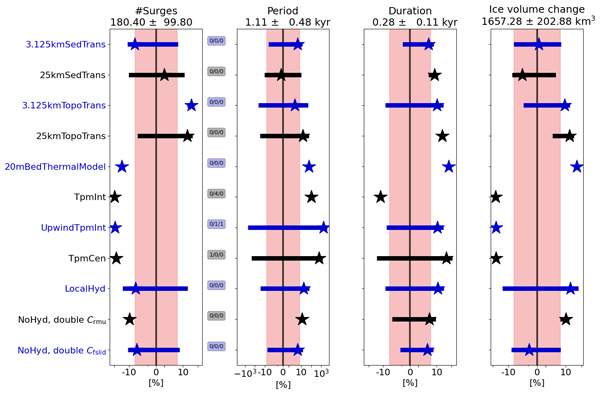
Physically meaningful modeling of geophysical system instabilities is numerically challenging, given the potential effects of purely numerical artifacts. Here we explore the sensitivity of ice stream surge activation to numerical and physical model aspects. We find that surge characteristics exhibit a resolution dependency but converge at higher horizontal grid resolutions and are significantly affected by the incorporation of bed thermal and sub-glacial hydrology models.
Sheng Fan, David J. Prior, Brent Pooley, Hamish Bowman, Lucy Davidson, David Wallis, Sandra Piazolo, Chao Qi, David L. Goldsby, and Travis F. Hager
The Cryosphere, 17, 3443–3459, https://doi.org/10.5194/tc-17-3443-2023, https://doi.org/10.5194/tc-17-3443-2023, 2023
Short summary
Short summary
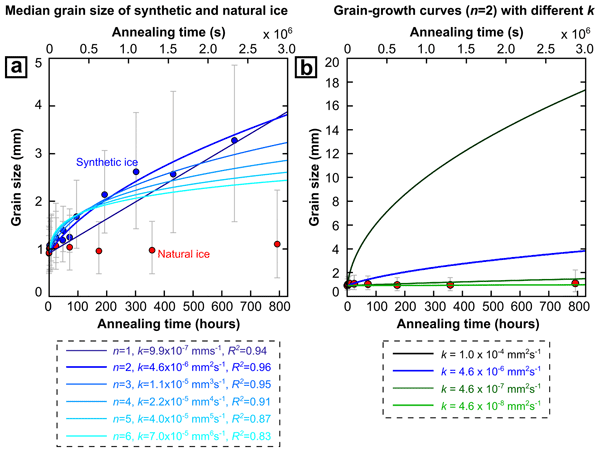
The microstructure of ice controls the behaviour of polar ice flow. Grain growth can modify the microstructure of ice; however, its processes and kinetics are poorly understood. We conduct grain-growth experiments on synthetic and natural ice samples at 0 °C. Microstructural data show synthetic ice grows continuously with time. In contrast, natural ice does not grow within a month. The inhibition of grain growth in natural ice is largely contributed by bubble pinning at ice grain boundaries.
Daniel H. Richards, Samuel S. Pegler, and Sandra Piazolo
The Cryosphere, 16, 4571–4592, https://doi.org/10.5194/tc-16-4571-2022, https://doi.org/10.5194/tc-16-4571-2022, 2022
Short summary
Short summary
Understanding the orientation of ice grains is key for predicting ice flow. We explore the evolution of these orientations using a new efficient model. We present an exploration of the patterns produced under a range of temperatures and 2D deformations, including for the first time a universal regime diagram. We do this for deformations relevant to ice sheets but not studied in experiments. These results can be used to understand drilled ice cores and improve future modelling of ice sheets.
Cited articles
Arthern, R. J., Vaughan, D. G., Rankin, A. M., Mulvaney, R., and Thomas, E. R.: In situ measurements of Antarctic snow compaction compared with predictions of models, Journal of Geophysical Research: Earth Surface, 115, https://doi.org/10.1029/2009JF001306, 2010. a
Azuma, N.: A flow law for anisotropic ice and its application to ice sheets, Earth and Planetary Science Letters, 128, 601–614, https://doi.org/10.1016/0012-821X(94)90173-2, 1994. a
Azuma, N. and Goto-Azuma, K.: An anisotropic flow law for ice-sheet ice and its implications, Annals of Glaciology, 23, 202–208, https://doi.org/10.3189/S0260305500013458, 1996. a, b, c, d
Castelnau, O., Duval, P., Lebensohn, R. A., and Canova, G. R.: Viscoplastic modeling of texture development in polycrystalline ice with a self-consistent approach: Comparison with bound estimates, Journal of Geophysical Research: Solid Earth, 101, 13851–13868, https://doi.org/10.1029/96JB00412, 1996a. a, b, c, d
Castelnau, O., Thorsteinsson, T., Kipfstuhl, J., Duval, P., and Canova, G. R.: Modelling fabric development along the GRIP ice core, central Greenland, Annals of Glaciology, 23, 194–201, https://doi.org/10.3189/S0260305500013446, 1996b. a, b, c
Craw, L., Qi, C., Prior, D. J., Goldsby, D. L., and Kim, D.: Mechanics and microstructure of deformed natural anisotropic ice, Journal of Structural Geology, 115, 152–166, https://doi.org/10.1016/j.jsg.2018.07.014, 2018. a, b
Dafalias, Y. F.: The plastic spin concept and a simple illustration of its role in finite plastic transformations, Mechanics of Materials, 3, 223–233, https://doi.org/10.1016/0167-6636(84)90021-8, 1984. a
Dansgaard, W. and Johnsen, S. J.: A Flow Model and a Time Scale for the Ice Core from Camp Century, Greenland, Journal of Glaciology, 8, 215–223, https://doi.org/10.3189/S0022143000031208, 1969. a
Drury, M. and Urai, J.: Deformation-related recrystallization process, Tectonophysics, 172, 235–253, https://doi.org/10.1016/0040-1951(90)90033-5, 1990. a
Durand, G., Persson, A., Samyn, D., and Svensson, A.: Relation between neighbouring grains in the upper part of the NorthGRIP ice core — Implications for rotation recrystallization, Earth and Planetary Science Letters, 265, 666–671, https://doi.org/10.1016/j.epsl.2007.11.002, 2008. a
Duval, P.: Creep and Fabrics of Polycrystalline Ice Under Shear and Compression, Journal of Glaciology, 27, 129–140, https://doi.org/10.3189/S002214300001128X, 1981. a
Duval, P., Ashby, M. F., and Anderman, I.: Rate-controlling processes in the creep of polycrystalline ice, The Journal of Physical Chemistry, 87, 4066–4074, https://doi.org/10.1021/j100244a014, 1983. a, b, c
Faria, S., Kipfstuhl, S., Azuma, N., Freitag, J., Weikusat, I., Murshed, M., and Kuhs, W.: The Multiscale Structure of Antarctica Part I: Inland Ice, Low Temperature Science, 68, 39–59, http://hdl.handle.net/2115/45430 (last access: 18 November 2025), 2009. a
Faria, S. H.: Creep and recrystallization of large polycrystalline masses. III. Continuum theory of ice sheets, Proceedings of the Royal Society A: Mathematical, Physical and Engineering Sciences, 462, 2797–2816, 2006. a
Faria, S. H.: The symmetry group of the CAFFE model, Journal of Glaciology, 54, 643–645, https://doi.org/10.3189/002214308786570935, 2008. a, b
Faria, S. H., Weikusat, I., and Azuma, N.: The microstructure of polar ice. Part I: Highlights from ice core research, Microdynamics of Ice, 61, 2–20, https://doi.org/10.1016/j.jsg.2013.09.010, 2014a. a, b, c
Faria, S. H., Weikusat, I., and Azuma, N.: The microstructure of polar ice. Part II: State of the art, Microdynamics of Ice, 61, 21–49, https://doi.org/10.1016/j.jsg.2013.11.003, 2014b. a, b
Gagliardini, O., Gillet-Chaulet, F., and Montagnat, M.: A Review of Anisotropic Polar Ice Models: from Crystal to Ice-Sheet Flow Models, Low Temperature Science, 68, 149–166, http://hdl.handle.net/2115/45447 (last access: 18 November 2025), 2009. a
Gerber, T. A., Hvidberg, C. S., Rasmussen, S. O., Franke, S., Sinnl, G., Grinsted, A., Jansen, D., and Dahl-Jensen, D.: Upstream flow effects revealed in the EastGRIP ice core using Monte Carlo inversion of a two-dimensional ice-flow model, The Cryosphere, 15, 3655–3679, https://doi.org/10.5194/tc-15-3655-2021, 2021. a, b
Gerber, T. A., Lilien, D. A., Rathmann, N. M., Franke, S., Young, T. J., Valero-Delgado, F., Ershadi, M. R., Drews, R., Zeising, O., Humbert, A., Stoll, N., Weikusat, I., Grinsted, A., Hvidberg, C. S., Jansen, D., Miller, H., Helm, V., Steinhage, D., O’Neill, C., Paden, J., Gogineni, S. P., Dahl-Jensen, D., and Eisen, O.: Crystal orientation fabric anisotropy causes directional hardening of the Northeast Greenland Ice Stream, Nature Communications, 14, 2653, https://doi.org/10.1038/s41467-023-38139-8, 2023. a, b
Gillet-Chaulet, F., Gagliardini, O., Meyssonnier, J., Zwinger, T., and Ruokolainen, J.: Flow-induced anisotropy in polar ice and related ice-sheet flow modelling, 2nd Annual European Rheology Conference, 134, 33–43, https://doi.org/10.1016/j.jnnfm.2005.11.005, 2006. a, b, c
Glen, J. W.: Experiments on the Deformation of Ice, Journal of Glaciology, 2, 111–114, https://doi.org/10.3189/S0022143000034067, 1952. a
Glen, J. W.: The effect of hydrogen disorder on dislocation movement and plastic deformation of ice, Physik der kondensierten Materie, 7, 43–51, https://doi.org/10.1007/BF02422799, 1968. a
Graham, F. S., Morlighem, M., Warner, R. C., and Treverrow, A.: Implementing an empirical scalar constitutive relation for ice with flow-induced polycrystalline anisotropy in large-scale ice sheet models, The Cryosphere, 12, 1047–1067, https://doi.org/10.5194/tc-12-1047-2018, 2018. a, b, c
Gödert, G. and Hutter, K.: Induced anisotropy in large ice shields: theory and its homogenization, Continuum Mechanics and Thermodynamics, 10, 293–318, https://doi.org/10.1007/s001610050095, 1998. a
Humphreys, F. and Hatherly, M.: Recrystallization and Related Annealig Phenomena, Pergamon, Oxford, 2nd Edn., ISBN 0 08 044164 5, 2004. a
Jackson, M. and Kamb, B.: The marginal shear stress of Ice Stream B, West Antarctica, Journal of Glaciology, 43, 415–426, https://doi.org/10.3189/S0022143000035000, 1997. a
Jansen, D., Franke, S., Bauer, C. C., Binder, T., Dahl-Jensen, D., Eichler, J., Eisen, O., Hu, Y., Kerch, J., Llorens, M.-G., Miller, H., Neckel, N., Paden, J., de Riese, T., Sachau, T., Stoll, N., Weikusat, I., Wilhelms, F., Zhang, Y., and Bons, P. D.: Shear margins in upper half of Northeast Greenland Ice Stream were established two millennia ago, Nature Communications, 15, 1193, https://doi.org/10.1038/s41467-024-45021-8, 2024. a, b
Johnsen, S. J.: GRIP Temperature Profile, PANGAEA [data set], https://doi.org/10.1594/PANGAEA.89007, 2003. a, b
Johnson, A.: Creep characterization of transversely-isotropic metallic materials, Journal of the Mechanics and Physics of Solids, 25, 117–126, https://doi.org/10.1016/0022-5096(77)90007-2, 1977. a
Jordan, T. M., Schroeder, D. M., Elsworth, C. W., and Siegfried, M. R.: Estimation of ice fabric within Whillans Ice Stream using polarimetric phase-sensitive radar sounding, Annals of Glaciology, 61, 74–83, https://doi.org/10.1017/aog.2020.6, 2020. a
Joughin, I., Smith, B., and Howat, I.: MEaSUREs Multi-year Greenland Ice Sheet Velocity Mosaic, Version 1, National Snow and Ice Data Center [data set], https://doi.org/10.5067/QUA5Q9SVMSJG, 2016. a, b
Joughin, I., Smith, B. E., and Howat, I. M.: A complete map of Greenland ice velocity derived from satellite data collected over 20 years, Journal of Glaciology, 64, 1–11, https://doi.org/10.1017/jog.2017.73, 2018. a
Journaux, B., Chauve, T., Montagnat, M., Tommasi, A., Barou, F., Mainprice, D., and Gest, L.: Recrystallization processes, microstructure and crystallographic preferred orientation evolution in polycrystalline ice during high-temperature simple shear, The Cryosphere, 13, 1495–1511, https://doi.org/10.5194/tc-13-1495-2019, 2019. a
Kac, M.: On Distributions of Certain Wiener Functionals, Transactions of the American Mathematical Society, 65, 1–13, https://doi.org/10.2307/1990512, 1949. a
Kufner, S.-K., Wookey, J., Brisbourne, A. M., Martín, C., Hudson, T. S., Kendall, J. M., and Smith, A. M.: Strongly Depth-Dependent Ice Fabric in a Fast-Flowing Antarctic Ice Stream Revealed With Icequake Observations, Journal of Geophysical Research: Earth Surface, 128, e2022JF006853, https://doi.org/10.1029/2022JF006853, 2023. a
Larour, E., Seroussi, H., Morlighem, M., and Rignot, E.: Continental scale, high order, high spatial resolution, ice sheet modeling using the Ice Sheet System Model (ISSM), Journal of Geophysical Research: Earth Surface, 117, https://doi.org/10.1029/2011JF002140, 2012. a
Lilien, D. A., Rathmann, N. M., Hvidberg, C. S., and Dahl-Jensen, D.: Modeling Ice-Crystal Fabric as a Proxy for Ice-Stream Stability, Journal of Geophysical Research: Earth Surface, 126, e2021JF006306, https://doi.org/10.1029/2021JF006306, 2021. a, b, c, d
Lilien, D. A., Rathmann, N. M., Hvidberg, C. S., Grinsted, A., Ershadi, M. R., Drews, R., and Dahl-Jensen, D.: Simulating higher-order fabric structure in a coupled, anisotropic ice-flow model: application to Dome C, Journal of Glaciology, 69, 2007–2026, https://doi.org/10.1017/jog.2023.78, 2023. a, b, c
Llorens, M.-G., Griera, A., Bons, P. D., Weikusat, I., Prior, D. J., Gomez-Rivas, E., de Riese, T., Jimenez-Munt, I., García-Castellanos, D., and Lebensohn, R. A.: Can changes in deformation regimes be inferred from crystallographic preferred orientations in polar ice?, The Cryosphere, 16, 2009–2024, https://doi.org/10.5194/tc-16-2009-2022, 2022. a
Lutz, F., Eccles, J., Prior, D. J., Craw, L., Fan, S., Hulbe, C., Forbes, M., Still, H., Pyne, A., and Mandeno, D.: Constraining Ice Shelf Anisotropy Using Shear Wave Splitting Measurements from Active-Source Borehole Seismics, Journal of Geophysical Research: Earth Surface, 125, e2020JF005707, https://doi.org/10.1029/2020JF005707, 2020. a, b
Ma, Y., Gagliardini, O., Ritz, C., Gillet-Chaulet, F., Durand, G., and Montagnat, M.: Enhancement factors for grounded ice and ice shelves inferred from an anisotropic ice-flow model, Journal of Glaciology, 56, 805–812, https://doi.org/10.3189/002214310794457209, 2010. a, b, c, d
MacAyeal, D. R.: Large-scale ice flow over a viscous basal sediment: Theory and application to ice stream B, Antarctica, Journal of Geophysical Research: Solid Earth, 94, 4071–4087, https://doi.org/10.1029/JB094iB04p04071, 1989. a
Martín, C. and Gudmundsson, G. H.: Effects of nonlinear rheology, temperature and anisotropy on the relationship between age and depth at ice divides, The Cryosphere, 6, 1221–1229, https://doi.org/10.5194/tc-6-1221-2012, 2012. a
Martín, C., Gudmundsson, G. H., Pritchard, H. D., and Gagliardini, O.: On the effects of anisotropic rheology on ice flow, internal structure, and the age-depth relationship at ice divides, Journal of Geophysical Research: Earth Surface, 114, https://doi.org/10.1029/2008JF001204, 2009. a, b, c
McConnel, J.: On the plasticity of an ice crystal, Proceedings of the Royal Society of London, 49, 323–343, 1891. a
McCormack, F. S., Warner, R. C., Seroussi, H., Dow, C. F., Roberts, J. L., and Treverrow, A.: Modeling the Deformation Regime of Thwaites Glacier, West Antarctica, Using a Simple Flow Relation for Ice Anisotropy (ESTAR), Journal of Geophysical Research: Earth Surface, 127, e2021JF006332, https://doi.org/10.1029/2021JF006332, 2022. a
Meyssonnier, J. and Philip, A.: A model for the tangent viscous behaviour of anisotropic polar ice, Annals of Glaciology, 23, 253–261, https://doi.org/10.3189/S0260305500013513, 1996. a, b
Montagnat, M., Buiron, D., Arnaud, L., Broquet, A., Schlitz, P., Jacob, R., and Kipfstuhl, S.: Measurements and numerical simulation of fabric evolution along the Talos Dome ice core, Antarctica, Earth and Planetary Science Letters, 357-358, 168–178, https://doi.org/10.1016/j.epsl.2012.09.025, 2012. a, b, c
Montagnat, M., Azuma, N., Dahl-Jensen, D., Eichler, J., Fujita, S., Gillet-Chaulet, F., Kipfstuhl, S., Samyn, D., Svensson, A., and Weikusat, I.: Fabric along the NEEM ice core, Greenland, and its comparison with GRIP and NGRIP ice cores, The Cryosphere, 8, 1129–1138, https://doi.org/10.5194/tc-8-1129-2014, 2014a. a
Montagnat, M., Castelnau, O., Bons, P., Faria, S., Gagliardini, O., Gillet-Chaulet, F., Grennerat, F., Griera, A., Lebensohn, R., Moulinec, H., Roessiger, J., and Suquet, P.: Multiscale modeling of ice deformation behavior, Microdynamics of Ice, 61, 78–108, https://doi.org/10.1016/j.jsg.2013.05.002, 2014b. a, b
Morland, L. W.: Unconfined Ice-Shelf Flow, in: Dynamics of the West Antarctic Ice Sheet, edited by: Van der Veen, C. J. and Oerlemans, J., 99–116, Springer Netherlands, Dordrecht, ISBN 978-94-009-3745-1, 1987. a
Morlighem, M.: MEaSUREs BedMachine Antarctica, Version 3, National Snow and Ice Data Center [data set], https://doi.org/10.5067/FPSU0V1MWUB6, 2022. a
Morlighem, M., Williams, C. N., Rignot, E., An, L., Arndt, J. E., Bamber, J. L., Catania, G., Chauché, N., Dowdeswell, J. A., Dorschel, B., Fenty, I., Hogan, K., Howat, I., Hubbard, A., Jakobsson, M., Jordan, T. M., Kjeldsen, K. K., Millan, R., Mayer, L., Mouginot, J., Noël, B. P. Y., O'Cofaigh, C., Palmer, S., Rysgaard, S., Seroussi, H., Siegert, M. J., Slabon, P., Straneo, F., van den Broeke, M. R., Weinrebe, W., Wood, M., and Zinglersen, K. B.: BedMachine v3: Complete Bed Topography and Ocean Bathymetry Mapping of Greenland From Multibeam Echo Sounding Combined With Mass Conservation, Geophysical Research Letters, 44, 11051–11061, https://doi.org/10.1002/2017GL074954, 2017. a
Paterson, W. S. B.: The Physics of Glaciers, Pergamon, Oxford, 3rd Edn., ISBN 978-0-7506-4742-7, 1999. a
Pettit, E. C., Thorsteinsson, T., Jacobson, H. P., and Waddington, E. D.: The role of crystal fabric in flow near an ice divide, Journal of Glaciology, 53, 277–288, https://doi.org/10.3189/172756507782202766, 2007. a, b, c
Piazolo, S., Jessell, M. W., Bons, P. D., Evans, L., and Becker, J. K.: Numerical simulations of microstructures using the Elle platform: A modern research and teaching tool, Journal of the Geological Society of India, 75, 110–127, https://doi.org/10.1007/s12594-010-0028-6, 2010. a
Piazolo, S., Montagnat, M., Grennerat, F., Moulinec, H., and Wheeler, J.: Effect of local stress heterogeneities on dislocation fields, Acta Materialia, 90, 303–309, https://doi.org/10.1016/j.actamat.2015.02.046, 2015. a
Placidi, L.: Thermodynamically Consistent Formulation of Induced Anisotropy in Polar Ice Accounting for Grain Rotation, Grain-size Evolution and Recrystallization., PhD Thesis, Technische Universität, Darmstadt, http://tuprints.ulb.tu-darmstadt.de/614/ (last access: 18 November 2025), 2005. a
Placidi, L., Greve, R., Seddik, H., and Faria, S. H.: Continuum-mechanical, Anisotropic Flow model for polar ice masses, based on an anisotropic Flow Enhancement factor, Continuum Mechanics and Thermodynamics, 22, 221–237, https://doi.org/10.1007/s00161-009-0126-0, 2010. a, b, c, d, e, f, g, h, i, j, k, l, m, n
Prior-Jones, M. R., Bagshaw, E. A., Lees, J., Clare, L., Burrow, S., Werder, M. A., Karlsson, N. B., Dahl-Jensen, D., Chudley, T. R., Christoffersen, P., Wadham, J. L., Doyle, S. H., and Hubbard, B.: Cryoegg: development and field trials of a wireless subglacial probe for deep, fast-moving ice, Journal of Glaciology, 1–14, https://doi.org/10.1017/jog.2021.16, 2021. a
Qi, C., Prior, D. J., Craw, L., Fan, S., Llorens, M.-G., Griera, A., Negrini, M., Bons, P. D., and Goldsby, D. L.: Crystallographic preferred orientations of ice deformed in direct-shear experiments at low temperatures, The Cryosphere, 13, 351–371, https://doi.org/10.5194/tc-13-351-2019, 2019. a
Rathmann, N. M. and Lilien, D. A.: Inferred basal friction and mass flux affected by crystal-orientation fabrics, Journal of Glaciology, 1–17, https://doi.org/10.1017/jog.2021.88, 2021. a, b, c, d
Rathmann, N. M., Hvidberg, C. S., Grinsted, A., Lilien, D. A., and Dahl-Jensen, D.: Effect of an orientation-dependent non-linear grain fluidity on bulk directional enhancement factors, Journal of Glaciology, 67, 569–575, https://doi.org/10.1017/jog.2020.117, 2021. a, b, c, d
Richards, D.: dhrichards/ComparitiveStudyofFabricFigures, Zenodo [code], https://doi.org/10.5281/zenodo.17417118, 2025. a
Richards, D. H., Pegler, S. S., and Piazolo, S.: Ice fabrics in two-dimensional flows: beyond pure and simple shear, The Cryosphere, 16, 4571–4592, https://doi.org/10.5194/tc-16-4571-2022, 2022. a
Richards, D. H., Pegler, S. S., Piazolo, S., Stoll, N., and Weikusat, I.: Bridging the Gap Between Experimental and Natural Fabrics: Modeling Ice Stream Fabric Evolution and its Comparison With Ice-Core Data, Journal of Geophysical Research: Solid Earth, 128, e2023JB027245, https://doi.org/10.1029/2023JB027245, 2023. a, b, c, d, e, f, g
Schmid, S. M. and Casey, M.: Complete Fabric Analysis of Some Commonly Observed Quartz C-Axis Patterns, in: Mineral and Rock Deformation, 263–286, American Geophysical Union (AGU), ISBN 978-1-118-66435-3, 1986. a
Schoof, C.: A variational approach to ice stream flow, Journal of Fluid Mechanics, 556, 227–251, https://doi.org/10.1017/S0022112006009591, 2006. a
Signorelli, J. and Tommasi, A.: Modeling the effect of subgrain rotation recrystallization on the evolution of olivine crystal preferred orientations in simple shear, Earth and Planetary Science Letters, 430, 356–366, https://doi.org/10.1016/j.epsl.2015.08.018, 2015. a
Smith, B. E., Gourmelen, N., Huth, A., and Joughin, I.: Connected subglacial lake drainage beneath Thwaites Glacier, West Antarctica, The Cryosphere, 11, 451–467, https://doi.org/10.5194/tc-11-451-2017, 2017. a
Stoll, N. and Weikusat, I.: C-axis data from 3 depths at EGRIP, Zenodo [code], https://doi.org/10.5281/zenodo.8015759, 2023. a
Stoll, N., Eichler, J., Hörhold, M., Erhardt, T., Jensen, C., and Weikusat, I.: Microstructure, micro-inclusions, and mineralogy along the EGRIP ice core – Part 1: Localisation of inclusions and deformation patterns, The Cryosphere, 15, 5717–5737, https://doi.org/10.5194/tc-15-5717-2021, 2021. a, b, c, d
Thamburaja, P. and Jamshidian, M.: A multiscale Taylor model-based constitutive theory describing grain growth in polycrystalline cubic metals, Journal of the Mechanics and Physics of Solids, 63, 1–28, https://doi.org/10.1016/j.jmps.2013.10.009, 2014. a
Thorsteinsson, T.: Fabric development with nearest-neighbor interaction and dynamic recrystallization, Journal of Geophysical Research: Solid Earth, 107, ECV 3–1, https://doi.org/10.1029/2001JB000244, 2002. a, b
Thorsteinsson, T., Kipfstuhl, J., and Miller, H.: Textures and fabrics in the GRIP ice core, Journal of Geophysical Research: Oceans, 102, 26583–26599, https://doi.org/10.1029/97JC00161, 1997. a, b, c, d
Voigt, D.: c-Axis Fabric of the South Pole Ice Core, SPC14, USAP-DC [data set], https://doi.org/10.15784/601057, 2017. a
Weikusat, I., Stoll, N., Kerch, J., Eichler, J., Jansen, D., and Kipfstuhl, S.: Crystal c-axes (fabric analyser G50) of ice core samples (vertical thin sections) collected from the polar ice core EGRIP, 111–1714 m depth, PANGAEA [data set], https://doi.org/10.1594/PANGAEA.949248, 2022. a
Winkelmann, R., Martin, M. A., Haseloff, M., Albrecht, T., Bueler, E., Khroulev, C., and Levermann, A.: The Potsdam Parallel Ice Sheet Model (PISM-PIK) – Part 1: Model description, The Cryosphere, 5, 715–726, https://doi.org/10.5194/tc-5-715-2011, 2011. a
Young, T. J., Schroeder, D. M., Jordan, T. M., Christoffersen, P., Tulaczyk, S. M., Culberg, R., and Bienert, N. L.: Inferring Ice Fabric From Birefringence Loss in Airborne Radargrams: Application to the Eastern Shear Margin of Thwaites Glacier, West Antarctica, Journal of Geophysical Research: Earth Surface, 126, e2020JF006023, https://doi.org/10.1029/2020JF006023, 2021. a, b
Short summary
Ice behaves differently depending on its crystal orientation, but how this affects its flow is unclear. We combine a range of previous models into a common equation to better understand crystal alignment. We tested a range of previous models on ice streams and divides, discovering that the best fit to observations comes from (a) assuming neighbouring crystals have the same stress, and (b) through describing the effect of crystal orientation on the flow in a way that allows directional variation.
Ice behaves differently depending on its crystal orientation, but how this affects its flow is...


