
Articles | Volume 20, issue 1
https://doi.org/10.5194/tc-20-67-2026
© Author(s) 2026. This work is distributed under
the Creative Commons Attribution 4.0 License.
the Creative Commons Attribution 4.0 License.
https://doi.org/10.5194/tc-20-67-2026
© Author(s) 2026. This work is distributed under
the Creative Commons Attribution 4.0 License.
the Creative Commons Attribution 4.0 License.
Research article
| 
07 Jan 2026
Research article |
| 07 Jan 2026
| 07 Jan 2026
Quantifying degradation of the Imja Lake moraine dam with fused InSAR and SAR feature tracking time series
University of Washington Department of Civil and Environmental Engineering, 1400 NE Campus Parkway, Seattle, WA 98195, USA
Scott T. Henderson
University of Washington Department of Earth and Space Sciences, 1707 NE Grant Lane, Seattle, WA 98195, USA
University of Washington eScience Institute, 1410 NE Campus Parkway, Seattle, WA 98195, USA
David E. Shean
University of Washington Department of Civil and Environmental Engineering, 1400 NE Campus Parkway, Seattle, WA 98195, USA
University of Washington Department of Earth and Space Sciences, 1707 NE Grant Lane, Seattle, WA 98195, USA
University of Washington eScience Institute, 1410 NE Campus Parkway, Seattle, WA 98195, USA
Related authors
Zachary Hoppinen, Ross T. Palomaki, George Brencher, Devon Dunmire, Eric Gagliano, Adrian Marziliano, Jack Tarricone, and Hans-Peter Marshall
The Cryosphere, 18, 5407–5430, https://doi.org/10.5194/tc-18-5407-2024, https://doi.org/10.5194/tc-18-5407-2024, 2024
Short summary
Short summary
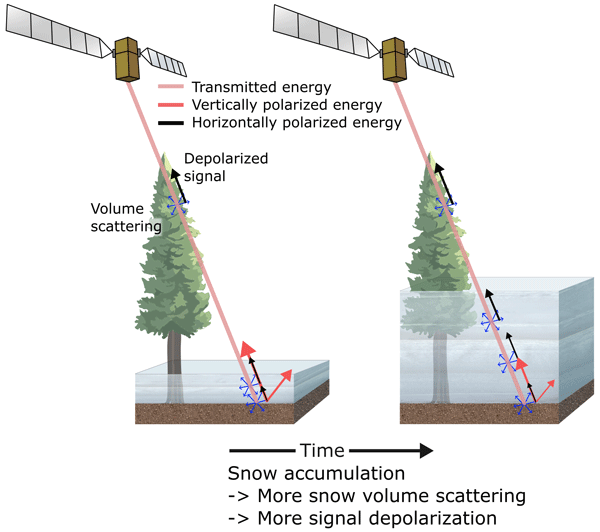
This study uses radar imagery from the Sentinel-1 satellite to derive snow depth from increases in the returning energy. These retrieved depths are then compared to nine lidar-derived snow depths across the western United State to assess the ability of this technique to be used to monitor global snow distributions. We also qualitatively compare the changes in underlying Sentinel-1 amplitudes against both the total lidar snow depths and nine automated snow monitoring stations.
Matthew C. Morriss, Benjamin Lehmann, Benjamin Campforts, George Brencher, Brianna Rick, Leif S. Anderson, Alexander L. Handwerger, Irina Overeem, and Jeffrey Moore
Earth Surf. Dynam., 11, 1251–1274, https://doi.org/10.5194/esurf-11-1251-2023, https://doi.org/10.5194/esurf-11-1251-2023, 2023
Short summary
Short summary
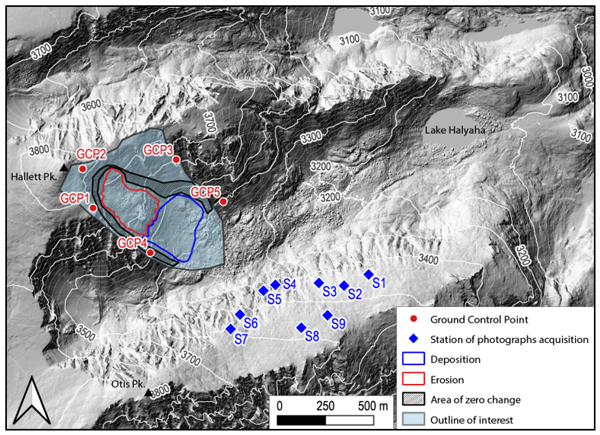
In this paper, we investigate the 28 June 2022 collapse of the Chaos Canyon landslide in Rocky Mountain National Park, Colorado, USA. We find that the landslide was moving prior to its collapse and took place at peak spring snowmelt; temperature modeling indicates the potential presence of permafrost. We hypothesize that this landslide could be part of the broader landscape evolution changes to alpine terrain caused by a warming climate, leading to thawing alpine permafrost.
George Brencher, Alexander L. Handwerger, and Jeffrey S. Munroe
The Cryosphere, 15, 4823–4844, https://doi.org/10.5194/tc-15-4823-2021, https://doi.org/10.5194/tc-15-4823-2021, 2021
Short summary
Short summary
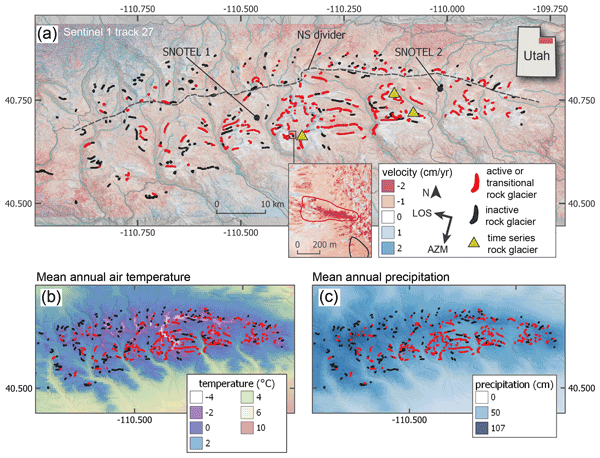
We use satellite InSAR to inventory and monitor rock glaciers, frozen bodies of ice and rock debris that are an important water resource in the Uinta Mountains, Utah, USA. Our inventory contains 205 rock glaciers, which occur within a narrow elevation band and deform at 1.94 cm yr-1 on average. Uinta rock glacier movement changes seasonally and appears to be driven by spring snowmelt. The role of rock glaciers as a perennial water resource is threatened by ice loss due to climate change.
Eric Gagliano, David Shean, and Scott Henderson
Earth Syst. Sci. Data, 18, 5871–5894, https://doi.org/10.5194/essd-18-5871-2026, https://doi.org/10.5194/essd-18-5871-2026, 2026
Short summary
Short summary
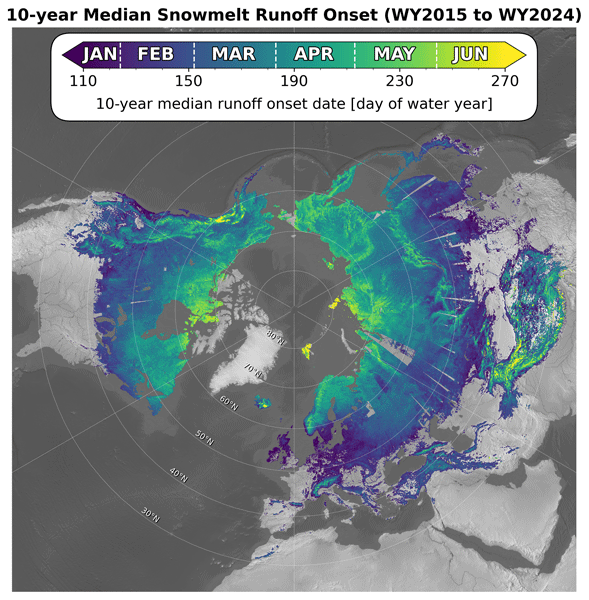
Meltwater from seasonal snow sustains over a billion people globally, making the timing of snowmelt runoff onset a critical hydrological parameter. We used satellite radar images, which can detect liquid water in snowpack regardless of cloud cover, to create a global dataset of snowmelt runoff onset timing from 2015 to 2024 at 80 m resolution. The dataset shows close agreement with a network of ground-based snow sensors, and can support water resource management in snow-dominated watersheds.
Amaury Dehecq, Friedrich Knuth, Joaquín M. C. Belart, Livia Piermattei, Camillo Ressl, Adina Racoviteanu, Robert McNabb, David Shean, and Luc Godin
Int. Arch. Photogramm. Remote Sens. Spatial Inf. Sci., XLIX-B2-2026, 9–16, https://doi.org/10.5194/isprs-archives-XLIX-B2-2026-9-2026, https://doi.org/10.5194/isprs-archives-XLIX-B2-2026-9-2026, 2026
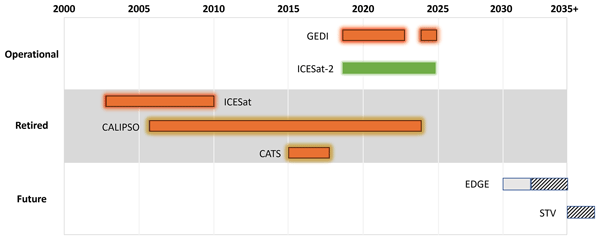
Zachary Fair, Carrie Vuyovich, Thomas Neumann, Justin Pflug, David Shean, Ellyn M. Enderlin, Karina Zikan, Hannah Besso, Jessica Lundquist, Cesar Deschamps-Berger, and Désirée Treichler
The Cryosphere, 19, 5671–5691, https://doi.org/10.5194/tc-19-5671-2025, https://doi.org/10.5194/tc-19-5671-2025, 2025
Short summary
Short summary
Lidar is commonly used to measure snow over global water reservoirs. However, ground-based and airborne lidar surveys are expensive, so satellite-based methods are needed. In this review, we outline the latest research using satellite-based lidar to monitor snow. Best practices for lidar-based snow monitoring are given, as is a discussion on challenges in this field of research.
Zachary Hoppinen, Ross T. Palomaki, George Brencher, Devon Dunmire, Eric Gagliano, Adrian Marziliano, Jack Tarricone, and Hans-Peter Marshall
The Cryosphere, 18, 5407–5430, https://doi.org/10.5194/tc-18-5407-2024, https://doi.org/10.5194/tc-18-5407-2024, 2024
Short summary
Short summary
This study uses radar imagery from the Sentinel-1 satellite to derive snow depth from increases in the returning energy. These retrieved depths are then compared to nine lidar-derived snow depths across the western United State to assess the ability of this technique to be used to monitor global snow distributions. We also qualitatively compare the changes in underlying Sentinel-1 amplitudes against both the total lidar snow depths and nine automated snow monitoring stations.
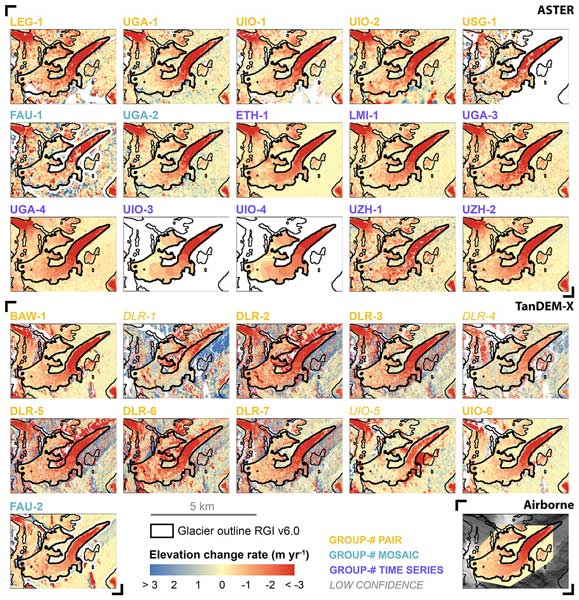
Livia Piermattei, Michael Zemp, Christian Sommer, Fanny Brun, Matthias H. Braun, Liss M. Andreassen, Joaquín M. C. Belart, Etienne Berthier, Atanu Bhattacharya, Laura Boehm Vock, Tobias Bolch, Amaury Dehecq, Inés Dussaillant, Daniel Falaschi, Caitlyn Florentine, Dana Floricioiu, Christian Ginzler, Gregoire Guillet, Romain Hugonnet, Matthias Huss, Andreas Kääb, Owen King, Christoph Klug, Friedrich Knuth, Lukas Krieger, Jeff La Frenierre, Robert McNabb, Christopher McNeil, Rainer Prinz, Louis Sass, Thorsten Seehaus, David Shean, Désirée Treichler, Anja Wendt, and Ruitang Yang
The Cryosphere, 18, 3195–3230, https://doi.org/10.5194/tc-18-3195-2024, https://doi.org/10.5194/tc-18-3195-2024, 2024
Short summary
Short summary
Satellites have made it possible to observe glacier elevation changes from all around the world. In the present study, we compared the results produced from two different types of satellite data between different research groups and against validation measurements from aeroplanes. We found a large spread between individual results but showed that the group ensemble can be used to reliably estimate glacier elevation changes and related errors from satellite data.
Matthew C. Morriss, Benjamin Lehmann, Benjamin Campforts, George Brencher, Brianna Rick, Leif S. Anderson, Alexander L. Handwerger, Irina Overeem, and Jeffrey Moore
Earth Surf. Dynam., 11, 1251–1274, https://doi.org/10.5194/esurf-11-1251-2023, https://doi.org/10.5194/esurf-11-1251-2023, 2023
Short summary
Short summary
In this paper, we investigate the 28 June 2022 collapse of the Chaos Canyon landslide in Rocky Mountain National Park, Colorado, USA. We find that the landslide was moving prior to its collapse and took place at peak spring snowmelt; temperature modeling indicates the potential presence of permafrost. We hypothesize that this landslide could be part of the broader landscape evolution changes to alpine terrain caused by a warming climate, leading to thawing alpine permafrost.
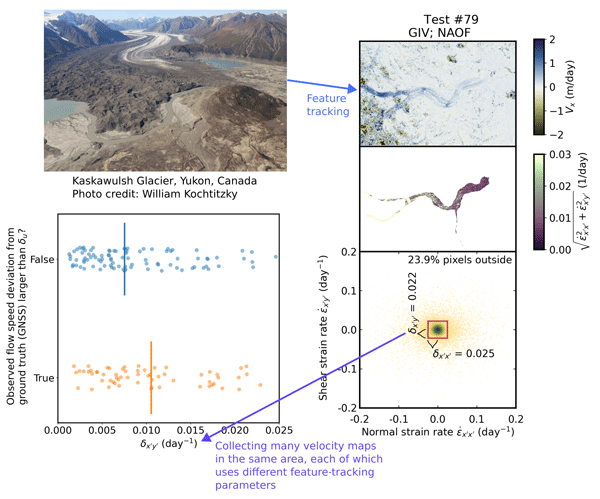
Whyjay Zheng, Shashank Bhushan, Maximillian Van Wyk De Vries, William Kochtitzky, David Shean, Luke Copland, Christine Dow, Renette Jones-Ivey, and Fernando Pérez
The Cryosphere, 17, 4063–4078, https://doi.org/10.5194/tc-17-4063-2023, https://doi.org/10.5194/tc-17-4063-2023, 2023
Short summary
Short summary
We design and propose a method that can evaluate the quality of glacier velocity maps. The method includes two numbers that we can calculate for each velocity map. Based on statistics and ice flow physics, velocity maps with numbers close to the recommended values are considered to have good quality. We test the method using the data from Kaskawulsh Glacier, Canada, and release an open-sourced software tool called GLAcier Feature Tracking testkit (GLAFT) to help users assess their velocity maps.
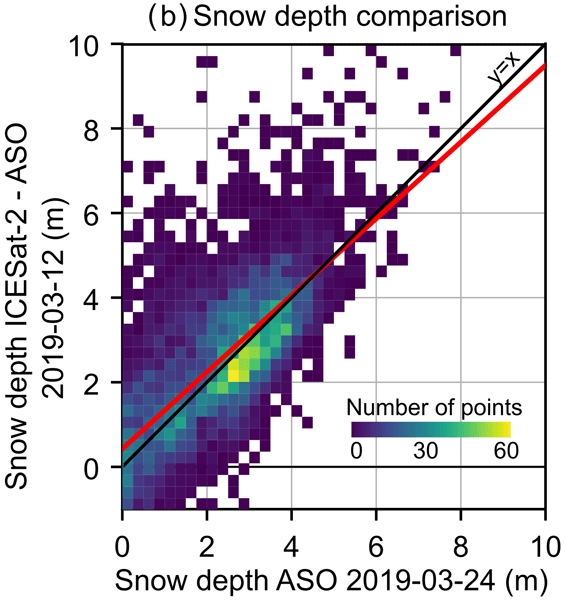
César Deschamps-Berger, Simon Gascoin, David Shean, Hannah Besso, Ambroise Guiot, and Juan Ignacio López-Moreno
The Cryosphere, 17, 2779–2792, https://doi.org/10.5194/tc-17-2779-2023, https://doi.org/10.5194/tc-17-2779-2023, 2023
Short summary
Short summary
The estimation of the snow depth in mountains is hard, despite the importance of the snowpack for human societies and ecosystems. We measured the snow depth in mountains by comparing the elevation of points measured with snow from the high-precision altimetric satellite ICESat-2 to the elevation without snow from various sources. Snow depths derived only from ICESat-2 were too sparse, but using external airborne/satellite products results in spatially richer and sufficiently precise snow depths.
Maximillian Van Wyk de Vries, Shashank Bhushan, Mylène Jacquemart, César Deschamps-Berger, Etienne Berthier, Simon Gascoin, David E. Shean, Dan H. Shugar, and Andreas Kääb
Nat. Hazards Earth Syst. Sci., 22, 3309–3327, https://doi.org/10.5194/nhess-22-3309-2022, https://doi.org/10.5194/nhess-22-3309-2022, 2022
Short summary
Short summary
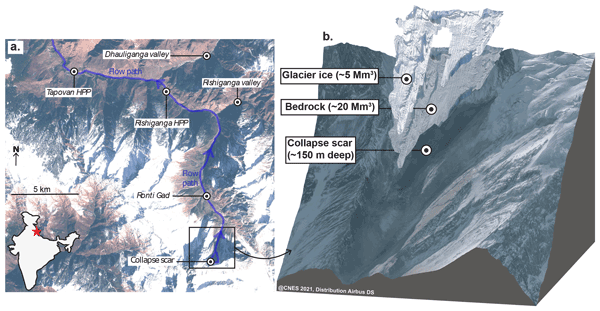
On 7 February 2021, a large rock–ice avalanche occurred in Chamoli, Indian Himalaya. The resulting debris flow swept down the nearby valley, leaving over 200 people dead or missing. We use a range of satellite datasets to investigate how the collapse area changed prior to collapse. We show that signs of instability were visible as early 5 years prior to collapse. However, it would likely not have been possible to predict the timing of the event from current satellite datasets.
George Brencher, Alexander L. Handwerger, and Jeffrey S. Munroe
The Cryosphere, 15, 4823–4844, https://doi.org/10.5194/tc-15-4823-2021, https://doi.org/10.5194/tc-15-4823-2021, 2021
Short summary
Short summary
We use satellite InSAR to inventory and monitor rock glaciers, frozen bodies of ice and rock debris that are an important water resource in the Uinta Mountains, Utah, USA. Our inventory contains 205 rock glaciers, which occur within a narrow elevation band and deform at 1.94 cm yr-1 on average. Uinta rock glacier movement changes seasonally and appears to be driven by spring snowmelt. The role of rock glaciers as a perennial water resource is threatened by ice loss due to climate change.
Cited articles
Ali Badal, L.: Indian soldier's body found in Teesta handed over to BSF, Dhaka Tribune, https://www.dhakatribune.com/bangladesh/nation/327225/indian-soldier%E2%80%99s-body-found-in-teesta-handed-over, last access: 6 October 2023.
Allen, S. K., Linsbauer, A., Randhawa, S. S., Huggel, C., Rana, P., and Kumari, A.: Glacial lake outburst flood risk in Himachal Pradesh, India: An integrative and anticipatory approach considering current and future threats, Nat. Hazards, 84, 1741–1763, https://doi.org/10.1007/s11069-016-2511-x, 2016.
Altena, B., Scambos, T., Fahnestock, M., and Kääb, A.: Extracting recent short-term glacier velocity evolution over southern Alaska and the Yukon from a large collection of Landsat data, The Cryosphere, 13, 795–814, https://doi.org/10.5194/tc-13-795-2019, 2019.
Atwood, D. K., Meyer, F., and Arendt, A.: Using L-band SAR coherence to delineate glacier extent, Can. J. Remote Sens., 36, S186–S195, https://doi.org/10.5589/m10-014, 2010.
Bekaert, D. P. S., Walters, R. J., Wright, T. J., Hooper, A. J., and Parker, D. J.: Statistical comparison of InSAR tropospheric correction techniques, Remote Sens. Environ., 170, 40–47, https://doi.org/10.1016/j.rse.2015.08.035, 2015.
Berardino, P., Fornaro, G., Lanari, R., and Sansosti, E.: A new algorithm for surface deformation monitoring based on small baseline differential SAR interferograms, IEEE Trans. Geosci. Remote Sens., 40, 2375–2383, https://doi.org/10.1109/TGRS.2002.803792, 2002.
Bertone, A., Barboux, C., Bodin, X., Bolch, T., Brardinoni, F., Caduff, R., Christiansen, H. H., Darrow, M. M., Delaloye, R., Etzelmüller, B., Humlum, O., Lambiel, C., Lilleøren, K. S., Mair, V., Pellegrinon, G., Rouyet, L., Ruiz, L., and Strozzi, T.: Incorporating InSAR kinematics into rock glacier inventories: insights from 11 regions worldwide, The Cryosphere, 16, 2769–2792, https://doi.org/10.5194/tc-16-2769-2022, 2022.
Beyer, R. A., Alexandrov, O., and McMichael, S.: The Ames Stereo Pipeline: NASA's open source software for deriving and processing terrain data, Earth Space Sci., 5, 537–548, https://doi.org/10.1029/2018EA000409, 2018.
Bhushan, S. and Shean, D.: Chamoli Disaster Pre-event 2 m DEM Composite: September 2015 (1.0) [data set], Zenodo, https://doi.org/10.5281/zenodo.4554647, 2021.
Bhushan, S. and Shean, D.: uw-cryo/debris_cover_smb: Bugfix for disp_mgm_corr.py (0.4.1) [code], Zenodo, https://doi.org/10.5281/zenodo.14816790, 2025.
Bhushan, S., Shean, D., Hu, J. Y. M., Guillet, G., and Rounce, D. R.: Deriving seasonal and annual surface mass balance for debris-covered glaciers from flow-corrected satellite stereo DEM time series, J. Glaciol., 70, e6, https://doi.org/10.1017/jog.2024.57, 2024.
Bontemps, N., Lacroix, P., and Doin, M. P.: Inversion of deformation fields time-series from optical images, and application to the long term kinematics of slow-moving landslides in Peru, Remote Sens. Environ., 210, 144–158, https://doi.org/10.1016/j.rse.2018.02.023, 2018.
Brencher, G., Shean, D., and Henderson, S.: fufiters_imja_analysis dataset: Release for accepted article, Zenodo [data set], https://doi.org/10.5281/zenodo.17762405, 2025.
Brencher, Q.: gbrencher/fufiters_imja_analysis: v0.1.0 (v0.1.0), Zenodo [code], https://doi.org/10.5281/zenodo.17751810, 2025.
Brouwer, W. S. and Hanssen, R. F.: An analysis of InSAR displacement vector decomposition fallacies and the strap-down solution, 2021 IEEE International Geoscience and Remote Sensing Symposium IGARSS, 2927–2930, https://doi.org/10.1109/IGARSS47720.2021.9554216, 2021.
Budhathoki, K. P., Bajracharya, O., and Pokharel, B.: Assessment of Imja Glacier Lake outburst Flood (GLOF) Risk in Dudh Koshi River Basin using Remote Sensing Techniques, J. Hydrol. Meteorol., 7, 75–91, https://doi.org/10.3126/jhm.v7i1.5618, 2010.
Bürgmann, R., Rosen, P. A., and Fielding, E. J.: Synthetic Aperture Radar Interferometry to Measure Earth's Surface Topography and Its Deformation, Annu. Rev. Earth Planet. Sci., 28, 169–209, https://doi.org/10.1146/annurev.earth.28.1.169, 2000.
Bursik, M.: Relative Dating of Moraines Based on Landform Degradation, Lee Vining Canyon, California, Quat. Res., 35, 451–455, https://doi.org/10.1016/0033-5894(91)90057-C, 1991.
Cabré, A., Remy, D., Aguilar, G., Carretier, S., and Riquelme, R.: Mapping rainstorm erosion associated with an individual storm from InSAR coherence loss validated by field evidence for the Atacama Desert, Earth Surf. Process. Landf., 45, 2091–2106, https://doi.org/10.1002/esp.4868, 2020.
Carrivick, J. L. and Tweed, F. S.: A global assessment of the societal impacts of glacier outburst floods, Glob. Planet. Change, 144, 1–16, https://doi.org/10.1016/j.gloplacha.2016.07.001, 2016.
Casu, F., Manconi, A., Pepe, A., and Lanari, R.: Deformation time-series generation in areas characterized by large displacement dynamics: The SAR amplitude pixel-offset SBAS technique, IEEE Trans. Geosci. Remote Sens., 49, 2752–2763, 2011.
Chini, M., Pelich, R., Pulvirenti, L., Pierdicca, N., Hostache, R., and Matgen, P.: Sentinel-1 InSAR Coherence to Detect Floodwater in Urban Areas: Houston and Hurricane Harvey as A Test Case, Remote Sens., 11, 2, https://doi.org/10.3390/rs11020107, 2019.
Choudhury, S. N. and Hussain, Z.: Floods in India's Sikkim state leave 10 dead, 82 missing, Reuters, https://www.reuters.
com/world/india/nearly-two-dozen-indian-troops-missing-after-flash-flood-ani-2023-10-04/, last access: 5 October 2023.
Colman, S. M. and Pierce, K. L.: Glacial Sequence Near McCall, Idaho: Weathering Rinds, Soil Development, Morphology, and Other Relative-Age Criteria, Quat. Res., 25, 25–42, https://doi.org/10.1016/0033-5894(86)90041-4, 1986.
Dahal, P., Paudyal, K., and Rajaure, S.: Geophysical study on moraine dam of Imja Glacial Lake in Eastern Nepal using Electrical Resistivity Tomography Method, J. Nepal Geol. Soc., 55, 15–22, https://doi.org/10.3126/jngs.v55i1.22784, 2018.
Driscoll, F. G.: Wastage of the Klutlan Ice-Cored Moraines, Yukon Territory, Canada, Quat. Res., 14, 31–49, https://doi.org/10.1016/0033-5894(80)90005-8, 1980.
Emmer, A. and Cochachin, A.: The causes and mechanisms of moraine-dammed lake failures in the Cordillera Blanca, North American Cordillera, and Himalayas, AUC Geogr., 48, 5–15, https://doi.org/10.14712/23361980.2014.23, 2013.
Emmer, A., Vilímek, V., and Zapata, M. L.: Hazard mitigation of glacial lake outburst floods in the Cordillera Blanca (Peru): The effectiveness of remedial works, J. Flood Risk Manag., 11, S489–S501, https://doi.org/10.1111/jfr3.12241, 2018.
Euillades, L. D., Euillades, P. A., Riveros, N. C., Masiokas, M. H., Ruiz, L., Pitte, P., Elefante, S., Casu, F., and Balbarani, S.: Detection of glaciers displacement time-series using SAR, Remote Sens. Environ., 184, 188–198, https://doi.org/10.1016/j.rse.2016.07.003, 2016.
European Space Agency: Copernicus Digital Elevation Model (DEM) [data set], https://registry.opendata.aws/copernicus-dem/, 2021.
European Space Agency.: Copernicus DEM Product Handbook (v4.0), https://dataspace.copernicus.eu/sites/default/files/media/files/2024-06/geo1988-copernicusdem-spe-002_producthandbook_i5.0.pdf (last access: 9 December 2025), 2022.
Fahnestock, M., Bindschadler, R., Kwok, R., and Jezek, K.: Greenland Ice Sheet Surface Properties and Ice Dynamics from ERS-1 SAR Imagery, Science, 262, 1530–1534, https://doi.org/10.1126/science.262.5139.1530, 1993.
Fahnestock, M., Scambos, T., Moon, T., Gardner, A., Haran, T., and Klinger, M.: Rapid large-area mapping of ice flow using Landsat 8, Remote Sens. Environ., 185, 84–94, https://doi.org/10.1016/j.rse.2015.11.023, 2016.
Fialko, Y., Simons, M., and Agnew, D.: The complete (3-D) surface displacement field in the epicentral area of the 1999 Mw7.1 Hector Mine earthquake, California, from space geodetic observations, Geophys. Res. Lett., 28, 3063–3066, https://doi.org/10.1029/2001GL013174, 2001.
Frey, H., Paul, F., and Strozzi, T.: Compilation of a glacier inventory for the western Himalayas from satellite data: methods, challenges, and results, Remote Sens. Environ., 124, 832–843, https://doi.org/10.1016/j.rse.2012.06.020, 2012.
Fuhrmann, T. and Garthwaite, M. C.: Resolving three-dimensional surface motion with InSAR: constraints from multi-geometry data fusion, Remote Sens., 11, Article 3, https://doi.org/10.3390/rs11030241, 2019.
Fujita, K., Sakai, A., Nuimura, T., Yamaguchi, S., and Sharma, R. R.: Recent changes in Imja Glacial Lake and its damming moraine in the Nepal Himalaya revealed by in situ surveys and multi-temporal ASTER imagery, Environ. Res. Lett., 4, 045205, https://doi.org/10.1088/1748-9326/4/4/045205, 2009.
Fujita, K., Sakai, A., Takenaka, S., Nuimura, T., Surazakov, A. B., Sawagaki, T., and Yamanokuchi, T.: Potential flood volume of Himalayan glacial lakes, Nat. Hazards Earth Syst. Sci., 13, 1827–1839, https://doi.org/10.5194/nhess-13-1827-2013, 2013.
Gray, L., Joughin, I., Tulaczyk, S., Spikes, V. B., Bindschadler, R., and Jezek, K.: Evidence for subglacial water transport in the West Antarctic Ice Sheet through three-dimensional satellite radar interferometry, Geophys. Res. Lett., 32, https://doi.org/10.1029/2004GL021387, 2005.
Guo, L., Li, J., Li, Z. W., Wu, L. X., Li, X., Hu, J., Li, H.-L., Li, H.-Y., Miao, Z., and Li, Z. Q.: The surge of the Hispar Glacier, Central Karakoram: SAR 3-D flow velocity time series and thickness changes, J. Geophys. Res.-Solid Earth, 125, e2019JB018945, https://doi.org/10.1029/2019JB018945, 2020.
Gupta, V., Rakkasagi, S., Rajpoot, S., Imanni, H. S. E., and Singh, S.: Spatiotemporal analysis of Imja Lake to estimate the downstream flood hazard using the SHIVEK approach, Acta Geophys., 71, 2233–2244, https://doi.org/10.1007/s11600-023-01124-2, 2023.
Hallet, B. and Putkonen, J.: Surface Dating of Dynamic Landforms: Young Boulders on Aging Moraines, Science, 265, 937–940, https://doi.org/10.1126/science.265.5174.937, 1994.
Hambrey, M. J., Quincey, D. J., Glasser, N. F., Reynolds, J. M., Richardson, S. J., and Clemmens, S.: Sedimentological, geomorphological and dynamic context of debris-mantled glaciers, Mount Everest (Sagarmatha) region, Nepal, Quat. Sci. Rev., 27, 2361–2389, https://doi.org/10.1016/j.quascirev.2008.08.010, 2008.
Handwerger, A. L., Roering, J. J., Schmidt, D. A., and Rempel, A. W.: Kinematics of earthflows in the Northern California Coast Ranges using satellite interferometry, Geomorphology, 246, 321–333, https://doi.org/10.1016/j.geomorph.2015.06.003, 2015.
Hanssen, R. F.: Radar Interferometry: Data Interpretation and Error Analysis, Kluwer Academic Publ., Dordrecht, the Netherlands, https://doi.org/10.1007/0-306-47633-9, 2001.
Haritashya, U. K., Kargel, J. S., Shugar, D. H., Leonard, G. J., Strattman, K., Watson, C. S., Shean, D., Harrison, S., Mandli, K. T., and Regmi, D.: Evolution and controls of large glacial lakes in the Nepal Himalaya, Remote Sens., 10, 798, https://doi.org/10.3390/rs10050798, 2018.
Henderson, S. and Brencher, Q.: relativeorbit/fufiters: v1.0 (v1.0), Zenodo [code], https://doi.org/10.5281/zenodo.17466768, 2025.
Hock, R., Bliss, A., Marzeion, B., Giesen, R. H., Hirabayashi, Y., Huss, M., Radić, V., and Slangen, A. B. A.: GlacierMIP – A model intercomparison of global-scale glacier mass-balance models and projections, J. Glaciol., 65, 453–467, https://doi.org/10.1017/jog.2019.22, 2019.
Hogenson, K., Kristenson, H., Kennedy, J., Johnston, A., Rine, J., Logan, T., Zhu, J., Williams, F., Herrmann, J., Smale, J., and Meyer, F.: Hybrid Pluggable Processing Pipeline (HyP3): A cloud-native infrastructure for generic processing of SAR data (v0.12.6), Zenodo, https://doi.org/10.5281/zenodo.17526097, 2025.
Huggel, C., Salzmann, N., Allen, S., Caplan-Auerbach, J., Fischer, L., Haeberli, W., Larsen, C., Schneider, D., and Wessels, R.: Recent and future warm extreme events and high-mountain slope stability, Philos. Trans. R. Soc. A Math. Phys. Eng. Sci., 368, 2435–2459, https://doi.org/10.1098/rsta.2010.0078, 2010.
Itoh, K.: Analysis of the phase unwrapping algorithm, Appl. Opt., 21, 2470–2470, https://doi.org/10.1364/AO.21.002470, 1982.
Jacquemart, M. and Tiampo, K.: Leveraging time series analysis of radar coherence and normalized difference vegetation index ratios to characterize pre-failure activity of the Mud Creek landslide, California, Nat. Hazards Earth Syst. Sci., 21, 629–642, https://doi.org/10.5194/nhess-21-629-2021, 2021.
Jiang, L., Fan, X., Deng, Y., Zou, C., Feng, Z., Djukem, D. L. W., Wei, T., Dou, X., and Xu, Q.: Combining geophysics, remote sensing and numerical simulation to assess GLOFs: Case study of the Namulacuo Lake in the Southeastern Tibetan Plateau, Sci. Total Environ., 880, 163262, https://doi.org/10.1016/j.scitotenv.2023.163262, 2023.
Johnson, P. G.: Ice Cored Moraine Formation and Degradation, Donjek Glacier, Yukon Territory, Canada, Geogr. Ann. Ser. A Phys. Geogr., 53, 198–202, https://doi.org/10.1080/04353676.1971.11879845, 1971.
Jolivet, R. and Simons, M.: A multipixel time series analysis method accounting for ground motion, atmospheric noise, and orbital errors, Geophys. Res. Lett., 45, 1814–1824, https://doi.org/10.1002/2017GL076533, 2018.
Joughin, I.: Ice-sheet velocity mapping: A combined interferometric and speckle-tracking approach, Ann. Glaciol., 34, 195–201, https://doi.org/10.3189/172756402781817978, 2002.
Joughin, I., Smith, B. E., and Howat, I. M.: A complete map of Greenland ice velocity derived from satellite data collected over 20 years, J. Glaciol., 64, 1–11, https://doi.org/10.1017/jog.2017.73, 2018.
Kellerer-Pirklbauer, A., Lieb, G. K., Avian, M., and Carrivick, J.: Climate change and rock fall events in high mountain areas: Numerous and extensive rock falls in 2007 at Mittlerer Burgstall, Central Austria, Geogr. Ann. Ser. A Phys. Geogr., 94, 59–78, https://doi.org/10.1111/j.1468-0459.2011.00449.x, 2012.
Khadra, N. S.: Nepal drains dangerous Everest lake, BBC, https://www.bbc.com/news/world-asia-37797559, last access: 31 October 2016.
Kjær, K. H. and Krüger, J.: The final phase of dead-ice moraine development: Processes and sediment architecture, Kötlujökull, Iceland, Sedimentology, 48, 935–952, https://doi.org/10.1046/j.1365-3091.2001.00402.x, 2001.
Kumar, H. and Travelli, A.: A Calamitous Flood Shows the Dangers Lurking in Melting Glaciers, The New York Times, https://www.nytimes.com/2023/10/06/world/asia/india-flood-sikkim-climate-change.html, last access: 6 October 2023.
Lacroix, P., Araujo, G., Hollingsworth, J., and Taipe, E.: Self-entrainment motion of a slow-moving landslide inferred from Landsat-8 time series, J. Geophys. Res.-Earth Surf., 124, 1201–1216, https://doi.org/10.1029/2018JF004920, 2019.
Lippl, S., Vijay, S., and Braun, M.: Automatic delineation of debris-covered glaciers using InSAR coherence derived from X-, C- and L-band radar data: A case study of Yazgyl Glacier, J. Glaciol., 64, 811–821, https://doi.org/10.1017/jog.2018.70, 2018.
Liu, H., Zhao, Z., and Jezek, K. C.: Synergistic fusion of interferometric and speckle-tracking methods for deriving surface velocity from interferometric SAR data, IEEE Geosci. Remote Sens. Lett., 4, 102–106, https://doi.org/10.1109/LGRS.2006.885885, 2007.
López-Quiroz, P., Doin, M. P., Tupin, F., Briole, P., and Nicolas, J. M.: Time series analysis of Mexico City subsidence constrained by radar interferometry, J. Appl. Geophys., 69, 1–15, https://doi.org/10.1016/j.jappgeo.2009.02.006, 2009.
Massonnet, D. and Feigl, K. L.: Radar interferometry and its application to changes in the Earth's surface, Rev. Geophys., 36, 441–500, https://doi.org/10.1029/97RG03139, 1998.
Medeu, A. R., Popov, N. V., Blagovechshenskiy, V. P., Askarova, M. A., Medeu, A. A., Ranova, S. U., Kamalbekova, A., and Bolch, T.: Moraine-dammed glacial lakes and threat of glacial debris flows in South-East Kazakhstan, Earth-Sci. Rev., 229, 103999, https://doi.org/10.1016/j.earscirev.2022.103999, 2022.
Mool, P. K., Maskey, P. R., Koirala, A., Joshi, S. P., Lizong, W., Shrestha, A. B., Eriksson, M., Gurung, B., Pokharel, B., Khanal, N. R., Panthi, S., Adhikari, T., Kayastha, R. B., Ghimire, P., Thapa, R., Shrestha, B., Shrestha, S., and Shrestha, R. B.: Glacial lakes and glacial lake outburst floods in Nepal, Washington, D. C.: World Bank Group, https://policycommons.net/artifacts/1516291/glacial-lakes-and-glacial-lake-outburst-floods-in-nepal/2192662/ (last access: 9 December 2025), 2011.
Nie, Y., Liu, Q., Wang, J., Zhang, Y., Sheng, Y., and Liu, S.: An inventory of historical glacial lake outburst floods in the Himalayas based on remote sensing observations and geomorphological analysis, Geomorphology, 308, 91–106, https://doi.org/10.1016/j.geomorph.2018.02.002, 2018.
Notti, D., Davalillo, J. C., Herrera, G., and Mora, O.: Assessment of the performance of X-band satellite radar data for landslide mapping and monitoring: Upper Tena Valley case study, Nat. Hazards Earth Syst. Sci., 10, 1865–1875, https://doi.org/10.5194/nhess-10-1865-2010, 2010.
NSSDA: Geospatial positioning accuracy standards part 3: National standard for spatial data accuracy (no. FGDC-STD-007.3-1998), https://www.fgdc.gov/standards/projects/accuracy/part3/chapter3 (last access: 9 December 2025), 1998.
Nuth, C. and Kääb, A.: Co-registration and bias corrections of satellite elevation data sets for quantifying glacier thickness change, The Cryosphere, 5, 271–290, https://doi.org/10.5194/tc-5-271-2011, 2011.
Ohki, M., Abe, T., Tadono, T., and Shimada, M.: Landslide detection in mountainous forest areas using polarimetry and interferometric coherence, Earth Planets Space, 72, 67, https://doi.org/10.1186/s40623-020-01191-5, 2020.
Porter, C., Howat, I., Husby, E., Noh, M. J., Khuvis, S., Danish, E., Tomko, K., Gardiner, J., Negrete, A., Yadav, B., Klassen, J., Kelleher, C., Cloutier, M., Bakker, J., Enos, J., Arnold, G., Bauer, G., and Morin, P.: EarthDEM – Strips, Version 1 [data set], Harvard Dataverse, V1, https://doi.org/10.7910/DVN/LHE9O7, 2022.
Rana, B., Shrestha, A. B., Reynolds, J. M., and Aryal, R.: Hazard assessment of the Tsho Rolpa Glacier Lake and ongoing, J. Nepal Geol. Soc., 22, 563–570, 2000.
Ravanel, L., Duvillard, P.-A., Jaboyedoff, M., and Lambiel, C.: Recent evolution of an ice-cored moraine at the Gentianes Pass, Valais Alps, Switzerland, Land Degrad. Dev., 29, 3693–3708, https://doi.org/10.1002/ldr.3088, 2018.
Riaz, S., Ali, A., and Baig, M. N.: Increasing risk of glacial lake outburst floods as a consequence of climate change in the Himalayan region, Jàmbá J. Disaster Risk Stud., 6, 7, https://doi.org/10.4102/jamba.v6i1.110, 2014.
Richardson, S. D. and Reynolds, J. M.: An overview of glacial hazards in the Himalayas, Quat. Int., 65–66, 31–47, https://doi.org/10.1016/S1040-6182(99)00035-X, 2000.
Rick, B., McGrath, D., Armstrong, W., and McCoy, S. W.: Dam type and lake location characterize ice-marginal lake area change in Alaska and NW Canada between 1984 and 2019, The Cryosphere, 16, 297–314, https://doi.org/10.5194/tc-16-297-2022, 2022.
Rosen, P. A., Gurrola, E., Sacco, G. F., and Zebker, H.: The InSAR scientific computing environment, EUSAR 2012; 9th European Conference on Synthetic Aperture Radar, 730–733, http://hdl.handle.net/2014/43527 (last access: 9 December 2025), 2012.
Rosen, P. A., Hensley, S., Joughin, I. R., Li, F. K., Madsen, S. N., Rodriguez, E., and Goldstein, R. M.: Synthetic aperture radar interferometry, Proc. IEEE, 88, 333–382, https://doi.org/10.1109/5.838084, 2000.
Rouault, E., Warmerdam, F., Schwehr, K., Kiselev, A., Butler, H., Łoskot, M., Szekeres, T., Tourigny, E., Landa, M., Miara, I., Elliston, B., Chaitanya, K., Plesea, L., Morissette, D., Jolma, A., Dawson, N., Baston, D., de Stigter, C., and Miura, H.: GDAL (v3.9.3) [code], Zenodo, https://doi.org/10.5281/zenodo.13929593, 2024.
Rounce, D. R., McKinney, D. C., Lala, J. M., Byers, A. C., and Watson, C. S.: A new remote hazard and risk assessment framework for glacial lakes in the Nepal Himalaya, Hydrol. Earth Syst. Sci., 20, 3455–3475, https://doi.org/10.5194/hess-20-3455-2016, 2016.
Rounce, D. R., Watson, C. S., and McKinney, D. C.: Identification of hazard and risk for glacial lakes in the Nepal Himalaya using satellite imagery from 2000–2015, Remote Sens., 9, 654, https://doi.org/10.3390/rs9070654, 2017.
Rounce, D. R., Hock, R., and Shean, D. E.: Glacier mass change in High Mountain Asia through 2100 using the open-source Python Glacier Evolution Model (PyGEM), Front. Earth Sci., 7, 331, https://doi.org/10.3389/feart.2019.00331, 2020.
Samsonov, S., Tiampo, K., and Cassotto, R.: Measuring the state and temporal evolution of glaciers in Alaska and Yukon using synthetic-aperture-radar-derived (SAR-derived) 3D time series of glacier surface flow, The Cryosphere, 15, 4221–4239, https://doi.org/10.5194/tc-15-4221-2021, 2021.
Sánchez-Gámez, P. and Navarro, F. J.: Glacier surface velocity retrieval using D-InSAR and offset tracking techniques applied to ascending and descending passes of Sentinel-1 data for southern Ellesmere Ice Caps, Canadian Arctic, Remote Sens., 9, 442, https://doi.org/10.3390/rs9050442, 2017.
Sattar, A., Goswami, A., Kulkarni, A. V., Emmer, A., Haritashya, U. K., Allen, S., Frey, H., and Huggel, C.: Future glacial lake outburst flood (GLOF) hazard of the South Lhonak Lake, Sikkim Himalaya, Geomorphology, 388, 107783, https://doi.org/10.1016/j.geomorph.2021.107783, 2021.
Scapozza, C., Ambrosi, C., Cannata, M., and Strozzi, T.: Glacial lake outburst flood hazard assessment by satellite Earth observation in the Himalayas (Chomolhari area, Bhutan), Geogr. Helv., 74, 125–139, https://doi.org/10.5194/gh-74-125-2019, 2019.
Schmidt, D. A. and Bürgmann, R.: Time-dependent land uplift and subsidence in the Santa Clara valley, California, from a large interferometric synthetic aperture radar data set, J. Geophys. Res.-Solid Earth, 108, https://doi.org/10.1029/2002JB002267, 2003.
Sebastian, M.: Sikkim: Race against time to save 102 missing in India floods, BBC, https://www.bbc.com/news/business-66997995, last access: 5 October 2023.
Shean, D., Bhushan, S., Lilien, D., Knuth, F., Schwat, E., Meyer, J., Sharp, M., and Hu, M.: dshean/demcoreg: v1.1.1 Compatibility and doc improvements (v1.1.1) [code], Zenodo, https://doi.org/10.5281/zenodo.7730376, 2023.
Shean, D. E., Alexandrov, O., Moratto, Z. M., Smith, B. E., Joughin, I. R., Porter, C., and Morin, P.: An automated, open-source pipeline for mass production of digital elevation models (DEMs) from very-high-resolution commercial stereo satellite imagery, ISPRS J. Photogramm. Remote Sens., 116, 101–117, https://doi.org/10.1016/j.isprsjprs.2016.03.012, 2016.
Shugar, D. H. and Clague, J. J.: The sedimentology and geomorphology of rock avalanche deposits on glaciers, Sedimentology, 58, 1762–1783, https://doi.org/10.1111/j.1365-3091.2011.01238.x, 2011.
Shugar, D. H., Burr, A., Haritashya, U. K., Kargel, J. S., Watson, C. S., Kennedy, M. C., Bevington, A. R., Betts, R. A., Harrison, S., and Strattman, K.: Rapid worldwide growth of glacial lakes since 1990, Nat. Clim. Change, 10, https://doi.org/10.1038/s41558-020-0855-4, 2020.
Somos-Valenzuela, M., McKinney, D. C., Byers, A. C., Voss, K., Moss, J., and McKinney, J. C.: Ground penetrating radar survey for risk reduction at Imja Lake, Nepal, Center for Research in Water Resources, University of Texas at Austin, http://hdl.handle.net/2152/19751 (last access: 9 December 2025), 2012.
Strozzi, T., Luckman, A., Murray, T., Wegmuller, U., and Werner, C. L.: Glacier motion estimation using SAR offset-tracking procedures, IEEE Trans. Geosci. Remote Sens., 40, 2384–2391, https://doi.org/10.1109/TGRS.2002.805079, 2002.
Strozzi, T., Kouraev, A., Wiesmann, A., Wegmüller, U., Sharov, A., and Werner, C.: Estimation of Arctic glacier motion with satellite L-band SAR data, Remote Sens. Environ., 112, 636–645, https://doi.org/10.1016/j.rse.2007.06.007, 2008.
Sun, S., Che, T., Wang, J., Li, H., Hao, X., Wang, Z., and Wang, J.: Estimation and Analysis of Snow Water Equivalents Based on C-Band SAR Data and Field Measurements, Arct. Antarct. Alp. Res., 47, 313–326, https://doi.org/10.1657/AAAR00C-13-135, 2015.
Tough, J. A., Blacknell, D., and Quegan, S.: A statistical description of polarimetric and interferometric synthetic aperture radar data, Proc. R. Soc. Lond. A Math. Phys. Sci., 449, 567–589, https://doi.org/10.1098/rspa.1995.0059, 1995.
UCAR/NCAR-Earth Observing Laboratory, Vuillermoz, E., Tartari, G., Bertolani, L., and Ueno, K.: CEOP_AP: Himalayas Surface Meteorology and Radiation Data Set, Version 1.0 (1.0, p. 6 data files, 36 ancillary/documentation files, 189 MiB) [NetCDF: Network Common Data Form for CEOP (application/x-netcdf), CEOP/EOP-3 Surface Meteorology and Radiation (ASCII)], https://doi.org/10.26023/ZZHE-8SAB-040R, 2011.
UNDP: Community Based Flood and Glacial Lake Outburst Risk Reduction Project [Project Document], https://www.undp.org/
sites/g/files/zskgke326/files/migration/np/aa21b4ccde4230b2b
26dda751438572149d185892d482a1cf417b3a1737ce05a.pdf (last access: 9 December 2025), 2012.
Wang, W., Gao, Y., Iribarren Anacona, P., Lei, Y., Xiang, Y., Zhang, G., Li, S., and Lu, A.: Integrated hazard assessment of Cirenmaco glacial lake in Zhangzangbo valley, Central Himalayas, Geomorphology, 306, 292–305, https://doi.org/10.1016/j.geomorph.2015.08.013, 2018.
Wang, X., Liu, S., Ding, Y., Guo, W., Jiang, Z., Lin, J., and Han, Y.: An approach for estimating the breach probabilities of moraine-dammed lakes in the Chinese Himalayas using remote-sensing data, Nat. Hazards Earth Syst. Sci., 12, 3109–3122, https://doi.org/10.5194/nhess-12-3109-2012, 2012.
Wangchuk, S., Bolch, T., and Robson, B. A.: Monitoring glacial lake outburst flood susceptibility using Sentinel-1 SAR data, Google Earth Engine, and persistent scatterer interferometry, Remote Sens. Environ., 271, 112910, https://doi.org/10.1016/j.rse.2022.112910, 2022.
Watanabe, T., Kameyama, S., and Sato, T.: Imja Glacier dead-ice melt rates and changes in a supra-glacial lake, 1989–1994, Khumbu Himal, Nepal: Danger of lake drainage, Mt. Res. Dev., 15, 293–300, https://doi.org/10.2307/3673805, 1995.
Watanabe, T., Lamsal, D., and Ives, J. D.: Evaluating the growth characteristics of a glacial lake and its degree of danger of outburst flooding: Imja Glacier, Khumbu Himal, Nepal, Nor. Geogr. Tidsskr., 63, 255–267, https://doi.org/10.1080/00291950903368367, 2009.
Wright, T. J., Parsons, B. E., and Lu, Z.: Toward mapping surface deformation in three dimensions using InSAR, Geophys. Res. Lett., 31, https://doi.org/10.1029/2003GL018827, 2004.
Yang, L., Lu, Z., Zhao, C., Kim, J., Yang, C., Wang, B., Liu, X., and Wang, Z.: Analyzing the triggering factors of glacial lake outburst floods with SAR and optical images: a case study in Jinweng Co, Tibet, China, Landslides, 19, 855–864, 2022.
Yang, L., Lu, Z., Ouyang, C., Zhao, C., Hu, X., and Zhang, Q.: Glacial lake outburst flood monitoring and modeling through integrating multiple remote sensing methods and HEC-RAS, Remote Sens., 15, 5327, https://doi.org/10.3390/rs15225327, 2023.
Yu, Y., Li, B., Li, Y., and Jiang, W.: Retrospective analysis of glacial lake outburst flood (GLOF) using AI Earth InSAR and optical images: A case study of South Lhonak Lake, Sikkim, Remote Sens., 16, 2307, https://doi.org/10.3390/rs16132307, 2024.
Yunjun, Z., Fattahi, H., and Amelung, F.: Small baseline InSAR time series analysis: Unwrapping error correction and noise reduction, Comput. Geosci., 133, 104331, https://doi.org/10.1016/j.cageo.2019.104331, 2019.
Zhang, Z., Lin, H., Wang, M., Liu, X., Chen, Q., Wang, C., and Zhang, H.: A review of satellite synthetic aperture radar interferometry applications in permafrost regions: Current status, challenges, and trends, IEEE Geosci. Remote Sens. Mag., 10, 93–114, https://doi.org/10.1109/MGRS.2022.3170350, 2022.
Zheng, W., Bhushan, S., Van Wyk De Vries, M., Kochtitzky, W., Shean, D., Copland, L., Dow, C., Jones-Ivey, R., and Pérez, F.: GLAcier Feature Tracking testkit (GLAFT): a statistically and physically based framework for evaluating glacier velocity products derived from optical satellite image feature tracking, The Cryosphere, 17, 4063–4078, https://doi.org/10.5194/tc-17-4063-2023, 2023.
Short summary
Glacial lakes are often dammed by moraines, which can fail, causing floods. Traditional methods of measuring moraine dam structure are not feasible for thousands of lakes. We instead developed a method to measure moraine dam movement with satellite radar data and applied this approach to the Imja Lake moraine dam in Nepal. We found that the moraine dam moved ~90 cm from 2017–2024, providing information about its internal structure. These data can help guide limited hazard remediation resources.
Glacial lakes are often dammed by moraines, which can fail, causing floods. Traditional methods...


