
Articles | Volume 20, issue 11
https://doi.org/10.5194/tc-20-6697-2026
© Author(s) 2026. This work is distributed under
the Creative Commons Attribution 4.0 License.
the Creative Commons Attribution 4.0 License.
https://doi.org/10.5194/tc-20-6697-2026
© Author(s) 2026. This work is distributed under
the Creative Commons Attribution 4.0 License.
the Creative Commons Attribution 4.0 License.
Research article
| 
19 Nov 2026
Research article |
| 19 Nov 2026
| 19 Nov 2026
Post-depositional geochemical transformations of aerosol impurities in EPICA Dome C ice core: dissolution, mineral neoformation, and immobilization revealed by CFA-sp-ICP-TOFMS

Climate and Environmental Physics, Physics Institute, University of Bern, Sidlerstrasse 5, 3012 Bern, Switzerland
Oeschger Centre for Climate Change Research, University of Bern, Hochschulstrasse 4, 3012 Bern, Switzerland
Tobias Erhardt
Institute of Geosciences, Goethe University Frankfurt, Altenhöferallee 1, 60438 Frankfurt am Main, Germany
Frankfurt Isotope and Element Research Center (FIERCE), Goethe University Frankfurt, Altenhöferallee 1, 60438 Frankfurt am Main, Germany
Piers Larkman
Alfred-Wegener-Institut Helmholtz-Zentrum für Polar- und Meeresforschung, Am Handelshafen 12, 27570 Bremerhaven, Germany
Chantal Zeppenfeld
Climate and Environmental Physics, Physics Institute, University of Bern, Sidlerstrasse 5, 3012 Bern, Switzerland
Oeschger Centre for Climate Change Research, University of Bern, Hochschulstrasse 4, 3012 Bern, Switzerland
Niels Bohr Institute, Physics of Ice, Climate and Earth, University of Copenhagen, Jagtvej 155 A, 2200 Copenhagen N, Denmark
Sarah Jackson
Climate and Environmental Physics, Physics Institute, University of Bern, Sidlerstrasse 5, 3012 Bern, Switzerland
Oeschger Centre for Climate Change Research, University of Bern, Hochschulstrasse 4, 3012 Bern, Switzerland
Jochen Schmitt
Climate and Environmental Physics, Physics Institute, University of Bern, Sidlerstrasse 5, 3012 Bern, Switzerland
Oeschger Centre for Climate Change Research, University of Bern, Hochschulstrasse 4, 3012 Bern, Switzerland
Barbara Delmonte
Department of Earth and Environmental Sciences (DISAT), EUROCOLD laboratory, University of Milano-Bicocca, Piazza della Scienza 1, 20126 Milano, Italy
Giovanni Baccolo
Science Department, Roma Tre University, Viale Marconi, 446, 00146 Roma RM, Italy
Catherine Ritz
Institute of Engineering, University Grenoble Alpes, CNRS, IRD, Grenoble INP, IGE, 38000 Grenoble, France
Frank Wilhelms
Alfred-Wegener-Institut Helmholtz-Zentrum für Polar- und Meeresforschung, Am Handelshafen 12, 27570 Bremerhaven, Germany
Georg-August-Universität Göttingen, Geowissenschaftliches Zentrum, Geochemie und Isotopengeologie, Goldschmidtstr. 1–3, 37073 Göttingen, Germany
Dorthe Dahl-Jensen
Niels Bohr Institute, Physics of Ice, Climate and Earth, University of Copenhagen, Jagtvej 155 A, 2200 Copenhagen N, Denmark
Centre for Earth Observation Science (CEOS), Clayton H. Riddell Faculty of Environment, Earth and Resources, University of Manitoba, Winnipeg, MB R3T 2N2, Canada
Kevin Michael Nikolaus
Niels Bohr Institute, Physics of Ice, Climate and Earth, University of Copenhagen, Jagtvej 155 A, 2200 Copenhagen N, Denmark
Pascal Bohleber
Alfred-Wegener-Institut Helmholtz-Zentrum für Polar- und Meeresforschung, Am Handelshafen 12, 27570 Bremerhaven, Germany
Institute of Geosciences, Goethe University Frankfurt, Altenhöferallee 1, 60438 Frankfurt am Main, Germany
Hubertus Fischer
Climate and Environmental Physics, Physics Institute, University of Bern, Sidlerstrasse 5, 3012 Bern, Switzerland
Oeschger Centre for Climate Change Research, University of Bern, Hochschulstrasse 4, 3012 Bern, Switzerland
Related authors
No articles found.
Ann-Sofie P. Zinck, Jonathan Ortved Melcher, Laura Thomson, and Dorthe Dahl-Jensen
EGUsphere, https://doi.org/10.5194/egusphere-2026-5963, https://doi.org/10.5194/egusphere-2026-5963, 2026
This preprint is open for discussion and under review for Earth Observation (EO).
Short summary
Short summary
Tracking glacier change requires frequent and detailed measurements of their surface. We use machine learning to combine complementary satellite observations and produce glacier elevations every three months at 100 m resolution across the Canadian Arctic. The resulting elevations are substantially more accurate than the original satellite measurements and reveal detailed changes over time, including the evolution of glacier surges.
Victor van Aanderen, Aurélien Quiquet, Christophe Dumas, Elisabeth Michel, Frederic Parrenin, Catherine Ritz, and Kévin Jiguet-Covex
EGUsphere, https://doi.org/10.5194/egusphere-2026-5288, https://doi.org/10.5194/egusphere-2026-5288, 2026
This preprint is open for discussion and under review for The Cryosphere (TC).
Short summary
Short summary
Ice cores from Dome C provide one of the longest climate records, and Beyond EPICA aims to extend it further. Interpreting these records requires knowing whether Dome C has remained fixed. Using an ice sheet model spanning 800,000 years, we show Dome C has shifted several km during glacial cycles, driven by grounding line migration in the Aurora Subglacial Basin. This displacement can introduce age errors of several tens of thousands of years when interpreting the ice-core record.

François Burgay, Haley Derrod, Tobias Erhardt, Federico Scoto, Delia Segato, Niccolò Maffezzoli, Federico Dallo, Daniele Zannoni, Azzurra Spagnesi, Helle-Astrid Kjær, Hubertus Fischer, Cristiano Varin, Carlo Barbante, and Andrea Spolaor
Clim. Past, 22, 1675–1689, https://doi.org/10.5194/cp-22-1675-2026, https://doi.org/10.5194/cp-22-1675-2026, 2026
Short summary
Short summary
Ice-core measurements from Greenland suggest that atmospheric iron deposition played a smaller role than previously thought in regulating marine productivity in the iron-limited North Pacific. Despite a strong increase in total iron deposition, the fraction of iron more likely to be available to phytoplankton rose only modestly, pointing to sea-ice extent and sedimentary iron remobilization as potentially more important factors during the last glacial transition.
Christian Wirths, Kyung-Sook Yun, Axel Timmermann, Hubertus Fischer, Thomas F. Stocker, and Johannes C. R. Sutter
EGUsphere, https://doi.org/10.5194/egusphere-2026-4275, https://doi.org/10.5194/egusphere-2026-4275, 2026
Short summary
Short summary
Ice drilled from deep inside Antarctica reveals how climate changed over hundreds of thousands of years. However, the ice sheet itself rises and sinks over time, which can distort temperatures read from the ice. Using three computer simulations covering the last two million years, we show that drilling sites rose and sank by up to 240 metres and their summits shifted by up to 120 kilometres, and we estimate how this biases climate records, including potential for the oldest ice.
Faramarz Bagherzadeh, Johannes Freitag, Udo Frese, and Frank Wilhelms
EGUsphere, https://doi.org/10.5194/egusphere-2026-3185, https://doi.org/10.5194/egusphere-2026-3185, 2026
Short summary
Short summary
We studied a 130 m ice core from East Antarctica to better understand how snow slowly turns into ice and traps air over time. Using advanced image enhancement and 3D imaging, we examined the ice in unprecedented detail along the entire core. We found clear changes in the size, shape, and connections of air spaces with depth. These results provide new information that can improve interpretations of past climate and help refine models of ice formation and air movement in polar ice.
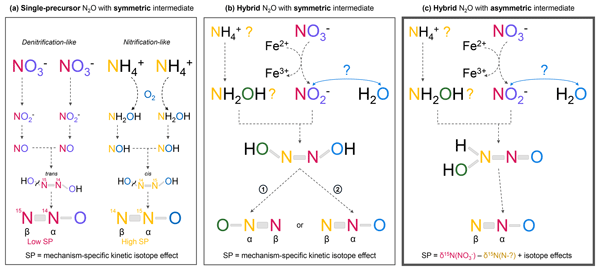
Lison Soussaintjean, Jochen Schmitt, Joël Savarino, J. Andy Menking, Edward J. Brook, Barbara Seth, Vladimir Lipenkov, Thomas Röckmann, and Hubertus Fischer
Biogeosciences, 23, 3939–3963, https://doi.org/10.5194/bg-23-3939-2026, https://doi.org/10.5194/bg-23-3939-2026, 2026
Short summary
Short summary
Nitrous oxide (N2O) produced in dust-rich Antarctic ice complicates the reconstruction of past atmospheric levels from ice core records. Using isotope analysis, we show that N2O forms from two nitrogen precursors, one being nitrate. For the first time, we demonstrate that the site preference (SP) of N2O reflects the isotopic difference between these precursors, not the production pathway, which challenges the common interpretation of SP.
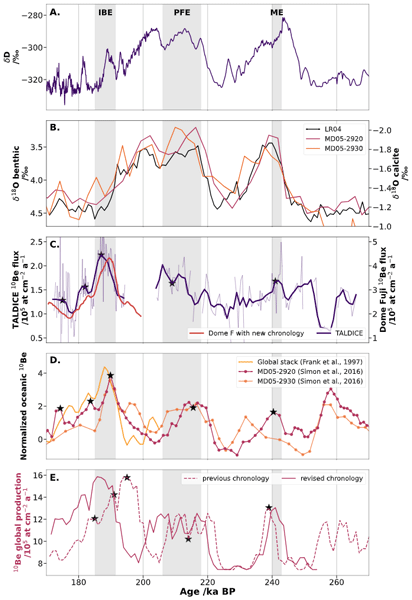
Alexis Lamothe, Edouard Bard, Nicolas Thouveny, Ellyn Auriol, Mirko Severi, Rita Traversi, Martine De Angelis, Frank Wilhelms, Robert Mulvaney, Fawzi Zaidi, Georges Aumaitre, Karim Keddadouche, and Mélanie Baroni
Geochronology, 8, 351–371, https://doi.org/10.5194/gchron-8-351-2026, https://doi.org/10.5194/gchron-8-351-2026, 2026
Short summary
Short summary
We studied changes in Earth's magnetic field between 170 000 and 270 000 years ago using beryllium data from Antarctic ice. Our results reveal three periods when the magnetic field weakened, including one major event with a rapid fall and gradual recovery. These findings help explain how Earth's magnetic field behaves during short-term disturbances and improve the timing of past climate and geological records.
Niklas Kappelt, Piers Larkman, Pascal Bohleber, Florian Adolphi, Marcus Christl, Christof Vockenhuber, Philip Gautschi, Eric Wolff, and Raimund Muscheler
EGUsphere, https://doi.org/10.5194/egusphere-2026-790, https://doi.org/10.5194/egusphere-2026-790, 2026
This preprint is open for discussion and under review for The Cryosphere (TC).
Short summary
Short summary
10Be is a radionuclide often measured in ice cores to reconstruct the solar magnetic field and geomagnetic field, as well as to date ice based on its half-life of 1.387 million years. Previous measurements in deep ice from Antarctica showed a decrease in concentrations with age. We analysed the influence of the sample preparation procedure and were able to show that the use of ion exchange columns can lead to decreasing concentrations, an effect which is amplified at greater depths and ages.
Héloïse Guilluy, Émilie Capron, Frédéric Parrenin, Vladimir Lipenkov, Jochen Schmitt, Patricia Martinerie, Zhipeng Wu, Qiuzhen Yin, Anna Maria Klüssendorf, Amaëlle Landais, Barbara Seth, Hubertus Fischer, and Dominique Raynaud
EGUsphere, https://doi.org/10.5194/egusphere-2026-953, https://doi.org/10.5194/egusphere-2026-953, 2026
Short summary
Short summary
Air bubbles in polar ice cores retain information about past climates over hundreds of thousands of years. The total air content (TAC) trapped within these bubbles varies with summer insolation cycles, making it a tool for dating ice cores. We present a multi-site update on TAC, combining new and published data. We confirm that insolation impacts bubble volume in East Antarctica, but surface climate changes can hide the insolation signal in the TAC record, impacting the TAC-derived chronologies.
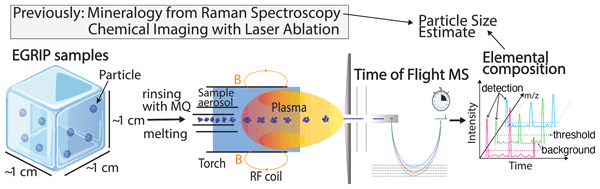
Nicolas Stoll, David Clases, Raquel Gonzalez de Vega, Matthias Elinkmann, Piers Larkman, and Pascal Bohleber
The Cryosphere, 20, 663–682, https://doi.org/10.5194/tc-20-663-2026, https://doi.org/10.5194/tc-20-663-2026, 2026
Short summary
Short summary
We analyse 8 samples from the East Greenland Ice-core Project (EGRIP) ice core, Greenland, using an underexplored method: single particle time of flight analysis. For the first time, we investigated thousands of particles from different climatic stages while applying a new approach to estimate particle sizes based on prior data. We characterise particles and clusters providing new insights on trace elements in ice sheets. This approach has enormous potential for analysing million-year-old ice.
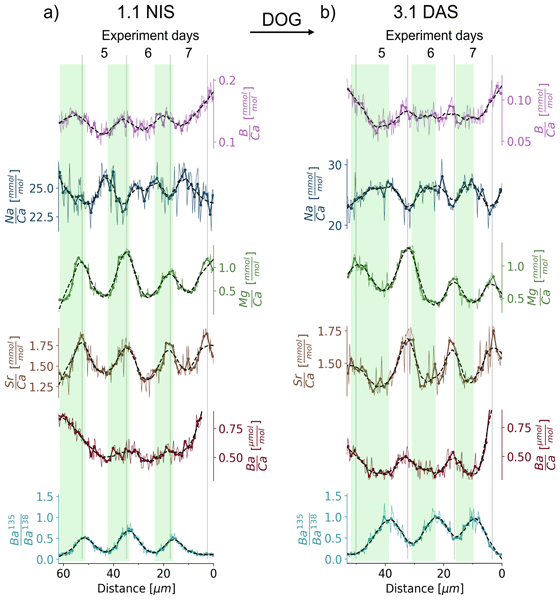
Iris Arndt, Jonathan Erez, David Evans, Tobias Erhardt, Adam Levi, and Wolfgang Müller
Biogeosciences, 23, 585–603, https://doi.org/10.5194/bg-23-585-2026, https://doi.org/10.5194/bg-23-585-2026, 2026
Short summary
Short summary
This study explores daily geochemical variations in giant clam (Tridacna) shells from controlled, isotopically-labelled day-night growth experiments. Results show five times higher daytime calcification rates. Light availability and metabolic activity significantly influence elemental incorporation mechanisms. The findings enhance our understanding of clam geochemistry and growth dynamics, offering valuable insights for studies on past environmental changes.
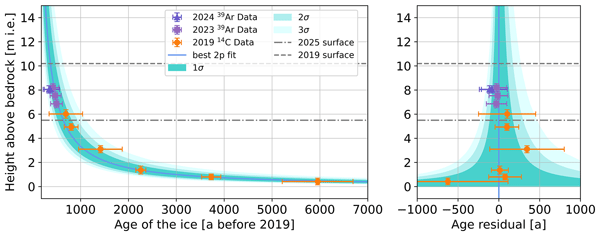
David Wachs, Azzurra Spagnesi, Pascal Bohleber, Andrea Fischer, Martin Stocker-Waldhuber, Alexander Junkermann, Carl Kindermann, Linus Langenbacher, Niclas Mandaric, Joshua Marks, Florian Meienburg, Theo M. Jenk, Markus K. Oberthaler, and Werner Aeschbach
Clim. Past, 22, 173–185, https://doi.org/10.5194/cp-22-173-2026, https://doi.org/10.5194/cp-22-173-2026, 2026
Short summary
Short summary
This study presents an age profile of the summit glacier of Weißseespitze in the Austrian Alps. The ages were obtained by combining 14C dating with the novel atom trap trace analysis for 39Ar. The data was used to constrain glacier age models. The results show that the surface ice is ~400 a old due to recent ice loss. The remaining ice continuously covers ages up to 6000 a. This work underscores the utility of 39Ar dating in glaciology, enabling precise reconstruction of age-depth relationships.
Lisa Ardoin, Catherine Larose, Jean-Louis Tison, Christoph Keuschnig, Vasileios Gkinis, Saïda El Amri, Pierre-Henry Blard, Paul Bierman, Thomas Blunier, Dorthe Dahl-Jensen, Charlotte Maistriau, Jørgen-Peder Steffensen, Thomas Röckmann, and François Fripiat
EGUsphere, https://doi.org/10.5194/egusphere-2025-6204, https://doi.org/10.5194/egusphere-2025-6204, 2026
Short summary
Short summary
We investigated gas dynamics at the ice–bed interface of two Greenland ice cores to assess methane and carbon dioxide behaviour beneath ice sheets. At Camp Century, methane diffuses into the ice and is partly oxidized. At GRIP, methane remains preserved despite oxygen. These contrasts suggest that methane oxidation is controlled by local basal conditions, including ice thickness and substrate availability.
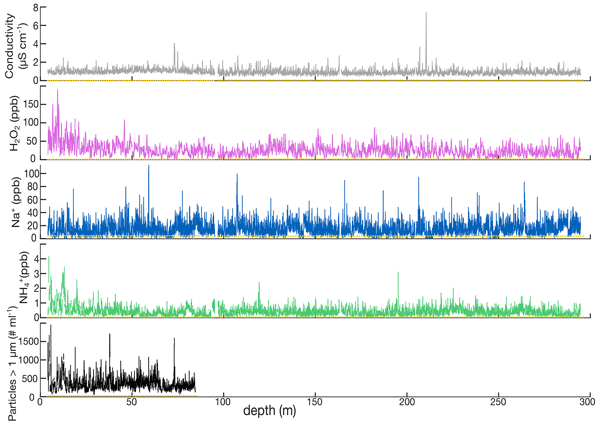
Margaret Harlan, Helle Astrid Kjær, Aylin de Campo, Anders Svensson, Thomas Blunier, Vasileios Gkinis, Sarah Jackson, Christopher Plummer, and Tessa Vance
Earth Syst. Sci. Data, 17, 6255–6271, https://doi.org/10.5194/essd-17-6255-2025, https://doi.org/10.5194/essd-17-6255-2025, 2025
Short summary
Short summary
This paper provides high-resolution chemistry and impurity measurements from the Mount Brown South ice core in East Antarctica, from 873 to 2008 CE. Measurements include sodium, ammonium, hydrogen peroxide, electrolytic conductivity, and insoluble microparticles. Data are provided on three scales: 1 mm and 3 cm averaged depth resolution and decadally averaged. The paper also describes the continuous flow analysis systems used to collect the data and characterizes uncertainties and data quality.
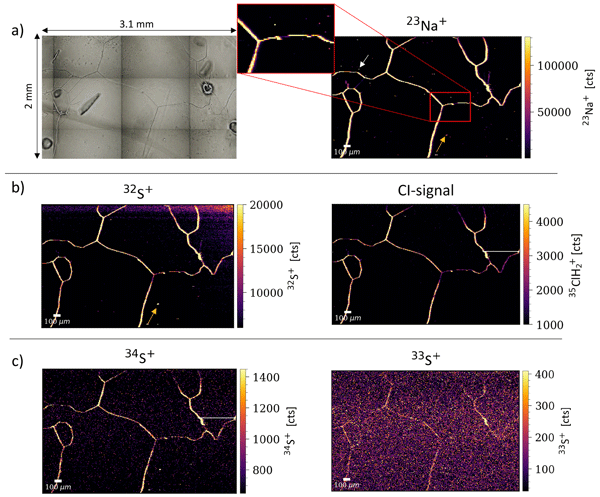
Pascal Bohleber, Nicolas Stoll, Piers Larkman, Rachael H. Rhodes, and David Clases
The Cryosphere, 19, 5485–5498, https://doi.org/10.5194/tc-19-5485-2025, https://doi.org/10.5194/tc-19-5485-2025, 2025
Short summary
Short summary
To avoid misinterpretation of impurity signals in ice cores, post-depositional changes need to be identified. Peak broadening with depth observed especially for S was previously related to diffusion in ice veins, but the exact physical mechanisms remain unclear. Our two-dimensional impurity maps by laser ablation inductively coupled plasma mass spectrometry were extended for the first time to S and Cl and support a view on diffusion not only through veins but also along grain boundaries.
Miguel Moreno, André Lamott, Sepp Kipfstuhl, Ilka Weikusat, María-Gema Llorens, Yannick Heiser, and Dorthe Dahl-Jensen
EGUsphere, https://doi.org/10.5194/egusphere-2025-3647, https://doi.org/10.5194/egusphere-2025-3647, 2025
Short summary
Short summary
By scanning a Greenland ice core, we studied the changes in ice flow. We found that during past rapid climate changes, the size of ice grains and the amount of impurities were the main factors controlling how the ice deformed. We found that other deep, structural properties of the ice did not change in the cores studied, suggesting they were not the primary cause of the variations in flow.
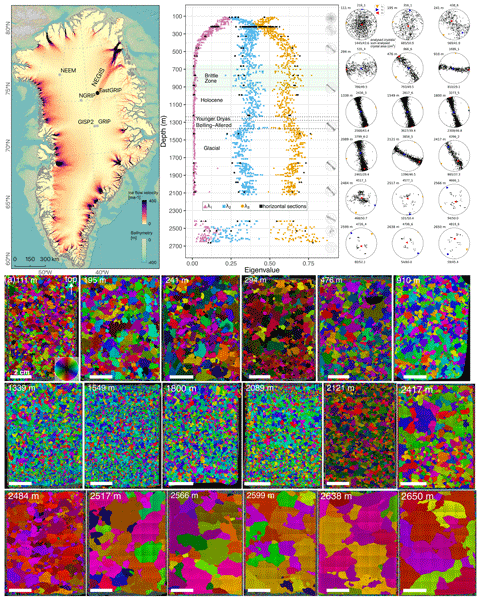
Nicolas Stoll, Ilka Weikusat, Daniela Jansen, Paul Bons, Kyra Darányi, Julien Westhoff, María-Gema Llorens, David Wallis, Jan Eichler, Tomotaka Saruya, Tomoyuki Homma, Sune Olander Rasmussen, Giulia Sinnl, Anders Svensson, Martyn Drury, Frank Wilhelms, Sepp Kipfstuhl, Dorthe Dahl-Jensen, and Johanna Kerch
The Cryosphere, 19, 3805–3830, https://doi.org/10.5194/tc-19-3805-2025, https://doi.org/10.5194/tc-19-3805-2025, 2025
Short summary
Short summary
A better understanding of ice flow requires more observational data. The EastGRIP core is the first ice core through an active ice stream. We discuss crystal orientation data determining the present deformation regimes. A comparison with other deep cores shows the unique properties of EastGRIP and shows that deep ice likely originates from the Eemian. We further show that the overall plug flow of NEGIS is characterised by many small-scale variations, which remain to be considered in ice flow models.
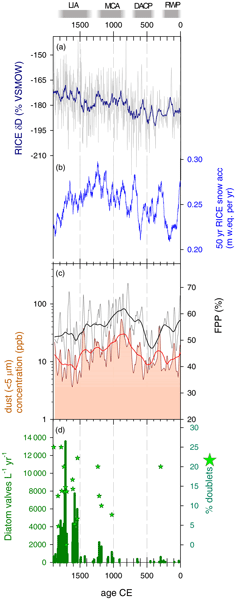
Serena Lagorio, Barbara Delmonte, Dieter Tetzner, Elisa Malinverno, Giovanni Baccolo, Barbara Stenni, Massimo Frezzotti, Valter Maggi, and Nancy Bertler
Clim. Past, 21, 1323–1341, https://doi.org/10.5194/cp-21-1323-2025, https://doi.org/10.5194/cp-21-1323-2025, 2025
Short summary
Short summary
Aeolian diatoms and dust in the Antarctic Roosevelt Island Climate Evolution project (RICE) ice core allow the reconstruction of atmospheric circulation and climate variability in the Eastern Ross Sea over the past 2 millennia. Since about 1470 CE and during the Little Ice Age, the site experienced a rapid atmospheric circulation reorganization related to the development of the Roosevelt Island polynya, the eastward protrusion of the Ross Sea polynya that significantly impacted the regional climate dynamics of the Ross Sea area.
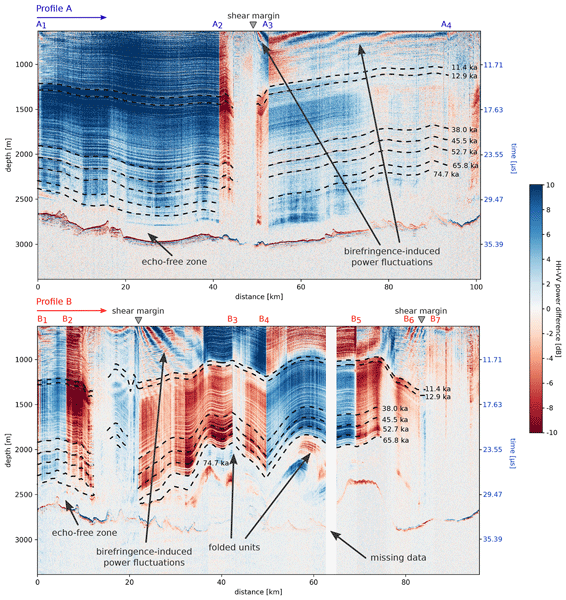
Tamara Annina Gerber, David A. Lilien, Niels F. Nymand, Daniel Steinhage, Olaf Eisen, and Dorthe Dahl-Jensen
The Cryosphere, 19, 1955–1971, https://doi.org/10.5194/tc-19-1955-2025, https://doi.org/10.5194/tc-19-1955-2025, 2025
Short summary
Short summary
This study examines how anisotropic scattering and birefringence affect radar signals in ice sheets. Using data from northeast Greenland, we show that anisotropic scattering – driven by subtle ice crystal orientation changes – dominates the azimuthal power response. We find a strong link between scattering strength, orientation, and stratigraphy. This suggests anisotropic scattering can reveal crystal fabric orientation and differentiate ice units from distinct climatic periods.
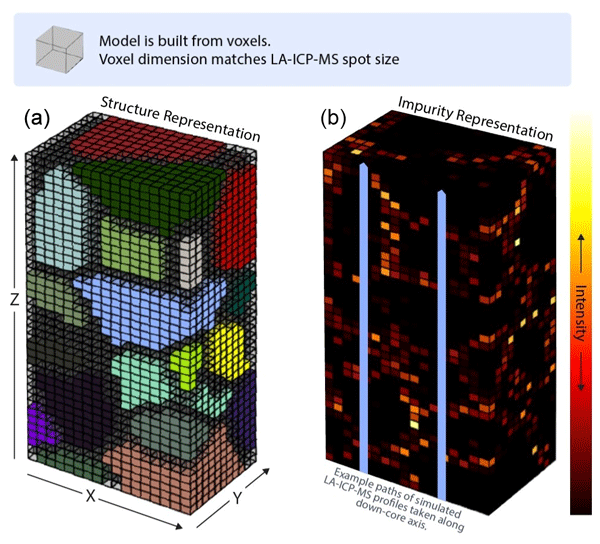
Piers Larkman, Rachael H. Rhodes, Nicolas Stoll, Carlo Barbante, and Pascal Bohleber
The Cryosphere, 19, 1373–1390, https://doi.org/10.5194/tc-19-1373-2025, https://doi.org/10.5194/tc-19-1373-2025, 2025
Short summary
Short summary
Impurities in ice cores can be preferentially located at the boundaries between crystals of ice, impacting the interpretation of high-resolution data collected from ice core samples. Through use of a modelling framework, we demonstrate that one-dimensional signals can be significantly affected by this association, meaning high-resolution measurements must be carefully designed. Accounting for this effect is important for interpreting ice core data, especially for deep ice samples.
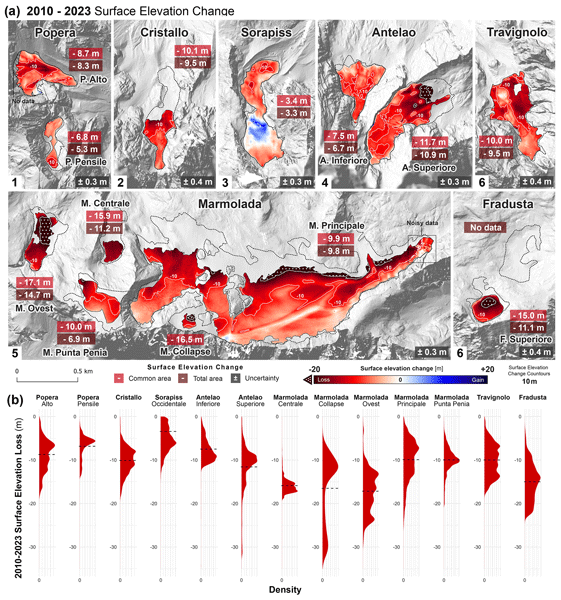
Andrea Securo, Costanza Del Gobbo, Giovanni Baccolo, Carlo Barbante, Michele Citterio, Fabrizio De Blasi, Marco Marcer, Mauro Valt, and Renato R. Colucci
The Cryosphere, 19, 1335–1352, https://doi.org/10.5194/tc-19-1335-2025, https://doi.org/10.5194/tc-19-1335-2025, 2025
Short summary
Short summary
We have reconstructed the multi-decadal (1980s–2023) ice mass changes for all the current mountain glaciers in the Dolomites. We used historical aerial photographs, drone surveys, and lidar to fill the glaciological data gap for the region. We observed an alarming decline in both glacier area and volume, with some of the glaciers showing smaller losses due to local topography and debris cover feedback. We strongly recommend more specific monitoring of these glaciers.
Rémi Dallmayr, Hannah Meyer, Vasileios Gkinis, Thomas Laepple, Melanie Behrens, Frank Wilhelms, and Maria Hörhold
The Cryosphere, 19, 1067–1083, https://doi.org/10.5194/tc-19-1067-2025, https://doi.org/10.5194/tc-19-1067-2025, 2025
Short summary
Short summary
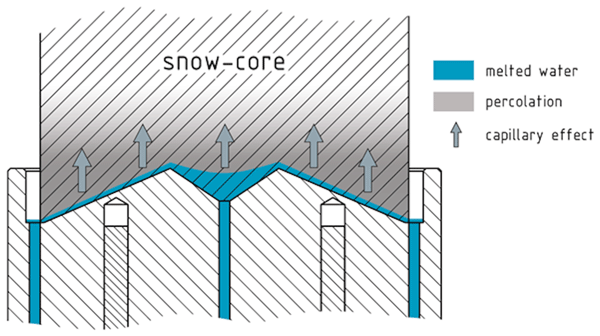
Recent studies showed that a large number of independent vertical profiles allow for inferring a common local climate signal from the stacked stable water isotope record. Through investigating instrumental limitation and the effect of percolation of such porous samples, this study assesses the continuous flow analysis (CFA) technique in order to analyze the significant number of snow surface profiles within a reasonable time and with high quality.
Jakob Schwander, Thomas F. Stocker, Remo Walther, Samuel Marending, Tobias Erhardt, Chantal Zeppenfeld, and Jürg Jost
The Cryosphere, 18, 5613–5617, https://doi.org/10.5194/tc-18-5613-2024, https://doi.org/10.5194/tc-18-5613-2024, 2024
Short summary
Short summary
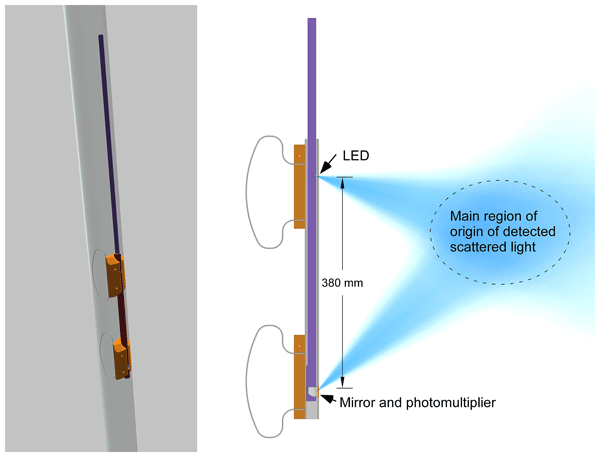
The RADIX (Rapid Access Drilling and Ice eXtraction) optical dust logger is part of the exploratory 20 mm drilling system at the University of Bern and is inserted into the hole after drilling. Temperature and attitude sensors were successfully tested but not the dust sensor, as no RADIX hole reached the required bubble-free ice. In 2023, we tested the logger with an adapter for the deep borehole of the East Greenland Ice-core Project and obtained a good Late Glacial–Early Holocene dust record.
Elizabeth R. Thomas, Dieter Tetzner, Bradley Markle, Joel Pedro, Guisella Gacitúa, Dorothea Elisabeth Moser, and Sarah Jackson
Clim. Past, 20, 2525–2538, https://doi.org/10.5194/cp-20-2525-2024, https://doi.org/10.5194/cp-20-2525-2024, 2024
Short summary
Short summary
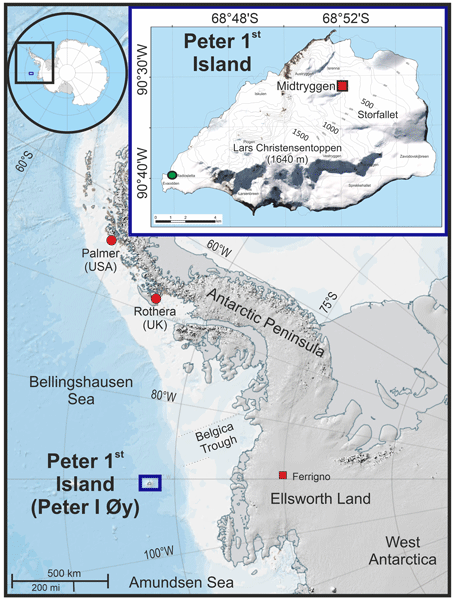
The chemical records contained in a 12 m firn (ice) core from Peter I Island, a remote sub-Antarctic island situated in the Pacific sector of the Southern Ocean (the Bellingshausen Sea), capture changes in snowfall and temperature (2002–2017 CE). This data-sparse region has experienced dramatic climate change in recent decades, including sea ice decline and ice loss from adjacent West Antarctic glaciers.
Elena Di Stefano, Giovanni Baccolo, Massimiliano Clemenza, Barbara Delmonte, Deborah Fiorini, Roberto Garzonio, Margit Schwikowski, and Valter Maggi
The Cryosphere, 18, 2865–2874, https://doi.org/10.5194/tc-18-2865-2024, https://doi.org/10.5194/tc-18-2865-2024, 2024
Short summary
Short summary
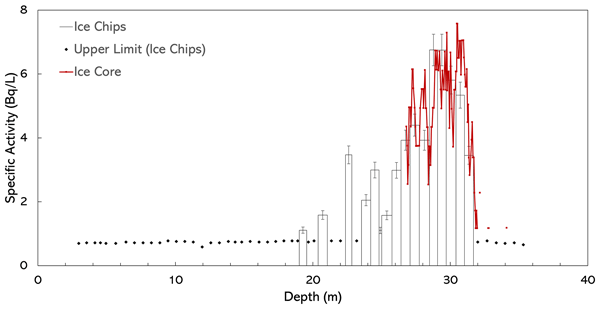
Rising temperatures are impacting the reliability of glaciers as environmental archives. This study reports how meltwater percolation affects the distribution of tritium and cesium, which are commonly used as temporal markers in dating ice cores, in a temperate glacier. Our findings challenge the established application of radionuclides for dating mountain ice cores and indicate tritium as the best choice.
Susanne Preunkert, Pascal Bohleber, Michel Legrand, Adrien Gilbert, Tobias Erhardt, Roland Purtschert, Lars Zipf, Astrid Waldner, Joseph R. McConnell, and Hubertus Fischer
The Cryosphere, 18, 2177–2194, https://doi.org/10.5194/tc-18-2177-2024, https://doi.org/10.5194/tc-18-2177-2024, 2024
Short summary
Short summary
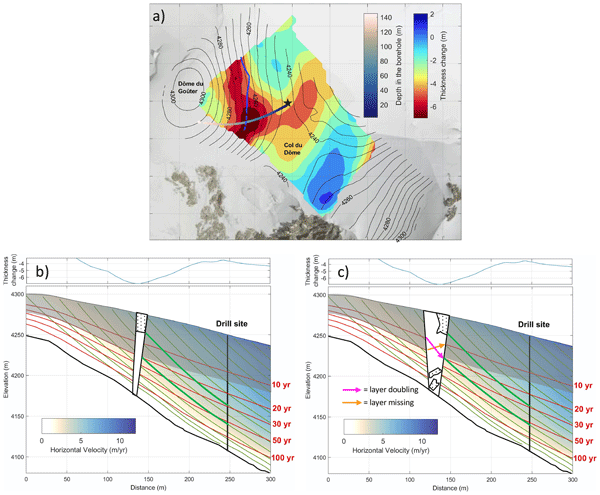
Ice cores from high-elevation Alpine glaciers are an important tool to reconstruct the past atmosphere. However, since crevasses are common at these glacier sites, rigorous investigations of glaciological conditions upstream of drill sites are needed before interpreting such ice cores. On the basis of three ice cores extracted at Col du Dôme (4250 m a.s.l; French Alps), an overall picture of a dynamic crevasse formation is drawn, which disturbs the depth–age relation of two of the three cores.
Tessa R. Vance, Nerilie J. Abram, Alison S. Criscitiello, Camilla K. Crockart, Aylin DeCampo, Vincent Favier, Vasileios Gkinis, Margaret Harlan, Sarah L. Jackson, Helle A. Kjær, Chelsea A. Long, Meredith K. Nation, Christopher T. Plummer, Delia Segato, Andrea Spolaor, and Paul T. Vallelonga
Clim. Past, 20, 969–990, https://doi.org/10.5194/cp-20-969-2024, https://doi.org/10.5194/cp-20-969-2024, 2024
Short summary
Short summary
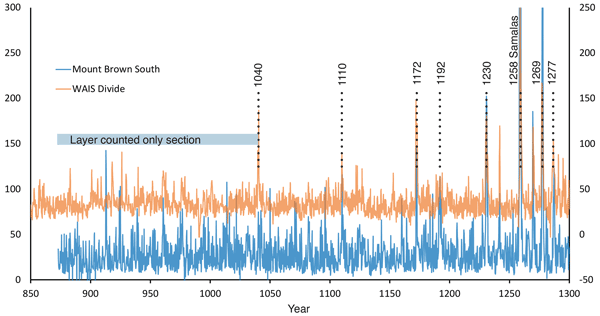
This study presents the chronologies from the new Mount Brown South ice cores from East Antarctica, which were developed by counting annual layers in the ice core data and aligning these to volcanic sulfate signatures. The uncertainty in the dating is quantified, and we discuss initial results from seasonal cycle analysis and mean annual concentrations. The chronologies will underpin the development of new proxy records for East Antarctica spanning the past millennium.
Chiara I. Paleari, Florian Mekhaldi, Tobias Erhardt, Minjie Zheng, Marcus Christl, Florian Adolphi, Maria Hörhold, and Raimund Muscheler
Clim. Past, 19, 2409–2422, https://doi.org/10.5194/cp-19-2409-2023, https://doi.org/10.5194/cp-19-2409-2023, 2023
Short summary
Short summary
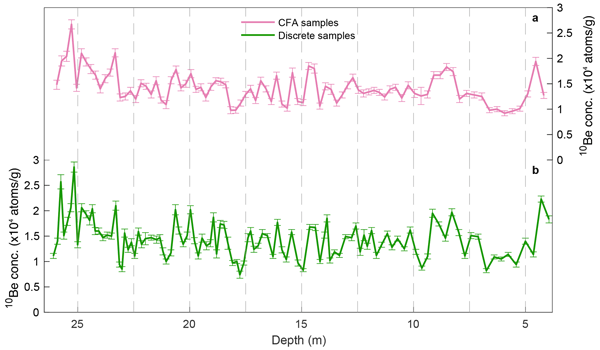
In this study, we test the use of excess meltwater from continuous flow analysis from a firn core from Greenland for the measurement of 10Be for solar activity reconstructions. We show that the quality of results is similar to the measurements on clean firn, which opens the possibility to obtain continuous 10Be records without requiring large amounts of clean ice. Furthermore, we investigate the possibility of identifying solar storm signals in 10Be records from Greenland and Antarctica.
Tobias Erhardt, Camilla Marie Jensen, Florian Adolphi, Helle Astrid Kjær, Remi Dallmayr, Birthe Twarloh, Melanie Behrens, Motohiro Hirabayashi, Kaori Fukuda, Jun Ogata, François Burgay, Federico Scoto, Ilaria Crotti, Azzurra Spagnesi, Niccoló Maffezzoli, Delia Segato, Chiara Paleari, Florian Mekhaldi, Raimund Muscheler, Sophie Darfeuil, and Hubertus Fischer
Earth Syst. Sci. Data, 15, 5079–5091, https://doi.org/10.5194/essd-15-5079-2023, https://doi.org/10.5194/essd-15-5079-2023, 2023
Short summary
Short summary
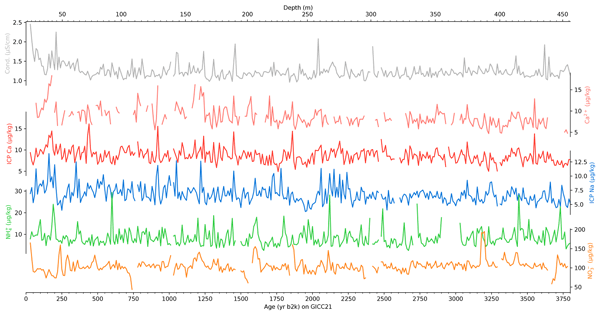
The presented paper provides a 3.8 kyr long dataset of aerosol concentrations from the East Greenland Ice coring Project (EGRIP) ice core. The data consists of 1 mm depth-resolution profiles of calcium, sodium, ammonium, nitrate, and electrolytic conductivity as well as decadal averages of these profiles. Alongside the data a detailed description of the measurement setup as well as a discussion of the uncertainties are given.
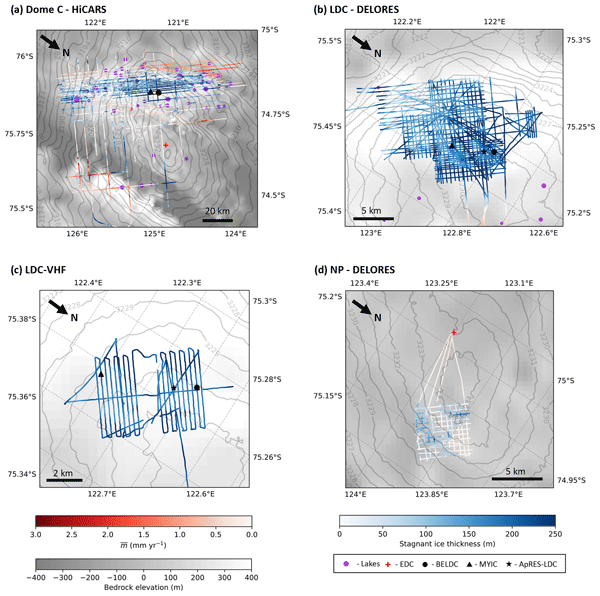
Ailsa Chung, Frédéric Parrenin, Daniel Steinhage, Robert Mulvaney, Carlos Martín, Marie G. P. Cavitte, David A. Lilien, Veit Helm, Drew Taylor, Prasad Gogineni, Catherine Ritz, Massimo Frezzotti, Charles O'Neill, Heinrich Miller, Dorthe Dahl-Jensen, and Olaf Eisen
The Cryosphere, 17, 3461–3483, https://doi.org/10.5194/tc-17-3461-2023, https://doi.org/10.5194/tc-17-3461-2023, 2023
Short summary
Short summary
We combined a numerical model with radar measurements in order to determine the age of ice in the Dome C region of Antarctica. Our results show that at the current ice core drilling sites on Little Dome C, the maximum age of the ice is almost 1.5 Ma. We also highlight a new potential drill site called North Patch with ice up to 2 Ma. Finally, we explore the nature of a stagnant ice layer at the base of the ice sheet which has been independently observed and modelled but is not well understood.
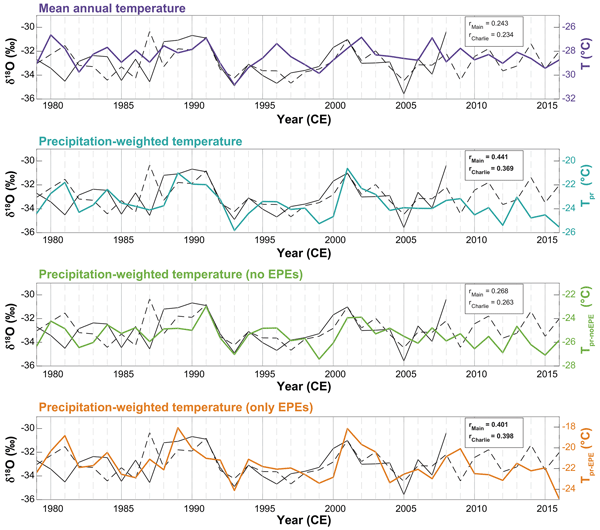
Sarah L. Jackson, Tessa R. Vance, Camilla Crockart, Andrew Moy, Christopher Plummer, and Nerilie J. Abram
Clim. Past, 19, 1653–1675, https://doi.org/10.5194/cp-19-1653-2023, https://doi.org/10.5194/cp-19-1653-2023, 2023
Short summary
Short summary
Ice core records are useful tools for reconstructing past climate. However, ice cores favour recording climate conditions at times when snowfall occurs. Large snowfall events in Antarctica are often associated with warmer-than-usual temperatures. We show that this results in a tendency for the Mount Brown South ice core record to preserve a temperature record biased to the climate conditions that exist during extreme events, rather than a temperature record that reflects the mean annual climate.
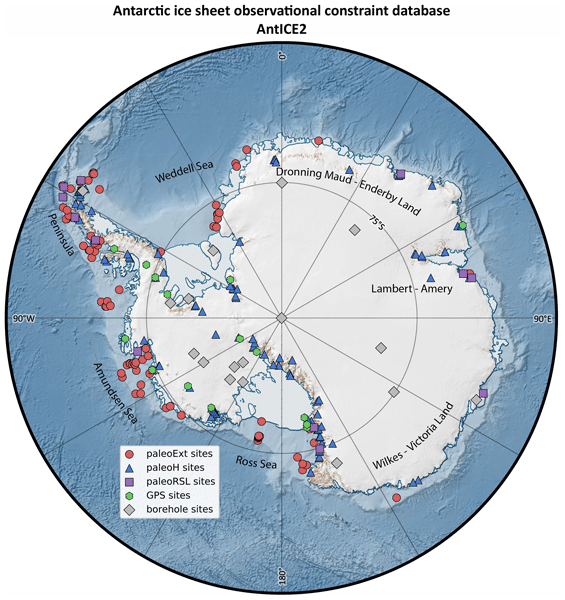
Benoit S. Lecavalier, Lev Tarasov, Greg Balco, Perry Spector, Claus-Dieter Hillenbrand, Christo Buizert, Catherine Ritz, Marion Leduc-Leballeur, Robert Mulvaney, Pippa L. Whitehouse, Michael J. Bentley, and Jonathan Bamber
Earth Syst. Sci. Data, 15, 3573–3596, https://doi.org/10.5194/essd-15-3573-2023, https://doi.org/10.5194/essd-15-3573-2023, 2023
Short summary
Short summary
The Antarctic Ice Sheet Evolution constraint database version 2 (AntICE2) consists of a large variety of observations that constrain the evolution of the Antarctic Ice Sheet over the last glacial cycle. This includes observations of past ice sheet extent, past ice thickness, past relative sea level, borehole temperature profiles, and present-day bedrock displacement rates. The database is intended to improve our understanding of past Antarctic changes and for ice sheet model calibrations.
Sune Olander Rasmussen, Dorthe Dahl-Jensen, Hubertus Fischer, Katrin Fuhrer, Steffen Bo Hansen, Margareta Hansson, Christine S. Hvidberg, Ulf Jonsell, Sepp Kipfstuhl, Urs Ruth, Jakob Schwander, Marie-Louise Siggaard-Andersen, Giulia Sinnl, Jørgen Peder Steffensen, Anders M. Svensson, and Bo M. Vinther
Earth Syst. Sci. Data, 15, 3351–3364, https://doi.org/10.5194/essd-15-3351-2023, https://doi.org/10.5194/essd-15-3351-2023, 2023
Short summary
Short summary
Timescales are essential for interpreting palaeoclimate data. The data series presented here were used for annual-layer identification when constructing the timescales named the Greenland Ice-Core Chronology 2005 (GICC05) and the revised version GICC21. Hopefully, these high-resolution data sets will be useful also for other purposes.
Michaela Mühl, Jochen Schmitt, Barbara Seth, James E. Lee, Jon S. Edwards, Edward J. Brook, Thomas Blunier, and Hubertus Fischer
Clim. Past, 19, 999–1025, https://doi.org/10.5194/cp-19-999-2023, https://doi.org/10.5194/cp-19-999-2023, 2023
Short summary
Short summary
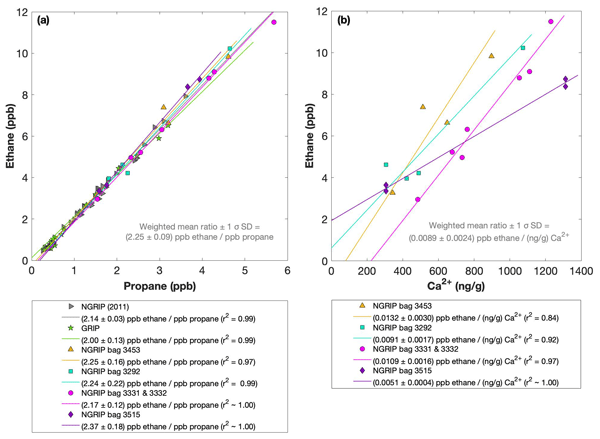
Our ice core measurements show that methane, ethane, and propane concentrations are significantly elevated above their past atmospheric background for Greenland ice samples containing mineral dust. The underlying co-production process happens during the classical discrete wet extraction of air from the ice sample and affects previous reconstructions of the inter-polar difference of methane as well as methane stable isotope records derived from dust-rich Greenland ice.
Robert Mulvaney, Eric W. Wolff, Mackenzie M. Grieman, Helene H. Hoffmann, Jack D. Humby, Christoph Nehrbass-Ahles, Rachael H. Rhodes, Isobel F. Rowell, Frédéric Parrenin, Loïc Schmidely, Hubertus Fischer, Thomas F. Stocker, Marcus Christl, Raimund Muscheler, Amaelle Landais, and Frédéric Prié
Clim. Past, 19, 851–864, https://doi.org/10.5194/cp-19-851-2023, https://doi.org/10.5194/cp-19-851-2023, 2023
Short summary
Short summary
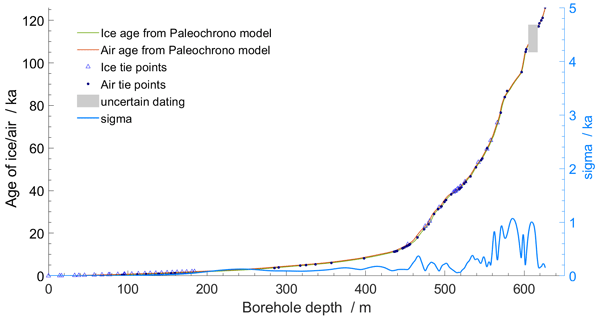
We present an age scale for a new ice core drilled at Skytrain Ice Rise, an ice rise facing the Ronne Ice Shelf in Antarctica. Various measurements in the ice and air phases are used to match the ice core to other Antarctic cores that have already been dated, and a new age scale is constructed. The 651 m ice core includes ice that is confidently dated to 117 000–126 000 years ago, in the last interglacial. Older ice is found deeper down, but there are flow disturbances in the deeper ice.
Simone Ventisette, Samuele Baldini, Claudio Artoni, Silvia Becagli, Laura Caiazzo, Barbara Delmonte, Massimo Frezzotti, Raffaello Nardin, Joel Savarino, Mirko Severi, Andrea Spolaor, Barbara Stenni, and Rita Traversi
EGUsphere, https://doi.org/10.5194/egusphere-2023-393, https://doi.org/10.5194/egusphere-2023-393, 2023
Preprint archived
Short summary
Short summary
The paper reports the spatial variability of concentration and fluxes of chemical impurities in superficial snow over unexplored area of the East Antarctic ice sheet. Pinatubo and Puyehue-Cordón Caulle volcanic eruptions in non-sea salt sulfate and dust snow pits record were used to achieve the accumulation rates. Deposition (wet, dry and uptake from snow surface) and post deposition processes are constrained. These knowledges are fundamental in Antarctic ice cores stratigraphies interpretation.
Niccolò Maffezzoli, Eliza Cook, Willem G. M. van der Bilt, Eivind N. Støren, Daniela Festi, Florian Muthreich, Alistair W. R. Seddon, François Burgay, Giovanni Baccolo, Amalie R. F. Mygind, Troels Petersen, Andrea Spolaor, Sebastiano Vascon, Marcello Pelillo, Patrizia Ferretti, Rafael S. dos Reis, Jefferson C. Simões, Yuval Ronen, Barbara Delmonte, Marco Viccaro, Jørgen Peder Steffensen, Dorthe Dahl-Jensen, Kerim H. Nisancioglu, and Carlo Barbante
The Cryosphere, 17, 539–565, https://doi.org/10.5194/tc-17-539-2023, https://doi.org/10.5194/tc-17-539-2023, 2023
Short summary
Short summary
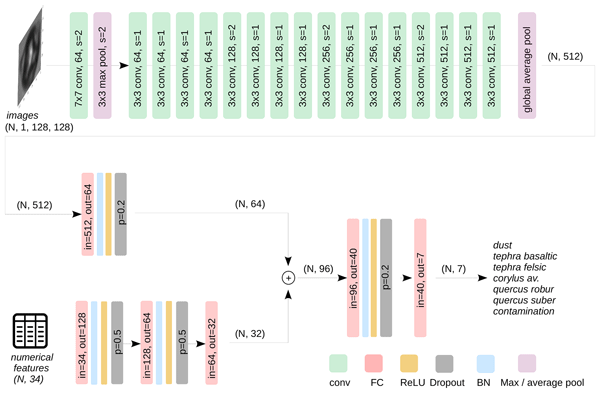
Multiple lines of research in ice core science are limited by manually intensive and time-consuming optical microscopy investigations for the detection of insoluble particles, from pollen grains to volcanic shards. To help overcome these limitations and support researchers, we present a novel methodology for the identification and autonomous classification of ice core insoluble particles based on flow image microscopy and neural networks.
Lars Mächler, Daniel Baggenstos, Florian Krauss, Jochen Schmitt, Bernhard Bereiter, Remo Walther, Christoph Reinhard, Béla Tuzson, Lukas Emmenegger, and Hubertus Fischer
Atmos. Meas. Tech., 16, 355–372, https://doi.org/10.5194/amt-16-355-2023, https://doi.org/10.5194/amt-16-355-2023, 2023
Short summary
Short summary
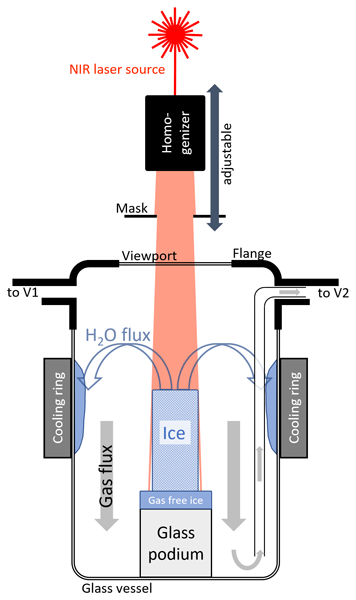
We present a new method to extract the gases from ice cores and measure their greenhouse gas composition. The ice is sublimated continuously with a near-infrared laser, releasing the gases, which are then analyzed on a laser absorption spectrometer. The main advantage over previous efforts is a low effective resolution of 1–2 cm. This capability is crucial for the analysis of highly thinned ice, as expected from ongoing drilling efforts to extend ice core history further back in time.
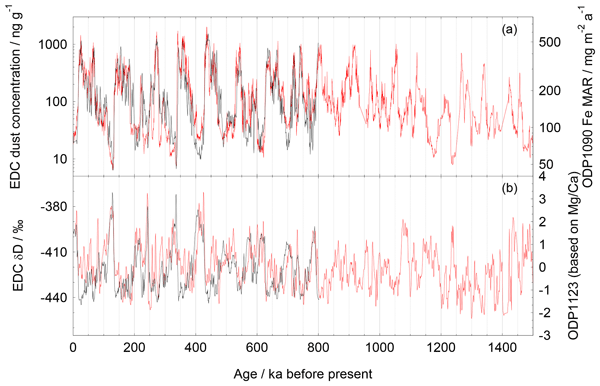
Eric W. Wolff, Hubertus Fischer, Tas van Ommen, and David A. Hodell
Clim. Past, 18, 1563–1577, https://doi.org/10.5194/cp-18-1563-2022, https://doi.org/10.5194/cp-18-1563-2022, 2022
Short summary
Short summary
Projects are underway to drill ice cores in Antarctica reaching 1.5 Myr back in time. Dating such cores will be challenging. One method is to match records from the new core against datasets from existing marine sediment cores. Here we explore the options for doing this and assess how well the ice and marine records match over the existing 800 000-year time period. We are able to recommend a strategy for using marine data to place an age scale on the new ice cores.

Astrid Oetting, Emma C. Smith, Jan Erik Arndt, Boris Dorschel, Reinhard Drews, Todd A. Ehlers, Christoph Gaedicke, Coen Hofstede, Johann P. Klages, Gerhard Kuhn, Astrid Lambrecht, Andreas Läufer, Christoph Mayer, Ralf Tiedemann, Frank Wilhelms, and Olaf Eisen
The Cryosphere, 16, 2051–2066, https://doi.org/10.5194/tc-16-2051-2022, https://doi.org/10.5194/tc-16-2051-2022, 2022
Short summary
Short summary
This study combines a variety of geophysical measurements in front of and beneath the Ekström Ice Shelf in order to identify and interpret geomorphological evidences of past ice sheet flow, extent and retreat.
The maximal extent of grounded ice in this region was 11 km away from the continental shelf break.
The thickness of palaeo-ice on the calving front around the LGM was estimated to be at least 305 to 320 m.
We provide essential boundary conditions for palaeo-ice-sheet models.
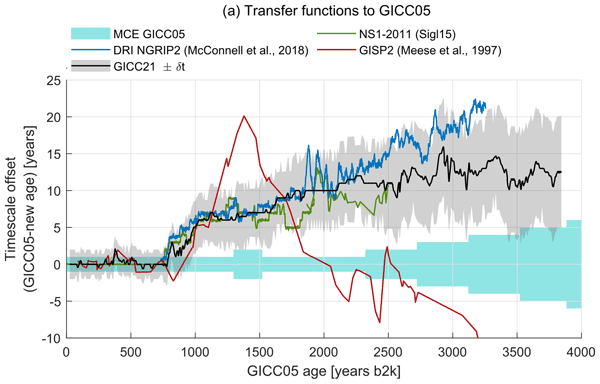
Giulia Sinnl, Mai Winstrup, Tobias Erhardt, Eliza Cook, Camilla Marie Jensen, Anders Svensson, Bo Møllesøe Vinther, Raimund Muscheler, and Sune Olander Rasmussen
Clim. Past, 18, 1125–1150, https://doi.org/10.5194/cp-18-1125-2022, https://doi.org/10.5194/cp-18-1125-2022, 2022
Short summary
Short summary
A new Greenland ice-core timescale, covering the last 3800 years, was produced using the machine learning algorithm StratiCounter. We synchronized the ice cores using volcanic eruptions and wildfires. We compared the new timescale to the tree-ring timescale, finding good alignment both between the common signatures of volcanic eruptions and of solar activity. Our Greenlandic timescales is safe to use for the Late Holocene, provided one uses our uncertainty estimate.
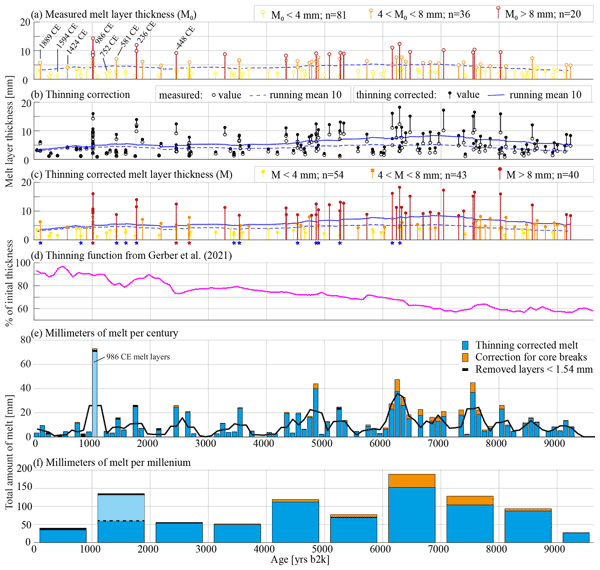
Julien Westhoff, Giulia Sinnl, Anders Svensson, Johannes Freitag, Helle Astrid Kjær, Paul Vallelonga, Bo Vinther, Sepp Kipfstuhl, Dorthe Dahl-Jensen, and Ilka Weikusat
Clim. Past, 18, 1011–1034, https://doi.org/10.5194/cp-18-1011-2022, https://doi.org/10.5194/cp-18-1011-2022, 2022
Short summary
Short summary
We present a melt event record from an ice core from central Greenland, which covers the past 10 000 years. Our record displays warm summer events, which can be used to enhance our understanding of the past climate. We compare our data to anomalies in tree ring width, which also represents summer temperatures, and find a good correlation. Furthermore, we investigate an outstandingly warm event in the year 986 AD or 991 AD, which has not been analyzed before.
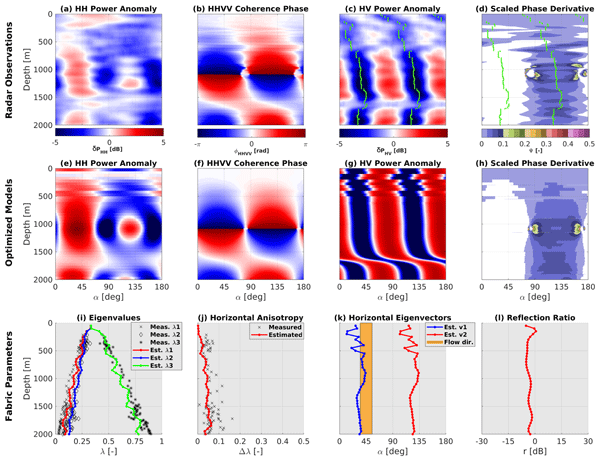
M. Reza Ershadi, Reinhard Drews, Carlos Martín, Olaf Eisen, Catherine Ritz, Hugh Corr, Julia Christmann, Ole Zeising, Angelika Humbert, and Robert Mulvaney
The Cryosphere, 16, 1719–1739, https://doi.org/10.5194/tc-16-1719-2022, https://doi.org/10.5194/tc-16-1719-2022, 2022
Short summary
Short summary
Radio waves transmitted through ice split up and inform us about the ice sheet interior and orientation of single ice crystals. This can be used to infer how ice flows and improve projections on how it will evolve in the future. Here we used an inverse approach and developed a new algorithm to infer ice properties from observed radar data. We applied this technique to the radar data obtained at two EPICA drilling sites, where ice cores were used to validate our results.
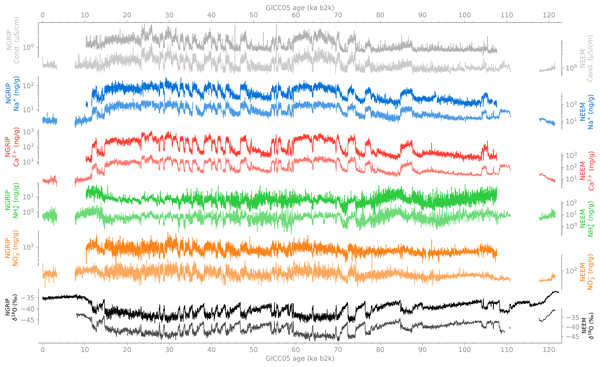
Tobias Erhardt, Matthias Bigler, Urs Federer, Gideon Gfeller, Daiana Leuenberger, Olivia Stowasser, Regine Röthlisberger, Simon Schüpbach, Urs Ruth, Birthe Twarloh, Anna Wegner, Kumiko Goto-Azuma, Takayuki Kuramoto, Helle A. Kjær, Paul T. Vallelonga, Marie-Louise Siggaard-Andersen, Margareta E. Hansson, Ailsa K. Benton, Louise G. Fleet, Rob Mulvaney, Elizabeth R. Thomas, Nerilie Abram, Thomas F. Stocker, and Hubertus Fischer
Earth Syst. Sci. Data, 14, 1215–1231, https://doi.org/10.5194/essd-14-1215-2022, https://doi.org/10.5194/essd-14-1215-2022, 2022
Short summary
Short summary
The datasets presented alongside this manuscript contain high-resolution concentration measurements of chemical impurities in deep ice cores, NGRIP and NEEM, from the Greenland ice sheet. The impurities originate from the deposition of aerosols to the surface of the ice sheet and are influenced by source, transport and deposition processes. Together, these records contain detailed, multi-parameter records of past climate variability over the last glacial period.
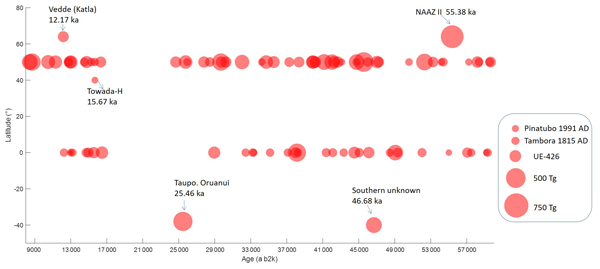
Jiamei Lin, Anders Svensson, Christine S. Hvidberg, Johannes Lohmann, Steffen Kristiansen, Dorthe Dahl-Jensen, Jørgen Peder Steffensen, Sune Olander Rasmussen, Eliza Cook, Helle Astrid Kjær, Bo M. Vinther, Hubertus Fischer, Thomas Stocker, Michael Sigl, Matthias Bigler, Mirko Severi, Rita Traversi, and Robert Mulvaney
Clim. Past, 18, 485–506, https://doi.org/10.5194/cp-18-485-2022, https://doi.org/10.5194/cp-18-485-2022, 2022
Short summary
Short summary
We employ acidity records from Greenland and Antarctic ice cores to estimate the emission strength, frequency and climatic forcing for large volcanic eruptions from the last half of the last glacial period. A total of 25 volcanic eruptions are found to be larger than any eruption in the last 2500 years, and we identify more eruptions than obtained from geological evidence. Towards the end of the glacial period, there is a notable increase in volcanic activity observed for Greenland.
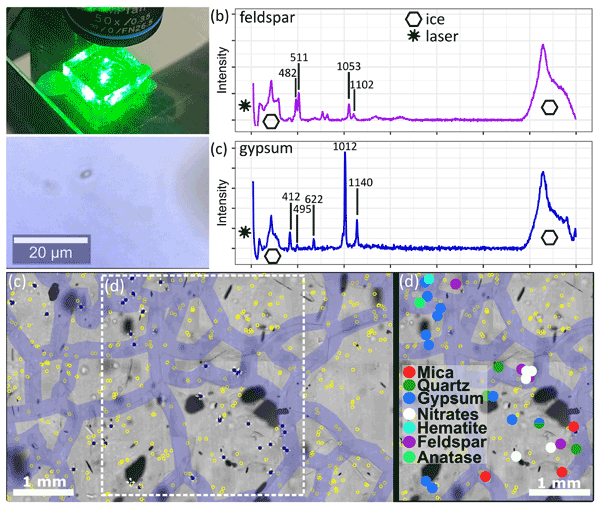
Nicolas Stoll, Maria Hörhold, Tobias Erhardt, Jan Eichler, Camilla Jensen, and Ilka Weikusat
The Cryosphere, 16, 667–688, https://doi.org/10.5194/tc-16-667-2022, https://doi.org/10.5194/tc-16-667-2022, 2022
Short summary
Short summary
We mapped and analysed solid inclusion in the upper 1340 m of the EGRIP ice core with Raman spectroscopy and microstructure mapping, based on bulk dust content derived via continuous flow analysis. We observe a large variety in mineralogy throughout the core and samples. The main minerals are sulfates, especially gypsum, and terrestrial dust minerals, such as quartz, mica, and feldspar. A change in mineralogy occurs around 900 m depth indicating a climate-related imprint.
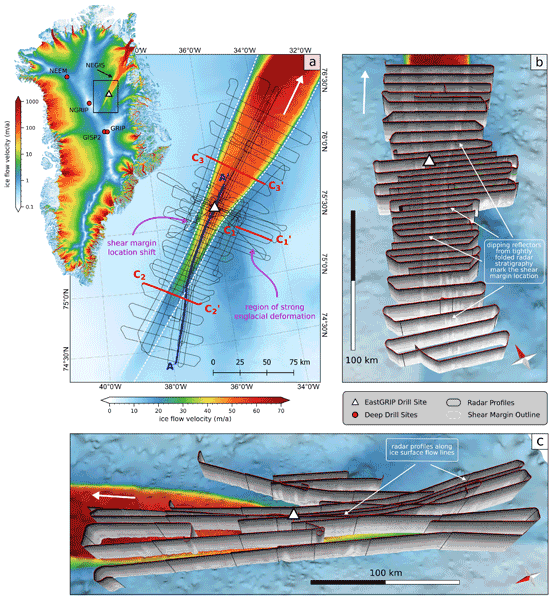
Steven Franke, Daniela Jansen, Tobias Binder, John D. Paden, Nils Dörr, Tamara A. Gerber, Heinrich Miller, Dorthe Dahl-Jensen, Veit Helm, Daniel Steinhage, Ilka Weikusat, Frank Wilhelms, and Olaf Eisen
Earth Syst. Sci. Data, 14, 763–779, https://doi.org/10.5194/essd-14-763-2022, https://doi.org/10.5194/essd-14-763-2022, 2022
Short summary
Short summary
The Northeast Greenland Ice Stream (NEGIS) is the largest ice stream in Greenland. In order to better understand the past and future dynamics of the NEGIS, we present a high-resolution airborne radar data set (EGRIP-NOR-2018) for the onset region of the NEGIS. The survey area is centered at the location of the drill site of the East Greenland Ice-Core Project (EastGRIP), and radar profiles cover both shear margins and are aligned parallel to several flow lines.
Nicolas Stoll, Jan Eichler, Maria Hörhold, Tobias Erhardt, Camilla Jensen, and Ilka Weikusat
The Cryosphere, 15, 5717–5737, https://doi.org/10.5194/tc-15-5717-2021, https://doi.org/10.5194/tc-15-5717-2021, 2021
Short summary
Short summary
We did a systematic analysis of the location of inclusions in the EGRIP ice core, the first ice core from an ice stream. We combine this with crystal orientation and grain size data, enabling the first overview about the microstructure of this unique ice core. Micro-inclusions show a strong spatial variability and patterns (clusters or horizontal layers); roughly one-third is located at grain boundaries. More holistic approaches are needed to understand deformation processes in the ice better.
Cited articles
Aguilar-Carrillo, J., Villalobos, M., Pi-Puig, T., Escobar-Quiroz, I. N., and Romero, F. M.: Synergistic Arsenic(V) and Lead(II) Retention on Synthetic Jarosite. I. Simultaneous Structural Incorporation Behaviour and Mechanism, Environ. Sci. Process. Impacts, 20, 354–369, https://doi.org/10.1039/C7EM00426E, 2018. a
Ahn, Y.-Y., Nguyen, Q. A., Spolaor, A., Frassati, S., Barbaro, E., Cozzi, G., Turetta, C., Oh, H., Lee, J., and Kim, K.: Bromide Oxidation by Bromate in a Frozen Solution and Reactive Bromine Species Production, Water Res., 285, 124127, https://doi.org/10.1016/j.watres.2025.124127, 2025. a
Baccolo, G., Cibin, G., Delmonte, B., Hampai, D., Marcelli, A., Di Stefano, E., Macis, S., and Maggi, V.: The Contribution of Synchrotron Light for the Characterization of Atmospheric Mineral Dust in Deep Ice Cores: Preliminary Results from the Talos Dome Ice Core (East Antarctica), Condens. Matter, 3, https://doi.org/10.3390/condmat3030025, 2018. a, b, c, d, e
Baccolo, G., Delmonte, B., Di Stefano, E., Cibin, G., Crotti, I., Frezzotti, M., Hampai, D., Iizuka, Y., Marcelli, A., and Maggi, V.: Deep ice as a geochemical reactor: insights from iron speciation and mineralogy of dust in the Talos Dome ice core (East Antarctica), The Cryosphere, 15, 4807–4822, https://doi.org/10.5194/tc-15-4807-2021, 2021a. a, b, c, d, e, f, g, h, i, j, k, l, m, n, o, p
Baccolo, G., Delmonte, B., Niles, P. B., Cibin, G., Di Stefano, E., Hampai, D., Keller, L., Maggi, V., Marcelli, A., Michalski, J., Snead, C., and Frezzotti, M.: Jarosite Formation in Deep Antarctic Ice Provides a Window into Acidic, Water-Limited Weathering on Mars, Nat. Commun., 12, 436, https://doi.org/10.1038/s41467-020-20705-z, 2021b. a, b, c, d
Barbante, C. and the Beyond EPICA Team: Beyond EPICA – Oldest Ice Core: Insights from a 1.2-Million-Year-Old Climate Record, EGU General Assembly 2025, Vienna, Austria, 27 Apr–2 May 2025, EGU25-10358, https://doi.org/10.5194/egusphere-egu25-10358, 2025. a
Bari, A. S. M. F., Choppala, G., Lamb, D., Hamilton, J. L., Sathish, C. I., Rahman, M. M., Naidu, R., Aughterson, R., and Burton, E. D.: Is Beudantite a Stable Host Phase of Arsenic and Lead? New Insights from Molecular-Scale Kinetic Analyses, J. Hazard. Mater., 480, 136382, https://doi.org/10.1016/j.jhazmat.2024.136382, 2024. a
Bigler, M., Röthlisberger, R., Lambert, F., Wolff, E. W., Castellano, E., Udisti, R., Stocker, T. F., and Fischer, H.: Atmospheric Decadal Variability from High-Resolution Dome C Ice Core Records of Aerosol Constituents beyond the Last Interglacial, Quat. Sci. Rev., 29, 324–337, https://doi.org/10.1016/j.quascirev.2009.09.009, 2010. a
Bigler, M., Svensson, A., Kettner, E., Vallelonga, P., Nielsen, M. E., and Steffensen, J. P.: Optimization of High-Resolution Continuous Flow Analysis for Transient Climate Signals in Ice Cores, Environ. Sci. Technol., 45, 4483–4489, https://doi.org/10.1021/es200118j, 2011. a
Bogaerts, A. and Aghaei, M.: Inductively Coupled Plasma-Mass Spectrometry: Insights through Computer Modeling, J. Anal. At. Spectrom., 32, 233–261, https://doi.org/10.1039/C6JA00408C, 2017. a
Bohleber, P., Stoll, N., Larkman, P., Rhodes, R. H., and Clases, D.: New evidence on the microstructural localization of sulfur and chlorine in polar ice cores with implications for impurity diffusion, The Cryosphere, 19, 5485–5498, https://doi.org/10.5194/tc-19-5485-2025, 2025. a, b
Bouchet, M., Landais, A., Grisart, A., Parrenin, F., Prié, F., Jacob, R., Fourré, E., Capron, E., Raynaud, D., Lipenkov, V. Y., Loutre, M.-F., Extier, T., Svensson, A. M., Martinerie, P., Leuenberger, M. C., Jiang, W., Ritterbusch, F., Lu, Z.-T., and Yang, G.-M.: AICC2023, EDC, PANGAEA [data set], https://doi.org/10.1594/PANGAEA.961018, 2023. a, b, c
Brown, L. V., Pound, R. J., Jones, M. R., Rowlinson, M. J., Chance, R., Jacobi, H.-W., Frey, M. M., Archer, S. D., Arndt, S., Barten, J. G. M., Blomquist, B. W., Dadic, R., Ganzeveld, L. N., Hannula, H.-R., Helmig, D., Jaggi, M., Krampe, D., Macfarlane, A. R., Miller, S., Schneebeli, M., and Carpenter, L. J.: Iodine Speciation in Snow during the MOSAiC Expedition and Its Implications for Arctic Iodine Emissions, Faraday Discuss., 258, 441–472, https://doi.org/10.1039/D4FD00178H, 2025. a
Buriti, M. D. S., Cézac, P., and Casás, L.: Dissolution and Precipitation of Jarosite-Type Compounds: State of the Art and Future Perspectives, Comptes Rendus Chim., 27, 81–109, https://doi.org/10.5802/crchim.321, 2025. a, b
Chung, A., Parrenin, F., Mulvaney, R., Vittuari, L., Frezzotti, M., Zanutta, A., Lilien, D. A., Cavitte, M. G. P., and Eisen, O.: Age, thinning and spatial origin of the Beyond EPICA ice from a 2.5D ice flow model, The Cryosphere, 19, 4125–4140, https://doi.org/10.5194/tc-19-4125-2025, 2025. a
Cruells, M. and Roca, A.: Jarosites: Formation, Structure, Reactivity and Environmental, Metals, 12, 802, https://doi.org/10.3390/met12050802, 2022. a
Cullen, D. and Baker, I.: The Chemistry of Grain Boundaries in Greenland Ice, J. Glaciol., 46, 703–706, https://doi.org/10.3189/S0022143000212756, 2000. a
Currie, L. A.: Limits for Qualitative Detection and Quantitative Determination. Application to Radiochemistry, Anal. Chem., 40, 586–593, https://doi.org/10.1021/ac60259a007, 1968. a
Dash, J. G., Rempel, A. W., and Wettlaufer, J. S.: The Physics of Premelted Ice and Its Geophysical Consequences, Rev. Mod. Phys., 78, 695–741, https://doi.org/10.1103/RevModPhys.78.695, 2006. a, b, c
de Angelis, M., Tison, J.-L., Morel-Fourcade, M.-C., and Susini, J.: Micro-Investigation of EPICA Dome C Bottom Ice: Evidence of Long Term in Situ Processes Involving Acid–Salt Interactions, Mineral Dust, and Organic Matter, Quat. Sci. Rev., 78, 248–265, https://doi.org/10.1016/j.quascirev.2013.08.012, 2013. a, b, c, d, e, f, g
Delmonte, B.: Single-Grain Mineralogical Data from Two Antarctic Ice Cores (Dome B, Dome C), PANGAEA [data set], https://doi.org/10.1594/PANGAEA.904601, 2019. a
Delmonte, B., Petit, J., and Maggi, V.: Glacial to Holocene Implications of the New 27000-Year Dust Record from the EPICA Dome C (East Antarctica) Ice Core, Clim. Dynam., 18, 647–660, https://doi.org/10.1007/s00382-001-0193-9, 2002. a, b, c
Delmonte, B., Petit, J. R., Basile-Doelsch, I., Jagoutz, E., and Maggi, V.: Late Quaternary Interglacials in East Antarctica from Ice-Core Dust Records, in: The Climate of Past Interglacials, edited by: Sirocko, F., Claussen, M., Goñi, M. F. S., and Litt, T., vol. 7 of Developments in Quaternary Sciences, 53–73, Elsevier, https://doi.org/10.1016/S1571-0866(07)80031-5, 2007. a, b
Durand, G., Weiss, J., Lipenkov, V., Barnola, J. M., Krinner, G., Parrenin, F., Delmonte, B., Ritz, C., Duval, P., Röthlisberger, R., and Bigler, M.: Effect of Impurities on Grain Growth in Cold Ice Sheets, J. Geophys. Res.-Earth Surf., 111, https://doi.org/10.1029/2005JF000320, 2006. a, b
Duval, P.: Grain Growth and Mechanical Behaviour of Polar Ice, Ann. Glaciol., 6, 79–82, https://doi.org/10.3189/1985AoG6-1-79-82, 1985. a
Ebdon, L., Foulkes, M. E., and Hill, S.: Direct Atomic Spectrometric Analysis by Slurry Atomisation. Part 9. Fundamental Studies of Refractory Samples, J. Anal. At. Spectrom., 5, 67–73, https://doi.org/10.1039/JA9900500067, 1990. a
Ehlmann, B. L., Swayze, G. A., Milliken, R. E., Mustard, J. F., Clark, R. N., Murchie, S. L., Breit, G. N., Wray, J. J., Gondet, B., Poulet, F., Carter, J., Calvin, W. M., Benzel, W. M., and Seelos, K. D.: Discovery of Alunite in Cross Crater, Terra Sirenum, Mars: Evidence for Acidic, Sulfurous Waters, Am. Mineralogist., 101, 1527–1542, https://doi.org/10.2138/am-2016-5574, 2016. a, b
Eichler, J., Weikusat, C., Wegner, A., Twarloh, B., Behrens, M., Fischer, H., Hörhold, M., Jansen, D., Kipfstuhl, S., Ruth, U., Wilhelms, F., and Weikusat, I.: Impurity Analysis and Microstructure Along the Climatic Transition From MIS 6 Into 5e in the EDML Ice Core Using Cryo-Raman Microscopy, Front. Earth Sci., 7, https://doi.org/10.3389/feart.2019.00020, 2019. a, b, c, d, e, f, g
Elderfield, H., Ferretti, P., Greaves, M., Crowhurst, S., McCave, I. N., Hodell, D., and Piotrowski, A. M.: Evolution of Ocean Temperature and Ice Volume Through the Mid-Pleistocene Climate Transition, Science, 337, 704–709, https://doi.org/10.1126/science.1221294, 2012. a
Elwood Madden, M. E., Bodnar, R. J., and Rimstidt, J. D.: Jarosite as an Indicator of Water-Limited Chemical Weathering on Mars, Nature, 431, 821–823, https://doi.org/10.1038/nature02971, 2004. a
Elwood Madden, M. E., Madden, A. S., Rimstidt, J. D., Zahrai, S., Kendall, M. R., and Miller, M. A.: Jarosite Dissolution Rates and Nanoscale Mineralogy, Geochim. Cosmochim. Ac., 91, 306–321, https://doi.org/10.1016/j.gca.2012.05.001, 2012. a
EPICA community members: Eight Glacial Cycles from an Antarctic Ice Core, Nature, 429, 623–628, https://doi.org/10.1038/nature02599, 2004. a, b, c
Erhardt, T., Jensen, C. M., Borovinskaya, O., and Fischer, H.: Single Particle Characterization and Total Elemental Concentration Measurements in Polar Ice Using Continuous Flow Analysis-Inductively Coupled Plasma Time-of-Flight Mass Spectrometry, Environ. Sci. Technol., 53, 13275–13283, https://doi.org/10.1021/acs.est.9b03886, 2019. a, b, c, d
Erhardt, T., Bigler, M., Federer, U., Gfeller, G., Leuenberger, D., Stowasser, O., Röthlisberger, R., Schüpbach, S., Ruth, U., Twarloh, B., Wegner, A., Goto-Azuma, K., Kuramoto, T., Kjær, H. A., Vallelonga, P. T., Siggaard-Andersen, M.-L., Hansson, M. E., Benton, A. K., Fleet, L. G., Mulvaney, R., Thomas, E. R., Abram, N., Stocker, T. F., and Fischer, H.: High-resolution aerosol concentration data from the Greenland NorthGRIP and NEEM deep ice cores, Earth Syst. Sci. Data, 14, 1215–1231, https://doi.org/10.5194/essd-14-1215-2022, 2022. a, b
Erhardt, T., Jensen, C. M., Adolphi, F., Kjær, H. A., Dallmayr, R., Twarloh, B., Behrens, M., Hirabayashi, M., Fukuda, K., Ogata, J., Burgay, F., Scoto, F., Crotti, I., Spagnesi, A., Maffezzoli, N., Segato, D., Paleari, C., Mekhaldi, F., Muscheler, R., Darfeuil, S., and Fischer, H.: High-resolution aerosol data from the top 3.8 kyr of the East Greenland Ice coring Project (EGRIP) ice core, Earth Syst. Sci. Data, 15, 5079–5091, https://doi.org/10.5194/essd-15-5079-2023, 2023. a, b, c, d
Faria, S. H., Weikusat, I., and Azuma, N.: The Microstructure of Polar Ice. Part I: Highlights from Ice Core Research, J. Struct. Geol., 61, 2–20, https://doi.org/10.1016/j.jsg.2013.09.010, 2014. a
Fischer, H., Siggaard-Andersen, M.-L., Ruth, U., Röthlisberger, R., and Wolff, E.: Glacial/Interglacial Changes in Mineral Dust and Sea-Salt Records in Polar Ice Cores: Sources, Transport, and Deposition, Rev. Geophys., 45, https://doi.org/10.1029/2005RG000192, 2007. a, b, c
Fischer, H., Severinghaus, J., Brook, E., Wolff, E., Albert, M., Alemany, O., Arthern, R., Bentley, C., Blankenship, D., Chappellaz, J., Creyts, T., Dahl-Jensen, D., Dinn, M., Frezzotti, M., Fujita, S., Gallee, H., Hindmarsh, R., Hudspeth, D., Jugie, G., Kawamura, K., Lipenkov, V., Miller, H., Mulvaney, R., Parrenin, F., Pattyn, F., Ritz, C., Schwander, J., Steinhage, D., van Ommen, T., and Wilhelms, F.: Where to find 1.5 million yr old ice for the IPICS “Oldest-Ice” ice core, Clim. Past, 9, 2489–2505, https://doi.org/10.5194/cp-9-2489-2013, 2013. a
Flores, E. M., Mello, P. A., Krzyzaniak, S. R., Cauduro, V. H., and Picoloto, R. S.: Challenges and Trends for Halogen Determination by Inductively Coupled Plasma Mass Spectrometry: A Review, Rapid Commun. Mass Spectrom., 34, e8727, https://doi.org/10.1002/rcm.8727, 2020. a
Frassati, S., Barbaro, E., Rossetti, C., Cozzi, G., Turetta, C., Scoto, F., Roman, M., Feltracco, M., Kim, K., Barbante, C., Gambaro, A., and Spolaor, A.: Inorganic Iodine and Bromine Speciation in Arctic Snow at Picogram-per-Grams Levels by IC-ICP-MS, J. Anal. Sci. Technol., 15, 49, https://doi.org/10.1186/s40543-024-00462-0, 2024. a, b
Fuchs, J., Aghaei, M., Schachel, T. D., Sperling, M., Bogaerts, A., and Karst, U.: Impact of the Particle Diameter on Ion Cloud Formation from Gold Nanoparticles in ICPMS, Anal. Chem., 90, 10271–10278, https://doi.org/10.1021/acs.analchem.8b02007, 2018. a, b
Fukazawa, H., Sugiyama, K., Mae, S., Narita, H., and Hondoh, T.: Acid Ions at Triple Junction of Antarctic Ice Observed by Raman Scattering, Geophys. Res. Lett., 25, 2845–2848, https://doi.org/10.1029/98GL02178, 1998. a, b
Gabrielli, P., Barbante, C., Boutron, C., Cozzi, G., Gaspari, V., Planchon, F., Ferrari, C., Turetta, C., Hong, S., and Cescon, P.: Variations in Atmospheric Trace Elements in Dome C (East Antarctica) Ice over the Last Two Climatic Cycles, Atmos. Environ., 39, 6420–6429, https://doi.org/10.1016/j.atmosenv.2005.07.025, 2005. a
Gabrielli, P., Wegner, A., Petit, J. R., Delmonte, B., De Deckker, P., Gaspari, V., Fischer, H., Ruth, U., Kriews, M., Boutron, C., Cescon, P., and Barbante, C.: A Major Glacial-Interglacial Change in Aeolian Dust Composition Inferred from Rare Earth Elements in Antarctic Ice, Quat. Sci. Rev., 29, 265–273, https://doi.org/10.1016/j.quascirev.2009.09.002, 2010. a
Gao, K., Hu, Y., Guo, C., Ke, C., He, C., Hao, X., Lu, G., and Dang, Z.: Effects of Adsorbed Phosphate on Jarosite Reduction by a Sulfate Reducing Bacterium and Associated Mineralogical Transformation, Ecotoxicol. Environ. Saf., 202, 110921, https://doi.org/10.1016/j.ecoenv.2020.110921, 2020. a
Gaspari, V., Barbante, C., Cozzi, G., Cescon, P., Boutron, C. F., Gabrielli, P., Capodaglio, G., Ferrari, C., Petit, J. R., and Delmonte, B.: Atmospheric Iron Fluxes over the Last Deglaciation: Climatic Implications, Geophys. Res. Lett., 33, https://doi.org/10.1029/2005GL024352, 2006. a
Ghermandi, G., Cecchi, R., Capotosto, M., and Marino, F.: Elemental Composition Determined by PIXE Analysis of the Insoluble Aerosol Particles in EPICA-Dome C Ice Core Samples Representing the Last 27000 Years, Geophys. Res. Lett., 30, https://doi.org/10.1029/2003GL018169, 2003. a
Goldich, S. S.: A Study in Rock-Weathering, J. Geol., 46, 17–58, 1938. a
Goodall, P., Foulkes, M. E., and Ebdon, L.: Slurry Nebulization Inductively Coupled Plasma Spectrometry-the Fundamental Parameters Discussed, Spectrochim. Acta Part B, 48, 1563–1577, https://doi.org/10.1016/0584-8547(93)80143-I, 1993. a
Gow, A. J. and Williamson, T.: Rheological Implications of the Internal Structure and Crystal Fabrics of the West Antarctic Ice Sheet as Revealed by Deep Core Drilling at Byrd Station, GSA Bull., 87, 1665–1677, https://doi.org/10.1130/0016-7606(1976)87<1665:RIOTIS>2.0.CO;2, 1976. a
Grigg, A. R. C., Wisawapipat, W., Barmettler, K., Schulz, K., Notini, L., ThomasArrigo, L. K., and Kretzschmar, R.: Stability and Transformation of Jarosite and Al-substituted Jarosite in an Acid Sulfate Paddy Soil under Laboratory and Field Conditions, Geochim. Cosmochim. Ac., 382, 128–141, https://doi.org/10.1016/j.gca.2024.07.026, 2024. a, b
Gundlach-Graham, A.: Chapter Three – Multiplexed and Multi-Metal Single-Particle Characterization with ICP-TOFMS, in: Analysis and Characterisation of Metal-Based Nanomaterials, edited by: Milačič, R., Ščančar, J., Goenaga-Infante, H., and Vidmar, J., vol. 93 of Comprehensive Analytical Chemistry, 69–101, Elsevier, https://doi.org/10.1016/bs.coac.2021.01.008, 2021. a, b
Gundlach-Graham, A., Hendriks, L., Mehrabi, K., and Günther, D.: Monte Carlo Simulation of Low-Count Signals in Time-of-Flight Mass Spectrometry and Its Application to Single-Particle Detection, Anal. Chem., 90, 11847–11855, https://doi.org/10.1021/acs.analchem.8b01551, 2018. a
Harycki, S. and Gundlach-Graham, A.: Characterization of a High-Sensitivity ICP-TOFMS Instrument for Microdroplet, Nanoparticle, and Microplastic Analyses, J. Anal. At. Spectrom., 38, 111–120, https://doi.org/10.1039/D2JA00295G, 2023. a
Hendriks, L., Gundlach-Graham, A., and Günther, D.: Performance of Sp-ICP-TOFMS with Signal Distributions Fitted to a Compound Poisson Model, J. Anal. At. Spectrom., 34, 1900–1909, https://doi.org/10.1039/C9JA00186G, 2019. a
Ho, K.-S., Lui, K.-O., Lee, K.-H., and Chan, W.-T.: Considerations of Particle Vaporization and Analyte Diffusion in Single-Particle Inductively Coupled Plasma-Mass Spectrometry, Spectrochim. Acta Part B, 89, 30–39, https://doi.org/10.1016/j.sab.2013.08.012, 2013. a
Humphrey, O. S., Young, S. D., Bailey, E. H., Crout, N. M. J., Ander, E. L., and Watts, M. J.: Iodine Soil Dynamics and Methods of Measurement: A Review, Environ. Sci. Process. Impacts, 20, 288–310, https://doi.org/10.1039/C7EM00491E, 2018. a
Iizuka, Y., Horikawa, S., Sakurai, T., Johnson, S., Dahl-Jensen, D., Steffensen, J. P., and Hondoh, T.: A Relationship between Ion Balance and the Chemical Compounds of Salt Inclusions Found in the Greenland Ice Core Project and Dome Fuji Ice Cores, J. Geophys. Res.-Atmos., 113, https://doi.org/10.1029/2007JD009018, 2008. a, b, c
Jambor, J. L.: Nomenclature of the Alunite Supergroup, Can. Mineralogist., 37, 1323–1341, 1999. a
Jouzel, J. and Masson-Delmotte, V.: EPICA Dome C Ice Core 800KYr Deuterium Data and Temperature Estimates, PANGAEA [data set], https://doi.org/10.1594/PANGAEA.683655, 2007. a, b
Kaplan, D. I., Serne, R. J., Parker, K. E., and Kutnyakov, I. V.: Iodide Sorption to Subsurface Sediments and Illitic Minerals, Environ. Sci. Technol., 34, 399–405, https://doi.org/10.1021/es990220g, 2000. a
Karkee, H. and Gundlach-Graham, A.: Characterization and Quantification of Natural and Anthropogenic Titanium-Containing Particles Using Single-Particle ICP-TOFMS, Environ. Sci. Technol., 57, 14058–14070, https://doi.org/10.1021/acs.est.3c04473, 2023. a, b
Kaufmann, P. R., Federer, U., Hutterli, M. A., Bigler, M., Schüpbach, S., Ruth, U., Schmitt, J., and Stocker, T. F.: An Improved Continuous Flow Analysis System for High-Resolution Field Measurements on Ice Cores, Environ. Sci. Technol., 42, 8044–8050, https://doi.org/10.1021/es8007722, 2008. a, b
Keith, W. J., Calk, L., and Ashley, R. P.: Crystals of Coexisting Alunite and Jarosite, Goldfield, Nevada, Tech. Rep. 1124-C, U.S. Geological Survey, ISSN 2330-7102, https://doi.org/10.3133/pp1124C, 1980. a, b
Kim, K., Yabushita, A., Okumura, M., Saiz-Lopez, A., Cuevas, C. A., Blaszczak-Boxe, C. S., Min, D. W., Yoon, H.-I., and Choi, W.: Production of Molecular Iodine and Tri-iodide in the Frozen Solution of Iodide: Implication for Polar Atmosphere, Environ. Sci. Technol., 50, 1280–1287, https://doi.org/10.1021/acs.est.5b05148, 2016. a, b
Kim, K., Menacherry, S. P. M., Kim, J., Chung, H. Y., Jeong, D., Saiz-Lopez, A., and Choi, W.: Simultaneous and Synergic Production of Bioavailable Iron and Reactive Iodine Species in Ice, Environ. Sci. Technol., 53, 7355–7362, https://doi.org/10.1021/acs.est.8b06659, 2019. a, b
Kjær, H. A., Vallelonga, P., Svensson, A., Elleskov L. Kristensen, M., Tibuleac, C., Winstrup, M., and Kipfstuhl, S.: An Optical Dye Method for Continuous Determination of Acidity in Ice Cores, Environ. Sci. Technol., 50, 10485–10493, https://doi.org/10.1021/acs.est.6b00026, 2016. a
Koffman, B. G., Handley, M. J., Osterberg, E. C., Wells, M. L., and Kreutz, K. J.: Dependence of Ice-Core Relative Trace-Element Concentration on Acidification, J. Glaciol., 60, 103–112, https://doi.org/10.3189/2014JoG13J137, 2014. a
Köhler, S. J., Dufaud, F., and Oelkers, E. H.: An Experimental Study of Illite Dissolution Kinetics as a Function of Ph from 1.4 to 12.4 and Temperature from 5 to 50 °C, Geochim. Cosmochim. Ac., 67, 3583–3594, https://doi.org/10.1016/S0016-7037(03)00163-7, 2003. a, b
Kosmulski, M.: Compilation of PZC and IEP of Sparingly Soluble Metal Oxides and Hydroxides from Literature, Adv. Colloid Interface Sci., 152, 14–25, https://doi.org/10.1016/j.cis.2009.08.003, 2009. a
Kutuzov, S., Olesik, J. W., Lomax-Vogt, M. C., Carter, L. M., Lowry, G. V., Bland, G. D., Wielinski, J., Sullivan, R. C., and Gabrielli, P.: Geochemical Characterization of Millions of Individual Atmospheric Particles Entrapped in Antarctic Ice across the Last Glacial-Interglacial Transition, Sci. Rep., 16, 10556, https://doi.org/10.1038/s41598-026-45260-3, 2026. a, b, c
Laborda, F., Abad-Álvaro, I., Jiménez, M. S., and Bolea, E.: Catching Particles by Atomic Spectrometry: Benefits and Limitations of Single Particle – Inductively Coupled Plasma Mass Spectrometry, Spectrochim. Acta Part B, 199, 106570, https://doi.org/10.1016/j.sab.2022.106570, 2023. a
Lambert, F., Delmonte, B., Petit, J. R., Bigler, M., Kaufmann, P. R., Hutterli, M. A., Stocker, T. F., Ruth, U., Steffensen, J. P., and Maggi, V.: Dust-Climate Couplings over the Past 800,000 Years from the EPICA Dome C Ice Core, Nature, 452, 616–619, https://doi.org/10.1038/nature06763, 2008. a, b, c, d, e, f
Lambert, F., Bigler, M., Steffensen, J. P., Hutterli, M., and Fischer, H.: Centennial mineral dust variability in high-resolution ice core data from Dome C, Antarctica, Clim. Past, 8, 609–623, https://doi.org/10.5194/cp-8-609-2012, 2012a. a, b
Lambert, F., Bigler, M., Steffensen, J. P., Hutterli, M. A., and Fischer, H.: EDC Calcium and Dust Concentrations, PANGAEA [data set], https://doi.org/10.1594/PANGAEA.780540, 2012b. a, b
Lanci, L., Delmonte, B., Salvatore, M. C., and Baroni, C.: Insight Into Provenance and Variability of Atmospheric Dust in Antarctic Ice Cores During the Late Pleistocene From Magnetic Measurements, Front. Earth Sci., 8, https://doi.org/10.3389/feart.2020.00258, 2020. a
Lanci, L., Delmonte, B., Mattioli, M., Valentini, L., Baccolo, G., Niles, P. B., Di Stefano, E., Maggi, V., and Bertler, N.: Englacial Authigenesis in Deep Antarctic Ice: Implications for Martian Dust Oxidation, Commun. Earth Environ., https://doi.org/10.1038/s43247-026-04076-9, 2026. a, b, c, d, e, f, g, h, i, j, k
Landais, A. and Stenni, B.: Water Stable Isotopes (dD, d18O) from EPICA Dome C Ice Core (Antarctica) (0–800 Ka), PANGAEA [data set], https://doi.org/10.1594/PANGAEA.934094, 2021. a
Lecavalier, B. S., Tarasov, L., Balco, G., Spector, P., Hillenbrand, C.-D., Buizert, C., Ritz, C., Leduc-Leballeur, M., Mulvaney, R., Whitehouse, P. L., Bentley, M. J., and Bamber, J.: Antarctic Ice Sheet paleo-constraint database, Earth Syst. Sci. Data, 15, 3573–3596, https://doi.org/10.5194/essd-15-3573-2023, 2023. a, b, c
Lee, G.: Bin-count extraction and split-event correction for single-particle ICP-TOF-MS ice-core data (v1.0.0) (Version v1.0.0), Zenodo [software], https://doi.org/10.5281/zenodo.22208733, 2026. a
Lee, G., Erhardt, T., Larkman, P., Zeppenfeld, C., Jackson, S., and Fischer, H.: Single-particle elemental composition datasets and ice grain information of EPICA Dome C ice core, Zenodo [data set], https://doi.org/10.5281/zenodo.21510434, 2026. a
Lee, W.-W. and Chan, W.-T.: Calibration of Single-Particle Inductively Coupled Plasma-Mass Spectrometry (SP-ICP-MS), J. Anal. At. Spectrom., 30, 1245–1254, https://doi.org/10.1039/C4JA00408F, 2015. a
Li, J., Zhou, H., Wang, Y., Xie, X., and Qian, K.: Sorption and Speciation of Iodine in Groundwater System: The Roles of Organic Matter and Organic-Mineral Complexes, J. Contam. Hydrol., 201, 39–47, https://doi.org/10.1016/j.jconhyd.2017.04.008, 2017. a, b
Lide, D. R., ed.: CRC Handbook of Chemistry and Physics, vol. 128, CRC Press/Taylor & Francis Group, Boca Raton, FL, 86th edn., ISBN 0-8493-0486-5, https://doi.org/10.1021/ja059868l, 2006. a
Lisiecki, L. E. and Raymo, M. E.: A Pliocene-Pleistocene Stack of 57 Globally Distributed Benthic δ18O Records, Paleoceanography, 20, https://doi.org/10.1029/2004PA001071, 2005. a
Lomax-Vogt, M., Carter, L. M., Wielinski, J., Kutuzov, S., Lowry, G. V., Sullivan, R., Gabrielli, P., and Olesik, J. W.: Challenges in Measuring Nanoparticles and Microparticles by Single Particle ICP-QMS and ICP-TOFMS: Size-Dependent Transport Efficiency and Limited Linear Dynamic Range, J. Anal. At. Spectrom., 40, 848–859, https://doi.org/10.1039/D4JA00425F, 2025. a, b
Lunga, D. D., Müller, W., Rasmussen, S. O., and Svensson, A.: Location of Cation Impurities in NGRIP Deep Ice Revealed by Cryo-Cell UV-laser-ablation ICPMS, J. Glaciol., 60, 970–988, https://doi.org/10.3189/2014JoG13J199, 2014. a
Macumber, P. G.: Interaction between Groundwater and Surface Systems in Northern Victoria, Department of Conservation and Environment, 1991. a
Mader, H. M.: Observations of the Water-Vein System in Polycrystalline Ice, J. Glaciol., 38, 333–347, https://doi.org/10.3189/S0022143000002227, 1992. a
Marino, F., Castellano, E., Ceccato, D., De Deckker, P., Delmonte, B., Ghermandi, G., Maggi, V., Petit, J. R., Revel-Rolland, M., and Udisti, R.: Defining the Geochemical Composition of the EPICA Dome C Ice Core Dust during the Last Glacial-Interglacial Cycle, Geochem. Geophys. Geosystems, 9, https://doi.org/10.1029/2008GC002023, 2008. a
Mulvaney, R., Wolff, E. W., and Oates, K.: Sulphuric Acid at Grain Boundaries in Antarctic Ice, Nature, 331, 247–249, https://doi.org/10.1038/331247a0, 1988. a, b, c
Nagata, T. and Fukushi, K.: Prediction of Iodate Adsorption and Surface Speciation on Oxides by Surface Complexation Modeling, Geochim. Cosmochim. Ac., 74, 6000–6013, https://doi.org/10.1016/j.gca.2010.08.002, 2010. a
Nagata, T., Fukushi, K., and Takahashi, Y.: Prediction of Iodide Adsorption on Oxides by Surface Complexation Modeling with Spectroscopic Confirmation, J. Colloid Interface Sci., 332, 309–316, https://doi.org/10.1016/j.jcis.2008.12.037, 2009. a
Nousiainen, T. and Kandler, K.: Light Scattering by Atmospheric Mineral Dust Particles, in: Light Scattering Reviews 9: Light Scattering and Radiative Transfer, edited by: Kokhanovsky, A. A., 3–52, Springer, Berlin, Heidelberg, ISBN 978-3-642-37985-7, https://doi.org/10.1007/978-3-642-37985-7_1, 2015. a
Nye, J. F.: The Geometry of Water Veins and Nodes in Polycrystalline Ice, J. Glaciol., 35, 17–22, https://doi.org/10.3189/002214389793701437, 1989. a
Ohno, H., Igarashi, M., and Hondoh, T.: Salt Inclusions in Polar Ice Core: Location and Chemical Form of Water-Soluble Impurities, Earth Planet. Sci. Lett., 232, 171–178, https://doi.org/10.1016/j.epsl.2005.01.001, 2005. a
Ohno, H., Igarashi, M., and Hondoh, T.: Characteristics of Salt Inclusions in Polar Ice from Dome Fuji, East Antarctica, Geophys. Res. Lett., 33, https://doi.org/10.1029/2006GL025774, 2006. a, b, c, d
Ohno, H., Iizuka, Y., Horikawa, S., Sakurai, T., Hondoh, T., and Motoyama, H.: Potassium Alum and Aluminum Sulfate Micro-Inclusions in Polar Ice from Dome Fuji, East Antarctica, Polar Sci., 8, 1–9, https://doi.org/10.1016/j.polar.2013.11.003, 2014. a, b, c
Olesik, J. W. and Gray, P. J.: Considerations for Measurement of Individual Nanoparticles or Microparticles by ICP-MS: Determination of the Number of Particles and the Analyte Mass in Each Particle, J. Anal. At. Spectrom., 27, 1143–1155, https://doi.org/10.1039/C2JA30073G, 2012. a
Oliveira, A. A., Trevizan, L. C., and Nóbrega, J. A.: REVIEW: Iodine Determination by Inductively Coupled Plasma Spectrometry, Appl. Spectrosc. Rev., 45, 447–473, https://doi.org/10.1080/05704928.2010.502207, 2010. a
Pace, H. E., Rogers, N. J., Jarolimek, C., Coleman, V. A., Higgins, C. P., and Ranville, J. F.: Determining Transport Efficiency for the Purpose of Counting and Sizing Nanoparticles via Single Particle Inductively Coupled Plasma Mass Spectrometry, Anal. Chem., 83, 9361–9369, https://doi.org/10.1021/ac201952t, 2011. a
Palandri, J. L. and Kharaka, Y. K.: A Compilation of Rate Parameters of Water-Mineral Interaction Kinetics for Application to Geochemical Modeling, Tech. Rep. 2004-1068, U.S. Geological Survey, ISSN 2331-1258, https://doi.org/10.3133/ofr20041068, 2004. a
Paleari, C. I., Delmonte, B., Andò, S., Garzanti, E., Petit, J. R., and Maggi, V.: Aeolian Dust Provenance in Central East Antarctica During the Holocene: Environmental Constraints From Single-Grain Raman Spectroscopy, Geophys. Res. Lett., 46, 9968–9979, https://doi.org/10.1029/2019GL083402, 2019. a
Pincock, R. E.: Reactions in Frozen Systems, Acc. Chem. Res., 2, 97–103, https://doi.org/10.1021/ar50016a001, 1969. a
Potenza, M. a. C., Albani, S., Delmonte, B., Villa, S., Sanvito, T., Paroli, B., Pullia, A., Baccolo, G., Mahowald, N., and Maggi, V.: Shape and Size Constraints on Dust Optical Properties from the Dome C Ice Core, Antarctica, Sci. Rep., 6, 28162, https://doi.org/10.1038/srep28162, 2016. a
Ralph, J., Von Bargen, D., Martynov, P., Zhang, J., Que, X., Prabhu, A., Morrison, S. M., Li, W., Chen, W., and Ma, X.: Mindat.Org: The Open Access Mineralogy Database to Accelerate Data-Intensive Geoscience Research, Am. Mineralogist., 110, 833–844, https://doi.org/10.2138/am-2024-9486, 2025. a
Rempel, A. W., Waddington, E. D., Wettlaufer, J. S., and Worster, M. G.: Possible Displacement of the Climate Signal in Ancient Ice by Premelting and Anomalous Diffusion, Nature, 411, 568–571, https://doi.org/10.1038/35079043, 2001. a
Rhodes, R. H., Baker, J. A., Millet, M.-A., and Bertler, N. A. N.: Experimental Investigation of the Effects of Mineral Dust on the Reproducibility and Accuracy of Ice Core Trace Element Analyses, Chem. Geol., 286, 207–221, https://doi.org/10.1016/j.chemgeo.2011.05.006, 2011. a
Simonsen, M. F., Cremonesi, L., Baccolo, G., Bosch, S., Delmonte, B., Erhardt, T., Kjær, H. A., Potenza, M., Svensson, A., and Vallelonga, P.: Particle shape accounts for instrumental discrepancy in ice core dust size distributions, Clim. Past, 14, 601–608, https://doi.org/10.5194/cp-14-601-2018, 2018. a
Spolaor, A., Vallelonga, P., Gabrieli, J., Kehrwald, N., Turetta, C., Cozzi, G., Poto, L., Plane, J. M. C., Boutron, C., and Barbante, C.: Speciation Analysis of Iodine and Bromine at Picogram-per-Gram Levels in Polar Ice, Anal. Bioanal. Chem., 405, 647–654, https://doi.org/10.1007/s00216-012-5806-0, 2013a. a
Spolaor, A., Vallelonga, P., Plane, J. M. C., Kehrwald, N., Gabrieli, J., Varin, C., Turetta, C., Cozzi, G., Kumar, R., Boutron, C., and Barbante, C.: Halogen species record Antarctic sea ice extent over glacial–interglacial periods, Atmos. Chem. Phys., 13, 6623–6635, https://doi.org/10.5194/acp-13-6623-2013, 2013b. a
Stoffregen, R. E., Alpers, C. N., and Jambor, J. L.: Alunite-Jarosite Crystallography, Thermodynamics, and Geochronology, Rev. Mineral. Geochem., 40, 453–479, https://doi.org/10.2138/rmg.2000.40.9, 2000. a, b, c
Stoll, N., Eichler, J., Hörhold, M., Shigeyama, W., and Weikusat, I.: A Review of the Microstructural Location of Impurities in Polar Ice and Their Impacts on Deformation, Front. Earth Sci., 8, https://doi.org/10.3389/feart.2020.615613, 2021. a, b, c
Stoll, N., Hörhold, M., Erhardt, T., Eichler, J., Jensen, C., and Weikusat, I.: Microstructure, micro-inclusions, and mineralogy along the EGRIP (East Greenland Ice Core Project) ice core – Part 2: Implications for palaeo-mineralogy, The Cryosphere, 16, 667–688, https://doi.org/10.5194/tc-16-667-2022, 2022. a
Stoll, N., Westhoff, J., Bohleber, P., Svensson, A., Dahl-Jensen, D., Barbante, C., and Weikusat, I.: Chemical and visual characterisation of EGRIP glacial ice and cloudy bands within, The Cryosphere, 17, 2021–2043, https://doi.org/10.5194/tc-17-2021-2023, 2023. a
Stoll, N., Clases, D., Gonzalez de Vega, R., Elinkmann, M., Larkman, P., and Bohleber, P.: Single particle ICP-TOFMS on previously characterised EGRIP ice core samples: new approaches, limitations, and challenges, The Cryosphere, 20, 663–682, https://doi.org/10.5194/tc-20-663-2026, 2026. a
Svensson, A., Biscaye, P. E., and Grousset, F. E.: Characterization of Late Glacial Continental Dust in the Greenland Ice Core Project Ice Core, J. Geophys. Res.-Atmos., 105, 4637–4656, https://doi.org/10.1029/1999JD901093, 2000. a
Szakas, S. E. and Gundlach-Graham, A.: Isotopic Ratio Analysis of Individual Sub-Micron Particles via spICP-TOFMS, J. Anal. At. Spectrom., 39, 1874–1884, https://doi.org/10.1039/D4JA00121D, 2024. a
Tison, J.-L., de Angelis, M., Littot, G., Wolff, E., Fischer, H., Hansson, M., Bigler, M., Udisti, R., Wegner, A., Jouzel, J., Stenni, B., Johnsen, S., Masson-Delmotte, V., Landais, A., Lipenkov, V., Loulergue, L., Barnola, J.-M., Petit, J.-R., Delmonte, B., Dreyfus, G., Dahl-Jensen, D., Durand, G., Bereiter, B., Schilt, A., Spahni, R., Pol, K., Lorrain, R., Souchez, R., and Samyn, D.: Retrieving the paleoclimatic signal from the deeper part of the EPICA Dome C ice core, The Cryosphere, 9, 1633–1648, https://doi.org/10.5194/tc-9-1633-2015, 2015. a, b
Traversi, R., Becagli, S., Castellano, E., Marino, F., Rugi, F., Severi, M., de Angelis, M., Fischer, H., Hansson, M., Stauffer, B., Steffensen, J. P., Bigler, M., and Udisti, R.: Sulfate Spikes in the Deep Layers of EPICA-Dome C Ice Core: Evidence of Glaciological Artifacts, Environ. Sci. Technol., 43, 8737–8743, https://doi.org/10.1021/es901426y, 2009. a, b, c
Vallelonga, P., Maffezzoli, N., Saiz-Lopez, A., Scoto, F., Kjær, H. A., and Spolaor, A.: Sea-Ice Reconstructions from Bromine and Iodine in Ice Cores, Quat. Sci. Rev., 269, 107133, https://doi.org/10.1016/j.quascirev.2021.107133, 2021. a
Wang, G., Qafoku, N. P., Szecsody, J. E., Strickland, C. E., Brown, C. F., and Freedman, V. L.: Time-Dependent Iodate and Iodide Adsorption to Fe Oxides, ACS Earth Space Chem., 3, 2415–2420, https://doi.org/10.1021/acsearthspacechem.9b00145, 2019. a, b
Wegner, A., Gabrielli, P., Wilhelms-Dick, D., Ruth, U., Kriews, M., De Deckker, P., Barbante, C., Cozzi, G., Delmonte, B., and Fischer, H.: Change in dust variability in the Atlantic sector of Antarctica at the end of the last deglaciation, Clim. Past, 8, 135–147, https://doi.org/10.5194/cp-8-135-2012, 2012. a
Westhoff, J., Ardoin, L., Weikusat, I., Blard, P. H., Fripiat, F., Seth, B., Soussaintjean, L., Krebs, M., Bouchet, M., Chung, A., Scoto, F., Lemburg, J., Lawer, G., Hüther, M., Stoll, N., Rathmann, N., Morici, L. C., Tison, J.-L., Eisen, O., Lilien, D., Mulvaney, R., Stocker, T., Koldtoft, I., Boeckmann, G., Hansen, S., Parrenin, F., Pattyn, F., Isaksson, E., Hansson, M., van de Wal, R., Fischer, H., Landais, A., Barbante, C., Dahl-Jensen, D., and Wilhelms, F.: 316 m of Ice beyond the Stratified Sections of the Beyond EPICA Little Dome C Ice Core, Research Square [preprint], https://doi.org/10.21203/rs.3.rs-9883712/v1, 2026. a
Wilson, M. J.: Weathering of the Primary Rock-Forming Minerals: Processes, Products and Rates, Clay Miner., 39, 233–266, https://doi.org/10.1180/0009855043930133, 2004. a
Wolff, E. W. and Paren, J. G.: A Two-Phase Model of Electrical Conduction in Polar Ice Sheets, J. Geophys. Res.-Sol. Ea., 89, 9433–9438, https://doi.org/10.1029/JB089iB11p09433, 1984. a
Wolff, E. W., Mulvaney, R., and Oates, K.: The Location of Impurities in Antarctic Ice, Ann. Glaciol., 11, 194–197, https://doi.org/10.3189/S026030550003528X, 1988. a
Wolff, E. W., Fischer, H., Fundel, F., Ruth, U., Twarloh, B., Littot, G. C., Mulvaney, R., Röthlisberger, R., de Angelis, M., Boutron, C. F., Hansson, M., Jonsell, U., Hutterli, M. A., Lambert, F., Kaufmann, P., Stauffer, B., Stocker, T. F., Steffensen, J. P., Bigler, M., Siggaard-Andersen, M. L., Udisti, R., Becagli, S., Castellano, E., Severi, M., Wagenbach, D., Barbante, C., Gabrielli, P., and Gaspari, V.: Southern Ocean Sea-Ice Extent, Productivity and Iron Flux over the Past Eight Glacial Cycles, Nature, 440, 491–496, https://doi.org/10.1038/nature04614, 2006. a
Wolff, E. W., Barbante, C., Becagli, S., Bigler, M., Boutron, C. F., Castellano, E., de Angelis, M., Federer, U., Fischer, H., Fundel, F., Hansson, M., Hutterli, M., Jonsell, U., Karlin, T., Kaufmann, P., Lambert, F., Littot, G. C., Mulvaney, R., Röthlisberger, R., Ruth, U., Severi, M., Siggaard-Andersen, M. L., Sime, L. C., Steffensen, J. P., Stocker, T. F., Traversi, R., Twarloh, B., Udisti, R., Wagenbach, D., and Wegner, A.: Changes in Environment over the Last 800,000 Years from Chemical Analysis of the EPICA Dome C Ice Core, Quat. Sci. Rev., 29, 285–295, https://doi.org/10.1016/j.quascirev.2009.06.013, 2010. a
Short summary
Deep ice cores preserve records of past climate, but chemical reactions inside the ice can blur these signals over time. To find out how, we studied millions of dust particles in a deep Antarctic ice core. We found that, over long timescales, dust dissolves and reforms into new minerals within tiny pockets of liquid, trapping chemical elements. Warm temperatures speed up this process. Accounting for it helps scientists interpret ancient climate records from deep ice more reliably.
Deep ice cores preserve records of past climate, but chemical reactions inside the ice can blur...


Altmetrics
Final-revised paper
Preprint