
Articles | Volume 20, issue 1
https://doi.org/10.5194/tc-20-663-2026
© Author(s) 2026. This work is distributed under
the Creative Commons Attribution 4.0 License.
the Creative Commons Attribution 4.0 License.
https://doi.org/10.5194/tc-20-663-2026
© Author(s) 2026. This work is distributed under
the Creative Commons Attribution 4.0 License.
the Creative Commons Attribution 4.0 License.
Research article
| 
26 Jan 2026
Research article |
| 26 Jan 2026
| 26 Jan 2026
Single particle ICP-TOFMS on previously characterised EGRIP ice core samples: new approaches, limitations, and challenges
Nicolas Stoll
CORRESPONDING AUTHOR

Department of Environmental Sciences, Informatics and Statistics, Ca'Foscari University of Venice, Venice, Italy
Department of Earth and Space Sciences, University of Washington, Seattle, USA
David Clases
NanoMicroLAB, Institute of Chemistry, University of Graz, Graz, Austria
Raquel Gonzalez de Vega
NanoMicroLAB, Institute of Chemistry, University of Graz, Graz, Austria
Matthias Elinkmann
NanoMicroLAB, Institute of Chemistry, University of Graz, Graz, Austria
Piers Larkman
Department of Environmental Sciences, Informatics and Statistics, Ca'Foscari University of Venice, Venice, Italy
Department of Geosciences, Alfred Wegener Institute Helmholtz Centre for Polar and Marine Research, Bremerhaven, Germany
Pascal Bohleber
Department of Environmental Sciences, Informatics and Statistics, Ca'Foscari University of Venice, Venice, Italy
Department of Geosciences, Alfred Wegener Institute Helmholtz Centre for Polar and Marine Research, Bremerhaven, Germany
Department of Geosciences, Goethe University Frankfurt am Main, Germany
Related authors
Pascal Bohleber, Nicolas Stoll, Piers Larkman, Rachael H. Rhodes, and David Clases
The Cryosphere, 19, 5485–5498, https://doi.org/10.5194/tc-19-5485-2025, https://doi.org/10.5194/tc-19-5485-2025, 2025
Short summary
Short summary
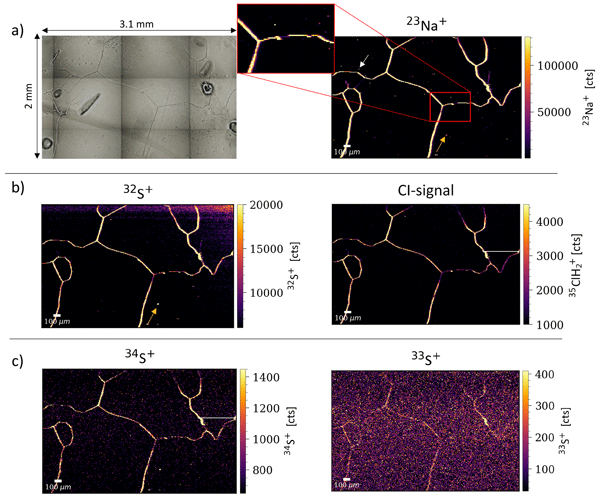
To avoid misinterpretation of impurity signals in ice cores, post-depositional changes need to be identified. Peak broadening with depth observed especially for S was previously related to diffusion in ice veins, but the exact physical mechanisms remain unclear. Our two-dimensional impurity maps by laser ablation inductively coupled plasma mass spectrometry were extended for the first time to S and Cl and support a view on diffusion not only through veins but also along grain boundaries.
Paul D. Bons, Yuanbang Hu, M.-Gema Llorens, Steven Franke, Nicolas Stoll, Ilka Weikusat, Julien Westhoff, and Yu Zhang
The Cryosphere, 19, 5095–5109, https://doi.org/10.5194/tc-19-5095-2025, https://doi.org/10.5194/tc-19-5095-2025, 2025
Short summary
Short summary
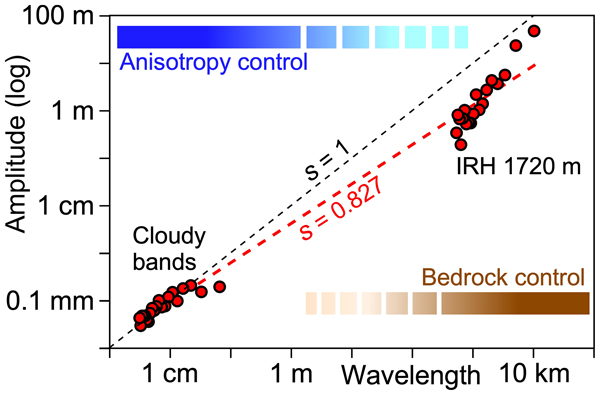
What causes folds in ice layers from the km scale down to the scale visible in the drill core: buckle folding due to variations in viscosity between layers, or the effect of mechanical anisotropy of ice due to an alignment of the crystal-lattice planes? Power spectra of folds in ice, a biotite schist, and numerical simulations show that folding in ice is due to the anisotropy, as the folds are self-similar, meaning that there is no characteristic fold scale that would result from buckle folding.
Nicolas Stoll, Ilka Weikusat, Daniela Jansen, Paul Bons, Kyra Darányi, Julien Westhoff, María-Gema Llorens, David Wallis, Jan Eichler, Tomotaka Saruya, Tomoyuki Homma, Sune Olander Rasmussen, Giulia Sinnl, Anders Svensson, Martyn Drury, Frank Wilhelms, Sepp Kipfstuhl, Dorthe Dahl-Jensen, and Johanna Kerch
The Cryosphere, 19, 3805–3830, https://doi.org/10.5194/tc-19-3805-2025, https://doi.org/10.5194/tc-19-3805-2025, 2025
Short summary
Short summary
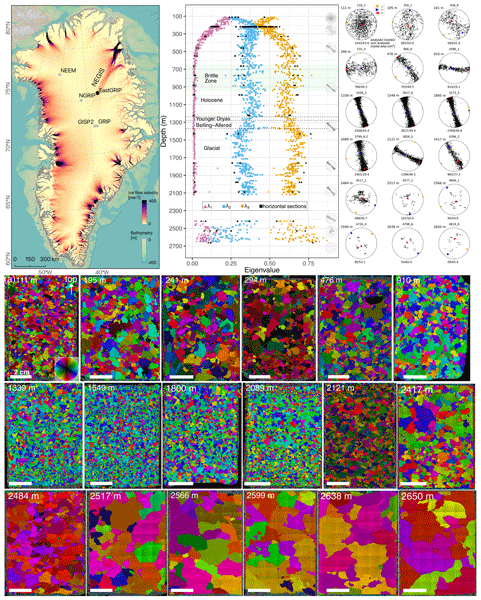
A better understanding of ice flow requires more observational data. The EastGRIP core is the first ice core through an active ice stream. We discuss crystal orientation data determining the present deformation regimes. A comparison with other deep cores shows the unique properties of EastGRIP and shows that deep ice likely originates from the Eemian. We further show that the overall plug flow of NEGIS is characterised by many small-scale variations, which remain to be considered in ice flow models.
Piers Larkman, Rachael H. Rhodes, Nicolas Stoll, Carlo Barbante, and Pascal Bohleber
The Cryosphere, 19, 1373–1390, https://doi.org/10.5194/tc-19-1373-2025, https://doi.org/10.5194/tc-19-1373-2025, 2025
Short summary
Short summary
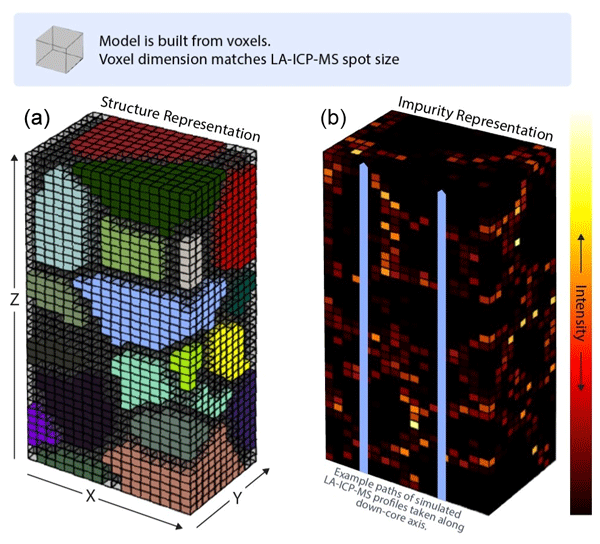
Impurities in ice cores can be preferentially located at the boundaries between crystals of ice, impacting the interpretation of high-resolution data collected from ice core samples. Through use of a modelling framework, we demonstrate that one-dimensional signals can be significantly affected by this association, meaning high-resolution measurements must be carefully designed. Accounting for this effect is important for interpreting ice core data, especially for deep ice samples.
Nicolas Stoll, Matthias Wietz, Stephan Juricke, Franziska Pausch, Corina Peter, Miriam Seifert, Jana C. Massing, Moritz Zeising, Rebecca A. McPherson, Melissa Käß, and Björn Suckow
Polarforschung, 91, 31–43, https://doi.org/10.5194/polf-91-31-2023, https://doi.org/10.5194/polf-91-31-2023, 2023
Short summary
Short summary
Global crises, such as climate change and the COVID-19 pandemic, show the importance of communicating science to the public. We introduce the YouTube channel "Wissenschaft fürs Wohnzimmer", which livestreams presentations on climate-related topics weekly and is accessible to all. The project encourages interaction between scientists and the public and has been running successfully for over 2 years. We present the concept, what we have learnt, and the challenges after 100 streamed episodes.
Nicolas Stoll, Julien Westhoff, Pascal Bohleber, Anders Svensson, Dorthe Dahl-Jensen, Carlo Barbante, and Ilka Weikusat
The Cryosphere, 17, 2021–2043, https://doi.org/10.5194/tc-17-2021-2023, https://doi.org/10.5194/tc-17-2021-2023, 2023
Short summary
Short summary
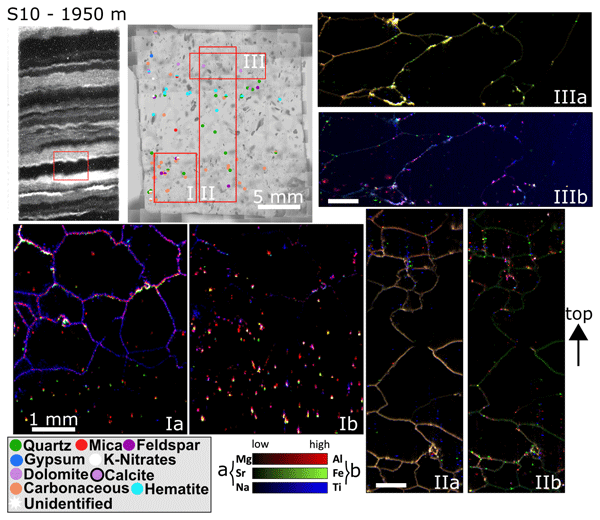
Impurities in polar ice play a role regarding its climate signal and internal deformation. We bridge different scales using different methods to investigate ice from the Last Glacial Period derived from the EGRIP ice core in Greenland. We characterise different types of cloudy bands, i.e. frequently occurring milky layers in the ice, and analyse their chemistry with Raman spectroscopy and 2D imaging. We derive new insights into impurity localisation and deposition conditions.
Ole Zeising, Tamara Annina Gerber, Olaf Eisen, M. Reza Ershadi, Nicolas Stoll, Ilka Weikusat, and Angelika Humbert
The Cryosphere, 17, 1097–1105, https://doi.org/10.5194/tc-17-1097-2023, https://doi.org/10.5194/tc-17-1097-2023, 2023
Short summary
Short summary
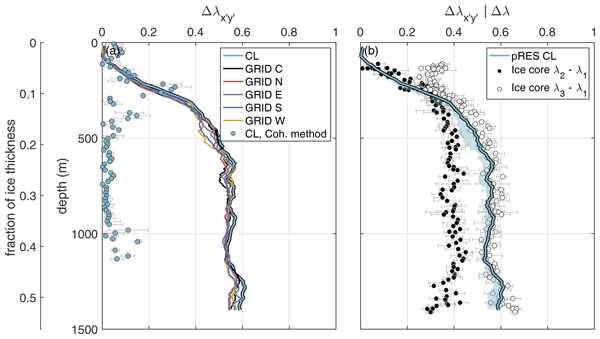
The flow of glaciers and ice streams is influenced by crystal fabric orientation. Besides sparse ice cores, these can be investigated by radar measurements. Here, we present an improved method which allows us to infer the horizontal fabric asymmetry using polarimetric phase-sensitive radar data. A validation of the method on a deep ice core from the Greenland Ice Sheet shows an excellent agreement, which is a large improvement over previously used methods.
Nicolas Stoll, Maria Hörhold, Tobias Erhardt, Jan Eichler, Camilla Jensen, and Ilka Weikusat
The Cryosphere, 16, 667–688, https://doi.org/10.5194/tc-16-667-2022, https://doi.org/10.5194/tc-16-667-2022, 2022
Short summary
Short summary
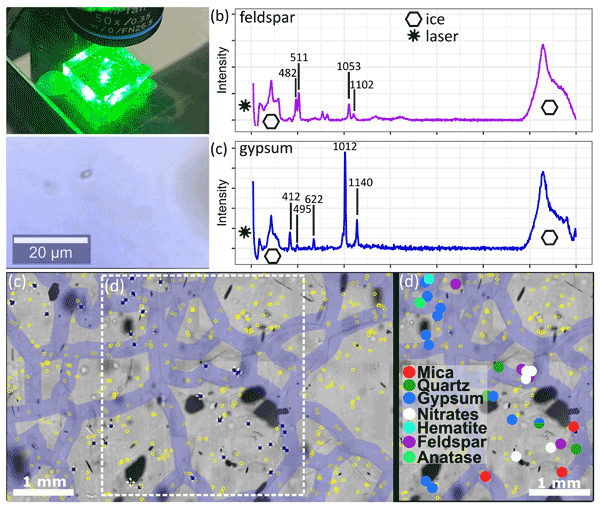
We mapped and analysed solid inclusion in the upper 1340 m of the EGRIP ice core with Raman spectroscopy and microstructure mapping, based on bulk dust content derived via continuous flow analysis. We observe a large variety in mineralogy throughout the core and samples. The main minerals are sulfates, especially gypsum, and terrestrial dust minerals, such as quartz, mica, and feldspar. A change in mineralogy occurs around 900 m depth indicating a climate-related imprint.
Nicolas Stoll, Jan Eichler, Maria Hörhold, Tobias Erhardt, Camilla Jensen, and Ilka Weikusat
The Cryosphere, 15, 5717–5737, https://doi.org/10.5194/tc-15-5717-2021, https://doi.org/10.5194/tc-15-5717-2021, 2021
Short summary
Short summary
We did a systematic analysis of the location of inclusions in the EGRIP ice core, the first ice core from an ice stream. We combine this with crystal orientation and grain size data, enabling the first overview about the microstructure of this unique ice core. Micro-inclusions show a strong spatial variability and patterns (clusters or horizontal layers); roughly one-third is located at grain boundaries. More holistic approaches are needed to understand deformation processes in the ice better.
Geunwoo Lee, Tobias Erhardt, Piers Larkman, Chantal Zeppenfeld, Sarah Jackson, Jochen Schmitt, Barbara Delmonte, Giovanni Baccolo, Catherine Ritz, Frank Wilhelms, Dorthe Dahl-Jensen, Kevin Michael Nikolaus, Pascal Bohleber, and Hubertus Fischer
EGUsphere, https://doi.org/10.5194/egusphere-2026-4574, https://doi.org/10.5194/egusphere-2026-4574, 2026
Short summary
Short summary
Deep ice cores preserve records of past climate, but chemical reactions inside the ice can blur these signals over time. To find out how, we studied millions of dust particles in a deep Antarctic ice core. We found that, over long timescales, dust dissolves and reforms into new minerals within tiny pockets of liquid, trapping chemical elements. Warm temperatures speed up this process. Accounting for it helps scientists interpret ancient climate records from deep ice more reliably.
Niklas Kappelt, Piers Larkman, Pascal Bohleber, Florian Adolphi, Marcus Christl, Christof Vockenhuber, Philip Gautschi, Eric Wolff, and Raimund Muscheler
EGUsphere, https://doi.org/10.5194/egusphere-2026-790, https://doi.org/10.5194/egusphere-2026-790, 2026
This preprint is open for discussion and under review for The Cryosphere (TC).
Short summary
Short summary
10Be is a radionuclide often measured in ice cores to reconstruct the solar magnetic field and geomagnetic field, as well as to date ice based on its half-life of 1.387 million years. Previous measurements in deep ice from Antarctica showed a decrease in concentrations with age. We analysed the influence of the sample preparation procedure and were able to show that the use of ion exchange columns can lead to decreasing concentrations, an effect which is amplified at greater depths and ages.
David Wachs, Azzurra Spagnesi, Pascal Bohleber, Andrea Fischer, Martin Stocker-Waldhuber, Alexander Junkermann, Carl Kindermann, Linus Langenbacher, Niclas Mandaric, Joshua Marks, Florian Meienburg, Theo M. Jenk, Markus K. Oberthaler, and Werner Aeschbach
Clim. Past, 22, 173–185, https://doi.org/10.5194/cp-22-173-2026, https://doi.org/10.5194/cp-22-173-2026, 2026
Short summary
Short summary
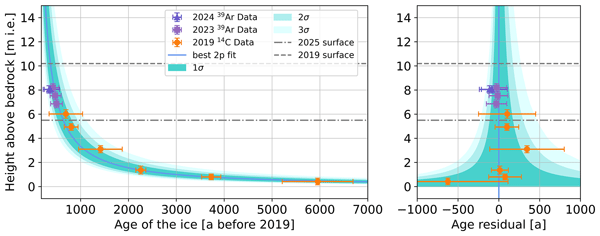
This study presents an age profile of the summit glacier of Weißseespitze in the Austrian Alps. The ages were obtained by combining 14C dating with the novel atom trap trace analysis for 39Ar. The data was used to constrain glacier age models. The results show that the surface ice is ~400 a old due to recent ice loss. The remaining ice continuously covers ages up to 6000 a. This work underscores the utility of 39Ar dating in glaciology, enabling precise reconstruction of age-depth relationships.
Pascal Bohleber, Nicolas Stoll, Piers Larkman, Rachael H. Rhodes, and David Clases
The Cryosphere, 19, 5485–5498, https://doi.org/10.5194/tc-19-5485-2025, https://doi.org/10.5194/tc-19-5485-2025, 2025
Short summary
Short summary
To avoid misinterpretation of impurity signals in ice cores, post-depositional changes need to be identified. Peak broadening with depth observed especially for S was previously related to diffusion in ice veins, but the exact physical mechanisms remain unclear. Our two-dimensional impurity maps by laser ablation inductively coupled plasma mass spectrometry were extended for the first time to S and Cl and support a view on diffusion not only through veins but also along grain boundaries.
Paul D. Bons, Yuanbang Hu, M.-Gema Llorens, Steven Franke, Nicolas Stoll, Ilka Weikusat, Julien Westhoff, and Yu Zhang
The Cryosphere, 19, 5095–5109, https://doi.org/10.5194/tc-19-5095-2025, https://doi.org/10.5194/tc-19-5095-2025, 2025
Short summary
Short summary
What causes folds in ice layers from the km scale down to the scale visible in the drill core: buckle folding due to variations in viscosity between layers, or the effect of mechanical anisotropy of ice due to an alignment of the crystal-lattice planes? Power spectra of folds in ice, a biotite schist, and numerical simulations show that folding in ice is due to the anisotropy, as the folds are self-similar, meaning that there is no characteristic fold scale that would result from buckle folding.
Nicolas Stoll, Ilka Weikusat, Daniela Jansen, Paul Bons, Kyra Darányi, Julien Westhoff, María-Gema Llorens, David Wallis, Jan Eichler, Tomotaka Saruya, Tomoyuki Homma, Sune Olander Rasmussen, Giulia Sinnl, Anders Svensson, Martyn Drury, Frank Wilhelms, Sepp Kipfstuhl, Dorthe Dahl-Jensen, and Johanna Kerch
The Cryosphere, 19, 3805–3830, https://doi.org/10.5194/tc-19-3805-2025, https://doi.org/10.5194/tc-19-3805-2025, 2025
Short summary
Short summary
A better understanding of ice flow requires more observational data. The EastGRIP core is the first ice core through an active ice stream. We discuss crystal orientation data determining the present deformation regimes. A comparison with other deep cores shows the unique properties of EastGRIP and shows that deep ice likely originates from the Eemian. We further show that the overall plug flow of NEGIS is characterised by many small-scale variations, which remain to be considered in ice flow models.
Piers Larkman, Rachael H. Rhodes, Nicolas Stoll, Carlo Barbante, and Pascal Bohleber
The Cryosphere, 19, 1373–1390, https://doi.org/10.5194/tc-19-1373-2025, https://doi.org/10.5194/tc-19-1373-2025, 2025
Short summary
Short summary
Impurities in ice cores can be preferentially located at the boundaries between crystals of ice, impacting the interpretation of high-resolution data collected from ice core samples. Through use of a modelling framework, we demonstrate that one-dimensional signals can be significantly affected by this association, meaning high-resolution measurements must be carefully designed. Accounting for this effect is important for interpreting ice core data, especially for deep ice samples.
Nicolas Stoll, Matthias Wietz, Stephan Juricke, Franziska Pausch, Corina Peter, Miriam Seifert, Jana C. Massing, Moritz Zeising, Rebecca A. McPherson, Melissa Käß, and Björn Suckow
Polarforschung, 91, 31–43, https://doi.org/10.5194/polf-91-31-2023, https://doi.org/10.5194/polf-91-31-2023, 2023
Short summary
Short summary
Global crises, such as climate change and the COVID-19 pandemic, show the importance of communicating science to the public. We introduce the YouTube channel "Wissenschaft fürs Wohnzimmer", which livestreams presentations on climate-related topics weekly and is accessible to all. The project encourages interaction between scientists and the public and has been running successfully for over 2 years. We present the concept, what we have learnt, and the challenges after 100 streamed episodes.
Nicolas Stoll, Julien Westhoff, Pascal Bohleber, Anders Svensson, Dorthe Dahl-Jensen, Carlo Barbante, and Ilka Weikusat
The Cryosphere, 17, 2021–2043, https://doi.org/10.5194/tc-17-2021-2023, https://doi.org/10.5194/tc-17-2021-2023, 2023
Short summary
Short summary
Impurities in polar ice play a role regarding its climate signal and internal deformation. We bridge different scales using different methods to investigate ice from the Last Glacial Period derived from the EGRIP ice core in Greenland. We characterise different types of cloudy bands, i.e. frequently occurring milky layers in the ice, and analyse their chemistry with Raman spectroscopy and 2D imaging. We derive new insights into impurity localisation and deposition conditions.
Ole Zeising, Tamara Annina Gerber, Olaf Eisen, M. Reza Ershadi, Nicolas Stoll, Ilka Weikusat, and Angelika Humbert
The Cryosphere, 17, 1097–1105, https://doi.org/10.5194/tc-17-1097-2023, https://doi.org/10.5194/tc-17-1097-2023, 2023
Short summary
Short summary
The flow of glaciers and ice streams is influenced by crystal fabric orientation. Besides sparse ice cores, these can be investigated by radar measurements. Here, we present an improved method which allows us to infer the horizontal fabric asymmetry using polarimetric phase-sensitive radar data. A validation of the method on a deep ice core from the Greenland Ice Sheet shows an excellent agreement, which is a large improvement over previously used methods.
Nicolas Stoll, Maria Hörhold, Tobias Erhardt, Jan Eichler, Camilla Jensen, and Ilka Weikusat
The Cryosphere, 16, 667–688, https://doi.org/10.5194/tc-16-667-2022, https://doi.org/10.5194/tc-16-667-2022, 2022
Short summary
Short summary
We mapped and analysed solid inclusion in the upper 1340 m of the EGRIP ice core with Raman spectroscopy and microstructure mapping, based on bulk dust content derived via continuous flow analysis. We observe a large variety in mineralogy throughout the core and samples. The main minerals are sulfates, especially gypsum, and terrestrial dust minerals, such as quartz, mica, and feldspar. A change in mineralogy occurs around 900 m depth indicating a climate-related imprint.
Nicolas Stoll, Jan Eichler, Maria Hörhold, Tobias Erhardt, Camilla Jensen, and Ilka Weikusat
The Cryosphere, 15, 5717–5737, https://doi.org/10.5194/tc-15-5717-2021, https://doi.org/10.5194/tc-15-5717-2021, 2021
Short summary
Short summary
We did a systematic analysis of the location of inclusions in the EGRIP ice core, the first ice core from an ice stream. We combine this with crystal orientation and grain size data, enabling the first overview about the microstructure of this unique ice core. Micro-inclusions show a strong spatial variability and patterns (clusters or horizontal layers); roughly one-third is located at grain boundaries. More holistic approaches are needed to understand deformation processes in the ice better.
Cited articles
Adebiyi, A. A. and Kok, J. F.: Climate models miss most of the coarse dust in the atmosphere, Science Advances, 6, eaaz9507, https://doi.org/10.1126/sciadv.aaz9507, 2020. a, b
Baccolo, G., Delmonte, B., Niles, P. B., Cibin, G., Di Stefano, E., Hampai, D., Keller, L., Maggi, V., Marcelli, A., Michalski, J., Snead, C., and Frezzotti, M.: Jarosite formation in deep Antarctic ice provides a window into acidic, water-limited weathering on Mars, Nature Communications, 12, 1–8, https://doi.org/10.1038/s41467-020-20705-z, 2021. a
Barbante, C., Boutron, C., Morel, C., Ferrari, C., Jaffrezo, J. L., Cozzi, G., Gaspari, V., and Cescon, P.: Seasonal variations of heavy metals in central Greenland snow deposited from 1991 to 1995, Journal of Environmental Monitoring, 5, 328–335, https://doi.org/10.1039/B210460A, 2003. a
Barnes, P. R. F., Mulvaney, R., Robinson, K., and Wolff, E. W.: Observations of polar ice from the Holocene and the glacial period using the scanning electron microscope, Annals of Glaciology, 35, 559–566, 2002. a
Bohleber, P., Roman, M., Šala, M., and Barbante, C.: Imaging the impurity distribution in glacier ice cores with LA-ICP-MS, Journal of Analytical Atomic Spectrometry, 35, 2204–2212, https://doi.org/10.1039/D0JA00170H, 2020. a
Bohleber, P., Stoll, N., Rittner, M., Roman, M., Weikusat, I., and Barbante, C.: Geochemical Characterization of Insoluble Particle Clusters in Ice Cores Using Two-Dimensional Impurity Imaging, Geochemistry, Geophysics, Geosystems, 24, e2022GC010595, https://doi.org/10.1029/2022GC010595, 2023. a, b, c, d, e, f, g
Bohleber, P., Larkman, P., Stoll, N., Clases, D., Gonzalez de Vega, R., Šala, M., Roman, M., and Barbante, C.: Quantitative Insights on Impurities in Ice Cores at the Micro-Scale From Calibrated LA-ICP-MS Imaging, Geochemistry, Geophysics, Geosystems, 25, e2023GC011425, https://doi.org/10.1029/2023GC011425, 2024. a, b
Bohleber, P., Stoll, N., Larkman, P., Rhodes, R. H., and Clases, D.: New evidence on the microstructural localization of sulfur and chlorine in polar ice cores with implications for impurity diffusion, The Cryosphere, 19, 5485–5498, https://doi.org/10.5194/tc-19-5485-2025, 2025. a
Bolea, E., Jimenez, M. S., Perez-Arantegui, J., Vidal, J. C., Bakir, M., Ben-Jeddou, K., Gimenez-Ingalaturre, A. C., Ojeda, D., Trujillo, C., and Laborda, F.: Analytical applications of single particle inductively coupled plasma mass spectrometry: a comprehensive and critical review, Analytical Methods, 13, 2742–2795, https://doi.org/10.1039/D1AY00761K, 2021. a
Broecker, W. S.: Was the Medieval Warm Period Global?, Science, 291, 1497–1499, https://doi.org/10.1126/science.291.5508.1497, 2001. a
Clases, D. and Gonzalez de Vega, R.: Facets of ICP-MS and their potential in the medical sciences – Part 2: nanomedicine, immunochemistry, mass cytometry, and bioassays, Analytical and Bioanalytical Chemistry, 414, 7363–7386, https://doi.org/10.1007/s00216-022-04260-8, 2022. a
Della Lunga, D., Müller, W., Rasmussen, S. O., Svensson, A., and Vallelonga, P.: Calibrated cryo-cell UV-LA-ICPMS elemental concentrations from the NGRIP ice core reveal abrupt, sub-annual variability in dust across the GI-21.2 interstadial period, The Cryosphere, 11, 1297–1309, https://doi.org/10.5194/tc-11-1297-2017, 2017. a
Delmonte, B., Petit, J. R., and Maggi, V.: LGM–Holocene changes and Holocene millennial-scale oscillations of dust particles in the EPICA Dome C ice core, East Antarctica, Annals of Glaciology, 35, 306–312, https://doi.org/10.3189/172756402781816843, 2002. a
Delmonte, B., Basile-Doelsch, I., Petit, J. R., Maggi, V., Revel-Rolland, M., Michard, A., Jagoutz, E., and Grousset, F.: Comparing the Epica and Vostok dust records during the last 220,000 years: stratigraphical correlation and provenance in glacial periods, Earth-Science Reviews, 66, 63–87, https://doi.org/10.1016/j.earscirev.2003.10.004, 2004. a
Eichler, J., Weikusat, C., Wegner, A., Twarloh, B., Behrens, M., Fischer, H., Hörhold, M., Jansen, D., Kipfstuhl, S., Ruth, U., Wilhelms, F., and Weikusat, I.: Impurity Analysis and Microstructure Along the Climatic Transition From MIS 6 Into 5e in the EDML Ice Core Using Cryo-Raman Microscopy, Frontiers in Earth Science, 7, 1–16, https://doi.org/10.3389/feart.2019.00020, 2019. a, b
Erhardt, T., Jensen, C. M., Borovinskaya, O., and Fischer, H.: Single Particle Characterization and Total Elemental Concentration Measurements in Polar Ice Using Continuous Flow Analysis-Inductively Coupled Plasma Time-of-Flight Mass Spectrometry, Environmental Science & Technology, 53, 13275–13283, https://doi.org/10.1021/acs.est.9b03886, 2019. a
Faria, S. H., Freitag, J., and Kipfstuhl, S.: Polar ice structure and the integrity of ice-core paleoclimate records, Quaternary Science Reviews, 29, 338–351, https://doi.org/10.1016/j.quascirev.2009.10.016, 2010. a
Fischer, H., Severinghaus, J., Brook, E., Wolff, E., Albert, M., Alemany, O., Arthern, R., Bentley, C., Blankenship, D., Chappellaz, J., Creyts, T., Dahl-Jensen, D., Dinn, M., Frezzotti, M., Fujita, S., Gallee, H., Hindmarsh, R., Hudspeth, D., Jugie, G., Kawamura, K., Lipenkov, V., Miller, H., Mulvaney, R., Parrenin, F., Pattyn, F., Ritz, C., Schwander, J., Steinhage, D., van Ommen, T., and Wilhelms, F.: Where to find 1.5 million yr old ice for the IPICS ”Oldest-Ice” ice core, Clim. Past, 9, 2489–2505, https://doi.org/10.5194/cp-9-2489-2013, 2013. a
Fuchs, J., Aghaei, M., Schachel, T. D., Sperling, M., Bogaerts, A., and Karst, U.: Impact of the Particle Diameter on Ion Cloud Formation from Gold Nanoparticles in ICPMS, Analytical Chemistry, 90, 10271–10278, https://doi.org/10.1021/acs.analchem.8b02007, 2018. a
Fukazawa, H., Suzuki, D., Ikeda, T., Mae, S., and Hondoh, T.: Raman Spectra of Translational Lattice Vibrations in Polar Ice, The Journal of Physical Chemistry B, 101, 6184–6187, https://doi.org/10.1021/jp963161r, 1997. a
Gabrielli, P., Barbante, C., Boutron, C., Cozzi, G., Gaspari, V., Planchon, F., Ferrari, C., Turetta, C., Hong, S., and Cescon, P.: Variations in atmospheric trace elements in Dome C (East Antarctica) ice over the last two climatic cycles, Atmospheric Environment, 39, 6420–6429, https://doi.org/10.1016/j.atmosenv.2005.07.025, 2005. a
Gabrielli, P., Cozzi, G., Torcini, S., Cescon, P., and Barbante, C.: Trace elements in winter snow of the Dolomites (Italy): A statistical study of natural and anthropogenic contributions, Chemosphere, 72, 1504–1509, https://doi.org/10.1016/j.chemosphere.2008.04.076, 2008. a
Gonzalez de Vega, R., Lockwood, T. E., Xu, X., Gonzalez de Vega, C., Scholz, J., Horstmann, M., Doble, P. A., and Clases, D.: Analysis of Ti- and Pb-based particles in the aqueous environment of Melbourne (Australia) via single particle ICP-MS, Analytical and Bioanalytical Chemistry, 414, 5671–5681, https://doi.org/10.1007/s00216-022-04052-0, 2022. a
Gonzalez de Vega, R., Lockwood, T. E., Paton, L., Schlatt, L., and Clases, D.: Non-target analysis and characterisation of nanoparticles in spirits via single particle ICP-TOF-MS, Journal of Analytical Atomic Spectrometry, 38, 2656–2663, https://doi.org/10.1039/D3JA00253E, 2023. a, b
Goodman, A. J., Gundlach-Graham, A., Bevers, S. G., and Ranville, J. F.: Characterization of nano-scale mineral dust aerosols in snow by single particle inductively coupled plasma mass spectrometry, Environmental Science: Nano, 9, 2638–2652, https://doi.org/10.1039/D2EN00277A, 2022. a
Goosse, H., Arzel, O., Luterbacher, J., Mann, M. E., Renssen, H., Riedwyl, N., Timmermann, A., Xoplaki, E., and Wanner, H.: The origin of the European ”Medieval Warm Period”, Clim. Past, 2, 99–113, https://doi.org/10.5194/cp-2-99-2006, 2006. a
Kaufmann, P. R., Federer, U., Hutterli, M. A., Bigler, M., Schüpbach, S., Ruth, U., Schmitt, J., and Stocker, T. F.: An Improved Continuous Flow Analysis System for High-Resolution Field Measurements on Ice Cores, Environmental Science & Technology, 42, 8044–8050, https://doi.org/10.1021/es8007722, 2008. a
Kutuzov, S. S., Mikhalenko, V. N., Legrand, M., Khairedinova, A. G., Vorob’ev, M. A., and Vinogradova, M. M.: Promising Trends in Ice Core Research, Herald of the Russian Academy of Sciences, 92, 370–379, https://doi.org/10.1134/S1019331622030121, 2022. a
Laborda, F., Abad-Álvaro, I., Jiménez, M. S., and Bolea, E.: Catching particles by atomic spectrometry: Benefits and limitations of single particle - inductively coupled plasma mass spectrometry, Spectrochimica Acta Part B: Atomic Spectroscopy, 199, 106570, https://doi.org/10.1016/j.sab.2022.106570, 2023. a
Lambert, F., Delmonte, B., Petit, J. R., Bigler, M., Kaufmann, P. R., Hutterli, M. A., Stocker, T. F., Ruth, U., Steffensen, J. P., and Maggi, V.: Dust - Climate couplings over the past 800,000 years from the EPICA Dome C ice core, Nature, 452, 616–619, https://doi.org/10.1038/nature06763, 2008. a
Larkman, P., Rhodes, R. H., Stoll, N., Barbante, C., and Bohleber, P.: What does the impurity variability at the microscale represent in ice cores? Insights from a conceptual approach, The Cryosphere, 19, 1373–1390, https://doi.org/10.5194/tc-19-1373-2025, 2025. a
Lee, G., Erhardt, T., Zeppenfeld, C., Larkman, P., Bohleber, P., and Fischer, H.: Exploration of elemental details of single mineral dust particles in the EPICA Dome C ice core during interglacial and glacial periods, EGU General Assembly 2024, Vienna, Austria, 14–19 Apr 2024, EGU24-17433, https://doi.org/10.5194/egusphere-egu24-17433, 2024. a
Legrand, M. and Mayewski, P.: Glaciochemistry of polar ice cores: A review, Reviews of Geophysics, 35, 219–243, https://doi.org/10.1029/96RG03527, 1997. a
Li, W., Shao, L., Zhang, D., Ro, C.-U., Hu, M., Bi, X., Geng, H., Matsuki, A., Niu, H., and Chen, J.: A review of single aerosol particle studies in the atmosphere of East Asia: morphology, mixing state, source, and heterogeneous reactions, Journal of Cleaner Production, 112, 1330–1349, https://doi.org/10.1016/j.jclepro.2015.04.050, 2016. a
Lockwood, T. E., de Vega, R. G., Du, Z., Schlatt, L., Xu, X., and Clases, D.: Strategies to enhance figures of merit in ICP-ToF-MS, Journal of Analytical Atomic Spectrometry, 39, 227–234, https://doi.org/10.1039/D3JA00288H, 2024. a
Lockwood, T. E., Schlatt, L., and Clases, D.: SPCal – an open source, easy-to-use processing platform for ICP-TOFMS-based single event data, Journal of Analytical Atomic Spectrometry, 40, 130–136, https://doi.org/10.1039/D4JA00241E, 2025 (code available at: https://github.com/djdt/spcal, last access: 28 November 2025). a, b, c, d, e, f, g, h, i
Lomax-Vogt, M., Carter, L. M., Wielinski, J., Kutuzov, S., Lowry, G. V., Sullivan, R., Gabrielli, P., and Olesik, J. W.: Challenges in measuring nanoparticles and microparticles by single particle ICP-QMS and ICP-TOFMS: size-dependent transport efficiency and limited linear dynamic range, Journal of Analytical Atomic Spectrometry, 40, 848–859, https://doi.org/10.1039/D4JA00425F, 2025. a, b
Mahowald, N., Albani, S., Kok, J. F., Engelstaeder, S., Scanza, R., Ward, D. S., and Flanner, M. G.: The size distribution of desert dust aerosols and its impact on the Earth system, Aeolian Research, 15, 53–71, https://doi.org/10.1016/j.aeolia.2013.09.002, 2014. a, b
Martínez-Garcia, A., Rosell-Melé, A., Jaccard, S. L., Geibert, W., Sigman, D. M., and Haug, G. H.: Southern Ocean dust–climate coupling over the past four million years, Nature, 476, 312–315, https://doi.org/10.1038/nature10310, 2011. a
Mayewski, P. A., Rohling, E. E., Curt Stager, J., Karlén, W., Maasch, K. A., Meeker, L. D., Meyerson, E. A., Gasse, F., Van Kreveld, S., Holmgren, K., Lee-Thorp, J., Rosqvist, G., Rack, F., Staubwasser, M., Schneider, R. R., and Steig, E. J.: Holocene climate variability, Quaternary Research, 62, 243–255, https://doi.org/10.1016/j.yqres.2004.07.001, 2004. a
Neukom, R., Gergis, J., Karoly, D. J., Wanner, H., Curran, M., Elbert, J., González-Rouco, F., Linsley, B. K., Moy, A. D., Mundo, I., Raible, C. C., Steig, E. J., Van Ommen, T., Vance, T., Villalba, R., Zinke, J., and Frank, D.: Inter-hemispheric temperature variability over the past millennium, Nature Climate Change, 4, 362–367, https://doi.org/10.1038/nclimate2174, 2014. a
Neuper, C., Šimić, M., Lockwood, T. E., Gonzalez de Vega, R., Hohenester, U., Fitzek, H., Schlatt, L., Hill, C., and Clases, D.: Optofluidic Force Induction Meets Raman Spectroscopy and Inductively Coupled Plasma-Mass Spectrometry: A New Hyphenated Technique for Comprehensive and Complementary Characterizations of Single Particles, Analytical Chemistry, https://doi.org/10.1021/acs.analchem.3c04657, 2024. a
Ohno, H., Igarashi, M., and Hondoh, T.: Salt inclusions in polar ice core: Location and chemical form of water-soluble impurities, Earth and Planetary Science Letters, 232, 171–178, https://doi.org/10.1016/j.epsl.2005.01.001, 2005. a
Osman, M., Zawadowicz, M. A., Das, S. B., and Cziczo, D. J.: Real-time analysis of insoluble particles in glacial ice using single-particle mass spectrometry, Atmos. Meas. Tech., 10, 4459–4477, https://doi.org/10.5194/amt-10-4459-2017, 2017. a
Pace, H. E., Rogers, N. J., Jarolimek, C., Coleman, V. A., Higgins, C. P., and Ranville, J. F.: Determining Transport Efficiency for the Purpose of Counting and Sizing Nanoparticles via Single Particle Inductively Coupled Plasma Mass Spectrometry, Analytical Chemistry, https://doi.org/10.1021/ac201952t, 2011. a, b, c
Paterson, W. S. B.: Why ice-age ice is sometimes “soft”, Cold Regions Science and Technology, 20, 75–98, 1991. a
Petit, J.-R., Briat, M., and Royer, A.: Ice age aerosol content from East Antarctic ice core samples and past wind strength, Nature, 293, 391–394, https://doi.org/10.1038/293391a0, 1981. a
Peyneau, P.-E.: Statistical properties of spikes in single particle ICP-MS time scans, Journal of Analytical Atomic Spectrometry, 37, 2683–2690, https://doi.org/10.1039/D2JA00312K, 2022. a
Peyneau, P.-E. and Guillon, M.: Number of spikes in single particle ICP-MS time scans: from the very dilute to the highly concentrated range, Journal of Analytical Atomic Spectrometry, 36, 2460–2466, https://doi.org/10.1039/D1JA00156F, 2021. a, b
Potenza, M. A. C., Albani, S., Delmonte, B., Villa, S., Sanvito, T., Paroli, B., Pullia, A., Baccolo, G., Mahowald, N., and Maggi, V.: Shape and size constraints on dust optical properties from the Dome C ice core, Antarctica, Scientific Reports, 6, 28162, https://doi.org/10.1038/srep28162, 2016. a
Rasmussen, S. O., Abbott, P. M., Blunier, T., Bourne, A. J., Brook, E., Buchardt, S. L., Buizert, C., Chappellaz, J., Clausen, H. B., Cook, E., Dahl-Jensen, D., Davies, S. M., Guillevic, M., Kipfstuhl, S., Laepple, T., Seierstad, I. K., Severinghaus, J. P., Steffensen, J. P., Stowasser, C., Svensson, A., Vallelonga, P., Vinther, B. M., Wilhelms, F., and Winstrup, M.: A first chronology for the North Greenland Eemian Ice Drilling (NEEM) ice core, Clim. Past, 9, 2713–2730, https://doi.org/10.5194/cp-9-2713-2013, 2013. a
Rasmussen, S. O., Bigler, M., Blockley, S. P., Blunier, T., Buchardt, S. L., Clausen, H. B., Cvijanovic, I., Dahl-Jensen, D., Johnsen, S. J., Fischer, H., Gkinis, V., Guillevic, M., Hoek, W. Z., Lowe, J. J., Pedro, J. B., Popp, T., Seierstad, I. K., Steffensen, J. P., Svensson, A. M., Vallelonga, P., Vinther, B. M., Walker, M. J. C., Wheatley, J. J., and Winstrup, M.: A stratigraphic framework for abrupt climatic changes during the Last Glacial period based on three synchronized Greenland ice-core records: refining and extending the INTIMATE event stratigraphy, Quaternary Science Reviews, 106, 14–28, https://doi.org/10.1016/j.quascirev.2014.09.007, 2014. a, b, c
Röthlisberger, R., Bigler, M., Hutterli, M., Sommer, S., Stauffer, B., Junghans, H. G., and Wagenbach, D.: Technique for continuous high-resolution analysis of trace substances in firn and ice cores, Environmental Science and Technology, 34, 338–342, https://doi.org/10.1021/es9907055, 2000. a
Stevens, R. and Dastoor, A.: A Review of the Representation of Aerosol Mixing State in Atmospheric Models, Atmosphere, 10, 168, https://doi.org/10.3390/atmos10040168, 2019. a
Stoll, N., Eichler, J., Hörhold, M., Erhardt, T., Jensen, C., and Weikusat, I.: Microstructure, micro-inclusions, and mineralogy along the EGRIP ice core – Part 1: Localisation of inclusions and deformation patterns, The Cryosphere, 15, 5717–5737, https://doi.org/10.5194/tc-15-5717-2021, 2021a. a, b, c, d, e
Stoll, N., Eichler, J., Hörhold, M., Shigeyama, W., and Weikusat, I.: A Review of the Microstructural Location of Impurities and Their Impacts on Deformation, Frontiers in Earth Science, 8, https://doi.org/10.3389/feart.2020.615613, 2021b. a
Stoll, N., Hörhold, M., Erhardt, T., Eichler, J., Jensen, C., and Weikusat, I.: Microstructure, micro-inclusions, and mineralogy along the EGRIP (East Greenland Ice Core Project) ice core – Part 2: Implications for palaeo-mineralogy, The Cryosphere, 16, 667–688, https://doi.org/10.5194/tc-16-667-2022, 2022. a, b, c, d, e, f, g, h, i, j, k, l, m, n, o, p, q
Stoll, N., Bohleber, P., Dallmayr, R., Wilhelms, F., Barbante, C., and Weikusat, I.: The new frontier of microstructural impurity research in polar ice, Annals of Glaciology, 1–4, https://doi.org/10.1017/aog.2023.61, 2023a. a
Stoll, N., Westhoff, J., Bohleber, P., Svensson, A., Dahl-Jensen, D., Barbante, C., and Weikusat, I.: Chemical and visual characterisation of EGRIP glacial ice and cloudy bands within, The Cryosphere, 17, 2021–2043, https://doi.org/10.5194/tc-17-2021-2023, 2023b. a, b, c, d, e, f, g, h, i, j, k, l, m, n, o, p, q, r
Stoll, N., Weikusat, I., Jansen, D., Bons, P., Darányi, K., Westhoff, J., Llorens, M.-G., Wallis, D., Eichler, J., Saruya, T., Homma, T., Rasmussen, S. O., Sinnl, G., Svensson, A., Drury, M., Wilhelms, F., Kipfstuhl, S., Dahl-Jensen, D., and Kerch, J.: Linking crystallographic orientation and ice stream dynamics: evidence from the EastGRIP ice core, The Cryosphere, 19, 3805–3830, https://doi.org/10.5194/tc-19-3805-2025, 2025a. a, b
Stoll, N., Clases, D., Gonzalez de Vega, R., Elinkmann, M., Larkman, P., and Bohleber, P.: Supporting data for manuscript “Single particle ICP-TOFMS on previously characterised EGRIP ice core samples: new approaches, limitations, and challenges”, Zenodo [data set], https://doi.org/10.5281/zenodo.18038801 2025b. a
Svensson, A., Biscaye, P. E., and Grousset, F. E.: Characterization of late glacial continental dust in the Greenland Ice Core Project ice core, Journal of Geophysical Research: Atmospheres, 105, 4637–4656, https://doi.org/10.1029/1999JD901093, 2000. a
Tegen, I. and Lacis, A. A.: Modeling of particle size distribution and its influence on the radiative properties of mineral dust aerosol, Journal of Geophysical Research: Atmospheres, 101, 19237–19244, https://doi.org/10.1029/95JD03610, 1996. a, b
Tharaud, M., Schlatt, L., Shaw, P., and Benedetti, M. F.: Nanoparticle identification using single particle ICP-ToF-MS acquisition coupled to cluster analysis. From engineered to natural nanoparticles, Journal of Analytical Atomic Spectrometry, 37, 2042–2052, https://doi.org/10.1039/D2JA00116K, 2022. a, b, c
Újvári, G., Klötzli, U., Stevens, T., Svensson, A., Ludwig, P., Vennemann, T., Gier, S., Horschinegg, M., Palcsu, L., Hippler, D., Kovács, J., Di Biagio, C., and Formenti, P.: Greenland Ice Core Record of Last Glacial Dust Sources and Atmospheric Circulation, Journal of Geophysical Research: Atmospheres, 127, e2022JD036597, https://doi.org/10.1029/2022JD036597, 2022. a
Vallelonga, P. and Svensson, A.: Ice Core Archives of Mineral Dust, in: Mineral Dust: A Key Player in the Earth System, edited by Knippertz, P. and Stuut, J.-B. W., Springer Netherlands, Dordrecht, 463–485, ISBN 978-94-017-8978-3, https://doi.org/10.1007/978-94-017-8978-3_18, 2014. a, b, c
Van de Velde, K., Barbante, C., Cozzi, G., Moret, I., Bellomi, T., Ferrari, C., and Boutron, C.: Changes in the occurrence of silver, gold, platinum, palladium and rhodium in Mont Blanc ice and snow since the 18th century, Atmospheric Environment, 34, 3117–3127, https://doi.org/10.1016/S1352-2310(99)00434-3, 2000. a
Wegner, A., Fischer, H., Delmonte, B., Petit, J.-R., Erhardt, T., Ruth, U., Svensson, A., Vinther, B., and Miller, H.: The role of seasonality of mineral dust concentration and size on glacial/interglacial dust changes in the EPICA Dronning Maud Land ice core, Journal of Geophysical Research: Atmospheres, 120, 9916–9931, https://doi.org/10.1002/2015JD023608, 2015. a
Wolff, E. W., Fischer, H., van Ommen, T., and Hodell, D. A.: Stratigraphic templates for ice core records of the past 1.5 Myr, Clim. Past, 18, 1563–1577, https://doi.org/10.5194/cp-18-1563-2022, 2022. a, b
Zeppenfeld, C., Erhardt, T., Jensen, C. M., and Fischer, H.: Continuous Characterization of Insoluble Particles in Ice Cores Using the Single-Particle Extinction and Scattering Method, Environmental Science & Technology, 59, 328–336, https://doi.org/10.1021/acs.est.4c07098, 2025. a, b
Short summary
We analyse 8 samples from the East Greenland Ice-core Project (EGRIP) ice core, Greenland, using an underexplored method: single particle time of flight analysis. For the first time, we investigated thousands of particles from different climatic stages while applying a new approach to estimate particle sizes based on prior data. We characterise particles and clusters providing new insights on trace elements in ice sheets. This approach has enormous potential for analysing million-year-old ice.
We analyse 8 samples from the East Greenland Ice-core Project (EGRIP) ice core, Greenland, using...


