
Articles | Volume 20, issue 1
https://doi.org/10.5194/tc-20-495-2026
© Author(s) 2026. This work is distributed under
the Creative Commons Attribution 4.0 License.
the Creative Commons Attribution 4.0 License.
https://doi.org/10.5194/tc-20-495-2026
© Author(s) 2026. This work is distributed under
the Creative Commons Attribution 4.0 License.
the Creative Commons Attribution 4.0 License.
Research article
| Highlight paper
| 
21 Jan 2026
Research article | Highlight paper |
| 21 Jan 2026
| 21 Jan 2026
Inferring the ice sheet sliding law from seismic observations: A Pine Island Glacier case study

Natural Environment Research Council, British Antarctic Survey, High Cross, Madingley Road, Cambridge, CB3 0ET, United Kingdom
Robert J. Arthern
Natural Environment Research Council, British Antarctic Survey, High Cross, Madingley Road, Cambridge, CB3 0ET, United Kingdom
C. Rosie Williams
Natural Environment Research Council, British Antarctic Survey, High Cross, Madingley Road, Cambridge, CB3 0ET, United Kingdom
Alex M. Brisbourne
Natural Environment Research Council, British Antarctic Survey, High Cross, Madingley Road, Cambridge, CB3 0ET, United Kingdom
Andrew M. Smith
Natural Environment Research Council, British Antarctic Survey, High Cross, Madingley Road, Cambridge, CB3 0ET, United Kingdom
James A. Smith
Natural Environment Research Council, British Antarctic Survey, High Cross, Madingley Road, Cambridge, CB3 0ET, United Kingdom
Anna Wåhlin
Department of Marine Sciences, University of Gothenburg, Gothenburg, Sweden
Sridhar Anandakrishnan
Department of Geoscience, Pennsylvania State University, University Park, Pennsylvania, 16802, USA
Related authors
Lev Tarasov, Benoit S. Lecavalier, Kevin Hank, and David Pollard
Geosci. Model Dev., 18, 9565–9603, https://doi.org/10.5194/gmd-18-9565-2025, https://doi.org/10.5194/gmd-18-9565-2025, 2025
Short summary
Short summary
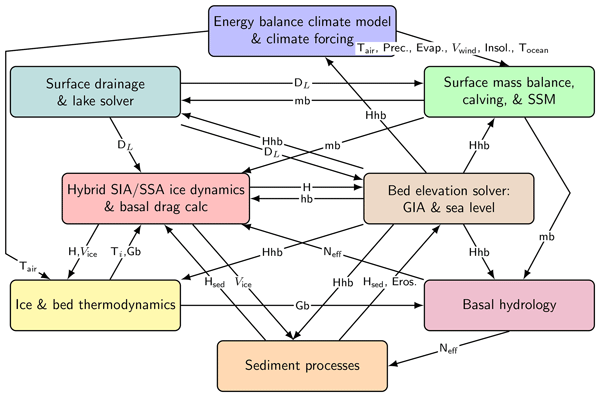
We document the glacial system model (GSM), a 3D glaciological ice sheet systems model specifically designed for large ensemble modelling in glacial cycle contexts. The model is distinguished by the breadth of relevant processes represented for this context. This ranges from meltwater surface drainage with proglacial lake formation to state-of-the-art subglacial sediment production/transport/deposition. The other key distinguishing design feature is attention to addressing process uncertainties.
Kevin Hank and Lev Tarasov
Clim. Past, 20, 2499–2524, https://doi.org/10.5194/cp-20-2499-2024, https://doi.org/10.5194/cp-20-2499-2024, 2024
Short summary
Short summary
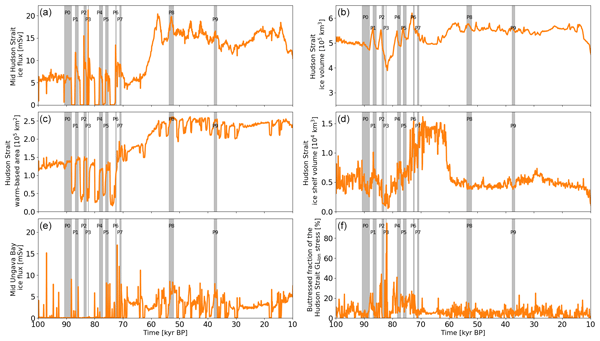
The ice-rafted debris signature of Heinrich events in marine sedimentary cores is usually attributed to massive ice discharge from the Laurentide Ice Sheet. However, the driving mechanism of this pulsed discharge remains unclear. We compare three previously proposed hypotheses and examine the role of relevant system processes. We find ice stream surge cycling is the most likely mechanism, but its character is sensitive to both the geothermal heat flux and the form of the basal drag law.
Kevin Hank, Lev Tarasov, and Elisa Mantelli
Geosci. Model Dev., 16, 5627–5652, https://doi.org/10.5194/gmd-16-5627-2023, https://doi.org/10.5194/gmd-16-5627-2023, 2023
Short summary
Short summary
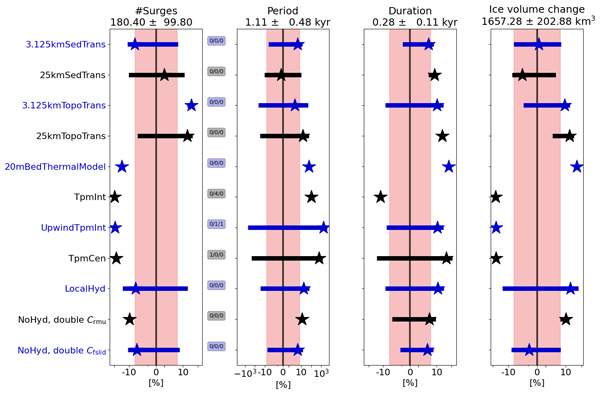
Physically meaningful modeling of geophysical system instabilities is numerically challenging, given the potential effects of purely numerical artifacts. Here we explore the sensitivity of ice stream surge activation to numerical and physical model aspects. We find that surge characteristics exhibit a resolution dependency but converge at higher horizontal grid resolutions and are significantly affected by the incorporation of bed thermal and sub-glacial hydrology models.
Tom A. Jordan, Karen J. Heywood, Anna Wåhlin, Rob A. Hall, Atsuhiro Muto, Pierre Dutrieux, Kelly Hogan, James Girton, Karen E. Alley, and Erin Pettit
Solid Earth, 17, 1187–1199, https://doi.org/10.5194/se-17-1187-2026, https://doi.org/10.5194/se-17-1187-2026, 2026
Short summary
Short summary
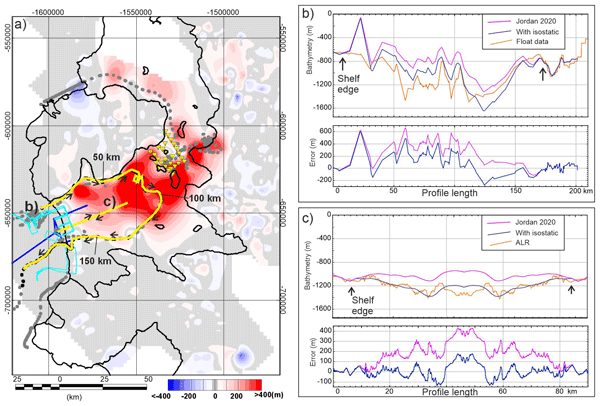
The shape of the water filled cavity hidden beneath ice shelves is extremely important, but hard to measure. Gravity data collected from aircraft can be used to predict the shape. However, in the Dotson Crosson ice shelves in West Antarctica, new direct observations from autonomous platforms sent beneath the ice, and seismic observations from the ice surface showed gravity models were systematically too shallow. We explain why and provide a solution applicable her and in other ice shelves.
Daniel H. Richards, Robert J. Arthern, and Oliver J. Marsh
EGUsphere, https://doi.org/10.5194/egusphere-2026-5569, https://doi.org/10.5194/egusphere-2026-5569, 2026
This preprint is open for discussion and under review for The Cryosphere (TC).
Short summary
Short summary
Iceberg calving is a major source of ice loss from Antarctica, yet predicting when and how this happens remains difficult. We develop a mathematical model that simulates how ice deforms over years, but also how it suddenly fractures. Our model can represent cracks on the surface and base of the ice. Our results show the rate of ice loss depends strongly on thickness. The model can reproduce different ways in which icebergs calve, allowing better predictions of future ice loss and sea-level rise.
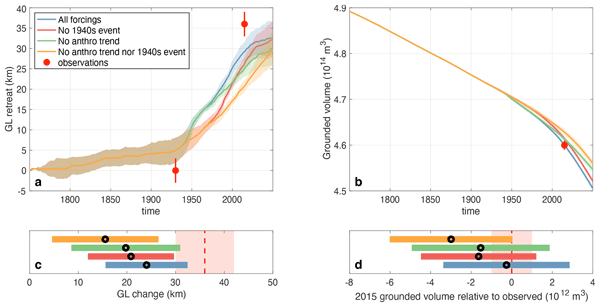
Alexander T. Bradley, David T. Bett, C. Rosie Williams, Robert J. Arthern, Paul R. Holland, James Byrne, Tamsin L. Edwards, and Mira Adhikari
The Cryosphere, 20, 3443–3465, https://doi.org/10.5194/tc-20-3443-2026, https://doi.org/10.5194/tc-20-3443-2026, 2026
Short summary
Short summary
At least since we began measuring in detail, the West Antarctic Ice Sheet has lost a lot of ice, but we don't know precisely how important climate change is in this. Here, we put a number on the role of climate change in retreat of a glacier in this ice sheet, for the first time. We show that climate change made the shrinking of this glacier much worse. Our work also suggests that what happened on very long timescales (the last 10,000 years) might also matter for retreat of the ice sheets today.
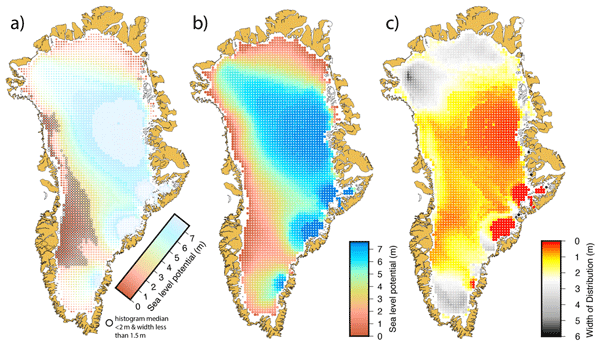
Benjamin A. Keisling, Joerg M. Schaefer, Robert M. DeConto, Jason P. Briner, Nicolás E. Young, Caleb K. Walcott-George, Gisela Winckler, Allie Balter-Kennedy, and Sridhar Anandakrishnan
The Cryosphere, 20, 2961–2976, https://doi.org/10.5194/tc-20-2961-2026, https://doi.org/10.5194/tc-20-2961-2026, 2026
Short summary
Short summary
Understanding how much the Greenland ice sheet melted in response to past warmth helps better predicting future sea-level change. Here we present a framework called sea-level potential for using numerical ice-sheet model simulations to provide constraints on how much mass the ice sheet loses before different areas become ice-free. As observations from subglacial archives become more abundant, this framework can guide future subglacial sampling efforts.
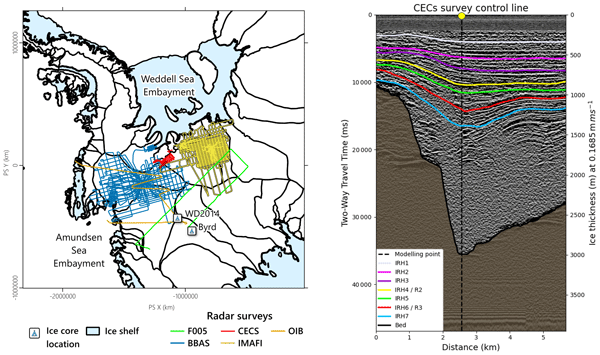
Felipe Napoleoni, Michael J. Bentley, Neil Ross, Stewart S. R. Jamieson, José A. Uribe, Jonathan Oberreuter, Rodrigo Zamora, Andrés Rivera, Andrew M. Smith, Robert G. Bingham, and Kenichi Matsuoka
The Cryosphere, 20, 2793–2824, https://doi.org/10.5194/tc-20-2793-2026, https://doi.org/10.5194/tc-20-2793-2026, 2026
Short summary
Short summary
We mapped buried layers inside West Antarctic ice across 13,000 km² near the Amundsen–Weddell divide using radar. Some layers may be up to 17 kyr old. The layers remain well preserved in slow-moving ice but become distorted where ice flows faster. Snowfall has long been greater on one side of the divide, suggesting the ice divide has remained stable for thousands of years. Our study helps connect climate records across West Antarctica and improve models used to predict future ice-sheet change.
David T. Bett, Alexander T. Bradley, Bertie W. J. Miles, C. Rosie Williams, Paul R. Holland, and Robert J. Arthern
EGUsphere, https://doi.org/10.5194/egusphere-2026-669, https://doi.org/10.5194/egusphere-2026-669, 2026
Short summary
Short summary
An ice-ocean model is used to explore the 20th-century evolution of Thwaites Glacier, Antarctica. Several processes are involved as the ice retreats to its present-day state, including ocean melting, the floatation of a historically-grounded ice island, ice crevassing and damage, and changing of ice-flow patterns. Multiple options for steady historical Thwaites Glacier configurations are found, with these options compared against 1940s aerial imagery and evidence from seabed sediments.
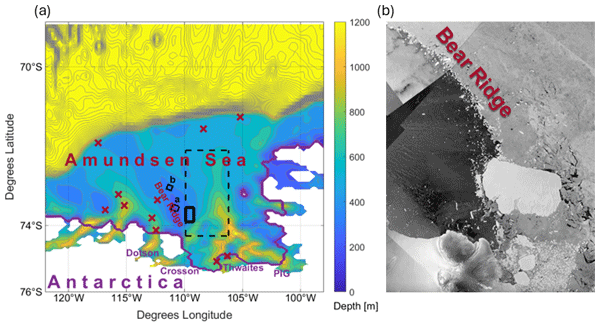
Yavor Kostov, Paul R. Holland, Kelly A. Hogan, James A. Smith, Nicolas C. Jourdain, Pierre Mathiot, Anna Olivé Abelló, Andrew H. Fleming, and Andrew J. S. Meijers
The Cryosphere, 20, 135–169, https://doi.org/10.5194/tc-20-135-2026, https://doi.org/10.5194/tc-20-135-2026, 2026
Short summary
Short summary
Icebergs ground when they reach shallow topography such as Bear Ridge in the Amundsen Sea. Grounded icebergs can block the transport of sea-ice and create areas of higher and lower sea-ice concentration. We introduce a physically and observationally motivated representation of grounding in an ocean model. In addition, we improve the way simulated icebergs respond to winds, ocean currents, and density differences in sea water. We analyse the forces acting on freely floating and grounded icebergs.
Lev Tarasov, Benoit S. Lecavalier, Kevin Hank, and David Pollard
Geosci. Model Dev., 18, 9565–9603, https://doi.org/10.5194/gmd-18-9565-2025, https://doi.org/10.5194/gmd-18-9565-2025, 2025
Short summary
Short summary
We document the glacial system model (GSM), a 3D glaciological ice sheet systems model specifically designed for large ensemble modelling in glacial cycle contexts. The model is distinguished by the breadth of relevant processes represented for this context. This ranges from meltwater surface drainage with proglacial lake formation to state-of-the-art subglacial sediment production/transport/deposition. The other key distinguishing design feature is attention to addressing process uncertainties.
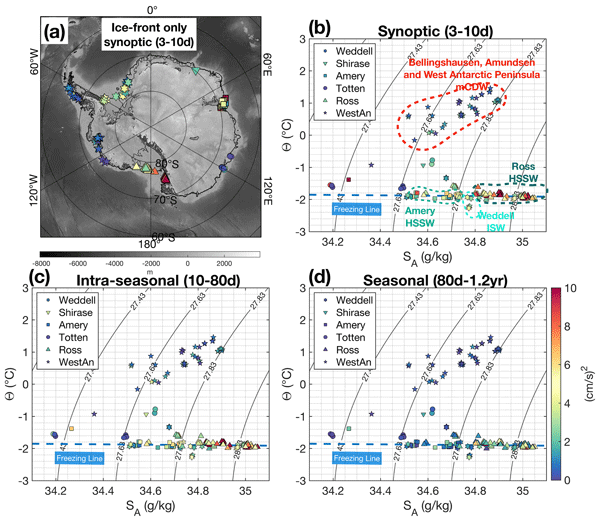
Shenjie Zhou, Pierre Dutrieux, Claudia F. Giulivi, Adrian Jenkins, Alessandro Silvano, Christopher Auckland, E. Povl Abrahamsen, Michael Meredith, Irena Vaňková, Keith Nicholls, Peter E. D. Davis, Svein Østerhus, Arnold L. Gordon, Christopher J. Zappa, Tiago S. Dotto, Ted Scambos, Kathryn L. Gunn, Stephen R. Rintoul, Shigeru Aoki, Craig Stevens, Chengyan Liu, Sukyoung Yun, Tae-Wan Kim, Won Sang Lee, Markus Janout, Tore Hattermann, Julius Lauber, Elin Darelius, Anna Wåhlin, Leo Middleton, Pasquale Castagno, Giorgio Budillon, Karen J. Heywood, Jennifer Graham, Stephen Dye, Daisuke Hirano, and Una Kim Miller
Earth Syst. Sci. Data, 17, 5693–5706, https://doi.org/10.5194/essd-17-5693-2025, https://doi.org/10.5194/essd-17-5693-2025, 2025
Short summary
Short summary
We created the first standardised dataset of in-situ ocean measurements time series from around Antarctica collected since 1970s. This includes temperature, salinity, pressure, and currents recorded by instruments deployed in icy, challenging conditions. Our analysis highlights the dominance of tidal currents and separates these from other patterns to study regional energy distribution. This unique dataset offers a foundation for future research on Antarctic ocean dynamics and ice interactions.
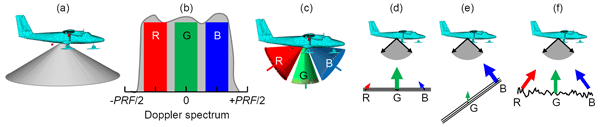
Álvaro Arenas-Pingarrón, Alex M. Brisbourne, Carlos Martín, Hugh F. J. Corr, Carl Robinson, Tom A. Jordan, and Paul V. Brennan
The Cryosphere, 19, 4657–4670, https://doi.org/10.5194/tc-19-4657-2025, https://doi.org/10.5194/tc-19-4657-2025, 2025
Short summary
Short summary
Synthetic Aperture Radar (SAR) imaging is essential for deep englacial observations. Each pixel is formed by averaging the radar echoes within an antenna beamwidth, but the echo diversity is lost after the average. We improve the SAR interpretation if three sub-images are formed with different sub-beamwidths: each is coloured in red, green, or blue, and they are overlapped, creating a coloured image. Interpreters will better identify the slopes of internal layers, crevasses, and layer roughness.
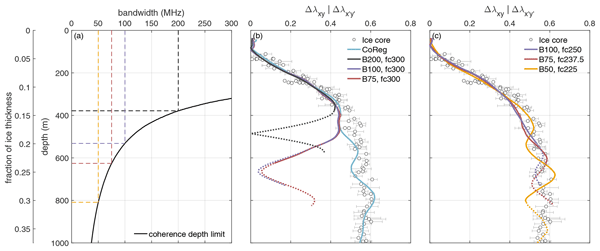
Ole Zeising, Álvaro Arenas-Pingarrón, Alex M. Brisbourne, and Carlos Martín
The Cryosphere, 19, 2355–2363, https://doi.org/10.5194/tc-19-2355-2025, https://doi.org/10.5194/tc-19-2355-2025, 2025
Short summary
Short summary
Ice crystal orientation influences how glacier ice deforms. Radar polarimetry is commonly used to study the bulk ice crystal orientation, but the often used coherence method only provides information of the shallow ice in fast-flowing areas. This study shows that reducing the bandwidth of high-bandwidth radar data significantly enhances the depth limit of the coherence method. This improvement helps us to better understand ice dynamics in fast-flowing ice streams.
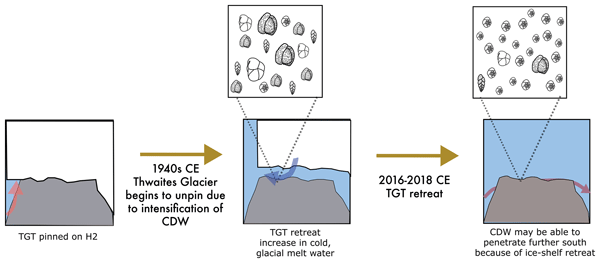
Asmara A. Lehrmann, Rebecca L. Totten, Julia S. Wellner, Claus-Dieter Hillenbrand, Svetlana Radionovskaya, R. Michael Comas, Robert D. Larter, Alastair G. C. Graham, James D. Kirkham, Kelly A. Hogan, Victoria Fitzgerald, Rachel W. Clark, Becky Hopkins, Allison P. Lepp, Elaine Mawbey, Rosemary V. Smyth, Lauren E. Miller, James A. Smith, and Frank O. Nitsche
J. Micropalaeontol., 44, 79–105, https://doi.org/10.5194/jm-44-79-2025, https://doi.org/10.5194/jm-44-79-2025, 2025
Short summary
Short summary
Thwaites Glacier's retreat is driven by warm ocean water melting its ice shelf. Seafloor-dwelling marine protists, benthic foraminifera, reflect their environment. Here, ice margins, oceanography, and sea ice cover control live foraminiferal populations. Including dead foraminifera in the analyses shows the calcareous test preservation's role in the assemblage make-up. Understanding these modern communities helps interpret past glacial retreat controls through foraminifera in sediment records.
Kevin Hank and Lev Tarasov
Clim. Past, 20, 2499–2524, https://doi.org/10.5194/cp-20-2499-2024, https://doi.org/10.5194/cp-20-2499-2024, 2024
Short summary
Short summary
The ice-rafted debris signature of Heinrich events in marine sedimentary cores is usually attributed to massive ice discharge from the Laurentide Ice Sheet. However, the driving mechanism of this pulsed discharge remains unclear. We compare three previously proposed hypotheses and examine the role of relevant system processes. We find ice stream surge cycling is the most likely mechanism, but its character is sensitive to both the geothermal heat flux and the form of the basal drag law.
Indrani Das, Jowan Barnes, James Smith, Renata Constantino, Sidney Hemming, and Laurie Padman
EGUsphere, https://doi.org/10.5194/egusphere-2024-1564, https://doi.org/10.5194/egusphere-2024-1564, 2024
Preprint archived
Short summary
Short summary
George VI Ice Shelf (GVIIS) on the Antarctic Peninsula is currently thinning and the glaciers feeding it are accelerating. Geologic evidence indicates that GVIIS had disintegrated several thousand years ago due to ocean and atmosphere warming. Here, we use remote sensing and numerical modeling to show that strain thinning reduces buttressing of grounded ice, creating a positive feedback of accelerated ice inflow to the southern GVIIS, likely making it more vulnerable than the northern sector.
David T. Bett, Alexander T. Bradley, C. Rosie Williams, Paul R. Holland, Robert J. Arthern, and Daniel N. Goldberg
The Cryosphere, 18, 2653–2675, https://doi.org/10.5194/tc-18-2653-2024, https://doi.org/10.5194/tc-18-2653-2024, 2024
Short summary
Short summary
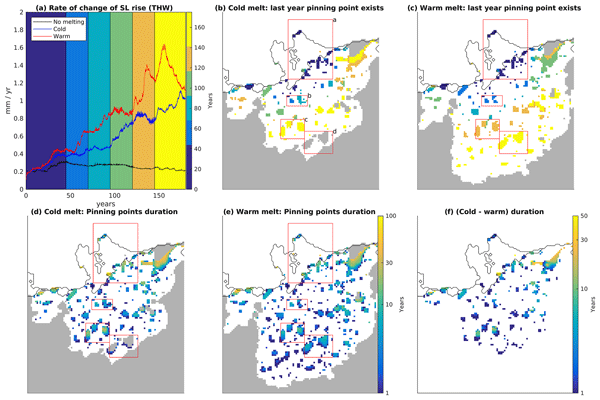
A new ice–ocean model simulates future ice sheet evolution in the Amundsen Sea sector of Antarctica. Substantial ice retreat is simulated in all scenarios, with some retreat still occurring even with no future ocean melting. The future of small "pinning points" (islands of ice that contact the seabed) is an important control on this retreat. Ocean melting is crucial in causing these features to go afloat, providing the link by which climate change may affect this sector's sea level contribution.
Allison P. Lepp, Lauren E. Miller, John B. Anderson, Matt O'Regan, Monica C. M. Winsborrow, James A. Smith, Claus-Dieter Hillenbrand, Julia S. Wellner, Lindsay O. Prothro, and Evgeny A. Podolskiy
The Cryosphere, 18, 2297–2319, https://doi.org/10.5194/tc-18-2297-2024, https://doi.org/10.5194/tc-18-2297-2024, 2024
Short summary
Short summary
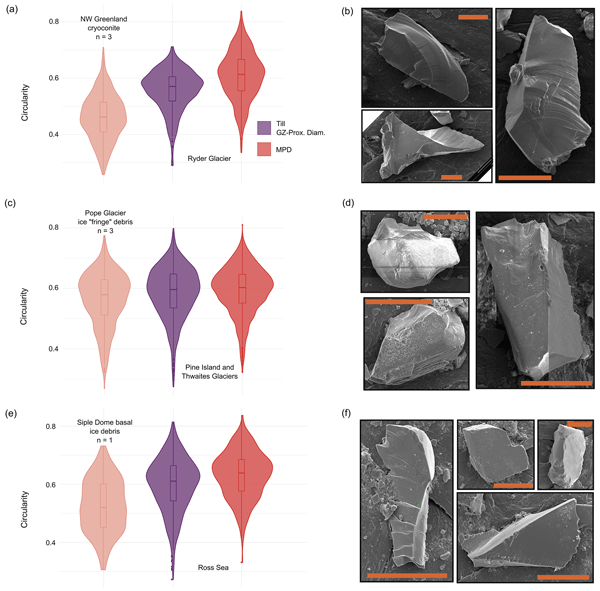
Shape and surface texture of silt-sized grains are measured to connect marine sediment records with subglacial water flow. We find that grain shape alteration is greatest in glaciers where high-energy drainage events and abundant melting of surface ice are inferred and that the surfaces of silt-sized sediments preserve evidence of glacial transport. Our results suggest grain shape and texture may reveal whether glaciers previously experienced temperate conditions with more abundant meltwater.
Thomas Samuel Hudson, Alex M. Brisbourne, Sofia-Katerina Kufner, J.-Michael Kendall, and Andy M. Smith
The Cryosphere, 17, 4979–4993, https://doi.org/10.5194/tc-17-4979-2023, https://doi.org/10.5194/tc-17-4979-2023, 2023
Short summary
Short summary
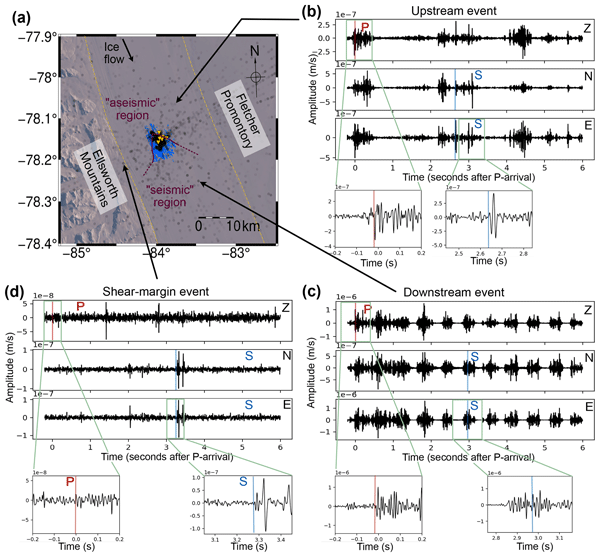
Earthquakes (or icequakes) at glaciers can shed light on fundamental glacier processes. These include glacier slip, crevassing, and imaging ice structure. To date, most studies use networks of seismometers, primarily sensitive to icequakes within the spatial extent of the network. However, arrays of seismometers allow us to detect icequakes at far greater distances. Here, we investigate the potential of such array-processing methods for studying icequakes at glaciers.
Kevin Hank, Lev Tarasov, and Elisa Mantelli
Geosci. Model Dev., 16, 5627–5652, https://doi.org/10.5194/gmd-16-5627-2023, https://doi.org/10.5194/gmd-16-5627-2023, 2023
Short summary
Short summary
Physically meaningful modeling of geophysical system instabilities is numerically challenging, given the potential effects of purely numerical artifacts. Here we explore the sensitivity of ice stream surge activation to numerical and physical model aspects. We find that surge characteristics exhibit a resolution dependency but converge at higher horizontal grid resolutions and are significantly affected by the incorporation of bed thermal and sub-glacial hydrology models.
Michael J. Bentley, James A. Smith, Stewart S. R. Jamieson, Margaret R. Lindeman, Brice R. Rea, Angelika Humbert, Timothy P. Lane, Christopher M. Darvill, Jeremy M. Lloyd, Fiamma Straneo, Veit Helm, and David H. Roberts
The Cryosphere, 17, 1821–1837, https://doi.org/10.5194/tc-17-1821-2023, https://doi.org/10.5194/tc-17-1821-2023, 2023
Short summary
Short summary
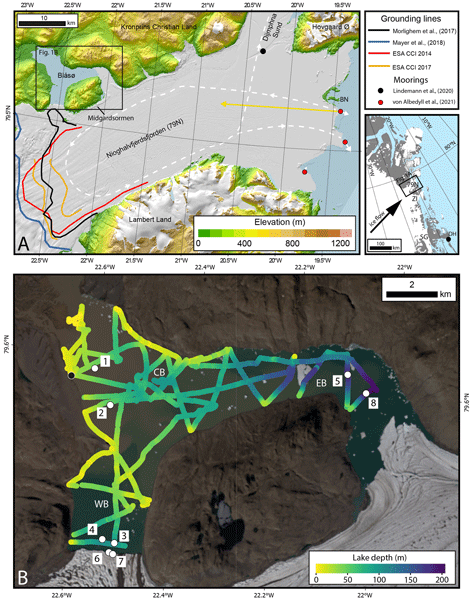
The Northeast Greenland Ice Stream is a major outlet of the Greenland Ice Sheet. Some of its outlet glaciers and ice shelves have been breaking up and retreating, with inflows of warm ocean water identified as the likely reason. Here we report direct measurements of warm ocean water in an unusual lake that is connected to the ocean beneath the ice shelf in front of the 79° N Glacier. This glacier has not yet shown much retreat, but the presence of warm water makes future retreat more likely.
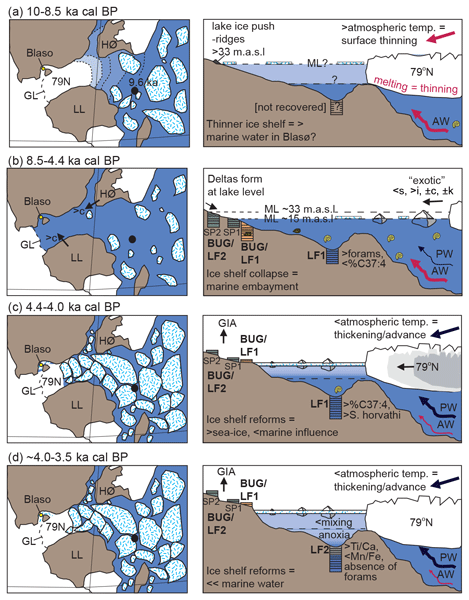
James A. Smith, Louise Callard, Michael J. Bentley, Stewart S. R. Jamieson, Maria Luisa Sánchez-Montes, Timothy P. Lane, Jeremy M. Lloyd, Erin L. McClymont, Christopher M. Darvill, Brice R. Rea, Colm O'Cofaigh, Pauline Gulliver, Werner Ehrmann, Richard S. Jones, and David H. Roberts
The Cryosphere, 17, 1247–1270, https://doi.org/10.5194/tc-17-1247-2023, https://doi.org/10.5194/tc-17-1247-2023, 2023
Short summary
Short summary
The Greenland Ice Sheet is melting at an accelerating rate. To understand the significance of these changes we reconstruct the history of one of its fringing ice shelves, known as 79° N ice shelf. We show that the ice shelf disappeared 8500 years ago, following a period of enhanced warming. An important implication of our study is that 79° N ice shelf is susceptible to collapse when atmospheric and ocean temperatures are ~2°C warmer than present, which could occur by the middle of this century.
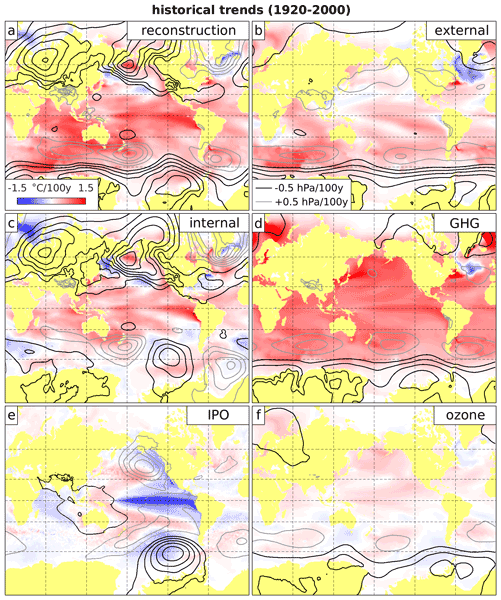
Paul R. Holland, Gemma K. O'Connor, Thomas J. Bracegirdle, Pierre Dutrieux, Kaitlin A. Naughten, Eric J. Steig, David P. Schneider, Adrian Jenkins, and James A. Smith
The Cryosphere, 16, 5085–5105, https://doi.org/10.5194/tc-16-5085-2022, https://doi.org/10.5194/tc-16-5085-2022, 2022
Short summary
Short summary
The Antarctic Ice Sheet is losing ice, causing sea-level rise. However, it is not known whether human-induced climate change has contributed to this ice loss. In this study, we use evidence from climate models and palaeoclimate measurements (e.g. ice cores) to suggest that the ice loss was triggered by natural climate variations but is now sustained by human-forced climate change. This implies that future greenhouse-gas emissions may influence sea-level rise from Antarctica.
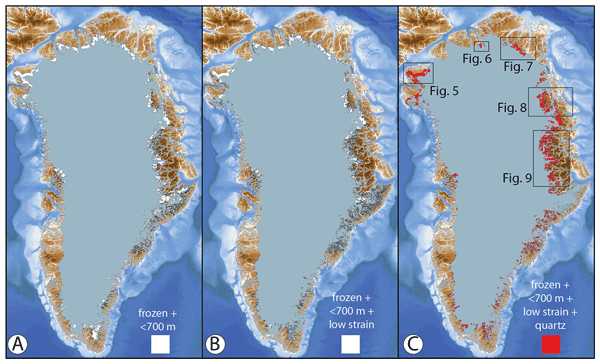
Jason P. Briner, Caleb K. Walcott, Joerg M. Schaefer, Nicolás E. Young, Joseph A. MacGregor, Kristin Poinar, Benjamin A. Keisling, Sridhar Anandakrishnan, Mary R. Albert, Tanner Kuhl, and Grant Boeckmann
The Cryosphere, 16, 3933–3948, https://doi.org/10.5194/tc-16-3933-2022, https://doi.org/10.5194/tc-16-3933-2022, 2022
Short summary
Short summary
The 7.4 m of sea level equivalent stored as Greenland ice is getting smaller every year. The uncertain trajectory of ice loss could be better understood with knowledge of the ice sheet's response to past climate change. Within the bedrock below the present-day ice sheet is an archive of past ice-sheet history. We analyze all available data from Greenland to create maps showing where on the ice sheet scientists can drill, using currently available drills, to obtain sub-ice materials.
Cited articles
Arthern, R. J. and Williams, C. R.: The sensitivity of West Antarctica to the submarine melting feedback, Geophysical Research Letters, 44, 2352–2359, https://doi.org/10.1002/2017GL072514, 2017. a
Arthern, R. J., P. Winebrenner, D., and Vaughan, D.: Antarctic Snow Accumulation Mapped Using Polarization of 4.3-cm Wavelength Microwave Emission, Journal of Geophysical Research, 111, D06108, https://doi.org/10.1029/2004JD005667, 2006. a
Atapour, H. and Mortazavi, A.: The effect of grain size and cement content on index properties of weakly solidified artificial sandstones, Journal of Geophysics and Engineering, 15, 613, https://doi.org/10.1088/1742-2140/aaa14a, 2018. a
Atre, S. R. and Bentley, C. R.: Laterally varying basal conditions beneath ice Streams B and C, West Antarctica, Journal of Glaciology, 39, 507–514, https://doi.org/10.3189/s0022143000016403, 1993. a, b, c
Barnes, J. M. and Gudmundsson, G. H.: The predictive power of ice sheet models and the regional sensitivity of ice loss to basal sliding parameterisations: a case study of Pine Island and Thwaites glaciers, West Antarctica, The Cryosphere, 16, 4291–4304, https://doi.org/10.5194/tc-16-4291-2022, 2022. a
Blankenship, D. D., Bentley, C. R., Rooney, S. T., and Alley, R. B.: Till beneath ice stream B. 1. Properties derived from seismic travel times, Journal of Geophysical Research, 92, 8903–8911, https://doi.org/10.1029/JB092iB09p08903, 1987. a, b, c
Bradley, A. T., Arthern, R. J., Bett, D. T., Williams, C. R., and Byrne, J.: WAVI.jl: Ice Sheet Modelling in Julia, Journal of Open Source Software, 9, 5584, https://doi.org/10.21105/joss.05584, 2024. a, b
Brisbourne, A. M., Smith, A. M., Vaughan, D. G., King, E. C., Davies, D., Bingham, R. G., Smith, E. C., Nias, I. J., and Rosier, S. H.: Bed conditions of Pine Island Glacier, West Antarctica, Journal of Geophysical Research: Earth Surface, 122, 419–433, https://doi.org/10.1002/2016JF004033, 2017. a, b, c, d, e, f
Brondex, J., Gillet-Chaulet, F., and Gagliardini, O.: Sensitivity of centennial mass loss projections of the Amundsen basin to the friction law, The Cryosphere, 13, 177–195, https://doi.org/10.5194/tc-13-177-2019, 2019. a, b, c, d
Buckingham, M. J.: Theory of acoustic attenuation, dispersion, and pulse propagation in unconsolidated granular materials including marine sediments, The Journal of the Acoustical Society of America, 102, 2579–2596, https://doi.org/10.1121/1.420313, 1997. a, b
Buckingham, M. J.: Wave propagation, stress relaxation, and grain-to-grain shearing in saturated, unconsolidated marine sediments, The Journal of the Acoustical Society of America, 108, 2796–2815, https://doi.org/10.1121/1.1322018, 2000. a, b
Buckingham, M. J.: Compressional and shear wave properties of marine sediments: Comparisons between theory and data, The Journal of the Acoustical Society of America, 117, 137–152, https://doi.org/10.1121/1.1810231, 2005. a, b, c, d
Buckingham, M. J.: Analysis of shear-wave attenuation in unconsolidated sands and glass beads, The Journal of the Acoustical Society of America, 136, 2478–2488, https://doi.org/10.1121/1.4896468, 2014. a
Budd, W. F., Keage, P. L., and Blundy, N. A.: Empirical Studies of Ice Sliding, Journal of Glaciology, 23, 157–170, https://doi.org/10.3189/s0022143000029804, 1979. a, b, c, d
Budd, W. F., Jenssen, D., and Smith, I. N.: A Three-Dimensional Time-Dependent Model of the West Antarctic Ice Sheet, Annals of Glaciology, 5, 29–36, https://doi.org/10.3189/1984aog5-1-29-36, 1984. a
Clark, R. W., Wellner, J. S., Hillenbrand, C.-D., Totten, R. L., Smith, J. A., Miller, L. E., Larter, R. D., Hogan, K. A., Graham, A. G. C., Nitsche, F. O., Lehrmann, A. A., Lepp, A. P., Kirkham, J. D., Fitzgerald, V. T., Garcia-Barrera, G., Ehrmann, W., and Wacker, L.: Synchronous retreat of Thwaites and Pine Island glaciers in response to external forcings in the presatellite era, Proceedings of the National Academy of Sciences, 121, e2211711 120, https://doi.org/10.1073/pnas.2211711120, 2024. a, b
Cornford, S. L., Martin, D. F., Graves, D. T., Ranken, D. F., Le Brocq, A. M., Gladstone, R. M., Payne, A. J., Ng, E. G., and Lipscomb, W. H.: Adaptive mesh, finite volume modeling of marine ice sheets, Journal of Computational Physics, 232, 529–549, https://doi.org/10.1016/j.jcp.2012.08.037, 2013. a
Cuffey, K. and Paterson., W.: The Physics of Glaciers, Butterworth-Heinemann/Elsevier, Burlington, MA, 4th edn., ISBN 9780123694614, 2010. a
Díaz-Curiel, J., Biosca, B., Arévalo-Lomas, L., Paredes-Palacios, D., and Miguel, M. J.: On the Influence of Grain Size Compared with Other Internal Factors Affecting the Permeability of Granular Porous Media: Redefining the Permeability Units, Lithosphere, 2024, lithosphere_2023_231, https://doi.org/10.2113/2024/lithosphere_2023_231, 2024. a, b
Engelhardt, H. and Kamb, B.: Basal hydraulic system of a west Antartic ice stream: constraints from borehole observations, Journal of Glaciology, 43, 207–230, https://doi.org/10.3189/s0022143000003166, 1997. a, b
Engelhardt, H., Humphrey, N., Kamb, B., and Fahnestock, M.: Physical Conditions at the Base of a Fast Moving Antarctic Ice Stream, Science, 248, 57–59, https://doi.org/10.1126/science.248.4951.57, 1990. a, b, c, d
Favier, L., Durand, G., Cornford, S. L., Gudmundsson, G. H., Gagliardini, O., Gillet-Chaulet, F., Zwinger, T., Payne, A. J., and Brocq, A. M. L.: Retreat of Pine Island Glacier controlled by marine ice-sheet instability, Nature Climate Change, 4, 117–121, https://doi.org/10.1038/nclimate2094, 2014. a
Fowler, A. C.: Instability modelling of drumlin formation incorporating lee-side cavity growth, Proceedings of the Royal Society A: Mathematical, Physical and Engineering Sciences, 465, 2681–2702, https://doi.org/10.1098/rspa.2008.0490, 2009. a
Fretwell, P., Pritchard, H. D., Vaughan, D. G., Bamber, J. L., Barrand, N. E., Bell, R., Bianchi, C., Bingham, R. G., Blankenship, D. D., Casassa, G., Catania, G., Callens, D., Conway, H., Cook, A. J., Corr, H. F. J., Damaske, D., Damm, V., Ferraccioli, F., Forsberg, R., Fujita, S., Gim, Y., Gogineni, P., Griggs, J. A., Hindmarsh, R. C. A., Holmlund, P., Holt, J. W., Jacobel, R. W., Jenkins, A., Jokat, W., Jordan, T., King, E. C., Kohler, J., Krabill, W., Riger-Kusk, M., Langley, K. A., Leitchenkov, G., Leuschen, C., Luyendyk, B. P., Matsuoka, K., Mouginot, J., Nitsche, F. O., Nogi, Y., Nost, O. A., Popov, S. V., Rignot, E., Rippin, D. M., Rivera, A., Roberts, J., Ross, N., Siegert, M. J., Smith, A. M., Steinhage, D., Studinger, M., Sun, B., Tinto, B. K., Welch, B. C., Wilson, D., Young, D. A., Xiangbin, C., and Zirizzotti, A.: Bedmap2: improved ice bed, surface and thickness datasets for Antarctica, The Cryosphere, 7, 375–393, https://doi.org/10.5194/tc-7-375-2013, 2013. a, b
Fricker, H. A., Scambos, T., Bindschadler, R., and Padman, L.: An Active Subglacial Water System in West Antarctica Mapped from Space, Science, 315, 1544–1548, https://doi.org/10.1126/science.1136897, 2007. a
Gagliardini, O., Cohen, D., Råback, P., and Zwinger, T.: Finite-element modeling of subglacial cavities and related friction law, Journal of Geophysical Research: Earth Surface, 112, https://doi.org/10.1029/2006JF000576, 2007. a, b, c, d
Gillet-Chaulet, F., Durand, G., Gagliardini, O., Mosbeux, C., Mouginot, J., Rémy, F., and Ritz, C.: Assimilation of surface velocities acquired between 1996 and 2010 to constrain the form of the basal friction law under Pine Island Glacier, Geophysical Research Letters, 43, 10,311–10,321, https://doi.org/10.1002/2016GL069937, 2016. a, b, c
Gladstone, R. M., Warner, R. C., Galton-Fenzi, B. K., Gagliardini, O., Zwinger, T., and Greve, R.: Marine ice sheet model performance depends on basal sliding physics and sub-shelf melting, The Cryosphere, 11, 319–329, https://doi.org/10.5194/tc-11-319-2017, 2017. a
Graham, A. G., Wåhlin, A., Hogan, K. A., Nitsche, F. O., Heywood, K. J., Totten, R. L., Smith, J. A., Hillenbrand, C. D., Simkins, L. M., Anderson, J. B., Wellner, J. S., and Larter, R. D.: Rapid retreat of Thwaites Glacier in the pre-satellite era, Nature Geoscience, 15, 706–713, https://doi.org/10.1038/s41561-022-01019-9, 2022. a
Granick, S.: Soft matter in a tight spot, Physics Today, 52, 26–31, https://doi.org/10.1063/1.882747, 1999. a
Gray, L., Joughin, I., Tulaczyk, S., Spikes, V. B., Bindschadler, R., and Jezek, K.: Evidence for subglacial water transport in the West Antarctic Ice Sheet through three-dimensional satellite radar interferometry, Geophysical Research Letters, 32, 1–4, https://doi.org/10.1029/2004GL021387, 2005. a
Gudmundsson, G. H., Paolo, F. S., Adusumilli, S., and Fricker, H. A.: Instantaneous Antarctic ice sheet mass loss driven by thinning ice shelves, Geophysical Research Letters, 46, 13903–13909, https://doi.org/10.1029/2019GL085027, 2019. a
Gupta, A. and Ramanathan, A. L.: Grain texture as a proxy to understand porosity, permeability and density in Chandra Basin, India, SN Applied Sciences, 1, 1, https://doi.org/10.1007/s42452-018-0001-3, 2018. a
Hank, K.: Code used in “Inferring the ice sheet sliding law from seismic observations: A Pine Island Glacier case study”, v1.0, Zenodo [code], https://doi.org/10.5281/zenodo.17549775, 2025. a
Hank, K., Arthern, R., and Williams, C.: Acoustic impedance misfits and basal sliding law probabilities for Pine Island Glacier, Version 1.0, NERC EDS UK Polar Data Centre [data set], https://doi.org/10.5285/c560ce43-7aa0-4474-90ed-d4ee5f5768ea, 2025. a
Hank, K. and Tarasov, L.: The comparative role of physical system processes in Hudson Strait ice stream cycling: a comprehensive model-based test of Heinrich event hypotheses, Clim. Past, 20, 2499–2524, https://doi.org/10.5194/cp-20-2499-2024, 2024. a
Hansen, D. D., Warburton, K. L. P., Zoet, L. K., Meyer, C. R., Rempel, A. W., and Stubblefield, A. G.: Presence of Frozen Fringe Impacts Soft-Bedded Slip Relationship, Geophysical Research Letters, 51, e2023GL107681, https://doi.org/10.1029/2023GL107681, 2024. a
Hoffman, M. J., Perego, M., Price, S. F., Lipscomb, W. H., Zhang, T., Jacobsen, D., Tezaur, I., Salinger, A. G., Tuminaro, R., and Bertagna, L.: MPAS-Albany Land Ice (MALI): a variable-resolution ice sheet model for Earth system modeling using Voronoi grids, Geosci. Model Dev., 11, 3747–3780, https://doi.org/10.5194/gmd-11-3747-2018, 2018. a
Iken, A.: The Effect of the Subglacial Water Pressure on the Sliding Velocity of a Glacier in an Idealized Numerical Model, Journal of Glaciology, 27, 407–421, https://doi.org/10.3189/s0022143000011448, 1981. a, b, c, d
IPCC Core Writing Team, Lee, H. and Romero, J. (Eds.): IPCC 2023: Summary for Policymakers, in: Climate Change 2023: Synthesis Report. Contribution of Working Groups I, II and III to the Sixth Assessment Report of the Intergovernmental Panel on Climate Change, IPCC, Geneva, Switzerland, https://doi.org/10.59327/IPCC/AR6-9789291691647.001, 2023. a
Israelachvili, J. N.: Measurements of the viscosity of thin fluid films between two surfaces with and without adsorbed polymers, Colloid & Polymer Sci, 264, 1060–1065, https://doi.org/10.1007/BF01410323, 1986. a, b
Iverson, N. R.: Shear resistance and continuity of subglacial till: Hydrology rules, Journal of Glaciology, 56, 1104–1114, https://doi.org/10.3189/002214311796406220, 2010. a
Iverson, N. R., Hoover, T. S., and Baker, R. W.: Ring-shear studies of till deformation: Coulomb-plastic behavior and distributed strain in glacier beds, Journal of Glaciology, 44, 634–642, https://doi.org/10.1017/S0022143000002136, 1998. a, b, c
Joughin, I., Smith, B. E., and Schoof, C. G.: Regularized Coulomb Friction Laws for Ice Sheet Sliding: Application to Pine Island Glacier, Antarctica, Geophysical Research Letters, 46, 4764–4771, https://doi.org/10.1029/2019GL082526, 2019. a, b, c
Kirshner, A. E., Anderson, J. B., Jakobsson, M., O'Regan, M., Majewski, W., and Nitsche, F. O.: Post-LGM deglaciation in Pine Island Bay, West Antarctica, Quaternary Science Reviews, 38, 11–26, https://doi.org/10.1016/j.quascirev.2012.01.017, 2012. a, b
Kyrke-Smith, T. M., Gudmundsson, G. H., and Farrell, P. E.: Can Seismic Observations of Bed Conditions on Ice Streams Help Constrain Parameters in Ice Flow Models?, Journal of Geophysical Research: Earth Surface, 122, 2269–2282, https://doi.org/10.1002/2017JF004373, 2017. a, b, c
Larour, E., Schiermeier, J., Rignot, E., Seroussi, H., Morlighem, M., and Paden, J.: Sensitivity Analysis of Pine Island Glacier ice flow using ISSM and DAKOTA, Journal of Geophysical Research: Earth Surface, 117, https://doi.org/10.1029/2011JF002146, 2012. a
Lee, K. M., Ballard, M. S., McNeese, A. R., Muir, T. G., Wilson, P. S., Costley, R. D., and Hathaway, K. K.: In situ measurements of sediment acoustic properties in Currituck Sound and comparison to models, The Journal of the Acoustical Society of America, 140, 3593–3606, https://doi.org/10.1121/1.4966118, 2016. a
Luengo, G., Israelachvili, J., and Granick, S.: Generalized effects in confined fluids: new friction map for boundary lubrication, Wear, 200, 328–335, https://doi.org/10.1016/S0043-1648(96)07248-1, 1996. a, b
Lüthi, M., Funk, M., Iken, A., Gogineni, S., and Truffer, M.: Mechanisms of fast flow in Jakobshavn Isbræ, West Greenland: Part III. Measurements of ice deformation, temperature and cross-borehole conductivity in boreholes to the bedrock, Journal of Glaciology, 48, 369–385, https://doi.org/10.3189/172756502781831322, 2002. a, b
Mouginot, J., Scheuchl, B., and Rignot., E.: MEaSUREs Annual Antarctic Ice Velocity Maps 2005–2017, Version 1, NASA National Snow and Ice Data Center Distributed Active Archive Center [data set], https://doi.org/10.5067/9T4EPQXTJYW9, 2022. a
Muto, A., Peters, L. E., Gohl, K., Sasgen, I., Alley, R. B., Anandakrishnan, S., and Riverman, K. L.: Subglacial bathymetry and sediment distribution beneath Pine Island Glacier ice shelf modeled using aerogravity and in situ geophysical data: New results, Earth and Planetary Science Letters, 433, 63–75, https://doi.org/10.1016/j.epsl.2015.10.037, 2016. a
Nias, I. J., Cornford, S. L., and Payne, A. J.: New Mass-Conserving Bedrock Topography for Pine Island Glacier Impacts Simulated Decadal Rates of Mass Loss, Geophysical Research Letters, 45, 3173–3181, https://doi.org/10.1002/2017GL076493, 2018. a
Ranganathan, M., Minchew, B., Meyer, C. R., and Gudmundsson, G. H.: A new approach to inferring basal drag and ice rheology in ice streams, with applications to West Antarctic Ice Streams, Journal of Glaciology, 67, 229–242, https://doi.org/10.1017/jog.2020.95, 2021. a
Richardson, M., Briggs, K., Bibee, L., Jumars, P., Sawyer, W., Albert, D., Bennett, R., Berger, T., Buckingham, M., Chotiros, N., Dahl, P., Dewitt, N., Fleischer, P., Flood, R., Greenlaw, C., Holliday, D., Hulbert, M., Hutnak, M., Jackson, P., Jaffe, J., Johnson, H., Lavoie, D., Lyons, A., Martens, C., McGehee, D., Moore, K., Orsi, T., Piper, J., Ray, R., Reed, A., Self, R., Schmidt, J., Schock, S., Simonet, F., Stoll, R., Tang, D., Thistle, D., Thorsos, E., Walter, D., and Wheatcroft, R.: Overview of SAX99: environmental considerations, IEEE Journal of Oceanic Engineering, 26, 26–53, https://doi.org/10.1109/48.917921, 2001. a
Ritz, C., Edwards, T. L., Durand, G., Payne, A. J., Peyaud, V., and Hindmarsh, R. C.: Potential sea-level rise from Antarctic ice-sheet instability constrained by observations, Nature, 528, 115–118, https://doi.org/10.1038/nature16147, 2015. a, b, c
Savage, W., Morrissey, M., and Baum, R.: Geotechnical properties for landslide-prone Seattle area glacial deposits, Open-File Report, https://doi.org/10.3133/ofr00228, 2000. a
Schoof, C.: Cavitation on Deformable Glacier Beds, SIAM Journal on Applied Mathematics, 67, 1633–1653, https://doi.org/10.1137/050646470, 2007a. a
Schoof, C.: Pressure-dependent viscosity and interfacial instability in coupled ice–sediment flow, Journal of Fluid Mechanics, 570, 227–252, https://doi.org/10.1017/S0022112006002874, 2007b. a
Schoof, C., Hewitt, I. J., and Werder, M. A.: Flotation and free surface flow in a model for subglacial drainage. Part 1. Distributed drainage, Journal of Fluid Mechanics, 702, 126–156, https://doi.org/10.1017/jfm.2012.165, 2012. a
Smith, A. M., Jordan, T. A., Ferraccioli, F., and Bingham, R. G.: Influence of subglacial conditions on ice stream dynamics: Seismic and potential field data from Pine Island Glacier, West Antarctica, Journal of Geophysical Research: Solid Earth, 118, 1471–1482, https://doi.org/10.1029/2012JB009582, 2013. a
Smith, A. M., Anker, P. G. D., Nicholls, K. W., Makinson, K., Murray, T., Rios-Costas, S., Brisbourne, A. M., Hodgson, D. A., Schlegel, R., and Anandakrishnan, S.: Ice stream subglacial access for ice-sheet history and fast ice flow: the BEAMISH Project on Rutford Ice Stream, West Antarctica and initial results on basal conditions, Annals of Glaciology, 62, 203–211, https://doi.org/10.1017/aog.2020.82, 2021. a, b
Smith, B., Fricker, H. A., Gardner, A. S., Medley, B., Nilsson, J., Paolo, F. S., Holschuh, N., Adusumilli, S., Brunt, K., Csatho, B., Harbeck, K., Markus, T., Neumann, T., Siegfried, M. R., and Zwally, H. J.: Pervasive ice sheet mass loss reflects competing ocean and atmosphere processes, Science, 368, 1239–1242, https://doi.org/10.1126/science.aaz5845, 2020. a
Smith, B. E., Fricker, H. A., Joughin, I. R., and Tulaczyk, S.: An inventory of active subglacial lakes in Antarctica detected by ICESat (2003–2008, Journal of Glaciology, 55, 573–595, https://doi.org/10.3189/002214309789470879, 2009. a
Smith, J. A., Hillenbrand, C.-D., Kuhn, G., Larter, R. D., Graham, A. G., Ehrmann, W., Moreton, S. G., and Forwick, M.: Deglacial history of the West Antarctic Ice Sheet in the western Amundsen Sea Embayment, Quaternary Science Reviews, 30, 488–505, https://doi.org/10.1016/j.quascirev.2010.11.020, 2011. a, b, c
Smith, J. A., Hillenbrand, C. D., Kuhn, G., Klages, J. P., Graham, A. G., Larter, R. D., Ehrmann, W., Moreton, S. G., Wiers, S., and Frederichs, T.: New constraints on the timing of West Antarctic Ice Sheet retreat in the eastern Amundsen Sea since the Last Glacial Maximum, Global and Planetary Change, 122, 224–237, https://doi.org/10.1016/j.gloplacha.2014.07.015, 2014. a, b, c
Smith, J. A., Andersen, T. J., Shortt, M., Gaffney, A. M., Truffer, M., Stanton, T. P., Bindschadler, R., Dutrieux, P., Jenkins, A., Hillenbrand, C. D., Ehrmann, W., Corr, H. F., Farley, N., Crowhurst, S., and Vaughan, D. G.: Sub-ice-shelf sediments record history of twentieth-century retreat of Pine Island Glacier, Nature, 541, 77–80, https://doi.org/10.1038/nature20136, 2017. a, b, c
Stone, D. B. and Clarke, G. K.: Estimation of subglacial hydraulic properties from induced changes in basal water pressure: a theoretical framework for borehole-response tests, Journal of Glaciology, 39, 327–340, https://doi.org/10.3189/s0022143000015999, 1993. a, b
Tsai, V. C., Stewart, A. L., and Thompson, A. F.: Marine ice-sheet profiles and stability under Coulomb basal conditions, Journal of Glaciology, 61, 205–215, https://doi.org/10.3189/2015JoG14J221, 2015. a, b, c
Tulaczyk, S., Kamb, W. B., and Engelhardt, H. F.: Basal mechanics of Ice Stream B, West Antarctica 1. Till mechanics, Journal of Geophysical Research: Solid Earth, 105, 463–481, https://doi.org/10.1029/1999jb900329, 2000. a, b, c, d
Wåhlin, A., Stedt, F., Wahlgren, S., Yuan, X., Billman, M., and Lee, W. S.: Raw data from Ran AUV missions ANA14B_01, ANA14B_02 and ANA14B_03 performed during the ANA14B RVIB Araon expedition to the Amundsen Sea, University of Gothenburg [data set], https://doi.org/10.5878/ns3m-fs31, 2026. a, b
Wang, J.-P., François, B., and Lambert, P.: Equations for hydraulic conductivity estimation from particle size distribution: A dimensional analysis, Water Resources Research, 53, 8127–8134, https://doi.org/10.1002/2017WR020888, 2017. a
Weertman, J.: On the Sliding of Glaciers, Journal of Glaciology, 3, 33–38, https://doi.org/10.3189/s0022143000024709, 1957. a, b, c, d
Yamada, S.: Layering transitions and tribology of molecularly thin films of poly(dimethylsiloxane), Langmuir, 19, 7399–7405, https://doi.org/10.1021/la034511l, 2003. a
Editorial statement
This study uses a novel approach to extract information on the subglacial system, one of the least observed regions on our planet. The central idea is to combine satellite-derived information on ice-flow velocities with numerical models of subglacial conditions, and then test the results against seismic observations. In this way, the study introduces a direct, testable link between model predictions of effective pressure and independent constraints derived from seismic acoustic impedance data. This conceptually significant step forward advances our ability to constrain basal conditions of ice streams.
This study uses a novel approach to extract information on the subglacial system, one of the...
Short summary
The slipperiness at the ice base is a key uncertainty in sea level rise projections. Alternative formulations of the sliding law exist, but limited access to the ice base makes it difficult to validate them. We introduce a new approach using observations and model output to infer a basal sliding law. For Pine Island Glacier, currently the largest single contributor to sea level rise in Antarctica, the results provide support for a Coulomb-type sliding law and widespread low effective pressures.
The slipperiness at the ice base is a key uncertainty in sea level rise projections. Alternative...


