
Articles | Volume 20, issue 9
https://doi.org/10.5194/tc-20-4877-2026
© Author(s) 2026. This work is distributed under
the Creative Commons Attribution 4.0 License.
the Creative Commons Attribution 4.0 License.
https://doi.org/10.5194/tc-20-4877-2026
© Author(s) 2026. This work is distributed under
the Creative Commons Attribution 4.0 License.
the Creative Commons Attribution 4.0 License.
Research article
| 
01 Sep 2026
Research article |
| 01 Sep 2026
| 01 Sep 2026
The missing drifts: snow density heterogeneity from wind-packing exacerbates systematic underestimation of deep snow storage from the scale of nivation hollows to mountain ranges
Elijah N. Boardman
CORRESPONDING AUTHOR
Mountain Hydrology LLC, Reno, NV, 89503, USA
Karen L. Boardman
independent researcher: Dubois, WY, 82513, USA
Christopher A. Jones
Department of Natural Resources and Environmental Science, University of Nevada, Reno, Reno, NV, 89557, USA
Sean D. Shipman
Department of Natural Resources and Environmental Science, University of Nevada, Reno, Reno, NV, 89557, USA
John A. Whiting
Department of Natural Resources and Environmental Science, University of Nevada, Reno, Reno, NV, 89557, USA
Graduate Program of Hydrological Sciences, University of Nevada, Reno, Reno, NV, 89557, USA
Joseph W. Boardman
Analytical Imaging and Geophysics LLC, Boulder, CO, 80305, USA
Airborne Snow Observatories, Inc., Boulder, CO, 80305, USA
Adrian A. Harpold
Department of Natural Resources and Environmental Science, University of Nevada, Reno, Reno, NV, 89557, USA
Related authors
Elijah N. Boardman, Mark S. Wigmosta, Nicole M. Fernandez, John A. Whiting, and Adrian A. Harpold
Hydrol. Earth Syst. Sci., 30, 5145–5171, https://doi.org/10.5194/hess-30-5145-2026, https://doi.org/10.5194/hess-30-5145-2026, 2026
Short summary
Short summary
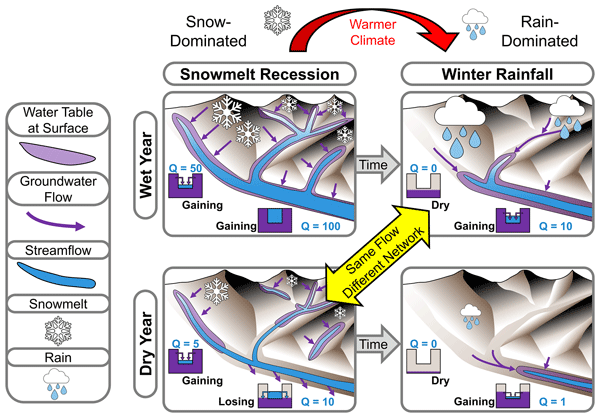
Distributed simulations and geochemical data indicate that groundwater hysteresis dampens the elasticity of flowing stream networks. This effect is expected to become more important as intense rainfall events replace gradual snowmelt in a warmer climate.
Elijah N. Boardman, Gabrielle F. S. Boisramé, Mark S. Wigmosta, Robert K. Shriver, and Adrian A. Harpold
Hydrol. Earth Syst. Sci., 29, 6333–6352, https://doi.org/10.5194/hess-29-6333-2025, https://doi.org/10.5194/hess-29-6333-2025, 2025
Short summary
Short summary
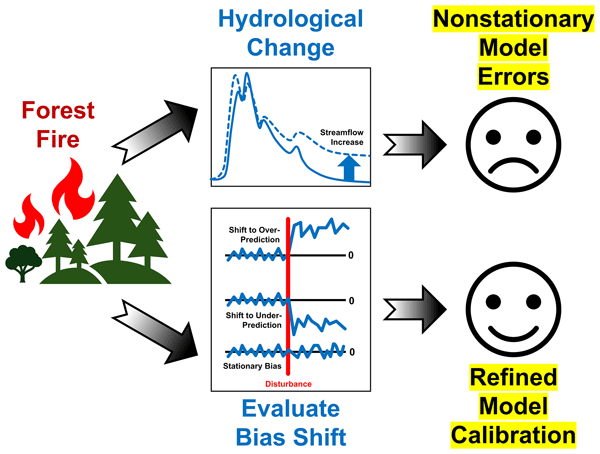
Environmental changes can cause hydrological model biases that vary over time (nonstationarity). We demonstrate a new calibration framework to detect and correct nonstationary streamflow biases after a large wildfire, which reduces predictive uncertainty and constrains parameter equifinality.
Elijah N. Boardman, Andrew G. Fountain, Joseph W. Boardman, Thomas H. Painter, Evan W. Burgess, Laura Wilson, and Adrian A. Harpold
The Cryosphere, 19, 3193–3225, https://doi.org/10.5194/tc-19-3193-2025, https://doi.org/10.5194/tc-19-3193-2025, 2025
Short summary
Short summary
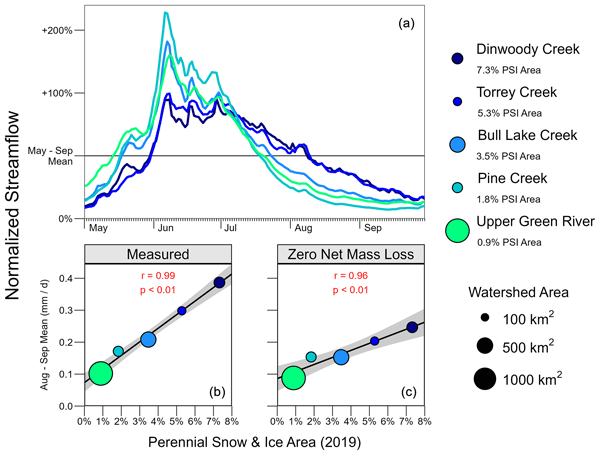
Watersheds on the downwind side of a mountain range have deeper seasonal snow and more abundant glaciers due to topographic controls that favor wind drifting. Despite receiving less total snow, these drift-prone watersheds produce relatively more late-summer streamflow due to a combination of slow-melting snow drifts and mass loss from glaciers (and other perennial snow/ice features).
Elijah N. Boardman, Mark S. Wigmosta, Nicole M. Fernandez, John A. Whiting, and Adrian A. Harpold
Hydrol. Earth Syst. Sci., 30, 5145–5171, https://doi.org/10.5194/hess-30-5145-2026, https://doi.org/10.5194/hess-30-5145-2026, 2026
Short summary
Short summary
Distributed simulations and geochemical data indicate that groundwater hysteresis dampens the elasticity of flowing stream networks. This effect is expected to become more important as intense rainfall events replace gradual snowmelt in a warmer climate.
Elias C. Massoud, Nathan Collier, Yaoping Wang, Jiafu Mao, Adrian Harpold, Steven A. Kannenberg, Gerbrand Koren, Mukesh Kumar, Pushpendra Raghav, Pallav Ray, Mingjie Shi, Jing Tao, Sreedevi P. Vasu, Huiqi Wang, Qing Zhu, and Forrest M. Hoffman
Geosci. Model Dev., 19, 3427–3453, https://doi.org/10.5194/gmd-19-3427-2026, https://doi.org/10.5194/gmd-19-3427-2026, 2026
Short summary
Short summary
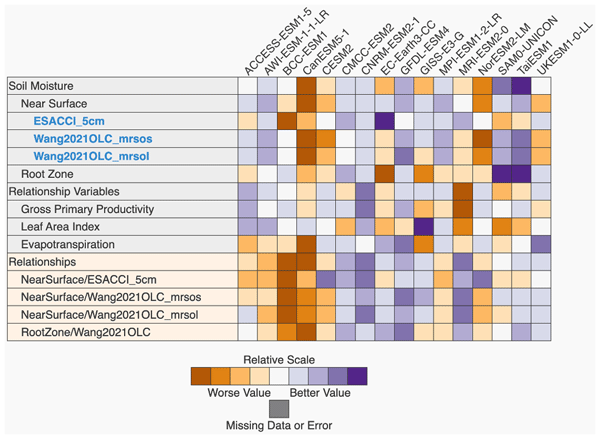
Soil moisture helps control how plants grow and how land exchanges water and energy with the atmosphere. We evaluated how well 16 Earth System Models represent soil moisture and its links to plant activity using a benchmarking system and observational data. Many models simulate surface soil moisture well but show larger errors deeper in the soil and in colder regions. Models that represent plant–soil water interactions more directly better capture how ecosystems respond to water availability.
Esteban Alonso-González, Adrian Harpold, Jessica D. Lundquist, Cara Piske, Laura Sourp, Kristoffer Aalstad, and Simon Gascoin
The Cryosphere, 20, 209–225, https://doi.org/10.5194/tc-20-209-2026, https://doi.org/10.5194/tc-20-209-2026, 2026
Short summary
Short summary
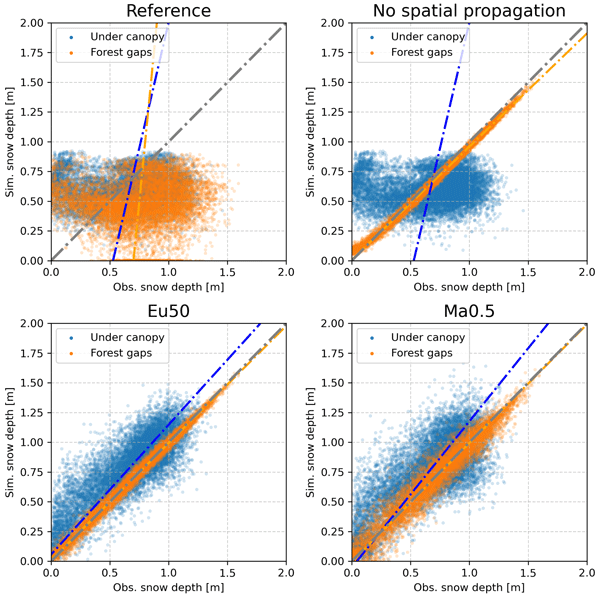
Simulating the snowpack is challenging, as there are several sources of uncertainty due to e.g. the meteorological forcing. Using data assimilation techniques, it is possible to improve the simulations by fusing models and snow observations. However in forests, observations are difficult to obtain, because they cannot be retrieved through the canopy. Here, we explore the possibility of propagating the information obtained in forest clearings to areas covered by the canopy.
Elijah N. Boardman, Gabrielle F. S. Boisramé, Mark S. Wigmosta, Robert K. Shriver, and Adrian A. Harpold
Hydrol. Earth Syst. Sci., 29, 6333–6352, https://doi.org/10.5194/hess-29-6333-2025, https://doi.org/10.5194/hess-29-6333-2025, 2025
Short summary
Short summary
Environmental changes can cause hydrological model biases that vary over time (nonstationarity). We demonstrate a new calibration framework to detect and correct nonstationary streamflow biases after a large wildfire, which reduces predictive uncertainty and constrains parameter equifinality.
Elijah N. Boardman, Andrew G. Fountain, Joseph W. Boardman, Thomas H. Painter, Evan W. Burgess, Laura Wilson, and Adrian A. Harpold
The Cryosphere, 19, 3193–3225, https://doi.org/10.5194/tc-19-3193-2025, https://doi.org/10.5194/tc-19-3193-2025, 2025
Short summary
Short summary
Watersheds on the downwind side of a mountain range have deeper seasonal snow and more abundant glaciers due to topographic controls that favor wind drifting. Despite receiving less total snow, these drift-prone watersheds produce relatively more late-summer streamflow due to a combination of slow-melting snow drifts and mass loss from glaciers (and other perennial snow/ice features).
Gary Sterle, Julia Perdrial, Dustin W. Kincaid, Kristen L. Underwood, Donna M. Rizzo, Ijaz Ul Haq, Li Li, Byung Suk Lee, Thomas Adler, Hang Wen, Helena Middleton, and Adrian A. Harpold
Hydrol. Earth Syst. Sci., 28, 611–630, https://doi.org/10.5194/hess-28-611-2024, https://doi.org/10.5194/hess-28-611-2024, 2024
Short summary
Short summary
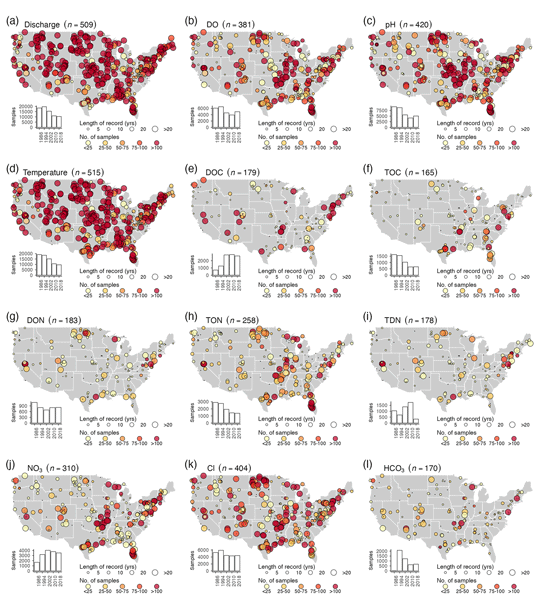
We develop stream water chemistry to pair with the existing CAMELS (Catchment Attributes and Meteorology for Large-sample Studies) dataset. The newly developed dataset, termed CAMELS-Chem, includes common stream water chemistry constituents and wet deposition chemistry in 516 catchments. Examples show the value of CAMELS-Chem to trend and spatial analyses, as well as its limitations in sampling length and consistency.
Sebastian A. Krogh, Lucia Scaff, James W. Kirchner, Beatrice Gordon, Gary Sterle, and Adrian Harpold
Hydrol. Earth Syst. Sci., 26, 3393–3417, https://doi.org/10.5194/hess-26-3393-2022, https://doi.org/10.5194/hess-26-3393-2022, 2022
Short summary
Short summary
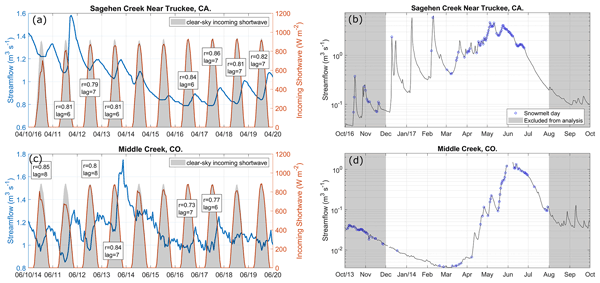
We present a new way to detect snowmelt using daily cycles in streamflow driven by solar radiation. Results show that warmer sites have earlier and more intermittent snowmelt than colder sites, and the timing of early snowmelt events is strongly correlated with the timing of streamflow volume. A space-for-time substitution shows greater sensitivity of streamflow timing to climate change in colder rather than in warmer places, which is then contrasted with land surface simulations.
Cited articles
Abatzoglou, J. T.: Development of gridded surface meteorological data for ecological applications and modelling, Int. J. Climatol., 33, 121–131, https://doi.org/10.1002/joc.3413, 2013.
Abolafia-Rosenzweig, R., He, C., and Chen, F.: Winter and spring climate explains a large portion of interannual variability and trend in western U.S. summer fire burned area, Environ. Res. Lett., 17, 054030, https://doi.org/10.1088/1748-9326/ac6886, 2022.
Akitaya, E.: Studies on Depth Hoar, Contributions from the Institute of Low Temperature Science, A26, 1–67, https://eprints.lib.hokudai.ac.jp/dspace/bitstream/2115/20238/1/A26_p1-67.pdf (last access: 28 August 2026), 1974.
Alley, R. B., Bolzan, J. F., and Whillans, I. M.: Polar Firn Densification and Grain Growth, Ann. Glaciol., 3, 7–11, https://doi.org/10.3189/S0260305500002433, 1982.
Alt, M., Puseman, K., Lee, C. M., Pederson, G. T., McConnell, J. R., Chellman, N. J., and McWethy, D. B.: Organic layers preserved in ice patches: A new record of Holocene environmental change on the Beartooth Plateau, USA, The Holocene, 34, 338–352, https://doi.org/10.1177/09596836231211877, 2024.
Anderson, D. L. and Benson, C. S.: The densification and diagenesis of snow, in: Ice and Snow: Properties, Processes and Applications, edited by: Kingery, W. D., MIT Press, 391–411, https://authors.library.caltech.edu/records/jm9c7-3d977/files/Anderson_1963p391.pdf?download=1 (last access: 19 August 2026), 1963.
Arnaud, L., Lipenkov, V., Barnola, J. M., Gay, M., and Duval, P.: Modelling of the densification of polar firn: characterization of the snow–firn transition, Ann. Glaciol., 26, 39–44, https://doi.org/10.3189/1998AoG26-1-39-44, 1998.
Avanzi, F., De Michele, C., and Ghezzi, A.: On the performances of empirical regressions for the estimation of bulk snow density, Geogr. Fis. Din. Quat., 38, 105–112, https://doi.org/10.4461/GFDQ.2015.38.10, 2015.
Bales, R. C., Molotch, N. P., Painter, T. H., Dettinger, M. D., Rice, R., and Dozier, J.: Mountain hydrology of the western United States, Water Resour. Res., 42, https://doi.org/10.1029/2005WR004387, 2006.
Barrett, A. P.: National Operational Hydrologic Remote Sensing Center SNOw Data Assimilation System (SNODAS) Products at NSIDC, NSIDC [data set], https://doi.org/10.7265/N5TB14TC, 2003.
Benson, C. S. and Sturm, M.: Structure and wind transport of seasonal snow on the Arctic slope of Alaska, Ann. Glaciol., 18, 261–267, https://doi.org/10.3189/S0260305500011629, 1993.
Berg, N. H.: A Deterministic Model for Snowdrift Accumulation, in: 1986 International Snow Science Workshop, Lake Tahoe, California, USA, International Snow Science Workshop, https://arc.lib.montana.edu/snow-science/item/570 (last access: 19 August 2026), 1986.
Boardman, E.: Data and Code for Wind River Range Snow Density Heterogeneity Study, Mountain Hydrology LLC, Zenodo [data set and code], https://doi.org/10.5281/zenodo.17114675, 2025a.
Boardman, E. N.: Constraining Kilometer-Scale Mountain Snow Transport and Snowshed Areas, Geophys. Res. Lett., 52, https://doi.org/10.1029/2024GL113599, 2025b.
Boardman, E. N., Fountain, A. G., Boardman, J. W., Painter, T. H., Burgess, E. W., Wilson, L., and Harpold, A. A.: Wind and topography underlie correlation between seasonal snowpack, mountain glaciers, and late-summer streamflow, The Cryosphere, 19, 3193–3225, https://doi.org/10.5194/tc-19-3193-2025, 2025.
Bonner, H. M., Raleigh, M. S., and Small, E. E.: Isolating forest process effects on modelled snowpack density and snow water equivalent, Hydrol. Process., 36, https://doi.org/10.1002/hyp.14475, 2022.
Bormann, K. J., Westra, S., Evans, J. P., and McCabe, M. F.: Spatial and temporal variability in seasonal snow density, J. Hydrol., 484, 63–73, https://doi.org/10.1016/j.jhydrol.2013.01.032, 2013.
Brauchli, T., Trujillo, E., Huwald, H., and Lehning, M.: Influence of Slope-Scale Snowmelt on Catchment Response Simulated With the Alpine3D Model, Water Resour. Res., 53, 10723–10739, https://doi.org/10.1002/2017WR021278, 2017.
Broxton, P., Zeng, X., and Dawson, N.: Daily 4 km Gridded SWE and Snow Depth from Assimilated In-Situ and Modeled Data over the Conterminous US, Version 1, NASA National Snow and Ice Data Center Distributed Active Archive Center [data set], https://doi.org/10.5067/0GGPB220EX6A, 2019a.
Broxton, P., Ehsani, M. R., and Behrangi, A.: Improving Mountain Snowpack Estimation Using Machine Learning With Sentinel-1, the Airborne Snow Observatory, and University of Arizona Snowpack Data, Earth and Space Science, 11, https://doi.org/10.1029/2023EA002964, 2024.
Broxton, P. D., Dawson, N., and Zeng, X.: Linking snowfall and snow accumulation to generate spatial maps of SWE and snow depth, Earth and Space Science, 3, 246–256, https://doi.org/10.1002/2016EA000174, 2016.
Broxton, P. D., Van Leeuwen, W. J. D., and Biederman, J. A.: Improving Snow Water Equivalent Maps With Machine Learning of Snow Survey and Lidar Measurements, Water Resour. Res., 55, 3739–3757, https://doi.org/10.1029/2018WR024146, 2019b.
Brun, E.: Investigation on Wet-Snow Metamorphism in Respect of Liquid-Water Content, Ann. Glaciol., 13, 22–26, https://doi.org/10.3189/S0260305500007576, 1989.
Bühler, Y., Marty, M., Egli, L., Veitinger, J., Jonas, T., Thee, P., and Ginzler, C.: Snow depth mapping in high-alpine catchments using digital photogrammetry, The Cryosphere, 9, 229–243, https://doi.org/10.5194/tc-9-229-2015, 2015.
Chellman, N. J., Pederson, G. T., Lee, C. M., McWethy, D. B., Puseman, K., Stone, J. R., Brown, S. R., and McConnell, J. R.: High elevation ice patch documents Holocene climate variability in the northern Rocky Mountains, Quaternary Science Advances, 3, 100021, https://doi.org/10.1016/j.qsa.2020.100021, 2021.
Colbeck, S. C.: An overview of seasonal snow metamorphism, Rev. Geophys., 20, 45–61, https://doi.org/10.1029/RG020i001p00045, 1982.
Colbeck, S. C.: The layered character of snow covers, Rev. Geophys., 29, 81–96, https://doi.org/10.1029/90rg02351, 1991.
Comola, F., Kok, J. F., Gaume, J., Paterna, E., and Lehning, M.: Fragmentation of wind-blown snow crystals, Geophys. Res. Lett., 44, 4195–4203, https://doi.org/10.1002/2017GL073039, 2017.
Craven, M. and Allison, I.: Firnification and the effects of wind-packing on Antarctic snow, Ann. Glaciol., 27, 239–245, https://doi.org/10.3189/1998AoG27-1-239-245, 1998.
Dadic, R., Mott, R., Lehning, M., and Burlando, P.: Wind influence on snow depth distribution and accumulation over glaciers, J. Geophys. Res.-Earth Surf., 115, https://doi.org/10.1029/2009JF001261, 2010.
Deems, J. S., Painter, T. H., and Finnegan, D. C.: Lidar measurement of snow depth: A review, J. Glaciol., 59, 467–479, https://doi.org/10.3189/2013JoG12J154, 2013.
Dohrenwend, J. C.: Nivation Landforms in the Western Great Basin and Their Paleoclimatic Significance, Quat. Res., 22, 275–288, https://doi.org/10.1016/0033-5894(84)90022-x, 1984.
Domine, F., Belke-Brea, M., Sarrazin, D., Arnaud, L., Barrere, M., and Poirier, M.: Soil moisture, wind speed and depth hoar formation in the Arctic snowpack, J. Glaciol., 64, 990–1002, https://doi.org/10.1017/jog.2018.89, 2018.
Dozier, J.: Mountain hydrology, snow color, and the fourth paradigm, Eos, Transactions, American Geophysical Union, 92, 373–374, https://doi.org/10.1029/2011EO430001, 2011.
Dozier, J., Bair, E. H., and Davis, R. E.: Estimating the spatial distribution of snow water equivalent in the world's mountains, WIREs Water, 3, 461–474, https://doi.org/10.1002/wat2.1140, 2016.
Elder, K., Rosenthal, W., and Davis, R. E.: Estimating the spatial distribution of snow water equivalence in a montane watershed, Hydrol. Process., 12, 1793–1808, https://doi.org/10.1002/(SICI)1099-1085(199808/09)12:10/11<1793::AID-HYP695>3.0.CO;2-K, 1998.
Erxleben, J., Elder, K., and Davis, R.: Comparison of spatial interpolation methods for estimating snow distribution in the Colorado Rocky Mountains, Hydrol. Process., 16, 3627–3649, https://doi.org/10.1002/hyp.1239, 2002.
Fierz, C., Armstrong, R. L., Durand, Y., Etchevers, P., Greene, E., McClung, D. M., Nishimura, K., Satyawali, P. K., and Sokratov, S. A.: The International classification for Seasonal Snow on the Ground, UNESCO-IHP, Paris, https://unesdoc.unesco.org/ark:/48223/pf0000186462 (last access: 19 August 2026), 2009.
Fleming, S. W., Zukiewicz, L., Strobel, M. L., Hofman, H., and Goodbody, A. G.: SNOTel, the Soil Climate Analysis Network, and water supply forecasting at the Natural Resources Conservation Service: Past, present, and future, J. Am. Water Works. Ass., 59, 585–599, https://doi.org/10.1111/1752-1688.13104, 2023.
Florentine, C., Harper, J., Fagre, D., Moore, J., and Peitzsch, E.: Local topography increasingly influences the mass balance of a retreating cirque glacier, The Cryosphere, 12, 2109–2122, https://doi.org/10.5194/tc-12-2109-2018, 2018.
Freudiger, D., Kohn, I., Seibert, J., Stahl, K., and Weiler, M.: Snow redistribution for the hydrological modeling of alpine catchments, WIREs Water, 4, https://doi.org/10.1002/wat2.1232, 2017.
Goodison, B. E., Ferguson, H. L., and McKay, G. A.: Measurement and Data Analysis, in: Handbook of Snow: Principles, Processes, Management and Use, edited by: Male, D. H. and Gray, D. M., Blackburn Press, Caldwell, NJ, 191–274, ISBN 9781932846065, 1981.
Grünewald, T. and Lehning, M.: Are flat-field snow depth measurements representative? A comparison of selected index sites with areal snow depth measurements at the small catchment scale, Hydrol. Process., 29, 1717–1728, https://doi.org/10.1002/hyp.10295, 2015.
Grünewald, T., Stötter, J., Pomeroy, J. W., Dadic, R., Moreno Baños, I., Marturià, J., Spross, M., Hopkinson, C., Burlando, P., and Lehning, M.: Statistical modelling of the snow depth distribution in open alpine terrain, Hydrol. Earth Syst. Sci., 17, 3005–3021, https://doi.org/10.5194/hess-17-3005-2013, 2013.
Gugerli, R., Salzmann, N., Huss, M., and Desilets, D.: Continuous and autonomous snow water equivalent measurements by a cosmic ray sensor on an alpine glacier, The Cryosphere, 13, 3413–3434, https://doi.org/10.5194/tc-13-3413-2019, 2019.
Hao, J., Mind'je, R., Feng, T., and Li, L.: Performance of snow density measurement systems in snow stratigraphies, Hydrol. Res., 52, 834–846, https://doi.org/10.2166/nh.2021.133, 2021.
Harper, J. T. and Bradford, J. H.: Snow stratigraphy over a uniform depositional surface: spatial variability and measurement tools, Cold Reg. Sci. Technol., 37, 289–298, https://doi.org/10.1016/S0165-232X(03)00071-5, 2003.
Hedrick, A., Marshall, H.-P., Winstral, A., Elder, K., Yueh, S., and Cline, D.: Independent evaluation of the SNODAS snow depth product using regional-scale lidar-derived measurements, The Cryosphere, 9, 13–23, https://doi.org/10.5194/tc-9-13-2015, 2015.
Hedrick, A. R., Marks, D., Havens, S., Robertson, M., Johnson, M., Sandusky, M., Marshall, H.-P., Kormos, P. R., Bormann, K. J., and Painter, T. H.: Direct Insertion of NASA Airborne Snow Observatory-Derived Snow Depth Time Series Into the iSnobal Energy Balance Snow Model, Water Resour. Res., 54, 8045–8063, https://doi.org/10.1029/2018WR023190, 2018.
Helbig, N., Mott, R., Bühler, Y., Le Toumelin, L., and Lehning, M.: Snowfall deposition in mountainous terrain: a statistical downscaling scheme from high-resolution model data on simulated topographies, Front. Earth Sci., 11, https://doi.org/10.3389/feart.2023.1308269, 2024.
Henderson, E. P.: Large Nivation Hollows near Knob Lake, Quebec, J. Geol., 64, 607–616, https://doi.org/10.1086/626394, 1956.
Hill, D. F., Burakowski, E. A., Crumley, R. L., Keon, J., Hu, J. M., Arendt, A. A., Wikstrom Jones, K., and Wolken, G. J.: Converting snow depth to snow water equivalent using climatological variables, The Cryosphere, 13, 1767–1784, https://doi.org/10.5194/tc-13-1767-2019, 2019.
Hopkinson, C., Sitar, M., Chasmer, L., and Treitz, P.: Mapping Snowpack Depth beneath Forest Canopies Using Airborne Lidar, Photogramm. Eng. Rem. S., 70, 323–330, https://doi.org/10.14358/PERS.70.3.323, 2004.
Hörhold, M. W., Kipfstuhl, S., Wilhelms, F., Freitag, J., and Frenzel, A.: The densification of layered polar firn, J. Geophys. Res.-Earth Surf., 116, https://doi.org/10.1029/2009JF001630, 2011.
Hu, J. M., Shean, D., and Bhushan, S.: Six Consecutive Seasons of High-Resolution Mountain Snow Depth Maps From Satellite Stereo Imagery, Geophys. Res. Lett., 50, https://doi.org/10.1029/2023GL104871, 2023.
Jellinek, H. H. G.: Compressive Strength Properties of Snow, J. Glaciol., 3, 345–354, https://doi.org/10.3189/S0022143000017019, 1959.
Jonas, T., Marty, C., and Magnusson, J.: Estimating the snow water equivalent from snow depth measurements in the Swiss Alps, J. Hydrol., 378, 161–167, https://doi.org/10.1016/j.jhydrol.2009.09.021, 2009.
Judson, A. and Doesken, N.: Density of Freshly Fallen Snow in the Central Rocky Mountains, Bull. Am. Meteorol. Soc., 81, 1577–1588, https://doi.org/10.1175/1520-0477(2000)081<1577:DOFFSI>2.3.CO;2, 2000.
Kaasik, M., Meinander, O., Leppänen, L., Anttila, K., Dagsson-Waldhauserova, P., Ginnerup, A., Hampinen, T., Liu, Y., Gunnarsson, A., Langley, K., and Arslan, A. N.: Accuracy of Manual Snow Sampling, Depending on the Sampler's Cross-Section – A Comparative Study, Geosciences, 13, 205, https://doi.org/10.3390/geosciences13070205, 2023.
Kanamori, S., Okura, Y., Shiraiwa, T., and Yoshikawa, K.: Snow pit studies and radio-echo soundings on Mt. McKinley 2004, Bull. Glaciol. Res., 22, 89–97, https://eprints.lib.hokudai.ac.jp/dspace/handle/2115/20274 (last access: 19 August 2026), 2005.
Keenan, E., Wever, N., Dattler, M., Lenaerts, J. T. M., Medley, B., Kuipers Munneke, P., and Reijmer, C.: Physics-based SNOWPACK model improves representation of near-surface Antarctic snow and firn density, The Cryosphere, 15, 1065–1085, https://doi.org/10.5194/tc-15-1065-2021, 2021.
Kenner, R., Phillips, M., Hauck, C., Hilbich, C., Mulsow, C., Bühler, Y., Stoffel, A., and Buchroithner, M.: New insights on permafrost genesis and conservation in talus slopes based on observations at Flüelapass, Eastern Switzerland, Geomorphology, 290, 101–113, https://doi.org/10.1016/j.geomorph.2017.04.011, 2017.
Keum, J., Coulibaly, P., Razavi, T., Tapsoba, D., Gobena, A., Weber, F., and Pietroniro, A.: Application of SNODAS and hydrologic models to enhance entropy-based snow monitoring network design, J. Hydrol., 561, 688–701, https://doi.org/10.1016/j.jhydrol.2018.04.037, 2018.
Kinar, N. J. and Pomeroy, J. W.: Measurement of the physical properties of the snowpack, Rev. Geophys., 53, 481–544, https://doi.org/10.1002/2015RG000481, 2015.
Kirchner, P. B., Bales, R. C., Molotch, N. P., Flanagan, J., and Guo, Q.: LiDAR measurement of seasonal snow accumulation along an elevation gradient in the southern Sierra Nevada, California, Hydrol. Earth Syst. Sci., 18, 4261–4275, https://doi.org/10.5194/hess-18-4261-2014, 2014.
Kotlyakov, V. M.: The snow cover of the Antarctic and its role in the present-day glaciation of the continent, Israel Program for Scientific Translations, 256 pp., https://cir.nii.ac.jp/crid/1971712334726340491 (last access: 19 August 2026), 1966.
Li, D., Wrzesien, M. L., Durand, M., Adam, J., and Lettenmaier, D. P.: How much runoff originates as snow in the western United States, and how will that change in the future?, Geophys. Res. Lett., 44, 6163–6172, https://doi.org/10.1002/2017GL073551, 2017.
Libois, Q., Picard, G., Arnaud, L., Morin, S., and Brun, E.: Modeling the impact of snow drift on the decameter-scale variability of snow properties on the Antarctic Plateau, J. Geophys. Res.-Atmos., 119, 11662–11681, 681, https://doi.org/10.1002/2014JD022361, 2014.
López-Moreno, J. I., Fassnacht, S. R., Heath, J. T., Musselman, K. N., Revuelto, J., Latron, J., Morán-Tejeda, E., and Jonas, T.: Small scale spatial variability of snow density and depth over complex alpine terrain: Implications for estimating snow water equivalent, Adv. Water Res., 55, 40–52, https://doi.org/10.1016/j.advwatres.2012.08.010, 2013.
López‐Moreno, J. I., Leppänen, L., Luks, B., Holko, L., Picard, G., Sanmiguel‐Vallelado, A., Alonso‐González, E., Finger, D. C., Arslan, A. N., Gillemot, K., Sensoy, A., Sorman, A., Ertaş, M. C., Fassnacht, S. R., Fierz, C., and Marty, C.: Intercomparison of measurements of bulk snow density and water equivalent of snow cover with snow core samplers: Instrumental bias and variability induced by observers, Hydrol. Process., https://doi.org/10.1002/hyp.13785, 2020.
Luce, C. H., Tarboton, D. G., and Cooley, K. R.: The influence of the spatial distribution of snow on basin-averaged snowmelt, Hydrol. Process., 12, 1671–1683, https://doi.org/10.1002/(SICI)1099-1085(199808/09)12:10/11<1671::AID-HYP688>3.0.CO;2-N, 1998.
Luetschg, M., Stoeckli, V., Lehning, M., Haeberli, W., and Ammann, W.: Temperatures in two boreholes at Flüela Pass, Eastern Swiss Alps: the effect of snow redistribution on permafrost distribution patterns in high mountain areas, Permafrost Periglac., 15, 283–297, https://doi.org/10.1002/ppp.500, 2004.
Lundquist, J. D., Dettinger, M. D., and Cayan, D. R.: Snow-fed streamflow timing at different basin scales: Case study of the Tuolumne River above Hetch Hetchy, Yosemite, California, Water Resour. Res., 41, https://doi.org/10.1029/2004WR003933, 2005.
Lv, Z., Pomeroy, J. W., and Fang, X.: Evaluation of SNODAS Snow Water Equivalent in Western Canada and Assimilation Into a Cold Region Hydrological Model, Water Resour. Res., 55, 11166–11187, https://doi.org/10.1029/2019WR025333, 2019.
Magnusson, J., Cluzet, B., Quéno, L., Mott, R., Oberrauch, M., Mazzotti, G., Marty, C., and Jonas, T.: Evaluating methods to estimate the water equivalent of new snow from daily snow depth recordings, Cold Reg. Sci. Technol., 233, 104435, https://doi.org/10.1016/j.coldregions.2025.104435, 2025.
Mankin, J. S., Viviroli, D., Singh, D., Hoekstra, A. Y., and Diffenbaugh, N. S.: The potential for snow to supply human water demand in the present and future, Environ. Res. Lett., 10, 114016, https://doi.org/10.1088/1748-9326/10/11/114016, 2015.
Marsh, C. B., Lv, Z., Vionnet, V., Harder, P., Spiteri, R. J., and Pomeroy, J. W.: Snowdrift-Permitting Simulations of Seasonal Snowpack Processes Over Large Mountain Extents, Water Resour. Res., 60, https://doi.org/10.1029/2023WR036948, 2024.
Marsh, P. and Woo, M.: Wetting front advance and freezing of meltwater within a snow cover: 1. Observations in the Canadian Arctic, Water Resour. Res., 20, 1853–1864, https://doi.org/10.1029/WR020i012p01853, 1984.
Marshall, H. P., Conway, H., and Rasmussen, L. A.: Snow densification during rain, Cold Reg. Sci. Technol., 30, 35–41, https://doi.org/10.1016/S0165-232X(99)00011-7, 1999.
Mazzotti, G., Webster, C., Quéno, L., Cluzet, B., and Jonas, T.: Canopy structure, topography, and weather are equally important drivers of small-scale snow cover dynamics in sub-alpine forests, Hydrol. Earth Syst. Sci., 27, 2099–2121, https://doi.org/10.5194/hess-27-2099-2023, 2023.
Medley, B., Joughin, I., Das, S. B., Steig, E. J., Conway, H., Gogineni, S., Criscitiello, A. S., McConnell, J. R., Smith, B. E., van den Broeke, M. R., Lenaerts, J. T. M., Bromwich, D. H., and Nicolas, J. P.: Airborne-radar and ice-core observations of annual snow accumulation over Thwaites Glacier, West Antarctica confirm the spatiotemporal variability of global and regional atmospheric models, Geophys. Res. Lett., 40, 3649–3654, https://doi.org/10.1002/grl.50706, 2013.
Meehan, T. G., Hojatimalekshah, A., Marshall, H.-P., Deeb, E. J., O'Neel, S., McGrath, D., Webb, R. W., Bonnell, R., Raleigh, M. S., Hiemstra, C., and Elder, K.: Spatially distributed snow depth, bulk density, and snow water equivalent from ground-based and airborne sensor integration at Grand Mesa, Colorado, USA, The Cryosphere, 18, 3253–3276, https://doi.org/10.5194/tc-18-3253-2024, 2024.
Mellor, M.: Properties of snow, in: Cold Regions Science and Engineering, edited by: Sanger, F. J., Cold Regions Research and Engineering Laboratory, New Hampshire, https://erdc-library.erdc.dren.mil/bitstreams/81b728f8-7187-4ef8-e053-411ac80adeb3/download (last access: 19 August 2026), 1964.
Meromy, L., Molotch, N. P., Link, T. E., Fassnacht, S. R., and Rice, R.: Subgrid variability of snow water equivalent at operational snow stations in the western USA, Hydrol. Process., 27, 2383–2400, https://doi.org/10.1002/hyp.9355, 2013.
Meulendyk, T., Moorman, B. J., Andrews, T. D., and MacKAY, G.: Morphology and Development of Ice Patches in Northwest Territories, Canada, Arctic, 65, 43–58, https://www.jstor.org/stable/41638609 (last access: 19 August 2026), 2012.
Molotch, N. P. and Bales, R. C.: SNOTel, representativeness in the Rio Grande headwaters on the basis of physiographics and remotely sensed snow cover persistence, Hydrol. Process., 20, 723–739, https://doi.org/10.1002/hyp.6128, 2006.
Mortimer, C., Mudryk, L., Cho, E., Derksen, C., Brady, M., and Vuyovich, C.: Use of multiple reference data sources to cross-validate gridded snow water equivalent products over North America, The Cryosphere, 18, 5619–5639, https://doi.org/10.5194/tc-18-5619-2024, 2024.
Mott, R. and Lehning, M.: Meteorological Modeling of Very High-Resolution Wind Fields and Snow Deposition for Mountains, J. Hydrometeorol., 11, 934–949, https://doi.org/10.1175/2010JHM1216.1, 2010.
Mott, R., Schirmer, M., Bavay, M., Grünewald, T., and Lehning, M.: Understanding snow-transport processes shaping the mountain snow-cover, The Cryosphere, 4, 545–559, https://doi.org/10.5194/tc-4-545-2010, 2010.
Mott, R., Vionnet, V., and Grünewald, T.: The Seasonal Snow Cover Dynamics: Review on Wind-Driven Coupling Processes, Front. Earth Sci., 6, https://doi.org/10.3389/feart.2018.00197, 2018.
Mott, R., Wolf, A., Kehl, M., Kunstmann, H., Warscher, M., and Grünewald, T.: Avalanches and micrometeorology driving mass and energy balance of the lowest perennial ice field of the Alps: a case study, The Cryosphere, 13, 1247–1265, https://doi.org/10.5194/tc-13-1247-2019, 2019.
Musselman, K. N., Pomeroy, J. W., Essery, R. L. H., and Leroux, N.: Impact of windflow calculations on simulations of alpine snow accumulation, redistribution and ablation, Hydrol. Process., 29, 3983–3999, https://doi.org/10.1002/hyp.10595, 2015.
Nolan, M., Larsen, C., and Sturm, M.: Mapping snow depth from manned aircraft on landscape scales at centimeter resolution using structure-from-motion photogrammetry, The Cryosphere, 9, 1445–1463, https://doi.org/10.5194/tc-9-1445-2015, 2015.
Pagano, T., Garen, D., and Sorooshian, S.: Evaluation of Official Western U.S. Seasonal Water Supply Outlooks, 1922–2002, J. Hydrometeorol., 5, 896–909, https://doi.org/10.1175/1525-7541(2004)005<0896:EOOWUS>2.0.CO;2, 2004.
Painter, T. H., Berisford, D. F., Boardman, J. W., Bormann, K. J., Deems, J. S., Gehrke, F., Hedrick, A., Joyce, M., Laidlaw, R., Marks, D., Mattmann, C., McGurk, B., Ramirez, P., Richardson, M., Skiles, S. M., Seidel, F. C., and Winstral, A.: The Airborne Snow Observatory: Fusion of scanning lidar, imaging spectrometer, and physically-based modeling for mapping snow water equivalent and snow albedo, Remote Sens. Environ., 184, 139–152, https://doi.org/10.1016/j.rse.2016.06.018, 2016.
Parr, C., Sturm, M., and Larsen, C.: Snowdrift Landscape Patterns: An Arctic Investigation, Water Resour. Res., 56, https://doi.org/10.1029/2020WR027823, 2020.
Pflug, J. M. and Lundquist, J. D.: Inferring Distributed Snow Depth by Leveraging Snow Pattern Repeatability: Investigation Using 47 Lidar Observations in the Tuolumne Watershed, Sierra Nevada, California, Water Resour. Res., 56, https://doi.org/10.1029/2020WR027243, 2020.
Pfohl, A. K. D., Currier, W. R., Boardman, E. N., Pflug, J. M., and Abel, M. R.: Investigating the Effects of Spatial Snow Water Equivalent Heterogeneity on Runoff Timing and Magnitude, Hydrol. Process., 40, https://doi.org/10.1002/hyp.70659, 2026.
Pomeroy, J. W., Gray, D. M., Shook, K. R., Toth, B., Essery, R. L. H., Pietroniro, A., and Hedstrom, N.: An evaluation of snow accumulation and ablation processes for land surface modelling, Hydrol. Process., 12, 2339–2367, https://doi.org/10.1002/(SICI)1099-1085(199812)12:15<2339::AID-HYP800>3.0.CO;2-L, 1998.
Proksch, M., Rutter, N., Fierz, C., and Schneebeli, M.: Intercomparison of snow density measurements: bias, precision, and vertical resolution, The Cryosphere, 10, 371–384, https://doi.org/10.5194/tc-10-371-2016, 2016.
Quéno, L., Mott, R., Morin, P., Cluzet, B., Mazzotti, G., and Jonas, T.: Snow redistribution in an intermediate-complexity snow hydrology modelling framework, The Cryosphere, 18, 3533–3557, https://doi.org/10.5194/tc-18-3533-2024, 2024.
Raderschall, N., Lehning, M., and Schär, C.: Fine-scale modeling of the boundary layer wind field over steep topography, Water Resour. Res., 44, https://doi.org/10.1029/2007WR006544, 2008.
Raleigh, M. S. and Small, E. E.: Snowpack density modeling is the primary source of uncertainty when mapping basin-wide SWE with lidar, Geophys. Res. Lett., 44, 3700–3709, https://doi.org/10.1002/2016GL071999, 2017.
Raleigh, M. S., Lundquist, J. D., and Clark, M. P.: Exploring the impact of forcing error characteristics on physically based snow simulations within a global sensitivity analysis framework, Hydrol. Earth Syst. Sci., 19, 3153–3179, https://doi.org/10.5194/hess-19-3153-2015, 2015.
Raleigh, M. S., Small, E. E., Bair, E. H., Wobus, C., and Rittger, K.: Snow monitoring at strategic locations improves water supply forecasting more than basin-wide mapping, Commun. Earth Environ., 6, 665, https://doi.org/10.1038/s43247-025-02660-z, 2025.
Reynolds, D., Quéno, L., Lehning, M., Jafari, M., Berg, J., Jonas, T., Haugeneder, M., and Mott, R.: Seasonal snow–atmosphere modeling: let's do it, The Cryosphere, 18, 4315–4333, https://doi.org/10.5194/tc-18-4315-2024, 2024.
Rigge, M. B., Bunde, B., Shi, H., and Postma, K.: Rangeland Condition Monitoring Assessment and Projection (RCMAP) Fractional Component Time-Series Across the Western U.S. 1985–2020, 2.0, U.S. Geological Survey [data set], https://doi.org/10.5066/P95IQ4BT, 2021.
Roebber, P. J., Bruening, S. L., Schultz, D. M., and Cortinas, J. V.: Improving Snowfall Forecasting by Diagnosing Snow Density, Weather Forecast., 18, 264–287, https://doi.org/10.1175/1520-0434(2003)018<0264:ISFBDS>2.0.CO;2, 2003.
Rutter, N., Essery, R., Pomeroy, J., Altimir, N., Andreadis, K., Baker, I., Barr, A., Bartlett, P., Boone, A., Deng, H., Douville, H., Dutra, E., Elder, K., Ellis, C., Feng, X., Gelfan, A., Goodbody, A., Gusev, Y., Gustafsson, D., Hellström, R., Hirabayashi, Y., Hirota, T., Jonas, T., Koren, V., Kuragina, A., Lettenmaier, D., Li, W.-P., Luce, C., Martin, E., Nasonova, O., Pumpanen, J., Pyles, R. D., Samuelsson, P., Sandells, M., Schädler, G., Shmakin, A., Smirnova, T. G., Stähli, M., Stöckli, R., Strasser, U., Su, H., Suzuki, K., Takata, K., Tanaka, K., Thompson, E., Vesala, T., Viterbo, P., Wiltshire, A., Xia, K., Xue, Y., and Yamazaki, T.: Evaluation of forest snow processes models (SnowMIP2), J. Geophys. Res.-Atmos., 114, https://doi.org/10.1029/2008JD011063, 2009.
Rutter, N., Sandells, M. J., Derksen, C., King, J., Toose, P., Wake, L., Watts, T., Essery, R., Roy, A., Royer, A., Marsh, P., Larsen, C., and Sturm, M.: Effect of snow microstructure variability on Ku-band radar snow water equivalent retrievals, The Cryosphere, 13, 3045–3059, https://doi.org/10.5194/tc-13-3045-2019, 2019.
Safa, H., Krogh, S. A., Greenberg, J., Kostadinov, T. S., and Harpold, A. A.: Unraveling the Controls on Snow Disappearance in Montane Conifer Forests Using Multi-Site Lidar, Water Resour. Res., 57, https://doi.org/10.1029/2020WR027522, 2021.
Schaerer, P.: The Yield of Avalanche Snow at Rogers Pass, British Columbia, Canada, J. Glaciol., 34, 188–193, https://doi.org/10.3189/S0022143000032226, 1988.
Schneider, D. and Molotch, N. P.: Real-time estimation of snow water equivalent in the Upper Colorado River Basin using MODIS-based SWE Reconstructions and SNOTEL data, Water Resour. Res., 52, 7892–7910, https://doi.org/10.1002/2016WR019067, 2016.
Schneider, D., Molotch, N. P., Deems, J. S., and Painter, T. H.: Analysis of topographic controls on depletion curves derived from airborne lidar snow depth data, Hydrol. Res., 52, 253–265, https://doi.org/10.2166/nh.2020.267, 2020.
Seligman, G.: Snow Structure and Ski Fields: being an Account of Snow and Ice Forms met with in Nature and a study on Avalanches and Snowcraft, Macmillan and Co., Ltd., London, 555 pp., ISBN 9780950248417, 1936.
Serreze, M. C., Clark, M. P., and Frei, A.: Characteristics of large snowfall events in the montane western United States as examined using snowpack telemetry (SNOTel.) data, Water Resour. Res., 37, 675–688, https://doi.org/10.1029/2000WR900307, 2001.
Sommer, C. G., Lehning, M., and Fierz, C.: Wind tunnel experiments: saltation is necessary for wind-packing, J. Glaciol., 63, 950–958, https://doi.org/10.1017/jog.2017.53, 2017.
Sommerfeld, R. A. and LaChapelle, E.: The Classification of Snow Metamorphism, J. Glaciol., 9, 3–18, https://doi.org/10.3189/S0022143000026757, 1970.
Stan Development Team: Stan Modeling Language Users Guide and Reference Manual, 2.32.5, GitHub [code], https://github.com/stan-dev/stan/releases (last access: 28 August 2026), 2023.
Stevens, C. M., Sass, L., Florentine, C., McNeil, C., Baker, E., and Bollen, K.: Direct measurements of firn-density evolution from 2016 to 2022 at Wolverine Glacier, Alaska, J. Glaciol., 1–11, https://doi.org/10.1017/jog.2024.24, 2024.
Sturm, M. and Benson, C. S.: Vapor transport, grain growth and depth-hoar development in the subarctic snow, J. Glaciol., 43, 42–59, https://doi.org/10.3189/S0022143000002793, 1997.
Sturm, M., Holmgren, J., and Liston, G. E.: A Seasonal Snow Cover Classification System for Local to Global Applications, J. Climate, 8, 1261–1283, https://doi.org/10.1175/1520-0442(1995)008<1261:ASSCCS>2.0.CO;2, 1995.
Sturm, M., Liston, G. E., Benson, C. S., and Holmgren, J.: Characteristics and Growth of a Snowdrift in Arctic Alaska, U.S.A., Arct. Antarct. Alp. Res., 33, 319–329, https://doi.org/10.1080/15230430.2001.12003436, 2001.
Sturm, M., Taras, B., Liston, G. E., Derksen, C., Jonas, T., and Lea, J.: Estimating Snow Water Equivalent Using Snow Depth Data and Climate Classes, J. Hydrometeorol., 11, 1380–1394, https://doi.org/10.1175/2010JHM1202.1, 2010.
Sun, L., Zhang, X., Wang, H., Xiao, P., and Wang, Y.: Estimating Daily Snow Density Through a Spatiotemporal Random Forest Model, Water Resour. Res., 60, https://doi.org/10.1029/2023WR036942, 2024.
Tabler, R. D.: Geometry and Density of Drifts Formed by Snow Fences, J. Glaciol., 26, 405–419, https://doi.org/10.3189/S0022143000010935, 1980.
Tabler, R. D.: Controlling Blowing and Drifting Snow with Snow Fences and Road Design, National Cooperative Highway Research Program Transportation Research Board of the National Academies, Niwot CO, https://transportation.org/winter-weather-management/wp-content/uploads/sites/50/2023/03/NCHRP-20-07147_Controlling-Blowing-Snow-Snow-Fence_Tabler_2003-1.pdf (last access: 19 August 2026), 2003.
Thorn, C. E.: Quantitative evaluation of nivation in the Colorado Front Range, GSA Bulletin, 87, 1169–1178, https://doi.org/10.1130/0016-7606(1976)87<1169:QEONIT>2.0.CO;2, 1976.
Tiwari, D., Trudel, M., and Leconte, R.: On optimization of calibrations of a distributed hydrological model with spatially distributed information on snow, Hydrol. Earth Syst. Sci., 28, 1127–1146, https://doi.org/10.5194/hess-28-1127-2024, 2024.
Trujillo, E. and Molotch, N. P.: Snowpack regimes of the Western United States, Water Resour. Res., 50, 5611–5623, https://doi.org/10.1002/2013WR014753, 2014.
Trujillo, E., Hedrick, A., and Marks, D.: Spatial and temporal features of snow water equivalent across a headwater catchment in the Sierra Nevada, USA, EGUsphere [preprint], https://doi.org/10.5194/egusphere-2025-3736, 2025.
Tsang, L., Durand, M., Derksen, C., Barros, A. P., Kang, D.-H., Lievens, H., Marshall, H.-P., Zhu, J., Johnson, J., King, J., Lemmetyinen, J., Sandells, M., Rutter, N., Siqueira, P., Nolin, A., Osmanoglu, B., Vuyovich, C., Kim, E., Taylor, D., Merkouriadi, I., Brucker, L., Navari, M., Dumont, M., Kelly, R., Kim, R. S., Liao, T.-H., Borah, F., and Xu, X.: Review article: Global monitoring of snow water equivalent using high-frequency radar remote sensing, The Cryosphere, 16, 3531–3573, https://doi.org/10.5194/tc-16-3531-2022, 2022.
Varhola, A., Coops, N. C., Weiler, M., and Moore, R. D.: Forest canopy effects on snow accumulation and ablation: An integrative review of empirical results, J. Hydrol., 392, 219–233, https://doi.org/10.1016/j.jhydrol.2010.08.009, 2010.
Venäläinen, P., Luojus, K., Lemmetyinen, J., Pulliainen, J., Moisander, M., and Takala, M.: Impact of dynamic snow density on GlobSnow snow water equivalent retrieval accuracy, The Cryosphere, 15, 2969–2981, https://doi.org/10.5194/tc-15-2969-2021, 2021.
Wagenbrenner, N. S., Forthofer, J. M., Page, W. G., and Butler, B. W.: Development and Evaluation of a Reynolds-Averaged Navier–Stokes Solver in WindNinja for Operational Wildland Fire Applications, Atmosphere, 10, 672, https://doi.org/10.3390/atmos10110672, 2019.
Weller, H. G., Tabor, G., Jasak, H., and Fureby, C.: A tensorial approach to computational continuum mechanics using object-oriented techniques, Comput. Phys., 12, 620–631, https://doi.org/10.1063/1.168744, 1998.
Wetlaufer, K., Hendrikx, J., and Marshall, L.: Spatial Heterogeneity of Snow Density and Its Influence on Snow Water Equivalence Estimates in a Large Mountainous Basin, Hydrology, 3, 3, https://doi.org/10.3390/hydrology3010003, 2016.
Wigmore, O. and Molotch, N. P.: Snow drifts as a driver of alpine plant productivity as observed from weekly multispectral drone imagery, Ecohydrology, 17, https://doi.org/10.1002/eco.2694, 2024.
Winkler, M., Schellander, H., and Gruber, S.: Snow water equivalents exclusively from snow depths and their temporal changes: the Δsnow model, Hydrol. Earth Syst. Sci., 25, 1165–1187, https://doi.org/10.5194/hess-25-1165-2021, 2021.
Wirz, V., Schirmer, M., Gruber, S., and Lehning, M.: Spatio-temporal measurements and analysis of snow depth in a rock face, The Cryosphere, 5, 893–905, https://doi.org/10.5194/tc-5-893-2011, 2011.
Yang, K., Musselman, K. N., Rittger, K., Margulis, S. A., Painter, T. H., and Molotch, N. P.: Combining ground-based and remotely sensed snow data in a linear regression model for real-time estimation of snow water equivalent, Adv. Water Res., 160, 104075, https://doi.org/10.1016/j.advwatres.2021.104075, 2022.
Yang, K., Rittger, K., Musselman, K. N., Bair, E. H., Dozier, J., Margulis, S. A., Painter, T. H., and Molotch, N. P.: Intercomparison of snow water equivalent products in the Sierra Nevada California using airborne snow observatory data and ground observations, Front. Earth Sci., 11, https://doi.org/10.3389/feart.2023.1106621, 2023.
Zemp, M., Hoelzle, M., and Haeberli, W.: Six decades of glacier mass-balance observations: a review of the worldwide monitoring network, Ann. Glaciol., 50, 101–111, https://doi.org/10.3189/172756409787769591, 2009.
Short summary
Deep wind drifts are an important component of the mountain snowpack, but drifts are underrepresented by most datasets. Our synthesis of field surveys, statistical modeling, and remote sensing quantifies the contribution of drift depth and bulk density to snowpack heterogeneity across scales, from the vertical structure at a single location to the kilometer-scale patterning of snow across a mountain range.
Deep wind drifts are an important component of the mountain snowpack, but drifts are...


