
Articles | Volume 20, issue 1
https://doi.org/10.5194/tc-20-467-2026
© Author(s) 2026. This work is distributed under
the Creative Commons Attribution 4.0 License.
the Creative Commons Attribution 4.0 License.
https://doi.org/10.5194/tc-20-467-2026
© Author(s) 2026. This work is distributed under
the Creative Commons Attribution 4.0 License.
the Creative Commons Attribution 4.0 License.
Research article
| 
21 Jan 2026
Research article |
| 21 Jan 2026
| 21 Jan 2026
Icebergs, jigsaw puzzles, and genealogy: automated multi-generational iceberg tracking and lineage reconstruction

British Antarctic Survey, Cambridge, CB3 0ET, UK
Alan R. Lowe
Alan Turing Institute, London, NW1 2DB, UK
Anna Crawford
Biological and Environmental Science, University of Stirling, Stirling, FK9 4LA, UK
Andrew Fleming
British Antarctic Survey, Cambridge, CB3 0ET, UK
J. Scott Hosking
British Antarctic Survey, Cambridge, CB3 0ET, UK
Alan Turing Institute, London, NW1 2DB, UK
Related authors
Charles Thorpe-Morgan, Emily Rowlands, Petra ten Hoopen, Rachael Sanders, Michael P. Meredith, Katharine R. Hendry, Yevgeny Aksenov, Ben Evans, Helen J. Peat, Bryan M. Spears, Adrian P. Martin, and Geraint A. Tarling
Earth Syst. Sci. Data Discuss., https://doi.org/10.5194/essd-2026-624, https://doi.org/10.5194/essd-2026-624, 2026
Preprint under review for ESSD
Short summary
Short summary
The Artificial Intelligence for Stable Isotope Tracers (AISIT) project unified disparate pan-arctic δ18O and ancillary data into one AI-ready database, harmonised under unified quality control and adhering to Findable, Accessible, Interoperable and Reusable principles. Drawn from repositories, cruises, campaigns and private communications, it holds 45,714 δ18O and 5531 barium measurements from 99 datasets spanning 1967–2025, giving oceanographers and modellers a rich, harmonised resource.
Charles Thorpe-Morgan, Emily Rowlands, Petra ten Hoopen, Rachael Sanders, Michael P. Meredith, Katharine R. Hendry, Yevgeny Aksenov, Ben Evans, Helen J. Peat, Bryan M. Spears, Adrian P. Martin, and Geraint A. Tarling
Earth Syst. Sci. Data Discuss., https://doi.org/10.5194/essd-2026-624, https://doi.org/10.5194/essd-2026-624, 2026
Preprint under review for ESSD
Short summary
Short summary
The Artificial Intelligence for Stable Isotope Tracers (AISIT) project unified disparate pan-arctic δ18O and ancillary data into one AI-ready database, harmonised under unified quality control and adhering to Findable, Accessible, Interoperable and Reusable principles. Drawn from repositories, cruises, campaigns and private communications, it holds 45,714 δ18O and 5531 barium measurements from 99 datasets spanning 1967–2025, giving oceanographers and modellers a rich, harmonised resource.
Luisa E. Avilés-Podgurski, Patrick Martineau, Hua Lu, Ayako Yamamoto, Amanda C. Maycock, Andrew Orr, Tony Phillips, Thomas J. Bracegirdle, Anna E. Hogg, Grzegorz Muszynski, and Andrew Fleming
Weather Clim. Dynam., 7, 1051–1071, https://doi.org/10.5194/wcd-7-1051-2026, https://doi.org/10.5194/wcd-7-1051-2026, 2026
Short summary
Short summary
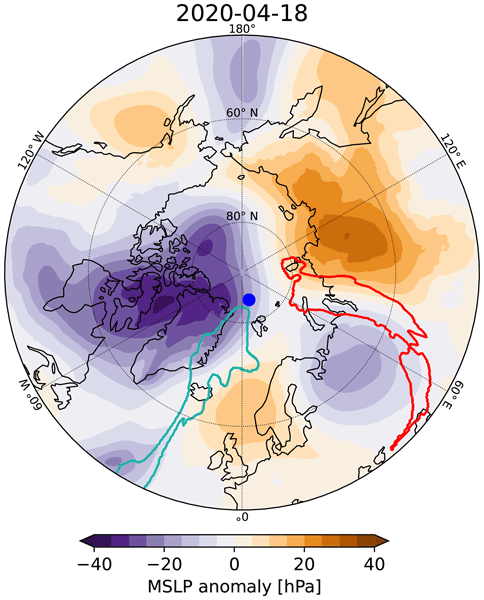
Atmospheric rivers (ARs) are narrow filaments of intense poleward water vapour transport. On rare occasions, they reach the Arctic, driving strong warming and melt. In April 2020, two ARs intruded into the central Arctic within one week, raising near-surface temperatures by up to 30°C and leading to extreme precipitation. Their distinct paths and thermodynamic evolution reveal diverse AR impacts on Arctic sea ice and precipitation extremes.
Yavor Kostov, Paul R. Holland, Kelly A. Hogan, James A. Smith, Nicolas C. Jourdain, Pierre Mathiot, Anna Olivé Abelló, Andrew H. Fleming, and Andrew J. S. Meijers
The Cryosphere, 20, 135–169, https://doi.org/10.5194/tc-20-135-2026, https://doi.org/10.5194/tc-20-135-2026, 2026
Short summary
Short summary
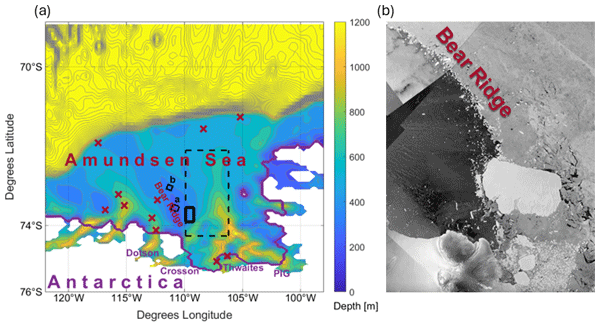
Icebergs ground when they reach shallow topography such as Bear Ridge in the Amundsen Sea. Grounded icebergs can block the transport of sea-ice and create areas of higher and lower sea-ice concentration. We introduce a physically and observationally motivated representation of grounding in an ocean model. In addition, we improve the way simulated icebergs respond to winds, ocean currents, and density differences in sea water. We analyse the forces acting on freely floating and grounded icebergs.
Iain Wheel, Douglas I. Benn, Anna J. Crawford, Joe Todd, and Thomas Zwinger
Geosci. Model Dev., 17, 5759–5777, https://doi.org/10.5194/gmd-17-5759-2024, https://doi.org/10.5194/gmd-17-5759-2024, 2024
Short summary
Short summary
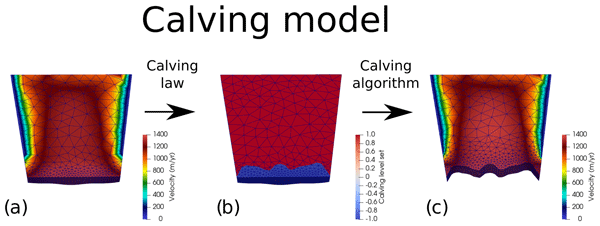
Calving, the detachment of large icebergs from glaciers, is one of the largest uncertainties in future sea level rise projections. This process is poorly understood, and there is an absence of detailed models capable of simulating calving. A new 3D calving model has been developed to better understand calving at glaciers where detailed modelling was previously limited. Importantly, the new model is very flexible. By allowing for unrestricted calving geometries, it can be applied at any location.
Douglas I. Benn, Adrian Luckman, Jan A. Åström, Anna J. Crawford, Stephen L. Cornford, Suzanne L. Bevan, Thomas Zwinger, Rupert Gladstone, Karen Alley, Erin Pettit, and Jeremy Bassis
The Cryosphere, 16, 2545–2564, https://doi.org/10.5194/tc-16-2545-2022, https://doi.org/10.5194/tc-16-2545-2022, 2022
Short summary
Short summary
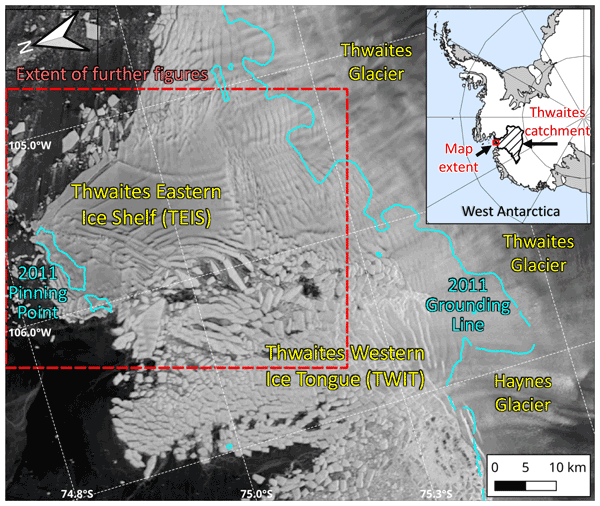
Thwaites Glacier (TG), in West Antarctica, is potentially unstable and may contribute significantly to sea-level rise as global warming continues. Using satellite data, we show that Thwaites Eastern Ice Shelf, the largest remaining floating extension of TG, has started to accelerate as it fragments along a shear zone. Computer modelling does not indicate that fragmentation will lead to imminent glacier collapse, but it is clear that major, rapid, and unpredictable changes are underway.
Cited articles
Ackermann, L., Rackow, T., Himstedt, K., Gierz, P., Knorr, G., and Lohmann, G.: A comprehensive Earth system model (AWI-ESM2.1) with interactive icebergs: effects on surface and deep-ocean characteristics, Geosci. Model Dev., 17, 3279–3301, https://doi.org/10.5194/gmd-17-3279-2024, 2024.
Arrigo, K. R., Van Dijken, G. L., Ainley, D. G., Fahnestock, M. A., and Markus, T.: Ecological impact of a large Antarctic iceberg, Geophys. Res. Lett., 29, 8-1–8-4, https://doi.org/10.1029/2001GL014160, 2002.
Bamber, J., Van Den Broeke, M., Ettema, J., Lenaerts, J., and Rignot, E.: Recent large increases in freshwater fluxes from Greenland into the North Atlantic, Geophys. Res. Lett., 39, 19501, https://doi.org/10.1029/2012GL052552, 2012.
Bamber, J. L., Tedstone, A. J., King, M. D., Howat, I. M., Enderlin, E. M., van den Broeke, M. R., and Noel, B.: Land Ice Freshwater Budget of the Arctic and North Atlantic Oceans: 1. Data, Methods, and Results, J. Geophys. Res. Oceans, 123, 1827–1837, https://doi.org/10.1002/2017JC013605, 2018.
Barbat, M. M., Wesche, C., Werhli, A. V., and Mata, M. M.: An adaptive machine learning approach to improve automatic iceberg detection from SAR images, ISPRS Journal of Photogrammetry and Remote Sensing, 156, 247–259, https://doi.org/10.1016/j.isprsjprs.2019.08.015, 2019.
Barbat, M. M., Rackow, T., Wesche, C., Hellmer, H. H., and Mata, M. M.: Automated iceberg tracking with a machine learning approach applied to SAR imagery: A Weddell sea case study, ISPRS Journal of Photogrammetry and Remote Sensing, 172, 189–206, https://doi.org/10.1016/j.isprsjprs.2020.12.006, 2021.
Budge, J. S. and Long, D. G.: A Comprehensive Database for Antarctic Iceberg Tracking Using Scatterometer Data, IEEE J. Sel. Top. Appl. Earth Obs. Remote Sens., 11, 434–442, https://doi.org/10.1109/jstars.2017.2784186, 2018.
Cenedese, C. and Straneo, F.: Icebergs Melting, Annu. Rev. Fluid Mech., 55, 377–402, https://doi.org/https://doi.org/10.1146/annurev-fluid-032522-100734, 2023.
Chu, P., Wang, J., You, Q., Ling, H., and Liu, Z.: TransMOT: Spatial-Temporal Graph Transformer for Multiple Object Tracking, Proceedings – 2023 IEEE Winter Conference on Applications of Computer Vision, WACV 2023, 4859–4869, https://doi.org/10.1109/WACV56688.2023.00485, 2023.
Coulon, V., De Rydt, J., Gregov, T., Qin, Q., and Pattyn, F.: Future Freshwater Fluxes From the Antarctic Ice Sheet, Geophys. Res. Lett., 51, e2024GL111250, https://doi.org/10.1029/2024GL111250, 2024.
Crawford, A., Crocker, G., Mueller, D., Desjardins, L., Saper, R., and Carrieres, T.: The Canadian Ice Island Drift, Deterioration and Detection (CI2D3) Database, Journal of Glaciology, 64, 517–521, https://doi.org/10.1017/JOG.2018.36, 2018a.
Crawford, A. J., Wadhams, P., Wagner, T. J. W., Stern, A., Abrahamsen, E. P., Church, I., Bates, R., and Nicholls, K. W.: Journey of an Arctic ice island, Oceanography, 29, 254–263, https://doi.org/10.5670/oceanog.2016.30, 2016.
Crawford, A. J., Mueller, D., Desjardins, L., and Myers, P. G.: The Aftermath of Petermann Glacier Calving Events (2008–2012): Ice Island Size Distributions and Meltwater Dispersal, J. Geophys. Res. Oceans, 123, 8812–8827, https://doi.org/10.1029/2018JC014388, 2018b.
Crawford, A. J., Crocker, G., Smith, J., Mueller, D., and Wagner, T. J. W.: Evaluating the importance of footloose-type failure in ice island deterioration modeling, Cold Reg. Sci. Technol., 228, 104325, https://doi.org/10.1016/j.coldregions.2024.104325, 2024.
Davison, B. J., Cowton, T. R., Cottier, F. R., and Sole, A. J.: Iceberg melting substantially modifies oceanic heat flux towards a major Greenlandic tidewater glacier, Nature Communications, 11, 1–13, https://doi.org/10.1038/s41467-020-19805-7, 2020.
Depoorter, M. A., Bamber, J. L., Griggs, J. A., Lenaerts, J. T. M., Ligtenberg, S. R. M., Van Den Broeke, M. R., and Moholdt, G.: Calving fluxes and basal melt rates of Antarctic ice shelves, Nature, 502, 89–92, https://doi.org/10.1038/nature12567, 2013.
Enderlin, E. M., Hamilton, G. S., Straneo, F., and Sutherland, D. A.: Iceberg meltwater fluxes dominate the freshwater budget in Greenland's iceberg-congested glacial fjords, Geophys. Res. Lett., 43, 11287–11294, https://doi.org/10.1002/2016GL070718, 2016.
England, M. R., Wagner, T. J. W., and Eisenman, I.: Modeling the breakup of tabular icebergs, Sci. Adv., 6, https://doi.org/10.1126/sciadv.abd1273, 2020.
Evans, B.: Cryotrack: Multi-generational iceberg tracking, Github [code], https://github.com/lupinthief/CryoTrack, last access: 27 June 2025.
Evans, B., Faul, A., Fleming, A., Vaughan, D. G., and Hosking, J. S.: Unsupervised machine learning detection of iceberg populations within sea ice from dual-polarisation SAR imagery, Remote Sens. Environ., 297, 113780, https://doi.org/10.1016/j.rse.2023.113780, 2023.
Fuglem, M. and Jordaan, I.: Risk Analysis and Hazards of Ice Islands, Springer Polar Sciences, 395–415, https://doi.org/10.1007/978-94-024-1101-0_15, 2017.
Gallusser, B. and Weigert, M.: TRACKASTRA: Transformer-Based Cell Tracking for Live-Cell Microscopy, Lecture Notes in Computer Science (including subseries Lecture Notes in Artificial Intelligence and Lecture Notes in Bioinformatics), 15134 LNCS, 467–484, https://doi.org/10.1007/978-3-031-73116-7_27, 2025.
Guan, Z., Liu, Y., Cheng, X., Li, T., Shokr, M., Liu, X., Wang, S., Zheng, L., and Chen, Z.: Fragmentation patterns of Antarctic icebergs in sea ice: observations and statistical data, Int. J. Digit. Earth, 18, https://doi.org/10.1080/17538947.2025.2511289, 2025.
Hill, B. T.: Ship collisions with icebergs: an historical record of collisions in the seas around North America and Greenland, in: Proceedings of the 16th International Conference on Ports and Ocean Engineering under Arctic Conditions, 10, https://nrc-publications.canada.ca/eng/view/object/?id=c1284f0b-d019-4afe-8fa9-6c9a298a920c (last access: 20 January 2026), 2001.
Howat, I. M., Negrete, A., and Smith, B. E.: The Greenland Ice Mapping Project (GIMP) land classification and surface elevation data sets, The Cryosphere, 8, 1509–1518, https://doi.org/10.5194/tc-8-1509-2014, 2014.
Huth, A., Adcroft, A., Sergienko, O., and Khan, N.: Ocean currents break up a tabular iceberg, Sci. Adv., 8, 6974, https://doi.org/10.1126/sciadv.abq6974, 2022a.
Huth, A., Adcroft, A., and Sergienko, O.: Parameterizing Tabular-Iceberg Decay in an Ocean Model, J. Adv. Model. Earth Syst., 14, e2021MS002869, https://doi.org/10.1029/2021MS002869, 2022b.
Koo, Y., Xie, H., Ackley, S. F., Mestas-Nuñez, A. M., Macdonald, G. J., and Hyun, C.-U.: Semi-automated tracking of iceberg B43 using Sentinel-1 SAR images via Google Earth Engine, The Cryosphere, 15, 4727–4744, https://doi.org/10.5194/tc-15-4727-2021, 2021.
Koo, Y., Xie, H., Mahmoud, H., Iqrah, J. M., and Ackley, S. F.: Automated detection and tracking of medium-large icebergs from Sentinel-1 imagery using Google Earth Engine, Remote Sens. Environ., 296, 113731, https://doi.org/10.1016/J.RSE.2023.113731, 2023.
Kuhl, F. P. and Giardina, C. R.: Elliptic Fourier features of a closed contour, Computer Graphics and Image Processing, 18, 236–258, https://doi.org/10.1016/0146-664X(82)90034-X, 1982.
Markaki, S. and Panagiotakis, C.: Jigsaw puzzle solving techniques and applications: a survey, Visual Computer, 39, 4405–4421, https://doi.org/10.1007/s00371-022-02598-9, 2023.
Marsh, R., Ivchenko, V. O., Skliris, N., Alderson, S., Bigg, G. R., Madec, G., Blaker, A. T., Aksenov, Y., Sinha, B., Coward, A. C., Le Sommer, J., Merino, N., and Zalesny, V. B.: NEMO–ICB (v1.0): interactive icebergs in the NEMO ocean model globally configured at eddy-permitting resolution, Geosci. Model Dev., 8, 1547–1562, https://doi.org/10.5194/gmd-8-1547-2015, 2015.
Marson, J. M., Myers, P. G., Hu, X., and Le Sommer, J.: Using Vertically Integrated Ocean Fields to Characterize Greenland Icebergs' Distribution and Lifetime, Geophys. Res. Lett., 45, 4208–4217, https://doi.org/10.1029/2018GL077676, 2018.
Matula, P., Maska, M., Sorokin, D. V., Matula, P., Ortiz-De-Solórzano, C., and Kozubek, M.: Cell Tracking Accuracy Measurement Based on Comparison of Acyclic Oriented Graphs, PLoS One, 10, e0144959, https://doi.org/10.1371/journal.pone.0144959, 2015.
McInnes, L., Healy, J., and Melville, J.: UMAP: Uniform Manifold Approximation and Projection, J. Open Source Softw., 3, 861, https://doi.org/10.21105/joss.00861, 2018.
Meert, W., Hendrickx, K., Van Craenendonck, T., Robberechts, P., Blockeel, H., and Davis, J.: DTAIDistance (v2.3.10), Zenodo [code], https://doi.org/10.5281/zenodo.7158824, 2020.
Meinhardt, T., Kirillov, A., Leal-Taixe, L., and Feichtenhofer, C.: TrackFormer: Multi-Object Tracking with Transformers. Proceedings of the IEEE Computer Society Conference on Computer Vision and Pattern Recognition, 2022-June, 8834–8844, https://doi.org/10.1109/CVPR52688.2022.00864, 2022.
Morison, J. and Goldberg, D.: A brief study of the force balance between a small iceberg, the ocean, sea ice, and atmosphere in the Weddell Sea, Cold Reg. Sci. Technol., 76–77, 69–76, https://doi.org/10.1016/j.coldregions.2011.10.014, 2012.
Mottram, R., van den Broeke, M., Meijers, A., Rodehacke, C., Dell, R. L., Hogg, A. E., Davison, B. J., Lhermitte, S., Hansen, N., Alavez, J. A. T., and Olesen, M.: Determining the Freshwater Fluxes from Antarctica with Earth Observation Data, Models, and In Situ Measurements: Uncertainties, Knowledge Gaps, and Prospects for New Advances, Bull. Am. Meteorol. Soc., 105, E1371–E1379, https://doi.org/10.1175/bams-d-24-0002.1, 2024.
Moyer, A. N., Sutherland, D. A., Nienow, P. W., and Sole, A. J.: Seasonal Variations in Iceberg Freshwater Flux in Sermilik Fjord, Southeast Greenland From Sentinel-2 Imagery, Geophys. Res. Lett., 46, 8903–8912, https://doi.org/10.1029/2019GL082309, 2019.
Mueller, D., Crawford, A., Copland, L., and Van Wychen, W.: Ice Island and Iceberg Fluxes from Canadian High Arctic Sources, https://doi.org/10.22215/wirl/2013.2.22, 2013.
Müller, M.: Dynamic Time Warping, in: Information Retrieval for Music and Motion, Chap. 4, 69–84, Springer, Berlin, Heidelberg, https://doi.org/10.1007/978-3-540-74048-3_4, 2007.
Myers, C. S. and Rabiner, L. R.: A Comparative Study of Several Dynamic Time-Warping Algorithms for Connected-Word Recognition, Bell System Technical Journal, 60, 1389–1409, https://doi.org/10.1002/J.1538-7305.1981.TB00272.X, 1981.
Sackinger, W. M., Shoemaker, H. D., Serson, H., Jeffries, M. O., and Van, M.: Ice Islands as Hazards to Arctic Offshore Production Structures, Paper presented at the Offshore Technology Conference, Houston, Texas, https://doi.org/10.4043/4943-MS, May 1985.
Shen, B., Zhang, W., Zhao, H., Jin, Z., and Wu, Y.: Solving Pictorial Jigsaw Puzzle by Stigmergy-inspired Internet-based Human Collective Intelligence, arXiv [preprint], https://doi.org/10.48550/arXiv.1812.02559, 2018.
Shiggins, C. J., Lea, J. M., and Brough, S.: Automated ArcticDEM iceberg detection tool: insights into area and volume distributions, and their potential application to satellite imagery and modelling of glacier–iceberg–ocean systems, The Cryosphere, 17, 15–32, https://doi.org/10.5194/tc-17-15-2023, 2023.
Silva, T. A. M. and Bigg, G. R.: Computer-based identification and tracking of Antarctic icebergs in SAR images, Remote Sens. Environ., 94, 287–297, https://doi.org/10.1016/j.rse.2004.10.002, 2005.
Smith, J., Hall, S., Coombs, G., Abbot, H., Fekry, A., Thorne, M. A. S., Long, D., and Fox, M.: Path-Planning on a Spherical Surface with Disturbances and Exclusion Zones, Journal of Artificial Intelligence Research, 82, 1845–1907, https://doi.org/10.1613/jair.1.16746, 2025.
Smith, K. L., Sherman, A. D., Shaw, T. J., and Sprintall, J.: Icebergs as unique Lagrangian ecosystems in polar seas, Ann. Rev. Mar. Sci., 5, 269–287, https://doi.org/10.1146/annurev-marine-121211-172317, 2013.
Smith, R. S., Mathiot, P., Siahaan, A., Lee, V., Cornford, S. L., Gregory, J. M., Payne, A. J., Jenkins, A., Holland, P. R., Ridley, J. K., and Jones, C. G.: Coupling the U. K. Earth System Model to Dynamic Models of the Greenland and Antarctic Ice Sheets, J. Adv. Model. Earth Syst., 13, e2021MS002520, https://doi.org/10.1029/2021MS002520, 2021.
Stern, A. A., Adcroft, A., and Sergienko, O.: The effects of Antarctic iceberg calving-size distribution in a global climate model, J. Geophys. Res. Oceans, 121, 5773–5788, https://doi.org/10.1002/2016JC011835, 2016.
Sulak, D. J., Sutherland, D. A., Enderlin, E. M., Stearns, L. A., and Hamilton, G. S.: Iceberg properties and distributions in three Greenlandic fjords using satellite imagery, Ann. Glaciol., 58, 92–106, https://doi.org/10.1017/aog.2017.5, 2017.
Sun, P., Cao, J., Jiang, Y., Zhang, R., Xie, E., Yuan, Z., Wang, C., and Luo, P.: TransTrack: Multiple Object Tracking with Transformer, arXiv [preprint], https://doi.org/10.48550/arXiv.2012.15460, 2020.
Tournadre, J., Bouhier, N., Girard-Ardhuin, F., and Rémy, F.: Large icebergs characteristics from altimeter waveforms analysis, J. Geophys. Res. Oceans, 120, 1954–1974, https://doi.org/10.1002/2014JC010502, 2015.
Tournadre, J., Bouhier, N., Girard-Ardhuin, F., and Rémy, F.: Antarctic icebergs distributions 1992–2014, J. Geophys. Res. Oceans, 121, 327–349, https://doi.org/10.1002/2015JC011178, 2016.
Ulicna, K., Vallardi, G., Charras, G., and Lowe, A. R.: Automated Deep Lineage Tree Analysis Using a Bayesian Single Cell Tracking Approach, Front. Comput. Sci., 3, 92, https://doi.org/10.3389/fcomp.2021.734559, 2021.
Ulman, V., Maška, M., Magnusson, K. E. G., Ronneberger, O., Haubold, C., Harder, N., Matula, P., Matula, P., Svoboda, D., Radojevic, M., Smal, I., Rohr, K., Jaldén, J., Blau, H. M., Dzyubachyk, O., Lelieveldt, B., Xiao, P., Li, Y., Cho, S. Y., Dufour, A. C., Olivo-Marin, J. C., Reyes-Aldasoro, C. C., Solis-Lemus, J. A., Bensch, R., Brox, T., Stegmaier, J., Mikut, R., Wolf, S., Hamprecht, F. A., Esteves, T., Quelhas, P., Demirel, Ö., Malmström, L., Jug, F., Tomancak, P., Meijering, E., Muñoz-Barrutia, A., Kozubek, M., and Ortiz-De-Solorzano, C.: An objective comparison of cell-tracking algorithms, Nature Methods, 14, 1141–1152, https://doi.org/10.1038/nmeth.4473, 2017.
Wagner, T. J. W., Dell, R. W., and Eisenman, I.: An analytical model of iceberg drift, J. Phys. Oceanogr., 47, 1605–1616, https://doi.org/10.1175/jpo-d-16-0262.1, 2017.
Wesche, C. and Dierking, W.: Near-coastal circum-Antarctic iceberg size distributions determined from Synthetic Aperture Radar images, Remote Sens. Environ., 156, 561–569, https://doi.org/10.1016/j.rse.2014.10.025, 2015.
Zeinali-Torbati, R., Turnbull, I. D., Taylor, R. S., and Mueller, D.: A probabilistic model for fracture events of Petermann ice islands under the influence of atmospheric and oceanic conditions, The Cryosphere, 15, 5601–5621, https://doi.org/10.5194/tc-15-5601-2021, 2021.
Zhang, M., Chen, S., Shu, Z., Xin, S. Q., Zhao, J., Jin, G., Zhang, R., and Beyerer, J.: Fast algorithm for 2d fragment assembly based on partial emd, Vis. Comput., 33, 1601–1612, https://doi.org/10.1007/s00371-016-1303-3, 2017.
Short summary
Icebergs account for about half of the freshwater lost from Antarctica. Because they can drift for long periods of time and across great distances, it is hard to know where in the oceans that water ends up, yet this is crucially important for ocean circulations and the global climate. We have developed a digital tool that can help us to understand the dynamics and effects of icebergs by recognizing them through time and doing “jigsaw puzzles” to reconstruct their family trees when they break apart.
Icebergs account for about half of the freshwater lost from Antarctica. Because they can drift...


