
Articles | Volume 20, issue 1
https://doi.org/10.5194/tc-20-411-2026
© Author(s) 2026. This work is distributed under
the Creative Commons Attribution 4.0 License.
the Creative Commons Attribution 4.0 License.
https://doi.org/10.5194/tc-20-411-2026
© Author(s) 2026. This work is distributed under
the Creative Commons Attribution 4.0 License.
the Creative Commons Attribution 4.0 License.
Research article
| 
20 Jan 2026
Research article |
| 20 Jan 2026
| 20 Jan 2026
The observed evolution of Arctic amplification over the past 45 years
Mark C. Serreze
CORRESPONDING AUTHOR

Cooperative Institute for Research in Environmental Sciences, National Snow and Ice Data Center, University of Colorado Boulder, Boulder, CO, USA
Elizabeth Cassano
Cooperative Institute for Research in Environmental Sciences, National Snow and Ice Data Center, University of Colorado Boulder, Boulder, CO, USA
Department of Atmospheric and Oceanic Sciences, University of Colorado Boulder, Boulder, CO, USA
Alex Crawford
Centre for Earth Observation Science, Department of Environment and Geography, University of Manitoba, Winnipeg, MB, Canada
John J. Cassano
Cooperative Institute for Research in Environmental Sciences, National Snow and Ice Data Center, University of Colorado Boulder, Boulder, CO, USA
Department of Atmospheric and Oceanic Sciences, University of Colorado Boulder, Boulder, CO, USA
Chen Zhang
Cooperative Institute for Research in Environmental Sciences, National Snow and Ice Data Center, University of Colorado Boulder, Boulder, CO, USA
Department of Atmospheric and Oceanic Sciences, University of Colorado Boulder, Boulder, CO, USA
Related authors
Zaria Ireon Cast, Mark C. Serreze, Elizabeth N. Cassano, and Andrew P. Barrett
The Cryosphere, 20, 2127–2141, https://doi.org/10.5194/tc-20-2127-2026, https://doi.org/10.5194/tc-20-2127-2026, 2026
Short summary
Short summary
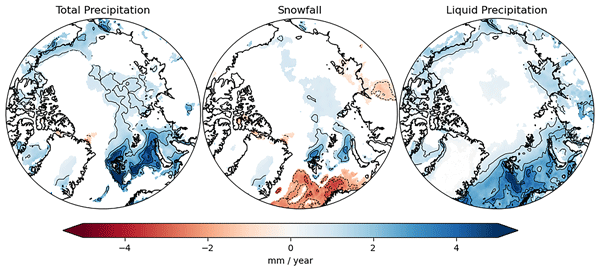
We studied how rain and snow are changing across the Arctic as the climate warms. Using weather data from land, ocean, and a global climate dataset, we found that more of the Arctic’s precipitation is falling as rain instead of snow, especially in summer and in the Atlantic region. These changes are not always due to more total precipitation, but rather less snowfall. This shift could affect Arctic ecosystems, infrastructure, and future climate patterns.
Julienne Stroeve, Vishnu Nandan, Rosemary Willatt, Ruzica Dadic, Philip Rostosky, Michael Gallagher, Robbie Mallett, Andrew Barrett, Stefan Hendricks, Rasmus Tonboe, Michelle McCrystall, Mark Serreze, Linda Thielke, Gunnar Spreen, Thomas Newman, John Yackel, Robert Ricker, Michel Tsamados, Amy Macfarlane, Henna-Reetta Hannula, and Martin Schneebeli
The Cryosphere, 16, 4223–4250, https://doi.org/10.5194/tc-16-4223-2022, https://doi.org/10.5194/tc-16-4223-2022, 2022
Short summary
Short summary
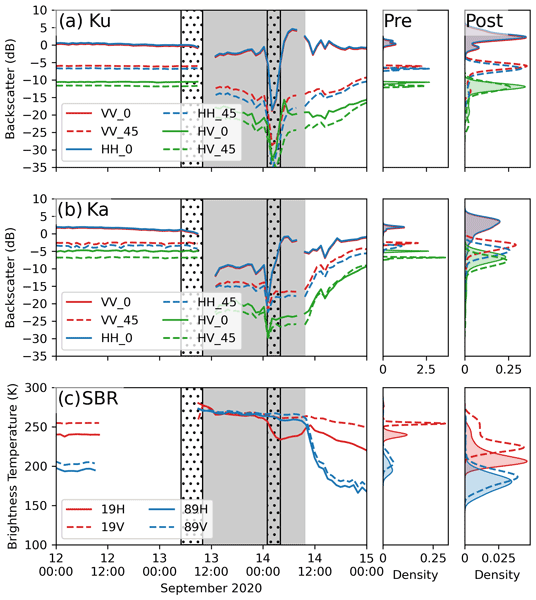
Impacts of rain on snow (ROS) on satellite-retrieved sea ice variables remain to be fully understood. This study evaluates the impacts of ROS over sea ice on active and passive microwave data collected during the 2019–20 MOSAiC expedition. Rainfall and subsequent refreezing of the snowpack significantly altered emitted and backscattered radar energy, laying important groundwork for understanding their impacts on operational satellite retrievals of various sea ice geophysical variables.
Kara Hartig, John J. Cassano, Matthew D. Shupe, and Amy Solomon
Atmos. Chem. Phys., 26, 12689–12714, https://doi.org/10.5194/acp-26-12689-2026, https://doi.org/10.5194/acp-26-12689-2026, 2026
Short summary
Short summary
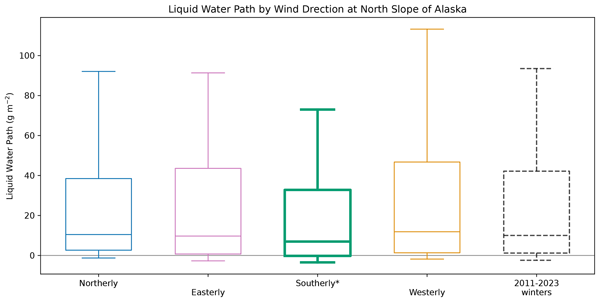
Liquid-containing Arctic clouds have a strong influence on surface temperature and sea ice extent in winter, but how weather conditions impact cloud cover remains a mystery. This study uses observations from northern Alaska to investigate this relationship. We find that, contrary to expectations, the amount of cloud liquid is remarkably insensitive to temperature, moisture, wind direction, and the large-scale atmospheric flow.
Armina Soleymani, Alex Crawford, Lawrence Mudryk, and Feiyue Wang
EGUsphere, https://doi.org/10.5194/egusphere-2026-4196, https://doi.org/10.5194/egusphere-2026-4196, 2026
Short summary
Short summary
Hudson Bay’s seasonal sea ice limits maritime access to the Port of Churchill, and although we know future warming will lengthen the navigable period, how quickly it will lengthen is unclear. Based on several methods for making future projections, the navigable period for the route from Churchill to the Labrador Sea has lengthened by about 4 weeks since the 1980s. In the future, it is projected to lengthen by about 2 weeks for each additional 0.5 °C of global warming.
Zaria Ireon Cast, Mark C. Serreze, Elizabeth N. Cassano, and Andrew P. Barrett
The Cryosphere, 20, 2127–2141, https://doi.org/10.5194/tc-20-2127-2026, https://doi.org/10.5194/tc-20-2127-2026, 2026
Short summary
Short summary
We studied how rain and snow are changing across the Arctic as the climate warms. Using weather data from land, ocean, and a global climate dataset, we found that more of the Arctic’s precipitation is falling as rain instead of snow, especially in summer and in the Atlantic region. These changes are not always due to more total precipitation, but rather less snowfall. This shift could affect Arctic ecosystems, infrastructure, and future climate patterns.
Nicole A. Loeb, Alex Crawford, Brice Noël, and Julienne Stroeve
The Cryosphere, 19, 5403–5422, https://doi.org/10.5194/tc-19-5403-2025, https://doi.org/10.5194/tc-19-5403-2025, 2025
Short summary
Short summary
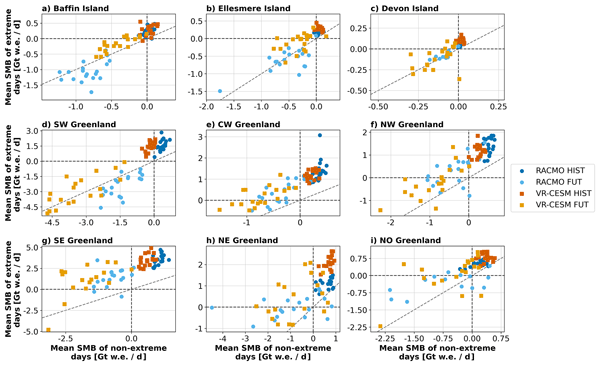
We examine how extreme precipitation days affect the seasonal mass balance (SMB) of land ice in Greenland and the Eastern Canadian Arctic in historical and future simulations. Past extreme precipitation led to higher SMB with snowfall. Future extreme precipitation may lead to the loss of ice mass as more falls as rain rather than snow in some regions, such as southwestern Greenland. Across the region, extreme precipitation becomes more important to seasonal SMB in the future, warmer climate.
Chen Zhang, John J. Cassano, Mark W. Seefeldt, Hailong Wang, Weiming Ma, and Wen-wen Tung
The Cryosphere, 19, 4671–4699, https://doi.org/10.5194/tc-19-4671-2025, https://doi.org/10.5194/tc-19-4671-2025, 2025
Short summary
Short summary
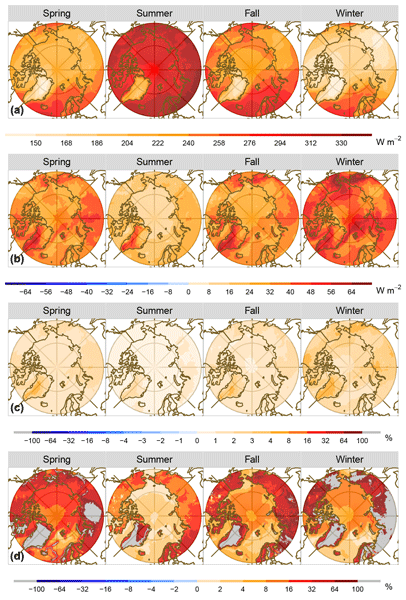
An atmospheric river (AR) is a long, narrow corridor of moisture transport in the atmosphere. ARs are crucial for moisture and heat transport into the polar regions. Our study examines the role of ARs in the surface energy budget (SEB) in the Arctic. The results reveal distinct seasonality and land–sea–sea ice contrasts due to the impacts of ARs on the SEB. The conclusions provide greater insights into the current and future role of ARs in the Arctic climate system.
Mckenzie J. Dice, John J. Cassano, and Gina C. Jozef
Weather Clim. Dynam., 5, 369–394, https://doi.org/10.5194/wcd-5-369-2024, https://doi.org/10.5194/wcd-5-369-2024, 2024
Short summary
Short summary
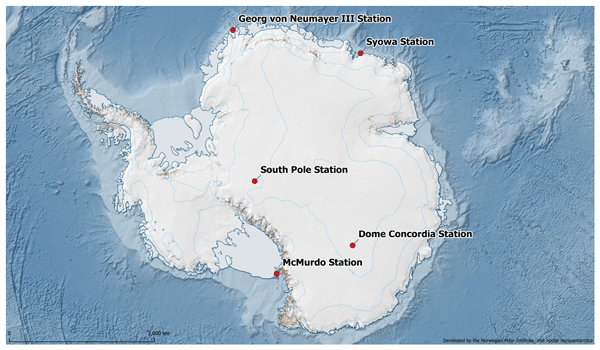
This study aims to identify the main reasonings for changes in boundary layer stability, namely changes in radiative forcing or mechanical mixing (wind shear). Across the continent of Antarctica, varying stability in the boundary layer is affected by many different forces, and this study seeks to characterize the main forcing mechanisms for these variations in stability across Antarctica, annually and seasonally.
Gina C. Jozef, John J. Cassano, Sandro Dahlke, Mckenzie Dice, Christopher J. Cox, and Gijs de Boer
Atmos. Chem. Phys., 24, 1429–1450, https://doi.org/10.5194/acp-24-1429-2024, https://doi.org/10.5194/acp-24-1429-2024, 2024
Short summary
Short summary
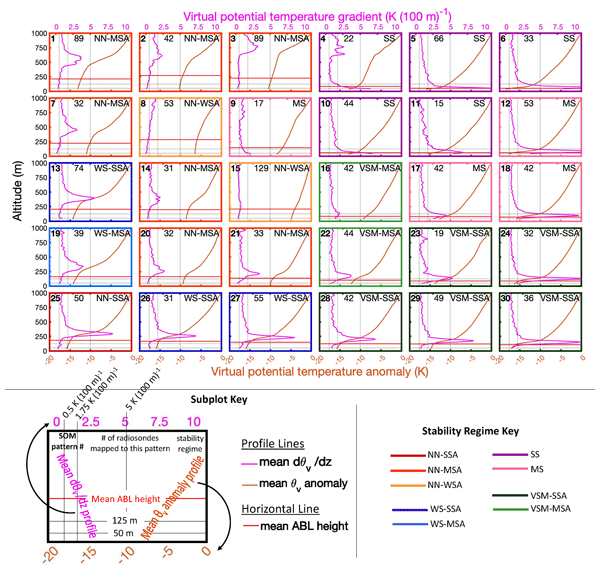
Observations collected during MOSAiC were used to identify the range in vertical structure and stability of the central Arctic lower atmosphere through a self-organizing map analysis. Characteristics of wind features (such as low-level jets) and atmospheric moisture features (such as clouds) were analyzed in the context of the varying vertical structure and stability. Thus, the results of this paper give an overview of the thermodynamic and kinematic features of the central Arctic atmosphere.
Mckenzie J. Dice, John J. Cassano, Gina C. Jozef, and Mark Seefeldt
Weather Clim. Dynam., 4, 1045–1069, https://doi.org/10.5194/wcd-4-1045-2023, https://doi.org/10.5194/wcd-4-1045-2023, 2023
Short summary
Short summary
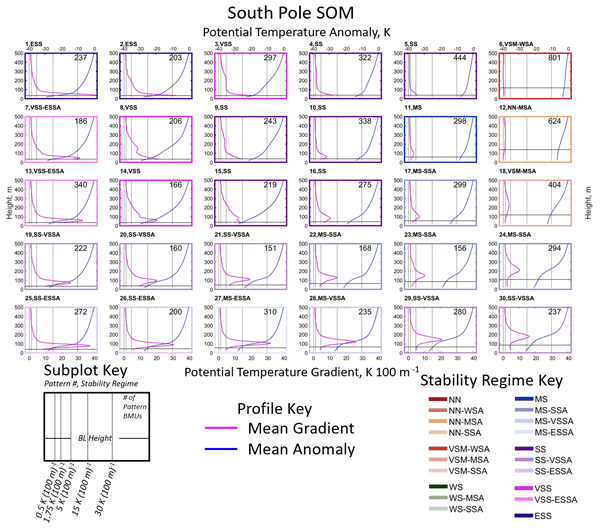
This study documents boundary layer stability profiles, from the surface to 500 m above ground level, present in radiosonde observations across the Antarctic continent. A boundary layer stability definition method is developed and applied to the radiosonde observations to determine the frequency and seasonality of stability regimes. It is found that, in the continental interior, strong stability is dominant throughout most of the year, while stability is more varied at coastal locations.
Gina C. Jozef, Robert Klingel, John J. Cassano, Björn Maronga, Gijs de Boer, Sandro Dahlke, and Christopher J. Cox
Earth Syst. Sci. Data, 15, 4983–4995, https://doi.org/10.5194/essd-15-4983-2023, https://doi.org/10.5194/essd-15-4983-2023, 2023
Short summary
Short summary
Observations from the MOSAiC expedition relating to lower-atmospheric temperature, wind, stability, moisture, and surface radiation budget from radiosondes, a meteorological tower, radiation station, and ceilometer were compiled to create a dataset which describes the thermodynamic and kinematic state of the central Arctic lower atmosphere between October 2019 and September 2020. This paper describes the methods used to develop this lower-atmospheric properties dataset.
Gina C. Jozef, John J. Cassano, Sandro Dahlke, Mckenzie Dice, Christopher J. Cox, and Gijs de Boer
Atmos. Chem. Phys., 23, 13087–13106, https://doi.org/10.5194/acp-23-13087-2023, https://doi.org/10.5194/acp-23-13087-2023, 2023
Short summary
Short summary
Observations from the Multidisciplinary drifting Observatory for the Study of Arctic Climate (MOSAiC) were used to determine the frequency of occurrence of various central Arctic lower atmospheric stability regimes and how the stability regimes transition between each other. Wind and radiation observations were analyzed in the context of stability regime and season to reveal the relationships between Arctic atmospheric stability and mechanically and radiatively driven turbulent forcings.

Ulrike Egerer, John J. Cassano, Matthew D. Shupe, Gijs de Boer, Dale Lawrence, Abhiram Doddi, Holger Siebert, Gina Jozef, Radiance Calmer, Jonathan Hamilton, Christian Pilz, and Michael Lonardi
Atmos. Meas. Tech., 16, 2297–2317, https://doi.org/10.5194/amt-16-2297-2023, https://doi.org/10.5194/amt-16-2297-2023, 2023
Short summary
Short summary
This paper describes how measurements from a small uncrewed aircraft system can be used to estimate the vertical turbulent heat energy exchange between different layers in the atmosphere. This is particularly important for the atmosphere in the Arctic, as turbulent exchange in this region is often suppressed but is still important to understand how the atmosphere interacts with sea ice. We present three case studies from the MOSAiC field campaign in Arctic sea ice in 2020.
Elina Valkonen, John Cassano, Elizabeth Cassano, and Mark Seefeldt
Weather Clim. Dynam. Discuss., https://doi.org/10.5194/wcd-2023-2, https://doi.org/10.5194/wcd-2023-2, 2023
Publication in WCD not foreseen
Short summary
Short summary
Arctic sea ice is melting fast. This rapid change in the Arctic climate system can also affect the storms in the region. The strong connection between Arctic storms and sea ice makes it an important research subject in warming climate. In this study we compared the results of multiple climate models and ERA5 reanalysis data to each other, with a focus on Arctic storms and declining sea ice.
Younjoo J. Lee, Wieslaw Maslowski, John J. Cassano, Jaclyn Clement Kinney, Anthony P. Craig, Samy Kamal, Robert Osinski, Mark W. Seefeldt, Julienne Stroeve, and Hailong Wang
The Cryosphere, 17, 233–253, https://doi.org/10.5194/tc-17-233-2023, https://doi.org/10.5194/tc-17-233-2023, 2023
Short summary
Short summary
During 1979–2020, four winter polynyas occurred in December 1986 and February 2011, 2017, and 2018 north of Greenland. Instead of ice melting due to the anomalous warm air intrusion, the extreme wind forcing resulted in greater ice transport offshore. Based on the two ensemble runs, representing a 1980s thicker ice vs. a 2010s thinner ice, a dominant cause of these winter polynyas stems from internal variability of atmospheric forcing rather than from the forced response to a warming climate.
Julienne Stroeve, Vishnu Nandan, Rosemary Willatt, Ruzica Dadic, Philip Rostosky, Michael Gallagher, Robbie Mallett, Andrew Barrett, Stefan Hendricks, Rasmus Tonboe, Michelle McCrystall, Mark Serreze, Linda Thielke, Gunnar Spreen, Thomas Newman, John Yackel, Robert Ricker, Michel Tsamados, Amy Macfarlane, Henna-Reetta Hannula, and Martin Schneebeli
The Cryosphere, 16, 4223–4250, https://doi.org/10.5194/tc-16-4223-2022, https://doi.org/10.5194/tc-16-4223-2022, 2022
Short summary
Short summary
Impacts of rain on snow (ROS) on satellite-retrieved sea ice variables remain to be fully understood. This study evaluates the impacts of ROS over sea ice on active and passive microwave data collected during the 2019–20 MOSAiC expedition. Rainfall and subsequent refreezing of the snowpack significantly altered emitted and backscattered radar energy, laying important groundwork for understanding their impacts on operational satellite retrievals of various sea ice geophysical variables.
Gina Jozef, John Cassano, Sandro Dahlke, and Gijs de Boer
Atmos. Meas. Tech., 15, 4001–4022, https://doi.org/10.5194/amt-15-4001-2022, https://doi.org/10.5194/amt-15-4001-2022, 2022
Short summary
Short summary
During the MOSAiC expedition, meteorological conditions over the lowest 1 km of the atmosphere were sampled with the DataHawk2 uncrewed aircraft system. These data were used to identify the best method for atmospheric boundary layer height detection by comparing visually identified subjective boundary layer height to that identified by several objective automated detection methods. The results show a bulk Richardson number-based approach gives the best estimate of boundary layer height.
Klaus Dethloff, Wieslaw Maslowski, Stefan Hendricks, Younjoo J. Lee, Helge F. Goessling, Thomas Krumpen, Christian Haas, Dörthe Handorf, Robert Ricker, Vladimir Bessonov, John J. Cassano, Jaclyn Clement Kinney, Robert Osinski, Markus Rex, Annette Rinke, Julia Sokolova, and Anja Sommerfeld
The Cryosphere, 16, 981–1005, https://doi.org/10.5194/tc-16-981-2022, https://doi.org/10.5194/tc-16-981-2022, 2022
Short summary
Short summary
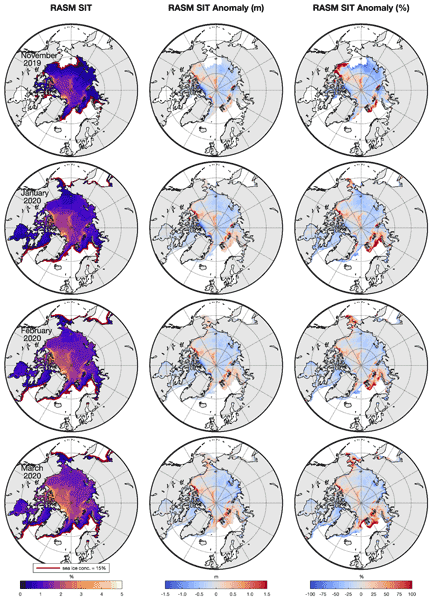
Sea ice thickness anomalies during the MOSAiC (Multidisciplinary drifting Observatory for the Study of Arctic Climate) winter in January, February and March 2020 were simulated with the coupled Regional Arctic climate System Model (RASM) and compared with CryoSat-2/SMOS satellite data. Hindcast and ensemble simulations indicate that the sea ice anomalies are driven by nonlinear interactions between ice growth processes and wind-driven sea-ice transports, with dynamics playing a dominant role.
Igor A. Dmitrenko, Denis L. Volkov, Tricia A. Stadnyk, Andrew Tefs, David G. Babb, Sergey A. Kirillov, Alex Crawford, Kevin Sydor, and David G. Barber
Ocean Sci., 17, 1367–1384, https://doi.org/10.5194/os-17-1367-2021, https://doi.org/10.5194/os-17-1367-2021, 2021
Short summary
Short summary
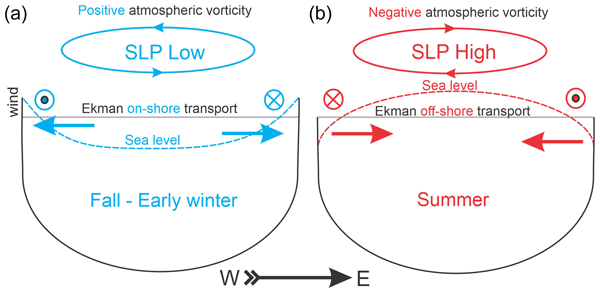
Significant trends of sea ice in Hudson Bay have led to a considerable increase in shipping activity. Therefore, understanding sea level variability is an urgent issue crucial for safe navigation and coastal infrastructure. Using the sea level, atmospheric and river discharge data, we assess environmental factors impacting variability of sea level at Churchill. We find that it is dominated by wind forcing, with the seasonal cycle generated by the seasonal cycle in atmospheric circulation.
Cited articles
AMAP: Arctic Climate Change Update 2021: Key trends and impacts, Summary for policy-makers, Arctic Monitoring and Assessment Programme (AMAP), Oslo, Norway, ISBN: 978-82-7971-201-5, 2021.
Arrhenius, S.: On the influence of carbonic acid in the air upon the temperature of the ground, Philos. Mag. J. Sci., 5, 237–276, 1896.
Barrett, A. P., Stroeve, J. C., and Serreze, M. C.: Arctic Ocean Precipitation from atmospheric reanalyses and comparisons with North Pole drifting station records, J. Geophys. Res.-Oceans, 125, https://doi.org/10.1029/2019jc015415, 2020.
Beer, E., Eisenman, I., and Wagner, T. J.: Polar amplification due to enhanced heat flux across the halocline, Geophys. Res. Lett., 47, https://doi.org/10.1029/2019GL086706, 2020.
Bianco, E., Iovino, D., Masina, S., Materia, S., and Ruggieri, P.: The role of upper-ocean heat content in the regional variability of Arctic sea ice at sub-seasonal timescales, The Cryosphere, 18, 2357–2379, https://doi.org/10.5194/tc-18-2357-2024, 2024.
Bradley, R. S., Kemig, F. T., and Diaz, H. F.: Climatology of surface-based inversions in the North American Arctic, J. Geophys. Res.-Atmos., 97, 15699–15712, https://doi.org/10.1029/92JD01451, 1992.
Caballero, R. and Langen, P.: The dynamic range of poleward energy transport in an atmospheric general circulation model, Geophys. Res. Lett., 32, L02705, https://doi.org/10.1029/2004GL021581, 2005.
Comiso, J. C.: Bootstrap Sea Ice Concentrations from Nimbus-7 SMMR and DMSP SSM/I-SSMIS (NSIDC-0079, Version 4), NASA National Snow and Ice Data Center Distributed Active Archive Center [data set], Boulder, Colorado, USA, https://doi.org/10.5067/X5LG68MH013O, 2023.
Crawford, A., Soriot, C., and Stroeve, J.: Autumn pauses in Arctic-wide sea-ice expansion, J. Glaciol., 71, e21, https://doi.org/10.1017/jog.2024.106, 2025.
Crawford, A. D., Lukovich, J. V., McCrystall, M. R., Stroeve, J. C., and Barber, D. G.: Reduced sea ice enhances intensification of winter storms over the Arctic Ocean, J. Climate, 35, 3353–3370, https://doi.org/10.1175/jcli-d-21-0747.1, 2022.
Dai, A., Luo, D., Song, M., and Liu, J.: Arctic amplification is caused by sea-ice loss under increasing CO2, Nat. Commun., 10, 121, https://doi.org/10.1038/s41467-018-07954-9, 2019.
Ding, S. S., Chen, X., Zhang, X., Zhang, X., and Xu, P.: A review on the Arctic-midlatitudes connection: Interactive impacts, physical mechanisms and nonstationary, Atmosphere, 15, 1115, https://doi.org/10.3390/atmos15091115, 2024.
ECMWF (European Centre for Medium-Range Weather Forecasts: ERA5 Reanalysis (0.25 Degree Latitude-Longitude Grid), updated monthly, NSF National Center for Atmospheric Research [data set], https://doi.org/10.5065/BH6N-5N20, 2019.
Esau, I., Pettersson, L. H., Cancet, M., Chapron, B., Chernokulsky, A., Donlon, C., and Johannesen, J. A.: The arctic amplification and its impact: A synthesis through satellite observations, Remote Sensing, 15, 1354, https://doi.org/10.3390/rs15051354, 2023.
Gong, T., Feldstein, S., and Lee, S.: The role of downward infrared radiation in the recent Arctic winter warming trend, J. Climate, 30, 4937–4949, https://doi.org/10.1175/JCLI-D-16-0180.1, 2017.
Graham, R. M., Cohen, L., Ritzhaupt, N., Segger, B., Graversen, R. G., Rinke, A., Walden, V. P., Granskog, M. A., and Hudson, S. R.: Evaluation of six atmospheric reanalyses over Arctic sea ice from winter to early summer, J. Climate, 32, 4121–4143, https://doi.org/10.1175/jcli-d-18-0643.1, 2019.
Graversen, R. G. and Burtu, M.: Arctic amplification enhanced by latent energy transport of atmospheric planetary waves, Q. J. Roy. Meteor. Soc., 142, 2046–2054, 2016.
Henderson, G. R., Barrett, B. S., Wachowicz, L. J., Mattingly, K. S., Preece, J. R., and Mote, T. L.: Local and remote atmospheric circulation drivers of Arctic change: A review, Frontiers in Earth Science, 9, 709896, https://doi.org/10.3389/feart.2021.709896, 2021.
Hersbach, H., Bell, B., Berrisford, P., Hirahara, S., Horányi, A., Muñoz-Sabater, J., Nicolas, J., Peubey, C., Radu, R., Schepers, D., Simmons, A., Soci, C., Abdalla, S., Abellan, X., Balsamo, G., Bechtold, P., Biavati, G., Bidlot, J., Bonavita, M., De Chiara, G., Dahlgren, P., Dee, D., Diamantakis, M., Dragani, R., Flemming, J., Forbes, R., Fuentes, M., Geer, A., Haimberger, L., Healy, S., Hogan, R. J., Hólm, E., Janisková, M., Keeley, S., Laloyaux, P., Lopez, P., Lupu, C., Radnoti, G., de Rosnay, P., Rozum, I., Vamborg, F., Villaume, S., and Thépaut, J.-N.: The ERA5 global reanalysis, Q. J. Roy. Meteor. Soc., 146, 1999–2049, https://doi.org/10.1002/qj.3803, 2020.
Hurrell, J. W.: Decadal trends in the North Atlantic Oscillation: Regional temperatures and precipitation, Science, 269, 676–679, 1995.
Hurrell, J. W.: Influence of variations in extratropical wintertime teleconnections on Northern Hemisphere temperature, Geophys. Res. Lett., 23, 665–668, 1996.
Jansen, E., Christensen, J. H., Dokken, T., Nisancioglu, K. H., Vintgher, B. M., Capron, E., Guo, C., Jensem, M. F., Langen, P. L., Pedersen, R. A., Yang, S., Bentsen, M., Kjaer, H. A., Sadatzki, H., Sessford, E., and Stendel, M.: Past perspectives on the present era of abrupt Arctic climate change, Nat. Clim. Change, 10, 714–721, 2020.
Kahl, J. D., Serreze, M. C., and Schnell, R. C.: Tropospheric low-level temperature inversions in the Canadian Arctic, Atmos. Ocean, 30, 522–529, https://doi.org/10.1080/07055900.1992.9649453, 1992.
Kapsch, M.-L., Graversen, R. G., and Tjernström, M.: Springtime atmospheric energy transport and the control of Arctic summer sea-ice extent, Nat. Clim. Change, 3, 744–748, https://doi.org/10.1038/nclimate1884, 2013.
Kay, J. E. and Gettelman, A.: Cloud influence on and response to seasonal Arctic sea ice loss, J. Geophys. Res., 114, D18204, https://doi.org/10.1029/2009JD011773, 2009.
Krishnan, S., Ekman, A. M. L., Hansson, H.-C., Riipinen, I., Lewinschal, A., Wilcox, L. J., and Dallafior, T.: The roles of the atmosphere and ocean in driving Arctic warming due to European aerosol reductions, Geophys. Res. Lett., 47, e2019GL086681, https://doi.org/10.1029/2019GL086681, 2020.
Landy, J. C., Dawson, G. J., Tsamados, M., Bushuk, M., Stroeve, J. C., Howell, S. E. L., Krumpen, T., Babb, D. G., Komarov, A. S., Heorton, H. D. B. S., Belter, H. J., and Aksenov, Y.: A year-round satellite sea-ice thickness record from CryoSat-2, Nature, 609, 517–522, https://doi.org/10.1038/s41586-022-05058-5, 2022.
Lebrun, M., Vancoppenolle, M., Madec, G., and Massonnet, F.: Arctic sea-ice-free season projected to extend into autumn, The Cryosphere, 13, 79–96, https://doi.org/10.5194/tc-13-79-2019, 2019.
Lee, S., Gong, T., Feldstein, S. B., Screen, J. A., and Simmonds, I.: Revisiting the cause of the 1989–2009 Arctic surface warming using the surface energy budget: Downward infrared radiation dominates the surface fluxes, Geophys. Res. Lett., 44, 10654–10661, https://doi.org/10.1002/2017GL075375, 2017.
Li, M., Lui, D., Simmonds, A., Dai, A., Zhong, L., and Yao, Y.: Anchoring of atmospheric teleconnection patterns by Arctic Sea ice loss and its link to winter cold anomalies in East Asia, Int. J. Climatol., 41, 547–558, 2021.
Li, Z., Ding, Q., Steele, M., and Schweiger, A.: Recent upper Arctic Ocean warming expedited by summertime atmospheric processes, Nat. Commun., 13, 362, https://doi.org/10.1038/s41467-022-28047-8, 2022.
Lien, V. S., Schlichtholz, P., Skagseth, Ø., and Vikebø, F. B.: Wind-driven Atlantic water flow as a direct mode for reduced Barents Sea ice cover, J. Climate, 30, 803–812, https://doi.org/10.1175/jcli-d-16-0025.1, 2017.
Liu, Y. and Zhang, J.: Conductive heat flux over Arctic sea ice from 1979 to 2022, J. Geophys. Res., 130, e2024JC022062, https://doi.org/10.1029/2024JC022062, 2025.
Luo, B., Luo, D., Dai, A., Simmonds, I., and Wu, L.: Decadal variability of winter warm Arctic-cold Eurasia dipole patterns modulated by Pacific Decadal Oscillation and Atlantic Multidecadal Oscillation, Earth's Future, 10, e2021EF002351, https://doi.org/10.1029/2021EF002351, 2022.
Markus, T., Stroeve, J. C., and Miller, J.: Recent changes in Arctic sea ice melt onset, freezeup, and melt season length, J. Geophys. Res., 114, C12024, https://doi.org/10.1029/2009jc005436, 2009.
Mudryk, L. R., Chereque, A. E., Derksen, C., Loujus, K., and Decharme, B.: Terrestrial Snow Cover, NOAA Arctic Report Card 2023, https://doi.org/10.25923/xqwa-h543, 2023.
Navarro, J. A., Varma, V., Riipinen, I., Seland, O., Kirkevag, A., Struthers, H., Iversen, T., Hansson, H.-C., and Ekman, A. M. L.: Amplification of Arctic warming by past air pollution reductions in Europe, Nat. Geosci., 9, 277–281, https://doi.org/10.1038/ngeo2673, 2016.
Olaffson, H. and Okland, E.: Precipitation from convective boundary layers in Arctic air masses, Tellus A, 46, 4–13, https://doi.org/10.3402/tellusa.v46i1.15422, 1994.
Park, H.-S., Lee, S., Kosaka, Y., Son, S.-W., and Kim, S.-W.: The impact of Arctic winter infrared radiation on early summer sea ice, J. Climate, 28, 6281–6296, https://doi.org/10.1175/JCLI-D-14-00773.1, 2015.
Parkinson, C. L., Cavalieri, D. J., Gloersen, P., Zwally, H. J., and Comison, J. C. C.: Arctic sea ice extent, areas and trends, 1978–1996, J. Geophys. Res., 104, 20837–20856, 1999.
Perovich, D. K. and Polashenski, C.: Albedo evolution of seasonal Arctic sea ice, Geophys. Res. Lett., 39, 8, https://doi.org/10.1029/2012GL051432, 2012.
Perovich, D. K., Light, B., Eicken, H., Jones, K. F., Runcimen, K., and Nghiem, S. V.: Increasing solar heating of the Arctic Ocean and adjacent seas, 1979–2005: Attribution and the role of ice-albedo feedback, Geophys. Res. Lett., 34, L19505, https://doi.org/10.1029/2007GL031480, 2007.
Pithan, F. and Mauritsen, T.: Arctic amplification dominated by temperature feedbacks in contemporary climate models, Nat. Geosci., 7, 181–184, https://doi.org/10.1038/ngeo2071, 2014.
Previdi, M., Smith, K. L., and Polvani, L. M.: Arctic amplification of climate change: a review of underlying mechanisms, Env. Res. Lett., 16, 093003, https://doi.org/10.1088/1748-9326/ac1c29, 2021.
Rantanen, M., Karpechko, A. Y., Lipponen, A., Nordling, K., Hyvärinen, O., Ruosteenoja, K., Vihma, T., and Laaksonen, A.: The Arctic has warmed nearly four times faster than the globe since 1979, Communications Earth & Environment, 3, 168, https://doi.org/10.1038/s43247-022-00498-3, 2022.
Renfrew, I. A., Barrell, C., Elvidge, A. D., Brooke, J. K., Duscha, C., King, J. C., Kristiansen, J., Cope, T. L., Moore, G. W. K., Pickart, R. S., Reuder, J., Sandu, I., Sergeev, D., Terpstra, A., Våge, K., and Weiss, A.: An evaluation of surface meteorology and fluxes over the Iceland and Greenland Seas in ERA5 reanalysis: The impact of sea ice distribution, Q. J. Roy. Meteor. Soc., 147, 691–712, https://doi.org/10.1002/qj.3941, 2021.
Richter-Menge, J. and Druckenmiller, M. L. (Eds.): The Arctic [In “State of the Climate in 2019”], B. Am. Meteorol. Soc., 101, S239–S285, 2020.
Rohde, R. A. and Hausfather, Z.: The Berkeley Earth Land/Ocean Temperature Record, Earth Syst. Sci. Data, 12, 3469–3479, https://doi.org/10.5194/essd-12-3469-2020, 2020.
Scott, M.: “Why use the 1981 to 2010 average for sea ice?”, National Snow and Ice Data Center, https://nsidc.org/learn/ask-scientist/why-use-1981-2010-average-sea-ice (last access: 11 September 2025), 2022.
Screen, J. and Simmonds, I.: Increasing fall–winter energy loss from the Arctic Ocean and its role in Arctic temperature amplification, Geophys. Res. Lett., 37, L16707, https://doi.org/10.1029/2010GL044136, 2010a.
Screen, J. A. and Simmonds, I.: The central role of diminishing sea ice in recent Arctic temperature amplification, Nature, 464, 1334–1337, https://doi.org/10.1038/nature09051, 2010b.
Serreze, M. C., Kahl, J. D., and Schnell, R. C.: Low level temperature inversions of the Eurasian Arctic and comparisons with Soviet drifting station data, J. Climate, 5, 615–629, https://doi.org/10.1175/1520-0442(1992)005<0615:LLTIOT>2.0.CO;2, 1992.
Serreze, M. C., Walsh, J. E., Chapin III, F. S., Osterkamp, T., Dyurgerov, M., Romonovsky, V., Oechel, W. C., Morison, J., Zhang, T., and Barry, R. G.: Observational evidence of recent change in the northern high latitude environment, Climatic Change, 46, 159–207, 2000.
Serreze, M. C., Barrett, A. P., Stroeve, J. C., Kindig, D. N., and Holland, M. M.: The emergence of surface-based Arctic amplification, The Cryosphere, 3, 11–19, https://doi.org/10.5194/tc-3-11-2009, 2009.
Serreze, M. C., Barrett, A. P., and Stroeve, J.: Recent changes in tropospheric water vapor over the Arctic as assessed from radiosondes and atmospheric reanalyses, J. Geophys. Res., 117, D10104, https://doi.org/10.1029/2011JD017421, 2012.
Serreze, M. C., Gustavson, J., Barrett, A. P., Druckenmiller, M. L., Fox, S., Voveris, J., Stroeve, J., Sheffield, B., Forbes, B. C., Rasmus, S., Laptander, R., Brook, M., Brubaker, M., Temte, J., McCrystal, M., and Bartsch, A.: Arctic rain on snow events: bridging observations to understand environmental and livelihood impacts, Environ. Res. Lett., 16, https://doi.org/10.1088/1748-9326/ac269b, 2021.
Siew, P. Y. F., Wu, Y., Ting, M., Zheng, C., Ding., O., and Seager, R.: Significant contribution of internal variability to recent Barents–Kara sea ice loss in winter, Comm. Earth Environ., 5, 411, https://doi.org/10.1038/s43247-024-01582-6, 2024.
Simmonds, I. and Li, M.: Trends and variability in polar sea ice, global atmospheric circulations, and baroclinicity, Ann. NY Acad. Sci., 1504, 167–186, 2021.
Smith, D. M., Screen, J. A., Deser, C., Cohen, J., Fyfe, J. C., García-Serrano, J., Jung, T., Kattsov, V., Matei, D., Msadek, R., Peings, Y., Sigmond, M., Ukita, J., Yoon, J.-H., and Zhang, X.: The Polar Amplification Model Intercomparison Project (PAMIP) contribution to CMIP6: investigating the causes and consequences of polar amplification, Geosci. Model Dev., 12, 1139–1164, https://doi.org/10.5194/gmd-12-1139-2019, 2019.
Stammerjohn, S., Massom, R., Rind, D., and Martinson, D.: Regions of rapid sea ice change: An inter-hemispheric seasonal comparison, Geophys. Res. Lett., 39, L06501, https://doi.org/10.1029/2012GL050874, 2012.
Steele, M., Ermold, W., and Zhang, J.: Arctic Ocean surface warming trends over the past 100 years, Geophys. Res. Lett., 35, L02614, https://doi.org/10.1029/2007GL031651, 2008.
Stroeve, J. and Notz, D.: Changing state of Arctic sea ice across all seasons, Env. Res. Lett., 13, 10300, https://doi.org/10.1088/1748-9326/aade56, 2018.
Stroeve, J. C., Markus, T., Boisvert, L., Miller, J., and Barrett, A.: Changes in Arctic melt season and implications for sea ice loss, Geophys. Res. Lett, 41, 1216–1225, https://doi.org/10.1002/2013GL058951, 2014.
Stroeve, J. C., Crawford, A. D., and Stammerjohn, S.: Using timing of ice retreat to predict timing of fall freeze-up in the Arctic, Geophys. Res. Lett., 43, 6332–6340, https://doi.org/10.1002/2016gl069314, 2016.
Stuecker, M. F., Bitz, C. M., Armour, K. C., Proistosescu, C., Kang, S. M., Xie, S.-P., Kim, D., McGregor, S., Zhang, W., Zhao, S., Cai, W., Dong, Y., and Jin, F.-F.: Polar amplification dominated by local forcing and feedbacks, Nat. Clim. Change, 8, 1076–1081, 2018.
Sumata, H., de Steur, L., Divine, D. V., Granskog, M. A., and Gerland, S.: Regime shift in Arctic Ocean sea ice thickness, Nature, 615, 443–449, https://doi.org/10.1038/s41586-022-05686-x, 2023.
Taylor, P. C., Boeke, R. C., Boisvert, L. N., Feldl, N., Henry, M., Huang, Y., and Tan, I.: Process drivers, inter-model spread, and the path forward: A review of amplified Arctic warming, Frontiers in Earth Science, 9, 758361, https://doi.org/10.3389/feart.2021.758361, 2022.
Thompson, D. W. J. and Wallace, J. M.: The Arctic Oscillation signature in the wintertime geopotential height and temperature fields, Geophys. Res. Lett. 25, 1297–1300, 1998.
Tian, T., Yang, S., Høyer, J. L., Nielsen-Englyst, P., and Singha, S.: Cooler Arctic surface temperatures simulated by climate models are closer to satellite-based data than the ERA5 reanalysis, Communications Earth & Environment, 5, 111, https://doi.org/10.1038/s43247-024-01276-z, 2024.
Timmermans, M.-L., Toole, J., and Krishfield, R.: Warming of the interior Arctic Ocean linked to sea ice losses at the basin margins, Sci. Adv., 4, eaat6773, https://doi.org/10.1126/sciadv.aat6773, 2018.
Walsh, J. E.: Intensified warming of the Arctic: Causes and impacts on middle latitudes, Glob. Planet. Change, 117, 52–63, 2014.
Wang, C., Graham, R. M., Wang, K., Gerland, S., and Granskog, M. A.: Comparison of ERA5 and ERA-Interim near-surface air temperature, snowfall and precipitation over Arctic sea ice: effects on sea ice thermodynamics and evolution, The Cryosphere, 13, 1661–1679, https://doi.org/10.5194/tc-13-1661-2019, 2019.
Wang, X. and Zhao, J.: Trends and oscillations in arctic mediterranean atmospheric static stability during recent Arctic warming, Climate and Atmospheric Science, npj Clim. Atmos. Sci., 7, 27, https://doi.org/10.1038/s41612-024-00576-7, 2024.
Wang, Y., Huang, F., and Fan, T.: Spatio-temporal variations of Arctic amplification and their linkage with the Arctic oscillation, Acta Oceanol. Sin., 36, 42–51, https://doi.org/10.1007/s13131-017-1025-z, 2017.
Wexler, H.: Cooling in the lower atmospheric and the structure of polar continental air, Mon. Weather Rev., 64, 122–136, 1936.
Woods, C. and Caballero, R.: The role of moist intrusions in winter Arctic warming and sea ice decline, J. Climate, 29, 4473–4485, https://doi.org/10.1175/JCLI-D-15-0773.1, 2016.
Wu, D. L. and Lee, J. N.: Arctic low cloud changes as observed by MISR and CALIOP: Implication for the enhanced autumnal warming and sea ice loss, J. Geophys. Res., 117, D07107, https://doi.org/10.1029/2011JD017050, 2012.
Yu, L., Zhong, S., Vihma, T., and Sun, B.: Attribution of late summer early autumn Arctic sea ice decline in recent decades, npj Clim. Atmos. Sci., 4, 3, https://doi.org/10.1038/s41612-020-00157-4, 2021a.
Yu, Y., Xiao, W., Zhang, Z., Cheng, X., Hui, F., and Zhao, J.: Evaluation of 2-m air temperature and surface temperature from ERA5 and ERA-I using buoy observations in the Arctic during 2010–2020, Remote Sensing, 13, 2813, https://doi.org/10.3390/rs13142813, 2021b.
Zapponini, M. and Goessling, H. F.: Atmospheric destabilization leads to Arctic Ocean winter surface wind intensification, Nature Communications Earth & Environment, 5, 262, https://doi.org/10.1038/s43247-024-01428-1, 2024.
Zhang, C., Cassano, J. J., Seefeldt, M. W., Wang, H., Ma, W., and Tung, W.: Quantifying the impacts of atmospheric rivers on the surface energy budget of the Arctic based on reanalysis, The Cryosphere, 19, 4671–4699, https://doi.org/10.5194/tc-19-4671-2025, 2025.
Zhou, W., Yao, Y., Luo, D., Simmonds, I., and Huang, F.: The key atmospheric drivers linking regional Arctic amplification with East Asian cold extremes, Atmos. Res., 283, 106557, https://doi.org/10.1016/j.atmosres.2022.106557, 2023.
Zhou, W., Leung, L. R., and Lu, J.: Steady threefold Arctic amplification of externally forced warming masked by natural variability, Nat. Geosci., 17, 508–515, https://doi.org/10.1038/s41561-024-01441-1, 2024.
Short summary
The outsized warming of the Arctic relative to the globe as a whole (Arctic Amplification, AA) is largest in in autumn and winter, consistent with large transfers of energy from growing areas of open water. Impacts of variable atmospheric circulation are also prominent. AA is small in summer due to the melting sea ice cover. Warming penetrates higher into the atmosphere in autumn compared to winter, but trends towards weaker stability could enable deeper heating as AA further evolves.
The outsized warming of the Arctic relative to the globe as a whole (Arctic Amplification, AA)...


