
Articles | Volume 20, issue 7
https://doi.org/10.5194/tc-20-4005-2026
© Author(s) 2026. This work is distributed under
the Creative Commons Attribution 4.0 License.
the Creative Commons Attribution 4.0 License.
https://doi.org/10.5194/tc-20-4005-2026
© Author(s) 2026. This work is distributed under
the Creative Commons Attribution 4.0 License.
the Creative Commons Attribution 4.0 License.
Brief communication
| Highlight paper
| 
21 Jul 2026
Brief communication | Highlight paper |
| 21 Jul 2026
| 21 Jul 2026
Brief communication: Temperature-driven shrinkage of a disappearing Himalayan glacier

Graduate School of Environmental Studies, Nagoya University, Nagoya, Japan
Rijan B. Kayastha
Himalayan Cryosphere, Climate and Disaster Research Center, Department of Environmental Science, School of Science, Kathmandu University, Dhulikhel, Nepal
Related authors
Ken Kondo and Koji Fujita
Hydrol. Earth Syst. Sci., 30, 1849–1864, https://doi.org/10.5194/hess-30-1849-2026, https://doi.org/10.5194/hess-30-1849-2026, 2026
Short summary
Short summary
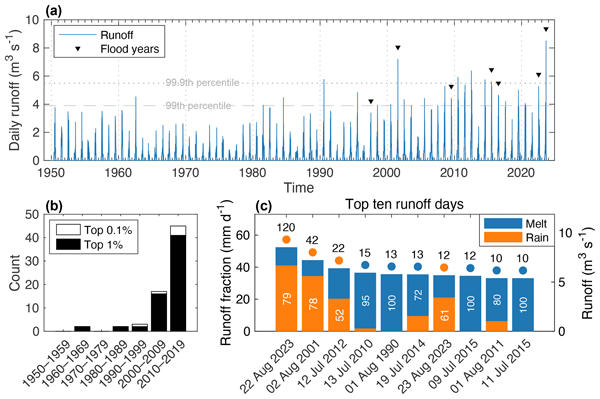
Increased runoff due to ice melt in Greenland contributes to sea-level rise and flooding in coastal settlements. We reconstructed glacier runoff in northwestern Greenland in 1950–2023. Long-term modeling shows a recent increase in runoff linked to changes in atmospheric circulation, characterized by enhanced northward transport of heat and moisture. The results highlight a strong influence of atmospheric variability on glacier runoff and its impacts on local communities in northern Greenland.
Francesca Pellicciotti, Adrià Fontrodona-Bach, David R. Rounce, Catriona L. Fyffe, Leif S. Anderson, Álvaro Ayala, Ben W. Brock, Pascal Buri, Stefan Fugger, Koji Fujita, Prateek Gantayat, Alexander R. Groos, Walter Immerzeel, Marin Kneib, Christoph Mayer, Shelley MacDonell, Michael McCarthy, James McPhee, Evan Miles, Heather Purdie, Ekaterina Rets, Akiko Sakai, Thomas E. Shaw, Jakob Steiner, Patrick Wagnon, and Alex Winter-Billington
The Cryosphere, 20, 1895–1928, https://doi.org/10.5194/tc-20-1895-2026, https://doi.org/10.5194/tc-20-1895-2026, 2026
Short summary
Short summary
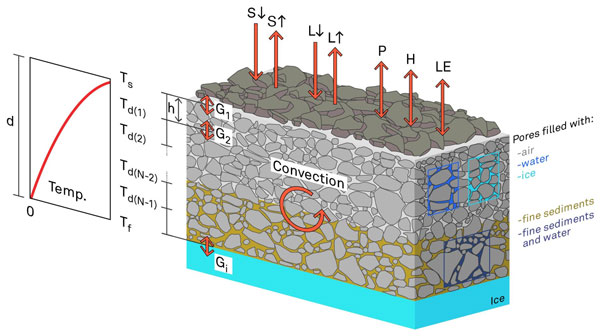
Rock debris covers many of the world glaciers, modifying the transfer of atmospheric energy to the debris and into the ice. Models of different complexity simulate this process, and we compare 15 models at 9 sites to show that the most complex models at the debris-atmosphere interface have the highest performance. However, we lack debris properties and their derivation from measurements is ambiguous, hindering global modelling and calling for both model development and data collection.
Orie Sasaki, Evan S. Miles, Francesca Pellicciotti, Akiko Sakai, and Koji Fujita
The Cryosphere, 19, 5283–5298, https://doi.org/10.5194/tc-19-5283-2025, https://doi.org/10.5194/tc-19-5283-2025, 2025
Short summary
Short summary
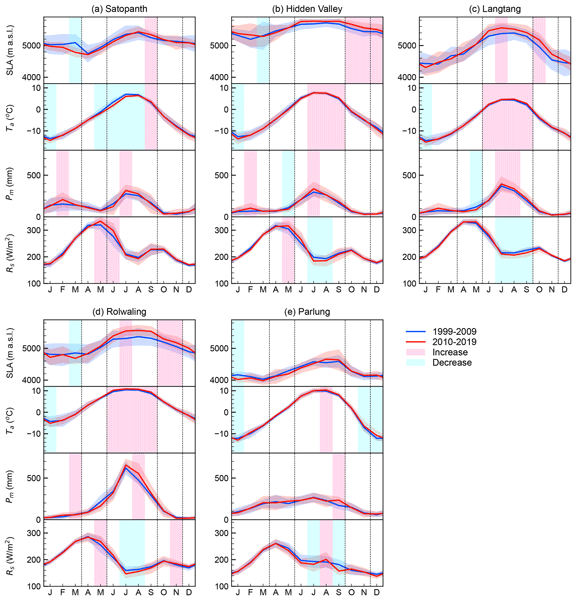
This study adapts a method to detect snowline altitude (SLA) using Google Earth Engine with high-resolution satellite imagery. Applying this method to five glaciated watersheds in the Himalayas reveals regional consistencies and differences in snow dynamics, as well as 20-year trends of snowline increases (3 catchments) and decreases (1) and no trend (1). We investigate the controls of these dynamics by analyzing climatic factors and topographic characteristics.
Zhao Wei, Shohei Hattori, Asuka Tsuruta, Zhuang Jiang, Sakiko Ishino, Koji Fujita, Sumito Matoba, Lei Geng, Alexis Lamothe, Ryu Uemura, Naohiro Yoshida, Joel Savarino, and Yoshinori Iizuka
Atmos. Chem. Phys., 25, 5727–5742, https://doi.org/10.5194/acp-25-5727-2025, https://doi.org/10.5194/acp-25-5727-2025, 2025
Short summary
Short summary
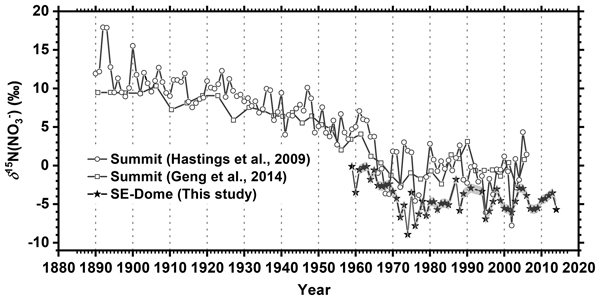
Nitrate isotope records in ice cores reveal changes in NOₓ emissions and atmospheric oxidation chemistry driven by human activity. However, UV-driven postdepositional processes can alter nitrate in snow, making snow accumulation rates critical for preserving these records. This study examines nitrate isotopes in a southeastern Greenland ice core, where high snow accumulation minimizes these effects, providing a reliable archive of atmospheric nitrogen cycling.
Naoko Nagatsuka, Kumiko Goto-Azuma, Kana Nagashima, Koji Fujita, Yuki Komuro, Motohiro Hirabayashi, Jun Ogata, Kaori Fukuda, Yoshimi Ogawa-Tsukagawa, Kyotaro Kitamura, Ayaka Yonekura, Fumio Nakazawa, Yukihiko Onuma, Naoyuki Kurita, Sune Olander Rasmussen, Giulia Sinnl, Trevor James Popp, and Dorthe Dahl-Jensen
EGUsphere, https://doi.org/10.5194/egusphere-2025-1522, https://doi.org/10.5194/egusphere-2025-1522, 2025
Preprint archived
Short summary
Short summary
We present the first continuous records of dust size, composition, and temporal variations in potential sources from the northeastern Greenland ice core (EGRIP) over the past 100 years. Using a multi-proxy provenance approach based on individual particle analysis, we identify the primary dust sources as the Asian (Gobi) and African (Sahara) deserts. Our findings show shifts in their contributions since the 1970s–1980s, highlighting the effectiveness of this approach during low dust periods.

Kumiko Goto-Azuma, Yoshimi Ogawa-Tsukagawa, Kaori Fukuda, Koji Fujita, Motohiro Hirabayashi, Remi Dallmayr, Jun Ogata, Nobuhiro Moteki, Tatsuhiro Mori, Sho Ohata, Yutaka Kondo, Makoto Koike, Sumito Matoba, Moe Kadota, Akane Tsushima, Naoko Nagatsuka, and Teruo Aoki
Atmos. Chem. Phys., 25, 657–683, https://doi.org/10.5194/acp-25-657-2025, https://doi.org/10.5194/acp-25-657-2025, 2025
Short summary
Short summary
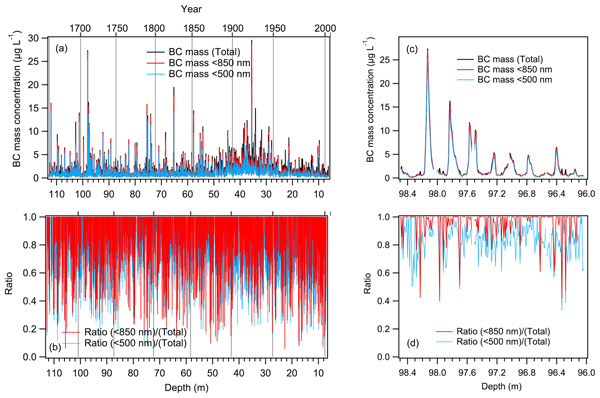
Monthly ice core records spanning 350 years from Greenland show trends in refractory black carbon (rBC) concentrations and sizes. rBC levels have increased since the 1870s due to the inflow of anthropogenic rBC, with larger diameters than those from biomass burning (BB) rBC. High summer BB rBC peaks may reduce the ice sheet albedo, but BB rBC showed no increase until the early 2000s. These results are vital for validating aerosol and climate models.
Kumiko Goto-Azuma, Remi Dallmayr, Yoshimi Ogawa-Tsukagawa, Nobuhiro Moteki, Tatsuhiro Mori, Sho Ohata, Yutaka Kondo, Makoto Koike, Motohiro Hirabayashi, Jun Ogata, Kyotaro Kitamura, Kenji Kawamura, Koji Fujita, Sumito Matoba, Naoko Nagatsuka, Akane Tsushima, Kaori Fukuda, and Teruo Aoki
Atmos. Chem. Phys., 24, 12985–13000, https://doi.org/10.5194/acp-24-12985-2024, https://doi.org/10.5194/acp-24-12985-2024, 2024
Short summary
Short summary
We developed a continuous flow analysis system to analyze an ice core from northwestern Greenland and coupled it with an improved refractory black carbon (rBC) measurement technique. This allowed accurate high-resolution analyses of size distributions and concentrations of rBC particles with diameters of 70 nm–4 μm for the past 350 years. Our results provide crucial insights into rBC's climatic effects. We also found previous ice core studies substantially underestimated rBC mass concentrations.
Vigan Mensah, Koji Fujita, Stephen Howell, Miho Ikeda, Mizuki Komatsu, and Kay I. Ohshima
EGUsphere, https://doi.org/10.5194/egusphere-2023-2492, https://doi.org/10.5194/egusphere-2023-2492, 2023
Preprint archived
Short summary
Short summary
We estimated the volume of freshwater released by sea ice, glaciers, rivers, and precipitation into Baffin Bay and the Labrador Sea, and their changes over the past 70 years. We found that the freshwater volume has risen in Baffin Bay due to increased glacier melting, and dropped in the Labrador Sea because of the decline in sea ice production. We also infer that freshwater from the Arctic Ocean has been exported to our study region for the past 30 years, possibly as a result of global warming.
Motoshi Nishimura, Teruo Aoki, Masashi Niwano, Sumito Matoba, Tomonori Tanikawa, Tetsuhide Yamasaki, Satoru Yamaguchi, and Koji Fujita
Earth Syst. Sci. Data, 15, 5207–5226, https://doi.org/10.5194/essd-15-5207-2023, https://doi.org/10.5194/essd-15-5207-2023, 2023
Short summary
Short summary
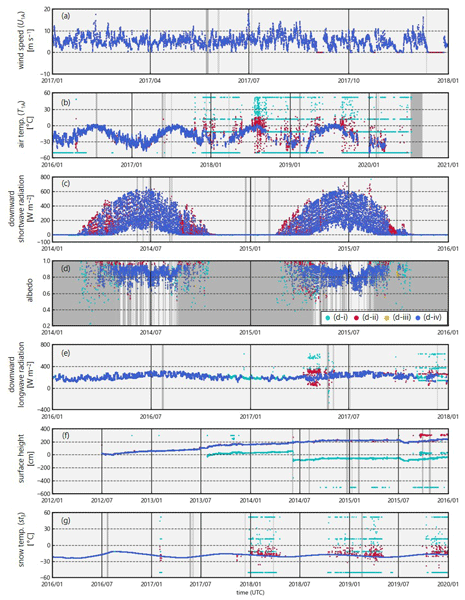
We presented the method of data quality checks and the dataset for two ground weather observations in northwest Greenland. We found that the warm and clear weather conditions in the 2015, 2019, and 2020 summers caused the snowmelt and the decline in surface reflectance of solar radiation at a low-elevated site (SIGMA-B; 944 m), but those were not seen at the high-elevated site (SIGMA-A; 1490 m). We hope that our data management method and findings will help climate scientists.
Yukihiko Onuma, Koji Fujita, Nozomu Takeuchi, Masashi Niwano, and Teruo Aoki
The Cryosphere, 17, 3309–3328, https://doi.org/10.5194/tc-17-3309-2023, https://doi.org/10.5194/tc-17-3309-2023, 2023
Short summary
Short summary
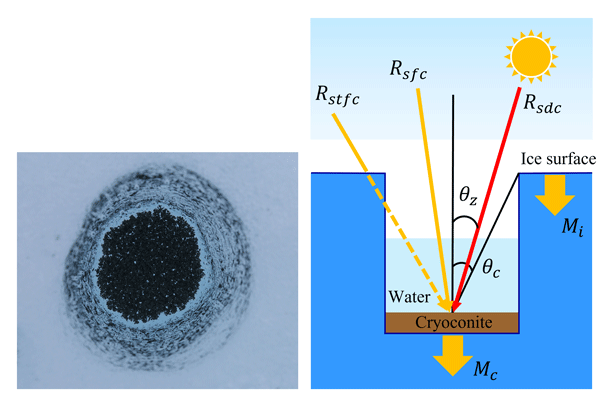
We established a novel model that simulates the temporal changes in cryoconite hole (CH) depth using heat budgets calculated independently at the ice surface and CH bottom based on hole shape geometry. The simulations suggest that CH depth is governed by the balance between the intensity of the diffuse component of downward shortwave radiation and the wind speed. The meteorological conditions may be important factors contributing to the recent ice surface darkening via the redistribution of CHs.
Naoko Nagatsuka, Kumiko Goto-Azuma, Koji Fujita, Yuki Komuro, Motohiro Hirabayashi, Jun Ogata, Kaori Fukuda, Yoshimi Ogawa-Tsukagawa, Kyotaro Kitamura, Ayaka Yonekura, Fumio Nakazawa, Yukihiko Onuma, Naoyuki Kurita, Sune Olander Rasmussen, Giulia Sinnl, Trevor James Popp, and Dorthe Dahl-Jensen
EGUsphere, https://doi.org/10.5194/egusphere-2023-1666, https://doi.org/10.5194/egusphere-2023-1666, 2023
Preprint archived
Short summary
Short summary
We present a new high-temporal-resolution record of mineral composition in a northeastern Greenland ice-core (EGRIP) over the past 100 years. The ice core dust composition and its variation differed significantly from a northwestern Greenland ice core, which is likely due to differences in the geological sources of the dust. Our results suggest that the EGRIP ice core dust was constantly supplied from Northern Eurasia, North America, and Asia with minor contribution from Greenland coast.
Yota Sato, Koji Fujita, Hiroshi Inoue, Akiko Sakai, and Karma
The Cryosphere, 16, 2643–2654, https://doi.org/10.5194/tc-16-2643-2022, https://doi.org/10.5194/tc-16-2643-2022, 2022
Short summary
Short summary
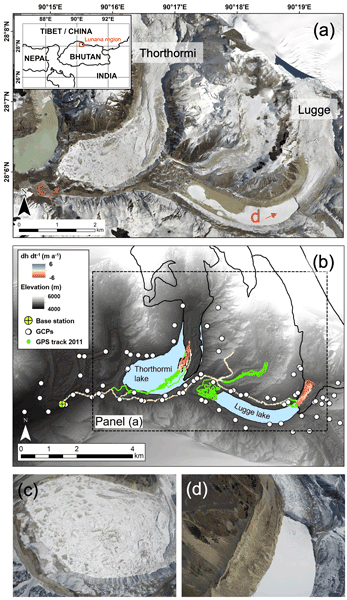
We investigate fluctuations in Bhutanese lake-terminating glaciers focusing on the dynamics change before and after proglacial lake formation at Thorthormi Glacier (TG) based on photogrammetry, satellite, and GPS surveys. The thinning rate of TG became double compared to before proglacial lake formation, and the flow velocity has also sped up considerably. Those changes would be due to the reduction in longitudinal ice compression by the detachment of the glacier terminus from the end moraine.
Ken Kondo and Koji Fujita
Hydrol. Earth Syst. Sci., 30, 1849–1864, https://doi.org/10.5194/hess-30-1849-2026, https://doi.org/10.5194/hess-30-1849-2026, 2026
Short summary
Short summary
Increased runoff due to ice melt in Greenland contributes to sea-level rise and flooding in coastal settlements. We reconstructed glacier runoff in northwestern Greenland in 1950–2023. Long-term modeling shows a recent increase in runoff linked to changes in atmospheric circulation, characterized by enhanced northward transport of heat and moisture. The results highlight a strong influence of atmospheric variability on glacier runoff and its impacts on local communities in northern Greenland.
Javed Hassan, Karina Nielsen, William Colgan, Rijan Bhakta Kayastha, Mira Khadka, and Shfaqat Abbas Khan
EGUsphere, https://doi.org/10.5194/egusphere-2026-808, https://doi.org/10.5194/egusphere-2026-808, 2026
Short summary
Short summary
High-altitude lakes in High Mountain Asia (HMA) are important sources of freshwater and sensitive indicators of environmental change. Using satellite data from 2010 to 2024, we examine water level changes in 232 lakes across HMA. Results show rising lake levels on the Tibetan Plateau, while lakes in the Himalaya are declining. These contrasting patterns highlight strong regional differences and provide valuable information for understanding water availability and associated hazards.
Francesca Pellicciotti, Adrià Fontrodona-Bach, David R. Rounce, Catriona L. Fyffe, Leif S. Anderson, Álvaro Ayala, Ben W. Brock, Pascal Buri, Stefan Fugger, Koji Fujita, Prateek Gantayat, Alexander R. Groos, Walter Immerzeel, Marin Kneib, Christoph Mayer, Shelley MacDonell, Michael McCarthy, James McPhee, Evan Miles, Heather Purdie, Ekaterina Rets, Akiko Sakai, Thomas E. Shaw, Jakob Steiner, Patrick Wagnon, and Alex Winter-Billington
The Cryosphere, 20, 1895–1928, https://doi.org/10.5194/tc-20-1895-2026, https://doi.org/10.5194/tc-20-1895-2026, 2026
Short summary
Short summary
Rock debris covers many of the world glaciers, modifying the transfer of atmospheric energy to the debris and into the ice. Models of different complexity simulate this process, and we compare 15 models at 9 sites to show that the most complex models at the debris-atmosphere interface have the highest performance. However, we lack debris properties and their derivation from measurements is ambiguous, hindering global modelling and calling for both model development and data collection.
Orie Sasaki, Evan S. Miles, Francesca Pellicciotti, Akiko Sakai, and Koji Fujita
The Cryosphere, 19, 5283–5298, https://doi.org/10.5194/tc-19-5283-2025, https://doi.org/10.5194/tc-19-5283-2025, 2025
Short summary
Short summary
This study adapts a method to detect snowline altitude (SLA) using Google Earth Engine with high-resolution satellite imagery. Applying this method to five glaciated watersheds in the Himalayas reveals regional consistencies and differences in snow dynamics, as well as 20-year trends of snowline increases (3 catchments) and decreases (1) and no trend (1). We investigate the controls of these dynamics by analyzing climatic factors and topographic characteristics.
Sujan Thapa, Ragini Vaidya, Mohan Bahadur Chand, and Rijan Bhakta Kayastha
EGUsphere, https://doi.org/10.5194/egusphere-2025-4454, https://doi.org/10.5194/egusphere-2025-4454, 2025
Preprint archived
Short summary
Short summary
This study examines how avalanches striking a glacial lake can cause sudden floods downstream in Nepal's Manaslu region. We used computer simulations to simulate various avalanche sizes and their effects on the lake. These simulations revealed that medium and large avalanches could lead to severe flooding in a short amount of time. This highlights the pressing need for early warning systems and better disaster preparedness to protect at-risk communities.
Zhao Wei, Shohei Hattori, Asuka Tsuruta, Zhuang Jiang, Sakiko Ishino, Koji Fujita, Sumito Matoba, Lei Geng, Alexis Lamothe, Ryu Uemura, Naohiro Yoshida, Joel Savarino, and Yoshinori Iizuka
Atmos. Chem. Phys., 25, 5727–5742, https://doi.org/10.5194/acp-25-5727-2025, https://doi.org/10.5194/acp-25-5727-2025, 2025
Short summary
Short summary
Nitrate isotope records in ice cores reveal changes in NOₓ emissions and atmospheric oxidation chemistry driven by human activity. However, UV-driven postdepositional processes can alter nitrate in snow, making snow accumulation rates critical for preserving these records. This study examines nitrate isotopes in a southeastern Greenland ice core, where high snow accumulation minimizes these effects, providing a reliable archive of atmospheric nitrogen cycling.
Naoko Nagatsuka, Kumiko Goto-Azuma, Kana Nagashima, Koji Fujita, Yuki Komuro, Motohiro Hirabayashi, Jun Ogata, Kaori Fukuda, Yoshimi Ogawa-Tsukagawa, Kyotaro Kitamura, Ayaka Yonekura, Fumio Nakazawa, Yukihiko Onuma, Naoyuki Kurita, Sune Olander Rasmussen, Giulia Sinnl, Trevor James Popp, and Dorthe Dahl-Jensen
EGUsphere, https://doi.org/10.5194/egusphere-2025-1522, https://doi.org/10.5194/egusphere-2025-1522, 2025
Preprint archived
Short summary
Short summary
We present the first continuous records of dust size, composition, and temporal variations in potential sources from the northeastern Greenland ice core (EGRIP) over the past 100 years. Using a multi-proxy provenance approach based on individual particle analysis, we identify the primary dust sources as the Asian (Gobi) and African (Sahara) deserts. Our findings show shifts in their contributions since the 1970s–1980s, highlighting the effectiveness of this approach during low dust periods.
Kumiko Goto-Azuma, Yoshimi Ogawa-Tsukagawa, Kaori Fukuda, Koji Fujita, Motohiro Hirabayashi, Remi Dallmayr, Jun Ogata, Nobuhiro Moteki, Tatsuhiro Mori, Sho Ohata, Yutaka Kondo, Makoto Koike, Sumito Matoba, Moe Kadota, Akane Tsushima, Naoko Nagatsuka, and Teruo Aoki
Atmos. Chem. Phys., 25, 657–683, https://doi.org/10.5194/acp-25-657-2025, https://doi.org/10.5194/acp-25-657-2025, 2025
Short summary
Short summary
Monthly ice core records spanning 350 years from Greenland show trends in refractory black carbon (rBC) concentrations and sizes. rBC levels have increased since the 1870s due to the inflow of anthropogenic rBC, with larger diameters than those from biomass burning (BB) rBC. High summer BB rBC peaks may reduce the ice sheet albedo, but BB rBC showed no increase until the early 2000s. These results are vital for validating aerosol and climate models.
Kumiko Goto-Azuma, Remi Dallmayr, Yoshimi Ogawa-Tsukagawa, Nobuhiro Moteki, Tatsuhiro Mori, Sho Ohata, Yutaka Kondo, Makoto Koike, Motohiro Hirabayashi, Jun Ogata, Kyotaro Kitamura, Kenji Kawamura, Koji Fujita, Sumito Matoba, Naoko Nagatsuka, Akane Tsushima, Kaori Fukuda, and Teruo Aoki
Atmos. Chem. Phys., 24, 12985–13000, https://doi.org/10.5194/acp-24-12985-2024, https://doi.org/10.5194/acp-24-12985-2024, 2024
Short summary
Short summary
We developed a continuous flow analysis system to analyze an ice core from northwestern Greenland and coupled it with an improved refractory black carbon (rBC) measurement technique. This allowed accurate high-resolution analyses of size distributions and concentrations of rBC particles with diameters of 70 nm–4 μm for the past 350 years. Our results provide crucial insights into rBC's climatic effects. We also found previous ice core studies substantially underestimated rBC mass concentrations.
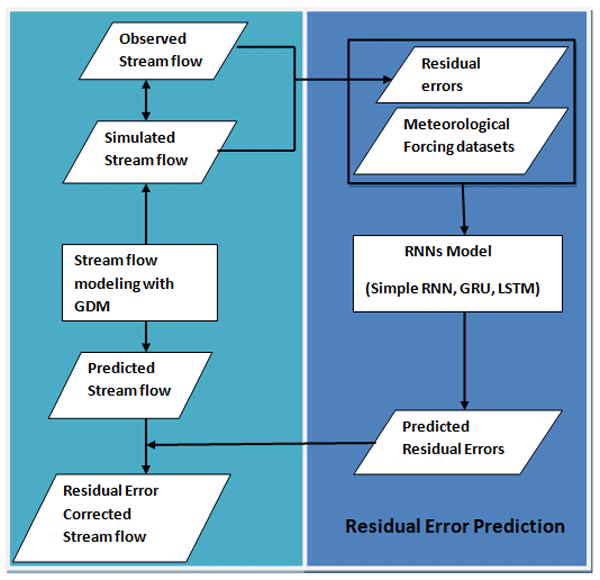
Dinesh Joshi, Rijan Bhakta Kayastha, Kundan Lal Shrestha, and Rakesh Kayastha
Proc. IAHS, 387, 17–24, https://doi.org/10.5194/piahs-387-17-2024, https://doi.org/10.5194/piahs-387-17-2024, 2024
Short summary
Short summary
This study explores the potential of integrating data science models to enhance the predictive capacity of a theory-guided glacier hydrological model for improved river discharge simulations in the Himalayan basins. By combining data science and physical process models, the study addresses the limitations inherent in each approach.
Rijan Bhakta Kayastha, Hari Krishna Shrestha, and Dhiraj Pradhananga
Proc. IAHS, 387, 1–2, https://doi.org/10.5194/piahs-387-1-2024, https://doi.org/10.5194/piahs-387-1-2024, 2024
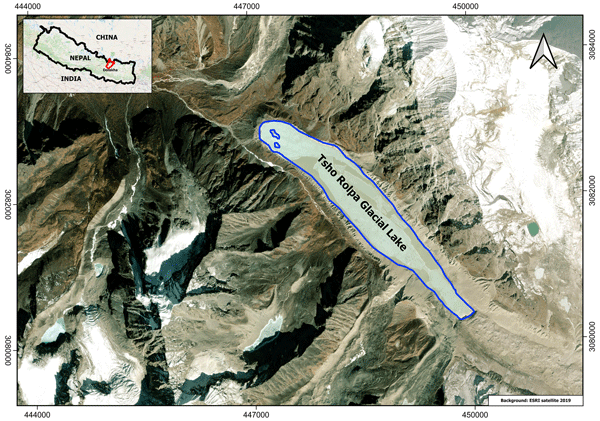
Rijan Bhakta Kayastha and Sunwi Maskey
Proc. IAHS, 387, 59–63, https://doi.org/10.5194/piahs-387-59-2024, https://doi.org/10.5194/piahs-387-59-2024, 2024
Short summary
Short summary
Glacial lake outburst flood (GLOF) modeling of Tsho Rolpa showed that, even if the lake breaches by 20 m in 40 years (from 2021), there will be a sufficient lead time of more than 7 h for early warning and human evacuations in the downstream areas. However, precautionary measures such as community-based GLOF early-warning systems and mechanisms allowing close observation in the case of GLOF events should be established in GLOF-prone regions.
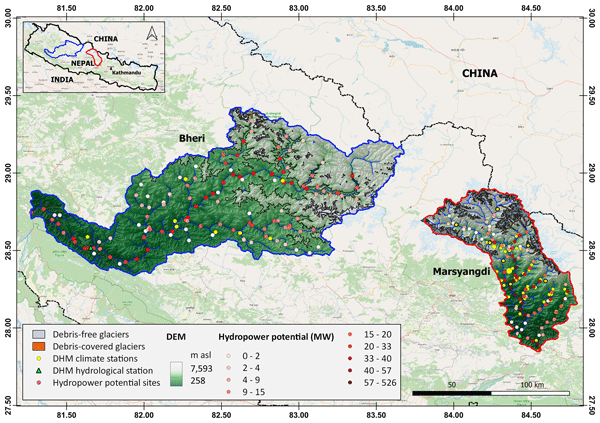
Rakesh Kayastha, Rijan Bhakta Kayastha, Kundan Lal Shrestha, and Smriti Gurung
Proc. IAHS, 387, 53–58, https://doi.org/10.5194/piahs-387-53-2024, https://doi.org/10.5194/piahs-387-53-2024, 2024
Short summary
Short summary
We have estimated hydropower potential in the two glacierized river basins of the Nepalese Himalayas. The Glacio-hydrological Degree-Day Model (GDM) was used with different geospatial criteria. In order to force the model simulation and to assess potential future hydrological regimes, a variety of climate variables were combined and used. The sensitivity of climate variables and their impact on hydropower potential were investigated with a combination of different climate variables.
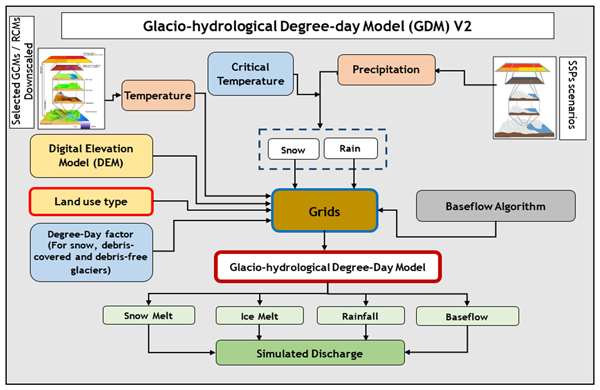
Kundan Lal Shrestha, Rijan Bhakta Kayastha, and Rakesh Kayastha
Proc. IAHS, 387, 25–31, https://doi.org/10.5194/piahs-387-25-2024, https://doi.org/10.5194/piahs-387-25-2024, 2024
Short summary
Short summary
The Himalayan river basins have complex terrain and lack detailed hydrological and meteorological information. This has motivated us to develop a fast and distributed model named PyGDM to simulate the hydrology of this region, which is home to both glaciers and snow. PyGDM is good at simulating glacier and snow melt. Hence, the model is suitable for studying different aspects of the Himalayan region, such as the impact of climate change and hydropower scenarios.
Vigan Mensah, Koji Fujita, Stephen Howell, Miho Ikeda, Mizuki Komatsu, and Kay I. Ohshima
EGUsphere, https://doi.org/10.5194/egusphere-2023-2492, https://doi.org/10.5194/egusphere-2023-2492, 2023
Preprint archived
Short summary
Short summary
We estimated the volume of freshwater released by sea ice, glaciers, rivers, and precipitation into Baffin Bay and the Labrador Sea, and their changes over the past 70 years. We found that the freshwater volume has risen in Baffin Bay due to increased glacier melting, and dropped in the Labrador Sea because of the decline in sea ice production. We also infer that freshwater from the Arctic Ocean has been exported to our study region for the past 30 years, possibly as a result of global warming.
Motoshi Nishimura, Teruo Aoki, Masashi Niwano, Sumito Matoba, Tomonori Tanikawa, Tetsuhide Yamasaki, Satoru Yamaguchi, and Koji Fujita
Earth Syst. Sci. Data, 15, 5207–5226, https://doi.org/10.5194/essd-15-5207-2023, https://doi.org/10.5194/essd-15-5207-2023, 2023
Short summary
Short summary
We presented the method of data quality checks and the dataset for two ground weather observations in northwest Greenland. We found that the warm and clear weather conditions in the 2015, 2019, and 2020 summers caused the snowmelt and the decline in surface reflectance of solar radiation at a low-elevated site (SIGMA-B; 944 m), but those were not seen at the high-elevated site (SIGMA-A; 1490 m). We hope that our data management method and findings will help climate scientists.
Yukihiko Onuma, Koji Fujita, Nozomu Takeuchi, Masashi Niwano, and Teruo Aoki
The Cryosphere, 17, 3309–3328, https://doi.org/10.5194/tc-17-3309-2023, https://doi.org/10.5194/tc-17-3309-2023, 2023
Short summary
Short summary
We established a novel model that simulates the temporal changes in cryoconite hole (CH) depth using heat budgets calculated independently at the ice surface and CH bottom based on hole shape geometry. The simulations suggest that CH depth is governed by the balance between the intensity of the diffuse component of downward shortwave radiation and the wind speed. The meteorological conditions may be important factors contributing to the recent ice surface darkening via the redistribution of CHs.
Naoko Nagatsuka, Kumiko Goto-Azuma, Koji Fujita, Yuki Komuro, Motohiro Hirabayashi, Jun Ogata, Kaori Fukuda, Yoshimi Ogawa-Tsukagawa, Kyotaro Kitamura, Ayaka Yonekura, Fumio Nakazawa, Yukihiko Onuma, Naoyuki Kurita, Sune Olander Rasmussen, Giulia Sinnl, Trevor James Popp, and Dorthe Dahl-Jensen
EGUsphere, https://doi.org/10.5194/egusphere-2023-1666, https://doi.org/10.5194/egusphere-2023-1666, 2023
Preprint archived
Short summary
Short summary
We present a new high-temporal-resolution record of mineral composition in a northeastern Greenland ice-core (EGRIP) over the past 100 years. The ice core dust composition and its variation differed significantly from a northwestern Greenland ice core, which is likely due to differences in the geological sources of the dust. Our results suggest that the EGRIP ice core dust was constantly supplied from Northern Eurasia, North America, and Asia with minor contribution from Greenland coast.
Yota Sato, Koji Fujita, Hiroshi Inoue, Akiko Sakai, and Karma
The Cryosphere, 16, 2643–2654, https://doi.org/10.5194/tc-16-2643-2022, https://doi.org/10.5194/tc-16-2643-2022, 2022
Short summary
Short summary
We investigate fluctuations in Bhutanese lake-terminating glaciers focusing on the dynamics change before and after proglacial lake formation at Thorthormi Glacier (TG) based on photogrammetry, satellite, and GPS surveys. The thinning rate of TG became double compared to before proglacial lake formation, and the flow velocity has also sped up considerably. Those changes would be due to the reduction in longitudinal ice compression by the detachment of the glacier terminus from the end moraine.
Cited articles
Azam, M. F., Wagnon, P., Berthier, E., Vincent, C., Fujita, K., and Kargel, J. S.: Review of the status and mass changes of Himalayan-Karakoram glaciers, J. Glaciol., 64, 61–74, https://doi.org/10.1017/jog.2017.86, 2018. a
Bahr, D. B. and Radić, V.: Significant contribution to total mass from very small glaciers, The Cryosphere, 6, 763–770, https://doi.org/10.5194/tc-6-763-2012, 2012. a
Basantes-Serrano, R., Soria, A., Cusicanqui, D., Rojas, S., Torres, G., Rivadeneira, A., Jaramillo, N., Pilliza, E., and Calderon, L.: In memory of Kari-Huayra-Razu, a recently ice cap disappeared in the inner tropics, Ann. Glaciol., 67, e14, https://doi.org/10.1017/aog.2025.10036, 2026. a
Bello, C., Cashpa, V., Vilca, L., Cruz, R., Torres, C., and Rabatel, A.: Vanishing of the Glacier Yanamarey, one of the four glaciers with in situ measurements in the Cordillera Blanca, Peru, Ann. Glaciol., 67, e8, https://doi.org/10.1017/aog.2025.10035, 2026. a
Braithwaite, R. J. and Hughes, P. D.: Regional geography of glacier mass balance variability over seven decades 1946–2015, Front. Earth Sci., 8, 302, https://doi.org/10.3389/feart.2020.00302, 2020. a
Florentine, C., Sass, L., McNeil, C., Baker, E., and O'Neel, S.: How to handle glacier area change in geodetic mass balance, J. Glaciol., 69, 2169–2175, https://doi.org/10.1017/jog.2023.86, 2023. a
Fujita, K.: Influence of precipitation seasonality on glacier mass balance and its sensitivity to climate change, Ann. Glaciol., 48, 88–92, https://doi.org/10.3189/172756408784700824, 2008. a, b
Fujita, K.: Daily meteorological data observed at Trakarding Glacier AWS (2022-2023) in the Rolwaling region, Nepal Himalaya, Zenodo [data set], https://doi.org/10.5281/zenodo.18502771, 2026a. a
Fujita, K.: Drone-based orthomosaic and DEM of Glaciers AX010 and AX000 surveyed in 2023 in the Shorong region, Nepal Himalaya, Zenodo [data set], https://doi.org/10.5281/zenodo.18504092, 2026b. a
Fujita, K.: GNSS data around Glaciers AX010 and AX000 surveyed in 2008 and 2023 in the Shorong region, Nepal Himalaya, Zenodo [data set], https://doi.org/10.5281/zenodo.18503873, 2026c. a
Fujita, K.: Hypsometry of Glacier AX010 in the Shorong region, Nepal Himalaya, Zenodo [data set], https://doi.org/10.5281/zenodo.18503308, 2026d. a
Fujita, K.: Simulated annual mass balance of Glaciers AX010 in the Shorong region, Nepal Himalaya, Zenodo [data set], https://doi.org/10.5281/zenodo.20945457, 2026e. a
Fujita, K.: Daily temperature and stake-based mass balance observed at Glacier AX010 in 1978 and the 1990s in the Shorong region, Nepal Himalaya, Zenodo [data set], https://doi.org/10.5281/zenodo.18503128, 2026f. a
Fujita, K. and Nuimura, T.: Spatially heterogeneous wastage of Himalayan glaciers, P. Natl. Acad. Sci. USA, 108, 14011–14014, https://doi.org/10.1073/pnas.1106242108, 2011. a, b, c
Fujita, K. and Sakai, A.: Modelling runoff from a Himalayan debris-covered glacier, Hydrol. Earth Syst. Sci., 18, 2679–2694, https://doi.org/10.5194/hess-18-2679-2014, 2014. a, b, c, d
Hersbach, H., Bell, B., Berrisford, P., Hirahara, S., Horányi, A., Muñoz-Sabater, J., Nicolas, J., Peubey, C., Radu, R., Schepers, D., Simmons, A., Soci, C., Abdalla, S., Abellan, X., Balsamo, G., Bechtold, P., Biavati, G., Bidlot, J., Bonavita, M., De Chiara, G., Dahlgren, P., Dee, D., Diamantakis, M., Dragani, R., Flemming, J., Forbes, R., Fuentes, M., Geer, A., Haimberger, L., Healy, S., Hogan, R. J., Hólm, E., Janisková, M., Keeley, S., Laloyaux, P., Lopez, P., Lupu, C., Radnoti, G., de Rosnay, P., Rozum, I., Vamborg, F., Villaume, S., and Thépaut, J.-N.: The ERA5 global reanalysis, Q. J. Roy. Meteor. Soc., 146, 1999–2049, https://doi.org/10.1002/qj.3803, 2020. a
Hersbach, H., Bell, B., Berrisford, P., Biavati, G., Horányi, A., Muñoz Sabater, J., Nicolas, J., Peubey, C., Radu, R., Rozum, I., Schepers, D., Simmons, A., Soci, C., Dee, D., and Thépaut, J.-N.: ERA5 hourly data on pressure levels from 1940 to present, Copernicus Climate Change Service (C3S) Climate Data Store (CDS) [data set], https://doi.org/10.24381/cds.bd0915c6, 2023a. a
Hersbach, H., Bell, B., Berrisford, P., Biavati, G., Horányi, A., Muñoz Sabater, J., Nicolas, J., Peubey, C., Radu, R., Rozum, I., Schepers, D., Simmons, A., Soci, C., Dee, D., and Thépaut, J.-N.: ERA5 hourly data on single levels from 1940 to present, Copernicus Climate Change Service (C3S) Climate Data Store (CDS) [data set], https://doi.org/10.24381/cds.adbb2d47, 2023b. a
Hock, R.: Temperature index melt modelling in mountain areas, J. Hydrol., 282, 104–115, https://doi.org/10.1016/S0022-1694(03)00257-9, 2003. a
Hugonnet, R., McNabb, R., Berthier, E., Menounos, B., Nuth, C., Girod, L., Farinotti, D., Huss, M., Dussaillant, I., Brun, F., and Kääb, A.: Accelerated global glacier mass loss in the early twenty-first century, Nature, 592, 726–731, https://doi.org/10.1038/s41586-021-03436-z, 2021a. a, b, c, d, e, f, g
Hugonnet, R., McNabb, R., Berthier, E., Menounos, B., Nuth, C., Girod, L., Farinotti, D., Huss, M., Dussaillant, I., Brun, F., and Kääb, A.: Accelerated global glacier mass loss in the early twenty-first century – Dataset, Theia [data set], https://doi.org/10.6096/13, 2021b. a
Huss, M. and Fischer, M.: Sensitivity of very small glaciers in the Swiss Alps to future climate change, Front. Earth Sci., 4, 34, https://doi.org/10.3389/feart.2016.00034, 2016. a
Jouberton, A., Shaw, T. E., Miles, E., McCarthy, M., Fugger, S., Ren, S., Dehecq, A., Yang, W., and Pellicciotti, F.: Warming-induced monsoon precipitation phase change intensifies glacier mass loss in the southeastern Tibetan Plateau, P. Natl. Acad. Sci. USA, 119, e2109796119, https://doi.org/10.1073/pnas.2109796119, 2022. a
Kadota, T. and Ageta, Y.: On the relation between climate and retreat of Glacier AX010 in the Nepal Himalaya from 1978 to 1989, Bulletin of Glacier Research, 10, 1–10, 1992. a
Kadota, T., Fujita, K., Seko, K., Kayastha, R. B., and Ageta, Y.: Monitoring and prediction of shrinkage of a small glacier in the Nepal Himalaya, Ann. Glaciol., 24, 90–94, https://doi.org/10.3189/S0260305500011988, 1997. a, b, c
Khadka, A., Wagnon, P., Brun, F., Shrestha, D., Lejeune, Y., and Arnaud, Y.: Evaluation of ERA5-Land and HARv2 reanalysis data at high elevation in the upper Dudh Koshi basin (Everest region, Nepal), J. Appl. Meteorol., 61, 931–954, https://doi.org/10.1175/JAMC-D-21-0091.1, 2022. a
Khadka, A., Brun, F., Wagnon, P., Shrestha, D., and Sherpa, T. C.: Surface energy and mass balance of Mera Glacier (Nepal, Central Himalaya) and their sensitivity to temperature and precipitation, J. Glaciol., 70, e80, https://doi.org/10.1017/jog.2024.42, 2024. a, b
Khalzan, P., Sakai, A., and Fujita, K.: Mass balance of four Mongolian glaciers: in-situ measurements, long-term reconstruction and sensitivity analysis, Front. Earth Sci., 9, 785306, https://doi.org/10.3389/feart.2021.785306, 2022. a, b, c
Kondo, K. and Fujita, K.: Increasing glacier runoff in northwestern Greenland simulated from 1950 to 2023, Hydrol. Earth Syst. Sci., 30, 1849–1864, https://doi.org/10.5194/hess-30-1849-2026, 2026. a
Lutz, A., Immerzeel, W., Shrestha, A., and Bierkens, M.: Consistent increase in High Asia's runoff due to increasing glacier melt and precipitation, Nat. Clim. Change, 4, 587–592, https://doi.org/10.1038/nclimate2237, 2014. a
Maurer, J. M., Schaefer, J., Rupper, S., and Corley, A.: Acceleration of ice loss across the Himalayas over the past 40 years, Science Advances, 5, eaav7266, https://doi.org/10.1126/sciadv.aav7266, 2019. a, b, c
McCerery, R., Lovell, H., King, O., Davies, B. J., Boston, C. M., Małecki, J., Carrivick, J., and Woodward, J.: Retreat and volume loss of two rapidly vanishing Svalbard glaciers since 1938: Elsabreen and Ferdinandbreen, Petuniabukta, Ann. Glaciol., 67, e3, https://doi.org/10.1017/aog.2025.10034, 2026. a
Nuimura, T., Fujita, K., Yamaguchi, S., and Sharma, R. R.: Elevation changes of glaciers revealed by multitemporal digital elevation models calibrated by GPS survey in the Khumbu region, Nepal Himalaya, 1992–2008, J. Glaciol., 58, 648–656, https://doi.org/10.3189/2012JoG11J061, 2012. a
Nuimura, T., Sakai, A., Taniguchi, K., Nagai, H., Lamsal, D., Tsutaki, S., Kozawa, A., Hoshina, Y., Takenaka, S., Omiya, S., Tsunematsu, K., Tshering, P., and Fujita, K.: The GAMDAM glacier inventory: a quality-controlled inventory of Asian glaciers, The Cryosphere, 9, 849–864, https://doi.org/10.5194/tc-9-849-2015, 2015. a
Ojha, S., Fujita, K., Asahi, K., Sakai, A., Lamsal, D., Nuimura, T., and Nagai, H.: Glacier area shrinkage in eastern Nepal Himalaya since 1992 using high-resolution inventories from aerial photographs and ALOS satellite images, J. Glaciol., 62, 512–524, https://doi.org/10.1017/jog.2016.61, 2016. a
Parkes, D. and Marzeion, B.: Twentieth-century contribution to sea-level rise from uncharted glaciers, Nature, 563, 551–554, https://doi.org/10.1038/s41586-018-0687-9, 2018. a
Purdie, H., Kerr, T., Robson, B. A., Anderson, B., Lorrey, A., Rack, W., Brasington, J., and Bealing, P.: Mass balance characteristics of the “vanishing' Rolleston Glacier, New Zealand, Ann. Glaciol., 66, e31, https://doi.org/10.1017/aog.2025.10032, 2025. a
Raup, B., Andreassen, L. M., Boyer, D., Howe, C., Pelto, M., and Rabatel, A.: Tracking extinct glaciers in GLIMS, Ann. Glaciol., 66, e35, https://doi.org/10.1017/aog.2025.10027, 2025. a
Sakai, A.: Brief communication: Updated GAMDAM glacier inventory over high-mountain Asia , The Cryosphere, 13, 2043–2049, https://doi.org/10.5194/tc-13-2043-2019, 2019. a
Sakai, A., Nuimura, T., Fujita, K., Takenaka, S., Nagai, H., and Lamsal, D.: Climate regime of Asian glaciers revealed by GAMDAM glacier inventory, The Cryosphere, 9, 865–880, https://doi.org/10.5194/tc-9-865-2015, 2015. a, b
Salerno, F., Guyennon, N., Thakuri, S., Viviano, G., Romano, E., Vuillermoz, E., Cristofanelli, P., Stocchi, P., Agrillo, G., Ma, Y., and Tartari, G.: Weak precipitation, warm winters and springs impact glaciers of south slopes of Mt. Everest (central Himalaya) in the last 2 decades (1994–2013), The Cryosphere, 9, 1229–1247, https://doi.org/10.5194/tc-9-1229-2015, 2015. a
Shean, D. E., Bhushan, S., Montesano, P., Rounce, D. R., Arendt, A., and Osmanoglu, B.: A systematic, regional assessment of high mountain Asia glacier mass balance, Front. Earth Sci., 7, 363, https://doi.org/10.3389/feart.2019.00363, 2020. a, b, c
Sunako, S., Fujita, K., Sakai, A., and Kayastha, R. B.: Mass balance of Trambau Glacier, Rolwaling region, Nepal Himalaya: in-situ observations, long-term reconstruction and mass-balance sensitivity, J. Glaciol., 65, 605–616, https://doi.org/10.1017/jog.2019.37, 2019. a
Sunako, S., Fujita, K., Izumi, T., Yamaguchi, S., Sakai, A., and Kayastha, R. B.: Up-glacier propagation of surface lowering of Yala Glacier, Langtang Valley, Nepal Himalaya, J. Glaciol., 69, 425–432, https://doi.org/10.1017/jog.2022.118, 2023. a
Tshering, P. and Fujita, K.: First in situ record of decadal glacier mass balance (2003–2014) from the Bhutan Himalaya, Ann. Glaciol., 57, 289–294, https://doi.org/10.3189/2016AoG71A036, 2016. a
Vidaller, I., Revuelto, J., Izagirre, E., Rojas-Heredia, F., Alonso-González, E., Gascoin, S., René, P., Berthier, E., Rico, I., Moreno, A., Serrano, E., A. Serreta, A., and López-Moreno, J. I.: Toward an ice-free mountain range: demise of Pyrenean glaciers during 2011–2020, Geophys. Res. Lett., 48, e2021GL094339, https://doi.org/10.1029/2021GL094339, 2021. a
Yamada, T., Shiraiwa, T., Iida, H., Kadota, T., Watanabe, T., Rana, B., Ageta, Y., and Fushimi, H.: Fluctuation of the glaciers from the 1970s to 1989 in the Kumbu, Shorong and Langtang regions, Nepal Himalayas, Bulletin of Glacier Research, 10, 11–19, 1992. a
Zeileis, A., Leisch, F., Hornik, K., and Kleiber, C.: strucchange: an R package for testing for structural change in linear regression models, J. Stat. Softw., 7, 1–38, https://doi.org/10.18637/jss.v007.i02, 2002. a
Zemp, M., Frey, H., Gärtner-Roer, I., Nussbaumer, S. U., Hoelzle, M., Paul, F., Haeberli, W., Denzinger, F., Ahlstrøm, A. P., Anderson, B., Bajracharya, S., Baroni, C., Braun, L. N., Cáceres, B. E., Casassa, G., Cobos, G., Dávila, L. R., Delgado Granados, H., Demuth, M. N., Espizua, L., Fischer, A., Fujita, K., Gadek, B., Ghazanfar, A., Hagen, J. O., Holmlund, P., Karimi, N., Li, Z. Q., Pelto, M., Pitte, P., Popovnin, V. V., Portocarrero, C. A., Prinz, R., Sangewar, C. V., Severskiy, I., Sigurðsson, O., Soruco, A., Usubaliev, R., and Vincent, C.: Historically unprecedented global glacier decline in the early 21st century, J. Glaciol., 61, 745–762, https://doi.org/10.3189/2015JoG15J017, 2015. a, b
Editorial statement
This paper describes the rapid, recent decline of Glacier AX010, the glacier with the oldest observational mass balance record in the Nepal Himalayas. It also discusses the likely disappearance of the glacier within the next two decades, highlighting the ongoing importance of monitoring small glaciers in high mountain regions given their vulnerability to climate warming.
This paper describes the rapid, recent decline of Glacier AX010, the glacier with the oldest...
Short summary
Glacier AX010 in Nepal, monitored since the 1970s, has been shrinking at an accelerating rate, mainly due to rising temperatures. Drone surveys, modeling, and reanalysis data show mass loss began in the early 1970s and intensified after 2000. While rising temperatures drive shrinkage, precipitation changes have neither accelerated nor mitigated mass loss. At the current rate, the glacier may disappear within 10–20 years.
Glacier AX010 in Nepal, monitored since the 1970s, has been shrinking at an accelerating rate,...


