
Articles | Volume 20, issue 7
https://doi.org/10.5194/tc-20-3827-2026
© Author(s) 2026. This work is distributed under
the Creative Commons Attribution 4.0 License.
the Creative Commons Attribution 4.0 License.
https://doi.org/10.5194/tc-20-3827-2026
© Author(s) 2026. This work is distributed under
the Creative Commons Attribution 4.0 License.
the Creative Commons Attribution 4.0 License.
Research article
| Highlight paper
| 
13 Jul 2026
Research article | Highlight paper |
| 13 Jul 2026
| 13 Jul 2026
Contrasting dynamics of lake- and marine-terminating glaciers under same climatic conditions

Department of Physical Geography, Utrecht University, Utrecht, The Netherlands
Faezeh M. Nick
Department of Physical Geography, Utrecht University, Utrecht, The Netherlands
Douglas Benn
School of Geography and Sustainable Development, University of St Andrews, St Andrews, UK
Maarten P. A. Zwarts
Earth Simulation Laboratory, Utrecht University, Utrecht, The Netherlands
Walter Immerzeel
Department of Physical Geography, Utrecht University, Utrecht, The Netherlands
Roderik S. W. van de Wal
Department of Physical Geography, Utrecht University, Utrecht, The Netherlands
Institute for Marine and Atmospheric research Utrecht, Utrecht University, Utrecht, The Netherlands
Royal Netherlands Meteorological Institute (KNMI), De Bilt, The Netherlands
Related authors
No articles found.
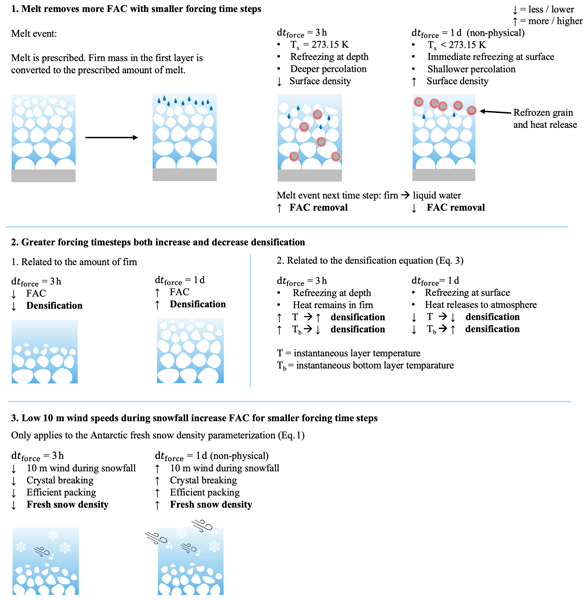
Tesse E. A. van den Aker, Peter Kuipers Munneke, Willem Jan van de Berg, Walter W. Immerzeel, and Michiel R. van den Broeke
The Cryosphere, 20, 5475–5490, https://doi.org/10.5194/tc-20-5475-2026, https://doi.org/10.5194/tc-20-5475-2026, 2026
Short summary
Short summary
The firn layer, i.e. permanent snow, regulates how an ice sheet responds to climate change. Firn models are forced with with climate data at time steps from sub-daily to annual in literature, however, implications are barely evaluated. We test the impact of different climate forcing time steps on the modeled firn layer. We conclude that the climate forcing time step (1) affects firn model output, (2) can lead to non-physical behaviour, and (3) that resolving at least a diurnal cycle is required.
Tom Matthews, Baker Perry, Ben Graves, Fanny Brun, Maria Sanolaria-Otin, Navaraj Pokhrel, Arbindra Khadka, Dibas Shrestha, Ludving Cano, Aris Kwadijk, Walter Immereel, Brandt Maxwell, and Anton Seimon
EGUsphere, https://doi.org/10.5194/egusphere-2026-5200, https://doi.org/10.5194/egusphere-2026-5200, 2026
This preprint is open for discussion and under review for The Cryosphere (TC).
Short summary
Short summary
Extreme precipitation shapes hazards and water resources in high mountains, but is rarely observed directly. On 4 October 2025, weather stations on Mt. Everest recorded one of the most extreme snowfall events ever measured. The storm revealed that Himalayan snowfall extremes can be far larger than previously documented, and that intense snowfall can cool the atmosphere sufficiently to prevent rain at impact-sensitive elevations, complicating the picture of how warming will affect future storms.
Aris Kwadijk, Philip D. A. Kraaijenbrink, Faezeh M. Nick, Joseph M. Shea, Jakob F. Steiner, René R. Wijngaard, and Walter W. Immerzeel
EGUsphere, https://doi.org/10.5194/egusphere-2026-5005, https://doi.org/10.5194/egusphere-2026-5005, 2026
This preprint is open for discussion and under review for Hydrology and Earth System Sciences (HESS).
Short summary
Short summary
The Himalayas supply water to millions of people downstream, yet high-altitude rainfall remains poorly understood. Using thirteen years of data from weather stations across Nepal's Langtang Valley, we found that during the monsoon the moist atmosphere causes rainfall to be highly sensitive to topography. We show how precipitation-elevation gradients shift during the day. This shift is captured in a numerical relation, that can serve to validate weather models.
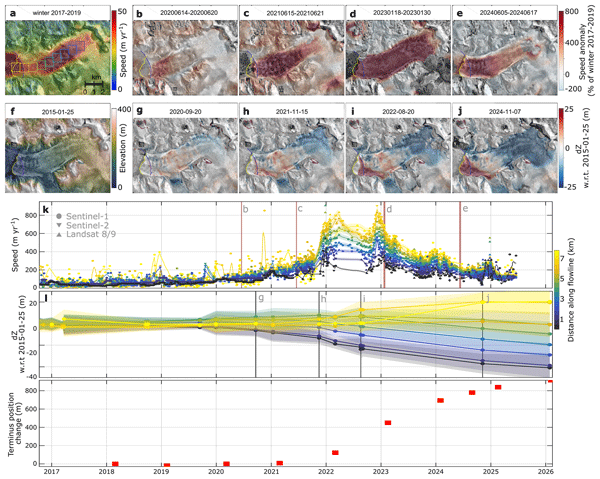
Benjamin J. Davison, Andrew J. Sole, Gregoire Guillet, Douglas I. Benn, Jonathan Kingslake, Jeremy C. Ely, Stephen J. Livingstone, Christopher D. Stringer, Jonathan L. Carrivick, and Anna E. Hogg
The Cryosphere, 20, 4293–4311, https://doi.org/10.5194/tc-20-4293-2026, https://doi.org/10.5194/tc-20-4293-2026, 2026
Short summary
Short summary
Some glaciers flow slowly for many years before dramatically accelerating. This is usually a sign of a surge. Theory and observations suggest that surges occur in certain climates. The Antarctic Peninsula has such a climate yet only one surge has been observed there. We present detailed observations of three glaciers that surged recently. We explore how climate change over the past hundred years, and projected climate change up to 2150, has and will affect surging behaviour on the Peninsula.
Samuel James Cook, Iain Wheel, Nick Hulton, Poul Christoffersen, and Doug Benn
EGUsphere, https://doi.org/10.5194/egusphere-2026-4213, https://doi.org/10.5194/egusphere-2026-4213, 2026
Short summary
Short summary
Accurate modelling of calving is a major problem that leads to uncertainties in sea-level rise. By modelling calving as a random process and testing how this interacts with water flow beneath the glacier, we show that including this water flow is essential to be able to fully reproduce real calving in a computer model. This may help guide future ice-sheet models as to how to improve their existing representations of Greenland and Antarctica.
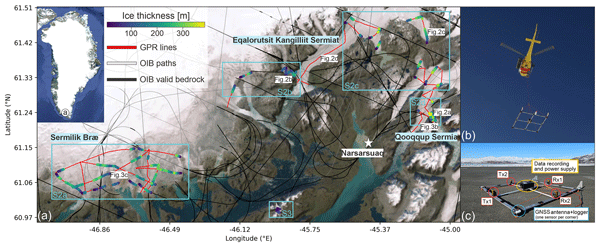
Ilaria Santin, Huw J. Horgan, Raphael Moser, Nanna Bjørnholt Karlsson, Faezeh M. Nick, Andreas Vieli, Anja Rutishauser, Hansruedi Maurer, and Daniel Farinotti
The Cryosphere, 20, 3435–3441, https://doi.org/10.5194/tc-20-3435-2026, https://doi.org/10.5194/tc-20-3435-2026, 2026
Short summary
Short summary
Ice thickness near Greenland’s coast is still poorly measured, yet it is vital for predicting sea level rise. We flew a helicopter ice-penetrating radar over three outlet glaciers in southern Greenland and mapped the glacier bed where basal reflections were clear. We measured ice up to about 340 meters thick, with reliable penetration typically to about 300 meters, providing new constraints that can improve regional bed maps.
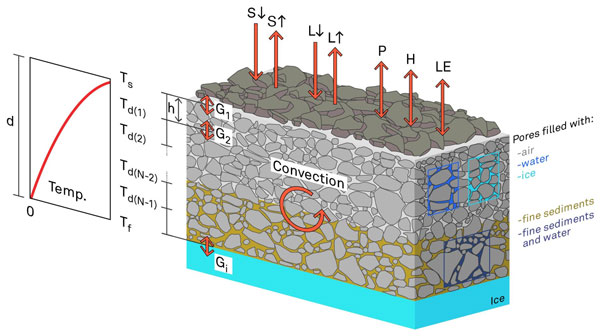
Francesca Pellicciotti, Adrià Fontrodona-Bach, David R. Rounce, Catriona L. Fyffe, Leif S. Anderson, Álvaro Ayala, Ben W. Brock, Pascal Buri, Stefan Fugger, Koji Fujita, Prateek Gantayat, Alexander R. Groos, Walter Immerzeel, Marin Kneib, Christoph Mayer, Shelley MacDonell, Michael McCarthy, James McPhee, Evan Miles, Heather Purdie, Ekaterina Rets, Akiko Sakai, Thomas E. Shaw, Jakob Steiner, Patrick Wagnon, and Alex Winter-Billington
The Cryosphere, 20, 1895–1928, https://doi.org/10.5194/tc-20-1895-2026, https://doi.org/10.5194/tc-20-1895-2026, 2026
Short summary
Short summary
Rock debris covers many of the world glaciers, modifying the transfer of atmospheric energy to the debris and into the ice. Models of different complexity simulate this process, and we compare 15 models at 9 sites to show that the most complex models at the debris-atmosphere interface have the highest performance. However, we lack debris properties and their derivation from measurements is ambiguous, hindering global modelling and calling for both model development and data collection.

Oriol Pomarol Moya, Madlene Nussbaum, Siamak Mehrkanoon, Philip D. A. Kraaijenbrink, Isabelle Gouttevin, Derek Karssenberg, and Walter W. Immerzeel
The Cryosphere, 20, 1427–1444, https://doi.org/10.5194/tc-20-1427-2026, https://doi.org/10.5194/tc-20-1427-2026, 2026
Short summary
Short summary
Two hybrid Machine Learning (ML) approaches predicting daily Snow Water Equivalent (SWE) were evaluated across ten Northern Hemisphere sites. By integrating meteorological data with Crocus snow model simulations, these hybrid models outperformed both standalone Crocus and traditional ML models. Notably, augmenting measured SWE data with Crocus simulations significantly improved performance at unseen locations, offering a promising new approach to long-term SWE prediction.
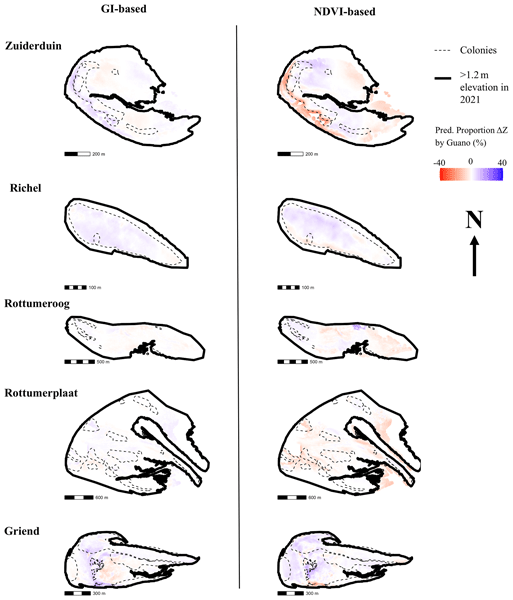
Floris F. van Rees, Laura L. Govers, Polina Guseva, Maarten P. A. Zwarts, Camille Tuijnman, Cornelis J. Camphuysen, Gerben Ruessink, and Valérie C. Reijers
Biogeosciences, 23, 1527–1544, https://doi.org/10.5194/bg-23-1527-2026, https://doi.org/10.5194/bg-23-1527-2026, 2026
Short summary
Short summary
Seabird guano enriches nitrogen-loving plants and boost plants to trap sediment, driving the gradual growth and reshaping of coastal islands. By pairing on-site plant surveys with satellite imagery and elevation data, we show these effects vary with elevation, soil type, and season. Birds thus engineer and sustain their own breeding habitats. For conservation managers, protecting colonies is key to preserving the dynamic island landscapes these and other species rely on.
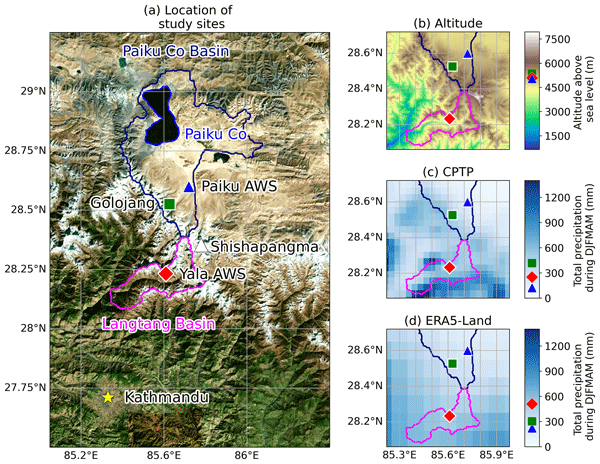
Titouan Biget, Fanny Brun, Walter Immerzeel, Léo Martin, Hamish Pritchard, Emily Collier, Yanbin Lei, and Tandong Yao
The Cryosphere, 19, 5863–5870, https://doi.org/10.5194/tc-19-5863-2025, https://doi.org/10.5194/tc-19-5863-2025, 2025
Short summary
Short summary
This study explore the precipitation in the southern Tibetan plateau using the water pressure of an high altitude lake and meteorological models and shows that snowfall could be much stronger on the Plateau than what is predicted by the models.
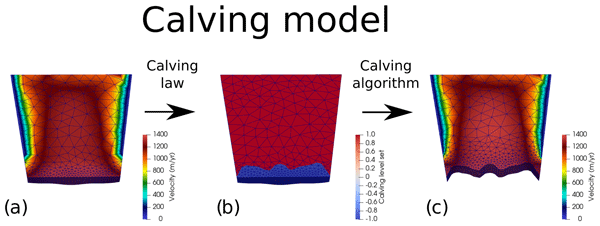
Iain Wheel, Douglas I. Benn, Anna J. Crawford, Joe Todd, and Thomas Zwinger
Geosci. Model Dev., 17, 5759–5777, https://doi.org/10.5194/gmd-17-5759-2024, https://doi.org/10.5194/gmd-17-5759-2024, 2024
Short summary
Short summary
Calving, the detachment of large icebergs from glaciers, is one of the largest uncertainties in future sea level rise projections. This process is poorly understood, and there is an absence of detailed models capable of simulating calving. A new 3D calving model has been developed to better understand calving at glaciers where detailed modelling was previously limited. Importantly, the new model is very flexible. By allowing for unrestricted calving geometries, it can be applied at any location.
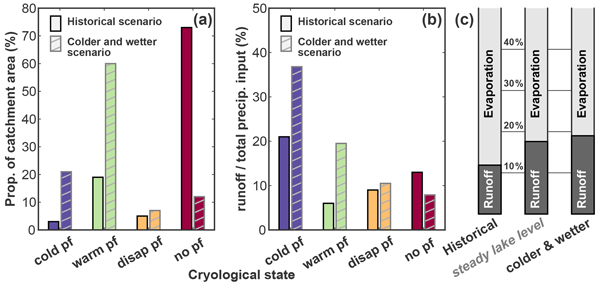
Léo C. P. Martin, Sebastian Westermann, Michele Magni, Fanny Brun, Joel Fiddes, Yanbin Lei, Philip Kraaijenbrink, Tamara Mathys, Moritz Langer, Simon Allen, and Walter W. Immerzeel
Hydrol. Earth Syst. Sci., 27, 4409–4436, https://doi.org/10.5194/hess-27-4409-2023, https://doi.org/10.5194/hess-27-4409-2023, 2023
Short summary
Short summary
Across the Tibetan Plateau, many large lakes have been changing level during the last decades as a response to climate change. In high-mountain environments, water fluxes from the land to the lakes are linked to the ground temperature of the land and to the energy fluxes between the ground and the atmosphere, which are modified by climate change. With a numerical model, we test how these water and energy fluxes have changed over the last decades and how they influence the lake level variations.
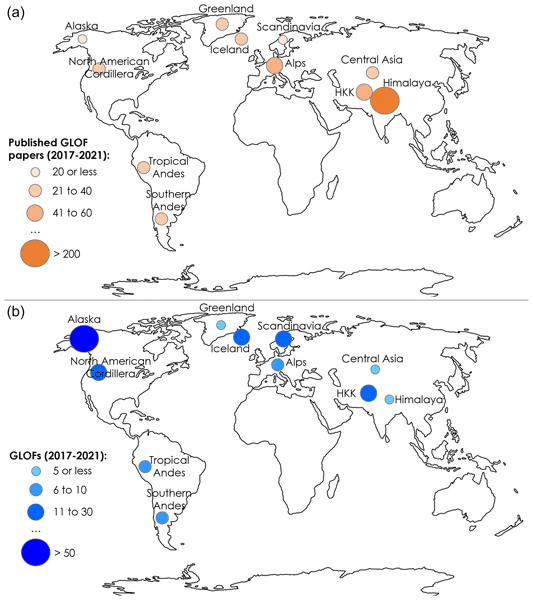
Adam Emmer, Simon K. Allen, Mark Carey, Holger Frey, Christian Huggel, Oliver Korup, Martin Mergili, Ashim Sattar, Georg Veh, Thomas Y. Chen, Simon J. Cook, Mariana Correas-Gonzalez, Soumik Das, Alejandro Diaz Moreno, Fabian Drenkhan, Melanie Fischer, Walter W. Immerzeel, Eñaut Izagirre, Ramesh Chandra Joshi, Ioannis Kougkoulos, Riamsara Kuyakanon Knapp, Dongfeng Li, Ulfat Majeed, Stephanie Matti, Holly Moulton, Faezeh Nick, Valentine Piroton, Irfan Rashid, Masoom Reza, Anderson Ribeiro de Figueiredo, Christian Riveros, Finu Shrestha, Milan Shrestha, Jakob Steiner, Noah Walker-Crawford, Joanne L. Wood, and Jacob C. Yde
Nat. Hazards Earth Syst. Sci., 22, 3041–3061, https://doi.org/10.5194/nhess-22-3041-2022, https://doi.org/10.5194/nhess-22-3041-2022, 2022
Short summary
Short summary
Glacial lake outburst floods (GLOFs) have attracted increased research attention recently. In this work, we review GLOF research papers published between 2017 and 2021 and complement the analysis with research community insights gained from the 2021 GLOF conference we organized. The transdisciplinary character of the conference together with broad geographical coverage allowed us to identify progress, trends and challenges in GLOF research and outline future research needs and directions.
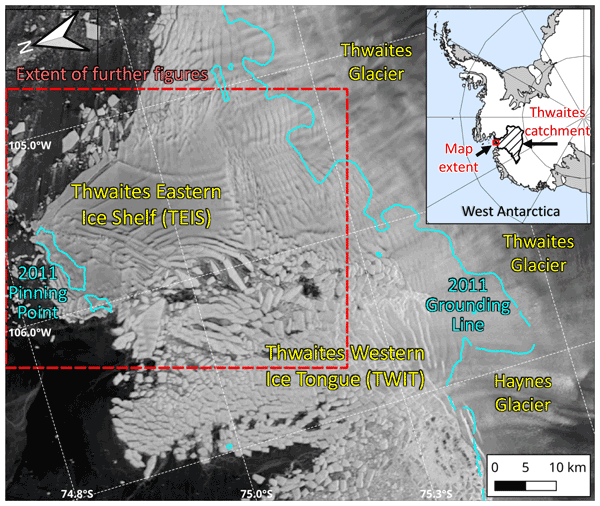
Douglas I. Benn, Adrian Luckman, Jan A. Åström, Anna J. Crawford, Stephen L. Cornford, Suzanne L. Bevan, Thomas Zwinger, Rupert Gladstone, Karen Alley, Erin Pettit, and Jeremy Bassis
The Cryosphere, 16, 2545–2564, https://doi.org/10.5194/tc-16-2545-2022, https://doi.org/10.5194/tc-16-2545-2022, 2022
Short summary
Short summary
Thwaites Glacier (TG), in West Antarctica, is potentially unstable and may contribute significantly to sea-level rise as global warming continues. Using satellite data, we show that Thwaites Eastern Ice Shelf, the largest remaining floating extension of TG, has started to accelerate as it fragments along a shear zone. Computer modelling does not indicate that fragmentation will lead to imminent glacier collapse, but it is clear that major, rapid, and unpredictable changes are underway.
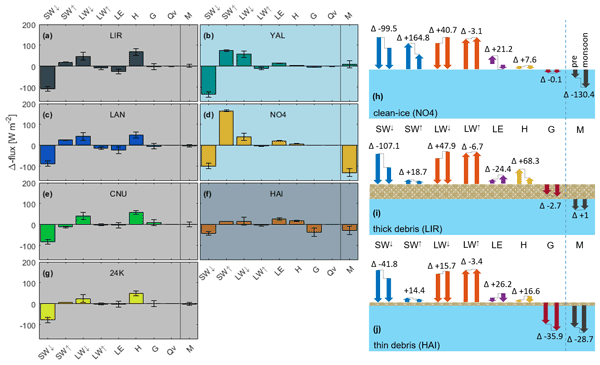
Stefan Fugger, Catriona L. Fyffe, Simone Fatichi, Evan Miles, Michael McCarthy, Thomas E. Shaw, Baohong Ding, Wei Yang, Patrick Wagnon, Walter Immerzeel, Qiao Liu, and Francesca Pellicciotti
The Cryosphere, 16, 1631–1652, https://doi.org/10.5194/tc-16-1631-2022, https://doi.org/10.5194/tc-16-1631-2022, 2022
Short summary
Short summary
The monsoon is important for the shrinking and growing of glaciers in the Himalaya during summer. We calculate the melt of seven glaciers in the region using a complex glacier melt model and weather data. We find that monsoonal weather affects glaciers that are covered with a layer of rocky debris and glaciers without such a layer in different ways. It is important to take so-called turbulent fluxes into account. This knowledge is vital for predicting the future of the Himalayan glaciers.
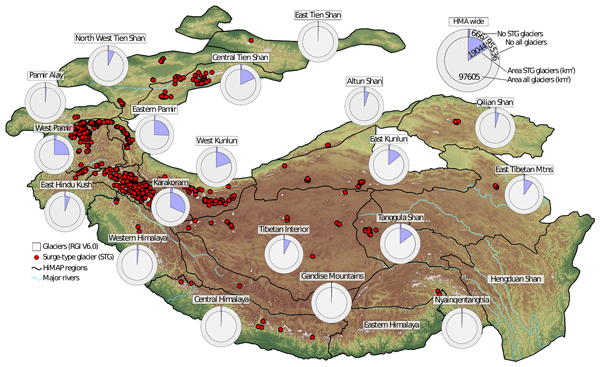
Gregoire Guillet, Owen King, Mingyang Lv, Sajid Ghuffar, Douglas Benn, Duncan Quincey, and Tobias Bolch
The Cryosphere, 16, 603–623, https://doi.org/10.5194/tc-16-603-2022, https://doi.org/10.5194/tc-16-603-2022, 2022
Short summary
Short summary
Surging glaciers show cyclical changes in flow behavior – between slow and fast flow – and can have drastic impacts on settlements in their vicinity.
One of the clusters of surging glaciers worldwide is High Mountain Asia (HMA).
We present an inventory of surging glaciers in HMA, identified from satellite imagery. We show that the number of surging glaciers was underestimated and that they represent 20 % of the area covered by glaciers in HMA, before discussing new physics for glacier surges.
Wouter J. Smolenaars, Sanita Dhaubanjar, Muhammad K. Jamil, Arthur Lutz, Walter Immerzeel, Fulco Ludwig, and Hester Biemans
Hydrol. Earth Syst. Sci., 26, 861–883, https://doi.org/10.5194/hess-26-861-2022, https://doi.org/10.5194/hess-26-861-2022, 2022
Short summary
Short summary
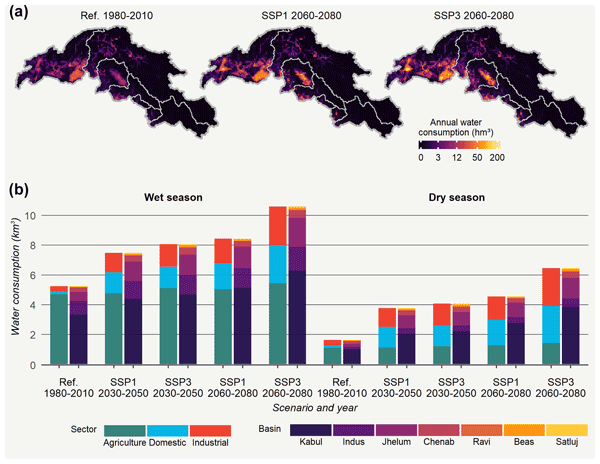
The arid plains of the lower Indus Basin rely heavily on the water provided by the mountainous upper Indus. Rapid population growth in the upper Indus is expected to increase the water that is consumed there. This will subsequently reduce the water that is available for the downstream plains, where the population and water demand are also expected to grow. In future, this may aggravate tensions over the division of water between the countries that share the Indus Basin.
Jan Bouke Pronk, Tobias Bolch, Owen King, Bert Wouters, and Douglas I. Benn
The Cryosphere, 15, 5577–5599, https://doi.org/10.5194/tc-15-5577-2021, https://doi.org/10.5194/tc-15-5577-2021, 2021
Short summary
Short summary
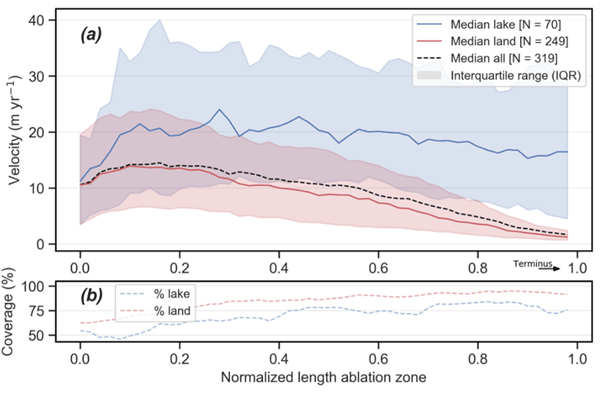
About 10 % of Himalayan glaciers flow directly into lakes. This study finds, using satellite imagery, that such glaciers show higher flow velocities than glaciers without ice–lake contact. In particular near the glacier tongue the impact of a lake on the glacier flow can be dramatic. The development of current and new meltwater bodies will influence the flow of an increasing number of Himalayan glaciers in the future, a scenario not currently considered in regional ice loss projections.
Cited articles
Barnett, J., Holmes, F. A., and Kirchner, N.: Modelled dynamic retreat of Kangerlussuaq Glacier, East Greenland, strongly influenced by the consecutive absence of an ice mélange in Kangerlussuaq Fjord, J. Glaciol., 69, 433–444, https://doi.org/10.1017/jog.2022.70, 2023. a
Bartholomaus, T. C., Anderson, R. S., and Anderson, S. P.: Response of glacier basal motion to transient water storage, Nat. Geosci., 1, 33–37, https://doi.org/10.1038/ngeo.2007.52, 2008. a
Benn, D. I., Warren, C. R., and Mottram, R. H.: Calving processes and the dynamics of calving glaciers, Earth Sci. Rev., 82, 143–179, https://doi.org/10.1016/j.earscirev.2007.02.002, 2007. a, b
Bennike, O. and Sparrenbom, C. J.: Dating of the Narssarssuaq stade in southern Greenland, The Holocene, 17, 279–282, https://doi.org/10.1177/0959683607075856, 2007. a
Bevan, S. L., Luckman, A. J., and Murray, T.: Glacier dynamics over the last quarter of a century at Helheim, Kangerdlugssuaq and 14 other major Greenland outlet glaciers, The Cryosphere, 6, 923–937, https://doi.org/10.5194/tc-6-923-2012, 2012. a
Bevan, S. L., Luckman, A. J., Benn, D. I., Cowton, T., and Todd, J.: Impact of warming shelf waters on ice mélange and terminus retreat at a large SE Greenland glacier, The Cryosphere, 13, 2303–2315, https://doi.org/10.5194/tc-13-2303-2019, 2019. a
Bézu, C. and Bartholomaus, T. C.: Greenland Ice Sheet's Distinct Calving Styles Are Identified in Terminus Change Timeseries, Geophys. Res. Lett., 51, e2024GL110224, https://doi.org/10.1029/2024GL110224, 2024. a, b
Black, T. E. and Joughin, I.: Weekly to monthly terminus variability of Greenland's marine-terminating outlet glaciers, The Cryosphere, 17, 1–13, https://doi.org/10.5194/tc-17-1-2023, 2023. a, b
Boyce, E. S., Motyka, R. J., and Truffer, M.: Flotation and retreat of a lake-calving terminus, Mendenhall Glacier, southeast Alaska, USA, J. Glaciol., 53, 211–224, https://doi.org/10.3189/172756507782202928, 2007. a
Carrivick, J. L. and Quincey, D. J.: Progressive increase in number and volume of ice-marginal lakes on the western margin of the Greenland Ice Sheet, Global Planet. Change, 116, 156–163, https://doi.org/10.1016/j.gloplacha.2014.02.009, 2014. a
Carrivick, J. L., How, P., Lea, J. M., Sutherland, J. L., Grimes, M., Tweed, F. S., Cornford, S., Quincey, D. J., and Mallalieu, J.: Ice-Marginal Proglacial Lakes Across Greenland: Present Status and a Possible Future, Geophys. Res. Lett., 49, e2022GL099276, https://doi.org/10.1029/2022GL099276, 2022. a, b, c
Cassotto, R., Fahnestock, M., Amundson, J. M., Truffer, M., and Joughin, I.: Seasonal and interannual variations in ice melange and its impact on terminus stability, Jakobshavn Isbræ, Greenland, J. Glaciol., 61, 76–88, https://doi.org/10.3189/2015JoG13J235, 2015. a, b
Charrier, L., Dehecq, A., Guo, L., Brun, F., Millan, R., Lioret, N., Copland, L., Maier, N., Dow, C., and Halas, P.: TICOI: an operational Python package to generate regular glacier velocity time series, The Cryosphere, 19, 4555–4583, https://doi.org/10.5194/tc-19-4555-2025, 2025. a, b, c
Cook, S. J., Christoffersen, P., Truffer, M., Chudley, T. R., and Abellán, A.: Calving of a Large Greenlandic Tidewater Glacier has Complex Links to Meltwater Plumes and Mélange, J. Geophys. Res. Earth Surf., 126, e2020JF006 051, https://doi.org/10.1029/2020JF006051, 2021. a
Favier, L., Gagliardini, O., Durand, G., and Zwinger, T.: A three-dimensional full Stokes model of the grounding line dynamics: effect of a pinning point beneath the ice shelf, The Cryosphere, 6, 101–112, https://doi.org/10.5194/tc-6-101-2012, 2012. a
Fox-Kemper, B., Hewitt, H. T., Xiao, C., Aǒalgeirsdóttir, G., Drijfhout, S. S., Edwards, T. L., Golledge, N. R., Hemer, M., Kopp, R. E., Krinner, G., Mix, A., Notz, D., Nowicki, S., Nurhati, I. S., Ruiz, L., Sallée, J.-B., Slangen, A. B. A., and Yu, Y.: Ocean, Cryosphere and Sea Level Change, in: Climate Change 2021: The Physical Science Basis. Contribution of Working Group I to the Sixth Assessment Report of the Intergovernmental Panel on Climate Change, edited by: Masson-Delmotte, V., Zhai, P., Pirani, A., Connors, S. L., Péan, C., Berger, S., Caud, N., Chen, Y., Goldfarb, L., Gomis, M. I., Huang, M., Leitzell, K., Lonnoy, E., Matthews, J. B. R., Maycock, T. K., Waterfield, T., Yelekçi, O., Yu, R., and Zhou, B., pp. 1211–1362, Cambridge University Press, Cambridge, United Kingdom, and New York, NY, USA, https://doi.org/10.1017/9781009157896.011, 2021. a
Fried, M. J., Catania, G. A., Bartholomaus, T. C., Duncan, D., Davis, M., Stearns, L. A., Nash, J., Shroyer, E., and Sutherland, D.: Distributed subglacial discharge drives significant submarine melt at a Greenland tidewater glacier, Geophys. Res. Lett., 42, 9328–9336, https://doi.org/10.1002/2015GL065806, 2015. a
Fried, M. J., Catania, G. A., Stearns, L. A., Sutherland, D. A., Bartholomaus, T. C., Shroyer, E., and Nash, J.: Reconciling Drivers of Seasonal Terminus Advance and Retreat at 13 Central West Greenland Tidewater Glaciers, J. Geophys. Res. Earth Surf., 123, 1590–1607, https://doi.org/10.1029/2018JF004628, 2018. a
Gardner, A. S., Moholdt, G., Scambos, T., Fahnstock, M., Ligtenberg, S., van den Broeke, M., and Nilsson, J.: Increased West Antarctic and unchanged East Antarctic ice discharge over the last 7 years, The Cryosphere, 12, 521–547, https://doi.org/10.5194/tc-12-521-2018, 2018. a
Gardner, A. S., Greene, C. A., Kennedy, J. H., Fahnestock, M. A., Liukis, M., López, L. A., Lei, Y., Scambos, T. A., and Dehecq, A.: ITS_LIVE global glacier velocity data in near-real time, The Cryosphere, 19, 3517–3533, https://doi.org/10.5194/tc-19-3517-2025, 2025. a, b, c
Goelzer, H., Nowicki, S., Payne, A., Larour, E., Seroussi, H., Lipscomb, W. H., Gregory, J., Abe-Ouchi, A., Shepherd, A., Simon, E., Agosta, C., Alexander, P., Aschwanden, A., Barthel, A., Calov, R., Chambers, C., Choi, Y., Cuzzone, J., Dumas, C., Edwards, T., Felikson, D., Fettweis, X., Golledge, N. R., Greve, R., Humbert, A., Huybrechts, P., Le clec'h, S., Lee, V., Leguy, G., Little, C., Lowry, D. P., Morlighem, M., Nias, I., Quiquet, A., Rückamp, M., Schlegel, N.-J., Slater, D. A., Smith, R. S., Straneo, F., Tarasov, L., van de Wal, R., and van den Broeke, M.: The future sea-level contribution of the Greenland ice sheet: a multi-model ensemble study of ISMIP6, The Cryosphere, 14, 3071–3096, https://doi.org/10.5194/tc-14-3071-2020, 2020. a
Goldberg, D., Holland, D. M., and Schoof, C.: Grounding line movement and ice shelf buttressing in marine ice sheets, J. Geophys. Res. Earth Surf., 114, https://doi.org/10.1029/2008JF001227, 2009. a
Greene, C. A., Gardner, A. S., Wood, M., and Cuzzone, J. K.: Ubiquitous acceleration in Greenland Ice Sheet calving from 1985 to 2022, Nature, 625, 523–528, https://doi.org/10.1038/s41586-023-06863-2, 2024. a
Hanna, E., Mernild, S. H., Cappelen, J., and Steffen, K.: Recent warming in Greenland in a long-term instrumental (1881–2012) climatic context: I. Evaluation of surface air temperature records, Environ. Res. Lett., 7, 045404, https://doi.org/10.1088/1748-9326/7/4/045404, 2012. a
Hansen, K., Karlsson, N. B., How, P., Poulsen, E., Mortensen, J., and Rysgaard, S.: Winter subglacial meltwater detected in a Greenland fjord, Nat. Geosci., 18, 219–225, https://doi.org/10.1038/s41561-025-01652-0, 2025. a
Hewitt, I. J.: Subglacial Plumes, Annu. Rev. Fluid Mech., 52, 145–169, https://doi.org/10.1146/annurev-fluid-010719-060252, 2020. a
Hill, E. A., Carr, J. R., Stokes, C. R., and Gudmundsson, G. H.: Dynamic changes in outlet glaciers in northern Greenland from 1948 to 2015, The Cryosphere, 12, 3243–3263, https://doi.org/10.5194/tc-12-3243-2018, 2018. a
Holdsworth, G.: Ice Calving into the Proglacial Generator Lake, Baffin Island, N.W.T., Canada, J. Glaciol., 12, 235–250, https://doi.org/10.3189/S0022143000032056, 1973. a
Holmes, F. A., Kirchner, N., Prakash, A., Stranne, C., Dijkstra, S., and Jakobsson, M.: Calving at Ryder Glacier, Northern Greenland, J. Geophys. Res. Earth Surf., 126, e2020JF005872, https://doi.org/10.1029/2020JF005872, 2021. a
Holmes, F. A., van Dongen, E., Noormets, R., Pȩtlicki, M., and Kirchner, N.: Impact of tides on calving patterns at Kronebreen, Svalbard – insights from three-dimensional ice dynamical modelling, The Cryosphere, 17, 1853–1872, https://doi.org/10.5194/tc-17-1853-2023, 2023. a
How, P., Messerli, A., Mätzler, E., Santoro, M., Wiesmann, A., Caduff, R., Langley, K., Bojesen, M. H., Paul, F., Kääb, A., and Carrivick, J. L.: Greenland-wide inventory of ice marginal lakes using a multi-method approach, Sci. Rep., 11, 4481, https://doi.org/10.1038/s41598-021-83509-1, 2021. a
Howarth, P. J. and Price, R. J.: The Proglacial Lakes of Breidamerkurjökull and Fjallsjökull, Iceland, Geogr. J., 135, 573–581, https://doi.org/10.2307/1795105, 1969. a
Howat, I. M., Joughin, I., Fahnestock, M., Smith, B. E., and Scambos, T. A.: Synchronous retreat and acceleration of southeast Greenland outlet glaciers 2000–06: ice dynamics and coupling to climate, J. Glaciol., 54, 646–660, https://doi.org/10.3189/002214308786570908, 2008. a
Jenkins, A.: Convection-Driven Melting near the Grounding Lines of Ice Shelves and Tidewater Glaciers, J. Phys. Oceanogr., 41, 2279–2294, https://doi.org/10.1175/JPO-D-11-03.1, 2011. a
Johannessen, O. M., Babiker, M., and Miles, M. W.: Unprecedented Retreat in a 50-Year Observational Record for Petermann Glacier, North Greenland, Atmos. Ocean. Sci. Lett., 6, 259–265, https://doi.org/10.3878/j.issn.1674-2834.13.0021, 2013. a
Johnson, J. V., Prescott, P. R., and Hughes, T. J.: Ice dynamics preceding catastrophic disintegration of the floating part of Jakobshavn Isbræ, Greenland, J. Glaciol., 50, 492–504, https://doi.org/10.3189/172756504781829729, 2004. a
Joughin, I., Howat, I. M., Fahnestock, M., Smith, B., Krabill, W., Alley, R. B., Stern, H., and Truffer, M.: Continued evolution of Jakobshavn Isbrae following its rapid speedup, J. Geophys. Res. Earth Surf., 113, https://doi.org/10.1029/2008JF001023, 2008. a, b
Kneib-Walter, A., Lüthi, M. P., Moreau, L., and Vieli, A.: Drivers of Recurring Seasonal Cycle of Glacier Calving Styles and Patterns, Front. Earth Sci., 9, https://doi.org/10.3389/feart.2021.667717, 2021. a
Korsgaard, N. J., Nuth, C., Khan, S. A., Kjeldsen, K. K., Bjørk, A. A., Schomacker, A., and Kjær, K. H.: Digital elevation model and orthophotographs of Greenland based on aerial photographs from 1978–1987, Sci. Data, 3, 160032, https://doi.org/10.1038/sdata.2016.32, 2016. a, b, c, d
Lea, J. M.: The Google Earth Engine Digitisation Tool (GEEDiT) and the Margin change Quantification Tool (MaQiT) – simple tools for the rapid mapping and quantification of changing Earth surface margins, Earth Surf. Dynam., 6, 551–561, https://doi.org/10.5194/esurf-6-551-2018, 2018. a, b
Lei, Y., Gardner, A., and Agram, P.: Autonomous Repeat Image Feature Tracking (autoRIFT) and Its Application for Tracking Ice Displacement, Remote Sens., 13, 749, https://doi.org/10.3390/rs13040749, 2021. a
Mallalieu, J., Carrivick, J. L., Quincey, D. J., and Raby, C. L.: Ice-marginal lakes associated with enhanced recession of the Greenland Ice Sheet, Global Planet. Change, 202, 103503, https://doi.org/10.1016/j.gloplacha.2021.103503, 2021. a, b
Millan, R., Jager, E., Mouginot, J., Wood, M. H., Larsen, S. H., Mathiot, P., Jourdain, N. C., and Bjørk, A.: Rapid disintegration and weakening of ice shelves in North Greenland, Nat. Commun., 14, 6914, https://doi.org/10.1038/s41467-023-42198-2, 2023. a, b
Moon, T., Joughin, I., Smith, B., van den Broeke, M. R., van de Berg, W. J., Noël, B., and Usher, M.: Distinct patterns of seasonal Greenland glacier velocity, Geophys. Res. Lett., 41, 7209–7216, https://doi.org/10.1002/2014GL061836, 2014. a, b
Moon, T., Joughin, I., and Smith, B.: Seasonal to multiyear variability of glacier surface velocity, terminus position, and sea ice/ice mélange in northwest Greenland, J. Geophys. Res. Earth Surf., 120, 818–833, https://doi.org/10.1002/2015JF003494, 2015. a
Morlighem, M., Williams, C. N., Rignot, E., An, L., Arndt, J. E., Bamber, J. L., Catania, G., Chauchéé, N., Dowdeswell, J. A., Dorschel, B., Fenty, I., Hogan, K., Howat, I., Hubbard, A., Jakobsson, M., Jordan, T. M., Kjeldsen, K. K., Millan, R., Mayer, L., Mouginot, J., Noël, B. P. Y., O'Cofaigh, C., Palmer, S., Rysgaard, S., Seroussi, H., Siegert, M. J., Slabon, P., Straneo, F., van den Broeke, M. R., Weinrebe, W., Wood, M., and Zinglersen, K. B.: BedMachine v3: Complete Bed Topography and Ocean Bathymetry Mapping of Greenland From Multibeam Echo Sounding Combined With Mass Conservation, Geophys. Res. Lett., 44, 11051–11061, https://doi.org/10.1002/2017GL074954, 2017. a
Morlighem, M., Williams, C. N., Rignot, E., An, L., Arndt, J. E., Bamber, J. L., Catania, G., Chauché, N., Dowdeswell, J. A., Dorschel, B., Fenty, I., Hogan, K., Howat, I., Hubbard, A., Jakobsson, M., Jordan, T. M., Kjeldsen, K. K., Millan, R., Mayer, L., Mouginot, J., Noël, B. P. Y., O'Cofaigh, C., Palmer, S., Rysgaard, S., Seroussi, H., Siegert, M. J., Slabon, P., Straneo, F., van den Broeke, M. R., Weinrebe, W., Wood, M., and Zinglersen, K. B.: IceBridge BedMachine Greenland (IDBMG4, Version 5), NSIDC [data set], https://doi.org/10.5067/GMEVBWFLWA7X, 2022. a, b
Mortensen, J., Rysgaard, S., Arendt, K. E., Juul-Pedersen, T., Søgaard, D. H., Bendtsen, J., and Meire, L.: Local Coastal Water Masses Control Heat Levels in a West Greenland Tidewater Outlet Glacier Fjord, J. Geophys. Res. Oceans, 123, 8068–8083, https://doi.org/10.1029/2018JC014549, 2018. a
Mouginot, J. and Rignot, E.: Glacier catchments/basins for the Greenland Ice Sheet, Dryad [data set], https://doi.org/10.7280/D1WT11, 2019. a, b
Mouginot, J., Rignot, E., Scheuchl, B., Fenty, I., Khazendar, A., Morlighem, M., Buzzi, A., and Paden, J.: Fast retreat of Zachariæ Isstrøm, northeast Greenland, Science, 350, 1357–1361, https://doi.org/10.1126/science.aac7111, 2015. a
Mouginot, J., Rignot, E., Bjørk, A. A., van den Broeke, M., Millan, R., Morlighem, M., Noël, B., Scheuchl, B., and Wood, M.: Forty-six years of Greenland Ice Sheet mass balance from 1972 to 2018, Proc. Natl. Aca. Sci. USA, 116, 9239–9244, https://doi.org/10.1073/pnas.1904242116, 2019. a
Nick, F. M., Vieli, A., Howat, I. M., and Joughin, I.: Large-scale changes in Greenland outlet glacier dynamics triggered at the terminus, Nat. Geosci., 2, 110–114, https://doi.org/10.1038/ngeo394, 2009. a
Noël, B., van de Berg, W. J., van Wessem, J. M., van Meijgaard, E., van As, D., Lenaerts, J. T. M., Lhermitte, S., Kuipers Munneke, P., Smeets, C. J. P. P., van Ulft, L. H., van de Wal, R. S. W., and van den Broeke, M. R.: Modelling the climate and surface mass balance of polar ice sheets using RACMO2 – Part 1: Greenland (1958–2016), The Cryosphere, 12, 811–831, https://doi.org/10.5194/tc-12-811-2018, 2018. a, b, c
Noh, M.-J. and Howat, I. M.: Automated stereo-photogrammetric DEM generation at high latitudes: Surface Extraction with TIN-based Search-space Minimization (SETSM) validation and demonstration over glaciated regions, GISci. Remote Sens., 52, 198–217, https://doi.org/10.1080/15481603.2015.1008621, 2015. a
Nuth, C. and Kääb, A.: Co-registration and bias corrections of satellite elevation data sets for quantifying glacier thickness change, The Cryosphere, 5, 271–290, https://doi.org/10.5194/tc-5-271-2011, 2011. a
OMG: OMG Swath Gridded Multibeam Echo Sounding (MBES) Bathymetry, NASA Physical Oceanography Distributed Active Archive Center [data set], https://doi.org/10.5067/OMGEV-MBES1, 2019. a
Otosaka, I. N., Shepherd, A., Ivins, E. R., Schlegel, N.-J., Amory, C., van den Broeke, M. R., Horwath, M., Joughin, I., King, M. D., Krinner, G., Nowicki, S., Payne, A. J., Rignot, E., Scambos, T., Simon, K. M., Smith, B. E., Sørensen, L. S., Velicogna, I., Whitehouse, P. L., A, G., Agosta, C., Ahlstrøm, A. P., Blazquez, A., Colgan, W., Engdahl, M. E., Fettweis, X., Forsberg, R., Gallée, H., Gardner, A., Gilbert, L., Gourmelen, N., Groh, A., Gunter, B. C., Harig, C., Helm, V., Khan, S. A., Kittel, C., Konrad, H., Langen, P. L., Lecavalier, B. S., Liang, C.-C., Loomis, B. D., McMillan, M., Melini, D., Mernild, S. H., Mottram, R., Mouginot, J., Nilsson, J., Noël, B., Pattle, M. E., Peltier, W. R., Pie, N., Roca, M., Sasgen, I., Save, H. V., Seo, K.-W., Scheuchl, B., Schrama, E. J. O., Schröder, L., Simonsen, S. B., Slater, T., Spada, G., Sutterley, T. C., Vishwakarma, B. D., van Wessem, J. M., Wiese, D., van der Wal, W., and Wouters, B.: Mass balance of the Greenland and Antarctic ice sheets from 1992 to 2020, Earth Syst. Sci. Data, 15, 1597–1616, https://doi.org/10.5194/essd-15-1597-2023, 2023. a
Pȩtlicki, M., Ciepły, M., Jania, J. A., Promińska, A., and Kinnard, C.: Calving of a tidewater glacier driven by melting at the waterline, J. Glaciol., 61, 851–863, https://doi.org/10.3189/2015JoG15J062, 2015. a
Porter, C., Howat, I., Noh, M.-J., Husby, E., Khuvis, S., Danish, E., Tomko, K., Gardiner, J., Negrete, A., Yadav, B., Klassen, J., Kelleher, C., Cloutier, M., Bakker, J., Enos, J., Arnold, G., Bauer, G., Morin, P., and Polar Geospatial Center: ArcticDEM – Strips, Version 4.1, Polar Geopsatial Center [data set], https://doi.org/10.7910/DVN/C98DVS, 2022. a, b, c
Porter, C., Howat, I., Noh, M.-J., Husby, E., Khuvis, S., Danish, E., Tomko, K., Gardiner, J., Negrete, A., Yadav, B., Klassen, J., Kelleher, C., Cloutier, M., Bakker, J., Enos, J., Arnold, G., Bauer, G., Morin, P., and Polar Geospatial Center: ArcticDEM – Mosaics, Version 4.1, Polar Geopsatial Center [data set], https://doi.org/10.7910/DVN/3VDC4W, 2023. a
Puleo, P. J. K. and Axford, Y.: Duration and ice thickness of a Late Holocene outlet glacier advance near Narsarsuaq, southern Greenland, Clim. Past, 19, 1777–1791, https://doi.org/10.5194/cp-19-1777-2023, 2023. a
Rignot, E., Fenty, I., Xu, Y., Cai, C., and Kemp, C.: Undercutting of marine-terminating glaciers in West Greenland, Geophys. Res. Lett., 42, 5909–5917, https://doi.org/10.1002/2015GL064236, 2015. a
Santin, I., Horgan, H., Moser, R., Bjørnholt Karlsson, N., Maghami Nick, F., Vieli, A., Rutishauser, A., Maurer, H., and Farinotti, D.: Brief communication: Bed mapping of southern Greenland outlet glaciers using helicopter-borne ground penetrating radar (AIRETH), The Cryosphere, 20, 3435–3441, https://doi.org/10.5194/tc-20-3435-2026, 2026. a, b, c
Schild, K. M. and Hamilton, G. S.: Seasonal variations of outlet glacier terminus position in Greenland, J. Glaciol., 59, 759–770, https://doi.org/10.3189/2013JoG12J238, 2013. a
Schoof, C.: Ice-sheet acceleration driven by melt supply variability, Nature, 468, 803–806, https://doi.org/10.1038/nature09618, 2010. a
Shepherd, A., Ivins, E., Rignot, E., Smith, B., van den Broeke, M., Velicogna, I., Whitehouse, P., Briggs, K., Joughin, I., Krinner, G., Nowicki, S., Payne, T., Scambos, T., Schlegel, N., A, G., Agosta, C., Ahlstrøm, A., Babonis, G., Barletta, V. R., Bjørk, A. A., Blazquez, A., Bonin, J., Colgan, W., Csatho, B., Cullather, R., Engdahl, M. E., Felikson, D., Fettweis, X., Forsberg, R., Hogg, A. E., Gallee, H., Gardner, A., Gilbert, L., Gourmelen, N., Groh, A., Gunter, B., Hanna, E., Harig, C., Helm, V., Horvath, A., Horwath, M., Khan, S., Kjeldsen, K. K., Konrad, H., Langen, P. L., Lecavalier, B., Loomis, B., Luthcke, S., McMillan, M., Melini, D., Mernild, S., Mohajerani, Y., Moore, P., Mottram, R., Mouginot, J., Moyano, G., Muir, A., Nagler, T., Nield, G., Nilsson, J., Noël, B., Otosaka, I., Pattle, M. E., Peltier, W. R., Pie, N., Rietbroek, R., Rott, H., Sandberg Sørensen, L., Sasgen, I., Save, H., Scheuchl, B., Schrama, E., Schröder, L., Seo, K.-W., Simonsen, S. B., Slater, T., Spada, G., Sutterley, T., Talpe, M., Tarasov, L., van de Berg, W. J., van der Wal, W., van Wessem, M., Vishwakarma, B. D., Wiese, D., Wilton, D., Wagner, T., Wouters, B., Wuite, J., and The IMBIE Team: Mass balance of the Greenland Ice Sheet from 1992 to 2018, Nature, 579, 233–239, https://doi.org/10.1038/s41586-019-1855-2, 2020. a
Slater, D. A., Nienow, P. W., Goldberg, D. N., Cowton, T. R., and Sole, A. J.: A model for tidewater glacier undercutting by submarine melting, Geophys. Res. Lett., 44, 2360–2368, https://doi.org/10.1002/2016GL072374, 2017. a, b
Straneo, F. and Heimbach, P.: North Atlantic warming and the retreat of Greenland's outlet glaciers, Nature, 504, 36–43, https://doi.org/10.1038/nature12854, 2013. a
Tian, D., Uieda, L., Leong, W. J., Fröhlich, Y., Grund, M., Schlitzer, W., Jones, M., Toney, L., Yao, J., Tong, J.-H., Magen, Y., Materna, K., Belem, A., Newton, T., Anant, A., Ziebarth, M., Quinn, J., and Wessel, P.: PyGMT: A Python interface for the Generic Mapping Tools, Zenodo [code], https://doi.org/10.5281/zenodo.15628725, 2025. a
Todd, J. and Christoffersen, P.: Are seasonal calving dynamics forced by buttressing from ice mélange or undercutting by melting? Outcomes from full-Stokes simulations of Store Glacier, West Greenland, The Cryosphere, 8, 2353–2365, https://doi.org/10.5194/tc-8-2353-2014, 2014. a
Truffer, M. and Motyka, R. J.: Where glaciers meet water: Subaqueous melt and its relevance to glaciers in various settings, Rev. Geophys., 54, 220–239, https://doi.org/10.1002/2015RG000494, 2016. a, b, c
Trüssel, B. L., Motyka, R. J., Truffer, M., and Larsen, C. F.: Rapid thinning of lake-calving Yakutat Glacier and the collapse of the Yakutat Icefield, southeast Alaska, USA, J. Glaciol., 59, 149–161, https://doi.org/10.3189/2013J0G12J081, 2013. a
Vacek, F.: Figure production code, https://doi.org/10.5281/zenodo.17603519, Zenodo [code], 2025a. a
Vacek, F.: Supporting data for: “Contrasting dynamics of lake- and marine-terminating glaciers under same climatic conditions” submitted to The Cryosphere, https://doi.org/10.5281/zenodo.17602738, Zenodo [data set], 2025b. a
Vacek, F., M. Nick, F., Vieli, A., Benn, D., Zwarts, M., Immerzeel, W., and van de Wal, R.: Temperature and pressure measurements in Lake Motzfeldt (South Greenland), https://doi.org/10.5281/zenodo.17601786, Zenodo [data set], 2025a. a
Vacek, F., M. Nick, F., Zwarts, M., Benn, D., Immerzeel, W., and van de Wal, R.: Bathymetry of Lake Motzfeldt (South Greenland), Zenodo [data set], https://doi.org/10.5281/zenodo.17600759, 2025b. a
van de Wal, R. S. W., Boot, W., van den Broeke, M. R., Smeets, C. J. P. P., Reijmer, C. H., Donker, J. J. A., and Oerlemans, J.: Large and Rapid Melt-Induced Velocity Changes in the Ablation Zone of the Greenland Ice Sheet, Science, 321, 111–113, https://doi.org/10.1126/science.1158540, 2008. a
Vijay, S., Khan, S. A., Kusk, A., Solgaard, A. M., Moon, T., and Bjørk, A. A.: Resolving Seasonal Ice Velocity of 45 Greenlandic Glaciers With Very High Temporal Details, Geophys. Res. Lett., 46, 1485–1495, https://doi.org/10.1029/2018GL081503, 2019. a
Vorndran, G. and Sommerhoff, G.: Glaziologisch-glazialmorphologische Untersuchungen im Gebiet des Qorqup-Auslaßgletschers (Südwest-Grönland), Polarforschung, 44, 137–147, https://epic.awi.de/id/eprint/28037/ (last access: 10 July 2026), 1974. a
Warren, C. R. and Glasser, N. F.: Contrasting Response of South Greenland Glaciers to Recent Climatic Change, Arct. Alp. Res., 24, 124–132, https://doi.org/10.2307/1551532, 1992. a, b
Warren, C., Benn, D., Winchester, V., and Harrison, S.: Buoyancy-driven lacustrine calving, Glaciar Nef, Chilean Patagonia, J. Glaciol., 47, 135–146, https://doi.org/10.3189/172756501781832403, 2001. a, b
Wehrlé, A., Lüthi, M. P., and Vieli, A.: The control of short-term ice mélange weakening episodes on calving activity at major Greenland outlet glaciers, The Cryosphere, 17, 309–326, https://doi.org/10.5194/tc-17-309-2023, 2023. a, b, c
Weidick, A.: Glacial variations in West Greenland in historical time. Part I. Southwest Greenland, Bull. Grønl. Geol. Unders., 18, 1–196, https://doi.org/10.34194/bullggu.v18.6551, 1959.ø a
Weidick, A.: Ice margin features in the Julianehåb District, South Greenland, Bull. Grønl. Geol. Unders., 35, 1–133, https://doi.org/10.34194/bullggu.v35.6569, 1963. a, b
Weidick, A.: Johan Dahl Land, south Greenland: the end of a 20th century glacier expansion, Polar Record, 45, 337–350, https://doi.org/10.1017/S003224740900833X, 2009. a
Wekerle, C., McPherson, R., von Appen, W.-J., Wang, Q., Timmermann, R., Scholz, P., Danilov, S., Shu, Q., and Kanzow, T.: Atlantic Water warming increases melt below Northeast Greenland’s last floating ice tongue, Nat. Commun., 15, 1336, https://doi.org/10.1038/s41467-024-45650-z, 2024. a
Wetzel, R. G. and Likens, G. E.: The Heat Budget of Lakes, in: Limnological Analyses, edited by: Wetzel, R. G. and Likens, G. E., pp. 45–56, Springer New York, New York, NY, ISBN 978-1-4757-3250-4, https://doi.org/10.1007/978-1-4757-3250-4_4, 2000. a
Winsor, K., Carlson, A. E., and Rood, D. H.: 10Be dating of the Narsarsuaq moraine in southernmost Greenland: evidence for a late-Holocene ice advance exceeding the Little Ice Age maximum, Quat. Sci. Rev., 98, 135–143, https://doi.org/10.1016/j.quascirev.2014.04.026, 2014. a
Wood, M., Rignot, E., Fenty, I., An, L., Bjørk, A., van den Broeke, M., Cai, C., Kane, E., Menemenlis, D., Millan, R., Morlighem, M., Mouginot, J., Noël, B., Scheuchl, B., Velicogna, I., Willis, J. K., and Zhang, H.: Ocean forcing drives glacier retreat in Greenland, Sci. Adv., 7, eaba7282, https://doi.org/10.1126/sciadv.aba7282, 2021. a, b, c
xDEM contributors: xDEM, Zenodo [code], https://doi.org/10.5281/zenodo.19636034, 2024. a
Zhang, E., Catania, G., Smith, B., Felikson, D., Csatho, B., and Trugman, D. T.: Compounding sub-seasonal variations in Greenland outlet glacier dynamics revealed by high-resolution observations, EGUsphere [preprint], https://doi.org/10.5194/egusphere-2025-4216, 2025. a
Editorial statement
This study offers a rare natural experiment by comparing two adjacent glaciers South Greenland with shared upstream conditions but differing terminus environments: one terminating in a lake and the other in the ocean. The clear contrast in their dynamic behaviours, despite similar climate and input conditions, provides valuable insight into the role of terminus type in regulating glacier response. This has broader implications for predicting glacier change and sea-level contributions in a warming climate.
This study offers a rare natural experiment by comparing two adjacent glaciers South Greenland...
Short summary
We studied a unique glacier in South Greenland that ends in both a lake and the ocean. Using satellite data and field work, we found that the two glacier fronts behave very differently even under the same climate. At the lake glacier we identify a floating ice tongue and we infer little melt below water. The lake glacier experienced a sudden large breakup. Our work suggests that lake and marine glacier fronts must be treated differently in model simulations.
We studied a unique glacier in South Greenland that ends in both a lake and the ocean. Using...


