
Articles | Volume 20, issue 5
https://doi.org/10.5194/tc-20-3051-2026
© Author(s) 2026. This work is distributed under
the Creative Commons Attribution 4.0 License.
the Creative Commons Attribution 4.0 License.
https://doi.org/10.5194/tc-20-3051-2026
© Author(s) 2026. This work is distributed under
the Creative Commons Attribution 4.0 License.
the Creative Commons Attribution 4.0 License.
Research article
| 
26 May 2026
Research article |
| 26 May 2026
| 26 May 2026
Improved workflow for customized ICESat-2 ATL06 elevations captures seasonal mountain snow depths at sub-kilometer scale
Karina Zikan
CORRESPONDING AUTHOR

Department of Geosciences, Boise State University, Boise ID, USA
Ellyn M. Enderlin
Department of Geosciences, Boise State University, Boise ID, USA
Hans-Peter Marshall
Department of Geosciences, Boise State University, Boise ID, USA
Shad O'Neel
Cold Regions Research and Engineering Laboratory, United States Army Corps of Engineers, Hanover NH, USA
Related authors
Zachary Fair, Carrie Vuyovich, Thomas Neumann, Justin Pflug, David Shean, Ellyn M. Enderlin, Karina Zikan, Hannah Besso, Jessica Lundquist, Cesar Deschamps-Berger, and Désirée Treichler
The Cryosphere, 19, 5671–5691, https://doi.org/10.5194/tc-19-5671-2025, https://doi.org/10.5194/tc-19-5671-2025, 2025
Short summary
Short summary
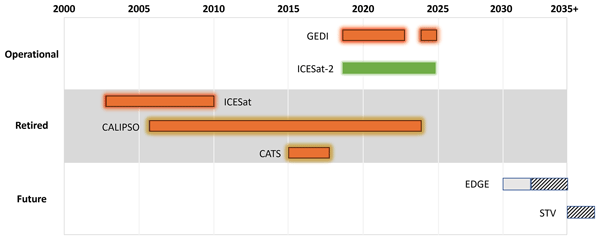
Lidar is commonly used to measure snow over global water reservoirs. However, ground-based and airborne lidar surveys are expensive, so satellite-based methods are needed. In this review, we outline the latest research using satellite-based lidar to monitor snow. Best practices for lidar-based snow monitoring are given, as is a discussion on challenges in this field of research.
Zachary Hoppinen, Hans-Peter Marshall, Ross Palomaki, Coleman Kane, Siobhan Ciafone, Shad O'Neel, and Thomas Van Der Weide
EGUsphere, https://doi.org/10.5194/egusphere-2026-5140, https://doi.org/10.5194/egusphere-2026-5140, 2026
This preprint is open for discussion and under review for The Cryosphere (TC).
Short summary
Short summary
Mountain snow stores water for millions of people, but no satellite yet maps how much water it holds. The new NISAR radar satellite may be able to, because its signal slows down as it passes through snow. We tested this over a mountain site in Idaho by comparing the satellite measurement of new snow with maps of snow depth change from an airplane-mounted laser scanner. The two agreed well, especially in open terrain, giving the first evidence that NISAR can measure snowfall from space.
Zachary Hoppinen, Simon Zwieback, Ross Palomaki, and Hans-Peter Marshall
EGUsphere, https://doi.org/10.5194/egusphere-2026-3772, https://doi.org/10.5194/egusphere-2026-3772, 2026
Short summary
Short summary
Radar satellites measure new snowfall by passing over the same ground twice and sensing how the snow delays their signal. To map it, they average each measurement over patches tens of meters wide, assuming snowfall is uniform within them. Aircraft laser surveys show it actually varies sharply below ~25 m, far from uniform. This unevenness degrades the measurement and biases the estimate, worst in steep terrain and big storms, as two radar image pairs over snowy and snow-free periods confirm.
Ross Palomaki, Zachary Hoppinen, and Hans-Peter Marshall
The Cryosphere, 20, 2703–2721, https://doi.org/10.5194/tc-20-2703-2026, https://doi.org/10.5194/tc-20-2703-2026, 2026
Short summary
Short summary
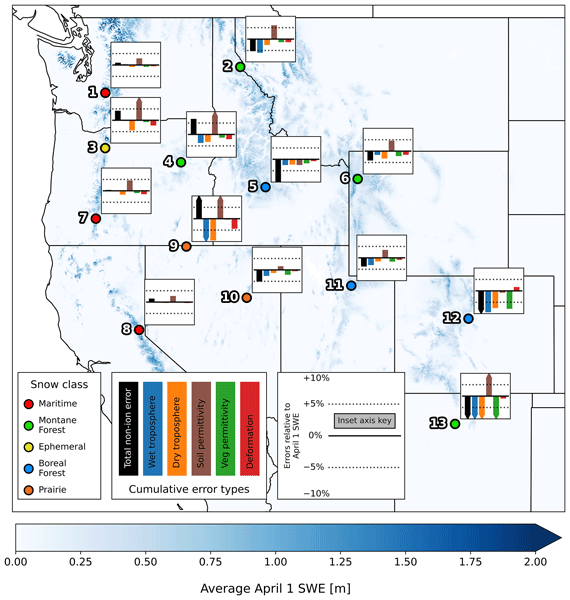
The recently-launched NISAR satellite has potential to provide new measurements of the water stored in seasonal snow, but various non-snow factors can introduce error into these new measurements. We analyzed the effects of six non-snow errors and found that impacts from the ionosphere on NISAR phase data must be addressed for accurate snow measurements. Other non-snow factors can have partially offsetting effects on snow measurements, depending on environmental properties at a particular site.
Steven A. Margulis, Maya Hildebrand, Xiaolan Xu, Manuela Girotto, Hans-Peter Marshall, Rashmi Shah, Elias Deeb, Simon Yueh, Dara Entekhabi, and Jessica Lundquist
EGUsphere, https://doi.org/10.5194/egusphere-2026-1594, https://doi.org/10.5194/egusphere-2026-1594, 2026
Short summary
Short summary
This paper demonstrates the feasibility of using a Bayesian framework for estimating snow water equivalent (SWE) from InSAR phase data at C-, L-, and P-band wavelengths. The Bayesian approach shows promise as a value-added approach to estimating SWE from phase delay measurements that are not only accurate at the measurement times, but interpolate between measurements and extrapolate beyond measurements and provide distributional (uncertainty) estimates for SWE.
Kajsa Holland-Goon, Randall Bonnell, Daniel McGrath, W. Brad Baxter, Tate Meehan, Ryan Webb, Christopher F. Larsen, Hans-Peter Marshall, Megan Mason, and Carrie Vuyovich
The Cryosphere, 20, 2169–2179, https://doi.org/10.5194/tc-20-2169-2026, https://doi.org/10.5194/tc-20-2169-2026, 2026
Short summary
Short summary
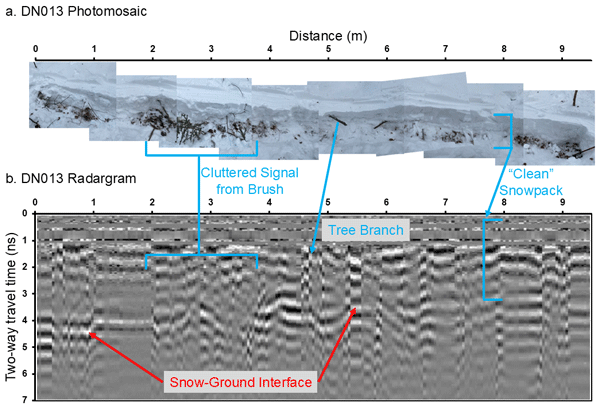
As part of the NASA SnowEx23 campaign, we conducted detailed snowpack experiments in Alaska's boreal forests and Arctic tundra. We collected ground-penetrating radar measurements of snow depth along 44 short transects. We then excavated the snowpack from below the transects and measured snow depth, noting any vegetation and void spaces. We used the detailed in situ measurements to evaluate uncertainties in ground-penetrating radar and airborne lidar methods for snow depth retrieval.
Anne Sledd, Michael R. Gallagher, Matthew D. Shupe, Christopher J. Cox, Robert Hawley, Michael S. Town, Heather Guy, Hans-Peter Marshall, Ryan R. Neely III, Claire Pettersen, Von P. Walden, Catherine Hebson, Andrew Martin, Erik Olson, and Derek Pickell
EGUsphere, https://doi.org/10.5194/egusphere-2026-1842, https://doi.org/10.5194/egusphere-2026-1842, 2026
Short summary
Short summary
Understanding energetic processes at the surface is important for understanding how the Greenland ice sheet melts. However, most temperature observations of firn are insufficient for studying energetic processes near the surface where melt happens. In this work we present new ground observations of high-resolution temperature profiles in the top meter of firn near the southwest coast of Greenland. Using these observations we characterize how temperature and energy vary during the melt season.
Zachary Fair, Carrie Vuyovich, Thomas Neumann, Justin Pflug, David Shean, Ellyn M. Enderlin, Karina Zikan, Hannah Besso, Jessica Lundquist, Cesar Deschamps-Berger, and Désirée Treichler
The Cryosphere, 19, 5671–5691, https://doi.org/10.5194/tc-19-5671-2025, https://doi.org/10.5194/tc-19-5671-2025, 2025
Short summary
Short summary
Lidar is commonly used to measure snow over global water reservoirs. However, ground-based and airborne lidar surveys are expensive, so satellite-based methods are needed. In this review, we outline the latest research using satellite-based lidar to monitor snow. Best practices for lidar-based snow monitoring are given, as is a discussion on challenges in this field of research.
Aman KC, Ellyn M. Enderlin, Dominik Fahrner, Twila Moon, and Dustin Carroll
The Cryosphere, 19, 3089–3106, https://doi.org/10.5194/tc-19-3089-2025, https://doi.org/10.5194/tc-19-3089-2025, 2025
Short summary
Short summary
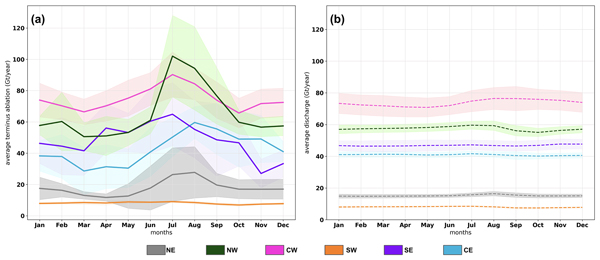
The sum of ice flowing towards a glacier’s terminus and changes in the position of the terminus over time collectively makes up terminus ablation. We found that terminus ablation has more seasonal variability than previously concluded from flux-based estimates of ice discharge. The findings are of importance in understanding the timing and location of the freshwater input to the fjords and surrounding ocean basins affecting local and regional ecosystems and ocean properties.
Rainey Aberle, Ellyn Enderlin, Shad O'Neel, Caitlyn Florentine, Louis Sass, Adam Dickson, Hans-Peter Marshall, and Alejandro Flores
The Cryosphere, 19, 1675–1693, https://doi.org/10.5194/tc-19-1675-2025, https://doi.org/10.5194/tc-19-1675-2025, 2025
Short summary
Short summary
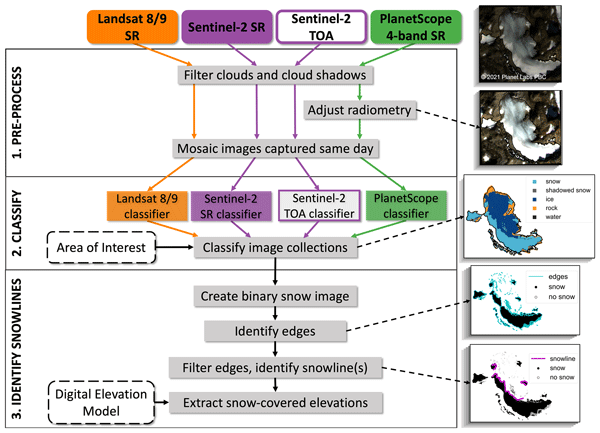
Tracking seasonal snow on glaciers is critical for understanding glacier health. Yet previous work has not directly compared machine learning algorithms for snow classification across satellite image products. To address this, we developed a new automated workflow for tracking seasonal snow on glaciers using several image products and machine learning models. Applying this method can help provide insights into glacier health, water resources, and the effects of climate change on snow cover.
Zachary Hoppinen, Ross T. Palomaki, George Brencher, Devon Dunmire, Eric Gagliano, Adrian Marziliano, Jack Tarricone, and Hans-Peter Marshall
The Cryosphere, 18, 5407–5430, https://doi.org/10.5194/tc-18-5407-2024, https://doi.org/10.5194/tc-18-5407-2024, 2024
Short summary
Short summary
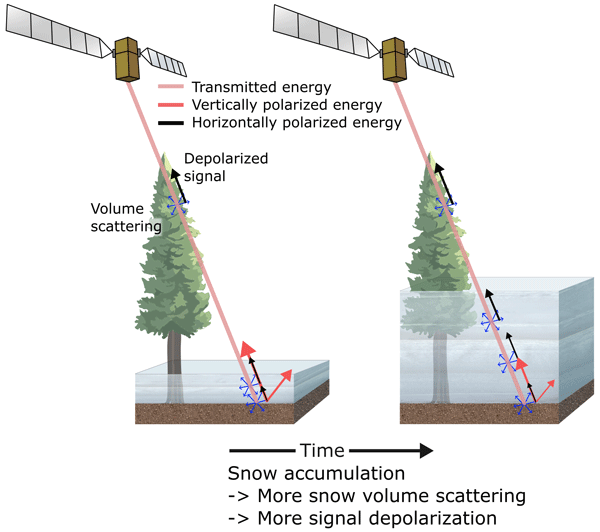
This study uses radar imagery from the Sentinel-1 satellite to derive snow depth from increases in the returning energy. These retrieved depths are then compared to nine lidar-derived snow depths across the western United State to assess the ability of this technique to be used to monitor global snow distributions. We also qualitatively compare the changes in underlying Sentinel-1 amplitudes against both the total lidar snow depths and nine automated snow monitoring stations.
Randall Bonnell, Daniel McGrath, Jack Tarricone, Hans-Peter Marshall, Ella Bump, Caroline Duncan, Stephanie Kampf, Yunling Lou, Alex Olsen-Mikitowicz, Megan Sears, Keith Williams, Lucas Zeller, and Yang Zheng
The Cryosphere, 18, 3765–3785, https://doi.org/10.5194/tc-18-3765-2024, https://doi.org/10.5194/tc-18-3765-2024, 2024
Short summary
Short summary
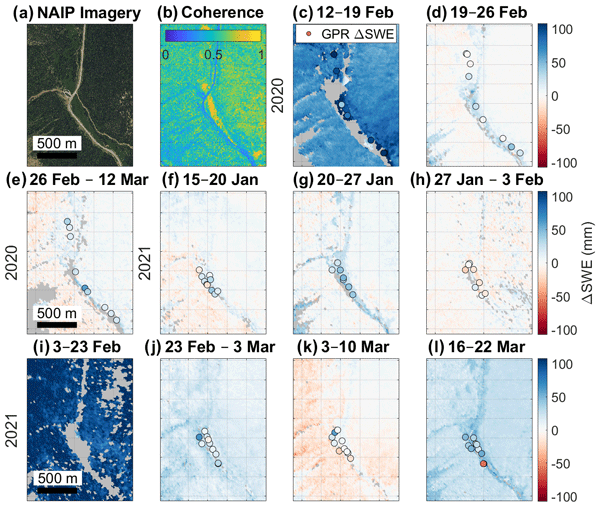
Snow provides water for billions of people, but the amount of snow is difficult to detect remotely. During the 2020 and 2021 winters, a radar was flown over mountains in Colorado, USA, to measure the amount of snow on the ground, while our team collected ground observations to test the radar technique’s capabilities. The technique yielded accurate measurements of the snowpack that had good correlation with ground measurements, making it a promising application for the upcoming NISAR satellite.
Jukes Liu, Madeline Gendreau, Ellyn Mary Enderlin, and Rainey Aberle
The Cryosphere, 18, 3571–3590, https://doi.org/10.5194/tc-18-3571-2024, https://doi.org/10.5194/tc-18-3571-2024, 2024
Short summary
Short summary
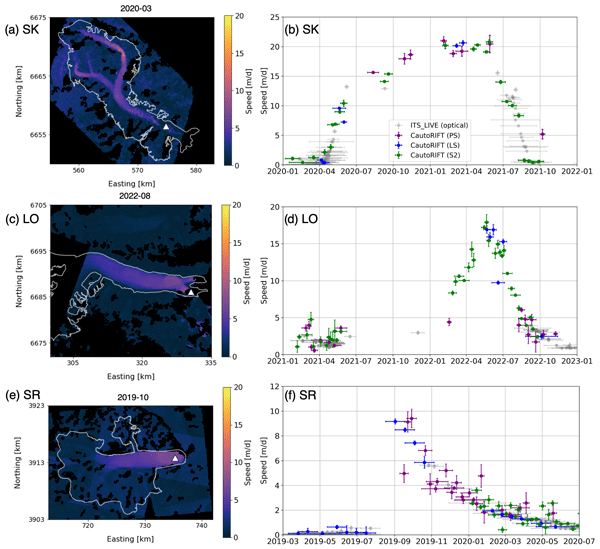
There are sometimes gaps in global glacier velocity records produced using satellite image feature-tracking algorithms during times of rapid glacier acceleration, which hinders the study of glacier flow processes. We present an open-source pipeline for customizing the feature-tracking parameters and for including images from an additional source. We applied it to five glaciers and found that it produced accurate velocity data that supplemented their velocity records during rapid acceleration.
Tate G. Meehan, Ahmad Hojatimalekshah, Hans-Peter Marshall, Elias J. Deeb, Shad O'Neel, Daniel McGrath, Ryan W. Webb, Randall Bonnell, Mark S. Raleigh, Christopher Hiemstra, and Kelly Elder
The Cryosphere, 18, 3253–3276, https://doi.org/10.5194/tc-18-3253-2024, https://doi.org/10.5194/tc-18-3253-2024, 2024
Short summary
Short summary
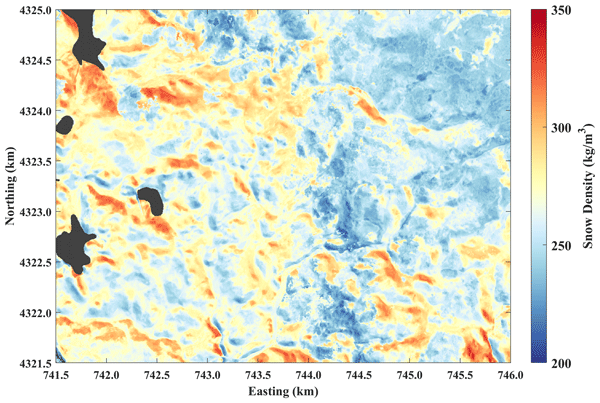
Snow water equivalent (SWE) is a critical parameter for yearly water supply forecasting and can be calculated by multiplying the snow depth by the snow density. We combined high-spatial-resolution snow depth information with ground-based radar measurements to solve for snow density. Extrapolated density estimates over our study area resolved detailed patterns that agree with the known interactions of snow with wind, terrain, and vegetation and were utilized in the calculation of SWE.
Isis Brangers, Hans-Peter Marshall, Gabrielle De Lannoy, Devon Dunmire, Christian Mätzler, and Hans Lievens
The Cryosphere, 18, 3177–3193, https://doi.org/10.5194/tc-18-3177-2024, https://doi.org/10.5194/tc-18-3177-2024, 2024
Short summary
Short summary
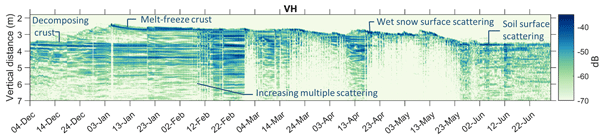
To better understand the interactions between C-band radar waves and snow, a tower-based experiment was set up in the Idaho Rocky Mountains. The reflections were collected in the time domain to measure the backscatter profile from the various snowpack and ground surface layers. The results demonstrate that C-band radar is sensitive to seasonal patterns in snow accumulation but that changes in microstructure, stratigraphy and snow wetness may complicate satellite-based snow depth retrievals.
Ian E. McDowell, Kaitlin M. Keegan, S. McKenzie Skiles, Christopher P. Donahue, Erich C. Osterberg, Robert L. Hawley, and Hans-Peter Marshall
The Cryosphere, 18, 1925–1946, https://doi.org/10.5194/tc-18-1925-2024, https://doi.org/10.5194/tc-18-1925-2024, 2024
Short summary
Short summary
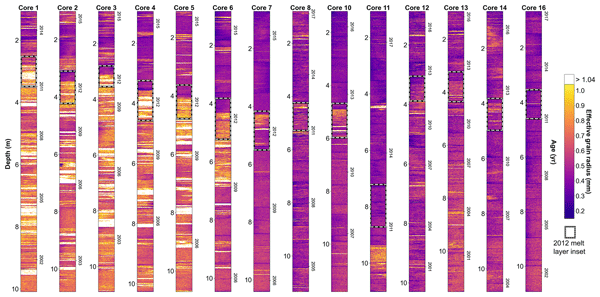
Accurate knowledge of firn grain size is crucial for many ice sheet research applications. Unfortunately, collecting detailed measurements of firn grain size is difficult. We demonstrate that scanning firn cores with a near-infrared imager can quickly produce high-resolution maps of both grain size and ice layer distributions. We map grain size and ice layer stratigraphy in 14 firn cores from Greenland and document changes to grain size and ice layer content from the extreme melt summer of 2012.
Zachary Hoppinen, Shadi Oveisgharan, Hans-Peter Marshall, Ross Mower, Kelly Elder, and Carrie Vuyovich
The Cryosphere, 18, 575–592, https://doi.org/10.5194/tc-18-575-2024, https://doi.org/10.5194/tc-18-575-2024, 2024
Short summary
Short summary
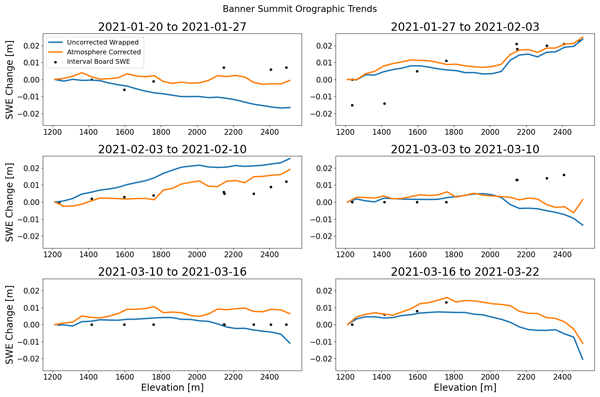
We used changes in radar echo travel time from multiple airborne flights to estimate changes in snow depths across Idaho for two winters. We compared our radar-derived retrievals to snow pits, weather stations, and a 100 m resolution numerical snow model. We had a strong Pearson correlation and root mean squared error of 10 cm relative to in situ measurements. Our retrievals also correlated well with our model, especially in regions of dry snow and low tree coverage.
Shadi Oveisgharan, Robert Zinke, Zachary Hoppinen, and Hans Peter Marshall
The Cryosphere, 18, 559–574, https://doi.org/10.5194/tc-18-559-2024, https://doi.org/10.5194/tc-18-559-2024, 2024
Short summary
Short summary
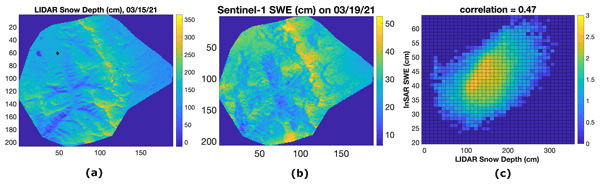
The seasonal snowpack provides water resources to billions of people worldwide. Large-scale mapping of snow water equivalent (SWE) with high resolution is critical for many scientific and economics fields. In this work we used the radar remote sensing interferometric synthetic aperture radar (InSAR) to estimate the SWE change between 2 d. The error in the estimated SWE change is less than 2 cm for in situ stations. Additionally, the retrieved SWE using InSAR is correlated with lidar snow depth.
Dominik Fahrner, Donald Slater, Aman KC, Claudia Cenedese, David A. Sutherland, Ellyn Enderlin, Femke de Jong, Kristian K. Kjeldsen, Michael Wood, Peter Nienow, Sophie Nowicki, and Till Wagner
Earth Syst. Sci. Data Discuss., https://doi.org/10.5194/essd-2023-411, https://doi.org/10.5194/essd-2023-411, 2023
Preprint withdrawn
Short summary
Short summary
Marine-terminating glaciers can lose mass through frontal ablation, which comprises submarine and surface melting, and iceberg calving. We estimate frontal ablation for 49 marine-terminating glaciers in Greenland by combining existing, satellite derived data and calculating volume change near the glacier front over time. The dataset offers exciting opportunities to study the influence of climate forcings on marine-terminating glaciers in Greenland over multi-decadal timescales.
Chris Miele, Timothy C. Bartholomaus, and Ellyn M. Enderlin
The Cryosphere, 17, 2701–2704, https://doi.org/10.5194/tc-17-2701-2023, https://doi.org/10.5194/tc-17-2701-2023, 2023
Short summary
Short summary
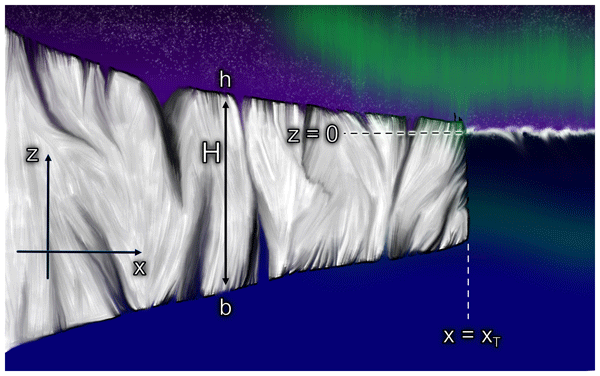
Vertical shear stress (the stress orientation usually associated with vertical gradients in horizontal velocities) is a key component of the stress balance of ice shelves. However, partly due to historical assumptions, vertical shear is often misspoken of today as
negligiblein ice shelf models. We address this miscommunication, providing conceptual guidance regarding this often misrepresented stress. Fundamentally, vertical shear is required to balance thickness gradients in ice shelves.
Jack Tarricone, Ryan W. Webb, Hans-Peter Marshall, Anne W. Nolin, and Franz J. Meyer
The Cryosphere, 17, 1997–2019, https://doi.org/10.5194/tc-17-1997-2023, https://doi.org/10.5194/tc-17-1997-2023, 2023
Short summary
Short summary
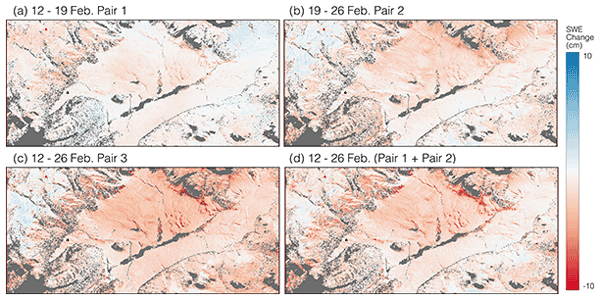
Mountain snowmelt provides water for billions of people across the globe. Despite its importance, we cannot currently measure the amount of water in mountain snowpacks from satellites. In this research, we test the ability of an experimental snow remote sensing technique from an airplane in preparation for the same sensor being launched on a future NASA satellite. We found that the method worked better than expected for estimating important snowpack properties.
Leung Tsang, Michael Durand, Chris Derksen, Ana P. Barros, Do-Hyuk Kang, Hans Lievens, Hans-Peter Marshall, Jiyue Zhu, Joel Johnson, Joshua King, Juha Lemmetyinen, Melody Sandells, Nick Rutter, Paul Siqueira, Anne Nolin, Batu Osmanoglu, Carrie Vuyovich, Edward Kim, Drew Taylor, Ioanna Merkouriadi, Ludovic Brucker, Mahdi Navari, Marie Dumont, Richard Kelly, Rhae Sung Kim, Tien-Hao Liao, Firoz Borah, and Xiaolan Xu
The Cryosphere, 16, 3531–3573, https://doi.org/10.5194/tc-16-3531-2022, https://doi.org/10.5194/tc-16-3531-2022, 2022
Short summary
Short summary
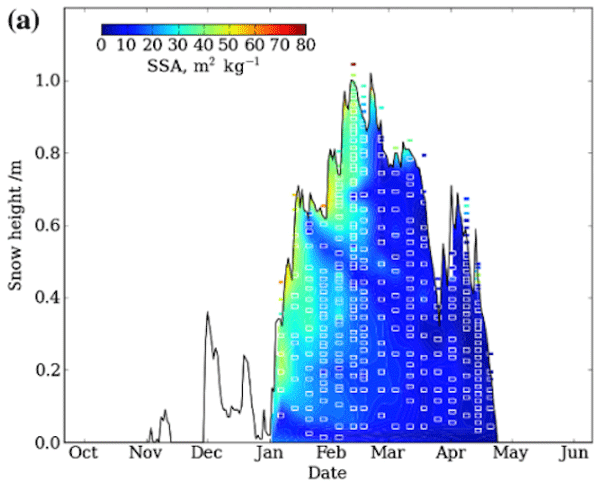
Snow water equivalent (SWE) is of fundamental importance to water, energy, and geochemical cycles but is poorly observed globally. Synthetic aperture radar (SAR) measurements at X- and Ku-band can address this gap. This review serves to inform the broad snow research, monitoring, and application communities about the progress made in recent decades to move towards a new satellite mission capable of addressing the needs of the geoscience researchers and users.
Juha Lemmetyinen, Juval Cohen, Anna Kontu, Juho Vehviläinen, Henna-Reetta Hannula, Ioanna Merkouriadi, Stefan Scheiblauer, Helmut Rott, Thomas Nagler, Elisabeth Ripper, Kelly Elder, Hans-Peter Marshall, Reinhard Fromm, Marc Adams, Chris Derksen, Joshua King, Adriano Meta, Alex Coccia, Nick Rutter, Melody Sandells, Giovanni Macelloni, Emanuele Santi, Marion Leduc-Leballeur, Richard Essery, Cecile Menard, and Michael Kern
Earth Syst. Sci. Data, 14, 3915–3945, https://doi.org/10.5194/essd-14-3915-2022, https://doi.org/10.5194/essd-14-3915-2022, 2022
Short summary
Short summary
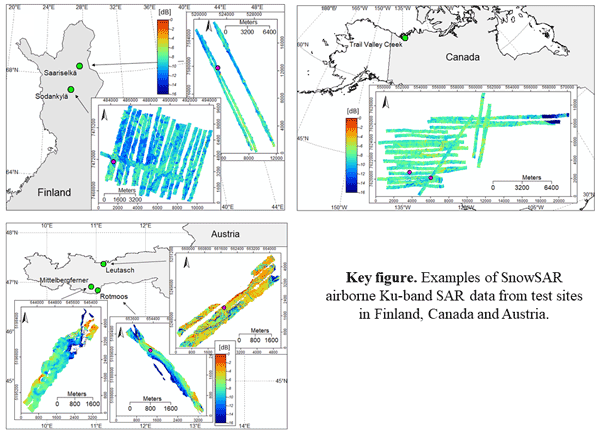
The manuscript describes airborne, dual-polarised X and Ku band synthetic aperture radar (SAR) data collected over several campaigns over snow-covered terrain in Finland, Austria and Canada. Colocated snow and meteorological observations are also presented. The data are meant for science users interested in investigating X/Ku band radar signatures from natural environments in winter conditions.
Hans Lievens, Isis Brangers, Hans-Peter Marshall, Tobias Jonas, Marc Olefs, and Gabriëlle De Lannoy
The Cryosphere, 16, 159–177, https://doi.org/10.5194/tc-16-159-2022, https://doi.org/10.5194/tc-16-159-2022, 2022
Short summary
Short summary
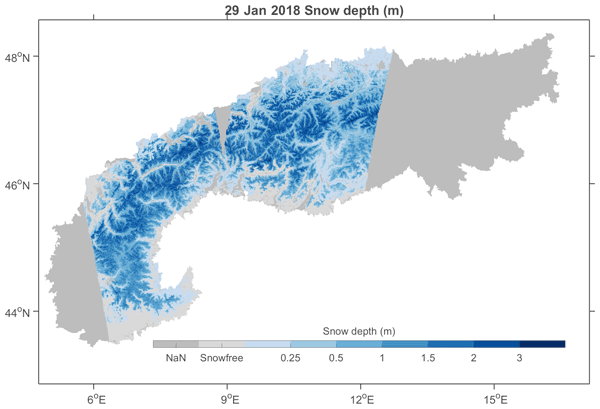
Snow depth observations at high spatial resolution from the Sentinel-1 satellite mission are presented over the European Alps. The novel observations can improve our knowledge of seasonal snow mass in areas with complex topography, where satellite-based estimates are currently lacking, and benefit a number of applications including water resource management, flood forecasting, and numerical weather prediction.
Cited articles
Aberle, R. and Enderlin, E.: RaineyAbe/glacier-snow-cover-analysis: First release (0.0.1), Zenodo [code], https://doi.org/10.5281/zenodo.14868024, 2025. a
Adebisi, N., Marhsall, H.-P., ONeel, S., Vuyovich, C., Hiemstra, C., and Elder, K.: SnowEx20-21 QSI Lidar DEM 0.5m UTM Grid, NASA National Snow and Ice Data Center Distributed Active Archive Center, Version 1 [data set], https://doi.org/10.5067/YO583L7ZOLOO, 2022. a, b
Barnett, T. P., Adam, J. C., and Lettenmaier, D. P.: Potential impacts of a warming climate on water availability in snow-dominated regions, Nature, 438, 303–309, https://doi.org/10.1038/nature04141, 2005. a
Ciafone, S., ONeel, S., Adebisi, N., Zikan, K., Enterkine, J., van der Weide, T., Wilder, B., Hoppinen, Z., Filiano, D., and Marshall, H. P.: SnowEx Mores Creek Summit (MCS) Airborne LiDAR Survey, Version 1, NASA National Snow and Ice Data Center Distributed Active Archive Center [data set], https://doi.org/10.5067/NE8CLN3ES5XQ, 2024. a
Deems, J. S., Fassnacht, S. R., and Elder, K. J.: Fractal Distribution of Snow Depth from Lidar Data, J. Hydrometeorol., 7, 285–297, https://doi.org/10.1175/JHM487.1, 2006. a
Dharmadasa, V., Kinnard, C., and Baraër, M.: Topographic and vegetation controls of the spatial distribution of snow depth in agro-forested environments by UAV lidar, The Cryosphere, 17, 1225–1246, https://doi.org/10.5194/tc-17-1225-2023, 2023. a
Dozier, J., Bair, E. H., and Davis, R. E.: Estimating the spatial distribution of snow water equivalent in the world's mountains, WIREs Water, 3, 461–474, https://doi.org/10.1002/wat2.1140, 2016. a
Durand, M., Barros, A., Dozier, J., Adler, R., Cooley, S., Entekhabi, D., Forman, B. A., Konings, A. G., Kustas, W. P., Lundquist, J. D., Pavelsky, T. M., Rodell, M., and Steele‐Dunne, S.: Achieving Breakthroughs in Global Hydrologic Science by Unlocking the Power of Multisensor, Multidisciplinary Earth Observations, AGU Advances, 2, e2021AV000455, https://doi.org/10.1029/2021AV000455, 2021. a
Elder, K., Dozier, J., and Michaelsen, J.: Snow accumulation and distribution in an Alpine Watershed, Water Resour. Res., 27, 1541–1552, https://doi.org/10.1029/91WR00506, 1991. a
Enderlin, E. M., Elkin, C. M., Gendreau, M., Marshall, H., O'Neel, S., McNeil, C., Florentine, C., and Sass, L.: Uncertainty of ICESat-2 ATL06- and ATL08-derived snow depths for glacierized and vegetated mountain regions, Remote Sens. Environ., 283, 113307, https://doi.org/10.1016/j.rse.2022.113307, 2022. a, b, c, d, e, f, g, h, i, j, k, l, m, n, o, p
Fair, Z., Vuyovich, C., Neumann, T., Larsen, C. F., Stuefer, S., Mason, M., and May, L.: Characterizing ICESat‐2 Snow Depths Over the Boreal Forests and Tundra of Alaska in Support of the SnowEx 2023 Campaign, Water Resour. Res., 61, e2024WR039076, https://doi.org/10.1029/2024WR039076, 2025. a, b, c, d, e
Filhol, S. and Sturm, M.: The smoothing of landscapes during snowfall with no wind, J. Glaciol., 65, 173–187, https://doi.org/10.1017/jog.2018.104, 2019. a
Freudiger, D., Kohn, I., Seibert, J., Stahl, K., and Weiler, M.: Snow redistribution for the hydrological modeling of alpine catchments, WIREs Water, 4, e1232, https://doi.org/10.1002/wat2.1232, 2017. a
Gascoin, S., Grizonnet, M., Bouchet, M., Salgues, G., and Hagolle, O.: Theia Snow collection: high-resolution operational snow cover maps from Sentinel-2 and Landsat-8 data, Earth Syst. Sci. Data, 11, 493–514, https://doi.org/10.5194/essd-11-493-2019, 2019. a, b
Gould, S. B., Glenn, N. F., Sankey, T. T., and McNamara, J. P.: Influence of a Dense, Low-height Shrub Species on the Accuracy of a Lidar-derived DEM, Photogramm. Eng. Rem. S., 79, 421–431, https://doi.org/10.14358/PERS.79.5.421, 2013. a
Hall, D. K., Riggs, G. A., and Salomonson, V. V.: Development of methods for mapping global snow cover using moderate resolution imaging spectroradiometer data, Remote Sens. Environ., 54, 127–140, https://doi.org/10.1016/0034-4257(95)00137-P, 1995. a
Hopkinson, C., Sitar, M., Chasmer, L., and Treitz, P.: Mapping Snowpack Depth beneath Forest Canopies Using Airborne Lidar, Photogramm. Eng. Rem. S., 70, 323–330, https://doi.org/10.14358/PERS.70.3.323, 2004. a, b
Hoppinen, Z., Wilder, B., O'Neel, S., and Adebisi, N.: cryogars/ice-road-copters: v1.0.0, Zenodo [code], https://doi.org/10.5281/ZENODO.8184591, 2023. a
Hu, X., Hao, X., Wang, J., Huang, G., Li, H., and Yang, Q.: Can the Depth of Seasonal Snow be Estimated From ICESat-2 Products: A Case Investigation in Altay, Northwest China, IEEE Geosci. Remote S., 19, 1–5, https://doi.org/10.1109/LGRS.2021.3078805, 2022a. a
Hu, Y., Lu, X., Zeng, X., Stamnes, S. A., Neuman, T. A., Kurtz, N. T., Zhai, P., Gao, M., Sun, W., Xu, K., Liu, Z., Omar, A. H., Baize, R. R., Rogers, L. J., Mitchell, B. O., Stamnes, K., Huang, Y., Chen, N., Weimer, C., Lee, J., and Fair, Z.: Deriving Snow Depth From ICESat-2 Lidar Multiple Scattering Measurements, Frontiers in Remote Sensing, 3, 855159, https://doi.org/10.3389/frsen.2022.855159, 2022b. a
Hugonnet, R., Brun, F., Berthier, E., Dehecq, A., Mannerfelt, E. S., Eckert, N., and Farinotti, D.: Uncertainty Analysis of Digital Elevation Models by Spatial Inference From Stable Terrain, IEEE J. Sel. Top. Appl., 15, 6456–6472, https://doi.org/10.1109/JSTARS.2022.3188922, 2022. a
Höhle, J. and Höhle, M.: Accuracy assessment of digital elevation models by means of robust statistical methods, ISPRS J. Photogramm., 64, 398–406, https://doi.org/10.1016/j.isprsjprs.2009.02.003, 2009. a
Ilangakoon, N., Glenn, N. F., Spaete, L. P., Dashti, H., and Li, A.: 2014 Lidar-Derived 1m Digital Elevation Model Data Set for Reynolds Creek Experimental Watershed, Southwestern Idaho, Boise State University ScholarWorks, https://doi.org/10.18122/B26C7X, 2014. a
Immerzeel, W. W., Lutz, A. F., Andrade, M., Bahl, A., Biemans, H., Bolch, T., Hyde, S., Brumby, S., Davies, B. J., Elmore, A. C., Emmer, A., Feng, M., Fernández, A., Haritashya, U., Kargel, J. S., Koppes, M., Kraaijenbrink, P. D. A., Kulkarni, A. V., Mayewski, P. A., Nepal, S., Pacheco, P., Painter, T. H., Pellicciotti, F., Rajaram, H., Rupper, S., Sinisalo, A., Shrestha, A. B., Viviroli, D., Wada, Y., Xiao, C., Yao, T., and Baillie, J. E. M.: Importance and vulnerability of the world’s water towers, Nature, 577, 364–369, https://doi.org/10.1038/s41586-019-1822-y, 2020. a
Judd Communications LLC: Judd Communications depth sensor analog manual, n.d. a
Liu, A., Cheng, X., and Chen, Z.: Performance evaluation of GEDI and ICESat-2 laser altimeter data for terrain and canopy height retrievals, Remote Sens. Environ., 264, 112571, https://doi.org/10.1016/j.rse.2021.112571, 2021. a
Lu, X., Hu, Y., Zeng, X., Stamnes, S. A., Neuman, T. A., Kurtz, N. T., Yang, Y., Zhai, P.-W., Gao, M., Sun, W., Xu, K., Liu, Z., Omar, A. H., Baize, R. R., Rogers, L. J., Mitchell, B. O., Stamnes, K., Huang, Y., Chen, N., Weimer, C., Lee, J., and Fair, Z.: Deriving Snow Depth From ICESat-2 Lidar Multiple Scattering Measurements: Uncertainty Analyses, Frontiers in Remote Sensing, 3, 891481, https://doi.org/10.3389/frsen.2022.891481, 2022. a
Luthcke, S. B., Thomas, T. C., Pennington, T. A., Rebold, T. W., Nicholas, J. B., Rowlands, D. D., Gardner, A. S., and Bae, S.: ICESat‐2 Pointing Calibration and Geolocation Performance, Earth and Space Science, 8, e2020EA001494, https://doi.org/10.1029/2020EA001494, 2021. a, b, c
Magruder, L., Brunt, K., Neumann, T., Klotz, B., and Alonzo, M.: Passive Ground‐Based Optical Techniques for Monitoring the On‐Orbit ICESat‐2 Altimeter Geolocation and Footprint Diameter, Earth and Space Science, 8, e2020EA001414, https://doi.org/10.1029/2020EA001414, 2021. a
May, L. D., Stuefer, S. L., Goddard, S. D., and Larsen, C. F.: Analyzing vegetation effects on snow depth variability in Alaska's boreal forests with airborne lidar, The Cryosphere, 19, 3477–3492, https://doi.org/10.5194/tc-19-3477-2025, 2025. a, b
Mazzolini, M., Aalstad, K., Alonso-González, E., Westermann, S., and Treichler, D.: Spatio-temporal snow data assimilation with the ICESat-2 laser altimeter, The Cryosphere, 19, 3831–3848, https://doi.org/10.5194/tc-19-3831-2025, 2025. a
McNamara, J. P., Benner, S. G., Poulos, M. J., Pierce, J. L., Chandler, D. G., Kormos, P. R., Marshall, H., Flores, A. N., Seyfried, M., Glenn, N. F., and Aishlin, P.: Form and function relationships revealed by long‐term research in a semiarid mountain catchment, WIREs Water, 5, e1267, https://doi.org/10.1002/wat2.1267, 2018. a, b, c
Mott, R., Vionnet, V., and Grünewald, T.: The Seasonal Snow Cover Dynamics: Review on Wind-Driven Coupling Processes, Frontiers in Earth Science, 6, 197, https://doi.org/10.3389/feart.2018.00197, 2018. a, b
NASA JPL: NASADEM Merged DEM Global 1 arc second V001, NASA Land Processes Distributed Active Archive Center [data set], https://doi.org/10.5067/MEASURES/NASADEM/NASADEM _HGT.001, 2020. a, b
National Academies of Sciences, Engineering, and Medicine (U.S.) (NASEM) (Ed.): Thriving on our changing planet: a decadal strategy for Earth observation from space, A consensus study report of the National Academies of Sciences, Engineering, Medicine, The National Academies Press, Washington, DC, ISBN 978-0-309-46757-5, 2018. a
National Operational Hydrologic Remote Sensing Center: Snow Data Assimilation System (SNODAS) Data Products at NSIDC. (G02158, Version 1). Daily, NASA National Snow and Ice Data Center Distributed Active Archive Center [data set], https://doi.org/10.7265/N5TB14TC, 2004. a, b
Neuenschwander, A., Guenther, E., White, J. C., Duncanson, L., and Montesano, P.: Validation of ICESat-2 terrain and canopy heights in boreal forests, Remote Sens. Environ., 251, 112110, https://doi.org/10.1016/j.rse.2020.112110, 2020. a, b
Neuenschwander, A. L., K. L. Pitts, B. P. Jelley, J. Robbins, B. Klotz, S. C. Popescu, R. F. Nelson, D. Harding, D. Pederson, and R. Sheridan: ATLAS/ICESat-2 L3A Land and Vegetation Height, Version 6, NASA National Snow and Ice Data Center Distributed Active Archive Center [data set], https://doi.org/10.5067/ATLAS/ATL08.006, 2023. a, b
Neumann, T. A., Martino, A. J., Markus, T., Bae, S., Bock, M. R., Brenner, A. C., Brunt, K. M., Cavanaugh, J., Fernandes, S. T., Hancock, D. W., Harbeck, K., Lee, J., Kurtz, N. T., Luers, P. J., Luthcke, S. B., Magruder, L., Pennington, T. A., Ramos-Izquierdo, L., Rebold, T., Skoog, J., and Thomas, T. C.: The Ice, Cloud, and Land Elevation Satellite – 2 mission: A global geolocated photon product derived from the Advanced Topographic Laser Altimeter System, Remote Sens. Environ., 233, 111325, https://doi.org/10.1016/j.rse.2019.111325, 2019. a
Northwest Watershed Research Center: Reynolds Mountain East Snow Depth Measurements with Preliminary Level 1 QA/QC, USDA ARS NWRC Public data, https://www.ars.usda.gov/pacific-west-area/boise-id/northwest-watershed-research-center/docs/reynolds-creek-experimental-watershed-data/ (last access: 20 November 2024), 2024. a
Quantum Spatial, Inc.: Idaho FEMA 2018 LiDAR; DEM, Idaho LiDAR Consortium, https://www.idaholidar.org/data/fema-boise-payette-2018/ (last access: 14 May 2025), 2018. a
Riggs, G., Hall, D., and Salomonson, V.: A snow index for the Landsat Thematic Mapper and Moderate Resolution Imaging Spectroradiometer, in: Proceedings of IGARSS '94 - 1994 IEEE International Geoscience and Remote Sensing Symposium, vol. 4, IEEE, Pasadena, CA, USA, 1942–1944, ISBN 978-0-7803-1497-9, https://doi.org/10.1109/IGARSS.1994.399618, 1994. a, b
Seyfried, M., Lohse, K., Marks, D., Flerchinger, G., Pierson, F., and Holbrook, W. S.: Reynolds Creek Experimental Watershed and Critical Zone Observatory, Vadose Zone J., 17, 1–20, https://doi.org/10.2136/vzj2018.07.0129, 2018. a, b
Shean, D., Swinski, J. P., Ugarte, C., Lidwa, E., Smith, B., Sutterley, T., Henderson, S., and Neumann, T.: SlideRule, Zenodo [code], https://doi.org/10.5281/ZENODO.16989464, 2025. a, b
Smith, B., Fricker, H. A., Holschuh, N., Gardner, A. S., Adusumilli, S., Brunt, K. M., Csatho, B., Harbeck, K., Huth, A., Neumann, T., Nilsson, J., and Siegfried, M. R.: Land ice height-retrieval algorithm for NASA's ICESat-2 photon-counting laser altimeter, Remote Sens. Environ., 233, 111352, https://doi.org/10.1016/j.rse.2019.111352, 2019. a, b, c, d, e, f, g
Smith, B., Fricker, H. A., Gardner, A., Siegfried, M. R., Adusumilli, S., Csathó, B. M., Holschuh, N., Nilsson, J., Paolo, F. S., and The ICESat-2 Science Team: ATLAS/ICESat-2 L3A Land Ice Height, Version 6, NASA National Snow and Ice Data Center Distributed Active Archive Center [data set], https://doi.org/10.5067/ATLAS/ATL06.006, 2023. a
Sommer Messtechnik: USH-9 Snow Depth Sensor Datasheet, n.d. a
Sturm, M., Goldstein, M. A., and Parr, C.: Water and life from snow: A trillion dollar science question, Water Resour. Res., 53, 3534–3544, https://doi.org/10.1002/2017WR020840, 2017. a
Tinkham, W. T., Huang, H., Smith, A. M. S., Shrestha, R., Falkowski, M. J., Hudak, A. T., Link, T. E., Glenn, N. F., and Marks, D. G.: A Comparison of Two Open Source LiDAR Surface Classification Algorithms, Remote Sensing, 3, 638–649, https://doi.org/10.3390/rs3030638, 2011. a
Tinkham, W. T., Smith, A. M., Marshall, H.-P., Link, T. E., Falkowski, M. J., and Winstral, A. H.: Quantifying spatial distribution of snow depth errors from LiDAR using Random Forest, Remote Sens. Environ., 141, 105–115, https://doi.org/10.1016/j.rse.2013.10.021, 2014. a, b
Watershed Sciences: Dry Creek Snow Off LiDAR Data 2007, https://app.globus.org/file-manager?destination_id=03bed01a-e124-11e7-802a-0a208f818180&destination_path=%2Fprocessed%2FWestern%2FDryCreek2007%2FTS32 (last access: 3 June 2024), 2007. a
Winstral, A. and Marks, D.: Long-term snow distribution observations in a mountain catchment: Assessing variability, time stability, and the representativeness of an index site: LONG-TERM SNOW DISTRIBUTION OBSERVATIONS, Water Resour. Res., 50, 293–305, https://doi.org/10.1002/2012WR013038, 2014. a, b
Zhang, X., Guo, S., Yuan, B., Mu, H., Xia, Z., Tang, P., Fang, H., Wang, Z., and Du, P.: Error-Reduced Digital Elevation Model of the Qinghai-Tibet Plateau using ICESat-2 and Fusion Model, Scientific Data, 11, 588, https://doi.org/10.1038/s41597-024-03428-4, 2024. a
Zikan, K. and Enderlin, E.: CryoGARS-Glaciology/ICESat2-AlpineSnow: ICESat2-AlpineSnow (v1.0), Zenodo [code], https://doi.org/10.5281/zenodo.17101987, 2025a. a
Zikan, K. and Enderlin, E. M.: Dataset for ICESat-2 ATL06_SR derived snow depth transects of Idaho watersheds: Reynolds Creek, Banner Summit, Mores Creek, and Dry Creek (2018–2024), Boise State University [data set], https://doi.org/10.18122/cryogars_snow_data.6.boisestate, 2025b. a
Short summary
We present an improved method for measuring mountain snow depth using NASA’s ICESat-2 satellite that accounts for steep terrain. By comparison to weather station and helicopter measurements, we show that ICESat-2 captures snow depth both over a season and across a mountain ridge. ICESat-2 works best when slopes are less than 20°. Enough mountain terrain falls within this slope range that ICESat-2 could dramatically expand snow depth observation and provide critical data for water management.
We present an improved method for measuring mountain snow depth using NASA’s ICESat-2 satellite...


