
Articles | Volume 20, issue 5
https://doi.org/10.5194/tc-20-2703-2026
© Author(s) 2026. This work is distributed under
the Creative Commons Attribution 4.0 License.
the Creative Commons Attribution 4.0 License.
https://doi.org/10.5194/tc-20-2703-2026
© Author(s) 2026. This work is distributed under
the Creative Commons Attribution 4.0 License.
the Creative Commons Attribution 4.0 License.
Research article
| 
08 May 2026
Research article |
| 08 May 2026
| 08 May 2026
A spatiotemporal analysis of errors in InSAR SWE measurements caused by non-snow phase changes

Institute of Arctic and Alpine Research, University of Colorado, 4001 Discovery Dr, Boulder, CO 80303, USA
Zachary Hoppinen
Alaska Satellite Facility, University of Alaska Fairbanks, 2156 Koyukuk Drive, Fairbanks, AK 99775, USA
Hans-Peter Marshall
Department of Geosciences, Boise State University, 1910 University Drive, Boise, ID 83725, USA
Related authors
Zachary Hoppinen, Hans-Peter Marshall, Ross Palomaki, Coleman Kane, Siobhan Ciafone, Shad O'Neel, and Thomas Van Der Weide
EGUsphere, https://doi.org/10.5194/egusphere-2026-5140, https://doi.org/10.5194/egusphere-2026-5140, 2026
This preprint is open for discussion and under review for The Cryosphere (TC).
Short summary
Short summary
Mountain snow stores water for millions of people, but no satellite yet maps how much water it holds. The new NISAR radar satellite may be able to, because its signal slows down as it passes through snow. We tested this over a mountain site in Idaho by comparing the satellite measurement of new snow with maps of snow depth change from an airplane-mounted laser scanner. The two agreed well, especially in open terrain, giving the first evidence that NISAR can measure snowfall from space.
Zachary Hoppinen, Simon Zwieback, Ross Palomaki, and Hans-Peter Marshall
EGUsphere, https://doi.org/10.5194/egusphere-2026-3772, https://doi.org/10.5194/egusphere-2026-3772, 2026
Short summary
Short summary
Radar satellites measure new snowfall by passing over the same ground twice and sensing how the snow delays their signal. To map it, they average each measurement over patches tens of meters wide, assuming snowfall is uniform within them. Aircraft laser surveys show it actually varies sharply below ~25 m, far from uniform. This unevenness degrades the measurement and biases the estimate, worst in steep terrain and big storms, as two radar image pairs over snowy and snow-free periods confirm.
Zachary Hoppinen, Ross T. Palomaki, George Brencher, Devon Dunmire, Eric Gagliano, Adrian Marziliano, Jack Tarricone, and Hans-Peter Marshall
The Cryosphere, 18, 5407–5430, https://doi.org/10.5194/tc-18-5407-2024, https://doi.org/10.5194/tc-18-5407-2024, 2024
Short summary
Short summary
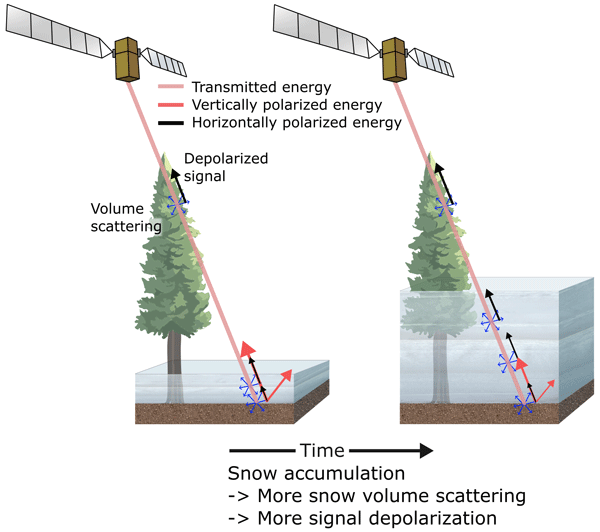
This study uses radar imagery from the Sentinel-1 satellite to derive snow depth from increases in the returning energy. These retrieved depths are then compared to nine lidar-derived snow depths across the western United State to assess the ability of this technique to be used to monitor global snow distributions. We also qualitatively compare the changes in underlying Sentinel-1 amplitudes against both the total lidar snow depths and nine automated snow monitoring stations.

Zachary S. Miller, Erich H. Peitzsch, Eric A. Sproles, Karl W. Birkeland, and Ross T. Palomaki
The Cryosphere, 16, 4907–4930, https://doi.org/10.5194/tc-16-4907-2022, https://doi.org/10.5194/tc-16-4907-2022, 2022
Short summary
Short summary
Snow depth varies across steep, complex mountain landscapes due to interactions between dynamic natural processes. Our study of a winter time series of high-resolution snow depth maps found that spatial resolutions greater than 0.5 m do not capture the complete patterns of snow depth spatial variability at a couloir study site in the Bridger Range of Montana, USA. The results of this research have the potential to reduce uncertainty associated with snowpack and snow water resource analysis.
Zachary Hoppinen, Hans-Peter Marshall, Ross Palomaki, Coleman Kane, Siobhan Ciafone, Shad O'Neel, and Thomas Van Der Weide
EGUsphere, https://doi.org/10.5194/egusphere-2026-5140, https://doi.org/10.5194/egusphere-2026-5140, 2026
This preprint is open for discussion and under review for The Cryosphere (TC).
Short summary
Short summary
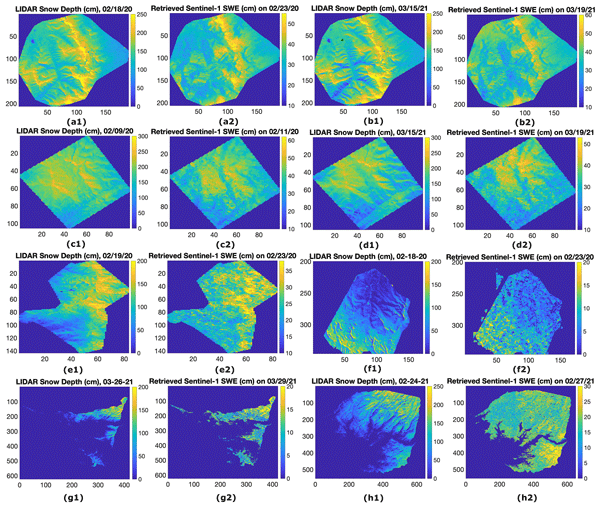
Mountain snow stores water for millions of people, but no satellite yet maps how much water it holds. The new NISAR radar satellite may be able to, because its signal slows down as it passes through snow. We tested this over a mountain site in Idaho by comparing the satellite measurement of new snow with maps of snow depth change from an airplane-mounted laser scanner. The two agreed well, especially in open terrain, giving the first evidence that NISAR can measure snowfall from space.
Shadi Oveisgharan, Emre Havazli, Robert Zinke, and Zachary Hoppinen
The Cryosphere, 20, 4537–4561, https://doi.org/10.5194/tc-20-4537-2026, https://doi.org/10.5194/tc-20-4537-2026, 2026
Short summary
Short summary
Accurate measurements of water stored in mountain snow are essential for managing water resources and understanding climate change. We evaluated a satellite-based method using airborne laser surveys and ground observations across several snow-covered regions. The method performed well under dry snow conditions and identified the factors that affect its accuracy, supporting improved monitoring of mountain snow from future satellite missions.
Zachary Hoppinen, Simon Zwieback, Ross Palomaki, and Hans-Peter Marshall
EGUsphere, https://doi.org/10.5194/egusphere-2026-3772, https://doi.org/10.5194/egusphere-2026-3772, 2026
Short summary
Short summary
Radar satellites measure new snowfall by passing over the same ground twice and sensing how the snow delays their signal. To map it, they average each measurement over patches tens of meters wide, assuming snowfall is uniform within them. Aircraft laser surveys show it actually varies sharply below ~25 m, far from uniform. This unevenness degrades the measurement and biases the estimate, worst in steep terrain and big storms, as two radar image pairs over snowy and snow-free periods confirm.
Karina Zikan, Ellyn M. Enderlin, Hans-Peter Marshall, and Shad O'Neel
The Cryosphere, 20, 3051–3072, https://doi.org/10.5194/tc-20-3051-2026, https://doi.org/10.5194/tc-20-3051-2026, 2026
Short summary
Short summary
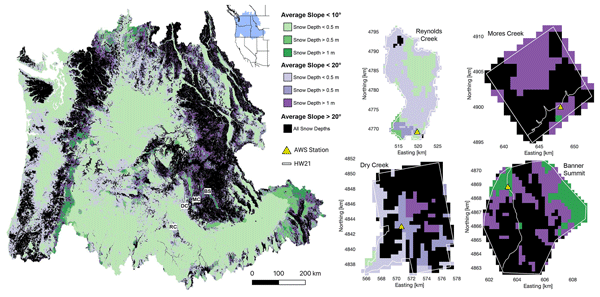
We present an improved method for measuring mountain snow depth using NASA’s ICESat-2 satellite that accounts for steep terrain. By comparison to weather station and helicopter measurements, we show that ICESat-2 captures snow depth both over a season and across a mountain ridge. ICESat-2 works best when slopes are less than 20°. Enough mountain terrain falls within this slope range that ICESat-2 could dramatically expand snow depth observation and provide critical data for water management.
Steven A. Margulis, Maya Hildebrand, Xiaolan Xu, Manuela Girotto, Hans-Peter Marshall, Rashmi Shah, Elias Deeb, Simon Yueh, Dara Entekhabi, and Jessica Lundquist
EGUsphere, https://doi.org/10.5194/egusphere-2026-1594, https://doi.org/10.5194/egusphere-2026-1594, 2026
Short summary
Short summary
This paper demonstrates the feasibility of using a Bayesian framework for estimating snow water equivalent (SWE) from InSAR phase data at C-, L-, and P-band wavelengths. The Bayesian approach shows promise as a value-added approach to estimating SWE from phase delay measurements that are not only accurate at the measurement times, but interpolate between measurements and extrapolate beyond measurements and provide distributional (uncertainty) estimates for SWE.
Kajsa Holland-Goon, Randall Bonnell, Daniel McGrath, W. Brad Baxter, Tate Meehan, Ryan Webb, Christopher F. Larsen, Hans-Peter Marshall, Megan Mason, and Carrie Vuyovich
The Cryosphere, 20, 2169–2179, https://doi.org/10.5194/tc-20-2169-2026, https://doi.org/10.5194/tc-20-2169-2026, 2026
Short summary
Short summary
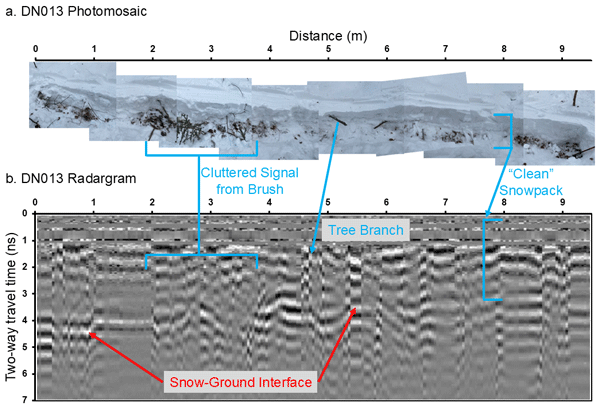
As part of the NASA SnowEx23 campaign, we conducted detailed snowpack experiments in Alaska's boreal forests and Arctic tundra. We collected ground-penetrating radar measurements of snow depth along 44 short transects. We then excavated the snowpack from below the transects and measured snow depth, noting any vegetation and void spaces. We used the detailed in situ measurements to evaluate uncertainties in ground-penetrating radar and airborne lidar methods for snow depth retrieval.
Anne Sledd, Michael R. Gallagher, Matthew D. Shupe, Christopher J. Cox, Robert Hawley, Michael S. Town, Heather Guy, Hans-Peter Marshall, Ryan R. Neely III, Claire Pettersen, Von P. Walden, Catherine Hebson, Andrew Martin, Erik Olson, and Derek Pickell
EGUsphere, https://doi.org/10.5194/egusphere-2026-1842, https://doi.org/10.5194/egusphere-2026-1842, 2026
Short summary
Short summary
Understanding energetic processes at the surface is important for understanding how the Greenland ice sheet melts. However, most temperature observations of firn are insufficient for studying energetic processes near the surface where melt happens. In this work we present new ground observations of high-resolution temperature profiles in the top meter of firn near the southwest coast of Greenland. Using these observations we characterize how temperature and energy vary during the melt season.
Rainey Aberle, Ellyn Enderlin, Shad O'Neel, Caitlyn Florentine, Louis Sass, Adam Dickson, Hans-Peter Marshall, and Alejandro Flores
The Cryosphere, 19, 1675–1693, https://doi.org/10.5194/tc-19-1675-2025, https://doi.org/10.5194/tc-19-1675-2025, 2025
Short summary
Short summary
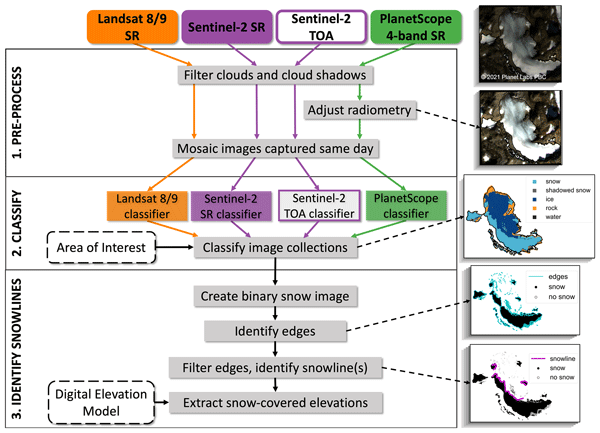
Tracking seasonal snow on glaciers is critical for understanding glacier health. Yet previous work has not directly compared machine learning algorithms for snow classification across satellite image products. To address this, we developed a new automated workflow for tracking seasonal snow on glaciers using several image products and machine learning models. Applying this method can help provide insights into glacier health, water resources, and the effects of climate change on snow cover.
Zachary Hoppinen, Ross T. Palomaki, George Brencher, Devon Dunmire, Eric Gagliano, Adrian Marziliano, Jack Tarricone, and Hans-Peter Marshall
The Cryosphere, 18, 5407–5430, https://doi.org/10.5194/tc-18-5407-2024, https://doi.org/10.5194/tc-18-5407-2024, 2024
Short summary
Short summary
This study uses radar imagery from the Sentinel-1 satellite to derive snow depth from increases in the returning energy. These retrieved depths are then compared to nine lidar-derived snow depths across the western United State to assess the ability of this technique to be used to monitor global snow distributions. We also qualitatively compare the changes in underlying Sentinel-1 amplitudes against both the total lidar snow depths and nine automated snow monitoring stations.
Randall Bonnell, Daniel McGrath, Jack Tarricone, Hans-Peter Marshall, Ella Bump, Caroline Duncan, Stephanie Kampf, Yunling Lou, Alex Olsen-Mikitowicz, Megan Sears, Keith Williams, Lucas Zeller, and Yang Zheng
The Cryosphere, 18, 3765–3785, https://doi.org/10.5194/tc-18-3765-2024, https://doi.org/10.5194/tc-18-3765-2024, 2024
Short summary
Short summary
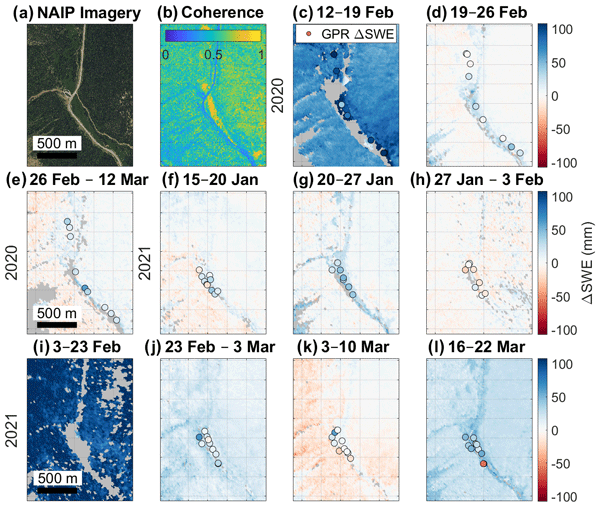
Snow provides water for billions of people, but the amount of snow is difficult to detect remotely. During the 2020 and 2021 winters, a radar was flown over mountains in Colorado, USA, to measure the amount of snow on the ground, while our team collected ground observations to test the radar technique’s capabilities. The technique yielded accurate measurements of the snowpack that had good correlation with ground measurements, making it a promising application for the upcoming NISAR satellite.
Tate G. Meehan, Ahmad Hojatimalekshah, Hans-Peter Marshall, Elias J. Deeb, Shad O'Neel, Daniel McGrath, Ryan W. Webb, Randall Bonnell, Mark S. Raleigh, Christopher Hiemstra, and Kelly Elder
The Cryosphere, 18, 3253–3276, https://doi.org/10.5194/tc-18-3253-2024, https://doi.org/10.5194/tc-18-3253-2024, 2024
Short summary
Short summary
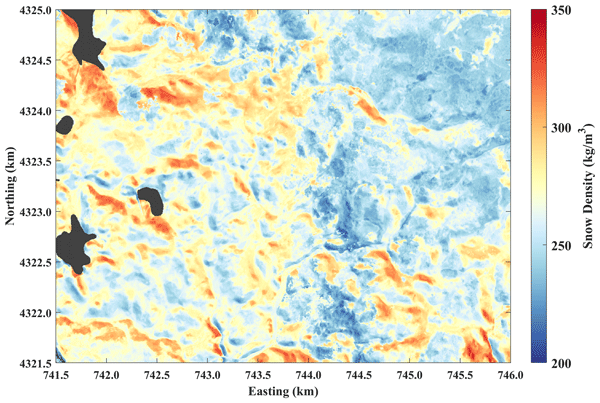
Snow water equivalent (SWE) is a critical parameter for yearly water supply forecasting and can be calculated by multiplying the snow depth by the snow density. We combined high-spatial-resolution snow depth information with ground-based radar measurements to solve for snow density. Extrapolated density estimates over our study area resolved detailed patterns that agree with the known interactions of snow with wind, terrain, and vegetation and were utilized in the calculation of SWE.
Isis Brangers, Hans-Peter Marshall, Gabrielle De Lannoy, Devon Dunmire, Christian Mätzler, and Hans Lievens
The Cryosphere, 18, 3177–3193, https://doi.org/10.5194/tc-18-3177-2024, https://doi.org/10.5194/tc-18-3177-2024, 2024
Short summary
Short summary
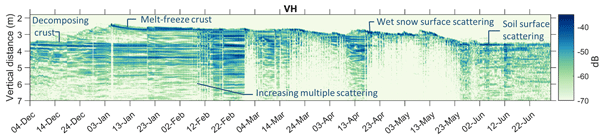
To better understand the interactions between C-band radar waves and snow, a tower-based experiment was set up in the Idaho Rocky Mountains. The reflections were collected in the time domain to measure the backscatter profile from the various snowpack and ground surface layers. The results demonstrate that C-band radar is sensitive to seasonal patterns in snow accumulation but that changes in microstructure, stratigraphy and snow wetness may complicate satellite-based snow depth retrievals.
Ian E. McDowell, Kaitlin M. Keegan, S. McKenzie Skiles, Christopher P. Donahue, Erich C. Osterberg, Robert L. Hawley, and Hans-Peter Marshall
The Cryosphere, 18, 1925–1946, https://doi.org/10.5194/tc-18-1925-2024, https://doi.org/10.5194/tc-18-1925-2024, 2024
Short summary
Short summary
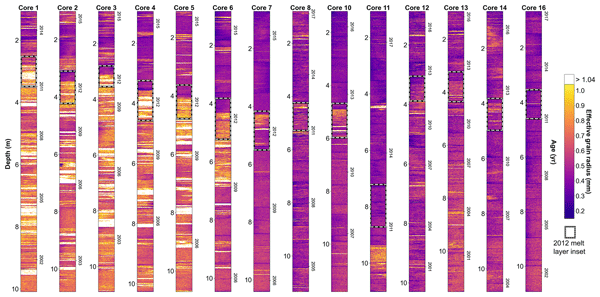
Accurate knowledge of firn grain size is crucial for many ice sheet research applications. Unfortunately, collecting detailed measurements of firn grain size is difficult. We demonstrate that scanning firn cores with a near-infrared imager can quickly produce high-resolution maps of both grain size and ice layer distributions. We map grain size and ice layer stratigraphy in 14 firn cores from Greenland and document changes to grain size and ice layer content from the extreme melt summer of 2012.
Zachary Hoppinen, Shadi Oveisgharan, Hans-Peter Marshall, Ross Mower, Kelly Elder, and Carrie Vuyovich
The Cryosphere, 18, 575–592, https://doi.org/10.5194/tc-18-575-2024, https://doi.org/10.5194/tc-18-575-2024, 2024
Short summary
Short summary
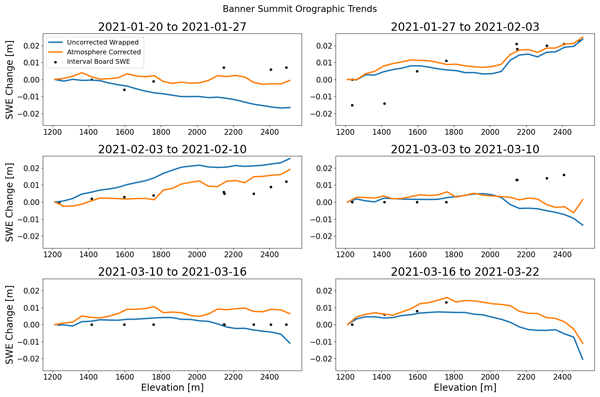
We used changes in radar echo travel time from multiple airborne flights to estimate changes in snow depths across Idaho for two winters. We compared our radar-derived retrievals to snow pits, weather stations, and a 100 m resolution numerical snow model. We had a strong Pearson correlation and root mean squared error of 10 cm relative to in situ measurements. Our retrievals also correlated well with our model, especially in regions of dry snow and low tree coverage.
Shadi Oveisgharan, Robert Zinke, Zachary Hoppinen, and Hans Peter Marshall
The Cryosphere, 18, 559–574, https://doi.org/10.5194/tc-18-559-2024, https://doi.org/10.5194/tc-18-559-2024, 2024
Short summary
Short summary
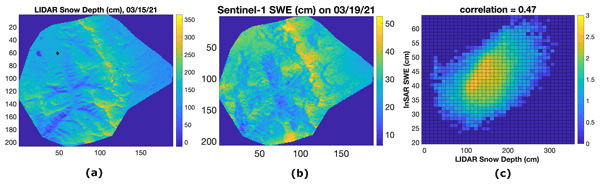
The seasonal snowpack provides water resources to billions of people worldwide. Large-scale mapping of snow water equivalent (SWE) with high resolution is critical for many scientific and economics fields. In this work we used the radar remote sensing interferometric synthetic aperture radar (InSAR) to estimate the SWE change between 2 d. The error in the estimated SWE change is less than 2 cm for in situ stations. Additionally, the retrieved SWE using InSAR is correlated with lidar snow depth.
Jack Tarricone, Ryan W. Webb, Hans-Peter Marshall, Anne W. Nolin, and Franz J. Meyer
The Cryosphere, 17, 1997–2019, https://doi.org/10.5194/tc-17-1997-2023, https://doi.org/10.5194/tc-17-1997-2023, 2023
Short summary
Short summary
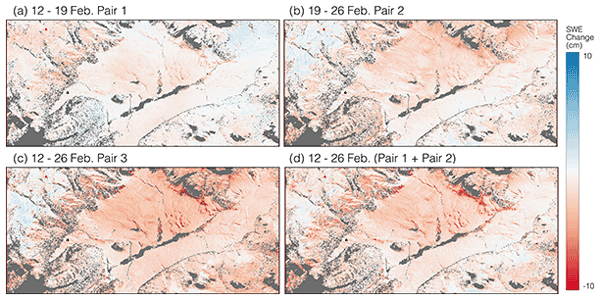
Mountain snowmelt provides water for billions of people across the globe. Despite its importance, we cannot currently measure the amount of water in mountain snowpacks from satellites. In this research, we test the ability of an experimental snow remote sensing technique from an airplane in preparation for the same sensor being launched on a future NASA satellite. We found that the method worked better than expected for estimating important snowpack properties.
Zachary S. Miller, Erich H. Peitzsch, Eric A. Sproles, Karl W. Birkeland, and Ross T. Palomaki
The Cryosphere, 16, 4907–4930, https://doi.org/10.5194/tc-16-4907-2022, https://doi.org/10.5194/tc-16-4907-2022, 2022
Short summary
Short summary
Snow depth varies across steep, complex mountain landscapes due to interactions between dynamic natural processes. Our study of a winter time series of high-resolution snow depth maps found that spatial resolutions greater than 0.5 m do not capture the complete patterns of snow depth spatial variability at a couloir study site in the Bridger Range of Montana, USA. The results of this research have the potential to reduce uncertainty associated with snowpack and snow water resource analysis.
Leung Tsang, Michael Durand, Chris Derksen, Ana P. Barros, Do-Hyuk Kang, Hans Lievens, Hans-Peter Marshall, Jiyue Zhu, Joel Johnson, Joshua King, Juha Lemmetyinen, Melody Sandells, Nick Rutter, Paul Siqueira, Anne Nolin, Batu Osmanoglu, Carrie Vuyovich, Edward Kim, Drew Taylor, Ioanna Merkouriadi, Ludovic Brucker, Mahdi Navari, Marie Dumont, Richard Kelly, Rhae Sung Kim, Tien-Hao Liao, Firoz Borah, and Xiaolan Xu
The Cryosphere, 16, 3531–3573, https://doi.org/10.5194/tc-16-3531-2022, https://doi.org/10.5194/tc-16-3531-2022, 2022
Short summary
Short summary
Snow water equivalent (SWE) is of fundamental importance to water, energy, and geochemical cycles but is poorly observed globally. Synthetic aperture radar (SAR) measurements at X- and Ku-band can address this gap. This review serves to inform the broad snow research, monitoring, and application communities about the progress made in recent decades to move towards a new satellite mission capable of addressing the needs of the geoscience researchers and users.
Juha Lemmetyinen, Juval Cohen, Anna Kontu, Juho Vehviläinen, Henna-Reetta Hannula, Ioanna Merkouriadi, Stefan Scheiblauer, Helmut Rott, Thomas Nagler, Elisabeth Ripper, Kelly Elder, Hans-Peter Marshall, Reinhard Fromm, Marc Adams, Chris Derksen, Joshua King, Adriano Meta, Alex Coccia, Nick Rutter, Melody Sandells, Giovanni Macelloni, Emanuele Santi, Marion Leduc-Leballeur, Richard Essery, Cecile Menard, and Michael Kern
Earth Syst. Sci. Data, 14, 3915–3945, https://doi.org/10.5194/essd-14-3915-2022, https://doi.org/10.5194/essd-14-3915-2022, 2022
Short summary
Short summary
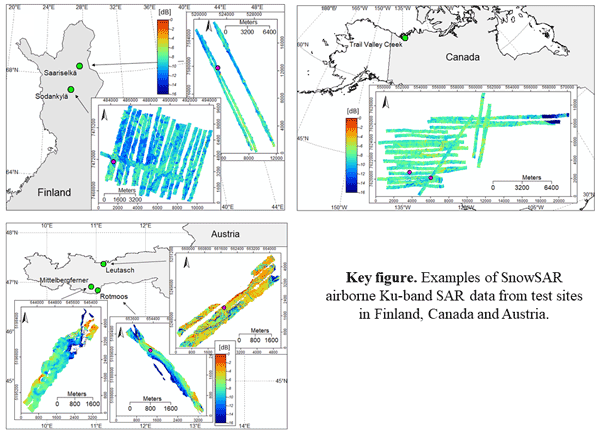
The manuscript describes airborne, dual-polarised X and Ku band synthetic aperture radar (SAR) data collected over several campaigns over snow-covered terrain in Finland, Austria and Canada. Colocated snow and meteorological observations are also presented. The data are meant for science users interested in investigating X/Ku band radar signatures from natural environments in winter conditions.
Hans Lievens, Isis Brangers, Hans-Peter Marshall, Tobias Jonas, Marc Olefs, and Gabriëlle De Lannoy
The Cryosphere, 16, 159–177, https://doi.org/10.5194/tc-16-159-2022, https://doi.org/10.5194/tc-16-159-2022, 2022
Short summary
Short summary
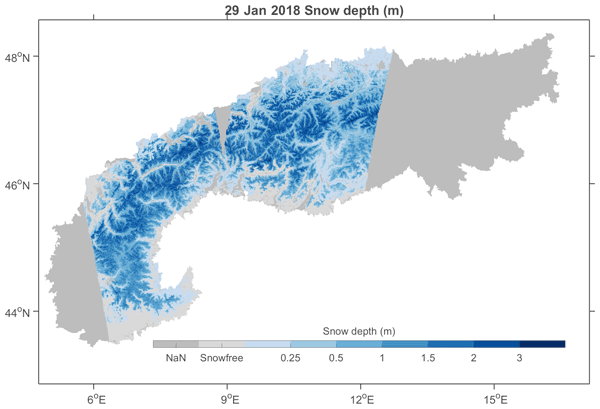
Snow depth observations at high spatial resolution from the Sentinel-1 satellite mission are presented over the European Alps. The novel observations can improve our knowledge of seasonal snow mass in areas with complex topography, where satellite-based estimates are currently lacking, and benefit a number of applications including water resource management, flood forecasting, and numerical weather prediction.
Cited articles
Belinska, K., Fischer, G., and Hajnsek, I.: Combining Differential SAR Interferometry and Copolar Phase Differences for Snow Water Equivalent Estimation, IEEE Geosci. Remote S., 21, 1–5, https://doi.org/10.1109/LGRS.2024.3461229, 2024. a
Bevis, M., Businger, S., Chiswell, S., Herring, T. A., Anthes, R. A., Rocken, C., and Ware, R. H.: GPS Meteorology: Mapping Zenith Wet Delays onto Precipitable Water, J. Appl. Meteorol. Clim., 33, 379–386, 1994. a
Blöschl, G.: Scaling Issues in Snow Hydrology, Hydrol. Process., 13, 27, https://doi.org/10.1002/(SICI)1099-1085(199910)13:14/15<2149::AID-HYP847>3.0.CO;2-8, 1999. a
Bonnell, R., McGrath, D., Tarricone, J., Marshall, H.-P., Bump, E., Duncan, C., Kampf, S., Lou, Y., Olsen-Mikitowicz, A., Sears, M., Williams, K., Zeller, L., and Zheng, Y.: Evaluating L-band InSAR snow water equivalent retrievals with repeat ground-penetrating radar and terrestrial lidar surveys in northern Colorado, The Cryosphere, 18, 3765–3785, https://doi.org/10.5194/tc-18-3765-2024, 2024a. a
Bonnell, R., Elder, K., McGrath, D., Marshall, H. P., Starr, B., Adebisi, N., Palomaki, R. T., and Hoppinen, Z.: L-band InSAR Snow Water Equivalent Retrieval Uncertainty Increases with Forest Cover Fraction, Geophys. Res. Lett., 51, e2024GL111708, https://doi.org/10.1029/2024GL111708, 2024b. a, b
Brancato, V., Jung, J., Huang, X., and Fattahi, H.: NASA SDS Product Specification: Level-2 Geocoded Unwrapped Interferogram, Tech. Rep. JPL D-102272 (Rev E), NASA Jet Propulsion Laboratory, Pasadena, California, https://doi.org/10.5067/NIL1GUNW-B1, 2024. a, b
Broxton, P., Zeng, X., and Dawson, N.: Daily 4 Km Gridded SWE and Snow Depth from Assimilated In-Situ and Modeled Data over the Conterminous US, Version 1, https://doi.org/10.5067/0GGPB220EX6A, 2019. a
Calbet, X., Carbajal Henken, C., DeSouza-Machado, S., Sun, B., and Reale, T.: Horizontal small-scale variability of water vapor in the atmosphere: implications for intercomparison of data from different measuring systems, Atmos. Meas. Tech., 15, 7105–7118, https://doi.org/10.5194/amt-15-7105-2022, 2022. a
Deeb, E. J., Forster, R. R., and Kane, D. L.: Monitoring Snowpack Evolution Using Interferometric Synthetic Aperture Radar on the North Slope of Alaska, USA, Int. J. Remote Sens., 32, 3985–4003, https://doi.org/10.1080/01431161003801351, 2011. a
Dewitz, J.: LANDFIRE 2024 Update, https://doi.org/10.5066/P1XVKXRL, 2026. a
De Zan, F., Parizzi, A., Prats-Iraola, P., and López-Dekker, P.: A SAR Interferometric Model for Soil Moisture, IEEE T. Geosci. Remote, 52, 418–425, https://doi.org/10.1109/TGRS.2013.2241069, 2014. a
Eppler, J. and Rabus, B. T.: Adapting InSAR Phase Linking for Seasonally Snow-Covered Terrain, IEEE T. Geosci. Remote, 60, 1–13, https://doi.org/10.1109/TGRS.2022.3186522, 2022. a
Global Modeling And Assimilation Office and Pawson, S.: MERRA-2 inst1_2d_int_Nx: 2d, 1-Hourly, Instantaneous, Single-Level, Assimilation, Vertically Integrated Diagnostics V5.12.4, https://doi.org/10.5067/G0U6NGQ3BLE0, 2015. a, b
Guneriussen, T., Hogda, K., Johnsen, H., and Lauknes, I.: InSAR for Estimation of Changes in Snow Water Equivalent of Dry Snow, IEEE T. Geosci. Remote, 39, 2101–2108, https://doi.org/10.1109/36.957273, 2001. a, b
Hallikainen, M. T., Ulaby, F. T., Dobson, M. C., El-rayes, M. A., and Wu, L.-K.: Microwave Dielectric Behavior of Wet Soil-Part 1: Empirical Models and Experimental Observations, IEEE T. Geosci. Remote, GE-23, 25–34, https://doi.org/10.1109/TGRS.1985.289497, 1985. a
Hoppinen, Z., Oveisgharan, S., Marshall, H.-P., Mower, R., Elder, K., and Vuyovich, C.: Snow water equivalent retrieval over Idaho – Part 2: Using L-band UAVSAR repeat-pass interferometry, The Cryosphere, 18, 575–592, https://doi.org/10.5194/tc-18-575-2024, 2024. a
Jolivet, R., Agram, P. S., Lin, N. Y., Simons, M., Doin, M.-P., Peltzer, G., and Li, Z.: Improving InSAR Geodesy Using Global Atmospheric Models, J. Geophys. Res.-Sol. Ea., 119, 2324–2341, https://doi.org/10.1002/2013JB010588, 2014. a, b, c
Kampf, S. K., McGrath, D., Sears, M. G., Fassnacht, S. R., Kiewiet, L., and Hammond, J. C.: Increasing Wildfire Impacts on Snowpack in the Western U. S., P. Natl. Acad. Sci. USA, 119, e2200333119, https://doi.org/10.1073/pnas.2200333119, 2022. a
Lean, J. L., Meier, R. R., Picone, J. M., Sassi, F., Emmert, J. T., and Richards, P. G.: Ionospheric Total Electron Content: Spatial Patterns of Variability, J. Geophys. Res.-Space, 121, 10367–10402, https://doi.org/10.1002/2016JA023210, 2016. a
Li, S., Xu, W., and Li, Z.: Review of the SBAS InSAR Time-series Algorithms, Applications, and Challenges, Geodesy and Geodynamics, 13, 114–126, https://doi.org/10.1016/j.geog.2021.09.007, 2022. a
López-Moreno, J., Callow, N., McGowan, H., Webb, R., Schwartz, A., Bilish, S., Revuelto, J., Gascoin, S., Deschamps-Berger, C., and Alonso-González, E.: Marginal Snowpacks: The Basis for a Global Definition and Existing Research Needs, Earth-Sci. Rev., 252, 104751, https://doi.org/10.1016/j.earscirev.2024.104751, 2024. a, b
Marshall, H.-P. and Koh, G.: FMCW Radars for Snow Research, Cold Reg. Sci. Technol., 52, 118–131, https://doi.org/10.1016/j.coldregions.2007.04.008, 2008. a
Meyer, F. J. and Agram, P. S.: Modeling Ionospheric Phase Noise for NISAR Mission Data, in: 2017 IEEE International Geoscience and Remote Sensing Symposium (IGARSS), 3806–3809, https://doi.org/10.1109/IGARSS.2017.8127829, 2017. a
National Academies of Sciences, Engineering, and Medicine: Thriving on Our Changing Planet: A Decadal Strategy for Earth Observation from Space, The National Academies Press, Washington, D. C., ISBN 978-0-309-46757-5, 2018. a
Oveisgharan, S., Zinke, R., Hoppinen, Z., and Marshall, H. P.: Snow water equivalent retrieval over Idaho – Part 1: Using Sentinel-1 repeat-pass interferometry, The Cryosphere, 18, 559–574, https://doi.org/10.5194/tc-18-559-2024, 2024. a, b
Palomaki, R. and Hoppinen, Z.: rpalomaki/SWE_error_analysis: manuscript (v1.0), Zenodo [code], https://doi.org/10.5281/zenodo.20039941, 2026. a
Palomaki, R. T. and Sproles, E. A.: Assessment of L-band InSAR Snow Estimation Techniques over a Shallow, Heterogeneous Prairie Snowpack, Remote Sens. Environ., 296, 113744, https://doi.org/10.1016/j.rse.2023.113744, 2023. a, b
Patitz, W. E., Brock, B. C., and Powell, E. G.: Measurement of Dielectric and Magnetic Properties of Soil, Tech. rep., Sandia National Laboratories, Albuquerque, New Mexico 87185 and Livermore, California 94550, https://doi.org/10.2172/167219, 1995. a
Petersky, R. and Harpold, A.: Now you see it, now you don't: a case study of ephemeral snowpacks and soil moisture response in the Great Basin, USA, Hydrol. Earth Syst. Sci., 22, 4891–4906, https://doi.org/10.5194/hess-22-4891-2018, 2018. a
Poggio, L., de Sousa, L. M., Batjes, N. H., Heuvelink, G. B. M., Kempen, B., Ribeiro, E., and Rossiter, D.: SoilGrids 2.0: producing soil information for the globe with quantified spatial uncertainty, SOIL, 7, 217–240, https://doi.org/10.5194/soil-7-217-2021, 2021. a
Rosen, P., Hensley, S., Joughin, I., Li, F., Madsen, S., Rodriguez, E., and Goldstein, R.: Synthetic Aperture Radar Interferometry, P. IEEE, 88, 333–382, https://doi.org/10.1109/5.838084, 2000. a
Rosen, P. A., Hensley, S., and Chen, C.: Measurement and Mitigation of the Ionosphere in L-band Interferometric SAR Data, in: 2010 IEEE Radar Conference, 1459–1463, https://doi.org/10.1109/RADAR.2010.5494385, 2010. a, b
Rott, H., Nagler, T., and Scheiber, R.: Snow Mass Retrieval by Means of SAR Interferometry, in: Proceedings of the FRINGE 2003 Workshop, Frascati, Italy, 7, 2003. a
Ruiz, J. J., Lemmetyinen, J., Kontu, A., Tarvainen, R., Vehmas, R., Pulliainen, J., and Praks, J.: Investigation of Environmental Effects on Coherence Loss in SAR Interferometry for Snow Water Equivalent Retrieval, IEEE T. Geosci. Remote, 60, 1–15, https://doi.org/10.1109/TGRS.2022.3223760, 2022. a
Ruiz, J. J., Merkouriadi, I., Lemmetyinen, J., Cohen, J., Kontu, A., Nagler, T., Pulliainen, J., and Praks, J.: Comparing InSAR Snow Water Equivalent Retrieval Using ALOS2 With In Situ Observations and SnowModel Over the Boreal Forest Area, IEEE T. Geosci. Remote, 62, 1–14, https://doi.org/10.1109/TGRS.2024.3439855, 2024. a
Schaer, S., Gurtner, W., and Feltens, J.: IONEX: The Ionosphere Map Exchange Format Version 1, in: Proc. of the IGS AC. Workshop, Darmstadt, Germany, 9 February, vol. 11, 233–247, 1998. a
Schwank, M., Kontu, A., Mialon, A., Naderpour, R., Houtz, D., Lemmetyinen, J., Rautiainen, K., Li, Q., Richaume, P., Kerr, Y., and Mätzler, C.: Temperature Effects on L-band Vegetation Optical Depth of a Boreal Forest, Remote Sens. Environ., 263, 112542, https://doi.org/10.1016/j.rse.2021.112542, 2021. a, b, c, d
Siirila-Woodburn, E. R., Rhoades, A. M., Hatchett, B. J., Huning, L. S., Szinai, J., Tague, C., Nico, P. S., Feldman, D. R., Jones, A. D., Collins, W. D., and Kaatz, L.: A Low-to-No Snow Future and Its Impacts on Water Resources in the Western United States, Nature Reviews Earth & Environment, 2, 800–819, https://doi.org/10.1038/s43017-021-00219-y, 2021. a
Smoot, E. E. and Gleason, K. E.: Forest Fires Reduce Snow-Water Storage and Advance the Timing of Snowmelt across the Western U.S., Water-Sui, 13, 3533, https://doi.org/10.3390/w13243533, 2021. a
Sturm, M. and Liston, G. E.: Revisiting the Global Seasonal Snow Classification: An Updated Dataset for Earth System Applications, J. Hydrometeorol., 22, 2917–2938, https://doi.org/10.1175/JHM-D-21-0070.1, 2021. a, b, c
Tarricone, J., Webb, R. W., Marshall, H.-P., Nolin, A. W., and Meyer, F. J.: Estimating snow accumulation and ablation with L-band interferometric synthetic aperture radar (InSAR), The Cryosphere, 17, 1997–2019, https://doi.org/10.5194/tc-17-1997-2023, 2023. a
Tarricone, J., Palomaki, R., Rittger, K., Nolin, A., Marshall, H.-P., and Vuyovich, C.: Investigating the Impact of Optical Snow Cover Data on L-Band InSAR Snow Water Equivalent Retrievals, Journal of Remote Sensing, 5, 0682, https://doi.org/10.34133/remotesensing.0682, 2025. a
Trujillo, E. and Molotch, N. P.: Snowpack Regimes of the Western United States, Water Resour. Res., 50, 5611–5623, https://doi.org/10.1002/2013WR014753, 2014. a, b
Wegmüller, U., Werner, C., Frey, O., Magnard, C., and Strozzi, T.: Reformulating the Split-Spectrum Method to Facilitate the Estimation and Compensation of the Ionospheric Phase in SAR Interferograms, Procedia Comput. Sci., 138, 318–325, https://doi.org/10.1016/j.procs.2018.10.045, 2018. a
Youn, H.-s., Lee, L. Y., and Iskander, M.: In-Situ Broadband Soil Measurements: Dielectric and Magnetic Properties, in: 2010 IEEE International Geoscience and Remote Sensing Symposium, 4483–4486, https://doi.org/10.1109/IGARSS.2010.5649039, 2010. a
Zebker, H. and Villasenor, J.: Decorrelation in Interferometric Radar Echoes, IEEE T. Geosci. Remote, 30, 950–959, https://doi.org/10.1109/36.175330, 1992. a, b
Short summary
The recently-launched NISAR satellite has potential to provide new measurements of the water stored in seasonal snow, but various non-snow factors can introduce error into these new measurements. We analyzed the effects of six non-snow errors and found that impacts from the ionosphere on NISAR phase data must be addressed for accurate snow measurements. Other non-snow factors can have partially offsetting effects on snow measurements, depending on environmental properties at a particular site.
The recently-launched NISAR satellite has potential to provide new measurements of the water...


