
Articles | Volume 20, issue 4
https://doi.org/10.5194/tc-20-2439-2026
© Author(s) 2026. This work is distributed under
the Creative Commons Attribution 4.0 License.
the Creative Commons Attribution 4.0 License.
https://doi.org/10.5194/tc-20-2439-2026
© Author(s) 2026. This work is distributed under
the Creative Commons Attribution 4.0 License.
the Creative Commons Attribution 4.0 License.
Research article
| 
27 Apr 2026
Research article |
| 27 Apr 2026
| 27 Apr 2026
Simulating the effect of natural convection in a tundra snow cover

CRYOS, School of Architecture, Civil and Environmental Engineering, EPFL, Lausanne, Switzerland
Michael Lehning
CRYOS, School of Architecture, Civil and Environmental Engineering, EPFL, Lausanne, Switzerland
WSL Institute for Snow and Avalanche Research SLF, Davos, Switzerland
Related authors
Océane Hames, Mahdi Jafari, David Nicholas Wagner, Ian Raphael, David Clemens-Sewall, Chris Polashenski, Matthew D. Shupe, Martin Schneebeli, and Michael Lehning
Geosci. Model Dev., 15, 6429–6449, https://doi.org/10.5194/gmd-15-6429-2022, https://doi.org/10.5194/gmd-15-6429-2022, 2022
Short summary
Short summary
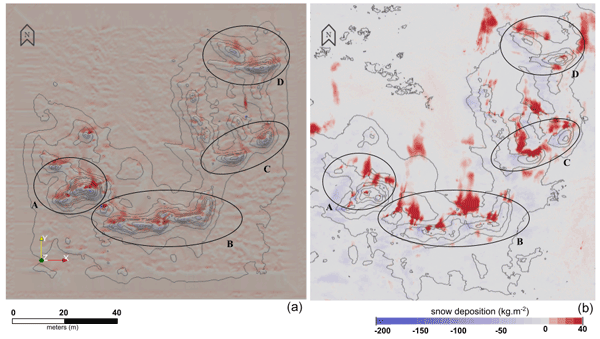
This paper presents an Eulerian–Lagrangian snow transport model implemented in the fluid dynamics software OpenFOAM, which we call snowBedFoam 1.0. We apply this model to reproduce snow deposition on a piece of ridged Arctic sea ice, which was produced during the MOSAiC expedition through scan measurements. The model appears to successfully reproduce the enhanced snow accumulation and deposition patterns, although some quantitative uncertainties were shown.
Jimmy Gasser, Yael Frischholz, and Michael Lehning
Wind Energ. Sci. Discuss., https://doi.org/10.5194/wes-2026-179, https://doi.org/10.5194/wes-2026-179, 2026
Preprint under review for WES
Short summary
Short summary
Wind and pressure fields around solar installations and wind turbines in complex terrain are needed for siting and load estimates, but flow simulations are too expensive for repeated studies. We train neural network surrogates on 292 OpenFOAM simulations to predict, in seconds, the wind over kilometre-scale Swiss terrain and the metre-scale flow around structures. Physics residuals make predictions more consistent with mass and momentum conservation, and active learning selects the simulations.
Francesca Carletti, Nora Helbig, Nander Wever, Loïc Brouet, Mathias Bavay, Benjamin Walter, and Michael Lehning
The Cryosphere, 20, 5653–5673, https://doi.org/10.5194/tc-20-5653-2026, https://doi.org/10.5194/tc-20-5653-2026, 2026
Short summary
Short summary
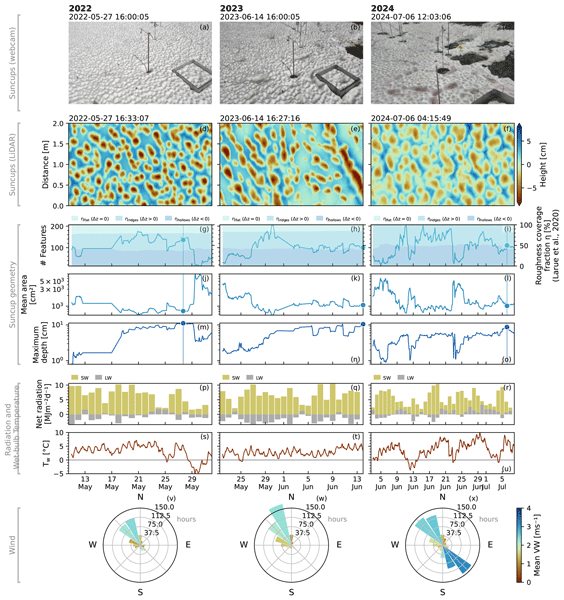
Melting alpine snowfields develop cup-shaped hollows that reduce how much sunlight the snow reflects, accelerating melt. Over three seasons in the Swiss Alps, we monitored how these hollows form and grow with a laser scanner. Two processes reduce reflectivity at the same time: hollows trap light through internal reflections, and meltwater washes dark particles into them. Because they are difficult to separate, surface roughness alone emerges as a proxy for overall reflectivity loss.
Tiziana Lazzarina Zendrini, Luca Carturan, Michael Lehning, Mathias Bavay, Federico Cazorzi, Paolo Gabrielli, Nander Wever, and Giancarlo Dalla Fontana
The Cryosphere, 20, 5199–5224, https://doi.org/10.5194/tc-20-5199-2026, https://doi.org/10.5194/tc-20-5199-2026, 2026
Short summary
Short summary
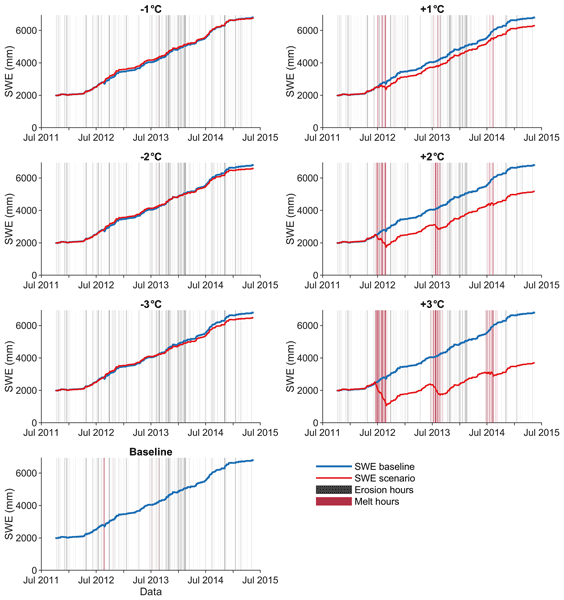
By combining in situ mass balance data with a physics‐based snow model at Mt. Ortles, in the Italian Alps, we investigate snow accumulation, erosion and melt processes, and their sensitivity to air temperature. We found that wind erosion is currently the major ablation process at this high-elevation site, whereas melt plays a minor role. Quickly rising air temperature is affecting this partitioning and suggests a future shift from an erosion-dominated to a melt-dominated mass balance regime.
Isabella Anglin, Adriaan J. Teuling, Marius G. Floriancic, Michael Lehning, and Harsh Beria
EGUsphere, https://doi.org/10.5194/egusphere-2026-4268, https://doi.org/10.5194/egusphere-2026-4268, 2026
Short summary
Short summary
Snow sublimation is the direct vapor loss of snow to the atmosphere, reducing spring snowmelt that recharges soils, groundwater, and rivers. Using eddy-covariance measurements over a full winter in the eastern Swiss Alps, we found that sublimation removed about 25 mm of water, or nearly 6 % of the season’s peak snow water storage. Sublimation losses were highest late in the season, showing that this hidden process can meaningfully reduce mountain water supplies.
Samuele Viaro, Armin Sigmund, Evan Thomas, and Michael Lehning
EGUsphere, https://doi.org/10.5194/egusphere-2026-2132, https://doi.org/10.5194/egusphere-2026-2132, 2026
Preprint archived
Short summary
Short summary
Our research focuses in understanding snow processes at the surface-atmosphere interface, and their influence at larger scales. The use of our advanced numerical model, which includes blowing snow equations, proved to be valuable in predicting the observed ice crystal concentration number at an alpine site. We further demonstrate the effect of blowing snow particles in precipitation and erosion-deposition patterns. Finally, secondary ice production mechanisms are also treated.
Brandon Jacobus Adrianus van Schaik, Alice Juliette Baruzier, Clément Loyer, Hendrik Huwald, and Michael Lehning
Wind Energ. Sci. Discuss., https://doi.org/10.5194/wes-2025-271, https://doi.org/10.5194/wes-2025-271, 2025
Revised manuscript accepted for WES
Short summary
Short summary
We created a new way to estimate how much energy a wind turbine can produce by using the full change of wind with height instead of a single measurement. Testing it on turbines in the Swiss Alps showed that it predicts energy production more accurately and smoothly than current industry methods. It performs as well as advanced models but is much faster, helping guide future wind projects in complex landscapes.
Francesca Carletti, Carlo Marin, Chiara Ghielmini, Mathias Bavay, and Michael Lehning
The Cryosphere, 19, 5579–5612, https://doi.org/10.5194/tc-19-5579-2025, https://doi.org/10.5194/tc-19-5579-2025, 2025
Short summary
Short summary
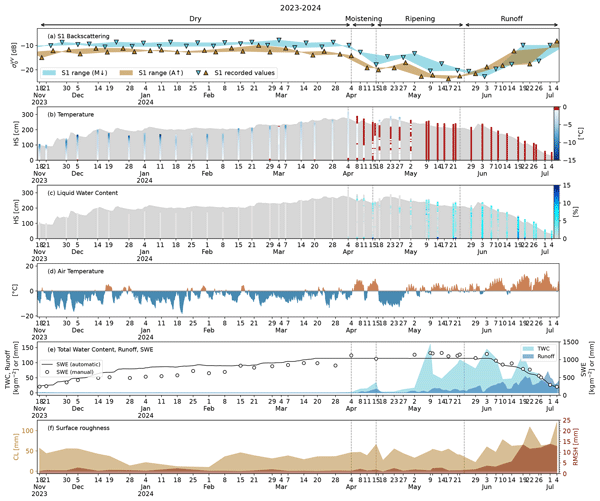
This work presents the first high-resolution dataset of wet-snow properties for satellite applications. With it, we validate links between Sentinel-1 backscatter and snowmelt stages and investigate scattering mechanisms through a radiative transfer model. We disclose the influence of liquid water content and surface roughness at different melting stages and address future challenges, such as capturing large-scale scattering mechanisms and enhancing radiative transfer modules for wet snow.
Hongxiang Yu, Li Guang, Benjamin Walter, Jianping Huang, Ning Huang, and Michael Lehning
The Cryosphere, 19, 5389–5402, https://doi.org/10.5194/tc-19-5389-2025, https://doi.org/10.5194/tc-19-5389-2025, 2025
Short summary
Short summary
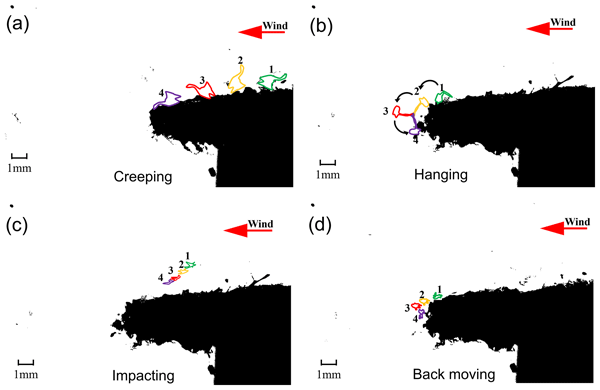
Cornices are overhanging snow accumulations that form on mountain crests. Using wind-tunnel experiments and high-speed photography, the study tracks particle trajectories around cornices and finds distinct differences between edge and surface deposition. A static adhesion model for edge deposition was developed and validated to predict how particle size and shape affect adhesion. The work clarifies the microdynamics of early cornice growth and provides a foundation for avalanche modeling.
Elizaveta Sharaborova, Michael Lehning, Nander Wever, Marcia Phillips, and Hendrik Huwald
The Cryosphere, 19, 4277–4301, https://doi.org/10.5194/tc-19-4277-2025, https://doi.org/10.5194/tc-19-4277-2025, 2025
Short summary
Short summary
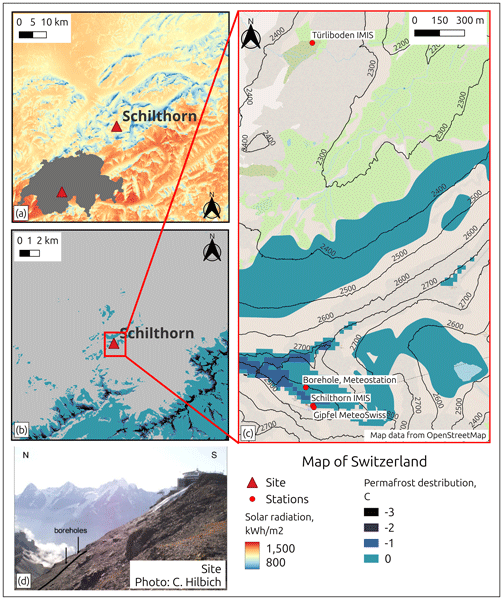
Global warming provokes permafrost to thaw, damaging landscapes and infrastructure. This study explores methods to slow this thawing at an alpine site. We investigate different methods based on passive and active cooling. The best approach mixes both methods and manages heat flow, potentially allowing excess energy to be used locally.
Sonja Wahl, Benjamin Walter, Franziska Aemisegger, Luca Bianchi, and Michael Lehning
The Cryosphere, 18, 4493–4515, https://doi.org/10.5194/tc-18-4493-2024, https://doi.org/10.5194/tc-18-4493-2024, 2024
Short summary
Short summary
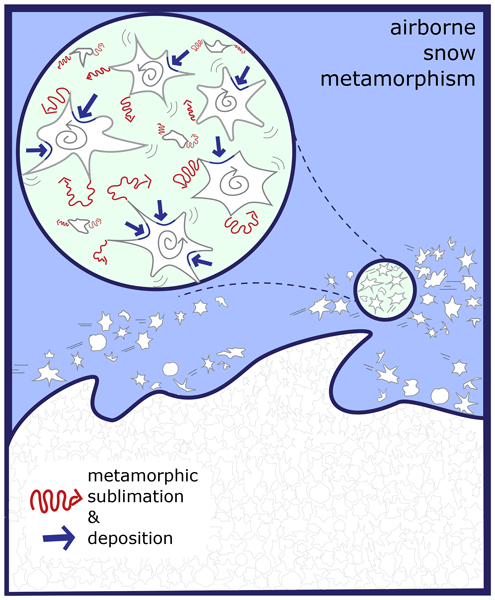
Wind-driven airborne transport of snow is a frequent phenomenon in snow-covered regions and a process difficult to study in the field as it is unfolding over large distances. Thus, we use a ring wind tunnel with infinite fetch positioned in a cold laboratory to study the evolution of the shape and size of airborne snow. With the help of stable water isotope analyses, we identify the hitherto unobserved process of airborne snow metamorphism that leads to snow particle rounding and growth.
Dylan Reynolds, Louis Quéno, Michael Lehning, Mahdi Jafari, Justine Berg, Tobias Jonas, Michael Haugeneder, and Rebecca Mott
The Cryosphere, 18, 4315–4333, https://doi.org/10.5194/tc-18-4315-2024, https://doi.org/10.5194/tc-18-4315-2024, 2024
Short summary
Short summary
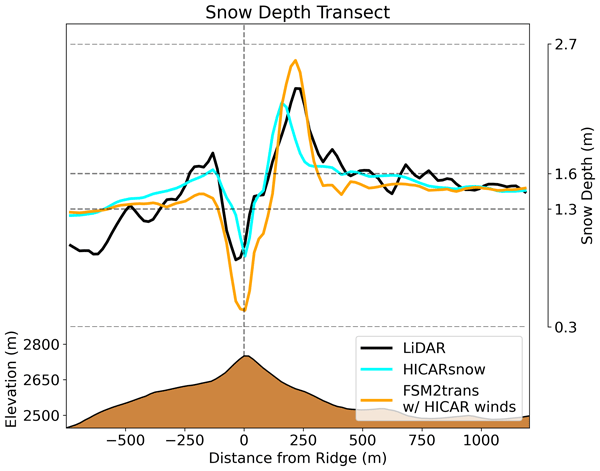
Information about atmospheric variables is needed to produce simulations of mountain snowpacks. We present a model that can represent processes that shape mountain snowpack, focusing on the accumulation of snow. Simulations show that this model can simulate the complex path that a snowflake takes towards the ground and that this leads to differences in the distribution of snow by the end of winter. Overall, this model shows promise with regard to improving forecasts of snow in mountains.
Benjamin Bouchard, Daniel F. Nadeau, Florent Domine, Nander Wever, Adrien Michel, Michael Lehning, and Pierre-Erik Isabelle
The Cryosphere, 18, 2783–2807, https://doi.org/10.5194/tc-18-2783-2024, https://doi.org/10.5194/tc-18-2783-2024, 2024
Short summary
Short summary
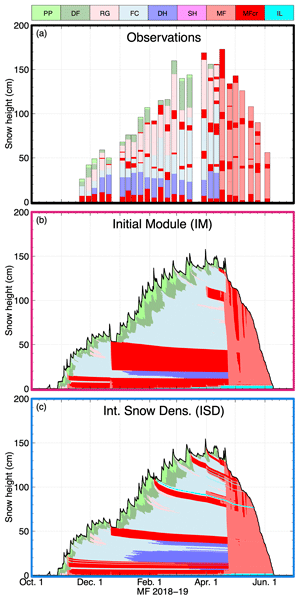
Observations over several winters at two boreal sites in eastern Canada show that rain-on-snow (ROS) events lead to the formation of melt–freeze layers and that preferential flow is an important water transport mechanism in the sub-canopy snowpack. Simulations with SNOWPACK generally show good agreement with observations, except for the reproduction of melt–freeze layers. This was improved by simulating intercepted snow microstructure evolution, which also modulates ROS-induced runoff.
Daniela Brito Melo, Armin Sigmund, and Michael Lehning
The Cryosphere, 18, 1287–1313, https://doi.org/10.5194/tc-18-1287-2024, https://doi.org/10.5194/tc-18-1287-2024, 2024
Short summary
Short summary
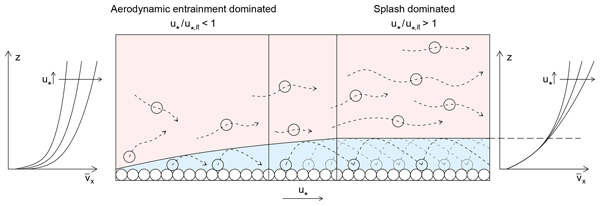
Snow saltation – the transport of snow close to the surface – occurs when the wind blows over a snow-covered surface with sufficient strength. This phenomenon is represented in some climate models; however, with limited accuracy. By performing numerical simulations and a detailed analysis of previous works, we show that snow saltation is characterized by two regimes. This is not represented in climate models in a consistent way, which hinders the quantification of snow transport and sublimation.
Dylan Reynolds, Ethan Gutmann, Bert Kruyt, Michael Haugeneder, Tobias Jonas, Franziska Gerber, Michael Lehning, and Rebecca Mott
Geosci. Model Dev., 16, 5049–5068, https://doi.org/10.5194/gmd-16-5049-2023, https://doi.org/10.5194/gmd-16-5049-2023, 2023
Short summary
Short summary
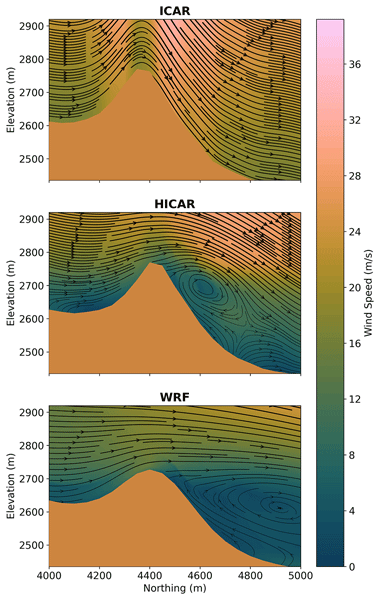
The challenge of running geophysical models is often compounded by the question of where to obtain appropriate data to give as input to a model. Here we present the HICAR model, a simplified atmospheric model capable of running at spatial resolutions of hectometers for long time series or over large domains. This makes physically consistent atmospheric data available at the spatial and temporal scales needed for some terrestrial modeling applications, for example seasonal snow forecasting.

Hongxiang Yu, Guang Li, Benjamin Walter, Michael Lehning, Jie Zhang, and Ning Huang
The Cryosphere, 17, 639–651, https://doi.org/10.5194/tc-17-639-2023, https://doi.org/10.5194/tc-17-639-2023, 2023
Short summary
Short summary
Snow cornices lead to the potential risk of causing snow avalanche hazards, which are still unknown so far. We carried out a wind tunnel experiment in a cold lab to investigate the environmental conditions for snow cornice accretion recorded by a camera. The length growth rate of the cornices reaches a maximum for wind speeds approximately 40 % higher than the threshold wind speed. Experimental results improve our understanding of the cornice formation process.
Varun Sharma, Franziska Gerber, and Michael Lehning
Geosci. Model Dev., 16, 719–749, https://doi.org/10.5194/gmd-16-719-2023, https://doi.org/10.5194/gmd-16-719-2023, 2023
Short summary
Short summary
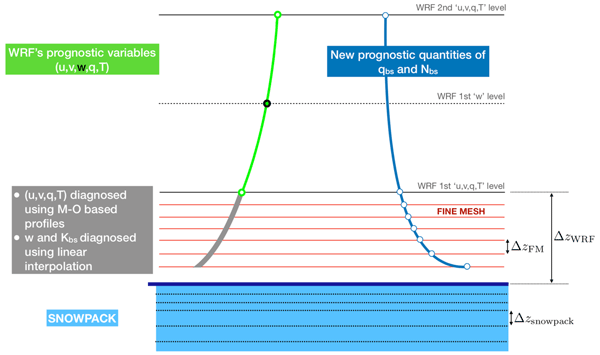
Most current generation climate and weather models have a relatively simplistic description of snow and snow–atmosphere interaction. One reason for this is the belief that including an advanced snow model would make the simulations too computationally demanding. In this study, we bring together two state-of-the-art models for atmosphere (WRF) and snow cover (SNOWPACK) and highlight both the feasibility and necessity of such coupled models to explore underexplored phenomena in the cryosphere.
Océane Hames, Mahdi Jafari, David Nicholas Wagner, Ian Raphael, David Clemens-Sewall, Chris Polashenski, Matthew D. Shupe, Martin Schneebeli, and Michael Lehning
Geosci. Model Dev., 15, 6429–6449, https://doi.org/10.5194/gmd-15-6429-2022, https://doi.org/10.5194/gmd-15-6429-2022, 2022
Short summary
Short summary
This paper presents an Eulerian–Lagrangian snow transport model implemented in the fluid dynamics software OpenFOAM, which we call snowBedFoam 1.0. We apply this model to reproduce snow deposition on a piece of ridged Arctic sea ice, which was produced during the MOSAiC expedition through scan measurements. The model appears to successfully reproduce the enhanced snow accumulation and deposition patterns, although some quantitative uncertainties were shown.

Francesca Carletti, Adrien Michel, Francesca Casale, Alice Burri, Daniele Bocchiola, Mathias Bavay, and Michael Lehning
Hydrol. Earth Syst. Sci., 26, 3447–3475, https://doi.org/10.5194/hess-26-3447-2022, https://doi.org/10.5194/hess-26-3447-2022, 2022
Short summary
Short summary
High Alpine catchments are dominated by the melting of seasonal snow cover and glaciers, whose amount and seasonality are expected to be modified by climate change. This paper compares the performances of different types of models in reproducing discharge among two catchments under present conditions and climate change. Despite many advantages, the use of simpler models for climate change applications is controversial as they do not fully represent the physics of the involved processes.
David N. Wagner, Matthew D. Shupe, Christopher Cox, Ola G. Persson, Taneil Uttal, Markus M. Frey, Amélie Kirchgaessner, Martin Schneebeli, Matthias Jaggi, Amy R. Macfarlane, Polona Itkin, Stefanie Arndt, Stefan Hendricks, Daniela Krampe, Marcel Nicolaus, Robert Ricker, Julia Regnery, Nikolai Kolabutin, Egor Shimanshuck, Marc Oggier, Ian Raphael, Julienne Stroeve, and Michael Lehning
The Cryosphere, 16, 2373–2402, https://doi.org/10.5194/tc-16-2373-2022, https://doi.org/10.5194/tc-16-2373-2022, 2022
Short summary
Short summary
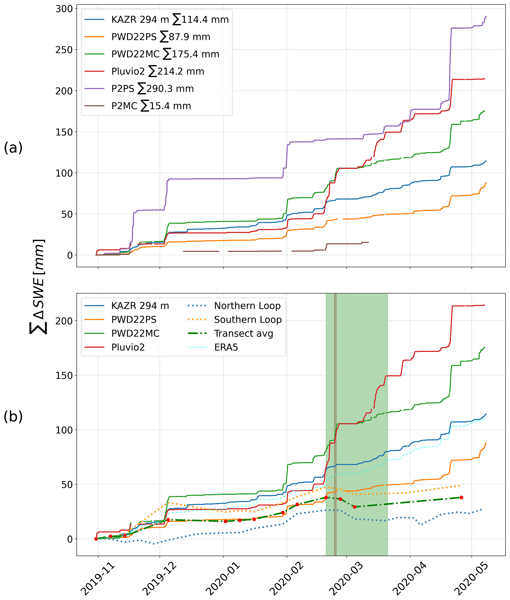
Based on measurements of the snow cover over sea ice and atmospheric measurements, we estimate snowfall and snow accumulation for the MOSAiC ice floe, between November 2019 and May 2020. For this period, we estimate 98–114 mm of precipitation. We suggest that about 34 mm of snow water equivalent accumulated until the end of April 2020 and that at least about 50 % of the precipitated snow was eroded or sublimated. Further, we suggest explanations for potential snowfall overestimation.
Joel Fiddes, Kristoffer Aalstad, and Michael Lehning
Geosci. Model Dev., 15, 1753–1768, https://doi.org/10.5194/gmd-15-1753-2022, https://doi.org/10.5194/gmd-15-1753-2022, 2022
Short summary
Short summary
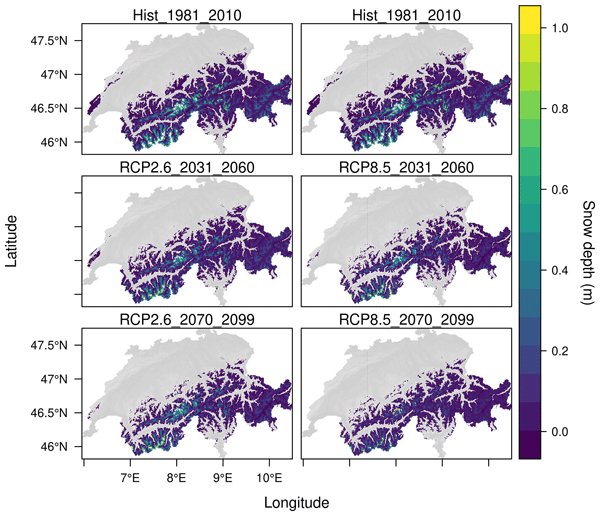
This study describes and evaluates a new downscaling scheme that addresses the need for hillslope-scale atmospheric forcing time series for modelling the local impact of regional climate change on the land surface in mountain areas. The method has a global scope and is able to generate all model forcing variables required for hydrological and land surface modelling. This is important, as impact models require high-resolution forcings such as those generated here to produce meaningful results.
Adrien Michel, Bettina Schaefli, Nander Wever, Harry Zekollari, Michael Lehning, and Hendrik Huwald
Hydrol. Earth Syst. Sci., 26, 1063–1087, https://doi.org/10.5194/hess-26-1063-2022, https://doi.org/10.5194/hess-26-1063-2022, 2022
Short summary
Short summary
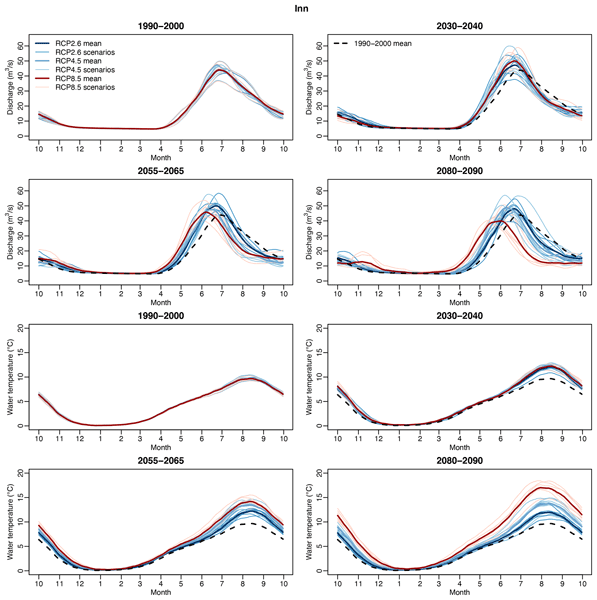
This study presents an extensive study of climate change impacts on river temperature in Switzerland. Results show that, even for low-emission scenarios, water temperature increase will lead to adverse effects for both ecosystems and socio-economic sectors throughout the 21st century. For high-emission scenarios, the effect will worsen. This study also shows that water seasonal warming will be different between the Alpine regions and the lowlands. Finally, efficiency of models is assessed.
Cited articles
Armstrong, R. L. and Brun, E.: Snow and Climate: Physical Processes, Surface Energy Exchange and Modeling, Cambridge University Press, ISBN-13 978-0521130653, 2009. a
Bartelt, P. and Lehning, M.: A physical SNOWPACK model for the Swiss avalanche warning: Part I: numerical model, Cold Reg. Sci. Technol., 35, 123–145, https://doi.org/10.1016/S0165-232X(02)00074-5, 2002. a, b, c
Bear, J.: On the tensor form of dispersion in porous media, J. Geophys. Res., 66, 1185–1197, 1961. a
Bear, J.: Dynamics of fluids in porous media, Courier Corporation, 1988. a
Calonne, N., Geindreau, C., Flin, F., Morin, S., Lesaffre, B., Rolland du Roscoat, S., and Charrier, P.: 3-D image-based numerical computations of snow permeability: links to specific surface area, density, and microstructural anisotropy, The Cryosphere, 6, 939–951, https://doi.org/10.5194/tc-6-939-2012, 2012. a, b
Calonne, N., Geindreau, C., and Flin, F.: Macroscopic modeling of heat and water vapor transfer with phase change in dry snow based on an upscaling method: Influence of air convection, J. Geophys. Res.-Earth, 120, 2476–2497, https://doi.org/10.1002/2015JF003605, 2015. a
Delgado, J.: Longitudinal and transverse dispersion in porous media, Chem. Eng. Res. Des., 85, 1245–1252, 2007. a
Derksen, C., Silis, A., Sturm, M., Holmgren, J., Liston, G. E., Huntington, H., and Solie, D.: Northwest Territories and Nunavut snow characteristics from a subarctic traverse: Implications for passive microwave remote sensing, J. Hydrometeorol., 10, 448–463, 2009. a
Domine, F., Barrere, M., Sarrazin, D., Morin, S., and Arnaud, L.: Automatic monitoring of the effective thermal conductivity of snow in a low-Arctic shrub tundra, The Cryosphere, 9, 1265–1276, https://doi.org/10.5194/tc-9-1265-2015, 2015. a
Domine, F., Barrere, M., and Sarrazin, D.: Seasonal evolution of the effective thermal conductivity of the snow and the soil in high Arctic herb tundra at Bylot Island, Canada, The Cryosphere, 10, 2573–2588, https://doi.org/10.5194/tc-10-2573-2016, 2016. a, b, c, d
Domine, F., Belke-Brea, M., Sarrazin, D., Arnaud, L., Barrere, M., and Poirier, M.: Soil moisture, wind speed and depth hoar formation in the Arctic snowpack, J. Glaciol., 64, 990–1002, https://doi.org/10.1017/jog.2018.89, 2018. a, b
Domine, F., Lackner, G., Sarrazin, D., Poirier, M., and Belke-Brea, M.: Meteorological, snow and soil data (2013–2019) from a herb tundra permafrost site at Bylot Island, Canadian high Arctic, for driving and testing snow and land surface models, Earth Syst. Sci. Data, 13, 4331–4348, https://doi.org/10.5194/essd-13-4331-2021, 2021. a, b, c
Duchesne, D., Gauthier, G., and Berteaux, D.: Habitat selection, reproduction and predation of wintering lemmings in the Arctic, Oecologia, 167, 967–980, https://doi.org/10.1007/s00442-011-2045-6, 2011. a
Fahs, M., Graf, T., Tran, T. V., Ataie-Ashtiani, B., Simmons, C. T., and Younes, A.: Study of the effect of thermal dispersion on internal natural convection in porous media using Fourier series, Transport Porous Med., 131, 537–568, 2020. a
Gouttevin, I., Langer, M., Löwe, H., Boike, J., Proksch, M., and Schneebeli, M.: Observation and modelling of snow at a polygonal tundra permafrost site: spatial variability and thermal implications, The Cryosphere, 12, 3693–3717, https://doi.org/10.5194/tc-12-3693-2018, 2018. a
Hansen, A. C. and Foslien, W. E.: A macroscale mixture theory analysis of deposition and sublimation rates during heat and mass transfer in dry snow, The Cryosphere, 9, 1857–1878, https://doi.org/10.5194/tc-9-1857-2015, 2015. a
Jafari, M.: Water vapor transport in snowpacks, EPFL, PhD thesis, p. 154, https://doi.org/10.5075/epfl-thesis-9659, 2022. a
Jafari, M.: cryos-snowBedFoam/SNOWPACKFoam: SNOWPACKFoam v1.0.0 (paper snapshot for egusphere-2025-3035) (v1.0.0), Zenodo [software], https://doi.org/10.5281/zenodo.18788998, 2026. a
Jafari, M. and Lehning, M.: snowpackBuoyantPimpleFoam: an OpenFOAM Eulerian–Eulerian two-phase solver for modelling convection of water vapor in snowpacks, EnviDat [data set], https://doi.org/10.16904/envidat.265, 2021. a
Jafari, M. and Lehning, M.: Convection of snow: when and why does it happen?, Front. Earth Sci., 11, https://doi.org/10.3389/feart.2023.1167760, 2023a. a
Jafari, M. and Lehning, M.: Convection of snow: when and why does it happen?, Front. Earth Sci., 11, https://doi.org/10.3389/feart.2023.1167760, 2023b. a
Jafari, M., Gouttevin, I., Couttet, M., Wever, N., Michel, A., Sharma, V., Rossmann, L., Maass, N., Nicolaus, M., and Lehning, M.: The Impact of Diffusive Water Vapor Transport on Snow Profiles in Deep and Shallow Snow Covers and on Sea Ice, Front. Earth Sci., 8, 249, https://doi.org/10.3389/feart.2020.00249, 2020. a, b, c, d, e
Keenan, E., Wever, N., Dattler, M., Lenaerts, J. T. M., Medley, B., Kuipers Munneke, P., and Reijmer, C.: Physics-based SNOWPACK model improves representation of near-surface Antarctic snow and firn density, The Cryosphere, 15, 1065–1085, https://doi.org/10.5194/tc-15-1065-2021, 2021. a, b, c
Kvernvold, O. and Tyvand, P. A.: Dispersion effects on thermal convection in porous media, J. Fluid Mech., 99, 673–686, https://doi.org/10.1017/S0022112080000821, 1980. a
Lehning, M., Bartelt, P., Brown, B., Russi, T., Stöckli, U., and Zimmerli, M.: SNOWPACK model calculations for avalanche warning based upon a network of weather and snow stations, Cold Reg. Sci. Technol., 30, 145–157, https://doi.org/10.1016/S0165-232X(99)00022-1, 1999. a, b, c
Lehning, M., Bartelt, P., Brown, B., and Fierz, C.: A physical SNOWPACK model for the Swiss avalanche warning Part III: Meteorological forcing, thin layer formation and evaluation, Cold Reg. Sci. Technol., 35, 169–184, https://doi.org/10.1016/S0165-232X(02)00072-1, 2002a. a, b, c
Moukalled, F., Mangani, L., and Darwish, M.: The finite volume method in computational fluid dynamics, vol. 6, Springer, https://doi.org/10.1007/978-3-319-16874-6, 2016. a
Poirier, M., Fauteux, D., Gauthier, G., Domine, F., and Lamarre, J.-F.: Snow hardness impacts intranivean locomotion of arctic small mammals, Ecosphere, 12, e03835, https://doi.org/10.1002/ecs2.3835, 2021. a
Reid, D. G., Bilodeau, F., Krebs, C. J., Gauthier, G., Kenney, A., Gilbert, B., Leung, M., Duchesne, D., and Hofer, E.: Lemming winter habitat choice: a snow-fencing experiment, Behav. Ecol., 22, 1056–1062, https://doi.org/10.1093/beheco/arr086, 2011. a
Sommer, C. G., Wever, N., Fierz, C., and Lehning, M.: Investigation of a wind-packing event in Queen Maud Land, Antarctica, The Cryosphere, 12, 2923–2939, https://doi.org/10.5194/tc-12-2923-2018, 2018. a
Sturm, M. and Benson, I. C. S.: Vapor transport, grain growth and depth-hoar development in the subarctic snow, J. Glaciol., 43, https://doi.org/10.3189/S0022143000002793, 1997. a, b, c
Sturm, M. and Johnson, J. B.: Natural convection in the subarctic snow cover, J. Geophys. Res.-Sol. Ea., 96, 11657–11671, https://doi.org/10.1029/91JB00895, 1991. a, b, c, d
Taillandier, A.-S., Domine, F., Simpson, W. R., Sturm, M., Douglas, T. A., and Severin, K.: Evolution of the snow area index of the subarctic snowpack in central Alaska over a whole season. Consequences for the air to snow transfer of pollutants, Environ. Sci. Technol., 40, 7521–7527, 2006. a
Vikhamar-Schuler, D., Hanssen-Bauer, I., Schuler, T. V., Mathiesen, S. D., and Lehning, M.: Use of a multilayer snow model to assess grazing conditions for reindeer, Ann. Glaciol., 54, 214–226, https://doi.org/10.3189/2013AoG62A306, 2013. a
Wen, B., Chang, K. W., and Hesse, M. A.: Rayleigh-Darcy convection with hydrodynamic dispersion, Physical Review Fluids, 3, 123801, https://doi.org/10.1103/PhysRevFluids.3.123801, 2018. a
Wever, N., Keenan, E., Amory, C., Lehning, M., Sigmund, A., Huwald, H., and Lenaerts, J. T. M.: Observations and simulations of new snow density in the drifting snow-dominated environment of Antarctica, J. Glaciol., 69, 823–840, https://doi.org/10.1017/jog.2022.102, 2023. a, b, c
Short summary
We studied how air moves within snow in Arctic regions and how this affects the snow's structure. Using a new method that links two computer models, we found that cold weather can trigger air movement inside the snow, creating vertical channels and changing the snow's density and temperature. These changes are not captured by traditional models, so our work helps improve how snow and climate processes are simulated in cold environments.
We studied how air moves within snow in Arctic regions and how this affects the snow's...


