
Articles | Volume 20, issue 2
https://doi.org/10.5194/tc-20-1257-2026
© Author(s) 2026. This work is distributed under
the Creative Commons Attribution 4.0 License.
the Creative Commons Attribution 4.0 License.
https://doi.org/10.5194/tc-20-1257-2026
© Author(s) 2026. This work is distributed under
the Creative Commons Attribution 4.0 License.
the Creative Commons Attribution 4.0 License.
Research article
| 
18 Feb 2026
Research article |
| 18 Feb 2026
| 18 Feb 2026
Revisiting snow settlement with microstructural knowledge

Météo-France, CNRS, Univ. Grenoble Alpes, Univ. Toulouse, CNRM, Centre d’Études de la Neige, 38000 Grenoble, France
Pascal Hagenmuller
Météo-France, CNRS, Univ. Grenoble Alpes, Univ. Toulouse, CNRM, Centre d’Études de la Neige, 38000 Grenoble, France
Related authors
Louis Védrine, Marius Brun, Mathis Bozon, Benoit Laurent, and Pascal Hagenmuller
The Cryosphere, 20, 5813–5828, https://doi.org/10.5194/tc-20-5813-2026, https://doi.org/10.5194/tc-20-5813-2026, 2026
Short summary
Short summary
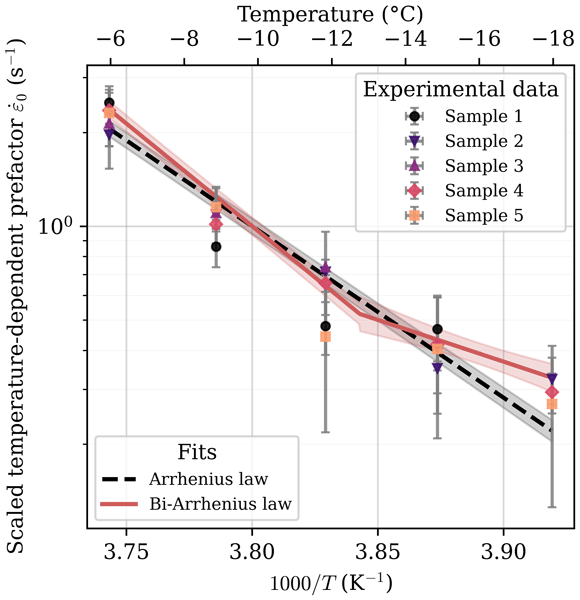
Snow slowly compacts under its own weight, and this process depends strongly on temperature, but past estimates vary widely. We developed a device to precisely control temperature and tested the same snow sample under different conditions. We found two distinct temperature regimes and a stronger sensitivity than assumed in existing snowpack models, improving how snow compaction is represented.
Louis Védrine, Xingyue Li, and Johan Gaume
Nat. Hazards Earth Syst. Sci., 22, 1015–1028, https://doi.org/10.5194/nhess-22-1015-2022, https://doi.org/10.5194/nhess-22-1015-2022, 2022
Short summary
Short summary
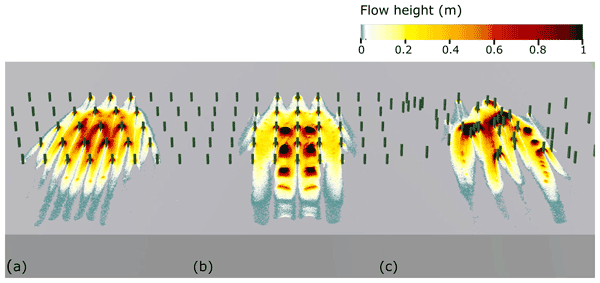
This study investigates how forests affect the behaviour of snow avalanches through the evaluation of the amount of snow stopped by the trees and the analysis of energy dissipation mechanisms. Different avalanche features and tree configurations have been examined, leading to the proposal of a unified law for the detrained snow mass. Outcomes from this study can be directly implemented in operational models for avalanche risk assessment and contribute to improved forest management strategy.
Louis Védrine, Marius Brun, Mathis Bozon, Benoit Laurent, and Pascal Hagenmuller
The Cryosphere, 20, 5813–5828, https://doi.org/10.5194/tc-20-5813-2026, https://doi.org/10.5194/tc-20-5813-2026, 2026
Short summary
Short summary
Snow slowly compacts under its own weight, and this process depends strongly on temperature, but past estimates vary widely. We developed a device to precisely control temperature and tested the same snow sample under different conditions. We found two distinct temperature regimes and a stronger sensitivity than assumed in existing snowpack models, improving how snow compaction is represented.
Neige Calonne, Pascal Hagenmuller, Rémi Granger, Lisa Bouvet, Kévin Fourteau, Julien Brondex, François Tuzet, Yves Lejeune, Anne Dufour, Mathieu Fructus, Teruo Aoki, and Marie Dumont
Earth Syst. Sci. Data Discuss., https://doi.org/10.5194/essd-2026-718, https://doi.org/10.5194/essd-2026-718, 2026
Preprint under review for ESSD
Short summary
Short summary
We collected weekly measurements of snow microstructural properties over two winters at Col de Porte in the French Alps, a relatively warm alpine site, using complementary techniques including X-ray tomography, the SnowMicroPen, and optical instruments. The dataset captures snowpack evolution at fine vertical resolution and is a valuable resource for snow model evaluation and instrument comparisons. It also provides guidance for future snow monitoring campaigns in warm mountain environments.

François Doussot, Léo Viallon-Galinier, Nicolas Eckert, and Pascal Hagenmuller
Nat. Hazards Earth Syst. Sci., 26, 4383–4406, https://doi.org/10.5194/nhess-26-4383-2026, https://doi.org/10.5194/nhess-26-4383-2026, 2026
Short summary
Short summary
Avalanches are sensitive to climate warming, but long and reliable records are rare. We combined avalanche observations with weather and snow simulations in the Haute-Maurienne valley (French Alps). This allowed us to reconstruct past avalanche activity and explore future changes. The results show a strong long-term decline in avalanche occurrence, especially in spring, while extreme events decrease more slowly. This study provides quantitative insights to support mountain risk management.
Oscar Dick, Neige Calonne, and Pascal Hagenmuller
EGUsphere, https://doi.org/10.5194/egusphere-2026-4897, https://doi.org/10.5194/egusphere-2026-4897, 2026
This preprint is open for discussion and under review for The Cryosphere (TC).
Short summary
Short summary
This work aims to pave the way towards an objective description of snow microstructure in snowpack models. We investigate the temporal evolution of several grain-size and grain-shape descriptors under a large range of dry snow metamorphism scenarios. Our results reveal that the evolution of several geometrical descriptors is more diverse than generally assumed, and that future models could benefit from representing multiple grain-size and shape descriptors.
Diego Monteiro, Léo Viallon-Galinier, Kévin Fourteau, Oscar Dick, and Pascal Hagenmuller
The Cryosphere, 20, 4515–4536, https://doi.org/10.5194/tc-20-4515-2026, https://doi.org/10.5194/tc-20-4515-2026, 2026
Short summary
Short summary
This research aims to improve dry-snow slab avalanche forecasts, particularly the propagation of cracks in weak layers, as current models rely on uncertain and difficult-to-measure parameters. We combined snowpack simulations with field measurements to link fracture energy to measurable and modelable snow properties. This new approach better reproduces observed crack lengths and allows weak layers to be tracked throughout the season, thereby improving operational avalanche risk assessment.
Matthieu Lafaysse, Marie Dumont, Basile De Fleurian, Mathieu Fructus, Rafife Nheili, Léo Viallon-Galinier, Matthieu Baron, Aaron Boone, Axel Bouchet, Julien Brondex, Carlo Carmagnola, Bertrand Cluzet, Kévin Fourteau, Ange Haddjeri, Pascal Hagenmuller, Giulia Mazzotti, Marie Minvielle, Samuel Morin, Louis Quéno, Léon Roussel, Pierre Spandre, François Tuzet, and Vincent Vionnet
Geosci. Model Dev., 19, 6273–6334, https://doi.org/10.5194/gmd-19-6273-2026, https://doi.org/10.5194/gmd-19-6273-2026, 2026
Short summary
Short summary
This article is a comprehensive description of the 3.0.2 stable release of the Crocus snowpack model. It describes various new implementations since the last reference article in 2012 and a review of the available scientific evaluations and applications of the model. This provides guidance for the future of numerical snow modelling.
Oscar Dick, Neige Calonne, Benoît Laurent, and Pascal Hagenmuller
Earth Syst. Sci. Data, 18, 2875–2889, https://doi.org/10.5194/essd-18-2875-2026, https://doi.org/10.5194/essd-18-2875-2026, 2026
Short summary
Short summary
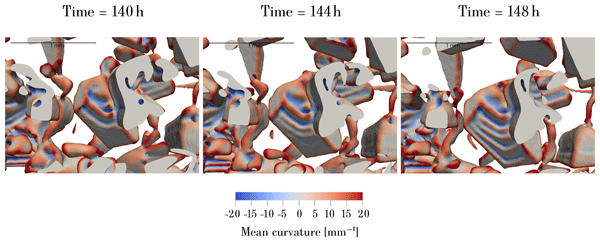
Snow microstructure undergoes constant shape transformations known as snow metamorphism. Observing first-hand snow metamorphism is key to improving the modelling of these transformations. In this work, we monitor snow microstructure evolution during metamorphism by X-ray tomography. We provide a data set at high spatial and temporal resolution of 3D images of snow microstructure evolving through a wide range of experimental conditions, along with videos showing these transformations.
Simon Filhol, Clément Misset, Noélie Bontemps, Diego Cusicanqui, Emmanuel Paquet, Marie Dumont, Olivier Gagliardini, Pascal Lacroix, Simon Gascoin, Guillaume Thirel, Julien Brondex, Pascal Hagenmuller, Eric Larose, Philipp Schoeneich, Denis Roy, Emmanuel Thibert, Nicolas Eckert, Félix de Montety, Robin Mainieri, Alexandre Hauet, Frédéric Gottardi, Johan Berthet, Alexandre Baratier, Frédéric Liébault, Małgorzata Chmiel, Guillaume Piton, Guillaume Chambon, Guillaume James, Philippe Frey, Philip Deline, Laurent Astrade, Christian Vincent, Dominique Laigle, Alain Recking, Fatima Karbou, Adrien Mauss, Mylène Bonnefoy-Demongeot, Firmin Fontaine, Mickael Langlais, Etienne Berthier, and Antoine Blanc
EGUsphere, https://doi.org/10.5194/egusphere-2026-971, https://doi.org/10.5194/egusphere-2026-971, 2026
Short summary
Short summary
On June 21 2024, the village of La Bérarde, in the French Alps, was devastated by a flood destroying centuries old buildings. This study is an interdisciplinary work to decipher the causes and chronology of the event. The flood started with decadal rain falling on a thick snowpack. A lake observed on top of a glacier few days prior, had drained post event. With climate change, should we expect more similar compound events for alpine communities?
Clémence Herny, Pascal Hagenmuller, Guillaume Chambon, Isabel Peinke, and Jacques Roulle
The Cryosphere, 18, 3787–3805, https://doi.org/10.5194/tc-18-3787-2024, https://doi.org/10.5194/tc-18-3787-2024, 2024
Short summary
Short summary
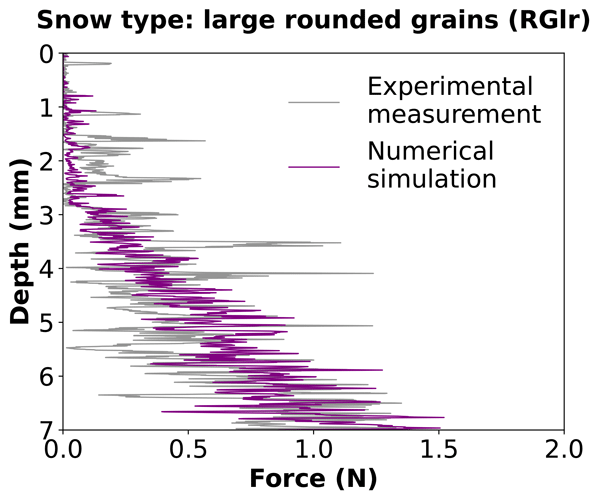
This paper presents the evaluation of a numerical discrete element method (DEM) by simulating cone penetration tests in different snow samples. The DEM model demonstrated a good ability to reproduce the measured mechanical behaviour of the snow, namely the force evolution on the cone and the grain displacement field. Systematic sensitivity tests showed that the mechanical response depends not only on the microstructure of the sample but also on the mechanical parameters of grain contacts.
Julien Brondex, Kévin Fourteau, Marie Dumont, Pascal Hagenmuller, Neige Calonne, François Tuzet, and Henning Löwe
Geosci. Model Dev., 16, 7075–7106, https://doi.org/10.5194/gmd-16-7075-2023, https://doi.org/10.5194/gmd-16-7075-2023, 2023
Short summary
Short summary
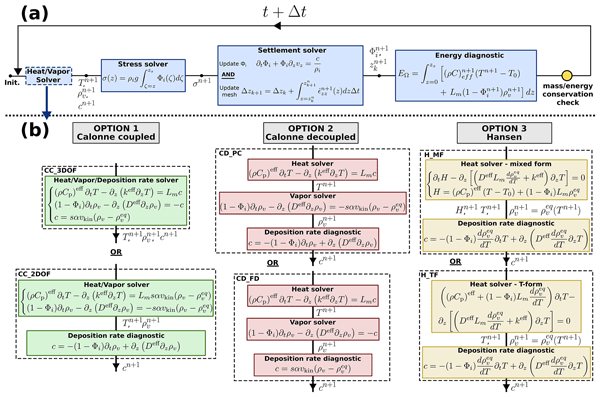
Vapor diffusion is one of the main processes governing snowpack evolution, and it must be accounted for in models. Recent attempts to represent vapor diffusion in numerical models have faced several difficulties regarding computational cost and mass and energy conservation. Here, we develop our own finite-element software to explore numerical approaches and enable us to overcome these difficulties. We illustrate the capability of these approaches on established numerical benchmarks.
Marie Dumont, Simon Gascoin, Marion Réveillet, Didier Voisin, François Tuzet, Laurent Arnaud, Mylène Bonnefoy, Montse Bacardit Peñarroya, Carlo Carmagnola, Alexandre Deguine, Aurélie Diacre, Lukas Dürr, Olivier Evrard, Firmin Fontaine, Amaury Frankl, Mathieu Fructus, Laure Gandois, Isabelle Gouttevin, Abdelfateh Gherab, Pascal Hagenmuller, Sophia Hansson, Hervé Herbin, Béatrice Josse, Bruno Jourdain, Irene Lefevre, Gaël Le Roux, Quentin Libois, Lucie Liger, Samuel Morin, Denis Petitprez, Alvaro Robledano, Martin Schneebeli, Pascal Salze, Delphine Six, Emmanuel Thibert, Jürg Trachsel, Matthieu Vernay, Léo Viallon-Galinier, and Céline Voiron
Earth Syst. Sci. Data, 15, 3075–3094, https://doi.org/10.5194/essd-15-3075-2023, https://doi.org/10.5194/essd-15-3075-2023, 2023
Short summary
Short summary
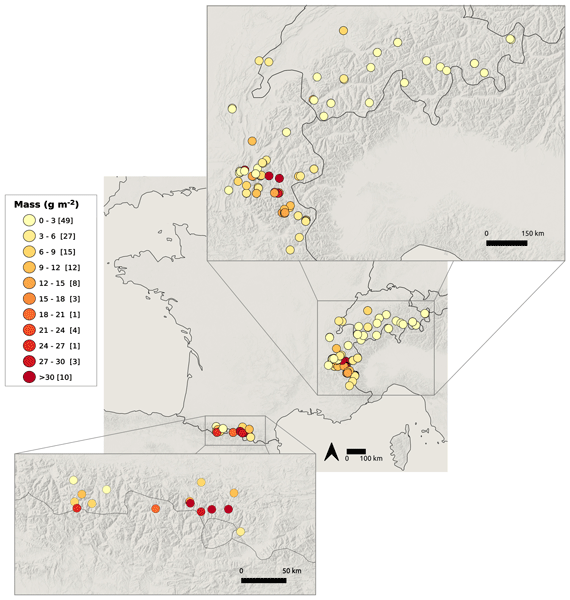
Saharan dust outbreaks have profound effects on ecosystems, climate, health, and the cryosphere, but the spatial deposition pattern of Saharan dust is poorly known. Following the extreme dust deposition event of February 2021 across Europe, a citizen science campaign was launched to sample dust on snow over the Pyrenees and the European Alps. This campaign triggered wide interest and over 100 samples. The samples revealed the high variability of the dust properties within a single event.
Léo Viallon-Galinier, Pascal Hagenmuller, and Nicolas Eckert
The Cryosphere, 17, 2245–2260, https://doi.org/10.5194/tc-17-2245-2023, https://doi.org/10.5194/tc-17-2245-2023, 2023
Short summary
Short summary
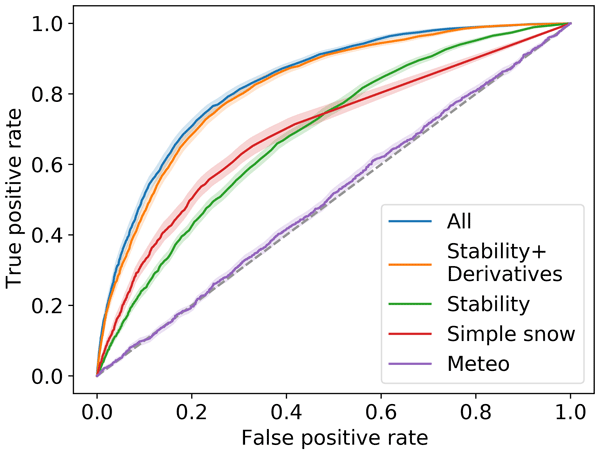
Avalanches are a significant issue in mountain areas where they threaten recreationists and human infrastructure. Assessments of avalanche hazards and the related risks are therefore an important challenge for local authorities. Meteorological and snow cover simulations are thus important to support operational forecasting. In this study we combine it with mechanical analysis of snow profiles and find that observed avalanche data improve avalanche activity prediction through statistical methods.
Oscar Dick, Léo Viallon-Galinier, François Tuzet, Pascal Hagenmuller, Mathieu Fructus, Benjamin Reuter, Matthieu Lafaysse, and Marie Dumont
The Cryosphere, 17, 1755–1773, https://doi.org/10.5194/tc-17-1755-2023, https://doi.org/10.5194/tc-17-1755-2023, 2023
Short summary
Short summary
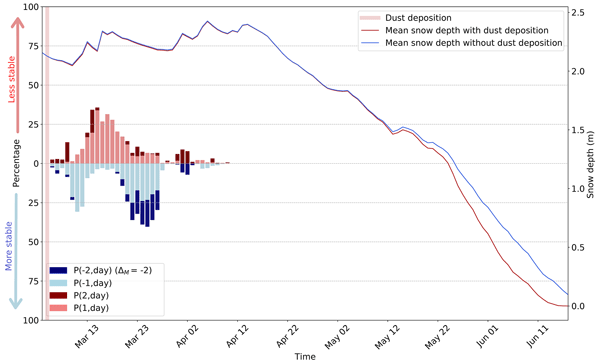
Saharan dust deposition can drastically change the snow color, turning mountain landscapes into sepia scenes. Dust increases the absorption of solar energy by the snow cover and thus modifies the snow evolution and potentially the avalanche risk. Here we show that dust can lead to increased or decreased snowpack stability depending on the snow and meteorological conditions after the deposition event. We also show that wet-snow avalanches happen earlier in the season due to the presence of dust.
Pyei Phyo Lin, Isabel Peinke, Pascal Hagenmuller, Matthias Wächter, M. Reza Rahimi Tabar, and Joachim Peinke
The Cryosphere, 16, 4811–4822, https://doi.org/10.5194/tc-16-4811-2022, https://doi.org/10.5194/tc-16-4811-2022, 2022
Short summary
Short summary
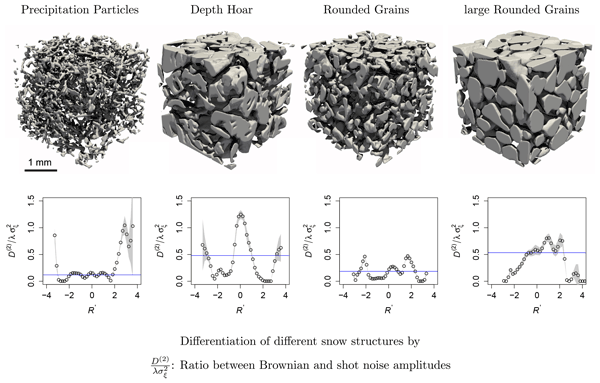
Characterization of layers of snowpack with highly resolved micro-cone penetration tests leads to detailed fluctuating signals. We used advanced stochastic analysis to differentiate snow types by interpreting the signals as a mixture of continuous and discontinuous random fluctuations. These two types of fluctuation seem to correspond to different mechanisms of drag force generation during the experiments. The proposed methodology provides new insights into the characterization of snow layers.

Matthieu Vernay, Matthieu Lafaysse, Diego Monteiro, Pascal Hagenmuller, Rafife Nheili, Raphaëlle Samacoïts, Deborah Verfaillie, and Samuel Morin
Earth Syst. Sci. Data, 14, 1707–1733, https://doi.org/10.5194/essd-14-1707-2022, https://doi.org/10.5194/essd-14-1707-2022, 2022
Short summary
Short summary
This paper introduces the latest version of the freely available S2M dataset which provides estimates of both meteorological and snow cover variables, as well as various avalanche hazard diagnostics at different elevations, slopes and aspects for the three main French high-elevation mountainous regions. A complete description of the system and the dataset is provided, as well as an overview of the possible uses of this dataset and an objective assessment of its limitations.
Louis Védrine, Xingyue Li, and Johan Gaume
Nat. Hazards Earth Syst. Sci., 22, 1015–1028, https://doi.org/10.5194/nhess-22-1015-2022, https://doi.org/10.5194/nhess-22-1015-2022, 2022
Short summary
Short summary
This study investigates how forests affect the behaviour of snow avalanches through the evaluation of the amount of snow stopped by the trees and the analysis of energy dissipation mechanisms. Different avalanche features and tree configurations have been examined, leading to the proposal of a unified law for the detrained snow mass. Outcomes from this study can be directly implemented in operational models for avalanche risk assessment and contribute to improved forest management strategy.
Cited articles
Abe, O.: Creep experiments and numerical simulations of very light artificial snowpacks, Annals of Glaciology, 32, 39–43, https://doi.org/10.3189/172756401781819201, 2001. a
Alley, R. B.: Firn densification by grain-boundary slidinf: a first model, Le Journal de Physique Colloques, 48, C1–C256, https://doi.org/10.1051/jphyscol:1987135, 1987. a, b
Anderson, D. G.: Iterative Procedures for Nonlinear Integral Equations, Journal of the ACM, 12, 547–560, https://doi.org/10.1145/321296.321305, 1965. a
Armstrong, R. L.: An analysis of compressive strain in adjacent temperature-gradient and equi-temperature layers in a natural snow cover, Journal of Glaciology, 26, 283–289, https://doi.org/10.3189/S0022143000010820, 1980. a
Arnaud, L., Lipenkov, V., Barnola, J. M., Gay, M., and Duval, P.: Modelling of the densification of polar firn: characterization of the snow–firn transition, Annals of Glaciology, 26, 39–44, https://doi.org/10.3189/1998AoG26-1-39-44, 1998. a
Auriault, J.-L., Boutin, C., and Geindreau, C.: Homogenization of Coupled Phenomena in Heterogenous Media, John Wiley & Sons, ISBN 978-0-470-61044-2, 2010. a
Bader, H.: Sorge’s Law of Densification of Snow on High Polar Glaciers, Journal of Glaciology, 2, 319–323, https://doi.org/10.3189/S0022143000025144, 1954. a
Bahaloo, H., Forsberg, F., Lycksam, H., Casselgren, J., and Sjödahl, M.: Material mapping strategy to identify the density-dependent properties of dry natural snow, Applied Physics A, 130, 141, https://doi.org/10.1007/s00339-024-07288-y, 2024. a
Barnett, T. P., Pierce, D. W., Hidalgo, H. G., Bonfils, C., Santer, B. D., Das, T., Bala, G., Wood, A. W., Nozawa, T., Mirin, A. A., Cayan, D. R., and Dettinger, M. D.: Human-Induced Changes in the Hydrology of the Western United States, Science, 319, 1080–1083, https://doi.org/10.1126/science.1152538, 2008. a
Barnola, J. M., Raynaud, D., Korotkevich, Y. S., and Lorius, C.: Vostok ice core provides 160,000-year record of atmospheric CO2, Nature, 329, 408–414, https://doi.org/10.1038/329408a0, 1987. a
Barraclough, T. W., Blackford, J. R., Liebenstein, S., Sandfeld, S., Stratford, T. J., Weinländer, G., and Zaiser, M.: Propagating compaction bands in confined compression of snow, Nature Physics, 13, 272–275, https://doi.org/10.1038/nphys3966, 2017. a
Bartelt, P. and Christen, M.: A computational procedure for instationary temperature-dependent snow creep, in: Advances in Cold-Region Thermal Engineering and Sciences, edited by: Hutter, K., Wang, Y., and Beer, H., 367–386, Springer, Berlin, Heidelberg, ISBN 978-3-540-48410-3, https://doi.org/10.1007/BFb0104195, 1999. a, b
Bergen, J. D.: Some measurments of air permeability in mountain snow cover, International Association of Scientific Hydrology Bulletin, 13, 5–13, https://doi.org/10.1080/02626666809493602, 1968. a, b
Bernard, A., Hagenmuller, P., Montagnat, M., and Chambon, G.: Disentangling creep and isothermal metamorphism during snow settlement with X-ray tomography, Journal of Glaciology, 69, 899–910, https://doi.org/10.1017/jog.2022.109, 2023. a, b, c, d
Blatny, L., Löwe, H., Wang, S., and Gaume, J.: Computational micromechanics of porous brittle solids, Computers and Geotechnics, 140, 104284, https://doi.org/10.1016/j.compgeo.2021.104284, 2021. a
Brondex, J., Fourteau, K., Dumont, M., Hagenmuller, P., Calonne, N., Tuzet, F., and Löwe, H.: A finite-element framework to explore the numerical solution of the coupled problem of heat conduction, water vapor diffusion, and settlement in dry snow (IvoriFEM v0.1.0), Geoscientific Model Development, 16, 7075–7106, https://doi.org/10.5194/gmd-16-7075-2023, 2023. a
Bruno, G., Efremov, A. M., Levandovskyi, A. N., and Clausen, B.: Connecting the macro- and microstrain responses in technical porous ceramics: modeling and experimental validations, Journal of Materials Science, 46, 161–173, https://doi.org/10.1007/s10853-010-4899-0, 2011. a
Budd, W. F. and Jacka, T. H.: A review of ice rheology for ice sheet modelling, Cold Regions Science and Technology, 16, 107–144, https://doi.org/10.1016/0165-232X(89)90014-1, 1989. a, b
Calonne, N., Flin, F., Morin, S., Lesaffre, B., du Roscoat, S. R., and Geindreau, C.: Numerical and experimental investigations of the effective thermal conductivity of snow, Geophysical Research Letters, 38, https://doi.org/10.1029/2011GL049234, 2011. a
Calonne, N., Milliancourt, L., Burr, A., Philip, A., Martin, C. L., Flin, F., and Geindreau, C.: Thermal Conductivity of Snow, Firn, and Porous Ice From 3-D Image-Based Computations, Geophysical Research Letters, 46, 13079–13089, https://doi.org/10.1029/2019GL085228, 2019. a
Calonne, N., Richter, B., Löwe, H., Cetti, C., ter Schure, J., Van Herwijnen, A., Fierz, C., Jaggi, M., and Schneebeli, M.: The RHOSSA campaign: multi-resolution monitoring of the seasonal evolution of the structure and mechanical stability of an alpine snowpack, The Cryosphere, 14, 1829–1848, https://doi.org/10.5194/tc-14-1829-2020, 2020. a
Castelnau, O., Duval, P., Lebensohn, R. A., and Canova, G. R.: Viscoplastic modeling of texture development in polycrystalline ice with a self-consistent approach: Comparison with bound estimates, Journal of Geophysical Research: Solid Earth, 101, 13851–13868, https://doi.org/10.1029/96JB00412, 1996. a, b, c
Castelnau, O., Duval, P., Montagnat, M., and Brenner, R.: Elastoviscoplastic micromechanical modeling of the transient creep of ice, Journal of Geophysical Research: Solid Earth, 113, https://doi.org/10.1029/2008JB005751, 2008. a, b
Chandel, C., Srivastava, P. K., and Upadhyay, A.: Estimation of Rheological Properties of Snow Subjected to Creep, Defence Science Journal, 57, 393–401, https://doi.org/10.14429/dsj.57.1786, 2007. a
Chen, Y., Gélébart, L., Chateau, C., Bornert, M., Sauder, C., and King, A.: Analysis of the damage initiation in a SiC/SiC composite tube from a direct comparison between large-scale numerical simulation and synchrotron X-ray micro-computed tomography, International Journal of Solids and Structures, 161, 111–126, https://doi.org/10.1016/j.ijsolstr.2018.11.009, 2019. a
Chevy, J.: Viscoplasticité et Hétérogénéités de déformation du monocristal de glace: expériences et simulations, phdthesis, Institut National Polytechnique de Grenoble – INPG, https://theses.hal.science/tel-00396410v1/file/2008-these-Juliette-CHEVY.pdf (last access: 13 February 2026), 2008. a
Coble, R. L.: Sintering Crystalline Solids, I. Intermediate and Final State Diffusion Models, Journal of Applied Physics, 32, 787–792, https://doi.org/10.1063/1.1736107, 1961. a
Colbeck, S. C.: Air Movement in Snow Due to Windpumping, Journal of Glaciology, 35, 209–213, https://doi.org/10.3189/S0022143000004524, 1989. a
Delmas, L.: Influence of snow type and temperature on snow viscosity, Journal of Glaciology, 59, 87–92, https://doi.org/10.3189/2013JoG11J231, 2013. a, b
Desrues, J., Darve, F., Flavigny, E., Navarre, J. P., and Taillefer, A.: An Incremental Formulation of Constitutive Equations for Deposited Snow, Journal of Glaciology, 25, 289–307, https://doi.org/10.3189/S0022143000010509, 1980. a, b
Dormieux, L. and Bourgeois, E.: Introduction to porous media micro-mechanics; Introduction a la micromecanique des milieux poreux, Presses de l'Ecole nationale des ponts et chaussées, https://www.osti.gov/etdeweb/biblio/20479238 (last access: 13 February 2026), 2002. a
Duval, P., Ashby, M. F., and Anderman, I.: Rate-controlling processes in the creep of polycrystalline ice, The Journal of Physical Chemistry, 87, 4066–4074, https://doi.org/10.1021/j100244a014, 1983. a, b, c
Fierz, C., Armstrong, R. L., Durand, Y., Etchevers, P., Greene, E., McClung, D. M., Nishimura, K., Satyawali, P. K., and Sokratov, S. A.: The international classification for seasonal snow on the ground, IHP-VII Technical Documents in Hydrology no. 83, IACS Contribution no.1, http://unesdoc.unesco.org/ images/0018/001864/186462e.pdf (last access: 16 August 2021), 2009. a, b, c
Fourteau, K., Hagenmuller, P., Roulle, J., and Domine, F.: On the use of heated needle probes for measuring snow thermal conductivity, Journal of Glaciology, 68, 705–719, https://doi.org/10.1017/jog.2021.127, 2022. a, b
Fourteau, K., Freitag, J., Malinen, M., and Löwe, H.: Microstructure-based simulations of the viscous densification of snow and firn, EGUsphere [preprint], https://doi.org/10.5194/egusphere-2023-1928, 2023. a, b, c
Gammon, P. H., Kiefte, H., Clouter, M. J., and Denner, W. W.: Elastic Constants of Artificial and Natural Ice Samples by Brillouin Spectroscopy, Journal of Glaciology, 29, 433–460, https://doi.org/10.3189/S0022143000030355, 1983. a, b
Ganju, A., Satyawali, P. K., and Singh, A.: Snowcover Simulation Model: A Review, Defence Science Journal, 49, 419, https://unesdoc.unesco.org/ark:/48223/pf0000186462 (last access: 13 February 2026), 1999. a
Gaume, J., Löwe, H., Tan, S., and Tsang, L.: Scaling laws for the mechanics of loose and cohesive granular materials based on Baxter's sticky hard spheres, Physical Review E, 96, 032914, https://doi.org/10.1103/PhysRevE.96.032914, 2017. a
Gelebart, L., Derouillat, J., Doucet, N., Ouaki, F., Marano, A., and Duverge, J.: Amitex_FFTP, https://amitexfftp.github.io/AMITEX/general/index.html (last access: 13 February 2026), 2020. a
Glen, J. W.: The Creep of Polycrystalline Ice, Proceedings of the Royal Society of London Series A, 228, 519–538, https://doi.org/10.1098/rspa.1955.0066, 1955. a
Goldsby, D. L. and Kohlstedt, D. L.: Grain boundary sliding in fine-grained Ice I, Scripta Materialia, 37, 1399–1406, https://doi.org/10.1016/S1359-6462(97)00246-7, 1997. a
Goldsby, D. L. and Kohlstedt, D. L.: Superplastic deformation of ice: Experimental observations, Journal of Geophysical Research: Solid Earth, 106, 11017–11030, https://doi.org/10.1029/2000JB900336, 2001. a, b
Gorynina, O., Bartelt, P., and Gorynin, G.: One-Dimensional Visco-Elastic Finite Element Modeling of the Snow Creep, SSRN, https://doi.org/10.2139/ssrn.4781843, 2024. a
Granger, R., Flin, F., Ludwig, W., Hammad, I., and Geindreau, C.: Orientation selective grain sublimation–deposition in snow under temperature gradient metamorphism observed with diffraction contrast tomography, The Cryosphere, 15, 4381–4398, https://doi.org/10.5194/tc-15-4381-2021, 2021. a
Gray, J. M. N. T. and Morland, L. W.: The compaction of polar snow packs, Cold Regions Science and Technology, 23, 109–119, https://doi.org/10.1016/0165-232X(94)00010-U, 1995. a
Green, D. J.: An introduction to the mechanical properties of ceramics, p. 348, Editor Cambridge University Press, ISBN 052159913X, 9780521599139, 336 pp., 1998. a
Hagenmuller, P.: Modélisation du comportement mécanique de la neige à partir d'images microtomographiques, phdthesis, Université de Grenoble, https://theses.hal.science/tel-01230595 (last access: 13 February 226), 2014. a
Hagenmuller, P., Calonne, N., Chambon, G., Flin, F., Geindreau, C., and Naaim, M.: Characterization of the snow microstructural bonding system through the minimum cut density, Cold Regions Science and Technology, 108, 72–79, https://doi.org/10.1016/j.coldregions.2014.09.002, 2014a. a, b, c
Hagenmuller, P., Chambon, G., Flin, F., Morin, S., and Naaim, M.: Snow as a granular material: assessment of a new grain segmentation algorithm, Granular Matter, 16, 421–432, https://doi.org/10.1007/s10035-014-0503-7, 2014b. a
Hagenmuller, P., Matzl, M., Chambon, G., and Schneebeli, M.: Sensitivity of snow density and specific surface area measured by microtomography to different image processing algorithms, The Cryosphere, 10, 1039–1054, https://doi.org/10.5194/tc-10-1039-2016, 2016. a, b, c
Helfer, T., Michel, B., Proix, J.-M., Salvo, M., Sercombe, J., and Casella, M.: Introducing the open-source mfront code generator: Application to mechanical behaviours and material knowledge management within the PLEIADES fuel element modelling platform, Computers & Mathematics with Applications, 70, 994–1023, https://doi.org/10.1016/j.camwa.2015.06.027, 2015. a
Hill, R.: Elastic properties of reinforced solids: Some theoretical principles, Journal of the Mechanics and Physics of Solids, 11, 357–372, https://doi.org/10.1016/0022-5096(63)90036-X, 1963. a
Holman, L. E. and Leuenberger, H.: The relationship between solid fraction and mechanical properties of compacts – the percolation theory model approach, International Journal of Pharmaceutics, 46, 35–44, https://doi.org/10.1016/0378-5173(88)90007-5, 1988. a
Huo, H., Chen, Q., Xiao, E., Li, H., Xu, H., Li, T., and Tang, X.: Long-Term One-Dimensional Compression Tests and Fractional Creep Model of Compacted Snow, Cold Regions Science and Technology, 228, 104326, https://doi.org/10.1016/j.coldregions.2024.104326, 2024. a
Ignat, M. and Frost, H. J.: Grain boundary sliding in ice, Le Journal de Physique Colloques, 48, C1-189–C1-195, https://doi.org/10.1051/jphyscol:1987127, 1987. a
Jacka, T. H.: The time and strain required for development of minimum strain rates in ice, Cold Regions Science and Technology, 8, 261–268, https://doi.org/10.1016/0165-232X(84)90057-0, 1984. a
Johnson, J. B. and Hopkins, M. A.: Identifying microstructural deformation mechanisms in snow using discrete-element modeling, Journal of Glaciology, 51, 432–442, https://doi.org/10.3189/172756505781829188, 2005. a, b
Keeler, C. M.: The Growth of Bonds and the Increase of Mechanical Strength in a Dry Seasonal Snow-Pack, Journal of Glaciology, 8, 441–450, https://doi.org/10.3189/S0022143000027027, 1969. a
Kirchner, H. K., Michot, G., Narita, H., and Suzuki, T.: Snow as a foam of ice: Plasticity, fracture and the brittle-to-ductile transition, Philosophical Magazine A, 81, 2161–2181, https://doi.org/10.1080/01418610108217141, 2001. a, b, c
Kojima, K.: A field experiment on the rate of densification of natural snow layers under low stresses, in: Snow Mechanics Symposium, International Conference on Low Temperature Science, I. Conference on Physics of Snow and Ice, II. Conference on Cryobiology, 14–19 August 1966, Sapporo, Japan, https://cir.nii.ac.jp/crid/1570854175146603264 (last access: 13 February 2026), 1975. a, b
Kominami, Y., Endo, Y., Niwano, S., and Ushioda, S.: Viscous compression model for estimating the depth of new snow, Annals of Glaciology, 26, 77–82, https://doi.org/10.3189/1998AoG26-1-77-82, 1998. a
Lafaysse, M., Cluzet, B., Dumont, M., Lejeune, Y., Vionnet, V., and Morin, S.: A multiphysical ensemble system of numerical snow modelling, The Cryosphere, 11, 1173–1198, https://doi.org/10.5194/tc-11-1173-2017, 2017. a, b
Lebensohn, R., Montagnat, M., Mansuy, P., Duval, P., Meysonnier, J., and Philip, A.: Modeling viscoplastic behavior and heterogeneous intracrystalline deformation of columnar ice polycrystals, Acta Materialia, 57, 1405–1415, https://doi.org/10.1016/j.actamat.2008.10.057, 2009. a, b
Lehning, M., Bartelt, P., Brown, B., Fierz, C., and Satyawali, P.: A physical SNOWPACK model for the Swiss avalanche warning: Part II, Snow microstructure, Cold Regions Science and Technology, 35, 147–167, https://doi.org/10.1016/S0165-232X(02)00073-3, 2002. a, b, c, d
Lejeune, Y., Dumont, M., Panel, J.-M., Lafaysse, M., Lapalus, P., Le Gac, E., Lesaffre, B., and Morin, S.: 57 years (1960–2017) of snow and meteorological observations from a mid-altitude mountain site (Col de Porte, France, 1325 m of altitude), Earth System Science Data, 11, 71–88, https://doi.org/10.5194/essd-11-71-2019, 2019. a
Louchet, F.: Dislocations and plasticity in ice, Comptes Rendus Physique, 5, 687–698, https://doi.org/10.1016/j.crhy.2004.09.001, 2004. a
Lundin, J. M. D., Stevens, C. M., Arthern, R., Buizert, C., Orsi, A., Ligtenberg, S. R. M., Simonsen, S. B., Cummings, E., Essery, R., Leahy, W., Harris, P., Helsen, M. M., and Waddington, E. D.: Firn Model Intercomparison Experiment (FirnMICE), Journal of Glaciology, 63, 401–422, https://doi.org/10.1017/jog.2016.114, Press, 2017. a
Lundy, C. C., Brown, R. L., Adams, E. E., Birkeland, K. W., and Lehning, M.: A statistical validation of the snowpack model in a Montana climate, Cold Regions Science and Technology, 33, 237–246, https://doi.org/10.1016/S0165-232X(01)00038-6, 2001. a
Löwe, H., Zaiser, M., Mösinger, S., and Schleef, S.: Snow Mechanics Near the Ductile-Brittle Transition: Compressive Stick-Slip and Snow Microquakes, Geophysical Research Letters, 47, e2019GL085491, https://doi.org/10.1029/2019GL085491, 2020. a
McClung, D. M. and Larsen, J. O.: Snow creep pressures: Effects of structure boundary conditions and snowpack properties compared with field data, Cold Regions Science and Technology, 17, 33–47, https://doi.org/10.1016/S0165-232X(89)80014-X, 1989. a
Mellor, M. and Cole, D. M.: Deformation and failure of ice under constant stress or constant strain-rate, Cold Regions Science and Technology, 5, 201–219, https://doi.org/10.1016/0165-232X(82)90015-5, 1982. a
Mellor, M. and Testa, R.: Creep of Ice under Low Stress, Journal of Glaciology, 8, 147–152, https://doi.org/10.3189/S0022143000020815, 1969a. a
Meyssonnier, J., Philip, A., Capolo, L., and Mansuy, P.: Experimental studies of the viscoplasticty of ice and snow, in: Mechanics of Natural Solids, edited by: Kolymbas, D. and Viggiani, G., 203–221, Springer, Berlin, Heidelberg, ISBN 978-3-642-03578-4, https://doi.org/10.1007/978-3-642-03578-4_9, 2009. a
Montagnat, M., Castelnau, O., Bons, P. D., Faria, S. H., Gagliardini, O., Gillet-Chaulet, F., Grennerat, F., Griera, A., Lebensohn, R. A., and Moulinec, H.: Multiscale modeling of ice deformation behavior, Journal of Structural Geology, 61, 78–108, https://doi.org/10.1016/j.jsg.2013.05.002, 2014. a
Moos, M. v., Bartelt, P., Zweidler, A., and Bleiker, E.: Triaxial tests on snow at low strain rate. Part I. Experimental device, Journal of Glaciology, 49, 81–90, https://doi.org/10.3189/172756503781830881, 2003. a
Morin, S., Horton, S., Techel, F., Bavay, M., Coléou, C., Fierz, C., Gobiet, A., Hagenmuller, P., Lafaysse, M., Ližar, M., Mitterer, C., Monti, F., Müller, K., Olefs, M., Snook, J. S., van Herwijnen, A., and Vionnet, V.: Application of physical snowpack models in support of operational avalanche hazard forecasting: A status report on current implementations and prospects for the future, Cold Regions Science and Technology, 170, 102910, https://doi.org/10.1016/j.coldregions.2019.102910, 2020. a
Morris, E. M. and Wingham, D. J.: Densification of polar snow: Measurements, modeling, and implications for altimetry, Journal of Geophysical Research: Earth Surface, 119, 349–365, https://doi.org/10.1002/2013JF002898, 2014. a
Narita, H.: Mechanical behaviour and structure of snow under uniaxial tensile stress, Journal of Glaciology, 26, 275–282, https://doi.org/10.3189/S0022143000010819, 1980. a
Narita, H.: An experimental study on tensile fracture of snow, Contributions from the institute of Low Temperature Science, Institute of Low Temperature Science, Hokkaido University, 32, 1–37, https://eprints.lib.hokudai.ac.jp/repo/huscap/all/20246/A32_p1-37.pdf (last access: 13 February 2026), 1984. a, b
O'Connor, D. and Haehnel, R.: A generalized approach for modeling creep of snow foundations, Tech. rep., Engineer Research and Development Center (U.S.), https://doi.org/10.21079/11681/36593, 2020. a
Peinke, I., Hagenmuller, P., Andò, E., Chambon, G., Flin, F., and Roulle, J.: Experimental Study of Cone Penetration in Snow Using X-Ray Tomography, Frontiers in Earth Science, 8, https://doi.org/10.3389/feart.2020.00063, 2020. a, b, c
Proksch, M., Löwe, H., and Schneebeli, M.: Density, specific surface area, and correlation length of snow measured by high-resolution penetrometry, Journal of Geophysical Research: Earth Surface, 120, 346–362, https://doi.org/10.1002/2014JF003266, 2015. a
Quéno, L., Vionnet, V., Dombrowski-Etchevers, I., Lafaysse, M., Dumont, M., and Karbou, F.: Snowpack modelling in the Pyrenees driven by kilometric-resolution meteorological forecasts, The Cryosphere, 10, 1571–1589, https://doi.org/10.5194/tc-10-1571-2016, 2016. a
Ramseier, R. O.: Growth and mechanical properties of river and lake ice, PhD Thesis, Laval University, Canada, 1972. a
Ritter, J., Löwe, H., and Gaume, J.: Microstructural controls of anticrack nucleation in highly porous brittle solids, Scientific Reports, 10, 12383, https://doi.org/10.1038/s41598-020-67926-2, 2020. a
Roscoat, S. R. D., King, A., Philip, A., Reischig, P., Ludwig, W., Flin, F., and Meyssonnier, J.: Analysis of Snow Microstructure by Means of X-Ray Diffraction Contrast Tomography, Advanced Engineering Materials, 13, 128–135, https://doi.org/10.1002/adem.201000221, 2011. a
Royer, A., Picard, G., Vargel, C., Langlois, A., Gouttevin, I., and Dumont, M.: Improved Simulation of Arctic Circumpolar Land Area Snow Properties and Soil Temperatures, Frontiers in Earth Science, 9, https://doi.org/10.3389/feart.2021.685140, 2021. a
Schleef, S., Löwe, H., and Schneebeli, M.: Hot-pressure sintering of low-density snow analyzed by X-ray microtomography and in situ microcompression, Acta Materialia, 71, 185–194, https://doi.org/10.1016/j.actamat.2014.03.004, 2014a. a
Schneider, M., Merkert, D., and Kabel, M.: FFT-based homogenization for microstructures discretized by linear hexahedral elements, International Journal for Numerical Methods in Engineering, 109, 1461–1489, https://doi.org/10.1002/nme.5336, 2017. a
Schulson, E. M. and Duval, P.: Creep and Fracture of Ice, Cambridge University Press, ISBN 978-0-521-80620-6, 2009. a
Schöttner, J., Walet, M., Rosendahl, P., Weissgraeber, P., Adam, V., Walter, B., Rheinschmidt, F., Löwe, H., Schweizer, J., and Herwijnen, A. V.: On the compressive strength of weak snow layers of depth hoar, Journal of Glaciology, 71, e54, https://doi.org/10.1017/jog.2025.16, 2025. a, b
Shinojima, K.: Study on the visco-elastic deformation of deposited snow, Physics of snow and ice, The Institute of Low Temperature Science, Hokkaido University, https://cir.nii.ac.jp/crid/1572824500219819520 (last access: 13 February 2026), 1967. a
Simson, A., Löwe, H., and Kowalski, J.: Elements of future snowpack modeling – Part 2: A modular and extendable Eulerian–Lagrangian numerical scheme for coupled transport, phase changes and settling processes, The Cryosphere, 15, 5423–5445, https://doi.org/10.5194/tc-15-5423-2021, 2021. a, b, c
Srivastava, P. K., Chandel, C., Mahajan, P., and Pankaj, P.: Prediction of anisotropic elastic properties of snow from its microstructure, Cold Regions Science and Technology, 125, 85–100, https://doi.org/10.1016/j.coldregions.2016.02.002, 2016. a
Stauffer, D. and Aharony, A.: Introduction To Percolation Theory: Second Edition, Taylor & Francis, London, 2nd Edn., ISBN 978-1-315-27438-6, https://doi.org/10.1201/9781315274386, 2018. a
Steinkogler, W., Fierz, C., Lehning, M., and Obleitner, F.: Systematic Assessment of New Snow Settlement in Snowpack, International Snow Science Workshop, Davos 2009, Proceedings, 132–135, https://arc.lib.montana.edu/snow-science/item/211 (last access: 13 February 2026), 2009. a
Stoffel, M. and Bartelt, P.: Modelling Snow Slab Release Using a Temperature-Dependent Viscoelastic Finite Element Model with Weak Layers, Surveys in Geophysics, 24, 417–430, https://doi.org/10.1023/B:GEOP.0000006074.56474.43, 2003. a
Sturm, M. and Holmgren, J.: Differences in compaction behavior of three climate classes of snow, Annals of Glaciology, 26, 125–130, https://doi.org/10.3189/1998AoG26-1-125-130, 1998. a, b
Sundu, K., Freitag, J., Fourteau, K., and Löwe, H.: A microstructure-based parameterization of the effective anisotropic elasticity tensor of snow, firn, and bubbly ice, The Cryosphere, 18, 1579–1596, https://doi.org/10.5194/tc-18-1579-2024, 2024a. a, b
Sundu, K., Ottersberg, R., Jaggi, M., and Löwe, H.: A grain-size driven transition in the deformation mechanism in slow snow compression, Acta Materialia, 262, 119359, https://doi.org/10.1016/j.actamat.2023.119359, 2024b. a
Suquet, P., Moulinec, H., Castelnau, O., Montagnat, M., Lahellec, N., Grennerat, F., Duval, P., and Brenner, R.: Multi-scale modeling of the mechanical behavior of polycrystalline ice under transient creep, Procedia IUTAM, 3, 76–90, https://doi.org/10.1016/j.piutam.2012.03.006, 2012. a, b, c, d
Teufelsbauer, H.: A two-dimensional snow creep model for alpine terrain, Natural Hazards, 56, 481–497, https://doi.org/10.1007/s11069-010-9515-8, 2011. a, b
Touzeau, A., Landais, A., Morin, S., Arnaud, L., and Picard, G.: Numerical experiments on vapor diffusion in polar snow and firn and its impact on isotopes using the multi-layer energy balance model Crocus in SURFEX v8.0, Geoscientific Model Development, 11, 2393–2418, https://doi.org/10.5194/gmd-11-2393-2018, 2018. a
Treverrow, A., Budd, W. F., Jacka, T. H., and Warner, R. C.: The tertiary creep of polycrystalline ice: experimental evidence for stress-dependent levels of strain-rate enhancement, Journal of Glaciology, 58, 301–314, https://doi.org/10.3189/2012JoG11J149, 2012. a
Underwood, E. E.: Quantitative Stereology, Addison-Wesley series in metallurgy and materials, ISSN 0515-3972, Addison-Wesley Publishing Company, l'Université de Californie, ISBN 0201076500, 9780201076509, 274 pp., 1970. a
van Kampenhout, L., Lenaerts, J. T. M., Lipscomb, W. H., Sacks, W. J., Lawrence, D. M., Slater, A. G., and van den Broeke, M. R.: Improving the Representation of Polar Snow and Firn in the Community Earth System Model, Journal of Advances in Modeling Earth Systems, 9, 2583–2600, https://doi.org/10.1002/2017MS000988, 2017. a
Verjans, V., Leeson, A. A., Stevens, C. M., MacFerrin, M., Noël, B., and van den Broeke, M. R.: Development of physically based liquid water schemes for Greenland firn-densification models, The Cryosphere, 13, 1819–1842, https://doi.org/10.5194/tc-13-1819-2019, 2019. a
Vionnet, V., Brun, E., Morin, S., Boone, A., Faroux, S., Le Moigne, P., Martin, E., and Willemet, J.-M.: The detailed snowpack scheme Crocus and its implementation in SURFEX v7.2, Geoscientific Model Development, 5, 773–791, https://doi.org/10.5194/gmd-5-773-2012, 2012. a, b, c, d
Védrine, L. and Hagenmuller, P.: Supplementary data for “Revisiting snow settlement with microstructural knowledge”, Zenodo [data set], https://doi.org/10.5281/zenodo.16778695, 2025. a, b, c
Wautier, A., Geindreau, C., and Flin, F.: Linking snow microstructure to its macroscopic elastic stiffness tensor: A numerical homogenization method and its application to 3-D images from X-ray tomography, Geophysical Research Letters, 42, 8031–8041, https://doi.org/10.1002/2015GL065227, 2015. a
Weikusat, I., Kuiper, E.-J. N., Pennock, G. M., Kipfstuhl, S., and Drury, M. R.: EBSD analysis of subgrain boundaries and dislocation slip systems in Antarctic and Greenland ice, Solid Earth, 8, 883–898, https://doi.org/10.5194/se-8-883-2017, 2017. a, b
Wever, N., Schmid, L., Heilig, A., Eisen, O., Fierz, C., and Lehning, M.: Verification of the multi-layer SNOWPACK model with different water transport schemes, The Cryosphere, 9, 2271–2293, https://doi.org/10.5194/tc-9-2271-2015, 2015. a
Willot, F.: Fourier-based schemes for computing the mechanical response of composites with accurate local fields, Comptes Rendus Mécanique, 343, 232–245, https://doi.org/10.1016/j.crme.2014.12.005, 2015. a
Woolley, G. J., Rutter, N., Wake, L., Vionnet, V., Derksen, C., Essery, R., Marsh, P., Tutton, R., Walker, B., Lafaysse, M., and Pritchard, D.: Multi-physics ensemble modelling of Arctic tundra snowpack properties, The Cryosphere, 18, 5685–5711, https://doi.org/10.5194/tc-18-5685-2024, 2024. a, b, c
Yosida, Z.: Physical studies on deposited snow thermal properties, Contributions from the Institute of Low Temperature Science, Ser. A., 7, 19–74, https://cir.nii.ac.jp/crid/1570009749325699456 (last access: 13 February 2026), 1955. a
Short summary
This study investigates how snow settles under its own weight. Using three-dimensional simulations of real snow microstructures and more than 178 past experiments, we show that settlement follows a power law depending on stress and density. This unifies previously conflicting approaches, reconciles contradictory results, and provides a solid basis for improving the representation of snowpack.
This study investigates how snow settles under its own weight. Using three-dimensional...


