
Articles | Volume 20, issue 2
https://doi.org/10.5194/tc-20-1237-2026
© Author(s) 2026. This work is distributed under
the Creative Commons Attribution 4.0 License.
the Creative Commons Attribution 4.0 License.
https://doi.org/10.5194/tc-20-1237-2026
© Author(s) 2026. This work is distributed under
the Creative Commons Attribution 4.0 License.
the Creative Commons Attribution 4.0 License.
Research article
| 
17 Feb 2026
Research article |
| 17 Feb 2026
| 17 Feb 2026
The changing mass of the Antarctic Ice Sheet during ENSO-dominated periods in the GRACE era (2002–2022)
John Bright Ayabilah
CORRESPONDING AUTHOR

School of Geography, Planning, and Spatial Science, University of Tasmania, Hobart 7001, Tasmania, Australia
The Australian Centre for Excellence in Antarctic Science, Institute for Marine & Antarctic Studies, University of Tasmania, Hobart 7001, Tasmania, Australia
Matt King
School of Geography, Planning, and Spatial Science, University of Tasmania, Hobart 7001, Tasmania, Australia
The Australian Centre for Excellence in Antarctic Science, Institute for Marine & Antarctic Studies, University of Tasmania, Hobart 7001, Tasmania, Australia
Danielle Udy
The Australian Centre for Excellence in Antarctic Science, Institute for Marine & Antarctic Studies, University of Tasmania, Hobart 7001, Tasmania, Australia
Tessa Vance
Australian Antarctic Program Partnership, Institute for Marine & Antarctic Studies, University of Tasmania, Hobart, TAS, 7001, Australia
Related authors
No articles found.
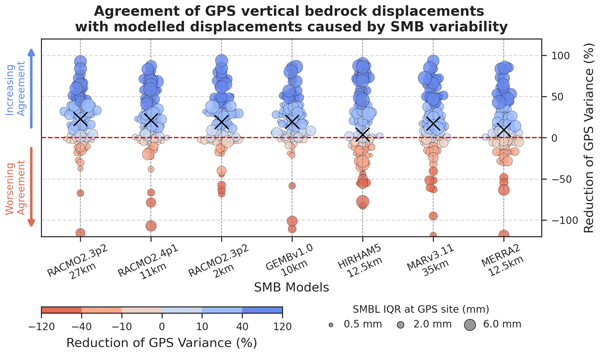
Jenan Rajavarathan, Matt King, Christopher Watson, and Nicolaj Hansen
The Cryosphere, 20, 5099–5113, https://doi.org/10.5194/tc-20-5099-2026, https://doi.org/10.5194/tc-20-5099-2026, 2026
Short summary
Short summary
Antarctic surface mass balance (SMB) is a source of major uncertainty in ice-sheet mass balance estimates, but its evaluation remains limited. We introduce a novel method using continuous, bedrock-fixed GPS vertical displacements as a spatially integrated constraint on low-frequency SMB variability over hundreds of kilometres. Applied across Antarctica, it reveals systematic, region-dependent differences with modelled SMB-driven displacements, guiding SMB model refinement.
Max T. Nilssen, Tessa R. Vance, Poul Christoffersen, Sue Cook, Alison S. Criscitiello, and Nerilie J. Abram
EGUsphere, https://doi.org/10.5194/egusphere-2026-4880, https://doi.org/10.5194/egusphere-2026-4880, 2026
Short summary
Short summary
To better understand how snowfall in East Antarctica changes over time, we reconstructed annual snow accumulation from the Mount Brown South ice core over the last millennium. The record shows significant variability across time scales, including multiple centennial-length periods with much less snowfall than observed in the satellite era. Our results raise implications for assessments of future sea level rise.
Xiaojun Ma, Matt King, Jonathan Bamber, Bin Liu, Wenke Sun, and Qiuyu Wang
EGUsphere, https://doi.org/10.5194/egusphere-2026-3461, https://doi.org/10.5194/egusphere-2026-3461, 2026
Short summary
Short summary
Satellite records of glacier change are only about two decades long, so short-term climate swings can strongly affect estimated trends. Using satellite gravity data, we show that the largest year-to-year changes in global glacier mass come from the Arctic and are linked to the North Atlantic Oscillation and Pacific Decadal Oscillation. Accounting for these effects makes Alaska’s estimated ice loss about one-third larger, improving interpretation of glacier change and future sea-level rise.
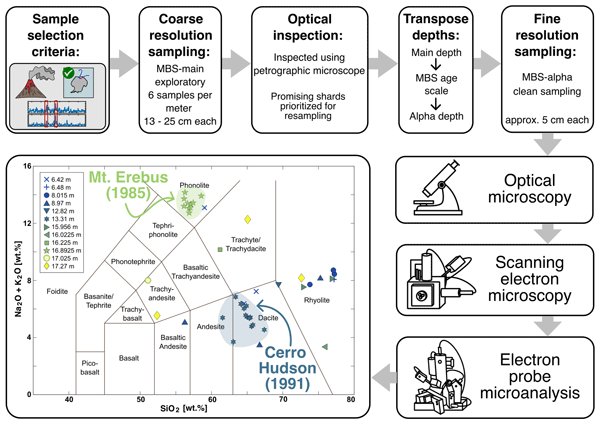
Margaret M. Harlan, Jodi Fox, Helle Astrid Kjær, Tessa R. Vance, Anders Svensson, and Eliza Cook
Clim. Past, 22, 1057–1083, https://doi.org/10.5194/cp-22-1057-2026, https://doi.org/10.5194/cp-22-1057-2026, 2026
Short summary
Short summary
The ~300 m Mount Brown South ice core (MBS) was drilled in coastal East Antarctica in 2017-2018. Here, we combine atmospheric modeling, ice core chemistry, and eruption records to sample a ~20 m MBS companion core for volcanic ash. We identified two ash layers, geochemically correlated with eruptions of Mt. Erebus (1985) and Cerro Hudson (1991). This study proves long-range transport of ash to East Antarctica, validating MBS as an untapped record of high latitude Southern Hemisphere volcanism.
Mirko Scheinert, Weisen Shen, Richard C. Aster, Lambert Caron, Michael D. Hartinger, Matt A. King, Andrew Lloyd, Anya M. Reading, J. Paul Winberry, Terry Wilson, Lucilla Alfonsi, Michael J. Bentley, Eric Buchta, Thomas Y. Chen, Peter J. Clarke, Jörg Ebbing, Olaf Eisen, Natalya Gomez, Esra Günaydın, Samantha Hansen, Erik R. Ivins, Achraf Koulali, Grace A. Nield, Frederick Richards, Mahmut O. Selbesoglu, Stephanie Sherman, Pippa L. Whitehouse, and Matthias Willen
EGUsphere, https://doi.org/10.5194/egusphere-2025-6370, https://doi.org/10.5194/egusphere-2025-6370, 2026
Short summary
Short summary
With an ongoing mass loss the Antarctic Ice Sheet contributes to global-mean sea level rise at a rate of 0.4 mm/a. Thus, it plays a key role in global climate and provides a natural laboratory to study processes that interlink cryosphere, solid Earth, atmosphere and ocean. We discuss how GNSS and seismic networks in Antarctica were used to significantly advance our understanding of these processes, and how they should be maintained and extended to answer key science questions in the future.
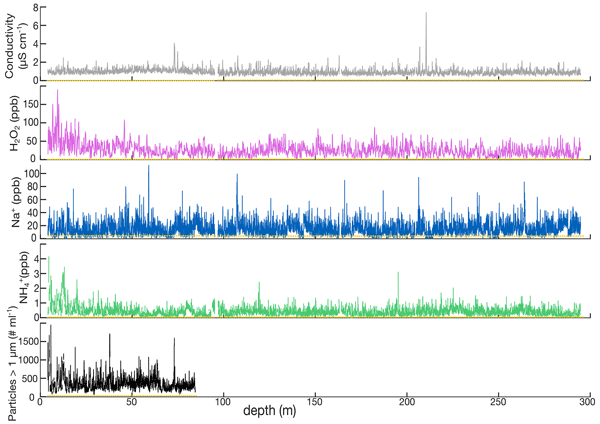
Margaret Harlan, Helle Astrid Kjær, Aylin de Campo, Anders Svensson, Thomas Blunier, Vasileios Gkinis, Sarah Jackson, Christopher Plummer, and Tessa Vance
Earth Syst. Sci. Data, 17, 6255–6271, https://doi.org/10.5194/essd-17-6255-2025, https://doi.org/10.5194/essd-17-6255-2025, 2025
Short summary
Short summary
This paper provides high-resolution chemistry and impurity measurements from the Mount Brown South ice core in East Antarctica, from 873 to 2008 CE. Measurements include sodium, ammonium, hydrogen peroxide, electrolytic conductivity, and insoluble microparticles. Data are provided on three scales: 1 mm and 3 cm averaged depth resolution and decadally averaged. The paper also describes the continuous flow analysis systems used to collect the data and characterizes uncertainties and data quality.
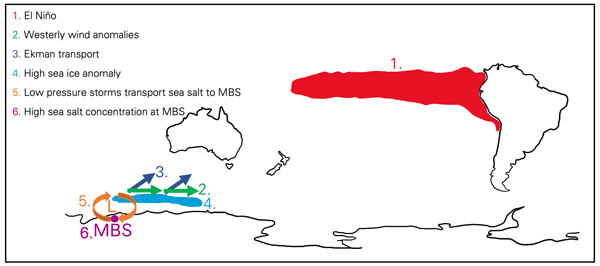
Helen J. Shea, Ailie Gallant, Ariaan Purich, and Tessa R. Vance
Clim. Past, 21, 2009–2030, https://doi.org/10.5194/cp-21-2009-2025, https://doi.org/10.5194/cp-21-2009-2025, 2025
Short summary
Short summary
Ice core data from Mount Brown South (MBS), East Antarctica links high sea salt years to stronger westerly winds and increased sea ice near MBS's northeast coast. Low pressure storms off the coast might transport sea salts from sea ice regions to MBS. The tropical Pacific influences sea salt levels with El Niño events affecting wind patterns around MBS, impacting sea salt sources. Identifying these mechanisms aids in the understanding of climate variability before instrumental records.
Max T. Nilssen, Danielle G. Udy, and Tessa R. Vance
Clim. Past, 21, 897–917, https://doi.org/10.5194/cp-21-897-2025, https://doi.org/10.5194/cp-21-897-2025, 2025
Short summary
Short summary
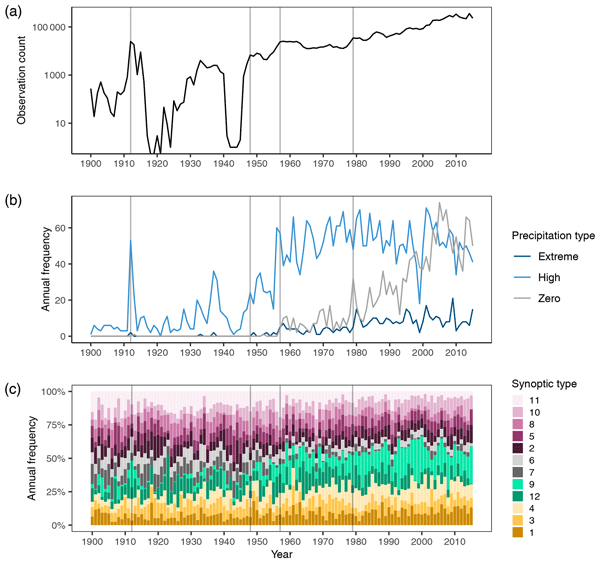
Reanalyses can be used to study past weather and climate, but their reliability is uncertain in data-sparse regions, such as the southern Indian Ocean. We used weather typing and an ice core record from East Antarctica to show that the 20th Century Reanalysis project can better represent the weather conditions that lead to snowfall variability at the ice core site when key weather observations from the Southern Ocean (e.g. Macquarie Island) commence around the mid-20th century.
Eric Buchta, Mirko Scheinert, Matt A. King, Terry Wilson, Achraf Koulali, Peter J. Clarke, Demián Gómez, Eric Kendrick, Christoph Knöfel, and Peter Busch
Earth Syst. Sci. Data, 17, 1761–1780, https://doi.org/10.5194/essd-17-1761-2025, https://doi.org/10.5194/essd-17-1761-2025, 2025
Short summary
Short summary
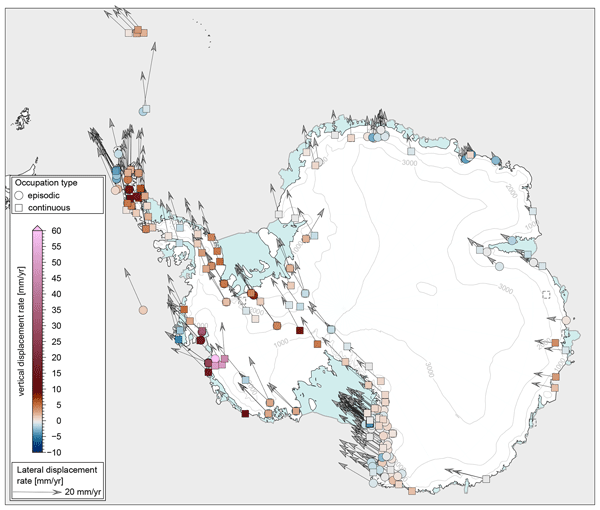
Geodetic GPS measurements in Antarctica have been used to track bedrock displacement, which is vital for understanding geodynamic processes such as plate motion and glacial isostatic adjustment. However, the potential of GPS data has been limited by its partially fragmented availability and unreliable metadata. A new dataset, which spans the period from 1995 to 2021, offers consistently processed coordinate time series for 286 GPS sites and promises to enhance future geodynamic research.
Jordan R. W. Martin, Joel B. Pedro, and Tessa R. Vance
Clim. Past, 20, 2487–2497, https://doi.org/10.5194/cp-20-2487-2024, https://doi.org/10.5194/cp-20-2487-2024, 2024
Short summary
Short summary
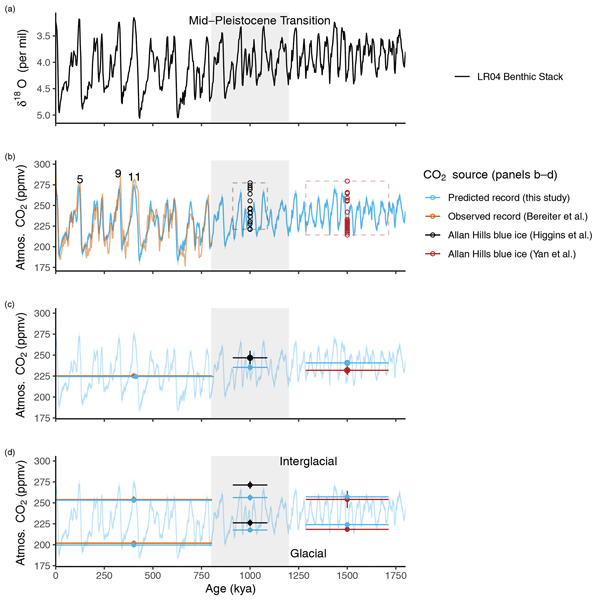
We use existing palaeoclimate data and a statistical model to predict atmospheric CO2 concentrations across the Mid-Pleistocene Transition. Our prediction assumes that the relationship between CO2 and benthic ẟ18Ocalcite over the past 800 000 years can be extended over the last 1.8 million years. We find no clear evidence from existing blue ice or proxy-based CO2 data to reject the predicted record. A definitive test awaits analysis of continuous oldest ice core records from Antarctica.
Tessa R. Vance, Nerilie J. Abram, Alison S. Criscitiello, Camilla K. Crockart, Aylin DeCampo, Vincent Favier, Vasileios Gkinis, Margaret Harlan, Sarah L. Jackson, Helle A. Kjær, Chelsea A. Long, Meredith K. Nation, Christopher T. Plummer, Delia Segato, Andrea Spolaor, and Paul T. Vallelonga
Clim. Past, 20, 969–990, https://doi.org/10.5194/cp-20-969-2024, https://doi.org/10.5194/cp-20-969-2024, 2024
Short summary
Short summary
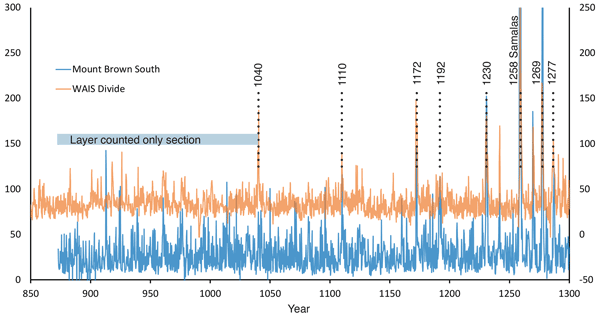
This study presents the chronologies from the new Mount Brown South ice cores from East Antarctica, which were developed by counting annual layers in the ice core data and aligning these to volcanic sulfate signatures. The uncertainty in the dating is quantified, and we discuss initial results from seasonal cycle analysis and mean annual concentrations. The chronologies will underpin the development of new proxy records for East Antarctica spanning the past millennium.
Lingwei Zhang, Tessa R. Vance, Alexander D. Fraser, Lenneke M. Jong, Sarah S. Thompson, Alison S. Criscitiello, and Nerilie J. Abram
The Cryosphere, 17, 5155–5173, https://doi.org/10.5194/tc-17-5155-2023, https://doi.org/10.5194/tc-17-5155-2023, 2023
Short summary
Short summary
Physical features in ice cores provide unique records of past variability. We identified 1–2 mm ice layers without bubbles in surface ice cores from Law Dome, East Antarctica, occurring on average five times per year. The origin of these bubble-free layers is unknown. In this study, we investigate whether they have the potential to record past atmospheric processes and circulation. We find that the bubble-free layers are linked to accumulation hiatus events and meridional moisture transport.
Sarah L. Jackson, Tessa R. Vance, Camilla Crockart, Andrew Moy, Christopher Plummer, and Nerilie J. Abram
Clim. Past, 19, 1653–1675, https://doi.org/10.5194/cp-19-1653-2023, https://doi.org/10.5194/cp-19-1653-2023, 2023
Short summary
Short summary
Ice core records are useful tools for reconstructing past climate. However, ice cores favour recording climate conditions at times when snowfall occurs. Large snowfall events in Antarctica are often associated with warmer-than-usual temperatures. We show that this results in a tendency for the Mount Brown South ice core record to preserve a temperature record biased to the climate conditions that exist during extreme events, rather than a temperature record that reflects the mean annual climate.
Elizabeth R. Thomas, Diana O. Vladimirova, Dieter R. Tetzner, B. Daniel Emanuelsson, Nathan Chellman, Daniel A. Dixon, Hugues Goosse, Mackenzie M. Grieman, Amy C. F. King, Michael Sigl, Danielle G. Udy, Tessa R. Vance, Dominic A. Winski, V. Holly L. Winton, Nancy A. N. Bertler, Akira Hori, Chavarukonam M. Laluraj, Joseph R. McConnell, Yuko Motizuki, Kazuya Takahashi, Hideaki Motoyama, Yoichi Nakai, Franciéle Schwanck, Jefferson Cardia Simões, Filipe Gaudie Ley Lindau, Mirko Severi, Rita Traversi, Sarah Wauthy, Cunde Xiao, Jiao Yang, Ellen Mosely-Thompson, Tamara V. Khodzher, Ludmila P. Golobokova, and Alexey A. Ekaykin
Earth Syst. Sci. Data, 15, 2517–2532, https://doi.org/10.5194/essd-15-2517-2023, https://doi.org/10.5194/essd-15-2517-2023, 2023
Short summary
Short summary
The concentration of sodium and sulfate measured in Antarctic ice cores is related to changes in both sea ice and winds. Here we have compiled a database of sodium and sulfate records from 105 ice core sites in Antarctica. The records span all, or part, of the past 2000 years. The records will improve our understanding of how winds and sea ice have changed in the past and how they have influenced the climate of Antarctica over the past 2000 years.
Lenneke M. Jong, Christopher T. Plummer, Jason L. Roberts, Andrew D. Moy, Mark A. J. Curran, Tessa R. Vance, Joel B. Pedro, Chelsea A. Long, Meredith Nation, Paul A. Mayewski, and Tas D. van Ommen
Earth Syst. Sci. Data, 14, 3313–3328, https://doi.org/10.5194/essd-14-3313-2022, https://doi.org/10.5194/essd-14-3313-2022, 2022
Short summary
Short summary
Ice core records from Law Dome in East Antarctica, collected over the the last 3 decades, provide high-resolution data for studies of the climate of Antarctica, Australia and the Southern and Indo-Pacific oceans. Here, we present a set of annually dated records from Law Dome covering the last 2000 years. This dataset provides an update and extensions both forward and back in time of previously published subsets of the data, bringing them together into a coherent set with improved dating.
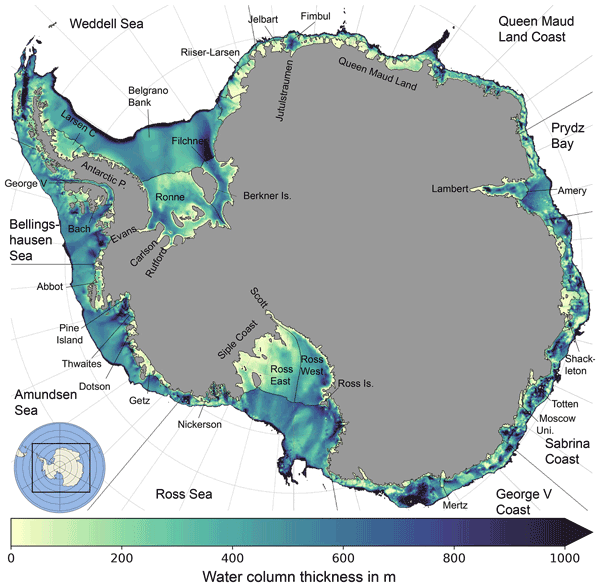
Ole Richter, David E. Gwyther, Matt A. King, and Benjamin K. Galton-Fenzi
The Cryosphere, 16, 1409–1429, https://doi.org/10.5194/tc-16-1409-2022, https://doi.org/10.5194/tc-16-1409-2022, 2022
Short summary
Short summary
Tidal currents may play an important role in Antarctic ice sheet retreat by changing the rate at which the ocean melts glaciers. Here, using a computational ocean model, we derive the first estimate of present-day tidal melting that covers all of Antarctica. Our results suggest that large-scale ocean models aiming to accurately predict ice melt rates will need to account for the effects of tides. The inclusion of tide-induced friction at the ice–ocean interface should be prioritized.
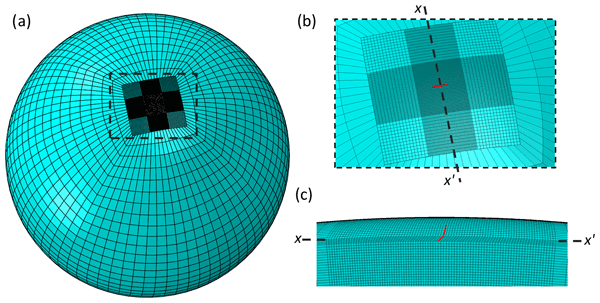
Grace A. Nield, Matt A. King, Rebekka Steffen, and Bas Blank
Geosci. Model Dev., 15, 2489–2503, https://doi.org/10.5194/gmd-15-2489-2022, https://doi.org/10.5194/gmd-15-2489-2022, 2022
Short summary
Short summary
We present a finite-element model of post-seismic solid Earth deformation built in the software package Abaqus for the purpose of calculating post-seismic deformation in the far field of major earthquakes. The model is benchmarked against an existing open-source post-seismic model demonstrating good agreement. The advantage over existing models is the potential for simple modification to include 3-D Earth structure, non-linear rheologies and alternative or multiple sources of stress change.
Cited articles
Arblaster, J. M. and Meehl, G. A.: Contributions of external forcings to southern annular mode trends, J. Climate, 19, 2896–2905, https://doi.org/10.1175/Jcli3774.1, 2006.
Ayabilah, J. B., King, M., Udy, D., and Vance, T.: Data for: The changing mass of the Antarctic Ice Sheet during ENSO-dominated periods in the GRACE era (2002–2022), Institute for Marine and Antarctic Studies [data set], https://doi.org/10.25959/K9BK-VA85, 2026.
Baiman, R., Winters, A. C., Lenaerts, J., and Shields, C. A.: Synoptic Drivers of Atmospheric River Induced Precipitation Near Dronning Maud Land, Antarctica, J. Geophys. Res.-Atmos., 128, e2022JD037859, https://doi.org/10.1029/2022jd037859, 2023.
Bodart, J. A. and Bingham, R. J.: The Impact of the Extreme 2015-2016 El Nino on the Mass Balance of the Antarctic Ice Sheet, Geophys. Res. Lett., 46, 13862–13871, https://doi.org/10.1029/2019gl084466, 2019.
Boening, C., Lebsock, M., Landerer, F., and Stephens, G.: Snowfall-driven mass change on the East Antarctic ice sheet, Geophys. Res. Lett., 39, L21501, https://doi.org/10.1029/2012gl053316, 2012.
Cai, W. J., Santoso, A., Collins, M., Dewitte, B., Karamperidou, C., Kug, J. S., Lengaigne, M., McPhaden, M. J., Stuecker, M. F., Taschetto, A. S., Timmermann, A., Wu, L. X., Yeh, S. W., Wang, G. J., Ng, B., Jia, F., Yang, Y., Ying, J., Zheng, X. T., Bayr, T., Brown, J. R., Capotondi, A., Cobb, K. M., Gan, B. L., Geng, T., Ham, Y. G., Jin, F. F., Jo, H. S., Li, X. C., Lin, X. P., McGregor, S., Park, J. H., Stein, K., Yang, K., Zhang, L., and Zhong, W. X.: Changing El Nino-Southern Oscillation in a warming climate, Nat. Rev. Earth Environ., 2, 628–644, https://doi.org/10.1038/s43017-021-00199-z, 2021.
Chen, X. Y., Li, S. L., and Zhang, C.: Distinct impacts of two kinds of El Nino on precipitation over the Antarctic Peninsula and West Antarctica in austral spring, Atmospheric and Oceanic Science Letters, 16, 100387, https://doi.org/10.1016/j.aosl.2023.100387, 2023.
Clem, K. R. and Fogt, R. L.: Varying roles of ENSO and SAM on the Antarctic Peninsula climate in austral spring, J. Geophys. Res.-Atmos., 118, 11481–11492, https://doi.org/10.1002/jgrd.50860, 2013.
Clem, K. R., Renwick, J. A., McGregor, J., and Fogt, R. L.: The relative influence of ENSO and SAM on Antarctic Peninsula climate, J. Geophys. Res.-Atmos., 121, 9324–9341, https://doi.org/10.1002/2016jd025305, 2016.
Clem, K. R., Renwick, J. A., and McGregor, J.: Large-Scale Forcing of the Amundsen Sea Low and Its Influence on Sea Ice and West Antarctic Temperature, J. Climate, 30, 8405–8424, https://doi.org/10.1175/Jcli-D-16-0891.1, 2017.
Dahle, C., Murböck, M., Flechtner, F., Dobslaw, H., Michalak, G., Neumayer, K. H., Abrykosov, O., Reinhold, A., König, R., Sulzbach, R., and Förste, C.: The GFZ GRACE RL06 Monthly Gravity Field Time Series: Processing Details and Quality Assessment, Remote Sens., 11, 2116, https://doi.org/10.3390/rs11182116, 2019.
Dahle, C., Boergens, E., Sasgen, I., Döhne, T., Reißland, S., Dobslaw, H., Klemann, V., Murböck, M., König, R., Dill, R., Sips, M., Sylla, U., Groh, A., Horwath, M., and Flechtner, F.: GravIS: mass anomaly products from satellite gravimetry, Earth Syst. Sci. Data, 17, 611–631, https://doi.org/10.5194/essd-17-611-2025, 2025.
Diener, T., Sasgen, I., Agosta, C., Fuerst, J. J., Braun, M. H., Konrad, H., and Fettweis, X.: Acceleration of Dynamic Ice Loss in Antarctica From Satellite Gravimetry, Front. Earth Sci., 9, 741789, https://doi.org/10.3389/feart.2021.741789, 2021.
Fogt, R. L. and Marshall, G. J.: The Southern Annular Mode: Variability, trends, and climate impacts across the Southern Hemisphere, WIREs Climate Change, 11, https://doi.org/10.1002/wcc.652, 2020a.
Fogt, R. L. and Marshall, G. J.: The Southern Annular Mode: Variability, trends, and climate impacts across the Southern Hemisphere, Wiley Interdisciplinary Reviews-Climate Change, 11, e652, https://doi.org/10.1002/wcc.652, 2020b.
Fogt, R. L., Bromwich, D. H., and Hines, K. M.: Understanding the SAM influence on the South Pacific ENSO teleconnection, Clim. Dynam., 36, 1555–1576, 2011.
Fogt, R. L., Jones, J. M., and Renwick, J.: Seasonal Zonal Asymmetries in the Southern Annular Mode and Their Impact on Regional Temperature Anomalies, J. Climate, 25, 6253–6270, https://doi.org/10.1175/jcli-d-11-00474.1, 2012.
Gardner, A. S., Moholdt, G., Scambos, T., Fahnstock, M., Ligtenberg, S., van den Broeke, M., and Nilsson, J.: Increased West Antarctic and unchanged East Antarctic ice discharge over the last 7 years, The Cryosphere, 12, 521–547, https://doi.org/10.5194/tc-12-521-2018, 2018.
Goyal, R., Jucker, M., Gupta, A. S., and England, M. H.: A New Zonal Wave-3 Index for the Southern Hemisphere, J. Climate, 35, 5137–5149, https://doi.org/10.1175/Jcli-D-21-0927.1, 2022.
Groh, A. and Horwath, M.: The method of tailored sensitivity kernels for GRACE mass change estimates, EGU General Assembly 2016, Vienna, Austria, 2016.
Hersbach, H., Bell, B., Berrisford, P., Hirahara, S., Horányi, A., Muñoz-Sabater, J., Nicolas, J., Peubey, C., Radu, R., Schepers, D., Simmons, A., Soci, C., Abdalla, S., Abellan, X., Balsamo, G., Bechtold, P., Biavati, G., Bidlot, J., Bonavita, M., De Chiara, G., Dahlgren, P., Dee, D., Diamantakis, M., Dragani, R., Flemming, J., Forbes, R., Fuentes, M., Geer, A., Haimberger, L., Healy, S., Hogan, R. J., Hólm, E., Janisková, M., Keeley, S., Laloyaux, P., Lopez, P., Lupu, C., Radnoti, G., de Rosnay, P., Rozum, I., Vamborg, F., Villaume, S., and Thépaut, J. N.: The ERA5 global reanalysis, Q. J. Roy. Meteor. Soc., 146, 1999–2049, https://doi.org/10.1002/qj.3803, 2020.
Hosking, J. S., Orr, A., Marshall, G. J., Turner, J., and Phillips, T.: The Influence of the Amundsen-Bellingshausen Seas Low on the Climate of West Antarctica and Its Representation in Coupled Climate Model Simulations, J. Climate, 26, 6633–6648, https://doi.org/10.1175/Jcli-D-12-00813.1, 2013.
Hoskins, B. J. and Karoly, D. J.: The Steady Linear Response of a Spherical Atmosphere to Thermal and Orographic Forcing, J. Atmos. Sci., 38, 1179–1196, https://doi.org/10.1175/1520-0469(1981)038<1179:Tslroa>2.0.Co;2, 1981.
Huguenin, M. F., Holmes, R. M., Spence, P., and England, M. H.: Subsurface Warming of the West Antarctic Continental Shelf Linked to El Niño-Southern Oscillation, Geophys. Res. Lett., 51, e2023GL104518, https://doi.org/10.1029/2023GL104518, 2024.
IMBIE Team: Mass balance of the Antarctic Ice Sheet from 1992 to 2017, Nature, 558, 219–222, https://doi.org/10.1038/s41586-018-0179-y, 2018.
Kim, B. H., Seo, K. W., Eom, J., Chen, J., and Wilson, C. R.: Antarctic ice mass variations from 1979 to 2017 driven by anomalous precipitation accumulation, Sci. Rep., 10, 20366, https://doi.org/10.1038/s41598-020-77403-5, 2020.
Kim, B. H., Seo, K. W., Lee, C. K., Kim, J. S., Lee, W. S., Jin, E. K., and van den Broeke, M.: Partitioning the drivers of Antarctic glacier mass balance (2003–2020) using satellite observations and a regional climate model, P. Natl. Acad. Sci. USA, 121, e2322622121, https://doi.org/10.1073/pnas.2322622121, 2024.
Kim, J., Kim, W., Yeh, S., Kug, J. S., and Kwon, M.: The unique 2009–2010 El Niño event: A fast phase transition of warm pool El Niño to La Niña, AGU Fall Meeting Abstracts, San Francisco, California, United States, 2011.
King, M. A. and Christoffersen, P.: Major Modes of Climate Variability Dominate Nonlinear Antarctic Ice-Sheet Elevation Changes 2002–2020, Geophys. Res. Lett., 51, e2024GL108844, https://doi.org/10.1029/2024GL108844, 2024.
King, M. A., Lyu, K., and Zhang, X. B.: Climate variability a key driver of recent Antarctic ice-mass change, Nat. Geosci., 16, 1128–1135, https://doi.org/10.1038/s41561-023-01317-w, 2023.
Landerer, F. W., Flechtner, F. M., Save, H., Webb, F. H., Bandikova, T., Bertiger, W. I., Bettadpur, S. V., Byun, S. H., Dahle, C., Dobslaw, H., Fahnestock, E., Harvey, N., Kang, Z. G., Kruizinga, G. L. H., Loomis, B. D., McCullough, C., Murböck, M., Nagel, P., Paik, M., Pie, N., Poole, S., Strekalov, D., Tamisiea, M. E., Wang, F. R., Watkins, M. M., Wen, H. Y., Wiese, D. N., and Yuan, D. N.: Extending the Global Mass Change Data Record: GRACE Follow-On Instrument and Science Data Performance, Geophys. Res. Lett., 47, e2020GL088306, https://doi.org/10.1029/2020GL088306, 2020.
Lee, H.-J., Jin, E. K., Kim, B.-H., and Lee, W. S.: Vanishing of the El Niño-induced delay effect on the ice mass loss of West Antarctica in future climate change, Research Square [preprint], https://doi.org/10.21203/rs.3.rs-2437498/v1, 2023.
Li, Z., Chao, B. F., Wang, H., and Zhang, Z.: Antarctica ice-mass variations on interannual timescale: Coastal Dipole and propagating transports, Earth Planet. Sc. Lett., 595, 117789, 117789, https://doi.org/10.1016/j.epsl.2022.117789, 2022.
Macha, J. M. A., Mackintosh, A. N., Mccormack, F. S., Henley, B. J., McGregor, H. V., van Dalum, C. T., and Purich, A.: Distinct Central and Eastern Pacific El Niño Influence on Antarctic Surface Mass Balance, Geophys. Res. Lett., 51, e2024GL109423, https://doi.org/10.1029/2024GL109423, 2024.
Marshall, G. J.: Trends in the southern annular mode from observations and reanalyses, J. Climate, 16, 4134–4143, https://doi.org/10.1175/1520-0442(2003)016<4134:Titsam>2.0.Co;2, 2003.
Marshall, G. J., Orr, A., and Turner, J.: A Predominant Reversal in the Relationship between the SAM and East Antarctic Temperatures during the Twenty-First Century, J. Climate, 26, 5196–5204, https://doi.org/10.1175/Jcli-D-12-00671.1, 2013.
Marshall, G. J., Thompson, D. W. J., and van den Broeke, M. R.: The Signature of Southern Hemisphere Atmospheric Circulation Patterns in Antarctic Precipitation, Geophys. Res. Lett., 44, 11580–11589, https://doi.org/10.1002/2017GL075998, 2017.
McPhaden, M. J., Zebiak, S. E., and Glantz, M. H.: ENSO as an integrating concept in earth science, Science, 314, 1740–1745, https://doi.org/10.1126/science.1132588, 2006.
Medley, B. and Thomas, E. R.: Increased snowfall over the Antarctic Ice Sheet mitigated twentieth-century sea-level rise, Nat. Clim. Change, 9, 34, https://doi.org/10.1038/s41558-018-0356-x, 2019.
Orr, A., Marshall, G. J., Hunt, J. C. R., Sommeria, J., Wang, C.-G., Van Lipzig, N. P. M., Cresswell, D., and King, J. C.: Characteristics of Summer Airflow over the Antarctic Peninsula in Response to Recent Strengthening of Westerly Circumpolar Winds, J. Atmos. Sci., 65, 1396–1413, https://doi.org/10.1175/2007jas2498.1, 2008.
Palóczy, A., Gille, S. T., and McClean, J. L.: Oceanic Heat Delivery to the Antarctic Continental Shelf: Large-Scale, Low-Frequency Variability, J. Geophys. Res.-Oceans, 123, 7678–7701, https://doi.org/10.1029/2018jc014345, 2018.
Paolo, F. S., Padman, L., Fricker, H. A., Adusumilli, S., Howard, S., and Siegfried, M. R.: Response of Pacific-sector Antarctic ice shelves to the El Nino/Southern Oscillation, Nat. Geosci., 11, 121–126, https://doi.org/10.1038/s41561-017-0033-0, 2018.
Peltier, W. R., Argus, D. F., and Drummond, R.: Comment on “An Assessment of the ICE‐6G_C (VM5a) Glacial Isostatic Adjustment Model” by Purcell et al, J. Geophys. Res.-Sol. Ea., 123, 2019–2028, https://doi.org/10.1002/2016jb013844, 2018.
Pohl, B., Favier, V., Wille, J., Udy, D. G., Vance, T. R., Pergaud, J., Dutrievoz, N., Blanchet, J., Kittel, C., Amory, C., Krinner, G., and Codron, F.: Relationship Between Weather Regimes and Atmospheric Rivers in East Antarctica, J. Geophys. Res.-Atmos., 126, https://doi.org/10.1029/2021jd035294, 2021.
Pook, M. J., McIntosh, P. C., and Meyers, G. A.: The Synoptic Decomposition of Cool-Season Rainfall in the Southeastern Australian Cropping Region, J. Appl. Meteorol. Climatol., 45, 1156–1170, https://doi.org/10.1175/jam2394.1, 2006.
Raphael, M. N.: A zonal wave 3 index for the Southern Hemisphere, Geophys. Res. Lett., 31, L23212, https://doi.org/10.1029/2004gl020365, 2004.
Raphael, M. N., Marshall, G. J., Turner, J., Fogt, R. L., Schneider, D., Dixon, D. A., Hosking, J. S., Jones, J. M., and Hobbs, W. R.: The Amundsen Sea Low: Variability, Change, and Impact on Antarctic Climate, B. Am. Meteorol. Soc., 97, 111–121, https://doi.org/10.1175/bams-d-14-00018.1, 2016a.
Raphael, M. N., Marshall, G. J., Turner, J., Fogt, R. L., Schneider, D., Dixon, D. A., Hosking, J. S., Jones, J. M., and Hobbs, W. R.: THE AMUNDSEN SEA LOW Variability, Change, and Impact on Antarctic Climate, B. Am. Meteorol. Soc., 97, 111–121, https://doi.org/10.1175/Bams-D-14-00018.1, 2016b.
Rayner, N. A., Parker, D. E., Horton, E. B., Folland, C. K., Alexander, L. V., Rowell, D. P., Kent, E. C., and Kaplan, A.: Global analyses of sea surface temperature, sea ice, and night marine air temperature since the late nineteenth century, J. Geophys. Res.-Atmos., 108, 4407, https://doi.org/10.1029/2002jd002670, 2003.
Rignot, E., Mouginot, J., Scheuchl, B., van den Broeke, M., van Wessem, M. J., and Morlighem, M.: Four decades of Antarctic Ice Sheet mass balance from 1979–2017, P. Natl. Acad. Sci. USA, 116, 1095–1103, https://doi.org/10.1073/pnas.1812883116, 2019.
Sasgen, I., Dobslaw, H., Martinec, Z., and Thomas, M.: Satellite gravimetry observation of Antarctic snow accumulation related to ENSO, Earth Planet. Sc. Lett., 299, 352–358, https://doi.org/10.1016/j.epsl.2010.09.015, 2010.
Sasgen, I., Groh, A., and Horwath, M.: COST-G GravIS RL01 Ice-Mass Change Products, GFZ Data Services [data set], https://doi.org/10.5880/COST-G.GRAVIS_01_L3_ICE, 2020.
Scarchilli, C., Frezzotti, M., and Ruti, P. M.: Snow precipitation at four ice core sites in East Antarctica: provenance, seasonality and blocking factors, Clim. Dynam., 37, 2107–2125, https://doi.org/10.1007/s00382-010-0946-4, 2011.
Schneider, D. P., Okumura, Y., and Deser, C.: Observed Antarctic Interannual Climate Variability and Tropical Linkages, J. Climate, 25, 4048–4066, https://doi.org/10.1175/Jcli-D-11-00273.1, 2012.
Shepherd, A., Ivins, E. R., A, G., Barletta, V. R., Bentley, M. J., Bettadpur, S., Briggs, K. H., Bromwich, D. H., Forsberg, R., Galin, N., Horwath, M., Jacobs, S., Joughin, I., King, M. A., Lenaerts, J. T., Li, J., Ligtenberg, S. R., Luckman, A., Luthcke, S. B., McMillan, M., Meister, R., Milne, G., Mouginot, J., Muir, A., Nicolas, J. P., Paden, J., Payne, A. J., Pritchard, H., Rignot, E., Rott, H., Sorensen, L. S., Scambos, T. A., Scheuchl, B., Schrama, E. J., Smith, B., Sundal, A. V., van Angelen, J. H., van de Berg, W. J., van den Broeke, M. R., Vaughan, D. G., Velicogna, I., Wahr, J., Whitehouse, P. L., Wingham, D. J., Yi, D., Young, D., and Zwally, H. J.: A reconciled estimate of ice-sheet mass balance, Science, 338, 1183–1189, https://doi.org/10.1126/science.1228102, 2012.
Shields, C. A., Wille, J. D., Marquardt Collow, A. B., Maclennan, M., and Gorodetskaya, I. V.: Evaluating Uncertainty and Modes of Variability for Antarctic Atmospheric Rivers, Geophys. Res. Lett., 49, https://doi.org/10.1029/2022gl099577, 2022.
Stevenson, S., Fox-Kemper, B., Jochum, M., Rajagopalan, B., and Yeager, S. G.: ENSO Model Validation Using Wavelet Probability Analysis, J. Climate, 23, 5540–5547, https://doi.org/10.1175/2010jcli3609.1, 2010.
Swenson, S., Chambers, D., and Wahr, J.: Estimating geocenter variations from a combination of GRACE and ocean model output, J. Geophys. Res.-Sol. Ea., 113, B08410, https://doi.org/10.1029/2007jb005338, 2008.
Tapley, B. D., Bettadpur, S., Ries, J. C., Thompson, P. F., and Watkins, M. M.: GRACE measurements of mass variability in the Earth system, Science, 305, 503–505, https://doi.org/10.1126/science.1099192, 2004.
Turner, J.: The El Nino-southern oscillation and Antarctica, Int. J. Climatol., 24, 1–31, https://doi.org/10.1002/joc.965, 2004.
Turner, J., Phillips, T., Hosking, J. S., Marshall, G. J., and Orr, A.: The Amundsen Sea low, Int. J. Climatol., 33, 1818–1829, https://doi.org/10.1002/joc.3558, 2012.
Turner, J., Orr, A., Gudmundsson, G. H., Jenkins, A., Bingham, R. G., Hillenbrand, C. D., and Bracegirdle, T. J.: Atmosphere-ocean-ice interactions in the Amundsen Sea Embayment, West Antarctica, Rev. Geophys., 55, 235–276, https://doi.org/10.1002/2016rg000532, 2017.
Udy, D. G., Vance, T. R., Kiem, A. S., Holbrook, N. J., and Curran, M. A. J.: Links between Large Scale Modes of Climate Variability and Synoptic Weather Patterns in the Southern Indian Ocean, J. Climate, 34, 883–899, https://doi.org/10.1175/Jcli-D-20-0297.1, 2021.
Udy, D. G., Vance, T. R., Kiem, A. S., and Holbrook, N. J.: A synoptic bridge linking sea salt aerosol concentrations in East Antarctic snowfall to Australian rainfall, Commun. Earth Environ., 3, 175, https://doi.org/10.1038/s43247-022-00502-w, 2022.
van Dalum, C., van de Berg, W. J., and van den Broeke, M.: Monthly RACMO2.4p1 data for Antarctica (11 km) for SMB, SEB and near-surface variables (1979–2023), Zenodo [data set], https://doi.org/10.5281/zenodo.14217232, 2024a.
van Dalum, C. T., van de Berg, W. J., Gadde, S. N., van Tiggelen, M., van der Drift, T., van Meijgaard, E., van Ulft, L. H., and van den Broeke, M. R.: First results of the polar regional climate model RACMO2.4, The Cryosphere, 18, 4065–4088, https://doi.org/10.5194/tc-18-4065-2024, 2024b.
van Dalum, C. T., van de Berg, W. J., van den Broeke, M. R., and van Tiggelen, M.: The surface mass balance and near-surface climate of the Antarctic ice sheet in RACMO2.4p1, The Cryosphere, 19, 4061–4090, https://doi.org/10.5194/tc-19-4061-2025, 2025.
van de Berg, W. J., van den Broeke, M. R., Reijmer, C. H., and van Meijgaard, E.: Reassessment of the Antarctic surface mass balance using calibrated output of a regional atmospheric climate model, J. Geophys. Res.-Atmos., 111, https://doi.org/10.1029/2005jd006495, 2006.
Verfaillie, D., Pelletier, C., Goosse, H., Jourdain, N. C., Bull, C. Y. S., Dalaiden, Q., Favier, V., Fichefet, T., and Wille, J. D.: The circum-Antarctic ice-shelves respond to a more positive Southern Annular Mode with regionally varied melting, Commun. Earth Environ., 3, 139, https://doi.org/10.1038/s43247-022-00458-x, 2022.
Wang, S.: New record of explosive warmings in East Antarctica, Sci. Bull., 68, 129–132, 2023.
Wang, S., Ding, M. H., Liu, G., Li, G. C., and Chen, W.: Blocking Events in East Antarctica: Impact on Precipitation and their Association with Large-Scale Atmospheric Circulation Modes, J. Climate, 37, 1333–1345, https://doi.org/10.1175/Jcli-D-23-0419.1, 2024.
Wang, W., Shen, Y. Z., Chen, Q. J., and Wang, F. W.: Unprecedented mass gain over the Antarctic ice sheet between 2021 and 2022 caused by large precipitation anomalies, Environ. Res. Lett., 18, 124012, 124012, https://doi.org/10.1088/1748-9326/ad0863, 2023.
Wille, J. D., Favier, V., Gorodetskaya, I. V., Agosta, C., Kittel, C., Beeman, J. C., Jourdain, N. C., Lenaerts, J. T. M., and Codron, F.: Antarctic Atmospheric River Climatology and Precipitation Impacts, J. Geophys. Res.-Atmos., 126, e2020JD033788, https://doi.org/10.1029/2020JD033788, 2021.
Wille, J. D., Alexander, S. P., Amory, C., Baiman, R., Barthélemy, L., Bergstrom, D. M., Berne, A., Binder, H., Blanchet, J., Bozkurt, D., Bracegirdle, T. J., Casado, M., Choi, T., Clem, K. R., Codron, F., Datta, R., Di Battista, S., Favier, V., Francis, D., Fraser, A. D., Fourré, E., Garreaud, R. D., Genthon, C., Gorodetskaya, I., González-Herrero, S., Heinrich, V. J., Hubert, G., Joos, H., Kim, S. J., King, J. C., Kittel, C., Landais, A., Lazzara, M., Leonard, G. H., Lieser, J. L., Maclennan, M., Mikolajczyk, D., Neff, P., Ollivier, I., Picard, G., Pohl, B., Ralph, F. M., Rowe, P., Schlosser, E., Shields, C. A., Smith, I. J., Sprenger, M., Trusel, L., Udy, D., Vance, T., Walker, C., Wever, N., and Zou, X.: The Extraordinary March 2022 East Antarctica “Heat” Wave. Part I: Observations and Meteorological Drivers, J. Climate, 37, 757–778, https://doi.org/10.1175/Jcli-D-23-0175.1, 2024.
Williams, S. D. P., Moore, P., King, M. A., and Whitehouse, P. L.: Revisiting GRACE Antarctic ice mass trends and accelerations considering autocorrelation, Earth Planet. Sc. Lett., 385, 12–21, https://doi.org/10.1016/j.epsl.2013.10.016, 2014.
Xin, M., Clem, K. R., Turner, J., Stammerjohn, S. E., Zhu, J., Cai, W., and Li, X.: West-warming East-cooling trend over Antarctica reversed since early 21st century driven by large-scale circulation variation, Environ. Res. Lett., 18, 064034, https://doi.org/10.1088/1748-9326/acd8d4, 2023.
Zhang, B., Yao, Y. B., Liu, L., and Yang, Y. J.: Interannual ice mass variations over the Antarctic ice sheet from 2003 to 2017 were linked to El Nino-Southern Oscillation, Earth Planet. Sc. Lett., 560, 116796, 116796, https://doi.org/10.1016/j.epsl.2021.116796, 2021.
Short summary
Large-scale climate modes significantly influence Antarctic Ice Sheet (AIS) mass variability. This study investigates AIS variability during different El Niño-Southern Oscillation (ENSO) periods using GRACE data (2002–2022). Results show strong spatial variability driven by changes in the Amundsen Sea Low (ASL) and Southern Annular Mode (SAM). This highlights the importance of understanding these patterns for future ice mass estimates and sea level rise predictions.
Large-scale climate modes significantly influence Antarctic Ice Sheet (AIS) mass variability....


