Articles | Volume 19, issue 12
https://doi.org/10.5194/tc-19-6493-2025
© Author(s) 2025. This work is distributed under
the Creative Commons Attribution 4.0 License.
https://doi.org/10.5194/tc-19-6493-2025
© Author(s) 2025. This work is distributed under
the Creative Commons Attribution 4.0 License.
Scale invariance in kilometer-scale sea ice deformation

Aalto University, School of Engineering, Department of Energy and Mechanical Engineering, P.O. Box 14100, 00076 Aalto, Finland
Jari Haapala
Finnish Meteorological Institute, Marine Research Unit, PL 503, 00101 Helsinki, Finland
Jan Åström
CSC – It center for science Ltd., P.O. Box 405, 02101 Espoo, Finland
Mikko Lensu
Finnish Meteorological Institute, Marine Research Unit, PL 503, 00101 Helsinki, Finland
Arttu Polojärvi
Aalto University, School of Engineering, Department of Energy and Mechanical Engineering, P.O. Box 14100, 00076 Aalto, Finland
Related authors
No articles found.
Igor V. Polyakov, Andrey V. Pnyushkov, Eddy C. Carmack, Matthew Charette, Kyoung-Ho Cho, Steven Dykstra, Jari Haapala, Jinyoung Jung, Lauren Kipp, Eun Jin Yang, and Sergey Molodtsov
Ocean Sci., 21, 3105–3122, https://doi.org/10.5194/os-21-3105-2025, https://doi.org/10.5194/os-21-3105-2025, 2025
Short summary
Short summary
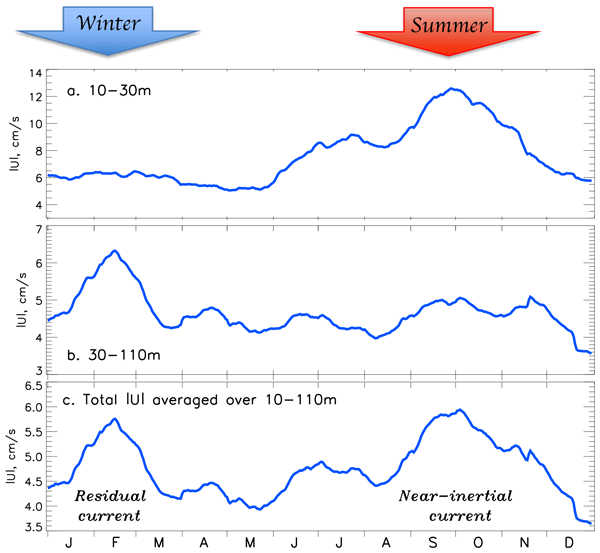
The Siberian Arctic Ocean greatly influences the Arctic climate system. Moreover, the region is experiencing some of the most notable Arctic climate change. In the summer, strong near-inertial currents in the upper (<30m) ocean account for more than half of the current speed and shear. In the winter, upper ocean ventilation due to atlantification distributes wind energy to far deeper (>100m) layers. Understanding the implications for mixing and halocline weakening depends on these findings.
Laura Rautiainen, Milla Johansson, Mikko Lensu, Jani Tyynelä, Jukka-Pekka Jalkanen, Ken Stenbäck, Harry Lonka, and Lauri Laakso
EGUsphere, https://doi.org/10.5194/egusphere-2025-1790, https://doi.org/10.5194/egusphere-2025-1790, 2025
Short summary
Short summary
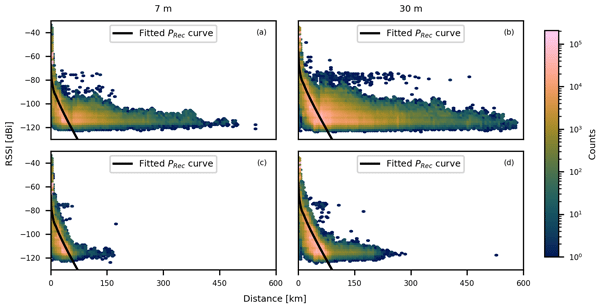
We present an experimental Automatic Identification System (AIS) receiver set-up to study anomalous signal propagation over coastal and marine waters in the northern Baltic Sea. Anomalous atmospheric conditions can allow for the AIS messages to be received from farther distances than under normal conditions. The results show that under anomalous conditions, the messages can be received up to 600 km away and have both diurnal and seasonal cycles.
Marek Muchow and Arttu Polojärvi
The Cryosphere, 18, 4765–4774, https://doi.org/10.5194/tc-18-4765-2024, https://doi.org/10.5194/tc-18-4765-2024, 2024
Short summary
Short summary
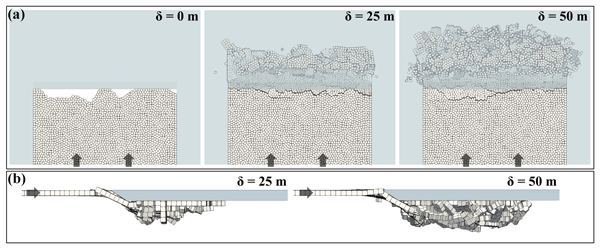
We present the first explicit three-dimensional simulations of sea-ice ridge formation, which enables us to observe failure in several locations simultaneously. Sea-ice ridges are formed when ice converges and fails due to wind and ocean currents, so broken ice accumulates in a ridge. Previous two-dimensional models could not capture this behavior. We conclude that non-simultaneous failure is necessary to simulate ridging forces to assess how ridging forces relate to other ice properties.
Jan Åström, Fredrik Robertsen, Jari Haapala, Arttu Polojärvi, Rivo Uiboupin, and Ilja Maljutenko
The Cryosphere, 18, 2429–2442, https://doi.org/10.5194/tc-18-2429-2024, https://doi.org/10.5194/tc-18-2429-2024, 2024
Short summary
Short summary
The HiDEM code has been developed for analyzing the fracture and fragmentation of brittle materials and has been extensively applied to glacier calving. Here, we report on the adaptation of the code to sea-ice dynamics and breakup. The code demonstrates the capability to simulate sea-ice dynamics on a 100 km scale with an unprecedented resolution. We argue that codes of this type may become useful for improving forecasts of sea-ice dynamics.
Mikko Lensu and Markku Similä
The Cryosphere, 16, 4363–4377, https://doi.org/10.5194/tc-16-4363-2022, https://doi.org/10.5194/tc-16-4363-2022, 2022
Short summary
Short summary
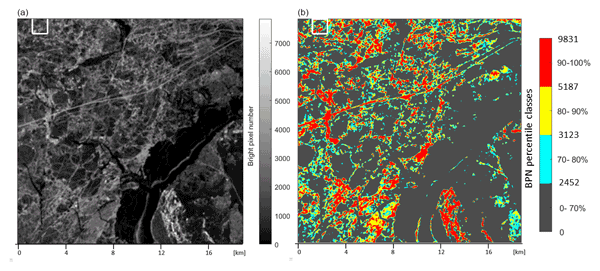
Ice ridges form a compressing ice cover. From above they appear as walls of up to few metres in height and extend even kilometres across the ice. Below they may reach tens of metres under the sea surface. Ridges need to be observed for the purposes of ice forecasting and ice information production. This relies mostly on ridging signatures discernible in radar satellite (SAR) images. New methods to quantify ridging from SAR have been developed and are shown to agree with field observations.
Douglas I. Benn, Adrian Luckman, Jan A. Åström, Anna J. Crawford, Stephen L. Cornford, Suzanne L. Bevan, Thomas Zwinger, Rupert Gladstone, Karen Alley, Erin Pettit, and Jeremy Bassis
The Cryosphere, 16, 2545–2564, https://doi.org/10.5194/tc-16-2545-2022, https://doi.org/10.5194/tc-16-2545-2022, 2022
Short summary
Short summary
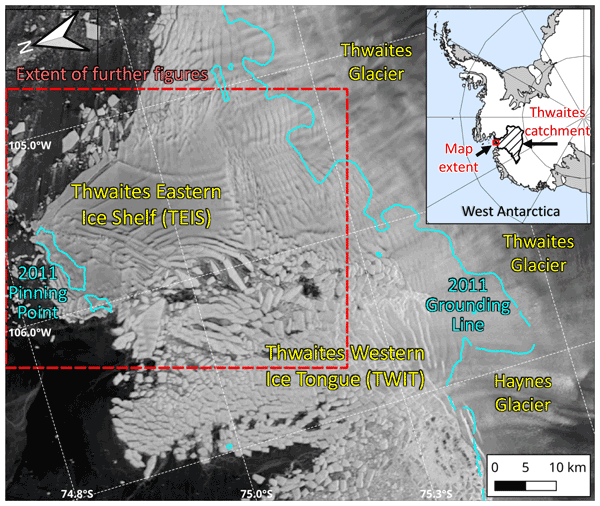
Thwaites Glacier (TG), in West Antarctica, is potentially unstable and may contribute significantly to sea-level rise as global warming continues. Using satellite data, we show that Thwaites Eastern Ice Shelf, the largest remaining floating extension of TG, has started to accelerate as it fragments along a shear zone. Computer modelling does not indicate that fragmentation will lead to imminent glacier collapse, but it is clear that major, rapid, and unpredictable changes are underway.
H. E. Markus Meier, Madline Kniebusch, Christian Dieterich, Matthias Gröger, Eduardo Zorita, Ragnar Elmgren, Kai Myrberg, Markus P. Ahola, Alena Bartosova, Erik Bonsdorff, Florian Börgel, Rene Capell, Ida Carlén, Thomas Carlund, Jacob Carstensen, Ole B. Christensen, Volker Dierschke, Claudia Frauen, Morten Frederiksen, Elie Gaget, Anders Galatius, Jari J. Haapala, Antti Halkka, Gustaf Hugelius, Birgit Hünicke, Jaak Jaagus, Mart Jüssi, Jukka Käyhkö, Nina Kirchner, Erik Kjellström, Karol Kulinski, Andreas Lehmann, Göran Lindström, Wilhelm May, Paul A. Miller, Volker Mohrholz, Bärbel Müller-Karulis, Diego Pavón-Jordán, Markus Quante, Marcus Reckermann, Anna Rutgersson, Oleg P. Savchuk, Martin Stendel, Laura Tuomi, Markku Viitasalo, Ralf Weisse, and Wenyan Zhang
Earth Syst. Dynam., 13, 457–593, https://doi.org/10.5194/esd-13-457-2022, https://doi.org/10.5194/esd-13-457-2022, 2022
Short summary
Short summary
Based on the Baltic Earth Assessment Reports of this thematic issue in Earth System Dynamics and recent peer-reviewed literature, current knowledge about the effects of global warming on past and future changes in the climate of the Baltic Sea region is summarised and assessed. The study is an update of the Second Assessment of Climate Change (BACC II) published in 2015 and focuses on the atmosphere, land, cryosphere, ocean, sediments, and the terrestrial and marine biosphere.
Anna Rutgersson, Erik Kjellström, Jari Haapala, Martin Stendel, Irina Danilovich, Martin Drews, Kirsti Jylhä, Pentti Kujala, Xiaoli Guo Larsén, Kirsten Halsnæs, Ilari Lehtonen, Anna Luomaranta, Erik Nilsson, Taru Olsson, Jani Särkkä, Laura Tuomi, and Norbert Wasmund
Earth Syst. Dynam., 13, 251–301, https://doi.org/10.5194/esd-13-251-2022, https://doi.org/10.5194/esd-13-251-2022, 2022
Short summary
Short summary
A natural hazard is a naturally occurring extreme event with a negative effect on people, society, or the environment; major events in the study area include wind storms, extreme waves, high and low sea level, ice ridging, heavy precipitation, sea-effect snowfall, river floods, heat waves, ice seasons, and drought. In the future, an increase in sea level, extreme precipitation, heat waves, and phytoplankton blooms is expected, and a decrease in cold spells and severe ice winters is anticipated.
Matthias Gröger, Christian Dieterich, Jari Haapala, Ha Thi Minh Ho-Hagemann, Stefan Hagemann, Jaromir Jakacki, Wilhelm May, H. E. Markus Meier, Paul A. Miller, Anna Rutgersson, and Lichuan Wu
Earth Syst. Dynam., 12, 939–973, https://doi.org/10.5194/esd-12-939-2021, https://doi.org/10.5194/esd-12-939-2021, 2021
Short summary
Short summary
Regional climate studies are typically pursued by single Earth system component models (e.g., ocean models and atmosphere models). These models are driven by prescribed data which hamper the simulation of feedbacks between Earth system components. To overcome this, models were developed that interactively couple model components and allow an adequate simulation of Earth system interactions important for climate. This article reviews recent developments of such models for the Baltic Sea region.
Andrii Murdza, Arttu Polojärvi, Erland M. Schulson, and Carl E. Renshaw
The Cryosphere, 15, 2957–2967, https://doi.org/10.5194/tc-15-2957-2021, https://doi.org/10.5194/tc-15-2957-2021, 2021
Short summary
Short summary
The strength of refrozen floes or piles of ice rubble is an important factor in assessing ice-structure interactions, as well as the integrity of an ice cover itself. The results of this paper provide unique data on the tensile strength of freeze bonds and are the first measurements to be reported. The provided information can lead to a better understanding of the behavior of refrozen ice floes and better estimates of the strength of an ice rubble pile.
Iman E. Gharamti, John P. Dempsey, Arttu Polojärvi, and Jukka Tuhkuri
The Cryosphere, 15, 2401–2413, https://doi.org/10.5194/tc-15-2401-2021, https://doi.org/10.5194/tc-15-2401-2021, 2021
Short summary
Short summary
We study the creep and fracture behavior of 3 m × 6 m floating edge-cracked rectangular plates of warm columnar freshwater S2 ice under creep/cyclic-recovery loading and monotonic loading to fracture. Under the testing conditions, the ice response was elastic–viscoplastic; no significant viscoelasticity or major recovery was detected. There was no clear effect of the creep/cyclic loading on the fracture properties: failure load and crack opening displacements at crack growth initiation.
Cited articles
Åström, J., Robertsen, F., Haapala, J., Polojärvi, A., Uiboupin, R., and Maljutenko, I.: A large-scale high-resolution numerical model for sea-ice fragmentation dynamics, The Cryosphere, 18, 2429–2442, https://doi.org/10.5194/tc-18-2429-2024, 2024. a, b
Blockley, F. E. A.: The future of sea ice modelling. Toward defining a cutting-edge future for sea ice modelling, Bulletin of American Meterological Society, 101, E1304, https://doi.org/10.1175/BAMS-D-20-0073.1, 2020. a
Bouchat, A. and Tremblay, B.: Reassessing the quality of sea-ice deformation estimates derived from the RADARSAT Geophysical Processor System and its impact on the spatiotemporal scaling statistics, Journal of Geophysical Research: Oceans, 125, e2019JC015944, https://doi.org/10.1029/2019JC015944, 2020. a, b
Bouchat, A., Hutter, N., Chanut, J., Dupont, F., Dukhovskoy, D., Garric, G., Lee, Y. J., Lemieux, J.-F., Lique, C., Losch, M., Maslowski, W., Myers, P. G., Ólason, E., Rampal, P., Rasmussen, T., Talandier, C., Tremblay, B., and Wang, Q.: Sea Ice Rheology Experiment (SIREx): 1. Scaling and statistical properties of sea-ice deformation fields, Journal of Geophysical Research: Oceans, 127, e2021JC017667, https://doi.org/10.1029/2021JC017667, 2022. a, b
Bouillon, S. and Rampal, P.: On producing sea ice deformation data sets from SAR-derived sea ice motion, The Cryosphere, 9, 663–673, https://doi.org/10.5194/tc-9-663-2015, 2015. a
Feltham, D. L.: Sea Ice Rheology, Annual Review of Fluid Mechanics, 40, 91–112, https://doi.org/10.1146/annurev.fluid.40.111406.102151, 2008. a
Fily, M. and Rothrock, D. A.: Extracting sea ice data from satellite SAR imagery, IEEE transactions on geoscience and remote sensing, 849–854, https://doi.org/10.1109/TGRS.1986.289699, 1986. a
Hibler, W., Weeks, W., Kovacs, A., and Ackley, S.: Differential sea-ice drift, I. Spatial and temporal variations in sea-ice deformation, Journal of Glaciology, 13, 437–455, 1974. a
Hibler, W. D. and Schulson, E. M.: On modeling the anisotropic failure and flow of flawed sea ice, Journal of Geophysical Research: Oceans, 105, 17105–17120, https://doi.org/10.1029/2000JC900045, 2000. a
Hopkins, M. A.: On the Ridging of Intact Lead Ice, Journal of Geophysical Research: Oceans, 99, 16351–16360, https://doi.org/10.1029/94jc00996, 1994. a
Hopkins, M. A.: On the Mesoscale Interaction of Lead Ice and Floes, Journal of Geophysical Research: Oceans, 101, 18315–18326, https://doi.org/10.1029/96jc01689, 1996. a
Hopkins, M. A.: A Discrete Element Lagrangian Sea Ice Model, Engineering Computations, 21, 409–421, https://doi.org/10.1108/02644400410519857, 2004. a
Hopkins, M. A. and Hibler, W. D.: Numerical Simulations of a Compact Convergent System of Ice Floes, Annals of Glaciology, 15, 26–30, https://doi.org/10.3189/1991aog15-1-26-30, 1991. a
Hopkins, M. A. and Thorndike, A. S.: Floe Formation in Arctic Sea Ice, Journal of Geophysical Research: Oceans, 111, https://doi.org/10.1029/2005jc003352, 2006. a
Hopkins, M. A., Hibler, W. D., and Flato, G. M.: On the Numerical Simulation of the Sea Ice Ridging Process, Journal of Geophysical Research: Oceans, 96, 4809–4820, https://doi.org/10.1029/90jc02375, 1991. a
Hopkins, M. A., Tuhkuri, J., and Lensu, M.: Rafting and ridging of thin ice sheets, Journal of Geophysical Research: Oceans, 104, 13605–13613, 1999. a
Hunke, E., Allard, R., Blain, P., Blockley, E., Feltham, D., Fichefet, T., Garric, G., Grumbine, R., Lemieux, J.-F., Rasmussen, T., Ribergaard, M., Roberts, A., Schweiger, A., Tietsche, S., Tremblay, B., Vancoppenolle, M., and Zhang, J.: Should Sea-Ice Modeling Tools Designed for Climate Research Be Used for Short-Term Forecasting?, Current Climate Change Reports, 6, 121–136, https://doi.org/10.1007/s40641-020-00162-y, 2020. a
Hutchings, J., Heil, P., Steer, A., and Hibler III, W.: Subsynoptic scale spatial variability of sea ice deformation in the western Weddell Sea during early summer, Journal of Geophysical Research: Oceans, 117, https://doi.org/10.1029/2011JC006961, 2012. a
Hutchings, J. K., Roberts, A., Geiger, C. A., and Richter-Menge, J.: Spatial and temporal characterization of sea-ice deformation, Annals of Glaciology, 52, 360–368, 2011. a
Itkin, P., Hendricks, S., Webster, M., von Albedyll, L., Arndt, S., Divine, D., Jaggi, M., Oggier, M., Raphael, I., Ricker, R., Rohde, J., Schneebeli, M., and Liston, G. E.: Sea ice and snow characteristics from year-long transects at the MOSAiC Central Observatory, Elem Sci Anth, 11, 00048, https://doi.org/10.1525/elementa.2022.00048, 2023. a, b
Krumpen, T., Haapala, J., Krocker, R., and Bartsch, A.: Ice radar raw data (sigma S6 ice radar) of RV POLARSTERN during cruise PS122/1, PANGAEA [data set], https://doi.org/10.1594/PANGAEA.929434, 2021. a
Kwok, R., Spreen, G., and Pang, S.: Arctic sea ice circulation and drift speed: Decadal trends and ocean currents, Journal of Geophysical Research: Oceans, 118, 2408–2425, 2013. a
Leppäranta, M. and Hibler III, W.: Mesoscale sea ice deformation in the East Greenland marginal ice zone, Journal of Geophysical Research: Oceans, 92, 7060–7070, 1987. a
Lindsay, R. W. and Stern, H.: The RADARSAT geophysical processor system: Quality of sea ice trajectory and deformation estimates, Journal of Atmospheric and Oceanic Technology, 20, 1333–1347, 2003. a
Manucharyan, G. E. and Montemuro, B. P.: SubZero: A sea ice model with an explicit representation of the floe life cycle, Journal of Advances in Modeling Earth Systems, 14, e2022MS003247, https://doi.org/10.1029/2022MS003247, 2022. a
Marsan, D. and Weiss, J.: Space/time coupling in brittle deformation at geophysical scales, Earth and Planetary Science Letters, 296, 353–359, 2010. a
Marsan, D., Stern, H., Lindsay, R., and Weiss, J.: Scale dependence and localization of the deformation of Arctic sea ice, Physical review letters, 93, 178501, https://doi.org/10.1103/PhysRevLett.93.178501, 2004. a, b, c, d
Muchow, M. and Polojärvi, A.: Three-dimensional discrete element simulations on pressure ridge formation, The Cryosphere, 18, 4765–4774, https://doi.org/10.5194/tc-18-4765-2024, 2024. a
Nicolaus, M., Perovich, D. K., Spreen, G., Granskog, M. A., von Albedyll, L., Angelopoulos, M., Anhaus, P., Arndt, S., Belter, H. J., Bessonov, V., Birnbaum, G., Brauchle, J., Calmer, R., Cardellach, E., Cheng, B., Clemens-Sewall, D., Dadic, R., Damm, E., de Boer, G., Demir, O., Dethloff, K., Divine, D. V., Fong, A. A., Fons, S., Frey, M. M., Fuchs, N., Gabarró, C., Gerland, S., Goessling, H. F., Gradinger, R., Haapala, J., Haas, C., Hamilton, J., Hannula, H.-R., Hendricks, S., Herber, A., Heuzé, C., Hoppmann, M., Høyland, K. V., Huntemann, M., Hutchings, J. K., Hwang, B., Itkin, P., Jacobi, H.-W., Jaggi, M., Jutila, A., Kaleschke, L., Katlein, C., Kolabutin, N., Krampe, D., Kristensen, S. S., Krumpen, T., Kurtz, N., Lampert, A., Lange, B. A., Lei, R., Light, B., Linhardt, F., Liston, G. E., Loose, B., Macfarlane, A. R., Mahmud, M., Matero, I. O., Maus, S., Morgenstern, A., Naderpour, R., Nandan, V., Niubom, A., Oggier, M., Oppelt, N., Pätzold, F., Perron, C., Petrovsky, T., Pirazzini, R., Polashenski, C., Rabe, B., Raphael, I. A., Regnery, J., Rex, M., Ricker, R., Riemann-Campe, K., Rinke, A., Rohde, J., Salganik, E., Scharien, R. K., Schiller, M., Schneebeli, M., Semmling, M., Shimanchuk, E., Shupe, M. D., Smith, M. M., Smolyanitsky, V., Sokolov, V., Stanton, T., Stroeve, J., Thielke, L., Timofeeva, A., Tonboe, R. T., Tavri, A., Tsamados, M., Wagner, D. N., Watkins, D., Webster, M., and Wendisch, M.: Overview of the MOSAiC expedition: Snow and sea ice, Elem. Sci. Anth., 10, 000046, https://doi.org/10.1525/elementa.2021.000046, 2022. a, b
Nixdorf, U., Dethloff, K., Rex, M., Shupe, M., Sommerfeld, A., Perovich, D. K., Nicolaus, M., Heuzé, C., Rabe, B., Loose, B., Damm, E., Gradinger, R., Fong, A., Maslowski, W., Rinke, A., Kwok, R., Spreen, G., Wendisch, M., Herber, A., Hirsekorn, M., Mohaupt, V., Frickenhaus, S., Immerz, A., Weiss-Tuider, K., König, B., Mengedoht, D., Regnery, J., Gerchow, P., Ransby, D., Krumpen, T., Morgenstern, A., Haas, C., Kanzow, T., Rack, F. R., Saitzev, V., Sokolov, V., Makarov, A., Schwarze, S., Wunderlich, T., Wurr, K., and Boetius, A.: MOSAiC Extended Acknowledgement, Zenodo, https://doi.org/10.5281/zenodo.5541624, 2021. a
Oikkonen, A., Haapala, J., Lensu, M., and Karvonen, J.: Sea ice drift and deformation in the coastal boundary zone, Geophysical Research Letters, 43, 10–303, 2016. a
Rampal, P., Weiss, J., Marsan, D., Lindsay, R., and Stern, H.: Scaling properties of sea ice deformation from buoy dispersion analysis, Journal of Geophysical Research: Oceans, 113, https://doi.org/10.1029/2007JC004143, 2008. a, b, c, d
Rampal, P., Weiss, J., and Marsan, D.: Positive trend in the mean speed and deformation rate of Arctic sea ice, 1979–2007, Journal of Geophysical Research: Oceans, 114, https://doi.org/10.1029/2008JC005066, 2009. a
Rampal, P., Dansereau, V., Olason, E., Bouillon, S., Williams, T., Korosov, A., and Samaké, A.: On the multi-fractal scaling properties of sea ice deformation, The Cryosphere, 13, 2457–2474, https://doi.org/10.5194/tc-13-2457-2019, 2019. a, b, c
Rothrock, D., Percival, D., and Wensnahan, M.: The decline in arctic sea-ice thickness: Separating the spatial, annual, and interannual variability in a quarter century of submarine data, Journal of Geophysical Research: Oceans, 113, https://doi.org/10.1029/2007JC004252, 2008. a
Sanderson, T.: Ice mechanics: risks to offshore structures, Graham & Trotman, ISBN 978-0-86010-785-9, 1988. a
Schulson, E. M.: Compressive shear faults within arctic sea ice: Fracture on scales large and small, Journal of Geophysical Research: Oceans, 109, C07016, https://doi.org/10.1029/2003JC002108, 2004. a, b
Stern, H. and Lindsay, R.: Spatial scaling of Arctic sea ice deformation, Journal of Geophysical Research: Oceans, 114, https://doi.org/10.1029/2009JC005380, 2009. a
Teed, Z. and Deng, J.: Raft: Recurrent all-pairs field transforms for optical flow, in: Computer Vision–ECCV 2020: 16th European Conference, Glasgow, UK, August 23–28, 2020, Proceedings, Part II 16, 402–419, Springer, https://doi.org/10.1007/978-3-030-58536-5_24, 2020. a
Tsarau, A., Lu, W., Lubbad, R., Løset, S., and Zhang, Y.: High-resolution regional sea-ice model based on the discrete element method with boundary conditions from a large-scale model for ice drift, Annals of Glaciology, 65, e25, https://doi.org/10.1017/aog.2024.26, 2024. a
Uusinoka, M.: matiasuusinoka/ICE-RAFT: Initial release (extended sample data), Zenodo [code], https://doi.org/10.5281/zenodo.14525452, 2024. a
Uusinoka, M., Savard, A., Åström, J., Haapala, J., and Polojärvi, A.: Threshold domain sizes for multifractality in sea ice deformation, Geophysical Research Letters, 52, e2025GL116833, https://doi.org/10.1029/2025GL116833, 2025b. a, b
Weiss, J.: Drift, deformation, and fracture of sea ice: a perspective across scales, Vol. 83, Springer, ISBN 978-94-007-6201-5, https://doi.org/10.1007/978-94-007-6202-2, 2013. a, b, c
Weiss, J. and Dansereau, V.: Linking scales in sea ice mechanics, Philosophical Transactions of the Royal Society A: Mathematical, Physical and Engineering Sciences, 375, 20150352, https://doi.org/10.1098/rsta.2015.0352, 2017. a
Åström, J. A. and Polojärvi, A.: High-Resolution Fracture Dynamics Simulation of Pack-Ice and Drift-Ice Formation During Sea Ice Break up Events Using the HiDEM2.0 Code, Geophysical Research Letters, 51, e2024GL110552, https://doi.org/10.1029/2024GL110552, 2024. a, b
Short summary
We tracked sea ice deformation over a nine-month period using high-resolution ship radar data and a state-of-the-art deep learning technique. We observe that the typically consistent scale-invariant pattern in sea ice deformation has a possible lower limit of about 102 meters in winter, but this behavior disappears during summer. Our findings provide important insights for considering current modeling assumptions and for connecting the scales of interest in sea ice dynamics.
We tracked sea ice deformation over a nine-month period using high-resolution ship radar data...