Articles | Volume 20, issue 1
https://doi.org/10.5194/tc-20-699-2026
Research article
 | 
28 Jan 2026
Research article |  | 28 Jan 2026

Characterization of ice features in the southwest Greenland ablation zone using multi-modal SAR data

Sara-Patricia Schlenk, Georg Fischer, Matteo Pardini, and Irena Hajnsek

Related authors

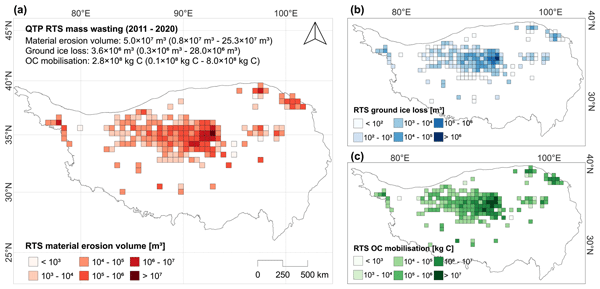
Quantifying retrogressive thaw slump mass wasting and carbon mobilisation on the Qinghai-Tibet Plateau using multi-modal remote sensing
Kathrin Maier, Zhuoxuan Xia, Lin Liu, Mark J. Lara, Jurjen van der Sluijs, Philipp Bernhard, and Irena Hajnsek
The Cryosphere, 19, 4855–4873, https://doi.org/10.5194/tc-19-4855-2025,https://doi.org/10.5194/tc-19-4855-2025, 2025
Short summary
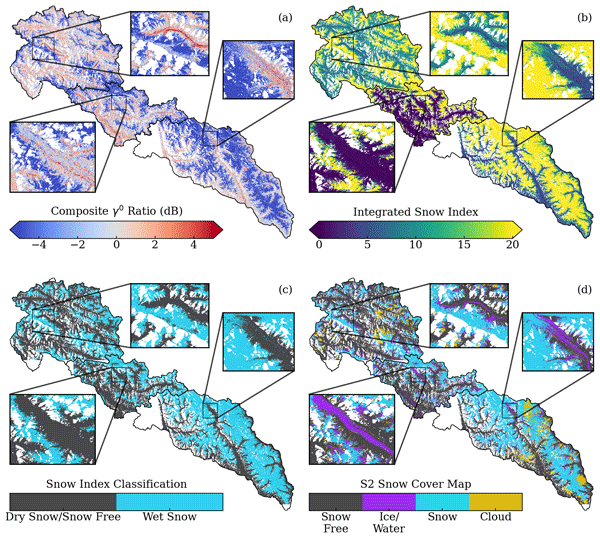
Mapping seasonal snow melting in Karakoram using SAR and topographic data
Shiyi Li, Lanqing Huang, Philipp Bernhard, and Irena Hajnsek
The Cryosphere, 19, 1621–1639, https://doi.org/10.5194/tc-19-1621-2025,https://doi.org/10.5194/tc-19-1621-2025, 2025
Short summary
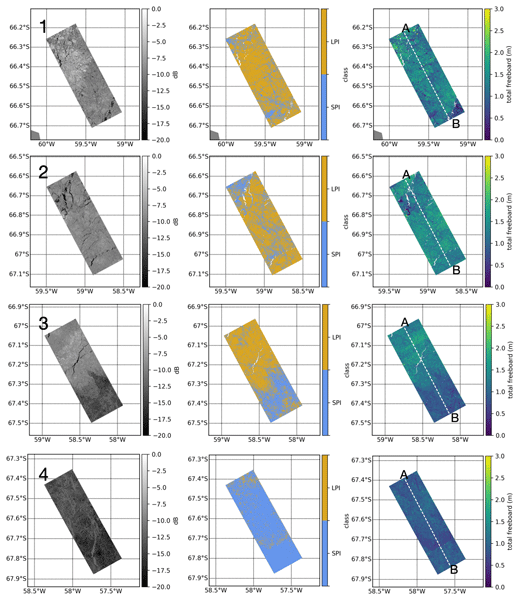
A study of sea ice topography in the Weddell and Ross seas using dual-polarimetric TanDEM-X imagery
Lanqing Huang and Irena Hajnsek
The Cryosphere, 18, 3117–3140, https://doi.org/10.5194/tc-18-3117-2024,https://doi.org/10.5194/tc-18-3117-2024, 2024
Short summary
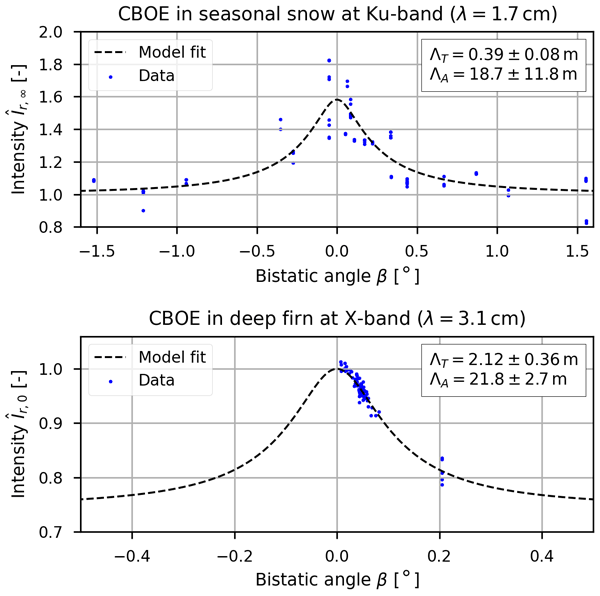
Coherent backscatter enhancement in bistatic Ku- and X-band radar observations of dry snow
Marcel Stefko, Silvan Leinss, Othmar Frey, and Irena Hajnsek
The Cryosphere, 16, 2859–2879, https://doi.org/10.5194/tc-16-2859-2022,https://doi.org/10.5194/tc-16-2859-2022, 2022
Short summary
Accelerated mobilization of organic carbon from retrogressive thaw slumps on the northern Taymyr Peninsula
Philipp Bernhard, Simon Zwieback, and Irena Hajnsek
The Cryosphere, 16, 2819–2835, https://doi.org/10.5194/tc-16-2819-2022,https://doi.org/10.5194/tc-16-2819-2022, 2022
Short summary

Cited articles

Arnold, E., Leuschen, C., Rodriguez-Morales, F., Li, J., Paden, J., Hale, R., and Keshmiri, S.: CReSIS airborne radars and platforms for ice and snow sounding, Annals of Glaciology, 61, 58–67, https://doi.org/10.1017/aog.2019.37, 2019. a
Bamler, R. and Hartl, P.: Synthetic aperture radar interferometry, Inverse Problems, 14, R1–R54, https://doi.org/10.1088/0266-5611/14/4/001, 1998. a, b, c, d, e
Banda, F., Dall, J., and Tebaldini, S.: Single and Multipolarimetric P-Band SAR Tomography of Subsurface Ice Structure, IEEE Transactions on Geoscience and Remote Sensing, 54, 2832–2845, https://doi.org/10.1109/tgrs.2015.2506399, 2016. a, b
Bolon, P., Trouvé, E., Petillot, I., Vasile, G., Gay, M., Bombrun, L., Nicolas, J.-M., Tupin, F., Landes, T., Koehl, M., and Grussenmeyer, P.: Monitoring Alpine Glaciers with ALOS SAR and Optical data, LSI 2007, https://shs.hal.science/halshs-00264871 (last access: 30 September 2025), 2007. a
Box, J. E., Fettweis, X., Stroeve, J. C., Tedesco, M., Hall, D. K., and Steffen, K.: Greenland ice sheet albedo feedback: thermodynamics and atmospheric drivers, The Cryosphere, 6, 821–839, https://doi.org/10.5194/tc-6-821-2012, 2012. a
Download
Short summary

Synthetic Aperture Radar (SAR) revealed ice features of unknown origin in southwest Greenland’s ablation zone. Using SAR techniques, we identified low-backscatter areas with surface scattering, contrasting with surrounding high-backscatter areas from the subsurface. Our theory relates the low backscatter to residual liquid water in a weathering crust and the surrounding to bare glacier ice, suggesting that long-wavelength SAR could help monitor crust formation and near-surface meltwater storage.

Share