
Articles | Volume 20, issue 11
https://doi.org/10.5194/tc-20-6839-2026
© Author(s) 2026. This work is distributed under
the Creative Commons Attribution 4.0 License.
https://doi.org/10.5194/tc-20-6839-2026
© Author(s) 2026. This work is distributed under
the Creative Commons Attribution 4.0 License.
Research article
| 
23 Nov 2026
Research article |
| 23 Nov 2026
Combining geodetic data and summer MODIS albedo anomalies for annual glacier mass balance estimation
Mattia Callegari
CORRESPONDING AUTHOR

Institute for Earth Observation, Eurac Research, Viale Druso, 1, 39100 Bolzano, Italy
Carlo Marin
Institute for Earth Observation, Eurac Research, Viale Druso, 1, 39100 Bolzano, Italy
Claudia Notarnicola
Institute for Earth Observation, Eurac Research, Viale Druso, 1, 39100 Bolzano, Italy
Thomas Schellenberger
FOSSENAI, 0494 Oslo, Norway
Related authors
Susen Shrestha, Stefano Terzi, Davide Zoccatelli, Mattia Zaramella, Marco Borga, Andrea Galletti, Mattia Callegari, Roberto Dinale, Massimiliano Pittore, and Giacomo Bertoldi
Nat. Hazards Earth Syst. Sci., 26, 5941–5955, https://doi.org/10.5194/nhess-26-5941-2026, https://doi.org/10.5194/nhess-26-5941-2026, 2026
Short summary
Short summary
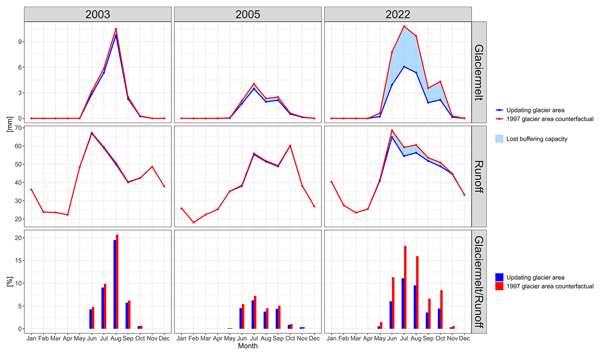
Glaciers and snow contribute to buffer river streamflow during droughts, but this function is declining under climate change. Focusing on the 2003, 2005, and 2022 droughts in the Upper Adige River Basin (Italy), we show that glacier melt contributed between 4% and 12% of summer streamflow. Compared with 1997 glacier extent, glacier contributions during the 2022 drought were 41% lower, highlighting the declining capacity of glaciers to buffer drought conditions.
Dilara Kim, Enrico Mattea, Mattia Callegari, Tomas Saks, Ruslan Kenzhebayev, Erlan Azisov, Tobias Ullmann, Martin Hoelzle, and Martina Barandun
EGUsphere, https://doi.org/10.5194/egusphere-2025-3978, https://doi.org/10.5194/egusphere-2025-3978, 2025
Short summary
Short summary
We investigated how the snowline changed on four glaciers in the Pamir and Tien Shan mountain ranges in Central Asia. For this we developed a new method of combining different types of satellite images. This detailed record of snowlines shows for the first time how glaciers are responding to climate change during the dry season on almost daily scale. Our results help to understand better when and how much meltwater stored in glaciers can be used for drinking water by people living downstream.
Susen Shrestha, Stefano Terzi, Davide Zoccatelli, Mattia Zaramella, Marco Borga, Andrea Galletti, Mattia Callegari, Roberto Dinale, Massimiliano Pittore, and Giacomo Bertoldi
Nat. Hazards Earth Syst. Sci., 26, 5941–5955, https://doi.org/10.5194/nhess-26-5941-2026, https://doi.org/10.5194/nhess-26-5941-2026, 2026
Short summary
Short summary
Glaciers and snow contribute to buffer river streamflow during droughts, but this function is declining under climate change. Focusing on the 2003, 2005, and 2022 droughts in the Upper Adige River Basin (Italy), we show that glacier melt contributed between 4% and 12% of summer streamflow. Compared with 1997 glacier extent, glacier contributions during the 2022 drought were 41% lower, highlighting the declining capacity of glaciers to buffer drought conditions.

Konstantin A. Maslov, Thomas Schellenberger, Claudio Persello, and Alfred Stein
The Cryosphere, 20, 6045–6070, https://doi.org/10.5194/tc-20-6045-2026, https://doi.org/10.5194/tc-20-6045-2026, 2026
Short summary
Short summary
Glaciers are melting worldwide, but direct measurements are spatially sparse. We developed a new model that combines mechanistic physical rules with machine learning to better estimate yearly gains and losses of ice mass across Europe. By learning local corrections to a physical melt model, the machine learning component improves accuracy and works well on glaciers not used for training. This will help produce more reliable glacier assessments and support future climate studies.
Erik Schytt Mannerfelt and Thomas Schellenberger
EGUsphere, https://doi.org/10.5194/egusphere-2026-6305, https://doi.org/10.5194/egusphere-2026-6305, 2026
This preprint is open for discussion and under review for The Cryosphere (TC).
Short summary
Short summary
Crevasses are deep cracks in glacier ice that route water to the glacier bed and endanger travel, yet are rarely mapped regionally. We trained a machine-learning model on satellite data to map visible crevasses on all Svalbard glaciers each year from 2017 to 2025. Three in four glaciers with a clear trend lost crevasses in their lower parts, yet the total area grew, likely as thinning snow cover exposed crevasses higher up. Yearly maps can help detect glacier surges and plan safe travel routes.
Katharina Theresa Scheidt, Rafael Pimentel, Paolo Deidda, Carlo Marin, Davide Gisolo, Davide Canone, María José Polo, Claudia Notarnicola, and Manuela Lehner
EGUsphere, https://doi.org/10.5194/egusphere-2026-3417, https://doi.org/10.5194/egusphere-2026-3417, 2026
Short summary
Short summary
Snowmelt can be strongly influenced by energy exchange between the atmosphere and the snow surface, but these exchanges are difficult to estimate in mountain regions. Using measurements from twelve sites across the European Alps, we assessed the effects of measurement errors and common modeling assumptions. We found that uncertainties can be large and that widely used assumptions do not always hold, highlighting the need for caution when applying these methods in complex terrain.
Tazio Strozzi, Erik Schytt Mannerfelt, Oliver Cartus, Maurizio Santoro, Thomas Schellenberger, and Andreas Kääb
The Cryosphere, 20, 1679–1697, https://doi.org/10.5194/tc-20-1679-2026, https://doi.org/10.5194/tc-20-1679-2026, 2026
Short summary
Short summary
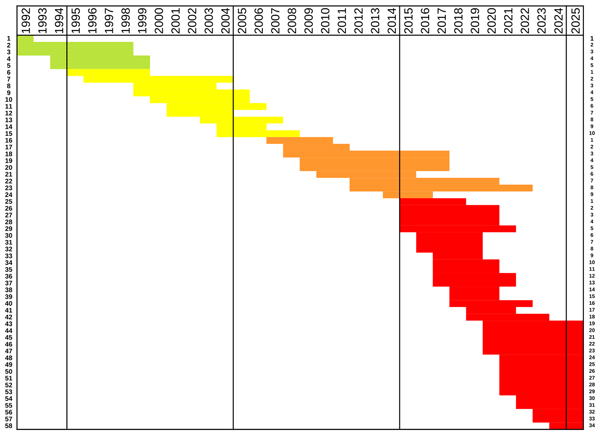
By analysing 30 years of satellite SAR (Synthetic Aperture Radar) data, we have found that the number of glacier surges over Svalbard has tripled since 2015. We show that this increase is unlikely to be explained solely by improvements in data quality or by random fluctuations in surge frequency, suggesting that this trend is caused by an external forcing mechanism. Given our incomplete understanding of surge initiation, the cause of the observed threefold increase remains however uncertain.
Valentina Premier, Francesca Moschini, Jesús Casado-Rodríguez, Davide Bavera, Carlo Marin, and Alberto Pistocchi
Hydrol. Earth Syst. Sci., 30, 1189–1220, https://doi.org/10.5194/hess-30-1189-2026, https://doi.org/10.5194/hess-30-1189-2026, 2026
Short summary
Short summary
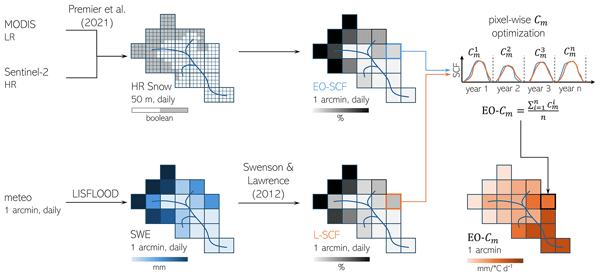
This study evaluates the snow module of LISFLOOD by replacing the discharge-calibrated snowmelt coefficient with pixel-wise values calibrated using EO (Earth Observation) snow cover fraction after standard streamflow calibration. Using a gap-filled high-resolution daily snow dataset, the approach improves snow cover representation across European basins while largely preserving discharge performance, without requiring full model recalibration.
Henning Åkesson, Kamilla Hauknes Sjursen, Thomas Vikhamar Schuler, Thorben Dunse, Liss Marie Andreassen, Mette Kusk Gillespie, Benjamin Aubrey Robson, Thomas Schellenberger, and Jacob Clement Yde
The Cryosphere, 19, 5871–5902, https://doi.org/10.5194/tc-19-5871-2025, https://doi.org/10.5194/tc-19-5871-2025, 2025
Short summary
Short summary
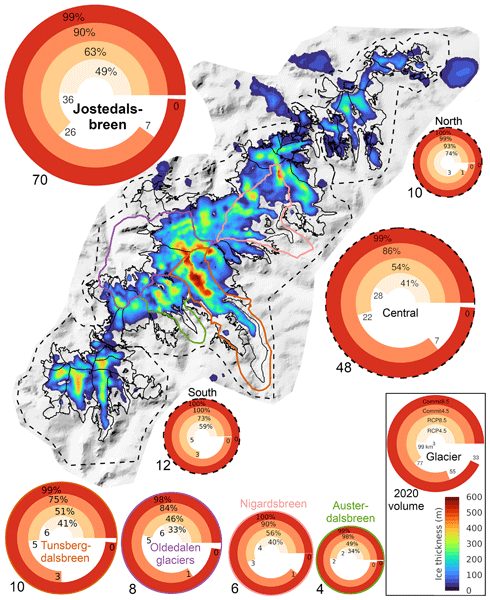
We model the historical and future evolution of the Jostedalsbreen ice cap in Norway, projecting substantial and largely irreversible mass loss for the 21st century, and that the ice cap will split into three parts. Further mass loss is in the pipeline, with a disappearance during the 22nd century under high emissions. Our study demonstrates an approach to model complex ice masses, highlights uncertainties due to precipitation, and calls for further research on long-term future glacier change.
Francesca Carletti, Carlo Marin, Chiara Ghielmini, Mathias Bavay, and Michael Lehning
The Cryosphere, 19, 5579–5612, https://doi.org/10.5194/tc-19-5579-2025, https://doi.org/10.5194/tc-19-5579-2025, 2025
Short summary
Short summary
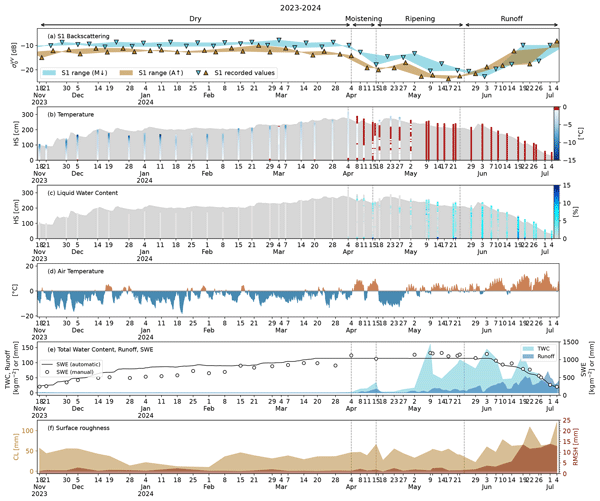
This work presents the first high-resolution dataset of wet-snow properties for satellite applications. With it, we validate links between Sentinel-1 backscatter and snowmelt stages and investigate scattering mechanisms through a radiative transfer model. We disclose the influence of liquid water content and surface roughness at different melting stages and address future challenges, such as capturing large-scale scattering mechanisms and enhancing radiative transfer modules for wet snow.
Chiara Crippa, Stefan Steger, Giovanni Cuozzo, Francesca Bearzot, Volkmar Mair, and Claudia Notarnicola
The Cryosphere, 19, 3493–3515, https://doi.org/10.5194/tc-19-3493-2025, https://doi.org/10.5194/tc-19-3493-2025, 2025
Short summary
Short summary
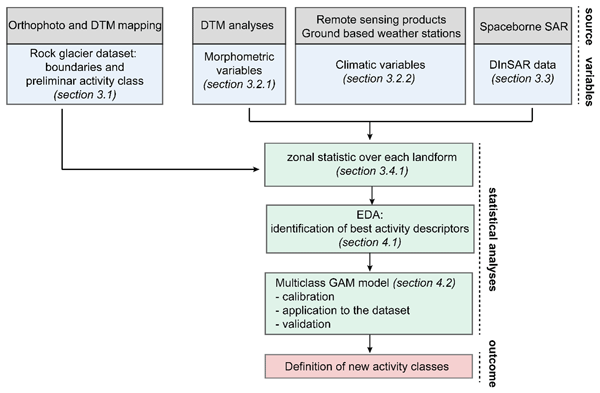
Our study, focused on South Tyrol (NE Italy), develops an updated and comprehensive activity classification system for all rock glaciers in the current regional inventory. Using multisource products, we integrate climatic, morphological, and differential interferometric synthetic aperture radar (DInSAR) data in replicable routines and multivariate statistical methods, producing a comprehensive classification based on the updated Rock Glacier Inventories and Kinematic (RGIK) 2023 guidelines. Results leave only 3.5 % of the features non-classified, as opposed to 13–18.5 % in previous studies.
Dilara Kim, Enrico Mattea, Mattia Callegari, Tomas Saks, Ruslan Kenzhebayev, Erlan Azisov, Tobias Ullmann, Martin Hoelzle, and Martina Barandun
EGUsphere, https://doi.org/10.5194/egusphere-2025-3978, https://doi.org/10.5194/egusphere-2025-3978, 2025
Short summary
Short summary
We investigated how the snowline changed on four glaciers in the Pamir and Tien Shan mountain ranges in Central Asia. For this we developed a new method of combining different types of satellite images. This detailed record of snowlines shows for the first time how glaciers are responding to climate change during the dry season on almost daily scale. Our results help to understand better when and how much meltwater stored in glaciers can be used for drinking water by people living downstream.
Riccardo Barella, Mathias Bavay, Francesca Carletti, Nicola Ciapponi, Valentina Premier, and Carlo Marin
The Cryosphere, 18, 5323–5345, https://doi.org/10.5194/tc-18-5323-2024, https://doi.org/10.5194/tc-18-5323-2024, 2024
Short summary
Short summary
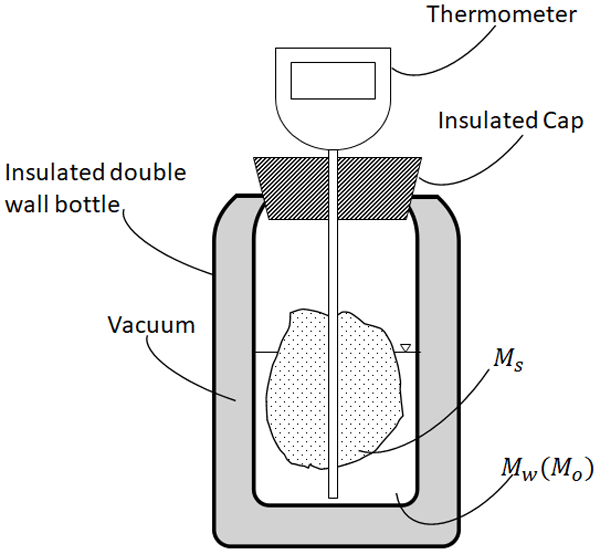
This research revisits a classic scientific technique, melting calorimetry, to measure snow liquid water content. This study shows with a novel uncertainty propagation framework that melting calorimetry, traditionally less trusted than freezing calorimetry, can produce accurate results. The study defines optimal experiment parameters and a robust field protocol. Melting calorimetry has the potential to become a valuable tool for validating other liquid water content measuring techniques.
Riccardo Barella, Mathias Bavay, Francesca Carletti, Nicola Ciapponi, Valentina Premier, and Carlo Marin
EGUsphere, https://doi.org/10.5194/egusphere-2023-2892, https://doi.org/10.5194/egusphere-2023-2892, 2024
Preprint archived
Short summary
Short summary
Unlocking the potential of melting calorimetry, traditionally confined to school labs, this paper demonstrates its application in the field for accurate measurement of liquid water content in snow. Dispelling misconceptions about measurement uncertainty, it provide a robust protocol and quantifies associated uncertainties. The findings endorse the broader adoption of melting calorimetry for quantification of snow liquid water content in operational context.
Valentina Premier, Carlo Marin, Giacomo Bertoldi, Riccardo Barella, Claudia Notarnicola, and Lorenzo Bruzzone
The Cryosphere, 17, 2387–2407, https://doi.org/10.5194/tc-17-2387-2023, https://doi.org/10.5194/tc-17-2387-2023, 2023
Short summary
Short summary
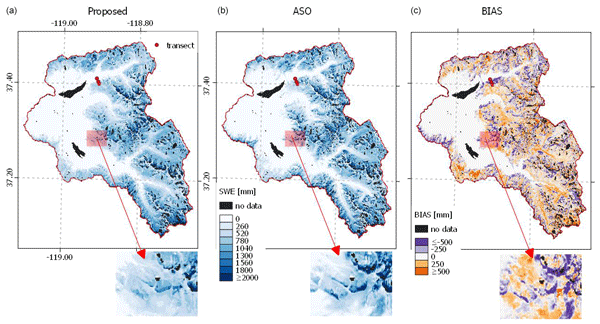
The large amount of information regularly acquired by satellites can provide important information about SWE. We explore the use of multi-source satellite data, in situ observations, and a degree-day model to reconstruct daily SWE at 25 m. The results show spatial patterns that are consistent with the topographical features as well as with a reference product. Being able to also reproduce interannual variability, the method has great potential for hydrological and ecological applications.
Tazio Strozzi, Andreas Wiesmann, Andreas Kääb, Thomas Schellenberger, and Frank Paul
Earth Syst. Sci. Data Discuss., https://doi.org/10.5194/essd-2022-44, https://doi.org/10.5194/essd-2022-44, 2022
Revised manuscript not accepted
Short summary
Short summary
Knowledge on surface velocity of glaciers and ice caps contributes to a better understanding of a wide range of processes related to glacier dynamics, mass change and response to climate. Based on the release of historical satellite radar data from various space agencies we compiled nearly complete mosaics of winter ice surface velocities for the 1990's over the Eastern Arctic. Compared to the present state, we observe a general increase of ice velocities along with a retreat of glacier fronts.
Cited articles
Andreassen, L. M., Elvehøy, H., Kjøllmoen, B., and Belart, J. M. C.: Glacier change in Norway since the 1960s – an overview of mass balance, area, length and surface elevation changes, J. Glaciol., 66, 313–328., https://doi.org/10.1017/jog.2020.10, 2020.
Banerjee, A., Singh, U., and Sheth, C.: Disaggregating geodetic glacier mass balance to annual scale using remote-sensing proxies, J. Glaciol., 69, 683–692, https://doi.org/10.1017/jog.2022.89, 2023.
Berthier, E., Floricioiu, D., Gardner, A. S., Gourmelen, N., Jakob, L., Paul, F., Treichler, D., Wouters, B., Belart, J. M. C., Dehecq, A., Dussaillant, I., Hugonnet, R., Kääb, A. M., Krieger, L., Pálsson, F., and Zemp, M.: Measuring glacier mass changes from space – a review, Rep. Prog. Phys., 86, 036801, https://doi.org/10.1088/1361-6633/acaf8e, 2023.
Berthier, E., Lebreton, J., Fontannaz, D., Hosford, S., Belart, J. M.-C., Brun, F., Andreassen, L. M., Menounos, B., and Blondel, C.: The Pléiades Glacier Observatory: high-resolution digital elevation models and ortho-imagery to monitor glacier change, The Cryosphere, 18, 5551–5571, https://doi.org/10.5194/tc-18-5551-2024, 2024.
Brun, F., Dumont, M., Wagnon, P., Berthier, E., Azam, M. F., Shea, J. M., Sirguey, P., Rabatel, A., and Ramanathan, Al.: Seasonal changes in surface albedo of Himalayan glaciers from MODIS data and links with the annual mass balance, The Cryosphere, 9, 341–355, https://doi.org/10.5194/tc-9-341-2015, 2015.
Callegari, M.: mattiacallegari/albedo-anomaly-method: Annual Glacier Mass Balance Estimates Derived from MODIS Albedo Anomalies and Geodetic Data (Version v1.0.0), Zenodo [data set] and [code], https://doi.org/10.5281/zenodo.24135318, 2026.
Cogley, J. G., Hock, R., Rasmussen, L. A., Arendt, A. A., Bauder, A., Braithwaite, R. J., Jansson, P., Kaser, G., Möller, M., and Nicholson, L.: Glossary of glacier mass balance and related terms, IHP-VII Tech. Doc. Hydrol., 86, https://wgms.ch/downloads/Cogley_etal_2011.pdf (last access: 17 November 2026), 2011.
Cremona, A., Huss, M., Landmann, J. M., Marty, M., van der Meer, M., Ginzler, C., and Farinotti, D.: Seasonal mass balance drivers for Swiss glaciers over 2010–2024 inferred from remote-sensing observations and modelling, The Cryosphere, 20, 3111–3130, https://doi.org/10.5194/tc-20-3111-2026, 2026.
Davaze, L., Rabatel, A., Arnaud, Y., Sirguey, P., Six, D., Letreguilly, A., and Dumont, M.: Monitoring glacier albedo as a proxy to derive summer and annual surface mass balances from optical remote-sensing data, The Cryosphere, 12, 271–286, https://doi.org/10.5194/tc-12-271-2018, 2018.
Davaze, L., Rabatel, A., Dufour, A., Hugonnet, R., and Arnaud, Y.: Region-Wide Annual Glacier Surface Mass Balance for the European Alps From 2000 to 2016, Front. Earth Sci., 8, https://doi.org/10.3389/feart.2020.00149, 2020.
De Ruyter De Wildt, M. S., Oerlemans, J., and Björnsson, H.: A method for monitoring glacier mass balance using satellite albedo measurements: application to Vatnajökull, Iceland, J. Glaciol., 48, 267–278, https://doi.org/10.3189/172756502781831458, 2002.
Di Mauro, B. and Fugazza, D.: Pan-Alpine glacier phenology reveals lowering albedo and increase in ablation season length, Remote Sens. Environ., 279, 113119, https://doi.org/10.1016/j.rse.2022.113119, 2022.
Dumont, M., Gardelle, J., Sirguey, P., Guillot, A., Six, D., Rabatel, A., and Arnaud, Y.: Linking glacier annual mass balance and glacier albedo retrieved from MODIS data, The Cryosphere, 6, 1527–1539, https://doi.org/10.5194/tc-6-1527-2012, 2012.
Dussaillant, I., Hugonnet, R., Huss, M., Berthier, E., Bannwart, J., Paul, F., and Zemp, M.: Annual mass change of the world's glaciers from 1976 to 2024 by temporal downscaling of satellite data with in situ observations, Earth Syst. Sci. Data, 17, 1977–2006, https://doi.org/10.5194/essd-17-1977-2025, 2025.
Feng, S., Cook, J. M., Onuma, Y., Naegeli, K., Tan, W., Anesio, A. M., Benning, L. G., and Tranter, M.: Remote sensing of ice albedo using harmonized Landsat and Sentinel-2 datasets: validation, Int. J. Remote Sens., 45, 7724–7752, https://doi.org/10.1080/01431161.2023.2291000, 2024
Greuell, W. and Oerlemans, J.: Assessment of the surface mass balance along the K-transect (Greenland ice sheet) from satellite-derived albedos, Ann. Glaciol., 42, 107–117, https://doi.org/10.3189/172756405781812682, 2005.
Greuell, W., Kohler, J., Obleitner, F., Glowacki, P., Melvold, K., Bernsen, E., and Oerlemans, J.: Assessment of interannual variations in the surface mass balance of 18 Svalbard glaciers from the Moderate Resolution Imaging Spectroradiometer/Terra albedo product, J. Geophys. Res.-Atmos., 112, https://doi.org/10.1029/2006JD007245, 2007.
Hall, D. K. and Riggs. G. A.: MODIS/Terra CGF Snow Cover Daily L3 Global 500m SIN Grid, Version 61, Boulder, Colorado USA [data set], https://doi.org/10.5067/MODIS/MOD10A1.061, 2021.
Hugonnet, R., McNabb, R., Berthier, E., Menounos, B., Nuth, C., Girod, L., Farinotti, D., Huss, M., Dussaillant, I., Brun, F., and Kääb, A.: Accelerated global glacier mass loss in the early twenty-first century, Nature, 592, 726–731, https://doi.org/10.1038/s41586-021-03436-z, 2021.
Huss, M. and Hock, R.: Global-scale hydrological response to future glacier mass loss, Nat. Clim. Change, 8, 135–140, https://doi.org/10.1038/s41558-017-0049-x, 2018.
Kokhanovsky, A. A., Lamare, M., Danne, O., Brockmann, C., Dumont, M., Picard, G., Arnaud, L., Favier, V., Jourdain, B., Le Meur, E., Di Mauro, B., Aoki, T., Niwano, M., Rozanov, V., Korkin, S., Kipfstuhl, S., Freitag, J., Hoerhold, M., Zuhr, A., Vladimirova, D. O., Faber, A.-K., Steen-Larsen, H. C., Wahl, S., Andersen, J. K., Vandecrux, B., van As, D., Mankoff, K. D., Kern, M., Zege, E., and Box, J. E.: Retrieval of snow properties from the Sentinel-3 Ocean and Land Colour Instrument, Remote Sens., 11, 2280, https://doi.org/10.3390/rs11192280, 2019.
Naegeli, K., Damm, A., Huss, M., Wulf, H., Schaepman, M. E., and Hoelzle, M.: Cross-comparison of albedo products for glacier surfaces derived from airborne and satellite (Sentinel-2 and Landsat 8) optical data, Remote Sens., 9, 110, https://doi.org/10.3390/rs9020110, 2017
Neckel, N., Kropáček, J., Bolch, T., and Hochschild, V.: Glacier mass changes on the Tibetan Plateau 2003–2009 derived from ICESat laser altimetry measurements, Environ. Res. Lett., 9, 014009, https://doi.org/10.1088/1748-9326/9/1/014009, 2014.
Marzeion, B., Jarosch, A. H., and Hofer, M.: Past and future sea-level change from the surface mass balance of glaciers, The Cryosphere, 6, 1295–1322, https://doi.org/10.5194/tc-6-1295-2012, 2012.
Maussion, F., Butenko, A., Champollion, N., Dusch, M., Eis, J., Fourteau, K., Gregor, P., Jarosch, A. H., Landmann, J., Oesterle, F., Recinos, B., Rothenpieler, T., Vlug, A., Wild, C. T., and Marzeion, B.: The Open Global Glacier Model (OGGM) v1.1, Geosci. Model Dev., 12, 909–931, https://doi.org/10.5194/gmd-12-909-2019, 2019.
Podgórski, J., Kinnard, C., Pętlicki, M., and Urrutia, R.: Performance assessment of TanDEM-X DEM for mountain glacier elevation change detection, Remote Sens., 11, 187, https://doi.org/10.3390/rs11020187, 2019.
Rabatel, A., Dedieu, J. P., and Vincent, C.: Using remote-sensing data to determine equilibrium-line altitude and mass-balance time series: Validation on three French glaciers, 1994–2002, J. Glaciol., 51, 539–546, https://doi.org/10.3189/172756505781829106, 2005.
Rabatel, A., Bermejo, A., Loarte, E., Soruco, A., Gomez, J., Leonardini, G., Vincent, C., and Sicart, J. E.: Can the snowline be used as an indicator of the equilibrium line and mass balance for glaciers in the outer tropics?, J. Glaciol., 58, 1027–1036, https://doi.org/10.3189/2012JoG12J027, 2012.
Rabatel, A., Dedieu, J. P., and Vincent, C.: Spatio-temporal changes in glacier-wide mass balance quantified by optical remote sensing on 30 glaciers in the French Alps for the period 1983–2014, J. Glaciol., 62, 1153–1166, https://doi.org/10.1017/jog.2016.113, 2016.
Rabatel, A., Sirguey, P., Drolon, V., Maisongrande, P., Arnaud, Y., Berthier, E., Davaze, L., Dedieu, J.-P., and Dumont, M.: Annual and Seasonal Glacier-Wide Surface Mass Balance Quantified from Changes in Glacier Surface State: A Review on Existing Methods Using Optical Satellite Imagery, Remote Sens., 9, 507, https://doi.org/10.3390/rs9050507, 2017.
RGI Consortium: Randolph Glacier Inventory – A Dataset of Global Glacier Outlines, Version 6. Boulder, Colorado USA. NSIDC: National Snow and Ice Data Center, https://doi.org/10.7265/4m1f-gd79, 2017.
Schmidt, L. S., Schuler, T. V., Thomas, E. E., and Westermann, S.: Meltwater runoff and glacier mass balance in the high Arctic: 1991–2022 simulations for Svalbard, The Cryosphere, 17, 2941–2963, https://doi.org/10.5194/tc-17-2941-2023, 2023.
Sirguey, P., Still, H., Cullen, N. J., Dumont, M., Arnaud, Y., and Conway, J. P.: Reconstructing the mass balance of Brewster Glacier, New Zealand, using MODIS-derived glacier-wide albedo, The Cryosphere, 10, 2465–2484, https://doi.org/10.5194/tc-10-2465-2016, 2016.
Stroeve, J. C., Box, J. E., and Haran, T.: Evaluation of the MODIS (MOD10A1) daily snow albedo product over the Greenland ice sheet, Remote Sens. Environ., 105, 155–171, https://doi.org/10.1016/j.rse.2006.06.009, 2006.
The GlaMBIE Team: Community estimate of global glacier mass changes from 2000 to 2023, Nature, 639, 382–388, https://doi.org/10.1038/s41586-024-08545-z, 2025.
Wang, Q. and Sun, W.: Seasonal Cycles of High Mountain Asia Glacier Surface Elevation Detected by ICESat-2, J. Geophys. Res.-Atmos., 127, https://doi.org/10.1029/2022JD037501, 2022.
Williamson, S. N., Copland, L., Thomson, L., and Burgess, D.: Comparing simple albedo scaling methods for estimating Arctic glacier mass balance, Remote Sens. Environ., 246, 111858, https://doi.org/10.1016/j.rse.2020.111858, 2020.
Williamson, S. N., Marshall, S. J., and Menounos, B.: Temperature mediated albedo decline portends acceleration of North American glacier mass loss, Commun. Earth Environ., 6, 555, https://doi.org/10.1038/s43247-025-02503-x, 2025.
Zemp, M., Huss, M., Thibert, E., Eckert, N., McNabb, R., Huber, J., Barandun, M., Machguth, H., Nussbaumer, S. U., Gärtner-Roer, I., Thomson, L., Paul, F., Maussion, F., Kutuzov, S., and Cogley, J. G.: Global glacier mass changes and their contributions to sea-level rise from 1961 to 2016, Nature, 568, 382–386, https://doi.org/10.1038/s41586-019-1071-0, 2019.
Zhang, Z., Han, Y., Jiang, L., Jin, S., Chen, G., and Song, Y.: Performance Evaluation of GEDI for Monitoring Changes in Mountain Glacier Elevation: A Case Study in the Southeastern Tibetan Plateau, Remote Sens., 17, 2945, https://doi.org/10.3390/rs17172945, 2025.
Zhou, Y., Wang, D., Liang, S., and He, T.: Assessment of the Suomi NPP VIIRS land surface albedo data using station measurements and high-resolution albedo maps, Remote Sens., 8, 137, https://doi.org/10.3390/rs8020137, 2016.
Short summary
We introduce a new satellite-based approach to estimate annual glacier mass balance. Using data from 2000 to 2019, we produced yearly estimates for nearly three thousand glaciers in the Alps, Scandinavia, and Svalbard. Comparison with extensive field measurements shows strong agreement, demonstrating that this method can reliably track annual glacier changes across large regions.
We introduce a new satellite-based approach to estimate annual glacier mass balance. Using data...


Altmetrics
Final-revised paper
Preprint