
Articles | Volume 20, issue 11
https://doi.org/10.5194/tc-20-6375-2026
© Author(s) 2026. This work is distributed under
the Creative Commons Attribution 4.0 License.
the Creative Commons Attribution 4.0 License.
https://doi.org/10.5194/tc-20-6375-2026
© Author(s) 2026. This work is distributed under
the Creative Commons Attribution 4.0 License.
the Creative Commons Attribution 4.0 License.
Research article
| 
10 Nov 2026
Research article |
| 10 Nov 2026
| 10 Nov 2026
A surge-detachment sequence at Dehdal Glacier in the Pamir Mountains, revealed by daily PlanetScope imagery
Mustafo Safarov
State Key Laboratory of Ecological Safety and Sustainable Development in Arid Lands, Xinjiang Institute of Ecology and Geography, Chinese Academy of Sciences, Urumqi 830011, China
Research Center for Ecology and Environment of Central Asia (Dushanbe), Dushanbe 734063, Tajikistan
Key Laboratory of GIS & RS Application Xinjiang Uygur Autonomous Region, Urumqi 830011, China
Junli Li
CORRESPONDING AUTHOR

State Key Laboratory of Ecological Safety and Sustainable Development in Arid Lands, Xinjiang Institute of Ecology and Geography, Chinese Academy of Sciences, Urumqi 830011, China
Key Laboratory of GIS & RS Application Xinjiang Uygur Autonomous Region, Urumqi 830011, China
Evan Miles
Laboratory of Hydraulics, Hydrology and Glaciology (VAW), ETH Zürich, Zürich, Switzerland
Swiss Federal Institute for Forest, Snow and Landscape Research (WSL), bâtiment ALPOLE, Sion, Switzerland
Glaciology and Geomorphodynamics Group, Department of Geography, University of Zürich, Zürich, Switzerland
Department of Geosciences, University of Fribourg, Fribourg, Switzerland
Majid Gulayozov
State Key Laboratory of Ecological Safety and Sustainable Development in Arid Lands, Xinjiang Institute of Ecology and Geography, Chinese Academy of Sciences, Urumqi 830011, China
Research Center for Ecology and Environment of Central Asia (Dushanbe), Dushanbe 734063, Tajikistan
Ruonan Li
State Key Laboratory of Ecological Safety and Sustainable Development in Arid Lands, Xinjiang Institute of Ecology and Geography, Chinese Academy of Sciences, Urumqi 830011, China
Key Laboratory of GIS & RS Application Xinjiang Uygur Autonomous Region, Urumqi 830011, China
University of Chinese Academy of Sciences, Beijing 100049, China
Ali Fazylov
Institute of Water Problems, Hydropower and Ecology of the National Academy of Sciences of Tajikistan, Dushanbe 734042, Tajikistan
Kamoliddin Nazirzoda
Center of Glaciology Agency for Hydrometeorology of the Committee for Environmental Protection under the Government of the Republic of Tajikistan, Dushanbe 734025, Tajikistan
Firdavs Vosidov
State Key Laboratory of Ecological Safety and Sustainable Development in Arid Lands, Xinjiang Institute of Ecology and Geography, Chinese Academy of Sciences, Urumqi 830011, China
State Scientific Institution “Center for Research of Glaciers of the National Academy of Sciences of Tajikistan”, Dushanbe 734025, Tajikistan
Murodkhudzha Murodov
State Key Laboratory of Ecological Safety and Sustainable Development in Arid Lands, Xinjiang Institute of Ecology and Geography, Chinese Academy of Sciences, Urumqi 830011, China
State Scientific Institution “Center for Research of Glaciers of the National Academy of Sciences of Tajikistan”, Dushanbe 734025, Tajikistan
Hofiz Navruzshoev
State Scientific Institution “Center for Research of Glaciers of the National Academy of Sciences of Tajikistan”, Dushanbe 734025, Tajikistan
Mountain Societies Research Institute, University of Central Asia, Dushanbe 734000, Tajikistan
Ardamehr Halimov
State Key Laboratory of Ecological Safety and Sustainable Development in Arid Lands, Xinjiang Institute of Ecology and Geography, Chinese Academy of Sciences, Urumqi 830011, China
Key Laboratory of GIS & RS Application Xinjiang Uygur Autonomous Region, Urumqi 830011, China
State Scientific Institution “Center for Research of Glaciers of the National Academy of Sciences of Tajikistan”, Dushanbe 734025, Tajikistan
Related authors
No articles found.
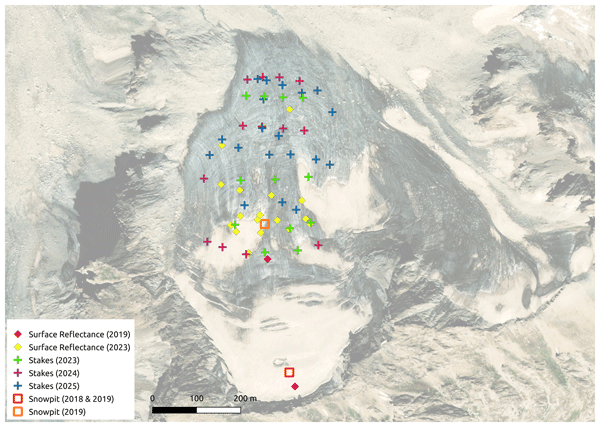
Jonas Svensson, Ramazon Rakhmonov, Kamoliddin Nazirzoda, Abdusamad Hojiev, Tamlikho Jurabekov, Amirsho Hiyoev, Davlatjon Rahimzoda, Hizbullo Kholzoda, Muzaffar Shodmonov, David Brus, Viet Le, Krista Luoma, Adriano Lemos, Germán Perez Fogwill, Meri M. Ruppel, Outi Meinander, Johan Ström, Eija Asmi, and Antti Hyvärinen
Earth Syst. Sci. Data, 18, 5697–5712, https://doi.org/10.5194/essd-18-5697-2026, https://doi.org/10.5194/essd-18-5697-2026, 2026
Short summary
Short summary
This paper presents data collected at the Zarafshon River Basin and the Hydrographic Party Glacier (GGP), Tajikistan. In annual field expeditions from 2018–2025, data has been collected on the glacier, as well as including meteorological measurements and aerosols. Presented results highlight the environmental conditions that are driving environmental change in Central Asia.
Shaoting Ren, Evan S. Miles, Michael McCarthy, Achille Jouberton, Thomas E. Shaw, Pascal Buri, Marin Kneib, Prateek Gantayat, Anneli Guthke, and Francesca Pellicciotti
EGUsphere, https://doi.org/10.5194/egusphere-2026-2524, https://doi.org/10.5194/egusphere-2026-2524, 2026
Short summary
Short summary
Local meteorology is curial to understand glaciers’ response to climate change, yet is hard to quantify due to rare measurements. By combining physical modeling and satellite observations, this study develops a new inference framework to accurately estimate on-glacier temperature and precipitation, therefore derive reliable seasonal glacier melt. Reliable accuracy of this framework paves a way to map these key two meteorological variables for regional and global unmonitored glacier.
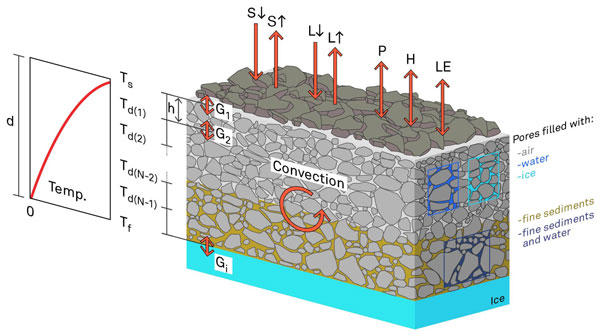
Francesca Pellicciotti, Adrià Fontrodona-Bach, David R. Rounce, Catriona L. Fyffe, Leif S. Anderson, Álvaro Ayala, Ben W. Brock, Pascal Buri, Stefan Fugger, Koji Fujita, Prateek Gantayat, Alexander R. Groos, Walter Immerzeel, Marin Kneib, Christoph Mayer, Shelley MacDonell, Michael McCarthy, James McPhee, Evan Miles, Heather Purdie, Ekaterina Rets, Akiko Sakai, Thomas E. Shaw, Jakob Steiner, Patrick Wagnon, and Alex Winter-Billington
The Cryosphere, 20, 1895–1928, https://doi.org/10.5194/tc-20-1895-2026, https://doi.org/10.5194/tc-20-1895-2026, 2026
Short summary
Short summary
Rock debris covers many of the world glaciers, modifying the transfer of atmospheric energy to the debris and into the ice. Models of different complexity simulate this process, and we compare 15 models at 9 sites to show that the most complex models at the debris-atmosphere interface have the highest performance. However, we lack debris properties and their derivation from measurements is ambiguous, hindering global modelling and calling for both model development and data collection.
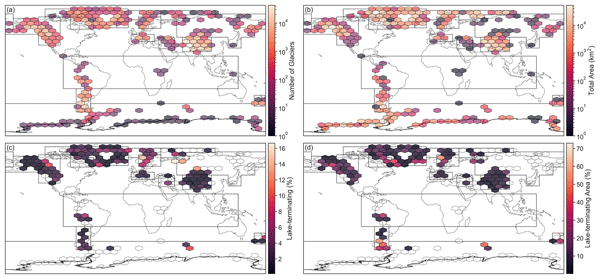
Jakob Steiner, William Armstrong, Will Kochtitzky, Robert McNabb, Rodrigo Aguayo, Tobias Bolch, Fabien Maussion, Vibhor Agarwal, Iestyn Barr, Nathaniel R. Baurley, Mike Cloutier, Katelyn DeWater, Frank Donachie, Yoann Drocourt, Siddhi Garg, Gunjan Joshi, Byron Guzman, Stanislav Kutuzov, Thomas Loriaux, Caleb Mathias, Brian Menounos, Evan Miles, Aleksandra Osika, Kaleigh Potter, Adina Racoviteanu, Brianna Rick, Miles Sterner, Guy D. Tallentire, Levan Tielidze, Rebecca White, Kunpeng Wu, and Whyjay Zheng
Earth Syst. Sci. Data, 18, 1665–1681, https://doi.org/10.5194/essd-18-1665-2026, https://doi.org/10.5194/essd-18-1665-2026, 2026
Short summary
Short summary
Many mountain glaciers around the world flow into lakes – exactly how many however, has never been mapped. Across a large team of experts we have now identified all glaciers that end in lakes. Only about 1% do so, but they are generally larger than those which end on land. This is important to understand, as lakes can influence the behaviour of glacier ice, including how fast it disappears. This new dataset allows us to better model glaciers at a global scale, accounting for the effect of lakes.
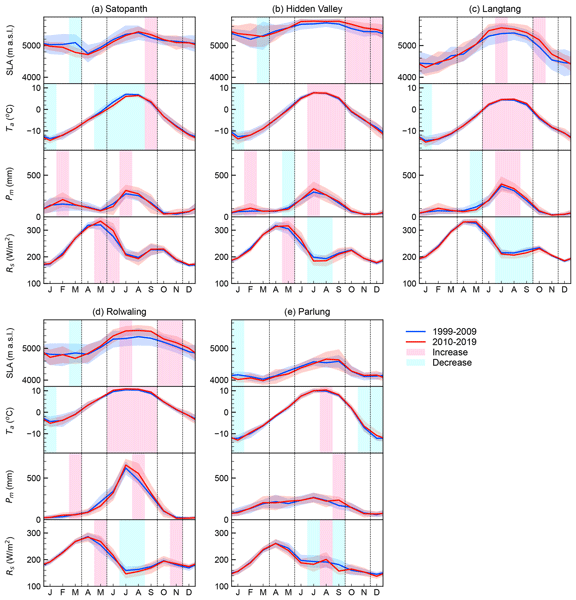
Orie Sasaki, Evan S. Miles, Francesca Pellicciotti, Akiko Sakai, and Koji Fujita
The Cryosphere, 19, 5283–5298, https://doi.org/10.5194/tc-19-5283-2025, https://doi.org/10.5194/tc-19-5283-2025, 2025
Short summary
Short summary
This study adapts a method to detect snowline altitude (SLA) using Google Earth Engine with high-resolution satellite imagery. Applying this method to five glaciated watersheds in the Himalayas reveals regional consistencies and differences in snow dynamics, as well as 20-year trends of snowline increases (3 catchments) and decreases (1) and no trend (1). We investigate the controls of these dynamics by analyzing climatic factors and topographic characteristics.
Adrià Fontrodona-Bach, Lars Groeneveld, Evan Miles, Michael McCarthy, Thomas Shaw, Vicente Melo Velasco, and Francesca Pellicciotti
Earth Syst. Sci. Data, 17, 4213–4234, https://doi.org/10.5194/essd-17-4213-2025, https://doi.org/10.5194/essd-17-4213-2025, 2025
Short summary
Short summary
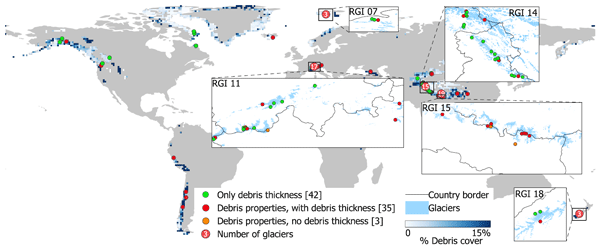
Glaciers with a layer of rocky debris on their surfaces are distinct from clean-ice glaciers, with debris mostly insulating the glacier ice. However, debris data are scarce. We present the Debris Database (DebDaB), a database of debris thickness and physical properties of debris, with data from 84 glaciers in 13 global glacier regions compiled from 172 sources and including previously unpublished data. DebDaB serves as an open central repository for the scientific community to do research on debris-covered glaciers.
Marin Kneib, Amaury Dehecq, Adrien Gilbert, Auguste Basset, Evan S. Miles, Guillaume Jouvet, Bruno Jourdain, Etienne Ducasse, Luc Beraud, Antoine Rabatel, Jérémie Mouginot, Guillem Carcanade, Olivier Laarman, Fanny Brun, and Delphine Six
The Cryosphere, 18, 5965–5983, https://doi.org/10.5194/tc-18-5965-2024, https://doi.org/10.5194/tc-18-5965-2024, 2024
Short summary
Short summary
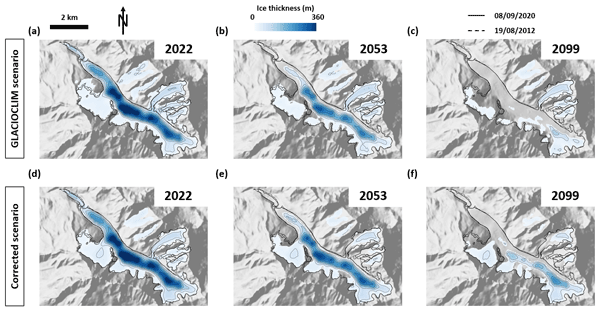
Avalanches contribute to increasing the accumulation on mountain glaciers by redistributing snow from surrounding mountains slopes. Here we quantified the contribution of avalanches to the mass balance of Argentière Glacier in the French Alps, by combining satellite and field observations to model the glacier dynamics. We show that the contribution of avalanches locally increases the accumulation by 60–70 % and that accounting for this effect results in less ice loss by the end of the century.
Xiaoyu Yu, Jun Pan, Jiangong Xu, and Junli Li
Int. Arch. Photogramm. Remote Sens. Spatial Inf. Sci., XLVIII-3-2024, 601–608, https://doi.org/10.5194/isprs-archives-XLVIII-3-2024-601-2024, https://doi.org/10.5194/isprs-archives-XLVIII-3-2024-601-2024, 2024
Chuanxi Zhao, Wei Yang, Evan Miles, Matthew Westoby, Marin Kneib, Yongjie Wang, Zhen He, and Francesca Pellicciotti
The Cryosphere, 17, 3895–3913, https://doi.org/10.5194/tc-17-3895-2023, https://doi.org/10.5194/tc-17-3895-2023, 2023
Short summary
Short summary
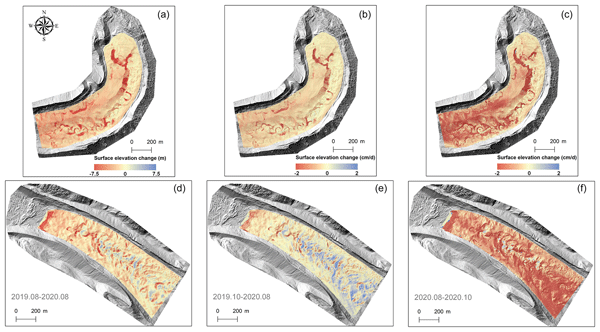
This paper quantifies the thinning and surface mass balance of two neighbouring debris-covered glaciers in the southeastern Tibetan Plateau during different seasons, based on high spatio-temporal resolution UAV-derived (unpiloted aerial
vehicle) data and in situ observations. Through a comparison approach and high-precision results, we identify that the glacier dynamic and debris thickness are strongly related to the future fate of the debris-covered glaciers in this region.
Marin Kneib, Evan S. Miles, Pascal Buri, Stefan Fugger, Michael McCarthy, Thomas E. Shaw, Zhao Chuanxi, Martin Truffer, Matthew J. Westoby, Wei Yang, and Francesca Pellicciotti
The Cryosphere, 16, 4701–4725, https://doi.org/10.5194/tc-16-4701-2022, https://doi.org/10.5194/tc-16-4701-2022, 2022
Short summary
Short summary
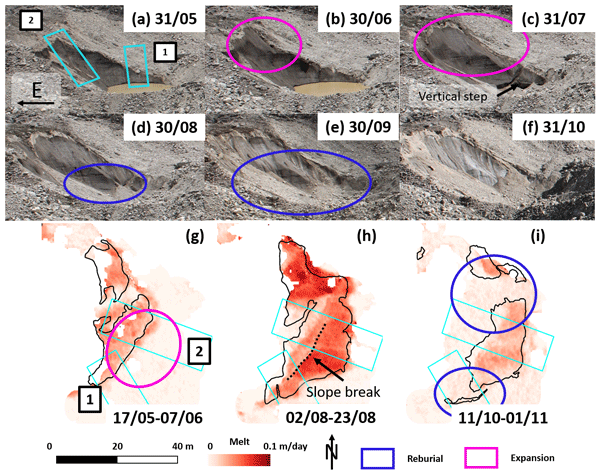
Ice cliffs are believed to be important contributors to the melt of debris-covered glaciers, but this has rarely been quantified as the cliffs can disappear or rapidly expand within a few weeks. We used photogrammetry techniques to quantify the weekly evolution and melt of four cliffs. We found that their behaviour and melt during the monsoon is strongly controlled by supraglacial debris, streams and ponds, thus providing valuable insights on the melt and evolution of debris-covered glaciers.

Loris Compagno, Matthias Huss, Evan Stewart Miles, Michael James McCarthy, Harry Zekollari, Amaury Dehecq, Francesca Pellicciotti, and Daniel Farinotti
The Cryosphere, 16, 1697–1718, https://doi.org/10.5194/tc-16-1697-2022, https://doi.org/10.5194/tc-16-1697-2022, 2022
Short summary
Short summary
We present a new approach for modelling debris area and thickness evolution. We implement the module into a combined mass-balance ice-flow model, and we apply it using different climate scenarios to project the future evolution of all glaciers in High Mountain Asia. We show that glacier geometry, volume, and flow velocity evolve differently when modelling explicitly debris cover compared to glacier evolution without the debris-cover module, demonstrating the importance of accounting for debris.
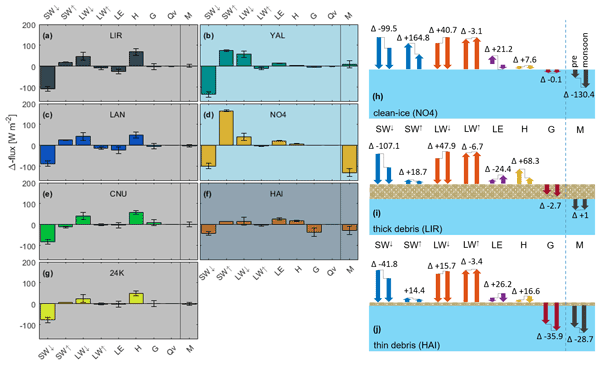
Stefan Fugger, Catriona L. Fyffe, Simone Fatichi, Evan Miles, Michael McCarthy, Thomas E. Shaw, Baohong Ding, Wei Yang, Patrick Wagnon, Walter Immerzeel, Qiao Liu, and Francesca Pellicciotti
The Cryosphere, 16, 1631–1652, https://doi.org/10.5194/tc-16-1631-2022, https://doi.org/10.5194/tc-16-1631-2022, 2022
Short summary
Short summary
The monsoon is important for the shrinking and growing of glaciers in the Himalaya during summer. We calculate the melt of seven glaciers in the region using a complex glacier melt model and weather data. We find that monsoonal weather affects glaciers that are covered with a layer of rocky debris and glaciers without such a layer in different ways. It is important to take so-called turbulent fluxes into account. This knowledge is vital for predicting the future of the Himalayan glaciers.
Cited articles
Agency for Hydrometeorology: Press conference with representatives of national television and radio on the pulsation of the Dehdal (Didal) Glacier, Committee for Environmental Protection under the Government of the Republic of Tajikistan, https://www.meteo.tj/en/news/2025/10/31/-301 (last access: 19 October 2026), 2025.
Altena, B., Scambos, T., Fahnestock, M., and Kääb, A.: Extracting recent short-term glacier velocity evolution over southern Alaska and the Yukon from a large collection of Landsat data, The Cryosphere, 13, 795–814, https://doi.org/10.5194/tc-13-795-2019, 2019.
Asia-Plus: A large section of a glacier in the Ismoili Somoni mountain range has detached in Tojikobod, Facebook video, https://www.facebook.com/watch/?v=24908973212120451, 28 October 2025.
Baggio, T., Martini, M., Bettella, F., and D'Agostino, V.: Debris flow and debris flood hazard assessment in mountain catchments, Catena, 245, 108338, https://doi.org/10.1016/j.catena.2024.108338, 2024.
Benn, D. I., Bolch, T., Hands, K., Gulley, J., Luckman, A., Nicholson, L. I., Quincey, D., Thompson, S., Toumi, R., and Wiseman, S.: Response of debris-covered glaciers in the Mount Everest region to recent warming and implications for outburst flood hazards, Earth-Sci. Rev., 114, 156–174, https://doi.org/10.1016/j.earscirev.2012.03.008, 2012.
Benn, D. I., Fowler, A. C., Hewitt, I., and Sevestre, H.: A general theory of glacier surges, J. Glaciol., 65, 701–716, https://doi.org/10.1017/jog.2019.62, 2019.
Beraud, L., Brun, F., Dehecq, A., Hugonnet, R., and Shekhar, P.: Glacier surge monitoring from temporally dense elevation time series: application to an ASTER dataset over the Karakoram region, The Cryosphere, 19, 5075–5094, https://doi.org/10.5194/tc-19-5075-2025, 2025.
Bhambri, R., Hewitt, K., Kawishwar, P., and Pratap B.: Surge-type and surge-modified glaciers in the Karakoram, Sci. Rep., 7, 15391, https://doi.org/10.1038/s41598-017-15473-8, 2017.
Clapuyt, F., Vanacker, V., Schlunegger, F., and Van Oost, K.: Unravelling earth flow dynamics with 3-D time series derived from UAV-SfM models, Earth Surf. Dynam., 5, 791–806, https://doi.org/10.5194/esurf-5-791-2017, 2017.
Clarke, G. K. C.: Fast glacier flow: ice streams, surging, and tidewater glaciers, J. Geophys. Res., 92, 8835–8841, https://doi.org/10.1029/JB092iB09p08835, 1987.
Copland, L., Sylvestre, T., Bishop, M. P., Shroder, J. F., Seong, Y. B., Owen, L. A., and Kamp, U.: Expanded and recently increased glacier surging in the Karakoram, Arct. Antarct. Alp. Res., 43, 503–516, https://doi.org/10.1657/1938-4246-43.4.503, 2011.
Dehecq, A., Gourmelen, N., and Trouve, E.: Deriving large-scale glacier velocities from a complete satellite archive: application to the Pamir–Karakoram–Himalaya, Remote Sens. Environ., 162, 55–66, https://doi.org/10.1016/j.rse.2015.01.031, 2015.
Delaney, I. and Anderson, L. S.: Debris cover limits subglacial erosion and promotes till accumulation, Geophys. Res. Lett., 49, e2022GL099049, https://doi.org/10.1029/2022GL099049, 2022.
Desinov, L. V.: Above the Glaciers of the Pamirs: Following the Route of V. I. Lipskiy's Expedition, Priroda, 2, 53–65, 1984.
Desinov, S. L.: Recent glacier movements in the western part of the Peter the Great Ridge (Pamir), Earth's Cryosphere, 25, 47–56, https://doi.org/10.15372/KZ20210405, 2021.
Faillettaz, J., Funk, M., and Vincent, C. : Avalanching glacier instabilities: a review of processes and early warning perspectives, Rev. Geophys., 53, 203–224, https://doi.org/10.1002/2014RG000466, 2015.
Farinotti, D., Immerzeel, W. W., de Kok, R. J., Quincey, D. J., and Dehecq, A.: Manifestations and mechanisms of the Karakoram glacier anomaly, Nat. Geosci., 13, 8–16, https://doi.org/10.1038/s41561-019-0513-5, 2020.
Feroz, A., Liang, S., Li, G., Li, X., Rahman, Z. U., and Yang, B.: Debris-covered glaciers mapping based on machine learning and multi-source satellite images over Eastern Pamir, Big Earth Data, 9, 265–297, https://doi.org/10.1080/20964471.2025.2463726, 2025.
Fowler, A. C., Murray, T., and Ng, F. S. L.: Thermally controlled glacier surging. J. Glaciol., 47, 527–538, https://doi.org/10.3189/172756501781831792, 2001.
Gilbert, A., Leinss, S., Kargel, J., Kääb, A., Gascoin, S., Leonard, G., Berthier, E., Karki, A., and Yao, T.: Mechanisms leading to the 2016 giant twin glacier collapses, Aru Range, Tibet, The Cryosphere, 12, 2883–2900, https://doi.org/10.5194/tc-12-2883-2018, 2018.
Goerlich, F., Bolch, T., and Paul, F.: More dynamic than expected: an updated survey of surging glaciers in the Pamir, Earth Syst. Sci. Data, 12, 3161–3176, https://doi.org/10.5194/essd-12-3161-2020, 2020.
Guillet, G., King, O., Lv, M., Ghuffar, S., Benn, D., Quincey, D., and Bolch, T.: A regionally resolved inventory of High Mountain Asia surge-type glaciers, derived from a multi-factor remote sensing approach, The Cryosphere, 16, 603–623, https://doi.org/10.5194/tc-16-603-2022, 2022.
Guo, L., Li, J., Dehecq, A., Li, Z., Li, X., and Zhu, J.: A new inventory of High Mountain Asia surging glaciers derived from multiple elevation datasets since the 1970s, Earth Syst. Sci. Data, 15, 2841–2861, https://doi.org/10.5194/essd-15-2841-2023, 2023.
Haeberli, W., Schaub, Y., and Huggel, C.: Increasing risks related to landslides from degrading permafrost into new lakes in deglaciating mountain ranges, Geomorphology, 293, 405–417, https://doi.org/10.1016/j.geomorph.2016.02.009, 2017.
Heid, T. and Kääb, A.: Evaluation of existing image matching methods for deriving glacier surface displacements globally from optical satellite imagery, Remote Sens. Environ., 118, 339–355, https://doi.org/10.1016/j.rse.2011.11.024, 2012.
Hersbach, H., Bell, B., Berrisford, P., Hirahara, S., Horányi, A., Muñoz Sabater, J., Nicolas, J., Peubey, C., Radu, R., Schepers, D., Simmons, A., Soci, C., Abdalla, S., Abellan, X., Balsamo, G., Bechtold, P., Biavati, G., Bidlot, J., Bonavita, M., De Chiara, G., Dahlgren, P., Dee, D., Diamantakis, M., Dragani, R., Flemming, J., Forbes, R., Fuentes, M., Geer, A., Haimberger, L., Healy, S., Hogan, R. J., Hólm, E., Janisková, M., Keeley, S., Laloyaux, P., Lopez, P., Lupu, C., Radnoti, G., Rosnay, P., Rozum, I., Vamborg, F., Villaume, S., and Thépaut, J.-N.: The ERA5 global reanalysis, Q. J. Roy. Meteor. Soc., 146, 1999–2049, https://doi.org/10.1002/qj.3803, 2020.
Immerzeel, W. W., Kraaijenbrink, P. D., Shea, J. M., Shrestha, A. B., Pellicciotti, F., Bierkens, M. F., and de Jong, S. M.: High-resolution monitoring of Himalayan glacier dynamics using unmanned aerial vehicles, Remote Sens. Environ., 150, 93–103, https://doi.org/10.1016/j.rse.2014.04.025, 2014.
Jacquemart, M., Loso, M., Leopold, M., Welty, E., Berthier, E., Hansen, J. S., Sykes J., and Tiampo, K.: What drives large-scale glacier detachments? Insights from Flat Creek glacier, St. Elias mountains, Alaska, Geology, 48, 703–707, https://doi.org/10.1130/G47211.1, 2020.
Jiskoot, H.: Glacier surging, in: Encyclopaedia of Snow, Ice and Glaciers, edited by: Singh, V. P., Singh, P., and Haritashya, U. K., Springer, Heidelberg, 415–428, https://doi.org/10.1007/978-90-481-2642-2_559, 2011.
Jouberton, A., Shaw, T. E., Miles, E., Kneib, M., Fugger, S., Buri, P., McCarthy, M., Kayumov, A., Navruzshoev, H., Halimov, A., Kabutov, K., Homidov, F., and Pellicciotti, F.: Snowfall decrease in recent years undermines glacier health and meltwater resources in the Northwestern Pamirs, Commun. Earth Environ., 6, 691, https://doi.org/10.1038/s43247-025-02611-8, 2025.
Kääb, A.: Remote sensing of mountain glaciers and permafrost creep, University of Zürich, Phys. Geogr. Ser., 48, ISBN 978-3-85543-244-8, 2005.
Kääb, A., Jacquemart, M., Gilbert, A., Leinss, S., Girod, L., Huggel, C., Falaschi, D., Ugalde, F., Petrakov, D., Chernomorets, S., Dokukin, M., Paul, F., Gascoin, S., Berthier, E., and Kargel, J. S.: Sudden large-volume detachments of low-angle mountain glaciers – more frequent than thought?, The Cryosphere, 15, 1751–1785, https://doi.org/10.5194/tc-15-1751-2021, 2021.
Kääb, A., Aga, J., Treichler, D., Girod, L., and Chao, W.-A.: Recent giant detachment of a glacier on the Tibetan plateau provoked by its frozen tongue, Communications Earth & Environment, 7, 74, https://doi.org/10.1038/s43247-025-03125-z, 2026.
Kamb, B., Raymond, C. F., Harrison, W. D., Engelhardt, H., Echelmeyer, K. A., Humphrey, N., Brugman, M. M., and Pfeffer, T.: Glacier surge mechanism: 1982–1983 surge of Variegated Glacier, Alaska, Science, 227, 469–479, https://doi.org/10.1126/science.227.4686.469, 1985.
Kotlyakov, V. M., Desinov, L. V., Desinov, S. L., and Rudakov V. A.: Surges of the Pamir glaciers in the first 20 years of the 21st century, Dokl. Earth Sci., 495, 854–857, https://doi.org/10.1134/S1028334X20110082, 2020.
Lamsters, K., Ješkins, J., Sobota, I., Karušs, J., and Džeriņš, P.: Surface characteristics, elevation change, and velocity of high-Arctic valley glacier from repeated high-resolution UAV photogrammetry, Remote Sens., 14, 1029, https://doi.org/10.3390/rs14041029, 2022.
Leinss, S., Bernardini, E., Jacquemart, M., and Dokukin, M.: Glacier detachments and rock-ice avalanches in the Petra Pervogo range, Tajikistan (1973–2019), Nat. Hazards Earth Syst. Sci., 21, 1409–1429, https://doi.org/10.5194/nhess-21-1409-2021, 2021.
Li, G., Lv, M., Quincey, D. J., Taylor, L. S., Li, X., Yan, S., Sun, Y., and Guo, H.: Characterizing the surge behaviour and associated ice-dammed lake evolution of the Kyagar Glacier in the Karakoram, The Cryosphere, 17, 2891–2907, https://doi.org/10.5194/tc-17-2891-2023, 2023.
Lipskiy, V. I.: Mountainous Bukhara: results of three-year journeys to Central Asia in 1896, 1897 and 1899. Part 2: Gissar, Peter the Great Ridge, Alay, St. Petersburg, https://books.google.co.in/books?id=bsZFAQAAMAAJ&redir_esc=y (last access: 13 October 2026), 1902.
Lovell, H., Benn, D. I., Jiskoot, H., Stokes, C. R., Flowers, G. E., Guillet, G., Mannerfelt, E. S., Falaschi, D., Kääb, A., King, O., Benediktsson, Í. Ö., Bhambri, R., Lv, M., Muhammad, S., and Luckman, A.: Glacier surging and surge-related hazards in a changing climate, Nat. Rev. Earth Environ., https://doi.org/10.1038/s43017-025-00757-9, 2026.
Lv, M., Guo, H., Lu, X., Liu, G., Yan, S., Ruan, Z., Ding, Y., and Quincey, D. J.: Characterizing the behaviour of surge- and non-surge-type glaciers in the Kingata Mountains, eastern Pamir, from 1999 to 2016, The Cryosphere, 13, 219–236, https://doi.org/10.5194/tc-13-219-2019, 2019.
Meier, M. F. and Post, A.: What are glacier surges?, Can. J. Earth Sci., 6, 807–817, https://doi.org/10.1139/e69-081, 1969.
Meng, Z., Lyu, L., Xu, M., Yu, G., Ma, C., Wang, Z., and Stoffel, M.: Effects of frequent debris flows on barrier lake formation, sedimentation and vegetation disturbance, Palongzangbo River, Tibetan Plateau, Catena, 220, 106697, https://doi.org/10.1016/j.catena.2022.106697, 2023.
Mishra, A., Nainwal, H. C., Bolch, T., Shah, S. S., and Shankar, R.: Glacier inventory and glacier changes (1994–2020) in the Upper Alaknanda Basin, Central Himalaya, J. Glaciol., 69, 591–606, https://doi.org/10.1017/jog.2022.87, 2023.
Muhammad, S., Li, J., Steiner, J. F., Shrestha, F., Shah, G. M., Berthier, E., and Tian, L.: A holistic view of Shisper Glacier surge and outburst floods: from physical processes to downstream impacts, Geomat. Nat. Haz. Risk, 12, 2755–2775, https://doi.org/10.1080/19475705.2021.1975833, 2021.
Murodov, M., Li, L., Safarov, M., Lv, M., Murodov, A., Gulakhmadov, A., Khusrav, K., and Qiu, Y.: A comprehensive examination of the Medvezhiy Glacier's surges in West Pamir (1968–2023), Remote Sens., 16, 1730, https://doi.org/10.3390/rs16101730, 2024.
Murray, T., Strozzi, T., Luckman, A., Jiskoot, H., and Christakos, P.: Is there a single surge mechanism? Contrasts in dynamics between glacier surges in Svalbard and other regions, J. Geophys. Res., 108, 2237, https://doi.org/10.1029/2002JB001906, 2003.
Nanni, U., Bouchayer, C., Akesson, H., Lefeuvre, P.-M., Mannerfelt, E. S., Köhler, A., Gagliardini, O., Kohler, J., Schmidt, L. S., Hult, J., Renard, F., and Schuler, T. V.: Observed positive feedback between surface ablation and crevasse formation drives glacier acceleration and potential surge, Nat. Commun., 16, 11227, https://doi.org/10.1038/s41467-025-66349-9, 2025.
Narzikulov, I. K. and Stanyukovich, K. V. (Eds.): Atlas of the Tadzhik Soviet Socialist Republic, GUGK, Dushanbe and Moscow, https://search.rsl.ru/ru/record/01009927785 (last access: 23 July 2026), 1968.
Osipova, G., Tchetinnikov, A., and Rudak, M.: Catalogue of surging glaciers of Pamir, Mater. Glyatsiol. Issled., 85, 3–136, 1998.
Paul, F., Bolch, T., Briggs, K., Kääb, A., McMillan, M., McNabb, R., Nagler, T., Nuth, C., Rastner, P., Strozzi, T., and Wuite, J.: Error sources and guidelines for quality assessment of glacier area, elevation change, and velocity products derived from satellite data in the Glaciers_cci project, Remote Sens. Environ., 203, 256–275, https://doi.org/10.1016/j.rse.2017.08.038, 2017.
Planet Labs PBC: PlanetScope imagery product documentation, https://docs.planet.com/data/imagery/planetscope/ (last access: 20 January 2026), 2026.
Quincey, D. J., Braun, M., Glasser, N. F., Bishop, M. P., Hewitt, K., and Luckman, A.: Karakoram glacier surge dynamics, Geophys. Res. Lett., 38, L18504, https://doi.org/10.1029/2011GL049004, 2011.
Ravier, É., Lelandais, T., Vérité, J., and Bourgeois, O.: Variations in hydraulic efficiency of the subglacial drainage landsystem control surging and streaming regimes of outlet glaciers, J. Glaciol., 69, 860–878, https://doi.org/10.1017/jog.2022.107, 2023.
Raymond, C. F.: How do glaciers surge? A review., J. Geophys. Res., 92, 9121–9134, https://doi.org/10.1029/JB092iB09p09121, 1987.
RGI Consortium: Randolph Glacier Inventory – a dataset of global glacier outlines, version 6, NSIDC [data set], Boulder, CO, USA, https://doi.org/10.7265/4m1f-gd79, 2017.
RGI Consortium: Randolph Glacier Inventory – a dataset of global glacier outlines, version 7, NSIDC [data set], Boulder, CO, USA, https://doi.org/10.5067/F6JMOVY5NAVZ, 2023.
Rototaev, K. P.: Nastupaniye lednika Didal' na Pamire [Advance of Lednik Didal' in the Pamir], Materialy Glatsiologicheskikh Issledovanii, 24, 188, http://geolibrary.ru/sites/default/files/2020-11/24.pdf (last access: 19 October 2026), 1974.
Safarov, M.: Derived datasets for the 2025–2026 surge of Dehdal Glacier (Pamir Mountains, Tajikistan), Zenodo [data set], https://doi.org/10.5281/zenodo.19052839, 2026.
Safarov, M., Kang, S., Murodov, M., Banerjee, A., Navruzshoev, H., Gulayozov, M., Fazylov, A., and Vosidov, F.: Quantifying glacier surging and associated lake dynamics in Amu Darya River basin using UAV and remote sensing data, J. Mt. Sci., 21, 2967–2985, https://doi.org/10.1007/s11629-023-8538-z, 2024a.
Safarov, M., Kang, S., Fazylov, A., Gulayozov, M., Banerjee, A., Navruzshoev, H., Chen, P., Xue, Y., and Murodov, M.: Estimating glacier dynamics and supraglacial lakes together with associated regional hazards using high-resolution datasets in the Pamir, J. Mt. Sci., 21, 3767–3788, https://doi.org/10.1007/s11629-024-8936-x, 2024b.
Safarov, M., Li, J., Gulayozov, M., Fazylov, A., Banerjee, A., Li, R., Halimov, A., Ahmad, Z., and Murodov, M.: Surge-type glacier activity in the Tajik Pamirs from 2000 to 2024, Global Planet. Change, 263, 105543, https://doi.org/10.1016/j.gloplacha.2026.105543, 2026.
Safarov, M. S. and Fazylov, A. R.: Remote sensing and monitoring of mudflow-prone areas in the mountainous territories of Tajikistan, Promexpo, Dushanbe, 192 pp., 2023.
Scambos, T. A., Dutkiewicz, M. J., Wilson, J. C., and Bindschadler, R. A.: Application of image cross-correlation to the measurement of glacier velocity using satellite image data, Remote Sens. Environ., 42, 177–186, https://doi.org/10.1016/0034-4257(92)90101-O, 1992.
Sevestre, H. and Benn, D. I.: Climatic and geometric controls on the global distribution of surge-type glaciers: implications for a unifying model of surging, J. Glaciol., 61, 646–662, https://doi.org/10.3189/2015JoG14J136, 2015.
Sevestre, H., Benn, D. I., Hulton, N. R. J., and Bælum, K.: Thermal structure of Svalbard glaciers and implications for thermal switch models of glacier surging, J. Geophys. Res.-Earth Surf., 120, 2220–2236, https://doi.org/10.1002/2015JF003517, 2015.
Strozzi, T., Mannerfelt, E. S., Cartus, O., Santoro, M., Schellenberger, T., and Kääb, A.: Glacier surge activity over Svalbard from 1992 to 2025 interpreted using heritage satellite radar missions and Sentinel-1, The Cryosphere, 20, 1679–1697, https://doi.org/10.5194/tc-20-1679-2026, 2026.
Suslov, V. F.: Surges and collapses of Didal' Glacier in 1974, Materialy Glatsiologicheskikh Issledovanii, 24, 189–191, 1974.
Tarca, G., Hoelzle, M., and Guglielmin, M.: Using PlanetScope images to investigate the evolution of small glaciers in the Alps, Remote Sens. Appl. Soc. Environ., 32, 101013, https://doi.org/10.1016/j.rsase.2023.101013, 2023.
Uskov, Yu. S. and Kvachev, V. I.: Surge-type Didal' Glacier, Materialy Glatsiologicheskikh Issledovanii, 36, 170–175, 1979.
Wang, Z., Jiang, Z., Wu, K., Liu, S., Zhang, Y., Wang, X., Zhang, Z., and Wei, J.: Characteristics of glaciers surging in the western Pamirs, Remote Sens., 15, 1319, https://doi.org/10.3390/rs15051319, 2023.
Wheaton, J. M., Brasington, J., Darby, S. E., and Sear, D. A.: Accounting for uncertainty in DEMs from repeat topographic surveys: improved sediment budgets, Earth Surf. Process. Landf., 35, 136–156, https://doi.org/10.1002/esp.1886, 2010.
Xue, Y., Jing, Z., Kang, S., He, X., and Li, C.: Combining UAV and Landsat data to assess glacier changes on the central Tibetan Plateau, J. Glaciol., 67, 862–874, https://doi.org/10.1017/jog.2021.37, 2021.
Zhang, J., Lei, Y., Charrier, L., Dehecq, A., Gardner, A. S., Copland, L., and Dow, C.: Validation of ITS_LIVE v2.0 mountain glacier velocities using in-situ GNSS data, EGUsphere [preprint], https://doi.org/10.5194/egusphere-2026-2541, 2026.
Zhang, T., Wang, W., Shen, Z., Zhan, N., Wang, Z., and An, B.: Understanding the 2004 glacier detachment in the Amney Machen Mountains, northeastern Tibetan Plateau, via multi-phase modeling, Landslides, 20, 315–330, https://doi.org/10.1007/s10346-022-01989-2, 2023.
Zou, C., Jansen, J. D., Carling, P. A., Dou, X., Wei, Z., and Fan, X.: Triggers for multiple glacier detachments from a low-angle valley glacier in the Amney Machen Range, eastern Tibetan Plateau, Geomorphology, 440, 108867, https://doi.org/10.1016/j.geomorph.2023.108867, 2023.
Short summary
This study investigates a rapidly surging glacier in the Pamir Mountains using daily satellite imagery and unmanned aerial vehicle (UAV) data. It reveals that a surge-detachment sequence can rapidly displace ice downstream and transform valley morphology. The findings show that even small glaciers can produce large, rapid environmental impacts and highlight the need for detailed observations to understand glacier instability and improve hazard assessment in a warming climate.
This study investigates a rapidly surging glacier in the Pamir Mountains using daily satellite...


Altmetrics
Final-revised paper
Preprint