Articles | Volume 20, issue 10
https://doi.org/10.5194/tc-20-5745-2026
© Author(s) 2026. This work is distributed under
the Creative Commons Attribution 4.0 License.
https://doi.org/10.5194/tc-20-5745-2026
© Author(s) 2026. This work is distributed under
the Creative Commons Attribution 4.0 License.
Temperature dependence of grain size in Tibetan ice core

Zhengqiang He
Key Laboratory of Tibetan Environment Changes and Land Surface Processes, Institute of Tibetan Plateau Research, Chinese Academy of Sciences, Beijing 100101, China
University of Chinese Academy of Science, Beijing 100049, China
Baiqing Xu
CORRESPONDING AUTHOR
Key Laboratory of Tibetan Environment Changes and Land Surface Processes, Institute of Tibetan Plateau Research, Chinese Academy of Sciences, Beijing 100101, China
Related authors
No articles found.
Ying Xie, Baiqing Xu, Meilin Zhu, Yu Fan, Pengling Wang, Song Yang, Wenqing Zhao, and Wei Yang
The Cryosphere, 20, 2279–2293, https://doi.org/10.5194/tc-20-2279-2026, https://doi.org/10.5194/tc-20-2279-2026, 2026
Short summary
Short summary
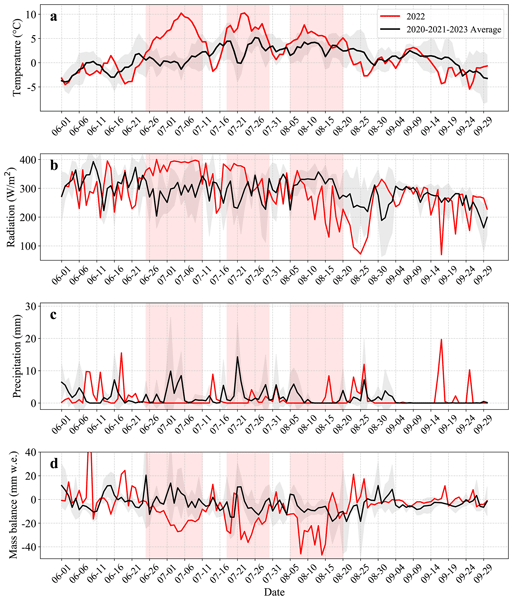
This study explored how the Kangxiwa Glacier in the eastern Pamir responded to the 2022 heatwaves. Consecutive time-lapse photos from 2019 to 2023 were used to capture daily changes in the glacier’s mass. The glacier mainly gained mass in spring and lost it in summer. Notably, the 2022 heatwaves caused extreme mass loss. This work shows that glaciers in the eastern Pamir are sensitive to heatwaves, providing a foundation for predicting how glaciers will change in this region in the future.
Yaoming Ma, Zhipeng Xie, Yingying Chen, Shaomin Liu, Tao Che, Ziwei Xu, Lunyu Shang, Xiaobo He, Xianhong Meng, Weiqiang Ma, Baiqing Xu, Huabiao Zhao, Junbo Wang, Guangjian Wu, and Xin Li
Earth Syst. Sci. Data, 16, 3017–3043, https://doi.org/10.5194/essd-16-3017-2024, https://doi.org/10.5194/essd-16-3017-2024, 2024
Short summary
Short summary
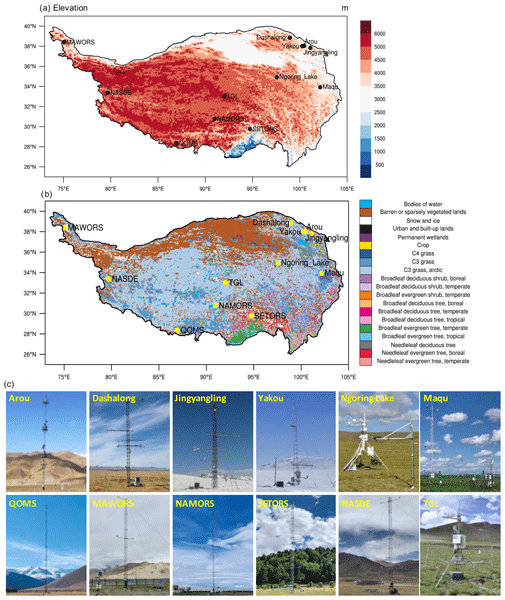
Current models and satellites struggle to accurately represent the land–atmosphere (L–A) interactions over the Tibetan Plateau. We present the most extensive compilation of in situ observations to date, comprising 17 years of data on L–A interactions across 12 sites. This quality-assured benchmark dataset provides independent validation to improve models and remote sensing for the region, and it enables new investigations of fine-scale L–A processes and their mechanistic drivers.
Wei Yang, Huabiao Zhao, Baiqing Xu, Jiule Li, Weicai Wang, Guangjian Wu, Zhongyan Wang, and Tandong Yao
The Cryosphere, 17, 2625–2628, https://doi.org/10.5194/tc-17-2625-2023, https://doi.org/10.5194/tc-17-2625-2023, 2023
Short summary
Short summary
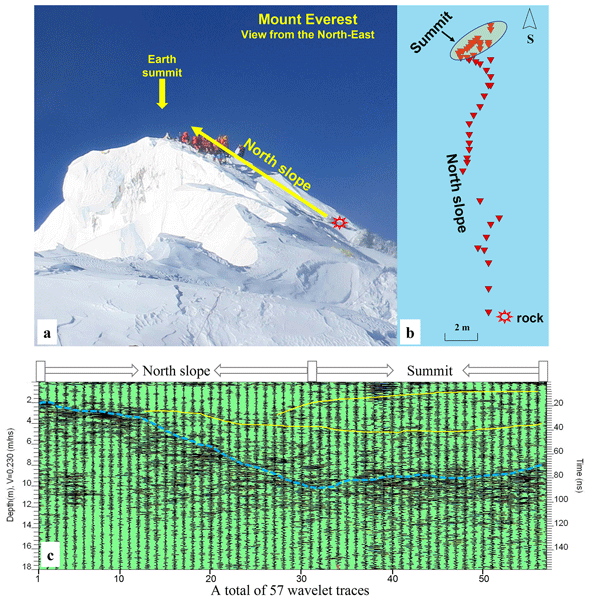
There is very strong scientific and public interest regarding the snow thickness on Mountain Everest. Previously reported snow depths derived by different methods and instruments ranged from 0.92 to 3.5 m. Our measurements in 2022 provide the first clear radar image of the snowpack at the top of Mount Everest. The snow thickness at Earth's summit was averaged to be 9.5 ± 1.2 m. This updated snow thickness is considerably deeper than values reported during the past 5 decades.
Yongqin Liu, Pengcheng Fang, Bixi Guo, Mukan Ji, Pengfei Liu, Guannan Mao, Baiqing Xu, Shichang Kang, and Junzhi Liu
Earth Syst. Sci. Data, 14, 2303–2314, https://doi.org/10.5194/essd-14-2303-2022, https://doi.org/10.5194/essd-14-2303-2022, 2022
Short summary
Short summary
Glaciers are an important pool of microorganisms, organic carbon, and nitrogen. This study constructed the first dataset of microbial abundance and total nitrogen in Tibetan Plateau (TP) glaciers and the first dataset of dissolved organic carbon in ice cores on the TP. These new data could provide valuable information for research on the glacier carbon and nitrogen cycle and help in assessing the potential impacts of glacier retreat due to global warming on downstream ecosystems.
Jiule Li, Baiqing Xu, Ninglian Wang, Ping Yao, and Xiangke Xu
The Cryosphere Discuss., https://doi.org/10.5194/tc-2022-43, https://doi.org/10.5194/tc-2022-43, 2022
Manuscript not accepted for further review
Short summary
Short summary
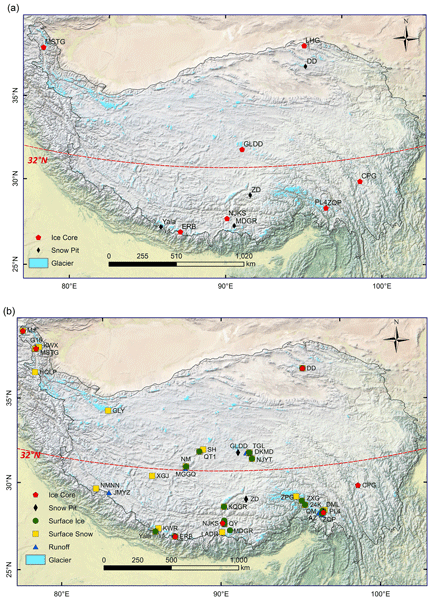
The air bubbles enclosed in the alpine glacier ice could be used to reveal regional climate changes. Thus, we analyzed the δ18O of gaseous oxygen in the ice core air bubbles (δ18Obub) from a glacier in the Tibetan Plateau (TP). We find that there is a good correlation between the variation of the δ18Obub and the accumulation or melting of the glacier. Combined with the chronology of the ice core air bubbles, we reconstruct the glacier variations since the late Holocene in the central TP.
Cited articles
Alley, R. B. and Woods, G. A.: Impurity influence on normal grain growth in the GISP2 ice core, Greenland, J. Glaciol., 42, 255–260, https://doi.org/10.3189/S0022143000004111, 1996.
Alley, R. B., Perepezko, J. H., and Bentley, C. R.: Grain growth in polar ice: I. Theory, J. Glaciol., 32, 415–424, https://doi.org/10.3189/S0022143000012120, 1986a.
Alley, R. B., Perepezko, J. H., and Bentley, C. R.: Grain growth in polar ice: II. Application, J. Glaciol., 32, 425–433, https://doi.org/10.3189/S0022143000012132, 1986b.
Bolch, T., Kulkarni, A., Kääb, A., Huggel, C., Paul, F., Cogley, J. G., Frey, H., Georgiadi, S., and Stoffel, M.: The state and fate of Himalayan glaciers, Science, 336, 310–314, https://doi.org/10.1126/science.1215828, 2012.
Clavette, R.: The Microstructural Heterogeneity of Ice in Jarvis Glacier, Alaska, Honors thesis, University of Maine, Orono, ME, USA, 2020.
Cuffey, K. M. and Paterson, W. S. B.: The physics of glaciers, 4th edn., Butterworth-Heinemann, Burlington, MA, USA, ISBN 978-0-12-369461-4, 2010.
Dadic, R., Schneebeli, M., Wiese, M., Bertler, N. A. N., Salamatin, A. N., Theile, T. C., Freitag, J., and Lipenkov, V. Y.: Temperature-driven bubble migration as proxy for internal bubble pressures and bubble trapping function in ice cores, J. Geophys. Res.-Atmos., 124, 10264–10282, https://doi.org/10.1029/2019JD030891, 2019.
Durand, G., Weiss, J., Lipenkov, V., Barnola, J. M., Krinner, G., Parrenin, F., Delmonte, B., Ritz, C., Duval, P., Röthlisberger, R., and Bigler, M.: Effect of impurities on grain growth in cold ice sheets, J. Geophys. Res.-Earth, 111, https://doi.org/10.1029/2005JF000320, 2006.
Durand, G., Gillet-Chaulet, F., Svensson, A., Gagliardini, O., Kipfstuhl, S., Meyssonnier, J., Parrenin, F., Duval, P., and Dahl-Jensen, D.: Change in ice rheology during climate variations – implications for ice flow modelling and dating of the EPICA Dome C core, Clim. Past, 3, 155–167, https://doi.org/10.5194/cp-3-155-2007, 2007.
Duval, P. and Castelnau, O.: Dynamic recrystallization of ice in polar ice sheets, J. Phys. IV, 5, C3-197, https://doi.org/10.1051/jp4:1995317, 1995.
Eichler, J., Kleitz, I., Bayer-Giraldi, M., Jansen, D., Kipfstuhl, S., Shigeyama, W., Weikusat, C., and Weikusat, I.: Location and distribution of micro-inclusions in the EDML and NEEM ice cores using optical microscopy and in situ Raman spectroscopy, The Cryosphere, 11, 1075–1090, https://doi.org/10.5194/tc-11-1075-2017, 2017.
Eichler, J., Weikusat, C., Wegner, A., Twarloh, B., Behrens, M., Fischer, H., Kipfstuhl, S., and Weikusat, I.: Impurity analysis and microstructure along the climatic transition from MIS 6 into 5e in the EDML ice core using cryo-Raman microscopy, Front. Earth Sci., 7, 20, https://doi.org/10.3389/feart.2019.00020, 2019.
Eicken, H.: Automated image analysis of ice thin sections – instrumentation, methods and extraction of stereological and textural parameters, J. Glaciol., 39, 341–352, https://doi.org/10.3189/S0022143000016002, 1993.
Faria, S. H., Freitag, J., and Kipfstuhl, S.: Polar ice structure and the integrity of ice-core paleoclimate records, Quaternary Sci. Rev., 29, 338–351, https://doi.org/10.1016/j.quascirev.2009.10.016, 2010.
Faria, S. H., Weikusat, I., and Azuma, N.: The microstructure of polar ice. Part I: Highlights from ice core research, J. Struct. Geol., 61, 2–20, https://doi.org/10.1016/j.jsg.2013.09.010, 2014a.
Faria, S. H., Weikusat, I., and Azuma, N.: The microstructure of polar ice. Part II: State of the art, J. Struct. Geol., 61, 21–49, https://doi.org/10.1016/j.jsg.2013.11.003, 2014b.
Fegyveresi, J. M.: Physical properties of the West Antarctic Ice Sheet (WAIS) Divide deep core: Development, evolution, and interpretation, Ph.D. dissertation, The Pennsylvania State University, State College, PA, USA, https://www.proquest.com/openview/1dff82beeec93b710e202ffe245cc89b/1?pq-origsite=gscholar&cbl=18750 (last access: 3 October 2026), 2015.
Fegyveresi, J. M., Alley, R. B., Fitzpatrick, J. J., Cuffey, K. M., McConnell, J. R., Voigt, D. E., Spencer, M. K., and Stevens, N. T.: Five millennia of surface temperatures and ice core bubble characteristics from the WAIS Divide deep core, West Antarctica, Paleoceanography, 31, 416–433, https://doi.org/10.1002/2015PA002851, 2016.
Fitzpatrick, J. J., Voigt, D. E., Fegyveresi, J. M., Stevens, N. T., Spencer, M. K., Cole-Dai, J., and McConnell, J. R.: Physical properties of the WAIS Divide ice core, J. Glaciol., 60, 1181–1198, https://doi.org/10.3189/2014JoG14J100, 2014.
González-Santacruz, N., Muñoz-Marzagon, P., Bartolomé, M., Moreno, A., Huidobro, J., and Faria, S. H.: Effects of impurities on the ice microstructure of Monte Perdido Glacier, Central Pyrenees, NE Spain, Ann. Glaciol., 64, 107–120, https://doi.org/10.1017/aog.2023.66, 2023.
Gow, A. J.: On the rates of growth of grains and crystals in South Polar firn, J. Glaciol., 8, 241–252, https://doi.org/10.3189/S0022143000031233, 1969.
Gow, A. J. and Williamson, T.: Rheological implications of the internal structure and crystal fabrics of the West Antarctic ice sheet as revealed by deep core drilling at Byrd Station, Geol. Soc. Am. Bull., 87, 1665–1677, https://doi.org/10.1130/0016-7606(1976)87<1665:RIOTIS>2.0.CO;2, 1976.
Gow, A. J., Meese, D. A., Alley, R. B., Fitzpatrick, J. J., Anandakrishnan, S., and Woods, G. A.: Physical and structural properties of the Greenland Ice Sheet Project 2 ice cores: a review, J. Geophys. Res., 102, 26559–26575, https://doi.org/10.1029/97JC00165, 1997.
Hellmann, S., Kerch, J., Weikusat, I., Bauder, A., Grab, M., Jouvet, G., Schwikowski, M., and Maurer, H.: Crystallographic analysis of temperate ice on Rhonegletscher, Swiss Alps, The Cryosphere, 15, 677–694, https://doi.org/10.5194/tc-15-677-2021, 2021.
Hruby, K., Gerbi, C., Koons, P., Campbell, S., Martín, C., and Hawley, R.: The impact of temperature and crystal orientation fabric on the dynamics of mountain glaciers and ice streams, J. Glaciol., 66, 755–765, https://doi.org/10.1017/jog.2020.44, 2020.
Jiang, Z. L., Liu, S. Y., Guo, W. Q., Li, J., Long, S. C., Wang, X., and Wu, K. P.: Recent changes in the surface elevation of typical glaciers in the Animaqing Mountains in the Yellow River source area, Journal of Glaciology and Geocryology, 40, 231–237, 2018.
Jennings, S. J. A. and Hambrey, M. J.: Structures and deformation in glaciers and ice sheets, Rev. Geophys., 59, e2021RG000743, https://doi.org/10.1029/2021RG000743, 2021.
Kamb, W. B.: Ice petrofabric observations from Blue Glacier, Washington, in relation to theory and experiment, J. Geophys. Res., 64, 1891–1909, https://doi.org/10.1029/JZ064i011p01891, 1959.
Kerch, J. K.: Crystal-orientation fabric variations on the cm-scale in cold Alpine ice: Interaction with paleo-climate proxies under deformation and implications for the interpretation of seismic velocities, Ph.D. thesis, Universität Heidelberg, https://hdl.handle.net/10013/epic.49379 (last access: 3 October 2026), 2016.
Kipfstuhl, S., Hamann, I., Lambrecht, A., Freitag, J., Faria, S. H., Grigoriev, D., and Azuma, N.: Microstructure mapping: a new method for imaging deformation-induced microstructural features of ice on the grain scale, J. Glaciol., 52, 398–406, https://doi.org/10.3189/172756506781828647, 2006.
Kipfstuhl, S., Faria, S. H., Azuma, N., Freitag, J., Hamann, I., Kaufmann, P., Weikusat, I., and Wilhelms, F.: Evidence of dynamic recrystallization in polar firn, J. Geophys. Res.-Sol. Ea., 114, B05204, https://doi.org/10.1029/2008JB005583, 2009.
Legland, D., Arganda-Carreras, I., and Andrey, P.: MorphoLibJ: integrated library and plugins for mathematical morphology with ImageJ, Bioinformatics, 32, 3532–3534, https://doi.org/10.1093/bioinformatics/btw413, 2016.
Li, Y., Kipfstuhl, S., and Huang, M.: Ice microstructure and fabric of Guliya ice cap in Tibetan plateau, and comparisons with Vostok 3G-1, EPICA DML, and North GRIP, Crystals, 7, 97, https://doi.org/10.3390/cryst7040097, 2017.
Li, Y., Keegan, K., and Baker, I.: Observations of creep of polar firn at different temperatures, The Cryosphere, 20, 981–1000, https://doi.org/10.5194/tc-20-981-2026, 2026.
Lipenkov, V. Y.: How air bubbles form in polar ice, Earth's Cryosphere, 22, 16–28, https://earthcryosphere.ru/archive/2018_2/eng_2018_2/02.Lipenkov_2_2018_eng.pdf (last access: 3 October 2026), 2018.
Liu, Q., Guo, W. Q., Nie, Y., Liu, S. Y., and Xu, J. L.: Recent glacier and glacial lake changes and their interactions in the Bugyai Kangri, southeast Tibet, Ann. Glaciol., 57, 61–69, https://doi.org/10.3189/2016AoG71A415, 2016.
Liu, S., Yao, X., Guo, W., Xu, J., Shangguan, D., Wei, J., Bao, W., and Wu, L.: The contemporary glaciers in China based on the Second Chinese Glacier Inventory, Acta Geographica Sinica, 70, 3–16, https://doi.org/10.11821/dlxb201501001, 2015.
Mahowald, N., Kohfeld, K., Hansson, M., Balkanski, Y., Harrison, S. P., Prentice, I. C., Schulz, M., and Rodhe, H.: Dust sources and deposition during the last glacial maximum and current climate: A comparison of model results with paleodata from ice cores and marine sediments, J. Geophys. Res.-Atmos., 104, 15895–15916, https://doi.org/10.1029/1999JD900084, 1999.
Montagnat, M., Castelnau, O., Bons, P. D., Faria, S. H., Gagliardini, O., Gillet-Chaulet, F., Grenoble, L., and Suquet, P.: Multiscale modeling of ice deformation behavior, J. Struct. Geol., 61, 78–108, https://doi.org/10.1016/j.jsg.2013.05.002, 2014.
Monz, M. E., Hudleston, P. J., Prior, D. J., Michels, Z., Fan, S., Negrini, M., Langhorne, P. J., and Qi, C.: Full crystallographic orientation (c and a axes) of warm, coarse-grained ice in a shear-dominated setting: a case study, Storglaciären, Sweden, The Cryosphere, 15, 303–324, https://doi.org/10.5194/tc-15-303-2021, 2021.
Nie, Y., Pritchard, H. D., Liu, Q., Hennig, T., Wang, W., Wang, X., Liu, S., and Chen, X.: Glacial change and hydrological implications in the Himalaya and Karakoram, Nature Reviews Earth and Environment, 2, 91–106, https://doi.org/10.1038/s43017-020-00124-w, 2021.
Overpeck, J., Rind, D., Lacis, A., and Healy, R.: Possible role of dust-induced regional warming in abrupt climate change during the last glacial period, Nature, 384, 447–449, https://doi.org/10.1038/384447a0, 1996.
Perutz, M. F. and Seligman, G.: A crystallographic investigation of glacier structure and the mechanism of glacier flow, P. Roy. Soc. Lond. A Mat., 172, 335–360, https://doi.org/10.1098/rspa.1939.0108, 1939.
Ram, M., Stolz, M., and Koenig, G.: Eleven year cycle of dust concentration variability observed in the dust profile of the GISP2 ice core from Central Greenland: Possible solar cycle connection, Geophys. Res. Lett., 24, 2359–2362, https://doi.org/10.1029/97GL02521, 1997.
Rigsby, G. P.: Crystal fabric studies on Emmons Glacier, Mount Rainier, Washington, J. Geol., 59, 590–598, https://doi.org/10.1086/625914, 1951.
Rigsby, G. P.: Crystal orientation in glacier and in experimentally deformed ice, J. Glaciol., 3, 589–606, https://doi.org/10.3189/S0022143000023716, 1960.
Ronneberger, O., Fischer, P., and Brox, T.: U-Net: Convolutional Networks for Biomedical Image Segmentation, in: Medical Image Computing and Computer-Assisted Intervention – MICCAI 2015, LNCS 9351, edited by: Navab, N., Hornegger, J., Wells, W., and Frangi, A., Springer, Cham, 234–241, https://doi.org/10.1007/978-3-319-24574-4_28, 2015.
Sakai, A. and Fujita, K.: Contrasting glacier responses to recent climate change in high-mountain Asia, Sci. Rep.-UK, 7, 13717, https://doi.org/10.1038/s41598-017-14256-5, 2017.
Schaller, C. F., Freitag, J., and Eisen, O.: Critical porosity of gas enclosure in polar firn independent of climate, Clim. Past, 13, 1685–1693, https://doi.org/10.5194/cp-13-1685-2017, 2017.
Spencer, M. K., Alley, R. B., and Fitzpatrick, J. J.: Developing a bubble number-density paleoclimatic indicator for glacier ice, J. Glaciol., 52, 358–364, https://doi.org/10.3189/172756506781828638, 2006.
Stoll, N., Eichler, J., Hörhold, M., Shigeyama, W., and Weikusat, I.: A review of the microstructural location of impurities in polar ice and their impacts on deformation, Front. Earth Sci., 8, 615613, https://doi.org/10.3389/feart.2020.615613, 2021.
Svensson, A., Baadsager, P., Persson, A., Hvidberg, C. S., and Siggaard-Andersen, M. L.: Seasonal variability in ice crystal properties at NorthGRIP: a case study around 301 m depth, Ann. Glaciol., 37, 119–122, https://doi.org/10.3189/172756403781815582, 2003.
Svensson, A., Nielsen, S. W., Kipfstuhl, S., Johnsen, S. J., Steffensen, J. P., Bigler, M., Röthlisberger, R., and Fischer, H.: Visual stratigraphy of the North Greenland Ice Core Project (NorthGRIP) ice core during the last glacial period, J. Geophys. Res.-Atmos., 110, D02107, https://doi.org/10.1029/2004JD005134, 2005.
Thompson, L. G., Yao, T., Davis, M. E., Henderson, K. A., Mosley-Thompson, E., Lin, P.-N., Beer, J., Synal, H.-A., Cole-Dai, J., and Bolzan, J. F.: Tropical climate instability: The last glacial cycle from a Qinghai-Tibetan ice core, Science, 276, 1821–1825, https://doi.org/10.1126/science.276.5320.1821, 1997.
Tison, J. L. and Hubbard, B.: Ice crystallographic evolution at a temperate glacier: Glacier de Tsanfleuron, Switzerland, Geological Society, London, Special Publications, 176, 23–38, https://doi.org/10.1144/GSL.SP.2000.176.01.03, 2000.
Weikusat, I., Kipfstuhl, S., Faria, S. H., Azuma, N., and Miyamoto, A.: Subgrain boundaries and related microstructural features in EDML (Antarctica) deep ice core, J. Glaciol., 55, 461–472, https://doi.org/10.3189/002214309788816614, 2009.
Weikusat, I., Kuiper, E.-J. N., Pennock, G. M., Kipfstuhl, S., and Drury, M. R.: EBSD analysis of subgrain boundaries and dislocation slip systems in Antarctic and Greenland ice, Solid Earth, 8, 883–898, https://doi.org/10.5194/se-8-883-2017, 2017.
Weiss, J., Vidot, J., Gay, M., Arnaud, L., Duval, P., and Petit, J. R.: Dome Concordia ice microstructure: impurities effect on grain growth, Ann. Glaciol., 35, 552–558, https://doi.org/10.3189/172756402781816573, 2002.
Wilson, N. J., Vreugdenhil, C. A., Gayen, B., and Hester, E. W.: Double-diffusive layer and meltwater plume effects on ice face scalloping in phase-change simulations, Geophys. Res. Lett., 50, e2023GL104396, https://doi.org/10.1029/2023GL104396, 2023.
Yao, T., Thompson, L., and Yang, W.: Different glacier status with atmospheric circulations in Tibetan Plateau and surroundings, Nat. Clim. Change, 2, 663–667, https://doi.org/10.1038/nclimate1580, 2012.
Zhang, W., Han, J., Xie, Z., Wang, X., Lluberas, A., and Goto-Azuma, K.: A preliminary study of ice texture and fabric on an ice core to the bedrock extracted from Glacier No. 1 at the headwater of Urumqi River, Tianshan, China, Bulletin of Glacier Research, 11, 9–15, 1993.
Short summary
We continuously measured ice crystal sizes along two ice cores from the Tibetan Plateau. We found that the pattern of crystal size variation with depth is similar to that in polar ice cores. Crystal sizes increase abruptly in refrozen ice layers, while they decrease in impurity-rich bands. Notably, in specific layers, crystal size is linked to δ18O, which means the crystal sizes in mountain glacier ice cores can retain temperature signals, helping us understand past climate change.
We continuously measured ice crystal sizes along two ice cores from the Tibetan Plateau. We...