
Articles | Volume 20, issue 1
https://doi.org/10.5194/tc-20-483-2026
© Author(s) 2026. This work is distributed under
the Creative Commons Attribution 4.0 License.
the Creative Commons Attribution 4.0 License.
https://doi.org/10.5194/tc-20-483-2026
© Author(s) 2026. This work is distributed under
the Creative Commons Attribution 4.0 License.
the Creative Commons Attribution 4.0 License.
Research article
| 
21 Jan 2026
Research article |
| 21 Jan 2026
| 21 Jan 2026
ICESat-2 surface elevation assessment with kinematic GPS and static GNSS near the ice divide in Greenland

Department of Earth Sciences, Dartmouth College, Hanover, New Hampshire, USA
Robert L. Hawley
Department of Earth Sciences, Dartmouth College, Hanover, New Hampshire, USA
Denis Felikson
NASA Goddard Space Flight Center, Greenbelt, Maryland, USA
Jamie C. Good
Department of Earth Sciences, Dartmouth College, Hanover, New Hampshire, USA
Related authors
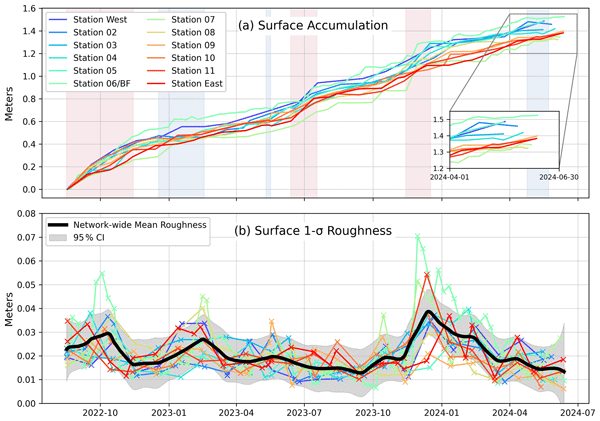
Derek J. Pickell, Robert L. Hawley, and Adam LeWinter
The Cryosphere, 19, 1013–1029, https://doi.org/10.5194/tc-19-1013-2025, https://doi.org/10.5194/tc-19-1013-2025, 2025
Short summary
Short summary
We use a low-cost, low-power GNSS network to measure surface accumulation in Greenland's interior using the interferometric reflectometry technique. Additionally, we extend this method to also estimate centimeter- to meter-scale surface roughness. Our results closely align with a validation record and highlight a period of unusually high accumulation from late 2022 to 2023, along with seasonal variations in surface roughness.
Ana Carolina Moraes Luzardi, Sophie Nowicki, Beata Csatho, Jason Briner, Mohammad Salmani, Hui Gao, Denis Felikson, Josh Cuzzone, and Kristin Poinar
EGUsphere, https://doi.org/10.5194/egusphere-2026-5841, https://doi.org/10.5194/egusphere-2026-5841, 2026
This preprint is open for discussion and under review for The Cryosphere (TC).
Short summary
Short summary
Before the satellite era, observations of Greenland ice sheet elevation were sparse in space and time. We reconstruct ice sheet-wide surface elevation for 1850 and 1980 using a 127-member ensemble. The reconstructions agree with observations and historical evidence, reveal patterns of thinning since the preindustrial era, and provide a resource for evaluating and initializing ice sheet simulations.

Enze Zhang, Ginny Catania, Ben Smith, Denis Felikson, Beata Csatho, and Daniel T. Trugman
The Cryosphere, 20, 3875–3891, https://doi.org/10.5194/tc-20-3875-2026, https://doi.org/10.5194/tc-20-3875-2026, 2026
Short summary
Short summary
Understanding seasonal changes in Greenland glaciers is vital for studying long-term trends. We use a simple model and high-resolution observation to reveal how multiple processes influence seasonal glacier velocity either alternately or simultaneously each year. Additional tests suggest a steepening glacier surface increases sensitivity of the surface velocity to terminus changes. Our approach can be applied to other glaciers decompose seasonal changes of glacier velocity.
Anne Sledd, Michael R. Gallagher, Matthew D. Shupe, Christopher J. Cox, Robert Hawley, Michael S. Town, Heather Guy, Hans-Peter Marshall, Ryan R. Neely III, Claire Pettersen, Von P. Walden, Catherine Hebson, Andrew Martin, Erik Olson, and Derek Pickell
EGUsphere, https://doi.org/10.5194/egusphere-2026-1842, https://doi.org/10.5194/egusphere-2026-1842, 2026
Short summary
Short summary
Understanding energetic processes at the surface is important for understanding how the Greenland ice sheet melts. However, most temperature observations of firn are insufficient for studying energetic processes near the surface where melt happens. In this work we present new ground observations of high-resolution temperature profiles in the top meter of firn near the southwest coast of Greenland. Using these observations we characterize how temperature and energy vary during the melt season.
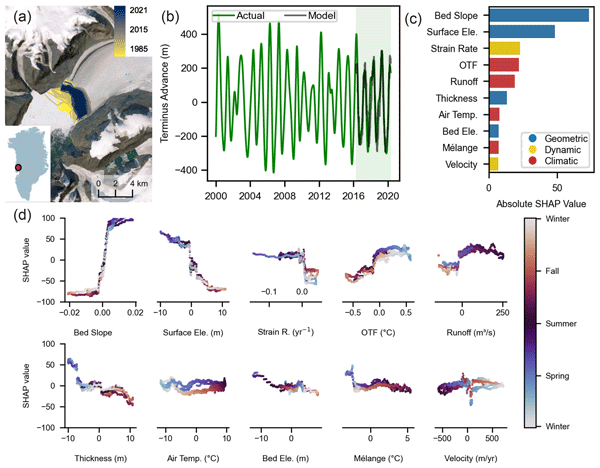
Kevin Shionalyn, Ginny Catania, Daniel T. Trugman, Michael G. Shahin, Leigh A. Stearns, and Denis Felikson
The Cryosphere, 20, 1725–1744, https://doi.org/10.5194/tc-20-1725-2026, https://doi.org/10.5194/tc-20-1725-2026, 2026
Short summary
Short summary
The ocean-facing front of a glacier changes with the seasons. We know this cycle is controlled by the shape and speed of the glacier as well as by the climate, but we do not have a full understanding of these processes. Our study uses 20 years of data and a machine learning model to predict this pattern and identifies which factors matter most. We find that while several factors influence the seasonal cycle, the shape of the glacier plays a key role in how much a glacier changes annually.
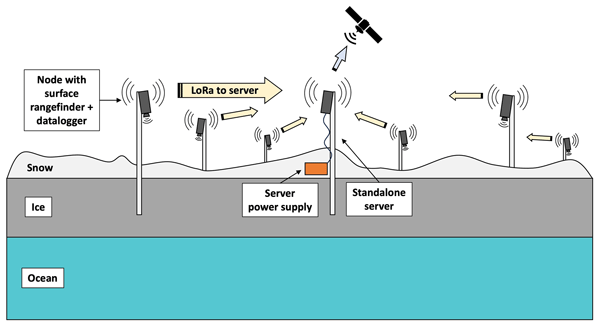
Ian A. Raphael, Donald K. Perovich, Christopher M. Polashenski, and Robert L. Hawley
The Cryosphere, 19, 6059–6076, https://doi.org/10.5194/tc-19-6059-2025, https://doi.org/10.5194/tc-19-6059-2025, 2025
Short summary
Short summary
Snow plays competing roles in the sea ice cycle by reflecting sunlight during summer (reducing melt) and insulating the ice from the cold atmosphere during winter (reducing growth). Observing where, when, and how much snow accumulates on sea ice is thus central to understanding the Arctic. Here, we describe a new snow depth observation system that is substantially cheaper and lighter than existing tools and present a study demonstrating its potential to improve snow measurements on sea ice.
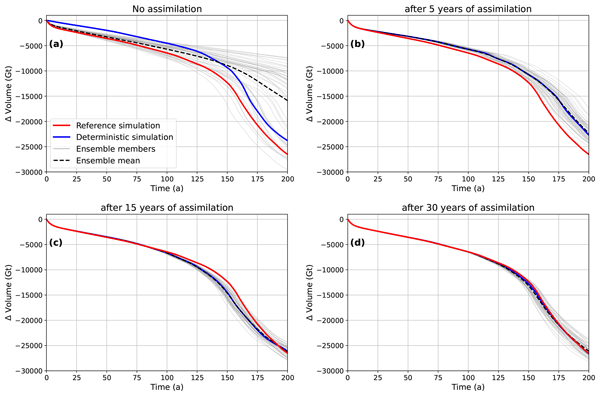
Youngmin Choi, Alek Petty, Denis Felikson, and Jonathan Poterjoy
The Cryosphere, 19, 5423–5444, https://doi.org/10.5194/tc-19-5423-2025, https://doi.org/10.5194/tc-19-5423-2025, 2025
Short summary
Short summary
We combined numerical models with satellite observations using the ensemble Kalman filter to improve predictions of glacier states and their basal conditions. Our simulations show that incorporating more data generally improves prediction accuracy. We also tested different types of data and found that the high-resolution observations provide the greatest improvements. This method can help guide the design of future observing systems and improve long-term projections of ice sheet change.
Derek J. Pickell, Robert L. Hawley, and Adam LeWinter
The Cryosphere, 19, 1013–1029, https://doi.org/10.5194/tc-19-1013-2025, https://doi.org/10.5194/tc-19-1013-2025, 2025
Short summary
Short summary
We use a low-cost, low-power GNSS network to measure surface accumulation in Greenland's interior using the interferometric reflectometry technique. Additionally, we extend this method to also estimate centimeter- to meter-scale surface roughness. Our results closely align with a validation record and highlight a period of unusually high accumulation from late 2022 to 2023, along with seasonal variations in surface roughness.
Alexander C. Ronan, Robert L. Hawley, and Jonathan W. Chipman
The Cryosphere, 18, 5673–5683, https://doi.org/10.5194/tc-18-5673-2024, https://doi.org/10.5194/tc-18-5673-2024, 2024
Short summary
Short summary
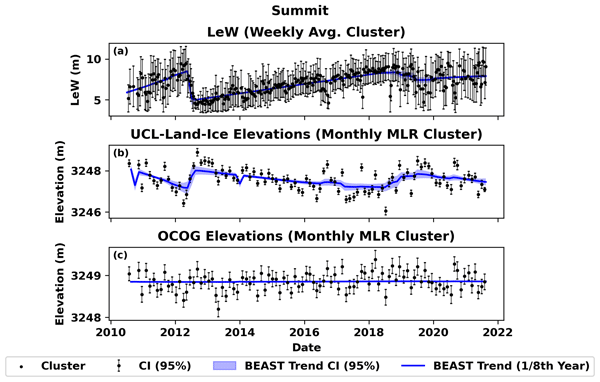
We generate a 2010–2021 time series of CryoSat-2 waveform shape metrics on the Greenland Ice Sheet, and we compare it to CryoSat-2 elevation data to investigate the reliability of two algorithms used to derive elevations from the SIRAL radar altimeter. Retracked elevations are found to depend on a waveform's leading-edge width in the dry-snow zone. The study indicates that retracking algorithms must consider significant climate events and snow conditions when assessing elevation change.
Ian E. McDowell, Kaitlin M. Keegan, S. McKenzie Skiles, Christopher P. Donahue, Erich C. Osterberg, Robert L. Hawley, and Hans-Peter Marshall
The Cryosphere, 18, 1925–1946, https://doi.org/10.5194/tc-18-1925-2024, https://doi.org/10.5194/tc-18-1925-2024, 2024
Short summary
Short summary
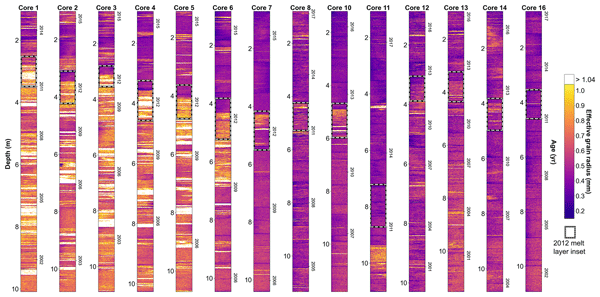
Accurate knowledge of firn grain size is crucial for many ice sheet research applications. Unfortunately, collecting detailed measurements of firn grain size is difficult. We demonstrate that scanning firn cores with a near-infrared imager can quickly produce high-resolution maps of both grain size and ice layer distributions. We map grain size and ice layer stratigraphy in 14 firn cores from Greenland and document changes to grain size and ice layer content from the extreme melt summer of 2012.
Denis Felikson, Sophie Nowicki, Isabel Nias, Beata Csatho, Anton Schenk, Michael J. Croteau, and Bryant Loomis
The Cryosphere, 17, 4661–4673, https://doi.org/10.5194/tc-17-4661-2023, https://doi.org/10.5194/tc-17-4661-2023, 2023
Short summary
Short summary
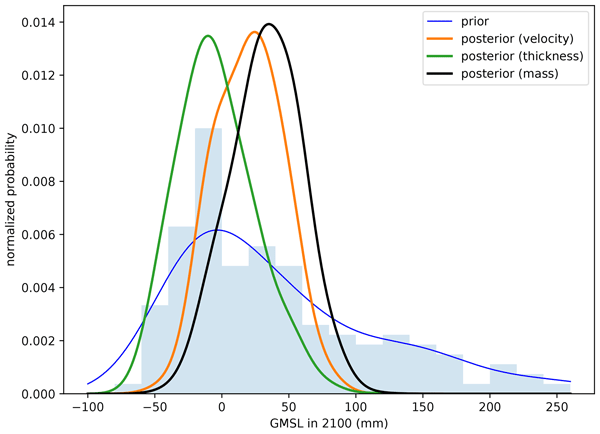
We narrow the spread in model simulations of the Greenland Ice Sheet using velocity change, dynamic thickness change, and mass change observations. We find that the type of observation chosen can lead to significantly different calibrated probability distributions. Further work is required to understand how to best calibrate ensembles of ice sheet simulations because this will improve probability distributions of projected sea-level rise, which is crucial for coastal planning and adaptation.

Joseph A. MacGregor, Winnie Chu, William T. Colgan, Mark A. Fahnestock, Denis Felikson, Nanna B. Karlsson, Sophie M. J. Nowicki, and Michael Studinger
The Cryosphere, 16, 3033–3049, https://doi.org/10.5194/tc-16-3033-2022, https://doi.org/10.5194/tc-16-3033-2022, 2022
Short summary
Short summary
Where the bottom of the Greenland Ice Sheet is frozen and where it is thawed is not well known, yet knowing this state is increasingly important to interpret modern changes in ice flow there. We produced a second synthesis of knowledge of the basal thermal state of the ice sheet using airborne and satellite observations and numerical models. About one-third of the ice sheet’s bed is likely thawed; two-fifths is likely frozen; and the remainder is too uncertain to specify.
Christian J. Taubenberger, Denis Felikson, and Thomas Neumann
The Cryosphere, 16, 1341–1348, https://doi.org/10.5194/tc-16-1341-2022, https://doi.org/10.5194/tc-16-1341-2022, 2022
Short summary
Short summary
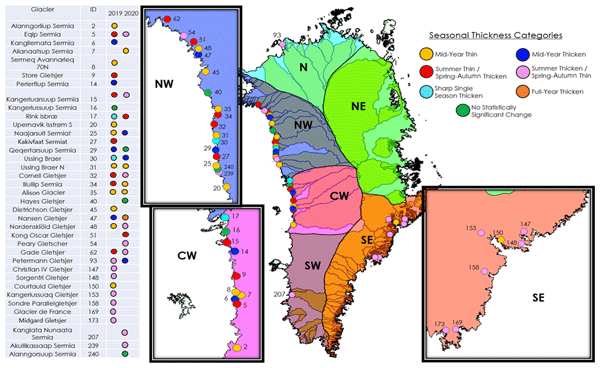
Outlet glaciers are projected to account for half of the total ice loss from the Greenland Ice Sheet over the 21st century. We classify patterns of seasonal dynamic thickness changes of outlet glaciers using new observations from the Ice, Cloud and land Elevation Satellite-2 (ICESat-2). Our results reveal seven distinct patterns that differ across glaciers even within the same region. Future work can use our results to improve our understanding of processes that drive seasonal ice sheet changes.
Cited articles
Abdalati, W., Zwally, H. J., Bindschadler, R., Csatho, B., Farrell, S. L., Fricker, H. A., Harding, D., Kwok, R., Lefsky, M., Markus, T., Marshak, A., Neumann, T., Palm, S., Schutz, B., Smith, B., Spinhirne, J., and Webb, C.: The ICESat-2 Laser Altimetry Mission, Proceedings of the IEEE, 98, 735–751, https://doi.org/10.1109/JPROC.2009.2034765, 2010. a
Brunt, K. M., Hawley, R. L., Lutz, E. R., Studinger, M., Sonntag, J. G., Hofton, M. A., Andrews, L. C., and Neumann, T. A.: Assessment of NASA airborne laser altimetry data using ground-based GPS data near Summit Station, Greenland, The Cryosphere, 11, 681–692, https://doi.org/10.5194/tc-11-681-2017, 2017. a, b, c
Brunt, K. M., Neumann, T. A., and Larsen, C. F.: Assessment of altimetry using ground-based GPS data from the 88S Traverse, Antarctica, in support of ICESat-2, The Cryosphere, 13, 579–590, https://doi.org/10.5194/tc-13-579-2019, 2019. a, b
Brunt, K. M., Smith, B. E., Sutterley, T. C., Kurtz, N. T., and Neumann, T. A.: Comparisons of Satellite and Airborne Altimetry With Ground-Based Data From the Interior of the Antarctic Ice Sheet, Geophys. Res. Lett., 48, e2020GL090572, https://doi.org/10.1029/2020GL090572, 2021. a, b
Dahl-Jensen, T., Larsen, T. B., and Voss, P. H.: Greenland ice sheet monitoring network (GLISN): a seismological approach, GEUS Bulletin, 20, 55–58, https://doi.org/10.34194/geusb.v20.4956, 2010. a
Dibb, J. E. and Fahnestock, M.: Snow accumulation, surface height change, and firn densification at Summit, Greenland: Insights from 2 years of in situ observation, J. Geophys. Res.-Atmos., 109, https://doi.org/10.1029/2003JD004300, 2004. a
Fricker, H. A., Borsa, A., Minster, B., Carabajal, C., Quinn, K., and Bills, B.: Assessment of ICESat performance at the salar de Uyuni, Bolivia, Geophys. Res. Lett., 32, https://doi.org/10.1029/2005GL023423, 2005. a
Herzfeld, U., Hayes, A., Palm, S., Hancock, D., Vaughan, M., and Barbieri, K.: Detection and Height Measurement of Tenuous Clouds and Blowing Snow in ICESat-2 ATLAS Data, Geophys. Res. Lett., 48, e2021GL093473, https://doi.org/10.1029/2021GL093473, 2021. a
Hoffman, A. O., Maclennan, M. L., Lenaerts, J., Larson, K. M., and Christianson, K.: Amundsen Sea Embayment accumulation variability measured with global navigation satellite system interferometric reflectometry, The Cryosphere, 19, 713–730, https://doi.org/10.5194/tc-19-713-2025, 2025. a
Holden, L. D. and Larson, K. M.: Ten years of Lake Taupō surface height estimates using the GNSS interferometric reflectometry, Journal of Geodesy, 95, 74, https://doi.org/10.1007/s00190-021-01523-7, 2021. a
Howat, I. M., Smith, B. E., Joughin, I., and Scambos, T. A.: Rates of southeast Greenland ice volume loss from combined ICESat and ASTER observations, Geophys. Res. Lett., 35, https://doi.org/10.1029/2008GL034496, 2008. a
Howat, I. M., Negrete, A., and Smith, B. E.: The Greenland Ice Mapping Project (GIMP) land classification and surface elevation data sets, The Cryosphere, 8, 1509–1518, https://doi.org/10.5194/tc-8-1509-2014, 2014. a
Khan, S. A., Wahr, J., Leuliette, E., van Dam, T., Larson, K. M., and Francis, O.: Geodetic measurements of postglacial adjustments in Greenland, J. Geophys. Res.-Sol. Ea., 113, https://doi.org/10.1029/2007JB004956, 2008. a
Khan, S. A., Bamber, J. L., Rignot, E., Helm, V., Aschwanden, A., Holland, D. M., van den Broeke, M., King, M., Noël, B., Truffer, M., Humbert, A., Colgan, W., Vijay, S., and Kuipers Munneke, P.: Greenland Mass Trends From Airborne and Satellite Altimetry During 2011–2020, J. Geophys. Res.-Earth Surf., 127, e2021JF006505, https://doi.org/10.1029/2021JF006505, 2022. a
Larson, K. M.: Gnssrefl: an open source software package in python for GNSS interferometric reflectometry applications, GPS Solutions, 28, 165, https://doi.org/10.1007/s10291-024-01694-8, 2024. a
Larson, K. M. and Nievinski, F. G.: GPS snow sensing: results from the EarthScope Plate Boundary Observatory, GPS Solutions, 17, 41–52, https://doi.org/10.1007/s10291-012-0259-7, 2013. a
Larson, K. M., Gutmann, E. D., Zavorotny, V. U., Braun, J. J., Williams, M. W., and Nievinski, F. G.: Can we measure snow depth with GPS receivers?, Geophys. Res. Lett., 36, https://doi.org/10.1029/2009GL039430, 2009. a
Larson, K. M., Ray, R. D., Nievinski, F. G., and Freymueller, J. T.: The Accidental Tide Gauge: A GPS Reflection Case Study From Kachemak Bay, Alaska, IEEE Geosci. Remote Sens. Lett., 10, 1200–1204, https://doi.org/10.1109/LGRS.2012.2236075, 2013. a
Larson, K. M., MacFerrin, M., and Nylen, T.: Brief Communication: Update on the GPS reflection technique for measuring snow accumulation in Greenland, The Cryosphere, 14, 1985–1988, https://doi.org/10.5194/tc-14-1985-2020, 2020. a
Luthcke, S. B., Rowlands, D. D., Williams, T. A., and Sirota, M.: Reduction of ICESat systematic geolocation errors and the impact on ice sheet elevation change detection, Geophys. Res. Lett., 32, https://doi.org/10.1029/2005GL023689, 2005. a
Magruder, L., Neumann, T., and Kurtz, N.: ICESat-2 Early Mission Synopsis and Observatory Performance, Earth and Space Science, 8, e2020EA001555, https://doi.org/10.1029/2020EA001555, 2021. a
Markus, T., Neumann, T., Martino, A., Abdalati, W., Brunt, K., Csatho, B., Farrell, S., Fricker, H., Gardner, A., Harding, D., Jasinski, M., Kwok, R., Magruder, L., Lubin, D., Luthcke, S., Morison, J., Nelson, R., Neuenschwander, A., Palm, S., Popescu, S., Shum, C., Schutz, B. E., Smith, B., Yang, Y., and Zwally, J.: The Ice, Cloud, and land Elevation Satellite-2 (ICESat-2): Science requirements, concept, and implementation, Remote Sens. Environ., 190, 260–273, https://doi.org/10.1016/j.rse.2016.12.029, 2017. a, b
Natural Resources Canada (NRCan): Canadian Spatial Reference System Precise Point Positioning (CSRS-PPP), Natural Resources Canada, https://webapp.csrs-scrs.nrcan-rncan.gc.ca/geod/tools-outils/ppp.php (last access: 21 May 2025), 2025. a
Neumann, T. A., Martino, A. J., Markus, T., Bae, S., Bock, M. R., Brenner, A. C., Brunt, K. M., Cavanaugh, J., Fernandes, S. T., Hancock, D. W., Harbeck, K., Lee, J., Kurtz, N. T., Luers, P. J., Luthcke, S. B., Magruder, L., Pennington, T. A., Ramos-Izquierdo, L., Rebold, T., Skoog, J., and Thomas, T. C.: The Ice, Cloud, and Land Elevation Satellite – 2 mission: A global geolocated photon product derived from the Advanced Topographic Laser Altimeter System, Remote Sens. Environ., 233, 111325, https://doi.org/10.1016/j.rse.2019.111325, 2019. a, b
Pettersen, C., Bennartz, R., Merrelli, A. J., Shupe, M. D., Turner, D. D., and Walden, V. P.: Precipitation regimes over central Greenland inferred from 5 years of ICECAPS observations, Atmos. Chem. Phys., 18, 4715–4735, https://doi.org/10.5194/acp-18-4715-2018, 2018. a
Pickell, D. and Hawley, R.: An East-West Network of Twelve Global Navigation Satellite System (GNSS) Stations in the Summit Region of Greenland: RINEX Data, 2022–2025, Arctic Data Center [data set], https://doi.org/10.18739/A2183446Q, 2024a. a
Pickell, D. J. and Hawley, R. L.: Performance characterization of a new, low-cost multi-GNSS instrument for the cryosphere, J. Glaciol., 70, e41, https://doi.org/10.1017/jog.2023.97, 2024b. a, b
Pickell, D. J., Hawley, R. L., Brunt, K. M., Burkhart, J. F., Dorsi, S. W., McConnell, J. R., Neumann, T. A., and Pettit, J.: ICESat/ICESat-2 Traverse: Monthly GPS Surface Elevation Data at Summit Station, Greenland, Dartmouth Dataverse, V1 [data set], https://doi.org/10.21989/D9/0ZOWK2, 2025a. a
Schröder, L., Richter, A., Fedorov, D. V., Eberlein, L., Brovkov, E. V., Popov, S. V., Knöfel, C., Horwath, M., Dietrich, R., Matveev, A. Y., Scheinert, M., and Lukin, V. V.: Validation of satellite altimetry by kinematic GNSS in central East Antarctica, The Cryosphere, 11, 1111–1130, https://doi.org/10.5194/tc-11-1111-2017, 2017. a
Schutz, B. E., Zwally, H. J., Shuman, C. A., Hancock, D., and DiMarzio, J. P.: Overview of the ICESat Mission, Geophys. Res. Lett., 32, https://doi.org/10.1029/2005GL024009, 2005. a
Siegfried, M. R., Hawley, R. L., and Burkhart, J. F.: High-Resolution Ground-Based GPS Measurements Show Intercampaign Bias in ICESat Elevation Data Near Summit, Greenland, IEEE Transactions on Geoscience and Remote Sensing, 49, 3393–3400, https://doi.org/10.1109/TGRS.2011.2127483, 2011. a, b, c, d, e
Siegfried, M. R., Medley, B., Larson, K. M., Fricker, H. A., and Tulaczyk, S.: Snow accumulation variability on a West Antarctic ice stream observed with GPS reflectometry, 2007–2017, Geophys. Res. Lett., 44, 7808–7816, https://doi.org/10.1002/2017GL074039, 2017. a, b
Smith, B., Fricker, H. A., Holschuh, N., Gardner, A. S., Adusumilli, S., Brunt, K. M., Csatho, B., Harbeck, K., Huth, A., Neumann, T., Nilsson, J., and Siegfried, M. R.: Land ice height-retrieval algorithm for NASA's ICESat-2 photon-counting laser altimeter, Remote Sens. Environ., 233, 111352, https://doi.org/10.1016/j.rse.2019.111352, 2019. a, b, c
Smith, B., Adusumilli, S., Csathó, B. M., Felikson, D., Fricker, H. A., Gardner, A. S., Holschuh, N., Lee, J., Nilsson, J., Paolo, F., Siegfried, M. R., Sutterley, T., and the ICESat-2 Science Team: ATLAS/ICESat-2 L3A Land Ice Height. (ATL06, Version 6), Boulder, Colorado USA, NASA National Snow and Ice Data Center Distributed Active Archive Center [data set], https://doi.org/10.5067/ATLAS/ATL06.006, 2023a. a
Smith, B., Hancock, D., Harbeck, K., Roberts, L., Neumann, T., Brunt, K., Fricker, H., Gardner, A., Siegfried, M., Adusumilli, S., Csatho, B., Holschuh, N., Nilsson, J., Paolo, F., and Felikson, D.: Ice, Cloud, and Land Elevation Satellite (ICESat-2) Project Algorithm Theoretical Basis Document (ATBD) for Land Ice Along-Track Height Product (ATL06), version 6, NASA National Snow and Ice Data Center Distributed Active Archive Center [data set], https://doi.org/10.5067/VWOKQDYJ7ODB, 2023b. a
Smith, B. E., Medley, B., Fettweis, X., Sutterley, T., Alexander, P., Porter, D., and Tedesco, M.: Evaluating Greenland surface-mass-balance and firn-densification data using ICESat-2 altimetry, The Cryosphere, 17, 789–808, https://doi.org/10.5194/tc-17-789-2023, 2023c. a
Smith, B. E., Studinger, M., Sutterley, T., Fair, Z., and Neumann, T.: Understanding biases in ICESat-2 data due to subsurface scattering using Airborne Topographic Mapper waveform data, The Cryosphere, 19, 975–995, https://doi.org/10.5194/tc-19-975-2025, 2025. a
Sørensen, L. S., Simonsen, S. B., Nielsen, K., Lucas-Picher, P., Spada, G., Adalgeirsdottir, G., Forsberg, R., and Hvidberg, C. S.: Mass balance of the Greenland ice sheet (2003–2008) from ICESat data – the impact of interpolation, sampling and firn density, The Cryosphere, 5, 173–186, https://doi.org/10.5194/tc-5-173-2011, 2011. a
Zwally, H. J., Li, J., Brenner, A. C., Beckley, M., Cornejo, H. G., DiMarzio, J., Giovinetto, M. B., Neumann, T. A., Robbins, J., Saba, J. L., Yi, D., and Wang, W.: Greenland ice sheet mass balance: distribution of increased mass loss with climate warming; 2003–07 versus 1992–2002, J. Glaciol., 57, 88–102, https://doi.org/10.3189/002214311795306682, 2011. a
Short summary
We compared ICESat-2 ice surface height measurements in interior Greenland with ground-based Global Positioning System (GPS) observations, finding sub-centimeter biases and centimeter-scale precision with no detectable long-term drift. We also apply an autonomous validation method using Global Navigation Satellite System (GNSS) interferometric reflectometry (GNSS-IR) to measure surface elevation, producing comparable results and enabling more frequent, spatially distributed comparisons.
We compared ICESat-2 ice surface height measurements in interior Greenland with ground-based...


