
Articles | Volume 20, issue 8
https://doi.org/10.5194/tc-20-4277-2026
© Author(s) 2026. This work is distributed under
the Creative Commons Attribution 4.0 License.
the Creative Commons Attribution 4.0 License.
https://doi.org/10.5194/tc-20-4277-2026
© Author(s) 2026. This work is distributed under
the Creative Commons Attribution 4.0 License.
the Creative Commons Attribution 4.0 License.
Research article
| 
07 Aug 2026
Research article |
| 07 Aug 2026
| 07 Aug 2026
Assessing spatial heterogeneity of active layer thickness over Arctic-foothills tundra, North Slope Alaska
Jinyang Du
CORRESPONDING AUTHOR

Numerical Terradynamic Simulation Group, W.A. Franke College of Forestry & Conservation, University of Montana, Missoula, MT, 59812, USA
K. Arthur Endsley
Numerical Terradynamic Simulation Group, W.A. Franke College of Forestry & Conservation, University of Montana, Missoula, MT, 59812, USA
Kazem Bakian Dogaheh
Department of Earth and Environmental Sciences, University of Michigan, Ann Arbor, MI 481019, USA
Ming Hsieh Department of Electrical Engineering, University of Southern California, Los Angeles, CA 90089, USA
John S. Kimball
Numerical Terradynamic Simulation Group, W.A. Franke College of Forestry & Conservation, University of Montana, Missoula, MT, 59812, USA
Mahta Moghaddam
Ming Hsieh Department of Electrical Engineering, University of Southern California, Los Angeles, CA 90089, USA
Thomas A. Douglas
U.S. Army Cold Regions Research and Engineering Laboratory, Fort Wainwright, AK, 99703, USA
Asem Melebari
Ming Hsieh Department of Electrical Engineering, University of Southern California, Los Angeles, CA 90089, USA
Sepehr Eskandari
Ming Hsieh Department of Electrical Engineering, University of Southern California, Los Angeles, CA 90089, USA
Jinhyuk E. Kim
Department of Climate and Space Sciences and Engineering, University of Michigan, Ann Arbor, MI, 48109, USA
Jane Whitcomb
Ming Hsieh Department of Electrical Engineering, University of Southern California, Los Angeles, CA 90089, USA
Yuhuan Zhao
Ming Hsieh Department of Electrical Engineering, University of Southern California, Los Angeles, CA 90089, USA
Sophia Henze
Ming Hsieh Department of Electrical Engineering, University of Southern California, Los Angeles, CA 90089, USA
Related authors
Hong Lin, Jinyang Du, John S. Kimball, Xiao Cheng, J. Patrick Donnelly, Jennifer D. Watts, and Annett Bartsch
Earth Syst. Sci. Data, 18, 535–549, https://doi.org/10.5194/essd-18-535-2026, https://doi.org/10.5194/essd-18-535-2026, 2026
Short summary
Short summary
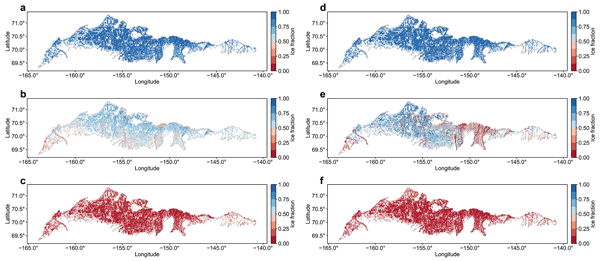
Ice cover on small water bodies is highly sensitive to climate change and influences ecosystems, water, and the carbon cycle. We produced a satellite-based ice fraction dataset for small water bodies on the Arctic Coastal Plain from 2017 to 2023. The dataset captures freeze-up and break-up timing and reveals spatial variability. It will support studies of climate–ice interactions and improve models of water and carbon processes.
Caleb G. Pan, Kristofer Lasko, Sean P. Griffin, John S. Kimball, Jinyang Du, Tate G. Meehan, and Peter B. Kirchner
The Cryosphere, 19, 2797–2819, https://doi.org/10.5194/tc-19-2797-2025, https://doi.org/10.5194/tc-19-2797-2025, 2025
Short summary
Short summary
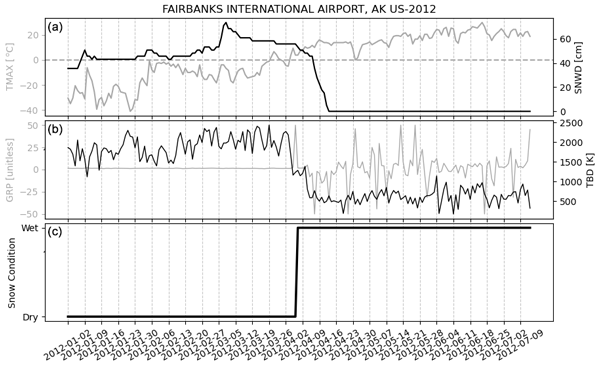
This study examines 35 years of snow cover changes in Alaska’s Yukon River Basin using machine learning to track snowmelt timing and disappearance. Results show snow is melting earlier and disappearing faster due to rising temperatures, highlighting the effects of climate change on water resources, ecosystems, and communities. The findings improve understanding of snow dynamics and provide critical insights for addressing climate-driven challenges in the region.
Rémi Madelon, K. Arthur Endsley, John S. Kimball, Gabriëlle J. M. De Lannoy, Oliver Sonnentag, Haley Alcock, Alex Mavrovic, Scott N. Williamson, Vincent Maire, Arnaud Mialon, and Alexandre Roy
Biogeosciences, 23, 6359–6407, https://doi.org/10.5194/bg-23-6359-2026, https://doi.org/10.5194/bg-23-6359-2026, 2026
Short summary
Short summary
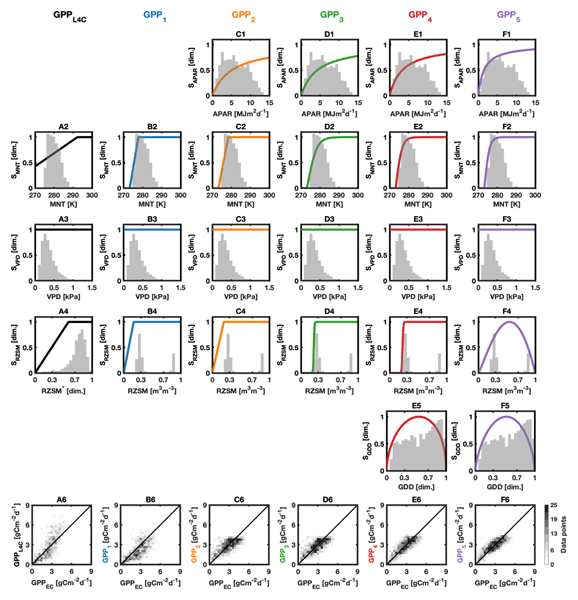
This study aims to improve estimates of carbon dioxide release and uptake in the North American Arctic and subarctic regions. Several modeling approaches were tested, showing that a better representation of sunlight and temperature effects on ecosystems leads to improved estimates. This work provides new perspectives to better assess whether these regions act as sources or sinks of greenhouse gases and how they may influence the climate system by amplifying or slowing global warming.
Kai-Ting Hu, Jonathan A. Wang, Xiaoran Zhu, Wanwan Liang, Douglas C. Morton, Jinhyuk Kim, James Randerson, and Mark A. Friedl
EGUsphere, https://doi.org/10.5194/egusphere-2026-4090, https://doi.org/10.5194/egusphere-2026-4090, 2026
This preprint is open for discussion and under review for Earth Observation (EO).
Short summary
Short summary
Forests across Canada and Alaska are changing as the climate warms and wildfires grow more intense, but how much and where has been unclear. Using satellite images spanning 35 years, we found that nearly 11 percent of Canada and Alaska changed in land cover between 1986 and 2020. Evergreen forests shrank while deciduous trees and shrubs spread, especially after fires. These shifts are reshaping vast northern landscapes and could influence the wider climate for decades to come.
Christine L. Olson, Kevin Schaefer, Alyssa Azaroff, Hélène Angot, Sasiri Bandara, Thomas A. Douglas, Bo Elberling, Maria Florencia Fahnestock, Xinbin Feng, Charlotte Haugk, Gustaf Hugelius, Erfan Jahangir, Sofi Jonsson, Shichang Kang, Adam Kirkwood, Jennifer Korosi, Igor Lehnherr, Artem Lim, Rinat Manasypov, Dmitriy Moskovchenko, Mina Nasr, Daniel Obrist, David Olefeldt, Connor Olson, Oleg Pokrovsky, Laura Sereni, Sarah Shakil, M. Isabel Smith, Jens Søndergaard, Jeroen Sonke, Kasia Staniszewska, Jens Strauss, Kyra St. Pierre, Lauren Thompson, Andrey Yurtaev, Yanxu Zhang, and Scott Zolkos
Earth Syst. Sci. Data, 18, 4509–4522, https://doi.org/10.5194/essd-18-4509-2026, https://doi.org/10.5194/essd-18-4509-2026, 2026
Short summary
Short summary
Permafrost regions store large amounts of mercury, a toxic pollutant that can be released as the ground warms. We combined thousands of measurements from soils, plants, water, and lake sediments into one open database to better understand where mercury is stored and how it moves. The results show clear differences among environments and reveal major data gaps, helping improve future research, monitoring, and decision-making.
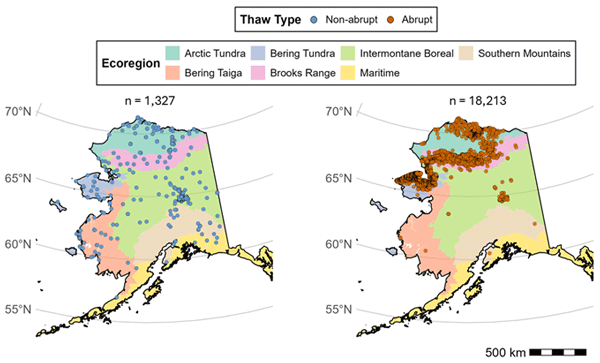
Hailey Webb, Ethan Pierce, Benjamin W. Abbott, William B. Bowden, Yaping Chen, Yating Chen, Thomas A. Douglas, Joel F. Eklof, Eugénie S. Euskirchen, Moritz Langer, Isla H. Myers-Smith, Irina Overeem, Jens Strauss, Katey Walter Anthony, Kang Wang, Matthew A. Whitley, and Merritt R. Turetsky
Earth Syst. Sci. Data, 18, 3147–3164, https://doi.org/10.5194/essd-18-3147-2026, https://doi.org/10.5194/essd-18-3147-2026, 2026
Short summary
Short summary
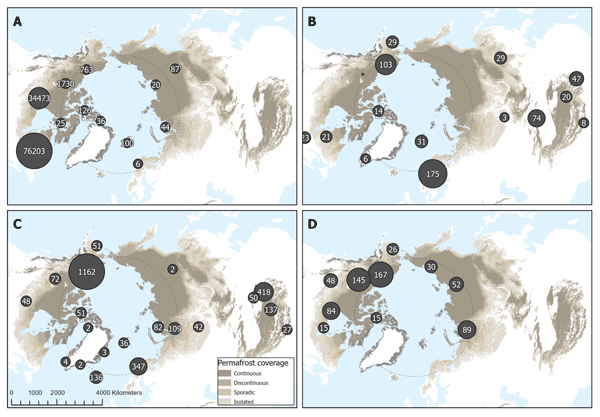
We created a database of 19,540 thawing permafrost sites across Alaska, including both abrupt and non-abrupt thaw features and explored relationships with elevation, slope, and incoming solar radiation. We use the database to show that existing ground ice maps are too coarse to predict abrupt thaw risk. This database can enhance predictions of future thaw and guide planning and adaptation strategies.
Hong Lin, Jinyang Du, John S. Kimball, Xiao Cheng, J. Patrick Donnelly, Jennifer D. Watts, and Annett Bartsch
Earth Syst. Sci. Data, 18, 535–549, https://doi.org/10.5194/essd-18-535-2026, https://doi.org/10.5194/essd-18-535-2026, 2026
Short summary
Short summary
Ice cover on small water bodies is highly sensitive to climate change and influences ecosystems, water, and the carbon cycle. We produced a satellite-based ice fraction dataset for small water bodies on the Arctic Coastal Plain from 2017 to 2023. The dataset captures freeze-up and break-up timing and reveals spatial variability. It will support studies of climate–ice interactions and improve models of water and carbon processes.
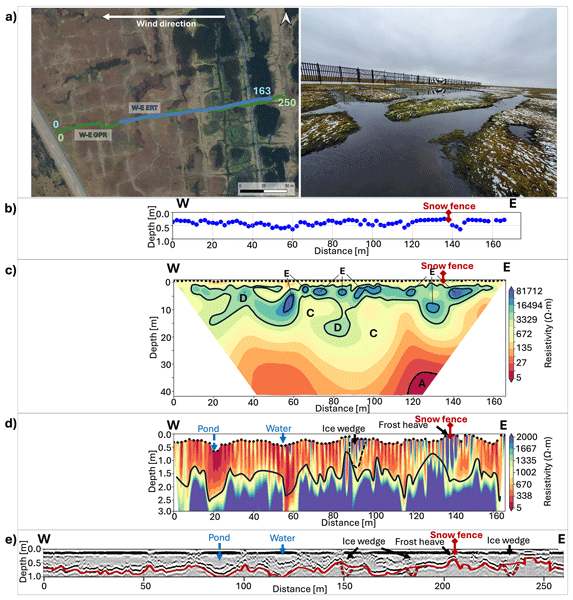
Valentina Ekimova, MacKenzie A. Nelson, Taylor Sullivan, Thomas A. Douglas, Howard E. Epstein, and Matthew G. Jull
The Cryosphere, 20, 265–283, https://doi.org/10.5194/tc-20-265-2026, https://doi.org/10.5194/tc-20-265-2026, 2026
Short summary
Short summary
Permafrost beneath Arctic communities is highly sensitive to surface heat and moisture. Geophysics at four Utqiaġvik (Alaska) sites shows that infrastructure – buildings, roads, snow fences – reshapes snow and drainage, redirecting heat and water. Thaw deepens near disturbed ground, while undisturbed, vegetated terrain stays shallower or heaves. Local land use and surface conditions can outweigh regional climate signals, guiding design, maintenance, and risk planning for Arctic infrastructure.
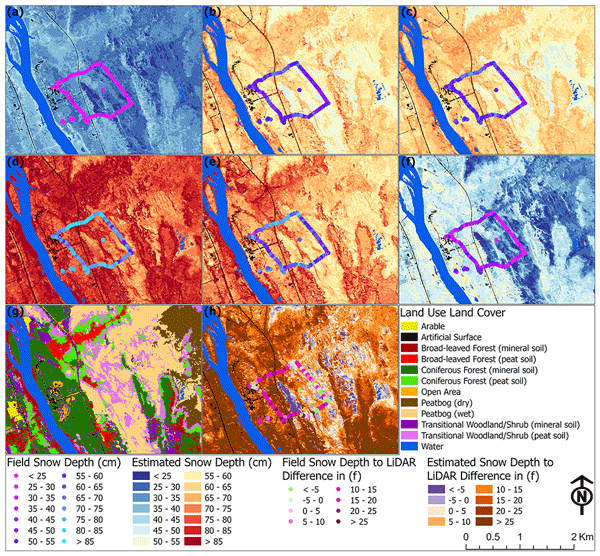
David Brodylo, Lauren V. Bosche, Ryan R. Busby, Elias J. Deeb, Thomas A. Douglas, and Juha Lemmetyinen
The Cryosphere, 19, 6127–6148, https://doi.org/10.5194/tc-19-6127-2025, https://doi.org/10.5194/tc-19-6127-2025, 2025
Short summary
Short summary
We combined field-based snow depth and snow water equivalent (SWE) measurements, remote sensing data, and machine learning to estimate snow depth and SWE over a 10 km2 local scale area in Sodankylä, Finland. Associations were found for snow depth and SWE with carbon- and mineral-based forest surface soils, alongside dry and wet peatbogs. This approach to upscale field-based snow depth and SWE measurements to a local scale can be used in regions that regularly experience snowfall.
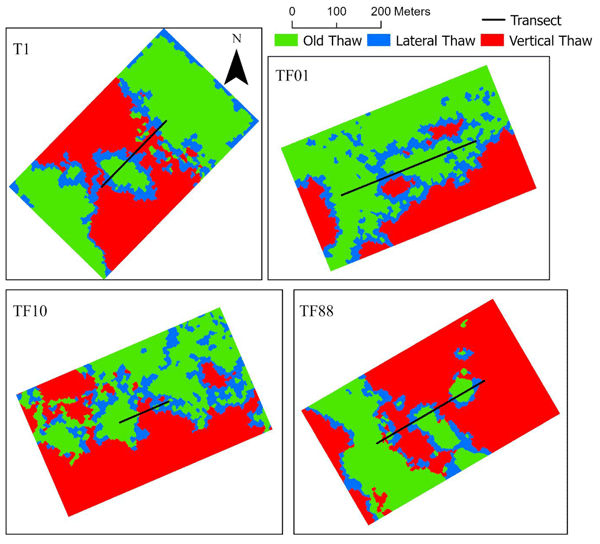
Thomas A. Douglas, M. Torre Jorgenson, Taylor Sullivan, and Caiyun Zhang
The Cryosphere, 19, 3991–4009, https://doi.org/10.5194/tc-19-3991-2025, https://doi.org/10.5194/tc-19-3991-2025, 2025
Short summary
Short summary
Permafrost thaw across Earth's high latitudes is leading to dramatic changes in vegetation and hydrology. We undertook a two-decade-long study on the Tanana Flats near Fairbanks, Alaska, to measure permafrost thaw and associated ground surface subsidence via field-based and remote-sensing techniques. The study identified strengths and limitations of the three methods we used to quantify permafrost thaw degradation.
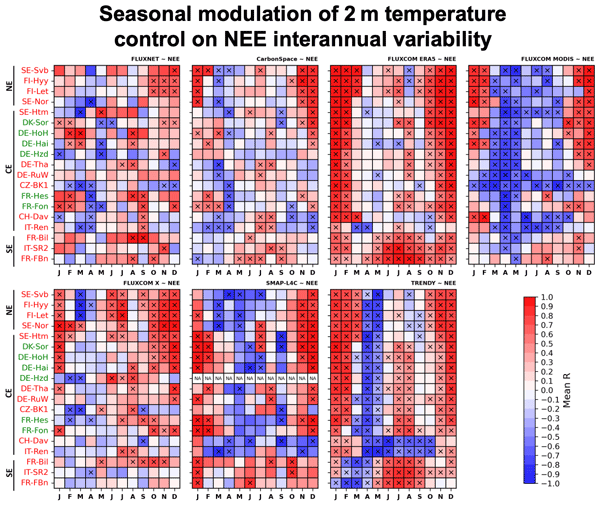
Asmat Ullah, Julien Crétat, Gaïa Michel, Olivier Mathieu, Mathieu Thevenot, Andrey Dara, Robert Granat, Zhendong Wu, Clément Bonnefoy-Claudet, Julianne Capelle, Jean Cacot, and John S. Kimball
Biogeosciences, 22, 4135–4162, https://doi.org/10.5194/bg-22-4135-2025, https://doi.org/10.5194/bg-22-4135-2025, 2025
Short summary
Short summary
We analyse how climate drives seasonal and interannual CO2 flux variability in European forests using data from 19 sites and both process-based and data-driven models. The impact of climate on the CO2 flux annual cycle is strong and quite similar across Europe. On the other hand, the impact of climate on year-to-year CO2 flux variability depends on the region and the season, with reversed correlations between spring and summer in northern and central Europe.
Caleb G. Pan, Kristofer Lasko, Sean P. Griffin, John S. Kimball, Jinyang Du, Tate G. Meehan, and Peter B. Kirchner
The Cryosphere, 19, 2797–2819, https://doi.org/10.5194/tc-19-2797-2025, https://doi.org/10.5194/tc-19-2797-2025, 2025
Short summary
Short summary
This study examines 35 years of snow cover changes in Alaska’s Yukon River Basin using machine learning to track snowmelt timing and disappearance. Results show snow is melting earlier and disappearing faster due to rising temperatures, highlighting the effects of climate change on water resources, ecosystems, and communities. The findings improve understanding of snow dynamics and provide critical insights for addressing climate-driven challenges in the region.
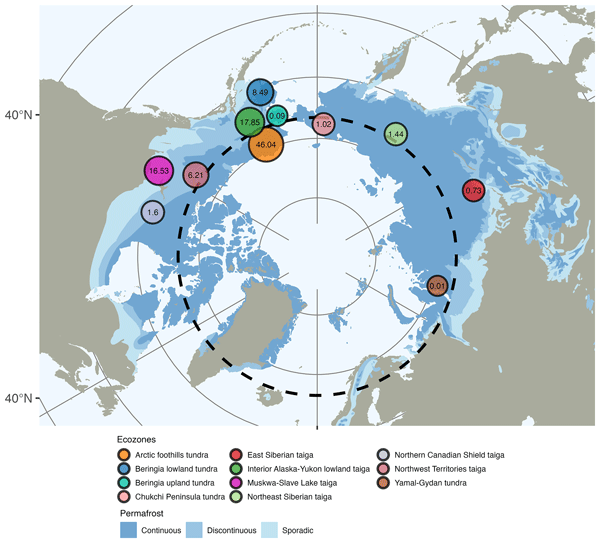
Anna C. Talucci, Michael M. Loranty, Jean E. Holloway, Brendan M. Rogers, Heather D. Alexander, Natalie Baillargeon, Jennifer L. Baltzer, Logan T. Berner, Amy Breen, Leya Brodt, Brian Buma, Jacqueline Dean, Clement J. F. Delcourt, Lucas R. Diaz, Catherine M. Dieleman, Thomas A. Douglas, Gerald V. Frost, Benjamin V. Gaglioti, Rebecca E. Hewitt, Teresa Hollingsworth, M. Torre Jorgenson, Mark J. Lara, Rachel A. Loehman, Michelle C. Mack, Kristen L. Manies, Christina Minions, Susan M. Natali, Jonathan A. O'Donnell, David Olefeldt, Alison K. Paulson, Adrian V. Rocha, Lisa B. Saperstein, Tatiana A. Shestakova, Seeta Sistla, Oleg Sizov, Andrey Soromotin, Merritt R. Turetsky, Sander Veraverbeke, and Michelle A. Walvoord
Earth Syst. Sci. Data, 17, 2887–2909, https://doi.org/10.5194/essd-17-2887-2025, https://doi.org/10.5194/essd-17-2887-2025, 2025
Short summary
Short summary
Wildfires have the potential to accelerate permafrost thaw and the associated feedbacks to climate change. We assembled a dataset of permafrost thaw depth measurements from burned and unburned sites contributed by researchers from across the northern high-latitude region. We estimated maximum thaw depth for each measurement, which addresses a key challenge: the ability to assess impacts of wildfire on maximum thaw depth when measurement timing varies.
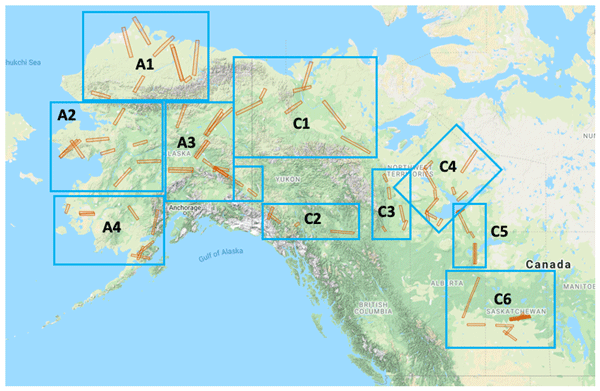
Charles E. Miller, Peter C. Griffith, Elizabeth Hoy, Naiara S. Pinto, Yunling Lou, Scott Hensley, Bruce D. Chapman, Jennifer Baltzer, Kazem Bakian-Dogaheh, W. Robert Bolton, Laura Bourgeau-Chavez, Richard H. Chen, Byung-Hun Choe, Leah K. Clayton, Thomas A. Douglas, Nancy French, Jean E. Holloway, Gang Hong, Lingcao Huang, Go Iwahana, Liza Jenkins, John S. Kimball, Tatiana Loboda, Michelle Mack, Philip Marsh, Roger J. Michaelides, Mahta Moghaddam, Andrew Parsekian, Kevin Schaefer, Paul R. Siqueira, Debjani Singh, Alireza Tabatabaeenejad, Merritt Turetsky, Ridha Touzi, Elizabeth Wig, Cathy J. Wilson, Paul Wilson, Stan D. Wullschleger, Yonghong Yi, Howard A. Zebker, Yu Zhang, Yuhuan Zhao, and Scott J. Goetz
Earth Syst. Sci. Data, 16, 2605–2624, https://doi.org/10.5194/essd-16-2605-2024, https://doi.org/10.5194/essd-16-2605-2024, 2024
Short summary
Short summary
NASA’s Arctic Boreal Vulnerability Experiment (ABoVE) conducted airborne synthetic aperture radar (SAR) surveys of over 120 000 km2 in Alaska and northwestern Canada during 2017, 2018, 2019, and 2022. This paper summarizes those results and provides links to details on ~ 80 individual flight lines. This paper is presented as a guide to enable interested readers to fully explore the ABoVE L- and P-band SAR data.
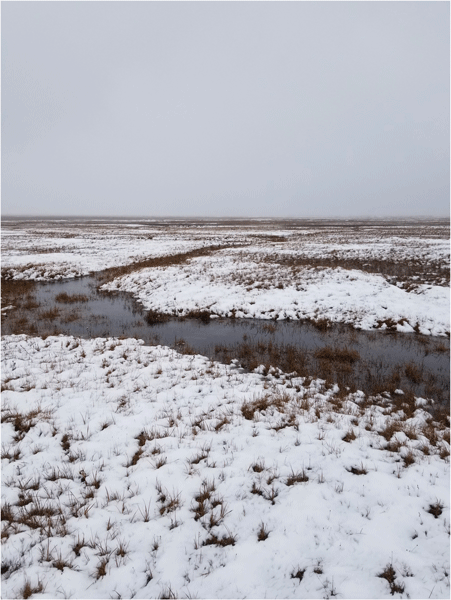
Kevin R. Barry, Thomas C. J. Hill, Marina Nieto-Caballero, Thomas A. Douglas, Sonia M. Kreidenweis, Paul J. DeMott, and Jessie M. Creamean
Atmos. Chem. Phys., 23, 15783–15793, https://doi.org/10.5194/acp-23-15783-2023, https://doi.org/10.5194/acp-23-15783-2023, 2023
Short summary
Short summary
Ice-nucleating particles (INPs) are important for the climate due to their influence on cloud properties. To understand potential land-based sources of them in the Arctic, we carried out a survey near the northernmost point of Alaska, a landscape connected to the permafrost (thermokarst). Permafrost contained high concentrations of INPs, with the largest values near the coast. The thermokarst lakes were found to emit INPs, and the water contained elevated concentrations.
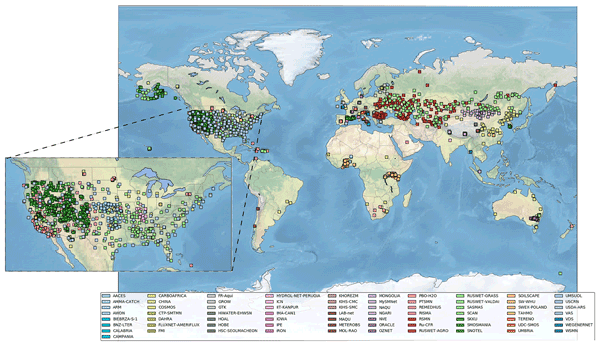
Wouter Dorigo, Irene Himmelbauer, Daniel Aberer, Lukas Schremmer, Ivana Petrakovic, Luca Zappa, Wolfgang Preimesberger, Angelika Xaver, Frank Annor, Jonas Ardö, Dennis Baldocchi, Marco Bitelli, Günter Blöschl, Heye Bogena, Luca Brocca, Jean-Christophe Calvet, J. Julio Camarero, Giorgio Capello, Minha Choi, Michael C. Cosh, Nick van de Giesen, Istvan Hajdu, Jaakko Ikonen, Karsten H. Jensen, Kasturi Devi Kanniah, Ileen de Kat, Gottfried Kirchengast, Pankaj Kumar Rai, Jenni Kyrouac, Kristine Larson, Suxia Liu, Alexander Loew, Mahta Moghaddam, José Martínez Fernández, Cristian Mattar Bader, Renato Morbidelli, Jan P. Musial, Elise Osenga, Michael A. Palecki, Thierry Pellarin, George P. Petropoulos, Isabella Pfeil, Jarrett Powers, Alan Robock, Christoph Rüdiger, Udo Rummel, Michael Strobel, Zhongbo Su, Ryan Sullivan, Torbern Tagesson, Andrej Varlagin, Mariette Vreugdenhil, Jeffrey Walker, Jun Wen, Fred Wenger, Jean Pierre Wigneron, Mel Woods, Kun Yang, Yijian Zeng, Xiang Zhang, Marek Zreda, Stephan Dietrich, Alexander Gruber, Peter van Oevelen, Wolfgang Wagner, Klaus Scipal, Matthias Drusch, and Roberto Sabia
Hydrol. Earth Syst. Sci., 25, 5749–5804, https://doi.org/10.5194/hess-25-5749-2021, https://doi.org/10.5194/hess-25-5749-2021, 2021
Short summary
Short summary
The International Soil Moisture Network (ISMN) is a community-based open-access data portal for soil water measurements taken at the ground and is accessible at https://ismn.earth. Over 1000 scientific publications and thousands of users have made use of the ISMN. The scope of this paper is to inform readers about the data and functionality of the ISMN and to provide a review of the scientific progress facilitated through the ISMN with the scope to shape future research and operations.
Cited articles
Bakian-Dogaheh, K., Chen, R. H., Yi, Y., Kimball, J. S., Moghaddam, M., and Tabatabaeenejad, A.: A model to characterize soil moisture and organic matter profiles in the permafrost active layer in support of radar remote sensing in Alaskan Arctic tundra, Environ. Res. Lett., 17, 025011, https://doi.org/10.1088/1748-9326/ac4e37, 2022.
Bakian-Dogaheh, K., Zhao, Y., Kimball, J. S., and Moghaddam, M.: Coupled hydrologic-electromagnetic framework to model permafrost active layer organic soil dielectric properties, Remote Sens. Environ., 318, 114560, https://doi.org/10.1016/j.rse.2024.114560, 2025.
Bakian-Dogaheh, K., Du, J., Endsley, K. A., Kim, J., De Sobrino, R., Tapia, J. N., Fulweber, R., Young, A. B., Kimball, J. S., and Moghaddam, M.: ABoVE: Active Layer Soil Properties and Multispectral Images, Imnavait Creek AK, 2024, version 1, ORNL Distributed Active Archive Center [data set], https://doi.org/10.3334/ORNLDAAC/2473 (last access: 6 August 2026), 2026.
Bonnaventure, P. P. and Lamoureux, S. F.: The active layer: A conceptual review of monitoring, modelling techniques and changes in a warming climate, Prog. Phys. Geogr., 37, 352–376, https://doi.org/10.1177/0309133313478314, 2013.
Breiman, L.: Random forests, Mach. Learn., 45, 5–32, https://doi.org/10.1023/A:1010933404324, 2001.
Brodylo, D., Douglas, T. A., and Zhang, C.: Quantification of active layer depth at multiple scales in Interior Alaska permafrost, Environ. Res. Lett., 19, 034013, https://doi.org/10.1088/1748-9326/ad264b, 2024.
Chen, R. H., Tabatabaeenejad, A., and Moghaddam, M.: Retrieval of permafrost active layer properties using time-series P-band radar observations, IEEE T. Geosci. Remote, 57, 6037–6054, https://doi.org/10.1109/TGRS.2019.2903935, 2019.
Clayton, L. K., Schaefer, K., Battaglia, M. J., Bourgeau-Chavez, L., Chen, J., Chen, R. H., Chen, A., Bakian-Dogaheh, K., Grelik, S., Jafarov, E., and Liu, L.: Active layer thickness as a function of soil water content, Environ. Res. Lett., 16, 055028, https://doi.org/10.1088/1748-9326/abfa4c, 2021.
Domine, F., Fourteau, K., Picard, G., Lackner, G., Sarrazin, D., and Poirier, M.: Permafrost cooled in winter by thermal bridging through snow-covered shrub branches, Nat. Geosci., 15, 554–560, https://doi.org/10.1038/s41561-022-00979-2, 2022.
Du, J., Watts, J. D., Jiang, L., Lu, H., Cheng, X., Duguay, C., Farina, M., Qiu, Y., Kim, Y., Kimball, J. S., and Tarolli, P.: Remote sensing of environmental changes in cold regions: Methods, achievements and challenges, Remote Sens., 11, 1952, https://doi.org/10.3390/rs11161952, 2019.
Du, J., Kimball, J. S., Guo, J. S., Kannenberg, S. A., Smith, W. K., Feldman, A., and Endsley, A.: Enhanced satellite monitoring of dryland vegetation water potential through multi-source sensor fusion, Geophys. Res. Lett., 51, e2024GL110385, https://doi.org/10.1029/2024GL110385, 2024.
Foster, A. C., Wang, J. A., Frost, G. V., Davidson, S. J., Hoy, E., Turner, K. W., Sonnentag, O., Epstein, H., Berner, L. T., Armstrong, A. H., and Kang, M.: Disturbances in North American boreal forest and Arctic tundra: impacts, interactions, and responses, Environ. Res. Lett., 17, 113001, https://doi.org/10.1088/1748-9326/ac98d7, 2022.
Gangodagamage, C., Rowland, J. C., Hubbard, S. S., Brumby, S. P., Liljedahl, A. K., Wainwright, H., Wilson, C. J., Altmann, G. L., Dafflon, B., Peterson, J., and Ulrich, C.: Extrapolating active layer thickness measurements across Arctic polygonal terrain using LiDAR and NDVI data sets, Water Resour. Res., 50, 6339–6357, https://doi.org/10.1002/2013WR014283, 2014.
Garibaldi, M. C., Bonnaventure, P. P., Smith, S. L., and Duchesne, C.: Active layer variability and change in the Mackenzie Valley, Northwest Territories between 1991–2014: An ecoregional assessment, Arct. Antarct. Alp. Res., 54, 274–293, https://doi.org/10.1080/15230430.2022.2097156, 2022.
Grant, R. F., Mekonnen, Z. A., Riley, W. J., Wainwright, H. M., Graham, D., and Torn, M. S.: Mathematical modelling of arctic polygonal tundra with ecosys: 1. Microtopography determines how active layer depths respond to changes in temperature and precipitation, J. Geophys. Res.-Biogeo., 122, 3161–3173, https://doi.org/10.1002/2017JG004037, 2017.
Grünberg, I., Wilcox, E. J., Zwieback, S., Marsh, P., and Boike, J.: Linking tundra vegetation, snow, soil temperature, and permafrost, Biogeosciences, 17, 4261–4279, https://doi.org/10.5194/bg-17-4261-2020, 2020.
Hantson, W., Yang, D., Serbin, S. P., Fisher, J. B., and Hayes, D. J.: Scaling Arctic landscape and permafrost features improves active layer depth modeling, Environ. Res. Ecol., 4, 015001, https://doi.org/10.1088/2752-664X/ad9f6c, 2025.
Heijmans, M. M., Magnússon, R. Í., Lara, M. J., Frost, G. V., Myers-Smith, I. H., van Huissteden, J., Jorgenson, M. T., Fedorov, A. N., Epstein, H. E., Lawrence, D. M., and Limpens, J.: Tundra vegetation change and impacts on permafrost, Nat. Rev. Earth Environ., 3, 68–84, https://doi.org/10.1038/s43017-021-00233-0, 2022.
Hinkel, K. M. and Nelson, F. E.: Spatial and temporal patterns of active layer thickness at Circumpolar Active Layer Monitoring (CALM) sites in northern Alaska, 1995–2000, J. Geophys. Res.-Atmos., 108, 8168, https://doi.org/10.1029/2001JD000927, 2003.
Kelley, A. M., Epstein, H. E., and Walker, D. A.: Role of vegetation and climate in permafrost active layer depth in arctic tundra of northern Alaska and Canada, J. Glaciol. Geocryol., 26, 269–274, 2004.
Kneisel, C., Hauck, C., Fortier, R., and Moorman, B.: Advances in geophysical methods for permafrost investigations, Permafr. Periglac. Process., 19, 157–178, https://doi.org/10.1002/ppp.616, 2008.
Koven, C. D., Riley, W. J., and Stern, A.: Analysis of permafrost thermal dynamics and response to climate change in the CMIP5 Earth System Models, J. Climate, 26, 1877–1900, https://doi.org/10.1175/JCLI-D-12-00228.1, 2013.
Kropp, H., Loranty, M. M., Natali, S. M., Kholodov, A. L., Rocha, A. V., Myers-Smith, I., Abbot, B. W., Abermann, J., Blanc-Betes, E., Blok, D., and Blume-Werry, G.: Shallow soils are warmer under trees and tall shrubs across Arctic and Boreal ecosystems, Environ. Res. Lett., 16, 015001, https://doi.org/10.1088/1748-9326/abc994, 2020.
Lawrence, D. M. and Swenson, S. C.: Permafrost response to increasing Arctic shrub abundance depends on the relative influence of shrubs on local soil cooling versus large-scale climate warming, Environ. Res. Lett., 6, 045504, https://doi.org/10.1088/1748-9326/6/4/045504, 2011.
Leibman, M. O., Khomutov, A. V., Orekhov, P. T., Khitun, O. V., Epstein, H., Frost, G., and Walker, D. A.: Gradient of seasonal thaw depth along the Yamal transect, Proc. Tenth Int. Conf. Permafr., 25, 237–242, 2012.
Lewkowicz, A. G., O'Neill, H. B., Wolfe, S. A., Roy-Léveillée, P., Roujanski, V. E., Hoeve, E., Gruber, S., Brooks, H., Rudy, A. C. A., Koenig, C. E. M., Brown, N., and Bonnaventure, P. P.: Glossary of Permafrost Science and Engineering, Canadian Permafrost Association, https://doi.org/10.3138/cpa-gpse, 2025.
Li, A., Tan, X., Wu, W., Liu, H., and Zhu, J.: Predicting active-layer soil thickness using topographic variables at a small watershed scale, Plos one, 12, e0183742, https://doi.org/10.1371/journal.pone.0183742, 2017.
Liu, Z., Kimball, J. S., Ballantyne, A., Watts, J. D., Natali, S. M., Rogers, B. M., Yi, Y., Klene, A. E., Moghaddam, M., Du, J., and Zona, D.: Widespread deepening of the active layer in northern permafrost regions from 2003 to 2020, Environ. Res. Lett., 19, 014020, https://doi.org/10.1088/1748-9326/ad0f73, 2024.
Loboda, T. V., Hoy, E. E., and Carroll, M. L.: ABoVE: Study Domain and Standard Reference Grids, Version 2.1, ORNL Distributed Active Archive Center [data set], https://doi.org/10.3334/ORNLDAAC/1527, 2017.
Loranty, M. M., Abbott, B. W., Blok, D., Douglas, T. A., Epstein, H. E., Forbes, B. C., Jones, B. M., Kholodov, A. L., Kropp, H., Malhotra, A., Mamet, S. D., Myers-Smith, I. H., Natali, S. M., O'Donnell, J. A., Phoenix, G. K., Rocha, A. V., Sonnentag, O., Tape, K. D., and Walker, D. A.: Reviews and syntheses: Changing ecosystem influences on soil thermal regimes in northern high-latitude permafrost regions, Biogeosciences, 15, 5287–5313, https://doi.org/10.5194/bg-15-5287-2018, 2018.
McFeeters, S. K.: The use of the Normalized Difference Water Index (NDWI) in the delineation of open water features, Int. J. Remote Sens., 17, 1425–1432, https://doi.org/10.1080/01431169608948714, 1996.
Miller, C. E., Griffith, P. C., Goetz, S. J., Hoy, E. E., Pinto, N., McCubbin, I. B., Thorpe, A. K., Hofton, M., Hodkinson, D., Hansen, C., Woods, J., Larson, E., Kasischke, E. S., and Margolis, H. A.: An overview of ABoVE airborne campaign data acquisitions and science opportunities, Environ. Res. Lett., 14, 080201, https://doi.org/10.1088/1748-9326/ab0d44, 2019.
Miller, C. E., Griffith, P. C., Hoy, E., Pinto, N. S., Lou, Y., Hensley, S., Chapman, B. D., Baltzer, J., Bakian-Dogaheh, K., Bolton, W. R., Bourgeau-Chavez, L., Chen, R. H., Choe, B.-H., Clayton, L. K., Douglas, T. A., French, N., Holloway, J. E., Hong, G., Huang, L., Iwahana, G., Jenkins, L., Kimball, J. S., Loboda, T., Mack, M., Marsh, P., Michaelides, R. J., Moghaddam, M., Parsekian, A., Schaefer, K., Siqueira, P. R., Singh, D., Tabatabaeenejad, A., Turetsky, M., Touzi, R., Wig, E., Wilson, C. J., Wilson, P., Wullschleger, S. D., Yi, Y., Zebker, H. A., Zhang, Y., Zhao, Y., and Goetz, S. J.: The ABoVE L-band and P-band airborne synthetic aperture radar surveys, Earth Syst. Sci. Data, 16, 2605–2624, https://doi.org/10.5194/essd-16-2605-2024, 2024.
Miner, K. R., Turetsky, M. R., Malina, E., Bartsch, A., Tamminen, J., McGuire, A. D., Fix, A., Sweeney, C., Elder, C. D., and Miller, C. E.: Permafrost carbon emissions in a changing Arctic, Nat. Rev. Earth Environ., 3, 55–67, https://doi.org/10.1038/s43017-021-00230-3, 2022.
Morse, P. D., Burn, C. R., and Kokelj, S. V.: Influence of snow on near-surface ground temperatures in upland and alluvial environments of the outer Mackenzie Delta, Northwest Territories, Can. J. Earth Sci., 49, 895–913, https://doi.org/10.1139/E2012-012, 2012.
Palmer, M. J., Burn, C. R., and Kokelj, S. V.: Factors influencing permafrost temperatures across tree line in the uplands east of the Mackenzie Delta, 2004–2010, Can. J. Earth Sci., 49, 877–894, https://doi.org/10.1139/E2012-002, 2012.
Peng, X., Zhang, T., Frauenfeld, O. W., Mu, C., Wang, K., Wu, X., Guo, D., Luo, J., Hjort, J., Aalto, J., and Karjalainen, O.: Active layer thickness and permafrost area projections for the 21st century, Earth's Future, 11, e2023EF003573, https://doi.org/10.1029/2023EF003573, 2023.
Porter, C., Morin, P., Howat, I., Noh, M. J., Bates, B., Peterman, K., Keesey, S., Schlenk, M., Gardiner, J., Tomko, K., and Willis, M.: ArcticDEM, Harvard Dataverse [data set], https://doi.org/10.7910/DVN/OHHUKH, 2018.
Rantanen, M., Karpechko, A. Y., Lipponen, A., Nordling, K., Hyvärinen, O., Ruosteenoja, K., Vihma, T., and Laaksonen, A.: The Arctic has warmed nearly four times faster than the globe since 1979, Commun. Earth Environ., 3, 168, https://doi.org/10.1038/s43247-022-00498-3, 2022.
Raynolds, M. K., Walker, D. A., Balser, A., Bay, C., Campbell, M., Cherosov, M. M., Daniëls, F. J., Eidesen, P. B., Ermokhina, K. A., Frost, G. V. and Jedrzejek, B.: A raster version of the Circumpolar Arctic Vegetation Map (CAVM), Remote Sens. Environ., 232, 111297, https://doi.org/10.1016/j.rse.2019.111297, 2019.
Rushlow, C. R., Sawyer, A. H., Voss, C. I., and Godsey, S. E.: The influence of snow cover, air temperature, and groundwater flow on the active-layer thermal regime of Arctic hillslopes drained by water tracks, Hydrogeol. J., 28, 2057–2069, https://doi.org/10.1007/s10040-020-02166-2, 2020.
Schaefer, K., Liu, L., Parsekian, A., Jafarov, E., Chen, A., Zhang, T., Gusmeroli, A., Panda, S., Zebker, H. A., and Schaefer, T.: Remotely sensed active layer thickness (ReSALT) at Barrow, Alaska using interferometric synthetic aperture radar, Remote Sens., 7, 3735–3759, https://doi.org/10.3390/rs70403735, 2015.
Schaefer, K., Clayton, L. K., Battaglia, M. J., Bourgeau-Chavez, L. L., Chen, R. H., Chen, A. C., Chen, J., Bakian-Dogaheh, K., Douglas, T. A., Grelick, S. E., and Iwahana, G.: ABoVE: Soil moisture and active layer thickness in Alaska and NWT, Canada, 2008–2020, ORNL DAAC, Oak Ridge, Tennessee, USA, https://doi.org/10.3334/ORNLDAAC/1903, 2021.
Schramm, I., Boike, J., Bolton, W. R., and Hinzman, L. D.: Application of TopoFlow, a spatially distributed hydrological model, to the Imnavait Creek watershed, Alaska, J. Geophys. Res.-Biogeo., 112, G04S41, https://doi.org/10.1029/2006JG000326, 2007.
Schuur, E. A., Abbott, B. W., Commane, R., Ernakovich, J., Euskirchen, E., Hugelius, G., Grosse, G., Jones, M., Koven, C., Leshyk, V., and Lawrence, D.: Permafrost and climate change: Carbon cycle feedbacks from the warming Arctic, Annu. Rev. Environ. Resour., 47, 343–371, https://doi.org/10.1146/annurev-environ-012220-011847, 2022.
Schuuring, S., Halvorsen, R., Bronken Eidesen, P., Niittynen, P., Kemppinen, J., and Lang, S. I.: High Arctic vegetation communities with a thick moss layer slow active layer thaw, J. Geophys. Res.-Biogeo., 129, e2023JG007880, https://doi.org/10.1029/2023JG007880, 2024.
Smith, S. and Brown, J.: Assessment of the status of the development of the standards for the Terrestrial Essential Climate Variables – T7 – Permafrost and seasonally frozen ground, project report, International Permafrost Association (IPA), https://library.arcticportal.org/668/ (last access: 1 July 2025), 2009.
Tabatabaeenejad, A., Burgin, M., Duan, X., and Moghaddam, M.: P-band radar retrieval of subsurface soil moisture profile as a second-order polynomial: First AirMOSS results, IEEE T. Geosci. Remote, 53, 645–658, https://doi.org/10.1109/TGRS.2014.2326839, 2014.
Tucker, C. J.: Red and photographic infrared linear combinations for monitoring vegetation, Remote Sens. Environ., 8, 127–150, https://doi.org/10.1016/0034-4257(79)90013-0, 1979.
Turetsky, M. R., Abbott, B. W., Jones, M. C., Anthony, K. W., Olefeldt, D., Schuur, E. A., Grosse, G., Kuhry, P., Hugelius, G., Koven, C., and Lawrence, D. M.: Carbon release through abrupt permafrost thaw, Nat. Geosci., 13, 138–143, https://doi.org/10.1038/s41561-019-0526-0, 2020.
Walker, D. A. and Walker, M. D.: Terrain and vegetation of the Imnavait Creek watershed, in: Landscape Function and Disturbance in Arctic Tundra, edited by: Reynolds, J. F. and Tenhunen, J. D., Ecological Studies, vol. 120, Springer, Berlin, Heidelberg, https://doi.org/10.1007/978-3-662-01145-4_4, 1996.
Way, R. G. and Lapalme, C. M.: Does tall vegetation warm or cool the ground surface? Constraining the ground thermal impacts of upright vegetation in northern environments, Environ. Res. Lett., 16, 054077, https://doi.org/10.1088/1748-9326/abef31, 2021
Widhalm, B., Bartsch, A., Leibman, M., and Khomutov, A.: Active-layer thickness estimation from X-band SAR backscatter intensity, The Cryosphere, 11, 483–496, https://doi.org/10.5194/tc-11-483-2017, 2017.
Yi, Y., Kimball, J. S., Watts, J. D., Natali, S. M., Zona, D., Liu, J., Ueyama, M., Kobayashi, H., Oechel, W., and Miller, C. E.: Investigating the sensitivity of soil heterotrophic respiration to recent snow cover changes in Alaska using a satellite-based permafrost carbon model, Biogeosciences, 17, 5861–5882, https://doi.org/10.5194/bg-17-5861-2020, 2020.
Yi, Y., Chen, R. H., Moghaddam, M., Kimball, J. S., Jones, B. M., Jandt, R. R., Miller, E. A., and Miller, C. E.: Sensitivity of multifrequency polarimetric SAR data to postfire permafrost changes and recovery processes in Arctic tundra, IEEE T. Geosci. Remote, 60, 1–15, https://doi.org/10.1109/TGRS.2021.3125715, 2021.
Zhang, C., Douglas, T. A., and Anderson, J. E.: Modeling and mapping permafrost active layer thickness using field measurements and remote sensing techniques, Int. J. Appl. Earth Obs., 102, 102455, https://doi.org/10.1016/j.jag.2021.102455, 2021.
Zhang, T., Frauenfeld, O. W., Serreze, M. C., Etringer, A., Oelke, C., McCreight, J., Barry, R. G., Gilichinsky, D., Yang, D., Ye, H., and Ling, F.: Spatial and temporal variability in active layer thickness over the Russian Arctic drainage basin, J. Geophys. Res.-Atmos., 110, D16102, https://doi.org/10.1029/2004JD005642, 2005.
Short summary
Active layer thickness (ALT) is a sensitive indicator of the thawing Alaskan frozen soil, which may lead to increased greenhouse gas emissions, vegetation changes, and infrastructure damage. This study represents a multi-scale assessment of ALT spatial variations using observations including intensive field sampling, and drone, airborne and satellite remote sensing. Our study allows for improved interpretation of remote sensing and process-based ALT simulations for the changing Arctic.
Active layer thickness (ALT) is a sensitive indicator of the thawing Alaskan frozen soil, which...


