Articles | Volume 20, issue 7
https://doi.org/10.5194/tc-20-3959-2026
© Author(s) 2026. This work is distributed under
the Creative Commons Attribution 4.0 License.
https://doi.org/10.5194/tc-20-3959-2026
© Author(s) 2026. This work is distributed under
the Creative Commons Attribution 4.0 License.
Local-scale variability in snow chemistry drives distinct microbial communities in Alpine seasonal snowpack

Anastasiia Kosolapova
CORRESPONDING AUTHOR
Microbiome Adaptation to the Changing Environment (MACE) laboratory, Alpine and Polar Environmental Research Centre (ALPOLE), École Polytechnique Fédérale de Lausanne (EPFL), Sion, 1951, Switzerland
Romain Castro
Microbiome Adaptation to the Changing Environment (MACE) laboratory, Alpine and Polar Environmental Research Centre (ALPOLE), École Polytechnique Fédérale de Lausanne (EPFL), Sion, 1951, Switzerland
Ferran Romero
Microbiome Adaptation to the Changing Environment (MACE) laboratory, Alpine and Polar Environmental Research Centre (ALPOLE), École Polytechnique Fédérale de Lausanne (EPFL), Sion, 1951, Switzerland
Catherine Larose
Institut des Géosciences de l'Environnement (IGE) CNRS, UGA, IRD, INRAE, Grenoble INP, 38058, Grenoble CEDEX, France
Ianina Altshuler
CORRESPONDING AUTHOR
Microbiome Adaptation to the Changing Environment (MACE) laboratory, Alpine and Polar Environmental Research Centre (ALPOLE), École Polytechnique Fédérale de Lausanne (EPFL), Sion, 1951, Switzerland
Related authors
No articles found.
Sławomir Sułowicz, Krzysztof Zawierucha, Anna Markowicz, Krystyna Kozioł, Wiktoria Zientak, Adam Nawrot, Krzesimir Tomaszewski, Christoph Keuschnig, Bartłomiej Luks, and Catherine Larose
Biogeosciences, 23, 3023–3038, https://doi.org/10.5194/bg-23-3023-2026, https://doi.org/10.5194/bg-23-3023-2026, 2026
Short summary
Short summary
Our research shows that animals such as birds and mammals shaping the bacteria community structure found in Arctic snow. By analyzing snow samples from coastal Spitsbergen, we found that microbes linked to animal waste were common and influenced the types of bacteria present. This suggests that wildlife, not just wind or air, helps bring microbes into snow. Understanding this helps us better predict how Arctic ecosystems respond to environmental change and how life adapts in extreme conditions.
Nora Bergner, Grace Marsh, Kevin Barry, Larissa Lacher, Alexander Böhmländer, Joanna Alden, Carina Ahlqvist, Ianina Altshuler, Lisa Bröder, Daniel Farinotti, Lionel Favre, Coline Guillosson, Benjamin Heutte, Kristina Höhler, Roman Pohorsky, Julian Weng, and Julia Schmale
EGUsphere, https://doi.org/10.5194/egusphere-2026-484, https://doi.org/10.5194/egusphere-2026-484, 2026
Short summary
Short summary
Dust from Greenlandic glacial outwash plains can form ice in clouds, a process relevant for climate. Its ice-nucleating activity varies strongly and is largely controlled by small amounts of biological material. During summer, the influence on atmospheric ice-nucleating particles is mostly local. Lower activity compared to other high-latitude dust sources highlights the need to account for regional differences in Arctic dust.
Lisa Ardoin, Catherine Larose, Jean-Louis Tison, Christoph Keuschnig, Vasileios Gkinis, Saïda El Amri, Pierre-Henry Blard, Paul Bierman, Thomas Blunier, Dorthe Dahl-Jensen, Charlotte Maistriau, Jørgen-Peder Steffensen, Thomas Röckmann, and François Fripiat
EGUsphere, https://doi.org/10.5194/egusphere-2025-6204, https://doi.org/10.5194/egusphere-2025-6204, 2026
Short summary
Short summary
We investigated gas dynamics at the ice–bed interface of two Greenland ice cores to assess methane and carbon dioxide behaviour beneath ice sheets. At Camp Century, methane diffuses into the ice and is partly oxidized. At GRIP, methane remains preserved despite oxygen. These contrasts suggest that methane oxidation is controlled by local basal conditions, including ice thickness and substrate availability.
Cited articles
Ammann, C. and Valach, A.: Ammonia Emissions from Swiss Agriculture and their Effects on Atmospheric Chemistry and Ecosystems, Chimia, 78, 771–779, https://doi.org/10.2533/chimia.2024.771, 2024.
Amoroso, A., Domine, F., Esposito, G., Morin, S., Savarino, J., Nardino, M., Montagnoli, M., Bonneville, J.-M., Clement, J.-C., Ianniello, A., and Beine, H. J.: Microorganisms in Dry Polar Snow Are Involved in the Exchanges of Reactive Nitrogen Species with the Atmosphere, Environ. Sci. Technol., 44, 714–719, https://doi.org/10.1021/es9027309, 2010.
Bakermans, C. and Skidmore, M. L.: Microbial Metabolism in Ice and Brine at −5 °C, Environ. Microbiol., 13, 2269–2278, https://doi.org/10.1111/j.1462-2920.2011.02485.x, 2011.
Barnett, T. P., Adam, J. C., and Lettenmaier, D. P.: Potential impacts of a warming climate on water availability in snow-dominated regions, Nature, 438, 303–309, https://doi.org/10.1038/nature04141, 2005.
Barry, R. G.: Mountain weather and climate, 2nd ed., Routledge, London, New York, 402 pp., ISBN 0-203-72426-7, 1992.
Barry, R. G. and Gan, T. Y.: The global cryosphere: past, present, and future, Cambridge University Press, ISBN 1-108-48755-6, 2022.
Bauer, H., Kasper-Giebl, A., Löflund, M., Giebl, H., Hitzenberger, R., Zibuschka, F., and Puxbaum, H.: The contribution of bacteria and fungal spores to the organic carbon content of cloud water, precipitation and aerosols, Atmos. Res., 64, 109–119, https://doi.org/10.1016/S0169-8095(02)00084-4, 2002.
Brown, S. P. and Jumpponen, A.: Microbial Ecology of Snow Reveals Taxa-Specific Biogeographical Structure, Microb. Ecol, 77, 946–958, https://doi.org/10.1007/s00248-019-01357-z, 2019.
Carpenter, E. J., Lin, S., and Capone, D. G.: Bacterial Activity in South Pole Snow, Appl. Environ. Microb., 66, 4514–4517, https://doi.org/10.1128/AEM.66.10.4514-4517.2000, 2000.
Dambrine, E., Arthaud, F., Avrillier, J.-N., Millery, A., and Nicolas, M.: Altitudinal and Latitudinal Variations of Snowpack N Concentration over the French Alps, Water Air Soil Poll., 229, 250, https://doi.org/10.1007/s11270-018-3853-7, 2018.
Davis, N. M., Proctor, D. M., Holmes, S. P., Relman, D. A., and Callahan, B. J.: Simple statistical identification and removal of contaminant sequences in marker-gene and metagenomics data, Microbiome, 6, 226, https://doi.org/10.1186/s40168-018-0605-2, 2018.
Els, N., Larose, C., Baumann-Stanzer, K., Tignat-Perrier, R., Keuschnig, C., Vogel, T. M., and Sattler, B.: Microbial composition in seasonal time series of free tropospheric air and precipitation reveals community separation, Aerobiologia, 35, 671–701, https://doi.org/10.1007/s10453-019-09606-x, 2019.
Els, N., Greilinger, M., Reisecker, M., Tignat-Perrier, R., Baumann-Stanzer, K., Kasper-Giebl, A., Sattler, B., and Larose, C.: Comparison of Bacterial and Fungal Composition and Their Chemical Interaction in Free Tropospheric Air and Snow Over an Entire Winter Season at Mount Sonnblick, Austria, Front. Microbiol., 11, https://doi.org/10.3389/fmicb.2020.00980, 2020.
Ezraty, B., Gennaris, A., Barras, F., and Collet, J.-F.: Oxidative stress, protein damage and repair in bacteria, Nat. Rev. Microbiol., 15, 385–396, https://doi.org/10.1038/nrmicro.2017.26, 2017.
Fayad, A., Gascoin, S., Faour, G., López-Moreno, J. I., Drapeau, L., Page, M. L., and Escadafal, R.: Snow hydrology in Mediterranean mountain regions: A review, J. Hydrol., 551, 374–396, https://doi.org/10.1016/j.jhydrol.2017.05.063, 2017.
Filippa, G., Freppaz, M., Williams, M. W., and Zanini, E.: Major element chemistry in inner alpine snowpacks (Aosta Valley Region, NW Italy), Cold Reg. Sci. Technol., 64, 158–166, https://doi.org/10.1016/j.coldregions.2010.07.005, 2010.
Fillinger, L., Hürkamp, K., Stumpp, C., Weber, N., Forster, D., Hausmann, B., Schultz, L., and Griebler, C.: Spatial and Annual Variation in Microbial Abundance, Community Composition, and Diversity Associated With Alpine Surface Snow, Front. Microbiol., 12, https://doi.org/10.3389/fmicb.2021.781904, 2021.
Grannas, A. M., Jones, A. E., Dibb, J., Ammann, M., Anastasio, C., Beine, H. J., Bergin, M., Bottenheim, J., Boxe, C. S., Carver, G., Chen, G., Crawford, J. H., Dominé, F., Frey, M. M., Guzmán, M. I., Heard, D. E., Helmig, D., Hoffmann, M. R., Honrath, R. E., Huey, L. G., Hutterli, M., Jacobi, H. W., Klán, P., Lefer, B., McConnell, J., Plane, J., Sander, R., Savarino, J., Shepson, P. B., Simpson, W. R., Sodeau, J. R., von Glasow, R., Weller, R., Wolff, E. W., and Zhu, T.: An overview of snow photochemistry: evidence, mechanisms and impacts, Atmos. Chem. Phys., 7, 4329–4373, https://doi.org/10.5194/acp-7-4329-2007, 2007.
Greilinger, M., Schöner, W., Winiwarter, W., and Kasper-Giebl, A.: Temporal changes of inorganic ion deposition in the seasonal snow cover for the Austrian Alps (1983–2014), Atmos. Environ., 132, 141–152, https://doi.org/10.1016/j.atmosenv.2016.02.040, 2016.
Harding, T., Jungblut, A. D., Lovejoy, C., and Vincent, W. F.: Microbes in High Arctic Snow and Implications for the Cold Biosphere, Appl. Environ. Microb., 77, 3234–3243, https://doi.org/10.1128/AEM.02611-10, 2011.
Helbig, N., Mott, R., Bühler, Y., Le Toumelin, L., and Lehning, M.: Snowfall deposition in mountainous terrain: a statistical downscaling scheme from high-resolution model data on simulated topographies, Front. Earth Sci., 11, 1308269, https://doi.org/10.3389/feart.2023.1308269, 2024.
Hell, K., Edwards, A., Zarsky, J., Podmirseg, S. M., Girdwood, S., Pachebat, J. A., Insam, H., and Sattler, B.: The dynamic bacterial communities of a melting High Arctic glacier snowpack, ISME J., 7, 1814–1826, https://doi.org/10.1038/ismej.2013.51, 2013.
Holland, A. T., Bergk Pinto, B., Layton, R., Williamson, C. J., Anesio, A. M., Vogel, T. M., Larose, C., and Tranter, M.: Over Winter Microbial Processes in a Svalbard Snow Pack: An Experimental Approach, Front. Microbiol., 11, https://doi.org/10.3389/fmicb.2020.01029, 2020.
Huss, M. and Hock, R.: Global-scale hydrological response to future glacier mass loss, Nat. Clim. Change, 8, 135–140, https://doi.org/10.1038/s41558-017-0049-x, 2018.
Jacobi, H.-W. and Hilker, B.: A mechanism for the photochemical transformation of nitrate in snow, J. Photoch. Photobio. A, 185, 371–382, https://doi.org/10.1016/j.jphotochem.2006.06.039, 2007.
Keuschnig, C., Vogel, T. M., Barbaro, E., Spolaor, A., Koziol, K., Björkman, M. P., Zdanowicz, C., Gallet, J.-C., Luks, B., Layton, R., and Larose, C.: Selection processes of Arctic seasonal glacier snowpack bacterial communities, Microbiome, 11, 35, https://doi.org/10.1186/s40168-023-01473-6, 2023.
Kosolapova, A.: Microbial community composition of the seasonal snowpack in the Swiss Alps, Zenodo [data set] and [code], https://doi.org/10.5281/zenodo.17249708, 2025.
Kosolapova, A. and Altshuler, I.: Effects of reduced snowpack due to climate warming on abiotic and biotic soil properties in alpine and boreal forest systems, PLOS Clim., 3, e0000417, https://doi.org/10.1371/journal.pclm.0000417, 2024.
Krnavek, L., Simpson, W. R., Carlson, D., Domine, F., Douglas, T. A., and Sturm, M.: The chemical composition of surface snow in the Arctic: Examining marine, terrestrial, and atmospheric influences, Atmos. Environ., 50, 349–359, https://doi.org/10.1016/j.atmosenv.2011.11.033, 2012.
Kuhn, M.: The nutrient cycle through snow and ice, a review, Aquat. Sci., 63, 150–167, https://doi.org/10.1007/PL00001348, 2001.
Lafrenière, M. J. and Sinclair, K. E.: Snowpack and precipitation chemistry at a high altitude site in the Canadian Rocky Mountains, J. Hydrol., 409, 737–748, https://doi.org/10.1016/j.jhydrol.2011.09.007, 2011.
Lange-Enyedi, N. T., Németh, P., Borsodi, A. K., Spötl, C., and Makk, J.: Calcium carbonate precipitating extremophilic bacteria in an Alpine ice cave, Sci. Rep., 14, 2710, https://doi.org/10.1038/s41598-024-53131-y, 2024.
Langfelder, P. and Horvath, S.: WGCNA: an R package for weighted correlation network analysis, BMC Bioinformatics, 9, 559, https://doi.org/10.1186/1471-2105-9-559, 2008.
Lappan, R., Thakar, J., Molares Moncayo, L., Besser, A., Bradley, J. A., Goordial, J., Trembath-Reichert, E., and Greening, C.: The atmosphere: a transport medium or an active microbial ecosystem?, ISME J., 18, wrae092, https://doi.org/10.1093/ismejo/wrae092, 2024.
Larose, C., Berger, S., Ferrari, C., Navarro, E., Dommergue, A., Schneider, D., and Vogel, T. M.: Microbial sequences retrieved from environmental samples from seasonal Arctic snow and meltwater from Svalbard, Norway, Extremophiles, 14, 205–212, https://doi.org/10.1007/s00792-009-0299-2, 2010.
Larose, C., Dommergue, A., and Vogel, T. M.: Microbial nitrogen cycling in Arctic snowpacks, Environ. Res. Lett., 8, 035004, https://doi.org/10.1088/1748-9326/8/3/035004, 2013.
Lazzaro, A., Wismer, A. O., Schneebeli, M., Erny, I., and Zeyer, J.: Microbial abundance and community structure in a melting alpine snowpack, Extremophiles, 19, 631–642, https://doi.org/10.1007/s00792-015-0744-3, 2015.
Lehning, M., Löwe, H., Ryser, M., and Raderschall, N.: Inhomogeneous precipitation distribution and snow transport in steep terrain, Water Resour. Res., 44, 2007WR006545, https://doi.org/10.1029/2007WR006545, 2008.
Lehning, M., Grünewald, T., and Schirmer, M.: Mountain snow distribution governed by an altitudinal gradient and terrain roughness, Geophys. Res. Lett., 38, https://doi.org/10.1029/2011GL048927, 2011.
Liu, C., Cui, Y., Li, X., and Yao, M.: microeco: an R package for data mining in microbial community ecology, FEMS Microbiol. Ecol., 97, https://doi.org/10.1093/femsec/fiaa255, 2021.
Lopatina, A., Krylenkov, V., and Severinov, K.: Activity and bacterial diversity of snow around Russian Antarctic stations, Res. Microbiol., 164, 949–958, https://doi.org/10.1016/j.resmic.2013.08.005, 2013.
Maccario, L., Lorrie Maccario, Lorrie Maccario, Vogel, T. M., and Larose, C.: Potential drivers of microbial community structure and function in Arctic spring snow, Front. Microbiol., 5, 413–413, https://doi.org/10.3389/fmicb.2014.00413, 2014.
Maccario, L., Sanguino, L., Vogel, T. M., and Larose, C.: Snow and ice ecosystems: not so extreme, Res. Microbiol., 166, 782–795, https://doi.org/10.1016/j.resmic.2015.09.002, 2015.
Maccario, L., Carpenter, S. D., Deming, J. W., Vogel, T. M., and Larose, C.: Sources and selection of snow-specific microbial communities in a Greenlandic sea ice snow cover, Sci. Rep., 9, 2290, https://doi.org/10.1038/s41598-019-38744-y, 2019.
Malard, L. A., Šabacká, M., Magiopoulos, I., Mowlem, M., Hodson, A., Tranter, M., Siegert, M. J., and Pearce, D. A.: Spatial Variability of Antarctic Surface Snow Bacterial Communities, Front. Microbiol., 10, https://doi.org/10.3389/fmicb.2019.00461, 2019.
Margesin, R. and Miteva, V.: Diversity and ecology of psychrophilic microorganisms, Res. Microbiol., 162, 346–361, https://doi.org/10.1016/j.resmic.2010.12.004, 2011.
Marty, C., Schlögl, S., Bavay, M., and Lehning, M.: How much can we save? Impact of different emission scenarios on future snow cover in the Alps, The Cryosphere, 11, 517–529, https://doi.org/10.5194/tc-11-517-2017, 2017.
McDonald, D., Jiang, Y., Balaban, M., Cantrell, K., Zhu, Q., Gonzalez, A., Morton, J. T., Nicolaou, G., Parks, D. H., Karst, S. M., Albertsen, M., Hugenholtz, P., DeSantis, T., Song, S. J., Bartko, A., Havulinna, A. S., Jousilahti, P., Cheng, S., Inouye, M., Niiranen, T., Jain, M., Salomaa, V., Lahti, L., Mirarab, S., and Knight, R.: Greengenes2 unifies microbial data in a single reference tree, Nat. Biotechnol., 42, 715–718, https://doi.org/10.1038/s41587-023-01845-1, 2024.
McMurdie, P. J. and Holmes, S.: phyloseq: An R Package for Reproducible Interactive Analysis and Graphics of Microbiome Census Data, PLOS ONE, 8, e61217, https://doi.org/10.1371/journal.pone.0061217, 2013.
Mott, R., Vionnet, V., and Grünewald, T.: The Seasonal Snow Cover Dynamics: Review on Wind-Driven Coupling Processes, Front. Earth Sci., 6, 197, https://doi.org/10.3389/feart.2018.00197, 2018.
Nickus, U.: Ion Content of the Snowpack on Franz Josef Land, Russia, Arct. Antarct. Alp. Res., 35, 399–408, 2003.
Nickus, U., Kuhn, M., Novo, A., and Rossi, G. C.: Major element chemistry in alpine snow along a north-south transect in the Eastern Alps, Atmos. Environ., 32, 4053–4060, https://doi.org/10.1016/S1352-2310(98)00231-3, 1998.
Novak, M., Buzek, F., Seibert, R., Hunova, I., Hladky, D., Hruška, J., Stepanova, M., Cejkova, B., Curik, J., Veselovsky, F., Buresova, L., Prechova, E., Chromcova, Z., and Komarek, A.: Ammonium and nitrate in ice accretions and snow at two Central European montane locations: δ15N and δ18O isotope ratios, fluxes and sources, Sci. Total Environ., 959, 178203, https://doi.org/10.1016/j.scitotenv.2024.178203, 2025.
Pomeroy, J., Essery, R., and Toth, B.: Implications of spatial distributions of snow mass and melt rate for snow-cover depletion: observations in a subarctic mountain catchment, Ann. Glaciol., 38, 195–201, https://doi.org/10.3189/172756404781814744, 2004.
Price, P. B. and Sowers, T.: Temperature dependence of metabolic rates for microbial growth, maintenance, and survival, P. Natl. Acad. Sci. USA, 101, 4631–4636, https://doi.org/10.1073/pnas.0400522101, 2004.
Raben, P. and Theakstone, W. H.: Isotopic and ionic changes in a snow cover at different altitudes: observations at Austre Okstindbreen in 1991, Ann. Glaciol., 19, 85–91, https://doi.org/10.3189/1994AoG19-1-85-91, 1994.
Rivkina, E. M., Friedmann, E. I., McKay, C. P., and Gilichinsky, D. A.: Metabolic Activity of Permafrost Bacteria below the Freezing Point, Appl. Environ. Microb., 66, 3230–3233, https://doi.org/10.1128/AEM.66.8.3230-3233.2000, 2000.
Rognes, T., Flouri, T., Nichols, B., Quince, C., and Mahé, F.: VSEARCH: a versatile open source tool for metagenomics, PeerJ, 4, e2584, https://doi.org/10.7717/peerj.2584, 2016.
Rogora, M., Mosello, R., Arisci, S., Brizzio, M. C., Barbieri, A., Balestrini, R., Waldner, P., Schmitt, M., Stähli, M., Thimonier, A., Kalina, M., Puxbaum, H., Nickus, U., Ulrich, E., and Probst, A.: An Overview of Atmospheric Deposition Chemistry over the Alps: Present Status and Long-term Trends, Hydrobiologia, 562, 17–40, https://doi.org/10.1007/s10750-005-1803-z, 2006.
Sanchez-Cid, C., Keuschnig, C., Torzewski, K., Stachnik, Ł., Kępski, D., Luks, B., Nawrot, A., Niedzielski, P., Vogel, T. M., and Larose, C.: Environmental and Anthropogenic Factors Shape the Snow Microbiome and Antibiotic Resistome, Front. Microbiol., 13, 918622, https://doi.org/10.3389/fmicb.2022.918622, 2022.
Sanchez-Cid, C., Keuschnig, C., Vogel, T. M., and Larose, C.: Impact of in situ solar irradiation on snow bacterial communities and functional potential, FEMS Microbiol. Ecol., 99, fiad042, https://doi.org/10.1093/femsec/fiad042, 2023.
Segawa, T., Miyamoto, K., Ushida, K., Agata, K., Okada, N., and Kohshima, S.: Seasonal Change in Bacterial Flora and Biomass in Mountain Snow from the Tateyama Mountains, Japan, Analyzed by 16S rRNA Gene Sequencing and Real-Time PCR, Appl. Environ. Microb., 71, 123–130, https://doi.org/10.1128/AEM.71.1.123-130.2005, 2005.
Tighe, S. W., Vellone, D. L., Tracy, K. M., Lynch, D. B., Finstad, K. H., Mcllelan, M. C., and Dragon, J. A.: Microbiome and Microbial Profiling of Arctic Snow Using Whole Genome Sequencing, Psychrophilic Culturing, and Novel Sampling Techniques, Journal of Biomolecular Techniques, 36, https://doi.org/10.7171/3fc1f5fe.0f37be73, 2025.
Touchette, D., Gostinčar, C., Whyte, L. G., and Altshuler, I.: Lichen-associated microbial members are prevalent in the snow microbiome of a sub-arctic alpine tundra, FEMS Microbiol. Ecol., fiad151, https://doi.org/10.1093/femsec/fiad151, 2023.
Trachsel, J. C., Avak, S. E., Edebeli, J., Schneebeli, M., Bartels-Rausch, T., Bruetsch, S., and Eichler, A.: Microscale Rearrangement of Ammonium Induced by Snow Metamorphism, Front. Earth Sci., 7, 194, https://doi.org/10.3389/feart.2019.00194, 2019.
Vaughan, D. G., Comiso, J. C., Allison, I., Carrasco, J., Kaser, G., Kwok, R., Mote, P., Murray, T., Paul, F., and Ren, J.: Observations: cryosphere, Climate Change, 2103, 317–382, https://doi.org/10.1017/CBO9781107415324.012, 2013.
van Herwijnen, A., Muccioli, M., Wever, N., Saiet, E., Mayer, S., and Pugno, N.: Is Arctic snow different from alpine snow? Delving into the complexities of snow cover properties and snow instability, International Snow Science Workshop Proceedings, 401–408, https://arc.lib.montana.edu/snow-science/item/3165 (last access: 16 July 2026), 2024.
Wendler, G. and Kelley, J.: On the Albedo of Snow in Antarctica: A Contribution to I.A.G.O., J. Glaciol., 34, 19–25, https://doi.org/10.3189/S0022143000009011, 1988.
Wunderlin, T., Ferrari, B., and Power, M.: Global and local-scale variation in bacterial community structure of snow from the Swiss and Australian Alps, FEMS Microbiol. Ecol., 92, fiw132, https://doi.org/10.1093/femsec/fiw132, 2016.
Xiang, S.-R., Shang, T.-C., Chen, Y., and Yao, T.-D.: Deposition and postdeposition mechanisms as possible drivers of microbial population variability in glacier ice, FEMS Microbiol. Ecol., 70, 9–20, https://doi.org/10.1111/j.1574-6941.2009.00759.x, 2009.
Yadav, A. N., Sachan, S. G., Verma, P., Kaushik, R., and Saxena, A. K.: Cold active hydrolytic enzymes production by psychrotrophic Bacilli isolated from three sub-glacial lakes of NW Indian Himalayas, J. Basic Microb., 56, 294–307, https://doi.org/10.1002/jobm.201500230, 2016.
Yan, P., Hou, S., Chen, T., Ma, X., and Zhang, S.: Culturable bacteria isolated from snow cores along the 1300 km traverse from Zhongshan Station to Dome A, East Antarctica, Extremophiles, 16, 345–354, https://doi.org/10.1007/s00792-012-0434-3, 2012.
Zhang, S., Yang, G., Wang, Y., and Hou, S.: Abundance and community of snow bacteria from three glaciers in the Tibetan Plateau, Journal of Environmental Sciences, 22, 1418–1424, https://doi.org/10.1016/S1001-0742(09)60269-2, 2010.
Zhang, T.: Influence of the seasonal snow cover on the ground thermal regime: An overview, Rev. Geophys., 43, https://doi.org/10.1029/2004RG000157, 2005.
Zhang, W., Zhang, G., Liu, G., Li, Z., Chen, T., and An, L.: Diversity of Bacterial Communities in the Snowcover at Tianshan Number 1 Glacier and its Relation to Climate and Environment, Geomicrobiol. J., 29, 459–469, https://doi.org/10.1080/01490451.2011.581329, 2012.
Zhu, C., Miller, M., Lusskin, N., Bergk Pinto, B., Maccario, L., Häggblom, M., Vogel, T., Larose, C., and Bromberg, Y.: Snow microbiome functional analyses reveal novel aspects of microbial metabolism of complex organic compounds, MicrobiologyOpen, 9, e1100, https://doi.org/10.1002/mbo3.1100, 2020.
Zorz, J., Li, C., Chakraborty, A., Gittins, D. A., Surcon, T., Morrison, N., Bennett, R., MacDonald, A., and Hubert, C. R. J.: SituSeq: an offline protocol for rapid and remote Nanopore 16S rRNA amplicon sequence analysis, ISME COMMUN., 3, 1–11, https://doi.org/10.1038/s43705-023-00239-3, 2023.
Short summary
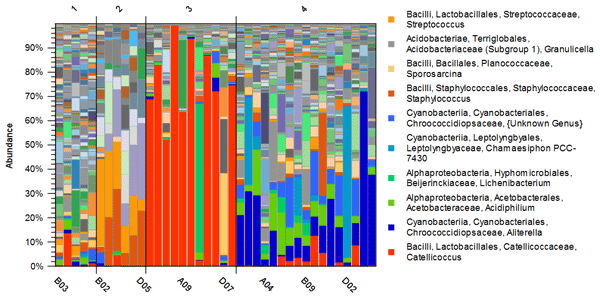
Seasonal snow acts as a dynamic medium, accumulating atmospheric particles and microorganisms, creating unique microbial habitats in alpine environments. At the local scale, snow depth, not valley location, mainly drives chemical composition and bacterial community structure, while elevation predicts community differences across sites. Diversity drops within just 10–15 cm depth, reflecting distinct atmospheric sources and rapid post-depositional selection at centimetre scales.
Seasonal snow acts as a dynamic medium, accumulating atmospheric particles and microorganisms,...