
Articles | Volume 20, issue 1
https://doi.org/10.5194/tc-20-369-2026
© Author(s) 2026. This work is distributed under
the Creative Commons Attribution 4.0 License.
the Creative Commons Attribution 4.0 License.
https://doi.org/10.5194/tc-20-369-2026
© Author(s) 2026. This work is distributed under
the Creative Commons Attribution 4.0 License.
the Creative Commons Attribution 4.0 License.
Research article
| 
19 Jan 2026
Research article |
| 19 Jan 2026
| 19 Jan 2026
Assimilation of radar freeboard and snow altimetry observations in the Arctic and Antarctic with a coupled ocean/sea ice modelling system
Aliette Chenal
CORRESPONDING AUTHOR

Mercator Océan International, Toulouse, 31400, France
CNES, Toulouse, 31400, France
Gilles Garric
CORRESPONDING AUTHOR
Mercator Océan International, Toulouse, 31400, France
Charles-Emmanuel Testut
Mercator Océan International, Toulouse, 31400, France
Mathieu Hamon
Mercator Océan International, Toulouse, 31400, France
Giovanni Ruggiero
Mercator Océan International, Toulouse, 31400, France
Florent Garnier
LEGOS, OMP, Toulouse, 31400, France
Pierre-Yves Le Traon
Mercator Océan International, Toulouse, 31400, France
Ifremer, Plouzané, 29280, France
Related authors
No articles found.
Ergane Fouchet, Mounir Benkiran, Romain Escudier, and Pierre-Yves Le Traon
EGUsphere, https://doi.org/10.5194/egusphere-2026-5789, https://doi.org/10.5194/egusphere-2026-5789, 2026
This preprint is open for discussion and under review for Ocean Science (OS).
Short summary
Short summary
The SWOT satellite mission provides an unprecedented view of ocean dynamics, in two dimensions and at high resolution. We assess how these new data improve numerical ocean models and find modest but clear gains in the representation of sea level and surface currents. Our results point to future needs: more frequent and wider satellite coverage, higher-resolution models able to capture fast ocean signals, and improved methods to assimilate satellite data within models.
Karina von Schuckmann, Flora Gues, Mahé Butel, Gilles Garric, Alvaro de Pascual, Axel Alonso Valle, Aurélien Liné, and Lorena Moreira Mendez
State Planet, 7-osr10, 2, https://doi.org/10.5194/sp-7-osr10-2-2026, https://doi.org/10.5194/sp-7-osr10-2-2026, 2026
Short summary
Short summary
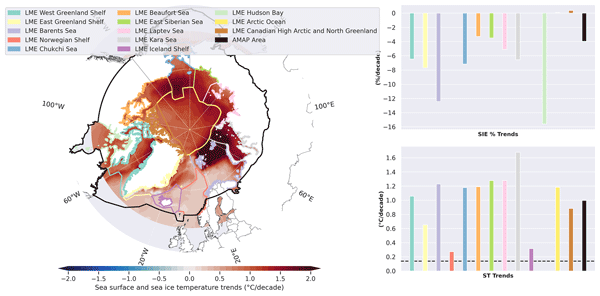
The polar ocean narrative integrates physical, ecological, and societal indicators and shows amplified warming, sea ice loss, and compound change for coastal erosion in the Arctic. Indicators in the Antarctic illustrate an international governance challenge, where biodiversity protection requires both conservation and global mitigation. Together, these examples show that polar ocean change is not a collection of isolated environmental trends, but undergoes an interconnected transformation.
Youyu Lu, Li Zhai, Xianmin Hu, Chantelle Layton, David Brickman, Blair Greenan, and Gilles Garric
State Planet Discuss., https://doi.org/10.5194/sp-2026-26, https://doi.org/10.5194/sp-2026-26, 2026
Preprint under review for SP
Short summary
Short summary
Ocean temperature is a key factor influencing marine ecosystem. On Scotian Shelf, the observed ocean bottom temperatures show strong year-to-year variations of 2–5 degrees in Celsius, and a decade-long warm phase ended since summer of 2023. Analysis of a numerical modelling product revealed causes of warm and cool events including winter heat loss at sea surface and lateral water transport by ocean flows. The influence of complicated ocean dynamics calls for innovative methods for prediction.
Weidong Ma, Jianing Wang, Fan Wang, Gilles Garric, and Youyu Lu
State Planet Discuss., https://doi.org/10.5194/sp-2026-6, https://doi.org/10.5194/sp-2026-6, 2026
Preprint under review for SP
Short summary
Short summary
We combined long-term ocean observations with high-resolution ocean simulations to examine how deep water entering the western Pacific has changed over the past three decades. We found that this flow has steadily weakened, reducing the renewal of cold, oxygen-rich water in the deepest ocean. These results provide new evidence that climate-driven changes near Antarctica are already affecting the deep Pacific and may influence how the ocean stores heat and carbon in the future.
Quentin Hyvernat, Alexandre Mignot, Elodie Gutknecht, Giovanni Ruggiero, Coralie Perruche, Guillaume Samson, Raphaëlle Sauzède, Olivier Aumont, Hervé Claustre, and Fabrizio D'Ortenzio
Biogeosciences, 23, 4967–4998, https://doi.org/10.5194/bg-23-4967-2026, https://doi.org/10.5194/bg-23-4967-2026, 2026
Short summary
Short summary
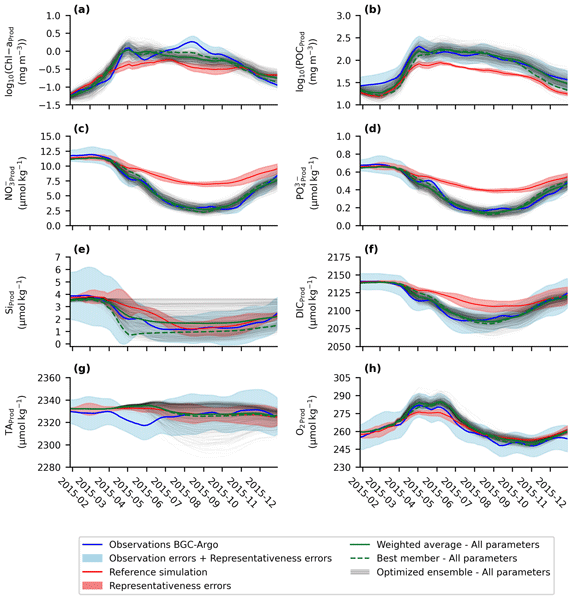
We introduce an iterative Importance Sampling framework to optimize the Pelagic Interaction Scheme for Carbon and Ecosystem Studies (PISCES) model using 20 metrics from Biogeochemical-Argo data. Three strategies are compared: 29 main-effect, 66 including interaction effects, and all 95 parameters. All yield statistically indistinguishable skill gains, reducing error by 54–56 %. Optimizing all 95 parameters is recommended for comprehensive uncertainty quantification. The optimized set also improves skill in a three-dimensional regional simulation.
Louis Kern, Thomas Vaujour, Julia Pfeffer, Andrea Storto, Camille Szczypta, Gilles Garric, Claire Sirere, Gilles Larnicol, Chunxue Yang, Romain Bourdalle-Badie, and Stéphanie Guinehut
EGUsphere, https://doi.org/10.5194/egusphere-2025-6351, https://doi.org/10.5194/egusphere-2025-6351, 2026
Short summary
Short summary
Freshwater fluxes, despite their importance, are often poorly represented in ocean models. The impact of river discharge is evaluated from the Water Mass Balance approach, combining gravimetry and atmospheric reanalyses data. These estimates are assessed against river gauges, highlighting good agreement over South American rivers. Compared to climatological data, when used as inputs for ocean model simulations, this technique improves salinity and upper ocean circulation representation.
Adam M. Cook, Youyu Lu, Xianmin Hu, David Brickman, David Hebert, Chantelle Layton, and Gilles Garric
State Planet, 6-osr9, 8, https://doi.org/10.5194/sp-6-osr9-8-2025, https://doi.org/10.5194/sp-6-osr9-8-2025, 2025
Short summary
Short summary
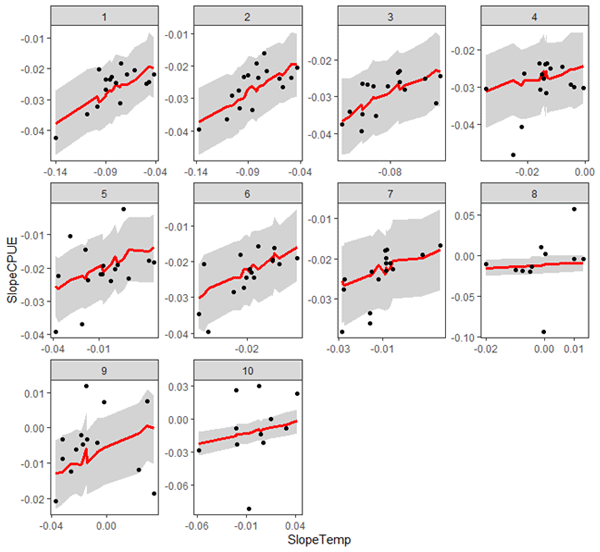
Ocean bottom temperatures from a global ocean reanalysis product are found to be consistent with in situ observations on the Scotian Shelf. Statistical analysis reveals a positive relationship between changes in lobster catch rate and ocean bottom temperature off the southwest coast of Nova Scotia during 2008–2023. A standardized lobster catch rate index with the influence of bottom temperature included is more consistent with available stock biomass compared to the index without such an influence.
Li Zhai, Youyu Lu, Haiyan Wang, Gilles Garric, and Simon Van Gennip
State Planet, 6-osr9, 5, https://doi.org/10.5194/sp-6-osr9-5-2025, https://doi.org/10.5194/sp-6-osr9-5-2025, 2025
Short summary
Short summary
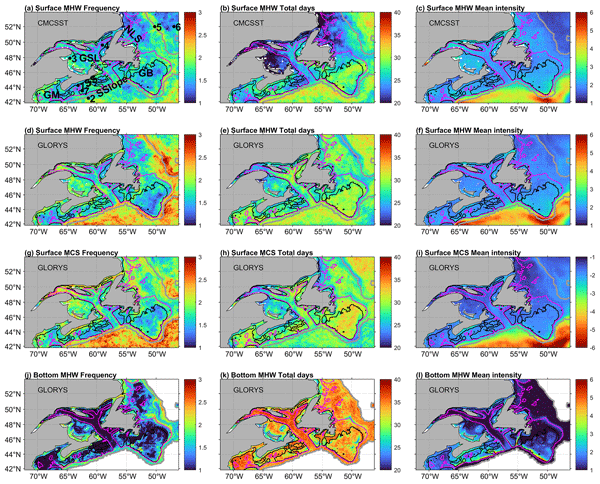
Statistics of marine heatwaves and cold spells in the water column of the Northwest Atlantic during 1993–2023 are derived using a global ocean reanalysis product. On the Scotian Shelf, temperatures and parameters of extreme events present layered structures in the water column, long-term trends, and sharp increases around 2012. Quantification of extreme warm (cold) conditions in 2012 (1998) supports previous studies on the impacts of these conditions on several marine life species.
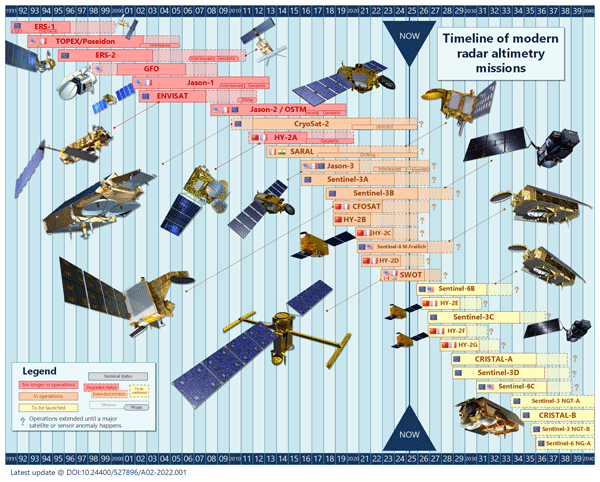
Pierre-Yves Le Traon, Gérald Dibarboure, Jean-Michel Lellouche, Marie-Isabelle Pujol, Mounir Benkiran, Marie Drevillon, Yann Drillet, Yannice Faugère, and Elisabeth Remy
Ocean Sci., 21, 1329–1347, https://doi.org/10.5194/os-21-1329-2025, https://doi.org/10.5194/os-21-1329-2025, 2025
Short summary
Short summary
By providing all weather, global, and real-time observations of sea level, a key variable to constrain ocean analysis and forecasting systems, satellite altimetry has had a profound impact on the development of operational oceanography. This paper provides an overview of the development and evolution of satellite altimetry and operational oceanography over the past 20 years from the launch of Jason-1 in 2001 to the launch of SWOT (Surface Water and Ocean Topography) in 2022.
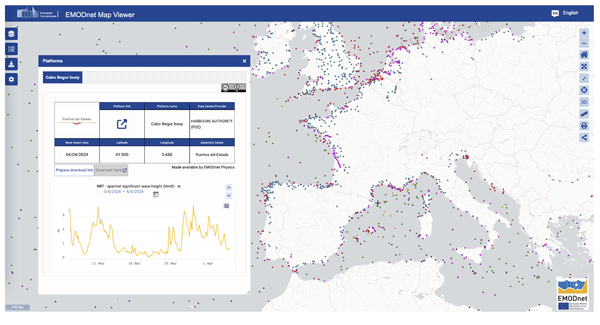
Antonio Novellino, Pierre-Yves Le Traon, and Andy Moore
State Planet, 5-opsr, 8, https://doi.org/10.5194/sp-5-opsr-8-2025, https://doi.org/10.5194/sp-5-opsr-8-2025, 2025
Short summary
Short summary
This paper discusses the vital role of observations in ocean predictions and forecasting, highlighting the need for effective access, management, and integration of data to improve models and decision-making. The paper also explores opportunities for standardizing protocols and the potential of citizen-based, cost-effective data collection methods.
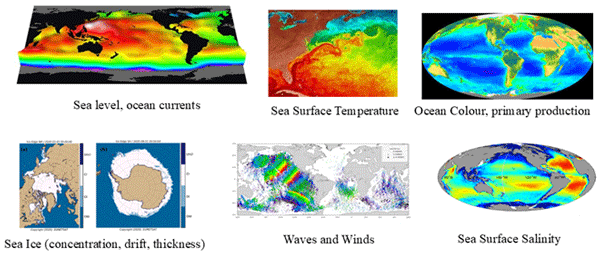
Pierre-Yves Le Traon, Antonio Novellino, and Andrew M. Moore
State Planet, 5-opsr, 7, https://doi.org/10.5194/sp-5-opsr-7-2025, https://doi.org/10.5194/sp-5-opsr-7-2025, 2025
Short summary
Short summary
Ocean prediction relies on the integration between models and satellite and in situ observations through data assimilation techniques. The authors discuss the role of observations in operational ocean forecasting systems, describing the state of the art of satellite and in situ observing networks and defining the paths for addressing multi-scale monitoring and forecasting.
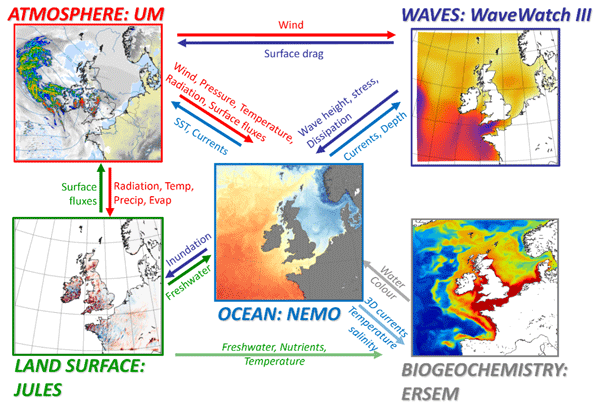
Ségolène Berthou, John Siddorn, Vivian Fraser-Leonhardt, Pierre-Yves Le Traon, and Ibrahim Hoteit
State Planet, 5-opsr, 20, https://doi.org/10.5194/sp-5-opsr-20-2025, https://doi.org/10.5194/sp-5-opsr-20-2025, 2025
Short summary
Short summary
Ocean forecasting is traditionally done independently from atmospheric, wave, or river modelling. We discuss the benefits and challenges of bringing all these modelling systems together for ocean forecasting.
Karina von Schuckmann, Lorena Moreira, Mathilde Cancet, Flora Gues, Emmanuelle Autret, Jonathan Baker, Clément Bricaud, Romain Bourdalle-Badie, Lluis Castrillo, Lijing Cheng, Frederic Chevallier, Daniele Ciani, Alvaro de Pascual-Collar, Vincenzo De Toma, Marie Drevillon, Claudia Fanelli, Gilles Garric, Marion Gehlen, Rianne Giesen, Kevin Hodges, Doroteaciro Iovino, Simon Jandt-Scheelke, Eric Jansen, Melanie Juza, Ioanna Karagali, Thomas Lavergne, Simona Masina, Ronan McAdam, Audrey Minière, Helen Morrison, Tabea Rebekka Panteleit, Andrea Pisano, Marie-Isabelle Pujol, Ad Stoffelen, Sulian Thual, Simon Van Gennip, Pierre Veillard, Chunxue Yang, and Hao Zuo
State Planet, 4-osr8, 1, https://doi.org/10.5194/sp-4-osr8-1-2024, https://doi.org/10.5194/sp-4-osr8-1-2024, 2024
Mounir Benkiran, Pierre-Yves Le Traon, Elisabeth Rémy, and Yann Drillet
EGUsphere, https://doi.org/10.5194/egusphere-2024-420, https://doi.org/10.5194/egusphere-2024-420, 2024
Preprint archived
Short summary
Short summary
The assimilation of altimetry data corrects and improves the forecast of a global ocean forecasting system. Until now, the use of altimetry observations from nadir altimeters has had a major impact on the quality of ocean forecasts. Our study shows that the use of observations from swath altimeters will have a greater impact than the quality of these forecasts and will better constrain mesoscale structures.
Stefania A. Ciliberti, Enrique Alvarez Fanjul, Jay Pearlman, Kirsten Wilmer-Becker, Pierre Bahurel, Fabrice Ardhuin, Alain Arnaud, Mike Bell, Segolene Berthou, Laurent Bertino, Arthur Capet, Eric Chassignet, Stefano Ciavatta, Mauro Cirano, Emanuela Clementi, Gianpiero Cossarini, Gianpaolo Coro, Stuart Corney, Fraser Davidson, Marie Drevillon, Yann Drillet, Renaud Dussurget, Ghada El Serafy, Katja Fennel, Marcos Garcia Sotillo, Patrick Heimbach, Fabrice Hernandez, Patrick Hogan, Ibrahim Hoteit, Sudheer Joseph, Simon Josey, Pierre-Yves Le Traon, Simone Libralato, Marco Mancini, Pascal Matte, Angelique Melet, Yasumasa Miyazawa, Andrew M. Moore, Antonio Novellino, Andrew Porter, Heather Regan, Laia Romero, Andreas Schiller, John Siddorn, Joanna Staneva, Cecile Thomas-Courcoux, Marina Tonani, Jose Maria Garcia-Valdecasas, Jennifer Veitch, Karina von Schuckmann, Liying Wan, John Wilkin, and Romane Zufic
State Planet, 1-osr7, 2, https://doi.org/10.5194/sp-1-osr7-2-2023, https://doi.org/10.5194/sp-1-osr7-2-2023, 2023
Karina von Schuckmann, Lorena Moreira, and Pierre-Yves Le Traon
State Planet, 1-osr7, 1, https://doi.org/10.5194/sp-1-osr7-1-2023, https://doi.org/10.5194/sp-1-osr7-1-2023, 2023
Mounir Benkiran, Pierre-Yves Le Traon, and Gérald Dibarboure
Ocean Sci., 18, 609–625, https://doi.org/10.5194/os-18-609-2022, https://doi.org/10.5194/os-18-609-2022, 2022
Short summary
Short summary
The SSH analysis and 7 d forecast error will be globally reduced by almost 50 %. Surface current forecast errors should be equivalent to today’s surface current analysis errors or alternatively will be improved (variance error reduction) by 30 % at the surface and 50 % for 300 m depth.
The resolution capabilities will be drastically improved and will be closer to 100 km wavelength as opposed to today where they are above 250 km (on average).
Joris Pianezze, Jonathan Beuvier, Cindy Lebeaupin Brossier, Guillaume Samson, Ghislain Faure, and Gilles Garric
Nat. Hazards Earth Syst. Sci., 22, 1301–1324, https://doi.org/10.5194/nhess-22-1301-2022, https://doi.org/10.5194/nhess-22-1301-2022, 2022
Short summary
Short summary
Most numerical weather and oceanic prediction systems do not consider ocean–atmosphere feedback during forecast, and this can lead to significant forecast errors, notably in cases of severe situations. A new high-resolution coupled ocean–atmosphere system is presented in this paper. This forecast-oriented system, based on current regional operational systems and evaluated using satellite and in situ observations, shows that the coupling improves both atmospheric and oceanic forecasts.
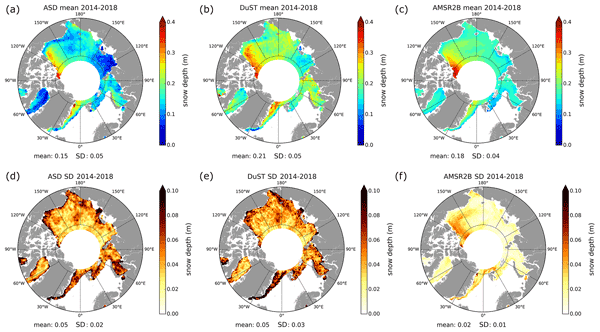
Florent Garnier, Sara Fleury, Gilles Garric, Jérôme Bouffard, Michel Tsamados, Antoine Laforge, Marion Bocquet, Renée Mie Fredensborg Hansen, and Frédérique Remy
The Cryosphere, 15, 5483–5512, https://doi.org/10.5194/tc-15-5483-2021, https://doi.org/10.5194/tc-15-5483-2021, 2021
Short summary
Short summary
Snow depth data are essential to monitor the impacts of climate change on sea ice volume variations and their impacts on the climate system. For that purpose, we present and assess the altimetric snow depth product, computed in both hemispheres from CryoSat-2 and SARAL satellite data. The use of these data instead of the common climatology reduces the sea ice thickness by about 30 cm over the 2013–2019 period. These data are also crucial to argue for the launch of the CRISTAL satellite mission.
Cited articles
Alexandrov, V., Sandven, S., Wahlin, J., and Johannessen, O. M.: The relation between sea ice thickness and freeboard in the Arctic, The Cryosphere, 4, 373–380, https://doi.org/10.5194/tc-4-373-2010, 2010.
Balan-Sarojini, B., Tietsche, S., Mayer, M., Balmaseda, M., Zuo, H., de Rosnay, P., Stockdale, T., and Vitart, F.: Year-round impact of winter sea ice thickness observations on seasonal forecasts, The Cryosphere, 15, 325–344, https://doi.org/10.5194/tc-15-325-2021, 2021.
Beaufort Gyre Exploration Program: Beaufort Gyre Project data, BGEP ULS, https://www2.whoi.edu/site/beaufortgyre/ (last access: 6 June 2024), 2024.
Benkiran, M. and Greiner, E.: Impact of the Incremental Analysis Updates on a Real-Time System of the North Atlantic Ocean, J. Atmos. Oceanic Technol., 25, 2055–2073, https://doi.org/10.1175/2008JTECHO537.1, 2008.
Blockley, E. W. and Peterson, K. A.: Improving Met Office seasonal predictions of Arctic sea ice using assimilation of CryoSat-2 thickness, The Cryosphere, 12, 3419–3438, https://doi.org/10.5194/tc-12-3419-2018, 2018.
Bocquet, M., Fleury, S., Piras, F., Rinne, E., Sallila, H., Garnier, F., and Rémy, F.: Arctic sea ice radar freeboard retrieval from the European Remote-Sensing Satellite (ERS-2) using altimetry: toward sea ice thickness observation from 1995 to 2021, The Cryosphere, 17, 3013–3039, https://doi.org/10.5194/tc-17-3013-2023, 2023.
Bocquet, M., Fleury, S., Rémy, F., and Piras, F.: Arctic and Antarctic Sea Ice Thickness and Volume Changes From Observations Between 1994 and 2023, J. Geophys. Res.-Oceans, 129, e2023JC020848, https://doi.org/10.1029/2023JC020848, 2024.
Brasseur, P. and Verron, J.: The SEEK filter method for data assimilation in oceanography: a synthesis, Ocean Dynam., 56, 650–661, https://doi.org/10.1007/s10236-006-0080-3, 2006.
Chen, Y., Smith, P., Carrassi, A., Pasmans, I., Bertino, L., Bocquet, M., Finn, T. S., Rampal, P., and Dansereau, V.: Multivariate state and parameter estimation with data assimilation applied to sea-ice models using a Maxwell elasto-brittle rheology, The Cryosphere, 18, 2381–2406, https://doi.org/10.5194/tc-18-2381-2024, 2024.
Cheng, S., Chen, Y., Aydoğdu, A., Bertino, L., Carrassi, A., Rampal, P., and Jones, C. K. R. T.: Arctic sea ice data assimilation combining an ensemble Kalman filter with a novel Lagrangian sea ice model for the winter 2019–2020, The Cryosphere, 17, 1735–1754, https://doi.org/10.5194/tc-17-1735-2023, 2023.
Cheon, W. G. and Gordon, A. L.: Open-ocean polynyas and deep convection in the Southern Ocean, Sci. Rep., 9, 6935, https://doi.org/10.1038/s41598-019-43466-2, 2019.
Cipollone, A., Banerjee, D. S., Iovino, D., Aydogdu, A., and Masina, S.: Bivariate sea-ice assimilation for global-ocean analysis–reanalysis, Ocean Sci., 19, 1375–1392, https://doi.org/10.5194/os-19-1375-2023, 2023.
Crameri, F.: Scientific colour maps, Zenodo [code], https://doi.org/10.5281/zenodo.8409685, 2023.
Crameri, F., Shephard, G. E., and Heron, P. J.: The misuse of colour in science communication, Nat. Commun., 11, 5444, https://doi.org/10.1038/s41467-020-19160-7, 2020.
Dulière, V. and Fichefet, T.: On the assimilation of ice velocity and concentration data into large-scale sea ice models, Ocean Sci., 3, 321–335, https://doi.org/10.5194/os-3-321-2007, 2007.
EUMETSAT: Global Ocean Sea Ice Concentration Time Series REPROCESSED (OSI-SAF), SSMIS, Copernicus Marine Service [data set], https://doi.org/10.48670/moi-00136 (last access: 25 May 2024), 2023.
Fichefet, T. and Maqueda, M. A. M.: Sensitivity of a global sea ice model to the treatment of ice thermodynamics and dynamics, J. Geophys. Res. Oceans, 102, 12609–12646, https://doi.org/10.1029/97JC00480, 1997.
Fiedler, E. K., Martin, M. J., Blockley, E., Mignac, D., Fournier, N., Ridout, A., Shepherd, A., and Tilling, R.: Assimilation of sea ice thickness derived from CryoSat-2 along-track freeboard measurements into the Met Office's Forecast Ocean Assimilation Model (FOAM), The Cryosphere, 16, 61–85, https://doi.org/10.5194/tc-16-61-2022, 2022.
Fritzner, S., Graversen, R., Christensen, K. H., Rostosky, P., and Wang, K.: Impact of assimilating sea ice concentration, sea ice thickness and snow depth in a coupled ocean–sea ice modelling system, The Cryosphere, 13, 491–509, https://doi.org/10.5194/tc-13-491-2019, 2019.
Fritzner, S. M., Graversen, R. G., Wang, K., and Christensen, K. H.: Comparison between a multi-variate nudging method and the ensemble Kalman filter for sea-ice data assimilation, J. Glaciol., 64, 387–396, https://doi.org/10.1017/jog.2018.33, 2018.
Garnier, F., Fleury, S., Garric, G., Bouffard, J., Tsamados, M., Laforge, A., Bocquet, M., Fredensborg Hansen, R. M., and Remy, F.: Advances in altimetric snow depth estimates using bi-frequency SARAL and CryoSat-2 Ka–Ku measurements, The Cryosphere, 15, 5483–5512, https://doi.org/10.5194/tc-15-5483-2021, 2021.
Garnier, F., Bocquet, M., Fleury, S., Bouffard, J., Tsamados, M., Remy, F., Garric, G., and Chenal, A.: Latest Altimetry-Based Sea Ice Freeboard and Volume Inter-Annual Variability in the Antarctic over 2003–2020, Remote Sens., 14, 4741, https://doi.org/10.3390/rs14194741, 2022.
Gilbert, E. and Holmes, C.: 2023's Antarctic sea ice extent is the lowest on record, Weather, 79, 46–51, https://doi.org/10.1002/wea.4518, 2024.
Guerreiro, K.: Amélioration des estimations d’épaisseur de glace de mer arctique par altimétrie spatiale, Université de Toulouse, Université Toulouse III – Paul Sabatier, Amélioration des estimations d'épaisseur de glace de mer arctique par altimétrie spatiale, https://theses.hal.science/tel-02924618 (last access: 15 March 2022), 2017.
Guerreiro, K., Fleury, S., Zakharova, E., Kouraev, A., Rémy, F., and Maisongrande, P.: Comparison of CryoSat-2 and ENVISAT radar freeboard over Arctic sea ice: toward an improved Envisat freeboard retrieval, The Cryosphere, 11, 2059–2073, https://doi.org/10.5194/tc-11-2059-2017, 2017.
Hersbach, H., Bell, B., Berrisford, P., Hirahara, S., Horányi, A., Muñoz-Sabater, J., Nicolas, J., Peubey, C., Radu, R., Schepers, D., Simmons, A., Soci, C., Abdalla, S., Abellan, X., Balsamo, G., Bechtold, P., Biavati, G., Bidlot, J., Bonavita, M., De Chiara, G., Dahlgren, P., Dee, D., Diamantakis, M., Dragani, R., Flemming, J., Forbes, R., Fuentes, M., Geer, A., Haimberger, L., Healy, S., Hogan, R. J., Hólm, E., Janisková, M., Keeley, S., Laloyaux, P., Lopez, P., Lupu, C., Radnoti, G., de Rosnay, P., Rozum, I., Vamborg, F., Villaume, S., and Thépaut, J.-N.: The ERA5 global reanalysis, Q. J. R. Meteorol. Soc., 146, 1999–2049, https://doi.org/10.1002/qj.3803, 2020.
Hutter, N., Losch, M., and Menemenlis, D.: Scaling Properties of Arctic Sea Ice Deformation in a High-Resolution Viscous-Plastic Sea Ice Model and in Satellite Observations, J. Geophys. Res. Oceans, 123, 672–687, https://doi.org/10.1002/2017JC013119, 2018.
INSITU_GLO_PHYBGCWAV_DISCRETE_MYNRT_013_030: Global Ocean- In-Situ Near-Real-Time Observations, E.U. Copernicus Marine Service Information (CMEMS), Marine Data Store (MDS) [data set], https://doi.org/10.48670/moi-00036, 2024.
Ivanova, N., Johannessen, O. M., Pedersen, L. T., and Tonboe, R. T.: Retrieval of Arctic Sea Ice Parameters by Satellite Passive Microwave Sensors: A Comparison of Eleven Sea Ice Concentration Algorithms, IEEE Trans. Geosci. Remote Sens., 52, 7233–7246, https://doi.org/10.1109/TGRS.2014.2310136, 2014.
Ivanova, N., Pedersen, L. T., Tonboe, R. T., Kern, S., Heygster, G., Lavergne, T., Sørensen, A., Saldo, R., Dybkjær, G., Brucker, L., and Shokr, M.: Inter-comparison and evaluation of sea ice algorithms: towards further identification of challenges and optimal approach using passive microwave observations, The Cryosphere, 9, 1797–1817, https://doi.org/10.5194/tc-9-1797-2015, 2015.
Jena, B., Ravichandran, M., and Turner, J.: Recent Reoccurrence of Large Open-Ocean Polynya on the Maud Rise Seamount, Geophys. Res. Lett., 46, 4320–4329, https://doi.org/10.1029/2018GL081482, 2019.
Jutila, A., Hendricks, S., Ricker, R., von Albedyll, L., Krumpen, T., and Haas, C.: Retrieval and parameterisation of sea-ice bulk density from airborne multi-sensor measurements, The Cryosphere, 16, 259–275, https://doi.org/10.5194/tc-16-259-2022, 2022.
Kaleschke, L., Tian-Kunze, X., Hendricks, S., and Ricker, R.: SMOS-derived Antarctic thin sea ice thickness: data description and validation in the Weddell Sea, Earth Syst. Sci. Data, 16, 3149–3170, https://doi.org/10.5194/essd-16-3149-2024, 2024.
Kern, S., Khvorostovsky, K., Skourup, H., Rinne, E., Parsakhoo, Z. S., Djepa, V., Wadhams, P., and Sandven, S.: The impact of snow depth, snow density and ice density on sea ice thickness retrieval from satellite radar altimetry: results from the ESA-CCI Sea Ice ECV Project Round Robin Exercise, The Cryosphere, 9, 37–52, https://doi.org/10.5194/tc-9-37-2015, 2015.
Kimmritz, M., Counillon, F., Bitz, C. M., Massonnet, F., Bethke, I., and Gao, Y.: Optimising assimilation of sea ice concentration in an Earth system model with a multicategory sea ice model, Tellus Dyn. Meteorol. Oceanogr., 70, 1–23, https://doi.org/10.1080/16000870.2018.1435945, 2018.
Kjellsson, J., Holland, P. R., Marshall, G. J., Mathiot, P., Aksenov, Y., Coward, A. C., Bacon, S., Megann, A. P., and Ridley, J.: Model sensitivity of the Weddell and Ross seas, Antarctica, to vertical mixing and freshwater forcing, Ocean Model., 94, 141–152, https://doi.org/10.1016/j.ocemod.2015.08.003, 2015.
Kurtz, N. and Harbeck, J.: CryoSat-2 Level 4 Sea Ice Elevation, Freeboard, and Thickness, Version 1, Boulder, Colorado USA, NASA National Snow and Ice Data Center Distributed Active Archive Center, https://doi.org/10.5067/96JO0KIFDAS8, 2017.
Kurtz, N., Studinger, M., Harbeck, J., Onana, V., and Yi, D.: IceBridge Sea Ice Freeboard, Snow Depth, and Thickness Quick Look (NSIDC-0708, Version 1), Boulder, Colorado, USA, NASA National Snow and Ice Data Center Distributed Archive Center [data set], https://doi.org/10.5067/GRIXZ91DE0L9, 2016.
Kurtz, N. T. and Markus, T.: Satellite observations of Antarctic sea ice thickness and volume, J. Geophys. Res. Oceans, 117, https://doi.org/10.1029/2012JC008141, 2012.
Kwok, R. and Cunningham, G. F.: Variability of Arctic sea ice thickness and volume from CryoSat-2, Philos. Trans. R. Soc. Math. Phys. Eng. Sci., 373, 20140157, https://doi.org/10.1098/rsta.2014.0157, 2015.
Kwok, R., Pang, S. S., and Kacimi, S.: Sea ice drift in the Southern Ocean: Regional patterns, variability, and trends, Elem. Sci. Anthr., 5, 32, https://doi.org/10.1525/elementa.226, 2017.
Laforge, A., Fleury, S., Dinardo, S., Garnier, F., Remy, F., Benveniste, J., Bouffard, J., and Verley, J.: Toward improved sea ice freeboard observation with SAR altimetry using the physical retracker SAMOSA+, Adv. Space Res., 68, 732–745, https://doi.org/10.1016/j.asr.2020.02.001, 2021.
Laxon, S. W., Giles, K. A., Ridout, A. L., Wingham, D. J., Willatt, R., Cullen, R., Kwok, R., Schweiger, A., Zhang, J., Haas, C., Hendricks, S., Krishfield, R., Kurtz, N., Farrell, S., and Davidson, M.: CryoSat-2 estimates of Arctic sea ice thickness and volume, Geophys. Res. Lett., 40, 732–737, https://doi.org/10.1002/grl.50193, 2013.
Lee, J.-G. and Ham, Y.-G.: Satellite-Based Data Assimilation System for the Initialization of Arctic Sea Ice Concentration and Thickness Using CICE5, Front. Clim., 4, 2624–9553, https://doi.org/10.3389/fclim.2022.797733, 2022.
Lee, J.-G. and Ham, Y.-G.: Impact of satellite thickness data assimilation on bias reduction in Arctic sea ice concentration, Npj Clim. Atmospheric Sci., 6, 1–12, https://doi.org/10.1038/s41612-023-00402-6, 2023.
Lellouche, J.-M., Le Galloudec, O., Drévillon, M., Régnier, C., Greiner, E., Garric, G., Ferry, N., Desportes, C., Testut, C.-E., Bricaud, C., Bourdallé-Badie, R., Tranchant, B., Benkiran, M., Drillet, Y., Daudin, A., and De Nicola, C.: Evaluation of global monitoring and forecasting systems at Mercator Océan, Ocean Sci., 9, 57–81, https://doi.org/10.5194/os-9-57-2013, 2013.
Lellouche, J.-M., Greiner, E., Bourdallé-Badie, R., Garric, G., Angélique, M., Drevillon, M., Bricaud, C., Hamon, M., Le Galloudec, O., Regnier, C., Candela, T., Testut, C.-E., Gasparin, F., Ruggiero, G., Benkiran, M., Drillet, Y., and Le Traon, P.-Y.: The Copernicus Global
Lisæter, K. A., Rosanova, J., and Evensen, G.: Assimilation of ice concentration in a coupled ice–ocean model, using the Ensemble Kalman filter, Ocean Dyn., 53, 368–388, https://doi.org/10.1007/s10236-003-0049-4, 2003.
Liu, X., Yao, J., Zhang, S., Wu, T., Chen, Z., Fang, Y., Chu, M., Yan, J., and Jie, W.: A Coordinated Sea-Ice Assimilation Scheme Jointly Using Sea-Ice Concentration and Thickness Observations With a Coupled Climate Model, J. Adv. Model. Earth Syst., 16, e2023MS003608, https://doi.org/10.1029/2023MS003608, 2024.
Luo, H., Yang, Q., Mu, L., Tian-Kunze, X., Nerger, L., Mazloff, M., Kaleschke, L., and Chen, D.: DASSO: a data assimilation system for the Southern Ocean that utilizes both sea-ice concentration and thickness observations, J. Glaciol., 67, 1235–1240, https://doi.org/10.1017/jog.2021.57, 2021.
Madec, G. and Imbard, M.: A global ocean mesh to overcome the North Pole singularity, Clim. Dynam., 12, 381–388, https://doi.org/10.1007/BF00211684, 1996.
Madec, G., Bourdallé-Badie, R., Chanut, J., Clementi, E., Coward, A., Ethé, C., Iovino, D., Lea, D., Lévy, C., Lovato, T., Martin, N., Masson, S., Mocavero, S., Rousset, C., Storkey, D., Müeller, S., Nurser, G., Bell, M., Samson, G., Mathiot, P., Mele, F., and Moulin, A.: NEMO ocean engine, Zenodo, https://doi.org/10.5281/zenodo.6334656, 2022.
Mallett, R. D. C., Lawrence, I. R., Stroeve, J. C., Landy, J. C., and Tsamados, M.: Brief communication: Conventional assumptions involving the speed of radar waves in snow introduce systematic underestimates to sea ice thickness and seasonal growth rate estimates, The Cryosphere, 14, 251–260, https://doi.org/10.5194/tc-14-251-2020, 2020.
Markus, T., Neumann, T., Martino, A., Abdalati, W., Brunt, K., Csatho, B., Farrell, S., Fricker, H., Gardner, A., Harding, D., Jasinski, M., Kwok, R., Magruder, L., Lubin, D., Luthcke, S., Morison, J., Nelson, R., Neuenschwander, A., Palm, S., Popescu, S., Shum, C., Schutz, B. E., Smith, B., Yang, Y., and Zwally, J.: The Ice, Cloud, and land Elevation Satellite-2 (ICESat-2): Science requirements, concept, and implementation, Remote Sens. Environ., 190, 260–273, https://doi.org/10.1016/j.rse.2016.12.029, 2017.
Massonnet, F., Fichefet, T., Goosse, H., Vancoppenolle, M., Mathiot, P., and König Beatty, C.: On the influence of model physics on simulations of Arctic and Antarctic sea ice, The Cryosphere, 5, 687–699, https://doi.org/10.5194/tc-5-687-2011, 2011.
Massonnet, F., Fichefet, T., and Goosse, H.: Prospects for improved seasonal Arctic sea ice predictions from multivariate data assimilation, Ocean Model., 88, 16–25, https://doi.org/10.1016/j.ocemod.2014.12.013, 2015.
Meier, W. N., Fetterer, F., Savoie, M., Mallory, S., Duerr, R., and Stroeve, J.: NOAA/NSIDC Climate Data Record of Passive Microwave Sea Ice Concentration, Version 3, Boulder, Colorado, USA. National Snow and Ice data Center, https://doi.org/10.7265/N59P2ZTG, 2017.
Mignac, D., Martin, M., Fiedler, E., Blockley, E., and Fournier, N.: Improving the Met Office's Forecast Ocean Assimilation Model (FOAM) with the assimilation of satellite-derived sea-ice thickness data from CryoSat-2 and SMOS in the Arctic, Q. J. R. Meteorol. Soc., 148, 1144–1167, https://doi.org/10.1002/qj.4252, 2022.
Mohrmann, M., Heuzé, C., and Swart, S.: Southern Ocean polynyas in CMIP6 models, The Cryosphere, 15, 4281–4313, https://doi.org/10.5194/tc-15-4281-2021, 2021.
Mu, L., Yang, Q., Losch, M., Losa, S. N., Ricker, R., Nerger, L., and Liang, X.: Improving sea ice thickness estimates by assimilating CryoSat-2 and SMOS sea ice thickness data simultaneously, Q. J. R. Meteorol. Soc., 144, 529–538, https://doi.org/10.1002/qj.3225, 2018.
Mu, L., Nerger, L., Tang, Q., Loza, S. N., Sidorenko, D., Wang, Q., Semmler, T., Zampieri, L., Losch, M., and Goessling, H. F.: Toward a Data Assimilation System for Seamless Sea Ice Prediction Based on the AWI Climate Model, J. Adv. Model. Earth Syst., 12, e2019MS001937, https://doi.org/10.1029/2019MS001937, 2020.
OSI SAF: OSI-408 OSI SAF Global Sea Ice Concentration (AMSR-2) (OSI-408-a), https://doi.org/10.15770/EUM_SAF_OSI_NRT_2023, 2017.
OSI SAF: OSI SAF Global sea ice concentration climate data record 1978–2020 (3), https://doi.org/10.15770/EUM_SAF_OSI_0013, 2022.
Peng, G., Meier, W. N., Scott, D. J., and Savoie, M. H.: A long-term and reproducible passive microwave sea ice concentration data record for climate studies and monitoring, Earth Syst. Sci. Data, 5, 311–318, https://doi.org/10.5194/essd-5-311-2013, 2013.
Perovich, D., Meier, W., Tschudi, M., Hendricks, S., Petty, A. A., Divine, D., Farrell, S., Gerland, S., Haas, C., Kaleschke, L., Pavlova, O., Ricker, R., Tian-Kunze, X., Webster, M., and Wood, K.: Arctic Report Card 2020: Sea Ice, Arctic report card, https://doi.org/10.25923/n170-9h57, 2020.
Petty, A. A., Kurtz, N. T., Kwok, R., Markus, T., and Neumann, T. A.: Winter Arctic Sea Ice Thickness From ICESat-2 Freeboards, J. Geophys. Res. Oceans, 125, e2019JC015764, https://doi.org/10.1029/2019JC015764, 2020.
Petty, A. A., Bagnardi, M., Kurtz, N. T., Tilling, R., Fons, S., Armitage, T., Horvat, C., and Kwok, R.: Assessment of ICESat-2 Sea Ice Surface Classification with Sentinel-2 Imagery: Implications for Freeboard and New Estimates of Lead and Floe Geometry, Earth Space Sci., 8, e2020EA001491, https://doi.org/10.1029/2020EA001491, 2021.
Petty, A. A., Kwok, R., Bagnardi, M., Ivanoff, A., Kurtz, N., Lee, J., Wimert, J., and Hancock, D.: ATLAS/ICESat-2 L3B Daily and Monthly Gridded Sea Ice Freeboard (ATL20, Version 4), Boulder, Colorado USA, NASA National Snow and Ice Data Center Distributed Archive Center [data set], https://doi.org/10.5067/ATLAS/ATL20.004, 2023.
Reiser, F., Willmes, S., Hausmann, U., and Heinemann, G.: Predominant Sea Ice Fracture Zones Around Antarctica and Their Relation to Bathymetric Features, Geophys. Res. Lett., 46, 12117–12124, https://doi.org/10.1029/2019GL084624, 2019.
Ricker, R., Hendricks, S., Helm, V., Skourup, H., and Davidson, M.: Sensitivity of CryoSat-2 Arctic sea-ice freeboard and thickness on radar-waveform interpretation, The Cryosphere, 8, 1607–1622, https://doi.org/10.5194/tc-8-1607-2014, 2014.
Ricker, R., Hendricks, S., Kaleschke, L., Tian-Kunze, X., King, J., and Haas, C.: A weekly Arctic sea-ice thickness data record from merged CryoSat-2 and SMOS satellite data, The Cryosphere, 11, 1607–1623, https://doi.org/10.5194/tc-11-1607-2017, 2017.
Roach, L. A., Dörr, J., Holmes, C. R., Massonnet, F., Blockley, E. W., Notz, D., Rackow, T., Raphael, M. N., O'Farrell, S. P., Bailey, D. A., and Bitz, C. M.: Antarctic Sea Ice Area in CMIP6, Geophys. Res. Lett., 47, e2019GL086729, https://doi.org/10.1029/2019GL086729, 2020.
Sallila, H., Farrell, S. L., McCurry, J., and Rinne, E.: Assessment of contemporary satellite sea ice thickness products for Arctic sea ice, The Cryosphere, 13, 1187–1213, https://doi.org/10.5194/tc-13-1187-2019, 2019.
SEALEVEL_GLO_PHY_L3_NRT_008_044: Global Ocean Along Track L 3 Sea Surface Heights NRT, E.U. Copernicus Marine Service Information (CMEMS), Marine Data Store (MDS) [data set], https://doi.org/10.48670/moi-00147, 2023.
Shu, Q., Wang, Q., Song, Z., Qiao, F., Zhao, J., Chu, M., and Li, X.: Assessment of Sea Ice Extent in CMIP6 With Comparison to Observations and CMIP5, Geophys. Res. Lett., 47, e2020GL087965, https://doi.org/10.1029/2020GL087965, 2020.
Sievers, I., Rasmussen, T. A. S., and Stenseng, L.: Assimilating CryoSat-2 freeboard to improve Arctic sea ice thickness estimates, The Cryosphere, 17, 3721–3738, https://doi.org/10.5194/tc-17-3721-2023, 2023.
Spreen, G., Kwok, R., Menemenlis, D., and Nguyen, A. T.: Sea-ice deformation in a coupled ocean–sea-ice model and in satellite remote sensing data, The Cryosphere, 11, 1553–1573, https://doi.org/10.5194/tc-11-1553-2017, 2017.
SST_GLO_SST_L4_NRT_OBSERVATIONS_010_001: Global Ocean OSTIA Sea Surface Temperature and Sea Ice Analysis, E.U. Copernicus Marine Service Information (CMEMS), Marine Data Store (MDS) [data set], https://doi.org/10.48670/moi-00165, 2023.
Sumata, H., Divine, D., and de Steur, L.: Monthly mean sea ice draft from the Fram Strait Arctic Outflow Observatory since 1990, Norwegian Polar Institute, https://doi.org/10.21334/npolar.2021.5b717274, 2021.
Tian-Kunze, X. and Kaleschke, L.: SMOS-derived sea ice thickness in the Antarctic from 2010 to 2020, PANGAEA [data set], https://doi.org/10.1594/PANGAEA.934732, 2021.
Tietsche, S., Notz, D., Jungclaus, J. H., and Marotzke, J.: Assimilation of sea-ice concentration in a global climate model – physical and statistical aspects, Ocean Sci., 9, 19–36, https://doi.org/10.5194/os-9-19-2013, 2013.
Tilling, R. L., Ridout, A., and Shepherd, A.: Estimating Arctic sea ice thickness and volume using CryoSat-2 radar altimeter data, Adv. Space Res., 62, 1203–1225, https://doi.org/10.1016/j.asr.2017.10.051, 2018.
Toppaladoddi, S., Moon, W., and Wettlaufer, J. S.: Seasonal Evolution of the Arctic Sea Ice Thickness Distribution, J. Geophys. Res. Oceans, 128, e2022JC019540, https://doi.org/10.1029/2022JC019540, 2023.
Uotila, P., Goosse, H., Haines, K., Chevallier, M., Barthélemy, A., Bricaud, C., Carton, J., Fučkar, N., Garric, G., Iovino, D., Kauker, F., Korhonen, M., Lien, V. S., Marnela, M., Massonnet, F., Mignac, D., Peterson, K. A., Sadikni, R., Shi, L., Tietsche, S., Toyoda, T., Xie, J., and Zhang, Z.: An assessment of ten ocean reanalyses in the polar regions, Clim. Dynam., 52, 1613–1650, https://doi.org/10.1007/s00382-018-4242-z, 2019.
Vancoppenolle, M., Rousset, C., Blockley, E., Aksenov, Y., Feltham, D., Fichefet, T., Garric, G., Guémas, V., Iovino, D., Keeley, S., Madec, G., Massonnet, F., Ridley, J., Schroeder, D., and Tietsche, S.: SI3, the NEMO Sea Ice Engine, Zenodo, https://doi.org/10.5281/zenodo.7534900, 2023.
Wang, Q., Danilov, S., Jung, T., Kaleschke, L., and Wernecke, A.: Sea ice leads in the Arctic Ocean: Model assessment, interannual variability and trends, Geophys. Res. Lett., 43, 7019–7027, https://doi.org/10.1002/2016GL068696, 2016.
Warren, S. G., Rigor, I. G., Untersteiner, N., Radionov, V. F., Bryazgin, N. N., Aleksandrov, Y. I., and Colony, R.: Snow Depth on Arctic Sea Ice, J. Clim., 12, 1814–1829, https://doi.org/10.1175/1520-0442(1999)012<1814:SDOASI>2.0.CO;2, 1999.
Williams, N., Byrne, N., Feltham, D., Van Leeuwen, P. J., Bannister, R., Schroeder, D., Ridout, A., and Nerger, L.: The effects of assimilating a sub-grid-scale sea ice thickness distribution in a new Arctic sea ice data assimilation system, The Cryosphere, 17, 2509–2532, https://doi.org/10.5194/tc-17-2509-2023, 2023.
Xie, J., Counillon, F., Bertino, L., Tian-Kunze, X., and Kaleschke, L.: Benefits of assimilating thin sea ice thickness from SMOS into the TOPAZ system, The Cryosphere, 10, 2745–2761, https://doi.org/10.5194/tc-10-2745-2016, 2016.
Xie, J., Counillon, F., and Bertino, L.: Impact of assimilating a merged sea-ice thickness from CryoSat-2 and SMOS in the Arctic reanalysis, The Cryosphere, 12, 3671–3691, https://doi.org/10.5194/tc-12-3671-2018, 2018.
Zhang, X., Zhao, Q., Gao, G., Zhang, J., Bao, M., and Meng, J.: Impact and Correction of Sea Ice, Snow, and Seawater Density on Arctic Sea-Ice Thickness Retrieval From Ku-Band SAR Altimeters, IEEE J. Miniaturization Air Space Syst., 3, 276–283, https://doi.org/10.1109/JMASS.2022.3212880, 2022.
Zhang, Y., Cheng, X., Liu, J., and Hui, F.: The potential of sea ice leads as a predictor for summer Arctic sea ice extent, The Cryosphere, 12, 3747–3757, https://doi.org/10.5194/tc-12-3747-2018, 2018.
Short summary
This study proposes to improve the representation of ice and snow volumes in the Arctic and Antarctic based on a novel multivariate assimilation method using freeboard radar and snow depth satellite data. The approach leads to an improved sea ice and snow volume representation, even during summer when satellite data is limited. The performance of the assimilated system is better in the Arctic than in Antarctica, where ocean/ice interactions play a key role.
This study proposes to improve the representation of ice and snow volumes in the Arctic and...


