
Articles | Volume 20, issue 6
https://doi.org/10.5194/tc-20-3299-2026
© Author(s) 2026. This work is distributed under
the Creative Commons Attribution 4.0 License.
the Creative Commons Attribution 4.0 License.
https://doi.org/10.5194/tc-20-3299-2026
© Author(s) 2026. This work is distributed under
the Creative Commons Attribution 4.0 License.
the Creative Commons Attribution 4.0 License.
Research article
| 
03 Jun 2026
Research article |
| 03 Jun 2026
| 03 Jun 2026
Sea ice data assimilation in ORAS6

European Centre for Medium-Range Weather Forecasts, Reading, United Kingdom
Eric de Boisseson
European Centre for Medium-Range Weather Forecasts, Reading, United Kingdom
Sarah Keeley
European Centre for Medium-Range Weather Forecasts, Reading, United Kingdom
Charles Pelletier
European Centre for Medium-Range Weather Forecasts, Bonn, Germany
European Centre for Medium-Range Weather Forecasts, Reading, United Kingdom
Related authors
Alan J. Geer, Philip Browne, and Tracy Scanlon
EGUsphere, https://doi.org/10.5194/egusphere-2026-3421, https://doi.org/10.5194/egusphere-2026-3421, 2026
This preprint is open for discussion and under review for The Cryosphere (TC).
Short summary
Short summary
Weather forecasting models represent not just the atmosphere but also the ocean, sea ice and land. In polar regions, most observations come from satellites measuring a mix of radiation from the surface and the atmosphere. We show how to extract information about the atmosphere and sea ice more directly than has been done previously. This improves our knowledge of sea ice conditions and leads to improved weather forecasts several days later, not just in polar areas but more globally.
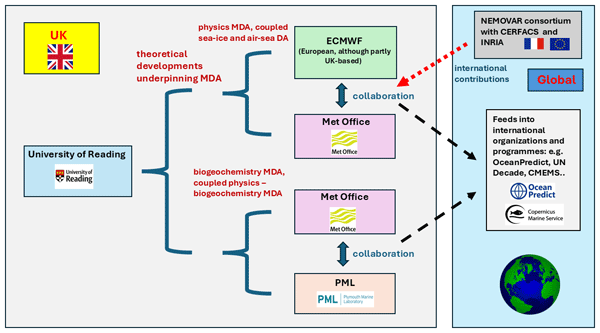
Jozef Skákala, David Ford, Keith Haines, Amos Lawless, Matthew J. Martin, Philip Browne, Marcin Chrust, Stefano Ciavatta, Alison Fowler, Daniel Lea, Matthew Palmer, Andrea Rochner, Jennifer Waters, Hao Zuo, Deep S. Banerjee, Mike Bell, Davi M. Carneiro, Yumeng Chen, Susan Kay, Dale Partridge, Martin Price, Richard Renshaw, Georgy Shapiro, and James While
Ocean Sci., 21, 1709–1734, https://doi.org/10.5194/os-21-1709-2025, https://doi.org/10.5194/os-21-1709-2025, 2025
Short summary
Short summary
UK marine data assimilation (MDA) involves a closely collaborating research community. In this paper, we offer both an overview of the state of the art and a vision for the future across all of the main areas of UK MDA, ranging from physics to biogeochemistry to coupled DA. We discuss the current UK MDA stakeholder applications, highlight theoretical developments needed to advance our systems, and reflect upon upcoming opportunities with respect to hardware and observational missions.
Susanna Winkelbauer, Gaël Forget, Michael Mayer, Romain Bourdalle-Badie, Andrea Cipollone, Leopold Haimberger, Keith Haines, Satoshi Osafune, Yuanyuan Song, Andrea Storto, Chunxue Yang, and Hao Zuo
EGUsphere, https://doi.org/10.5194/egusphere-2026-5435, https://doi.org/10.5194/egusphere-2026-5435, 2026
This preprint is open for discussion and under review for Ocean Science (OS).
Short summary
Short summary
Ocean currents carry vast amounts of heat through the Atlantic and strongly influence climate. We compared estimates from 17 global ocean reanalyses with observations to assess how well they reproduce this heat transport and its changes over time. Most reanalyses capture the main patterns and variations, but important differences remain. The reanalyses also suggest a decrease in northward heat transport since the early 1990s, although its magnitude remains uncertain.
Alan J. Geer, Philip Browne, and Tracy Scanlon
EGUsphere, https://doi.org/10.5194/egusphere-2026-3421, https://doi.org/10.5194/egusphere-2026-3421, 2026
This preprint is open for discussion and under review for The Cryosphere (TC).
Short summary
Short summary
Weather forecasting models represent not just the atmosphere but also the ocean, sea ice and land. In polar regions, most observations come from satellites measuring a mix of radiation from the surface and the atmosphere. We show how to extract information about the atmosphere and sea ice more directly than has been done previously. This improves our knowledge of sea ice conditions and leads to improved weather forecasts several days later, not just in polar areas but more globally.
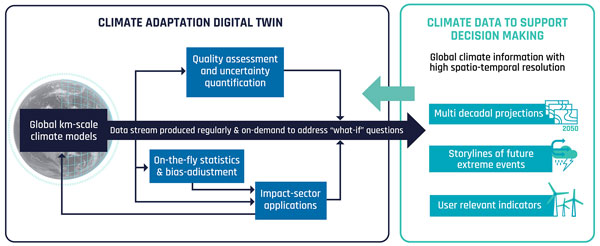
Francisco J. Doblas-Reyes, Jenni Kontkanen, Irina Sandu, Mario Acosta, Mohammed Hussam Al Turjmam, Ivan Alsina-Ferrer, Miguel Andrés-Martínez, Costanza Anerdi, Leo Arriola, Marvin Axness, Marc Batlle Martín, Peter Bauer, Tobias Becker, Daniel Beltrán, Sebastian Beyer, Hendryk Bockelmann, Pierre-Antoine Bretonnière, Sebastien Cabaniols, Silvia Caprioli, Miguel Castrillo, Aparna Chandrasekar, Suvarchal Cheedela, Victor Correal, Emanuele Danovaro, Paolo Davini, Jussi Enkovaara, Claudia Frauen, Barbara Früh, Aina Gaya Àvila, Paolo Ghinassi, Rohit Ghosh, Supriyo Ghosh, Iker González, Katherine Grayson, Matthew Griffith, Ioan Hadade, Christopher Haine, Carl Hartick, Utz-Uwe Haus, Shane Hearne, Heikki Järvinen, Bernat Jiménez, Amal John, Marlin Juchem, Thomas Jung, Jessica Kegel, Matthias Kelbling, Kai Keller, Bruno Kinoshita, Theresa Kiszler, Daniel Klocke, Lukas Kluft, Nikolay Koldunov, Tobias Kölling, Joonas Kolstela, Luis Kornblueh, Sergey Kosukhin, Aleksander Lacima-Nadolnik, Jeisson Javier Leal Rojas, Jonni Lehtiranta, Tuomas Lunttila, Anna Luoma, Pekka Manninen, Alexey Medvedev, Sebastian Milinski, Ali Mohammed, Sebastian Müller, Devaraju Naryanappa, Natalia Nazarova, Sami Niemelä, Bimochan Niraula, Henrik Nortamo, Aleksi Nummelin, Matteo Nurisso, Pablo Ortega, Stella Paronuzzi, Xabier Pedruzo-Bagazgoitia, Charles Pelletier, Carlos Peña, Suraj Polade, Himansu Kesari Pradhan, Rommel Quintanilla, Tiago Quintino, Thomas Rackow, Jouni Räisänen, Maqsood Mubarak Rajput, René Redler, Balthasar Reuter, Nuno Rocha Monteiro, Francesc Roura-Adserias, Silva Ruppert, Susan Sayed, Reiner Schnur, Tanvi Sharma, Dmitry Sidorenko, Outi Sievi-Korte, Albert Soret, Christian Steger, Bjorn Stevens, Jan Streffing, Jaleena Sunny, Luiggi Tenorio, Stephan Thober, Ulf Tigerstedt, Oriol Tinto, Juha Tonttila, Heikki Tuomenvirta, Lauri Tuppi, Ginka Van Thielen, Emanuele Vitali, Jost von Hardenberg, Ingo Wagner, Nils Wedi, Jan Wehner, Sven Willner, Xavier Yepes-Arbós, Florian Ziemen, and Janos Zimmermann
Geosci. Model Dev., 19, 2821–2848, https://doi.org/10.5194/gmd-19-2821-2026, https://doi.org/10.5194/gmd-19-2821-2026, 2026
Short summary
Short summary
The Climate Change Adaptation Digital Twin (Climate DT) pioneers the operationalisation of global climate projections. It produces global simulations with local granularity for adaptation decision-making. Applications are embedded to generate tailored indicators. A unified workflow orchestrates all components in several supercomputers. Data management ensures consistency and streaming enables real-time use. It is a complementary innovation to initiatives like CMIP, CORDEX, and climate services.
Violaine Piton, Hervé Giordani, Romain Bourdalle-Badie, and Charles Pelletier
EGUsphere, https://doi.org/10.5194/egusphere-2026-640, https://doi.org/10.5194/egusphere-2026-640, 2026
Short summary
Short summary
Vertical ocean mixing regulates climate by transferring heat from the surface to depth. Because most models use simplified schemes, they often misrepresent convection and bias temperatures and air–sea heat exchange. We test a new mixing scheme in a global ocean model. It better captures daily tropical surface mixing and deep winter convection at high latitudes, reduces upper-ocean temperature biases, and alters surface heat balance, improving climate model realism.
Valentin Ludwig, Caroline Ribere, Sara Fleury, Christian Haas, Michel Tsamados, Mahmoud El Hajj, Jerome Bouffard, Michele Scagliola, Marion Bocquet, Eric de Boisseson, Vincent Boulenger, Guillaume Boutin, Laurence Connor, Léo Edel, Stefan Hendricks, Ferran Hernández Macià, Marcus Huntemann, Lars Kaleschke, Frank Kauker, Jack Landy, Tom Megain, Alek Petty, Till Soya Rasmussen, Mads Hvid Ribergaard, Robert Ricker, Axel Schweiger, Hoyeon Shi, Xiangshan Tian-Kunze, Donghui Yi, and Alessandro Di Bella
EGUsphere, https://doi.org/10.5194/egusphere-2025-6201, https://doi.org/10.5194/egusphere-2025-6201, 2026
Short summary
Short summary
Our paper compares Arctic sea-ice thickness datasets from models, reanalyses, satellite-only, and multi-product sources. We validate them against Beaufort Sea reference data, compare large-scale products, and analyse time series. Cross-product biases range from 0.2–0.4 m, RMSDs from 0.4–0.9 m, and correlations from 0.5–0.8. We find no 2010–2023 trend, but 1995–2023 thinning of ~ 0.5 m in November and ~ 0.3 m in March.
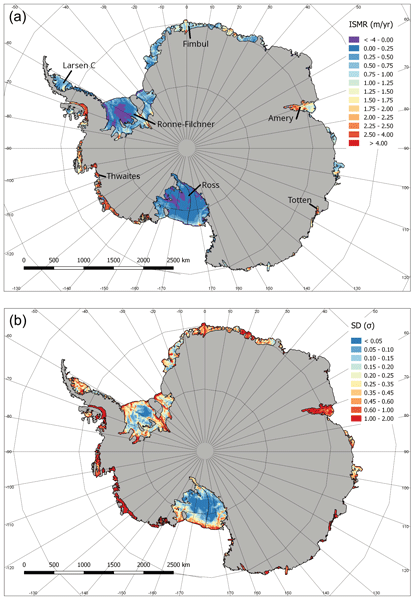
Benjamin K. Galton-Fenzi, Richard Porter-Smith, Sue Cook, Eva Cougnon, David E. Gwyther, Wilma G. C. Huneke, Madelaine G. Rosevear, Xylar Asay-Davis, Fabio Boeira Dias, Michael S. Dinniman, David Holland, Kazuya Kusahara, Kaitlin A. Naughten, Keith W. Nicholls, Charles Pelletier, Ole Richter, Hélène Seroussi, and Ralph Timmermann
The Cryosphere, 19, 6507–6525, https://doi.org/10.5194/tc-19-6507-2025, https://doi.org/10.5194/tc-19-6507-2025, 2025
Short summary
Short summary
Quantifying melt and freeze beneath Antarctica’s floating ice shelves is vital to understanding present-day ice-sheet behavior and its potential to contribute to future sea-level rise. We compare 10 ice-shelf/ocean computer simulations with satellite data, providing the first multi-model estimate of melting and refreezing driven by the ocean. This new estimate offers a valuable tool for assessing ice-shelf roles in current and future ice-sheet changes, informing coastal adaptation strategies.
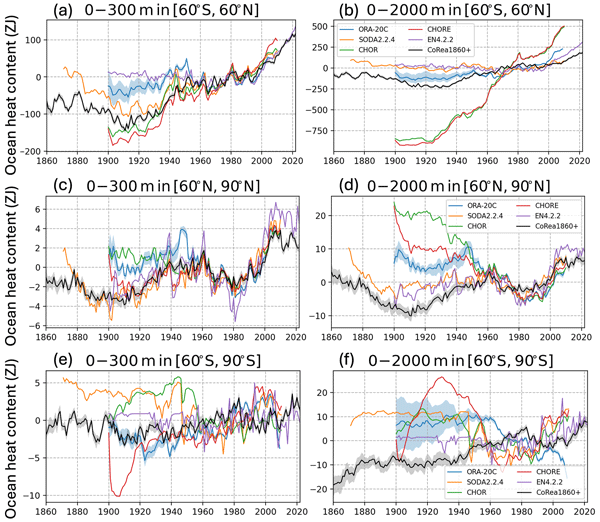
Yiguo Wang, François Counillon, Lea Svendsen, Ping-Gin Chiu, Noel Keenlyside, Patrick Laloyaux, Mariko Koseki, and Eric de Boisseson
Earth Syst. Sci. Data, 17, 4185–4211, https://doi.org/10.5194/essd-17-4185-2025, https://doi.org/10.5194/essd-17-4185-2025, 2025
Short summary
Short summary
CoRea1860+ is a new climate dataset that reconstructs past climate conditions from 1860 to today. By using advanced modelling techniques and incorporating sea surface temperature observations, it provides a consistent picture of long-term climate variability. The dataset captures key ocean, sea ice, and atmosphere changes, helping scientists understand past climate changes and variability.
Florian Sauerland, Pierre-Vincent Huot, Sylvain Marchi, Thierry Fichefet, Hugues Goosse, Konstanze Haubner, François Klein, François Massonnet, Bianca Mezzina, Eduardo Moreno-Chamarro, Pablo Ortega, Frank Pattyn, Charles Pelletier, Deborah Verfaillie, Lars Zipf, and Nicole van Lipzig
EGUsphere, https://doi.org/10.5194/egusphere-2025-2889, https://doi.org/10.5194/egusphere-2025-2889, 2025
Short summary
Short summary
We simulated the Antarctic climate from 1985 to 2014. Our model is driven using the ERA-5 reanalysis for one simulation and the EC-Earth global climate model for three others. Most of the simulated trends, such as sea ice extent and precipitation over land, have opposite signs for the two drivers, but agree between the three EC-Earth driven simulations. We conclude that these opposing trends must be due to the different drivers, and that the climate over land is less predictable than over sea.
Jozef Skákala, David Ford, Keith Haines, Amos Lawless, Matthew J. Martin, Philip Browne, Marcin Chrust, Stefano Ciavatta, Alison Fowler, Daniel Lea, Matthew Palmer, Andrea Rochner, Jennifer Waters, Hao Zuo, Deep S. Banerjee, Mike Bell, Davi M. Carneiro, Yumeng Chen, Susan Kay, Dale Partridge, Martin Price, Richard Renshaw, Georgy Shapiro, and James While
Ocean Sci., 21, 1709–1734, https://doi.org/10.5194/os-21-1709-2025, https://doi.org/10.5194/os-21-1709-2025, 2025
Short summary
Short summary
UK marine data assimilation (MDA) involves a closely collaborating research community. In this paper, we offer both an overview of the state of the art and a vision for the future across all of the main areas of UK MDA, ranging from physics to biogeochemistry to coupled DA. We discuss the current UK MDA stakeholder applications, highlight theoretical developments needed to advance our systems, and reflect upon upcoming opportunities with respect to hardware and observational missions.
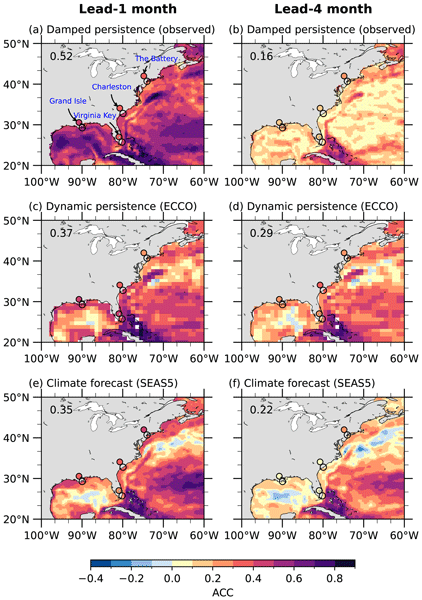
Xue Feng, Matthew J. Widlansky, Tong Lee, Ou Wang, Magdalena A. Balmaseda, Hao Zuo, Gregory Dusek, William Sweet, and Malte F. Stuecker
Ocean Sci., 21, 1663–1676, https://doi.org/10.5194/os-21-1663-2025, https://doi.org/10.5194/os-21-1663-2025, 2025
Short summary
Short summary
Forecasting sea level changes months in advance along the Gulf Coast and East Coast of the United States is challenging. Here, we present a method that uses past ocean states to forecast future sea levels, while assuming no knowledge of how the atmosphere will evolve other than its typical annual cycle near the ocean's surface. Our findings indicate that this method improves sea level outlooks for many locations along the Gulf Coast and East Coast, especially south of Cape Hatteras.
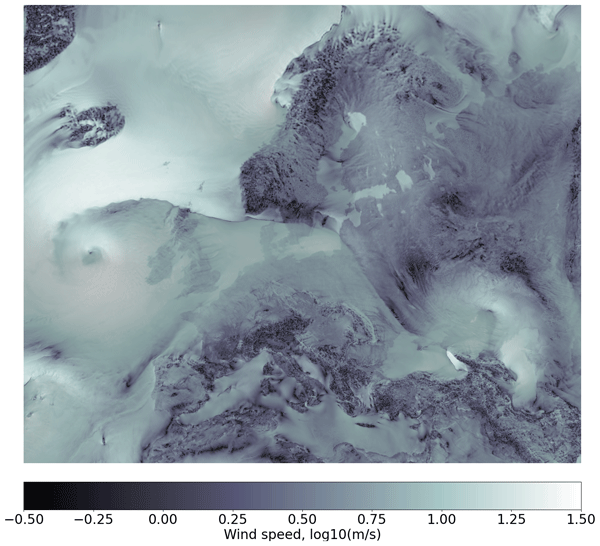
Thomas Rackow, Xabier Pedruzo-Bagazgoitia, Tobias Becker, Sebastian Milinski, Irina Sandu, Razvan Aguridan, Peter Bechtold, Sebastian Beyer, Jean Bidlot, Souhail Boussetta, Willem Deconinck, Michail Diamantakis, Peter Dueben, Emanuel Dutra, Richard Forbes, Rohit Ghosh, Helge F. Goessling, Ioan Hadade, Jan Hegewald, Thomas Jung, Sarah Keeley, Lukas Kluft, Nikolay Koldunov, Aleksei Koldunov, Tobias Kölling, Josh Kousal, Christian Kühnlein, Pedro Maciel, Kristian Mogensen, Tiago Quintino, Inna Polichtchouk, Balthasar Reuter, Domokos Sármány, Patrick Scholz, Dmitry Sidorenko, Jan Streffing, Birgit Sützl, Daisuke Takasuka, Steffen Tietsche, Mirco Valentini, Benoît Vannière, Nils Wedi, Lorenzo Zampieri, and Florian Ziemen
Geosci. Model Dev., 18, 33–69, https://doi.org/10.5194/gmd-18-33-2025, https://doi.org/10.5194/gmd-18-33-2025, 2025
Short summary
Short summary
Detailed global climate model simulations have been created based on a numerical weather prediction model, offering more accurate spatial detail down to the scale of individual cities ("kilometre-scale") and a better understanding of climate phenomena such as atmospheric storms, whirls in the ocean, and cracks in sea ice. The new model aims to provide globally consistent information on local climate change with greater precision, benefiting environmental planning and local impact modelling.
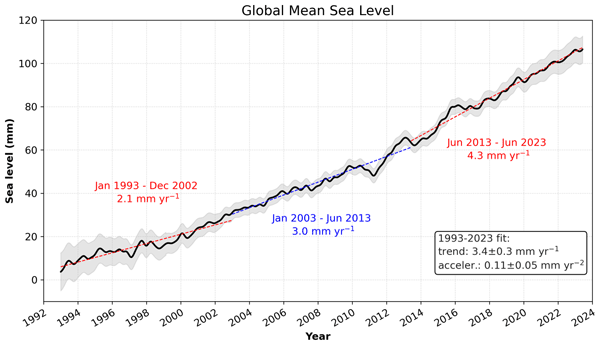
Karina von Schuckmann, Lorena Moreira, Mathilde Cancet, Flora Gues, Emmanuelle Autret, Jonathan Baker, Clément Bricaud, Romain Bourdalle-Badie, Lluis Castrillo, Lijing Cheng, Frederic Chevallier, Daniele Ciani, Alvaro de Pascual-Collar, Vincenzo De Toma, Marie Drevillon, Claudia Fanelli, Gilles Garric, Marion Gehlen, Rianne Giesen, Kevin Hodges, Doroteaciro Iovino, Simon Jandt-Scheelke, Eric Jansen, Melanie Juza, Ioanna Karagali, Thomas Lavergne, Simona Masina, Ronan McAdam, Audrey Minière, Helen Morrison, Tabea Rebekka Panteleit, Andrea Pisano, Marie-Isabelle Pujol, Ad Stoffelen, Sulian Thual, Simon Van Gennip, Pierre Veillard, Chunxue Yang, and Hao Zuo
State Planet, 4-osr8, 1, https://doi.org/10.5194/sp-4-osr8-1-2024, https://doi.org/10.5194/sp-4-osr8-1-2024, 2024
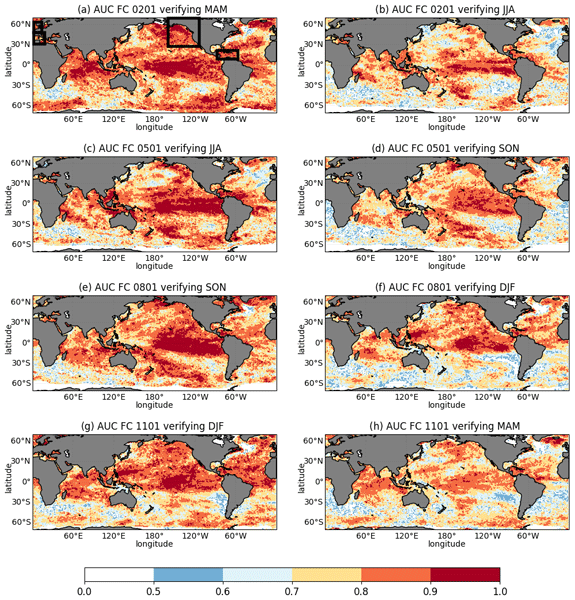
Eric de Boisséson and Magdalena Alonso Balmaseda
Ocean Sci., 20, 265–278, https://doi.org/10.5194/os-20-265-2024, https://doi.org/10.5194/os-20-265-2024, 2024
Short summary
Short summary
Marine heatwaves are long periods of extremely warm ocean surface temperatures. Predicting such events a few months in advance would help decision-making to mitigate their impacts on marine ecosystems. This work investigates how well operational seasonal forecasts can predict marine heatwaves. Results show that such events can be predicted a few months in advance in the tropics but that extending the predictability skill to other regions will require additional work on the forecast models.
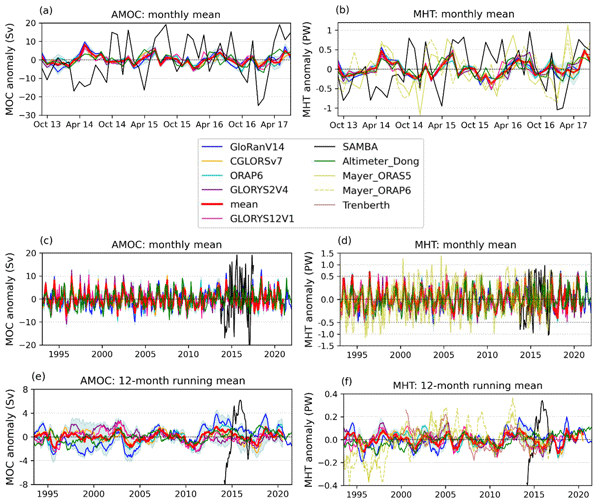
Jonathan Andrew Baker, Richard Renshaw, Laura Claire Jackson, Clotilde Dubois, Doroteaciro Iovino, Hao Zuo, Renellys C. Perez, Shenfu Dong, Marion Kersalé, Michael Mayer, Johannes Mayer, Sabrina Speich, and Tarron Lamont
State Planet, 1-osr7, 4, https://doi.org/10.5194/sp-1-osr7-4-2023, https://doi.org/10.5194/sp-1-osr7-4-2023, 2023
Short summary
Short summary
We use ocean reanalyses, in which ocean models are combined with observations, to infer past changes in ocean circulation and heat transport in the South Atlantic. Comparing these estimates with other observation-based estimates, we find differences in their trends, variability, and mean heat transport but closer agreement in their mean overturning strength. Ocean reanalyses can help us understand the cause of these differences, which could improve estimates of ocean transports in this region.
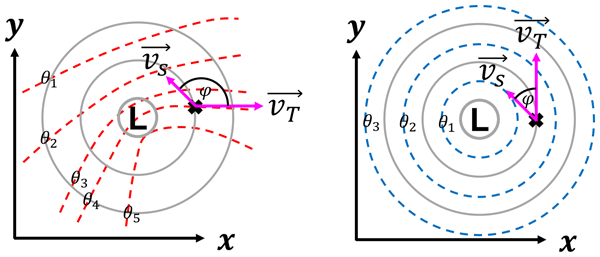
Hannah L. Croad, John Methven, Ben Harvey, Sarah P. E. Keeley, and Ambrogio Volonté
Weather Clim. Dynam., 4, 617–638, https://doi.org/10.5194/wcd-4-617-2023, https://doi.org/10.5194/wcd-4-617-2023, 2023
Short summary
Short summary
The interaction between Arctic cyclones and the sea ice surface in summer is investigated by analysing the friction and sensible heat flux processes acting in two cyclones with contrasting evolution. The major finding is that the effects of friction on cyclone strength are dependent on a particular feature of cyclone structure: whether they have a warm or cold core during growth. Friction leads to cooling within both cyclone types in the lower atmosphere, which may contribute to their longevity.
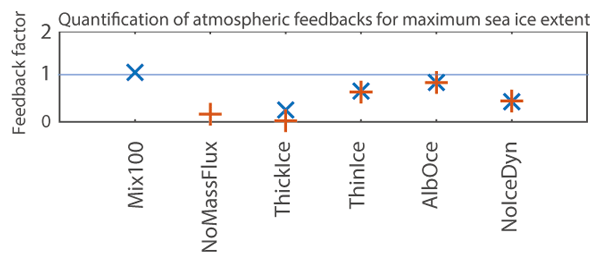
Hugues Goosse, Sofia Allende Contador, Cecilia M. Bitz, Edward Blanchard-Wrigglesworth, Clare Eayrs, Thierry Fichefet, Kenza Himmich, Pierre-Vincent Huot, François Klein, Sylvain Marchi, François Massonnet, Bianca Mezzina, Charles Pelletier, Lettie Roach, Martin Vancoppenolle, and Nicole P. M. van Lipzig
The Cryosphere, 17, 407–425, https://doi.org/10.5194/tc-17-407-2023, https://doi.org/10.5194/tc-17-407-2023, 2023
Short summary
Short summary
Using idealized sensitivity experiments with a regional atmosphere–ocean–sea ice model, we show that sea ice advance is constrained by initial conditions in March and the retreat season is influenced by the magnitude of several physical processes, in particular by the ice–albedo feedback and ice transport. Atmospheric feedbacks amplify the response of the winter ice extent to perturbations, while some negative feedbacks related to heat conduction fluxes act on the ice volume.
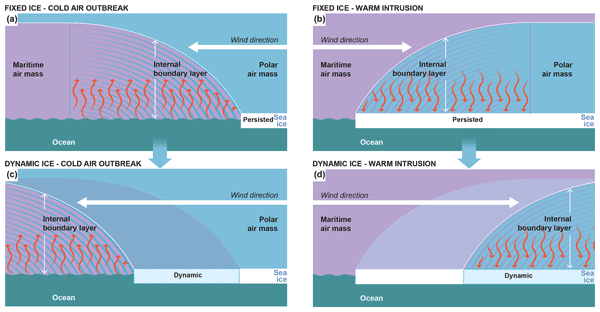
Jonathan J. Day, Sarah Keeley, Gabriele Arduini, Linus Magnusson, Kristian Mogensen, Mark Rodwell, Irina Sandu, and Steffen Tietsche
Weather Clim. Dynam., 3, 713–731, https://doi.org/10.5194/wcd-3-713-2022, https://doi.org/10.5194/wcd-3-713-2022, 2022
Short summary
Short summary
A recent drive to develop seamless forecasting systems has culminated in the development of weather forecasting systems that include a coupled representation of the atmosphere, ocean and sea ice. Before this, sea ice and sea surface temperature anomalies were typically fixed throughout a given forecast. We show that the dynamic coupling is most beneficial during periods of rapid ice advance, where persistence is a poor forecast of the sea ice and leads to large errors in the uncoupled system.
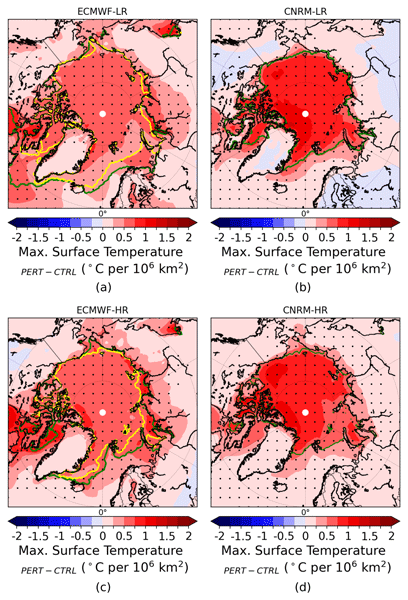
Steve Delhaye, Thierry Fichefet, François Massonnet, David Docquier, Rym Msadek, Svenya Chripko, Christopher Roberts, Sarah Keeley, and Retish Senan
Weather Clim. Dynam., 3, 555–573, https://doi.org/10.5194/wcd-3-555-2022, https://doi.org/10.5194/wcd-3-555-2022, 2022
Short summary
Short summary
It is unclear how the atmosphere will respond to a retreat of summer Arctic sea ice. Much attention has been paid so far to weather extremes at mid-latitude and in winter. Here we focus on the changes in extremes in surface air temperature and precipitation over the Arctic regions in summer during and following abrupt sea ice retreats. We find that Arctic sea ice loss clearly shifts the extremes in surface air temperature and precipitation over terrestrial regions surrounding the Arctic Ocean.

Charles Pelletier, Thierry Fichefet, Hugues Goosse, Konstanze Haubner, Samuel Helsen, Pierre-Vincent Huot, Christoph Kittel, François Klein, Sébastien Le clec'h, Nicole P. M. van Lipzig, Sylvain Marchi, François Massonnet, Pierre Mathiot, Ehsan Moravveji, Eduardo Moreno-Chamarro, Pablo Ortega, Frank Pattyn, Niels Souverijns, Guillian Van Achter, Sam Vanden Broucke, Alexander Vanhulle, Deborah Verfaillie, and Lars Zipf
Geosci. Model Dev., 15, 553–594, https://doi.org/10.5194/gmd-15-553-2022, https://doi.org/10.5194/gmd-15-553-2022, 2022
Short summary
Short summary
We present PARASO, a circumpolar model for simulating the Antarctic climate. PARASO features five distinct models, each covering different Earth system subcomponents (ice sheet, atmosphere, land, sea ice, ocean). In this technical article, we describe how this tool has been developed, with a focus on the
coupling interfacesrepresenting the feedbacks between the distinct models used for contribution. PARASO is stable and ready to use but is still characterized by significant biases.
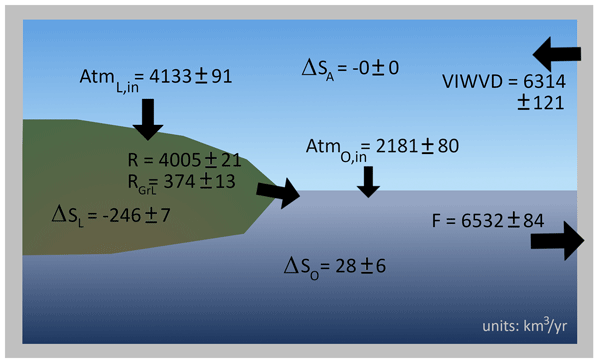
Susanna Winkelbauer, Michael Mayer, Vanessa Seitner, Ervin Zsoter, Hao Zuo, and Leopold Haimberger
Hydrol. Earth Syst. Sci., 26, 279–304, https://doi.org/10.5194/hess-26-279-2022, https://doi.org/10.5194/hess-26-279-2022, 2022
Short summary
Short summary
We evaluate Arctic river discharge using in situ observations and state-of-the-art reanalyses, inter alia the most recent Global Flood Awareness System (GloFAS) river discharge reanalysis version 3.1. Furthermore, we combine reanalysis data, in situ observations, ocean reanalyses, and satellite data and use a Lagrangian optimization scheme to close the Arctic's volume budget on annual and seasonal scales, resulting in one reliable and up-to-date estimate of every volume budget term.
Cited articles
Abraham, C., Steiner, N., Monahan, A., and Michel, C.: Effects of subgrid-scale snow thickness variability on radiative transfer in sea ice, J. Geophys. Res,-Oceans, 120, 5597–5614, https://doi.org/10.1002/2015JC010741, 2015. a
Balan-Sarojini, B., Tietsche, S., Mayer, M., Balmaseda, M., Zuo, H., de Rosnay, P., Stockdale, T., and Vitart, F.: Year-round impact of winter sea ice thickness observations on seasonal forecasts, The Cryosphere, 15, 325–344, https://doi.org/10.5194/tc-15-325-2021, 2021. a, b
Bernard, B., Madec, G., Penduff, T., Molines, J.-M., Treguier, A.-M., Le Sommer, J., Beckmann, A., Biastoch, A., Böning, C., Dengg, J., Derval, C., Durand, E., Gulev, S., Remy, E., Talandier, C., Theetten, S., Maltrud, M., McClean, J., and De Cuevas, B.: Impact of partial steps and momentum advection schemes in a global ocean circulation model at eddy-permitting resolution, Ocean Dynam., 56, 543–567, 2006. a
Bitz, C. M., Holland, M. M., Weaver, A. J., and Eby, M.: Simulating the ice‐thickness distribution in a coupled climate model, J. Geophys. Res-Oceans, 106, 2441–2463, https://doi.org/10.1029/1999jc000113, 2001. a
Blockley, E. W. and Peterson, K. A.: Improving Met Office seasonal predictions of Arctic sea ice using assimilation of CryoSat-2 thickness, The Cryosphere, 12, 3419–3438, https://doi.org/10.5194/tc-12-3419-2018, 2018. a
Bocquet, M., Fleury, S., Rémy, F., and Piras, F.: Arctic and Antarctic Sea Ice Thickness and Volume Changes From Observations Between 1994 and 2023, J. Geophys. Res.-Oceans, 129, e2023JC020848, https://doi.org/10.1029/2023JC020848, 2024. a
Bouillon, S., Morales Maqueda, M. Á., Legat, V., and Fichefet, T.: An elastic-viscous-plastic sea ice model formulated on Arakawa B and C grids, Ocean Model., 27, 174–184, https://doi.org/10.1016/j.ocemod.2009.01.004, 2009. a
Chrust, M., Weaver, A. T., Browne, P., Zuo, H., and Balmaseda, M. A.: Impact of an Ensemble of Ocean Data Assimilations in ECMWF's next generation ocean reanalysis system, arxiv [preprint], https://doi.org/10.48550/arXiv.2407.04488, 2024. a
Cipollone, A., Banerjee, D. S., Iovino, D., Aydogdu, A., and Masina, S.: Bivariate sea-ice assimilation for global-ocean analysis–reanalysis, Ocean Sci., 19, 1375–1392, https://doi.org/10.5194/os-19-1375-2023, 2023. a
de Rosnay, P., Browne, P., de Boisséson, E., Fairbairn, D., Hirahara, Y., Ochi, K., Schepers, D., Weston, P., Zuo, H., Alonso-Balmaseda, M., Balsamo, G., Bonavita, M., Borman, N., Brown, A., Chrust, M., Dahoui, M., Chiara, G., English, S., Geer, A., Healy, S., Hersbach, H., Laloyaux, P., Magnusson, L., Massart, S., McNally, A., Pappenberger, F., and Rabier, F.: Coupled data assimilation at ECMWF: current status, challenges and future developments, Q. J. Roy. Meteor. Soc., 148, 2672–2702, https://doi.org/10.1002/qj.4330, 2022. a
Fritzner, S., Graversen, R., Christensen, K. H., Rostosky, P., and Wang, K.: Impact of assimilating sea ice concentration, sea ice thickness and snow depth in a coupled ocean–sea ice modelling system, The Cryosphere, 13, 491–509, https://doi.org/10.5194/tc-13-491-2019, 2019. a
Geer, A. J.: Joint estimation of sea ice and atmospheric state from microwave imagers in operational weather forecasting, Q. J. Roy. Meteor. Soc., https://doi.org/10.1002/qj.4797, 2024. a
Good, S., Fiedler, E., Mao, C., Martin, M. J., Maycock, A., Reid, R., Roberts-Jones, J., Searle, T., Waters, J., While, J., and Worsfold, M.: The current configuration of the OSTIA system for operational production of foundation sea surface temperature and ice concentration analyses, Remote Sensing, 12, 720, https://doi.org/10.3390/rs12040720, 2020. a
Jean-Michel, L., Eric, G., Romain, B.-B., Gilles, G., Angélique, M., Marie, D., Clément, B., Mathieu, H., Olivier, L. G., Charly, R., Tony, C., Charles-Emmanuel, T., Florent, G., Giovanni, R., Mounir, B., Yann, D., and Pierre-Yves, L. T.: The Copernicus Global
Keeley, S. and Mogensen, K.: Dynamic sea ice in the IFS, ECMWF Newsletter, 23–29, https://doi.org/10.21957/4ska25furb, 2018. a
Landy, J. C., Dawson, G. J., Tsamados, M., Bushuk, M., Stroeve, J. C., Howell, S. E., Krumpen, T., Babb, D. G., Komarov, A. S., Heorton, H. D. B. S., Belter, H. J., and Aksenov, Y.: A year-round satellite sea-ice thickness record from CryoSat-2, Nature, 609, 517–522, 2022. a
Merchant, C. J., Embury, O., Bulgin, C. E., Block, T., Corlett, G. K., Fiedler, E., Good, S. A., Mittaz, J., Rayner, N. A., Berry, D., Eastwood, S., Taylor, M., Tsushima, Y., Waterfall, A., Wilson, R., and Donlon, C.: Satellite-based time-series of sea-surface temperature since 1981 for climate applications, Sci. Data, 6, 223, https://doi.org/10.1038/s41597-019-0236-x, 2019. a
Mignac, D., Martin, M., Fiedler, E., Blockley, E., and Fournier, N.: Improving the Met Office's Forecast Ocean Assimilation Model (FOAM) with the assimilation of satellite-derived sea-ice thickness data from CryoSat-2 and SMOS in the Arctic, Q. J. Roy. Meteor. Soc., 148, 1144–1167, 2022. a
Mogensen, K., Balmaseda, M. A., and Weaver, A.: The NEMOVAR ocean data assimilation system as implemented in the ECMWF ocean analysis for System 4, ECMWF Reading, UK, https://doi.org/10.21957/x5y9yrtm, 2012. a
Mu, L., Nerger, L., Tang, Q., Loza, S. N., Sidorenko, D., Wang, Q., Semmler, T., Zampieri, L., Losch, M., and Goessling, H. F.: Toward a data assimilation system for seamless sea ice prediction based on the AWI climate model, J. Adv. Model. Earth Sy., 12, e2019MS001937, https://doi.org/10.1029/2019MS001937, 2020. a
OSI-450-a: OSI SAF Global sea ice concentration climate data record 1978–2020 (v3.0, 2022), EUMETSAT Ocean and Sea Ice Satellite Application Facility, [data set], https://doi.org/10.15770/EUM_SAF_OSI_0013, 2022. a
Prather, M. J.: Numerical advection by conservation of second-order moments, J. Geophys. Res.-Atmos., 91, 6671–6681, 1986. a
Sakov, P., Counillon, F., Bertino, L., Lisæter, K. A., Oke, P. R., and Korablev, A.: TOPAZ4: an ocean-sea ice data assimilation system for the North Atlantic and Arctic, Ocean Sci., 8, 633–656, https://doi.org/10.5194/os-8-633-2012, 2012. a
Smith, G. C., Roy, F., Reszka, M., Surcel Colan, D., He, Z., Deacu, D., Belanger, J.-M., Skachko, S., Liu, Y., Dupont, F., Lemieux, J.-F., Beaudoin, C., Tranchant, B., Drévillon, M., Garric, G., Testut, C.-E., Lellouche, J.-M., Pellerin, P., Ritchie, H., Lu, Y., Davidson, F., Buehner, M., Caya, A., and Lajoie, M.: Sea ice forecast verification in the Canadian Global Ice Ocean Prediction System, Q. J. Roy. Meteor. Soc., 142, 659–671, https://doi.org/10.1002/qj.2555, 2016. a, b
Thorndike, A. S., Rothrock, D. A., Maykut, G. A., and Colony, R.: The thickness distribution of sea ice, J. Geophys. Res., 80, 4501–4513, https://doi.org/10.1029/JC080i033p04501, 1975. a
Vancoppenolle, M., Fichefet, T., and Bitz, C. M.: On the sensitivity of undeformed Arctic sea ice to its vertical salinity profile, Geophys. Res. Lett., 32, https://doi.org/10.1029/2005GL023427, 2005. a
Vancoppenolle, M., Rousset, C., Blockley, E., Aksenov, Y., Feltham, D., Fichefet, T., Garric, G., Guémas, V., Iovino, D., Keeley, S., Madec, G., Massonnet, F., Ridley, J., Schroeder, D., and Tietsche, S.: SI3, the NEMO Sea Ice Engine, Zenodo, https://doi.org/10.5281/zenodo.7534900, 2023. a, b
Wieringa, M. M., Riedel, C., Anderson, J. L., and Bitz, C. M.: Bounded and categorized: targeting data assimilation for sea ice fractional coverage and nonnegative quantities in a single-column multi-category sea ice model, The Cryosphere, 18, 5365–5382, https://doi.org/10.5194/tc-18-5365-2024, 2024. a
Williams, N., Byrne, N., Feltham, D., Van Leeuwen, P. J., Bannister, R., Schroeder, D., Ridout, A., and Nerger, L.: The effects of assimilating a sub-grid-scale sea ice thickness distribution in a new Arctic sea ice data assimilation system, The Cryosphere, 17, 2509–2532, https://doi.org/10.5194/tc-17-2509-2023, 2023. a
Yang, Q., Losa, S. N., Losch, M., Tian-Kunze, X., Nerger, L., Liu, J., Kaleschke, L., and Zhang, Z.: Assimilating SMOS sea ice thickness into a coupled ice-ocean model using a local SEIK filter, J. Geophys. Res.-Oceans, 119, 6680–6692, https://doi.org/10.1002/2014JC009963, 2014. a
Zuo, H., Balmaseda, M. A., Tietsche, S., Mogensen, K., and Mayer, M.: The ECMWF operational ensemble reanalysis–analysis system for ocean and sea ice: a description of the system and assessment, Ocean Sci., 15, 779–808, https://doi.org/10.5194/os-15-779-2019, 2019. a
Zuo, H., Alonso-Balmaseda, M., de Boisseson, E., Browne, P., Chrust, M., Keeley, S., Mogensen, K., Pelletier, C., de Rosnay, P., and Takakura, T.: ECMWF’s next ensemble reanalysis system for ocean and sea ice: ORAS6, ECMWF Newsletter, 30–36, https://doi.org/10.21957/hzd5y821lk, 2024. a
Zuo, H., Balmaseda, M. A., Boisseson, E. D., Browne, P., Chrust, M., Cobb, A., Day, J., Keeley, S., Mogensen, K., Johnson, S., Mayer, M., Pelletier, C., Roberts, C., Rosnay, P. D., Takakura, T., and Tietsche, S.: ORAS6: The new ECMWF ensemble ocean and sea-ice reanalysis-analysis system and impact on coupled forecasts, Q. J. Roy. Meteor. Soc., in preparation, 2026. a
Short summary
An initial estimate of sea ice conditions are required to start modern weather forecasting models. To get these we have to combine observations, typically from satellites, with previous estimates of the sea ice conditions. This paper talks about how we do this in the latest version of the model, where the sea ice state has to be specified for ice of different thicknesses. We describe the method that is used when we produce an estimate for every hour for the past 50 years.
An initial estimate of sea ice conditions are required to start modern weather forecasting...


