
Articles | Volume 20, issue 5
https://doi.org/10.5194/tc-20-2977-2026
© Author(s) 2026. This work is distributed under
the Creative Commons Attribution 4.0 License.
the Creative Commons Attribution 4.0 License.
https://doi.org/10.5194/tc-20-2977-2026
© Author(s) 2026. This work is distributed under
the Creative Commons Attribution 4.0 License.
the Creative Commons Attribution 4.0 License.
Research article
| 
22 May 2026
Research article |
| 22 May 2026
| 22 May 2026
Estimation of snow depth from AMSR-2 based on an AutoML method over the Qinghai-Tibet Plateau
Xuan Li
College of Geography and Environmental Science, Northwest Normal University, Lanzhou 730070, China
Fan Xu
Tencent Dadi Tongtu (Beijing) Technology Co., Ltd., Beijing 100086, China
Chen Zhang
College of Geography and Environmental Science, Northwest Normal University, Lanzhou 730070, China
Key Laboratory of Remote Sensing of Gansu Province, Heihe Remote Sensing Experimental Research Station, Northwest Institute of Eco-Environment and Resources, Chinese Academy of Science, Lanzhou 730000, China
Liyun Dai
Key Laboratory of Remote Sensing of Gansu Province, Heihe Remote Sensing Experimental Research Station, Northwest Institute of Eco-Environment and Resources, Chinese Academy of Science, Lanzhou 730000, China
Yanli Zhang
CORRESPONDING AUTHOR

College of Geography and Environmental Science, Northwest Normal University, Lanzhou 730070, China
Related authors
No articles found.
Erji Du, Tonghua Wu, Liyun Dai, Youhua Ran, Yufang Min, Lin Zhao, Lingxiao Wang, Jimin Yao, Zhibin Li, Keting Feng, Yao Xiao, Guojie Hu, Defu Zou, Guangyue Liu, Zanpin Xing, Xiaofan Zhu, and Ji Chen
Earth Syst. Sci. Data Discuss., https://doi.org/10.5194/essd-2026-330, https://doi.org/10.5194/essd-2026-330, 2026
Preprint under review for ESSD
Short summary
Short summary
We present the first 90 m resolution dataset of active layer moisture covering the entire permafrost region of the Qinghai–Tibet Plateau. It was produced from 342 field observations (2009–2024) using four machine learning models combined through bias-aware fusion, and is accompanied by an area-of-applicability mask and per-pixel uncertainty estimates. The dataset is freely available at https://doi.org/10.12072/ncdc.permafrost.db7312.2026.
Tian Chang, Yonghong Yi, Masato Furuya, Huiru Jiang, Tao Che, Youhua Ran, Lin Liu, and Rongxing Li
The Cryosphere, 20, 3933–3957, https://doi.org/10.5194/tc-20-3933-2026, https://doi.org/10.5194/tc-20-3933-2026, 2026
Short summary
Short summary
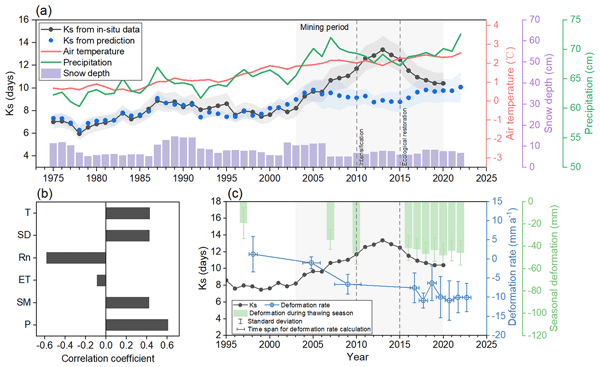
We combined a long-term surface deformation dataset derived from multi-frequency Interferometric Synthetic Aperture Radar with streamflow recession analysis to assess potential destruction effects of historic mining on permafrost in the Qilian Mountains. Results show that post-mining surface deformation intensifies alongside marked recession slowdown, signaling permafrost thaw. These findings highlight long-lasting effects of human disturbance on permafrost degradation under regional warming.
Chen Zhang, Yifei Fan, Wenxia Han, Yingchun Ge, Jiabei Zhu, and Tao Che
Earth Syst. Sci. Data Discuss., https://doi.org/10.5194/essd-2026-409, https://doi.org/10.5194/essd-2026-409, 2026
Preprint under review for ESSD
Short summary
Short summary
Global groundwater depletion threatens water security, but coarse satellite data (GRACE) obscures local human impacts. To bridge this gap, we present a 1 km global monthly groundwater storage anomaly dataset (2002–2020) by downscaling GRACE using an aquifer-stratified XGBoost framework. Validated against 1,518 in-situ wells, this high-resolution product uniquely captures sharp boundaries of intensive agricultural pumping, offering a robust benchmark for water resource management.
Xufeng Wang, Tao Che, Jingfeng Xiao, Tonghong Wang, Junlei Tan, Yang Zhang, Zhiguo Ren, Liying Geng, Haibo Wang, Ziwei Xu, Shaomin Liu, and Xin Li
Earth Syst. Sci. Data, 17, 1329–1346, https://doi.org/10.5194/essd-17-1329-2025, https://doi.org/10.5194/essd-17-1329-2025, 2025
Short summary
Short summary
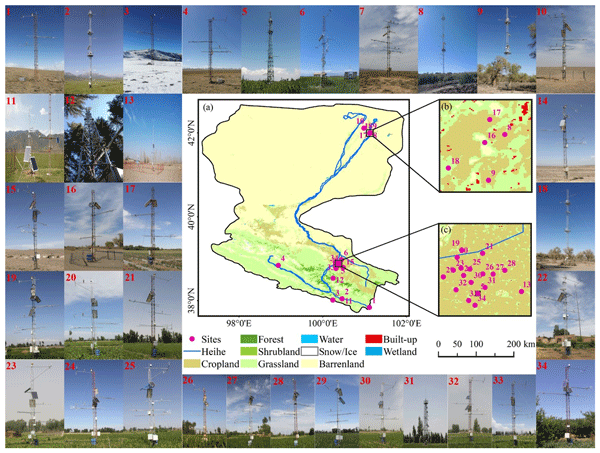
In this study, carbon flux and auxiliary meteorological data are post-processed to create an analysis-ready dataset for 34 sites across six ecosystems in the Heihe River basin. Overall, 18 sites have multi-year observations, while 16 were observed only during the 2012 growing season, totaling 1513 site months. This dataset can be used to explore carbon exchange, assess ecosystem responses to climate change, support upscaling studies, and evaluate carbon cycle models.
Xia Wang, Tao Che, Xueyin Ruan, Shanna Yue, Jing Wang, Chun Zhao, and Lei Geng
Geosci. Model Dev., 18, 651–670, https://doi.org/10.5194/gmd-18-651-2025, https://doi.org/10.5194/gmd-18-651-2025, 2025
Short summary
Short summary
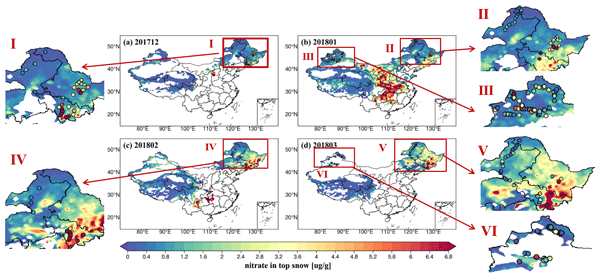
We employed the WRF-Chem model to parameterize atmospheric nitrate deposition in snow and evaluate its performance in simulating snow cover, snow depth, and concentrations of dust and nitrate using new observations from northern China. The results generally exhibit reasonable agreement with field observations in northern China, demonstrating the model's capability to simulate snow properties, including concentrations of reservoir species.
Yaoming Ma, Zhipeng Xie, Yingying Chen, Shaomin Liu, Tao Che, Ziwei Xu, Lunyu Shang, Xiaobo He, Xianhong Meng, Weiqiang Ma, Baiqing Xu, Huabiao Zhao, Junbo Wang, Guangjian Wu, and Xin Li
Earth Syst. Sci. Data, 16, 3017–3043, https://doi.org/10.5194/essd-16-3017-2024, https://doi.org/10.5194/essd-16-3017-2024, 2024
Short summary
Short summary
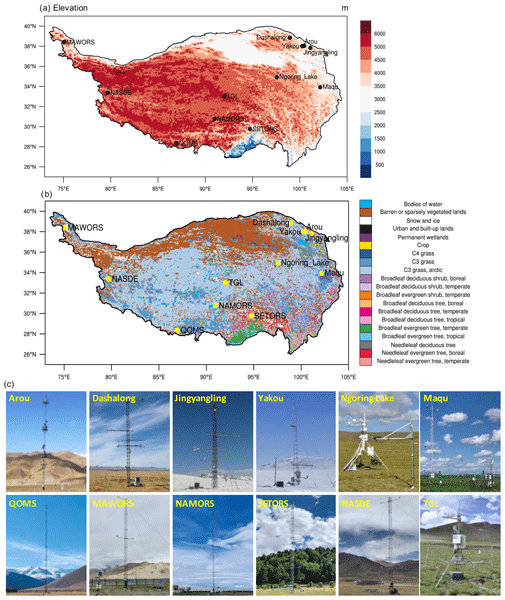
Current models and satellites struggle to accurately represent the land–atmosphere (L–A) interactions over the Tibetan Plateau. We present the most extensive compilation of in situ observations to date, comprising 17 years of data on L–A interactions across 12 sites. This quality-assured benchmark dataset provides independent validation to improve models and remote sensing for the region, and it enables new investigations of fine-scale L–A processes and their mechanistic drivers.
Shaomin Liu, Ziwei Xu, Tao Che, Xin Li, Tongren Xu, Zhiguo Ren, Yang Zhang, Junlei Tan, Lisheng Song, Ji Zhou, Zhongli Zhu, Xiaofan Yang, Rui Liu, and Yanfei Ma
Earth Syst. Sci. Data, 15, 4959–4981, https://doi.org/10.5194/essd-15-4959-2023, https://doi.org/10.5194/essd-15-4959-2023, 2023
Short summary
Short summary
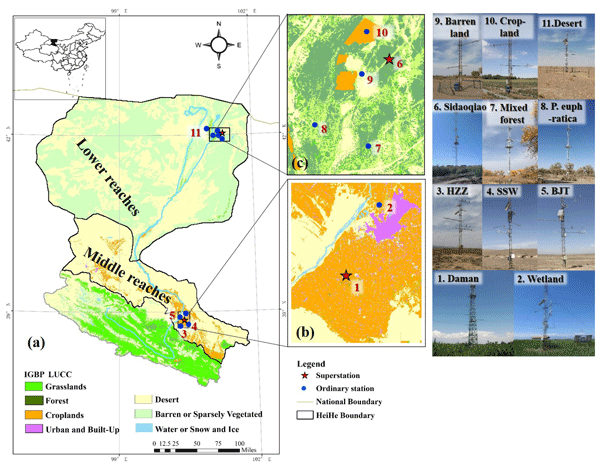
We present a suite of observational datasets from artificial and natural oases–desert systems that consist of long-term turbulent flux and auxiliary data, including hydrometeorological, vegetation, and soil parameters, from 2012 to 2021. We confirm that the 10-year, long-term dataset presented in this study is of high quality with few missing data, and we believe that the data will support ecological security and sustainable development in oasis–desert areas.

Huadong Wang, Xueliang Zhang, Pengfeng Xiao, Tao Che, Zhaojun Zheng, Liyun Dai, and Wenbo Luan
The Cryosphere, 17, 33–50, https://doi.org/10.5194/tc-17-33-2023, https://doi.org/10.5194/tc-17-33-2023, 2023
Short summary
Short summary
The geographically and temporally weighted neural network (GTWNN) model is constructed for estimating large-scale daily snow density by integrating satellite, ground, and reanalysis data, which addresses the importance of spatiotemporal heterogeneity and a nonlinear relationship between snow density and impact variables, as well as allows us to understand the spatiotemporal pattern and heterogeneity of snow density in different snow periods and snow cover regions in China from 2013 to 2020.
Hui Guo, Xiaoyan Wang, Zecheng Guo, Gaofeng Zhu, Tao Che, Jian Wang, Xiaodong Huang, Chao Han, and Zhiqi Ouyang
The Cryosphere Discuss., https://doi.org/10.5194/tc-2022-229, https://doi.org/10.5194/tc-2022-229, 2022
Revised manuscript not accepted
Short summary
Short summary
Snow phenology is a seasonal pattern in snow cover and snowfall. In this review, we found that during the past 50 years in the Northern Hemisphere, the snow cover end date has shown a significantly advanced change trend. Eurasia contributes more to the snow phenology in the Northern Hemisphere than does North America. Snow phenology is related to climate and atmospheric circulation, and the response to vegetation phenology depends on geographical regions, temperature and precipitation gradients.
Wei Wan, Jie Zhang, Liyun Dai, Hong Liang, Ting Yang, Baojian Liu, Zhizhou Guo, Heng Hu, and Limin Zhao
Earth Syst. Sci. Data, 14, 3549–3571, https://doi.org/10.5194/essd-14-3549-2022, https://doi.org/10.5194/essd-14-3549-2022, 2022
Short summary
Short summary
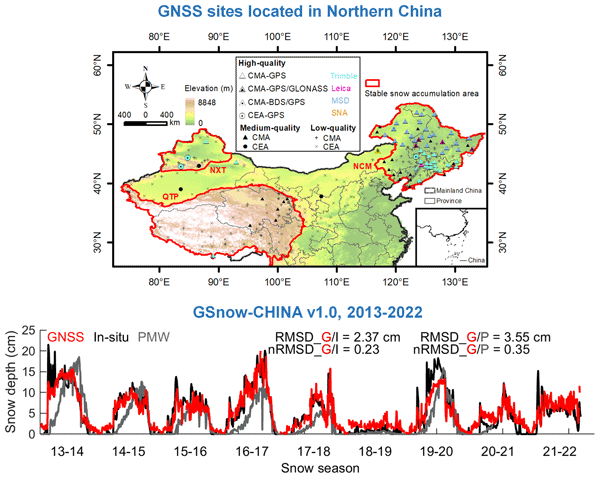
The GSnow-CHINA data set is a snow depth data set developed using the two Global Navigation Satellite System station networks in China. It includes snow depth of 24, 12, and 2/3/6 h records, if possible, for 80 sites from 2013–2022 over northern China (25–55° N, 70–140° E). The footprint of the data set is ~ 1000 m2, and it can be used as an independent data source for validation purposes. It is also useful for regional climate research and other meteorological and hydrological applications.

Liyun Dai, Tao Che, Yang Zhang, Zhiguo Ren, Junlei Tan, Meerzhan Akynbekkyzy, Lin Xiao, Shengnan Zhou, Yuna Yan, Yan Liu, Hongyi Li, and Lifu Wang
Earth Syst. Sci. Data, 14, 3509–3530, https://doi.org/10.5194/essd-14-3509-2022, https://doi.org/10.5194/essd-14-3509-2022, 2022
Short summary
Short summary
An Integrated Microwave Radiometry Campaign for Snow (IMCS) was conducted to collect ground-based passive microwave and optical remote-sensing data, snow pit and underlying soil data, and meteorological parameters. The dataset is unique in continuously providing electromagnetic and physical features of snowpack and environment. The dataset is expected to serve the evaluation and development of microwave radiative transfer models and snow process models, along with land surface process models.
Y. Ma and Y. Zhang
Int. Arch. Photogramm. Remote Sens. Spatial Inf. Sci., XLIII-B3-2022, 771–778, https://doi.org/10.5194/isprs-archives-XLIII-B3-2022-771-2022, https://doi.org/10.5194/isprs-archives-XLIII-B3-2022-771-2022, 2022
Y. Zhang, L. Chen, and J. Liu
ISPRS Ann. Photogramm. Remote Sens. Spatial Inf. Sci., V-3-2022, 493–500, https://doi.org/10.5194/isprs-annals-V-3-2022-493-2022, https://doi.org/10.5194/isprs-annals-V-3-2022-493-2022, 2022
Q. Liu and Y. Zhang
ISPRS Ann. Photogramm. Remote Sens. Spatial Inf. Sci., V-3-2022, 333–338, https://doi.org/10.5194/isprs-annals-V-3-2022-333-2022, https://doi.org/10.5194/isprs-annals-V-3-2022-333-2022, 2022
Yanxing Hu, Tao Che, Liyun Dai, Yu Zhu, Lin Xiao, Jie Deng, and Xin Li
Earth Syst. Sci. Data Discuss., https://doi.org/10.5194/essd-2022-63, https://doi.org/10.5194/essd-2022-63, 2022
Preprint withdrawn
Short summary
Short summary
We propose a data fusion framework based on the random forest regression algorithm to derive a comprehensive snow depth product for the Northern Hemisphere from 1980 to 2019. This new fused snow depth dataset not only provides information about snow depth and its variation over the Northern Hemisphere but also presents potential value for hydrological and water cycle studies related to seasonal snowpacks.

Donghang Shao, Hongyi Li, Jian Wang, Xiaohua Hao, Tao Che, and Wenzheng Ji
Earth Syst. Sci. Data, 14, 795–809, https://doi.org/10.5194/essd-14-795-2022, https://doi.org/10.5194/essd-14-795-2022, 2022
Short summary
Short summary
The temporal series and spatial distribution discontinuity of the existing snow water equivalent (SWE) products in the pan-Arctic region severely restricts the use of SWE data in cryosphere change and climate change studies. Using a ridge regression machine learning algorithm, this study developed a set of spatiotemporally seamless and high-precision SWE products. This product could contribute to the study of cryosphere change and climate change at large spatial scales.
Xiaohua Hao, Guanghui Huang, Tao Che, Wenzheng Ji, Xingliang Sun, Qin Zhao, Hongyu Zhao, Jian Wang, Hongyi Li, and Qian Yang
Earth Syst. Sci. Data, 13, 4711–4726, https://doi.org/10.5194/essd-13-4711-2021, https://doi.org/10.5194/essd-13-4711-2021, 2021
Short summary
Short summary
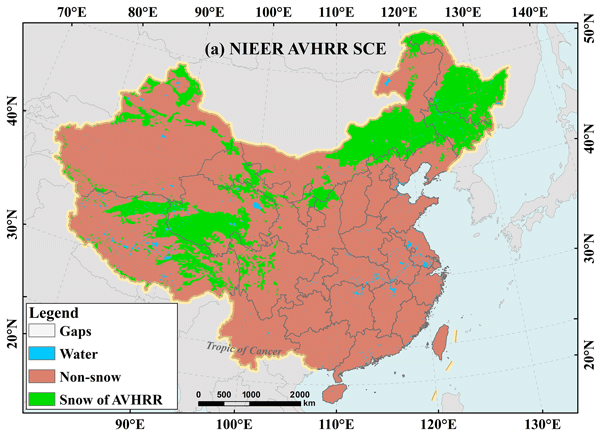
Long-term snow cover data are not only of importance for climate research. Currently China still lacks a high-quality snow cover extent (SCE) product for climate research. This study develops a multi-level decision tree algorithm for cloud and snow discrimination and gap-filled technique based on AVHRR surface reflectance data. We generate a daily 5 km SCE product across China from 1981 to 2019. It has high accuracy and will serve as baseline data for climate and other applications.
Cited articles
Aalstad, K., Westermann, S., Schuler, T. V., Boike, J., and Bertino, L.: Ensemble-based assimilation of fractional snow-covered area satellite retrievals to estimate the snow distribution at Arctic sites, The Cryosphere, 12, 247–270, https://doi.org/10.5194/tc-12-247-2018, 2018.
Benghzial, K., Raki, H., Bamansour, S., Elhamdi, M., Aalaila, Y., and Peluffo-Ordóñez, D. H.: GHG Global Emission Prediction of Synthetic N Fertilizers Using Expectile Regression Techniques, Atmosphere-Basel, 14, 283, https://doi.org/10.3390/atmos14020283, 2023.
Bo, Y., Li, X., and Wang, C.: Seasonal characteristics of the interannual variations centre of the Tibetan Plateau snow cover, J. Glacio. Geocryol., http://www.bcdt.ac.cn/CN/10.7522/j.issn.1000-0240.2019.0529, 2014.
Cao, M., Li, P., Robinson, D. A., Spies, T. E., and Kukla, G.: Evaluation and preliminary application of SMMR microwave remote sensing of snow cover in western China, National Remote Sensing Bulletin, 260–269, https://doi.org/10.11834/jrs.1993026, 1993.
Chang, A. T. C., Foster, J. L., and Hall, D. K.: Nimbus-7 SMMR Derived Global Snow Cover Parameters, Ann. Glaciol., 9, 39–44, https://doi.org/10.1017/S0260305500000355, 1987.
Che, T., Li, X., Jin, R., Armstrong, R., and Zhang, T.-J.: Snow depth derived from passive microwave remote-sensing data in China, Ann. Glaciol., 49, 145–154, https://doi.org/10.3189/172756408787814690, 2008.
Che, T., Hao, X., Dai, L., Li, H., Huang, X., and Xiao, L.: Snow Cover Variation and Its Impacts over the Qinghai-Tibet Plateau, Bulletin of Chinese Academy of Sciences, 34, 1247–1253, 2019.
Cheng, B., Zhang, Z., Vihma, T., Johansson, M., Bian, L., Li, Z., and Wu, H.: Model experiments on snow and ice thermodynamics in the Arctic Ocean with CHINARE 2003 data, 113, https://doi.org/10.1029/2007JC004654, 2008.
Cortés, G. and Margulis, S.: Impacts of El Niňo and La Niňa on interannual snow accumulation in the Andes:Results from a high-resolution 31 year reanalysis, Geophys. Res. Lett., 44, 6859–6867, https://doi.org/10.1002/2017GL073826, 2017.
da Silva, D. H., Ribeiro, C. T., da Silva Souza, L. R., and Pereira, A. A.: Application of Open-Source, Low-Code Machine-Learning Library in Python to Diagnose Parkinson's Disease Using Voice Signal Features, Technology, https://doi.org/10.1590/1678-4324-2025230860, 2025.
de Gélis, I., Prigent, C., Jimenez, C., and Sandells, M.: Forward modelling of passive microwave emissivities over snow-covered areas at continental scale, Remote Sens. Environ., 328, 114821, https://doi.org/10.1016/j.rse.2025.114821, 2025.
Derksen, C., Walker, A. E., and Goodison, B. E.: Evaluation of passive microwave snow water equivalent retrievals across the boreal forest/tundra transition of western Canada, Remote Sens. Environ., 96, 315–327, https://doi.org/10.1016/j.rse.2005.02.014, 2005.
Du, P., Bai, X., Tan, K., Xue, Z., Alimsamat, and Xia, J.: Advances of Four Machine Learning Methods for Spatial Data Handling: a Review, Journal of Geovisualization & Spatial Analysis, 4, 13, https://doi.org/10.1007/s41651-020-00048-5, 2020.
Feurer, M., Klein, A., Eggensperger, K., Springenberg, J. T., Blum, M., and Hutter, F.: Efficient and Robust Automated Machine Learning, Neural Information Processing Systems, 2015.
Foster, J. L., Chang, A. T. C., and Hall, D. K.: Comparison of snow mass estimates from a prototype passive microwave snow algorithm, a revised algorithm and a snow depth climatology, Remote Sens. Environ., 62, 132–142, https://doi.org/10.1016/S0034-4257(97)00085-0, 1997.
Goïta, K., Walker, A. E., and Goodison, B. E.: Algorithm development for the estimation of snow water equivalent in the boreal forest using passive microwave data, Int. J. Remote Sens., 24, 1097–1102, https://doi.org/10.1080/0143116021000044805, 2003.
Han, J., Liu, Z., Woods, R., McVicar, T. R., van der Velde, Y., Wang, L., Lin, K., Shao, Q., Xu, C.-Y., Yang, X., Liu, J., Sun, N., and Zhang, X.: Streamflow seasonality in a snow-dwindling world, Nature, 629, 1075–1081, https://doi.org/10.1038/s41586-024-07299-y, 2024.
Hernandez, J. G., Saini, A. K., Ghosh, A., and Moore, J. H.: The tree-based pipeline optimization tool: Tackling biomedical research problems with genetic programming and automated machine learning, Patterns, 6, 101314, https://doi.org/10.1016/j.patter.2025.101314, 2025.
Hu, Y., Che, T., Dai, L., and Xiao, L.: Snow Depth Fusion Based on Machine Learning Methods for the Northern Hemisphere, Remote. Sens., 13, 1250, https://doi.org/10.3390/rs13071250, 2021b.
Huang, Y. and Xu, J.: HMRFS-TP: long-term daily gap-free snow cover products over the Tibetan Plateau (2002–2025), National Tibetan Plateau/Third Pole Environment Data Center [data set], https://doi.org/10.11888/Cryos.tpdc.272204, 2022.
Huang, X., Li, X., Liu, C., Zhou, M., and Wang, J.: Remote sensing inversion of snow cover extent and snow depth/snow water equivalent on the Qinghai-Tibet Plateau: advance and challenge, Journal of Glaciology and Geocryology, 41, 1138–1149, 2019.
Huang, Y., Xu, J., Xu, J., Zhao, Y., Yu, B., Liu, H., Wang, S., Xu, W., Wu, J., and Zheng, Z.: HMRFS–TP: long-term daily gap-free snow cover products over the Tibetan Plateau from 2002 to 2021 based on hidden Markov random field model, Earth Syst. Sci. Data, 14, 4445–4462, https://doi.org/10.5194/essd-14-4445-2022, 2022.
Huang, Y.-P., Liu, H., Yu, B., Wu, J., Kang, E. L., Xu, M., Wang, S., Klein, A. G., and Chen, Y.: Improving MODIS snow products with a HMRF-based spatiotemporal modeling technique in the Upper Rio Grande Basin, Remote Sens. Environ., 204, 568–582, https://doi.org/10.1016/j.rse.2017.10.001, 2018.
Imaoka, K., Maeda, T., Kachi, M., Kasahara, M., Ito, N., and Nakagawa, K.: Status of AMSR2 instrument on GCOM-W1, Asia-Pacific Environmental Remote Sensing, https://doi.org/10.1117/12.977774, 2012.
Jiang, L., Wang, P., Zhang, L., Yang, H., and Yang, J.: Improvement of snow depth retrieval for FY3B-MWRI in China, Sci. China Earth Sci., 57, 1278–1292, https://doi.org/10.1007/s11430-013-4798-8, 2014.
Jiang, L., Xu, W., Zhang, J., Wang, G., Liu, X., and Zhao, S.: A dataset for automatically measured snow depth on the Tibetan Plateau (2015–2016), China Scientific Data, 2, 51–58, https://doi.org/10.11922/csdata.170.2017.0116, 2017.
Ke, C. and Li, P.: The characteristics of snow distribution and changes in the Qinghai-Tibet Plateau, Acta Geographica Sinica, 19–25, https://doi.org/10.11821/xb199803003, 1998.
Kelly, R. E. J.: The AMSR-E Snow Depth Algorithm: Description and Initial Results, Journal of Remote Sensing, 29, 307–317, https://doi.org/10.11440/rssj.29.307, 2009.
Kotthoff, L., Thornton, C. J., Hoos, H. H., Hutter, F., and Leyton-Brown, K.: Auto-WEKA 2.0: Automatic model selection and hyperparameter optimization in WEKA, J. Mach. Learn. Res., 18, 25:21–25:25, 2017.
Kwon, Y., Yang, Z. L., Hoar, T. J., and Toure, A. M.: Improving the Radiance Assimilation Performance in Estimating Snow Water Storage across Snow and Land-Cover Types in North America, J. Hydrometeorol., 18, 651–668, https://doi.org/10.1175/JHM-D-16-0102.1, 2017.
LeDell, E. and Poirier, S.: H2O AutoML: Scalable Automatic Machine Learning, https://docs.h2o.ai/h2o/latest-stable/h2o-docs/index.html (last access: 6 September 2025), 2020.
Li, L., Che, T., Liu, Y., and Li, X.: Snow depth dataset from common statin in the typical regions of China during 2017–2019, National Cryosphere Desert Data Center, https://www.ncdc.ac.cn (last access: 6 June 2024), 2021.
Li, L., Che, T., Li, X., Liu, Y., and Dai, L.: Snow course dataset in typical snow area in China (2018–2019), National Cryosphere Desert Data Center, https://www.ncdc.ac.cn (last access: 6 June 2024), 2022a.
Li, R., Xia, H., Zhao, X., Bian, X., Guo, Y., and Qin, Y.: Spatiotemporal changes in snow depth and the influence factors in China from 1979 to 2019, Environ. Sci. Pollut. R., 30, 30221–30236, https://doi.org/10.1007/s11356-022-24281-1, 2022b.
Liu, Q., Cao, C., Grassotti, C., and Lee, Y.-K.: How Can Microwave Observations at 23.8 GHz Help in Acquiring Water Vapor in the Atmosphere over Land?, Remote Sens.-Basel, 13, 489, https://doi.org/10.3390/rs13030489, 2021.
Lu, J., Ju, J., Kim, S. J., Ren, J., and Zhu, Y.-X.: Arctic Oscillation and the autumn/winter snow depth over the Tibetan Plateau, J. Geophys. Res., 113, https://doi.org/10.1029/2007JD009567, 2008.
Ma, L. and Qin, D.: Spatial-Temporal Characteristics of Observed Key Parameters for Snow Cover in China during 1957–2009, J. Glaciology and Geocryology, https://doi.org/10.7522/j.issn.1000-0240.2012.0001, 2012.
Newman, T., Farrell, S. L., Richter-Menge, J., Connor, L. N., Kurtz, N. T., Elder, B. C., and McAdoo, D.: Assessment of radar-derived snow depth over Arctic sea-ice, J. Geophys. Res.-Oceans, 119, 8578–8602, https://doi.org/10.1002/2014JC010284, 2014.
Ni, Z. A., Yang, Q., Yue, L., Peng, Y., and Yuan, Q.: Estimating high-resolution snow depth over the North Hemisphere mountains utilizing active microwave backscatter and machine learning, J. Hydrol., 645, 132203, https://doi.org/10.1016/j.jhydrol.2024.132203, 2024.
Olson, R. S. and Moore, J. H.: TPOT: A Tree-based Pipeline Optimization Tool for Automating Machine Learning, AutoML@ICML, https://doi.org/10.1145/2908812.2908918, 2016.
Picard, G., Leduc-Leballeur, M., Banwell, A. F., Brucker, L., and Macelloni, G.: The sensitivity of satellite microwave observations to liquid water in the Antarctic snowpack, The Cryosphere, 16, 5061–5083, https://doi.org/10.5194/tc-16-5061-2022, 2022.
Pu, Z. and Xu, L.: MODIS/Terra observed snow cover over the Tibet Plateau: distribution, variation and possible connection with the East Asian Summer Monsoon (EASM), Theor. Appl. Climatol., 97, 265–278, https://doi.org/10.1007/s00704-008-0074-9, 2009.
Quéno, L., Fierz, C., van Herwijnen, A., Longridge, D., and Wever, N.: Deep ice layer formation in an alpine snowpack: monitoring and modeling, The Cryosphere, 14, 3449–3464, https://doi.org/10.5194/tc-14-3449-2020, 2020.
Ribeiro, P. H., Saini, A. K., Moran, J., Matsumoto, N., Choi, H., Hernandez, M. E., and Moore, J. H.: TPOT2: A New Graph-Based Implementation of the Tree-Based Pipeline Optimization Tool for Automated Machine Learning, Genetic Programming Theory and Practice, https://doi.org/10.1007/978-981-99-8413-8_1, 2023.
Tanniru, S. and Ramsankaran, R.: Passive Microwave Remote Sensing of Snow Depth: Techniques, Challenges and Future Directions, Remote Sens.-Basel, 15, 1052, https://doi.org/10.3390/rs15041052, 2023.
Tedesco, M., Reichle, R. H., Low, A., Markus, T., and Foster, J. L.: Dynamic Approaches for Snow Depth Retrieval From Spaceborne Microwave Brightness Temperature, IEEE T. Geosci. Remote, 48, 1955–1967, https://doi.org/10.1109/TGRS.2009.2036910, 2010.
Teubner, I. E., Forkel, M., Jung, M., Liu, Y. Y., Miralles, D. G., Parinussa, R., van der Schalie, R., Vreugdenhil, M., Schwalm, C. R., Tramontana, G., Camps-Valls, G., and Dorigo, W. A.: Assessing the relationship between microwave vegetation optical depth and gross primary production, Int. J. Appl. Earth Obs., 65, 79–91, https://doi.org/10.1016/j.jag.2017.10.006, 2018.
Thornton, C. J., Hutter, F., Hoos, H. H., and Leyton-Brown, K.: Auto-WEKA: combined selection and hyperparameter optimization of classification algorithms, Proceedings of the 19th ACM SIGKDD international conference on Knowledge discovery data mining, https://doi.org/10.1145/2487575.2487629, 2012.
Vuyovich, C. M., Jacobs, J. M., Hiemstra, C. A., and Deeb, E. J.: Effect of spatial variability of wet snow on modeled and observed microwave emissions, Remote Sens. Environ., 198, 310–320, https://doi.org/10.1016/j.rse.2017.06.016, 2017.
Wainwright, H. M., Liljedahl, A. K., Dafflon, B., Ulrich, C., Peterson, J. E., Gusmeroli, A., and Hubbard, S. S.: Mapping snow depth within a tundra ecosystem using multiscale observations and Bayesian methods, The Cryosphere, 11, 857–875, https://doi.org/10.5194/tc-11-857-2017, 2017.
Wang, Z., Zhang, F., Wang, C., Sun, X., and Lv, C.: Analysis on spatial and temporal difference of snow depth over the Tibetan Plateau from 1980 to 2019, Journal of Glaciology and Geocryology, 44, 810–821, https://doi.org/10.7522/j.issn.1000-0240.2022.0079, 2022.
Wei, P., Zhang, T.-B., Zhou, X., Yi, G.-H., Li, J.-J., Wang, N., and Wen, B.: Reconstruction of Snow Depth Data at Moderate Spatial Resolution (1 km) from Remotely Sensed Snow Data and Multiple Optimized Environmental Factors: A Case Study over the Qinghai-Tibetan Plateau, Remote Sens.-Basel, 13, 657, https://doi.org/10.3390/rs13040657, 2021.
Wei, Y., Li, X., Li, L., Gu, L., Zheng, X., Jiang, T., and Li, X.: An Approach to Improve the Spatial Resolution and Accuracy of AMSR2 Passive Microwave Snow Depth Product Using Machine Learning in Northeast China, Remote Sens.-Basel, 14, 1480, https://doi.org/10.3390/rs14061480, 2022.
Xiao, X., Zhang, T.-J., Zhong, X., Shao, W., and Li, X.: Support vector regression snow-depth retrieval algorithm using passive microwave remote sensing data, Remote Sens. Environ., https://doi.org/10.1016/j.rse.2018.03.008, 2018.
Xing, D., Hou, J., Huang, C., and Zhang, W.: Estimation of Snow Depth from AMSR2 and MODIS Data based on Deep Residual Learning Network, Remote Sens.-Basel, 14, 5089, https://doi.org/10.3390/rs14205089, 2022.
Xu, F.: A study on daily PM2.5 simulation based on multi-source data and automatic machine learning method – A case study in Beijing, Tianjin, Hebei, Shandong and Henan, https://www.resdc.cn/ (last access: 16 June 2024), 2023.
Xu, F., Zhang, Y., and Li, K.: Comparison studies of two downscaled passive microwave snow depth products over the Qinghai-Xizang Plateau based on MODIS fractional snow cover dataset, Journal of Glaciology and Geocryology, 46, 65–76, https://doi.org/10.7522/j.issn.1000-0240.2024.0006, 2024.
Xu, R., Pan, Z., Han, Y., Zheng, W., and Wu, S.: Surface Properties of Global Land Surface Microwave Emissivity Derived from FY-3D/MWRI Measurements, Sensors-Basel, 23, 5534, https://doi.org/10.3390/s23125534, 2023.
Xu, X., Liu, J., Zhang, S., Li, R., Yan, C., and Wu, S.: China's Multi period Land Use Remote Sensing Monitoring Dataset (CNLUCC), Resource and Environmental Science Data Center, 2018.
Yan, D., Ma, N., and Zhang, Y.: Development of a fine-resolution snow depth product based on the snow cover probability for the Tibetan Plateau: Validation and spatial–temporal analyses, J. Hydrol., 604, 127027, https://doi.org/10.1016/j.jhydrol.2021.127027, 2022.
Yang, J., Jiang, L., Luojus, K., Pan, J., Lemmetyinen, J., Takala, M., and Wu, S.: Snow depth estimation and historical data reconstruction over China based on a random forest machine learning approach, The Cryosphere, 14, 1763–1778, https://doi.org/10.5194/tc-14-1763-2020, 2020.
Zhang, S., Zhang, C., Zhao, Y., Li, H., Liu, Q., and Pang, X.: Snow depth estimation based on GNSS-IR cluster analysis, Meas. Sci. Technol., 32, 095801, https://doi.org/10.1088/1361-6501/abee54, 2021.
Zhang, Y., Wang, S., Barr, A. G., and Black, T. A.: Impact of snow cover on soil temperature and its simulation in a boreal aspen forest, Cold Reg. Sci. Technol., 52, 355–370, https://doi.org/10.1016/j.coldregions.2007.07.001, 2008.
Zhong, Y., Meng, L., Wei, Z., Yang, J., Song, W., and Basir, M.: Retrieval of All-Weather 1 km Land Surface Temperature from Combined MODIS and AMSR2 Data over the Tibetan Plateau, Remote Sens.-Basel, 13, 4574, https://doi.org/10.3390/rs13224574, 2021.
Short summary
The microwaves used in current products to measure snow depth don't pick up on the small changes in snow depth on the Qinghai-Tibet Plateau. To deal with these issues, our study suggests a new way of doing things. This uses Auto Machine Learning, data from satellite and other geographical information. Our results show that the method we used is good for checking how snow cover changes in mountain areas.
The microwaves used in current products to measure snow depth don't pick up on the small changes...


