
Articles | Volume 20, issue 1
https://doi.org/10.5194/tc-20-285-2026
© Author(s) 2026. This work is distributed under
the Creative Commons Attribution 4.0 License.
the Creative Commons Attribution 4.0 License.
https://doi.org/10.5194/tc-20-285-2026
© Author(s) 2026. This work is distributed under
the Creative Commons Attribution 4.0 License.
the Creative Commons Attribution 4.0 License.
Review article
| 
16 Jan 2026
Review article |
| 16 Jan 2026
| 16 Jan 2026
Review article: Weddell Sea Polynya formation, cessation and climatic impacts

Institute for Marine and Atmospheric research Utrecht, Utrecht University, Utrecht, the Netherlands
Holly Ayres
National Oceanography Centre, Southampton, UK
Department of Meteorology, University of Reading, Reading, UK
Birte Gülk
Department of Marine Science, University of Gothenburg, Gothenburg, Sweden
Sorbonne Université, CNRS, IRD, MNHN, Laboratoire d'Océanographie et du Climat: Expérimentations et Approches Numériques, LOCEAN/IPSL, 75005 Paris, France
Aditya Narayanan
School of Ocean and Earth Sciences, University of Southampton, Southampton, UK
Casimir de Lavergne
Sorbonne Université, CNRS, IRD, MNHN, Laboratoire d'Océanographie et du Climat: Expérimentations et Approches Numériques, LOCEAN/IPSL, 75005 Paris, France
Malin Ödalen
GEOMAR Helmholtz Centre for Ocean Research Kiel, Kiel, Germany
NORCE Norwegian Research Centre, Bergen, Norway
Alessandro Silvano
School of Ocean and Earth Sciences, University of Southampton, Southampton, UK
Xingchi Wang
School of Ocean and Earth Sciences, University of Southampton, Southampton, UK
Margaret Lindeman
School of Ocean and Earth Sciences, University of Southampton, Southampton, UK
Harvard University, Cambridge, USA
Nadine Steiger
Sorbonne Université, CNRS, IRD, MNHN, Laboratoire d'Océanographie et du Climat: Expérimentations et Approches Numériques, LOCEAN/IPSL, 75005 Paris, France
Related authors
Lanqing Huang, Julienne Stroeve, Thomas Newman, Robbie Mallett, Rosemary Willatt, Lu Zhou, Malin Johansson, Carmen Nab, and Alicia Fallows
The Cryosphere, 20, 2825–2849, https://doi.org/10.5194/tc-20-2825-2026, https://doi.org/10.5194/tc-20-2825-2026, 2026
Short summary
Short summary
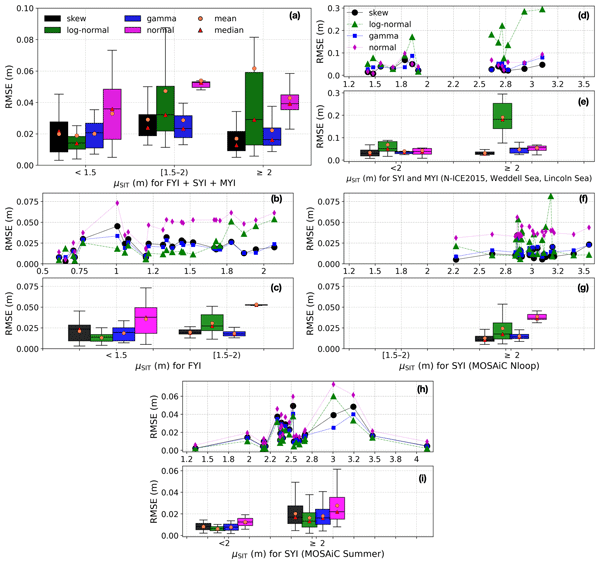
Understanding snow depth on sea ice is key for measuring ice thickness, studying ecosystems, and modelling climate. Using snow and ice thickness measurements from Arctic and Antarctic campaigns, this study examines sub-kilometre-scale (<1 km²) snow depth variations and identifies the most suitable statistical models for different ice ages, thicknesses, and weather conditions. These results can improve sub-grid snow parameterisations in snow models and remote sensing algorithms.
Ziying Yang, Jiping Liu, Mirong Song, Yongyun Hu, Qinghua Yang, Ke Fan, Rune Grand Graversen, and Lu Zhou
The Cryosphere, 19, 6381–6402, https://doi.org/10.5194/tc-19-6381-2025, https://doi.org/10.5194/tc-19-6381-2025, 2025
Short summary
Short summary
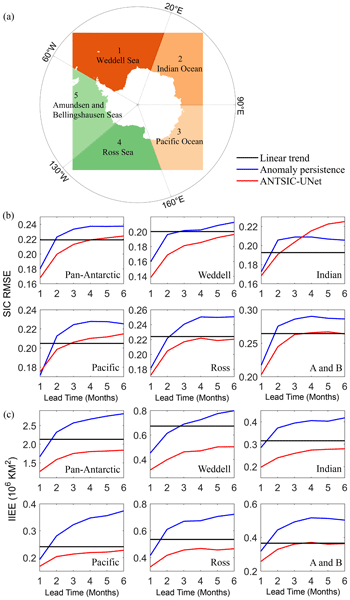
Antarctic sea ice has changed rapidly in recent years. Here we developed a deep learning model trained by multiple climate variables for extended seasonal Antarctic sea ice prediction. Our model shows high predictive skills up to 6 months in advance, particularly in predicting extreme events. It also shows skillful predictions at the sea ice edge and year-to-year sea ice changes. Variable importance analyses suggest what variables are more important for prediction at different lead times.
Siqi Liu, Shiming Xu, Wenkai Guo, Yanfei Fan, Lu Zhou, Jack Landy, Malin Johansson, Weixin Zhu, and Alek Petty
The Cryosphere, 19, 5175–5199, https://doi.org/10.5194/tc-19-5175-2025, https://doi.org/10.5194/tc-19-5175-2025, 2025
Short summary
Short summary
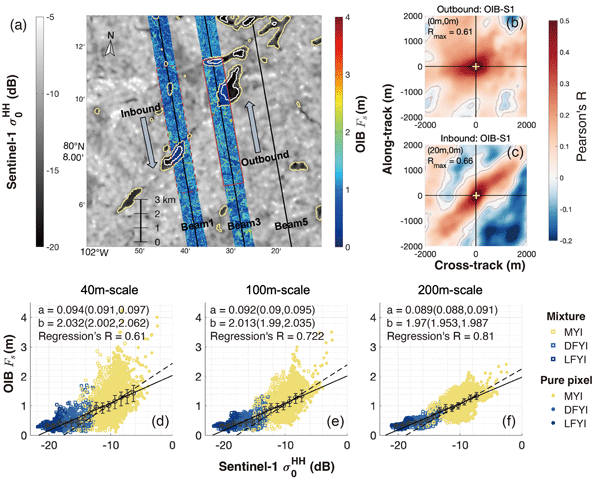
In this study, we explore the potential of using synthetic aperture radars (SAR) to predict the sea ice height measurements by the airborne campaign of Operation IceBridge. In particular, we predict the meter-scale sea ice height with the statistical relationship between the two, overcoming the resolution limitation of SAR images from Sentinel-1 satellites. The prediction and ice drift correction algorithms can be applied to the extrapolation of ICESat-2 measurements in the Arctic region.

Lu Zhou, Julienne Stroeve, Vishnu Nandan, Rosemary Willatt, Shiming Xu, Weixin Zhu, Sahra Kacimi, Stefanie Arndt, and Zifan Yang
The Cryosphere, 18, 4399–4434, https://doi.org/10.5194/tc-18-4399-2024, https://doi.org/10.5194/tc-18-4399-2024, 2024
Short summary
Short summary
Snow over Antarctic sea ice, influenced by highly variable meteorological conditions and heavy snowfall, has a complex stratigraphy and profound impact on the microwave signature. We employ advanced radiation transfer models to analyse the effects of complex snow properties on brightness temperatures over the sea ice in the Southern Ocean. Great potential lies in the understanding of snow processes and the application to satellite retrievals.
Weixin Zhu, Siqi Liu, Shiming Xu, and Lu Zhou
Earth Syst. Sci. Data, 16, 2917–2940, https://doi.org/10.5194/essd-16-2917-2024, https://doi.org/10.5194/essd-16-2917-2024, 2024
Short summary
Short summary
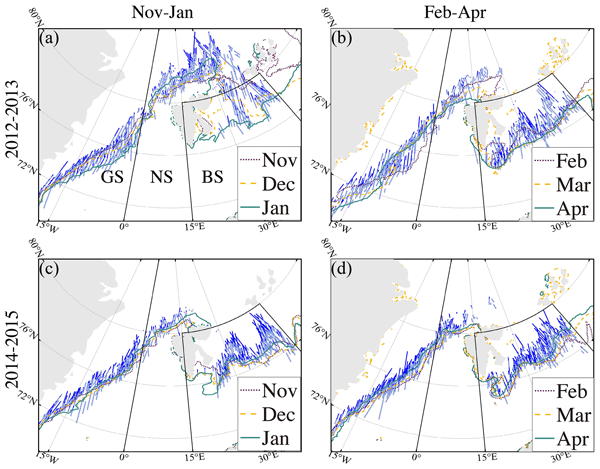
In the polar ocean, wind waves generate and propagate into the sea ice cover, forming marginal ice zones (MIZs). Using ESA's CryoSat-2, we construct a 12-year dataset of the MIZ in the Atlantic Arctic, a key region for climate change and human activities. The dataset is validated with high-resolution observations by ICESat2 and Sentinel-1. MIZs over 300 km wide are found under storms in the Barents Sea. The new dataset serves as the basis for research areas, including wave–ice interactions.
Cosme Mosneron Dupin, Jean-Baptiste Sallée, and Casimir de Lavergne
Earth Syst. Sci. Data, 18, 6043–6064, https://doi.org/10.5194/essd-18-6043-2026, https://doi.org/10.5194/essd-18-6043-2026, 2026
Short summary
Short summary
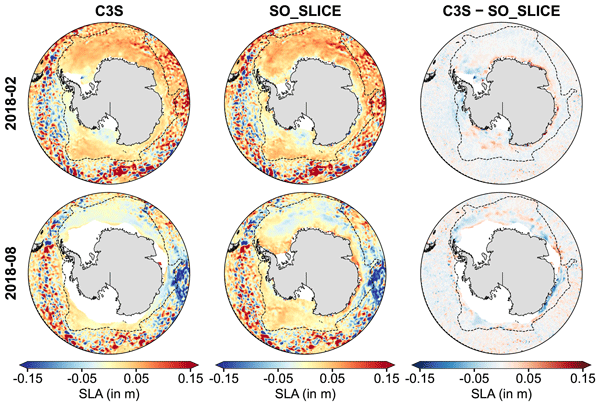
Sea level is a key indicator of ocean change, but it is hard to measure around Antarctica, where sea ice hides the ocean from satellites. Yet satellites flying over the ice still receive clear echoes from openings in the ice, where water is exposed. We reprocessed these echoes from four satellite missions and combined them with open-water data, building the longest sea level record for the whole Southern Ocean (2003 to 2021). It offers a new way to track how this rapidly changing region evolves.
Isabelle F. M. White, Oana Dragomir, Alessandro Silvano, Alberto C. Naveira Garabato, Anna E. Hogg, Pierre Dutrieux, Laura Herraiz-Borreguero, and Jennifer Cocks
EGUsphere, https://doi.org/10.5194/egusphere-2026-4414, https://doi.org/10.5194/egusphere-2026-4414, 2026
This preprint is open for discussion and under review for Earth Observation (EO).
Short summary
Short summary
We present a 22-year sea surface height product in the ice-covered Southern Ocean from Envisat and CryoSat-2 satellite altimetry data. Our product is 1° longitude by 0.5° latitude from 50° S to the Antarctic coast. Validation with in-situ, independent satellite and reanalysis data shows it captures seasonal and interannual variability. This supports long-term study of large-scale sea level trends and processes in the Southern Ocean, a region that is observing rapid sea ice and ice sheet melting.
Nadine Steiger, Ivan Manso-Narvarte, Ainhoa Caballero, and Anna Rubio
EGUsphere, https://doi.org/10.5194/egusphere-2026-4302, https://doi.org/10.5194/egusphere-2026-4302, 2026
This preprint is open for discussion and under review for Ocean Science (OS).
Short summary
Short summary
Ocean currents transport water, marine life, nutrients, and pollution. Using computer simulations, we studied the movement and origin of surface waters in the Bay of Biscay. We found seasonal offshore transport of coastal waters, relatively isolated waters on the French shelf, and strong exchange from the Spanish to the French shelf that has gradually weakened over time. These results improve our understanding of the transport of organisms, marine litter, and other materials in the region.
Hugues Goosse, Cecile Davrinche, Benjamin Richaud, Dániel Topál, Stephy Libera, Alberto C. Naveira Garabato, Alessandro Silvano, Martin Vancoppenolle, and Pablo Ortega
EGUsphere, https://doi.org/10.5194/egusphere-2026-1823, https://doi.org/10.5194/egusphere-2026-1823, 2026
Short summary
Short summary
The variability of the winter sea ice edge is much higher in regions close to the main topographic features of the Southern Ocean than over the smoother abyssal plain. The oceanic bathymetry influences mesoscale eddy activity and the Antarctic Circumpolar Current jets, affecting both oceanic heat transport and sea ice velocity and subsequently sea ice variability.
Lanqing Huang, Julienne Stroeve, Thomas Newman, Robbie Mallett, Rosemary Willatt, Lu Zhou, Malin Johansson, Carmen Nab, and Alicia Fallows
The Cryosphere, 20, 2825–2849, https://doi.org/10.5194/tc-20-2825-2026, https://doi.org/10.5194/tc-20-2825-2026, 2026
Short summary
Short summary
Understanding snow depth on sea ice is key for measuring ice thickness, studying ecosystems, and modelling climate. Using snow and ice thickness measurements from Arctic and Antarctic campaigns, this study examines sub-kilometre-scale (<1 km²) snow depth variations and identifies the most suitable statistical models for different ice ages, thicknesses, and weather conditions. These results can improve sub-grid snow parameterisations in snow models and remote sensing algorithms.
Alberto C. Naveira Garabato, Carl P. Spingys, Andrew J. Lucas, Tiago S. Dotto, Christian T. Wild, Scott W. Tyler, Ted A. Scambos, Christopher B. Kratt, Giuseppe Cappelli, Ethan F. Williams, Mariona Claret, Hannah E. Glover, Meagan E. Wengrove, Madison M. Smith, Michael G. Baker, Giuseppe Marra, Max Tamussino, Zitong Feng, David Lloyd, Liam Taylor, Mikael Mazur, Maria-Daphne Mangriotis, Aaron Micallef, Jennifer Ward Neale, Oleg A. Godin, Matthew H. Alford, Emma P. M. Gregory, Michael A. Clare, Hamid Shiri, Angel Ruiz Angulo, Kathryn L. Gunn, Ben I. Moat, Isobel A. Yeo, Afonso Loureiro, Alessandro Silvano, Arthur Hartog, and Mohammad Belal
Ocean Sci., 22, 1129–1167, https://doi.org/10.5194/os-22-1129-2026, https://doi.org/10.5194/os-22-1129-2026, 2026
Short summary
Short summary
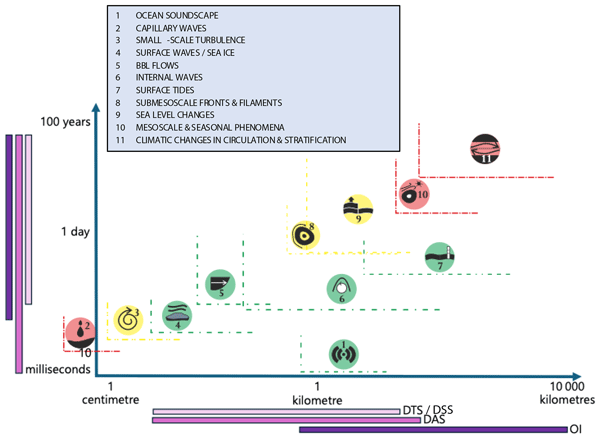
Distributed optical fibre sensing (DOFS) is a technology that enables continuous, real-time measurements of environmental parameters along a fibre optic cable. Here, we review the recently emerged applications of DOFS in physical oceanography, and offer a perspective on the technology’s potential for future growth in the field.
Ziying Yang, Jiping Liu, Mirong Song, Yongyun Hu, Qinghua Yang, Ke Fan, Rune Grand Graversen, and Lu Zhou
The Cryosphere, 19, 6381–6402, https://doi.org/10.5194/tc-19-6381-2025, https://doi.org/10.5194/tc-19-6381-2025, 2025
Short summary
Short summary
Antarctic sea ice has changed rapidly in recent years. Here we developed a deep learning model trained by multiple climate variables for extended seasonal Antarctic sea ice prediction. Our model shows high predictive skills up to 6 months in advance, particularly in predicting extreme events. It also shows skillful predictions at the sea ice edge and year-to-year sea ice changes. Variable importance analyses suggest what variables are more important for prediction at different lead times.
Wanyee Wong, Bjørg Risebrobakken, Malin Ödalen, Amandine Aline Tisserand, Kirsten Fahl, Ruediger Stein, and Eystein Jansen
Clim. Past, 21, 2225–2242, https://doi.org/10.5194/cp-21-2225-2025, https://doi.org/10.5194/cp-21-2225-2025, 2025
Short summary
Short summary
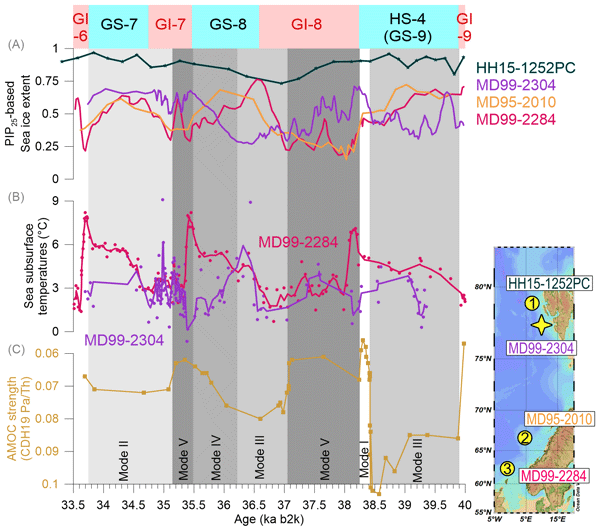
Sea ice variability in the eastern Fram Strait between, and within, individual Greenland Stadials and Interstadials is documented by high-resolution proxy reconstructions. Unlike the southeastern Nordic Seas and North Atlantic, these changes were less linked to Greenland climate oscillations. Instead, they were driven by ocean heat transport, regulated by the interplay between the Atlantic Meridional Overturning Circulation strength and sea ice cover in the southeastern Nordic Seas.
Hugues Goosse, Stephy Libera, Alberto C. Naveira Garabato, Benjamin Richaud, Alessandro Silvano, and Martin Vancoppenolle
The Cryosphere, 19, 5763–5779, https://doi.org/10.5194/tc-19-5763-2025, https://doi.org/10.5194/tc-19-5763-2025, 2025
Short summary
Short summary
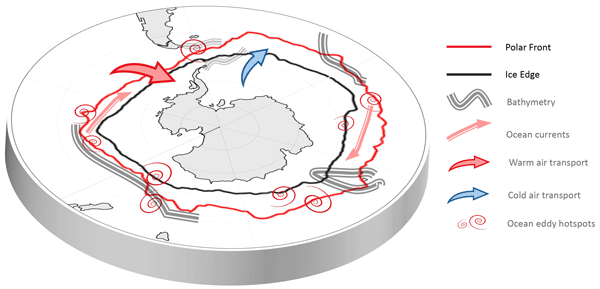
The position of the winter sea ice edge in the Southern Ocean is strongly linked to the one of the Antarctic Circumpolar Current and thus to ocean bathymetry. This is due to the influence of the Antarctic Circumpolar Current on the southward heat flux that limits sea ice expansion, directly through oceanic processes and indirectly through its influence on atmospheric heat transport.
Aurora Roth, Fiamma Straneo, James Holte, Margaret Lindeman, and Matthew Mazloff
Earth Syst. Sci. Data, 17, 6025–6048, https://doi.org/10.5194/essd-17-6025-2025, https://doi.org/10.5194/essd-17-6025-2025, 2025
Short summary
Short summary
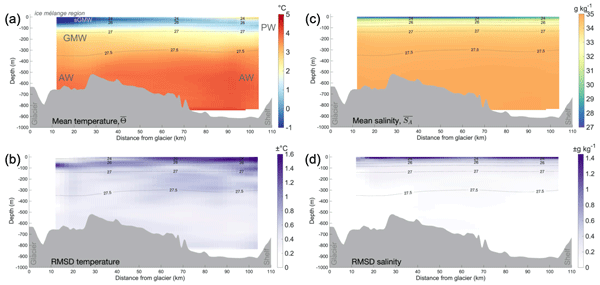
The fjords of Kalaallit Nunaat/Greenland play a critical role in our climate system and support thriving ecosystems that Greenlanders call home. As our climate warms, fjords are hotspots of change and more scientists are collecting data in fjords. These data need to be available, useable, and intuitive across a wide range of users – from scientists to local people. We provide an example of gridded transect data from Sermilik Fjord as a way to achieve this.
Siqi Liu, Shiming Xu, Wenkai Guo, Yanfei Fan, Lu Zhou, Jack Landy, Malin Johansson, Weixin Zhu, and Alek Petty
The Cryosphere, 19, 5175–5199, https://doi.org/10.5194/tc-19-5175-2025, https://doi.org/10.5194/tc-19-5175-2025, 2025
Short summary
Short summary
In this study, we explore the potential of using synthetic aperture radars (SAR) to predict the sea ice height measurements by the airborne campaign of Operation IceBridge. In particular, we predict the meter-scale sea ice height with the statistical relationship between the two, overcoming the resolution limitation of SAR images from Sentinel-1 satellites. The prediction and ice drift correction algorithms can be applied to the extrapolation of ICESat-2 measurements in the Arctic region.
Shenjie Zhou, Pierre Dutrieux, Claudia F. Giulivi, Adrian Jenkins, Alessandro Silvano, Christopher Auckland, E. Povl Abrahamsen, Michael Meredith, Irena Vaňková, Keith Nicholls, Peter E. D. Davis, Svein Østerhus, Arnold L. Gordon, Christopher J. Zappa, Tiago S. Dotto, Ted Scambos, Kathryn L. Gunn, Stephen R. Rintoul, Shigeru Aoki, Craig Stevens, Chengyan Liu, Sukyoung Yun, Tae-Wan Kim, Won Sang Lee, Markus Janout, Tore Hattermann, Julius Lauber, Elin Darelius, Anna Wåhlin, Leo Middleton, Pasquale Castagno, Giorgio Budillon, Karen J. Heywood, Jennifer Graham, Stephen Dye, Daisuke Hirano, and Una Kim Miller
Earth Syst. Sci. Data, 17, 5693–5706, https://doi.org/10.5194/essd-17-5693-2025, https://doi.org/10.5194/essd-17-5693-2025, 2025
Short summary
Short summary
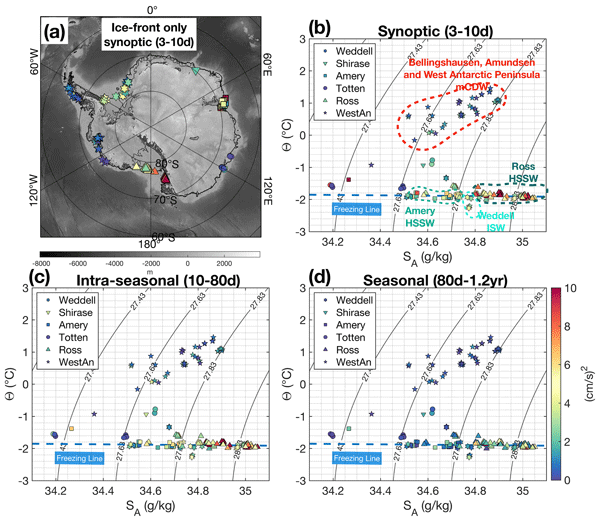
We created the first standardised dataset of in-situ ocean measurements time series from around Antarctica collected since 1970s. This includes temperature, salinity, pressure, and currents recorded by instruments deployed in icy, challenging conditions. Our analysis highlights the dominance of tidal currents and separates these from other patterns to study regional energy distribution. This unique dataset offers a foundation for future research on Antarctic ocean dynamics and ice interactions.
Matilda Weatherley, Chris R. Stokes, Stewart S. R. Jamieson, Sindhu Ramanath, and Alessandro Silvano
EGUsphere, https://doi.org/10.5194/egusphere-2025-4100, https://doi.org/10.5194/egusphere-2025-4100, 2025
Short summary
Short summary
Parts of the East Antarctic Ice Sheet rest on a bed below sea level, making them vulnerable to ice dynamic changes and instability, but few glaciers have been studied in detail. Here we report on glaciers draining into Porpoise Bay, Wilkes Land, overlying the Aurora Subglacial Basin. We find ice surface thinning, grounding line retreat and ice surface velocity increase over recent decades, consistent with warm ocean waters intrusion. This highlights this region's vulnerability to future warming.
Linus Vogt, Casimir de Lavergne, Jean-Baptiste Sallée, Lester Kwiatkowski, Thomas L. Frölicher, and Jens Terhaar
Earth Syst. Dynam., 16, 1453–1482, https://doi.org/10.5194/esd-16-1453-2025, https://doi.org/10.5194/esd-16-1453-2025, 2025
Short summary
Short summary
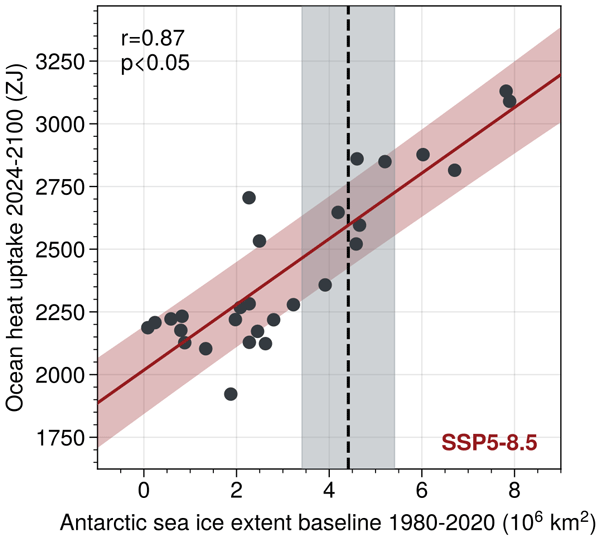
Future projections of global ocean heat uptake (OHU) strongly differ between climate models. Here, we reveal an observational constraint on future OHU based on historical Antarctic sea ice extent observations. This emergent constraint is based on a coupling between sea ice, deep- and surface ocean temperatures, and cloud feedback. It implies an upward correction of 2024–2100 global OHU projections by up to 14 % and suggests that previous constraints have underestimated future warming.
Verónica González-Gambau, Estrella Olmedo, Aina García-Espriu, Cristina González-Haro, Antonio Turiel, Carolina Gabarró, Alessandro Silvano, Aditya Narayanan, Alberto Naveira-Garabato, Rafael Catany, Nina Hoareau, Marta Umbert, Giuseppe Aulicino, Yuri Cotroneo, Roberto Sabia, and Diego Fernández-Prieto
Earth Syst. Sci. Data, 17, 5089–5111, https://doi.org/10.5194/essd-17-5089-2025, https://doi.org/10.5194/essd-17-5089-2025, 2025
Short summary
Short summary
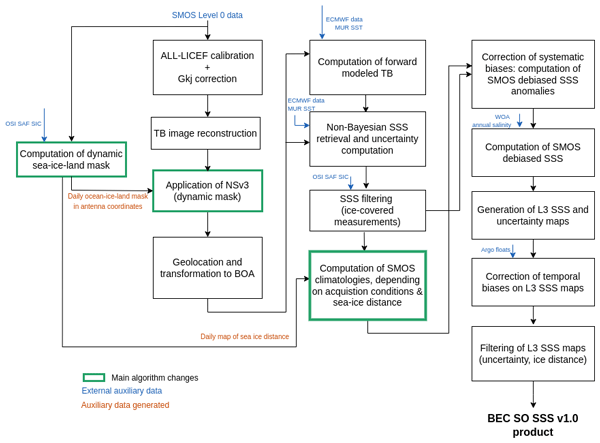
This paper introduces a new Sea Surface Salinity product for the Southern Ocean, based on SMOS data and developed by the Barcelona Expert Center. It offers 9 d maps on a 25 km EASE-SL grid, from 2011 to 2023, covering areas south of 30° S. The product is accurate beyond 150 km from sea ice, with nearly zero bias and a ~0.22 STD. It tracks well seasonal and interannual changes and will contribute to the understanding of processes influenced by upper-ocean salinity, including ice formation/melt.
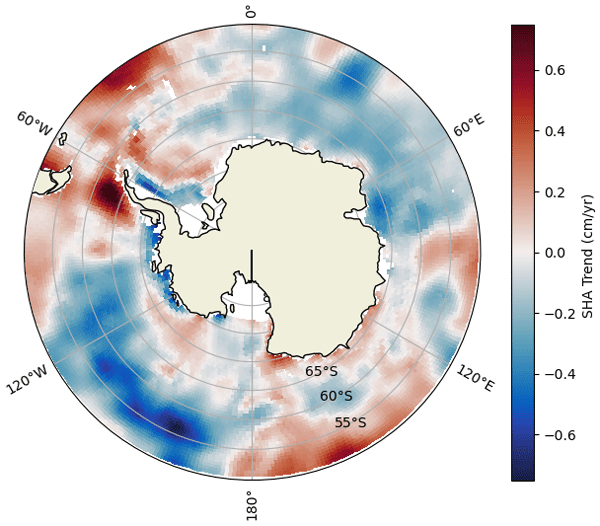
Jennifer Cocks, Alessandro Silvano, Alberto C. Naveira Garabato, Oana Dragomir, Noémie Schifano, Anna E. Hogg, and Alice Marzocchi
Ocean Sci., 21, 1609–1625, https://doi.org/10.5194/os-21-1609-2025, https://doi.org/10.5194/os-21-1609-2025, 2025
Short summary
Short summary
Heat and freshwater fluxes in the Southern Ocean mediate global ocean circulation and abyssal ventilation. These fluxes manifest as changes in steric height: sea level anomalies from changes in ocean density. We compute the steric height anomaly of the Southern Ocean using satellite data and validate it against in situ observations. We analyse trends and variability in steric height, drawing links to climate variability, and discuss the effectiveness of the method, highlighting issues with its application.
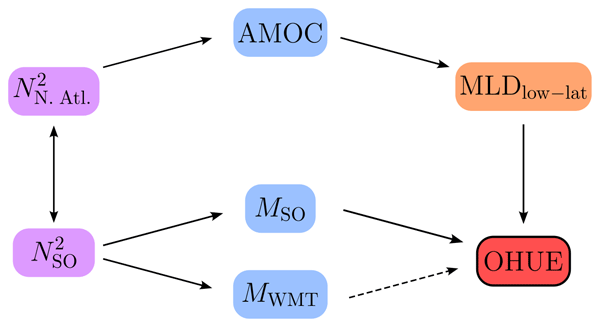
Linus Vogt, Jean-Baptiste Sallée, and Casimir de Lavergne
Ocean Sci., 21, 1081–1103, https://doi.org/10.5194/os-21-1081-2025, https://doi.org/10.5194/os-21-1081-2025, 2025
Short summary
Short summary
The ocean buffers human-induced climate change by taking up excess heat from the atmosphere. In this study, we use an ensemble of global climate models to study the physical processes which set the efficiency at which this heat is stored in the ocean. We reconcile previous attempts to explain controls on this efficiency and find that Southern Ocean stratification is a key model property due to its influence on the local overturning circulation and its connection to the subpolar North Atlantic.
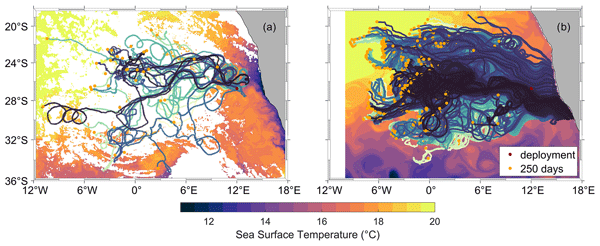
Ria Oelerich, Birte Gülk, Julia Dräger-Dietel, and Alexa Griesel
Ocean Sci., 21, 727–747, https://doi.org/10.5194/os-21-727-2025, https://doi.org/10.5194/os-21-727-2025, 2025
Short summary
Short summary
The study explores how unresolved motions in the Benguela upwelling region affect diffusivity estimates and the need for full diffusivity tensors in models. Using a scalar for lateral mixing can be inaccurate due to directional mixing. Analysis of buoys and simulations shows that diffusivity from particle pairs is lower than expected and that removing the mean flow improves estimates. The study shows the importance of full diffusivity tensors for better model mixing and reducing warm biases in models.
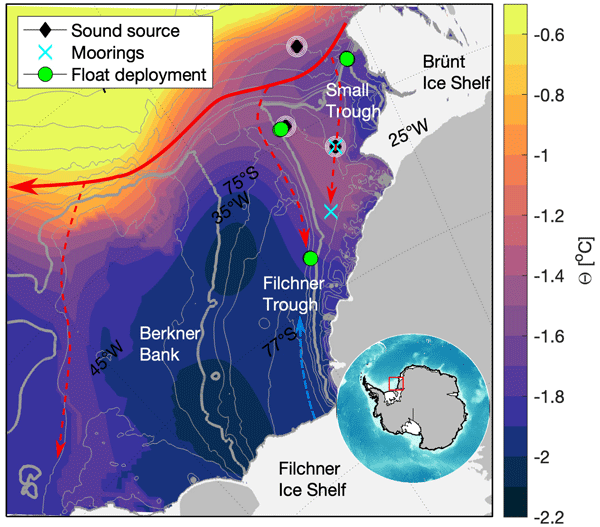
Jean-Baptiste Sallée, Lucie Vignes, Audrey Minière, Nadine Steiger, Etienne Pauthenet, Antonio Lourenco, Kevin Speer, Peter Lazarevich, and Keith W. Nicholls
Ocean Sci., 20, 1267–1280, https://doi.org/10.5194/os-20-1267-2024, https://doi.org/10.5194/os-20-1267-2024, 2024
Short summary
Short summary
In the Weddell Sea, we investigated how warm deep currents and cold waters containing freshwater released from the Antarctic are connected. We used autonomous observation devices that have never been used in this region previously and that allow us to track the movement and characteristics of water masses under the sea ice. Our findings show a dynamic interaction between warm masses, providing key insights to understand climate-related changes in the region.
Lu Zhou, Julienne Stroeve, Vishnu Nandan, Rosemary Willatt, Shiming Xu, Weixin Zhu, Sahra Kacimi, Stefanie Arndt, and Zifan Yang
The Cryosphere, 18, 4399–4434, https://doi.org/10.5194/tc-18-4399-2024, https://doi.org/10.5194/tc-18-4399-2024, 2024
Short summary
Short summary
Snow over Antarctic sea ice, influenced by highly variable meteorological conditions and heavy snowfall, has a complex stratigraphy and profound impact on the microwave signature. We employ advanced radiation transfer models to analyse the effects of complex snow properties on brightness temperatures over the sea ice in the Southern Ocean. Great potential lies in the understanding of snow processes and the application to satellite retrievals.
Weixin Zhu, Siqi Liu, Shiming Xu, and Lu Zhou
Earth Syst. Sci. Data, 16, 2917–2940, https://doi.org/10.5194/essd-16-2917-2024, https://doi.org/10.5194/essd-16-2917-2024, 2024
Short summary
Short summary
In the polar ocean, wind waves generate and propagate into the sea ice cover, forming marginal ice zones (MIZs). Using ESA's CryoSat-2, we construct a 12-year dataset of the MIZ in the Atlantic Arctic, a key region for climate change and human activities. The dataset is validated with high-resolution observations by ICESat2 and Sentinel-1. MIZs over 300 km wide are found under storms in the Barents Sea. The new dataset serves as the basis for research areas, including wave–ice interactions.
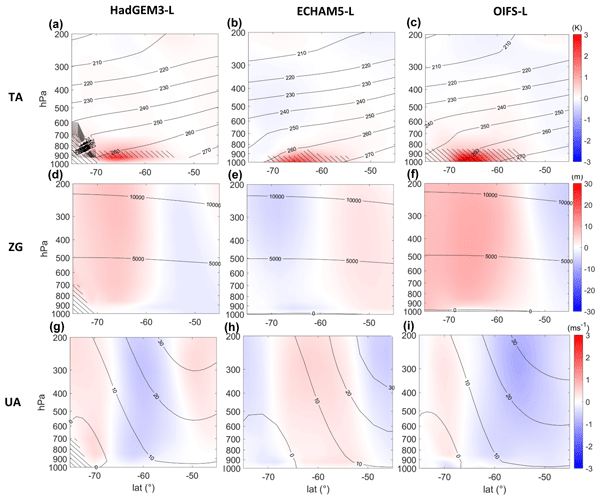
Holly C. Ayres, David Ferreira, Wonsun Park, Joakim Kjellsson, and Malin Ödalen
Weather Clim. Dynam., 5, 805–820, https://doi.org/10.5194/wcd-5-805-2024, https://doi.org/10.5194/wcd-5-805-2024, 2024
Short summary
Short summary
The Weddell Sea Polynya (WSP) is a large, closed-off opening in winter sea ice that has opened only a couple of times since we started using satellites to observe sea ice. The aim of this study is to determine the impact of the WSP on the atmosphere. We use three numerical models of the atmosphere, and for each, we use two levels of detail. We find that the WSP causes warming but only locally, alongside an increase in precipitation, and shows some dependence on the large-scale background winds.
Cited articles
Abram, N. J., Mulvaney, R., Vimeux, F., Phipps, S. J., Turner, J., and England, M. H.: Evolution of the Southern Annular Mode during the past millennium, Nature Climate Change, 4, 564–569, https://doi.org/10.1038/nclimate2235, 2014. a
Abram, N. J., Purich, A., England, M. H., McCormack, F. S., Strugnell, J. M., Bergstrom, D. M., Vance, T. R., Stål, T., Wienecke, B., Heil, P., Doddridge, E. W., Sallée, J.-B., Williams, T. J., Reading, A. M., Mackintosh, A., Reese, R., Winkelmann, R., Klose, A. K., Boyd, P. W., Chown, S. L., and Robinson, S. A.: Emerging evidence of abrupt changes in the Antarctic environment, Nature, 644, 621–633, https://doi.org/10.1038/s41586-025-09349-5, 2025. a
Akitomo, K.: Thermobaric deep convection, baroclinic instability, and their roles in vertical heat transport around Maud Rise in the Weddell Sea, Journal of Geophysical Research: Oceans, 111, https://doi.org/10.1029/2005JC003284, 2006. a, b
Arbetter, T. E., Lynch, A. H., and Bailey, D. A.: Relationship between synoptic forcing and polynya formation in the Cosmonaut Sea: 1. Polynya climatology, Journal of Geophysical Research: Oceans, 109, https://doi.org/10.1029/2003JC001837, 2004. a, b
Argo: Argo float data and metadata from Global Data Assembly Centre (Argo GDAC), SEANOE [data set], https://doi.org/10.17882/42182, 2024. a
Arrigo, K. R.: Sea ice as a habitat for primary producers, Sea ice, 352–369, https://doi.org/10.1002/9781118778371.ch14, 2017. a
Ayres, H. and Screen, J.: Multimodel analysis of the atmospheric response to Antarctic sea ice loss at quadrupled CO2, Geophysical Research Letters, 46, 9861–9869, https://doi.org/10.1029/2019GL083653, 2019. a
Ayres, H. C., Ferreira, D., Park, W., Kjellsson, J., and Ödalen, M.: A comparison of the atmospheric response to the Weddell Sea Polynya in atmospheric general circulation models (AGCMs) of varying resolutions, Weather Clim. Dynam., 5, 805–820, https://doi.org/10.5194/wcd-5-805-2024, 2024. a, b, c
Azaneu, M., Kerr, R., Mata, M. M., and Garcia, C. A.: Trends in the deep Southern Ocean (1958–2010): Implications for Antarctic Bottom Water properties and volume export, Journal of Geophysical Research: Oceans, 118, 4213–4227, https://doi.org/10.1002/jgrc.20303, 2013. a, b
Balaguer, J., Koch, F., Flintrop, C. M., Völkner, C., Iversen, M. H., and Trimborn, S.: Iron and manganese availability drives primary production and carbon export in the Weddell Sea, Current Biology, 33, 4405–4414, https://doi.org/10.1016/j.cub.2023.08.086, 2023. a
Bathmann, U., Scharek, R., Klaas, C., Dubischar, C., and Smetacek, V.: Spring development of phytoplankton biomass and composition in major water masses of the Atlantic sector of the Southern Ocean, Deep Sea Research Part II: Topical Studies in Oceanography, 44, 51–67, https://doi.org/10.1016/S0967-0645(96)00063-X, 1997. a
Bazzani, E., Lauritano, C., and Saggiomo, M.: Southern ocean iron limitation of primary production between past knowledge and future projections, Journal of Marine Science and Engineering, 11, 272, https://doi.org/10.3390/jmse11020272, 2023. a, b
Beadling, R., Krasting, J., Griffies, S., Hurlin, W., Bronselaer, B., Russell, J., MacGilchrist, G., Tesdal, J.-E., and Winton, M.: Importance of the Antarctic Slope Current in the Southern Ocean response to ice sheet melt and wind stress change, Journal of Geophysical Research: Oceans, 127, e2021JC017608, https://doi.org/10.1029/2021JC017608, 2022. a, b
Bennetts, L. G., Shakespeare, C. J., Vreugdenhil, C. A., Foppert, A., Gayen, B., Meyer, A., Morrison, A. K., Padman, L., Phillips, H. E., Stevens, C. L., Toffoli, A., Constantinou, N. C., Cusack, J. M., Cyriac, A., Doddridge, E. W., England, M. H., Evans, D. G., Heil, P., Hogg, A. M., Holmes, R. M., Huneke, W. G. C., Jones, N. L., Keating, S. R., Kiss, A. E., Kraitzman, N., Malyarenko, A., McConnochie, C. D., Meucci, A., Montiel, F., Neme, J., Nikurashin, M., Patel, R. S., Peng, J.-P., Rayson, M., Rosevear, M. G., Sohail, T., Spence, P., and Stanley, G. J.: Closing the Loops on Southern Ocean Dynamics: From the Circumpolar Current to Ice Shelves and From Bottom Mixing to Surface Waves, Reviews of Geophysics, 62, e2022RG000781, https://doi.org/10.1029/2022RG000781, 2024. a
Bintanja, R., van Oldenborgh, G. J., Drijfhout, S. S., Wouters, B., and Katsman, C. A.: Important role for ocean warming and increased ice-shelf melt in Antarctic sea-ice expansion, Nature Geoscience, 6, 376–379, https://doi.org/10.1038/ngeo1767, 2013. a
Brandt, A., Bathmann, U., Brix, S., Cisewski, B., Flores, H., Göcke, C., Janussen, D., Krägefsky, S., Kruse, S., Leach, H., Linse, K., Pakhomov, E., Peeken, I., Riehl, T., Sauter, E., Sachs, O., Schüller, M., Schrödl, M., Schwabe, E., Strass, V., van Franeker, J., and Wilmsen, E.: Maud Rise – a snapshot through the water column, Deep Sea Research Part II: Topical Studies in Oceanography, 58, 1962–1982, https://doi.org/10.1016/j.dsr2.2011.01.008, 2011. a
Broecker, W. S., Sutherland, S., and Peng, T.-H.: A possible 20th-century slowdown of Southern Ocean deep water formation, Science, 286, 1132–1135, https://doi.org/10.1126/science.286.5442.1132, 1999. a, b
Cabré, A., Marinov, I., and Gnanadesikan, A.: Global atmospheric teleconnections and multidecadal climate oscillations driven by Southern Ocean convection, Journal of Climate, 30, 8107–8126, https://doi.org/10.1175/JCLI-D-16-0741.1, 2017. a
Chang, P., Zhang, S., Danabasoglu, G., Yeager, S. G., Fu, H., Wang, H., Castruccio, F. S., Chen, Y., Edwards, J., Fu, D., Jia, Y., Laurindo, L. C., Liu, X., Rosenbloom, N., Small, R. J., Xu, G., Zeng, Y., Zhang, Q., Bacmeister, J., Bailey, D. A., Duan, X., DuVivier, A. K., Li, D., Li, Y., Neale, R., Stössel, A., Wang, L., Zhuang, Y., Baker, A., Bates, S., Dennis, J., Diao, X., Gan, B., Gopal, A., Jia, D., Jing, Z., Ma, X., Saravanan, R., Strand, W. G., Tao, J., Yang, H., Wang, X., Wei, Z., and Wu, L.: An Unprecedented Set of High-Resolution Earth System Simulations for Understanding Multiscale Interactions in Climate Variability and Change, Journal of Advances in Modeling Earth Systems, 12, e2020MS002298, https://doi.org/10.1029/2020MS002298, 2020. a, b, c, d, e, f
Cisewski, B., Strass, V. H., and Leach, H.: Circulation and transport of water masses in the Lazarev Sea, Antarctica, during summer and winter 2006, Deep Sea Research Part I: Oceanographic Research Papers, 58, 186–199, https://doi.org/10.1016/j.dsr.2010.12.001, 2011. a
Clem, K., Massom, R., Stammerjohn, S., and Reid, P.: Antarctic sea ice# 3: trends and future projections, Antarctic Environments Portal, https://doi.org/10.48361/4d9d-1g64, 2022. a, b
Comiso, J. and Gordon, A.: Recurring polynyas over the Cosmonaut Sea and the Maud Rise, Journal of Geophysical Research: Oceans, 92, 2819–2833, https://doi.org/10.1029/JC092iC03p02819, 1987. a, b
Comiso, J. C. and Gordon, A. L.: Cosmonaut polynya in the Southern Ocean: Structure and variability, Journal of Geophysical Research: Oceans, 101, 18297–18313, https://doi.org/10.1029/96JC01500, 1996. a, b
Comiso, J. C., Gersten, R. A., Stock, L. V., Turner, J., Perez, G. J., and Cho, K.: Positive trend in the Antarctic sea ice cover and associated changes in surface temperature, Journal of Climate, 30, 2251–2267, https://doi.org/10.1175/JCLI-D-16-0408.1, 2017. a
Copernicus Marine Service: Global Ocean Physics Reanalysis, Mercator Ocean International [data set], https://doi.org/10.48670/moi-00021, 2023. a
Croot, P. L., Andersson, K., Öztürk, M., and Turner, D. R.: The distribution and speciation of iron along 6° E in the Southern Ocean, Deep Sea Research Part II: Topical Studies in Oceanography, 51, 2857–2879, https://doi.org/10.1016/j.dsr2.2003.10.012, 2004. a
Dare, R. and Atkinson, B.: Numerical modeling of atmospheric response to polynyas in the Southern Ocean sea ice zone, Journal of Geophysical Research: Atmospheres, 104, 16691–16708, https://doi.org/10.1029/1999JD900137, 1999. a
Dare, R. and Atkinson, B.: Atmospheric response to spatial variations in concentration and size of polynyas in the Southern Ocean sea-ice zone, Boundary-layer meteorology, 94, 65–88, https://doi.org/10.1023/A:1002442212593, 2000. a
Dätwyler, C., Neukom, R., Abram, N. J., Gallant, A. J., Grosjean, M., Jacques-Coper, M., Karoly, D. J., and Villalba, R.: Teleconnection stationarity, variability and trends of the Southern Annular Mode (SAM) during the last millennium, Climate dynamics, 51, 2321–2339, https://doi.org/10.1007/s00382-017-4015-0, 2018. a
De Steur, L., Holland, D., Muench, R., and McPhee, M. G.: The warm-water “Halo” around Maud Rise: Properties, dynamics and impact, Deep Sea Research Part I: Oceanographic Research Papers, 54, 871–896, https://doi.org/10.1016/j.dsr.2007.03.009, 2007. a
Diao, X., Stössel, A., Chang, P., Danabasoglu, G., Yeager, S. G., Gopal, A., Wang, H., and Zhang, S.: On the Intermittent Occurrence of Open-Ocean Polynyas in a Multi-Century High-Resolution Preindustrial Earth System Model Simulation, Journal of Geophysical Research: Oceans, 127, e2021JC017672, https://doi.org/10.1029/2021JC017672, 2022. a, b, c
Dias, F. B., Domingues, C. M., Marsland, S. J., Rintoul, S. R., Uotila, P., Fiedler, R., Mata, M. M., Bindoff, N. L., and Savita, A.: Subpolar Southern Ocean response to changes in the surface momentum, heat, and freshwater fluxes under 2xCO2, Journal of climate, 34, 8755–8775, https://doi.org/10.1175/JCLI-D-21-0161.1, 2021. a
DiGirolamo, N., Parkinson, C., Cavalieri, D., Gloersen, P., and Zwally, H.: Sea Ice Concentrations from Nimbus-7 SMMR and DMSP SSM/I-SSMIS Passive Microwave Data, Version 2, NASA National Snow and Ice Data Center Distributed Active Archive Center [data set], https://doi.org/10.5067/MPYG15WAA4WX, 2022. a
Dragomir, O. C.: Dynamics of the Subpolar Southern Ocean Response to Climate Change, Phd thesis, University of Southampton, School of Ocean and Earth Science, https://doi.org/10.5258/SOTON/D3006, 2023. a, b
Dragomir, O. C.: Dataset supporting the University of Southampton doctoral thesis “Dynamics of the subpolar southern ocean response to climate change”, University of Southampton [data set], https://doi.org/10.5258/SOTON/D3006, 2024. a
Drucker, R., Martin, S., and Kwok, R.: Sea ice production and export from coastal polynyas in the Weddell and Ross Seas, Geophysical Research Letters, 38, https://doi.org/10.1029/2011GL048668, 2011. a
England, M. R., Polvani, L. M., Sun, L., and Deser, C.: Tropical climate responses to projected Arctic and Antarctic sea-ice loss, Nature Geoscience, 13, 275–281, https://doi.org/10.1038/s41561-020-0546-9, 2020. a
Fahrbach, E., Hoppema, M., Rohardt, G., Schröder, M., and Wisotzki, A.: Decadal-scale variations of water mass properties in the deep Weddell Sea, Ocean Dynamics, 54, 77–91, https://doi.org/10.1007/s10236-003-0082-3, 2004. a
Foldvik, A., Gammelsrød, T., and Tørresen, T.: Hydrographic observations from the Weddell Sea during the Norwegian Antarctic research expedition 1976/77, Polar Research, 3, 177–193, https://doi.org/10.3402/polar.v3i2.6951, 1985. a, b
Francis, D., Eayrs, C., Cuesta, J., and Holland, D.: Polar cyclones at the origin of the reoccurrence of the Maud Rise Polynya in austral winter 2017, Journal of Geophysical Research: Atmospheres, 124, 5251–5267, https://doi.org/10.1029/2019JD030618, 2019. a, b, c
Francis, D., Mattingly, K. S., Temimi, M., Massom, R., and Heil, P.: On the crucial role of atmospheric rivers in the two major Weddell Polynya events in 1973 and 2017 in Antarctica, Science advances, 6, eabc2695, https://doi.org/10.1126/sciadv.abc2695, 2020. a, b
Fyfe, J. C., Gillett, N. P., and Marshall, G. J.: Human influence on extratropical Southern Hemisphere summer precipitation, Geophysical Research Letters, 39, https://doi.org/10.1029/2012GL054199, 2012. a
Galbraith, E. D., Kwon, E. Y., Gnanadesikan, A., Rodgers, K. B., Griffies, S. M., Bianchi, D., Sarmiento, J. L., Dunne, J. P., Simeon, J., Slater, R. D., Wittenberg, A. T., and Held, I. M.: Climate Variability and Radiocarbon in the CM2Mc Earth System Model, Journal of Climate, 24, 4230–4254, https://doi.org/10.1175/2011JCLI3919.1, 2011. a, b
Geibert, W., Assmy, P., Bakker, D. C. E., Hanfland, C., Hoppema, M., Pichevin, L. E., Schröder, M., Schwarz, J. N., Stimac, I., Usbeck, R., and Webb, A.: High productivity in an ice melting hot spot at the eastern boundary of the Weddell Gyre, Global Biogeochemical Cycles, 24, https://doi.org/10.1029/2009GB003657, 2010. a
Gilbert, E. and Holmes, C.: 2023's Antarctic sea ice extent is the lowest on record, Weather, https://doi.org/10.1002/wea.4518, 2024. a
Gjermundsen, A., Nummelin, A., Olivié, D., Bentsen, M., Seland, Ø., and Schulz, M.: Shutdown of Southern Ocean convection controls long-term greenhouse gas-induced warming, Nature Geoscience, 14, 724–731, https://doi.org/10.1038/s41561-021-00825-x, 2021. a, b
Gnanadesikan, A., Speller, C. M., Ringlein, G., San Soucie, J., Thomas, J., and Pradal, M.-A.: Feedbacks driving interdecadal variability in southern ocean convection in climate models: a coupled oscillator mechanism, Journal of Physical Oceanography, 50, 2227–2249, https://doi.org/10.1175/JPO-D-20-0037.1, 2020. a
Golledge, N. R., Keller, E. D., Gossart, A., Malyarenko, A., Bahamondes-Dominguez, A., Krapp, M., Jendersie, S., Lowry, D. P., Alevropoulos-Borrill, A., and Notz, D.: Antarctic coastal polynyas in the global climate system, Nature Reviews Earth & Environment, 1–14, https://doi.org/10.1038/s43017-024-00634-x, 2025. a, b
Goosse, H. and Zunz, V.: Decadal trends in the Antarctic sea ice extent ultimately controlled by ice–ocean feedback, The Cryosphere, 8, 453–470, https://doi.org/10.5194/tc-8-453-2014, 2014. a
Gordon, A. L.: Two stable modes of Southern Ocean winter stratification, in: Elsevier Oceanography Series, 57, 17–35, https://doi.org/10.1016/S0422-9894(08)70058-8, 1991. a
Gordon, A. L. and Comiso, J. C.: Polynyas in the southern ocean, Scientific American, 258, 90–97, https://doi.org/10.1038/scientificamerican0688-90, 1988. a, b
Gordon, A. L. and Huber, B. A.: Southern Ocean winter mixed layer, Journal of Geophysical Research: Oceans, 95, 11655–11672, https://doi.org/10.1029/JC095iC07p11655, 1990. a
Gordon, A. L., Visbeck, M., and Comiso, J. C.: A possible link between the Weddell Polynya and the Southern Annular Mode, Journal of Climate, 20, 2558–2571, https://doi.org/10.1175/JCLI4046.1, 2007. a, b, c, d
Gülk, B., Roquet, F., Naveira Garabato, A. C., Narayanan, A., Rousset, C., and Madec, G.: Variability and Remote Controls of the Warm-Water Halo and Taylor Cap at Maud Rise, Journal of Geophysical Research: Oceans, 128, e2022JC019517, https://doi.org/10.1029/2022JC019517, 2023. a, b
Gülk, B., Roquet, F., Naveira Garabato, A. C., Bourdallé-Badie, R., Madec, G., and Giordani, H.: Impacts of vertical convective mixing schemes and freshwater forcing on the 2016–2017 Maud Rise polynya openings in a regional ocean simulation, Journal of Advances in Modeling Earth Systems, 16, e2023MS004106, https://doi.org/10.1029/2023MS004106, 2024. a, b, c, d, e, f
Haumann, F. A., Gruber, N., and Münnich, M.: Sea-ice induced Southern Ocean subsurface warming and surface cooling in a warming climate, AGU Advances, 1, e2019AV000132, https://doi.org/10.1029/2019AV000132, 2020. a
Hersbach, H., Bell, B., Berrisford, P., Biavati, G., Horányi, A., Muñoz Sabater, J., Nicolas, J., Peubey, C., Radu, R., Rozum, I., Schepers, D., Simmons, A., Soci, C., Dee, D., and Thépaut, J.-N.: ERA5 hourly data on single levels from 1940 to present, Copernicus Climate Change Service (C3S) Climate Data Store (CDS) [data set], https://doi.org/10.24381/cds.adbb2d47, 2023. a
Heuzé, C., Ridley, J. K., Calvert, D., Stevens, D. P., and Heywood, K. J.: Increasing vertical mixing to reduce Southern Ocean deep convection in NEMO3.4, Geosci. Model Dev., 8, 3119–3130, https://doi.org/10.5194/gmd-8-3119-2015, 2015. a, b, c
Hirabara, M., Tsujino, H., Nakano, H., and Yamanaka, G.: Formation mechanism of the Weddell Sea Polynya and the impact on the global abyssal ocean, Journal of Oceanography, 68, 771–796, https://doi.org/10.1007/s10872-012-0139-3, 2012. a, b, c, d
Holland, D.: Explaining the Weddell Polynya – a large ocean eddy shed at Maud Rise, Science, 292, 1697–1700, https://doi.org/10.1126/science.1059322, 2001. a, b, c
Holland, P. R. and Kwok, R.: Wind-driven trends in Antarctic sea-ice drift, Nature Geoscience, 5, 872–875, https://doi.org/10.1038/ngeo1627, 2012. a, b, c
Holland, P. R., Bruneau, N., Enright, C., Losch, M., Kurtz, N. T., and Kwok, R.: Modeled trends in Antarctic sea ice thickness, Journal of Climate, 27, 3784–3801, https://doi.org/10.1175/JCLI-D-13-00301.1, 2014. a
Holmes, C., Bracegirdle, T., and Holland, P.: Antarctic sea ice projections constrained by historical ice cover and future global temperature change, Geophysical Research Letters, 49, e2021GL097413, https://doi.org/10.1029/2021GL097413, 2022. a
Hoppema, M. and Anderson, L.: Biogeochemistry of polynyas and their role in sequestration of anthropogenic constituents, Elsevier Oceanography Series, 74, 193–221, https://doi.org/10.1016/S0422-9894(06)74006-5, 2007. a
Hu, L., Zhang, Y., Wang, Y., Ma, P., Wu, W., Ge, Q., Bian, Y., and Han, X.: Paleoproductivity and deep-sea oxygenation in Cosmonaut Sea since the last glacial maximum: impact on atmospheric CO2, Frontiers in Marine Science, https://doi.org/10.3389/fmars.2023.1215048, 2023. a
Jena, B. and Pillai, A. N.: Satellite observations of unprecedented phytoplankton blooms in the Maud Rise polynya, Southern Ocean, The Cryosphere, 14, 1385–1398, https://doi.org/10.5194/tc-14-1385-2020, 2020. a
Jeong, H., Lee, S.-S., Park, H.-S., and Stewart, A. L.: Future changes in Antarctic coastal polynyas and bottom water formation simulated by a high-resolution coupled model, Communications Earth & Environment, 4, 490, https://doi.org/10.1038/s43247-023-01156-y, 2023. a
Jullion, L., Garabato, A. C. N., Bacon, S., Meredith, M. P., Brown, P. J., Torres-Valdés, S., Speer, K. G., Holland, P. R., Dong, J., Bakker, D., Hoppema, M., Loose, B., Venables, H. J., Jenkins, W. J., Messias, M.-J., and Fahrbach, E.: The contribution of the Weddell Gyre to the lower limb of the Global Overturning Circulation, Journal of Geophysical Research: Oceans, 119, 3357–3377, https://doi.org/10.1002/2013JC009725, 2014. a
Kaufman, Z. S.: The Role of Sea Ice in Polar Climate Change: Investigating Distinct Cause-Effect Relationships in Each Hemisphere, University of California, Santa Cruz, https://escholarship.org/uc/item/8159t0x5 (last access: 12 January 2026), 2022. a
Kjellsson, J., Holland, P. R., Marshall, G. J., Mathiot, P., Aksenov, Y., Coward, A. C., Bacon, S., Megann, A. P., and Ridley, J.: Model sensitivity of the Weddell and Ross seas, Antarctica, to vertical mixing and freshwater forcing, Ocean Modelling, 94, 141–152, https://doi.org/10.1016/j.ocemod.2015.08.003, 2015. a, b
Klocker, A., Naveira Garabato, A. C., Roquet, F., de Lavergne, C., and Rintoul, S. R.: Generation of the Internal Pycnocline in the Subpolar Southern Ocean by Wintertime Sea Ice Melting, Journal of Geophysical Research: Oceans, 128, e2022JC019113, https://doi.org/10.1029/2022JC019113, 2023. a
Kottmeier, C., Frey, K., Hasel, M., and Eisen, O.: Sea ice growth in the eastern Weddell Sea in winter, Journal of Geophysical Research: Oceans, 108, https://doi.org/10.1029/2001JC001087, 2003. a
Kurtakoti, P., Veneziani, M., Stössel, A., Weijer, W., and Maltrud, M.: On the generation of Weddell Sea polynyas in a high-resolution earth system model, Journal of Climate, 34, 2491–2510, https://doi.org/10.1175/JCLI-D-20-0229.1, 2021. a, b
Landrum, L. L., DuVivier, A. K., Holland, M. M., Krumhardt, K., and Sylvester, Z.: Defining Antarctic polynyas in satellite observations and climate model output to support ecological climate change research, EGUsphere [preprint], https://doi.org/10.5194/egusphere-2024-3490, 2024. a, b
Latif, M., Martin, T., and Park, W.: Southern Ocean sector centennial climate variability and recent decadal trends, Journal of Climate, 26, 7767–7782, https://doi.org/10.1175/JCLI-D-12-00281.1, 2013. a, b, c
Leach, H., Strass, V., and Cisewski, B.: Modification by lateral mixing of the Warm Deep Water entering the Weddell Sea in the Maud Rise region, Ocean Dynamics, 61, 51–68, https://doi.org/10.1007/s10236-010-0342-y, 2011. a
Li, S., Huang, G., Li, X., Liu, J., and Fan, G.: An assessment of the Antarctic sea ice mass budget simulation in CMIP6 historical experiment, Frontiers in Earth Science, 9, 649743, https://doi.org/10.3389/feart.2021.649743, 2021. a
Liu, J., Zhu, Z., and Chen, D.: Lowest Antarctic sea ice record broken for the second year in a row, Ocean-Land-Atmosphere Research, 2, 0007, https://doi.org/10.34133/olar.0007, 2023. a, b
MacGilchrist, G. A., Naveira Garabato, A. C., Brown, P. J., Jullion, L., Bacon, S., Bakker, D. C., Hoppema, M., Meredith, M. P., and Torres-Valdés, S.: Reframing the carbon cycle of the subpolar Southern Ocean, Science Advances, 5, eaav6410, https://doi.org/10.1126/sciadv.aav6410, 2019. a
Marsland, S. and Wolff, J.-O.: On the sensitivity of Southern Ocean sea ice to the surface freshwater flux: A model study, Journal of Geophysical Research: Oceans, 106, 2723–2741, https://doi.org/10.1029/2000JC900086, 2001. a, b
Martin, T., Park, W., and Latif, M.: Multi-centennial variability controlled by Southern Ocean convection in the Kiel Climate Model, Climate dynamics, 40, 2005–2022, https://doi.org/10.1007/s00382-012-1586-7, 2013. a, b, c, d
Martinson, D. G. and Iannuzzi, R. A.: Antarctic ocean-ice interaction: Implications from ocean bulk property distributions in the Weddell Gyre, Antarctic Sea Ice: Physical Processes, Interactions and Variability, 74, 243–271, 1998. a
Martinson, D. G., Killworth, P. D., and Gordon, A. L.: A convective model for the Weddell Polynya, Journal of Physical Oceanography, 11, 466–488, https://doi.org/10.1175/1520-0485(1981)011<0466:ACMFTW>2.0.CO;2, 1981. a, b, c, d
Mchedlishvili, A., Spreen, G., Melsheimer, C., and Huntemann, M.: Weddell Sea polynya analysis using SMOS–SMAP apparent sea ice thickness retrieval, The Cryosphere, 16, 471–487, https://doi.org/10.5194/tc-16-471-2022, 2022. a
McPhee, M. G.: Marginal thermobaric stability in the ice-covered upper ocean over Maud Rise, Journal of Physical Oceanography, 30, 2710–2722, https://doi.org/10.1175/1520-0485(2000)030<2710:MTSITI>2.0.CO;2, 2000. a
Meehl, G. A., Arblaster, J. M., Chung, C. T., Holland, M. M., DuVivier, A., Thompson, L., Yang, D., and Bitz, C. M.: Sustained ocean changes contributed to sudden Antarctic sea ice retreat in late 2016, Nature Communications, 10, 14, https://doi.org/10.1038/s41467-018-07865-9, 2019. a
Megann, A., Storkey, D., Aksenov, Y., Alderson, S., Calvert, D., Graham, T., Hyder, P., Siddorn, J., and Sinha, B.: GO5.0: the joint NERC–Met Office NEMO global ocean model for use in coupled and forced applications, Geosci. Model Dev., 7, 1069–1092, https://doi.org/10.5194/gmd-7-1069-2014, 2014. a
Melsheimer, C. and Spreen, G.: AMSR2 ASI sea ice concentration data, Arctic, version 5.4 (NetCDF)(July 2012–December 2019), PANGAEA [data set], https://doi.org/10.1594/PANGAEA.898400, 2019. a
Meredith, M. P., Watkins, J. L., Murphy, E. J., Cunningham, N. J., Wood, A. G., Korb, R., Whitehouse, M. J., Thorpe, S. E., and Vivier, F.: An anticyclonic circulation above the northwest Georgia rise, Southern Ocean, Geophysical Research Letters, 30, https://doi.org/10.1029/2003GL018039, 2003. a
Middag, R. d., De Baar, H., Laan, P., Cai, P. v., and Van Ooijen, J.: Dissolved manganese in the Atlantic sector of the Southern Ocean, Deep Sea Research Part II: Topical Studies in Oceanography, 58, 2661–2677, https://doi.org/10.1016/j.dsr2.2010.10.043, 2011. a
MODIS Characterization Support Team (MCST): MODIS 250m Calibrated Radiances Product, NASA MODIS Adaptive Processing System, Goddard Space Flight Center, USA [data set], https://doi.org/10.5067/MODIS/MOD02QKM.061, 2017. a
Mohrmann, M.: Ocean mixing and polynyas at Maud Rise, Weddell Sea, PhD thesis, University of Gothenburg, Gothenburg, Sweden, ISBN 978-91-8009-751-2, https://hdl.handle.net/2077/70921 (last access: 12 January 2026), 2022. a
Mohrmann, M., Heuzé, C., and Swart, S.: Southern Ocean polynyas in CMIP6 models, The Cryosphere, 15, 4281–4313, https://doi.org/10.5194/tc-15-4281-2021, 2021. a, b, c, d
Mohrmann, M., Swart, S., and Heuzé, C.: Observed mixing at the flanks of Maud Rise in the Weddell Sea, Geophysical Research Letters, 49, e2022GL098036, https://doi.org/10.1029/2022GL098036, 2022. a, b
Moore, G., Alverson, K., and Renfrew, I.: A reconstruction of the air–sea interaction associated with the Weddell Polynya, Journal of Physical Oceanography, 32, 1685–1698, https://doi.org/10.1175/1520-0485(2002)032<1685:AROTAS>2.0.CO;2, 2002. a, b, c
Muench, R., Morison, J., Padman, L., Martinson, D., Schlosser, P., Huber, B., and Hohmann, R.: Maud rise revisited, Journal of Geophysical Research: Oceans, 106, 2423–2440, https://doi.org/10.1029/2000JC000531, 2001. a, b
Nakata, K., Ohshima, K. I., and Nihashi, S.: Mapping of Active Frazil for Antarctic Coastal Polynyas, With an Estimation of Sea-Ice Production, Geophysical Research Letters, 48, e2020GL091353, https://doi.org/10.1029/2020GL091353, e2020GL091353 2020GL091353, 2021. a
Narayanan, A., Gille, S. T., Mazloff, M. R., du Plessis, M. D., Murali, K., and Roquet, F.: Zonal Distribution of Circumpolar Deep Water Transformation Rates and its Relation to Heat Content on Antarctic Shelves, Journal of Geophysical Research: Oceans, 128, e2022JC019310, https://doi.org/10.1029/2022JC019310, 2023. a
Narayanan, A., Roquet, F., Gille, S. T., Gülk, B., Mazloff, M. R., Silvano, A., and Naveira Garabato, A. C.: Ekman-driven salt transport as a key mechanism for open-ocean polynya formation at Maud Rise, Science Advances, 10, eadj0777, https://doi.org/10.1126/sciadv.adj0777, 2024. a, b, c, d
Neme, J., England, M. H., and Hogg, A. M.: Seasonal and Interannual Variability of the Weddell Gyre From a High-Resolution Global Ocean-Sea Ice Simulation During 1958–2018, Journal of Geophysical Research: Oceans, 126, e2021JC017662, https://doi.org/10.1029/2021JC017662, 2021. a
Nihashi, S. and Ohshima, K. I.: Circumpolar mapping of Antarctic coastal polynyas and landfast sea ice: Relationship and variability, Journal of climate, 28, 3650–3670, https://doi.org/10.1175/JCLI-D-14-00369.1, 2015. a
Noble, T. L., Rohling, E. J., Aitken, A. R. A., Bostock, H. C., Chase, Z., Gomez, N., Jong, L. M., King, M. A., Mackintosh, A. N., McCormack, F. S., McKay, R. M., Menviel, L., Phipps, S. J., Weber, M. E., Fogwill, C. J., Gayen, B., Golledge, N. R., Gwyther, D. E., Hogg, A. M., Martos, Y. M., Pena-Molino, B., Roberts, J., van de Flierdt, T., and Williams, T.: The Sensitivity of the Antarctic Ice Sheet to a Changing Climate: Past, Present, and Future, Reviews of Geophysics, 58, e2019RG000663, https://doi.org/10.1029/2019RG000663, 2020. a
Ohshima, K. I., Nihashi, S., and Iwamoto, K.: Global view of sea-ice production in polynyas and its linkage to dense/bottom water formation, Geoscience Letters, 3, 1–14, https://doi.org/10.1186/s40562-016-0045-4, 2016. a
Parkinson, C., Comiso, J., and Zwally, H.: Nimbus-5 ESMR Polar Gridded Sea Ice Concentrations, Version 1, NASA National Snow and Ice Data Center Distributed Active Archive Center [data set], https://doi.org/10.5067/W2PKTWMTY0TP, 2004. a
Parkinson, C. L.: On the development and cause of the Weddell Polynya in a sea ice simulation, Journal of Physical Oceanography, 13, 501–511, https://doi.org/10.1175/1520-0485(1983)013<0501:OTDACO>2.0.CO;2, 1983. a
Parkinson, C. L.: A 40-y record reveals gradual Antarctic sea ice increases followed by decreases at rates far exceeding the rates seen in the Arctic, Proceedings of the National Academy of Sciences, 116, 14414–14423, https://doi.org/10.1073/pnas.1906556116, 2019. a
Prend, C. J., Gille, S. T., Talley, L. D., Mitchell, B. G., Rosso, I., and Mazloff, M. R.: Physical drivers of phytoplankton bloom initiation in the Southern Ocean's Scotia Sea, Journal of Geophysical Research: Oceans, 124, 5811–5826, 2019. a
Purkey, S. G. and Johnson, G. C.: Warming of Global Abyssal and Deep Southern Ocean Waters between the 1990s and 2000s: Contributions to Global Heat and Sea Level Rise Budgets, Journal of Climate, 23, 6336–6351, https://doi.org/10.1175/2010JCLI3682.1, 2010. a, b
Qin, Q., Wang, Z., Liu, C., and Cheng, C.: Open-ocean polynyas in the Cooperation Sea, Antarctica, Journal of Physical Oceanography, 52, 1363–1381, https://doi.org/10.1175/JPO-D-21-0197.1, 2022. a, b
Raphael, M.: A zonal wave 3 index for the Southern Hemisphere, Geophysical Research Letters, 31, https://doi.org/10.1029/2004GL020365, 2004. a
Raphael, M. N. and Handcock, M. S.: A new record minimum for Antarctic sea ice, Nature Reviews Earth & Environment, 3, 215–216, https://doi.org/10.1038/s43017-022-00281-0, 2022. a, b
Raphael, M. N., Maierhofer, T. J., Fogt, R. L., Hobbs, W. R., and Handcock, M. S.: A twenty-first century structural change in Antarctica’s sea ice system, Communications Earth & Environment, 6, 131, https://doi.org/10.1038/s43247-025-02107-5, 2025. a
Rignot, E., Jacobs, S., Mouginot, J., and Scheuchl, B.: Ice-Shelf Melting Around Antarctica, Science, 341, 266–270, https://doi.org/10.1126/science.1235798, 2013. a
Roach, L. A., Dörr, J., Holmes, C. R., Massonnet, F., Blockley, E. W., Notz, D., Rackow, T., Raphael, M. N., O'Farrell, S. P., Bailey, D. A., and Bitz, C. M.: Antarctic sea ice area in CMIP6, Geophysical Research Letters, 47, e2019GL086729, https://doi.org/10.1029/2019GL086729, 2020. a, b
Ryan, S., Schröder, M., Huhn, O., and Timmermann, R.: On the warm inflow at the eastern boundary of the Weddell Gyre, Deep Sea Research Part I: Oceanographic Research Papers, 107, 70–81, https://doi.org/10.1016/j.dsr.2015.11.002, 2016. a
Schlosser, E., Haumann, F. A., and Raphael, M. N.: Atmospheric influences on the anomalous 2016 Antarctic sea ice decay, The Cryosphere, 12, 1103–1119, https://doi.org/10.5194/tc-12-1103-2018, 2018. a
Shaw, W. J. and Stanton, T. P.: Dynamic and double-diffusive instabilities in a weak pycnocline. Part I: Observations of heat flux and diffusivity in the vicinity of Maud Rise, Weddell Sea, Journal of Physical Oceanography, 44, 1973–1991, https://doi.org/10.1175/JPO-D-13-042.1, 2014. a
Silvano, A., Purkey, S., Gordon, A. L., Castagno, P., Stewart, A. L., Rintoul, S. R., Foppert, A., Gunn, K. L., Herraiz-Borreguero, L., Aoki, S., Nakayama, Y., Naveira Garabato, A. C., Spingys, C., Akhoudas, C. H., Sallée, J.-B., de Lavergne, C., Abrahamsen, E. P., Meijers, A. J. S., Meredith, M. P., Zhou, S., Tamura, T., Yamazaki, K., Ohshima, K. I., Falco, P., Budillon, G., Hattermann, T., Janout, M. A., Llanillo, P., Bowen, M. M., Darelius, E., Østerhus, S., Nicholls, K. W., Stevens, C., Fernandez, D., Cimoli, L., Jacobs, S. S., Morrison, A. K., Hogg, A. M., Haumann, F. A., Mashayek, A., Wang, Z., Kerr, R., Williams, G. D., and Lee, W. S.: Observing Antarctic bottom water in the Southern Ocean, Frontiers in Marine Science, 10, 1221701, https://doi.org/10.3389/fmars.2023.1221701, 2023. a, b
Smith, S. D., Muench, R. D., and Pease, C. H.: Polynyas and leads: An overview of physical processes and environment, Journal of Geophysical Research: Oceans, 95, 9461–9479, https://doi.org/10.1029/JC095iC06p09461, 1990. a
Smith, W. O. and Barber, D. G.: Polynyas: windows to the world, ISBN 9780444602862, https://doi.org/10.1016/S0422-9894(06)74024-7, 2007. a
SOCCOM: Southern ocean carbon and climate observations and modelling (SOCCOM), https://soccom.princeton.edu/ (last access: 12 January 2026), 2019. a
SO-CHIC consortium, Sallée, J. B., Abrahamsen, E. P., Allaigre, C., Auger, M., Ayres, H., Badhe, R., Boutin, J., Brearley, J. A., de Lavergne, C., ten Doeschate, A. M. M., Droste, E. S., du Plessis, M. D., Ferreira, D., Giddy, I. S., Gülk, B., Gruber, N., Hague, M., Hoppema, M., Josey, S. A., Kanzow, T., Kimmritz, M., Lindeman, M. R., Llanillo, P. J., Lucas, N. S., Madec, G., Marshall, D. P., Meijers, A. J. S., Meredith, M. P., Mohrmann, M., Monteiro, P. M. S., Mosneron Dupin, C., Naeck, K., Narayanan, A., Naveira Garabato, A. C., Nicholson, S.-A., Novellino, A., Ödalen, M., Østerhus, S., Park, W., Patmore, R. D., Piedagnel, E., Roquet, F., Rosenthal, H. S., Roy, T., Saurabh, R., Silvy, Y., Spira, T., Steiger, N., Styles, A. F., Swart, S., Vogt, L., Ward, B., and Zhou, S.: Southern ocean carbon and heat impact on climate, Philosophical Transactions of the Royal Society A: Mathematical, Physical and Engineering Sciences, 381, 20220056, https://doi.org/10.1098/rsta.2022.0056, 2023. a
Stammerjohn, S., Scambos, T. A., Adusumilli, S., Barreira, S., Bernhard, G. H., Bozkurt, D., Bushinsky, S. M., Clem, K. R., Colwell, S., Coy, L., Laat, J. D., du Plessis, M. D., Fogt, R. L., Foppert, A., Fricker, H. A., Gardner, A. S., Gille, S. T., Gorte, T., Johnson, B., Keenan, E., Kennett, D., Keller, L. M., Kramarova, N. A., Lakkala, K., Lazzara, M. A., Lenaerts, J. T. M., Lieser, J. L., Li, Z., Liu, H., Long, C. S., MacFerrin, M., Maclennan, M. L., Massom, R. A., Mikolajczyk, D., Montgomery, L., Mote, T. L., Nash, E. R., Newman, P. A., Petropavlovskikh, I., Pitts, M., Reid, P., Rintoul, S. R., Santee, M. L., Shadwick, E. H., Silvano, A., Stierle, S., Strahan, S., Sutton, A. J., Swart, S., Tamsitt, V., Tilbrook, B., Wang, L., Williams, N. L., and Yuan, X.: Antarctica and the Southern Ocean, Bulletin of the American Meteorological Society, 102, S317–S356, https://doi.org/10.1175/BAMS-D-21-0081.1, 2021. a
Stoessel, A., Notz, D., Haumann, F. A., Haak, H., Jungclaus, J., and Mikolajewicz, U.: Controlling high-latitude Southern Ocean convection in climate models, Ocean Modelling, 86, 58–75, https://doi.org/10.1016/j.ocemod.2014.11.008, 2015. a
Stuecker, M. F., Bitz, C. M., and Armour, K. C.: Conditions leading to the unprecedented low Antarctic sea ice extent during the 2016 austral spring season, Geophysical Research Letters, 44, 9008–9019, https://doi.org/10.1002/2017GL074691, 2017. a, b
Swart, S., Campbell, E., Heuze, C., Johnson, K., Lieser, J., Massom, R., Mazloff, M., Meredith, M., Reid, P., Sallee, J.-B., and Stammerjohn, S.: Return of the Maud Rise polynya: Climate litmus or sea ice anomaly?, Bulletin of the American Meteorological Society, 99, https://doi.org/10.1175/2018BAMSStateoftheClimate.1, 2018. a
Tagliabue, A., Sallée, J.-B., Bowie, A. R., Lévy, M., Swart, S., and Boyd, P. W.: Surface-water iron supplies in the Southern Ocean sustained by deep winter mixing, Nature Geoscience, 7, 314–320, https://doi.org/10.1038/ngeo2101, 2014. a
Tamura, T., Ohshima, K. I., and Nihashi, S.: Mapping of sea ice production for Antarctic coastal polynyas, Geophysical Research Letters, 35, https://doi.org/10.1029/2007GL032903, 2008. a
Tamura, T., Ohshima, K. I., Fraser, A. D., and Williams, G. D.: Sea ice production variability in Antarctic coastal polynyas, Journal of Geophysical Research: Oceans, 121, 2967–2979, https://doi.org/10.1002/2015JC011537, 2016. a
Thatje, S., Hillenbrand, C.-D., Mackensen, A., and Larter, R.: Life hung by a thread: endurance of Antarctic fauna in glacial periods, Ecology, 89, 682–692, https://doi.org/10.1890/07-0498.1, 2008. a
Thompson, L., Smith, M., Thomson, J., Stammerjohn, S., Ackley, S., and Loose, B.: Frazil ice growth and production during katabatic wind events in the Ross Sea, Antarctica, The Cryosphere, 14, 3329–3347, https://doi.org/10.5194/tc-14-3329-2020, 2020. a
Timmermann, R., Lemke, P., and Kottmeier, C.: Formation and Conservation of a polynya in the Weddell Sea, Journal of Physical Oceanography, 29, 1251–1264, https://doi.org/10.1175/1520-0485(1999)029<1251:FAMOAP>2.0.CO;2, 1999. a, b, c
Treasure, A. M., Roquet, F., Ansorge, I. J., Bester, M. N., Boehme, L., Bornemann, H., Charrassin, J.-B., Chevallier, D., Costa, D. P., Fedak, M. A., Guinet, C., Hammill, M. O., Harcourt, R. G., Hindell, M. A., Kovacs, K. M., Lea, M.-A., Lovell, P., Lowther, A. D., Lydersen, C., McIntyre, T., McMahon, C. R., Muelbert, M. M., Nicholls, K., Picard, B., Reverdin, G., Trites, A. W., Williams, G. D., and de Bruyn, P. N.: Marine Mammals Exploring the Oceans Pole to Pole: A Review of the MEOP Consortium, Oceanography, 30, 132–138, http://www.jstor.org/stable/26201861 (last access: 12 January 2026), 2017. a
Turner, J., Guarino, M. V., Arnatt, J., Jena, B., Marshall, G. J., Phillips, T., Bajish, C., Clem, K., Wang, Z., Andersson, T., Murphy, E. J., and Cavanagh, R.: Recent decrease of summer sea ice in the Weddell Sea, Antarctica, Geophysical Research Letters, 47, e2020GL087127, https://doi.org/10.1029/2020GL087127, 2020. a, b
van Westen, R. M. and Dijkstra, H. A.: Multidecadal preconditioning of the Maud Rise polynya region, Ocean Sci., 16, 1443–1457, https://doi.org/10.5194/os-16-1443-2020, 2020. a, b
von Albedyll, L., Hendricks, S., Grodofzig, R., Krumpen, T., Arndt, S., Belter, H. J., Birnbaum, G., Cheng, B., Hoppmann, M., Hutchings, J., Itkin, P., Lei, R., Nicolaus, M., Ricker, R., Rohde, J., Suhrhoff, M., Timofeeva, A., Watkins, D., Webster, M., and Haas, C.: Thermodynamic and dynamic contributions to seasonal Arctic sea ice thickness distributions from airborne observations, Elementa: Science of the Anthropocene, 10, https://doi.org/10.1525/elementa.2021.00074, 2022. a, b
VIIRS Calibration Support Team (VCST): VIIRS/NPP Moderate Resolution Terrain-Corrected Geolocation L1 6-Min Swath 750m NRT, NASA LANCE MODIS at the MODAPS [data set], https://doi.org/10.5067/VIIRS/VNP03MOD_NRT.002, 2022. a
Walkington, I. and Willmott, A.: A Coupled Coastal Polynya–Atmospheric Boundary Layer Model, Journal of Physical Oceanography, 36, 897–913, https://doi.org/10.1175/JPO2901.1, 2006. a
Wang, Z., Wu, Y., Lin, X., Liu, C., and Xie, Z.: Impacts of open-ocean deep convection in the Weddell Sea on coastal and bottom water temperature, Climate Dynamics, 48, 2967–2981, https://doi.org/10.1007/s00382-016-3244-y, 2017. a
Wang, Z., Turner, J., Wu, Y., and Liu, C.: Rapid Decline of Total Antarctic Sea Ice Extent during 2014–16 Controlled by Wind-Driven Sea Ice Drift, Journal of Climate, 32, 5381–5395, https://doi.org/10.1175/JCLI-D-18-0635.1, 2019. a
Weijer, W., Veneziani, M., Stössel, A., Hecht, M. W., Jeffery, N., Jonko, A., Hodos, T., and Wang, H.: Local atmospheric response to an open-ocean polynya in a high-resolution climate model, Journal of Climate, 30, 1629–1641, https://doi.org/10.1175/JCLI-D-16-0120.1, 2017. a, b, c, d
Wu, X., Budd, W., and Allison, I.: Modelling the impacts of persistent Antarctic polynyas with an atmosphere–sea-ice general circulation model, Deep Sea Research Part II: Topical Studies in Oceanography, 50, 1357–1372, https://doi.org/10.1016/S0967-0645(03)00072-9, 2003. a
Yamamoto, A., Abe‐Ouchi, A., Shigemitsu, M., Oka, A., Takahashi, K., Ohgaito, R., and Yamanaka, Y.: Global deep ocean oxygenation by enhanced ventilation in the Southern Ocean under long-term global warming, Global Biogeochemical Cycles, 29, 1801–1815, https://doi.org/10.1002/2015GB005181, 2015. a, b, c
Zanowski, H. and Hallberg, R.: Weddell Polynya Transport Mechanisms in the Abyssal Ocean, Journal of Physical Oceanography, 47, 2907–2925, https://doi.org/10.1175/JPO-D-17-0091.1, 2017. a, b
Zhang, L., Delworth, T. L., Yang, X., Zeng, F., Lu, F., Morioka, Y., and Bushuk, M.: The relative role of the subsurface Southern Ocean in driving negative Antarctic Sea ice extent anomalies in 2016–2021, Communications Earth & Environment, 3, 302, https://doi.org/10.1038/s43247-022-00624-1, 2022. a
Zheng, W., Zhaoru, Z., Vihma, T., Xiaoqiao, W., and Yuanjie, C.: An overview of Antarctic polynyas: sea ice production, forcing mechanisms, temporal variability and water mass formation, Advances in Polar Science, 32, 295–311, 2021. a
Zhou, L., Heuzé, C., and Mohrmann, M.: Early winter triggering of the Maud Rise polynya, Geophysical Research Letters, 49, e2021GL096246, https://doi.org/10.1029/2021GL096246, 2022. a, b, c
Zhou, L., Heuzé, C., and Mohrmann, M.: Sea ice production in the 2016 and 2017 Maud Rise polynyas, Journal of Geophysical Research: Oceans, 128, e2022JC019148, https://doi.org/10.1029/2022JC019148, 2023. a, b, c
Zwally, H. J. and Gloersen, P.: Passive microwave images of the polar regions and research applications, Polar Record, 18, 431–450, https://doi.org/10.1017/S0032247400000930, 1977. a
Short summary
Polynyas are large openings in polar sea ice that can influence global climate and ocean circulation. After disappearing for 40 years, major polynyas reappeared in the Weddell Sea in 2016 and 2017, sparking new scientific questions. Our review explores how ocean currents, atmospheric conditions, and deep ocean heat drive their formation. These polynyas impact ecosystems, carbon exchange, and deep water formation, but their future remains uncertain, requiring better observations and models.
Polynyas are large openings in polar sea ice that can influence global climate and ocean...


