Articles | Volume 20, issue 4
https://doi.org/10.5194/tc-20-2127-2026
© Author(s) 2026. This work is distributed under
the Creative Commons Attribution 4.0 License.
https://doi.org/10.5194/tc-20-2127-2026
© Author(s) 2026. This work is distributed under
the Creative Commons Attribution 4.0 License.
Seasonal characteristics and trends in precipitation partitioning in the Arctic

Zaria Ireon Cast
Cooperative Institute for Research in Environmental Sciences, National Snow and Ice Data Center, University of Colorado, Boulder CO, 80301, USA
Mark C. Serreze
Cooperative Institute for Research in Environmental Sciences, National Snow and Ice Data Center, University of Colorado, Boulder CO, 80301, USA
Elizabeth N. Cassano
CORRESPONDING AUTHOR
Cooperative Institute for Research in Environmental Sciences, National Snow and Ice Data Center, University of Colorado, Boulder CO, 80301, USA
Andrew P. Barrett
Cooperative Institute for Research in Environmental Sciences, National Snow and Ice Data Center, University of Colorado, Boulder CO, 80301, USA
Related authors
No articles found.
Mark C. Serreze, Elizabeth Cassano, Alex Crawford, John J. Cassano, and Chen Zhang
The Cryosphere, 20, 411–425, https://doi.org/10.5194/tc-20-411-2026, https://doi.org/10.5194/tc-20-411-2026, 2026
Short summary
Short summary
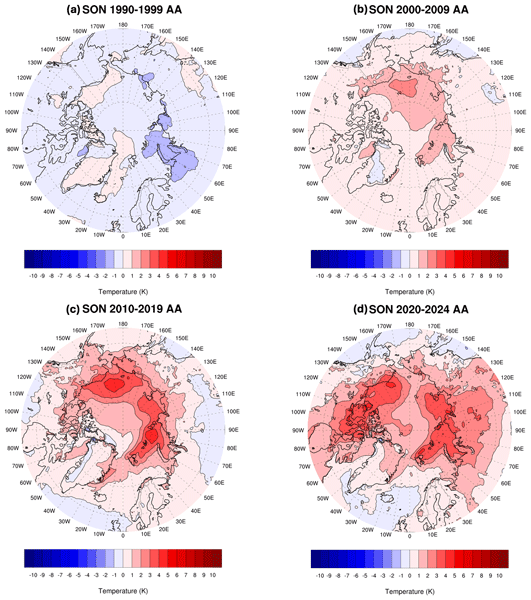
The outsized warming of the Arctic relative to the globe as a whole (Arctic Amplification, AA) is largest in in autumn and winter, consistent with large transfers of energy from growing areas of open water. Impacts of variable atmospheric circulation are also prominent. AA is small in summer due to the melting sea ice cover. Warming penetrates higher into the atmosphere in autumn compared to winter, but trends towards weaker stability could enable deeper heating as AA further evolves.
Elina Valkonen, John Cassano, Elizabeth Cassano, and Mark Seefeldt
Weather Clim. Dynam. Discuss., https://doi.org/10.5194/wcd-2023-2, https://doi.org/10.5194/wcd-2023-2, 2023
Publication in WCD not foreseen
Short summary
Short summary
Arctic sea ice is melting fast. This rapid change in the Arctic climate system can also affect the storms in the region. The strong connection between Arctic storms and sea ice makes it an important research subject in warming climate. In this study we compared the results of multiple climate models and ERA5 reanalysis data to each other, with a focus on Arctic storms and declining sea ice.
Julienne Stroeve, Vishnu Nandan, Rosemary Willatt, Ruzica Dadic, Philip Rostosky, Michael Gallagher, Robbie Mallett, Andrew Barrett, Stefan Hendricks, Rasmus Tonboe, Michelle McCrystall, Mark Serreze, Linda Thielke, Gunnar Spreen, Thomas Newman, John Yackel, Robert Ricker, Michel Tsamados, Amy Macfarlane, Henna-Reetta Hannula, and Martin Schneebeli
The Cryosphere, 16, 4223–4250, https://doi.org/10.5194/tc-16-4223-2022, https://doi.org/10.5194/tc-16-4223-2022, 2022
Short summary
Short summary
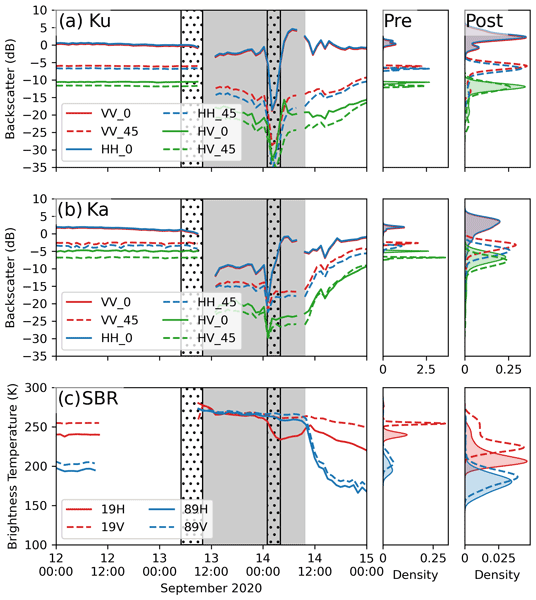
Impacts of rain on snow (ROS) on satellite-retrieved sea ice variables remain to be fully understood. This study evaluates the impacts of ROS over sea ice on active and passive microwave data collected during the 2019–20 MOSAiC expedition. Rainfall and subsequent refreezing of the snowpack significantly altered emitted and backscattered radar energy, laying important groundwork for understanding their impacts on operational satellite retrievals of various sea ice geophysical variables.
Cited articles
Barrett, A.: Arctic Rain on Snow Dataset, 1931–2023, Arctic Data Center [data set], https://doi.org/10.18739/A2VT1GR83, 2024.
Barrett, A. P., Stroeve, J. C., and Serreze, M. C.: Arctic Ocean precipitation from atmospheric reanalyses and comparisons with North Pole drifting station records, J. Geophys. Res.-Oceans, 125, e2019JC015415, https://doi.org/10.1029/2019JC015415, 2020.
Bartsch, A.: Spring snowmelt and midwinter thaw and refreeze north of 60° N based on SeaWinds QuikSCAT 2000–2009, PANGAEA [data set], https://doi.org/10.1594/PANGAEA.834198, 2010a.
Bartsch, A.: Ten years of SeaWinds on QuikSCAT for snow applications, Remote Sens., 2, 1142–1156, https://doi.org/10.3390/rs2041142, 2010b.
Bartsch, A., Kumpula, T., Forbes, B. C., and Stammler, F.: Detection of snow surface thawing and refreezing in the Eurasian Arctic with QuikSCAT: implications for reindeer herding, Ecol. Appl., 20, 2346–2358, 2010.
Bromwich, D. H., Wilson, A. B., Bai, L., Liu, Z., Barlage, M., Shih, C.-F., Maldonado, S., Hines, K.M., Wang, S.-H., Woollen, J., Kuo, B., Lin, H.-C., Wee, T.-K., Serreze, M. C., and Walsh, J. E.: Arctic system reanalysis version 2, J. Climate, 29, 3537–3560, 2016.
Clark, M. P., Serreze, M. C., and Barry, R. G.: Characteristics of Arctic Ocean climate based on COADS data, 1980–1991, Geophys. Res. Lett., 23, 1953–1956, 1996.
Dou, T. F., Pan, S. F., Bintanja, R., and Xiao, C. D.: More frequent, intense, and extensive rainfall events in a strongly warming Arctic, Earth's Future, 10, e2021EF002378, https://doi.org/10.1029/2021EF002378, 2022.
Edel, L., Claud, C., Genthon, C., Palerme, C., Wood, N., L'Ecuyer, T., and Bromwich, D.: Arctic Snowfall from CloudSat Observations and Reanalyses, J. Climate, 33, 2093–2109, https://doi.org/10.1175/jcli-d-19-0105.1, 2020.
European Space Agency: Historic Greenland Ice Sheet rainfall unravelled, https://www.esa.int/Applications/Observing_the_Earth/FutureEO/Historic_Greenland_ice_sheet_rainfall_unravelled (last access: December 2024), 2021.
Forbes, B. C., Kumpula, T., Meschtyb, N., Laptander, R., Macias-Eauria, M., Zetterberg, P., Verdonen, M., Skarin, A., Kim, K.-Y., Boisvert, L. N., Stroeve, J. C., and Bartsch, A.: Sea ice, rain-on-snow and tundra reindeer nomadism in Arctic Russia, Biol. Lett., 12, https://doi.org/10.1098/rsbl.2016.0466, 2016.
Graham, R. M., Rinke, A., and Maturilli, M.: Evaluation of Arctic precipitation from global atmospheric reanalyses, J. Climate, 32, 6945–6963, https://doi.org/10.1175/JCLI-D-18-0643.1, 2019
Hermann, M., Papritz, L., and Wernli, H.: A Lagrangian analysis of the dynamical and thermodynamic drivers of large-scale Greenland melt events during 1979–2017, Weather Clim. Dynam., 1, 497–518, https://doi.org/10.5194/wcd-1-497-2020, 2020.
Hersbach, H., Bell, B., Berrisford, P., Hirahara, S., Horányi, A., Muñoz-Sabater, J., Nicolas, J., Peubey, C., Radu, R., Schepers, D., Simmons, A., Soci, C., Abdalla, S., Abellan, X., Balsamo, G., Bechtold, P., Biavati, G., Bidlot, J., Bonavita, M., De Chiara, G., Dahlgren, P., Dee, D., Diamantakis, M., Dragani, R., Flemming, J., Forbes, R., Fuentes, M., Geer, A., Haimberger, L., Healy, S., Hogan, R. J., Hólm, E., Janisková, M., Keeley, S., Laloyaux, P., Lopez, P., Lupu, C., Radnoti, G., de Rosnay, P., Rozum, I., Vamborg, F., Villaume, S., and Thépaut, J.-N.: The ERA5 global reanalysis, Q. J. Roy. Meteor. Soc., 146, 1999–2049, https://doi.org/10.1002/qj.3803, 2020.
Lien, V. S., Schlichtholz, P., Skagseth, Ø., and Vikebø, F. B.: Wind-driven Atlantic water flow as a direct mode for reduced Barents Sea ice cover, J. Climate, 30, 803–812, https://doi.org/10.1175/JCLI-D-16-0025.1, 2017.
Loeb, N. A., Crawford, A., Stroeve, J. C., and Hanesiak, J.: Extreme precipitation in the eastern Canadian Arctic and Greenland: An evaluation of atmospheric reanalyses, Front. Environ. Sci., 10, https://doi.org/10.3389/fenvs.2022.866929, 2022.
McCrystall, M. R., Stroeve, J. C., Serreze, M., Forbes, B. C., and Screen, J. A.: New climate models reveal faster and larger increases in Arctic precipitation than previously projected, Nat. Commun., 12, 6765, https://doi.org/10.1038/s41467-021-27031-y, 2021.
Moon, T. A., Druckenmiller, M. L., and Thoman, R. L. (Eds.): Arctic Report Card 2024, https://doi.org/10.25923/b7c7-6431, 2024.
Ólafsson, H. and Økland, E.: Precipitation from convective boundary layers in Arctic air masses, Tellus A, 46, 4–13, https://doi.org/10.3402/tellusa.v46i1.15422, 1994.
Rabier, F.: Overview of global data assimilation developments in numerical weather-prediction centres, Q. J. Roy. Meteor. Soc., 131, 3215–3233, https://doi.org/10.1256/qj.05.129, 2005.
Rantanen, M., Karpechko, A. Y., Lipponen, A., Nordling, K., Hyvärinen, O., Ruosteenoja, K., Vihma, T., and Laaksonen, A.: The Arctic has warmed nearly four times faster than the globe since 1979, Commun. Earth Environ., 3, 168, https://doi.org/10.1038/s43247-022-00498-3, 2022.
Serreze, M. C. and Barrett, A. P.: The summer cyclone maximum over the central Arctic Ocean, J. Climate, 21, 1048–1065, https://doi.org/10.1175/2007JCLI1810.1, 2008.
Serreze, M. C. and Barry, R. G.: The Arctic Climate System, 2nd edn., Cambridge University Press, edited by: Serreze, M. C. and Barry, R. G., https://doi.org/10.1017/CBO9781139583817, 2014.
Serreze, M. C., Box, J. E., Barry, R. G., and Walsh, J. E.: Characteristics of Arctic synoptic activity, 1952–1989, Met. Atmos. Phys., 1, 147–164, 1993.
Serreze, M. C., Maslanik, J. A., and Key, J. R.: Atmospheric and Sea Ice Characteristics of the Arctic Ocean and the SHEBA Field Region in the Beaufort Sea, NSIDC Special Report-4, https://nsidc.org/sites/default/files/nsidc_special_report_4.pdf (last access: October 2024), 1996.
Serreze, M. C., Carse, F., Barry, R. G., and Rogers, J. C.: Icelandic Low cyclone activity: Climatological features, linkages with the NAO, and relationships with recent changes in the Northern Hemisphere circulation, J. Climate, 10, 453–464, 1997.
Serreze, M. C., Gustavson, J., Barrett, A. P., Druckenmiller, M. L., Fox, S., Voveris, J., Stroeve, J., Sheffield, B., Forbes, B. C., Rasmus, S., Laptander, R., Brook, M., Brubaker, M., Temte, J., McCrystall, M. R., and Bartsch, A.: Arctic rain-on-snow events: Bridging observations to understand environmental and livelihood impacts, Environ. Res. Lett., 16, https://doi.org/10.1088/1748-9326/ac269b, 2021.
Serreze, M. C., Voveris, J., Barrett, A. P., Fox, S., Blanken, P. D., and Crawford, A.: Characteristics of extreme daily precipitation events over the Canadian Arctic, Int. J. Climatol., 42, 10353–10372, https://doi.org/10.1002/joc.7907, 2022.
Simmons, A. J., Hersbach, H., Dee, D. P., Berrisford, P., and Poli, P.: Low-frequency variability and trends in surface air temperature and precipitation analyses of the ECMWF ERA5 reanalysis, Q. J. Roy. Meteor. Soc., 147, 3076–3100, https://doi.org/10.1002/qj.4121, 2021.
Tedesco, M. and Fettweis, X.: Unprecedented atmospheric conditions (1948–2019) drive the 2019 exceptional melting season over the Greenland ice sheet, The Cryosphere, 14, 1209–1223, https://doi.org/10.5194/tc-14-1209-2020, 2020.
The Guardian: Temperatures at North Pole 20 °C above average and beyond ice melting point, The Guardian, https://www.theguardian.com/environment/2025/feb/04/ temperatures-at-north-pole-20c-above-average-and-beyond-ice-melting-point (last access: December 2024), 2025.
Thoman, R. L., Moon, T. A., and Drukenmiller, M. L. (Eds.): Arctic report card 2023, https://doi.org/10.25923/5vfa-k694, 2023.
Tian, T., Yang, S., Høyer, J. L., Nielsen-Englyst, P., and Singha, S.: Cooler Arctic surface temperatures simulated by climate models are closer to satellite-based data than the ERA5 reanalysis, Commun. Earth Environ., 5, https://doi.org/10.1038/s43247-024-01276-z, 2024.
Tsukernik, M., Kindig, D. N., and Serreze, M. C.: Characteristics of winter cyclone activity in the northern North Atlantic: Insights from observations and regional modeling, J. Geophys. Res., 112, D03101, https://doi.org/10.1029/2006JD007184, 2007.
Voveris, J. and Serreze, M.: A tale of two events: Arctic rain-on-snow meteorological drivers, Ann. Glaciol., 64, 194–205, https://doi.org/10.1017/aog.2023.25, 2023.
Walsh, J. E., Bigalke, S., McAfee, S. A., Lader, R., Serreze, M. C., and Ballinger, T. J.: Precipitation, in: NOAA Arctic Report Card 2023, https://doi.org/10.25923/hcm7-az41, 2023.
Xiong, W., Tang, G., Wang, T., Ma, Z., and Wan, W.: Evaluation of IMERG and ERA5 precipitation-phase partitioning on the global scale, Water, 14, 1122, https://doi.org/10.3390/w14071122, 2022.
zcasty and Barrett, A.: nsidc/Precip.-Partitioning: Cast Precipitation Partitioing (v0.1.0-alpha), Zenodo [software], https://doi.org/10.5281/zenodo.19503278, 2026.
Zhao, T., Fu, C., Ke, Z., and Guo, W.: Global atmosphere reanalysis datasets: Current status and recent advances, Adv. Earth Sci., 25, 241, 2010.
Short summary
We studied how rain and snow are changing across the Arctic as the climate warms. Using weather data from land, ocean, and a global climate dataset, we found that more of the Arctic’s precipitation is falling as rain instead of snow, especially in summer and in the Atlantic region. These changes are not always due to more total precipitation, but rather less snowfall. This shift could affect Arctic ecosystems, infrastructure, and future climate patterns.
We studied how rain and snow are changing across the Arctic as the climate warms. Using weather...