Articles | Volume 20, issue 3
https://doi.org/10.5194/tc-20-1543-2026
© Author(s) 2026. This work is distributed under
the Creative Commons Attribution 4.0 License.
https://doi.org/10.5194/tc-20-1543-2026
© Author(s) 2026. This work is distributed under
the Creative Commons Attribution 4.0 License.
Mapping Antarctic geothermal heat flow with deep neural networks optimized by particle swarm optimization algorithm

Shaoxia Liu
College of Information Technology, Shanghai Ocean University, Shanghai 201306, China
Key Laboratory of Polar Science of Ministry of Natural Resources (MNR), Polar Research Institute of China, Shanghai 200136, China
School of Oceanography, Shanghai Jiao Tong University, Shanghai 200230, China
Key Laboratory of Polar Atmosphere-Ocean-Ice System for Weather and Climate, Ministry of Education, Department of Atmospheric and Oceanic Sciences & Institute of Atmospheric Sciences, Fudan University, Shanghai 200438, China
Ocean College, Zhejiang University, Zhoushan 316021, China
Shuhu Yang
College of Information Technology, Shanghai Ocean University, Shanghai 201306, China
Lijuan Wang
Key Laboratory of Polar Science of Ministry of Natural Resources (MNR), Polar Research Institute of China, Shanghai 200136, China
College of Surveying and Geo-Informatics, Tongji University, Shanghai 200092, China
Jianjie Liu
Key Laboratory of Polar Science of Ministry of Natural Resources (MNR), Polar Research Institute of China, Shanghai 200136, China
School of Oceanography, Shanghai Jiao Tong University, Shanghai 200230, China
Related authors
No articles found.
Chengyan Liu, Zhaomin Wang, Dake Chen, Xianxian Han, Hengling Leng, Xi Liang, Liangjun Yan, Xiang Li, Craig Stevens, Andrew Hogg, Kazuya Kusahara, Kaihe Yamazaki, Kay Ohshima, Meng Zhou, Xiao Cheng, Dongxiao Wang, Changming Dong, Jiping Liu, Qinghua Yang, Xichen Li, Ruibo Lei, Minghu Ding, Zhaoru Zhang, Dujuan Kang, Di Qi, Tongya Liu, Jihai Dong, Lu An, Ru Chen, Tong Zhang, Xiaoming Hu, Bo Han, Haibo Bi, Qi Shu, Longjiang Mu, Shiming Xu, Hu Yang, Hailong Liu, Tingfeng Dou, Zhixuan Feng, Lei Zheng, Xueyuan Tang, Guitao Shi, Yongqing Cai, Bingrui Li, Yang Wu, Xia Lin, Wenjin Sun, Yu Liu, Kai Yu, Yu Zhang, Weizeng Shao, Xiaoyu Wang, Shaojun Zheng, Chengyi Yuan, Chunxia Zhou, Jian Liu, Yang Liu, Yue Xia, Xiaoyu Pan, Jiabao Zeng, Kechen Liu, Jiahao Fan, Chen Cheng, and Qi Li
EGUsphere, https://doi.org/10.5194/egusphere-2025-6487, https://doi.org/10.5194/egusphere-2025-6487, 2026
This preprint is open for discussion and under review for Geoscientific Model Development (GMD).
Short summary
Short summary
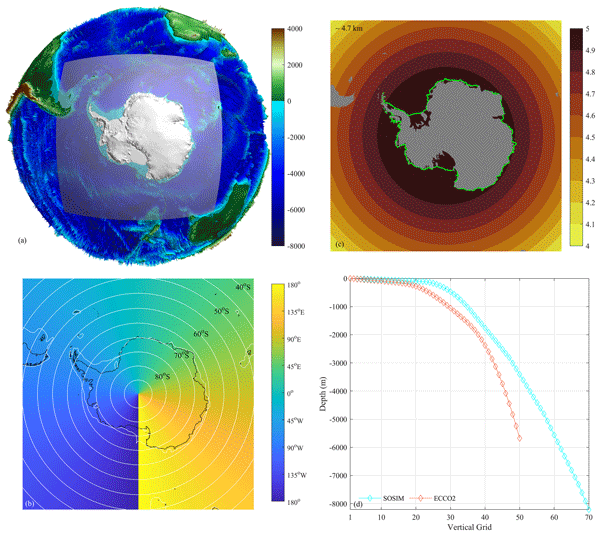
We developed a high-resolution computer model to simulate how the ocean, sea ice, and ice shelves interact around Antarctica. This helps us understand their critical role in global climate and sea-level rise. Our model successfully captures essential features like major currents and seasonal ice changes. Despite some remaining biases, it provides a useful tool for predicting future changes in this vital and rapidly evolving region.
Zhengyi Song, Yudi Pan, Jiangtao Li, Hongrui Peng, Yiming Wang, Yuande Yang, Kai Lu, Xueyuan Tang, and Xiaohong Zhang
The Cryosphere, 19, 6341–6353, https://doi.org/10.5194/tc-19-6341-2025, https://doi.org/10.5194/tc-19-6341-2025, 2025
Short summary
Short summary
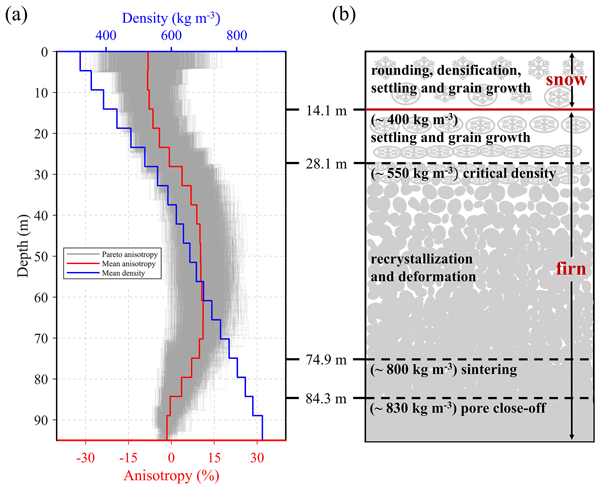
Obtaining the physical properties of ice sheets is important. In this study, we use seismic ambient noise to obtain the shallow S-wave velocity structure at the Dome A region. The result agrees with the ice-core data nearby and reveals radial anisotropy in the firn layer. This study demonstrates that cultural seismic noise provides an effective and environmentally friendly way for the imaging of near-surface structures in Antarctica.
Robert G. Bingham, Julien A. Bodart, Marie G. P. Cavitte, Ailsa Chung, Rebecca J. Sanderson, Johannes C. R. Sutter, Olaf Eisen, Nanna B. Karlsson, Joseph A. MacGregor, Neil Ross, Duncan A. Young, David W. Ashmore, Andreas Born, Winnie Chu, Xiangbin Cui, Reinhard Drews, Steven Franke, Vikram Goel, John W. Goodge, A. Clara J. Henry, Antoine Hermant, Benjamin H. Hills, Nicholas Holschuh, Michelle R. Koutnik, Gwendolyn J.-M. C. Leysinger Vieli, Emma J. MacKie, Elisa Mantelli, Carlos Martín, Felix S. L. Ng, Falk M. Oraschewski, Felipe Napoleoni, Frédéric Parrenin, Sergey V. Popov, Therese Rieckh, Rebecca Schlegel, Dustin M. Schroeder, Martin J. Siegert, Xueyuan Tang, Thomas O. Teisberg, Kate Winter, Shuai Yan, Harry Davis, Christine F. Dow, Tyler J. Fudge, Tom A. Jordan, Bernd Kulessa, Kenichi Matsuoka, Clara J. Nyqvist, Maryam Rahnemoonfar, Matthew R. Siegfried, Shivangini Singh, Vjeran Višnjević, Rodrigo Zamora, and Alexandra Zuhr
The Cryosphere, 19, 4611–4655, https://doi.org/10.5194/tc-19-4611-2025, https://doi.org/10.5194/tc-19-4611-2025, 2025
Short summary
Short summary
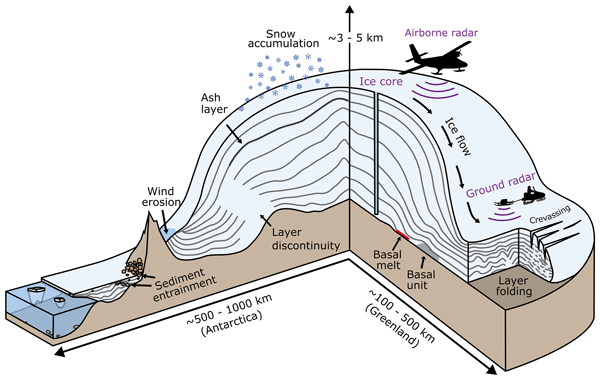
The ice sheets covering Antarctica have built up over millenia through successive snowfall events which become buried and preserved as internal surfaces of equal age detectable with ice-penetrating radar. This paper describes an international initiative working together on these archival data to build a comprehensive 3-D picture of how old the ice is everywhere across Antarctica and how this is being used to reconstruct past and to predict future ice and climate behaviour.
Haifeng Huo, Hui Xu, Jixiu Wu, Tao Li, Jingjin Liu, Enzhao Xiao, and Xueyuan Tang
EGUsphere, https://doi.org/10.5194/egusphere-2025-4768, https://doi.org/10.5194/egusphere-2025-4768, 2025
This preprint is open for discussion and under review for The Cryosphere (TC).
Short summary
Short summary
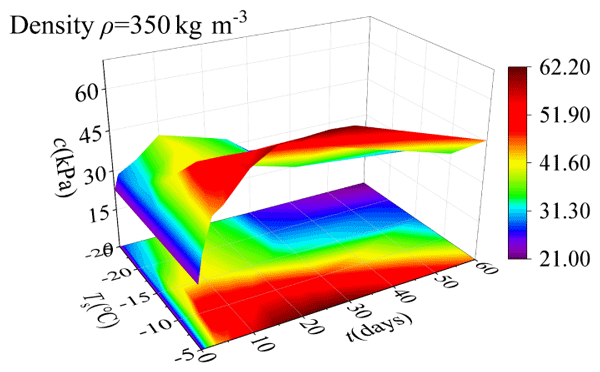
Through a series of direct shear tests, this study analyzes the variation of shear strength parameters (cohesion and internal friction angle) in compacted snow under different conditions of density, sintering time, and temperature. A Genetic Algorithm-Back Propagation neural network model was subsequently developed to establish systematic benchmark values for these parameters. This work provides essential data and a predictive framework for the reliable design of snow structures in cold regions.
Zhengyi Hu, Wei Jiang, Yuzhen Yan, Yan Huang, Xueyuan Tang, Lin Li, Florian Ritterbusch, Guo-Min Yang, Zheng-Tian Lu, and Guitao Shi
The Cryosphere, 18, 1647–1652, https://doi.org/10.5194/tc-18-1647-2024, https://doi.org/10.5194/tc-18-1647-2024, 2024
Short summary
Short summary
The age of the surface blue ice in the Grove Mountains area is dated to be about 140 000 years, and one meteorite found here is 260 000 years old. It is inferred that the Grove Mountains blue-ice area holds considerable potential for paleoclimate studies.
Sheng Dong, Lei Fu, Xueyuan Tang, Zefeng Li, and Xiaofei Chen
The Cryosphere, 18, 1241–1257, https://doi.org/10.5194/tc-18-1241-2024, https://doi.org/10.5194/tc-18-1241-2024, 2024
Short summary
Short summary
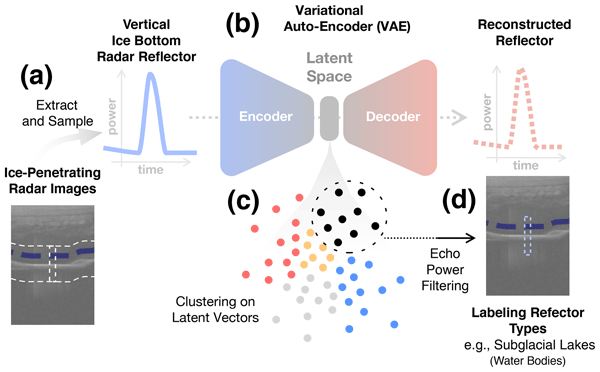
Subglacial lakes are a unique environment at the bottom of ice sheets, and they have distinct features in radar echo images that allow for visual detection. In this study, we use machine learning to analyze radar reflection waveforms and identify candidate subglacial lakes. Our approach detects more lakes than known inventories and can be used to expand the subglacial lake inventory. Additionally, this analysis may also provide insights into interpreting other subglacial conditions.
L. Wang, G. Qiao, I. V. Florinsky, and S. Popov
Int. Arch. Photogramm. Remote Sens. Spatial Inf. Sci., XLIII-B3-2022, 785–791, https://doi.org/10.5194/isprs-archives-XLIII-B3-2022-785-2022, https://doi.org/10.5194/isprs-archives-XLIII-B3-2022-785-2022, 2022
Cited articles
Afonso, J. C., Salajegheh, F., Szwillus, W., Ebbing, J., and Gaina, C.: A global reference model of the lithosphere and upper mantle from joint inversion and analysis of multiple data sets, Geophys. J. Int., 217, 1602–1628, https://doi.org/10.1093/gji/ggz094, 2019.
Al-Aghbary, M., Awaleh, M. O., Jalludin, M., Sobh, M., Gerhards, C., and Staal, T.: Improving Geothermal Heat Flow Predictions and Uncertainty Quantification using Clustering-based Quantile Regression Forests, Authorea [preprint], https://doi.org/10.22541/au.175373261.14525669/v1, 2025.
An, M., Wiens, D. A., Zhao, Y., Feng, M., Nyblade, A. A., Kanao, M., Li, Y., Maggi, A., and Lévêque, J.-J.: Temperature, lithosphere-asthenosphere boundary, and heat flux beneath the Antarctic Plate inferred from seismic velocities, J. Geophys. Res.-Sol. Ea., 120, 8720–8742, https://doi.org/10.1002/2015JB011917, 2015a.
An, M., Wiens, D. A., Zhao, Y., Feng, M., Nyblade, A. A., Kanao, M., and Lévêque, J. J.: S-velocity model and inferred Moho topography beneath the Antarctic Plate from Rayleigh waves, J. Geophys. Res.-Sol. Ea., 120, 359–383, https://doi.org/10.1002/2014JB011332, 2015b.
Artemieva, I. M.: Antarctica ice sheet basal melting enhanced by high mantle heat, Earth-Sci. Rev., 226, 103954, https://doi.org/10.1016/j.earscirev.2022.103954, 2022.
Barletta, V. R., Bevis, M., Smith, B. E., Wilson, T., Memin, A., Brown, A., Kendrick, E., Dana, J., Sato, T., Casassa, G., Richter, A., Ågren, J., Zhao, L., Blanco, M., Horwath, M., Groh, A., Conrad, C. P., van der Wal, W., Fidani, L., Kulessa, B., and Wiens, D. A.: Observed rapid bedrock uplift in Amundsen Sea Embayment promotes ice-sheet stability, Science, 360, 1335–1339, https://doi.org/10.1126/science.aao1447, 2018.
Blundell, C., Cornebise, J., Kavukcuoglu, K., and Wierstra, D.: Weight Uncertainty in Neural Networks, in: Proceedings of the 32nd International Conference on Machine Learning (ICML 2015), Lille, France, 6–11 July 2015, PMLR, 37, 1613–1622, arXiv, https://doi.org/10.48550/arXiv.1505.05424, 2015.
Boger, S. D.: Antarctica – before and after Gondwana, Gondwana Res., 19, 335–371, https://doi.org/10.1016/j.gr.2010.09.003, 2011.
Bonvalot, S., Briais, A., Kuhn, M., Peyrefitte, A., Vales, N., Biancale, R., and Sarrailh, M.: World Gravity Map (WGM2012), Bureau Gravimétrique International, 2012.
Branco, P., Torgo, L., and Ribeiro, R. P.: A survey of predictive modeling on imbalanced domains, ACM Comput. Surv., 49, 31, https://doi.org/10.1145/2907070, 2016.
Burgard, C., Jourdain, N. C., Mathiot, P., Smith, R. S., Schäfer, R., Caillet, J., Finn, T. S., and Johnson, J. E.: Emulating present and future simulations of melt rates at the base of Antarctic ice shelves with neural networks, J. Adv. Model. Earth Syst., 15, e2023MS003829, https://doi.org/10.1029/2023MS003829, 2023.
DeConto, R. M. and Pollard, D.: Contribution of Antarctica to past and future sea-level rise, Nature, 531, 591–597, https://doi.org/10.1038/nature17145, 2016.
Dramsch, J. S.: 70 years of machine learning in geoscience in review, Adv. Geophys., 61, 1–55, https://doi.org/10.1016/bs.agph.2020.08.002, 2020.
Ebbing, J., Haas, P., Ferraccioli, F., Pappa, F., Szwillus, W., and Bouman, J.: Earth tectonics as seen by GOCE-Enhanced satellite gravity gradient imaging, Sci. Rep., 8, 16356, https://doi.org/10.1038/s41598-018-34733-9, 2018.
Fisher, A. T., Mankoff, K. D., Tulaczyk, S. M., Tyler, S. W., Foley, N., and the WISSARD Science Team: High geothermal heat flux measured below the West Antarctic Ice Sheet, Sci. Adv., 1, e1500093, https://doi.org/10.1126/sciadv.1500093, 2015.
Fox Maule, C., Purucker, M. E., Olsen, N., and Mosegaard, K.: Heat flux anomalies in Antarctica revealed by satellite magnetic data, Science, 309, 464–467, https://doi.org/10.1126/science.1106888, 2005.
Gal, Y. and Ghahramani, Z.: Dropout as a Bayesian approximation: representing model uncertainty in deep learning, in: Proceedings of the 33rd International Conference on Machine Learning (ICML 2016), New York, NY, USA, 19–24 June 2016, PMLR, 48, 1050–1059, https://doi.org/10.48550/arXiv.1506.02142, 2016.
Global Heat Flow Data Assessment Group: The Global Heat Flow Database: Release 2024, GFZ Data Services [data set], https://doi.org/10.5880/fidgeo.2024.014, 2024.
Global Volcanism Program: Volcanoes of the World (v. 5.3.3), compiled by: Venzke, E., Smithsonian Institution [data set], https://doi.org/10.5479/si.GVP.VOTW5-2025.5.3, 2025.
Golynsky, A. V., Ferraccioli, F., Hong, J. K., Golynsky, D. A., von Frese, R. R. B., Young, D. A., Blankenship, D. D., Holt, J. W., Ivanov, S. V., Kiselev, A. V., Masolov, V. N., Eagles, G., Gohl, K., Jokat, W., Damaske, D., Finn, C., Aitken, A.,Bell, R. E., Armadillo, E., Jordan, T. A., Greenbaum, J. S., Bozzo, E., Caneva, G., Forsberg, R., Ghidella, M., Galindo-Zaldivar, J., Bohoyo, F., Martos, Y. M., Nogi, Y., Quartini, E., Kim, H. R., and Roberts, J. L.: New magnetic anomaly map of the Antarctic, Geophys. Res. Lett., 45, 6437–6449, https://doi.org/10.1029/2018GL078153, 2018.
Goutorbe, B., Poort, J., Lucazeau, F., and Raillard, S.: Global heat flow trends resolved from multiple geological and geophysical proxies, Geophys. J. Int., 187, 1405–1419, https://doi.org/10.1111/j.1365-246X.2011.05228.x, 2011.
Gunning, D. and Aha, D.: DARPA's explainable artificial intelligence (XAI) program, AI Mag., 40, 44–58, https://doi.org/10.1609/aimag.v40i2.2850, 2019.
Haeger, C., Kaban, M. K., Tesauro, M., Petrunin, A. G., and Mooney, W. D.: Geothermal heat flow and thermal structure of the Antarctic lithosphere, Geochem. Geophy. Geosy., 23, e2022GC010501, https://doi.org/10.1029/2022GC010501, 2022.
Hair, J. F., Black, W. C., Babin, B. J., and Anderson, R. E.: Multivariate Data Analysis, 7th edn., Pearson, Upper Saddle River, NJ, USA, 800 pp., ISBN 978-0138132637, 2010.
Ham, Y. G., Kim, J. H., Min, S. K., Kim, D., Li, T., Timmermann, A., and Stuecker, M. F.: Anthropogenic fingerprints in daily precipitation revealed by deep learning, Nature, 622, 301–307, https://doi.org/10.1038/s41586-023-06474-x, 2023.
Hastie, T., Tibshirani, R., Friedman, J. H., and Friedman, J. H.: The elements of statistical learning: Data mining, inference, and prediction, 2nd edn., Springer, New York, USA, https://doi.org/10.1007/978-0-387-84858-7, 2009.
Hazzard, D. E. and Richards, F. D.: Antarctic geothermal heat flow, crustal conductivity and heat production inferred from seismological data, Geophys. Res. Lett., 51, e2023GL106274, https://doi.org/10.1029/2023GL106274, 2024.
He, X., Chu, F., Zhong, J., and Shi, Y.: A study on the particle number in particle swarm optimization, in: 2016 IEEE Congress on Evolutionary Computation (CEC), 2351–2358, https://doi.org/10.1109/CEC.2016.7744080, 2016.
Herbert, C., Muñoz-Martín, J. F., Llavería, D., Pablos, M., and Camps, A.: Sea ice thickness estimation based on regression neural networks using L-band microwave radiometry data from the FSSCat mission, Remote Sens., 13, 1366, https://doi.org/10.3390/rs13071366, 2021.
Hu, Z., Kuipers Munneke, P., Lhermitte, S., Izeboud, M., and van den Broeke, M.: Improving surface melt estimation overthe Antarctic Ice Sheet using deep learning: a proof of concept over the Larsen Ice Shelf, The Cryosphere, 15, 5639–5658,https://doi.org/10.5194/tc-15-5639-2021, 2021.
Jiang, S., Tarasova, L., Yu, G., and Zscheischler, J.: Compounding effects in flood drivers challenge estimates of extreme river floods, Sci. Adv., 10, eadl4005, https://doi.org/10.1126/sciadv.adl4005, 2024.
Kendall, A. and Gal, Y.: What Uncertainties Do We Need in Bayesian Deep Learning for Computer Vision?, in: Advances in Neural Information Processing Systems 30 (NIPS 2017), Long Beach, CA, USA, 4–9 December 2017, 5574–5584, arXiv, https://doi.org/10.48550/arXiv.1703.04977, 2017.
Kennedy, J. and Eberhart, R.: Particle swarm optimization, in: Proceedings of ICNN'95 – International Conference on Neural Networks, Perth, Australia, 1942–1948, https://doi.org/10.1109/ICNN.1995.488968, 1995.
Kingma, D. P. and Ba, J.: Adam: A Method for Stochastic Optimization, in: Proceedings of the 3rd International Conference on Learning Representations (ICLR 2015), San Diego, CA, USA, arXiv, https://doi.org/10.48550/arXiv.1412.6980, 2015.
Laske, G., Masters, G., Ma, Z., and Pasyanos, M. E.: Update on CRUST1.0 – A 1-degree global model of Earth's crust, EGU General Assembly 2013, Vienna, Austria, 7–12 April 2013, Geophys. Res. Abstr., 15, EGU2013-2658, https://meetingorganizer.copernicus.org/EGU2013/EGU2013-2658.pdf (last access: 23 January 2026), 2013.
Li, C. F., Lu, Y., and Wang, J.: A global reference model of Curie-point depths based on EMAG2, Sci. Rep., 7, 45129, https://doi.org/10.1038/srep45129, 2017.
Li, L. and Aitken, A. R. A.: Crustal heterogeneity of Antarctica signals spatially variable radiogenic heat production, Geophys. Res. Lett., 51, e2023GL106201, https://doi.org/10.1029/2023GL106201, 2024.
Liu, S., Tang, X., and Yang, S.: Mapping Antarctic geothermal heat flow with deep neural networks optimized by particle swarm optimization algorithm, Zenodo, https://doi.org/10.5281/zenodo.15254076, 2025.
Llubes, M., Lanseau, C., and Rémy, F.: Relations between basal condition, subglacial hydrological networks and geothermal flux in Antarctica, Earth Planet. Sci. Lett., 241, 655–662, https://doi.org/10.1016/j.epsl.2005.10.040, 2006.
Lösing, M. and Ebbing, J.: Predicting geothermal heat flow in Antarctica with a machine learning approach, J. Geophys. Res.-Sol. Ea., 126, e2020JB021499, https://doi.org/10.1029/2020JB021499, 2021.
Lösing, M., Ebbing, J., and Szwillus, W.: Geothermal heat flux in Antarctica: assessing models and observations by Bayesian inversion, Front. Earth Sci., 8, 105, https://doi.org/10.3389/feart.2020.00105, 2020.
Lucazeau, F.: Analysis and mapping of an updated terrestrial heat flow data set, Geochem. Geophy. Geosy., 20, 4001–4024, https://doi.org/10.1029/2019GC008389, 2019.
Martos, Y. M., Catalán, M., Jordan, T. A., Golynsky, A., Golynsky, D., Eagles, G., and Vaughan, D. G.: Heat flux distribution of Antarctica unveiled, Geophys. Res. Lett., 44, 11417–11426, https://doi.org/10.1002/2017GL075609, 2017.
Maus, S., Barckhausen, U., Berkenbosch, H., Bournas, N., Brozena, J., Childers, V., Craig, M., Ferraccioli, F., Forsberg, R., Golynsky, V., Hassan, R., Hemant, K., Jokat, W., Johnson, V., Jones, A., Korhonen, J., Langel, R., Linthe, J., Lück, F., Meyer, B., Olesen, O., Pilkington, M., Purucker, M., Ravat, D., Sazonova, T., Thebault, E., and Caratori Tontini, F.: EMAG2: A 2-arc min resolution Earth Magnetic Anomaly Grid compiled from satellite, airborne, and marine magnetic measurements, Geochem. Geophys. Geosyst., 10, Q08005, https://doi.org/10.1029/2009GC002471, 2009.
Mony, L., Roberts, J. L., and Halpin, J. A.: Inferring geothermal heat flux from an ice-borehole temperature profile at Law Dome, East Antarctica, J. Glaciol., 66, 509–519, https://doi.org/10.1017/jog.2020.27, 2020.
Mouginot, J., Scheuchl, B., and Rignot, E.: MEaSUREs Antarctic Boundaries for IPY 2007–2009 from Satellite Radar, Version 2, NASA National Snow and Ice Data Center Distributed Active Archive Center [data set], https://doi.org/10.5067/AXE4121732AD, 2017.
Murdoch, W. J., Singh, C., Kumbier, K., Abbasi-Asl, R., and Yu, B.: Definitions, methods, and applications in interpretable machine learning, P. Natl. Acad. Sci. USA, 116, 22071–22080, https://doi.org/10.1073/pnas.1900654116, 2019.
NOAA (National Centers for Environmental Information): ETOPO 2022 15 Arc-Second Global Relief Model, NOAA [data set], https://doi.org/10.25921/fd45-gt74, 2022.
Obase, T., Abe-Ouchi, A., Saito, F., Tsutaki, S., Fujita, S., Kawamura, K., and Motoyama, H.: A one-dimensional temperature and age modeling study for selecting the drill site of the oldest ice core near Dome Fuji, Antarctica, The Cryosphere, 17, 2543–2562, https://doi.org/10.5194/tc-17-2543-2023, 2023.
Pappa, F., Ebbing, J., Ferraccioli, F., and van der Wal, W.: Modeling satellite gravity gradient data to derive density, temperature, and viscosity structure of the Antarctic lithosphere, J. Geophys. Res.-Sol. Ea., 124, 12053–12076, https://doi.org/10.1029/2019JB018037, 2019.
Purucker, M. E., Head III, J. W., and Wilson, L.: Magnetic signature of the lunar South Pole-Aitken basin: Character, origin, and age, J. Geophys. Res.-Planet., 117, E05001, https://doi.org/10.1029/2011JE003922, 2012.
Pollack, H. N., Hurter, S. J., and Johnson, J. R.: Heat flow from the Earth's interior: Analysis of the global data set, Rev. Geophys., 31, 267–280, https://doi.org/10.1029/93RG01249, 1993.
Pollard, D., DeConto, R. M., and Nyblade, A. A.: Sensitivity of Cenozoic Antarctic ice sheet variations to geothermal heat flux, Global Planet. Change, 49, 63–74, https://doi.org/10.1016/j.gloplacha.2005.05.003, 2005.
Reading, A. M., Stål, T., Halpin, J. A., Lösing, M., Ebbing, J., Shen, W., McCormack, F. S., Siddoway, C. S., and Hasterok, D.: Antarctic geothermal heat flow and its implications for tectonics and ice sheets, Nat. Rev. Earth Environ., 3, 814–831, https://doi.org/10.1038/s43017-022-00348-y, 2022.
Rezvanbehbahani, S., Stearns, L. A., Kadivar, A., Walker, J. D., and van der Veen, C. J.: Predicting the geothermal heat flux in Greenland: A machine learning approach, Geophys. Res. Lett., 44, 12271–12279, https://doi.org/10.1002/2017GL075661, 2017.
Schaeffer, A. J. and Lebedev, S.: Global heterogeneity of the lithosphere and underlying mantle: A seismological appraisal based on multimode surface-wave dispersion analysis, shear-velocity tomography, and tectonic regionalization, in: The Earth'sHeterogeneous Mantle: A Geophysical, Geodynamical, and Geochemical Perspective, edited by Khan, A., and Deschamps, F., Springer, Cham, 3–46, https://doi.org/10.1007/978-3-319-15627-9_1, 2015.
Scheinert, M., Ferraccioli, F., Schwabe, J., Bell, R., Studinger, M., Damaske, D., and Richter, T. D.: New Antarctic gravity anomaly grid for enhanced geodetic and geophysical studies in Antarctica, Geophys. Res. Lett., 43, 600–610, https://doi.org/10.1002/2015GL067439, 2016.
Schroeder, D. M., Blankenship, D. D., Young, D. A., and Quartini, E.: Evidence for elevated and spatially variable geothermal flux beneath the West Antarctic Ice Sheet, P. Natl. Acad. Sci. USA, 111, 9070–9072, https://doi.org/10.1073/pnas.1405184111, 2014.
Seroussi, H., Ivins, E. R., Wiens, D. A., and Bondzio, J.: Influence of a West Antarctic mantle plume on ice sheet basal conditions, J. Geophys. Res.-Sol. Ea., 122, 7127–7155, https://doi.org/10.1002/2017JB014423, 2017.
Seroussi, H., Nowicki, S., Payne, A. J., Goelzer, H., Lipscomb, W. H., Abe-Ouchi, A., Agosta, C., Albrecht, T., Asay-Davis, X., Barthel, A., Calov, R., Cullather, R., Dumas, C., Galton-Fenzi, B. K., Gladstone, R., Golledge, N. R., Gregory, J. M., Greve, R., Hattermann, T., Hoffman, M. J., Humbert, A., Huybrechts, P., Koppes, M., Larson, E., Little, C. M., Lowry, D. P., Myneke, R., Magalhães, N. M., Overly, T., Edwards, T. L., Pattyn, F., Pellegrini, A., Price, S. F., Quiquet, A., Reese, R., Schlegel, N.-J., Shepherd, A., Simon, E., Smith, R. S., Straneo, F., Sun, S., Trusel, L. D., Van Breedam, J., van de Wal, R. S. W., Winkelmann, R., Zhao, C., Zhang, T., and Zwinger, T.: ISMIP6 Antarctica: a multi-model ensemble of the Antarctic ice sheet evolution over the 21st century, The Cryosphere, 14, 3033–3070, https://doi.org/10.5194/tc-14-3033-2020, 2020.
Shapiro, N. M. and Ritzwoller, M. H.: Inferring surface heat flux distributions guided by a global seismic model: particular application to Antarctica, Earth Planet. Sc. Lett., 223, 213–224, https://doi.org/10.1016/j.epsl.2004.04.011, 2004.
Shen, W., Wiens, D. A., Lloyd, A. J., and Nyblade, A. A.: A geothermal heat flux map of Antarctica empirically constrained by seismic structure, Geophys. Res. Lett., 47, e2020GL086955, https://doi.org/10.1029/2020GL086955, 2020.
Shi, Y. and Eberhart, R.: A modified particle swarm optimizer, in: IEEE World Congress on Computational Intelligence, 69–73, https://doi.org/10.1109/ICEC.1998.699146, 1998.
Stål, T., Reading, A. M., Halpin, J. A., and Whittaker, J. M.: Antarctic geothermal heat flow model: Aq1, Geochem. Geophy. Geosy., 22, e2020GC009428, https://doi.org/10.1029/2020GC009428, 2021.
Stål, T., Reading, A. M., Halpin, J. A., and Whittaker, J. M.: Properties and biases of the global heat flow compilation, Front. Earth Sci., 10, 963525, https://doi.org/10.3389/feart.2022.963525, 2022.
Stål, T., Halpin, J. A., Goodge, J. W., and Reading, A. M.: Geology matters for Antarctic geothermal heat, Geophys. Res. Lett., 51, e2024GL110098, https://doi.org/10.1029/2024GL110098, 2024.
Suganthan, P. N.: Particle swarm optimiser with neighbourhood operator, in: Proceedings of the 1999 Congress on Evolutionary Computation-CEC99, Vol. 3, 1958–1962, https://doi.org/10.1109/CEC.1999.785514, 1999.
Szwillus, W., Afonso, J. C., Ebbing, J., and Mooney, W. D.: Global crustal thickness and velocity structure from geostatistical analysis of seismic data, J. Geophys. Res.-Sol. Ea., 124, 1626–1652, https://doi.org/10.1029/2018JB016593, 2019.
Talalay, P., Li, Y., Augustin, L., Clow, G. D., Hong, J., Lefebvre, E., Markov, A., Motoyama, H., and Ritz, C.: Geothermal heat flux from measured temperature profiles in deep ice boreholes in Antarctica, The Cryosphere, 14, 4021–4037, https://doi.org/10.5194/tc-14-4021-2020, 2020.
Veevers, J. J.: Reconstructions before rifting and drifting reveal the geological connections between Antarctica and its conjugates in Gondwanaland, Earth-Sci. Rev., 111, 249–318, https://doi.org/10.1016/j.earscirev.2011.11.009, 2012.
Wearing, M. G., Dow, C. F., Goldberg, D. N., Gourmelen, N., Hogg, A. E., and Jakob, L.: Characterizing subglacial hydrology within the Amery Ice Shelf catchment using numerical modeling and satellite altimetry, J. Geophys. Res.-Earth, 129, e2023JF007421, https://doi.org/10.1029/2023JF007421, 2024.
Short summary
Heat from inside the Earth beneath Antarctica affects how fast ice melts and how quickly the sea level rises, but direct measurements are very limited. We built a data-driven computer model that learns the complex links between geophysical features and geothermal heat flow and reports confidence. We find lower heat flow in East Antarctica and higher heat flow in West Antarctica, especially near coasts.
Heat from inside the Earth beneath Antarctica affects how fast ice melts and how quickly the sea...