
Articles | Volume 19, issue 12
https://doi.org/10.5194/tc-19-6727-2025
© Author(s) 2025. This work is distributed under
the Creative Commons Attribution 4.0 License.
the Creative Commons Attribution 4.0 License.
https://doi.org/10.5194/tc-19-6727-2025
© Author(s) 2025. This work is distributed under
the Creative Commons Attribution 4.0 License.
the Creative Commons Attribution 4.0 License.
Research article
| 
18 Dec 2025
Research article |
| 18 Dec 2025
| 18 Dec 2025
Thermal diffusivity of mountain permafrost derived from borehole temperature data in the Swiss Alps

WSL Institute for Snow and Avalanche Research SLF, Davos, Switzerland
Climate Change, Extremes and Natural Hazards in Alpine Regions Research Center CERC, Davos, Switzerland
Andreas Vieli
Department of Geography, University of Zurich, Zurich, Switzerland
Marcia Phillips
WSL Institute for Snow and Avalanche Research SLF, Davos, Switzerland
Climate Change, Extremes and Natural Hazards in Alpine Regions Research Center CERC, Davos, Switzerland
Alessandro Cicoira
Department of Geography, University of Zurich, Zurich, Switzerland
Related authors
Maike Offer, Ingo Hartmeyer, Samuel Weber, Markus Keuschnig, and Michael Krautblatter
Earth Surf. Dynam., 14, 661–683, https://doi.org/10.5194/esurf-14-661-2026, https://doi.org/10.5194/esurf-14-661-2026, 2026
Short summary
Short summary
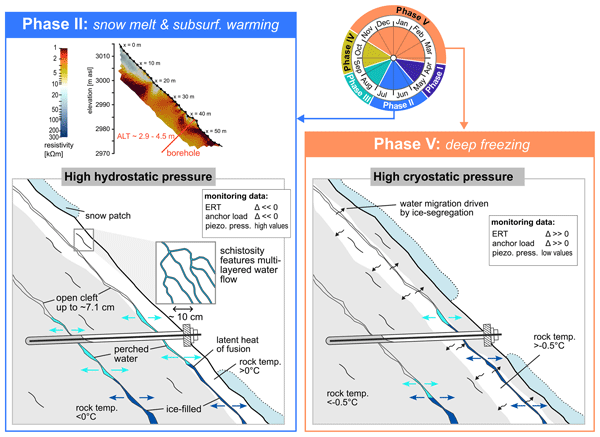
This study presents a year-round automated electrical resistivity tomography monitoring of a steep permafrost rockwall combined with borehole temperature, anchor load and piezometer observations. The joint analysis revealed seasonal phases with enhanced mechanical forcing of rockwalls related to high hydrostatic and cryostatic pressures, which are of particular interest for understanding preconditioning of rock instabilities.
Riccardo Scandroglio, Samuel Weber, Jonas K. Limbrock, and Michael Krautblatter
The Cryosphere, 20, 4787–4809, https://doi.org/10.5194/tc-20-4787-2026, https://doi.org/10.5194/tc-20-4787-2026, 2026
Short summary
Short summary
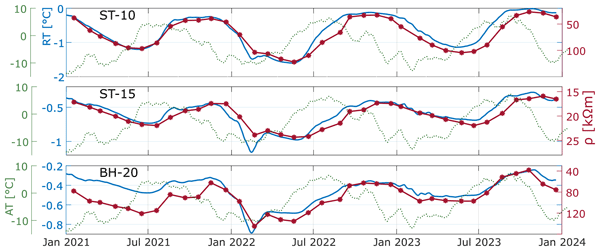
This study monitors changes in frozen rock on Mount Zugspitze over 17 years using monthly electrical resistivity measurements. By linking this data to rock temperature and applying advanced analysis, it reveals a 40 % loss of permafrost in the past decade. Thawing accelerates during summer, highlighting increasing risks of rock instability as temperatures rise.
Felix Pfluger, Samuel Weber, Natalie Barbosa, Florentin Hofmeister, Johannes Leinauer, Peter Wegmann, and Michael Krautblatter
Earth Surf. Dynam., 14, 601–634, https://doi.org/10.5194/esurf-14-601-2026, https://doi.org/10.5194/esurf-14-601-2026, 2026
Short summary
Short summary
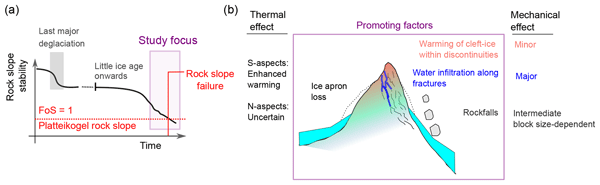
The 2024 Platteikogel rock slope failure (Tyrol, Austria) highlights how cryospheric changes promote slope failure. We demonstrate how the system feedback of ice apron loss, permafrost warming, increase in rockfall activity, and changes in groundwater conditions accelerate mechanical destabilization, and as a consequence likely peaked in the observed failure. Today, rapidly vanishing ice aprons potentially mark source zones for future rock slides.
Samuel Weber, Jan Beutel, Michael Dietze, Alexander Bast, Robert Kenner, Marcia Phillips, Johannes Leinauer, Simon Mühlbauer, Felix Pfluger, and Michael Krautblatter
Earth Surf. Dynam., 13, 1157–1179, https://doi.org/10.5194/esurf-13-1157-2025, https://doi.org/10.5194/esurf-13-1157-2025, 2025
Short summary
Short summary
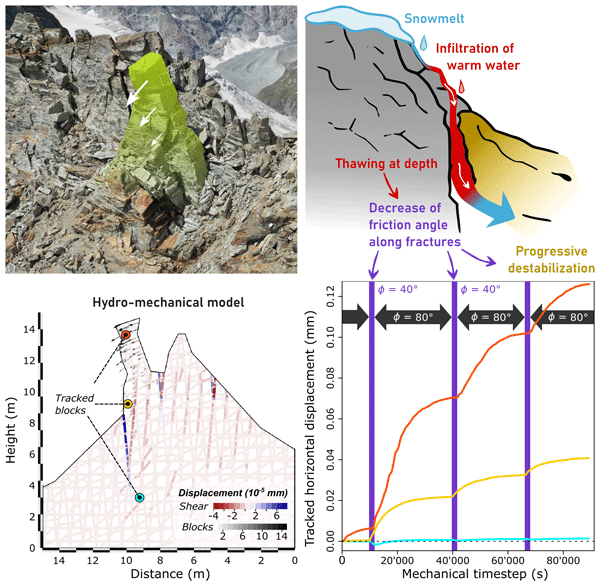
On 13 June 2023, a freestanding rock pillar on the Matterhorn collapsed after years of weakening. Our study examines this progressive destabilization by analyzing field data and integrating lab experiments into a hydro-mechanical model. We highlight the critical role of water infiltration into frozen rock, intensified by climate warming, as a widespread driver of the rising frequency of rockfalls in high mountain permafrost regions.
Riccardo Scandroglio, Samuel Weber, Till Rehm, and Michael Krautblatter
Earth Surf. Dynam., 13, 295–314, https://doi.org/10.5194/esurf-13-295-2025, https://doi.org/10.5194/esurf-13-295-2025, 2025
Short summary
Short summary
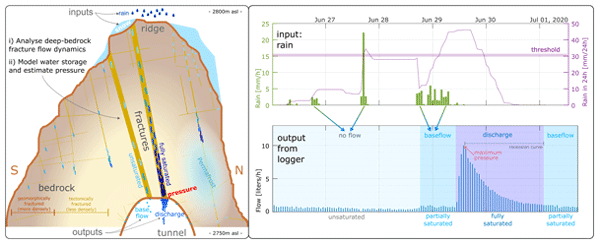
Despite the critical role of water in alpine regions, its presence in bedrock is frequently neglected. This research examines the dynamics of water in fractures using 1 decade of measurements from a tunnel 50 m underground. We provide new insights into alpine groundwater dynamics, revealing that up to 800 L d-1 can flow in one fracture during extreme events. These quantities can saturate the fractures, enhance hydraulic conductivity, and generate pressures that destabilize slopes.
Maike Offer, Samuel Weber, Michael Krautblatter, Ingo Hartmeyer, and Markus Keuschnig
The Cryosphere, 19, 485–506, https://doi.org/10.5194/tc-19-485-2025, https://doi.org/10.5194/tc-19-485-2025, 2025
Short summary
Short summary
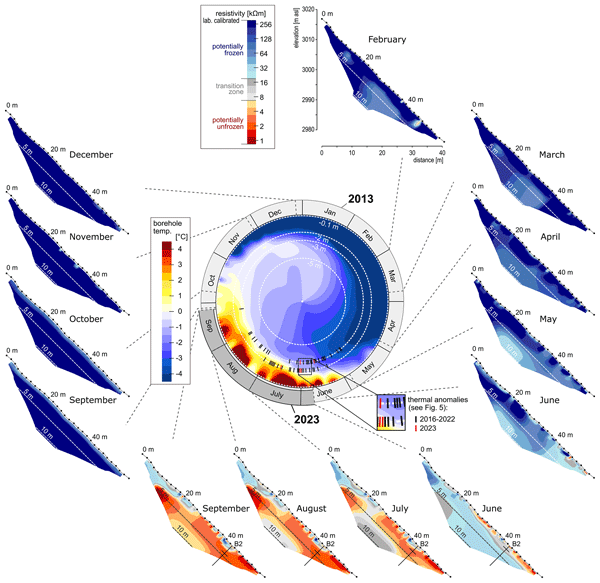
We present a unique long-term dataset of measurements of borehole temperature, repeated electrical resistivity tomography, and piezometric pressure to investigate the complex seasonal water flow in permafrost rockwalls. Our joint analysis shows that permafrost rocks are subjected to enhanced pressurised water flow during the thaw period, resulting in push-like warming events and long-lasting rock temperature regime changes.
Felix Pfluger, Samuel Weber, Joseph Steinhauser, Christian Zangerl, Christine Fey, Johannes Fürst, and Michael Krautblatter
Earth Surf. Dynam., 13, 41–70, https://doi.org/10.5194/esurf-13-41-2025, https://doi.org/10.5194/esurf-13-41-2025, 2025
Short summary
Short summary
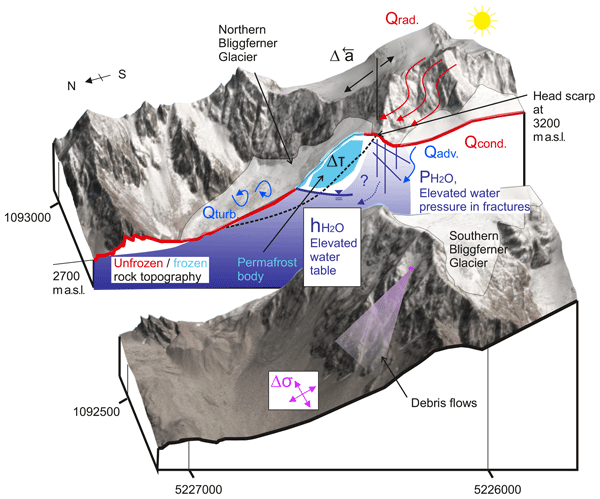
Our study explores permafrost–glacier interactions with a focus on their implications for preparing or triggering high-volume rock slope failures. Using the Bliggspitze rock slide as a case study, we demonstrate a new type of rock slope failure mechanism triggered by the uplift of the cold–warm dividing line in polythermal alpine glaciers, a widespread and currently under-explored phenomenon in alpine environments worldwide.
Jacopo Boaga, Mirko Pavoni, Alexander Bast, and Samuel Weber
The Cryosphere, 18, 3231–3236, https://doi.org/10.5194/tc-18-3231-2024, https://doi.org/10.5194/tc-18-3231-2024, 2024
Short summary
Short summary
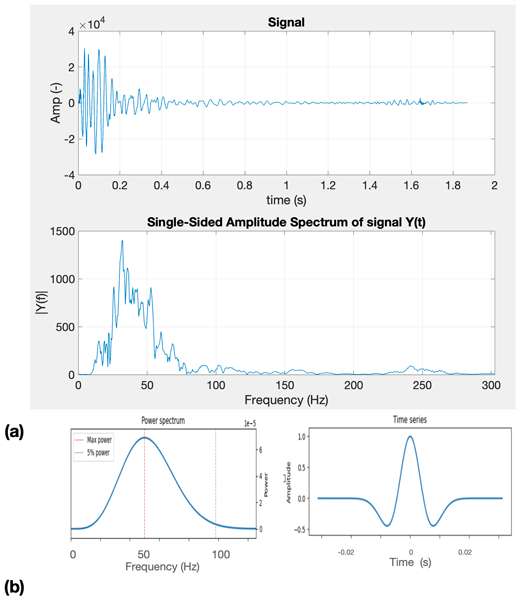
Reversal polarity is observed in rock glacier seismic refraction tomography. We collected several datasets observing this phenomenon in Switzerland and Italy. This phase change may be linked to interferences due to the presence of a thin low-velocity layer. Our results are confirmed by the modelling and analysis of synthetic seismograms to demonstrate that the presence of a low-velocity layer produces a polarity reversal on the seismic gather.
Marcia Phillips, Chasper Buchli, Samuel Weber, Jacopo Boaga, Mirko Pavoni, and Alexander Bast
The Cryosphere, 17, 753–760, https://doi.org/10.5194/tc-17-753-2023, https://doi.org/10.5194/tc-17-753-2023, 2023
Short summary
Short summary
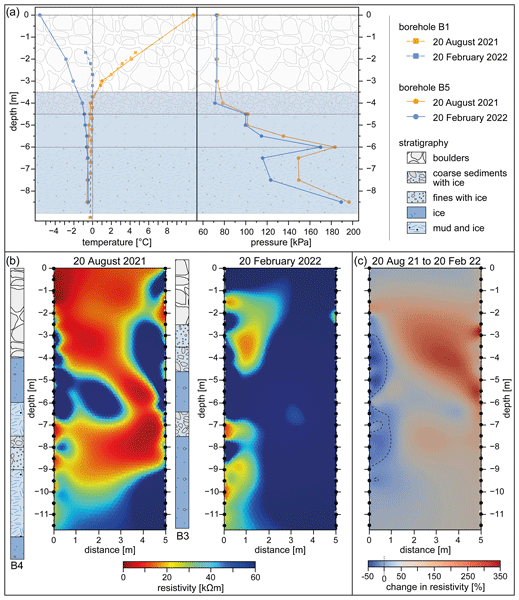
A new combination of temperature, water pressure and cross-borehole electrical resistivity data is used to investigate ice/water contents in an ice-rich rock glacier. The landform is close to 0°C and has locally heterogeneous characteristics, ice/water contents and temperatures. The techniques presented continuously monitor temporal and spatial phase changes to a depth of 12 m and provide the basis for a better understanding of accelerating rock glacier movements and future water availability.
Alessandro Cicoira, Samuel Weber, Andreas Biri, Ben Buchli, Reynald Delaloye, Reto Da Forno, Isabelle Gärtner-Roer, Stephan Gruber, Tonio Gsell, Andreas Hasler, Roman Lim, Philippe Limpach, Raphael Mayoraz, Matthias Meyer, Jeannette Noetzli, Marcia Phillips, Eric Pointner, Hugo Raetzo, Cristian Scapozza, Tazio Strozzi, Lothar Thiele, Andreas Vieli, Daniel Vonder Mühll, Vanessa Wirz, and Jan Beutel
Earth Syst. Sci. Data, 14, 5061–5091, https://doi.org/10.5194/essd-14-5061-2022, https://doi.org/10.5194/essd-14-5061-2022, 2022
Short summary
Short summary
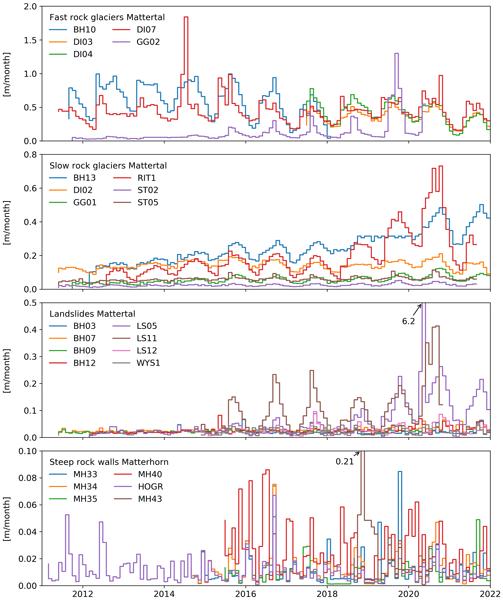
This paper documents a monitoring network of 54 positions, located on different periglacial landforms in the Swiss Alps: rock glaciers, landslides, and steep rock walls. The data serve basic research but also decision-making and mitigation of natural hazards. It is the largest dataset of its kind, comprising over 209 000 daily positions and additional weather data.
Sebastian H. R. Rosier, Thomas Gregov, Guillaume Jouvet, and Andreas Vieli
EGUsphere, https://doi.org/10.5194/egusphere-2026-5523, https://doi.org/10.5194/egusphere-2026-5523, 2026
This preprint is open for discussion and under review for The Cryosphere (TC).
Short summary
Short summary
Mountain glacier projections usually rely on flowline models or simplified ice flow, because higher order models are too slow to run many times or at high resolution. We built a training set of 350,000 flow solutions across tens of thousands of synthetic glaciers, far larger than anything before, and trained a neural network on both these solutions and the flow physics itself. It matches the original solver on glaciers it has never seen, and is cheap enough to make large ensembles affordable.
Florian Hardmeier, James C. Ferguson, and Andreas Vieli
The Cryosphere, 20, 5365–5392, https://doi.org/10.5194/tc-20-5365-2026, https://doi.org/10.5194/tc-20-5365-2026, 2026
Short summary
Short summary
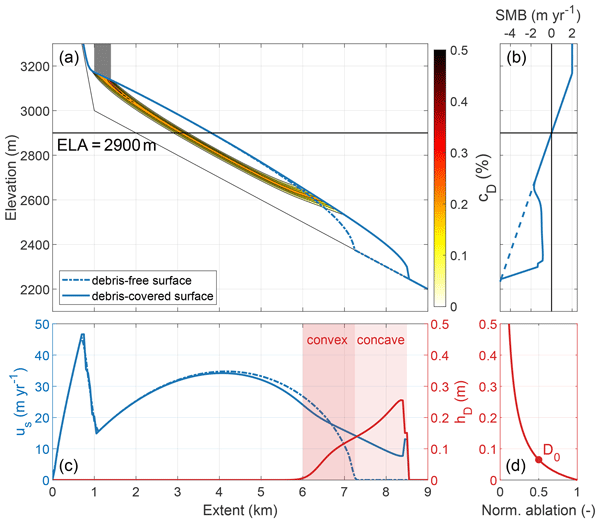
As mountain glaciers are retreating, they are becoming increasingly debris-covered. We want to better understand how these glaciers respond to a changing climate. Here, we present an improved model that simulates transport of debris within and on the glacier. We find that short-term changes have a low impact due to long response times. However, long-term warming can lead to fast collapse of the glacier tongue after a phase of thinning, where debris cover expands and thickens.
Maike Offer, Ingo Hartmeyer, Samuel Weber, Markus Keuschnig, and Michael Krautblatter
Earth Surf. Dynam., 14, 661–683, https://doi.org/10.5194/esurf-14-661-2026, https://doi.org/10.5194/esurf-14-661-2026, 2026
Short summary
Short summary
This study presents a year-round automated electrical resistivity tomography monitoring of a steep permafrost rockwall combined with borehole temperature, anchor load and piezometer observations. The joint analysis revealed seasonal phases with enhanced mechanical forcing of rockwalls related to high hydrostatic and cryostatic pressures, which are of particular interest for understanding preconditioning of rock instabilities.
Riccardo Scandroglio, Samuel Weber, Jonas K. Limbrock, and Michael Krautblatter
The Cryosphere, 20, 4787–4809, https://doi.org/10.5194/tc-20-4787-2026, https://doi.org/10.5194/tc-20-4787-2026, 2026
Short summary
Short summary
This study monitors changes in frozen rock on Mount Zugspitze over 17 years using monthly electrical resistivity measurements. By linking this data to rock temperature and applying advanced analysis, it reveals a 40 % loss of permafrost in the past decade. Thawing accelerates during summer, highlighting increasing risks of rock instability as temperatures rise.
Felix Pfluger, Samuel Weber, Natalie Barbosa, Florentin Hofmeister, Johannes Leinauer, Peter Wegmann, and Michael Krautblatter
Earth Surf. Dynam., 14, 601–634, https://doi.org/10.5194/esurf-14-601-2026, https://doi.org/10.5194/esurf-14-601-2026, 2026
Short summary
Short summary
The 2024 Platteikogel rock slope failure (Tyrol, Austria) highlights how cryospheric changes promote slope failure. We demonstrate how the system feedback of ice apron loss, permafrost warming, increase in rockfall activity, and changes in groundwater conditions accelerate mechanical destabilization, and as a consequence likely peaked in the observed failure. Today, rapidly vanishing ice aprons potentially mark source zones for future rock slides.
Giulio Saibene, Isabelle Gärtner-Roer, Jan Beutel, and Andreas Vieli
The Cryosphere, 20, 3511–3532, https://doi.org/10.5194/tc-20-3511-2026, https://doi.org/10.5194/tc-20-3511-2026, 2026
Short summary
Short summary
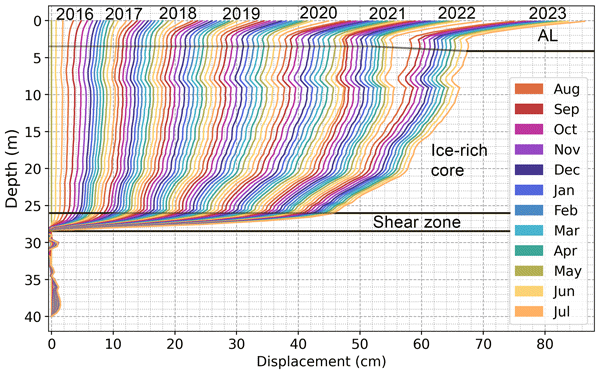
Rock glaciers are bodies of frozen ground found in mountain regions. They move downslope and are mainly studied at the surface. Here, we analyze deformation data from a borehole, providing continuous data for almost eight years. The data shows that the acceleration in the summer movement happens in the uppermost layer, while long-term movement is mostly occurring in a deeper layer. This is important for the interpretation of surface movements, which are used as climate indicators.
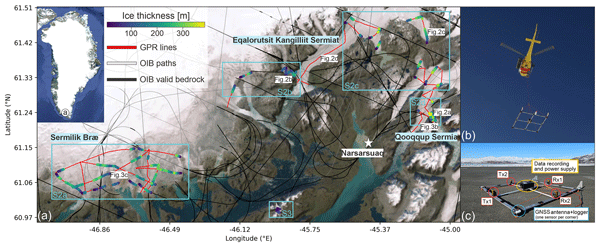
Ilaria Santin, Huw J. Horgan, Raphael Moser, Nanna Bjørnholt Karlsson, Faezeh M. Nick, Andreas Vieli, Anja Rutishauser, Hansruedi Maurer, and Daniel Farinotti
The Cryosphere, 20, 3435–3441, https://doi.org/10.5194/tc-20-3435-2026, https://doi.org/10.5194/tc-20-3435-2026, 2026
Short summary
Short summary
Ice thickness near Greenland’s coast is still poorly measured, yet it is vital for predicting sea level rise. We flew a helicopter ice-penetrating radar over three outlet glaciers in southern Greenland and mapped the glacier bed where basal reflections were clear. We measured ice up to about 340 meters thick, with reliable penetration typically to about 300 meters, providing new constraints that can improve regional bed maps.
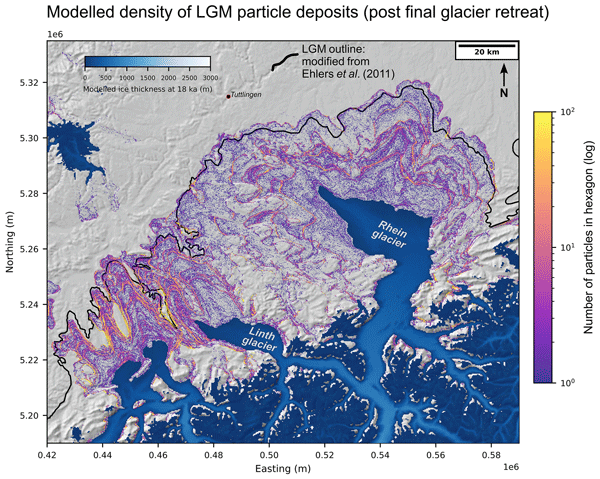
Tancrède P. M. Leger, Guillaume Jouvet, Sarah Kamleitner, Brandon D. Finley, Maxime Bernard, Balthazar Allegri, Frédéric Herman, Andreas Vieli, Andreas Henz, and Samuel U. Nussbaumer
Earth Surf. Dynam., 14, 361–389, https://doi.org/10.5194/esurf-14-361-2026, https://doi.org/10.5194/esurf-14-361-2026, 2026
Short summary
Short summary
This study reconstructs for the first time the transport-pathways of sediments by glaciers during the last glaciation of the European Alps, 24000 years ago. This helps us understand how the European Alps were shaped by past glaciations and helps us better constrain the mechanisms of iceflow, glacier erosion and the movement of large sediment masses by ice. This breakthrough is achieved by coupling a smart particle-tracking algorithm to a machine-learning-enhanced glacier evolution model.
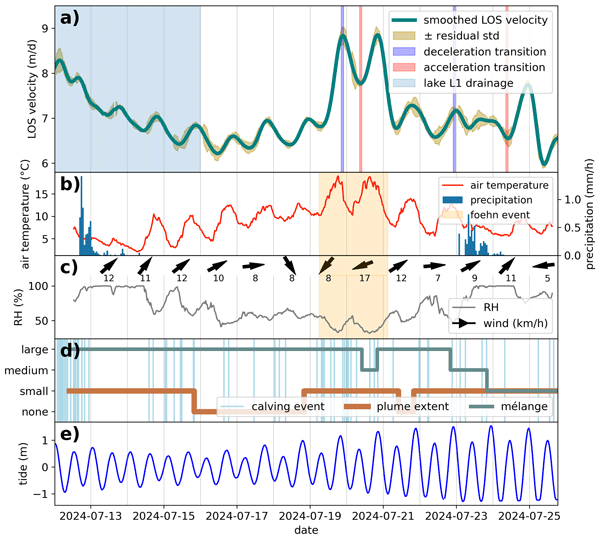
Armin Dachauer, Andrea Kneib-Walter, Dominik Gräff, and Andreas Vieli
The Cryosphere, 20, 2099–2125, https://doi.org/10.5194/tc-20-2099-2026, https://doi.org/10.5194/tc-20-2099-2026, 2026
Short summary
Short summary
Terrestrial radar observations were used to investigate flow speed changes at Eqalorutsit Kangilliit Sermiat, a marine-terminating glacier in Greenland. The velocity varied on both daily and multi-day timescales, showing that the glacier speeds up markedly when meltwater or lake drainage increases basal water pressure. Usually speed changes move downstream with time towards the glacier front, but during multi-day speed-up events they start at the front and travel upstream.
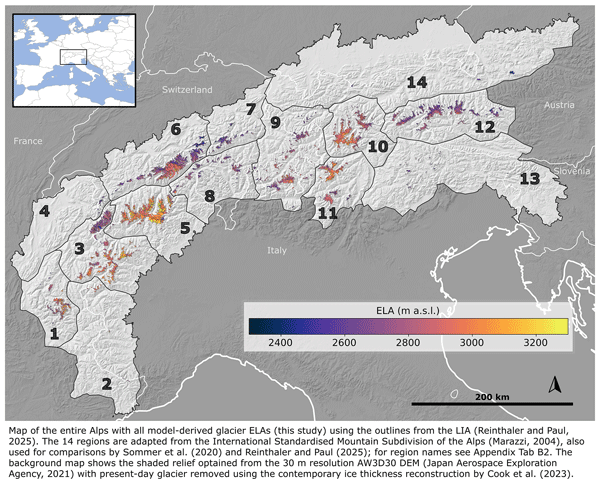
Andreas Henz, Johannes Reinthaler, Samuel U. Nussbaumer, Tancrède P. M. Leger, Sarah Kamleitner, Guillaume Jouvet, and Andreas Vieli
The Cryosphere, 19, 5913–5937, https://doi.org/10.5194/tc-19-5913-2025, https://doi.org/10.5194/tc-19-5913-2025, 2025
Short summary
Short summary
Glaciers are key to understanding climate change, reflecting historical variability. Using glacier models on the computer, we reconstructed European Alps glaciers during the Little Ice Age, with a total ice volume of 283 ± 42 cubic kilometres. Also, the study determines equilibrium line altitudes (ELAs) for over 4000 glaciers, showing patterns influenced by temperature, precipitation, and solar radiation. After all, we introduce a new ELA correction approach based on solar incidence.
Samuel Weber, Jan Beutel, Michael Dietze, Alexander Bast, Robert Kenner, Marcia Phillips, Johannes Leinauer, Simon Mühlbauer, Felix Pfluger, and Michael Krautblatter
Earth Surf. Dynam., 13, 1157–1179, https://doi.org/10.5194/esurf-13-1157-2025, https://doi.org/10.5194/esurf-13-1157-2025, 2025
Short summary
Short summary
On 13 June 2023, a freestanding rock pillar on the Matterhorn collapsed after years of weakening. Our study examines this progressive destabilization by analyzing field data and integrating lab experiments into a hydro-mechanical model. We highlight the critical role of water infiltration into frozen rock, intensified by climate warming, as a widespread driver of the rising frequency of rockfalls in high mountain permafrost regions.
Elizaveta Sharaborova, Michael Lehning, Nander Wever, Marcia Phillips, and Hendrik Huwald
The Cryosphere, 19, 4277–4301, https://doi.org/10.5194/tc-19-4277-2025, https://doi.org/10.5194/tc-19-4277-2025, 2025
Short summary
Short summary
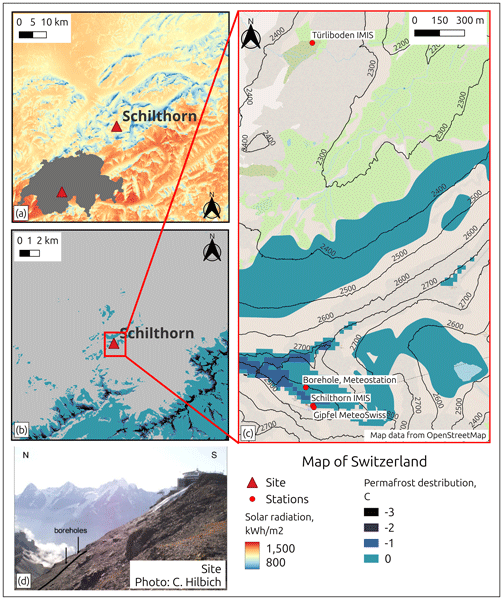
Global warming provokes permafrost to thaw, damaging landscapes and infrastructure. This study explores methods to slow this thawing at an alpine site. We investigate different methods based on passive and active cooling. The best approach mixes both methods and manages heat flow, potentially allowing excess energy to be used locally.
Riccardo Scandroglio, Samuel Weber, Till Rehm, and Michael Krautblatter
Earth Surf. Dynam., 13, 295–314, https://doi.org/10.5194/esurf-13-295-2025, https://doi.org/10.5194/esurf-13-295-2025, 2025
Short summary
Short summary
Despite the critical role of water in alpine regions, its presence in bedrock is frequently neglected. This research examines the dynamics of water in fractures using 1 decade of measurements from a tunnel 50 m underground. We provide new insights into alpine groundwater dynamics, revealing that up to 800 L d-1 can flow in one fracture during extreme events. These quantities can saturate the fractures, enhance hydraulic conductivity, and generate pressures that destabilize slopes.
Maike Offer, Samuel Weber, Michael Krautblatter, Ingo Hartmeyer, and Markus Keuschnig
The Cryosphere, 19, 485–506, https://doi.org/10.5194/tc-19-485-2025, https://doi.org/10.5194/tc-19-485-2025, 2025
Short summary
Short summary
We present a unique long-term dataset of measurements of borehole temperature, repeated electrical resistivity tomography, and piezometric pressure to investigate the complex seasonal water flow in permafrost rockwalls. Our joint analysis shows that permafrost rocks are subjected to enhanced pressurised water flow during the thaw period, resulting in push-like warming events and long-lasting rock temperature regime changes.
Felix Pfluger, Samuel Weber, Joseph Steinhauser, Christian Zangerl, Christine Fey, Johannes Fürst, and Michael Krautblatter
Earth Surf. Dynam., 13, 41–70, https://doi.org/10.5194/esurf-13-41-2025, https://doi.org/10.5194/esurf-13-41-2025, 2025
Short summary
Short summary
Our study explores permafrost–glacier interactions with a focus on their implications for preparing or triggering high-volume rock slope failures. Using the Bliggspitze rock slide as a case study, we demonstrate a new type of rock slope failure mechanism triggered by the uplift of the cold–warm dividing line in polythermal alpine glaciers, a widespread and currently under-explored phenomenon in alpine environments worldwide.
Jacopo Boaga, Mirko Pavoni, Alexander Bast, and Samuel Weber
The Cryosphere, 18, 3231–3236, https://doi.org/10.5194/tc-18-3231-2024, https://doi.org/10.5194/tc-18-3231-2024, 2024
Short summary
Short summary
Reversal polarity is observed in rock glacier seismic refraction tomography. We collected several datasets observing this phenomenon in Switzerland and Italy. This phase change may be linked to interferences due to the presence of a thin low-velocity layer. Our results are confirmed by the modelling and analysis of synthetic seismograms to demonstrate that the presence of a low-velocity layer produces a polarity reversal on the seismic gather.
Alexander Bast, Robert Kenner, and Marcia Phillips
The Cryosphere, 18, 3141–3158, https://doi.org/10.5194/tc-18-3141-2024, https://doi.org/10.5194/tc-18-3141-2024, 2024
Short summary
Short summary
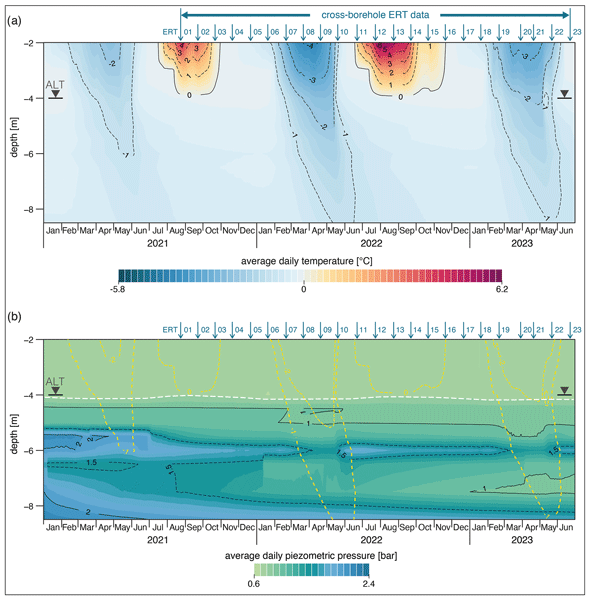
We monitor ground temperature, water pressure, and relative ice/water contents in a creeping ice-rich rock glacier in mountain permafrost to study its characteristics during a deceleration period with dry conditions and a summer heat wave. The snowpack has an important role as a provider of water and as a thermal insulator. Snow-poor winters, followed by dry summers, induce cooling and drying of the permafrost, leading to rock glacier deceleration.
Lars Widmer, Marcia Phillips, and Chasper Buchli
The Cryosphere, 17, 4289–4295, https://doi.org/10.5194/tc-17-4289-2023, https://doi.org/10.5194/tc-17-4289-2023, 2023
Short summary
Short summary
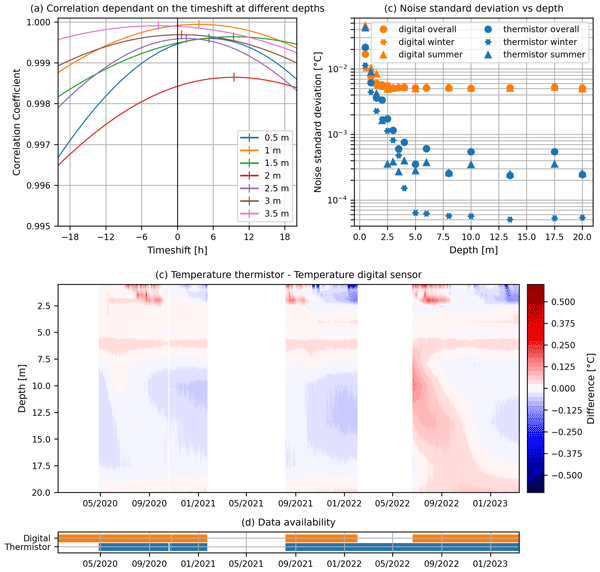
Long-term temperature measurements are challenging to carry out in mountain-permafrost boreholes. The widely used resistance thermistors are highly accurate but prone to drift when they are exposed to moisture, or the cable connecting them is stretched. We explore the possibility of supplementing them with digital sensors and analyse the performance of both systems at 15 depths in the same mountain-permafrost borehole.
Lea Hartl, Thomas Zieher, Magnus Bremer, Martin Stocker-Waldhuber, Vivien Zahs, Bernhard Höfle, Christoph Klug, and Alessandro Cicoira
Earth Surf. Dynam., 11, 117–147, https://doi.org/10.5194/esurf-11-117-2023, https://doi.org/10.5194/esurf-11-117-2023, 2023
Short summary
Short summary
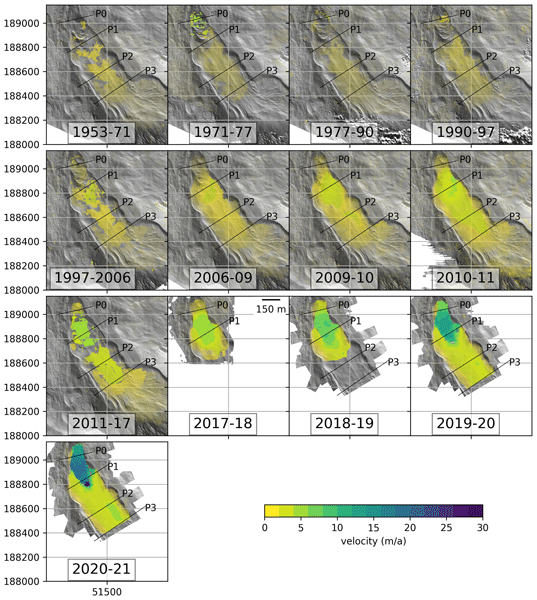
The rock glacier in Äußeres Hochebenkar (Austria) moved faster in 2021–2022 than it has in about 70 years of monitoring. It is currently destabilizing. Using a combination of different data types and methods, we show that there have been two cycles of destabilization at Hochebenkar and provide a detailed analysis of velocity and surface changes. Because our time series are very long and show repeated destabilization, this helps us better understand the processes of rock glacier destabilization.
Marcia Phillips, Chasper Buchli, Samuel Weber, Jacopo Boaga, Mirko Pavoni, and Alexander Bast
The Cryosphere, 17, 753–760, https://doi.org/10.5194/tc-17-753-2023, https://doi.org/10.5194/tc-17-753-2023, 2023
Short summary
Short summary
A new combination of temperature, water pressure and cross-borehole electrical resistivity data is used to investigate ice/water contents in an ice-rich rock glacier. The landform is close to 0°C and has locally heterogeneous characteristics, ice/water contents and temperatures. The techniques presented continuously monitor temporal and spatial phase changes to a depth of 12 m and provide the basis for a better understanding of accelerating rock glacier movements and future water availability.
Adrien Wehrlé, Martin P. Lüthi, and Andreas Vieli
The Cryosphere, 17, 309–326, https://doi.org/10.5194/tc-17-309-2023, https://doi.org/10.5194/tc-17-309-2023, 2023
Short summary
Short summary
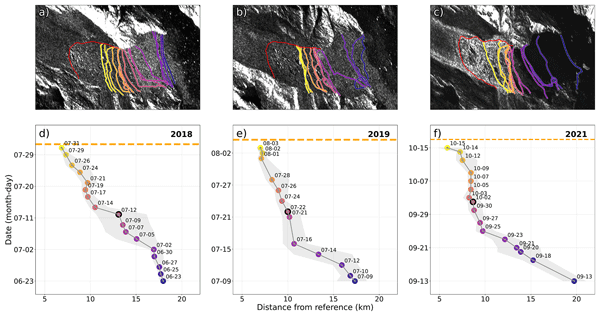
We characterized short-lived episodes of ice mélange weakening (IMW) at the front of three major Greenland outlet glaciers. Through a continuous detection at the front of Kangerdlugssuaq Glacier during the June-to-September period from 2018 to 2021, we found that 87 % of the IMW episodes occurred prior to a large-scale calving event. Using a simple model for ice mélange motion, we further characterized the IMW process as self-sustained through the existence of an IMW–calving feedback.
Alessandro Cicoira, Samuel Weber, Andreas Biri, Ben Buchli, Reynald Delaloye, Reto Da Forno, Isabelle Gärtner-Roer, Stephan Gruber, Tonio Gsell, Andreas Hasler, Roman Lim, Philippe Limpach, Raphael Mayoraz, Matthias Meyer, Jeannette Noetzli, Marcia Phillips, Eric Pointner, Hugo Raetzo, Cristian Scapozza, Tazio Strozzi, Lothar Thiele, Andreas Vieli, Daniel Vonder Mühll, Vanessa Wirz, and Jan Beutel
Earth Syst. Sci. Data, 14, 5061–5091, https://doi.org/10.5194/essd-14-5061-2022, https://doi.org/10.5194/essd-14-5061-2022, 2022
Short summary
Short summary
This paper documents a monitoring network of 54 positions, located on different periglacial landforms in the Swiss Alps: rock glaciers, landslides, and steep rock walls. The data serve basic research but also decision-making and mitigation of natural hazards. It is the largest dataset of its kind, comprising over 209 000 daily positions and additional weather data.
Adrien Wehrlé, Martin P. Lüthi, Andrea Walter, Guillaume Jouvet, and Andreas Vieli
The Cryosphere, 15, 5659–5674, https://doi.org/10.5194/tc-15-5659-2021, https://doi.org/10.5194/tc-15-5659-2021, 2021
Short summary
Short summary
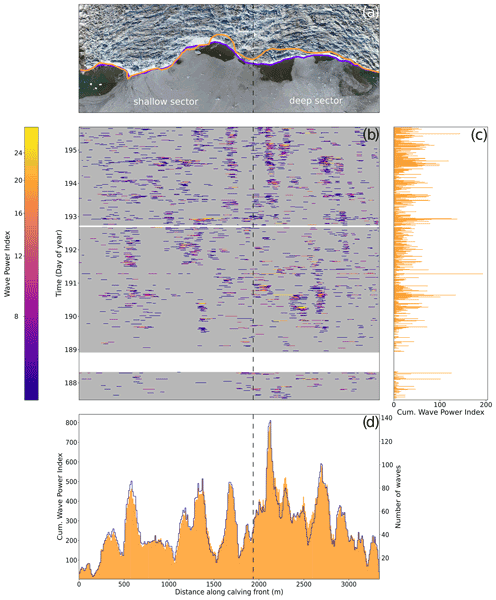
We developed a novel automated method for the detection and the quantification of ocean waves generated by glacier calving. This method was applied to data recorded with a terrestrial radar interferometer at Eqip Sermia, Greenland. Results show a high calving activity at the glacier front sector ending in deep water linked with more frequent meltwater plumes. This suggests that rising subglacial meltwater plumes strongly affect glacier calving in deep water, but weakly in shallow water.
Cited articles
Amschwand, D., Scherler, M., Hoelzle, M., Krummenacher, B., Haberkorn, A., Kienholz, C., and Gubler, H.: Surface heat fluxes at coarse blocky Murtèl rock glacier (Engadine, eastern Swiss Alps), The Cryosphere, 18, 2103–2139, https://doi.org/10.5194/tc-18-2103-2024, 2024. a
Amschwand, D., Wicky, J., Scherler, M., Hoelzle, M., Krummenacher, B., Haberkorn, A., Kienholz, C., and Gubler, H.: Sub-surface processes and heat fluxes at coarse blocky Murtèl rock glacier (Engadine, eastern Swiss Alps): seasonal ice and convective cooling render rock glaciers climate-robust, Earth Surf. Dynam., 13, 365–401, https://doi.org/10.5194/esurf-13-365-2025, 2025. a, b, c, d
Arenson, L. U., Hauck, C., Hilbich, C., Seward, L., Yamamoto, Y., and Springman, S. M.: Sub-surface Heterogeneities in the Murtèl: Corvatsch Rock Glacier, Switzerland, in: Proceedings of the joint 63rd Canadian Geotechnical Conference and the 6th Canadian Permafrost Conference, 1494–1500, Canadian Geotechnical Society, https://www.research-collection.ethz.ch/handle/20.500.11850/27828, 2010. a
Bast, A., Kenner, R., and Phillips, M.: Short-term cooling, drying, and deceleration of an ice-rich rock glacier, The Cryosphere, 18, 3141–3158, https://doi.org/10.5194/tc-18-3141-2024, 2024. a
Bergman, T. L., Lavine, A. S., Incropera, F. P., and DeWitt, D. P.: Fundamentals of Heat and Mass Transfer, John Wiley & Sons, ISBN 978-1-119-72248-9, 2020. a
Biskaborn, B. K., Smith, S. L., Noetzli, J., Matthes, H., Vieira, G., Streletskiy, D. A., Schoeneich, P., Romanovsky, V. E., Lewkowicz, A. G., Abramov, A., Allard, M., Boike, J., Cable, W. L., Christiansen, H. H., Delaloye, R., Diekmann, B., Drozdov, D., Etzelmüller, B., Grosse, G., Guglielmin, M., Ingeman-Nielsen, T., Isaksen, K., Ishikawa, M., Johansson, M., Johannsson, H., Joo, A., Kaverin, D., Kholodov, A., Konstantinov, P., Kröger, T., Lambiel, C., Lanckman, J.-P., Luo, D., Malkova, G., Meiklejohn, I., Moskalenko, N., Oliva, M., Phillips, M., Ramos, M., Sannel, A. B. K., Sergeev, D., Seybold, C., Skryabin, P., Vasiliev, A., Wu, Q., Yoshikawa, K., Zheleznyak, M., and Lantuit, H.: Permafrost is warming at a global scale, Nature Communications, 10, 264, https://doi.org/10.1038/s41467-018-08240-4, 2019. a
Blackwell, D. D. and Steele, J. L.: Heat flow and geothermal potential of Kansas, Bulletin (Kansas Geological Survey), 267–295, https://doi.org/10.17161/kgsbulletin.no.226.20508, 1989. a
Bonnaventure, P. P. and Lamoureux, S. F.: The active layer: A conceptual review of monitoring, modelling techniques and changes in a warming climate, Progress in Physical Geography: Earth and Environment, 37, 352–376, https://doi.org/10.1177/0309133313478314, 2013. a
Carenzo, M., Pellicciotti, F., Mabillard, J., Reid, T., and Brock, B. W.: An enhanced temperature index model for debris-covered glaciers accounting for thickness effect, Advances in Water Resources, 94, 457–469, https://doi.org/10.1016/j.advwatres.2016.05.001, 2016. a
Carslaw, H. S. and Jaeger, J. C.: Conduction of heat in solids, Oxford Science Publications, Clarendon Press, 2, ISBN 0-19-853368-3, 1959. a
Cicoira, A., Beutel, J., Faillettaz, J., Gärtner-Roer, I., and Vieli, A.: Resolving the influence of temperature forcing through heat conduction on rock glacier dynamics: a numerical modelling approach, The Cryosphere, 13, 927–942, https://doi.org/10.5194/tc-13-927-2019, 2019. a, b, c
Clauser, C. and Huenges, E.: Thermal Conductivity of Rocks and Minerals, in: Rock Physics & Phase Relations, American Geophysical Union (AGU), 105–126, ISBN 978-1-118-66810-8, https://doi.org/10.1029/RF003p0105, 1995. a
Cosenza, P., Guérin, R., and Tabbagh, A.: Relationship between thermal conductivity and water content of soils using numerical modelling, European Journal of Soil Science, 54, 581–588, https://doi.org/10.1046/j.1365-2389.2003.00539.x, 2003. a
Crank, J. and Nicolson, P.: A practical method for numerical evaluation of solutions of partial differential equations of the heat-conduction type, Mathematical Proceedings of the Cambridge Philosophical Society, 43, 50–67, https://doi.org/10.1017/S0305004100023197, 1947. a
Dahl-Jensen, D., Morgan, V. I., and Elcheikh, A.: Monte Carlo inverse modelling of the Law Dome (Antarctica) temperature profile, Annals of Glaciology, 29, 145–150, https://doi.org/10.3189/172756499781821102, 1999. a
Fourier, J.-B.-J.: Théorie analytique de la chaleur, Didot, ISBN 1-10-800180-7, 1822. a
Haberkorn, A., Kenner, R., Noetzli, J., and Phillips, M.: Changes in Ground Temperature and Dynamics in Mountain Permafrost in the Swiss Alps, Frontiers in Earth Science, 9, https://doi.org/10.3389/feart.2021.626686, 2021. a
Haeberli, W., Hallet, B., Arenson, L., Elconin, R., Humlum, O., Kääb, A., Kaufmann, V., Ladanyi, B., Matsuoka, N., Springman, S., and Vonder Mühll, D.: Permafrost creep and rock glacier dynamics, Permafrost and Periglacial Process., 17, 189–214, https://doi.org/10.1002/ppp.561, 2006. a
Haeberli, W., Noetzli, J., and Mühll, D. V.: Using Borehole Temperatures for Knowledge Transfer about Mountain Permafrost: The Example of the 35-year Time Series at Murtèl-Corvatsch (Swiss Alps), Journal of Alpine Research - Revue de géographie alpine, https://doi.org/10.4000/rga.11950, 2023. a
Haigh, S.: Thermal conductivity of sands, Géotechnique, 62, 617–625, https://doi.org/10.1680/geot.11.P.043, 2012. a
Hanson, S. and Hoelzle, M.: The thermal regime of the active layer at the Murtèl rock glacier based on data from 2002, Permafrost and Periglacial Processes, 15, 273–282, https://doi.org/10.1002/ppp.499, 2004. a
Hasler, A.: Thermal conditions and kinematics of steep bedrock permafrost, PhD Thesis, University of Zurich, https://doi.org/10.5167/uzh-59731, 2011. a
Hasler, A., Gruber, S., and Haeberli, W.: Temperature variability and offset in steep alpine rock and ice faces, The Cryosphere, 5, 977–988, https://doi.org/10.5194/tc-5-977-2011, 2011. a
Hauck, C., Böttcher, M., and Maurer, H.: A new model for estimating subsurface ice content based on combined electrical and seismic data sets, The Cryosphere, 5, 453–468, https://doi.org/10.5194/tc-5-453-2011, 2011. a
Hinkel, K. M. and Outcalt, S. I.: Detection of nonconductive heat transport in soils using spectral analysis, Water Resources Research, 29, 1017–1023, https://doi.org/10.1029/92WR02596, 1993. a
Horton, R., Wierenga, P. J., and Nielsen, D. R.: Evaluation of Methods for Determining the Apparent Thermal Diffusivity of Soil Near the Surface, Soil Science Society of America Journal, 47, 25–32, https://doi.org/10.2136/sssaj1983.03615995004700010005x, 1983. a
IPCC: The Ocean and Cryosphere in a Changing Climate: Special Report of the Intergovernmental Panel on Climate Change, Cambridge University Press, Cambridge, ISBN 978-1-00-915797-1, 2022. a
Jia, G. S., Tao, Z. Y., Meng, X. Z., Ma, C. F., Chai, J. C., and Jin, L. W.: Review of effective thermal conductivity models of rock-soil for geothermal energy applications, Geothermics, 77, 1–11, https://doi.org/10.1016/j.geothermics.2018.08.001, 2019. a
Kurylyk, B. L. and Walvoord, M. A.: Permafrost Hydrogeology, in: Arctic Hydrology, Permafrost and Ecosystems, edited by: Yang, D. and Kane, D. L., Springer International Publishing, Cham, 493–523, ISBN 978-3-030-50930-9, https://doi.org/10.1007/978-3-030-50930-9_17, 2021. a
Labus, M. and Labus, K.: Thermal conductivity and diffusivity of fine-grained sedimentary rocks, Journal of Thermal Analysis and Calorimetry, 132, 1669–1676, https://doi.org/10.1007/s10973-018-7090-5, 2018. a
Luethi, R. and Phillips, M.: Challenges and solutions for long-term permafrost borehole temperature monitoring and data interpretation, Geogr. Helv., 71, 121–131, https://doi.org/10.5194/gh-71-121-2016, 2016. a, b
Luethi, R., Phillips, M., and Lehning, M.: Estimating Non-Conductive Heat Flow Leading to Intra-Permafrost Talik Formation at the Ritigraben Rock Glacier (Western Swiss Alps), Permafrost and Periglacial Processes, 28, 183–194, https://doi.org/10.1002/ppp.1911, 2017. a
Magnin, F., Josnin, J.-Y., Ravanel, L., Pergaud, J., Pohl, B., and Deline, P.: Modelling rock wall permafrost degradation in the Mont Blanc massif from the LIA to the end of the 21st century, The Cryosphere, 11, 1813–1834, https://doi.org/10.5194/tc-11-1813-2017, 2017. a
Marcer, M., Duvillard, P.-A., Tomaškovičová, S., Nielsen, S. R., Revil, A., and Ingeman-Nielsen, T.: Modelling present and future rock wall permafrost distribution in the Sisimiut mountain area, West Greenland, The Cryosphere, 18, 1753–1771, https://doi.org/10.5194/tc-18-1753-2024, 2024. a
Marmy, A., Rajczak, J., Delaloye, R., Hilbich, C., Hoelzle, M., Kotlarski, S., Lambiel, C., Noetzli, J., Phillips, M., Salzmann, N., Staub, B., and Hauck, C.: Semi-automated calibration method for modelling of mountain permafrost evolution in Switzerland, The Cryosphere, 10, 2693–2719, https://doi.org/10.5194/tc-10-2693-2016, 2016. a, b
Matsuoka, N.: Diurnal freeze-thaw depth in rockwalls: Field measurements and theoretical considerations, Earth Surface Processes and Landforms, 19, 423–435, https://doi.org/10.1002/esp.3290190504, 1994. a
McKenzie, J. M. and Voss, C. I.: Permafrost thaw in a nested groundwater-flow system, Hydrogeology Journal, 21, 299–316, https://doi.org/10.1007/s10040-012-0942-3, 2013. a
Mollaret, C., Hilbich, C., Pellet, C., Flores-Orozco, A., Delaloye, R., and Hauck, C.: Mountain permafrost degradation documented through a network of permanent electrical resistivity tomography sites, The Cryosphere, 13, 2557–2578, https://doi.org/10.5194/tc-13-2557-2019, 2019. a
Muller, S. W.: Permafrost: Or, Permanently Frozen Ground and Related Engineering Problems, No. 62, Army map service, U. S. Army, ISBN 978-0-59-853858-1, 1945. a
Murton, J. B. and French, H. M.: Cryostructures in permafrost, Tuktoyaktuk coastlands, western arctic Canada, Canadian Journal of Earth Sciences, 31, 737–747, https://doi.org/10.1139/e94-067, 1994. a
Nicholson, L. and Benn, D. I.: Properties of natural supraglacial debris in relation to modelling sub-debris ice ablation, Earth Surface Processes and Landforms, 38, 490–501, https://doi.org/10.1002/esp.3299, 2013. a, b, c, d
Noetzli, J., Isaksen, K., Barnett, J., Christiansen, H. H., Delaloye, R., Etzelmüller, B., Farinotti, D., Gallemann, T., Guglielmin, M., Hauck, C., Hilbich, C., Hoelzle, M., Lambiel, C., Magnin, F., Oliva, M., Paro, L., Pogliotti, P., Riedl, C., Schoeneich, P., Valt, M., Vieli, A., and Phillips, M.: Enhanced warming of European mountain permafrost in the early 21st century, Nature Communications, 15, 10508, https://doi.org/10.1038/s41467-024-54831-9, 2024. a, b, c, d
Offer, M., Weber, S., Keuschnig, M., Hartmeyer, I., and Krautblatter, M.: Water flow in fractured bedrock permafrost: a potential hazard for high alpine infrastructure, Interpraevent 2024, Conference proceedings, 732–735, https://www.dora.lib4ri.ch/wsl/islandora/object/wsl:37524/ (last access: 17 November 2025), 2024. a, b
PERMOS: Permafrost in Switzerland 2014/2015 to 2017/2018., Glaciological Report Permafrost No. 16–19 of the Cryospheric Commission of the Swiss Academy of Sciences, p. 117, https://doi.org/10.13093/permos-rep-2019-16-19, 2019. a
PERMOS: PERMOS Bulletin 2023 – PERMOS – Swiss Permafrost Monitorinig Network, https://www.permos.ch/doi/permos-bull-2024 (last access: 17 November 2025), https://doi.org/10.13093/permos-bull-2024, 2024. a, b, c, d
Petersen, E.: ericivanpetersen/supraglacial_debris_heat_flux_JGR: JGR Paper Revision, Zenodo [code and data set], https://doi.org/10.5281/zenodo.6574222, 2022. a
Petersen, E., Hock, R., Fochesatto, G. J., and Anderson, L. S.: The Significance of Convection in Supraglacial Debris Revealed Through Novel Analysis of Thermistor Profiles, Journal of Geophysical Research: Earth Surface, 127, e2021JF006520, https://doi.org/10.1029/2021JF006520, 2022. a, b
Phillips, M., Haberkorn, A., Draebing, D., Krautblatter, M., Rhyner, H., and Kenner, R.: Seasonally intermittent water flow through deep fractures in an Alpine Rock Ridge: Gemsstock, Central Swiss Alps, Cold Regions Science and Technology, 125, 117–127, https://doi.org/10.1016/j.coldregions.2016.02.010, 2016. a, b
Pogliotti, P., Cremonese, E., Morra di Cella, U., Gruber, S., and Giardino, M.: Thermal diffusivity variability in alpine permafrost rock walls, Thermal diffusivity variability in alpine permafrost rock walls, edited by: Pogliotti, P., Cremonese, E., Morra di Cella, U., Gruber, S., Giardino, M., in: 9th International Conference on Permafrost, Fairbanks, Alaska, 29 June 2008–3 July 2008, 1427–1432, University of Zurich, Fairbanks, Alaska, ISB 978-0-9800179-3-9, https://doi.org/10.5167/uzh-3098, 2008. a, b, c
Preux, C. and Malinouskaya, I.: Thermal conductivity model function of porosity: review and fitting using experimental data, Oil & Gas Science and Technology – Revue d'IFP Energies nouvelles, 76, 66, https://doi.org/10.2516/ogst/2021047, 2021. a
Pruessner, L., Huss, M., Phillips, M., and Farinotti, D.: A Framework for Modeling Rock Glaciers and Permafrost at the Basin-Scale in High Alpine Catchments, Journal of Advances in Modeling Earth Systems, 13, e2020MS002361, https://doi.org/10.1029/2020MS002361, 2021. a, b
Pruessner, L., Huss, M., and Farinotti, D.: Temperature evolution and runoff contribution of three rock glaciers in Switzerland under future climate forcing, Permafrost and Periglacial Processes, 33, 310–322, https://doi.org/10.1002/ppp.2149, 2022. a, b
Scandroglio, R., Weber, S., Rehm, T., and Krautblatter, M.: Decadal in situ hydrological observations and empirical modeling of pressure head in a high-alpine, fractured calcareous rock slope, Earth Surf. Dynam., 13, 295–314, https://doi.org/10.5194/esurf-13-295-2025, 2025. a
Scherler, M., Schneider, S., Hoelzle, M., and Hauck, C.: A two-sided approach to estimate heat transfer processes within the active layer of the Murtèl–Corvatsch rock glacier, Earth Surf. Dynam., 2, 141–154, https://doi.org/10.5194/esurf-2-141-2014, 2014. a, b, c
Schuur, E. a. G., McGuire, A. D., Schädel, C., Grosse, G., Harden, J. W., Hayes, D. J., Hugelius, G., Koven, C. D., Kuhry, P., Lawrence, D. M., Natali, S. M., Olefeldt, D., Romanovsky, V. E., Schaefer, K., Turetsky, M. R., Treat, C. C., and Vonk, J. E.: Climate change and the permafrost carbon feedback, Nature, 520, 171–179, https://doi.org/10.1038/nature14338, 2015. a
Strauss, J., Fuchs, M., Hugelius, G., Miesner, F., Nitze, I., Opfergelt, S., Schuur, E., Treat, C., Turetsky, M., Yang, Y., and Grosse, G.: Organic matter storage and vulnerability in the permafrost domain, in: Reference Module in Earth Systems and Environmental Sciences, Elsevier, ISBN 978-0-12-409548-9, 2024. a
Taber, S.: The mechanics of frost heaving, Journal of Geology, 38, 303–317, 1930. a
Tatar, A., Mohammadi, S., Soleymanzadeh, A., and Kord, S.: Predictive mixing law models of rock thermal conductivity: Applicability analysis, Journal of Petroleum Science and Engineering, 197, 107965, https://doi.org/10.1016/j.petrol.2020.107965, 2021. a, b
Waples, D. and Waples, J.: A Review and Evaluation of Specific Heat Capacities of Rocks, Minerals, and Subsurface Fluids. Part 1: Minerals and Nonporous Rocks, Natural Resources Research, 13, 97–122, https://doi.org/10.1023/B:NARR.0000032647.41046.e7, 2004. a
Weber, S., Beutel, J., Dietze, M., Bast, A., Kenner, R., Phillips, M., Leinauer, J., Mühlbauer, S., Pfluger, F., and Krautblatter, M.: Progressive destabilization of a freestanding rock pillar in permafrost on the Matterhorn (Swiss Alps): Hydro-mechanical modeling and analysis, Earth Surf. Dynam., 13, 1157–1179, https://doi.org/10.5194/esurf-13-1157-2025, 2025a. a
Weber, S., Vieli, A., and Cicoira, A.: Python3 module to infer thermal diffusivity from borehole temperature time series, Zenodo [code], https://doi.org/10.5281/zenodo.17423252, 2025b. a, b, c
Westermann, S., Ingeman-Nielsen, T., Scheer, J., Aalstad, K., Aga, J., Chaudhary, N., Etzelmüller, B., Filhol, S., Kääb, A., Renette, C., Schmidt, L. S., Schuler, T. V., Zweigel, R. B., Martin, L., Morard, S., Ben-Asher, M., Angelopoulos, M., Boike, J., Groenke, B., Miesner, F., Nitzbon, J., Overduin, P., Stuenzi, S. M., and Langer, M.: The CryoGrid community model (version 1.0) – a multi-physics toolbox for climate-driven simulations in the terrestrial cryosphere, Geosci. Model Dev., 16, 2607–2647, https://doi.org/10.5194/gmd-16-2607-2023, 2023. a
Wicky, J. and Hauck, C.: Numerical modelling of convective heat transport by air flow in permafrost talus slopes, The Cryosphere, 11, 1311–1325, https://doi.org/10.5194/tc-11-1311-2017, 2017. a
Williams, P. J.: Unfrozen Water Content of Frozen Soils and Soil Moisture Suction, Géotechnique, 14, 231–246, https://doi.org/10.1680/geot.1964.14.3.231, 1964. a
Wilson, N. J. and Flowers, G. E.: Environmental controls on the thermal structure of alpine glaciers, The Cryosphere, 7, 167–182, https://doi.org/10.5194/tc-7-167-2013, 2013. a
Yershov, E.: General geocryology (russian edition), edited by: Williams, P. J., Cambridge University Press, ISBN 978-0-521-60757-5, 1998. a
Short summary
The properties of the permafrost ground depend on its temperature and composition. We used temperature data from 29 boreholes in Switzerland to study how heat moves through different types of mountain permafrost landforms, supporting a physically meaningful interpretation of thermal properties in terms of ice content, water saturation, and porosity. Understanding changes is important because they can affect how stable mountain slopes are and how easy it is to build things in mountain areas.
The properties of the permafrost ground depend on its temperature and composition. We used...


