Articles | Volume 20, issue 1
https://doi.org/10.5194/tc-20-683-2026
© Author(s) 2026. This work is distributed under
the Creative Commons Attribution 4.0 License.

https://doi.org/10.5194/tc-20-683-2026
© Author(s) 2026. This work is distributed under
the Creative Commons Attribution 4.0 License.
The vertical structure of the troposphere and its connection to the surface mass balance of Flade Isblink in northeast Greenland

Department of Geography and Regional Science, University of Graz, Graz, 8010, Austria
Glaciology Section, Division of Geosciences, Alfred Wegener Institute Helmholtz Centre for Polar and Marine Research, Bremerhaven, 27568, Germany
Jakob Abermann
Department of Geography and Regional Science, University of Graz, Graz, 8010, Austria
Ingo Sasgen
Glaciology Section, Division of Geosciences, Alfred Wegener Institute Helmholtz Centre for Polar and Marine Research, Bremerhaven, 27568, Germany
Institute of Geography, University of Augsburg, Alter Postweg 118, 86159 Augsburg, Germany
Henrik Skov
Department of Environmental Science, iClimate, ARC, Aarhus University, Roskilde, 4000, Denmark
Lise Lotte Sørensen
Department of Environmental Science, iClimate, ARC, Aarhus University, Roskilde, 4000, Denmark
Wolfgang Schöner
Department of Geography and Regional Science, University of Graz, Graz, 8010, Austria
Related authors
No articles found.
Robert S. Fausto, Penelope How, Baptiste Vandecrux, Mads C. Lund, Jason E. Box, Kenneth D. Mankoff, Signe B. Andersen, Dirk van As, Rasmus Bahbah, Michele Citterio, William Colgan, Henrik T. Jakobsgaard, Nanna B. Karlsson, Kristian K. Kjeldsen, Signe H. Larsen, Charlotte Olsen, Falk Oraschewski, Anja Rutishauser, Christopher L. Shields, Anne M. Solgaard, Ian T. Stevens, Synne H. Svendsen, Kirsty Langley, Alexandra Messerli, Anders A. Bjørk, Jonas K. Andersen, Jakob Abermann, Jakob Steiner, Rainer Prinz, Berhard Hynek, James M. Lea, Stephen Brough, and Andreas P. Ahlstrøm
Earth Syst. Sci. Data Discuss., https://doi.org/10.5194/essd-2025-687, https://doi.org/10.5194/essd-2025-687, 2025
Preprint under review for ESSD
Short summary
Short summary
In summary, the PROMICE | GC-NET AWS data product update represents a significant advancement in Arctic climate monitoring. Through enhanced station designs, state-of-the-art instrumentation, and a transparent, automated data processing workflow, the dataset offers an essential resource for studying the Greenland Ice Sheet and its periphery, validating climate models, and supporting global assessments of cryospheric change.
Henry C. Henson, Dorte H. Søgaard, Bjarne Jensen, Kunuk Lennert, Tim Papakyriakou, Mikael K. Sejr, Jakob Sievers, Søren Rysgaard, and Lise Lotte Sørensen
EGUsphere, https://doi.org/10.5194/egusphere-2025-5330, https://doi.org/10.5194/egusphere-2025-5330, 2025
This preprint is open for discussion and under review for Ocean Science (OS).
Short summary
Short summary
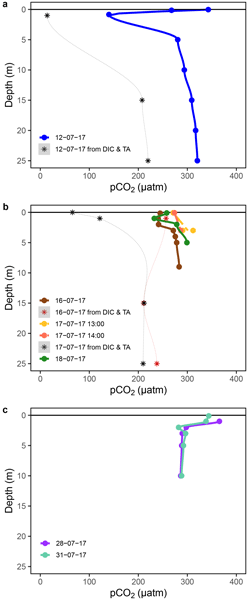
Sea ice melt adds less-saline water to the surface ocean. This creates vertical gradients in salinity, temperature, and partial pressures of carbon dioxide (pCO2). The concentration difference of pCO2 across the air-ocean boundary is used to estimate gas transfer. Thus, the depth that we measure will impact our estimates. Directly measuring gas transfer showed CO2 release from the ocean during sea ice breakup. This means ocean layering during ice melt may briefly reverse CO2 transfer.
Zihui Teng, Jane Tygesen Skønager, Andreas Massling, Henrik Skov, Nikolaos Evangeliou, Sabine Eckhardt, Merete Bilde, and Bernadette Rosati
Aerosol Research Discuss., https://doi.org/10.5194/ar-2025-34, https://doi.org/10.5194/ar-2025-34, 2025
Preprint under review for AR
Short summary
Short summary
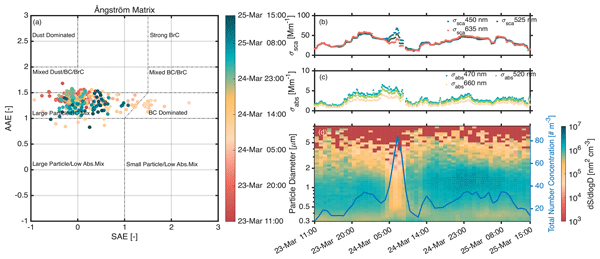
Coastal aerosols in Scandinavian urban areas remain understudied. We examined aerosol optical properties and size distributions along Denmark's coastline. Combining in-situ data with dispersion modelling, we identified two main aerosol types: carbonaceous aerosols from fossil fuel and biomass burning and large, highly-scattering aerosols (potentially sea salt). Black carbon from in-situ data and dispersion modelling correlated well while FLEXPART underestimated the concentration.
Florina Roana Schalamon, Sebastian Scher, Andreas Trügler, Lea Hartl, Wolfgang Schöner, and Jakob Abermann
Weather Clim. Dynam., 6, 1075–1088, https://doi.org/10.5194/wcd-6-1075-2025, https://doi.org/10.5194/wcd-6-1075-2025, 2025
Short summary
Short summary
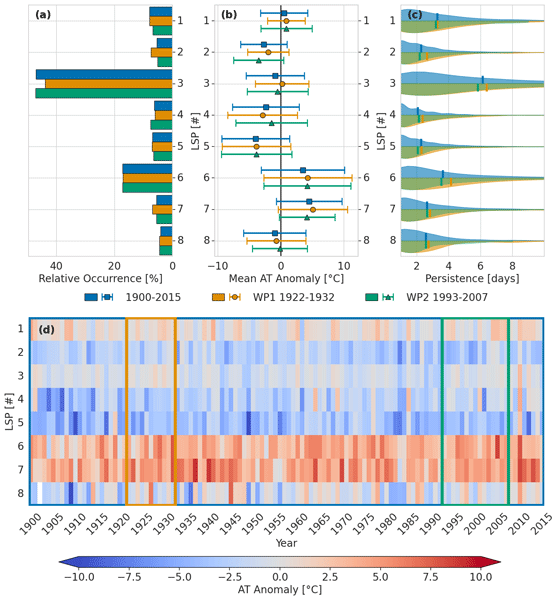
Atmospheric patterns influence the air temperature in Greenland. We investigate two warming periods, from 1922–1932 and 1993–2007, both showing similar temperature increases. Using a neural network-based clustering method, we defined predominant atmospheric patterns for further analysis. Our findings reveal that while the connection between these patterns and local air temperature remains stable, the distribution of patterns changes between the warming periods and the full period (1900–2015).
Tiago Silva, Brandon Samuel Whitley, Elisabeth Machteld Biersma, Jakob Abermann, Katrine Raundrup, Natasha de Vere, Toke Thomas Høye, Verena Haring, and Wolfgang Schöner
Biogeosciences, 22, 4601–4626, https://doi.org/10.5194/bg-22-4601-2025, https://doi.org/10.5194/bg-22-4601-2025, 2025
Short summary
Short summary
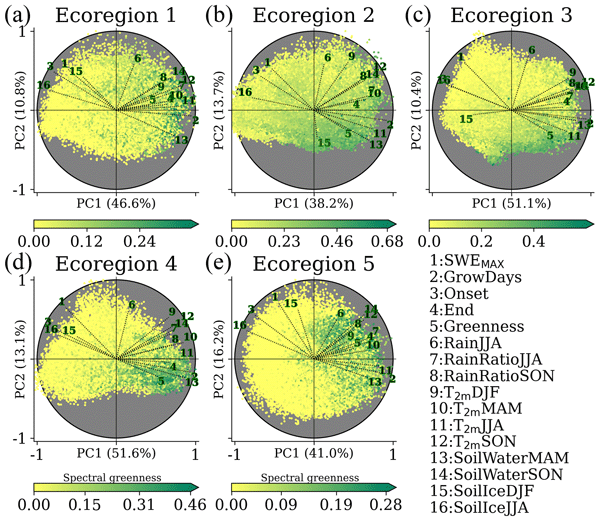
Ecosystems in Greenland have experienced significant changes over recent decades. We show the consistency of a high-resolution polar-adapted reanalysis product to represent bio-climatic factors influencing ecological processes. Our results describe the relevance/interaction between snowmelt and soil water content before the growing season onset, infer how the thermal growing season relates to changes in spectral greenness, and describe regions of ongoing changes in vegetation distribution.
Matthew B. Switanek, Jakob Abermann, Wolfgang Schöner, and Michael L. Anderson
EGUsphere, https://doi.org/10.5194/egusphere-2025-3881, https://doi.org/10.5194/egusphere-2025-3881, 2025
Short summary
Short summary
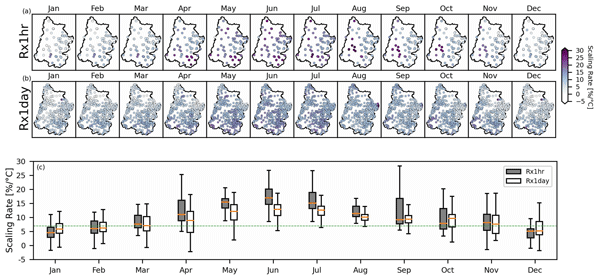
Extreme precipitation is expected to increase in a warming climate. Measurements of precipitation and dew point temperature are often used to estimate observed precipitation-temperature scaling rates. In this study, we use three different approaches which rely on either raw or normalized data to estimate scaling rates and produce predictions of extreme precipitation. Our findings highlight the importance of using normalized data to obtain accurate observation-based scaling estimates.
Wanmin Gong, Stephen R. Beagley, Kenjiro Toyota, Henrik Skov, Jesper Heile Christensen, Alex Lupu, Diane Pendlebury, Junhua Zhang, Ulas Im, Yugo Kanaya, Alfonso Saiz-Lopez, Roberto Sommariva, Peter Effertz, John W. Halfacre, Nis Jepsen, Rigel Kivi, Theodore K. Koenig, Katrin Müller, Claus Nordstrøm, Irina Petropavlovskikh, Paul B. Shepson, William R. Simpson, Sverre Solberg, Ralf M. Staebler, David W. Tarasick, Roeland Van Malderen, and Mika Vestenius
Atmos. Chem. Phys., 25, 8355–8405, https://doi.org/10.5194/acp-25-8355-2025, https://doi.org/10.5194/acp-25-8355-2025, 2025
Short summary
Short summary
This study showed that the springtime O3 depletion plays a critical role in driving the surface O3 seasonal cycle in the central Arctic. The O3 depletion events, while occurring most notably within the lowest few hundred metres above the Arctic Ocean, can induce a 5–7 % loss in the pan-Arctic tropospheric O3 burden during springtime. The study also found enhancements in O3 and NOy (mostly peroxyacetyl nitrate) concentrations in the Arctic due to northern boreal wildfires, particularly at higher altitudes.
Jakob Steiner, Jakob Abermann, and Rainer Prinz
EGUsphere, https://doi.org/10.5194/egusphere-2025-2424, https://doi.org/10.5194/egusphere-2025-2424, 2025
Short summary
Short summary
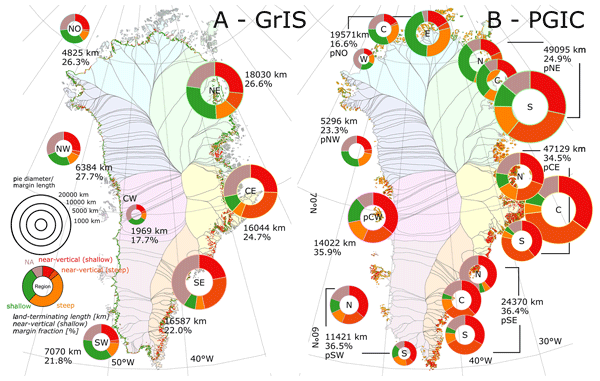
Ice in Greenland either ends in the ocean or on land and in lakes. We show that more than 95% of the margin ends on land. Ice ending in lakes is much rarer, but with 1.4% quite similar to the 2.2% ending in oceans. We also see that more than 20% of the margin ends in extremely steep, often vertical cliffs. We will now be able to compare these maps against local ice velocities, mass loss and climate to understand whether the margin shape teaches us something about the health of ice in the region.
Lea Hartl, Patrick Schmitt, Lilian Schuster, Kay Helfricht, Jakob Abermann, and Fabien Maussion
The Cryosphere, 19, 1431–1452, https://doi.org/10.5194/tc-19-1431-2025, https://doi.org/10.5194/tc-19-1431-2025, 2025
Short summary
Short summary
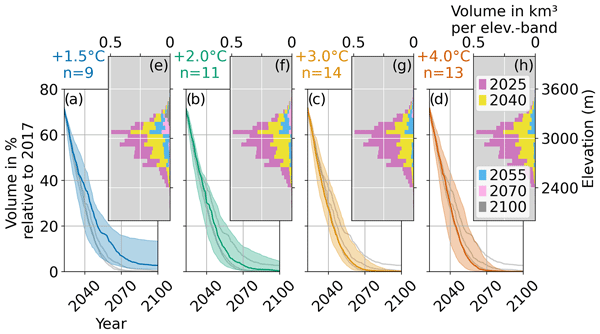
We use regional observations of glacier area and volume change to inform glacier evolution modeling in the Ötztal and Stubai range (Austrian Alps) until 2100 in different climate scenarios. Glaciers in the region lost 23 % of their volume between 2006 and 2017. Under current warming trajectories, glacier loss in the region is expected to be near-total by 2075. We show that integrating regional calibration and validation data in glacier models is important to improve confidence in projections.
Christoph Dahle, Eva Boergens, Ingo Sasgen, Thorben Döhne, Sven Reißland, Henryk Dobslaw, Volker Klemann, Michael Murböck, Rolf König, Robert Dill, Mike Sips, Ulrike Sylla, Andreas Groh, Martin Horwath, and Frank Flechtner
Earth Syst. Sci. Data, 17, 611–631, https://doi.org/10.5194/essd-17-611-2025, https://doi.org/10.5194/essd-17-611-2025, 2025
Short summary
Short summary
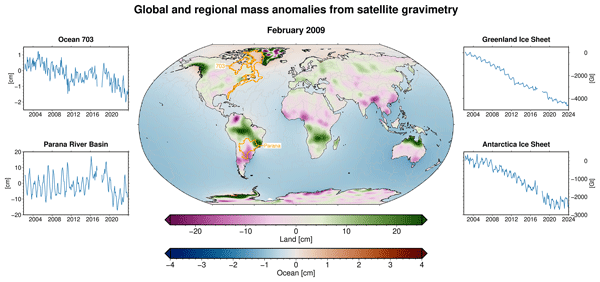
GRACE and GRACE-FO are unique observing systems to quantify mass changes at the Earth’s surface from space. Time series of these mass changes are of high value for various applications, e.g., in hydrology, glaciology, and oceanography. GravIS (Gravity Information Service) provides easy access to user-friendly, regularly updated mass anomaly products. The portal visualizes and describes these data, aiming to highlight their significance for understanding changes in the climate system.
Matthew Switanek, Gernot Resch, Andreas Gobiet, Daniel Günther, Christoph Marty, and Wolfgang Schöner
The Cryosphere, 18, 6005–6026, https://doi.org/10.5194/tc-18-6005-2024, https://doi.org/10.5194/tc-18-6005-2024, 2024
Short summary
Short summary
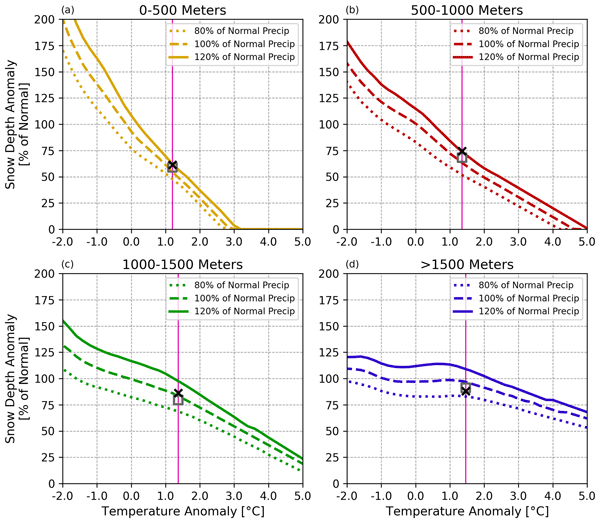
Snow depth plays an important role in water resources, mountain tourism, and hazard management across the European Alps. Our study uses station-based historical observations to quantify how changes in temperature and precipitation affect average seasonal snow depth. We find that the relationship between these variables has been surprisingly robust over the last 120 years. This allows us to more accurately estimate how future climate will affect seasonal snow depth in different elevation zones.
Jorrit van der Schot, Jakob Abermann, Tiago Silva, Kerstin Rasmussen, Michael Winkler, Kirsty Langley, and Wolfgang Schöner
The Cryosphere, 18, 5803–5823, https://doi.org/10.5194/tc-18-5803-2024, https://doi.org/10.5194/tc-18-5803-2024, 2024
Short summary
Short summary
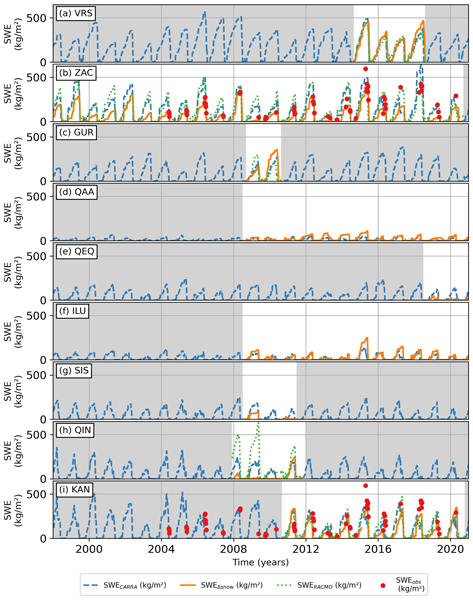
We present snow data from nine locations in coastal Greenland. We show that a reanalysis product (CARRA) simulates seasonal snow characteristics better than a regional climate model (RACMO). CARRA output matches particularly well with our reference dataset when we look at the maximum snow water equivalent and the snow cover end date. We show that seasonal snow in coastal Greenland has large spatial and temporal variability and find little evidence of trends in snow cover characteristics.
Jakob Boyd Pernov, Jens Liengaard Hjorth, Lise Lotte Sørensen, and Henrik Skov
Atmos. Chem. Phys., 24, 13603–13631, https://doi.org/10.5194/acp-24-13603-2024, https://doi.org/10.5194/acp-24-13603-2024, 2024
Short summary
Short summary
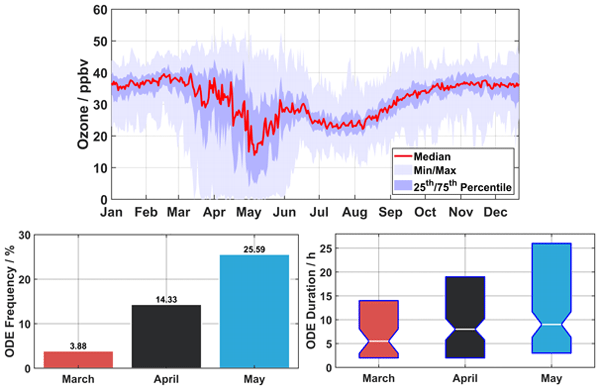
Arctic ozone depletion events (ODEs) occur every spring and have vast implications for the oxidizing capacity, radiative balance, and mercury oxidation. In this study, we analyze ozone, ODEs, and their connection to meteorological and air mass history variables through statistical analyses, back trajectories, and machine learning (ML) at Villum Research Station. ODEs are favorable under sunny, calm conditions with air masses arriving from northerly wind directions with sea ice contact.
Bernhard Hynek, Daniel Binder, Michele Citterio, Signe Hillerup Larsen, Jakob Abermann, Geert Verhoeven, Elke Ludewig, and Wolfgang Schöner
The Cryosphere, 18, 5481–5494, https://doi.org/10.5194/tc-18-5481-2024, https://doi.org/10.5194/tc-18-5481-2024, 2024
Short summary
Short summary
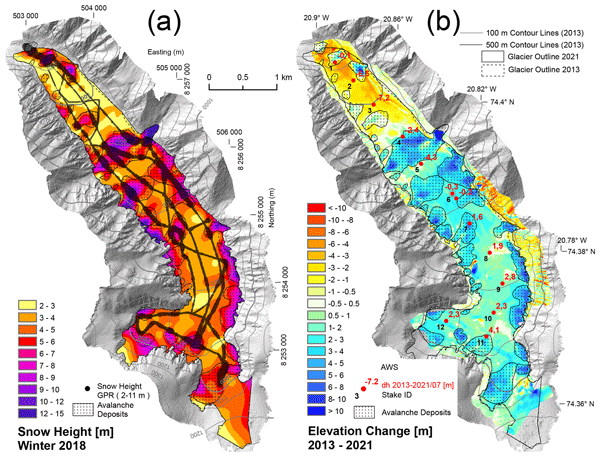
An avalanche event in February 2018 caused thick snow deposits on Freya Glacier, a peripheral mountain glacier in northeastern Greenland. The avalanche deposits contributed significantly to the mass balance, leaving a strong imprint in the elevation changes in 2013–2021. The 8-year geodetic mass balance (2013–2021) of the glacier is positive, whereas previous estimates by direct measurements were negative and now turned out to have a negative bias.
Christoph Posch, Jakob Abermann, and Tiago Silva
The Cryosphere, 18, 2035–2059, https://doi.org/10.5194/tc-18-2035-2024, https://doi.org/10.5194/tc-18-2035-2024, 2024
Short summary
Short summary
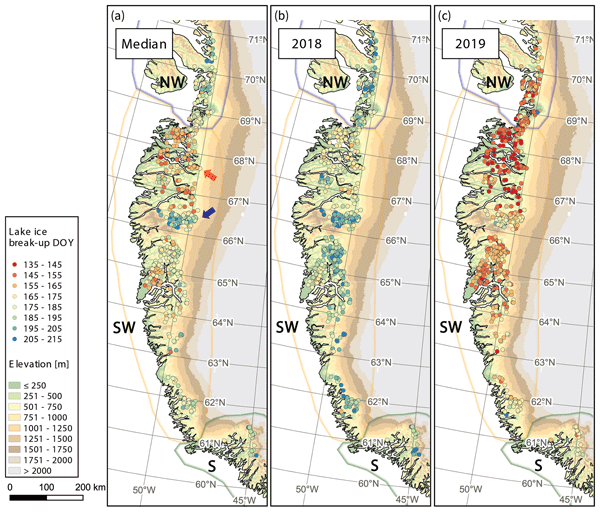
Radar beams from satellites exhibit reflection differences between water and ice. This condition, as well as the comprehensive coverage and high temporal resolution of the Sentinel-1 satellites, allows automatically detecting the timing of when ice cover of lakes in Greenland disappear. We found that lake ice breaks up 3 d later per 100 m elevation gain and that the average break-up timing varies by ±8 d in 2017–2021, which has major implications for the energy budget of the lakes.
Florian Lippl, Alexander Maringer, Margit Kurka, Jakob Abermann, Wolfgang Schöner, and Manuela Hirschmugl
Earth Syst. Sci. Data Discuss., https://doi.org/10.5194/essd-2024-12, https://doi.org/10.5194/essd-2024-12, 2024
Preprint withdrawn
Short summary
Short summary
The aim of our work was to give an overview of data currently available for the National Park Gesäuse and Johnsbachtal relevant to the European long-term ecosystem monitoring. This data, further was made available on respective data repositories, where all data is downloadable free of charge. Data presented in our paper is from all compartments, the atmosphere, social & economic sphere, biosphere and geosphere. We consider our approach as an opportunity to function as a showcase for other sites.
Maral Habibi, Iman Babaeian, and Wolfgang Schöner
Hydrol. Earth Syst. Sci. Discuss., https://doi.org/10.5194/hess-2024-48, https://doi.org/10.5194/hess-2024-48, 2024
Publication in HESS not foreseen
Short summary
Short summary
Our study investigates how snow melting affects droughts in Iran's Urmia Lake Basin, revealing that future droughts will likely become more severe due to reduced snowmelt and increased evaporation. This is crucial for understanding water availability in the region, affecting millions. We used advanced climate models and drought indices to predict changes, aiming to inform water management strategies.
Baptiste Vandecrux, Robert S. Fausto, Jason E. Box, Federico Covi, Regine Hock, Åsa K. Rennermalm, Achim Heilig, Jakob Abermann, Dirk van As, Elisa Bjerre, Xavier Fettweis, Paul C. J. P. Smeets, Peter Kuipers Munneke, Michiel R. van den Broeke, Max Brils, Peter L. Langen, Ruth Mottram, and Andreas P. Ahlstrøm
The Cryosphere, 18, 609–631, https://doi.org/10.5194/tc-18-609-2024, https://doi.org/10.5194/tc-18-609-2024, 2024
Short summary
Short summary
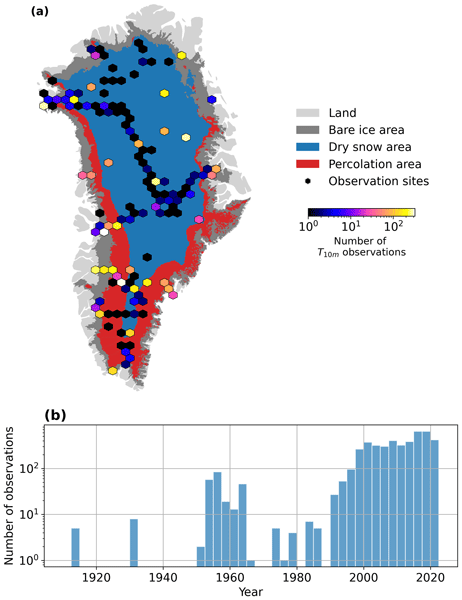
How fast is the Greenland ice sheet warming? In this study, we compiled 4500+ temperature measurements at 10 m below the ice sheet surface (T10m) from 1912 to 2022. We trained a machine learning model on these data and reconstructed T10m for the ice sheet during 1950–2022. After a slight cooling during 1950–1985, the ice sheet warmed at a rate of 0.7 °C per decade until 2022. Climate models showed mixed results compared to our observations and underestimated the warming in key regions.
Ulrike Egerer, Holger Siebert, Olaf Hellmuth, and Lise Lotte Sørensen
Atmos. Chem. Phys., 23, 15365–15373, https://doi.org/10.5194/acp-23-15365-2023, https://doi.org/10.5194/acp-23-15365-2023, 2023
Short summary
Short summary
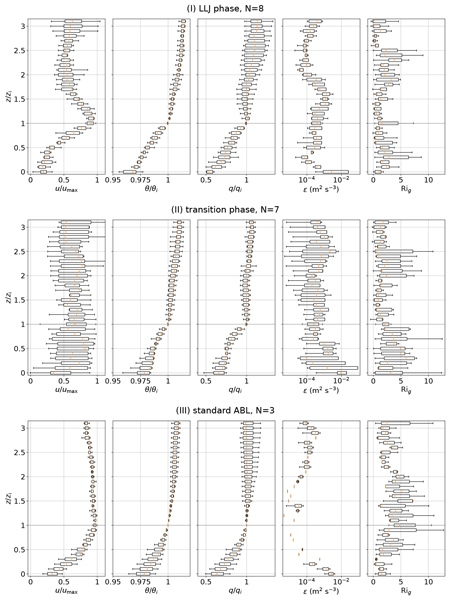
Low-level jets (LLJs) are strong winds near the surface and occur frequently in the Arctic in stable conditions. Using tethered-balloon profile measurements in Greenland, we analyze a multi-hour period with an LLJ that later weakens and finally collapses. Increased shear-induced turbulence at the LLJ bounds mostly does not reach the ground until the LLJ collapses. Our findings support the hypothesis that a passive tracer can be advected with an LLJ and mixed down when the LLJ collapses.
Sonika Shahi, Jakob Abermann, Tiago Silva, Kirsty Langley, Signe Hillerup Larsen, Mikhail Mastepanov, and Wolfgang Schöner
Weather Clim. Dynam., 4, 747–771, https://doi.org/10.5194/wcd-4-747-2023, https://doi.org/10.5194/wcd-4-747-2023, 2023
Short summary
Short summary
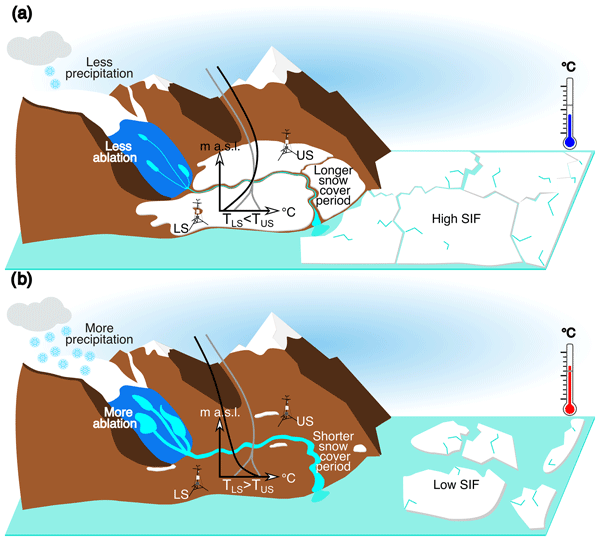
This study highlights how the sea ice variability in the Greenland Sea affects the terrestrial climate and the surface mass changes of peripheral glaciers of the Zackenberg region (ZR), Northeast Greenland, combining model output and observations. Our results show that the temporal evolution of sea ice influences the climate anomaly magnitude in the ZR. We also found that the changing temperature and precipitation patterns due to sea ice variability can affect the surface mass of the ice cap.
Klaus Haslinger, Wolfgang Schöner, Jakob Abermann, Gregor Laaha, Konrad Andre, Marc Olefs, and Roland Koch
Nat. Hazards Earth Syst. Sci., 23, 2749–2768, https://doi.org/10.5194/nhess-23-2749-2023, https://doi.org/10.5194/nhess-23-2749-2023, 2023
Short summary
Short summary
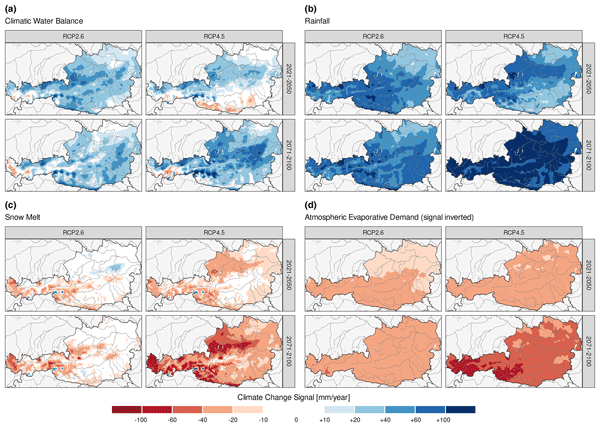
Future changes of surface water availability in Austria are investigated. Alterations of the climatic water balance and its components are analysed along different levels of elevation. Results indicate in general wetter conditions with particular shifts in timing of the snow melt season. On the contrary, an increasing risk for summer droughts is apparent due to increasing year-to-year variability and decreasing snow melt under future climate conditions.
Eleftherios Ioannidis, Kathy S. Law, Jean-Christophe Raut, Louis Marelle, Tatsuo Onishi, Rachel M. Kirpes, Lucia M. Upchurch, Thomas Tuch, Alfred Wiedensohler, Andreas Massling, Henrik Skov, Patricia K. Quinn, and Kerri A. Pratt
Atmos. Chem. Phys., 23, 5641–5678, https://doi.org/10.5194/acp-23-5641-2023, https://doi.org/10.5194/acp-23-5641-2023, 2023
Short summary
Short summary
Remote and local anthropogenic emissions contribute to wintertime Arctic haze, with enhanced aerosol concentrations, but natural sources, which also contribute, are less well studied. Here, modelled wintertime sea-spray aerosols are improved in WRF-Chem over the wider Arctic by including updated wind speed and temperature-dependent treatments. As a result, anthropogenic nitrate aerosols are also improved. Open leads are confirmed to be the main source of sea-spray aerosols over northern Alaska.
Andreas Massling, Robert Lange, Jakob Boyd Pernov, Ulrich Gosewinkel, Lise-Lotte Sørensen, and Henrik Skov
Atmos. Chem. Phys., 23, 4931–4953, https://doi.org/10.5194/acp-23-4931-2023, https://doi.org/10.5194/acp-23-4931-2023, 2023
Short summary
Short summary
The effect of anthropogenic activities on cloud formation introduces the highest uncertainties with respect to climate change. Data on Arctic aerosols and their corresponding cloud-forming properties are very scarce and most important as the Arctic is warming about 2 times as fast as the rest of the globe. Our studies investigate aerosols in the remote Arctic and suggest relatively high cloud-forming potential, although differences are observed between the Arctic spring and summer.
Inès N. Otosaka, Andrew Shepherd, Erik R. Ivins, Nicole-Jeanne Schlegel, Charles Amory, Michiel R. van den Broeke, Martin Horwath, Ian Joughin, Michalea D. King, Gerhard Krinner, Sophie Nowicki, Anthony J. Payne, Eric Rignot, Ted Scambos, Karen M. Simon, Benjamin E. Smith, Louise S. Sørensen, Isabella Velicogna, Pippa L. Whitehouse, Geruo A, Cécile Agosta, Andreas P. Ahlstrøm, Alejandro Blazquez, William Colgan, Marcus E. Engdahl, Xavier Fettweis, Rene Forsberg, Hubert Gallée, Alex Gardner, Lin Gilbert, Noel Gourmelen, Andreas Groh, Brian C. Gunter, Christopher Harig, Veit Helm, Shfaqat Abbas Khan, Christoph Kittel, Hannes Konrad, Peter L. Langen, Benoit S. Lecavalier, Chia-Chun Liang, Bryant D. Loomis, Malcolm McMillan, Daniele Melini, Sebastian H. Mernild, Ruth Mottram, Jeremie Mouginot, Johan Nilsson, Brice Noël, Mark E. Pattle, William R. Peltier, Nadege Pie, Mònica Roca, Ingo Sasgen, Himanshu V. Save, Ki-Weon Seo, Bernd Scheuchl, Ernst J. O. Schrama, Ludwig Schröder, Sebastian B. Simonsen, Thomas Slater, Giorgio Spada, Tyler C. Sutterley, Bramha Dutt Vishwakarma, Jan Melchior van Wessem, David Wiese, Wouter van der Wal, and Bert Wouters
Earth Syst. Sci. Data, 15, 1597–1616, https://doi.org/10.5194/essd-15-1597-2023, https://doi.org/10.5194/essd-15-1597-2023, 2023
Short summary
Short summary
By measuring changes in the volume, gravitational attraction, and ice flow of Greenland and Antarctica from space, we can monitor their mass gain and loss over time. Here, we present a new record of the Earth’s polar ice sheet mass balance produced by aggregating 50 satellite-based estimates of ice sheet mass change. This new assessment shows that the ice sheets have lost (7.5 x 10¹²) t of ice between 1992 and 2020, contributing 21 mm to sea level rise.
Kevin C. H. Sze, Heike Wex, Markus Hartmann, Henrik Skov, Andreas Massling, Diego Villanueva, and Frank Stratmann
Atmos. Chem. Phys., 23, 4741–4761, https://doi.org/10.5194/acp-23-4741-2023, https://doi.org/10.5194/acp-23-4741-2023, 2023
Short summary
Short summary
Ice-nucleating particles (INPs) play an important role in cloud formation and thus in our climate. But little is known about the abundance and properties of INPs, especially in the Arctic, where the temperature increases almost 4 times as fast as that of the rest of the globe. We observe higher INP concentrations and more biological INPs in summer than in winter, likely from local sources. We also provide three equations for estimating INP concentrations in models at different times of the year.
Erik Ahlberg, Stina Ausmeel, Lovisa Nilsson, Mårten Spanne, Julija Pauraite, Jacob Klenø Nøjgaard, Michele Bertò, Henrik Skov, Pontus Roldin, Adam Kristensson, Erik Swietlicki, and Axel Eriksson
Atmos. Chem. Phys., 23, 3051–3064, https://doi.org/10.5194/acp-23-3051-2023, https://doi.org/10.5194/acp-23-3051-2023, 2023
Short summary
Short summary
To investigate the properties and origin of black carbon particles in southern Sweden during late summer, we performed measurements both at a rural site and the nearby city of Malmö. We found that local traffic emissions of black carbon led to concentrations around twice as high as those at the rural site. Modeling show that these emissions are not clearly distinguishable at the rural site, unless meteorology was favourable, which shows the importance of long-range transport and processing.
James Brean, David C. S. Beddows, Roy M. Harrison, Congbo Song, Peter Tunved, Johan Ström, Radovan Krejci, Eyal Freud, Andreas Massling, Henrik Skov, Eija Asmi, Angelo Lupi, and Manuel Dall'Osto
Atmos. Chem. Phys., 23, 2183–2198, https://doi.org/10.5194/acp-23-2183-2023, https://doi.org/10.5194/acp-23-2183-2023, 2023
Short summary
Short summary
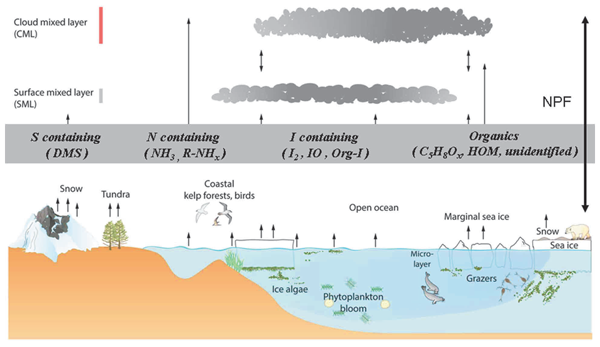
Our results emphasize how understanding the geographical variation in surface types across the Arctic is key to understanding secondary aerosol sources. We provide a harmonised analysis of new particle formation across the Arctic.
Moritz Buchmann, Gernot Resch, Michael Begert, Stefan Brönnimann, Barbara Chimani, Wolfgang Schöner, and Christoph Marty
The Cryosphere, 17, 653–671, https://doi.org/10.5194/tc-17-653-2023, https://doi.org/10.5194/tc-17-653-2023, 2023
Short summary
Short summary
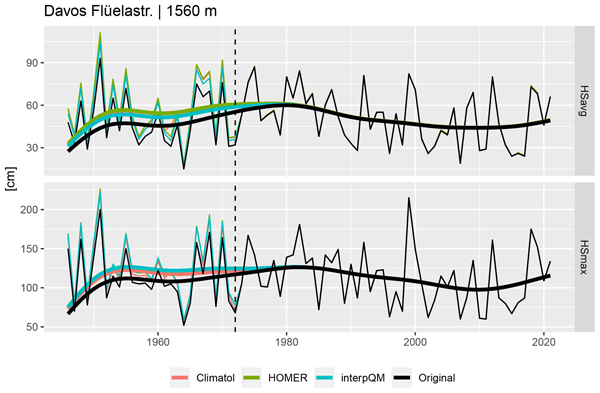
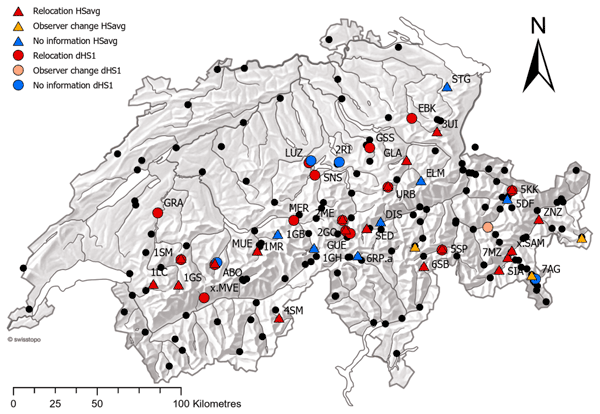
Our current knowledge of spatial and temporal snow depth trends is based almost exclusively on time series of non-homogenised observational data. However, like other long-term series from observations, they are susceptible to inhomogeneities that can affect the trends and even change the sign. To assess the relevance of homogenisation for daily snow depths, we investigated its impact on trends and changes in extreme values of snow indices between 1961 and 2021 in the Swiss observation network.
Cynthia H. Whaley, Kathy S. Law, Jens Liengaard Hjorth, Henrik Skov, Stephen R. Arnold, Joakim Langner, Jakob Boyd Pernov, Garance Bergeron, Ilann Bourgeois, Jesper H. Christensen, Rong-You Chien, Makoto Deushi, Xinyi Dong, Peter Effertz, Gregory Faluvegi, Mark Flanner, Joshua S. Fu, Michael Gauss, Greg Huey, Ulas Im, Rigel Kivi, Louis Marelle, Tatsuo Onishi, Naga Oshima, Irina Petropavlovskikh, Jeff Peischl, David A. Plummer, Luca Pozzoli, Jean-Christophe Raut, Tom Ryerson, Ragnhild Skeie, Sverre Solberg, Manu A. Thomas, Chelsea Thompson, Kostas Tsigaridis, Svetlana Tsyro, Steven T. Turnock, Knut von Salzen, and David W. Tarasick
Atmos. Chem. Phys., 23, 637–661, https://doi.org/10.5194/acp-23-637-2023, https://doi.org/10.5194/acp-23-637-2023, 2023
Short summary
Short summary
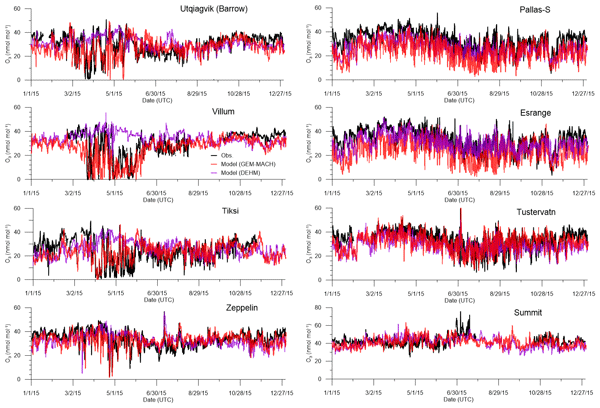
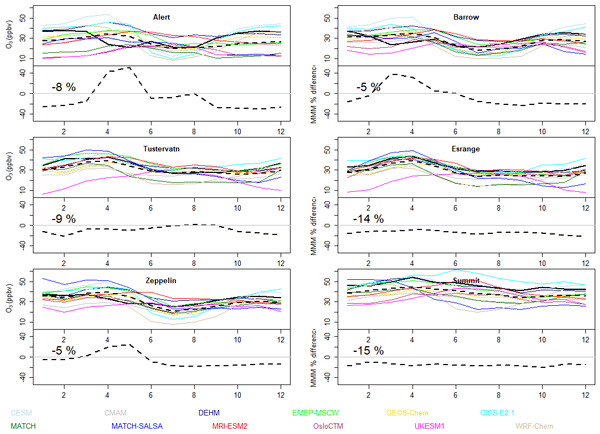
This study summarizes recent research on ozone in the Arctic, a sensitive and rapidly warming region. We find that the seasonal cycles of near-surface atmospheric ozone are variable depending on whether they are near the coast, inland, or at high altitude. Several global model simulations were evaluated, and we found that because models lack some of the ozone chemistry that is important for the coastal Arctic locations, they do not accurately simulate ozone there.
Ville Leinonen, Harri Kokkola, Taina Yli-Juuti, Tero Mielonen, Thomas Kühn, Tuomo Nieminen, Simo Heikkinen, Tuuli Miinalainen, Tommi Bergman, Ken Carslaw, Stefano Decesari, Markus Fiebig, Tareq Hussein, Niku Kivekäs, Radovan Krejci, Markku Kulmala, Ari Leskinen, Andreas Massling, Nikos Mihalopoulos, Jane P. Mulcahy, Steffen M. Noe, Twan van Noije, Fiona M. O'Connor, Colin O'Dowd, Dirk Olivie, Jakob B. Pernov, Tuukka Petäjä, Øyvind Seland, Michael Schulz, Catherine E. Scott, Henrik Skov, Erik Swietlicki, Thomas Tuch, Alfred Wiedensohler, Annele Virtanen, and Santtu Mikkonen
Atmos. Chem. Phys., 22, 12873–12905, https://doi.org/10.5194/acp-22-12873-2022, https://doi.org/10.5194/acp-22-12873-2022, 2022
Short summary
Short summary
We provide the first extensive comparison of detailed aerosol size distribution trends between in situ observations from Europe and five different earth system models. We investigated aerosol modes (nucleation, Aitken, and accumulation) separately and were able to show the differences between measured and modeled trends and especially their seasonal patterns. The differences in model results are likely due to complex effects of several processes instead of certain specific model features.
Tiago Silva, Jakob Abermann, Brice Noël, Sonika Shahi, Willem Jan van de Berg, and Wolfgang Schöner
The Cryosphere, 16, 3375–3391, https://doi.org/10.5194/tc-16-3375-2022, https://doi.org/10.5194/tc-16-3375-2022, 2022
Short summary
Short summary
To overcome internal climate variability, this study uses k-means clustering to combine NAO, GBI and IWV over the Greenland Ice Sheet (GrIS) and names the approach as the North Atlantic influence on Greenland (NAG). With the support of a polar-adapted RCM, spatio-temporal changes on SEB components within NAG phases are investigated. We report atmospheric warming and moistening across all NAG phases as well as large-scale and regional-scale contributions to GrIS mass loss and their interactions.
Jonathan P. Conway, Jakob Abermann, Liss M. Andreassen, Mohd Farooq Azam, Nicolas J. Cullen, Noel Fitzpatrick, Rianne H. Giesen, Kirsty Langley, Shelley MacDonell, Thomas Mölg, Valentina Radić, Carleen H. Reijmer, and Jean-Emmanuel Sicart
The Cryosphere, 16, 3331–3356, https://doi.org/10.5194/tc-16-3331-2022, https://doi.org/10.5194/tc-16-3331-2022, 2022
Short summary
Short summary
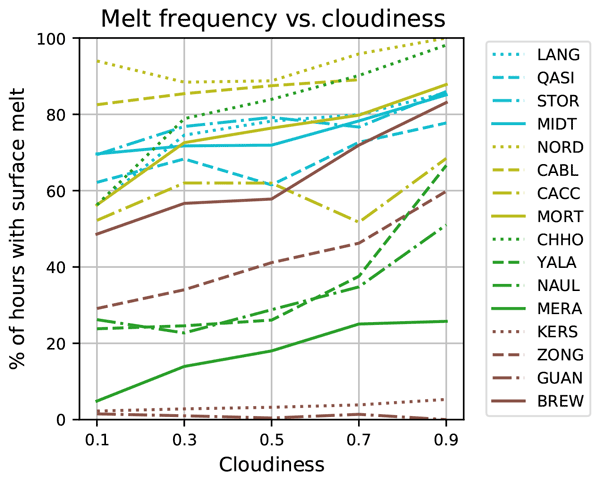
We used data from automatic weather stations on 16 glaciers to show how clouds influence glacier melt in different climates around the world. We found surface melt was always more frequent when it was cloudy but was not universally faster or slower than under clear-sky conditions. Also, air temperature was related to clouds in opposite ways in different climates – warmer with clouds in cold climates and vice versa. These results will help us improve how we model past and future glacier melt.
Thomas Goelles, Tobias Hammer, Stefan Muckenhuber, Birgit Schlager, Jakob Abermann, Christian Bauer, Víctor J. Expósito Jiménez, Wolfgang Schöner, Markus Schratter, Benjamin Schrei, and Kim Senger
Geosci. Instrum. Method. Data Syst., 11, 247–261, https://doi.org/10.5194/gi-11-247-2022, https://doi.org/10.5194/gi-11-247-2022, 2022
Short summary
Short summary
We propose a newly developed modular MObile LIdar SENsor System (MOLISENS) to enable new applications for small industrial light detection and ranging (lidar) sensors. MOLISENS supports both monitoring of dynamic processes and mobile mapping applications. The mobile mapping application of MOLISENS has been tested under various conditions, and results are shown from two surveys in the Lurgrotte cave system in Austria and a glacier cave in Longyearbreen on Svalbard.
Moritz Buchmann, John Coll, Johannes Aschauer, Michael Begert, Stefan Brönnimann, Barbara Chimani, Gernot Resch, Wolfgang Schöner, and Christoph Marty
The Cryosphere, 16, 2147–2161, https://doi.org/10.5194/tc-16-2147-2022, https://doi.org/10.5194/tc-16-2147-2022, 2022
Short summary
Short summary
Knowledge about inhomogeneities in a data set is important for any subsequent climatological analysis. We ran three well-established homogenization methods and compared the identified break points. By only treating breaks as valid when detected by at least two out of three methods, we enhanced the robustness of our results. We found 45 breaks within 42 of 184 investigated series; of these 70 % could be explained by events recorded in the station history.
Cynthia H. Whaley, Rashed Mahmood, Knut von Salzen, Barbara Winter, Sabine Eckhardt, Stephen Arnold, Stephen Beagley, Silvia Becagli, Rong-You Chien, Jesper Christensen, Sujay Manish Damani, Xinyi Dong, Konstantinos Eleftheriadis, Nikolaos Evangeliou, Gregory Faluvegi, Mark Flanner, Joshua S. Fu, Michael Gauss, Fabio Giardi, Wanmin Gong, Jens Liengaard Hjorth, Lin Huang, Ulas Im, Yugo Kanaya, Srinath Krishnan, Zbigniew Klimont, Thomas Kühn, Joakim Langner, Kathy S. Law, Louis Marelle, Andreas Massling, Dirk Olivié, Tatsuo Onishi, Naga Oshima, Yiran Peng, David A. Plummer, Olga Popovicheva, Luca Pozzoli, Jean-Christophe Raut, Maria Sand, Laura N. Saunders, Julia Schmale, Sangeeta Sharma, Ragnhild Bieltvedt Skeie, Henrik Skov, Fumikazu Taketani, Manu A. Thomas, Rita Traversi, Kostas Tsigaridis, Svetlana Tsyro, Steven Turnock, Vito Vitale, Kaley A. Walker, Minqi Wang, Duncan Watson-Parris, and Tahya Weiss-Gibbons
Atmos. Chem. Phys., 22, 5775–5828, https://doi.org/10.5194/acp-22-5775-2022, https://doi.org/10.5194/acp-22-5775-2022, 2022
Short summary
Short summary
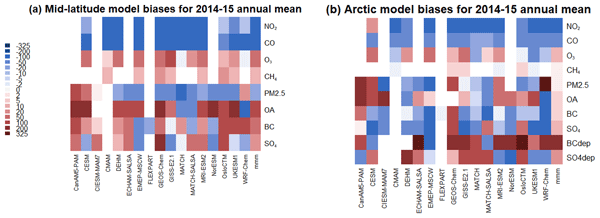
Air pollutants, like ozone and soot, play a role in both global warming and air quality. Atmospheric models are often used to provide information to policy makers about current and future conditions under different emissions scenarios. In order to have confidence in those simulations, in this study we compare simulated air pollution from 18 state-of-the-art atmospheric models to measured air pollution in order to assess how well the models perform.
Danilo Custódio, Katrine Aspmo Pfaffhuber, T. Gerard Spain, Fidel F. Pankratov, Iana Strigunova, Koketso Molepo, Henrik Skov, Johannes Bieser, and Ralf Ebinghaus
Atmos. Chem. Phys., 22, 3827–3840, https://doi.org/10.5194/acp-22-3827-2022, https://doi.org/10.5194/acp-22-3827-2022, 2022
Short summary
Short summary
As a poison in the air that we breathe and the food that we eat, mercury is a human health concern for society as a whole. In that regard, this work deals with monitoring and modelling mercury in the environment, improving wherewithal, identifying the strength of the different components at play, and interpreting information to support the efforts that seek to safeguard public health.
Julia Schmale, Sangeeta Sharma, Stefano Decesari, Jakob Pernov, Andreas Massling, Hans-Christen Hansson, Knut von Salzen, Henrik Skov, Elisabeth Andrews, Patricia K. Quinn, Lucia M. Upchurch, Konstantinos Eleftheriadis, Rita Traversi, Stefania Gilardoni, Mauro Mazzola, James Laing, and Philip Hopke
Atmos. Chem. Phys., 22, 3067–3096, https://doi.org/10.5194/acp-22-3067-2022, https://doi.org/10.5194/acp-22-3067-2022, 2022
Short summary
Short summary
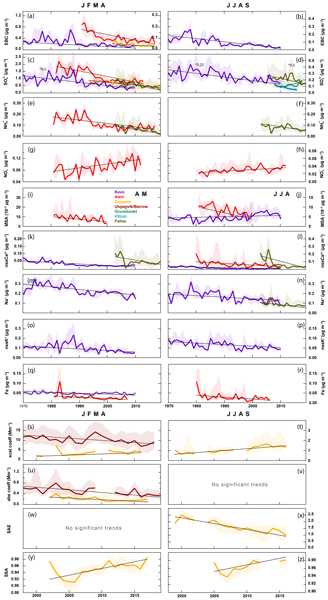
Long-term data sets of Arctic aerosol properties from 10 stations across the Arctic provide evidence that anthropogenic influence on the Arctic atmospheric chemical composition has declined in winter, a season which is typically dominated by mid-latitude emissions. The number of significant trends in summer is smaller than in winter, and overall the pattern is ambiguous with some significant positive and negative trends. This reflects the mixed influence of natural and anthropogenic emissions.
Jakob Boyd Pernov, Bjarne Jensen, Andreas Massling, Daniel Charles Thomas, and Henrik Skov
Atmos. Chem. Phys., 21, 13287–13309, https://doi.org/10.5194/acp-21-13287-2021, https://doi.org/10.5194/acp-21-13287-2021, 2021
Short summary
Short summary
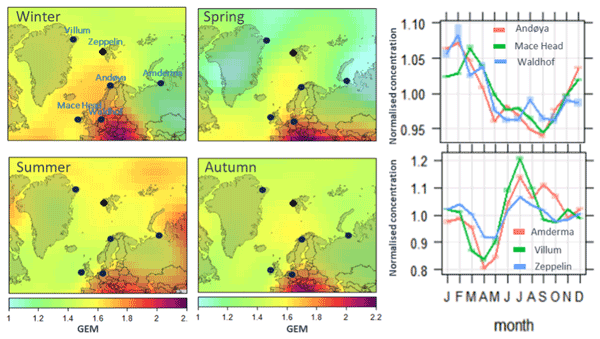
Atmospheric mercury species (GEM, GOM, PHg) are important constituents in the High Arctic due to their detrimental effects on human and ecosystem health. However, understanding their behavior in the High Arctic summer remains lacking. This research investigates the dynamics of mercury oxidation in the High Arctic summer. The cold, dry, sunlit free troposphere was associated with events of high GOM in the High Arctic summer, while individual events yielded unique origins.
Ulas Im, Kostas Tsigaridis, Gregory Faluvegi, Peter L. Langen, Joshua P. French, Rashed Mahmood, Manu A. Thomas, Knut von Salzen, Daniel C. Thomas, Cynthia H. Whaley, Zbigniew Klimont, Henrik Skov, and Jørgen Brandt
Atmos. Chem. Phys., 21, 10413–10438, https://doi.org/10.5194/acp-21-10413-2021, https://doi.org/10.5194/acp-21-10413-2021, 2021
Short summary
Short summary
Future (2015–2050) simulations of the aerosol burdens and their radiative forcing and climate impacts over the Arctic under various emission projections show that although the Arctic aerosol burdens are projected to decrease significantly by 10 to 60 %, regardless of the magnitude of aerosol reductions, surface air temperatures will continue to increase by 1.9–2.6 ℃, while sea-ice extent will continue to decrease, implying reductions of greenhouse gases are necessary to mitigate climate change.
Michael Matiu, Alice Crespi, Giacomo Bertoldi, Carlo Maria Carmagnola, Christoph Marty, Samuel Morin, Wolfgang Schöner, Daniele Cat Berro, Gabriele Chiogna, Ludovica De Gregorio, Sven Kotlarski, Bruno Majone, Gernot Resch, Silvia Terzago, Mauro Valt, Walter Beozzo, Paola Cianfarra, Isabelle Gouttevin, Giorgia Marcolini, Claudia Notarnicola, Marcello Petitta, Simon C. Scherrer, Ulrich Strasser, Michael Winkler, Marc Zebisch, Andrea Cicogna, Roberto Cremonini, Andrea Debernardi, Mattia Faletto, Mauro Gaddo, Lorenzo Giovannini, Luca Mercalli, Jean-Michel Soubeyroux, Andrea Sušnik, Alberto Trenti, Stefano Urbani, and Viktor Weilguni
The Cryosphere, 15, 1343–1382, https://doi.org/10.5194/tc-15-1343-2021, https://doi.org/10.5194/tc-15-1343-2021, 2021
Short summary
Short summary
The first Alpine-wide assessment of station snow depth has been enabled by a collaborative effort of the research community which involves more than 30 partners, 6 countries, and more than 2000 stations. It shows how snow in the European Alps matches the climatic zones and gives a robust estimate of observed changes: stronger decreases in the snow season at low elevations and in spring at all elevations, however, with considerable regional differences.
Jakob B. Pernov, Rossana Bossi, Thibaut Lebourgeois, Jacob K. Nøjgaard, Rupert Holzinger, Jens L. Hjorth, and Henrik Skov
Atmos. Chem. Phys., 21, 2895–2916, https://doi.org/10.5194/acp-21-2895-2021, https://doi.org/10.5194/acp-21-2895-2021, 2021
Short summary
Short summary
Volatile organic compounds (VOCs) are an important constituent in the Arctic atmosphere due to their effect on aerosol and ozone formation. However, an understanding of their sources is lacking. This research presents a multiseason high-time-resolution dataset of VOCs in the Arctic and details their temporal characteristics and source apportionment. Four sources were identified: biomass burning, marine cryosphere, background, and Arctic haze.
Cited articles
Barbieri, L., Kral, S. T., Bailey, S. C. C., Frazier, A. E., Jacob, J. D., Reuder, J., Brus, D., Chilson, P. B., Crick, C., Detweiler, C., Doddi, A., Elston, J., Foroutan, H., González-Rocha, J., Greene, B. R., Guzman, M. I., Islam, A. L. H. A., Kemppinen, O., Lawrence, D., Pillar-Little, E. A., Ross, S. D., Sama, M., Schmale, D. G., Schuyler, T. J., Shankar, A., Smith, S. W., Waugh, S., Dixon, C., Borenstein, S., and de Boer, G.: Intercomparison of Small Unmanned Aircraft System (sUAS) Measurements for Atmospheric Science during the LAPSE-RATE Campaign, Sensors, 19, 2179, https://doi.org/10.3390/s19092179, 2019.
Bendtsen, J., Mortensen, J., Lennert, K., Ehn, K. J., Boone, W., Galindo, V., Hu, Y., Dmitrenko, I. A., Kirillov, S. A., Kjeldsen, K. K., Kristoffersen, Y., G Barber, D., and Rysgaard, S.: Sea ice breakup and marine melt of a retreating tidewater outlet glacier in northeast Greenland (81° N), Sci. Rep., 7, 4941, https://doi.org/10.1038/s41598-017-05089-3, 2017.
Bennett, M. G., Renfrew, I. A., Stevens, D. P., and Moore, G. W. K.: The Northeast Water Polynya, Greenland: Climatology, Atmospheric Forcing and Ocean Response, J. Geophys. Res.-Oceans, 129, https://doi.org/10.1029/2023JC020513, 2024.
Bolch, T., Sandberg Sørensen, L., Simonsen, S. B., Mölg, N., Machguth, H., Rastner, P., and Paul, F.: Mass loss of Greenland's glaciers and ice caps 2003–2008 revealed from ICESat laser altimetry data, Geophys. Res. Lett., 40, 875–881, https://doi.org/10.1002/grl.50270, 2013.
Bollen, K. E., Enderlin, E. M., and Muhlheim, R.: Dynamic mass loss from Greenland's marine-terminating peripheral glaciers (1985–2018), J. Glaciol., 69, 153–163, https://doi.org/10.1017/jog.2022.52, 2023.
Box, J. E., Colgan, W. T., Christensen, T. R., Schmidt, N. M., Lund, M., Parmentier, F.-J. W., Brown, R., Bhatt, U. S., Euskirchen, E. S., Romanovsky, V. E., Walsh, J. E., Overland, J. E., Wang, M., Corell, R. W., Meier, W. N., Wouters, B., Mernild, S., Mård, J., Pawlak, J., and Olsen, M. S.: Key indicators of Arctic climate change: 1971–2017, Environ. Res. Lett., 14, 45010, https://doi.org/10.1088/1748-9326/aafc1b, 2019.
Box, J. E., Nielsen, K. P., Yang, X., Niwano, M., Wehrlé, A., van As, D., Fettweis, X., Køltzow, M. A. Ø., Palmason, B., Fausto, R. S., van den Broeke, M. R., Huai, B., Ahlstrøm, A. P., Langley, K., Dachauer, A., and Noël, B.: Greenland ice sheet rainfall climatology, extremes and atmospheric river rapids, Meteorol. Appl., 30, https://doi.org/10.1002/met.2134, 2023.
Briner, J. P., Cuzzone, J. K., Badgeley, J. A., Young, N. E., Steig, E. J., Morlighem, M., Schlegel, N.-J., Hakim, G. J., Schaefer, J. M., Johnson, J. V., Lesnek, A. J., Thomas, E. K., Allan, E., Bennike, O., Cluett, A. A., Csatho, B., Vernal, A. de, Downs, J., Larour, E., and Nowicki, S.: Rate of mass loss from the Greenland Ice Sheet will exceed Holocene values this century, Nature, 586, 70–74, https://doi.org/10.1038/s41586-020-2742-6, 2020.
Carrivick, J. L., Boston, C. M., Sutherland, J. L., Pearce, D., Armstrong, H., Bjørk, A., Kjeldsen, K. K., Abermann, J., Oien, R. P., Grimes, M., James, W. H. M., and Smith, M. W.: Mass Loss of Glaciers and Ice Caps Across Greenland Since the Little Ice Age, Geophys. Res. Lett., 50, https://doi.org/10.1029/2023GL103950, 2023.
Chutko, K. J. and Lamoureux, S. F.: The influence of low-level thermal inversions on estimated melt-season characteristics in the central Canadian Arctic, Int. J. Climatol., 29, 259–268, https://doi.org/10.1002/joc.1722, 2009.
Copernicus Climate Change Service, ECMWF: Copernicus Arctic Regional Reanalysis (CARRA): Full system documentation, https://confluence.ecmwf.int/display/CKB/Copernicus+Arctic+ Regional+Reanalysis+(CARRA):+Full+system+documentation #CopernicusArcticRegionalReanalysis(CARRA):Fullsystemdoc-umentation-Enhancedsurfacetemperatureandmoistureobservation-datafromnon-GTSsources, last access: 4 September 2025.
Davies, B., McNabb, R., Bendle, J., Carrivick, J., Ely, J., Holt, T., Markle, B., McNeil, C., Nicholson, L., and Pelto, M.: Accelerating glacier volume loss on Juneau Icefield driven by hypsometry and melt-accelerating feedbacks, Nat. Commun., 15, 5099, https://doi.org/10.1038/s41467-024-49269-y, 2024.
Day, J. J., Bamber, J. L., and Valdes, P. J.: The Greenland Ice Sheet's surface mass balance in a seasonally sea ice-free Arctic, J. Geophys. Res.-Earth Surf., 118, 1533–1544, https://doi.org/10.1002/jgrf.20112, 2013.
Derksen, C. and Mudryk, L.: Assessment of Arctic seasonal snow cover rates of change, The Cryosphere, 17, 1431–1443, https://doi.org/10.5194/tc-17-1431-2023, 2023.
Egerer, U., Siebert, H., Hellmuth, O., and Sørensen, L. L.: The role of a low-level jet for stirring the stable atmospheric surface layer in the Arctic, Atmos. Chem. Phys., 23, 15365–15373, https://doi.org/10.5194/acp-23-15365-2023, 2023.
Fettweis, X.: Reconstruction of the 1979–2006 Greenland ice sheet surface mass balance using the regional climate model MAR, The Cryosphere, 1, 21–40, https://doi.org/10.5194/tc-1-21-2007, 2007.
Fettweis, X., Box, J. E., Agosta, C., Amory, C., Kittel, C., Lang, C., van As, D., Machguth, H., and Gallée, H.: Reconstructions of the 1900–2015 Greenland ice sheet surface mass balance using the regional climate MAR model, The Cryosphere, 11, 1015–1033, https://doi.org/10.5194/tc-11-1015-2017, 2017.
Fipper, J., Abermann, J., Sasgen, I., Sørensen, L. L., Skov, H., and Schöner, W.: Vertical air temperature profiles at Villum Research Station, 2023 (Version 01), Zenodo [data set], https://doi.org/10.5281/zenodo.15690233, 2025.
Gallée, H. and Duynkerke, P. G.: Air-snow interactions and the surface energy and mass balance over the melting zone of west Greenland during the Greenland Ice Margin Experiment, J. Geophys. Res., 102, 13813–13824, https://doi.org/10.1029/96JD03358, 1997.
Gallée, H. and Schayes, G.: Development of a Three-Dimensional Meso-γ Primitive Equation Model: Katabatic Winds Simulation in the Area of Terra Nova Bay, Antarctica, Mon. Weather Rev., 122, 671–685, https://doi.org/10.1175/1520-0493(1994)122<0671:DOATDM>2.0.CO;2, 1994.
Gardner, A. S., Moholdt, G., Cogley, J. G., Wouters, B., Arendt, A. A., Wahr, J., Berthier, E., Hock, R., Pfeffer, W. T., Kaser, G., Ligtenberg, S. R. M., Bolch, T., Sharp, M. J., Hagen, J. O., van den Broeke, M. R., and Paul, F.: A reconciled estimate of glacier contributions to sea level rise: 2003 to 2009, Science, 340, 852–857, https://doi.org/10.1126/science.1234532, 2013.
Gilson, G. F., Jiskoot, H., Cassano, J. J., and Nielsen, T. R.: Radiosonde-Derived Temperature Inversions and Their Association With Fog Over 37 Melt Seasons in East Greenland, J. Geophys. Res., 123, 9571–9588, https://doi.org/10.1029/2018JD028886, 2018.
Google, NASA, and Landsat/Copernicus: Landsat satellite imagery provided by Google, https://www.google.com/earth/, last access: 20 January 2026.
Greene, B. R., Segales, A. R., Waugh, S., Duthoit, S., and Chilson, P. B.: Considerations for temperature sensor placement on rotary-wing unmanned aircraft systems, Atmos. Meas. Tech., 11, 5519–5530, https://doi.org/10.5194/amt-11-5519-2018, 2018.
Gryning, S.-E., Batchvarova, E., Floors, R., Münkel, C., Skov, H., and Sørensen, L. L.: Observed and modelled cloud cover up to 6 km height at Station Nord in the high Arctic, Int. J. Climatol., 41, 1584–1598, https://doi.org/10.1002/joc.6894, 2021.
Gryning, S.-E., Batchvarova, E., Floors, R., Münkel, C., Sørensen, L. L., and Skov, H.: Observed aerosol-layer depth at Station Nord in the high Arctic, Int. J. Climatol., 43, 3247–3263, https://doi.org/10.1002/joc.8027, 2023.
Hanna, E., Cappelen, J., Fettweis, X., Mernild, S. H., Mote, T. L., Mottram, R., Steffen, K., Ballinger, T. J., and Hall, R. J.: Greenland surface air temperature changes from 1981 to 2019 and implications for ice-sheet melt and mass-balance change, Int. J. Climatol., 41, https://doi.org/10.1002/joc.6771, 2021.
Hansche, I., Shahi, S., Abermann, J., and Schöner, W.: The vertical atmospheric structure of the partially glacierised Mittivakkat valley, southeast Greenland, J. Glaciol., 69, 1097–1108, https://doi.org/10.1017/jog.2022.120, 2023.
Hersbach, H., Bell, B., Berrisford, P., Hirahara, S., Horányi, A., Muñoz-Sabater, J., Nicolas, J., Peubey, C., Radu, R., Schepers, D., Simmons, A., Soci, C., Abdalla, S., Abellan, X., Balsamo, G., Bechtold, P., Biavati, G., Bidlot, J., Bonavita, M., Chiara, G. de, Dahlgren, P., Dee, D., Diamantakis, M., Dragani, R., Flemming, J., Forbes, R., Fuentes, M., Geer, A., Haimberger, L., Healy, S., Hogan, R. J., Hólm, E., Janisková, M., Keeley, S., Laloyaux, P., Lopez, P., Lupu, C., Radnoti, G., Rosnay, P. de, Rozum, I., Vamborg, F., Villaume, S., and Thépaut, J.-N.: The ERA5 global reanalysis, Q. J. Roy. Meteor. Soc., 146, 1999–2049, https://doi.org/10.1002/qj.3803, 2020.
Ignatiuk, D., Błaszczyk, M., Budzik, T., Grabiec, M., Jania, J. A., Kondracka, M., Laska, M., Małarzewski, Ł., and Stachnik, Ł.: A decade of glaciological and meteorological observations in the Arctic (Werenskioldbreen, Svalbard), Earth Syst. Sci. Data, 14, 2487–2500, https://doi.org/10.5194/essd-14-2487-2022, 2022.
InterMet: iMet-XQ2 User guide and manual with application notes, https://www.intermetsystems.com/products/imet-xq2-uav-sensor/ (last access: 28 March 2025), 2025.
IPCC: Climate Change 2021: The Physical Science Basis. Contribution of Working Group I to the Sixth Assessment Report of the Intergovernmental Panel on Climate Change, edited by: Masson-Delmotte, V., Zhai, P., Pirani, A., Connors, S. L., Péan, C., Berger, S., Caud, N., Chen, Y., Goldfarb, L., Gomis, M. I., Huang, M., Leitzell, K., Lonnoy, E., Matthews, J. B. R., Maycock, T. K., Waterfield, T., Yelekçi, O., Yu, R., and Zhou, B., Cambridge University Press, Cambridge, United Kingdom and New York, NY, USA, in press, https://doi.org/10.1017/9781009157896, 2021.
Khan, S. A., Colgan, W., Neumann, T. A., van den Broeke, M. R., Brunt, K. M., Noël, B., Bamber, J. L., Hassan, J., and Bjørk, A. A.: Accelerating Ice Loss From Peripheral Glaciers in North Greenland, Geophys. Res. Lett., 49, e2022GL098915, https://doi.org/10.1029/2022GL098915, 2022.
Kimball, S. K., Montalvo, C. J., and Mulekar, M. S.: Assessing iMET-XQ Performance and Optimal Placement on a Small Off-the-Shelf, Rotary-Wing UAV, as a Function of Atmospheric Conditions, Atmosphere, 11, 660, https://doi.org/10.3390/atmos11060660, 2020a.
Kimball, S. K., Montalvo, C. J., and Mulekar, M. S.: Evaluating Temperature Measurements of the iMET-XQ, in the Field, under Varying Atmospheric Conditions, Atmosphere, 11, 335, https://doi.org/10.3390/atmos11040335, 2020b.
Kral, S. T., Reuder, J., Vihma, T., Suomi, I., O'Connor, E., Kouznetsov, R., Wrenger, B., Rautenberg, A., Urbancic, G., Jonassen, M. O., Båserud, L., Maronga, B., Mayer, S., Lorenz, T., Holtslag, A. A. M., Steeneveld, G.-J., Seidl, A., Müller, M., Lindenberg, C., Langohr, C., Voss, H., Bange, J., Hundhausen, M., Hilsheimer, P., and Schygulla, M.: Innovative Strategies for Observations in the Arctic Atmospheric Boundary Layer (ISOBAR)—The Hailuoto 2017 Campaign, Atmosphere, 9, 268, https://doi.org/10.3390/atmos9070268, 2018.
Mankoff, K. D., Fettweis, X., Langen, P. L., Stendel, M., Kjeldsen, K. K., Karlsson, N. B., Noël, B., van den Broeke, M. R., Solgaard, A., Colgan, W., Box, J. E., Simonsen, S. B., King, M. D., Ahlstrøm, A. P., Andersen, S. B., and Fausto, R. S.: Greenland ice sheet mass balance from 1840 through next week, Earth Syst. Sci. Data, 13, 5001–5025, https://doi.org/10.5194/essd-13-5001-2021, 2021.
Mattingly, K. S., Turton, J. V., Wille, J. D., Noël, B., Fettweis, X., Rennermalm, Å. K., and Mote, T. L.: Increasing extreme melt in northeast Greenland linked to foehn winds and atmospheric rivers, Nat. Commun., 14, 1743, https://doi.org/10.1038/s41467-023-37434-8, 2023.
McGrath, D., Sass, L., O'Neel, S., Arendt, A., and Kienholz, C.: Hypsometric control on glacier mass balance sensitivity in Alaska and northwest Canada, Earth's Future, 5, 324–336, https://doi.org/10.1002/2016EF000479, 2017.
Mernild, S. H. and Liston, G. E.: The Influence of Air Temperature Inversions on Snowmelt and Glacier Mass Balance Simulations, Ammassalik Island, Southeast Greenland, J. Appl. Meteorol. Climatol., 49, 47–67, https://doi.org/10.1175/2009JAMC2065.1, 2010.
Mohammadzadeh Khani, H., Kinnard, C., and Lévesque, E.: Historical Trends and Projections of Snow Cover over the High Arctic: A Review, Water, 14, 587, https://doi.org/10.3390/w14040587, 2022.
Möller, M., Friedl, P., Palmer, S. J., and Marzeion, B.: Grounding Line Retreat and Ice Discharge Variability at Two Surging, Ice Shelf-Forming Basins of Flade Isblink Ice Cap, Northern Greenland, J. Geophys. Res.-Earth Surf., 127, e2021JF006302, https://doi.org/10.1029/2021JF006302, 2022.
Moon, T., Fisher, M., Stafford, T., and Harden, L.: QGreenland, Zenodo [data set], https://doi.org/10.5281/zenodo.12823307, 2023.
Müller, M., Kelder, T., and Palerme, C.: Decline of sea-ice in the Greenland Sea intensifies extreme precipitation over Svalbard, Weather and Climate Extremes, 36, 100437, https://doi.org/10.1016/j.wace.2022.100437, 2022.
Noël, B., van de Berg, W. J., Lhermitte, S., Wouters, B., Machguth, H., Howat, I., Citterio, M., Moholdt, G., Lenaerts, J. T. M., and van den Broeke, M. R.: A tipping point in refreezing accelerates mass loss of Greenland's glaciers and ice caps, Nat. Commun., 8, 14730, https://doi.org/10.1038/ncomms14730, 2017.
Noël, B., van de Berg, W. J., Lhermitte, S., and van den Broeke, M. R.: Rapid ablation zone expansion amplifies north Greenland mass loss, Sci. Adv., 5, eaaw0123, https://doi.org/10.1126/sciadv.aaw0123, 2019.
Oerlemans, J. and Grisogono, B.: Glacier winds and parameterisation of the related surface heat fluxes, Tellus A, 54, 440, https://doi.org/10.3402/tellusa.v54i5.12164, 2002.
Oerlemans, J., Björnsson, H., Kuhn, M., Obleitner, F., Palsson, F., Smeets, C., Vugts, H. F., and de Wolde, J.: Glacio-Meteorological Investigations On Vatnajökull, Iceland, Summer 1996: An Overview, Bound.-Lay. Meteorol., 92, 3–24, https://doi.org/10.1023/A:1001856114941, 1999.
Onarheim, I. H., Eldevik, T., Smedsrud, L. H., and Stroeve, J. C.: Seasonal and Regional Manifestation of Arctic Sea Ice Loss, J. Climate, 31, 4917–4932, https://doi.org/10.1175/JCLI-D-17-0427.1, 2018.
Palmer, S. J., Shepherd, A., Sundal, A., Rinne, E., and Nienow, P.: InSAR observations of ice elevation and velocity fluctuations at the Flade Isblink ice cap, eastern North Greenland, J. Geophys. Res., 115, https://doi.org/10.1029/2010JF001686, 2010.
Pampuch, L. A., Negri, R. G., Loikith, P. C., and Bortolozo, C. A.: A Review on Clustering Methods for Climatology Analysis and Its Application over South America, IJG, 14, 877–894, https://doi.org/10.4236/ijg.2023.149047, 2023.
Poinar, K., Mankoff, K. D., Fausto, R. S., Fettweis, X., Loomis, B. D., Wehrlé, A., Jensen, C. D., Tedesco, M., Box, J. E., and Mote, T. L.: NOAA Arctic Report Card 2023 Greenland Ice Sheet, https://doi.org/10.25923/yetx-rs76, 2023.
Rantanen, M., Karpechko, A. Y., Lipponen, A., Nordling, K., Hyvärinen, O., Ruosteenoja, K., Vihma, T., and Laaksonen, A.: The Arctic has warmed nearly four times faster than the globe since 1979, Commun. Earth Environ., 3, https://doi.org/10.1038/s43247-022-00498-3, 2022.
RGI Consortium: Randolph Glacier Inventory – A Dataset of Global Glacier Outlines, Version 7, NASA National Snow and Ice Data Center Distributed Active Archive Center [data set], https://doi.org/10.5067/F6JMOVY5NAVZ, 2023.
Rinne, E. J., Shepherd, A., Palmer, S., van den Broeke, M. R., Muir, A., Ettema, J., and Wingham, D.: On the recent elevation changes at the Flade Isblink Ice Cap, northern Greenland, J. Geophys. Res., 116, https://doi.org/10.1029/2011JF001972, 2011.
Rousseeuw, P. J.: Silhouettes: A graphical aid to the interpretation and validation of cluster analysis, J. Comput. Appl. Math., 20, 53–65, https://doi.org/10.1016/0377-0427(87)90125-7, 1987.
Ruman, C. J., Monahan, A. H., and Sushama, L.: Climatology of Arctic temperature inversions in current and future climates, Theor. Appl. Climatol., 150, 121–134, https://doi.org/10.1007/s00704-022-04147-9, 2022.
Sasgen, I., Salles, A., Wegmann, M., Wouters, B., Fettweis, X., Noël, B. P. Y., and Beck, C.: Arctic glaciers record wavier circumpolar winds, Nat. Clim. Chang., 12, 249–255, https://doi.org/10.1038/s41558-021-01275-4, 2022.
Schmidt, L. S., Schuler, T. V., Thomas, E. E., and Westermann, S.: Meltwater runoff and glacier mass balance in the high Arctic: 1991–2022 simulations for Svalbard, The Cryosphere, 17, 2941–2963, https://doi.org/10.5194/tc-17-2941-2023, 2023.
Schuster, L., Maussion, F., Langhamer, L., and Moseley, G. E.: Lagrangian detection of precipitation moisture sources for an arid region in northeast Greenland: relations to the North Atlantic Oscillation, sea ice cover, and temporal trends from 1979 to 2017, Weather Clim. Dynam., 2, 1–17, https://doi.org/10.5194/wcd-2-1-2021, 2021.
Schyberg, H., Yang, X., Køltzow, M. A. Ø., Amstrup, B., Bakketun, Å., Bazile, E., Bojarova, J., Box, J. E., Dahlgren, P., Hagelin, S., Homleid, M., Horányi, A., Høyer, J., Johansson, Å., Killie, M. A., Körnich, H., Le Moigne, P., Lindskog, M., Manninen, T., Nielsen Englyst, P., Nielsen, K. P., Olsson, E., Palmason, B., Peralta Aros, C., Randriamampianina, R., Samuelsson, P., Stappers, R., Støylen, E., Thorsteinsson, S., Valkonen, T., and Wang, Z. Q.: Arctic regional reanalysis on height levels from 1991 to present, Copernicus Climate Change Service (C3S) Climate Data Store (CDS) [data set], https://doi.org/10.24381/cds.8679900d, 2020a.
Schyberg, H., Yang, X., Køltzow, M. A. Ø., Amstrup, B., Bakketun, Å., Bazile, E., Bojarova, J., Box, J. E., Dahlgren, P., Hagelin, S., Homleid, M., Horányi, A., Høyer, J., Johansson, Å., Killie, M. A., Körnich, H., Le Moigne, P., Lindskog, M., Manninen, T., Nielsen Englyst, P., Nielsen, K. P., Olsson, E., Palmason, B., Peralta Aros, C., Randriamampianina, R., Samuelsson, P., Stappers, R., Støylen, E., Thorsteinsson, S., Valkonen, T., and Wang, Z. Q.: Arctic regional reanalysis on single levels from 1991 to present, Copernicus Climate Change Service (C3S) Climate Data Store (CDS) [data set], https://doi.org/10.24381/cds.713858f6, 2020b.
Shahi, S., Abermann, J., Heinrich, G., Prinz, R., and Schöner, W.: Regional Variability and Trends of Temperature Inversions in Greenland, J. Climate, 33, 9391–9407, https://doi.org/10.1175/JCLI-D-19-0962.1, 2020.
Shahi, S., Abermann, J., Silva, T., Langley, K., Larsen, S. H., Mastepanov, M., and Schöner, W.: The importance of regional sea-ice variability for the coastal climate and near-surface temperature gradients in Northeast Greenland, Weather Clim. Dynam., 4, 747–771, https://doi.org/10.5194/wcd-4-747-2023, 2023.
Strand, S. M., Christiansen, H. H., and Gilbert, G. L.: Permafrost Thermal Dynamics and Cryostratigraphy at Villum Research Station, Station Nord, Eastern North Greenland (81° N), J. Geophys. Res.-Earth Surf., 127, https://doi.org/10.1029/2021JF006502, 2022.
Sutterley, T. C., Velicogna, I., Fettweis, X., Rignot, E., Noël, B., and van den Broeke, M.: Evaluation of Reconstructions of Snow/Ice Melt in Greenland by Regional Atmospheric Climate Models Using Laser Altimetry Data, Geophys. Res. Lett., 45, 8324–8333, https://doi.org/10.1029/2018GL078645, 2018.
Thackeray, C. W., Derksen, C., Fletcher, C. G., and Hall, A.: Snow and Climate: Feedbacks, Drivers, and Indices of Change, Curr. Clim. Change Rep., 5, 322–333, https://doi.org/10.1007/s40641-019-00143-w, 2019.
The GlaMBIE Team: Community estimate of global glacier mass changes from 2000 to 2023, Nature, 639, 382–388, https://doi.org/10.1038/s41586-024-08545-z, 2025.
van der Schot, J., Abermann, J., Silva, T., Rasmussen, K., Winkler, M., Langley, K., and Schöner, W.: Seasonal snow cover indicators in coastal Greenland from in situ observations, a climate model, and reanalysis, The Cryosphere, 18, 5803–5823, https://doi.org/10.5194/tc-18-5803-2024, 2024.
Wickramasinghe, A., Muthukumarana, S., Loewen, D., and Schaubroeck, M.: Temperature clusters in commercial buildings using k-means and time series clustering, Energy informatics, 5, 1, https://doi.org/10.1186/s42162-022-00186-8, 2022.
Short summary
We use measurements conducted with uncrewed aerial vehicles (UAVs) and reanalysis data to study the drivers of vertical air temperature structures and their link to the surface mass balance of Flade Isblink, a large ice cap in Northeast Greenland. Surface properties control temperature structures up to 100 m above ground, while large-scale circulation dominates above. Mass loss has increased since 2015, with record loss in 2023 associated with frequent synoptic conditions favouring melt.
We use measurements conducted with uncrewed aerial vehicles (UAVs) and reanalysis data to study...