
Articles | Volume 20, issue 1
https://doi.org/10.5194/tc-20-629-2026
© Author(s) 2026. This work is distributed under
the Creative Commons Attribution 4.0 License.
the Creative Commons Attribution 4.0 License.
https://doi.org/10.5194/tc-20-629-2026
© Author(s) 2026. This work is distributed under
the Creative Commons Attribution 4.0 License.
the Creative Commons Attribution 4.0 License.
Research article
| 
26 Jan 2026
Research article |
| 26 Jan 2026
| 26 Jan 2026
Numerical simulation of a severe blowing snow event over the Prydz Bay Region
Jinfeng Ding
College of Meteorology and Oceanography, National University of Defense Technology, Changsha, China
Key Laboratory of High Impact Weather (special), China Meteorological Administration, Changsha, China
Yuan Shang
College of Meteorology and Oceanography, National University of Defense Technology, Changsha, China
Key Laboratory of High Impact Weather (special), China Meteorological Administration, Changsha, China
Yulong Shan
College of Meteorology and Oceanography, National University of Defense Technology, Changsha, China
Key Laboratory of High Impact Weather (special), China Meteorological Administration, Changsha, China
Jingkai Ma
National Marine Environmental Forecasting Center, Beijing, China
College of Meteorology and Oceanography, National University of Defense Technology, Changsha, China
Key Laboratory of High Impact Weather (special), China Meteorological Administration, Changsha, China
Xichuan Liu
College of Meteorology and Oceanography, National University of Defense Technology, Changsha, China
Key Laboratory of High Impact Weather (special), China Meteorological Administration, Changsha, China
College of Meteorology and Oceanography, National University of Defense Technology, Changsha, China
Key Laboratory of High Impact Weather (special), China Meteorological Administration, Changsha, China
Xiaoqiao Wang
CORRESPONDING AUTHOR

College of Meteorology and Oceanography, National University of Defense Technology, Changsha, China
Key Laboratory of High Impact Weather (special), China Meteorological Administration, Changsha, China
Related authors
Hao Zheng, Jun Wang, Hao Zhou, Jingfeng Ding, Haijin Dai, Zhi Huang, Zishan Wang, Meirong Wang, Jianying Li, Hengmao Wang, Fei Jiang, and Weimin Ju
Earth Syst. Sci. Data Discuss., https://doi.org/10.5194/essd-2026-318, https://doi.org/10.5194/essd-2026-318, 2026
Revised manuscript under review for ESSD
Short summary
Short summary
Lightning can trigger wildfires and severe storms, but long-term global records are limited. We reconstructed monthly land lightning density worldwide from 1979 to 2025 using weather data and machine-learning models trained on observations. The dataset captures observed lightning patterns and can support wildfire, climate, and air-quality studies.
Runzhuo Fang, Jinfeng Ding, Wenjuan Gao, Xi Liang, Zhuoqi Chen, Chuanfeng Zhao, Haijin Dai, and Lei Liu
Earth Syst. Sci. Data, 17, 6049–6069, https://doi.org/10.5194/essd-17-6049-2025, https://doi.org/10.5194/essd-17-6049-2025, 2025
Short summary
Short summary
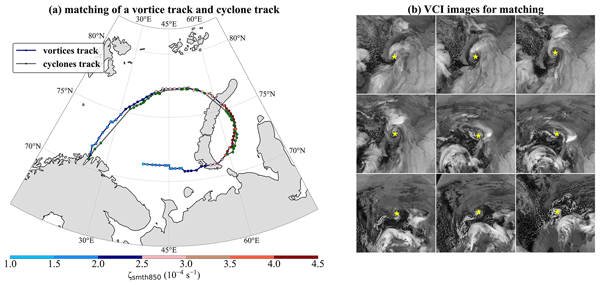
Integrated Multi-source Polar Mesoscale Cyclone Tracks (IMPMCT) is a dataset containing a 24-year record (2001–2024) of polar storms in the Nordic Seas. These storms, called Polar Mesoscale Cyclones (PMCs), sometimes cause extreme winds and waves, threatening marine operations. IMPMCT combines remote sensing measurements and reanalysis data to construct a comprehensive PMCs archive. It includes 1110 PMCs tracks, 16 001 cloud patterns, and 4472 wind records, providing fundamental data for advancing our understanding of their development mechanisms.
Yuliang Liu, Shulei Li, Lei Liu, Shuai Hu, Xuyang Li, and Rongying Shao
EGUsphere, https://doi.org/10.5194/egusphere-2026-4501, https://doi.org/10.5194/egusphere-2026-4501, 2026
Short summary
Short summary
The lowest atmospheric layer governs heat and moisture over Arctic sea ice. Measurements are scarce and single instruments have limits. Using a year‑long expedition, we combined multiple instruments with machine learning to retrieve boundary layer height. Results show wind shear and low‑level jets are main drivers, while cloud effects depend on cloud position. The method works at other Arctic sites, filling observational gaps and refining climate models for a warming region.
Shutian Mu, Huan Liu, Jiazhen Zhao, Xiaoqiao Wang, Fangying Wu, and Lei Liu
EGUsphere, https://doi.org/10.5194/egusphere-2026-3175, https://doi.org/10.5194/egusphere-2026-3175, 2026
Short summary
Short summary
Clouds cause key uncertainty in climate forecasts. Since previous assessments overlooked how warming changes clouds, we identified a cloud cover trend mode linked to global warming. Testing 13 climate models showed that while they capture historical warming, they miss this trend mode, underestimating its magnitude and misplacing the pattern. This reveals fundamental limits in current models. Resolving this will improve predictions of cloud behavior, making climate projections more reliable.
Qingwei Zeng, Lei Liu, Lele Cai, Hao Zhou, Qinghui Li, and Xichuan Liu
EGUsphere, https://doi.org/10.5194/egusphere-2026-3143, https://doi.org/10.5194/egusphere-2026-3143, 2026
This preprint is open for discussion and under review for Atmospheric Chemistry and Physics (ACP).
Short summary
Short summary
Sea fog disrupts shipping but remains hard to forecast due to a lack of measurements inside fog. We flew a drone with a novel cloud sensor over the Yellow Sea, obtaining the first vertical profiles of temperature, humidity, and fog droplets through a full fog life cycle. Our results show how turbulent mixing and a stable layer above the fog trap moisture, causing fog to thicken. These findings provide a solid foundation to improve fog forecasts and maritime safety.
Hao Zheng, Jun Wang, Hao Zhou, Jingfeng Ding, Haijin Dai, Zhi Huang, Zishan Wang, Meirong Wang, Jianying Li, Hengmao Wang, Fei Jiang, and Weimin Ju
Earth Syst. Sci. Data Discuss., https://doi.org/10.5194/essd-2026-318, https://doi.org/10.5194/essd-2026-318, 2026
Revised manuscript under review for ESSD
Short summary
Short summary
Lightning can trigger wildfires and severe storms, but long-term global records are limited. We reconstructed monthly land lightning density worldwide from 1979 to 2025 using weather data and machine-learning models trained on observations. The dataset captures observed lightning patterns and can support wildfire, climate, and air-quality studies.
Pingyi Dong, Xingwen Jiang, Xingbing Zhao, Yuanchang Dong, Jiafeng Zheng, Chun Hu, Guolu Gao, Lei Liu, Shulei Li, and Lingbing Bu
Atmos. Meas. Tech., 19, 1407–1419, https://doi.org/10.5194/amt-19-1407-2026, https://doi.org/10.5194/amt-19-1407-2026, 2026
Short summary
Short summary
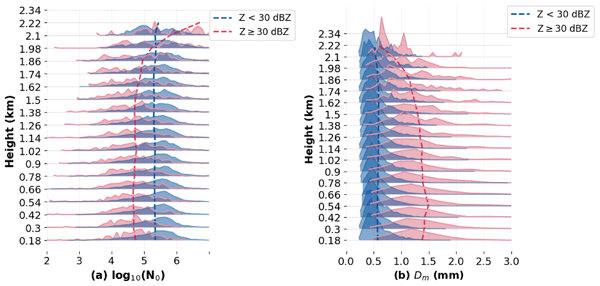
A method is developed and validated for retrieving vertical profiles of the raindrop size distributions (DSD) parameters from a single-frequency Ka-band radar in this study. Some unique characteristics of the vertical profiles of DSD parameters in the eastern Tibetan Plateau are found. The empirical relationships for quantitative precipitation estimates and attenuation correction in the eastern Tibetan Plateau with Ka-band radar are derived.
Zhaoru Zhang, Heng Hu, Xiaoqiao Wang, Yuanjie Chen, Chuning Wang, and Chuan Xie
EGUsphere, https://doi.org/10.5194/egusphere-2026-13, https://doi.org/10.5194/egusphere-2026-13, 2026
Short summary
Short summary
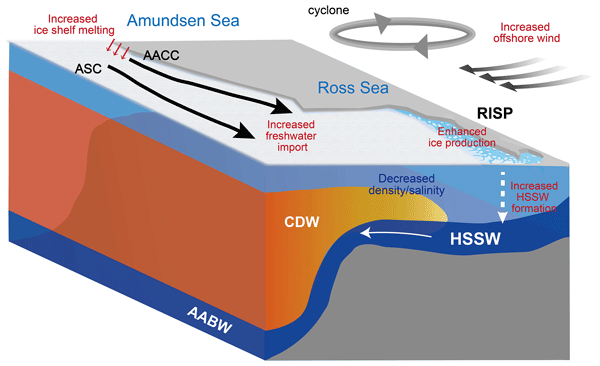
The Amundsen Sea Low, a key low-pressure system near West Antarctica, is projected to deepen and shift southward this century. This shift will enhance sea ice production in the Ross Sea polynyas that helps form dense shelf water (DSW)–precursor of Antarctic Botton Water. Weaker winds also reduce the transport of ice shelf meltwater into the Ross Sea, further favoring DSW formation. Together, these wind-driven changes could notably boost Ross Sea DSW production and offset its declining trend.
Runzhuo Fang, Jinfeng Ding, Wenjuan Gao, Xi Liang, Zhuoqi Chen, Chuanfeng Zhao, Haijin Dai, and Lei Liu
Earth Syst. Sci. Data, 17, 6049–6069, https://doi.org/10.5194/essd-17-6049-2025, https://doi.org/10.5194/essd-17-6049-2025, 2025
Short summary
Short summary
Integrated Multi-source Polar Mesoscale Cyclone Tracks (IMPMCT) is a dataset containing a 24-year record (2001–2024) of polar storms in the Nordic Seas. These storms, called Polar Mesoscale Cyclones (PMCs), sometimes cause extreme winds and waves, threatening marine operations. IMPMCT combines remote sensing measurements and reanalysis data to construct a comprehensive PMCs archive. It includes 1110 PMCs tracks, 16 001 cloud patterns, and 4472 wind records, providing fundamental data for advancing our understanding of their development mechanisms.
Xiaoqiao Wang, Zhaoru Zhang, Chuan Xie, Xi Zhao, Chuning Wang, Heng Hu, and Yuanjie Chen
The Cryosphere, 19, 2229–2245, https://doi.org/10.5194/tc-19-2229-2025, https://doi.org/10.5194/tc-19-2229-2025, 2025
Short summary
Short summary
Global bottom water originates from high-salinity shelf water (HSSW), formed by intense sea ice production (SIP) in the Southern Ocean. This study uses numerical outputs for the Ross Sea to examine the extreme HSSW event in 2007, when atmospheric circulations enhanced SIP, resulting in the highest HSSW volume in a decade. However, salinity was low, owing to increased meltwater. The findings highlight the complex interplay between SIP and ice shelf melting, with key implications for ocean processes.
Jiayi Shi, Xichuan Liu, Lei Liu, Liying Liu, and Peng Wang
Atmos. Meas. Tech., 18, 2261–2278, https://doi.org/10.5194/amt-18-2261-2025, https://doi.org/10.5194/amt-18-2261-2025, 2025
Short summary
Short summary
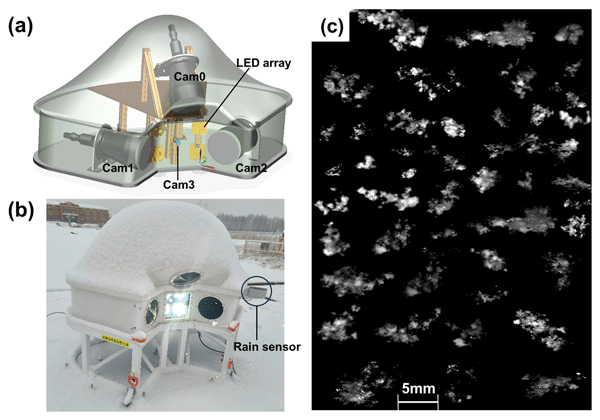
The Three-Dimensional Precipitation Particle Imager (3D-PPI) was introduced as a new instrument to measure the three-dimensional shape, size, and falling velocity of precipitation particles. Field experiments of the 3D-PPI were conducted in Tulihe, China, during the winter of 2023 to 2024. More than 880 000 snowflakes in a typical snowfall case lasting 13 h were recorded. It shows potential applications in atmospheric science, polar research, and other fields.
Wei Huang, Lei Liu, Bin Yang, Shuai Hu, Wanying Yang, Zhenfeng Li, Wantong Li, and Xiaofan Yang
Atmos. Meas. Tech., 16, 4101–4114, https://doi.org/10.5194/amt-16-4101-2023, https://doi.org/10.5194/amt-16-4101-2023, 2023
Short summary
Short summary
To improve the retrieval speed of the AERI optimal estimation (AERIoe) method, a fast-retrieval algorithm named Fast AERIoe is proposed on the basis of the findings that the change in Jacobians during the retrieval process had little effect on the performance of AERIoe. The results of the experiment show that the retrieved profiles from Fast AERIoe are comparable to those of AERIoe and that the retrieval speed is significantly improved, with the average retrieval time reduced by 59 %.
Ming Li, Husi Letu, Hiroshi Ishimoto, Shulei Li, Lei Liu, Takashi Y. Nakajima, Dabin Ji, Huazhe Shang, and Chong Shi
Atmos. Meas. Tech., 16, 331–353, https://doi.org/10.5194/amt-16-331-2023, https://doi.org/10.5194/amt-16-331-2023, 2023
Short summary
Short summary
Influenced by the representativeness of ice crystal scattering models, the existing terahertz ice cloud remote sensing inversion algorithms still have significant uncertainties. We developed an ice cloud remote sensing retrieval algorithm of the ice water path and particle size from aircraft-based terahertz radiation measurements based on the Voronoi model. Validation revealed that the Voronoi model performs better than the sphere and hexagonal column models.
Cited articles
Amory, C.: Drifting-snow statistics from multiple-year autonomous measurements in Adélie Land, East Antarctica, The Cryosphere, 14, 1713–1725, https://doi.org/10.5194/tc-14-1713-2020, 2020.
Amory, C., Trouvilliez, A., Gallée, H., Favier, V., Naaim-Bouvet, F., Genthon, C., Agosta, C., Piard, L., and Bellot, H.: Comparison between observed and simulated aeolian snow mass fluxes in Adélie Land, East Antarctica, The Cryosphere, 9, 1373–1383, https://doi.org/10.5194/tc-9-1373-2015, 2015.
Amory, C., Kittel, C., Le Toumelin, L., Agosta, C., Delhasse, A., Favier, V., and Fettweis, X.: Performance of MAR (v3.11) in simulating the drifting-snow climate and surface mass balance of Adélie Land, East Antarctica, Geosci. Model Dev., 14, 3487–3510, https://doi.org/10.5194/gmd-14-3487-2021, 2021.
Bartelt, P. and Lehning, M.: A physical SNOWPACK model for the Swiss avalanche warning: Part I: numerical model, Cold Reg. Sci. Technol., 35, 123–145, https://doi.org/10.1016/S0165-232X(02)00074-5, 2002.
Clifton, A., Rüedi, J.-D., and Lehning, M.: Snow saltation threshold measurements in a drifting-snow wind tunnel, J. Glaciol., 52, 585–596, 2006.
Cierco, F.-X., Naaim-Bouvet, F., and Bellot, H.: Acoustic sensors for snowdrift measurements: How should they be used for research purposes?, Cold Reg. Sci. Technol., 49, 74–87, https://doi.org/10.1016/j.coldregions.2007.01.002, 2007.
Déry, S. J. and Yau, M. K.: A bulk blowing snow model, Bound.-Lay. Meteorol., 93, 237–251, https://doi.org/10.1023/A:1002065615856, 1999.
Déry, S. J. and Yau, M. K.: Large-scale mass balance effects of blowing snow and surface sublimation, J. Geophys. Res.-Atmos., 107, ACL 8-1–ACL 8-17, https://doi.org/10.1029/2001JD001251, 2002.
Essery, R., Li, L., and Pomeroy, J.: A distributed model of blowing snow over complex terrain, Hydrol. Process., 13, 2423–2438, 1999.
Gerber, F., Sharma, V., and Lehning, M.: CRYOWRF – Model evaluation and the effect of blowing snow on the Antarctic surface mass balance, J. Geophys. Res.-Atmos., 128, e2022JD037744, https://doi.org/10.1029/2022JD037744, 2023.
Gallée, H., Trouvilliez, A., Agosta, C., Genthon, C., Favier, V., and Naaim-Bouvet, F.: Transport of snow by the wind: A comparison between observations in Adélie Land, Antarctica, and simulations made with the regional climate model MAR, Bound.-Lay. Meteorol., 146, 133–147, https://doi.org/10.1007/s10546-012-9764-z, 2013.
Gallée, H., Guyomarc'h, G., and Brun, E.: Impact of snow drift on the Antarctic ice sheet surface mass balance: possible sensitivity to snow-surface properties, Bound.-Lay. Meteorol., 99, 1–19, https://doi.org/10.1023/A:1018776422809, 2001.
Gossart, A., Souverijns, N., Gorodetskaya, I. V., Lhermitte, S., Lenaerts, J. T. M., Schween, J. H., Mangold, A., Laffineur, Q., and van Lipzig, N. P. M.: Blowing snow detection from ground-based ceilometers: application to East Antarctica, The Cryosphere, 11, 2755–2772, https://doi.org/10.5194/tc-11-2755-2017, 2017.
Hersbach, H., Bell, B., Berrisford, P., Hirahara, S., Horányi, A., Muñoz-Sabater, J., Nicolas, J., Peubey, C., Radu, R., Schepers, D., Simmons, A., Soci, C., Abdalla, S., Abellan, X., Balsamo, G., Bechtold, P., Biavati, G., Bidlot, J., Bonavita, M., De Chiara, G., Dahlgren, P., Dee, D., Diamantakis, M., Dragani, R., Flemming, J., Forbes, R., Fuentes, M., Geer, A., Haimberger, L., Healy, S., Hogan, R. J., Hólm, E., Janisková, M., Keeley, S., Laloyaux, P., Lopez, P., Lupu, C., Radnoti, G., De Rosnay, P., Rozum, I., Vamborg, F., Villaume, S., and Thépaut, J.: The ERA5 global reanalysis, Q. J. R. Meteorolog. Soc., 146, 1999–2049, https://doi.org/10.1002/qj.3803, 2020.
Iacono, M. J., Delamere, J. S., Mlawer, E. J., Shephard, M. W., Clough, S. A., and Collins, W. D.: Radiative forcing by long-lived greenhouse gases: Calculations with the AER radiative transfer models, J. Geophys. Res.-Atmos., 113, D13103, https://doi.org/10.1029/2008JD009944, 2008.
Kain, J. S.: The Kain–Fritsch convective parameterization: an update, J. Appl. Meteorol., 43, 170–181, https://doi.org/10.1175/1520-0450(2004)043<0170:TKCPAU>2.0.CO;2, 2004.
Kodama, Y., Wendler, G., and Gosink, J.: The effect of blowing snow on katabatic winds in Antarctica, Ann. Glaciol., 6, 59–62, 1985.
Lilly, D. K.: A Severe Downslope Windstorm and Aircraft Turbulence Event Induced by a Mountain Wave, J. Atmos. Sci., 35, 59–77, https://doi.org/10.1175/1520-0469(1978)035<0059:ASDWAA>2.0.CO;2, 1978.
Lehning, M., Löwe, H., Ryser, M., and Raderschall, N.: Inhomogeneous precipitation distribution and snow transport in steep terrain, Water Resour. Res., 44, W07404, https://doi.org/10.1029/2007WR006545, 2008.
Lehning, M., Doorschot, J., and Bartelt, P.: A snowdrift index based on SNOWPACK model calculations, Ann. Glaciol., 31, 382–386, https://doi.org/10.3189/172756400781819770, 2000.
Lenaerts, J. T. M., van den Broeke, M. R., van Angelen, J. H., van Meijgaard, E., and Déry, S. J.: Drifting snow climate of the Greenland ice sheet: a study with a regional climate model, The Cryosphere, 6, 891–899, https://doi.org/10.5194/tc-6-891-2012, 2012.
Lenaerts, J. T. M. and van den Broeke, M. R.: Modeling drifting snow in Antarctica with a regional climate model: 2. Results, J. Geophys. Res.-Atmos., 117, D05109, https://doi.org/10.1029/2010JD015419, 2012.
Ligtenberg, S. R. M., Helsen, M. M., and van den Broeke, M. R.: An improved semi-empirical model for the densification of Antarctic firn, The Cryosphere, 5, 809–819, https://doi.org/10.5194/tc-5-809-2011, 2011.
Morrison, H., Curry, J. A., and Khvorostyanov, V. I.: A new double-moment microphysics parameterization for application in cloud and climate models. Part I: Description, J. Atmos. Sci., 62, 1665–1677, https://doi.org/10.1175/JAS3446.1, 2005.
Nakanishi, M. and Niino, H.: An improved Mellor–Yamada level-3 model with condensation physics: Its design and verification, Bound.-Lay. Meteorol., 112, 1–31, https://doi.org/10.1023/B:BOUN.0000020164.04146.98, 2004.
Parish, T. R. and Bromwich, D. H.: The surface windfield over the Antarctic ice sheets, Nature, 328, 51–54, 1987.
Parish, T. R. and Cassano, J. J.: Diagnosis of the katabatic wind influence on the wintertime Antarctic surface wind field from numerical simulations, Mon. Weather Rev., 131, 1128–1139, https://doi.org/10.1175/1520-0493(2003)131<1128:DOTKWI>2.0.CO;2, 2003.
Palm, S. P., Yang, Y., Spinhirne, J. D., and Marshak, A.: Satellite remote sensing of blowing snow properties over Antarctica, J. Geophys. Res.-Atmos., 116, D16123, https://doi.org/10.1029/2011JD015828, 2011.
Palm, S. P., Kayetha, V., Yang, Y., and Pauly, R.: Blowing snow sublimation and transport over Antarctica from 11 years of CALIPSO observations, The Cryosphere, 11, 2555–2569, https://doi.org/10.5194/tc-11-2555-2017, 2017.
Pomeroy, J. W., Gray, D. M., and Landine, P. G.: The prairie blowing snow model – Characteristics, validation, operation, J. Hydrol., 144, 165–192, https://doi.org/10.1016/0022-1694(93)90171-5, 1993.
Priestley, M. D., Ackerley, D., Catto, J. L., Hodges, K. I., McDonald, R. E., and Lee, R. W.: An overview of the extratropical storm tracks in CMIP6 historical simulations, J. Climate, 33, 6315–6343, https://doi.org/10.1175/JCLI-D-19-0928.1, 2020.
Scarchilli, C., Frezzotti, M., Grigioni, P., De Silvestri, L., Agnoletto, L., and Dolci, S.: Extraordinary blowing snow transport events in East Antarctica, Clim. Dynam., 34, 1195–1206, https://doi.org/10.1007/s00382-009-0601-0, 2010.
Stoll, P. J.: A global climatology of polar lows investigated for local differences and wind-shear environments, Weather Clim. Dynam., 3, 483–504, https://doi.org/10.5194/wcd-3-483-2022, 2022.
Souverijns, N., Gossart, A., Gorodetskaya, I. V., Lhermitte, S., Mangold, A., Laffineur, Q., Delcloo, A., and van Lipzig, N. P. M.: How does the ice sheet surface mass balance relate to snowfall? Insights from a ground-based precipitation radar in East Antarctica, The Cryosphere, 12, 1987–2003, https://doi.org/10.5194/tc-12-1987-2018, 2018.
Sharma, V., Gerber, F., and Lehning, M.: Introducing CRYOWRF v1.0: multiscale atmospheric flow simulations with advanced snow cover modelling, Geosci. Model Dev., 16, 719–749, https://doi.org/10.5194/gmd-16-719-2023, 2023.
Sato, T., Kimura, T., Ishimaru, T., and Maruyama, T.: Field test of a new snow-particle counter (SPC) system, Ann. Glaciol., 18, 149–154, https://doi.org/10.3189/S0260305500011411, 1993.
Turner, J., Chenoli, S. N., Abu Samah, A., Marshall, G. J., Phillips, T., and Orr, A.: Strong wind events in the Antarctic, J. Geophys. Res.-Atmos., 114, D18103, https://doi.org/10.1029/2008JD011642, 2009.
Trouvilliez, A., Naaim-Bouvet, F., Bellot, H., Genthon, C., and Gallée, H.: Evaluation of the FlowCapt Acoustic Sensor for the Aeolian Transport of Snow, J. Atmos. Ocean. Tech., 32, 1630–1641, https://doi.org/10.1175/JTECH-D-14-00104.1, 2015.
van Wessem, J. M., van de Berg, W. J., Noël, B. P. Y., van Meijgaard, E., Amory, C., Birnbaum, G., Jakobs, C. L., Krüger, K., Lenaerts, J. T. M., Lhermitte, S., Ligtenberg, S. R. M., Medley, B., Reijmer, C. H., van Tricht, K., Trusel, L. D., van Ulft, L. H., Wouters, B., Wuite, J., and van den Broeke, M. R.: Modelling the climate and surface mass balance of polar ice sheets using RACMO2 – Part 2: Antarctica (1979–2016), The Cryosphere, 12, 1479–1498, https://doi.org/10.5194/tc-12-1479-2018, 2018.
Vignon, É., Picard, G., Durán-Alarcón, C., Alexander, S. P., Gallée, H., and Berne, A.: Gravity wave excitation during the coastal transition of an extreme katabatic flow in Antarctica, J. Atmos. Sci., 77, 1295–1312, https://doi.org/10.1175/JAS-D-19-0264.1, 2020.
Wang, X.: Numerical Simulation of a Severe Blowing Snow Event over the Prydz Bay Region, Zenodo [data set] https://doi.org/10.5281/zenodo.18213206, 2026.
Ye, J., Liu, L., Ding, J., Liu, X., Xie, H., and Chen, Y.: First blowing snow measurement at Zhongshan Station in Antarctica using ceilometer, Adv. Atmos. Sci., 42, 1–11, https://doi.org/10.1007/s00376-024-4172-0, 2025.
Short summary
This study employed the numerical model to simulate an intense blowing snow event near Zhongshan Station, East Antarctica, from 15–17 July 2022. While primarily driven by a mid-latitude cyclone, the event’s evolution was strongly modulated by complex local topography, which influenced airflow and enhanced snow transport. Terrain-induced uplift intensified snowfall and prolonged blizzard conditions, underscoring the importance of high-resolution modeling for Antarctic weather research.
This study employed the numerical model to simulate an intense blowing snow event near Zhongshan...


