
Articles | Volume 20, issue 10
https://doi.org/10.5194/tc-20-5973-2026
© Author(s) 2026. This work is distributed under
the Creative Commons Attribution 4.0 License.
the Creative Commons Attribution 4.0 License.
https://doi.org/10.5194/tc-20-5973-2026
© Author(s) 2026. This work is distributed under
the Creative Commons Attribution 4.0 License.
the Creative Commons Attribution 4.0 License.
Research article
| 
15 Oct 2026
Research article |
| 15 Oct 2026
| 15 Oct 2026
Improving snow simulations through improved representations of vegetation conditions: insights from high resolution simulations over California
Aniket Gupta
CORRESPONDING AUTHOR

Department of Hydrology and Atmospheric Sciences, The University of Arizona, Tucson, AZ, United States
Ali Behrangi
Department of Hydrology and Atmospheric Sciences, The University of Arizona, Tucson, AZ, United States
Mohammad Farmani
Department of Hydrology and Atmospheric Sciences, The University of Arizona, Tucson, AZ, United States
Patrick Broxton
School of Natural Resources and the Environment, The University of Arizona, Tucson, AZ, United States
Guo-Yue Niu
CORRESPONDING AUTHOR
Department of Hydrology and Atmospheric Sciences, The University of Arizona, Tucson, AZ, United States
Related authors
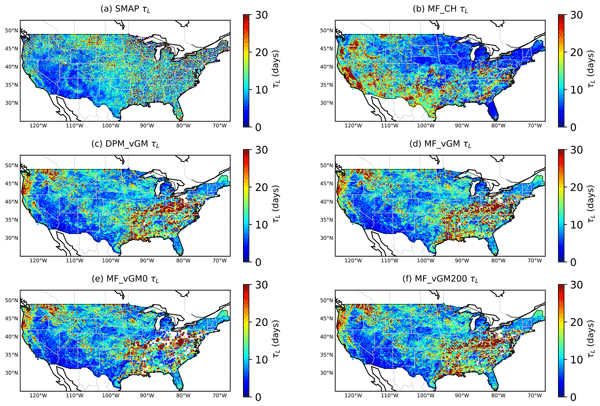
Mohammad A. Farmani, Ali Behrangi, Aniket Gupta, Ahmad Tavakoly, Matthew Geheran, and Guo-Yue Niu
Hydrol. Earth Syst. Sci., 29, 547–566, https://doi.org/10.5194/hess-29-547-2025, https://doi.org/10.5194/hess-29-547-2025, 2025
Short summary
Short summary
Soil moisture memory (SMM) shows how long soil stays moist after rain, impacting climate and ecosystems. Current models often overestimate SMM, causing inaccuracies in evaporation predictions. We enhanced a land model, Noah-MP, to include better water flow and ponding processes, and we tested it against satellite and field data. This improved model reduced overestimations and enhanced short-term predictions, helping create more accurate climate and weather forecasts.
Mohammad Farmani, Hoshin V. Gupta, Ali Behrangi, Muhammad Jawad, Sadaf Moghisi, and Guo-Yue Niu
EGUsphere, https://doi.org/10.48550/arXiv.2603.25093, https://doi.org/10.48550/arXiv.2603.25093, 2026
This preprint is open for discussion and under review for Hydrology and Earth System Sciences (HESS).
Short summary
Short summary
Machine learning can predict streamflow accurately but often lacks physical interpretability. We develop a mass-conserving hybrid AI model that progressively adds hydrological processes, including soil storage, infiltration, ponding, and deep drainage. Tests across 15 U.S. basins show that added process structure can improve streamflow prediction, with drainage benefiting arid and snow-dominated basins but reducing skill in humid regions.
Mohammad A. Farmani, Andrew Bennet, Sadaf Moghisi, Hoshin Gupta, Muhammad Jawad, Ali Behrangi, Ahmad A. Tavakoly, and Guo-Yue Niu
EGUsphere, https://doi.org/10.5194/egusphere-2026-4157, https://doi.org/10.5194/egusphere-2026-4157, 2026
Short summary
Short summary
This study presents RiverGraphNet, an artificial intelligence framework for predicting how runoff moves through connected river networks. Applied to Arizona’s Salt–Verde watershed, the method improved daily streamflow prediction relative to a standard physics-based routing model, especially for event timing and flow distributions. The results show that combining river-network structure with artificial intelligence can support better flood, reservoir, and water-resource prediction.
Mohammad A. Farmani, Ali Behrangi, Aniket Gupta, Ahmad Tavakoly, Matthew Geheran, and Guo-Yue Niu
Hydrol. Earth Syst. Sci., 29, 547–566, https://doi.org/10.5194/hess-29-547-2025, https://doi.org/10.5194/hess-29-547-2025, 2025
Short summary
Short summary
Soil moisture memory (SMM) shows how long soil stays moist after rain, impacting climate and ecosystems. Current models often overestimate SMM, causing inaccuracies in evaporation predictions. We enhanced a land model, Noah-MP, to include better water flow and ponding processes, and we tested it against satellite and field data. This improved model reduced overestimations and enhanced short-term predictions, helping create more accurate climate and weather forecasts.
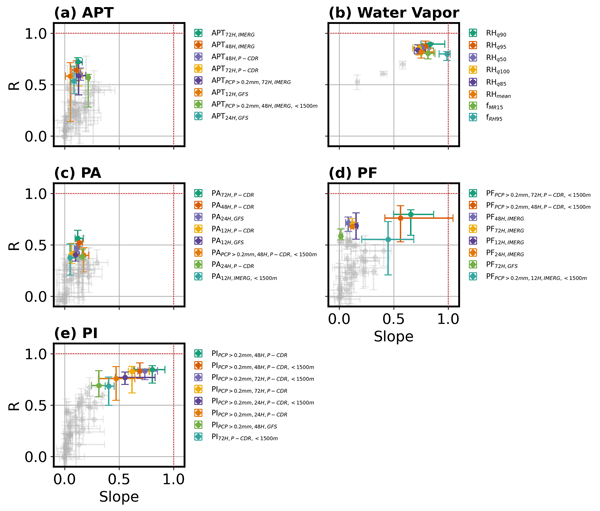
Miguel Ricardo A. Hilario, Avelino F. Arellano, Ali Behrangi, Ewan C. Crosbie, Joshua P. DiGangi, Glenn S. Diskin, Michael A. Shook, Luke D. Ziemba, and Armin Sorooshian
Atmos. Meas. Tech., 17, 37–55, https://doi.org/10.5194/amt-17-37-2024, https://doi.org/10.5194/amt-17-37-2024, 2024
Short summary
Short summary
Wet scavenging strongly influences aerosol lifetime and interactions but is a large uncertainty in global models. We present a method to identify meteorological variables relevant for estimating wet scavenging. During long-range transport over the tropical western Pacific, relative humidity and the frequency of humid conditions are better predictors of scavenging than precipitation. This method can be applied to other regions, and our findings can inform scavenging parameterizations in models.
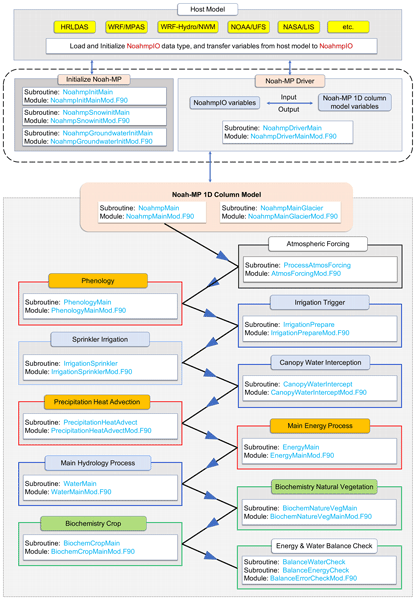
Cenlin He, Prasanth Valayamkunnath, Michael Barlage, Fei Chen, David Gochis, Ryan Cabell, Tim Schneider, Roy Rasmussen, Guo-Yue Niu, Zong-Liang Yang, Dev Niyogi, and Michael Ek
Geosci. Model Dev., 16, 5131–5151, https://doi.org/10.5194/gmd-16-5131-2023, https://doi.org/10.5194/gmd-16-5131-2023, 2023
Short summary
Short summary
Noah-MP is one of the most widely used open-source community land surface models in the world, designed for applications ranging from uncoupled land surface and ecohydrological process studies to coupled numerical weather prediction and decadal climate simulations. To facilitate model developments and applications, we modernize Noah-MP by adopting modern Fortran code and data structures and standards, which substantially enhance model modularity, interoperability, and applicability.
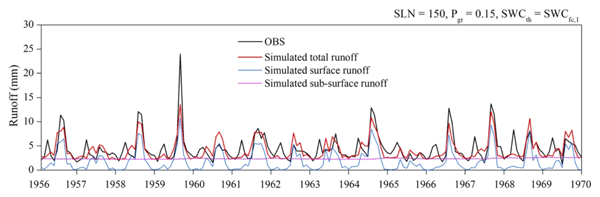
Jiming Jin, Lei Wang, Jie Yang, Bingcheng Si, and Guo-Yue Niu
Geosci. Model Dev., 15, 3405–3416, https://doi.org/10.5194/gmd-15-3405-2022, https://doi.org/10.5194/gmd-15-3405-2022, 2022
Short summary
Short summary
This study aimed to improve runoff simulations and explore deep soil hydrological processes for a highly varying soil depth and complex terrain watershed in the Loess Plateau, China. The actual soil depths and river channels were incorporated into the model to better simulate the runoff in this watershed. The soil evaporation scheme was modified to better describe the evaporation processes. Our results showed that the model significantly improved the runoff simulations.
Cited articles
Anderson, B. T., McNamara, J. P., Marshall, H., and Flores, A. N.: Insights into the physical processes controlling correlations between snow distribution and terrain properties, Water Resour. Res., 50, 4545–4563, https://doi.org/10.1002/2013WR013714, 2014.
Ball, J. T., Woodrow, I. E., and Berry, J. A.: A Model Predicting Stomatal Conductance and its Contribution to the Control of Photosynthesis under Different Environmental Conditions, in: Progress in Photosynthesis Research, edited by: Biggins, J., Springer Netherlands, Dordrecht, 221–224, https://doi.org/10.1007/978-94-017-0519-6_48, 1987.
Bartlett, P. A. and Verseghy, D. L.: Modified treatment of intercepted snow improves the simulated forest albedo in the Canadian Land Surface Scheme, Hydrol. Process., 29, 3208–3226, https://doi.org/10.1002/hyp.10431, 2015.
Bonan, G. B., Levis, S., Sitch, S., Vertenstein, M., and Oleson, K. W.: A dynamic global vegetation model for use with climate models: concepts and description of simulated vegetation dynamics, Glob. Change Biol., 9, 1543–1566, https://doi.org/10.1046/j.1365-2486.2003.00681.x, 2003.
Brekke, L. D., Miller, N. L., Bashford, K. E., Quinn, N. W. T., and Dracup, J. A.: CLIMATE CHANGE IMPACTS UNCERTAINTY FOR WATER RESOURCES IN THE SAN JOAQUIN RIVER BASIN, CALIFORNIA, J. Am. Water Resour. As., 40, 149–164, https://doi.org/10.1111/j.1752-1688.2004.tb01016.x, 2004.
Broxton, P. D., Zeng, X., and Dawson, N.: Why do global reanalyses and land data assimilation products underestimate snow water equivalent?, J. Hydrometeorol., 17, 2743–2761, https://doi.org/10.1175/JHM-D-16-0056.1, 2016.
Broxton, P., Ehsani, M. R., and Behrangi, A.: Improving Mountain Snowpack Estimation Using Machine Learning With Sentinel-1, the Airborne Snow Observatory, and University of Arizona Snowpack Data, Earth and Space Science, 11, e2023EA002964, https://doi.org/10.1029/2023EA002964, 2024.
Chen, F., Barlage, M., Tewari, M., Rasmussen, R., Jin, J., Lettenmaier, D., Livneh, B., Lin, C., Miguez-Macho, G., Niu, G., Wen, L., and Yang, Z.: Modeling seasonal snowpack evolution in the complex terrain and forested Colorado Headwaters region: A model intercomparison study, J. Geophys. Res.-Atmos., 119, https://doi.org/10.1002/2014JD022167, 2014.
Cho, E., Vuyovich, C. M., Kumar, S. V., Wrzesien, M. L., Kim, R. S., and Jacobs, J. M.: Precipitation biases and snow physics limitations drive the uncertainties in macroscale modeled snow water equivalent, Hydrol. Earth Syst. Sci., 26, 5721–5735, https://doi.org/10.5194/hess-26-5721-2022, 2022.
Collatz, G., Ribas-Carbo, M., and Berry, J.: Coupled Photosynthesis-Stomatal Conductance Model for Leaves of C4 Plants, Funct. Plant Biol., 19, 519–538, https://doi.org/10.1071/PP9920519, 1992.
Collatz, G. J., Ball, J. T., Grivet, C., and Berry, J. A.: Physiological and environmental regulation of stomatal conductance, photosynthesis and transpiration: a model that includes a laminar boundary layer, Agr. Forest Meteorol., 54, 107–136, https://doi.org/10.1016/0168-1923(91)90002-8, 1991.
Cook, B. I., Bonan, G. B., Levis, S., and Epstein, H. E.: Rapid vegetation responses and feedbacks amplify climate model response to snow cover changes, Clim. Dynam., 30, 391–406, https://doi.org/10.1007/s00382-007-0296-z, 2008.
Cooper, E. J., Dullinger, S., and Semenchuk, P.: Late snowmelt delays plant development and results in lower reproductive success in the High Arctic, Plant Sci., 180, 157–167, https://doi.org/10.1016/j.plantsci.2010.09.005, 2011.
Cosgrove, B., Gochis, D., Flowers, T., Dugger, A., Ogden, F., Graziano, T., Clark, E., Cabell, R., Casiday, N., Cui, Z., Eicher, K., Fall, G., Feng, X., Fitzgerald, K., Frazier, N., George, C., Gibbs, R., Hernandez, L., Johnson, D., Jones, R., Karsten, L., Kefelegn, H., Kitzmiller, D., Lee, H., Liu, Y., Mashriqui, H., Mattern, D., McCluskey, A., McCreight, J. L., McDaniel, R., Midekisa, A., Newman, A., Pan, L., Pham, C., RafieeiNasab, A., Rasmussen, R., Read, L., Rezaeianzadeh, M., Salas, F., Sang, D., Sampson, K., Schneider, T., Shi, Q., Sood, G., Wood, A., Wu, W., Yates, D., Yu, W., and Zhang, Y.: NOAA's National Water Model: Advancing operational hydrology through continental-scale modeling, J. Am. Water Resour. As., 60, 247–272, https://doi.org/10.1111/1752-1688.13184, 2024.
Daly, C., Taylor, G. H., Gibson, W. P., Parzybok, T. W., Johnson, G. L., and Pasteris, P. A.: HIGH-QUALITY SPATIAL CLIMATE DATA SETS FOR THE UNITED STATES AND BEYOND, T. ASAE, 43, 1957–1962, https://doi.org/10.13031/2013.3101, 2000a.
Daly, S. F., Davis, R., Ochs, E., and Pangburn, T.: An approach to spatially distributed snow modelling of the Sacramento and San Joaquin basins, California, Hydrol. Process., 14, 3257–3271, https://doi.org/10.1002/1099-1085(20001230)14:18<3257::AID-HYP199>3.0.CO;2-Z, 2000b.
Dickinson, R. E.: Land surface processes and climate-surface albedos and energy balance, in: Adv. Geophys., vol. 25, edited by: Saltzman, B., Academic, San Diego, Calif., 305–353, https://doi.org/10.1016/S0065-2687(08)60176-4, 1983.
Dickinson, R. E., Henderson-Sellers, A., and Kennedy, P. J.: Biosphere-Atmosphere Transfer Scheme (BATS) version 1e as coupled to the NCAR Community Climate Model, NCAR Tech. Note, NCAR/TN-387+STR, Natl. Cent. for Atmos. Res., Boulder, Colorado, 80 pp., https://doi.org/10.5065/D67W6959, 1993.
Dickinson, R. E., Shaikh, M., Bryant, R., and Graumlich, L.: Interactive Canopies for a Climate Model, J. Climate, 11, 2823–2836, https://doi.org/10.1175/1520-0442(1998)011<2823:ICFACM>2.0.CO;2, 1998.
Domagalski, J.: Occurrence and transport of total mercury and methyl mercury in the Sacramento River Basin, California, J. Geochem. Explor., 64, 277–291, https://doi.org/10.1016/S0375-6742(98)00038-7, 1998.
Ek, M. B., Mitchell, K. E., Lin, Y., Rogers, E., Grunmann, P., Koren, V., Gayno, G., and Tarpley, J. D.: Implementation of Noah land surface model advances in the National Centers for Environmental Prediction operational mesoscale Eta model, J. Geophys. Res., 108, 2002JD003296, https://doi.org/10.1029/2002JD003296, 2003.
Eldardiry, H., Sun, N., Yan, H., Reed, P., Thurber, T., and Rice, J.: Characterizing how meteorological forcing selection and parameter uncertainty influence Community Land Model version 5 hydrological applications in the United States, J. Adv. Model. Earth Sy., 17, e2024MS004222, https://doi.org/10.1029/2024MS004222, 2025.
Euskirchen, E. S., Bennett, A. P., Breen, A. L., Genet, H., Lindgren, M. A., Kurkowski, T. A., McGuire, A. D., and Rupp, T. S.: Consequences of changes in vegetation and snow cover for climate feedbacks in Alaska and northwest Canada, Environ. Res. Lett., 11, 105003, https://doi.org/10.1088/1748-9326/11/10/105003, 2016.
Fall, G., Kitzmiller, D., Pavlovic, S., Zhang, Z., Patrick, N., St. Laurent, M., Trypaluk, C., Wu, W., and Miller, D.: The Office of Water Prediction's Analysis of Record for Calibration, version 1.1: Dataset description and precipitation evaluation, JAWRA J. Am. Water Resour. As., 59, 1246–1272, https://doi.org/10.1111/1752-1688.13143, 2023.
Fang, Y., Liu, Y., and Margulis, S. A.: A western United States snow reanalysis dataset over the Landsat era from water years 1985 to 2021, Sci. Data, 9, 677, https://doi.org/10.1038/s41597-022-01768-7, 2022.
Farquhar, G. D., Von Caemmerer, S., and Berry, J. A.: A biochemical model of photosynthetic CO2 assimilation in leaves of C3 species, Planta, 149, 78–90, https://doi.org/10.1007/BF00386231, 1980.
Franklin, O., Harrison, S. P., Dewar, R., Farrior, C. E., Brännström, Å., Dieckmann, U., Pietsch, S., Falster, D., Cramer, W., Loreau, M., Wang, H., Mäkelä, A., Rebel, K. T., Meron, E., Schymanski, S. J., Rovenskaya, E., Stocker, B. D., Zaehle, S., Manzoni, S., Van Oijen, M., Wright, I. J., Ciais, P., Van Bodegom, P. M., Peñuelas, J., Hofhansl, F., Terrer, C., Soudzilovskaia, N. A., Midgley, G., and Prentice, I. C.: Organizing principles for vegetation dynamics, Nat. Plants, 6, 444–453, https://doi.org/10.1038/s41477-020-0655-x, 2020.
Garousi-Nejad, I. and Tarboton, D. G.: A comparison of National Water Model retrospective analysis snow outputs at snow telemetry sites across the Western United States, Hydrol. Process., 36, e14469, https://doi.org/10.1002/hyp.14469, 2022.
He, C., Chen, F., Abolafia-Rosenzweig, R., Ikeda, K., Liu, C., and Rasmussen, R.: What causes the unobserved early-spring snowpack ablation in convection-permitting WRF modeling over Utah Mountains?, J. Geophys. Res.-Atmos., 126, e2021JD035284, https://doi.org/10.1029/2021JD035284, 2021.
He, C., Valayamkunnath, P., Barlage, M., Chen, F., Gochis, D., Cabell, R., Schneider, T., Rasmussen, R., Niu, G.-Y., Yang, Z.-L., Niyogi, D., and Ek, M.: The Community Noah-MP Land Surface Modeling System Technical Description Version 5.0, UCAR/NCAR, https://doi.org/10.5065/EW8G-YR95, 2023 (data/code available at: https://github.com/NCAR/noahmp, last access: 11 September 2026).
Hedstrom, N. R. and Pomeroy, J. W.: Measurements and modelling of snow interception in the boreal forest, Hydrol. Process., 12, 1611–1625, https://doi.org/10.1002/(SICI)1099-1085(199808/09)12:10/11<1611::AID-HYP684>3.0.CO;2-4, 1998.
Hwang, T., Band, L., and Hales, T. C.: Ecosystem processes at the watershed scale: Extending optimality theory from plot to catchment, Water Resour. Res., 45, 2009WR007775, https://doi.org/10.1029/2009WR007775, 2009.
Johnson, J. M., Fang, S., Sankarasubramanian, A., Rad, A. M., Kindl Da Cunha, L., Jennings, K. S., Clarke, K. C., Mazrooei, A., and Yeghiazarian, L.: Comprehensive Analysis of the NOAA National Water Model: A Call for Heterogeneous Formulations and Diagnostic Model Selection, J. Geophys. Res.-Atmos., 128, e2023JD038534, https://doi.org/10.1029/2023JD038534, 2023.
Jordan, R. E.: A One-dimensional temperature model for a snow cover: technical documentation for SNTHERM.89, https://hdl.handle.net/11681/11677 (last access: 9 August 2025), 1991.
Kitzmiller, D. H., Wu, W., Zhang, Z., Patrick, N., and Tan, X.: The Analysis of Record for Calibration: A High-Resolution Precipitation and Surface Weather Dataset for the United States, in: AGU Fall Meeting Abstracts, H41H-06, https://ui.adsabs.harvard.edu/abs/2018AGUFM.H41H..06K/abstract (last access: 9 August 2025), 2018.
Lee, W. Y., Gim, H. J., and Park, S. K.: Parameterizations of Snow Cover, Snow Albedo and Snow Density in Land Surface Models: A Comparative Review, Asia-Pac. J. Atmos. Sci., 60, 185–210, https://doi.org/10.1007/s13143-023-00344-2, 2024.
Li, D., Wrzesien, M. L., Durand, M., Adam, J., and Lettenmaier, D. P.: How much runoff originates as snow in the western United States, and how will that change in the future?, Geophys. Res. Lett., 44, 6163–6172, https://doi.org/10.1002/2017GL073551, 2017.
Lin, W., Yuan, H., Dong, W., Zhang, S., Liu, S., Wei, N., Lu, X., Wei, Z., Hu, Y., and Dai, Y.: Reprocessed MODIS Version 6.1 Leaf Area Index Dataset and Its Evaluation for Land Surface and Climate Modeling, Remote Sensing, 15, 1780, https://doi.org/10.3390/rs15071780, 2023.
Livensperger, C., Steltzer, H., Darrouzet-Nardi, A., Sullivan, P. F., Wallenstein, M., and Weintraub, M. N.: Earlier snowmelt and warming lead to earlier but not necessarily more plant growth, AoB PLANTS, 8, plw021, https://doi.org/10.1093/aobpla/plw021, 2016.
Lundquist, J. D., Abel, M. R., Henn, B., Gutmann, E. D., Livneh, B., Dozier, J., and Neiman, P.: High-Elevation Precipitation Patterns: Using Snow Measurements to Assess Daily Gridded Datasets across the Sierra Nevada, California, J. Hydrometeorol., 16, 1773–1792, https://doi.org/10.1175/JHM-D-15-0019.1, 2015.
Menne, M. J., Durre, I., Korzeniewski, B., McNeill, S., Thomas, K., Yin, X., Anthony, S., Ray, R., Vose, R. S., Gleason, B. E., and Houston, T. G.: Global Historical Climatology Network – Daily (GHCN-Daily), Version 3, NOAA National Climatic Data Center https://doi.org/10.7289/V5D21VHZ, 2012.
Moeser, D., Stähli, M., and Jonas, T.: Improved snow interception modeling using canopy parameters derived from airborne LiDAR data, Water Resour. Res., 51, 5041–5059, https://doi.org/10.1002/2014WR016724, 2015.
Mott, R., Vionnet, V., and Grünewald, T.: The Seasonal Snow Cover Dynamics: Review on Wind-Driven Coupling Processes, Front. Earth Sci., 6, https://doi.org/10.3389/feart.2018.00197, 2018.
Myneni, R., Knyazikhin, Y., and Park, T.: MODIS/Terra Leaf Area Index/FPAR 8-Day L4 Global 500m SIN Grid V061, NASA Land Processes Distributed Active Archive Center [data set], https://doi.org/10.5067/MODIS/MOD15A2H.061, 2021.
National Operational Hydrologic Remote Sensing Center: Snow Data Assimilation System (SNODAS) Data Products at NSIDC, (G02158, Version 1), Boulder, Colorado USA, National Snow and Ice Data Center [data set], https://doi.org/10.7265/N5TB14TC, 2004.
Niu, G. and Yang, Z.: Effects of vegetation canopy processes on snow surface energy and mass balances, J. Geophys. Res., 109, 2004JD004884, https://doi.org/10.1029/2004JD004884, 2004.
Niu, G. Y. and Yang, Z. L.: An observation‐based formulation of snow cover fraction and its evaluation over large North American river basins, J. Geophys. Res.-Atmos., 112, https://doi.org/10.1029/2007JD008674, 2007.
Niu, G.-Y., Yang, Z.-L., Mitchell, K. E., Chen, F., Ek, M. B., Barlage, M., Kumar, A., Manning, K., Niyogi, D., Rosero, E., Tewari, M., and Xia, Y.: The community Noah land surface model with multiparameterization options (Noah-MP): 1. Model description and evaluation with local-scale measurements, J. Geophys. Res., 116, D12109, https://doi.org/10.1029/2010JD015139, 2011.
O'Keefe, K., Bell, D. M., McCulloh, K. A., and Nippert, J. B.: Bridging the Flux Gap: Sap Flow Measurements Reveal Species-Specific Patterns of Water Use in a Tallgrass Prairie, J. Geophys. Res.-Biogeo., 125, e2019JG005446, https://doi.org/10.1029/2019JG005446, 2020.
Overgaard, J., Rosbjerg, D., and Butts, M. B.: Land-surface modelling in hydrological perspective – a review, Biogeosciences, 3, 229–241, https://doi.org/10.5194/bg-3-229-2006, 2006.
Pomeroy, J. W., Bewley, D. S., Essery, R. L., Hedstrom, N. R., Link, T., Granger, R. J., Sicart, J. E., Ellis, C. R., and Janowicz, J. R.: Shrub tundra snowmelt, Hydrol. Process., 20, 923–941, https://doi.org/10.1002/hyp.6124, 2006.
Rey, D. M., Hinckley, E. S., Walvoord, M. A., and Singha, K.: Integrating observations and models to determine the effect of seasonally frozen ground on hydrologic partitioning in alpine hillslopes in the Colorado Rocky Mountains, USA, Hydrol. Process., 35, e14374, https://doi.org/10.1002/hyp.14374, 2021.
Roesch, A., Wild, M., Gilgen, H., and Ohmura, A.: A new snow cover fraction parametrization for the ECHAM4 GCM, Clim. Dynam., 17, 933–946, https://doi.org/10.1007/s003820100153, 2001.
Rundel, P. and Millar, C.: TWENTY-NINE. Alpine Ecosystems, in: Ecosystems of California, Berkeley, edited by: Mooney, H. and Zavaleta, E., University of California Press, 613–634, https://doi.org/10.1525/9780520962170-033, 2016.
Schmidt, R. A. and Gluns, D. R.: Snowfall interception on branches of three conifer species, Can. J. Forest Res., 21, 1262–1269, https://doi.org/10.1139/x91-176, 1991.
Stähli, M., Jonas, T., and Gustafsson, D.: The role of snow interception in winter-time radiation processes of a coniferous sub-alpine forest, Hydrol. Process., 23, 2498–2512, https://doi.org/10.1002/hyp.7180, 2009.
Sturm, M., Douglas, T., Racine, C., and Liston, G.E.: Changing snow and shrub conditions affect albedo with global implications, J. Geophys. Res.-Biogeo., 110, https://doi.org/10.1029/2005JG000013, 2005.
Tennant, C. J., Harpold, A. A., Lohse, K. A., Godsey, S. E., Crosby, B. T., Larsen, L. G., Brooks, P. D., Van Kirk, R. W., and Glenn, N. F.: Regional sensitivities of seasonal snowpack to elevation, aspect, and vegetation cover in western N orth A merica, Water Resour. Res., 53, 6908–6926, https://doi.org/10.1002/2016WR019374, 2017.
Toure, A. M., Rodell, M., Yang, Z. L., Beaudoing, H., Kim, E., Zhang, Y., and Kwon, Y.: Evaluation of the snow simulations from the Community Land Model, version 4 (CLM4), J. Hydrometeorol., 17, 153–170, https://doi.org/10.1175/JHM-D-14-0165.1, 2016.
Wang, W., Yang, K., Zhao, L., Zheng, Z., Lu, H., Mamtimin, A., Ding, B., Li, X., Zhao, L., Li, H. and Che, T.: Characterizing surface albedo of shallow fresh snow and its importance for snow ablation on the interior of the Tibetan Plateau, J. Hydrometeorol., 21, 815–827, https://doi.org/10.1175/JHM-D-19-0193.1, 2020.
Wang, X., Wang, T., Guo, H., Liu, D., Zhao, Y., Zhang, T., Liu, Q., and Piao, S.: Disentangling the mechanisms behind winter snow impact on vegetation activity in northern ecosystems, Glob. Change Biol., 24, 1651–1662, https://doi.org/10.1111/gcb.13930, 2018.
Webster, C. and Jonas, T.: Influence of canopy shading and snow coverage on effective albedo in a snow-dominated evergreen needleleaf forest, Remote Sens. Environ., 214, 48–58, https://doi.org/10.1016/j.rse.2018.05.023, 2018.
Xia, Y., Mitchell, K., Ek, M., Sheffield, J., Cosgrove, B., Wood, E., Luo, L., Alonge, C., Wei, H., Meng, J., Livneh, B., Lettenmaier, D., Koren, V., Duan, Q., Mo, K., Fan, Y., and Mocko, D.: Continental-scale water and energy flux analysis and validation for the North American Land Data Assimilation System project phase 2 (NLDAS-2): 1. Intercomparison and application of model products, J. Geophys. Res., 117, 2011JD016048, https://doi.org/10.1029/2011JD016048, 2012.
Yang, K., Musselman, K. N., Rittger, K., Margulis, S. A., Painter, T. H., and Molotch, N. P.: Combining ground-based and remotely sensed snow data in a linear regression model for real-time estimation of snow water equivalent, Adv. Water Resour., 160, 104075, https://doi.org/10.1016/j.advwatres.2021.104075, 2022.
Yang, K., Rittger, K., Musselman, K. N., Bair, E. H., Dozier, J., Margulis, S. A., Painter, T. H., and Molotch, N. P.: Intercomparison of snow water equivalent products in the Sierra Nevada California using airborne snow observatory data and ground observations, Front. Earth Sci., 11, 1106621, https://doi.org/10.3389/feart.2023.1106621, 2023.
Yang, R. and Friedl, M. A.: Modeling the effects of three-dimensional vegetation structure on surface radiation and energy balance in boreal forests, J. Geophys. Res., 108, 2002JD003109, https://doi.org/10.1029/2002JD003109, 2003.
Yang, Z.-L., Niu, G.-Y., Mitchell, K. E., Chen, F., Ek, M. B., Barlage, M., Longuevergne, L., Manning, K., Niyogi, D., Tewari, M., and Xia, Y.: The community Noah land surface model with multiparameterization options (Noah-MP): 2. Evaluation over global river basins, J. Geophys. Res., 116, D12110, https://doi.org/10.1029/2010JD015140, 2011.
Zhang, J., Howard, K., Langston, C., Vasiloff, S., Kaney, B., Arthur, A., Van Cooten, S., Kelleher, K., Kitzmiller, D., Ding, F., and Seo, D. J.: National Mosaic and Multi-Sensor QPE (NMQ) system: Description, results, and future plans, B. Am. Meteorol. Soc., 92, 1321–1338, https://doi.org/10.1175/2011BAMS-D-11-00047.1, 2011.
Short summary
Most hydrological models tend to underestimate snow over the mountainous southwestern US. This may result from uncertainties in precipitation forcing and/or inadequate representation of snow–vegetation interactions, particularly canopy interception and shading. Through model experiments, we demonstrate how downscaled meteorological forcing and improved vegetation representation can improve snow simulations over the southwestern US.
Most hydrological models tend to underestimate snow over the mountainous southwestern US. This...


