
Articles | Volume 20, issue 10
https://doi.org/10.5194/tc-20-5559-2026
© Author(s) 2026. This work is distributed under
the Creative Commons Attribution 4.0 License.
the Creative Commons Attribution 4.0 License.
https://doi.org/10.5194/tc-20-5559-2026
© Author(s) 2026. This work is distributed under
the Creative Commons Attribution 4.0 License.
the Creative Commons Attribution 4.0 License.
Research article
| 
30 Sep 2026
Research article |
| 30 Sep 2026
| 30 Sep 2026
Seven decades of glacier loss on the Nevados de Chillán volcanic complex, Chile
Millie C. Spencer
CORRESPONDING AUTHOR

Department of Geography, Institute of Arctic and Alpine Research, University of Colorado, Boulder, CO 80309, USA
Alfonso Fernandez
Department of Geography, Universidad de Concepción, Concepción, 4070386, Chile
Emma Tyrrell
Department of Geography, Institute of Arctic and Alpine Research, University of Colorado, Boulder, CO 80309, USA
Robert Clasing
Department of Civil Engineering, Universidad Católica de la Santísima Concepción, Concepción, 4090340, Chile
Enrique Muñoz
Department of Civil Engineering, Universidad Católica de la Santísima Concepción, Concepción, 4090340, Chile
Centro de Investigación en Biodiversidad y Ambientes Sustentables CIBAS, Concepción, 4090340, Chile
Pablo A. Mendoza
Department of Civil Engineering, Universidad de Chile, Santiago, 8370449, Chile
Advanced Mining Technology Center (AMTC), Universidad de Chile, Santiago, 8370449, Chile
Jorge Berkhoff
Institute of Geography, Friedrich-Alexander-Universität, Erlangen-Nürnberg, 91058, Germany
Noah P. Molotch
Department of Geography, Institute of Arctic and Alpine Research, University of Colorado, Boulder, CO 80309, USA
Related authors
No articles found.
Christopher Ulloa, Ayon García, Hans Fernández-Navarro, Jorge Berkhoff, José Luis Rodriguez, and Pierre Pitte
EGUsphere, https://doi.org/10.5194/egusphere-2026-3669, https://doi.org/10.5194/egusphere-2026-3669, 2026
This preprint is open for discussion and under review for The Cryosphere (TC).
Short summary
Short summary
Mountain glaciers in Chile's dry Central Andes are critical water sources for millions downstream. We tracked ice movement at Universidad Glacier, the region's largest valley glacier, using satellite radar over two summers, validated against field GPS. We found the glacier now flows far slower than in past decades, and that brief, meltwater-driven speed-ups each summer are too short-lived for existing global satellite monitoring, which only resolves year-to-year change.
Jerónimo Sota, Pablo A. Mendoza, and Miguel Lagos-Zúñiga
EGUsphere, https://doi.org/10.5194/egusphere-2026-4067, https://doi.org/10.5194/egusphere-2026-4067, 2026
This preprint is open for discussion and under review for Hydrology and Earth System Sciences (HESS).
Short summary
Short summary
Despite snowmelt runoff from mountainous domains is a vital water source, river flows months ahead remain difficult to predict. This study tested several ways to improve dynamical forecasts across 21 Andean basins using nearly four decades of past data. Results show that some configurations improve forecasts only at specific times or in certain basins, while others can reduce accuracy. The results can help water managers choose more reliable forecasting tools for decision making.
Matías Moreno, Pablo Mendoza, Eduardo Muñoz-Castro, Mauricio Zambrano-Bigiarini, and Alonso Pizarro
EGUsphere, https://doi.org/10.5194/egusphere-2026-2912, https://doi.org/10.5194/egusphere-2026-2912, 2026
Short summary
Short summary
We developed a new method called SPEAK to better evaluate how well hydrological models reproduce spatial patterns such as evapotranspiration across different regions. We tested it in 99 Chilean catchments with different climates and terrain types. Compared with existing methods, SPEAK more accurately represented spatial patterns and was less affected by map resolution or catchment characteristics. This could help improve water resource modelling and planning across diverse local conditions.
Nicolás A. Vásquez, Pablo A. Mendoza, Wouter Knoben, Martyn Clark, Tricia Stadnyk, and Naoki Mizukami
EGUsphere, https://doi.org/10.5194/egusphere-2026-1363, https://doi.org/10.5194/egusphere-2026-1363, 2026
Short summary
Short summary
Although distributed hydrological models are often calibrated using only streamflow data, this practice may provide unrealistic representations of the water cycle. We show that, while streamflow annual cycles can be reasonably simulated, the seasonality of other key variables - such as evapotranspiration, soil moisture, and snow cover - may be severely misrepresented. Our results highlight the need to assess seasonal patterns of variables beyond streamflow when calibrating hydrological models.
Eduardo Muñoz-Castro, Bailey J. Anderson, Paul C. Astagneau, Daniel L. Swain, Pablo A. Mendoza, and Manuela I. Brunner
Hydrol. Earth Syst. Sci., 30, 825–848, https://doi.org/10.5194/hess-30-825-2026, https://doi.org/10.5194/hess-30-825-2026, 2026
Short summary
Short summary
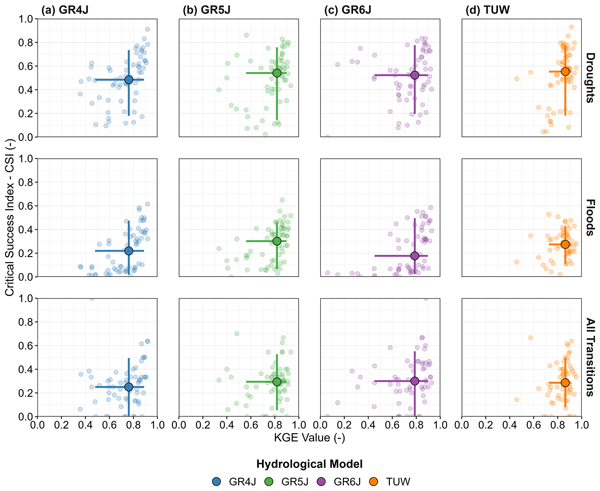
Flood impacts can be enhanced when they occur after droughts, yet the effectiveness of hydrological models in simulating these events remains unclear. Here, we calibrated four conceptual hydrological models across 63 catchments in Chile and Switzerland to assess their ability to detect streamflow extremes and their transitions. We show that drought-to-flood transitions are generally poorly captured, especially in semi-arid high-mountain catchments than in humid low-elevation ones.
Moritz Koch, Jorge Berkhoff, Norbert Blindow, David Farías-Barahona, Pedro Skvarca, Johannes J. Fürst, and Matthias Braun
Earth Syst. Sci. Data Discuss., https://doi.org/10.5194/essd-2025-678, https://doi.org/10.5194/essd-2025-678, 2026
Preprint under review for ESSD
Short summary
Short summary
The Southern Patagonian Icefield is losing glacier area and ice volume rapidly. Although its glaciers share the same plateau, they retreat at different speeds and times. One reason for these differences lies in the unknown landscape beneath the ice. To reveal it, we used helicopter-based radar to measure the ice thickness and map the bedrock of Viedma, Upsala, and Perito Moreno Glaciers.
Sofía Segovia, Pablo A. Mendoza, Miguel Lagos-Zúñiga, Lucía Scaff, and Andreas Prein
EGUsphere, https://doi.org/10.5194/egusphere-2025-3061, https://doi.org/10.5194/egusphere-2025-3061, 2025
Short summary
Short summary
High-resolution climate simulations can improve our understanding of precipitation and temperature patterns in regions with complex terrain. We evaluate a new climate dataset against in-situ observations, and its potencial for hydrological modeling. Results show that, despite some limitations in dry areas, high-resolution climate models can provide information of a quality comparable to that of observation-based products, supporting their use in water resources planning and decision-making.
Fabián Lema, Pablo A. Mendoza, Nicolás A. Vásquez, Naoki Mizukami, Mauricio Zambrano-Bigiarini, and Ximena Vargas
Hydrol. Earth Syst. Sci., 29, 1981–2002, https://doi.org/10.5194/hess-29-1981-2025, https://doi.org/10.5194/hess-29-1981-2025, 2025
Short summary
Short summary
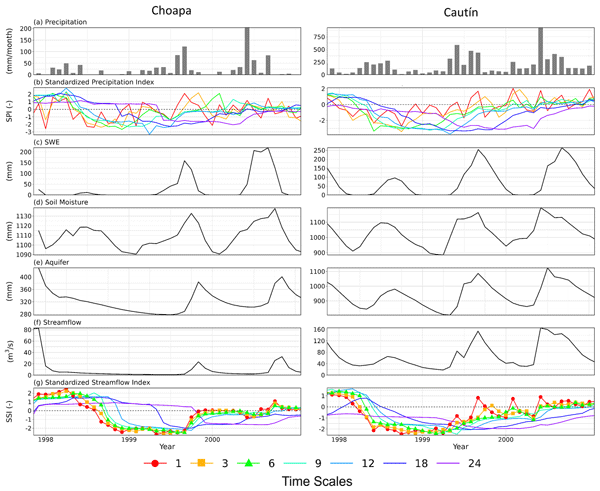
Hydrological droughts affect ecosystems and socioeconomic activities worldwide. Despite the fact that they are commonly described with the Standardized Streamflow Index (SSI), there is limited understanding of what they truly reflect in terms of water cycle processes. Here, we used state-of-the-art hydrological models in Andean basins to examine drivers of SSI fluctuations. The results highlight the importance of careful selection of indices and timescales for accurate drought characterization and monitoring.
Bastian Morales, Marcelo Somos-Valenzuela, Mario Lillo, Iñigo Irarrazaval, David Farias, Elizabet Lizama, Diego Rivera, and Alfonso Fernández
EGUsphere, https://doi.org/10.5194/egusphere-2024-1053, https://doi.org/10.5194/egusphere-2024-1053, 2024
Preprint archived
Short summary
Short summary
Through a physical model, we explored how lacier geometry and topography configuration constrains glacier thinning in the Patagonian Icefields, the world's main glacial freshwater reservoir after Antarctica and Greenland. Our results indicate that about 53 % of the Patagonian Icefield ice flow is susceptible to thinning. Our findings allow for identifying priority glaciers for future research considering climate change projections.
Diego Araya, Pablo A. Mendoza, Eduardo Muñoz-Castro, and James McPhee
Hydrol. Earth Syst. Sci., 27, 4385–4408, https://doi.org/10.5194/hess-27-4385-2023, https://doi.org/10.5194/hess-27-4385-2023, 2023
Short summary
Short summary
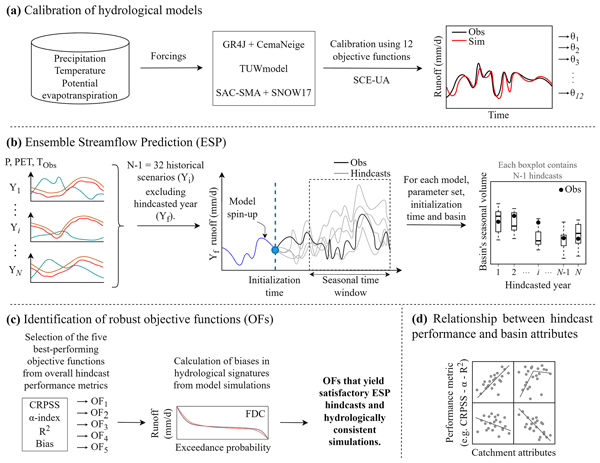
Dynamical systems are used by many agencies worldwide to produce seasonal streamflow forecasts, which are critical for decision-making. Such systems rely on hydrology models, which contain parameters that are typically estimated using a target performance metric (i.e., objective function). This study explores the effects of this decision across mountainous basins in Chile, illustrating tradeoffs between seasonal forecast quality and the models' capability to simulate streamflow characteristics.
Baptiste Vandecrux, Jason E. Box, Andreas P. Ahlstrøm, Signe B. Andersen, Nicolas Bayou, William T. Colgan, Nicolas J. Cullen, Robert S. Fausto, Dominik Haas-Artho, Achim Heilig, Derek A. Houtz, Penelope How, Ionut Iosifescu Enescu, Nanna B. Karlsson, Rebecca Kurup Buchholz, Kenneth D. Mankoff, Daniel McGrath, Noah P. Molotch, Bianca Perren, Maiken K. Revheim, Anja Rutishauser, Kevin Sampson, Martin Schneebeli, Sandy Starkweather, Simon Steffen, Jeff Weber, Patrick J. Wright, Henry Jay Zwally, and Konrad Steffen
Earth Syst. Sci. Data, 15, 5467–5489, https://doi.org/10.5194/essd-15-5467-2023, https://doi.org/10.5194/essd-15-5467-2023, 2023
Short summary
Short summary
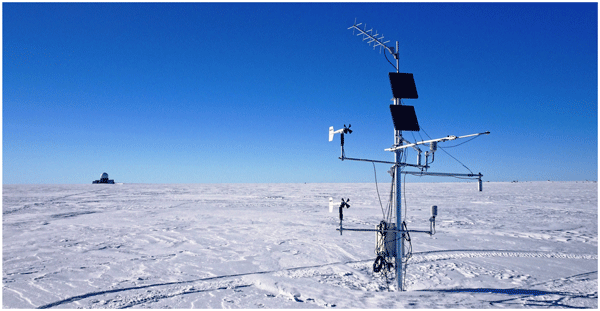
The Greenland Climate Network (GC-Net) comprises stations that have been monitoring the weather on the Greenland Ice Sheet for over 30 years. These stations are being replaced by newer ones maintained by the Geological Survey of Denmark and Greenland (GEUS). The historical data were reprocessed to improve their quality, and key information about the weather stations has been compiled. This augmented dataset is available at https://doi.org/10.22008/FK2/VVXGUT (Steffen et al., 2022).
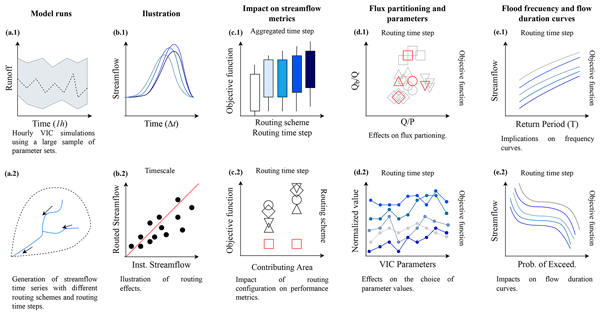
Nicolás Cortés-Salazar, Nicolás Vásquez, Naoki Mizukami, Pablo A. Mendoza, and Ximena Vargas
Hydrol. Earth Syst. Sci., 27, 3505–3524, https://doi.org/10.5194/hess-27-3505-2023, https://doi.org/10.5194/hess-27-3505-2023, 2023
Short summary
Short summary
This paper shows how important river models can be for water resource applications that involve hydrological models and, in particular, parameter calibration. To this end, we conduct numerical experiments in a pilot basin using a combination of hydrologic model simulations obtained from a large sample of parameter sets and different routing methods. We find that routing can affect streamflow simulations, even at monthly time steps; the choice of parameters; and relevant streamflow metrics.
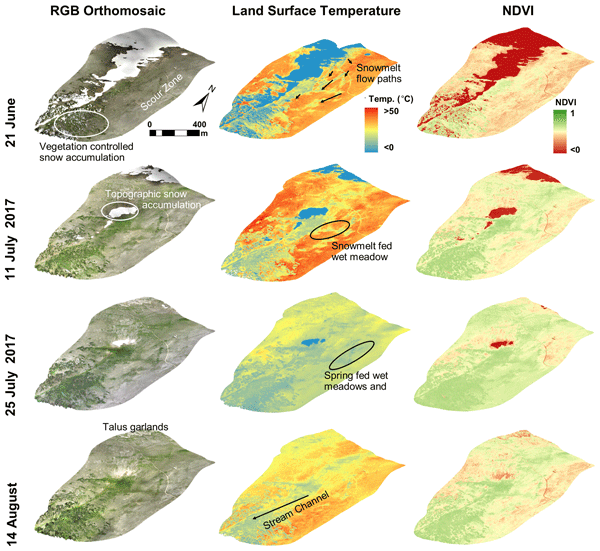
Oliver Wigmore and Noah P. Molotch
Earth Syst. Sci. Data, 15, 1733–1747, https://doi.org/10.5194/essd-15-1733-2023, https://doi.org/10.5194/essd-15-1733-2023, 2023
Short summary
Short summary
We flew a custom-built drone fitted with visible, near-infrared and thermal cameras every week over a summer season at Niwot Ridge in Colorado's alpine tundra. We processed these images into seamless orthomosaics that record changes in snow cover, vegetation health and the movement of water over the land surface. These novel datasets provide a unique centimetre resolution snapshot of ecohydrologic processes, connectivity and spatial and temporal heterogeneity in the alpine zone.
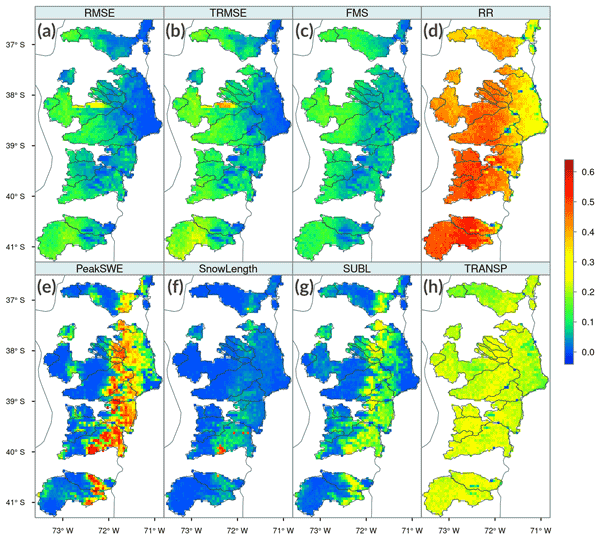
Ulises M. Sepúlveda, Pablo A. Mendoza, Naoki Mizukami, and Andrew J. Newman
Hydrol. Earth Syst. Sci., 26, 3419–3445, https://doi.org/10.5194/hess-26-3419-2022, https://doi.org/10.5194/hess-26-3419-2022, 2022
Short summary
Short summary
This paper characterizes parameter sensitivities across more than 5500 grid cells for a commonly used macroscale hydrological model, including a suite of eight performance metrics and 43 soil, vegetation and snow parameters. The results show that the model is highly overparameterized and, more importantly, help to provide guidance on the most relevant parameters for specific target processes across diverse climatic types.
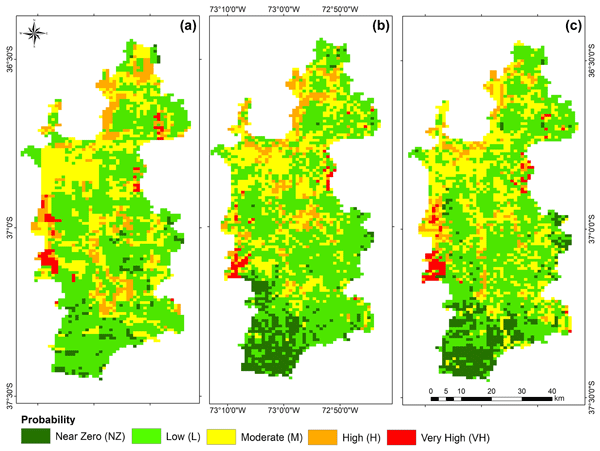
Edilia Jaque Castillo, Alfonso Fernández, Rodrigo Fuentes Robles, and Carolina G. Ojeda
Nat. Hazards Earth Syst. Sci., 21, 3663–3678, https://doi.org/10.5194/nhess-21-3663-2021, https://doi.org/10.5194/nhess-21-3663-2021, 2021
Short summary
Short summary
Wildfires pose risks to lives and livelihoods in many regions of the world. Particularly in Chile's central-south region, climate change, widespread land use change, and urban growth tend to increase the likelihood of fire occurrence. Our work focused on the Concepción metropolitan area, where we developed a model using machine learning in order to map wildfire risks. We found that the interface between urban areas and forestry plantations presents the highest risks.
Oscar M. Baez-Villanueva, Mauricio Zambrano-Bigiarini, Pablo A. Mendoza, Ian McNamara, Hylke E. Beck, Joschka Thurner, Alexandra Nauditt, Lars Ribbe, and Nguyen Xuan Thinh
Hydrol. Earth Syst. Sci., 25, 5805–5837, https://doi.org/10.5194/hess-25-5805-2021, https://doi.org/10.5194/hess-25-5805-2021, 2021
Short summary
Short summary
Most rivers worldwide are ungauged, which hinders the sustainable management of water resources. Regionalisation methods use information from gauged rivers to estimate streamflow over ungauged ones. Through hydrological modelling, we assessed how the selection of precipitation products affects the performance of three regionalisation methods. We found that a precipitation product that provides the best results in hydrological modelling does not necessarily perform the best for regionalisation.
Cited articles
Aguayo, R., Maussion, F., Schuster, L., Schaefer, M., Caro, A., Schmitt, P., Mackay, J., Ultee, L., Leon-Muñoz, J., and Aguayo, M.: Unravelling the sources of uncertainty in glacier runoff projections in the Patagonian Andes (40–56° S), The Cryosphere, 18, 5383–5406, https://doi.org/10.5194/tc-18-5383-2024, 2024.
Ayala, Á., Farías-Barahona, D., Huss, M., Pellicciotti, F., McPhee, J., and Farinotti, D.: Glacier runoff variations since 1955 in the Maipo River basin, in the semiarid Andes of central Chile, The Cryosphere, 14, 2005–2027, https://doi.org/10.5194/tc-14-2005-2020, 2020.
Ayala, A., Pellicciotti, F., MacDonell, S., McPhee, J., and Burlando, P.: Modelling the hydrological response of debris-free and debris-covered glaciers to present climatic conditions in the semiarid Andes of central Chile, Hydrol. Process., 30, 4036–4058, https://doi.org/10.1002/hyp.10971, 2016.
Barria, I., Caro, A., Montecinos, A., and Leiva, C.: Simulation of long-term changes of the equilibrium line altitude in the central Chilean Andes derived from atmospheric variables during the 1958–2018 period, Front. Environ. Sci., 7, 161, https://doi.org/10.3389/fenvs.2019.00161, 2019.
Bellisario, A., Ferrando, F., and Janke, J.: Water resources in Chile: The critical relation between glaciers and mining for sustainable water management, Investig. Geogr., 46, 3, https://doi.org/10.5354/0719-5370.2013.30288, 2013.
Beraud, L., Cusicanqui, D., Rabatel, A., Brun, F., Vincent, C., and Six, D.: Glacier-wide seasonal and annual geodetic mass balances from Pléiades stereo images: application to the Glacier d'Argentière, French Alps, J. Glaciol., 69, 525–537, https://doi.org/10.1017/jog.2022.79, 2023.
Berthier, E., Lebreton, J., Fontannaz, D., Hosford, S., Belart, J. M.-C., Brun, F., Andreassen, L. M., Menounos, B., and Blondel, C.: The Pléiades Glacier Observatory: high-resolution digital elevation models and ortho-imagery to monitor glacier change, The Cryosphere, 18, 5551–5571, https://doi.org/10.5194/tc-18-5551-2024, 2024.
Beyer, R. A., Alexandrov, O., and McMichael, S.: The Ames Stereo Pipeline: NASA's open source software for deriving and processing terrain data, Earth Space Sci., 5, 537–548, https://doi.org/10.1029/2018EA000409, 2018.
Bobadilla, A., Stehr, A., and Toro, N.: Evaluation of climate-change impacts on the temporal and spatial behaviour of drought in south-central Chile, Hydrolog. Sci. J., 69, 165–184, https://doi.org/10.1080/02626667.2023.2288217, 2024.
Boisier, J. P., Rondanelli, R., Garreaud, R. D., and Muñoz, F.: Anthropogenic and natural contributions to the southeast Pacific precipitation decline and recent megadrought in central Chile, Geophys. Res. Lett., 43, 413–421, https://doi.org/10.1002/2015GL067265, 2016.
Braun, M. H., Malz, P., Sommer, C., Farías-Barahona, D., Sauter, T., Casassa, G., Soruco, A., and Seehaus, T.: Constraining glacier elevation and mass changes in South America, Nat. Clim. Change, 9, 130–136, https://doi.org/10.1038/s41558-018-0375-7, 2019.
Brock, B., Rivera, A., Casassa, G., Bown, F., and Acuña, C.: The surface energy balance of an active ice-covered volcano: Villarrica Volcano, southern Chile, Ann. Glaciol., 45, 104–114, https://doi.org/10.3189/172756407782282372, 2007.
Burkey, J.: Mann-Kendall Tau-b with Sen's Method (enhanced), MATLAB Central File Exchange [code], https://www.mathworks.com/matlabcentral/fileexchange/11190-mann-kendall-tau-b-with-sen-s-method-enhanced (last access: 17 July 2026), 2006.
Caro, A., Condom, T., Rabatel, A., Champollion, N., García, N., and Saavedra, F.: Hydrological response of Andean catchments to recent glacier mass loss, The Cryosphere, 18, 2487–2507, https://doi.org/10.5194/tc-18-2487-2024, 2024.
Caro, D. A.: Estudios glaciológicos en los Nevados de Chillán, Undergraduate thesis, Univ. de Chile, Santiago, https://repositorio.uchile.cl/bitstream/handle/2250/116536/caro_d.pdf (last access: 1 June 2025), 2014.
Carrasco-Escaff, T., Rojas, M., Garreaud, R. D., Bozkurt, D., and Schaefer, M.: Climatic control of the surface mass balance of the Patagonian Icefields, The Cryosphere, 17, 1127–1149, https://doi.org/10.5194/tc-17-1127-2023, 2023.
Cogley, J. G.: Geodetic and direct mass-balance measurements: Comparison and joint analysis, Ann. Glaciol., 50, 96–100, https://doi.org/10.3189/172756409787769744, 2009.
Cordero, R. R., Feron, S., Damiani, A., Carrasco, J., Karas, C., Wang, C., Kraamwinkel, C. T., and Beaulieu, A.: Extreme fire weather in Chile driven by climate change and El Niño–Southern Oscillation (ENSO), Sci. Rep., 14, 1974, https://doi.org/10.1038/s41598-024-52481-x, 2024.
DGA: Variaciones recientes de glaciares en Chile, según principales zonas glaciológicas, Dirección General de Aguas, Santiago, Chile, https://bibliotecadigital.ciren.cl/items/507f7130-4e5c-437f-891b-cd98ade9f72a (last access: 1 June 2025), 2011.
DGA: Inventario público de glaciares de Chile, Ministerio de Obras Públicas de Chile, Santiago, https://repositoriodirplan.mop.gob.cl/biblioteca/handle/20.500.12140/219525 (last access: 21 July 2025), 2014.
DGA: Monitoreo de detalle del glaciar noroeste del complejo volcánico Nevados de Chillán, 2020–2021, Región de Ñuble, Ministerio de Obras Públicas, Dirección General de Aguas, Unidad de Glaciología y Nieves, Santiago, S.I.T. 519, https://repositoriodirplan.mop.gob.cl/biblioteca/server/api/core/bitstreams/b254c269-1c27-4142-a150-9ad7c30e8cf3/content (last access: 1 June 2025), 2022.
DGA: Reporte de Balance de Masa del Glaciar Noroeste del Complejo Volcánico Nevados de Chillán, Región de Ñuble, Macrozona Sur, 2023–2024, Ministerio de Obras Públicas, Dirección General de Aguas, Unidad de Glaciología y Nieves, Santiago, S.I.T. 501, https://repositoriodirplan.mop.gob.cl/biblioteca/server/api/core/bitstreams/c865a005-3241-4213-a36d-9386b3accb96/content (last access: 1 June 2025), 2024.
Dixon, H. J., Murphy, M. D., Sparks, R. S. J., Chávez, R., Naranjo, J. A., Dunkley, P. N., Young, S. R., Gilbert, J. S., Pringle, M. S., and Harmon, R. S.: The geology of Nevados de Chillán volcano, Chile, Rev. Geol. Chile, 26, 227–253, https://doi.org/10.4067/S0716-02081999000200006, 1999.
Dussaillant, I., Berthier, E., Brun, F., Masiokas, M., Hugonnet, R., Favier, V., Rabatel, A., Pitte, P., and Ruiz, L.: Two decades of glacier mass loss along the Andes, Nat. Geosci., 12, 802–808, https://doi.org/10.1038/s41561-019-0432-5, 2019.
Farías-Barahona, D., Vivero, S., Casassa, G., Schaefer, M., Burger, F., Seehaus, T., Iribarren-Anacona, P., Escobar, F., and Braun, M. H.: Geodetic mass balances and area changes of Echaurren Norte Glacier (Central Andes, Chile) between 1955 and 2015, Remote Sens., 11, 260, https://doi.org/10.3390/rs11030260, 2019.
Farías-Barahona, D., Ayala, Á., Bravo, C., Vivero, S., Seehaus, T., Vijay, S., Schaefer, M., Buglio, F., Casassa, G., and Braun, M. H.: 60 years of glacier elevation and mass changes in the Maipo River Basin, central Andes of Chile, Remote Sens., 12, 1658, https://doi.org/10.3390/rs12101658, 2020.
Frazier, A. and Singh, K. (Eds.): Fundamentals of Capturing and Processing Drone Imagery and Data, CRC Press, Boca Raton, FL, ISBN 9780367431903, 2021.
Garreaud, R. D., Alvarez-Garreton, C., Barichivich, J., Boisier, J. P., Christie, D., Galleguillos, M., LeQuesne, C., McPhee, J., and Zambrano-Bigiarini, M.: The 2010–2015 megadrought in central Chile: impacts on regional hydroclimate and vegetation, Hydrol. Earth Syst. Sci., 21, 6307–6327, https://doi.org/10.5194/hess-21-6307-2017, 2017.
Garreaud, R. D., Boisier, J. P., Alvarez-Garreton, C., Barichivich, J., Christie, D., LeQuesne, C., McPhee, J., and Zambrano-Bigiarini, M.: The Central Chile Mega Drought (2010–2018): A climate dynamics perspective, Int. J. Climatol., 40, 421–439, https://doi.org/10.1002/joc.6219, 2020.
Girod, L., Nuth, C., Kääb, A., McNabb, R., and Galland, O.: MMASTER: Improved ASTER DEMs for Elevation Change Monitoring, Remote Sens., 9, 704, https://doi.org/10.3390/rs9070704, 2017.
Global Volcanism Program: Report on Nevados de Chillán (Chile) – December 2022, Smithsonian Institution, Bull. Global Volcanism Network, 47, https://volcano.si.edu/showreport.cfm?doi=10.5479/si.GVP.BGVN202212-357070 (last access: 23 September 2026), 2022.
Hugonnet, R., McNabb, R., Berthier, E., Menounos, B., Nuth, C., Girod, L., Farinotti, D., Huss, M., Dussaillant, I., Brun, F., and Kääb, A.: Accelerated global glacier mass loss in the early twenty-first century, Nature, 592, 726–731, https://doi.org/10.1038/s41586-021-03436-z, 2021.
Hugonnet, R., Brun, F., Berthier, E., Dehecq, A., Mannerfelt, E. S., Eckert, N., and Farinotti, D.: Uncertainty analysis of digital elevation models by spatial inference from stable terrain, IEEE J. Sel. Topics Appl. Earth Observ. Remote Sens., 15, 6456–6472, https://doi.org/10.1109/JSTARS.2022.3188922, 2022.
Huss, M.: Density assumptions for converting geodetic glacier volume change to mass change, The Cryosphere, 7, 877–887, https://doi.org/10.5194/tc-7-877-2013, 2013.
Huss, M. and Hock, R.: A new model for global glacier change and sea-level rise, Front. Earth Sci., 3, 54, https://doi.org/10.3389/feart.2015.00054, 2015.
Huss, M. and Hock, R.: Global-scale hydrological response to future glacier mass loss, Nat. Clim. Change, 8, 135–140, https://doi.org/10.1038/s41558-017-0049-x, 2018.
Hutchinson, M. F.: A new procedure for gridding elevation and stream line data with automatic removal of spurious pits, J. Hydrol., 106, 211–232, https://doi.org/10.1016/0022-1694(89)90073-5, 1989.
Immerzeel, W. W., Lutz, A. F., Andrade, M., Bahl, A., Biemans, H., Bolch, T., Hyde, S., Brumby, S., Davies, B. J., Elmore, A. C., Emmer, A., Feng, M., Fernández, A., Haritashya, U., Kargel, J. S., Koppes, M., Kraaijenbrink, P. D. A., Kulkarni, A. V., Mayewski, P. A., Nepal, S., Pacheco, P., Painter, T. H., Pellicciotti, F., Rajaram, H., Rupper, S., Sinisalo, A., Shrestha, A. B., Viviroli, D., Wada, Y., Xiao, C., Yao, T., and Baillie, J. E. M.: Importance and vulnerability of the world's water towers, Nature, 577, 364–369, https://doi.org/10.1038/s41586-019-1822-y, 2020.
James, N. A. and Matteson, D. S.: ecp: An R Package for Nonparametric Multiple Change Point Analysis of Multivariate Data, J. Stat. Softw., 62, 1–25, https://doi.org/10.18637/jss.v062.i07, 2015.
Kaufmann, V., Seier, G., Sulzer, W., Wecht, M., Liu, Q., Lauk, G., and Maurer, M.: ROCK GLACIER MONITORING USING AERIAL PHOTOGRAPHS: CONVENTIONAL VS. UAV-BASED MAPPING – A COMPARATIVE STUDY, Int. Arch. Photogramm. Remote Sens. Spatial Inf. Sci., XLII-1, 239–246, https://doi.org/10.5194/isprs-archives-XLII-1-239-2018, 2018.
Kendall, M. G.: Rank Correlation Methods, Charles Griffin, London, https://search.worldcat.org/title/Rank-correlation-methods/oclc/3827024 (last access: 23 September 2026), 1948.
Lagos-Zúñiga, M., Mendoza, P. A., Campos, D., and Rondanelli, R.: Trends in seasonal precipitation extremes and associated temperatures along continental Chile, Clim. Dynam., 62, 4205–4222, https://doi.org/10.1007/s00382-024-07127-z, 2024.
Li, S., Moreno, M., Bedford, J., Rosenau, M., Heidbach, O., Melnick, D., and Oncken, O.: Postseismic uplift of the Andes following the 2010 Maule earthquake: Implications for mantle rheology, Geophys. Res. Lett., 44, 1768–1776, https://doi.org/10.1002/2016GL071995, 2017.
Mann, H. B.: Nonparametric tests against trend, Econometrica, 13, 245–259, https://doi.org/10.2307/1907187, 1945.
Mark, B. G., Baraer, M., Fernandez, A., Immerzeel, W., Moore, R. D., and Weingartner, R.: Glaciers as water resources, in: The High-Mountain Cryosphere: Environmental Changes and Human Risks, Cambridge University Press, Cambridge, 184–203, https://doi.org/10.1017/CBO9781107588653.011, 2015.
Martínez-Retureta, R., Aguayo, M., Abreu, N. J., Stehr, A., Duran-Llacer, I., Rodríguez-López, L., Sauvage, S., and Sánchez-Pérez, J.-M.: Estimation of the climate change impact on the hydrological balance in basins of south-central Chile, Water, 13, 794, https://doi.org/10.3390/w13060794, 2021.
McCarthy, M., Meier, F., Fatichi, S., Stocker, B. D., Shaw, T. E., Miles, E., Dussaillant, I., and Pellicciotti, F.: Glacier contributions to river discharge during the current Chilean megadrought, Earth's Future, 10, e2022EF002852, https://doi.org/10.1029/2022EF002852, 2022.
Mejías, A., McPhee, J., Mahmoud, H., Farías-Barahona, D., Kinnard, C., MacDonell, S., Montserrat, S., Somos-Valenzuela, M., and Fernandez, A.: Multidecadal estimation of hydrological contribution and glacier mass balance in the semi-arid Andes based on physically based modeling and geodetic mass balance, Front. Earth Sci., 13, 1517081, https://doi.org/10.3389/feart.2025.1517081, 2025.
Naranjo, J. A., Gilbert, J. S., and Sparks, R. S. J.: Geología del Complejo Volcánico Nevados de Chillán, Región del Biobío, Servicio Nacional de Geología y Minería, Carta Geológica de Chile, Serie Geología Básica, No. 114, escala 1:50,000, Santiago, ISSN 0717-7283, https://www.sernageomin.cl/wp-content/uploads/volcanes/01/carta-NevadosdeChillan.pdf (last access: 23 September 2026), 2008.
Nolin, A. W., Phillippe, J., Jefferson, A., and Lewis, S. L.: Present-day and future contributions of glacier runoff to summertime flows in a Pacific Northwest watershed: implications for water resources, Water Resour. Res., 46, W12509, https://doi.org/10.1029/2009WR008968, 2010.
Novoa Lizama, C., Remy, D., Baez, J. C., Oyarzun, A., Bonvalot, S., and Hooper, A.: Modeling magma recharge dynamics during the 2016 Nevados de Chillán eruption: An interacting two-chamber system evidenced by petrology and geodesy, J. Volcanol. Geoth. Res., 458, 108253, https://doi.org/10.1016/j.jvolgeores.2024.108253, 2025.
Nuth, C. and Kääb, A.: Co-registration and bias corrections of satellite elevation data sets for quantifying glacier thickness change, The Cryosphere, 5, 271–290, https://doi.org/10.5194/tc-5-271-2011, 2011.
Over, J.-S. R., Ritchie, A. C., Kranenburg, C. J., Brown, J. A., Buscombe, D. D., Noble, T., Sherwood, C. R., Warrick, J. A., and Wernette, P. A.: Processing coastal imagery with Agisoft Metashape Professional Edition, version 1.6, U.S. Geological Survey Open-File Report 2021–1039, U.S. Geological Survey, https://doi.org/10.3133/ofr20211039, 2021.
Owen, L. A., Thackray, G., Anderson, R. S., Briner, J., Kaufman, D., Roe, G., Pfeffer, W., and Yi, C.: Integrated research on mountain glaciers: current status, priorities and future prospects, Geomorphology, 103, 158–171, https://doi.org/10.1016/j.geomorph.2008.04.019, 2009.
Pilgrim, C.: piecewise-regression (aka segmented regression) in Python, J. Open Source Softw., 6, 3859, https://doi.org/10.21105/joss.03859, 2021.
Poveda, G., Espinoza, J. C., Zuluaga, M. D., Solman, S. A., Garreaud, R., and van Oevelen, P. J.: High impact weather events in the Andes, Front. Earth Sci., 8, 162, https://doi.org/10.3389/feart.2020.00162, 2020.
Rabatel, A., Sirguey, P., Drolon, V., Maisongrande, P., Arnaud, Y., Berthier, E., Davaze, L., Dedieu, J.-P., and Dumont, M.: Annual and seasonal glacier-wide surface mass balance quantified from changes in glacier surface state: a review on existing methods using optical satellite imagery, Remote Sens., 9, 507, https://doi.org/10.3390/rs9050507, 2017.
Ragettli, S. and Pellicciotti, F.: Calibration of a physically based, spatially distributed hydrological model in a glacierized basin: On the use of knowledge from glaciometeorological processes to constrain model parameters, Water Resour. Res., 48, W03509, https://doi.org/10.1029/2011WR010559, 2012.
Ragettli, S., Immerzeel, W. W., and Pellicciotti, F.: Contrasting climate change impact on river flows from high-altitude catchments in the Himalayan and Andes Mountains, P. Natl. Acad. Sci. USA, 113, 9222–9227, https://doi.org/10.1073/pnas.1606526113, 2016.
Rivera, A., Bown, F., Mella, R., Wendt, J., Casassa, G., Acuña, C., Rignot, E., Clavero, J., and Brock, B.: Ice volumetric changes on active volcanoes in southern Chile, Ann. Glaciol., 43, 111–122, https://doi.org/10.3189/172756406781811970, 2006.
Rolstad, C., Haug, T., and Denby, B.: Spatially integrated geodetic glacier mass balance and its uncertainty based on geostatistical analysis: application to the western Svartisen ice cap, Norway, J. Glaciol., 55, 666–680, https://doi.org/10.3189/002214309789470950, 2009.
Rossini, M., Garzonio, R., Panigada, C., Tagliabue, G., Bramati, G., Vezzoli, G., Cogliati, S., Colombo, R., and Di Mauro, B.: Mapping Surface Features of an Alpine Glacier through Multispectral and Thermal Drone Surveys, Remote Sens., 15, 3429, https://doi.org/10.3390/rs15133429, 2023.
Rounce, D. R., Hock, R., McNabb, R. W., Millan, R., Sommer, C., Braun, M. H., Malz, P., Maussion, F., Mouginot, J., Seehaus, T. C., and Shean, D. E.: Distributed Global Debris Thickness Estimates Reveal Debris Significantly Impacts Glacier Mass Balance, Geophys. Res. Lett., 48, e2020GL091311, https://doi.org/10.1029/2020GL091311, 2021.
Rubio-Álvarez, E. and McPhee, J.: Patterns of spatial and temporal variability in streamflow records in south central Chile in the period 1952–2003, Water Resour. Res., 46, W05514, https://doi.org/10.1029/2009WR007982, 2010.
Sarricolea, P., Herrera-Ossandon, M., and Meseguer-Ruiz, Ó.: Climatic regionalisation of continental Chile, J. Maps, 13, 66–73, https://doi.org/10.1080/17445647.2016.1259592, 2017.
Schaefer, M., Machguth, H., Falvey, M., Casassa, G., and Rignot, E.: Quantifying mass balance processes on the Southern Patagonia Icefield, The Cryosphere, 9, 25–35, https://doi.org/10.5194/tc-9-25-2015, 2015.
Schumacher, V., Justino, F., Fernández, A., Meseguer-Ruiz, O., Sarricolea, P., Comin, A., Peroni Venancio, L., and Althoff, D.: Comparison between observations and gridded data sets over complex terrain in the Chilean Andes: Precipitation and temperature, Int. J. Climatol., 40, 5266–5288, https://doi.org/10.1002/joc.6518, 2020.
Schuster, L., Rounce, D. R., and Maussion, F.: Glacier projections sensitivity to temperature-index model choices and calibration strategies, Ann. Glaciol., 64, 293–308, https://doi.org/10.1017/aog.2023.57, 2023.
Sen, P. K.: Estimates of the regression coefficient based on Kendall's tau, J. Am. Stat. Assoc., 63, 1379–1389, https://doi.org/10.1080/01621459.1968.10480934, 1968.
Shean, D., Bhushan, S., Lilien, D., Knuth, F., Schwat, E., Meyer, J., Sharp, M., and Hu, M.: dshean/demcoreg: v1.1.1 Compatibility and doc improvements, Zenodo [code], https://doi.org/10.5281/zenodo.7730376, 2023.
Spencer, M.: millie-spencer/Seven-Decades-Glacier-Loss-Nevados-Chillan: v2.0.1 (Version v2.0.1), Zenodo [data set/code], https://doi.org/10.5281/zenodo.21987345, 2026.
Ultee, L., Coats, S., and Mackay, J.: Glacial runoff buffers droughts through the 21st century, Earth Syst. Dynam., 13, 935–959, https://doi.org/10.5194/esd-13-935-2022, 2022.
USGS EROS Archive: Digital Elevation – Shuttle Radar Topography Mission (SRTM) 1 Arc-Second Global, U.S. Geological Survey [data set], https://doi.org/10.5066/F7PR7TFT, 2018.
Valdés-Pineda, R., Pizarro, R., García-Chevesich, P., Valdés, J. B., Olivares, C., Vera, M., Balocchi, F., Pérez, F., Vallejos, C., Fuentes, R., Abarza, A., and Helwig, B.: Water governance in Chile: Availability, management and climate change, J. Hydrol., 519, 2538–2567, https://doi.org/10.1016/j.jhydrol.2014.04.016, 2014.
Webb, M. J., Winter, J. M., Spera, S. A., Chipman, J. W., and Osterberg, E. C.: Water, agriculture, and climate dynamics in central Chile's Aconcagua River Basin, Phys. Geogr., 42, 395–415, https://doi.org/10.1080/02723646.2020.1790719, 2020.
Westoby, M. J., Brasington, J., Glasser, N. F., Hambrey, M. J., and Reynolds, J. M.: 'Structure-from-Motion' photogrammetry: A low-cost, effective tool for geoscience applications, Geomorphology, 179, 300–314, https://doi.org/10.1016/j.geomorph.2012.08.021, 2012.
Wigmore, O. and Mark, B.: Monitoring tropical debris-covered glacier dynamics from high-resolution unmanned aerial vehicle photogrammetry, Cordillera Blanca, Peru, The Cryosphere, 11, 2463–2480, https://doi.org/10.5194/tc-11-2463-2017, 2017.
Wigmore, O. and Molotch, N. P.: Weekly high-resolution multi-spectral and thermal uncrewed-aerial-system mapping of an alpine catchment during summer snowmelt, Niwot Ridge, Colorado, Earth Syst. Sci. Data, 15, 1733–1747, https://doi.org/10.5194/essd-15-1733-2023, 2023.
xDEM Contributors: xDEM, Version 0.2.2, Zenodo [code], https://doi.org/10.5281/zenodo.19636034, 2026.
Zemp, M., Frey, H., Gärtner-Roer, I., Nussbaumer, S. U., Hoelzle, M., Paul, F., Haeberli, W., Denzinger, F., Ahlstrøm, A. P., Anderson, B., Bajracharya, S., Baroni, C., Braun, L. N., Cáceres, B. E., Casassa, G., Cobos, G., Dávila, L. R., Delgado Granados, H., Demuth, M. N., Espizua, L., Fischer, A., Fujita, K., Gadek, B., Ghazanfar, A., Hagen, J. O., Holmlund, P., Karimi, N., Li, Z., Pelto, M., Pitte, P., Popovnin, V. V., Portocarrero, C. A., Prinz, R., Sangewar, C. V., Severskiy, I., Sigurđsson, O., Soruco, A., Usubaliev, R., and Vincent, C.: Historically unprecedented global glacier decline in the early 21st century, J. Glaciol., 61, 745–762, https://doi.org/10.3189/2015JoG15J017, 2015.
Zemp, M., Huss, M., Thibert, E., Eckert, N., McNabb, R., Huber, J., Barandun, M., Machguth, H., Nussbaumer, S. U., Gärtner-Roer, I., Thomson, L., Paul, F., Maussion, F., Dussaillant, I., Berthier, E., and Hock, R.: Global glacier mass changes and their contributions to sea-level rise from 1961 to 2016, Nature, 568, 382–386, https://doi.org/10.1038/s41586-019-1071-0, 2019.
Zenteno, P.: Variaciones recientes de los glaciares en la zona centro sur de Chile y su relación con los cambios climáticos y la actividad volcánica, Undergraduate thesis, Universidad de Chile, Facultad de Arquitectura y Urbanismo, Santiago, https://repositorio.uchile.cl/handle/2250/100068 (last access: 24 September 2026), 2008.
Short summary
Mountain glaciers are important freshwater reservoirs. Quantifying their loss is essential for forecasting water availability. While glacier retreat is well studied in many regions, glacier loss on the Nevados de Chillán volcanic complex in south-central Chile remains uncertain. Using satellite and drone images, we find all 28 glaciers on Nevados de Chillán lost volume over the past 7 decades, with melt rates accelerating markedly since 2000.
Mountain glaciers are important freshwater reservoirs. Quantifying their loss is essential for...


