
Articles | Volume 20, issue 4
https://doi.org/10.5194/tc-20-2035-2026
© Author(s) 2026. This work is distributed under
the Creative Commons Attribution 4.0 License.
the Creative Commons Attribution 4.0 License.
https://doi.org/10.5194/tc-20-2035-2026
© Author(s) 2026. This work is distributed under
the Creative Commons Attribution 4.0 License.
the Creative Commons Attribution 4.0 License.
Research article
| 
13 Apr 2026
Research article |
| 13 Apr 2026
| 13 Apr 2026
A thinner-than-present West Antarctic Ice Sheet in the southern Weddell Sea Embayment during the Holocene

Department of Geography, Durham University, Durham, UK
Réka-H. Fülöp
School of Earth, Atmospheric and Life Sciences, University of Wollongong, NSW, Australia
Center for Accelerator Science, Australian Nuclear Science and Technology Organisation (ANSTO), Lucas Heights 2234, NSW, Australia
Rachel K. Smedley
Department of Geography and Planning, University of Liverpool, Liverpool, UK
Thomas Lees
Department of Geography, Durham University, Durham, UK
Stephan Trabucatti
Department of Geography, Durham University, Durham, UK
3D Drilling, East Grinstead, UK
Derek Fabel
Scottish Universities Environmental Research Center (SUERC), University of Glasgow, East Kilbride, UK
Maria Miguens-Rodriguez
Scottish Universities Environmental Research Center (SUERC), University of Glasgow, East Kilbride, UK
Andrew M. Smith
Center for Accelerator Science, Australian Nuclear Science and Technology Organisation (ANSTO), Lucas Heights 2234, NSW, Australia
Grant V. Boeckmann
Niels Bohr Institute, University of Copenhagen, Copenhagen, Denmark
Related authors
Neil Ross, Rebecca J. Sanderson, Bernd Kulessa, Martin Siegert, Guy J. G. Paxman, Keir A. Nichols, Matthew R. Siegfried, Stewart S. R. Jamieson, Michael J. Bentley, Tom A. Jordan, Christine L. Batchelor, David Small, Olaf Eisen, Kate Winter, Robert G. Bingham, S. Louise Callard, Rachel Carr, Christine F. Dow, Helen A. Fricker, Emily Hill, Benjamin H. Hills, Coen Hofstede, Hafeez Jeofry, Felipe Napoleoni, and Wilson Sauthoff
The Cryosphere, 20, 3705–3737, https://doi.org/10.5194/tc-20-3705-2026, https://doi.org/10.5194/tc-20-3705-2026, 2026
Short summary
Short summary
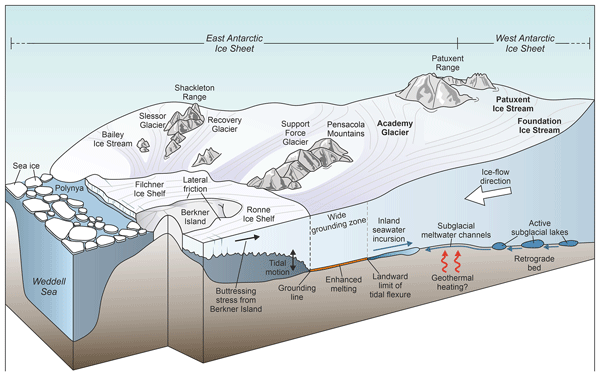
We review research about a group of fast-flowing Antarctic ice streams, the Foundation-Patuxent-Academy System. Previously, we knew little about how these ice streams flow, how they interact with each other and the ocean, what their geological history was, and how they might evolve in a warming world. By reviewing existing research, we have identified the future research needed to determine how these ice streams function, and how they might contribute to future global sea level rise.
Rachel K. Smedley, David Small, Richard S. Jones, Stephen Brough, Jennifer Bradley, and Geraint T. H. Jenkins
Geochronology, 3, 525–543, https://doi.org/10.5194/gchron-3-525-2021, https://doi.org/10.5194/gchron-3-525-2021, 2021
Short summary
Short summary
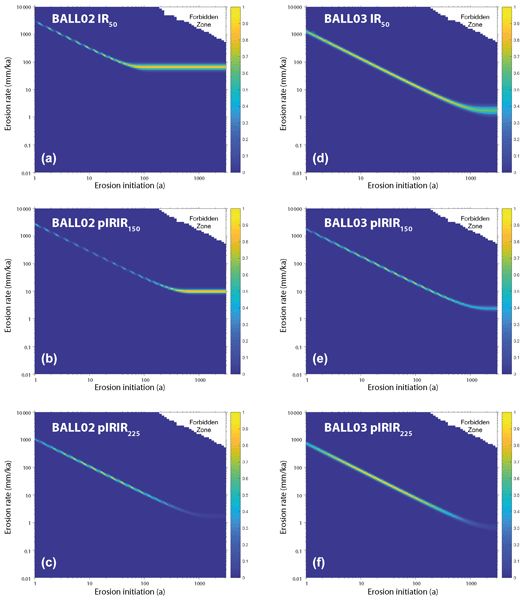
We apply new rock luminescence techniques to a well-constrained scenario of the Beinn Alligin rock avalanche, NW Scotland. We measure accurate erosion rates consistent with independently derived rates and reveal a transient state of erosion over the last ~4000 years in the wet, temperate climate of NW Scotland. This study shows that the new luminescence erosion-meter has huge potential for inferring erosion rates on sub-millennial scales, which is currently impossible with existing techniques.
Klaus M. Wilcken, Réka-H. Fülöp, Krista Simon, Steve Kotevski, Alexandru T. Codilean, Anna H. Rood, and Dylan H. Rood
EGUsphere, https://doi.org/10.5194/egusphere-2026-5512, https://doi.org/10.5194/egusphere-2026-5512, 2026
This preprint is open for discussion and under review for Geochronology (GChron).
Short summary
Short summary
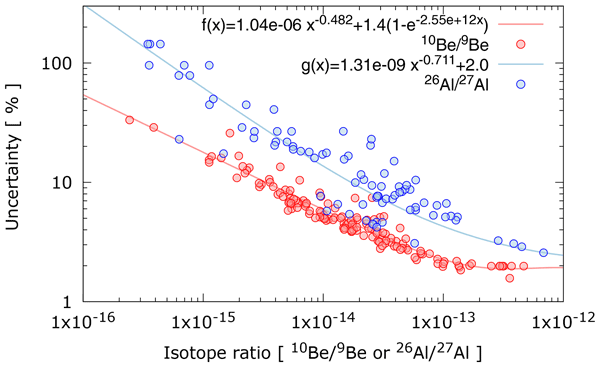
Cosmogenic isotopes 10Be and 26Al are widely used in geochronology. However, quality assurance practices vary between laboratories, and international round-robin exercises are typically only a snapshot in time and often about one reference material. To fill this gap, we present results from a broad range of quality assurance materials to trace sources of uncertainty to different parts of the workflow and assign realistic uncertainties for the cosmogenic isotope analysis.
Neil Ross, Rebecca J. Sanderson, Bernd Kulessa, Martin Siegert, Guy J. G. Paxman, Keir A. Nichols, Matthew R. Siegfried, Stewart S. R. Jamieson, Michael J. Bentley, Tom A. Jordan, Christine L. Batchelor, David Small, Olaf Eisen, Kate Winter, Robert G. Bingham, S. Louise Callard, Rachel Carr, Christine F. Dow, Helen A. Fricker, Emily Hill, Benjamin H. Hills, Coen Hofstede, Hafeez Jeofry, Felipe Napoleoni, and Wilson Sauthoff
The Cryosphere, 20, 3705–3737, https://doi.org/10.5194/tc-20-3705-2026, https://doi.org/10.5194/tc-20-3705-2026, 2026
Short summary
Short summary
We review research about a group of fast-flowing Antarctic ice streams, the Foundation-Patuxent-Academy System. Previously, we knew little about how these ice streams flow, how they interact with each other and the ocean, what their geological history was, and how they might evolve in a warming world. By reviewing existing research, we have identified the future research needed to determine how these ice streams function, and how they might contribute to future global sea level rise.
Léa Rodari, Audrey Margirier, Ann V. Rowan, Christoph Schmidt, Remy Veness, Charlotte S. Curry, Alex C. Scoffield, Christiaan R. Diemont, Faye Perchanok, Guillaume Jouvet, Vivi Pedersen, Derek Fabel, and Georgina E. King
EGUsphere, https://doi.org/10.5194/egusphere-2026-1536, https://doi.org/10.5194/egusphere-2026-1536, 2026
Short summary
Short summary
By combining innovative dating techniques and glacier modelling, we studied how sediment is produced, transported, and stored within the Mer de Glace catchment in the French Alps. We show that whilst sediment is transported through the glacier in less than a millennium, some sediment can be stored for many thousands of years before being re-entrained into glacial transport. This long-term storage affects how landscapes evolve and how climate signals are preserved during deglaciation.
Julien Westhoff, Grant Vernon Boeckmann, Nicholas Mossor Rathmann, and Steffen Bo Hansen
The Cryosphere, 19, 3623–3630, https://doi.org/10.5194/tc-19-3623-2025, https://doi.org/10.5194/tc-19-3623-2025, 2025
Short summary
Short summary
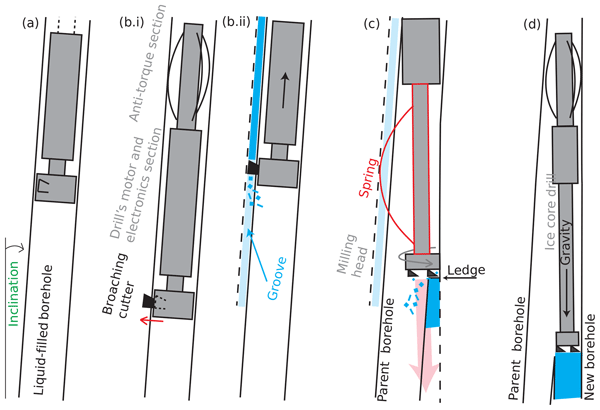
We report on the successful test of a new replicate drilling system for ice cores. This system allows for the ice core drill to deviate from the parent (the original borehole), drilling into the side of the wall. Thus, we can produce a second ice core from any desired depth, increasing the amount of sample available for scientific purposes. In the paper, we present the results from the first field tests and the challenges we encountered.
Jörg Robl, Fabian Dremel, Kurt Stüwe, Stefan Hergarten, Christoph von Hagke, and Derek Fabel
Earth Surf. Dynam., 13, 745–770, https://doi.org/10.5194/esurf-13-745-2025, https://doi.org/10.5194/esurf-13-745-2025, 2025
Short summary
Short summary
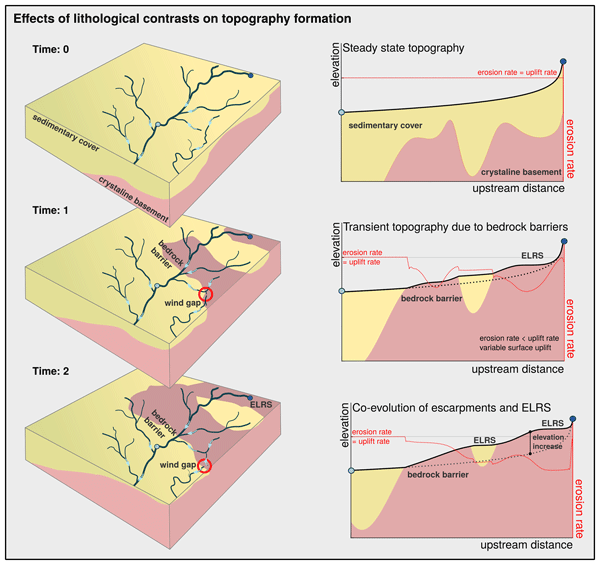
The Bohemian Massif is one of several low mountain ranges in Europe that rises more than 1 km above the surrounding lowlands. Landscape characteristics indicate relief rejuvenation due to recent surface uplift. To constrain the pace of relief formation, we determined erosion rates of 20 catchments that range from 22 to 51 m Myr-1. Correlating these rates with topographic properties reveals that contrasts in bedrock erodibility represent a critical control of landscape evolution.
Vasilii V. Petrenko, Segev BenZvi, Michael Dyonisius, Benjamin Hmiel, Andrew M. Smith, and Christo Buizert
The Cryosphere, 18, 3439–3451, https://doi.org/10.5194/tc-18-3439-2024, https://doi.org/10.5194/tc-18-3439-2024, 2024
Short summary
Short summary
This manuscript presents the concept for a new proxy for past variations in the galactic cosmic ray flux (GCR). Past variations in GCR flux are important to understand for interpretation of records of isotopes produced by cosmic rays; these records are used for reconstructing solar variations and past land ice extent. The proxy involves using measurements of 14CO in ice cores, which should provide an uncomplicated and precise estimate of past GCR flux variations for the past few thousand years.
Benjamin Hmiel, Vasilii V. Petrenko, Christo Buizert, Andrew M. Smith, Michael N. Dyonisius, Philip Place, Bin Yang, Quan Hua, Ross Beaudette, Jeffrey P. Severinghaus, Christina Harth, Ray F. Weiss, Lindsey Davidge, Melisa Diaz, Matthew Pacicco, James A. Menking, Michael Kalk, Xavier Faïn, Alden Adolph, Isaac Vimont, and Lee T. Murray
The Cryosphere, 18, 3363–3382, https://doi.org/10.5194/tc-18-3363-2024, https://doi.org/10.5194/tc-18-3363-2024, 2024
Short summary
Short summary
The main aim of this research is to improve understanding of carbon-14 that is produced by cosmic rays in ice sheets. Measurements of carbon-14 in ice cores can provide a range of useful information (age of ice, past atmospheric chemistry, past cosmic ray intensity). Our results show that almost all (>99 %) of carbon-14 that is produced in the upper layer of ice sheets is rapidly lost to the atmosphere. Our results also provide better estimates of carbon-14 production rates in deeper ice.
Michael N. Dyonisius, Vasilii V. Petrenko, Andrew M. Smith, Benjamin Hmiel, Peter D. Neff, Bin Yang, Quan Hua, Jochen Schmitt, Sarah A. Shackleton, Christo Buizert, Philip F. Place, James A. Menking, Ross Beaudette, Christina Harth, Michael Kalk, Heidi A. Roop, Bernhard Bereiter, Casey Armanetti, Isaac Vimont, Sylvia Englund Michel, Edward J. Brook, Jeffrey P. Severinghaus, Ray F. Weiss, and Joseph R. McConnell
The Cryosphere, 17, 843–863, https://doi.org/10.5194/tc-17-843-2023, https://doi.org/10.5194/tc-17-843-2023, 2023
Short summary
Short summary
Cosmic rays that enter the atmosphere produce secondary particles which react with surface minerals to produce radioactive nuclides. These nuclides are often used to constrain Earth's surface processes. However, the production rates from muons are not well constrained. We measured 14C in ice with a well-known exposure history to constrain the production rates from muons. 14C production in ice is analogous to quartz, but we obtain different production rates compared to commonly used estimates.

Tancrède P. M. Leger, Andrew S. Hein, Ángel Rodés, Robert G. Bingham, Irene Schimmelpfennig, Derek Fabel, Pablo Tapia, and ASTER Team
Clim. Past, 19, 35–59, https://doi.org/10.5194/cp-19-35-2023, https://doi.org/10.5194/cp-19-35-2023, 2023
Short summary
Short summary
Over the past 800 thousand years, variations in the Earth’s orbit and tilt have caused antiphased solar insolation intensity in the Northern and Southern Hemispheres. Paradoxically, glacial records suggest that global ice sheets have responded synchronously to major cold glacial and warm interglacial episodes. To address this puzzle, we present a new detailed glacier chronology that estimates the timing of multiple Patagonian ice-sheet waxing and waning cycles over the past 300 thousand years.
Jason P. Briner, Caleb K. Walcott, Joerg M. Schaefer, Nicolás E. Young, Joseph A. MacGregor, Kristin Poinar, Benjamin A. Keisling, Sridhar Anandakrishnan, Mary R. Albert, Tanner Kuhl, and Grant Boeckmann
The Cryosphere, 16, 3933–3948, https://doi.org/10.5194/tc-16-3933-2022, https://doi.org/10.5194/tc-16-3933-2022, 2022
Short summary
Short summary
The 7.4 m of sea level equivalent stored as Greenland ice is getting smaller every year. The uncertain trajectory of ice loss could be better understood with knowledge of the ice sheet's response to past climate change. Within the bedrock below the present-day ice sheet is an archive of past ice-sheet history. We analyze all available data from Greenland to create maps showing where on the ice sheet scientists can drill, using currently available drills, to obtain sub-ice materials.
Klaus M. Wilcken, Alexandru T. Codilean, Réka-H. Fülöp, Steven Kotevski, Anna H. Rood, Dylan H. Rood, Alexander J. Seal, and Krista Simon
Geochronology, 4, 339–352, https://doi.org/10.5194/gchron-4-339-2022, https://doi.org/10.5194/gchron-4-339-2022, 2022
Short summary
Short summary
Cosmogenic nuclides are now widely applied in the Earth sciences; however, more recent applications often push the analytical limits of the technique. Our study presents a comprehensive method for analysis of cosmogenic 10Be and 26Al samples down to isotope concentrations of a few thousand atoms per gram of sample, which opens the door to new and more varied applications of cosmogenic nuclide analysis.
Rachel K. Smedley, David Small, Richard S. Jones, Stephen Brough, Jennifer Bradley, and Geraint T. H. Jenkins
Geochronology, 3, 525–543, https://doi.org/10.5194/gchron-3-525-2021, https://doi.org/10.5194/gchron-3-525-2021, 2021
Short summary
Short summary
We apply new rock luminescence techniques to a well-constrained scenario of the Beinn Alligin rock avalanche, NW Scotland. We measure accurate erosion rates consistent with independently derived rates and reveal a transient state of erosion over the last ~4000 years in the wet, temperate climate of NW Scotland. This study shows that the new luminescence erosion-meter has huge potential for inferring erosion rates on sub-millennial scales, which is currently impossible with existing techniques.
Cited articles
Ackert Jr., R. P., Mukhopadhyay, S., Parizek, B. R., and Borns, H. W.: Ice elevation near the West Antarctic Ice Sheet divide during the last glaciation, Geophys. Res. Lett., 34, L21506, https://doi.org/10.1029/2007GL031412, 2007.
Adams, J. R., Johnson, J. S., Roberts, S. J., Mason, P. J., Nichols, K. A., Venturelli, R. A., Wilcken, K., Balco, G., Goehring, B., Hall, B., Woodward, J., and Rood, D. H.: New 10Be exposure ages improve Holocene ice sheet thinning history near the grounding line of Pope Glacier, Antarctica, The Cryosphere, 16, 4887–4905, https://doi.org/10.5194/tc-16-4887-2022, 2022.
Albrecht, T., Winkelmann, R., and Levermann, A.: Glacial-cycle simulations of the Antarctic Ice Sheet with the Parallel Ice Sheet Model (PISM) – Part 2: Parameter ensemble analysis, The Cryosphere, 14, 633–656, https://doi.org/10.5194/tc-14-633-2020, 2020.
Balco, G.: Reviewer comment on “A thinner-than-present West Antarctic Ice Sheet in the southern Weddell Sea Embayment during the Holocene”, RC1, https://doi.org/10.5194/egusphere-2025-4794-RC1, 2025.
Balco, G., Brown, N., Nichols, K., Venturelli, R. A., Adams, J., Braddock, S., Campbell, S., Goehring, B., Johnson, J. S., Rood, D. H., Wilcken, K., Hall, B., and Woodward, J.: Author comment on “Reversible ice sheet thinning in the Amundsen Sea Embayment during the Late Holocene”, AC2, https://doi.org/10.5194/tc-2022-172-AC2, 2022.
Balco, G., Brown, N., Nichols, K., Venturelli, R. A., Adams, J., Braddock, S., Campbell, S., Goehring, B., Johnson, J. S., Rood, D. H., Wilcken, K., Hall, B., and Woodward, J.: Reversible ice sheet thinning in the Amundsen Sea Embayment during the Late Holocene, The Cryosphere, 17, 1787–1801, https://doi.org/10.5194/tc-17-1787-2023, 2023.
Bentley, M. J., Fogwill, C. J., Le Brocq, A. M., Hubbard, A. L., Sugden, D. E., Dunai, T. J., and Freeman, S. P.: Deglacial history of the West Antarctic Ice Sheet in the Weddell Sea embayment: Constraints on past ice volume change, Geology, 38, 411–414, https://doi.org/10.1130/G30754.1, 2010.
Bintanja, R.: On the glaciological, meteorological, and climatological significance of Antarctic blue ice areas, Rev. Geophys., 37, 337–359, https://doi.org/10.1029/1999RG900007, 1999.
Bintanja, R., Severijns, C., Haarsma, R., and Hazeleger, W.: The future of Antarctica's surface winds simulated by a high-resolution global climate model: 2. Drivers of 21st century changes, J. Geophys. Res.-Atmos., 119, 7160–7178, https://doi.org/10.1002/2013JD020848, 2014.
Boeckmann, G. V., Gibson, C. J., Kuhl, T. W., Moravec, E., Johnson, J. A., Meulemans, Z., and Slawny, K.: Adaptation of the Winkie Drill for subglacial bedrock sampling, Ann. Glaciol., 62, 109–117, https://doi.org/10.1017/aog.2020.73, 2021.
Bradley, S. L., Hindmarsh, R. C., Whitehouse, P. L., Bentley, M. J., and King, M. A.: Low post-glacial rebound rates in the Weddell Sea due to Late Holocene ice-sheet readvance, Earth Planet. Sc. Lett., 413, 79–89, https://doi.org/10.1016/j.epsl.2014.12.039, 2015.
Braddock, S., Venturelli, R. A., Nichols, K., Moravec, E., Boeckmann, G. V., Campbell, S., Balco, G., Ackert, R., Small, D., Johnson, J. S., Dunbar, N., Woodward, J., Mukhopadhyay, S., and Goehrong, G.: Lessons learned from shallow subglacial bedrock drilling campaigns in Antarctica, Ann. Glaciol., 65, 1–11, https://doi.org/10.1017/aog.2024.12, 2024.
Brisbourne, A. M., Martin, C., Smith, A. M., Baird, A. F., Kendall, J. M., and Kingslake, J.: Constraining recent ice flow history at Korff Ice Rise, West Antarctica, using radar and seismic measurements of ice fabric, J. Geophys. Res.-Earth, 124, 175–194, https://doi.org/10.1029/2018JF004776, 2019.
Caron, L. and Ivins, E. R.: A baseline Antarctic GIA correction for space gravimetry, Earth Planet. Sc. Lett., 531, 115957, https://doi.org/10.1016/j.epsl.2019.115957, 2020.
Creel, R. C., Austermann, J., Kopp, R. E., Khan, N. S., Albrecht, T., and Kingslake, J.: Global mean sea level likely higher than present during the Holocene, Nat. Commun., 15, 10731, https://doi.org/10.1038/s41467-024-54535-0, 2024.
DeConto, R. M. and Pollard, D.: Contribution of Antarctica to past and future sea-level rise, Nature, 531, 591–597, https://doi.org/10.1038/nature17145, 2016.
Evans, D. J.: Controlled moraines: origins, characteristics and palaeoglaciological implications, Quaternary Sci. Rev., 28, 183–208, https://doi.org/10.1016/j.quascirev.2008.10.024, 2009.
Fink, D., Hotchkis, M., Hua, Q., Jacobsen, G., Smith, A. M., Zoppi, U., Child, D., Mifsud, C., van der Gaast, H., Williams, A., and Williams, M.: The ANTARES AMS facility at ANSTO, Nucl. Instrum. Meth. B, 223, 109–115, https://doi.org/10.1016/j.nimb.2004.04.025, 2004.
Fülöp, R. H., Fink, D., Yang, B., Codilean, A. T., Smith, A., Wacker, L., Levchenko, V., and Dunai, T. J.: The ANSTO-University of Wollongong in-situ 14C extraction laboratory, Nucl. Instrum. Meth. B, 438, 207–213, https://doi.org/10.1016/j.nimb.2018.04.018, 2019.
Grieman, M. M., Nehrbass-Ahles, C., Hoffmann, H. M., Bauska, T. K., King, A. C., Mulvaney, R., Rhodes, R. H., Rowell, I. F., Thomas, E. R., and Wolff, E. W.: Abrupt Holocene ice loss due to thinning and ungrounding in the Weddell Sea Embayment, Nat. Geosci., 17, 227–232, https://doi.org/10.1038/s41561-024-01375-8, 2024.
Gomez, N., Pollard, D., and Holland, D.: Sea-level feedback lowers projections of future Antarctic Ice-Sheet mass loss, Nat. Commun., 6, 8798, https://doi.org/10.1038/ncomms9798, 2015.
Gomez, N., Latychev, K., and Pollard, D.: A coupled ice sheet–sea level model incorporating 3D Earth structure: variations in Antarctica during the last deglacial retreat, J. Climate, 31, 4041–4054, https://doi.org/10.1175/JCLI-D-17-0352.1, 2018.
Gosse, J. C. and Phillips, F. M.: Terrestrial in situ cosmogenic nuclides: theory and application, Quaternary Sci. Rev., 20, 1475–1560, https://doi.org/10.1016/S0277-3791(00)00171-2, 2001.
Hein, A. S., Marrero, S. M., Woodward, J., Dunning, S. A., Winter, K., Westoby, M. J., Freeman, S. P., Shanks, R. P., and Sugden, D. E.: Mid-Holocene pulse of thinning in the Weddell Sea sector of the West Antarctic ice sheet, Nat. Commun, 7, 12511, https://doi.org/10.1038/ncomms12511, 2016.
Hill, E. A., Rosier, S. H. R., Gudmundsson, G. H., and Collins, M.: Quantifying the potential future contribution to global mean sea level from the Filchner–Ronne basin, Antarctica, The Cryosphere, 15, 4675–4702, https://doi.org/10.5194/tc-15-4675-2021, 2021.
Hillenbrand, C. D., Bentley, M. J., Stolldorf, T. D., Hein, A. S., Kuhn, G., Graham, A. G., Fogwill, C. J., Kristoffersen, Y., Smith, J. A., Anderson, J. B., and Larter, R. D.: Reconstruction of changes in the Weddell Sea sector of the Antarctic Ice Sheet since the Last Glacial Maximum, Quaternary Sci. Rev., 100, 111–136, https://doi.org/10.1016/j.quascirev.2013.07.020, 2014.
Johnson, J. S., Nichols, K. A., Goehring, B. M., Balco, G., and Schaefer, J. M.: Abrupt mid-Holocene ice loss in the western Weddell Sea Embayment of Antarctica, Earth Planet. Sc. Lett., 518, 127–135, https://doi.org/10.1016/j.epsl.2019.05.002, 2019.
Johnson, J. S., Venturelli, R. A., Balco, G., Allen, C. S., Braddock, S., Campbell, S., Goehring, B. M., Hall, B. L., Neff, P. D., Nichols, K. A., Rood, D. H., Thomas, E. R., and Woodward, J.: Review article: Existing and potential evidence for Holocene grounding line retreat and readvance in Antarctica, The Cryosphere, 16, 1543–1562, https://doi.org/10.5194/tc-16-1543-2022, 2022.
Jones, R. S., Johnson, J. S., Lin, Y., Mackintosh, A. N., Sefton, J. P., Smith, J. A., Thomas, E. R., and Whitehouse, P. L.: Stability of the Antarctic Ice Sheet during the pre-industrial Holocene, Nat. Rev. Earth Environ., 3, 500–515, https://doi.org/10.1038/s43017-022-00309-5, 2022.
Kachuck, S. B., Martin, D. F., Bassis, J. N., and Price, S. F.: Rapid viscoelastic deformation slows marine ice sheet instability at Pine Island Glacier, Geophys. Res. Lett., 47, e2019GL086446, https://doi.org/10.1029/2019GL086446, 2020.
King, M. A., Watson, C. S., and White, D.: GPS rates of vertical bedrock motion suggest Late Holocene Ice-Sheet readvance in a critical sector of East Antarctica, Geophys. Res. Lett., 49, e2021GL097232, https://doi.org/10.1029/2021GL097232, 2022.
Kingslake, J., Scherer, R. P., Albrecht, T., Coenen, J., Powell, R. D., Reese, R., Stansell, N. D., Tulaczyk, S., Wearing, M. G., and Whitehouse, P. L.: Extensive retreat and re-advance of the West Antarctic Ice Sheet during the Holocene, Nature, 558, 430–434, https://doi.org/10.1038/s41586-018-0208-x, 2018.
Koutnik, M. R., Fudge, T. J., Conway, H., Waddington, E. D., Neumann, T. A., Cuffey, K. M., Buizert, C., and Taylor, K. C.: Holocene accumulation and ice flow near the West Antarctic Ice Sheet Divide ice core site, J. Geophys. Res.-Earth, 121, 907–924, https://doi.org/10.1002/2015JF003668, 2016.
Luo, M., Chen, J., Liu, J., Qin, J., Owen, L. A., Han, F., Yang, H., Wang, H., Zhang, B., Yin, J., and Li, Y.: A test of rock surface luminescence dating using glaciofluvial boulders from the Chinese Pamir, Radiat. Meas., 120, 290–297, https://doi.org/10.1016/j.radmeas.2018.07.017, 2018.
Luo, M., Chen, J., Owen, L. A., Qin, J., Yin, J., Yang, H., Liu, J., Gong, Z., and Luo, J.: A novel approach for reconstructing slip histories for bedrock fault scarps using rock surface luminescence dating, Geophys. Res. Lett., 49, p.e2022GL099526, https://doi.org/10.1029/2022GL099526, 2022.
Lupker, M., Hippe, K., Wacker, L., Kober, F., Maden, C., Braucher, R., Bourlès, D., Romani, J. V., and Wieler, R.,: Depth-dependence of the production rate of in situ 14C in quartz from the Leymon High core, Spain, Quat. Geochronol., 28, 80–87, https://doi.org/10.1016/j.quageo.2015.04.004, 2015.
Marrero, S. M., Hein, A. S., Naylor, M., Attal, M., Shanks, R., Winter, K., Woodward, J., Dunning, S., Westoby, M., and Sugden, D.: Controls on subaerial erosion rates in Antarctica, Earth Planet. Sc. Lett., 501, 56–66, https://doi.org/10.1016/j.epsl.2018.08.018, 2018.
Matsuoka, K., Skoglund, A., Roth, G., de Pomereu, J., Griffiths, H., Headland, R., Herried, B., Katsumata, K., Le Brocq, A., Licht, K., Morgan, F., Neff, P. D., Ritz, C., Scheinert, M., Tamura, T. Van de Putte, A., van den Broeke, M., von Deschwanden, A., Deschamps-Berger, C., Van Liefferinge, B., Tronstad, S., and Melvær, Y.: Quantarctica, an integrated mapping environment for Antarctica, the Southern Ocean, and sub-Antarctic islands, Environ. Modell. Softw., 140, 105015, https://doi.org/10.1016/j.envsoft.2021.105015, 2021.
Nichols, K. A., Goehring, B. M., Balco, G., Johnson, J. S., Hein, A. S., and Todd, C.: New Last Glacial Maximum ice thickness constraints for the Weddell Sea Embayment, Antarctica, The Cryosphere, 13, 2935–2951, https://doi.org/10.5194/tc-13-2935-2019, 2019.
Nichols, K. A., Adams, J. R., Brown, K., Creel, R. C., McKenzie, M. A., Venturelli, R. A., Johnson, J. S., Rood, D. H., Wilcken, K., Woodward, J., and Roberts, S. J.: Direct geologic constraints on the timing of Late Holocene ice thickening in the Amundsen Sea Embayment, Antarctica, Geophys. Res. Lett., 51, e2024GL110350, https://doi.org/10.1029/2024GL110350, 2024.
Ou, X. J., Roberts, H. M., Duller, G. A. T., Gunn, M. D., and Perkins, W. T.: Attenuation of light in different rock types and implications for rock surface luminescence dating, Radiat. Meas., 120, 305–311., https://doi.org/10.1016/j.radmeas.2018.06.027 2018.
Pittard, M. L., Whitehouse, P. L., Bentley, M. J., and Small, D.: An ensemble of Antarctic deglacial simulations constrained by geological observations, Quaternary Sci. Rev., 298, 107800, https://doi.org/10.1016/j.quascirev.2022.107800, 2022.
Pritchard, H. D., Fretwell, P. T., Fremand, A. C., Bodart, J. A., Kirkham, J. D., Aitken, A., Bamber, J., Bell, R., Bianchi, C., Bingham, R. G. Blankenship, D. D., Casassa, G., Christianson, K., Conway, H., Corr, H. J. F., Cui, X., Damaske, D., Damm, V., Dorschel, B., Drews, R., Eagles, G., Eisen, O., Eisermann, H., Ferraccioli, F., Field, E., Forsberg, R., Franke, S., Goel, V., Gogineni, S. P., Greenbaum, J., Hills, B., Hindmarsh, R. C.A, Hoffman, A. O., Holschuh, N., Holt, J. W., Humbert, A., Jacobel, R. W., Jansen, D., Jenkins, A., Jokat, W., Jong, L., Jordan, T. A., King, E. C., Kohler, J., Krabill, W., Maton, J., Gillespie, K. M., Langley, K., Lee, J., Leitchenkov, G., Leuschen, C., Luyendyk, B., MacGregor, J.A, MacKie, E., Moholdt, G., Matsuoka, K., Morlighem, M., Mouginot, J., Nitsche, F. O. Nost, O. A., Paden, J., Pattyn, F., Popov, S., Rignot, E., Rippin, D. M., Rivera, A., Roberts, J. L., Ross, N., Ruppel, A., Schroeder, D. M., Siegert, M. J., Smith, A. M., Steinhage, D., Studinger, M., Sun, B., Tabacco, I., Tinto, K. J., Urbini, S., Vaughan, D. G., Wilson, D. S., Young, D. A., and Zirizzotti, A.: Bedmap3 updated ice bed, surface and thickness gridded datasets for Antarctica, Sci. Data, 12, 414, https://doi.org/10.1038/s41597-025-04672-y, 2025.
Rignot, E., Mouginot, J., Scheuchl, B., Van Den Broeke, M., Van Wessem, M. J., and Morlighem, M.: Four decades of Antarctic Ice Sheet mass balance from 1979–2017, P. Natl. Acad. Sci. USA, 116, 1095–1103, https://doi.org/10.1073/pnas.1812883116, 2019.
Ross, N., Bingham, R. G., Corr, H. F., Ferraccioli, F., Jordan, T. A., Le Brocq, A., Rippin, D. M., Young, D., Blankenship, D. D., and Siegert, M. J.: Steep reverse bed slope at the grounding line of the Weddell Sea sector in West Antarctica, Nat. Geosci., 5, 393–396, https://doi.org/10.1038/ngeo1468, 2012.
Ross, N., Sanderson, R. J., Kulessa, B., Siegert, M., Paxman, G. J. G., Nichols, K. A., Siegfried, M. R., Jamieson, S. S. R., Bentley, M. J., Jordan, T. A., Batchelor, C. L., Small, D., Eisen, O., Winter, K., Bingham, R. G., Callard, S. L., Carr, R., Dow, C. F., Fricker, H. A., Hill, E., Hills, B. H., Hofstede, C., Jeofry, H., Napoleoni, F., and Sauthoff, W.: Review Article: The Foundation-Patuxent-Academy ice stream system, Antarctica, EGUsphere [preprint], https://doi.org/10.5194/egusphere-2025-3625, 2025.
Siegert, M., Ross, N., Corr, H., Kingslake, J., and Hindmarsh, R.: Late Holocene ice-flow reconfiguration in the Weddell Sea sector of West Antarctica, Quaternary Sci. Rev., 98–107, https://doi.org/10.1016/j.quascirev.2013.08.004, 2013.
Siegert, M. J., Kingslake, J., Ross, N., Whitehouse, P. L., Woodward, J., Jamieson, S. S., Bentley, M. J., Winter, K., Wearing, M., Hein, A. S., and Jeofry, H.: Major ice sheet change in the Weddell Sea sector of West Antarctica over the last 5000 years, Rev. Geophys., 57, 1197–1223, https://doi.org/10.1029/2019RG000651, 2019.
Small, D., Smedley, R., Dunai, T., Lees, T., Trabucatti, S., and Boeckmann, G.: New geological constraints on Holocene retreat-readvance of the West Antarctic Ice Sheet in the Weddell Sea Embayment, EGU General Assembly 2024, Vienna, Austria, 14–19 Apr 2024, EGU24-12136, https://doi.org/10.5194/egusphere-egu24-12136, 2024.
Smith, A. M., Hua, Q., Williams, A., Levchenko, V., and Yang, B.: Developments in micro-sample 14C AMS at the ANTARES AMS facility, Nucl. Instrum. Meth. B, 268, 919–923, https://doi.org/10.1016/j.nimb.2009.10.064, 2010.
Sohbati, R., Murray, A. S., Jain, M., Buylaert, J. P., and Thomsen, K. J.: Investigating the resetting of OSL signals in rock surfaces, Geochronometria, 38, 249–258, https://doi.org/10.2478/s13386-011-0029-2, 2011.
Sohbati, R., Murray, A. S., Chapot, M. S., Jain, M., and Pederson, J.: Optically stimulated luminescence (OSL) as a chronometer for surface exposure dating, J. Geophys. Res.-Sol. Ea., 117, B09202, https://doi.org/10.1029/2012JB009383, 2012.
Spörli, K. B.: Stratigraphy of the Crashsite Group, Ellsworth Mountains, West Antarctica, Memoir of the Geological Society of America, 170, 21–35, https://doi.org/10.1130/MEM170-p21, 1992.
Stone, J. O.: Air pressure and cosmogenic isotope production, J. Geophys. Res.-Sol. Ea., 105, 23753–23759, https://doi.org/10.1029/2000JB900181, 2000.
Thomsen, K. J., Jain, M., Murray, A. S., Denby, P. M., Roy, N., and Bøtter-Jensen, L.: Minimizing feldspar OSL contamination in quartz UV-OSL using pulsed blue stimulation, Radiat. Meas., 43, 752–757, https://doi.org/10.1016/j.radmeas.2008.01.020, 2008.
Van Den Broeke, M. and Bintanja, R.: The interaction of katabatic winds and the formation of blue-ice areas in East Antarctica, J. Glaciol., 41, 395–407, https://doi.org/10.3189/S0022143000016269, 1995.
Venturelli, R. A., Siegfried, M. R., Roush, K. A., Li, W., Burnett, J., Zook, R., Fricker, H. A., Priscu, J. C., Leventer, A., and Rosenheim, B. E.: Mid-Holocene grounding line retreat and readvance at Whillans Ice Stream, west Antarctica, Geophys. Res. Lett., 47, e2020GL088476, https://doi.org/10.1029/2020GL088476, 2020.
Venturelli, R. A., Boehman, B., Davis, C., Hawkings, J. R., Johnston, S. E., Gustafson, C. D., Michaud, A. B., Mosbeux, C., Siegfried, M. R., Vick-Majors, T. J., Galy, V., Spencer, R. G. M., Warny, S., Christner, B. C., Fricker, H. A., Harwood, D. M., Leventer, A., Priscu, J. C., Rosenheim, B. E., and SALSA Science Team: Constraints on the timing and extent of deglacial grounding line retreat in West Antarctica, AGU Adv., 4, e2022AV000846, https://doi.org/10.1029/2022AV000846, 2023.
Wang, Y., Zhang, X., Ning, W., Lazzara, M. A., Ding, M., Reijmer, C. H., Smeets, P. C. J. P., Grigioni, P., Heil, P., Thomas, E. R., Mikolajczyk, D., Welhouse, L. J., Keller, L. M., Zhai, Z., Sun, Y., and Hou, S.: The AntAWS dataset: a compilation of Antarctic automatic weather station observations, Earth Syst. Sci. Data, 15, 411–429, https://doi.org/10.5194/essd-15-411-2023, 2023.
Woodward, J., Hein, A., Winter, K., Westoby, M. J., Marrero, S., Dunning, S. A., Lim, M., Rivera, A., and Sugden, D.: Blue-ice moraines formation in the Heritage Range, West Antarctica: Implications for ice sheet history and climate reconstruction, Quat. Sci. Adv., 6, 100051, https://doi.org/10.1016/j.qsa.2022.100051, 2022.
Zhou, S., Meijers, A. J., Meredith, M. P., Abrahamsen, E. P., Holland, P. R., Silvano, A., Sallée, J. B., and Østerhus, S.: Slowdown of Antarctic Bottom Water export driven by climatic wind and sea-ice changes, Nat. Clim. Change, 13, 701–709, https://doi.org/10.1038/s41558-023-01695-4, 2023.
Short summary
We collected bedrock currently buried by tens of metres of ice from a site in the Weddell Sea Embayment, West Antarctica. Models suggest that the ice sheet here may have been smaller than it is today at some time during the last few thousand years. The presence of rare isotopes in this bedrock requires that ice became thinner before rethickening to its present-day configuration. This fluctuation in the size of the ice sheet occurred within the last ~4000 years and may have lasted only 300 years.
We collected bedrock currently buried by tens of metres of ice from a site in the Weddell Sea...


