
Articles | Volume 20, issue 3
https://doi.org/10.5194/tc-20-1815-2026
© Author(s) 2026. This work is distributed under
the Creative Commons Attribution 4.0 License.
the Creative Commons Attribution 4.0 License.
https://doi.org/10.5194/tc-20-1815-2026
© Author(s) 2026. This work is distributed under
the Creative Commons Attribution 4.0 License.
the Creative Commons Attribution 4.0 License.
Research article
| 
30 Mar 2026
Research article |
| 30 Mar 2026
| 30 Mar 2026
Challenges in identifying Antarctic coastal polynyas in satellite observations and climate model output to support ecological climate change research

NSF National Center for Atmospheric Research, Boulder, CO, USA
Alice K. DuVivier
NSF National Center for Atmospheric Research, Boulder, CO, USA
Marika M. Holland
NSF National Center for Atmospheric Research, Boulder, CO, USA
Kristen Krumhardt
NSF National Center for Atmospheric Research, Boulder, CO, USA
Zephyr Sylvester
INSTAAR, University of Colorado, Boulder, CO, USA
Related authors
Laura L. Landrum and Marika M. Holland
The Cryosphere, 16, 1483–1495, https://doi.org/10.5194/tc-16-1483-2022, https://doi.org/10.5194/tc-16-1483-2022, 2022
Short summary
Short summary
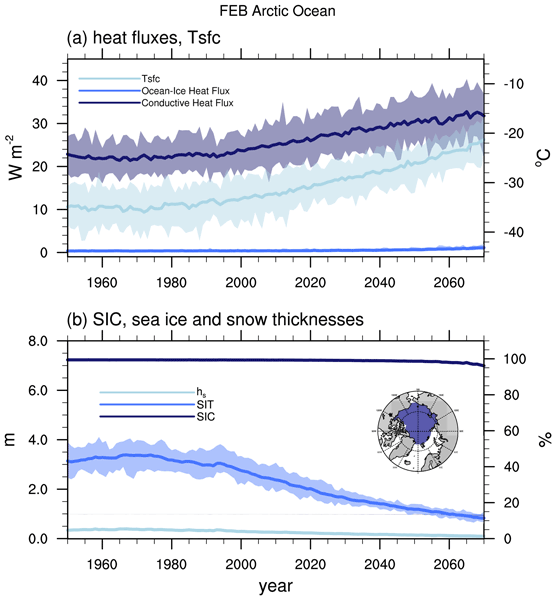
High-latitude Arctic wintertime sea ice and snow insulate the relatively warmer ocean from the colder atmosphere. As the climate warms, wintertime Arctic conductive heat fluxes increase even when the sea ice concentrations remain high. Simulations from the Community Earth System Model Large Ensemble (CESM1-LE) show how sea ice and snow thicknesses, as well as the distribution of these thicknesses, significantly impact large-scale calculations of wintertime surface heat budgets in the Arctic.
Marika M. Holland, David Clemens-Sewall, Laura Landrum, Bonnie Light, Donald Perovich, Chris Polashenski, Madison Smith, and Melinda Webster
The Cryosphere, 15, 4981–4998, https://doi.org/10.5194/tc-15-4981-2021, https://doi.org/10.5194/tc-15-4981-2021, 2021
Short summary
Short summary
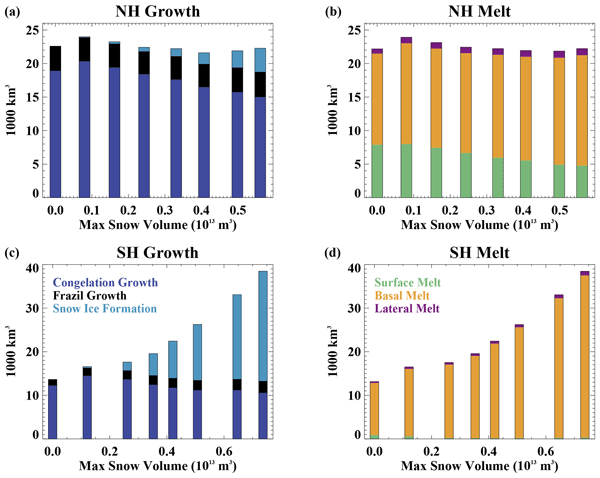
As the most reflective and most insulative natural material, snow has important climate effects. For snow on sea ice, its high reflectivity reduces ice melt. However, its high insulating capacity limits ice growth. These counteracting effects make its net influence on sea ice uncertain. We find that with increasing snow, sea ice in both hemispheres is thicker and more extensive. However, the drivers of this response are different in the two hemispheres due to different climate conditions.
Diajeng W. Atmojo, Katja Weigel, Arthur Grundner, Marika M. Holland, Dmitry Sidorenko, and Veronika Eyring
The Cryosphere, 20, 4437–4464, https://doi.org/10.5194/tc-20-4437-2026, https://doi.org/10.5194/tc-20-4437-2026, 2026
Short summary
Short summary
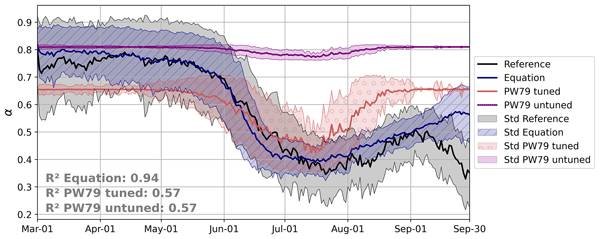
This study presents an observation-driven sea ice albedo parametrisation by discovering an equation using symbolic regression, an interpretable machine learning method. Leveraging satellite and reanalyses data, our discovered equation identifies high sensitivity to thin snow and the weighted temperature difference between sea ice surface and 2 m air as critical to determine sea ice albedo. Our findings contribute to improving Arctic climate projections and understanding.
Joshua Coupe, Nicole S. Lovenduski, Luise S. Gleason, Michael N. Levy, Kristen Krumhardt, Keith Lindsay, Charles Bardeen, Clay Tabor, Cheryl Harrison, Kenneth G. MacLeod, Siddhartha Mitra, and Julio Sepúlveda
Geosci. Model Dev., 18, 8217–8234, https://doi.org/10.5194/gmd-18-8217-2025, https://doi.org/10.5194/gmd-18-8217-2025, 2025
Short summary
Short summary
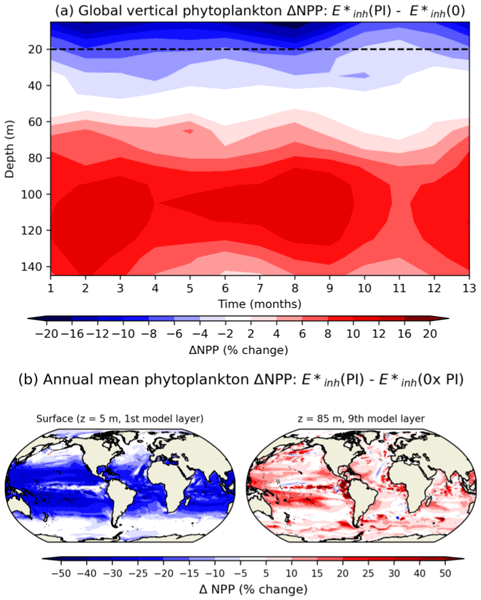
We have developed a new feature in the atmosphere and ocean components of the Community Earth System Model version 2 by implementing ultraviolet (UV) radiation inhibition of photosynthesis of four marine phytoplankton functional groups represented in the Marine Biogeochemistry Library. The new feature is tested with varying levels of UV radiation, and it will enable an analysis of an asteroid impact’s effect on the ozone layer and how that affects the base of the marine food web.
Marika M. Holland, Cecile Hannay, John Fasullo, Alexandra Jahn, Jennifer E. Kay, Michael Mills, Isla R. Simpson, William Wieder, Peter Lawrence, Erik Kluzek, and David Bailey
Geosci. Model Dev., 17, 1585–1602, https://doi.org/10.5194/gmd-17-1585-2024, https://doi.org/10.5194/gmd-17-1585-2024, 2024
Short summary
Short summary
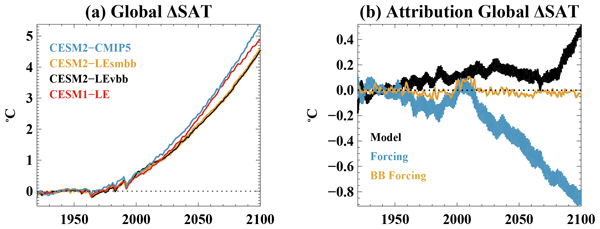
Climate evolves in response to changing forcings, as prescribed in simulations. Models and forcings are updated over time to reflect new understanding. This makes it difficult to attribute simulation differences to either model or forcing changes. Here we present new simulations which enable the separation of model structure and forcing influence between two widely used simulation sets. Results indicate a strong influence of aerosol emission uncertainty on historical climate.
Geneviève W. Elsworth, Nicole S. Lovenduski, Kristen M. Krumhardt, Thomas M. Marchitto, and Sarah Schlunegger
Biogeosciences, 20, 4477–4490, https://doi.org/10.5194/bg-20-4477-2023, https://doi.org/10.5194/bg-20-4477-2023, 2023
Short summary
Short summary
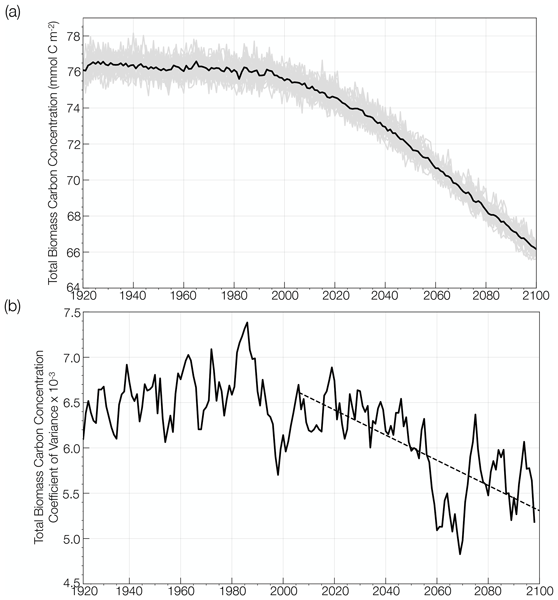
Anthropogenic climate change will influence marine phytoplankton over the coming century. Here, we quantify the influence of anthropogenic climate change on marine phytoplankton internal variability using an Earth system model ensemble and identify a decline in global phytoplankton biomass variance with warming. Our results suggest that climate mitigation efforts that account for marine phytoplankton changes should also consider changes in phytoplankton variance driven by anthropogenic warming.
Alban Planchat, Lester Kwiatkowski, Laurent Bopp, Olivier Torres, James R. Christian, Momme Butenschön, Tomas Lovato, Roland Séférian, Matthew A. Chamberlain, Olivier Aumont, Michio Watanabe, Akitomo Yamamoto, Andrew Yool, Tatiana Ilyina, Hiroyuki Tsujino, Kristen M. Krumhardt, Jörg Schwinger, Jerry Tjiputra, John P. Dunne, and Charles Stock
Biogeosciences, 20, 1195–1257, https://doi.org/10.5194/bg-20-1195-2023, https://doi.org/10.5194/bg-20-1195-2023, 2023
Short summary
Short summary
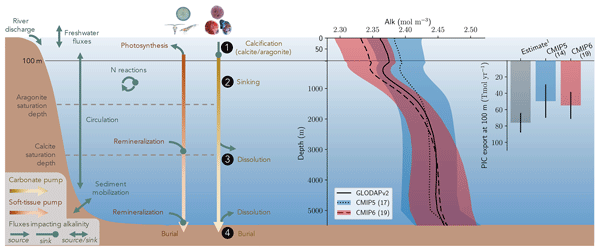
Ocean alkalinity is critical to the uptake of atmospheric carbon and acidification in surface waters. We review the representation of alkalinity and the associated calcium carbonate cycle in Earth system models. While many parameterizations remain present in the latest generation of models, there is a general improvement in the simulated alkalinity distribution. This improvement is related to an increase in the export of biotic calcium carbonate, which closer resembles observations.
Stephen G. Yeager, Nan Rosenbloom, Anne A. Glanville, Xian Wu, Isla Simpson, Hui Li, Maria J. Molina, Kristen Krumhardt, Samuel Mogen, Keith Lindsay, Danica Lombardozzi, Will Wieder, Who M. Kim, Jadwiga H. Richter, Matthew Long, Gokhan Danabasoglu, David Bailey, Marika Holland, Nicole Lovenduski, Warren G. Strand, and Teagan King
Geosci. Model Dev., 15, 6451–6493, https://doi.org/10.5194/gmd-15-6451-2022, https://doi.org/10.5194/gmd-15-6451-2022, 2022
Short summary
Short summary
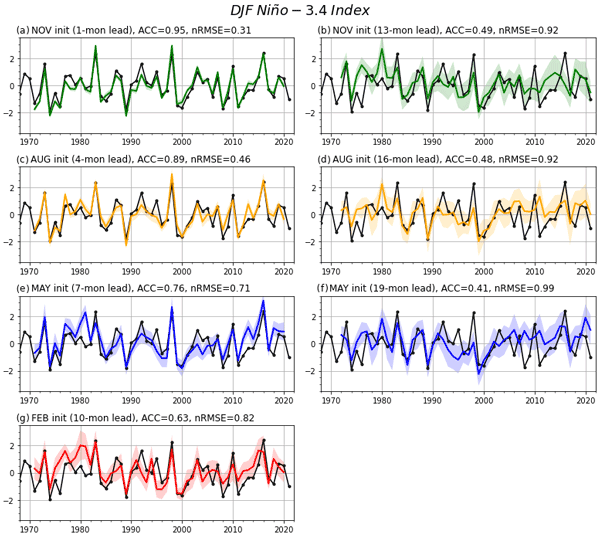
The Earth system changes over a range of time and space scales, and some of these changes are predictable in advance. Short-term weather forecasts are most familiar, but recent work has shown that it is possible to generate useful predictions several seasons or even a decade in advance. This study focuses on predictions over intermediate timescales (up to 24 months in advance) and shows that there is promising potential to forecast a variety of changes in the natural environment.
Xavier Crosta, Karen E. Kohfeld, Helen C. Bostock, Matthew Chadwick, Alice Du Vivier, Oliver Esper, Johan Etourneau, Jacob Jones, Amy Leventer, Juliane Müller, Rachael H. Rhodes, Claire S. Allen, Pooja Ghadi, Nele Lamping, Carina B. Lange, Kelly-Anne Lawler, David Lund, Alice Marzocchi, Katrin J. Meissner, Laurie Menviel, Abhilash Nair, Molly Patterson, Jennifer Pike, Joseph G. Prebble, Christina Riesselman, Henrik Sadatzki, Louise C. Sime, Sunil K. Shukla, Lena Thöle, Maria-Elena Vorrath, Wenshen Xiao, and Jiao Yang
Clim. Past, 18, 1729–1756, https://doi.org/10.5194/cp-18-1729-2022, https://doi.org/10.5194/cp-18-1729-2022, 2022
Short summary
Short summary
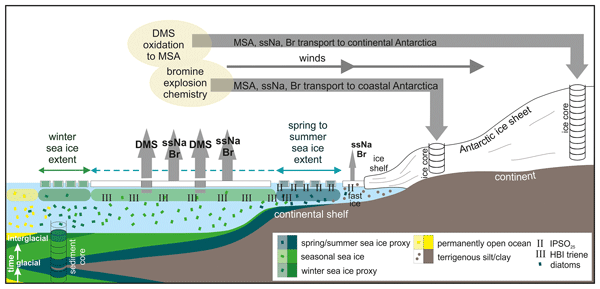
Despite its importance in the global climate, our knowledge of Antarctic sea-ice changes throughout the last glacial–interglacial cycle is extremely limited. As part of the Cycles of Sea Ice Dynamics in the Earth system (C-SIDE) Working Group, we review marine- and ice-core-based sea-ice proxies to provide insights into their applicability and limitations. By compiling published records, we provide information on Antarctic sea-ice dynamics over the past 130 000 years.
Laura L. Landrum and Marika M. Holland
The Cryosphere, 16, 1483–1495, https://doi.org/10.5194/tc-16-1483-2022, https://doi.org/10.5194/tc-16-1483-2022, 2022
Short summary
Short summary
High-latitude Arctic wintertime sea ice and snow insulate the relatively warmer ocean from the colder atmosphere. As the climate warms, wintertime Arctic conductive heat fluxes increase even when the sea ice concentrations remain high. Simulations from the Community Earth System Model Large Ensemble (CESM1-LE) show how sea ice and snow thicknesses, as well as the distribution of these thicknesses, significantly impact large-scale calculations of wintertime surface heat budgets in the Arctic.
Madison M. Smith, Marika Holland, and Bonnie Light
The Cryosphere, 16, 419–434, https://doi.org/10.5194/tc-16-419-2022, https://doi.org/10.5194/tc-16-419-2022, 2022
Short summary
Short summary
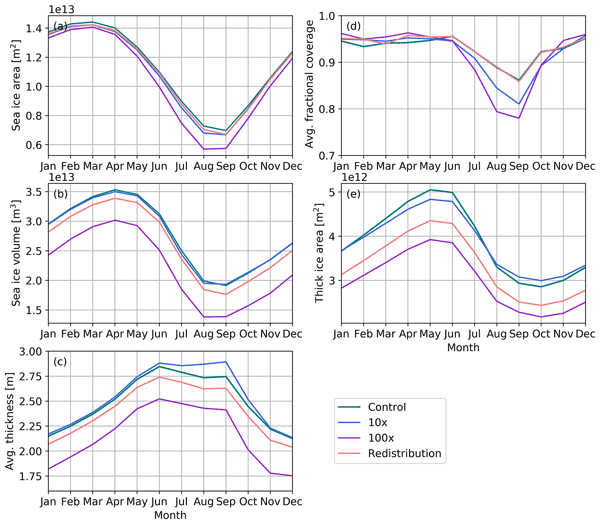
Climate models represent the atmosphere, ocean, sea ice, and land with equations of varying complexity and are important tools for understanding changes in global climate. Here, we explore how realistic variations in the equations describing how sea ice melt occurs at the edges (called lateral melting) impact ice and climate. We find that these changes impact the progression of the sea-ice–albedo feedback in the Arctic and so make significant changes to the predicted Arctic sea ice.
Marika M. Holland, David Clemens-Sewall, Laura Landrum, Bonnie Light, Donald Perovich, Chris Polashenski, Madison Smith, and Melinda Webster
The Cryosphere, 15, 4981–4998, https://doi.org/10.5194/tc-15-4981-2021, https://doi.org/10.5194/tc-15-4981-2021, 2021
Short summary
Short summary
As the most reflective and most insulative natural material, snow has important climate effects. For snow on sea ice, its high reflectivity reduces ice melt. However, its high insulating capacity limits ice growth. These counteracting effects make its net influence on sea ice uncertain. We find that with increasing snow, sea ice in both hemispheres is thicker and more extensive. However, the drivers of this response are different in the two hemispheres due to different climate conditions.
Cited articles
Arrigo, K. R. and van Dijken, G. L.: Phytoplankton dynamics within 37 Antarctic coastal polynyas, J. Geophys. Res., 108, 3271, https://doi.org/10.1029/2002JC001739, 2003.
Arrigo, K. R., van Dijken, G. L., and Strong, A. L.: Environmental controls of marine productivity hot spots around Antarctica, J. Geophys. Res.-Oceans, 120, 5545–5565, https://doi.org/10.1002/2015JC010888, 2015.
Bocquet, M., Fleury, S., Rémy, F., and Piras, F.: Arctic and Antarctic sea ice thickness and volume changes from observations between 1994 and 2023, J. Geophys. Res.-Oceans, 129, e2023JC020848, https://doi.org/10.1029/2023JC020848, 2024.
Caton Harrison, T., Biri, S., Bracegirdle, T. J., King, J. C., Kent, E. C., Vignon, É., and Turner, J.: Reanalysis representation of low-level winds in the Antarctic near-coastal region, Weather Clim. Dynam., 3, 1415–1437, https://doi.org/10.5194/wcd-3-1415-2022, 2022.
Cavalieri, D. J., Gloersen, P., and Campbell, W. J.: Determination of sea ice parameters with the NIMBUS 7 SMMR, J. Geophys. Res., 89, 5355–5369, 1984.
Comiso, J. C.: Characteristics of arctic winter sea ice from satellite multispectral microwave observations, J. Geophys. Res., 91, 975–994, 1986.
Comiso, J. C., Cavalieri, D., Parkinson, C., and Gloersen, P.: Passive microwave algorithms for sea ice concentrations: a comparison of two techniques, Remote Sens. Environ., 60, 357–384, 1997.
Criscitiello, A. S., Das, S. B., Evans, M. J., Frey, K. E., Conway, H., Joughin, I., Medley, B., and Steig, E. J.: Ice sheet record of recent sea-ice behavior and polynya variability in the Amundsen Sea, West Antarctica, J. Geophys. Res.-Oceans, 118, 118–130, https://doi.org/10.1029/2012JC008077, 2013.
Danabasoglu, G., Lamarque, J. F., Bacmeister, J., Bailey, D., DuVivier, A. K., Edwards, J., Emmons, L., Fasullo, J., Garcia, R., Gettelman, A., Hannay, C., Holland, M. M., Large, W. G., Lauritzen, P. H., Lawrence, D. M., Lenaerts, J. T. M., Lindsay, K., Lipscomb, W. H., Mills, M. J., Neale, R., Oleson, K. W., Otto-Bliesner, B., Phillips, A. S., Sacks, W., Tilmes, S., van Kampenhout, L., Vertenstein, M., Bertini, A., Dennis, J., Deser, C., Fischer, C., Fox-Kemper, B., Kay, J. E., Kinnison, D., 825 Kushner, P. J., Larson, V. E., Long, M. C., Mickelson, S., Moore, J. K., Nienhouse, E., Polvani, L., Rasch, P. J., and Strand, W. G.: The Community Earth System Model version 2 (CESM2), J. Adv. Model. Earth Sy., 2, 1–35, https://doi.org/10.1029/2019ms001916, 2020.
Diamond, R., Sime, L. C., Holmes, C. R., and Schroeder, D.: CMIP6 models rarely simulate Antarctic winter sea-ice anomalies as large as observed in 2023, Geophys. Res. Lett., 51, e2024GL109265, https://doi.org/10.1029/2024GL109265, 2024.
Duffy, G. A., Montiel, F., Purich, A., and Fraser, C. I.: Emerging long-term trends and interdecadal cycles in Antarctic polynyas, P. Natl. Acad. Sci. USA, 121, https://doi.org/10.1073/pnas.2321595121, 2024.
DuVivier, A. K. and Bailey, D. A.: CESM2 Sea Ice thermodynamics sensitivity experiments, NSF National Center for Atmospheric Research [data set], https://doi.org/10.5065/bgt9-tz46, 2021.
DuVivier, A. K., Holland, M. M., Landrum, L., Singh, H. A., Bailey, D. A., and Maroon, E. A.: Impacts of sea ice mushy thermodynamics in the Antarctic on the coupled Earth system, Geophys. Res. Lett., 48, e2021GL094287, https://doi.org/10.1029/2021GL094287, 2021.
DuVivier, A. K., Molina, M. J., Deppenmeier, A.-L., Holland, M. M., Landrum, L., Krumhardt, K., and Jenouvrier, S.: Projections of winter polynyas and their biophysical impacts in the Ross Sea Antarctica, Clim Dynam., 62, 989–1012, https://doi.org/10.1007/s00382-023-06951-z, 2024.
Eyring, V., Bony, S., Meehl, G. A., Senior, C. A., Stevens, B., Stouffer, R. J., and Taylor, K. E.: Overview of the Coupled Model Intercomparison Project Phase 6 (CMIP6) experimental design and organization, Geosci. Model Dev., 9, 1937–1958, https://doi.org/10.5194/gmd-9-1937-2016, 2016.
Fetterer, F., Knowles, K., Meier, W. N., Savoie, M., and Windnagel, A. K.: Sea Ice Index, Version 3, National Snow and Ice Data Center, Boulder, Colorado, USA [data set], https://doi.org/10.7265/N5K072F8 (last access: 2 June 2023), 2017.
Fogt, R. L., Sleinkofer, A. M., Raphael, M. N., and Handcock, M. S.: A regime shift in seasonal total Antarctic sea ice extent in the twentieth century, Nat. Clim. Chang., 12, 54–62, https://doi.org/10.1038/s41558-021-01254-9, 2022.
Fons, S., Kurtz, N., and Bagnardi, M.: A decade-plus of Antarctic sea ice thickness and volume estimates from CryoSat-2 using a physical model and waveform fitting, The Cryosphere, 17, 2487–2508, https://doi.org/10.5194/tc-17-2487-2023, 2023.
Fraser, A. D, Ohshima, K. I., Nihashi, S., Massom, R. A., Tamura, T., Nakata, K., Williams, G. D., Carpentier, S., and Willmes, S.: Landfast ice controls on sea-ice production in the Cape Darnley Polynya: A case study, Remote Sens. Environ., 233, 111315, https://doi.org/10.1016/j.rse.2019.111315, 2019.
Gilbert, R. O.: Statistical Methods for Environmental Pollution Monitoring, John Wiley & Sons, ISBN 978-0-471-28878-7, 1987.
Grenfell, T. C., Cavalieri, D. J., Comiso, J. C., Drinkwater, M. R., Onstott, R. G., Rubinstein, I., Steffen, K., and Winebrenner, D. P.: Considerations for microwave remote sensing of thin sea ice, in: Microwave Remote Sensing of Sea Ice, edited by: Carsey, F. D., American Geophysical Union, Washington, D.C., https://doi.org/10.1029/GM068p0291, 1992.
Hobbs, W., Spence, P., Meyer, A., Schroeter, S., Fraser, A. D., Reid, P., Tian, T. R., Wang, Z., Liniger, G., Doddridge, E. W., and Boyd, P. W.: Observational Evidence for a Regime Shift in Summer Antarctic Sea Ice, J. Climate, 37, 2263–2275, https://doi.org/10.1175/JCLI-D-23-0479.1, 2024.
Holland, M. M., Bitz, C. M., Hunke, E. C., Lipscomb, W. H., and Schramm, J. L.: Influence of the sea ice thickness distribution on polar climate in CCSM3, J. Climate, 19, 2398–2414, https://doi.org/10.1175/jcli3751.1, 2006.
Holmes, C. R., Bracegirdle, T. J., Holland, P. R., Stroeve, J., and Wilkinson, J.: Brief communication: New perspectives on the skill of modelled sea ice trends in light of recent Antarctic sea ice loss, The Cryosphere, 18, 5641–5652, https://doi.org/10.5194/tc-18-5641-2024, 2024.
Hunke, E. C., Lipscomb, W. H., Turner, A. K., Jeffery, N., and Elliott, S.: CICE: The Los Alamos Sea Ice Model. Documentation and software user's manual, Version 5.1, T-3 Fluid Dynamics Group, Los Alamos National Laboratory, Tech. Rep. LA-CC-06-012, 2015.
Ivanova, N., Pedersen, L. T., Tonboe, R. T., Kern, S., Heygster, G., Lavergne, T., Sørensen, A., Saldo, R., Dybkjær, G., Brucker, L., and Shokr, M.: Inter-comparison and evaluation of sea ice algorithms: towards further identification of challenges and optimal approach using passive microwave observations, The Cryosphere, 9, 1797–1817, https://doi.org/10.5194/tc-9-1797-2015, 2015.
Jeong, H., Lee, S., Park, H. S., and Stewart, A. L.: Future changes in Antarctic coastal polynyas and bottom water formation simulated by a high-resolution coupled model, Commun. Earth Environ., 4, 490, https://doi.org/10.1038/s43247-023-01156-y, 2023.
Jones, R., Renfrew, I., Orr, A., Webber, B., Holland, D., and Lazzara, M.: Evaluation of four global reanalysis products using in situ observations in the Amundsen Sea Embayment, Antarctica, J. Geophys. Res.-Atmos., 121, 6240–6257, 2016.
Kacimi, S. and Kwok, R.: Arctic snow depth, ice thickness, and volume from ICESat-2 and CryoSat-2: 2018–2021, Geophys. Res. Lett., 49, e2021GL097448, https://doi.org/10.1029/2021GL097448, 2022.
Kendall, M. G.: Rank Correlation Methods, 4th edn., 2nd impression, Charles Griffin, London, 1975.
Kobayashi, S., Yukinari, O. T. A., Harada, Y., Ebita, A., Moriya, M., Onoda, H., Onogi, K., Kamahori, H., Kobayashi, C., Miyaoka, K., and Takahahi, K.: The JRA-55 reanalysis: general specifications and basic characteristics, J. Meteorol. Soc. Jpn. Ser. II, 93, 5–48, https://doi.org/10.2151/jmsj.2015-001, 2015.
Krumhardt, K. M., Long, M. C., Petrik, C. M., Levy, M., Castruccio, F. S., Lindsay, K., Romashkov, L., Deppenmeier, A.-L., Denéchère, R., Chen, Z., Landrum, L., Danabasoglu, G., and Chang, P.: From nutrients to fish: Impacts of mesoscale processes in a global CESM-FEISTY eddying ocean model framework, Prog. Oceanogr., 227, 103314, https://doi.org/10.1016/j.pocean.2024.103314, 2024.
Kwok, R., Comiso, J. C., Martin, S., and Drucker, R.: Ross Sea polynyas: Response of ice concentration retrievals to large areas of thin ice, J. Geophys. Res., 112, C12012, https://doi.org/10.1029/2006JC003967, 2007.
Labrousse, S., Fraser, A. D., Sumner, M., Tamura, T., Pinaud, D., Wienecke, B., Kirkwood, R., Ropert-Coudert, Y., Reisinger, R., Jonsen, I., Porter-Smith, R., Barbraud, C., Bost, C., Ji, R., and Jenouvrier, S.: Dynamic fine-scale sea icescape shapes adult emperor penguin foraging habitat in East Antarctica, Geophys. Res. Lett., 46, 11206–11218, https://doi.org/10.1029/2019GL084347, 2019.
Landrum, L.: llandrum/Cryosphere_AntarcticPolynyas_Satellite Models_ecosystems: AntarcticPolynyasModelObs Pub (AntarcticPolynyasModelObs_Cryosph_Pub), Zenodo, https://doi.org/10.5281/zenodo.18674467, 2026.
Lavergne, T., Sørensen, A. M., Kern, S., Tonboe, R., Notz, D., Aaboe, S., Bell, L., Dybkjær, G., Eastwood, S., Gabarro, C., Heygster, G., Killie, M. A., Brandt Kreiner, M., Lavelle, J., Saldo, R., Sandven, S., and Pedersen, L. T.: Version 2 of the EUMETSAT OSI SAF and ESA CCI sea-ice concentration climate data records, The Cryosphere, 13, 49–78, https://doi.org/10.5194/tc-13-49-2019, 2019.
Li, Y., Ji, R., Jenouvrier, S., Jin, M., and Stroeve, J.: Synchronicity between ice retreat and phytoplankton bloom in circum-Antarctic polynyas, Geophys. Res. Lett., 43, 2086–2093, https://doi.org/10.1002/2016GL067937, 2016.
Long, M. C., Lindsay, K., and Holland, M. M.: Modeling photosynthesis in sea ice-covered waters, J. Adv. Model. Earth Sy., 7, 1189–1206, https://doi.org/10.1002/2015MS000436, 2015.
Long, M. C., Moore, J. K., Lindsay, K., Levy, M., Doney, S. C., Luo, J. Y., Krumhardt, K. M., Letscher, R. T., Grover, M., and Sylvester, Z. T.: Simulations with the Marine Biogeochemistry Library (MARBL), J. Adv. Model. Earth Sy., 13, e2021MS002647, https://doi.org/10.1029/2021MS002647, 2021.
Mann, H. B.: Non-parametric tests against trend, Econometrica, 13, 163–171, 1945.
Markus, T. and Burns, B. A.: Detection of coastal polynyas with passive microwave data, Ann. Glaciol., 17, 351–355, 1993.
Massom, R. A., Harris, P. T., Michael, K. J., and Potter, M. J.: The distribution and formative processes of latent-heat polynyas in East Antarctica, Ann. Glaciol., 27, 420–426, 1998.
Meier, W. N., Peng, G., Scott, D. J., and Savoie, M. H.: Verification of a new NOAA/NSIDC passive microwave sea-ice concentration climate record, Polar Research, 33, https://doi.org/10.3402/polar.v33.21004, 2014.
Meier, W. N., Fetterer, F. Windnagel, A. K., and Stewart, J. S.: NOAA/NSIDC Climate Data Record of Passive Microwave Sea Ice Concentration, Version 4. Southern Hemisphere, 1979–2020, Boulder, Colorado USA. NSIDC: National Snow and Ice Data Center [data set], https://doi.org/10.7265/efmz-2t65 (last access: 3 June 2023), 2021a.
Meier, W. N., Windnagel, A., and Stewart, S.: CDR Climate Algorithm and Theoretical Basis Document: Sea Ice Concentration, NOAA NCEI CDR Program, 2021b.
Mohrmann, M., Heuzé, C., and Swart, S.: Southern Ocean polynyas in CMIP6 models, The Cryosphere, 15, 4281–4313, https://doi.org/10.5194/tc-15-4281-2021, 2021.
Nakata, K., Ohshima, I., and Nihashi, S.: Mapping of Active Frazil for Antarctic Coastal Polynyas, With an Estimation of Sea-Ice Production, Geophys. Res. Lett., 48, e2020GL091353, https://doi.org/10.1029/2020GL091353, 2021.
Nihashi, S. and Ohshima, K. J.: Circumpolar Mapping of Antarctic Coastal Polynyas and Landfast Sea Ice: Relationship and Variability, J. Climate, 28, 3650–3670, https://doi.org/10.1175/JCLI-D-14-00369.1, 2015.
Ohshima, K., Fukamachi, Y., Williams, G. D., Nihashi, S., Roquet, F., Kitade, Y.,Tamura, T., Hirano, D., Herraiz-Borreguero, L., Field, I., Hindell, M., Aoki, S., Wakatsuchi, M.: Antarctic Bottom Water production by intense sea-ice formation in the Cape Darnley polynya, Nature Geosci.,6, 235–240, https://doi.org/10.1038/ngeo1738, 2013.
Oliver, H., Turner, J. S., Castagna, A., Houskeeper, H., and Dierssen, H.: High Antarctic coastal productivity in polynyas revealed by considering remote sensing ice-adjacency effects, Limnol. Oceanogr. Lett., 10, 945–956, https://doi.org/10.1002/lol2.70043, 2025.
OSI SAF: Global Sea Ice Concentration Climate Data Record v3.0 – Multimission, EUMETSAT SAF on Ocean and Sea Ice [data set], https://doi.org/10.15770/EUM_SAF_OSI_0013, 2022.
Parkinson, C. L.: A 40-y record reveals gradual Antarctic sea ice increases followed by decreases at rates far exceeding the rates seen in the Arctic, P. Natl. Acad. Sci. USA, 116, 14414–14423, 2019.
Parkinson, C. L. and Cavalieri, D. J.: Antarctic sea ice variability and trends, 1979–2010, The Cryosphere, 6, 871–880, https://doi.org/10.5194/tc-6-871-2012, 2012.
Purich, A. and Doddridge, E. W.: Record low Antarctic sea ice coverage indicates a new sea ice state, Commun. Earth Environ., 4, 314, https://doi.org/10.1038/s43247-023-00961-9, 2023.
Raphael, M. N. and Handcock, M. S.: A new record minimum for Antarctic sea ice, Nat. Rev. Earth Environ., 3, 215–216, https://doi.org/10.1038/s43017-022-00281-0, 2022.
Raphael, M. N., Maierhofer, T. J., Fogt, R. L., WHobbs, W. R., and Handcock, M. S.: A Twenty-First Century Structural Change in Antarctica's Sea Ice System, Commun. Earth Environ., 6, 1–9, https://doi.org/10.1038/s43247-025-02107-5, 2025.
Richert, I., Yager, P., Dinasquet, J., Logares, R., Riemann, L., Wendeberg, A., Bertilsson, S., and Scofield, D.: Summer comes to the Southern Ocean: how phytoplankton shape bacterioplankton communities far into the deep dark sea, Ecosphere, 10, e02641, https://doi.org/10.1002/ecs2.2641, 2019.
Roach, L. A., Dörr, J., Holmes, C. R., Massonnet, F., Blockley, E. W., Notz, D, Rackow, T., Raphael, M. N., O’Farrell, S. P., Bailey, D. A., and Bitz, C. M.: Antarctic sea ice area in CMIP6, Geophys. Res. Lett., 47, e2019GL086729, https://doi.org/10.1029/2019GL086729, 2020.
Singh, H. K. A., Landrum, L., Holland, M. M., Bailey, D. A., and DuVivier, A. K.: An overview of Antarctic sea ice in the CESM2: analysis of the seasonal cycle, predictability, and atmosphere-ocean-ice interactions, J. Adv. Model. Earth Sy., 13, https://doi.org/10.1029/2020MS002143, 2020.
Smith, R., Jones, P., Briegleb, B., Bryan, F., Danabasoglu, G., Dennis, J., Dukowicz, J., Eden, C., Fox-Kemper, B., Gent, P., Hecht, M., Jayne, S., Jochum, M., Large, W., Lindsay, K., Maltrud, M., Norton, M., Peacock, S., Vertenstein, M., and Yeager, S.: The Parallel Ocean Program (POP) reference manual, Ocean component of the Community Climate System Model (CCSM), LANL Tech. Report, LAUR-10-01853, 141 pp., 2010.
Tamura, T., Ohshima, K. I., Enomoto, H., Tateyama, K., Muto, A., Ushio, S., and Massom, R. A.: Estimation of thin sea-ice thickness from NOAA AVHRR data in a polynya off the Wilkes Land coast, East Antarctica, Ann. Glaciol., 44, 269–274, 2006.
Tamura, T., Ohshima, K. I., Markus, T., Cavalieri, D. J., Nihashi, S., and Hirasawa, N.: Estimation of thin ice thickness and detection of fast ice from SSM/I data in the Antarctic Ocean, J. Atmos. Ocean. Tech., 24, 1757–1772, 2007.
Tamura, T., Ohshima, K. I., and Nihashi, S.: Mapping of sea ice production for Antarctic coastal polynyas, Geophys. Res. Lett., 35, L07606, https://doi.org/10.1029/2007GL032903, 2008.
Tamura, T., Ohshima, K. I., Fraser, A. D., and Williams, G. D.: Sea ice production variability in Antarctic coastal polynyas, J. Geophys. Res.-Oceans, 121, 2967–2979, https://doi.org/10.1002/2015JC011537, 2016.
Thompson, L., Smith, M., Thomson, J., Stammerjohn, S., Ackley, S., and Loose, B.: Frazil ice growth and production during katabatic wind events in the Ross Sea, Antarctica, The Cryosphere, 14, 3329–3347, https://doi.org/10.5194/tc-14-3329-2020, 2020.
Tsujino, H., Urakawa, S., Nakano, H., Small, R. J., Kim, W. M., Yeager, S. G., Danabasoglu, G., Suzuki, T., Bamber, J. L., Bentsen, M., Böning, C. W., Bozec, A., Chassignet, E. P., Curchitser, E., Boeira Dias, F., Durack, P. J., Griffies, S. M., Y. Harada, Y., M. Ilicak, M., Josey, S. A., Kobayashi, C., Kobayashi, S., Komuro, Y., Large, W. G., Le Sommer, J., Marsland, S. J., Masina, S., Scheinert, M., Tomita, H., Valdivieso, M., and Yamazaki, D.: Jra-55 based surface dataset for driving ocean–sea-ice models (jra55-do), Ocean Model., 130, 79–139, 2018.
Turner, J., Phillips, T., Marshall, G. J., Hosking, J. S., Pope, J. O., Bracegirdle, T. J., and Deb, P.: Unprecedented springtime retreat of Antarctic sea ice in 2016, Geophys. Res. Lett., 44, 6868–6875, 2017.
Turner, J., Holmes, C., Caton Harrison, T., Phillips, T., Jena, B., Reeves-Francois, T., Fogt, R., Thomas, E. R., and Bajish, C. C.: Record low Antarctic sea ice cover in February 2022, Geophys. Res. Lett., 49, e2022GL098904, https://doi.org/10.1029/2022GL098904, 2022.
World Meteorological Organization: WMO sea-ice nomenclature. Terminology, codes and illustrated glossary, Geneva, Secretariat of the World Meteorological Organization, 1970, [ix], 147 pp. [including 175 photos] + corrigenda slip (WMO/OMM/BMO, No. 259, TP. 145, 1970.
Zygmuntowska, M., Rampal, P., Ivanova, N., and Smedsrud, L. H.: Uncertainties in Arctic sea ice thickness and volume: new estimates and implications for trends, The Cryosphere, 8, 705–720, https://doi.org/10.5194/tc-8-705-2014, 2014.
Short summary
Antarctic polynyas – areas of open water surrounded by sea ice or sea ice and land – are key players in Antarctic marine ecosystems. Changes in the physical characteristics of polynyas will influence how these ecosystems respond to a changing climate. This work explores how to best compare polynyas identified in satellite data products and climate model data to verify that the model captures important features of Antarctic sea ice and marine ecosystems.
Antarctic polynyas – areas of open water surrounded by sea ice or sea ice and land – are key...


