
Articles | Volume 20, issue 3
https://doi.org/10.5194/tc-20-1771-2026
© Author(s) 2026. This work is distributed under
the Creative Commons Attribution 4.0 License.
the Creative Commons Attribution 4.0 License.
https://doi.org/10.5194/tc-20-1771-2026
© Author(s) 2026. This work is distributed under
the Creative Commons Attribution 4.0 License.
the Creative Commons Attribution 4.0 License.
Research article
| 
25 Mar 2026
Research article |
| 25 Mar 2026
| 25 Mar 2026
Beyond MAGT: learning more from permafrost thermal monitoring data with additional metrics

Department of Geography and Environmental Studies, Carleton University, Ottawa, Canada
NSERC PermafrostNet, Carleton University, Ottawa, Canada
Stephan Gruber
Department of Geography and Environmental Studies, Carleton University, Ottawa, Canada
Related authors
Olivia Meier-Legault, Nicholas Brown, Larry Adjun, Michel Allard, Alejandro Alvarez, Maude Auclair, Alex Bevington, Samuel Bilodeau, William Cable, Olivia Carpino, Ariane Castagner, Lin Chen, Alexandre Chiasson, Ryan Connon, Stephanie Coulombe, Jeffrey Crompton, Derek Cronmiller, Gautier Davesne, Mason Dominico, Marc-André Ducharme, Timothy Ensom, Louise Farquharson, Vanessa Foord, Daniel Fortier, Philippe Fortier, Duane Froese, Samuel Gagnon, Francis Gauthier, Marten Geertsema, Etienne Godin, Galina Jonat, Steven V. Kokelj, Michelle Landry, Antoni Lewkowicz, Panya Lipovsky, Emmanual L’Hérault, Hannah Macdonell, Lancelot Massé, Dmitry Nicolsky, Moya Painter, Leesee Papatsie, Victor Pozsgay, William Quinton, Vladimir Romanovsky, Ashley C.A. Rudy, Denis Sarrazin, Emilie Stewart-Jones, Donald Walker, Thomas Wright, Joseph Young, and Stephan Gruber
Earth Syst. Sci. Data Discuss., https://doi.org/10.5194/essd-2026-96, https://doi.org/10.5194/essd-2026-96, 2026
Revised manuscript accepted for ESSD
Short summary
Short summary
Ground temperature data is vital for permafrost and climate research yet data is often fragmented. We created a standardized collection of ground temperatures from over 900 sites across Canada. From 42 published and unpublished sources, we manually verified, cleaned and standardized data with a new software tool. This dataset supports permafrost research on a nationwide scale and can help improve models by acting as a reliable benchmark.
Victor Pozsgay, Nick Noad, Philip Bonnaventure, and Stephan Gruber
Geosci. Model Dev., 19, 7197–7215, https://doi.org/10.5194/gmd-19-7197-2026, https://doi.org/10.5194/gmd-19-7197-2026, 2026
Short summary
Short summary
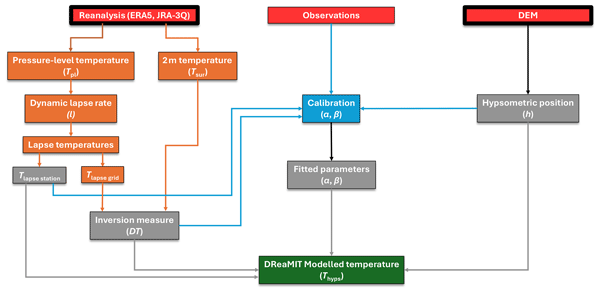
Surface-based temperature inversions occur when cold air becomes trapped near the ground beneath a layer of warmer air. This study combines field data, analysis, and modelling to develop DReaMIT, a model that captures the timing and strength of inversions across northern mountain terrain. The model's transferability beyond the valleys where it was developed makes it valuable globally to cold-region researchers for mapping and modelling permafrost and assessing climate change impacts.
Olivia Meier-Legault, Nicholas Brown, Larry Adjun, Michel Allard, Alejandro Alvarez, Maude Auclair, Alex Bevington, Samuel Bilodeau, William Cable, Olivia Carpino, Ariane Castagner, Lin Chen, Alexandre Chiasson, Ryan Connon, Stephanie Coulombe, Jeffrey Crompton, Derek Cronmiller, Gautier Davesne, Mason Dominico, Marc-André Ducharme, Timothy Ensom, Louise Farquharson, Vanessa Foord, Daniel Fortier, Philippe Fortier, Duane Froese, Samuel Gagnon, Francis Gauthier, Marten Geertsema, Etienne Godin, Galina Jonat, Steven V. Kokelj, Michelle Landry, Antoni Lewkowicz, Panya Lipovsky, Emmanual L’Hérault, Hannah Macdonell, Lancelot Massé, Dmitry Nicolsky, Moya Painter, Leesee Papatsie, Victor Pozsgay, William Quinton, Vladimir Romanovsky, Ashley C.A. Rudy, Denis Sarrazin, Emilie Stewart-Jones, Donald Walker, Thomas Wright, Joseph Young, and Stephan Gruber
Earth Syst. Sci. Data Discuss., https://doi.org/10.5194/essd-2026-96, https://doi.org/10.5194/essd-2026-96, 2026
Revised manuscript accepted for ESSD
Short summary
Short summary
Ground temperature data is vital for permafrost and climate research yet data is often fragmented. We created a standardized collection of ground temperatures from over 900 sites across Canada. From 42 published and unpublished sources, we manually verified, cleaned and standardized data with a new software tool. This dataset supports permafrost research on a nationwide scale and can help improve models by acting as a reliable benchmark.
Bin Cao and Stephan Gruber
The Cryosphere, 19, 4525–4532, https://doi.org/10.5194/tc-19-4525-2025, https://doi.org/10.5194/tc-19-4525-2025, 2025
Short summary
Short summary
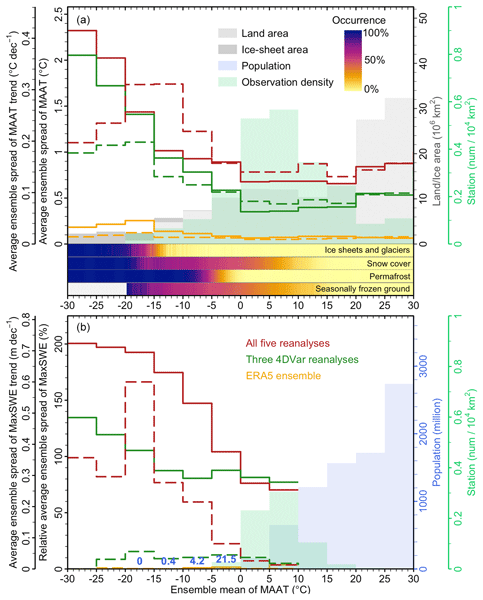
The climate-driven changes in cold regions have an outsized importance for local resilient communities and for global climate through teleconnections. We show that reanalyses are less accurate in cold regions compared to other more populated regions, coincident with the low density of observations. Our findings likely point to similar gaps in our knowledge and capabilities of climate research and services in cold regions.
Niccolò Tubini and Stephan Gruber
EGUsphere, https://doi.org/10.5194/egusphere-2025-2649, https://doi.org/10.5194/egusphere-2025-2649, 2025
Short summary
Short summary
This research introduces a new model for simulating how melting ground ice in permafrost reshapes the land surface over time. It shows that small differences in soil and the depth where ice is found can cause large differences in how the ground sinks or rises. This helps improves our ability to predict future impacts on terrain, ecosystems, and infrastructure as the climate warms.
Hosein Fereydooni, Stephan Gruber, David Stillman, and Derek Cronmiller
EGUsphere, https://doi.org/10.5194/egusphere-2025-1801, https://doi.org/10.5194/egusphere-2025-1801, 2025
Preprint archived
Short summary
Short summary
Detecting ground ice in permafrost is crucial for climate research and infrastructure, but traditional methods often struggle to distinguish it. This study examines the dielectric properties of ground ice as a unique fingerprint. Field measurements were taken at two Yukon permafrost sites: a retrogressive thaw slump and a pingo. Comparing these with electrical resistivity and impedance results, we found relaxation time is a more reliable indicator for ground ice detection.
Alessandro Cicoira, Samuel Weber, Andreas Biri, Ben Buchli, Reynald Delaloye, Reto Da Forno, Isabelle Gärtner-Roer, Stephan Gruber, Tonio Gsell, Andreas Hasler, Roman Lim, Philippe Limpach, Raphael Mayoraz, Matthias Meyer, Jeannette Noetzli, Marcia Phillips, Eric Pointner, Hugo Raetzo, Cristian Scapozza, Tazio Strozzi, Lothar Thiele, Andreas Vieli, Daniel Vonder Mühll, Vanessa Wirz, and Jan Beutel
Earth Syst. Sci. Data, 14, 5061–5091, https://doi.org/10.5194/essd-14-5061-2022, https://doi.org/10.5194/essd-14-5061-2022, 2022
Short summary
Short summary
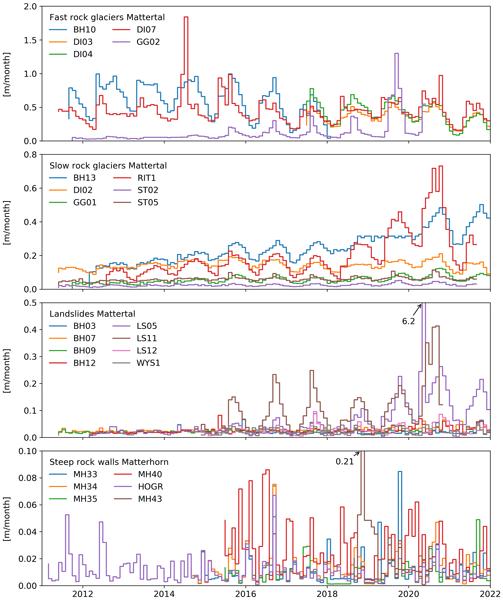
This paper documents a monitoring network of 54 positions, located on different periglacial landforms in the Swiss Alps: rock glaciers, landslides, and steep rock walls. The data serve basic research but also decision-making and mitigation of natural hazards. It is the largest dataset of its kind, comprising over 209 000 daily positions and additional weather data.
Francisco José Cuesta-Valero, Hugo Beltrami, Stephan Gruber, Almudena García-García, and J. Fidel González-Rouco
Geosci. Model Dev., 15, 7913–7932, https://doi.org/10.5194/gmd-15-7913-2022, https://doi.org/10.5194/gmd-15-7913-2022, 2022
Short summary
Short summary
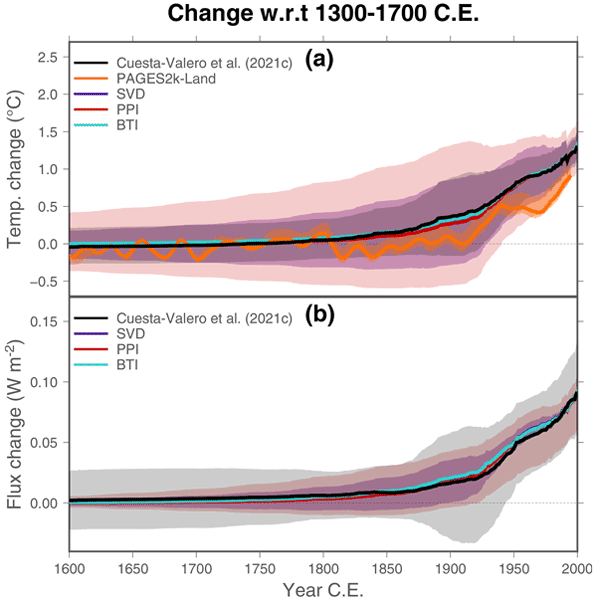
Inversions of subsurface temperature profiles provide past long-term estimates of ground surface temperature histories and ground heat flux histories at timescales of decades to millennia. Theses estimates complement high-frequency proxy temperature reconstructions and are the basis for studying continental heat storage. We develop and release a new bootstrap method to derive meaningful confidence intervals for the average surface temperature and heat flux histories from any number of profiles.
Élise G. Devoie, Stephan Gruber, and Jeffrey M. McKenzie
Earth Syst. Sci. Data, 14, 3365–3377, https://doi.org/10.5194/essd-14-3365-2022, https://doi.org/10.5194/essd-14-3365-2022, 2022
Short summary
Short summary
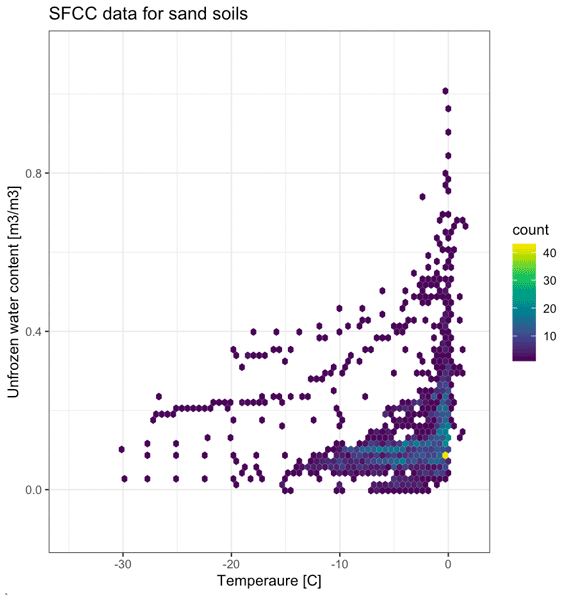
Soil freezing characteristic curves (SFCCs) relate the temperature of a soil to its ice content. SFCCs are needed in all physically based numerical models representing freezing and thawing soils, and they affect the movement of water in the subsurface, biogeochemical processes, soil mechanics, and ecology. Over a century of SFCC data exist, showing high variability in SFCCs based on soil texture, water content, and other factors. This repository summarizes all available SFCC data and metadata.
Cited articles
Batir, J. F., Hornbach, M. J., and Blackwell, D. D.: Ten years of measurements and modeling of soil temperature changes and their effects on permafrost in Northwestern Alaska, Glob. Planet. Change, 148, 55–71, https://doi.org/10.1016/j.gloplacha.2016.11.009, 2017. a
Biskaborn, B. K., Smith, S. L., Noetzli, J., Matthes, H., Vieira, G., Streletskiy, D. A., Schoeneich, P., Romanovsky, V. E., Lewkowicz, A. G., Abramov, A., Allard, M., Boike, J., Cable, W. L., Christiansen, H. H., Delaloye, R., Diekmann, B., Drozdov, D., Etzelmüller, B., Grosse, G., Guglielmin, M., Ingeman-Nielsen, T., Isaksen, K., Ishikawa, M., Johansson, M., Johannsson, H., Joo, A., Kaverin, D., Kholodov, A., Konstantinov, P., Kröger, T., Lambiel, C., Lanckman, J.-P., Luo, D., Malkova, G., Meiklejohn, I., Moskalenko, N., Oliva, M., Phillips, M., Ramos, M., Sannel, A. B. K., Sergeev, D., Seybold, C., Skryabin, P., Vasiliev, A., Wu, Q., Yoshikawa, K., Zheleznyak, M., and Lantuit, H.: Permafrost is warming at a global scale, Nat. Commun., 10, 264, https://doi.org/10.1038/s41467-018-08240-4, 2019. a, b, c, d, e, f, g
Boike, J., Juszak, I., Lange, S., Chadburn, S., Burke, E., Overduin, P. P., Roth, K., Ippisch, O., Bornemann, N., Stern, L., Gouttevin, I., Hauber, E., and Westermann, S.: A 20-year record (1998–2017) of permafrost, active layer and meteorological conditions at a high Arctic permafrost research site (Bayelva, Spitsbergen), Earth Syst. Sci. Data, 10, 355–390, https://doi.org/10.5194/essd-10-355-2018, 2018. a
Bonnaventure, P., Smith, S., Riseborough, D., Duchesne, C., and Ednie, M.: The ground thermal regime across the Mackenzie Valley corridor, Northwest Territories Canada, in: GEOQuébec 2015 (68th Canadian Geotechnical Conference), Canadian Geotechnical Society, Quebec, QC, Canada, https://members.cgs.ca/documents/conference2015/GeoQuebec/papers/067.pdf (last access: 14 March 2026), 2015. a, b, c, d, e
Bonnaventure, P. P. and Lamoureux, S. F.: The active layer: A conceptual review of monitoring, modelling techniques and changes in a warming climate, Prog. Phys. Geogr.-Earth Environ., 37, 352–376, https://doi.org/10.1177/0309133313478314, 2013. a
Brown, J., Hinkel, K. M., and Nelson, F. E.: The circumpolar activer layer montitoring (CALM) program: Research designs and initial results, Pol. Geogr., 24, 165–258, 2000. a
Brown, N.: tsp (“Teaspoon”): a library for ground temperature data, Journal of Open Source Software [code], https://doi.org/10.21105/joss.04704, 2022. a
Brown, N.: tspmetrics (0.0.5), Zenodo [code], https://doi.org/10.5281/zenodo.19076147, 2026a. a
Brown, N.: Simulation data for “Beyond MAGT: learning more from permafrost thermal monitoring data with additional metrics”, Zenodo [data set], https://doi.org/10.5281/zenodo.19077123, 2026b. a
Brown, N., Stewart-Jones, E., Riddick, J., Meier-Legault, O., Kokelj, S., Karunaratne, K., and Gruber, S.: Air and ground temperature, air humidity and site characterization data from the Canadian Shield taiga near Yellowknife, Northwest Territories, Canada, Nordicana D, https://doi.org/10.5885/45810XD-C9F549F3E93040BD, 2022. a
Brown, N., Gruber, S., Pulsifer, P., and Hayes, A.: A prototype field-to-publication data system for a multi-variable permafrost observation network, Environ. Model. Softw., 175, 106006, https://doi.org/10.1016/j.envsoft.2024.106006, 2024. a
Burn, C. R.: The active layer: two contrasting definitions, Permafrost Periglac., 9, 411–416, https://doi.org/10.1002/(sici)1099-1530(199810/12)9:4<411::aid-ppp292>3.0.co;2-6, 1998. a, b
Cannon, A. J., Sobie, S. R., and Murdock, T. Q.: Bias correction of GCM precipitation by quantile mapping: How well do methods preserve changes in quantiles and extremes?, J. Clim., 28, 6938–6959, https://doi.org/10.1175/JCLI-D-14-00754.1, 2015. a
Cao, B., Quan, X., Brown, N., Stewart-Jones, E., and Gruber, S.: GlobSim (v1.0): deriving meteorological time series for point locations from multiple global reanalyses, Geosci. Model Dev., 12, 4661–4679, https://doi.org/10.5194/gmd-12-4661-2019, 2019. a, b
Changwei, X., Gough, W. A., Lin, Z., Tonghua, W., and Wenhui, L.: Temperature-Dependent Adjustments of the Permafrost Thermal Profiles on the Qinghai-Tibet Plateau, China, Arct. Antarct. Alp. Res., 47, 719–728, https://doi.org/10.1657/AAAR00C-13-128, 2015. a, b, c
Connon, R., Devoie, E., Hayashi, M., Veness, T., and Quinton, W.: The influence of shallow taliks on permafrost thaw and active layer dynamics in subarctic Canada, J. Geophys. Res.-Earth, 123, 281–297, https://doi.org/10.1002/2017JF004469, 2018. a, b, c, d
Cuesta-Valero, F. J., Beltrami, H., García-García, A., Krinner, G., Langer, M., MacDougall, A. H., Nitzbon, J., Peng, J., von Schuckmann, K., Seneviratne, S. I., Thiery, W., Vanderkelen, I., and Wu, T.: Continental heat storage: contributions from the ground, inland waters, and permafrost thawing, Earth Syst. Dynam., 14, 609–627, https://doi.org/10.5194/esd-14-609-2023, 2023. a
Dall'Amico, M., Endrizzi, S., Gruber, S., and Rigon, R.: A robust and energy-conserving model of freezing variably-saturated soil, The Cryosphere, 5, 469–484, https://doi.org/10.5194/tc-5-469-2011, 2011. a, b
Devoie, E. G., Craig, J. R., Connon, R. F., and Quinton, W. L.: Taliks: A Tipping Point in Discontinuous Permafrost Degradation in Peatlands, Water Resour. Res., 55, 9838–9857, https://doi.org/10.1029/2018wr024488, 2019. a, b
Etzelmüller, B., Guglielmin, M., Hauck, C., Hilbich, C., Hoelzle, M., Isaksen, K., Noetzli, J., Oliva, M., and Ramos, M.: Twenty years of European mountain permafrost dynamics – the PACE legacy, Environ. Res. Lett., 15, 104070, https://doi.org/10.1088/1748-9326/abae9d, 2020. a
Fourteau, K., Domine, F., and Hagenmuller, P.: Impact of water vapor diffusion and latent heat on the effective thermal conductivity of snow, The Cryosphere, 15, 2739–2755, https://doi.org/10.5194/tc-15-2739-2021, 2021. a
Groenke, B., Langer, M., Nitzbon, J., Westermann, S., Gallego, G., and Boike, J.: Investigating the thermal state of permafrost with Bayesian inverse modeling of heat transfer, The Cryosphere, 17, 3505–3533, https://doi.org/10.5194/tc-17-3505-2023, 2023. a, b
Gruber, S.: Ground subsidence and heave over permafrost: hourly time series reveal interannual, seasonal and shorter-term movement caused by freezing, thawing and water movement, The Cryosphere, 14, 1437–1447, https://doi.org/10.5194/tc-14-1437-2020, 2020. a
Gruber, S., Peter, M., Hoelzle, M., Woodhatch, I., and Haeberli, W.: Surface temperatures in steep alpine rock faces – a strategy for regional-scale measurement and modelling, in: Proceedings of the 8th International Conference on Permafrost 2003, vol. 1, 325–330, Zurich, Switzerland, ISBN 9789058095855, 2003. a
Gruber, S., Brown, N., Stewart-Jones, E., Karunaratne, K., Riddick, J., Peart, C., Subedi, R., and Kokelj, S.: Ground temperature and site characterization data from the Canadian Shield tundra near Lac de Gras, N.W.T., Canada, Nordicana D, https://doi.org/10.5885/45561XX-2C7AB3DCF3D24AD8, 2018a. a
Gruber, S., Brown, N., Stewart-Jones, E., Karunaratne, K., Riddick, J., Peart, C., Subedi, R., and Kokelj, S.: Drill logs, visible ice content and core photos from 2015 surficial drilling in the Canadian Shield tundra near Lac de Gras, N.W.T., Canada, Nordicana D, https://doi.org/10.5885/45558XD-EBDE74B80CE146C6, 2018b. a
Gruber, S., Hayley, J., Karunaratne, K., King, J., MacLean, T., Marshall, S., and Moore, D.: Considerations toward a vision and strategy for permafrost knowledge in Canada, Arct. Sci., 9, iv–viii, https://doi.org/10.1139/as-2023-0016, 2023. a
Gubler, S., Fiddes, J., Keller, M., and Gruber, S.: Scale-dependent measurement and analysis of ground surface temperature variability in alpine terrain, The Cryosphere, 5, 431–443, https://doi.org/10.5194/tc-5-431-2011, 2011. a
Harp, D. R., Atchley, A. L., Painter, S. L., Coon, E. T., Wilson, C. J., Romanovsky, V. E., and Rowland, J. C.: Effect of soil property uncertainties on permafrost thaw projections: A calibration-constrained analysis, The Cryosphere, 10, 341–358, https://doi.org/10.5194/tc-10-341-2016, 2016. a, b
Harris, C., Arenson, L. U., Christiansen, H. H., Etzelmüller, B., Frauenfelder, R., Gruber, S., Haeberli, W., Hauck, C., Hölzle, M., Humlum, O., Isaksen, K., Kääb, A., Kern-Lütschg, M. A., Lehning, M., Matsuoka, N., Murton, J. B., Nötzli, J., Phillips, M., Ross, N., Seppälä, M., Springman, S. M., and Vonder Mühll, D.: Permafrost and climate in Europe: Monitoring and modelling thermal, geomorphological and geotechnical responses, Earth-Sci. Rev., 92, 117–171, 2009. a, b, c
Hasler, A., Gruber, S., and Haeberli, W.: Temperature variability and offset in steep alpine rock and ice faces, The Cryosphere, 5, 977–988, https://doi.org/10.5194/tc-5-977-2011, 2011. a
Hock, R., Rasul, G., Adler, C., Cáceres, B., Gruber, S., Hirabayashi, Y., Jackson, M., Kääb, A., Kang, S., Kutuzov, S., Milner, A., Molau, U., Morin, S., Orlove, B., and Steltzer, H. I.: Chapter 2: High Mountain Areas, in: IPCC Special Report on the Ocean and Cryosphere in a Changing Climate, chap. 2, 131–202, Intergovernmental Panel on Climate Change, https://doi.org/10.1017/9781009157964.004, 2019. a
Hu, G., Zhao, L., Li, R., Wu, X., Wu, T., Xie, C., Zhu, X., and Su, Y.: Variations in soil temperature from 1980 to 2015 in permafrost regions on the Qinghai-Tibetan Plateau based on observed and reanalysis products, Geoderma, 337, 893–905, https://doi.org/10.1016/j.geoderma.2018.10.044, 2019. a, b, c
Hu, Y., Arenson, L. U., Barboux, C., Bodin, X., Cicoira, A., Delaloye, R., Gärtner-Roer, I., Kääb, A., Kellerer-Pirklbauer, A., Lambiel, C., Liu, L., Pellet, C., Rouyet, L., Schoeneich, P., Seier, G., and Strozzi, T.: Rock Glacier Velocity: An Essential Climate Variable Quantity for Permafrost, Rev. Geophys., 63, e2024RG000847, https://doi.org/10.1029/2024RG000847, 2025. a
IPCC: Summary for Policymakers, in: Climate Change 2022: Mitigation of Climate Change. Contribution of Working Group III to the Sixth Assessment Report of the Intergovernmental Panel on Climate Change, edited by Shukla, P., Skea, J., Slade, R., Khourdajie, A. A., van Diemen, R., McCollum, D., Pathak, M., Some, S., Vyas, P., Fradera, R., Belkacemi, M., Hasija, A., Lisboa, G., Luz, S., and Malley, J., Cambridge University Press, Cambridge, UK and New York, NY, USA, https://doi.org/10.1017/9781009157926.001, 2022. a
Isaksen, K., Sollid, J. L., Holmlund, P., and Harris, C.: Recent warming of mountain permafrost in Svalbard and Scandinavia, J. Geophys. Res.-Earth, 112, 1–11, https://doi.org/10.1029/2006JF000522, 2007. a
Kienzle, S. W.: A new temperature based method to separate rain and snow, Hydrological Processes: An International Journal, 22, 5067–5085, 2008. a
Lawton, K. and Patterson, S.: Long-term relative stability of thermistors: Part 2, Precis. Eng., 26, 340–345, https://doi.org/10.1016/S0141-6359(02)00110-1, 2002. a
Lewkowicz, A. G., O’Neill, H. B., Wolfe, S. A., Roy-Léveillée, P., Roujanski V. E., Hoeve, E., Gruber, S., Brooks, H., Rudy, A. C. A., Koenig, C. E. M., Brown, N., and Bonnaventure, P. P.: Glossary of Permafrost Science and Engineering, Canadian Permafrost Association, 174 pp., ISBN 978-0-7727-1181-6, 978-0-7727-1182-3, https://doi.org/10.3138/cpa-gpse, 2025. a
Luethi, R. and Phillips, M.: Challenges and solutions for long-term permafrost borehole temperature monitoring and data interpretation, Geogr. Helvet., 71, 121–131, https://doi.org/10.5194/gh-71-121-2016, 2016. a
Meredith, M., Sommerkorn, M., Cassotta, S., Derksen, C., Ekaykin, A., Hollowed, A., Kofinas, G., Mackintosh, A., Melbourne-Thomas, J., Muelbert, M. M., Ottersen, G., Pritchard, H., and Schuur, E. A.: Polar regions, in: IPCC Special Report on the Ocean and Cryosphere in a Changing Climate, edited by: Pörtner, H.-O., Roberts, D., Masson-Delmotte, V., Zhai, P., Tignor, M., Poloczanska, E., Mintenbeck, K., Alegría, A., Nicolai, M., Okem, A., Petzold, J., Rama, B., and Weyer, N., Intergovern. Panel Clim. Change, Chap. 3, 203–320, https://doi.org/10.1016/S1366-7017(01)00066-6, 2019. a
Nelson, F. and Hinkel, K.: Methods for measuring active-layer thickness, in: A Handbook on Periglacial Field Methods, edited by Humlum, O. and Matsuoka, N., UNIS, Longyearbyen, Norway, https://www.permafrost.org/publication/handbook-on-periglacial-field-methods/ (last access: March 2026), 2003. a, b
Noetzli, J., Arenson, L. U., Bast, A., Beutel, J., Delaloye, R., Farinotti, D., Gruber, S., Gubler, H., Haeberli, W., Hasler, A., Hauck, C., Hiller, M., Hoelzle, M., Lambiel, C., Pelletm, C., Springman, S. M., Vonder Muehll, D., and Phillips, M.: Best practice for measuring permafrost temperature in boreholes based on the experience in the Swiss Alps, Front. Earth Sci., 9, 607875, https://doi.org/10.3389/feart.2021.607875, 2021. a
O’Neill, H. B., Smith, S. L., Burn, C. R., Duchesne, C., and Zhang, Y.: Widespread permafrost degradation and thaw subsidence in Northwest Canada, J. Geophys. Res.-Earth, 128, e2023JF007262, https://doi.org/10.1029/2023JF007262, 2023. a, b
Rango, A. and Martinec, J.: Revisiting the degree-day method for snowmelt computations 1, JAWRA J. Am. Water Resour. Assoc., 31, 657–669, 1995. a
Riseborough, D., Shiklomanov, N., Etzelmüller, B., Gruber, S., and Marchenko, S.: Recent advances in permafrost modelling, Permafrost Periglac., 19, 137–156, 2008. a
Romanovsky, V. E., Smith, S. L., and Christiansen, H. H.: Permafrost thermal state in the polar northern hemisphere during the international polar year 2007–2009: A synthesis, Permafrost Periglac., 21, 106–116, https://doi.org/10.1002/ppp.689, 2010. a
Smith, M. W. and Riseborough, D. W.: Permafrost monitoring and detection of climate change, Permafrost Periglac., 7, 301–309, https://doi.org/10.1002/(sici)1099-1530(199610)7:4<301::aid-ppp231>3.0.co;2-r, 1996. a
Smith, S. and Brown, J.: Essential Climate Variables: Permafrost and seasonally frozen ground, Tech. rep., Global Terrestrial Observing System (WMO/UNESCO/UNEP/ICSU/FAO), Rome, Italy, https://library.arcticportal.org/id/eprint/668 (last access: 14 March 2026), 2009. a
Smith, S., Romanovsky, V., Lewkowicz, A., Burn, C., Allard, M., Clow, G., Yoshikawa, K., and Throop, J.: Thermal state of permafrost in North America: a contribution to the international polar year, Permafrost Periglac., 21, 117–135, https://doi.org/10.1002/ppp.690, 2010. a
Staub, B., Hasler, A., Noetzli, J., and Delaloye, R.: Gap-filling algorithm for ground surface temperature data measured in permafrost and periglacial environments, Permafrost Periglac., 28, 275–285, https://doi.org/10.1002/ppp.1913, 2017. a
Stewart-Jones, E., Castagner, A., Subedi, R., Knecht, T., MacDonald, S., Macdonell, H., Jonat, G., Meier-Legault, O., Brown, N., and Gruber, S.: Air and ground temperature, air humidity and site characterization data from the Canadian Shield taiga near Kennady Lake, Northwest Territories, Canada, Nordicana D, https://doi.org/10.5885/45804XD-592E48652C5840F9, 2023. a
Streletskiy, D., Biskaborn, B., Smith, S. L., Noetzli, J., Viera, G., and Schoeneich, P.: Strategy and Implementation Plan 2016–2020 for the Global Terrestrial Network for Permafrost (GTN-P), Tech. rep., International Permafrost Association, https://epic.awi.de/id/eprint/45894/ (last access: 14 March 2026), 2017. a
Subedi, R., Kokelj, S. V., and Gruber, S.: Ground ice, organic carbon and soluble cations in tundra permafrost soils and sediments near a Laurentide ice divide in the Slave Geological Province, Northwest Territories, Canada, The Cryosphere, 14, 4341–4364, https://doi.org/10.5194/tc-14-4341-2020, 2020. a
Swiss Permafrost Monitoring Network: Swiss Permafrost Bulletin 2023, Swiss Permafrost Monitoring Network (PERMOS), https://doi.org/10.13093/PERMOS-BULL-2024, 2024. a, b, c, d
Tubini, N. and Gruber, S.: Simulating soil heat transfer with excess ice, erosion and deposition, guaranteed energy conservation, adaptive mesh refinement, and accurate spin-up (FreeThawXice1D), EGUsphere [preprint], https://doi.org/10.5194/egusphere-2025-2649, 2025. a, b, c
Tubini, N., Gruber, S., and Rigon, R.: A method for solving heat transfer with phase change in ice or soil that allows for large time steps while guaranteeing energy conservation, The Cryosphere, 15, 2541–2568, https://doi.org/10.5194/tc-15-2541-2021, 2021. a, b, c
van Everdingen, R. O.: Multi-language glossary of permafrost and related ground-ice terms, National Research Council of Canada. Associate Committee on Geotechnical Research. Permafrost Subcommittee, https://www.scribd.com/document/385097863/Glossary-of-Permafrost-and-Ground-Ice-IPA-2005 (last access: 17 March 2026), 1998. a
von Schuckmann, K., Minière, A., Gues, F., Cuesta-Valero, F. J., Kirchengast, G., Adusumilli, S., Straneo, F., Ablain, M., Allan, R. P., Barker, P. M., Beltrami, H., Blazquez, A., Boyer, T., Cheng, L., Church, J., Desbruyeres, D., Dolman, H., Domingues, C. M., García-García, A., Giglio, D., Gilson, J. E., Gorfer, M., Haimberger, L., Hakuba, M. Z., Hendricks, S., Hosoda, S., Johnson, G. C., Killick, R., King, B., Kolodziejczyk, N., Korosov, A., Krinner, G., Kuusela, M., Landerer, F. W., Langer, M., Lavergne, T., Lawrence, I., Li, Y., Lyman, J., Marti, F., Marzeion, B., Mayer, M., MacDougall, A. H., McDougall, T., Monselesan, D. P., Nitzbon, J., Otosaka, I., Peng, J., Purkey, S., Roemmich, D., Sato, K., Sato, K., Savita, A., Schweiger, A., Shepherd, A., Seneviratne, S. I., Simons, L., Slater, D. A., Slater, T., Steiner, A. K., Suga, T., Szekely, T., Thiery, W., Timmermans, M.-L., Vanderkelen, I., Wjiffels, S. E., Wu, T., and Zemp, M.: Heat stored in the Earth system 1960–2020: where does the energy go?, Earth Syst. Sci. Data, 15, 1675–1709, https://doi.org/10.5194/essd-15-1675-2023, 2023. a
Wang, Q., Okadera, T., Watanabe, M., Wu, T., and Ochirbat, B.: Ground warming and permafrost degradation in various terrestrial ecosystems in northcentral Mongolia, Permafrost Periglac., 33, 406–424, https://doi.org/10.1002/ppp.2161, 2022. a
Wang, S., Cao, B., Hao, J., Sun, W., and Zhang, K.: Consistent ground surface temperature climatology over China: 1956–2022, J. Geophys. Res.-Atmos., 129, e2024JD040916, https://doi.org/10.1029/2024JD040916, 2024. a, b
Widmer, L., Phillips, M., and Buchli, C.: Brief communication: Comparison of the performance of thermistors and digital temperature sensors in a mountain permafrost borehole, The Cryosphere, 17, 4289–4295, https://doi.org/10.5194/tc-17-4289-2023, 2023. a
Wu, Q. and Zhang, T.: Changes in active layer thickness over the Qinghai-Tibetan Plateau from 1995 to 2007, J. Geophys. Res.-Atmos., 115, https://doi.org/10.1029/2009JD012974, 2010. a
Wu, T., Zhao, L., Li, R., Wang, Q., Xie, C., and Pang, Q.: Recent ground surface warming and its effects on permafrost on the central Qinghai‐Tibet Plateau, Int. J. Climatol., 33, 920–930, https://doi.org/10.1002/joc.3479, 2012. a, b
Short summary
This study improves how we track changes in permafrost by testing new ways to use ground temperature data. A set of five simple but powerful metrics was found to give a clearer picture of thawing than current methods. The results also show that the depth where sensors are placed can strongly affect measured warming rates. These findings help make permafrost monitoring more accurate and support better planning for a changing climate.
This study improves how we track changes in permafrost by testing new ways to use ground...


