
Articles | Volume 20, issue 2
https://doi.org/10.5194/tc-20-1427-2026
© Author(s) 2026. This work is distributed under
the Creative Commons Attribution 4.0 License.
the Creative Commons Attribution 4.0 License.
https://doi.org/10.5194/tc-20-1427-2026
© Author(s) 2026. This work is distributed under
the Creative Commons Attribution 4.0 License.
the Creative Commons Attribution 4.0 License.
Research article
| 
03 Mar 2026
Research article |
| 03 Mar 2026
| 03 Mar 2026
Improving snow water equivalent modelling: a comparative study of hybrid machine learning techniques

Department of Physical Geography, Faculty of Geosciences, Utrecht University, Utrecht, the Netherlands
Madlene Nussbaum
Department of Physical Geography, Faculty of Geosciences, Utrecht University, Utrecht, the Netherlands
Siamak Mehrkanoon
Department of Information and Computing Sciences, Faculty of Science, Utrecht University, Utrecht, the Netherlands
Philip D. A. Kraaijenbrink
Department of Physical Geography, Faculty of Geosciences, Utrecht University, Utrecht, the Netherlands
Isabelle Gouttevin
Météo-France, CNRS, Univ. Grenoble Alpes, Univ. Toulouse, CNRM, Centre d'Études de la Neige, 38000 Grenoble, France
Derek Karssenberg
Department of Physical Geography, Faculty of Geosciences, Utrecht University, Utrecht, the Netherlands
Walter W. Immerzeel
Department of Physical Geography, Faculty of Geosciences, Utrecht University, Utrecht, the Netherlands
Related authors
No articles found.
Nora Helbig, Florian Hammer, Gert-Jan Duine, Leila M. V. Carvalho, Charles Jones, Hugo Merzisen, Isabelle Gouttevin, and Sarah Barber
EGUsphere, https://doi.org/10.5194/egusphere-2026-5871, https://doi.org/10.5194/egusphere-2026-5871, 2026
This preprint is open for discussion and under review for Nonlinear Processes in Geophysics (NPG).
Short summary
Short summary
We enhanced DEVINE, a deep-learning wind downscaling model trained on atmospheric model simulations over synthetic topographies. Introducing wind direction-dependent input features enabled rotational data augmentation. We assess performance across unseen terrain, wind regimes and driving model data with station observations and atmospheric model simulations. DEVINE generalizes well when flow is primarily terrain-forced, but performance degrades under complex atmosphere-terrain interactions.
Tesse E. A. van den Aker, Peter Kuipers Munneke, Willem Jan van de Berg, Walter W. Immerzeel, and Michiel R. van den Broeke
The Cryosphere, 20, 5475–5490, https://doi.org/10.5194/tc-20-5475-2026, https://doi.org/10.5194/tc-20-5475-2026, 2026
Short summary
Short summary
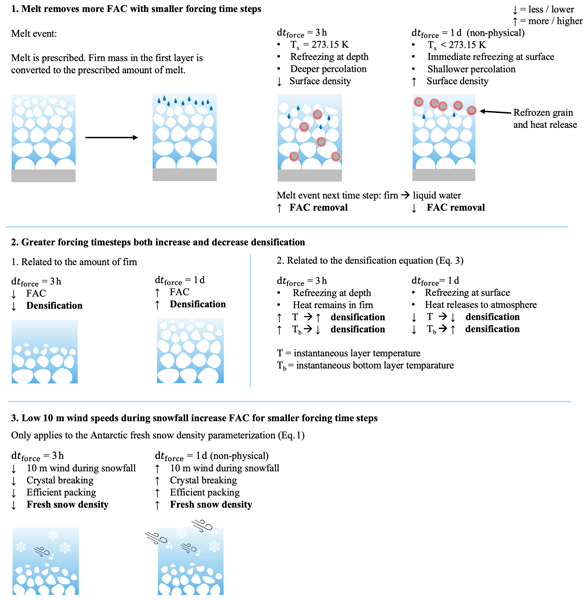
The firn layer, i.e. permanent snow, regulates how an ice sheet responds to climate change. Firn models are forced with with climate data at time steps from sub-daily to annual in literature, however, implications are barely evaluated. We test the impact of different climate forcing time steps on the modeled firn layer. We conclude that the climate forcing time step (1) affects firn model output, (2) can lead to non-physical behaviour, and (3) that resolving at least a diurnal cycle is required.
Yu Qi, Ting Zhang, Philip D. A. Kraaijenbrink, Liu Liu, and Xiaoya Deng
EGUsphere, https://doi.org/10.5194/egusphere-2026-4911, https://doi.org/10.5194/egusphere-2026-4911, 2026
This preprint is open for discussion and under review for Hydrology and Earth System Sciences (HESS).
Short summary
Short summary
High mountain rivers provide essential water for downstream agriculture and daily life, yet their flow magnitude and composition are changing rapidly as climate warms. By improving snowpack representation in a cryosphere-hydrology model, we show that glacier melt becomes increasingly important while snowmelt contribution declines. This shift increases flood frequency, prolongs high flows, and alters flood generation, creating growing challenges for downstream water management.
Niklas Schmücker, Madlene Nussbaum, Alice Johannes, Claudia Guidi, and Peter Lehmann
EGUsphere, https://doi.org/10.5194/egusphere-2026-4629, https://doi.org/10.5194/egusphere-2026-4629, 2026
This preprint is open for discussion and under review for SOIL (SOIL).
Short summary
Short summary
Healthy soil is essential for forests, but assessing its condition usually requires expensive and time-consuming measurements. We tested whether a simple field method originally developed for farmland can also be used in temperate forests. We found that it provides reliable information about soil condition and water movement when interpreted together with soil acidity and texture. This makes it a practical tool for monitoring and protecting forest soils.
Tom Matthews, Baker Perry, Ben Graves, Fanny Brun, Maria Sanolaria-Otin, Navaraj Pokhrel, Arbindra Khadka, Dibas Shrestha, Ludving Cano, Aris Kwadijk, Walter Immereel, Brandt Maxwell, and Anton Seimon
EGUsphere, https://doi.org/10.5194/egusphere-2026-5200, https://doi.org/10.5194/egusphere-2026-5200, 2026
This preprint is open for discussion and under review for The Cryosphere (TC).
Short summary
Short summary
Extreme precipitation shapes hazards and water resources in high mountains, but is rarely observed directly. On 4 October 2025, weather stations on Mt. Everest recorded one of the most extreme snowfall events ever measured. The storm revealed that Himalayan snowfall extremes can be far larger than previously documented, and that intense snowfall can cool the atmosphere sufficiently to prevent rain at impact-sensitive elevations, complicating the picture of how warming will affect future storms.
Aris Kwadijk, Philip D. A. Kraaijenbrink, Faezeh M. Nick, Joseph M. Shea, Jakob F. Steiner, René R. Wijngaard, and Walter W. Immerzeel
EGUsphere, https://doi.org/10.5194/egusphere-2026-5005, https://doi.org/10.5194/egusphere-2026-5005, 2026
This preprint is open for discussion and under review for Hydrology and Earth System Sciences (HESS).
Short summary
Short summary
The Himalayas supply water to millions of people downstream, yet high-altitude rainfall remains poorly understood. Using thirteen years of data from weather stations across Nepal's Langtang Valley, we found that during the monsoon the moist atmosphere causes rainfall to be highly sensitive to topography. We show how precipitation-elevation gradients shift during the day. This shift is captured in a numerical relation, that can serve to validate weather models.
Thomas Pauze, Axel Bouchet, Isabelle Gouttevin, Aaron Boone, Mathieu Fructus, Matthieu Lafaysse, Erwan Le Gac, Agnès Rivière, and Yves Lejeune
EGUsphere, https://doi.org/10.5194/egusphere-2026-4137, https://doi.org/10.5194/egusphere-2026-4137, 2026
This preprint is open for discussion and under review for Geoscientific Model Development (GMD).
Short summary
Short summary
In mid-altitude mountainous areas, snow acts as a water reservoir and is impacted by forest: to represent it we use a model called MEB/Crocus. It has been developed in boreal forests. Its results at a mid-altitude alpine site (the Col de Porte) were not convincing. We modify parametrizations that govern the behavior of intercepted snow to have a more realistic representation. We improve results of simulated snowpack under forest at Col de Porte and do not change performance in boreal sites.
Olivier Champagne, Flora Branger, Anthony Lemoine, Jordi Bolibar, Louise Mimeau, Gilles Delaygue, Isabelle Gouttevin, Sophie Cauvy-Fraunié, and Thomas Condom
EGUsphere, https://doi.org/10.5194/egusphere-2026-3523, https://doi.org/10.5194/egusphere-2026-3523, 2026
This preprint is open for discussion and under review for Hydrology and Earth System Sciences (HESS).
Short summary
Short summary
This study using a hydrological model shows the projections of icemelt contribution to streamflow until the end of the century in many rivers in the Rhône basin. The results show a streamflow decrease in summer, due to the decrease of precipitations, snowmelt, and glacier melt. In many catchments, icemelt will completely disappear by the end of the century. In the Arve and highly glaciated catchments of the upper Rhône, icemelt will remains sufficiently large to sustain streamflow in summer.
Florian Vacek, Faezeh M. Nick, Douglas Benn, Maarten P. A. Zwarts, Walter Immerzeel, and Roderik S. W. van de Wal
The Cryosphere, 20, 3827–3845, https://doi.org/10.5194/tc-20-3827-2026, https://doi.org/10.5194/tc-20-3827-2026, 2026
Short summary
Short summary
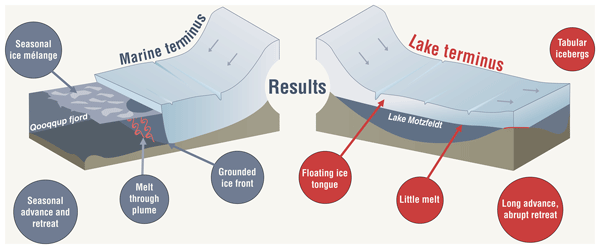
We studied a unique glacier in South Greenland that ends in both a lake and the ocean. Using satellite data and field work, we found that the two glacier fronts behave very differently even under the same climate. At the lake glacier we identify a floating ice tongue and we infer little melt below water. The lake glacier experienced a sudden large breakup. Our work suggests that lake and marine glacier fronts must be treated differently in model simulations.
Eise W. Nota, Yinghua Li, Lotta Beyaard, Meryem Upson, Menno L. C. Wagenaar, Zahra Nassralla, Silke J. Baltussen, Esmee van Amelsfort, Lieke M. Gubbels, David Leahy, Janneke J. Muller, Brechtje A. van Amstel, Josefien J. A. Donders, Jan-Eike Rossius, Marcel C. G. van Maarseveen, Henk Markies, Arjan M. van Eijk, Bas D. B. van Dam, Madlene Nussbaum, Saeb Faraji Gargari, Vincent Brunst, Lisanne Braat, and Maarten G. Kleinhans
Earth Syst. Sci. Data Discuss., https://doi.org/10.5194/essd-2026-427, https://doi.org/10.5194/essd-2026-427, 2026
Preprint under review for ESSD
Short summary
Short summary
It is increasingly important to understand the hydrodynamic and morphodynamic processes of estuaries. Here we present a large dataset of physical scale experiments of estuaries, covering almost 230,000 tidal cycles with various planforms and perturbations. The data consists of spatially and temporally covering laserscan DEMs, planform masks, orthomosaics, water depth maps, and timelapses. The data can be used in numerous disciplines, such as morphology, machine learning and numerical modelling.
Giulia Mazzotti, Félix Vaccaro, Antoine Courteaud, Mathieu Fructus, Jan Magnusson, Isabelle Gouttevin, Jari-Pekka Nousu, and Matthieu Lafaysse
EGUsphere, https://doi.org/10.5194/egusphere-2026-1464, https://doi.org/10.5194/egusphere-2026-1464, 2026
Short summary
Short summary
This study evaluates spatial simulations with the new snow model MEB-Crocus over mountainous, forested terrain. In lack of forest snow observations over large areas, simulations are assessed against simulations with the state-of-the art model FSM2oshd. Results show that the data characterizing the vegetation is as important for model performance as the mathematical description of physical processes. These insights inform future improvements of MEB-Crocus for its application to alpine regions.
Francesca Pellicciotti, Adrià Fontrodona-Bach, David R. Rounce, Catriona L. Fyffe, Leif S. Anderson, Álvaro Ayala, Ben W. Brock, Pascal Buri, Stefan Fugger, Koji Fujita, Prateek Gantayat, Alexander R. Groos, Walter Immerzeel, Marin Kneib, Christoph Mayer, Shelley MacDonell, Michael McCarthy, James McPhee, Evan Miles, Heather Purdie, Ekaterina Rets, Akiko Sakai, Thomas E. Shaw, Jakob Steiner, Patrick Wagnon, and Alex Winter-Billington
The Cryosphere, 20, 1895–1928, https://doi.org/10.5194/tc-20-1895-2026, https://doi.org/10.5194/tc-20-1895-2026, 2026
Short summary
Short summary
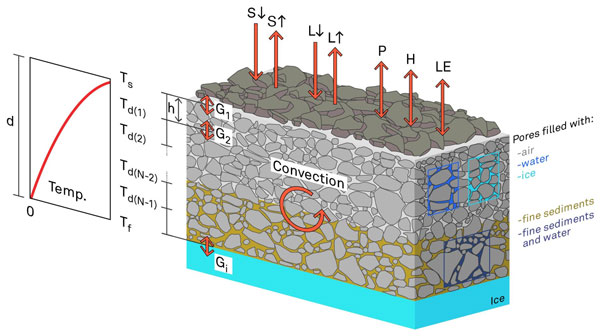
Rock debris covers many of the world glaciers, modifying the transfer of atmospheric energy to the debris and into the ice. Models of different complexity simulate this process, and we compare 15 models at 9 sites to show that the most complex models at the debris-atmosphere interface have the highest performance. However, we lack debris properties and their derivation from measurements is ambiguous, hindering global modelling and calling for both model development and data collection.
Tomislav Hengl, Davide Consoli, Xuemeng Tian, Travis W. Nauman, Madlene Nussbaum, Mustafa Serkan Isik, Leandro Parente, Yu-Feng Ho, Rolf Simoes, Surya Gupta, Alessandro Samuel-Rosa, Taciara Zborowski Horst, José L. Safanelli, and Nancy Harris
Earth Syst. Sci. Data, 18, 989–1036, https://doi.org/10.5194/essd-18-989-2026, https://doi.org/10.5194/essd-18-989-2026, 2026
Short summary
Short summary
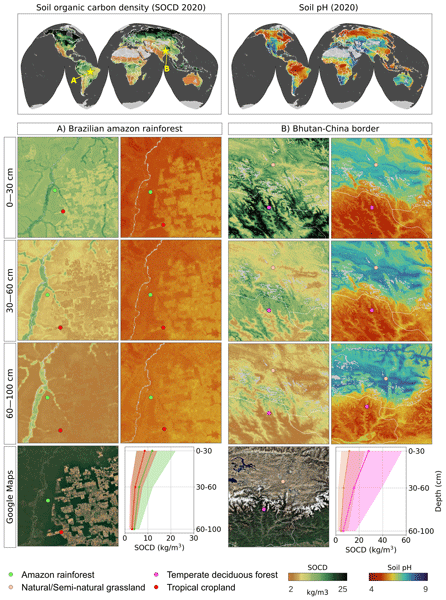
We used satellite data and thousands of soil samples to create detailed global maps showing how soil changes over time. These maps reveal important patterns in soil health, such as a significant global loss of soil carbon in the past 25 years. Our results help track land degradation and support better land restoration efforts. This work provides a new global tool for understanding and protecting soil, a key resource for food, water, and climate.
Jimena Medina-Rubio, Madlene Nussbaum, Ton S. van den Bremer, and Erik van Sebille
Ocean Sci., 22, 49–74, https://doi.org/10.5194/os-22-49-2026, https://doi.org/10.5194/os-22-49-2026, 2026
Short summary
Short summary
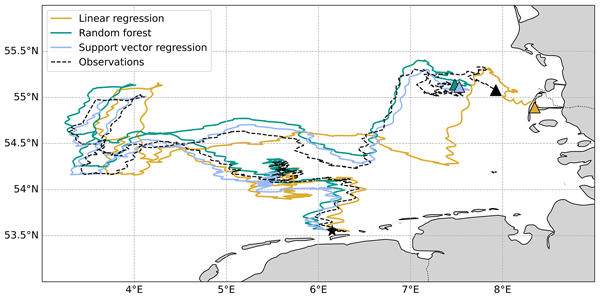
We study how tides, wind, and waves interact at the ocean surface by tracking ultra-thin drifters released in the southern North Sea for two months. Using model data together with data-driven machine learning models, we determine the relative contribution of each forcing mechanism in driving the drifters' velocity and improve the prediction of their trajectories. We also test the generalisability of this method by applying it to the same drifters in the Tyrrhenian Sea.
Danaé Préaux, Ingrid Dombrowski-Etchevers, Isabelle Gouttevin, and Yann Seity
Geosci. Model Dev., 18, 8723–8749, https://doi.org/10.5194/gmd-18-8723-2025, https://doi.org/10.5194/gmd-18-8723-2025, 2025
Short summary
Short summary
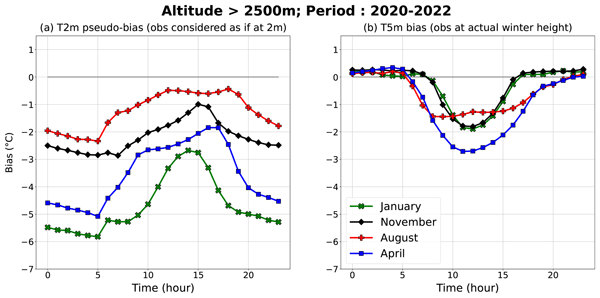
Air temperature is usually measured around 2 m above the ground following meteorological standards. However, in mountain regions, temperature sensors are often placed higher up to avoid being buried in snow in winter. We show that the measurement height is of high importance when quantifying the errors made by weather prediction models. Also, it should be accounted for when these observations are used to correct the models in real time, as doing otherwise degrades their forecasts at high altitudes.
Titouan Biget, Fanny Brun, Walter Immerzeel, Léo Martin, Hamish Pritchard, Emily Collier, Yanbin Lei, and Tandong Yao
The Cryosphere, 19, 5863–5870, https://doi.org/10.5194/tc-19-5863-2025, https://doi.org/10.5194/tc-19-5863-2025, 2025
Short summary
Short summary
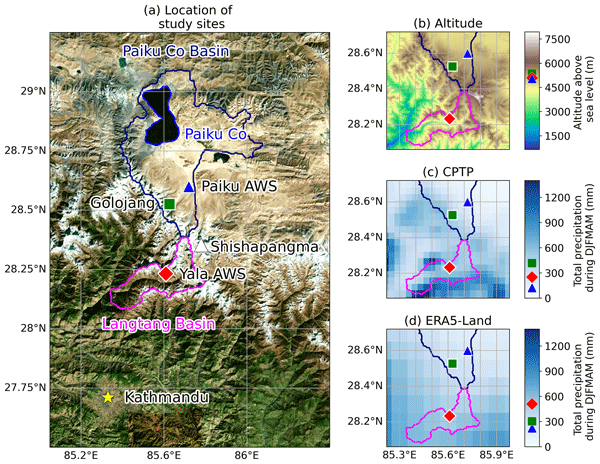
This study explore the precipitation in the southern Tibetan plateau using the water pressure of an high altitude lake and meteorological models and shows that snowfall could be much stronger on the Plateau than what is predicted by the models.
Louis Le Toumelin, Isabelle Gouttevin, Clovis Galiez, and Nora Helbig
Nonlin. Processes Geophys., 31, 75–97, https://doi.org/10.5194/npg-31-75-2024, https://doi.org/10.5194/npg-31-75-2024, 2024
Short summary
Short summary
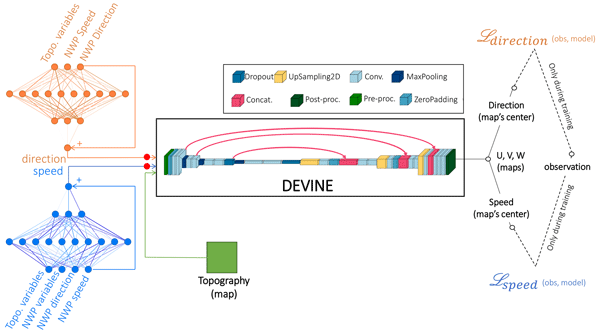
Forecasting wind fields over mountains is of high importance for several applications and particularly for understanding how wind erodes and disperses snow. Forecasters rely on operational wind forecasts over mountains, which are currently only available on kilometric scales. These forecasts can also be affected by errors of diverse origins. Here we introduce a new strategy based on artificial intelligence to correct large-scale wind forecasts in mountains and increase their spatial resolution.
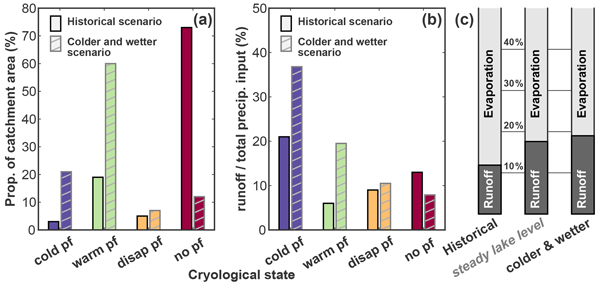
Léo C. P. Martin, Sebastian Westermann, Michele Magni, Fanny Brun, Joel Fiddes, Yanbin Lei, Philip Kraaijenbrink, Tamara Mathys, Moritz Langer, Simon Allen, and Walter W. Immerzeel
Hydrol. Earth Syst. Sci., 27, 4409–4436, https://doi.org/10.5194/hess-27-4409-2023, https://doi.org/10.5194/hess-27-4409-2023, 2023
Short summary
Short summary
Across the Tibetan Plateau, many large lakes have been changing level during the last decades as a response to climate change. In high-mountain environments, water fluxes from the land to the lakes are linked to the ground temperature of the land and to the energy fluxes between the ground and the atmosphere, which are modified by climate change. With a numerical model, we test how these water and energy fluxes have changed over the last decades and how they influence the lake level variations.
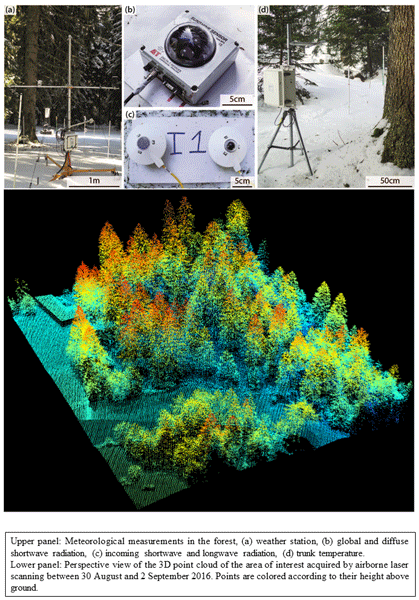
Jean Emmanuel Sicart, Victor Ramseyer, Ghislain Picard, Laurent Arnaud, Catherine Coulaud, Guilhem Freche, Damien Soubeyrand, Yves Lejeune, Marie Dumont, Isabelle Gouttevin, Erwan Le Gac, Frédéric Berger, Jean-Matthieu Monnet, Laurent Borgniet, Éric Mermin, Nick Rutter, Clare Webster, and Richard Essery
Earth Syst. Sci. Data, 15, 5121–5133, https://doi.org/10.5194/essd-15-5121-2023, https://doi.org/10.5194/essd-15-5121-2023, 2023
Short summary
Short summary
Forests strongly modify the accumulation, metamorphism and melting of snow in midlatitude and high-latitude regions. Two field campaigns during the winters 2016–17 and 2017–18 were conducted in a coniferous forest in the French Alps to study interactions between snow and vegetation. This paper presents the field site, instrumentation and collection methods. The observations include forest characteristics, meteorology, snow cover and snow interception by the canopy during precipitation events.
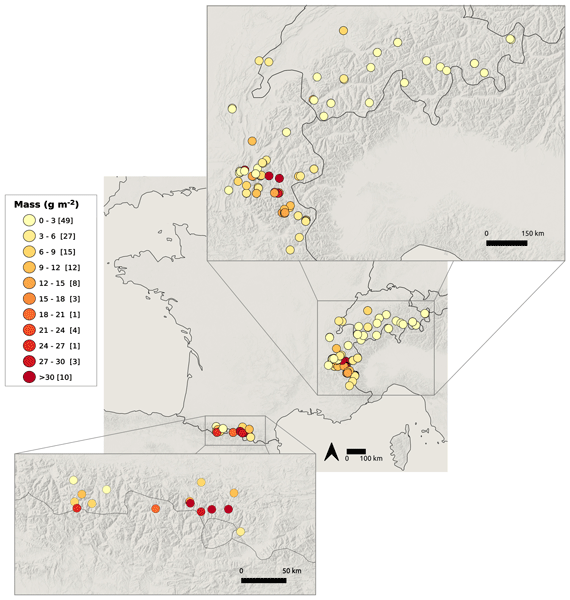
Marie Dumont, Simon Gascoin, Marion Réveillet, Didier Voisin, François Tuzet, Laurent Arnaud, Mylène Bonnefoy, Montse Bacardit Peñarroya, Carlo Carmagnola, Alexandre Deguine, Aurélie Diacre, Lukas Dürr, Olivier Evrard, Firmin Fontaine, Amaury Frankl, Mathieu Fructus, Laure Gandois, Isabelle Gouttevin, Abdelfateh Gherab, Pascal Hagenmuller, Sophia Hansson, Hervé Herbin, Béatrice Josse, Bruno Jourdain, Irene Lefevre, Gaël Le Roux, Quentin Libois, Lucie Liger, Samuel Morin, Denis Petitprez, Alvaro Robledano, Martin Schneebeli, Pascal Salze, Delphine Six, Emmanuel Thibert, Jürg Trachsel, Matthieu Vernay, Léo Viallon-Galinier, and Céline Voiron
Earth Syst. Sci. Data, 15, 3075–3094, https://doi.org/10.5194/essd-15-3075-2023, https://doi.org/10.5194/essd-15-3075-2023, 2023
Short summary
Short summary
Saharan dust outbreaks have profound effects on ecosystems, climate, health, and the cryosphere, but the spatial deposition pattern of Saharan dust is poorly known. Following the extreme dust deposition event of February 2021 across Europe, a citizen science campaign was launched to sample dust on snow over the Pyrenees and the European Alps. This campaign triggered wide interest and over 100 samples. The samples revealed the high variability of the dust properties within a single event.
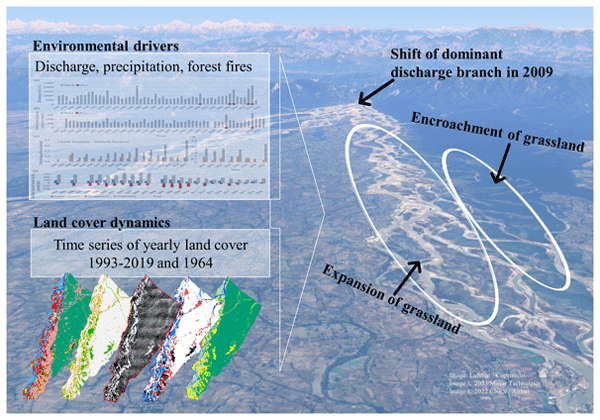
Jitse Bijlmakers, Jasper Griffioen, and Derek Karssenberg
Biogeosciences, 20, 1113–1144, https://doi.org/10.5194/bg-20-1113-2023, https://doi.org/10.5194/bg-20-1113-2023, 2023
Short summary
Short summary
At the foot of the Himalayas in Nepal, land cover time series and data of environmental drivers show changes in disturbance-dependent grasslands that serve as habitat for endangered megafauna. The changes in surface area and heterogeneity of the grassland patches are attributed to a relocation of the dominant river channel of the Karnali River and associated decline of hydromorphological disturbances and a decrease in anthropogenic disturbances after its establishment as conservation area.
Adam Emmer, Simon K. Allen, Mark Carey, Holger Frey, Christian Huggel, Oliver Korup, Martin Mergili, Ashim Sattar, Georg Veh, Thomas Y. Chen, Simon J. Cook, Mariana Correas-Gonzalez, Soumik Das, Alejandro Diaz Moreno, Fabian Drenkhan, Melanie Fischer, Walter W. Immerzeel, Eñaut Izagirre, Ramesh Chandra Joshi, Ioannis Kougkoulos, Riamsara Kuyakanon Knapp, Dongfeng Li, Ulfat Majeed, Stephanie Matti, Holly Moulton, Faezeh Nick, Valentine Piroton, Irfan Rashid, Masoom Reza, Anderson Ribeiro de Figueiredo, Christian Riveros, Finu Shrestha, Milan Shrestha, Jakob Steiner, Noah Walker-Crawford, Joanne L. Wood, and Jacob C. Yde
Nat. Hazards Earth Syst. Sci., 22, 3041–3061, https://doi.org/10.5194/nhess-22-3041-2022, https://doi.org/10.5194/nhess-22-3041-2022, 2022
Short summary
Short summary
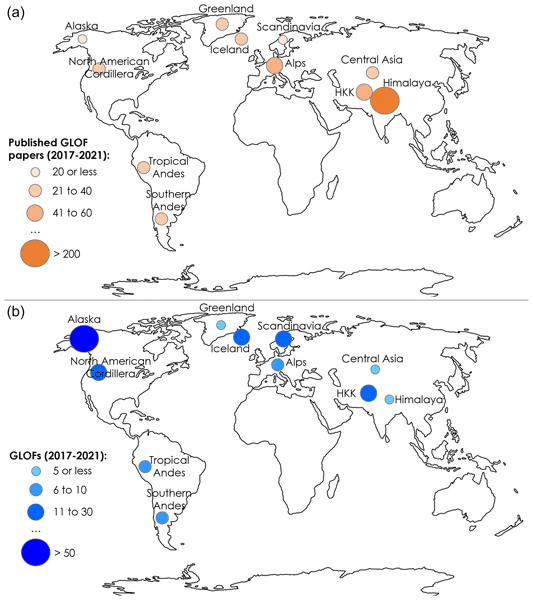
Glacial lake outburst floods (GLOFs) have attracted increased research attention recently. In this work, we review GLOF research papers published between 2017 and 2021 and complement the analysis with research community insights gained from the 2021 GLOF conference we organized. The transdisciplinary character of the conference together with broad geographical coverage allowed us to identify progress, trends and challenges in GLOF research and outline future research needs and directions.
Christopher Chagumaira, Joseph G. Chimungu, Patson C. Nalivata, Martin R. Broadley, Madlene Nussbaum, Alice E. Milne, and R. Murray Lark
EGUsphere, https://doi.org/10.5194/egusphere-2022-583, https://doi.org/10.5194/egusphere-2022-583, 2022
Preprint archived
Short summary
Short summary
Our study examines different quantitative methods to predict concentrations of micronutrients in the soil from field samples. However, we emphasize the concerns of stakeholders, who use such information to make decisions, in this case in relation to the study and management of micronutrient deficiency risk in the human population. We propose a framework to think about these concerns then compare common approaches for digital soil mapping within this framework.
Stefan Fugger, Catriona L. Fyffe, Simone Fatichi, Evan Miles, Michael McCarthy, Thomas E. Shaw, Baohong Ding, Wei Yang, Patrick Wagnon, Walter Immerzeel, Qiao Liu, and Francesca Pellicciotti
The Cryosphere, 16, 1631–1652, https://doi.org/10.5194/tc-16-1631-2022, https://doi.org/10.5194/tc-16-1631-2022, 2022
Short summary
Short summary
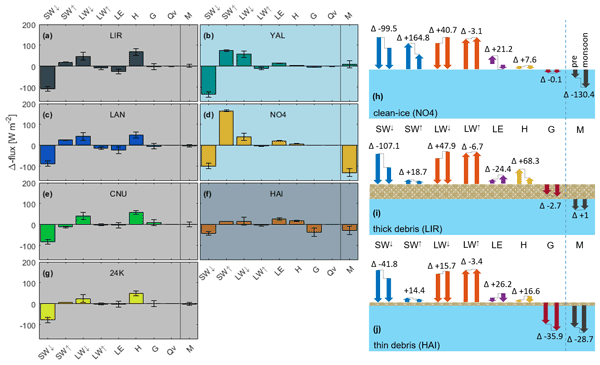
The monsoon is important for the shrinking and growing of glaciers in the Himalaya during summer. We calculate the melt of seven glaciers in the region using a complex glacier melt model and weather data. We find that monsoonal weather affects glaciers that are covered with a layer of rocky debris and glaciers without such a layer in different ways. It is important to take so-called turbulent fluxes into account. This knowledge is vital for predicting the future of the Himalayan glaciers.
Wouter J. Smolenaars, Sanita Dhaubanjar, Muhammad K. Jamil, Arthur Lutz, Walter Immerzeel, Fulco Ludwig, and Hester Biemans
Hydrol. Earth Syst. Sci., 26, 861–883, https://doi.org/10.5194/hess-26-861-2022, https://doi.org/10.5194/hess-26-861-2022, 2022
Short summary
Short summary
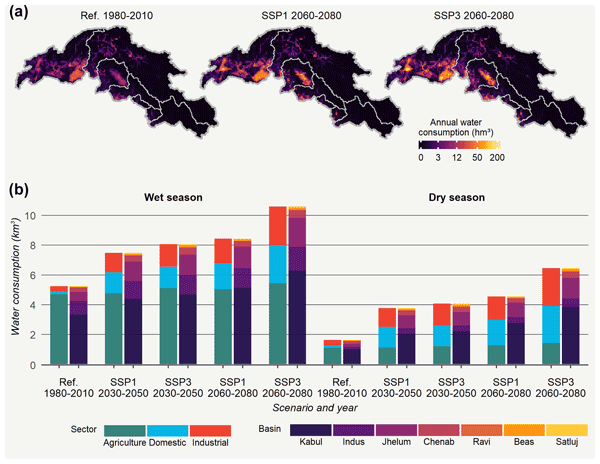
The arid plains of the lower Indus Basin rely heavily on the water provided by the mountainous upper Indus. Rapid population growth in the upper Indus is expected to increase the water that is consumed there. This will subsequently reduce the water that is available for the downstream plains, where the population and water demand are also expected to grow. In future, this may aggravate tensions over the division of water between the countries that share the Indus Basin.
Cited articles
Alonso-González, E., Revuelto, J., Fassnacht, S. R., and Ignacio López-Moreno, J.: Combined influence of maximum accumulation and melt rates on the duration of the seasonal snowpack over temperate mountains, J. Hydrol., 608, 127574, https://doi.org/10.1016/j.jhydrol.2022.127574, 2022. a
Bair, E. H., Abreu Calfa, A., Rittger, K., and Dozier, J.: Using machine learning for real-time estimates of snow water equivalent in the watersheds of Afghanistan, The Cryosphere, 12, 1579–1594, https://doi.org/10.5194/tc-12-1579-2018, 2018. a
Beniston, M., Farinotti, D., Stoffel, M., Andreassen, L. M., Coppola, E., Eckert, N., Fantini, A., Giacona, F., Hauck, C., Huss, M., Huwald, H., Lehning, M., López-Moreno, J.-I., Magnusson, J., Marty, C., Morán-Tejéda, E., Morin, S., Naaim, M., Provenzale, A., Rabatel, A., Six, D., Stötter, J., Strasser, U., Terzago, S., and Vincent, C.: The European mountain cryosphere: a review of its current state, trends, and future challenges, The Cryosphere, 12, 759–794, https://doi.org/10.5194/tc-12-759-2018, 2018. a
Biemans, H., Siderius, C., Lutz, A. F., Nepal, S., Ahmad, B., Hassan, T., von Bloh, W., Wijngaard, R. R., Wester, P., Shrestha, A. B., and Immerzeel, W. W.: Importance of snow and glacier meltwater for agriculture on the Indo-Gangetic Plain, Nature Sustainability, 2, 594–601, https://doi.org/10.1038/s41893-019-0305-3, 2019. a
Brun, E., Martin, E., Simon, V., Gendre, C., and Coleou, C.: An energy and mass model of snow cover suitable for operational avalanche forecasting, J. Glaciol., 35, 333–342, https://doi.org/10.3189/S0022143000009254, 1989. a, b
Brun, E., David, P., Sudul, M., and Brunot, G.: A numerical model to simulate snow-cover stratigraphy for operational avalanche forecasting, J. Glaciol., 38, 13–22, https://doi.org/10.3189/S0022143000009552, 1992. a
Brun, E., Vionnet, V., Boone, A., Decharme, B., Peings, Y., Valette, R., Karbou, F., and Morin, S.: Simulation of northern Eurasian local snow depth, mass, and density using a detailed snowpack model and meteorological reanalyses, J. Hydrometeorol., 14, 203–219, https://doi.org/10.1175/JHM-D-12-012.1, 2013. a
Cho, K., Van Merrienboer, B., Gulcehre, C., Bahdanau, D., Bougares, F., Schwenk, H., and Bengio, Y.: Learning phrase representations using RNN encoder–decoder for statistical machine translation, in: Proceedings of the 2014 Conference on Empirical Methods in Natural Language Processing (EMNLP), Association for Computational Linguistics, Doha, Qatar, https://doi.org/10.3115/v1/D14-1179, 1724–1734, 2014. a
Chollet, F. et al.: Keras, https://keras.io (last access: 27 February 2026), 2015. a
Cui, G., Anderson, M., and Bales, R.: Mapping of snow water equivalent by a deep-learning model assimilating snow observations, J. Hydrol., 616, 128835, https://doi.org/10.1016/j.jhydrol.2022.128835, 2023. a
Deems, J. S., Fassnacht, S. R., and Elder, K. J.: Fractal distribution of snow depth from lidar data, J. Hydrometeorol., 7, 285–297, https://doi.org/10.1175/JHM487.1, 2006. a
Duan, S., Ullrich, P., Risser, M., and Rhoades, A.: Using temporal deep learning models to estimate daily snow water equivalent over the Rocky Mountains, Water Resour. Res., 60, e2023WR035009, https://doi.org/10.1029/2023WR035009, 2024. a, b
Grünewald, T., Schirmer, M., Mott, R., and Lehning, M.: Spatial and temporal variability of snow depth and ablation rates in a small mountain catchment, The Cryosphere, 4, 215–225, https://doi.org/10.5194/tc-4-215-2010, 2010. a
Guo, J., Tsang, L., Josberger, E., Wood, A., Hwang, J.-N., and Lettenmaier, D.: Mapping the spatial distribution and time evolution of snow water equivalent with passive microwave measurements, IEEE T. Geosci. Remote, 41, 612–621, https://doi.org/10.1109/TGRS.2003.808907, 2003. a
Hock, R.: Temperature index melt modelling in mountain areas, J. Hydrol., 282, 104–115, https://doi.org/10.1016/S0022-1694(03)00257-9, 2003. a
Huss, M., Bookhagen, B., Huggel, C., Jacobsen, D., Bradley, R., Clague, J., Vuille, M., Buytaert, W., Cayan, D., Greenwood, G., Mark, B., Milner, A., Weingartner, R., and Winder, M.: Toward mountains without permanent snow and ice, Earths Future, 5, 418–435, https://doi.org/10.1002/2016EF000514, 2017. a
Karpatne, A., Atluri, G., Faghmous, J. H., Steinbach, M., Banerjee, A., Ganguly, A., Shekhar, S., Samatova, N., and Kumar, V.: Theory-guided data science: a new paradigm for scientific discovery from data, IEEE T. Knowl. Data En., 29, 2318–2331, https://doi.org/10.1109/TKDE.2017.2720168, 2017. a
Khosravi, K., Golkarian, A., Omidvar, E., Hatamiafkoueieh, J., and Shirali, M.: Snow water equivalent prediction in a mountainous area using hybrid bagging machine learning approaches, Acta Geophys., 71, 1015–1031, https://doi.org/10.1007/s11600-022-00934-0, 2023. a
King, F., Erler, A. R., Frey, S. K., and Fletcher, C. G.: Application of machine learning techniques for regional bias correction of snow water equivalent estimates in Ontario, Canada, Hydrol. Earth Syst. Sci., 24, 4887–4902, https://doi.org/10.5194/hess-24-4887-2020, 2020. a
Krinner, G., Derksen, C., Essery, R., Flanner, M., Hagemann, S., Clark, M., Hall, A., Rott, H., Brutel-Vuilmet, C., Kim, H., Ménard, C. B., Mudryk, L., Thackeray, C., Wang, L., Arduini, G., Balsamo, G., Bartlett, P., Boike, J., Boone, A., Chéruy, F., Colin, J., Cuntz, M., Dai, Y., Decharme, B., Derry, J., Ducharne, A., Dutra, E., Fang, X., Fierz, C., Ghattas, J., Gusev, Y., Haverd, V., Kontu, A., Lafaysse, M., Law, R., Lawrence, D., Li, W., Marke, T., Marks, D., Ménégoz, M., Nasonova, O., Nitta, T., Niwano, M., Pomeroy, J., Raleigh, M. S., Schaedler, G., Semenov, V., Smirnova, T. G., Stacke, T., Strasser, U., Svenson, S., Turkov, D., Wang, T., Wever, N., Yuan, H., Zhou, W., and Zhu, D.: ESM-SnowMIP: assessing snow models and quantifying snow-related climate feedbacks, Geosci. Model Dev., 11, 5027–5049, https://doi.org/10.5194/gmd-11-5027-2018, 2018. a
Lafaysse, M.: Crocus simulations for ESM-SnowMIP exercise, Zenodo [code], https://doi.org/10.5281/zenodo.15197745, 2025. a
Lafaysse, M., Cluzet, B., Dumont, M., Lejeune, Y., Vionnet, V., and Morin, S.: A multiphysical ensemble system of numerical snow modelling, The Cryosphere, 11, 1173–1198, https://doi.org/10.5194/tc-11-1173-2017, 2017. a
Lundberg, S. M. and Lee, S.-I.: A unified approach to interpreting model predictions, in: Advances in Neural Information Processing Systems, edited by: Guyon, I., Luxburg, U. V., Bengio, S., Wallach, H., Fergus, R., Vishwanathan, S., and Garnett, R., Vol. 30, Curran Associates, Inc., https://doi.org/10.48550/arXiv.1705.07874 2017. a
López-Chacón, S. R., Salazar, F., and Bladé, E.: Combining synthetic and observed data to enhance machine learning model performance for streamflow prediction, Water-Sui., 15, 2020, https://doi.org/10.3390/w15112020, 2023. a
Marks, D., Domingo, J., Susong, D., Link, T., and Garen, D.: A spatially distributed energy balance snowmelt model for application in mountain basins, Hydrol. Process., 13, 1935–1959, https://doi.org/10.1002/(SICI)1099-1085(199909)13:12/13<1935::AID-HYP868>3.0.CO;2-C, 1999. a
Menard, C. and Essery, R.: ESM-SnowMIP meteorological and evaluation datasets at ten reference sites (in situ and bias corrected reanalysis data), PANGAEA [data set], https://doi.org/10.1594/PANGAEA.897575, 2019. a, b
Ménard, C. B., Essery, R., Barr, A., Bartlett, P., Derry, J., Dumont, M., Fierz, C., Kim, H., Kontu, A., Lejeune, Y., Marks, D., Niwano, M., Raleigh, M., Wang, L., and Wever, N.: Meteorological and evaluation datasets for snow modelling at 10 reference sites: description of in situ and bias-corrected reanalysis data, Earth Syst. Sci. Data, 11, 865–880, https://doi.org/10.5194/essd-11-865-2019, 2019. a, b
Menard, C. B., Essery, R., Krinner, G., Arduini, G., Bartlett, P., Boone, A., Brutel-Vuilmet, C., Burke, E., Cuntz, M., Dai, Y., Decharme, B., Dutra, E., Fang, X., Fierz, C., Gusev, Y., Hagemann, S., Haverd, V., Kim, H., Lafaysse, M., Marke, T., Nasonova, O., Nitta, T., Niwano, M., Pomeroy, J., Schädler, G., Semenov, V. A., Smirnova, T., Strasser, U., Swenson, S., Turkov, D., Wever, N., and Yuan, H.: Scientific and human errors in a snow model intercomparison, B. Am. Meteorol. Soc., 102, E61–E79, https://doi.org/10.1175/BAMS-D-19-0329.1, 2021. a
Moradizadeh, M., Alijanian, M., and Moeini, R.: Spatial downscaling of snow water equivalent using machine learning methods over the Zayandehroud River Basin, Iran, PFG – Journal of Photogrammetry, Remote Sensing and Geoinformation Science, 91, 391–404, https://doi.org/10.1007/s41064-023-00249-9, 2023. a
Mortimer, C., Mudryk, L., Derksen, C., Luojus, K., Brown, R., Kelly, R., and Tedesco, M.: Evaluation of long-term Northern Hemisphere snow water equivalent products, The Cryosphere, 14, 1579–1594, https://doi.org/10.5194/tc-14-1579-2020, 2020. a
Mosaffa, H., Sadeghi, M., Mallakpour, I., Naghdyzadegan Jahromi, M., and Pourghasemi, H. R.: Chapter 43 – Application of machine learning algorithms in hydrology, in: Computers in Earth and Environmental Sciences, edited by: Pourghasemi, H. R., Elsevier, https://doi.org/10.1016/B978-0-323-89861-4.00027-0, 585–591, 2022. a, b
Ntokas, K. F. F., Odry, J., Boucher, M.-A., and Garnaud, C.: Investigating ANN architectures and training to estimate snow water equivalent from snow depth, Hydrol. Earth Syst. Sci., 25, 3017–3040, https://doi.org/10.5194/hess-25-3017-2021, 2021. a
Odry, J., Boucher, M. A., Cantet, P., Lachance-Cloutier, S., Turcotte, R., and St-Louis, P. Y.: Using artificial neural networks to estimate snow water equivalent from snow depth, Can. Water Resour. J., 45, 252–268, https://doi.org/10.1080/07011784.2020.1796817, 2020. a
Pedregosa, F., Varoquaux, G., Gramfort, A., Michel, V., Thirion, B., Grisel, O., Blondel, M., Prettenhofer, P., Weiss, R., Dubourg, V., Vanderplas, J., Passos, A., Cournapeau, D., Brucher, M., Perrot, M., and Duchesnay, E.: Scikit-learn: machine learning in Python, J. Mach. Learn. Res., 12, 2825–2830, 2011. a
Pomarol Moya, O.: oriol-pomarol/snow_project: Initial release – zenodo integration, Zenodo [code], https://doi.org/10.5281/zenodo.17434422, 2025. a
Reichstein, M., Camps-Valls, G., Stevens, B., Jung, M., Denzler, J., Carvalhais, N., and Prabhat: Deep learning and process understanding for data-driven Earth system science, Nature, 566, 195–204, https://doi.org/10.1038/s41586-019-0912-1, 2019. a
Santi, E., De Gregorio, L., Pettinato, S., Cuozzo, G., Jacob, A., Notarnicola, C., Günther, D., Strasser, U., Cigna, F., Tapete, D., and Paloscia, S.: On the use of COSMO-SkyMed X-band SAR for estimating snow water equivalent in Alpine areas: a retrieval approach based on machine learning and snow models, IEEE T. Geosci. Remote, 60, 1–19, https://doi.org/10.1109/TGRS.2022.3191409, 2022. a
Song, Y., Tsai, W.-P., Gluck, J., Rhoades, A., Zarzycki, C., McCrary, R., Lawson, K., and Shen, C.: LSTM-based data integration to improve snow water equivalent prediction and diagnose error sources, J. Hydrometeorol., 25, 223–237, https://doi.org/10.1175/JHM-D-22-0220.1, 2024. a, b
Steele, H., Small, E. E., and Raleigh, M. S.: Demonstrating a hybrid machine learning approach for snow characteristic estimation throughout the western United States, Water Resour. Res., 60, e2023WR035805, https://doi.org/10.1029/2023WR035805, 2024. a, b, c
Sturm, M. and Liston, G. E.: Revisiting the global seasonal snow classification: an updated dataset for Earth system applications, J. Hydrometeorol., https://doi.org/10.1175/JHM-D-21-0070.1, 2021. a, b
Tarboton, D. and Luce, C.: Utah Energy Balance Snow Accumulation and Melt Model (UEB), Civil and Environmental Engineering Faculty Publications, paper 2585, https://digitalcommons.usu.edu/cee_facpub/2585 (last access: 27 February 2026), 1996. a
Tedesco, M., Pulliainen, J., Takala, M., Hallikainen, M., and Pampaloni, P.: Artificial neural network-based techniques for the retrieval of SWE and snow depth from SSM/I data, Remote Sens. Environ., 90, 76–85, https://doi.org/10.1016/j.rse.2003.12.002, 2004. a
Vionnet, V., Brun, E., Morin, S., Boone, A., Faroux, S., Le Moigne, P., Martin, E., and Willemet, J.-M.: The detailed snowpack scheme Crocus and its implementation in SURFEX v7.2, Geosci. Model Dev., 5, 773–791, https://doi.org/10.5194/gmd-5-773-2012, 2012. a, b
Wang, Y.-H., Gupta, H. V., Zeng, X., and Niu, G.-Y.: Exploring the potential of long short-term memory networks for improving understanding of continental- and regional-scale snowpack dynamics, Water Resour. Res., 58, e2021WR031033, https://doi.org/10.1029/2021WR031033, 2022. a
Willard, J., Jia, X., Xu, S., Steinbach, M., and Kumar, V.: Integrating scientific knowledge with machine learning for engineering and environmental systems, ACM Comput. Surv., 55, 66:1–66:37, https://doi.org/10.1145/3514228, 2022. a
Xu, T. and Liang, F.: Machine learning for hydrologic sciences: an introductory overview, WIREs Water, 8, e1533, https://doi.org/10.1002/wat2.1533, 2021. a
Zheng, Z., Molotch, N. P., Oroza, C. A., Conklin, M. H., and Bales, R. C.: Spatial snow water equivalent estimation for mountainous areas using wireless-sensor networks and remote-sensing products, Remote Sens. Environ., 215, 44–56, https://doi.org/10.1016/j.rse.2018.05.029, 2018. a
Short summary
Two hybrid Machine Learning (ML) approaches predicting daily Snow Water Equivalent (SWE) were evaluated across ten Northern Hemisphere sites. By integrating meteorological data with Crocus snow model simulations, these hybrid models outperformed both standalone Crocus and traditional ML models. Notably, augmenting measured SWE data with Crocus simulations significantly improved performance at unseen locations, offering a promising new approach to long-term SWE prediction.
Two hybrid Machine Learning (ML) approaches predicting daily Snow Water Equivalent (SWE) were...


