
Articles | Volume 19, issue 12
https://doi.org/10.5194/tc-19-6807-2025
© Author(s) 2025. This work is distributed under
the Creative Commons Attribution 4.0 License.
the Creative Commons Attribution 4.0 License.
https://doi.org/10.5194/tc-19-6807-2025
© Author(s) 2025. This work is distributed under
the Creative Commons Attribution 4.0 License.
the Creative Commons Attribution 4.0 License.
Research article
| 
17 Dec 2025
Research article |
| 17 Dec 2025
| 17 Dec 2025
Quantifying the interplay of sea ice meltwater and ice–albedo feedbacks in the Arctic ice-ocean system
Haohao Zhang
College of Oceanography, Hohai University, Nanjing 210024, China
Institute of Marine Sciences (ISMAR), National Research Council (CNR), Rome, Italy
Key Laboratory of Marine Hazards Forecasting, Ministry of Natural Resources, Hohai University, Nanjing 210024, China
Andrea Storto
Institute of Marine Sciences (ISMAR), National Research Council (CNR), Rome, Italy

College of Oceanography, Hohai University, Nanjing 210024, China
Key Laboratory of Marine Hazards Forecasting, Ministry of Natural Resources, Hohai University, Nanjing 210024, China
Chunxue Yang
Institute of Marine Sciences (ISMAR), National Research Council (CNR), Rome, Italy
Related authors
Haohao Zhang, Xuezhi Bai, and Kaiwen Wang
Ocean Sci., 19, 1649–1668, https://doi.org/10.5194/os-19-1649-2023, https://doi.org/10.5194/os-19-1649-2023, 2023
Short summary
Short summary
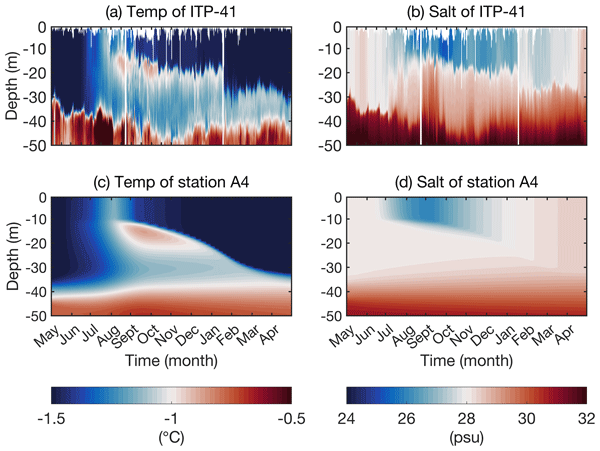
Meltwater is a critical factor affecting the upper Arctic Ocean, but there has been little research on its specific effects. By artificially removing meltwater from a column model, we found that reducing meltwater weakened ocean stratification and increased summer sea ice melting. The role of meltwater in winter sea ice formation varies by region – removing meltwater increased winter sea ice formation in areas with strong stratification, while decreasing it in areas with weak stratification.
Vincenzo de Toma, Andrea Storto, Ronan McAdam, Antonietta Capotondi, and Chunxue Yang
EGUsphere, https://doi.org/10.5194/egusphere-2026-5747, https://doi.org/10.5194/egusphere-2026-5747, 2026
This preprint is open for discussion and under review for Ocean Science (OS).
Short summary
Short summary
Marine heatwaves, prolonged spells of unusually warm seawater, can harm marine life and the people who depend on it, yet we know little about what happens beneath the surface. We compared three reconstructions of past ocean conditions and found they reliably capture famous surface events seen by satellites. Warm water often extends 100 to 150 metres down, and events reaching deeper last longer. Our results show that combining several products adds value to the results.
Zhe Song, Anny Cazenave, William Llovel, Andrea Storto, and Marie Bouih
Ocean Sci., 22, 2903–2914, https://doi.org/10.5194/os-22-2903-2026, https://doi.org/10.5194/os-22-2903-2026, 2026
Short summary
Short summary
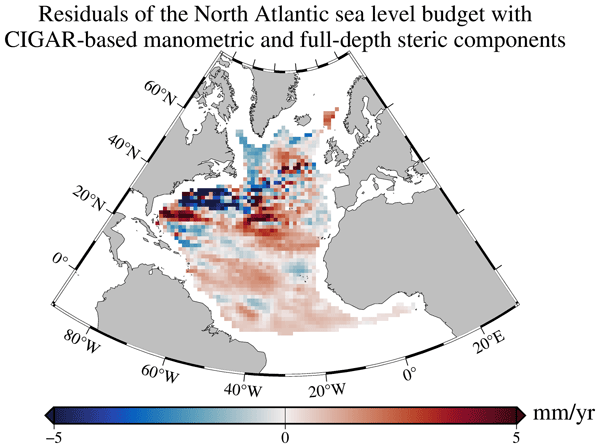
The objective of this study is to understand why the North Atlantic sea level budget is not closed over the Argo and Gravity Recovery and Climate Experiment (GRACE) era. We show that using an ocean reanalysis for the ocean mass component instead of GRACE, and accounting for deep ocean warming allows quasi-closure of the North Atlantic sea level budget within data uncertainties.
Paolo Mauriello, Gregory C. Smith, Andrea Storto, and Chunxue Yang
Ocean Sci., 22, 2863–2902, https://doi.org/10.5194/os-22-2863-2026, https://doi.org/10.5194/os-22-2863-2026, 2026
Short summary
Short summary
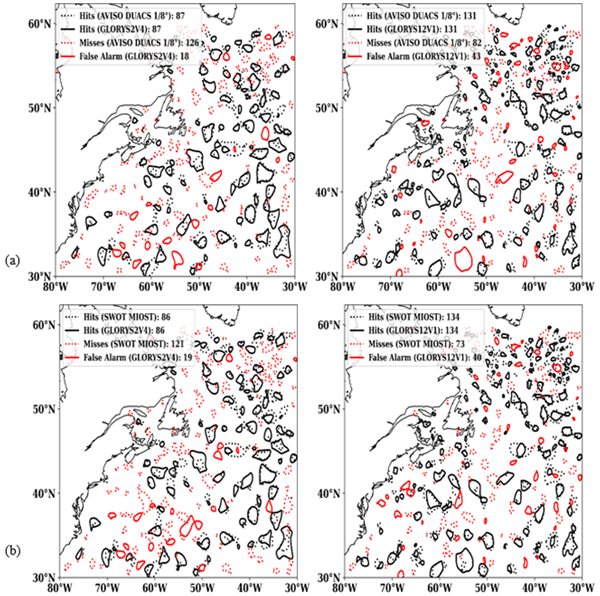
This article evaluates two ocean reanalyses with spatial resolutions of 1/4° and 1/12° by comparing them with two satellite observation products, both at 1/8° resolution. The results show the added value of higher model resolution for representing mesoscale eddies and highlight the value of wide-swath satellite altimetry for model verification in the North Atlantic.
Andrea Storto, Vincenzo de Toma, and Chunxue Yang
Ocean Sci., 22, 2809–2834, https://doi.org/10.5194/os-22-2809-2026, https://doi.org/10.5194/os-22-2809-2026, 2026
Short summary
Short summary
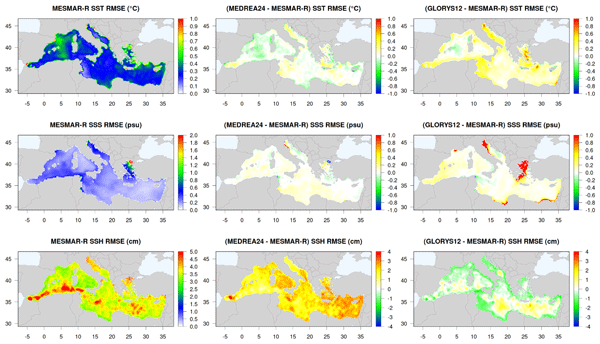
The Mediterranean region is one of the fastest-warming areas on Earth, and understanding its changes is thus crucial. We produced a new reconstruction of the Mediterranean climate for the 1993–2024 period, using a modelling system that combines weather, ocean, and hydrology information with observations. This new reanalysis offers a clearer picture of how the region has been warming, drying, and changing over the past 30 years, supporting better studies of extreme events and climate impacts.
Susanna Winkelbauer, Gaël Forget, Michael Mayer, Romain Bourdalle-Badie, Andrea Cipollone, Leopold Haimberger, Keith Haines, Satoshi Osafune, Yuanyuan Song, Andrea Storto, Chunxue Yang, and Hao Zuo
EGUsphere, https://doi.org/10.5194/egusphere-2026-5435, https://doi.org/10.5194/egusphere-2026-5435, 2026
This preprint is open for discussion and under review for Ocean Science (OS).
Short summary
Short summary
Ocean currents carry vast amounts of heat through the Atlantic and strongly influence climate. We compared estimates from 17 global ocean reanalyses with observations to assess how well they reproduce this heat transport and its changes over time. Most reanalyses capture the main patterns and variations, but important differences remain. The reanalyses also suggest a decrease in northward heat transport since the early 1990s, although its magnitude remains uncertain.
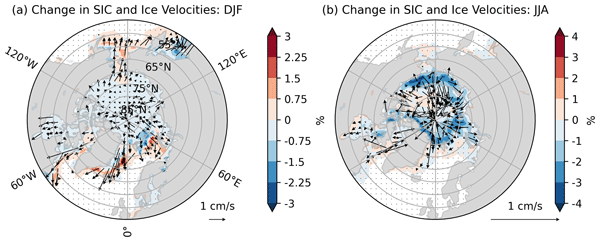
Kristian Strommen, Michael Mayer, Andrea Storto, Jonas Spaeth, and Steffen Tietsche
Weather Clim. Dynam., 7, 1593–1618, https://doi.org/10.5194/wcd-7-1593-2026, https://doi.org/10.5194/wcd-7-1593-2026, 2026
Short summary
Short summary
Numerical weather forecasts of sea ice are unreliable, exhibiting an overly narrow range of plausible sea ice evolutions. Stochastic perturbations introduce randomness to the forecast in order to alleviate this by representing uncertainties in the representation of sea ice physics. We show that including such perturbations in a forecast model improves the reliability of sea ice forecasts, and furthermore results in improved seasonal forecasts of the northern European winter circulation.
Yushi Morioka, Doroteaciro Iovino, Andrea Cipollone, Andrea Storto, Takeshi Doi, Masami Nonaka, and Swadhin K. Behera
EGUsphere, https://doi.org/10.5194/egusphere-2026-5070, https://doi.org/10.5194/egusphere-2026-5070, 2026
This preprint is open for discussion and under review for The Cryosphere (TC).
Short summary
Short summary
Arctic sea ice has been shrinking for the last four decades. As global warming continues, predicting summer sea ice is becoming more important. Here we create a seasonal forecast system using the SINTEX-F3 model. Results show that summer sea ice in the Barents-Kara Sea is best predicted when accurate sea ice and snow conditions are provided from spring. It is found that initial sea ice thickness acts as a memory for the climate system, enabling accurate summer sea ice prediction from spring.
Alejandro Blazquez, Benoit Meyssignac, Robin Fraudeau, Michael Ablain, Jonathan Bamber, Antonio Bonaduce, Marie Bouih, Anny Cazenave, Thorben Döhne, Ines Dussaillant, Ramiro Ferrari, Martin Horwath, Nicolas Kolodziejczyk, Hugo Lecomte, Stephanie Leroux, William Llovel, Daniele Melini, Erwan Oulhen, Thierry Penduff, Roshin P. Raj, Giorgio Spada, Marius Schlaak, Papasarafianou Stamatia, Andrea Storto, Chunxue Yang, and Sarah Connors
Earth Syst. Sci. Data Discuss., https://doi.org/10.5194/essd-2026-627, https://doi.org/10.5194/essd-2026-627, 2026
Preprint under review for ESSD
Short summary
Short summary
Closing the sea‑level budget on annual and longer time scales is a cornerstone of physical oceanography because sea‑level rise is one of the best indicators of climate change, and a closed budget shows we have identified and quantified all major drivers. We examined it from 1993 to 2022, finding an accelerated rise that matched ice melt and warm water until 2015. Afterwards an unexplained gap appears. Better deep‑ocean observations and refined gravity processing are needed to close the budget.
Xuezhi Bai, Ziqing Dong, Kaiwen Wang, Xian Jiang, and Wenjing Zhang
EGUsphere, https://doi.org/10.5194/egusphere-2026-826, https://doi.org/10.5194/egusphere-2026-826, 2026
Preprint archived
Short summary
Short summary
The Siberian shelf has lots of winter ice stuck to the coast. This study used a high-resolution computer model to understand how this "landfast" ice forms and sometimes breaks away mid-season. Results show over half of the landfast ice is held by seabed grounding, especially in the East Siberian Sea. Breakouts occur when cyclones push strong offshore winds, fracturing ungrounded ice. This improves predictions of ice stability and hazards in Arctic waters.
Louis Kern, Thomas Vaujour, Julia Pfeffer, Andrea Storto, Camille Szczypta, Gilles Garric, Claire Sirere, Gilles Larnicol, Chunxue Yang, Romain Bourdalle-Badie, and Stéphanie Guinehut
EGUsphere, https://doi.org/10.5194/egusphere-2025-6351, https://doi.org/10.5194/egusphere-2025-6351, 2026
Short summary
Short summary
Freshwater fluxes, despite their importance, are often poorly represented in ocean models. The impact of river discharge is evaluated from the Water Mass Balance approach, combining gravimetry and atmospheric reanalyses data. These estimates are assessed against river gauges, highlighting good agreement over South American rivers. Compared to climatological data, when used as inputs for ocean model simulations, this technique improves salinity and upper ocean circulation representation.
Alexis Barge, Julien Le Sommer, Andrea Storto, and Sophie Valcke
EGUsphere, https://doi.org/10.5194/egusphere-2026-854, https://doi.org/10.5194/egusphere-2026-854, 2026
Short summary
Short summary
Scientists use programs, called Earth System Models, to study and predict climate. These models are based on physical theories but can be completed with AI tools. However, combining these tools with traditional models is difficult due to their different nature. Our research introduces a new method that connects these AI tools with existing climate models. We tested this method by integrating it with an ocean model. This work should help scientists explore new ways of making climate predictions.
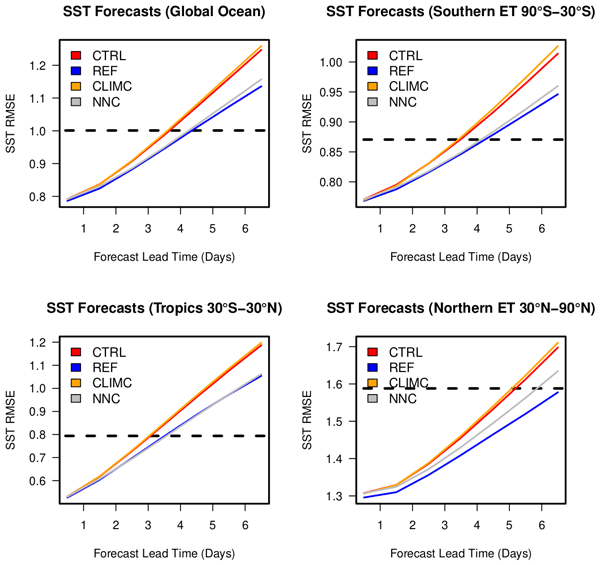
Andrea Storto, Sergey Frolov, Laura Slivinski, and Chunxue Yang
Geosci. Model Dev., 18, 4789–4804, https://doi.org/10.5194/gmd-18-4789-2025, https://doi.org/10.5194/gmd-18-4789-2025, 2025
Short summary
Short summary
Inaccuracies in air–sea heat fluxes severely degrade the accuracy of ocean numerical simulations. Here, we use artificial neural networks to correct air–sea heat fluxes as a function of oceanic and atmospheric state predictors. The correction successfully improves surface and subsurface ocean temperatures beyond the training period and in prediction experiments.
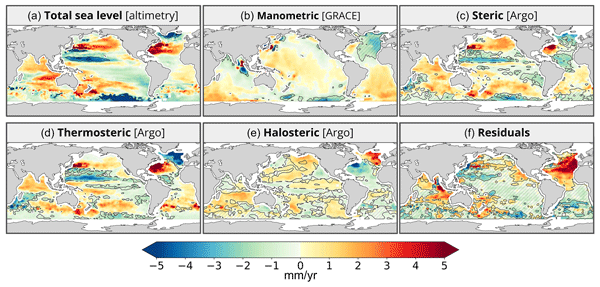
Marie Bouih, Anne Barnoud, Chunxue Yang, Andrea Storto, Alejandro Blazquez, William Llovel, Robin Fraudeau, and Anny Cazenave
Ocean Sci., 21, 1425–1440, https://doi.org/10.5194/os-21-1425-2025, https://doi.org/10.5194/os-21-1425-2025, 2025
Short summary
Short summary
Present-day sea level rise is not uniform regionally. For better understanding of regional sea level variations, a classical approach is to compare the observed sea level trend patterns with those of the sum of the contributions. If the regional sea level trend budget is not closed, this allows the detection of errors in the observing systems. Our study shows that the trend budget is not closed in the North Atlantic Ocean and identifies errors in Argo-based salinity data as the main suspect.
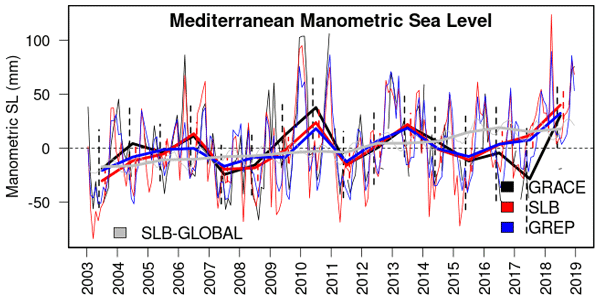
Andrea Storto, Giulia Chierici, Julia Pfeffer, Anne Barnoud, Romain Bourdalle-Badie, Alejandro Blazquez, Davide Cavaliere, Noémie Lalau, Benjamin Coupry, Marie Drevillon, Sebastien Fourest, Gilles Larnicol, and Chunxue Yang
State Planet, 4-osr8, 12, https://doi.org/10.5194/sp-4-osr8-12-2024, https://doi.org/10.5194/sp-4-osr8-12-2024, 2024
Short summary
Short summary
The variability in the manometric sea level (i.e. the sea level mass component) in three ocean basins is investigated in this study using three different methods (reanalyses, gravimetry, and altimetry in combination with in situ observations). We identify the emerging long-term signals, the consistency of the datasets, and the influence of large-scale climate modes on the regional manometric sea level variations at both seasonal and interannual timescales.
Vincenzo de Toma, Daniele Ciani, Yassmin Hesham Essa, Chunxue Yang, Vincenzo Artale, Andrea Pisano, Davide Cavaliere, Rosalia Santoleri, and Andrea Storto
Geosci. Model Dev., 17, 5145–5165, https://doi.org/10.5194/gmd-17-5145-2024, https://doi.org/10.5194/gmd-17-5145-2024, 2024
Short summary
Short summary
This study explores methods to reconstruct diurnal variations in skin sea surface temperature in a model of the Mediterranean Sea. Our new approach, considering chlorophyll concentration, enhances spatial and temporal variations in the warm layer. Comparative analysis shows context-dependent improvements. The proposed "chlorophyll-interactive" method brings the surface net total heat flux closer to zero annually, despite a net heat loss from the ocean to the atmosphere.
Haohao Zhang, Xuezhi Bai, and Kaiwen Wang
Ocean Sci., 19, 1649–1668, https://doi.org/10.5194/os-19-1649-2023, https://doi.org/10.5194/os-19-1649-2023, 2023
Short summary
Short summary
Meltwater is a critical factor affecting the upper Arctic Ocean, but there has been little research on its specific effects. By artificially removing meltwater from a column model, we found that reducing meltwater weakened ocean stratification and increased summer sea ice melting. The role of meltwater in winter sea ice formation varies by region – removing meltwater increased winter sea ice formation in areas with strong stratification, while decreasing it in areas with weak stratification.
Andrea Storto, Yassmin Hesham Essa, Vincenzo de Toma, Alessandro Anav, Gianmaria Sannino, Rosalia Santoleri, and Chunxue Yang
Geosci. Model Dev., 16, 4811–4833, https://doi.org/10.5194/gmd-16-4811-2023, https://doi.org/10.5194/gmd-16-4811-2023, 2023
Short summary
Short summary
Regional climate models are a fundamental tool for a very large number of applications and are being increasingly used within climate services, together with other complementary approaches. Here, we introduce a new regional coupled model, intended to be later extended to a full Earth system model, for climate investigations within the Mediterranean region, coupled data assimilation experiments, and several downscaling exercises (reanalyses and long-range predictions).
Cited articles
Aagaard, K., Coachman, L. K., and Carmack, E.: On the halocline of the Arctic Ocean, Deep Sea Research Part A. Oceanographic Research Papers, 28, 529–545, https://doi.org/10.1016/0198-0149(81)90115-1, 1981.
Aagaard, K., Foldvik, A., and Hillman, S. R.: The West Spitsbergen Current: Disposition and water mass transformation, Journal of Geophysical Research: Oceans, 92, 3778–3784, https://doi.org/10.1029/JC092iC04p03778, 1987.
Alvarez, A.: A model for the Arctic mixed layer circulation under a summertime lead: implications for the near-surface temperature maximum formation, The Cryosphere, 17, 3343–3361, https://doi.org/10.5194/tc-17-3343-2023, 2023.
Armitage, T. W. K., Manucharyan, G. E., Petty, A. A., Kwok, R., and Thompson, A. F.: Enhanced eddy activity in the Beaufort Gyre in response to sea ice loss, Nat. Commun., 11, 761, https://doi.org/10.1038/s41467-020-14449-z, 2020.
Barton, B. I., Lenn, Y.-D., and Lique, C.: Observed Atlantification of the Barents Sea Causes the Polar Front to Limit the Expansion of Winter Sea Ice, J. Phys. Oceanogr., 48, 1849–1866, https://doi.org/10.1175/JPO-D-18-0003.1, 2018.
Bauch, D., Schlosser, P., and Fairbanks, R. G.: Freshwater balance and the sources of deep and bottom waters in the Arctic Ocean inferred from the distribution of H
Bitz, C. M. and Lipscomb, W. H.: An energy-conserving thermodynamic model of sea ice, J. Geophys. Res., 104, 15669–15677, https://doi.org/10.1029/1999JC900100, 1999.
Bitz, C. M. and Roe, G. H.: A mechanism for the high rate of sea ice thinning in the Arctic Ocean, J. Climate, 17, 3623–3632, 2004.
Brenner, S., Rainville, L., Thomson, J., Cole, S., and Lee, C.: Comparing Observations and Parameterizations of Ice-Ocean Drag Through an Annual Cycle Across the Beaufort Sea, J. Geophys. Res.-Oceans, 126, e2020JC016977, https://doi.org/10.1029/2020JC016977, 2021.
Carmack, E. C., Yamamoto-Kawai, M., Haine, T. W. N., Bacon, S., Bluhm, B. A., Lique, C., Melling, H., Polyakov, I. V., Straneo, F., Timmermans, M.-L., and Williams, W. J.: Freshwater and its role in the Arctic Marine System: Sources, disposition, storage, export, and physical and biogeochemical consequences in the Arctic and global oceans, Journal of Geophysical Research: Biogeosciences, 121, 675–717, https://doi.org/10.1002/2015JG003140, 2016.
Davis, P. E. D., Lique, C., Johnson, H. L., and Guthrie, J. D.: Competing Effects of Elevated Vertical Mixing and Increased Freshwater Input on the Stratification and Sea Ice Cover in a Changing Arctic Ocean, Journal of Physical Oceanography, 46, 1531–1553, https://doi.org/10.1175/JPO-D-15-0174.1, 2016.
Dodd, P. A., Rabe, B., Hansen, E., Falck, E., Mackensen, A., Rohling, E., Stedmon, C., and Kristiansen, S.: The freshwater composition of the Fram Strait outflow derived from a decade of tracer measurements, J. Geophys. Res., 117, 2012JC008011, https://doi.org/10.1029/2012JC008011, 2012.
Duarte, P., Sundfjord, A., Meyer, A., Hudson, S. R., Spreen, G., and Smedsrud, L. H.: Warm Atlantic Water Explains Observed Sea Ice Melt Rates North of Svalbard, J. Geophys. Res.-Oceans, 125, e2019JC015662, https://doi.org/10.1029/2019JC015662, 2020.
Fer, I.: Weak Vertical Diffusion Allows Maintenance of Cold Halocline in the Central Arctic, Atmospheric and Oceanic Science Letters, 2, 148–152, https://doi.org/10.1080/16742834.2009.11446789, 2009.
Fine, E. C., McClean, J. L., Ivanova, D. P., Craig, A. P., Wallcraft, A. J., Chassignet, E. P., and Hunke, E. C.: Arctic ice-ocean interactions in an 8-to-2 kilometer resolution global model, Ocean Modelling, 184, 102228, https://doi.org/10.1016/j.ocemod.2023.102228, 2023.
Forryan, A., Bacon, S., Tsubouchi, T., Torres-Valdés, S., and Naveira Garabato, A. C.: Arctic freshwater fluxes: sources, tracer budgets and inconsistencies, The Cryosphere, 13, 2111–2131, https://doi.org/10.5194/tc-13-2111-2019, 2019.
Gallaher, S. G., Stanton, T. P., Shaw, W. J., Kang, S.-H., Kim, J.-H., and Cho, K.-H.: Field observations and results of a 1-D boundary layer model for developing near-surface temperature maxima in the Western Arctic, Elementa: Science of the Anthropocene, 5, 11, https://doi.org/10.1525/elementa.195, 2017.
Goosse, H., Kay, J. E., Armour, K. C., Bodas-Salcedo, A., Chepfer, H., Docquier, D., Jonko, A., Kushner, P. J., Lecomte, O., Massonnet, F., Park, H.-S., Pithan, F., Svensson, G., and Vancoppenolle, M.: Quantifying climate feedbacks in polar regions, Nat. Commun., 9, 1919, https://doi.org/10.1038/s41467-018-04173-0, 2018.
Graham, R. M., Itkin, P., Meyer, A., Sundfjord, A., Spreen, G., Smedsrud, L. H., Liston, G. E., Cheng, B., Cohen, L., Divine, D., Fer, I., Fransson, A., Gerland, S., Haapala, J., Hudson, S. R., Johansson, A. M., King, J., Merkouriadi, I., Peterson, A. K., Provost, C., Randelhoff, A., Rinke, A., Rösel, A., Sennéchael, N., Walden, V. P., Duarte, P., Assmy, P., Steen, H., and Granskog, M. A.: Winter storms accelerate the demise of sea ice in the Atlantic sector of the Arctic Ocean, Sci. Rep., 9, 9222, https://doi.org/10.1038/s41598-019-45574-5, 2019.
Haine, T. W. N., Curry, B., Gerdes, R., Hansen, E., Karcher, M., Lee, C., Rudels, B., Spreen, G., De Steur, L., Stewart, K. D., and Woodgate, R.: Arctic freshwater export: Status, mechanisms, and prospects, Global and Planetary Change, 125, 13–35, https://doi.org/10.1016/j.gloplacha.2014.11.013, 2015.
Himmich, K., Vancoppenolle, M., Stammerjohn, S., Bocquet, M., Madec, G., Sallée, J., and Fleury, S.: Thermodynamics Drive Post-2016 Changes in the Antarctic Sea Ice Seasonal Cycle, J. Geophys. Res.-Oceans, 129, e2024JC021112, https://doi.org/10.1029/2024JC021112, 2024.
Holland, M. M., Bitz, C. M., and Tremblay, B.: Future abrupt reductions in the summer Arctic sea ice, Geophysical Research Letters, 33, 2006GL028024, https://doi.org/10.1029/2006GL028024, 2006.
Hordoir, R., Skagseth, Ø., Ingvaldsen, R. B., Sandø, A. B., Löptien, U., Dietze, H., Gierisch, A. M. U., Assmann, K. M., Lundesgaard, Ø., and Lind, S.: Changes in Arctic Stratification and Mixed Layer Depth Cycle: A Modeling Analysis, J. Geophys. Res.-Oceans, 127, e2021JC017270, https://doi.org/10.1029/2021JC017270, 2022.
Hudson, S. R., Granskog, M. A., Sundfjord, A., Randelhoff, A., Renner, A. H. H., and Divine, D. V.: Energy budget of first-year Arctic sea ice in advanced stages of melt, Geophysical Research Letters, 40, 2679–2683, https://doi.org/10.1002/grl.50517, 2013.
Itkin, P., Losch, M., and Gerdes, R.: Landfast ice affects the stability of the Arctic halocline: Evidence from a numerical model, Journal of Geophysical Research: Oceans, 120, 2622–2635, https://doi.org/10.1002/2014JC010353, 2015.
Jackett, D. R. and Mcdougall, T. J.: Minimal Adjustment of Hydrographic Profiles to Achieve Static Stability, J. Atmos. Ocean. Technol., 12, 381–389, https://doi.org/10.1175/1520-0426(1995)012<0381:MAOHPT>2.0.CO;2, 1995.
Jackson, J. M., Carmack, E. C., McLaughlin, F. A., Allen, S. E., and Ingram, R. G.: Identification, characterization, and change of the near-surface temperature maximum in the Canada Basin, 1993–2008, J. Geophys. Res., 115, 2009JC005265, https://doi.org/10.1029/2009JC005265, 2010.
Jenkins, M. and Dai, A.: The Impact of Sea-Ice Loss on Arctic Climate Feedbacks and Their Role for Arctic Amplification, Geophysical Research Letters, 48, e2021GL094599, https://doi.org/10.1029/2021GL094599, 2021.
Kacimi, S. and Kwok, R.: Arctic Snow Depth, Ice Thickness, and Volume From ICESat-2 and CryoSat-2: 2018–2021, Geophysical Research Letters, 49, e2021GL097448, https://doi.org/10.1029/2021GL097448, 2022.
Kanamitsu, M., Ebisuzaki, W., Woollen, J., Yang, S.-K., Hnilo, J. J., Fiorino, M., and Potter, G. L.: NCEP–DOE AMIP-II Reanalysis (R-2), https://doi.org/10.1175/BAMS-83-11-1631, 2002.
Keen, A., Blockley, E., Bailey, D. A., Boldingh Debernard, J., Bushuk, M., Delhaye, S., Docquier, D., Feltham, D., Massonnet, F., O'Farrell, S., Ponsoni, L., Rodriguez, J. M., Schroeder, D., Swart, N., Toyoda, T., Tsujino, H., Vancoppenolle, M., and Wyser, K.: An inter-comparison of the mass budget of the Arctic sea ice in CMIP6 models, The Cryosphere, 15, 951–982, https://doi.org/10.5194/tc-15-951-2021, 2021.
Krishfield, R., Toole, J., Proshutinsky, A., and Timmermans, M.-L.: Automated Ice-Tethered Profilers for Seawater Observations under Pack Ice in All Seasons, J. Atmos. Ocean. Technol., 25, 2091–2105, https://doi.org/10.1175/2008JTECHO587.1, 2008.
Krishfield, R. A. and Perovich, D. K.: Spatial and temporal variability of oceanic heat flux to the Arctic ice pack, J. Geophys. Res., 110, 2004JC002293, https://doi.org/10.1029/2004JC002293, 2005.
Krishfield, R. A., Proshutinsky, A., Tateyama, K., Williams, W. J., Carmack, E. C., McLaughlin, F. A., and Timmermans, M.-L.: Deterioration of perennial sea ice in the Beaufort Gyre from 2003 to 2012 and its impact on the oceanic freshwater cycle, Journal of Geophysical Research: Oceans, 119, 1271–1305, https://doi.org/10.1002/2013JC008999, 2014.
Kwok, R.: Arctic sea ice thickness, volume, and multiyear ice coverage: losses and coupled variability (1958–2018), Environ. Res. Lett., 13, 105005, https://doi.org/10.1088/1748-9326/aae3ec, 2018.
Kwok, R., Kacimi, S., Webster, M. A., Kurtz, N. T., and Petty, A. A.: Arctic Snow Depth and Sea Ice Thickness From ICESat-2 and CryoSat-2 Freeboards: A First Examination, J. Geophys. Res-Oceans, 125, e2019JC016008, https://doi.org/10.1029/2019JC016008, 2020.
Landrum, L. L. and Holland, M. M.: Influences of changing sea ice and snow thicknesses on simulated Arctic winter heat fluxes, The Cryosphere, 16, 1483–1495, https://doi.org/10.5194/tc-16-1483-2022, 2022.
Landy, J. C., Dawson, G. J., Tsamados, M., Bushuk, M., Stroeve, J. C., Howell, S. E. L., Krumpen, T., Babb, D. G., Komarov, A. S., Heorton, H. D. B. S., Belter, H. J., and Aksenov, Y.: A year-round satellite sea-ice thickness record from CryoSat-2, Nature, 609, 517–522, https://doi.org/10.1038/s41586-022-05058-5, 2022.
Large, W. G., McWilliams, J. C., and Doney, S. C.: Oceanic vertical mixing: A review and a model with a nonlocal boundary layer parameterization, Reviews of Geophysics, 32, 363–403, https://doi.org/10.1029/94RG01872, 1994.
Liang, X. and Losch, M.: On the Effects of Increased Vertical Mixing on the Arctic Ocean and Sea Ice, J. Geophys. Res-Oceans, 123, 9266–9282, https://doi.org/10.1029/2018JC014303, 2018.
Lin, L., Lei, R., Hoppmann, M., Perovich, D. K., and He, H.: Changes in the annual sea ice freeze–thaw cycle in the Arctic Ocean from 2001 to 2018, The Cryosphere, 16, 4779–4796, https://doi.org/10.5194/tc-16-4779-2022, 2022.
Lind, S., Ingvaldsen, R. B., and Furevik, T.: Arctic warming hotspot in the northern Barents Sea linked to declining sea-ice import, Nature Clim. Change, 8, 634–639, https://doi.org/10.1038/s41558-018-0205-y, 2018.
Linders, J. and Björk, G.: The melt-freeze cycle of the Arctic Ocean ice cover and its dependence on ocean stratification, J. Geophys. Res. Oceans, 118, 5963–5976, https://doi.org/10.1002/jgrc.20409, 2013.
Locarnini, R. A., Mishonov, A. V., Baranova, O. K., Reagan, J. R., Boyer, T. P., Seidov, D., Wang, Z., Garcia, H. E., Bouchard, C., Cross, S. L., Paver, C. R., and Dukhovskoy, D.: World Ocean Atlas 2023, Volume 1: Temperature, NOAA [data set], https://doi.org/10.25923/54bh-1613, 2024.
Long, Z., Perrie, W., Zhang, M., and Liu, Y.: Responses of Atlantic Water Inflow Through Fram Strait to Arctic Storms, Geophysical Research Letters, 51, e2023GL107777, https://doi.org/10.1029/2023GL107777, 2024.
Losch, M., Menemenlis, D., Campin, J.-M., Heimbach, P., and Hill, C.: On the formulation of sea-ice models. Part 1: Effects of different solver implementations and parameterizations, Ocean Modelling, 33, 129–144, https://doi.org/10.1016/j.ocemod.2009.12.008, 2010.
Marshall, J., Hill, C., Perelman, L., and Adcroft, A.: Hydrostatic, quasi-hydrostatic, and nonhydrostatic ocean modeling, Journal of Geophysical Research: Oceans, 102, 5733–5752, https://doi.org/10.1029/96JC02776, 1997.
Martin, T., Tsamados, M., Schroeder, D., and Feltham, D. L.: The impact of variable sea ice roughness on changes in Arctic Ocean surface stress: A model study, J. Geophys. Res.-Oceans, 121, 1931–1952, https://doi.org/10.1002/2015JC011186, 2016.
Martinson, D. G. and Iannuzzi, R. A.: Antarctic Ocean-Ice Interaction: Implications from Ocean Bulk Property Distributions in the Weddell Gyre, in: Antarctic Sea Ice: Physical Processes, Interactions and Variability, American Geophysical Union (AGU), 243–271, https://doi.org/10.1029/AR074p0243, 1998.
Maykut, G. A. and McPhee, M. G.: Solar heating of the Arctic mixed layer, Journal of Geophysical Research: Oceans, 100, 24691–24703, https://doi.org/10.1029/95JC02554, 1995.
McPhee, M. G., Kikuchi, T., Morison, J. H., and Stanton, T. P.: Ocean-to-ice heat flux at the North Pole environmental observatory, Geophysical Research Letters, 30, 2003GL018580, https://doi.org/10.1029/2003GL018580, 2003.
Meier, W. N., Fetterer, F., Windnagel, A. K., Stewart, J. S., and Stafford, T.: NOAA/NSIDC Climate Data Record of Passive Microwave Sea Ice Concentration, Version 5, National Snow and Ice Data Center [data set], https://doi.org/10.7265/rjzb-pf78, 2024.
Metzner, E. P., Salzmann, M., and Gerdes, R.: Arctic Ocean Surface Energy Flux and the Cold Halocline in Future Climate Projections, J. Geophys. Res.-Oceans, 125, e2019JC015554, https://doi.org/10.1029/2019JC015554, 2020.
Mishonov, A. V., Boyer, T. P., Baranova, O. K., Bouchard, C. N., Cross, S., Garcia, H. E., Locarnini, R. A., Paver, C. R., Reagan, J. R., Wang, Z., Seidov, D., Grodsky, A. I., and Beauchamp, J. G.: World Ocean Database 2023, edited by: Bouchard, C., NOAA Atlas NESDIS 97, 206 pp., World Ocean Database, https://doi.org/10.25923/z885-h264, 2024.
Morison, J. and Smith, J. D.: Seasonal variations in the upper Arctic Ocean as observed at T-3, Geophysical Research Letters, 8, 753–756, https://doi.org/10.1029/GL008i007p00753, 1981.
Muilwijk, M., Nummelin, A., Heuzé, C., Polyakov, I. V., Zanowski, H., and Smedsrud, L. H.: Divergence in Climate Model Projections of Future Arctic Atlantification, Journal of Climate, 36, 1727–1748, https://doi.org/10.1175/JCLI-D-22-0349.1, 2023.
Nguyen, A. T., Menemenlis, D., and Kwok, R.: Arctic ice-ocean simulation with optimized model parameters: Approach and assessment, J. Geophys. Res., 116, C04025, https://doi.org/10.1029/2010JC006573, 2011.
Nicolaus, M., Katlein, C., Maslanik, J., and Hendricks, S.: Changes in Arctic sea ice result in increasing light transmittance and absorption, Geophysical Research Letters, 39, 2012GL053738, https://doi.org/10.1029/2012GL053738, 2012.
Nummelin, A., Li, C., and Smedsrud, L. H.: Response of Arctic Ocean stratification to changing river runoff in a column model, J. Geophys. Res.-Oceans, 120, 2655–2675, https://doi.org/10.1002/2014JC010571, 2015.
Osadchiev, A. A., Pisareva, M. N., Spivak, E. A., Shchuka, S. A., and Semiletov, I. P.: Freshwater transport between the Kara, Laptev, and East-Siberian seas, Sci. Rep., 10, 13041, https://doi.org/10.1038/s41598-020-70096-w, 2020.
Osadchiev, A. A., Frey, D. I., Shchuka, S. A., Tilinina, N. D., Morozov, E. G., and Zavialov, P. O.: Structure of the Freshened Surface Layer in the Kara Sea During Ice-Free Periods, J. Geophys. Res.-Oceans, 126, e2020JC016486, https://doi.org/10.1029/2020JC016486, 2021.
Peralta-Ferriz, C. and Woodgate, R. A.: Seasonal and interannual variability of pan-Arctic surface mixed layer properties from 1979 to 2012 from hydrographic data, and the dominance of stratification for multiyear mixed layer depth shoaling, Progress in Oceanography, 134, 19–53, https://doi.org/10.1016/j.pocean.2014.12.005, 2015.
Perovich, D., Smith, M., Light, B., and Webster, M.: Meltwater sources and sinks for multiyear Arctic sea ice in summer, The Cryosphere, 15, 4517–4525, https://doi.org/10.5194/tc-15-4517-2021, 2021.
Petrich, C., Eicken, H., Polashenski, C. M., Sturm, M., Harbeck, J. P., Perovich, D. K., and Finnegan, D. C.: Snow dunes: A controlling factor of melt pond distribution on Arctic sea ice, J. Geophys. Res., 117, 2012JC008192, https://doi.org/10.1029/2012JC008192, 2012.
Polashenski, C., Perovich, D., and Courville, Z.: The mechanisms of sea ice melt pond formation and evolution, J. Geophys. Res., 117, 2011JC007231, https://doi.org/10.1029/2011JC007231, 2012.
Polyakov, I. V., Pnyushkov, A. V., Rember, R., Padman, L., Carmack, E. C., and Jackson, J. M.: Winter Convection Transports Atlantic Water Heat to the Surface Layer in the Eastern Arctic Ocean*, Journal of Physical Oceanography, 43, 2142–2155, https://doi.org/10.1175/JPO-D-12-0169.1, 2013.
Polyakov, I. V., Pnyushkov, A. V., Alkire, M. B., Ashik, I. M., Baumann, T. M., Carmack, E. C., Goszczko, I., Guthrie, J., Ivanov, V. V., Kanzow, T., Krishfield, R., Kwok, R., Sundfjord, A., Morison, J., Rember, R., and Yulin, A.: Greater role for Atlantic inflows on sea-ice loss in the Eurasian Basin of the Arctic Ocean, Science, 356, 285–291, https://doi.org/10.1126/science.aai8204, 2017.
Polyakov, I. V., Rippeth, T. P., Fer, I., Alkire, M. B., Baumann, T. M., Carmack, E. C., Ingvaldsen, R., Ivanov, V. V., Janout, M., Lind, S., Padman, L., Pnyushkov, A. V., and Rember, R.: Weakening of Cold Halocline Layer Exposes Sea Ice to Oceanic Heat in the Eastern Arctic Ocean, Journal of Climate, 33, 8107–8123, https://doi.org/10.1175/JCLI-D-19-0976.1, 2020.
Rainville, L. and Winsor, P.: Mixing across the Arctic Ocean: Microstructure observations during the Beringia 2005 Expedition, Geophysical Research Letters, 35, 2008GL033532, https://doi.org/10.1029/2008GL033532, 2008.
Reagan, J. R., Seidov, D., Wang, Z., Dukhovskoy, D., Boyer, T. P., Locarnini, R. A., Baranova, O. K., Mishonov, A. V., Garcia, H. E., Bouchard, C., Cross, S. L., and Paver, C. R.:World Ocean Atlas 2023, Volume 2: Salinity, NOAA [data set], https://doi.org/10.25923/70qt-9574, 2024.
Rudels, B., Anderson, L. G., and Jones, E. P.: Formation and evolution of the surface mixed layer and halocline of the Arctic Ocean, Journal of Geophysical Research: Oceans, 101, 8807–8821, https://doi.org/10.1029/96JC00143, 1996.
Salganik, E., Katlein, C., Lange, B. A., Matero, I., Lei, R., Fong, A. A., Fons, S. W., Divine, D., Oggier, M., Castellani, G., Bozzato, D., Chamberlain, E. J., Hoppe, C. J. M., Müller, O., Gardner, J., Rinke, A., Pereira, P. S., Ulfsbo, A., Marsay, C., Webster, M. A., Maus, S., Høyland, K. V., and Granskog, M. A.: Temporal evolution of under-ice meltwater layers and false bottoms and their impact on summer Arctic sea ice mass balance, Elementa: Science of the Anthropocene, 11, 00035, https://doi.org/10.1525/elementa.2022.00035, 2023a.
Salganik, E., Lange, B. A., Katlein, C., Matero, I., Anhaus, P., Muilwijk, M., Høyland, K. V., and Granskog, M. A.: Observations of preferential summer melt of Arctic sea-ice ridge keels from repeated multibeam sonar surveys, The Cryosphere, 17, 4873–4887, https://doi.org/10.5194/tc-17-4873-2023, 2023b.
Serreze, M. C. and Meier, W. N.: The Arctic's sea ice cover: trends, variability, predictability, and comparisons to the Antarctic, Annals of the New York Academy of Sciences, 1436, 36–53, https://doi.org/10.1111/nyas.13856, 2019.
Serreze, M. C., Barrett, A. P., Slater, A. G., Woodgate, R. A., Aagaard, K., Lammers, R. B., Steele, M., Moritz, R., Meredith, M., and Lee, C. M.: The large-scale freshwater cycle of the Arctic, J. Geophys. Res., 111, 2005JC003424, https://doi.org/10.1029/2005JC003424, 2006.
Shaw, W. J. and Stanton, T. P.: Vertical diffusivity of the Western Arctic Ocean halocline, Journal of Geophysical Research: Oceans, 119, 5017–5038, https://doi.org/10.1002/2013JC009598, 2014.
Skagseth, Ø., Eldevik, T., Årthun, M., Asbjørnsen, H., Lien, V. S., and Smedsrud, L. H.: Reduced efficiency of the Barents Sea cooling machine, Nat. Clim. Chang., 10, 661–666, https://doi.org/10.1038/s41558-020-0772-6, 2020.
Skyllingstad, E. D., Paulson, C. A., Pegau, W. S., McPhee, M. G., and Stanton, T.: Effects of keels on ice bottom turbulence exchange, Journal of Geophysical Research: Oceans, 108, https://doi.org/10.1029/2002JC001488, 2003.
Sledd, A., Shupe, M. D., Solomon, A., Cox, C. J., Perovich, D., and Lei, R.: Snow thermal conductivity and conductive flux in the Central Arctic: Estimates from observations and implications for models, Elem. Sci. Anth., 12, 00086, https://doi.org/10.1525/elementa.2023.00086, 2024.
Smith, M., Stammerjohn, S., Persson, O., Rainville, L., Liu, G., Perrie, W., Robertson, R., Jackson, J., and Thomson, J.: Episodic Reversal of Autumn Ice Advance Caused by Release of Ocean Heat in the Beaufort Sea, J. Geophys. Res.-Oceans, 123, 3164–3185, https://doi.org/10.1002/2018JC013764, 2018.
Smith, M. M., Angot, H., Chamberlain, E. J., Droste, E. S., Karam, S., Muilwijk, M., Webb, A. L., Archer, S. D., Beck, I., Blomquist, B. W., Bowman, J., Boyer, M., Bozzato, D., Chierici, M., Creamean, J., D'Angelo, A., Delille, B., Fer, I., Fong, A. A., Fransson, A., Fuchs, N., Gardner, J., Granskog, M. A., Hoppe, C. J. M., Hoppema, M., Hoppmann, M., Mock, T., Muller, S., Müller, O., Nicolaus, M., Nomura, D., Petäjä, T., Salganik, E., Schmale, J., Schmidt, K., Schulz, K. M., Shupe, M. D., Stefels, J., Thielke, L., Tippenhauer, S., Ulfsbo, A., Van Leeuwe, M., Webster, M., Yoshimura, M., and Zhan, L.: Thin and transient meltwater layers and false bottoms in the Arctic sea ice pack—Recent insights on these historically overlooked features, Elem. Sci. Anth., 11, 00025, https://doi.org/10.1525/elementa.2023.00025, 2023.
Smith, M. M., Fuchs, N., Salganik, E., Perovich, D. K., Raphael, I., Granskog, M. A., Schulz, K., Shupe, M. D., and Webster, M.: Formation and fate of freshwater on an ice floe in the Central Arctic, The Cryosphere, 19, 619–644, https://doi.org/10.5194/tc-19-619-2025, 2025.
Steele, M. and Boyd, T.: Retreat of the cold halocline layer in the Arctic Ocean, Journal of Geophysical Research: Oceans, 103, 10419–10435, https://doi.org/10.1029/98JC00580, 1998.
Steele, M., Ermold, W., and Zhang, J.: Modeling the formation and fate of the near-surface temperature maximum in the Canadian Basin of the Arctic Ocean, J. Geophys. Res., 116, 2010JC006803, https://doi.org/10.1029/2010JC006803, 2011.
Sumata, H., De Steur, L., Divine, D. V., Granskog, M. A., and Gerland, S.: Regime shift in Arctic Ocean sea ice thickness, Nature, 615, 443–449, https://doi.org/10.1038/s41586-022-05686-x, 2023.
Tesi, T., Muschitiello, F., Mollenhauer, G., Miserocchi, S., Langone, L., Ceccarelli, C., Panieri, G., Chiggiato, J., Nogarotto, A., Hefter, J., Ingrosso, G., Giglio, F., Giordano, P., and Capotondi, L.: Rapid Atlantification along the Fram Strait at the beginning of the 20th century, Sci. Adv., 7, eabj2946, https://doi.org/10.1126/sciadv.abj2946, 2021.
Timmermans, M.-L., Marshall, J., Proshutinsky, A., and Scott, J.: Seasonally derived components of the Canada Basin halocline, Geophysical Research Letters, 44, 5008–5015, https://doi.org/10.1002/2017GL073042, 2017.
Toole, J. M., Timmermans, M. -L., Perovich, D. K., Krishfield, R. A., Proshutinsky, A., and Richter-Menge, J. A.: Influences of the ocean surface mixed layer and thermohaline stratification on Arctic Sea ice in the central Canada Basin, J. Geophys. Res., 115, 2009JC005660, https://doi.org/10.1029/2009JC005660, 2010.
Toole, J. M., Krishfield, R. A., Timmermans, M.-L., and Proshutinsky, A.: The ice-tethered profiler: Argo of the Arctic. Oceanography, 24, 126–135, https://doi.org/10.5670/oceanog.2011.64, 2011.
Van Straaten, C., Lique, C., and Kolodziejcyk, N.: The Life Cycle of the Low Salinity Lenses at the Surface of the Arctic Ocean, J. Geophys. Res.-Oceans, 130, e2024JC021699, https://doi.org/10.1029/2024JC021699, 2025.
Wang, Q.: Stronger Variability in the Arctic Ocean Induced by Sea Ice Decline in a Warming Climate: Freshwater Storage, Dynamic Sea Level and Surface Circulation, J. Geophys. Res.-Oceans, 126, e2020JC016886, https://doi.org/10.1029/2020JC016886, 2021.
Wang, Q., Danilov, S., Sidorenko, D., and Wang, X.: Circulation Pathways and Exports of Arctic River Runoff Influenced by Atmospheric Circulation Regimes, Front. Mar. Sci., 8, 707593, https://doi.org/10.3389/fmars.2021.707593, 2021a.
Wang, Q., Danilov, S., Mu, L., Sidorenko, D., and Wekerle, C.: Lasting impact of winds on Arctic sea ice through the ocean's memory, The Cryosphere, 15, 4703–4725, https://doi.org/10.5194/tc-15-4703-2021, 2021b.
Wang, Y., Feng, Z., Lin, P., Song, H., Zhang, J., Wu, H., Jin, H., Chen, J., Qi, D., and Grebmeier, J. M.: Enhanced wind mixing and deepened mixed layer in the Pacific Arctic shelf seas with low summer sea ice, Nat. Commun., 15, 10389, https://doi.org/10.1038/s41467-024-54733-w, 2024.
Webster, M. A., Holland, M., Wright, N. C., Hendricks, S., Hutter, N., Itkin, P., Light, B., Linhardt, F., Perovich, D. K., Raphael, I. A., Smith, M. M., Von Albedyll, L., and Zhang, J.: Spatiotemporal evolution of melt ponds on Arctic sea ice, Elementa: Science of the Anthropocene, 10, 000072, https://doi.org/10.1525/elementa.2021.000072, 2022.
Winton, M.: A Reformulated Three-Layer Sea Ice Model, J. Atmos. Oceanic Technol., 17, 525–531, https://doi.org/10.1175/1520-0426(2000)017<0525:ARTLSI>2.0.CO;2, 2000.
Zhang, H., Bai, X., and Wang, K.: Response of the Arctic sea ice–ocean system to meltwater perturbations based on a one-dimensional model study, Ocean Sci., 19, 1649–1668, https://doi.org/10.5194/os-19-1649-2023, 2023.
Zhang, H., Storto, A., Bai, X., and Yang, C.: Quantifying the interplay of sea ice meltwater and ice–albedo feedbacks in the Arctic ice-ocean system, Zenodo [code], https://doi.org/10.5281/zenodo.17890245, 2025.
Zhong, W., Cole, S. T., Zhang, J., Lei, R., and Steele, M.: Increasing Winter Ocean-to-Ice Heat Flux in the Beaufort Gyre Region, Arctic Ocean Over 2006–2018, Geophysical Research Letters, 49, e2021GL096216, https://doi.org/10.1029/2021GL096216, 2022.
Zhong, W., Lan, Y., Mu, L., and Nguyen, A. T.: The Mixed Layer Salinity Balance in the Western Arctic Ocean, J. Geophys. Res.-Oceans, 129, e2023JC020591, https://doi.org/10.1029/2023JC020591, 2024.
Short summary
Using a 1D coupled ice-ocean model, we quantified the effects of meltwater and ice-albedo feedback independently. The meltwater reduces melting by 19 % through thermal isolation, while ice-albedo feedback increases melting by 41 %, with nonlinear coupling between them. In winter, meltwater protects ice in weakly stratified areas by blocking Atlantic heat. Our study provides new insights into the relative importance of different components in the Arctic ice-ocean system.
Using a 1D coupled ice-ocean model, we quantified the effects of meltwater and ice-albedo...


