Articles | Volume 19, issue 12
https://doi.org/10.5194/tc-19-6989-2025
© Author(s) 2025. This work is distributed under
the Creative Commons Attribution 4.0 License.
https://doi.org/10.5194/tc-19-6989-2025
© Author(s) 2025. This work is distributed under
the Creative Commons Attribution 4.0 License.
Global climate system response to SOFIA Antarctic meltwater in HadCM3-M2.1

Amar Mistry
CORRESPONDING AUTHOR
School of Geographical Sciences, University of Bristol, University Road, Bristol BS8 1SS, UK
Related authors
No articles found.
Nick R. Hayes, Daniel J. Lunt, Yves Goddéris, Richard D. Pancost, and Heather Buss
Clim. Past, 21, 2601–2618, https://doi.org/10.5194/cp-21-2601-2025, https://doi.org/10.5194/cp-21-2601-2025, 2025
Short summary
Short summary
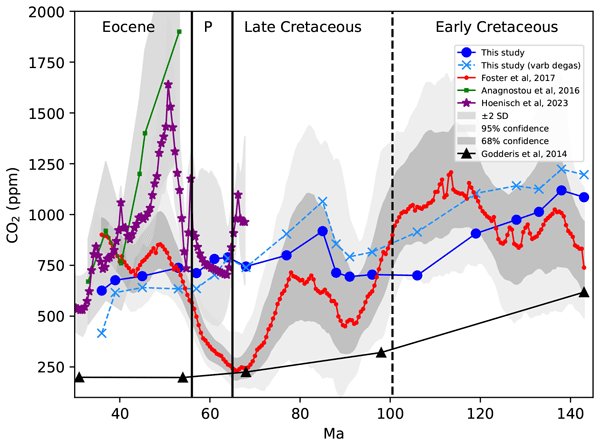
The breakdown of volcanic rocks by water helps balance the climate of the Earth by sequestering atmospheric CO2. The rate of CO2 sequestration is referred to as "weatherability". Our modelling study finds that continental position strongly impacts CO2 concentrations, that runoff strongly controls weatherability, that changes in weatherability may explain long-term trends in atmospheric CO2 concentrations, and that even relatively localised changes in weatherability may have global impacts.
Johan Liakka, Natalie S. Lord, Alan Kennedy-Asser, Daniel J. Lunt, Charles J. R. Williams, and Jens-Ove Näslund
Adv. Geosci., 65, 71–81, https://doi.org/10.5194/adgeo-65-71-2024, https://doi.org/10.5194/adgeo-65-71-2024, 2024
Short summary
Short summary
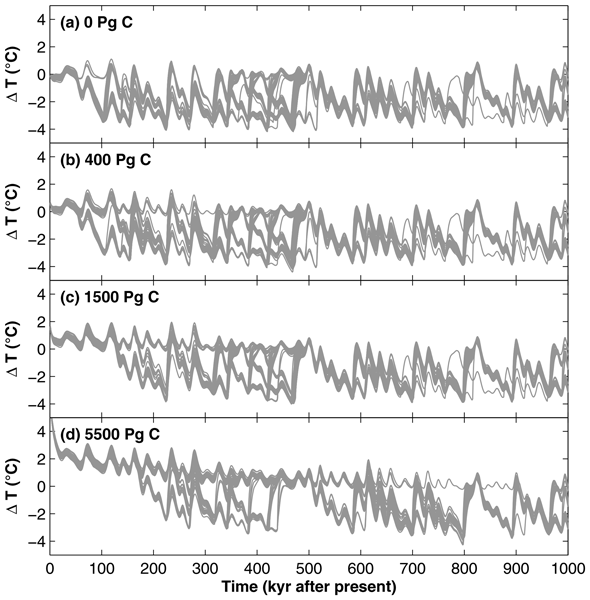
Future glaciations can affect the long-term safety of deep geological repositories for nuclear waste. This study introduces a simple method to assess frequency and duration of ice sheets over the next one million years at locations with past glaciations. The method considers uncertainties in human-caused CO2 emissions and climate change. It is easy to implement for any nuclear waste management organization that need to consider impacts of future ice sheets on long-term safety.
Yixuan Xie, Daniel J. Lunt, and Paul J. Valdes
Clim. Past, 20, 2561–2585, https://doi.org/10.5194/cp-20-2561-2024, https://doi.org/10.5194/cp-20-2561-2024, 2024
Short summary
Short summary
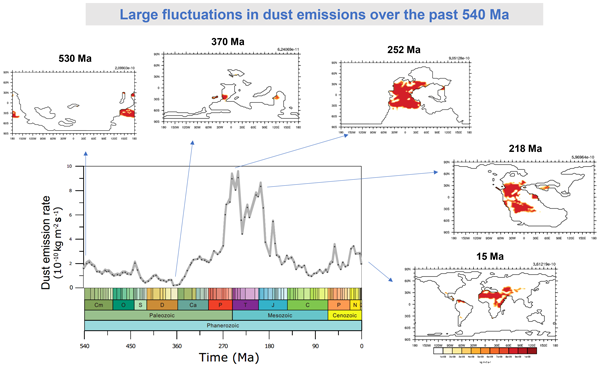
Desert dust plays a crucial role in the climate system; while it is relatively well studied for the present day, we still lack knowledge on how it was in the past and on its underlying mechanism in the multi-million-year timescale of Earth’s history. For the first time, we simulate dust emissions using the newly developed DUSTY1.0 model over the past 540 million years with a temporal resolution of ~5 million years. We find that palaeogeography is the primary control of these variations.
Xin Ren, Daniel J. Lunt, Erica Hendy, Anna von der Heydt, Ayako Abe-Ouchi, Bette Otto-Bliesner, Charles J. R. Williams, Christian Stepanek, Chuncheng Guo, Deepak Chandan, Gerrit Lohmann, Julia C. Tindall, Linda E. Sohl, Mark A. Chandler, Masa Kageyama, Michiel L. J. Baatsen, Ning Tan, Qiong Zhang, Ran Feng, Stephen Hunter, Wing-Le Chan, W. Richard Peltier, Xiangyu Li, Youichi Kamae, Zhongshi Zhang, and Alan M. Haywood
Clim. Past, 19, 2053–2077, https://doi.org/10.5194/cp-19-2053-2023, https://doi.org/10.5194/cp-19-2053-2023, 2023
Short summary
Short summary
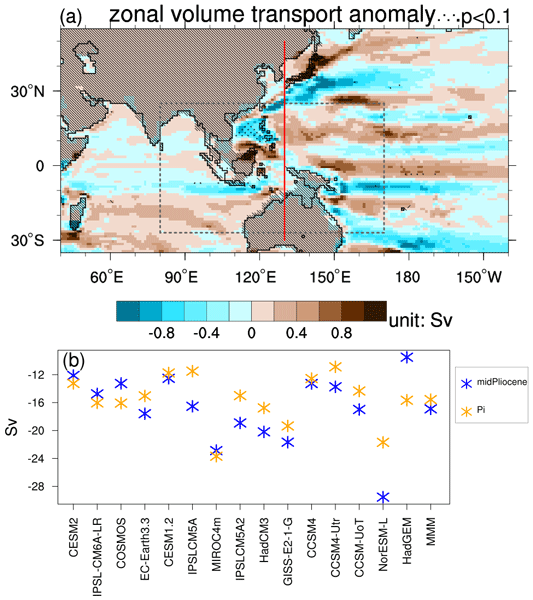
We investigate the Maritime Continent climate in the mid-Piacenzian warm period and find it is warmer and wetter and the sea surface salinity is lower compared with preindustrial period. Besides, the fresh and warm water transfer through the Maritime Continent was stronger. In order to avoid undue influence from closely related models in the multimodel results, we introduce a new metric, the multi-cluster mean, which could reveal spatial signals that are not captured by the multimodel mean.
Julia E. Weiffenbach, Michiel L. J. Baatsen, Henk A. Dijkstra, Anna S. von der Heydt, Ayako Abe-Ouchi, Esther C. Brady, Wing-Le Chan, Deepak Chandan, Mark A. Chandler, Camille Contoux, Ran Feng, Chuncheng Guo, Zixuan Han, Alan M. Haywood, Qiang Li, Xiangyu Li, Gerrit Lohmann, Daniel J. Lunt, Kerim H. Nisancioglu, Bette L. Otto-Bliesner, W. Richard Peltier, Gilles Ramstein, Linda E. Sohl, Christian Stepanek, Ning Tan, Julia C. Tindall, Charles J. R. Williams, Qiong Zhang, and Zhongshi Zhang
Clim. Past, 19, 61–85, https://doi.org/10.5194/cp-19-61-2023, https://doi.org/10.5194/cp-19-61-2023, 2023
Short summary
Short summary
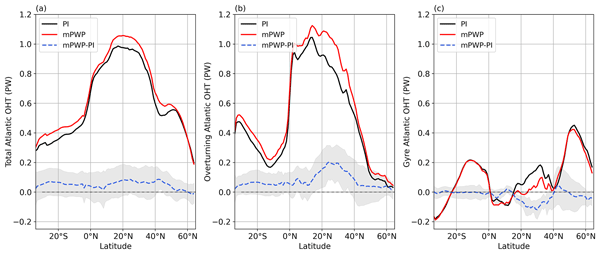
We study the behavior of the Atlantic Meridional Overturning Circulation (AMOC) in the mid-Pliocene. The mid-Pliocene was about 3 million years ago and had a similar CO2 concentration to today. We show that the stronger AMOC during this period relates to changes in geography and that this has a significant influence on ocean temperatures and heat transported northwards by the Atlantic Ocean. Understanding the behavior of the mid-Pliocene AMOC can help us to learn more about our future climate.
Zixuan Han, Qiong Zhang, Qiang Li, Ran Feng, Alan M. Haywood, Julia C. Tindall, Stephen J. Hunter, Bette L. Otto-Bliesner, Esther C. Brady, Nan Rosenbloom, Zhongshi Zhang, Xiangyu Li, Chuncheng Guo, Kerim H. Nisancioglu, Christian Stepanek, Gerrit Lohmann, Linda E. Sohl, Mark A. Chandler, Ning Tan, Gilles Ramstein, Michiel L. J. Baatsen, Anna S. von der Heydt, Deepak Chandan, W. Richard Peltier, Charles J. R. Williams, Daniel J. Lunt, Jianbo Cheng, Qin Wen, and Natalie J. Burls
Clim. Past, 17, 2537–2558, https://doi.org/10.5194/cp-17-2537-2021, https://doi.org/10.5194/cp-17-2537-2021, 2021
Short summary
Short summary
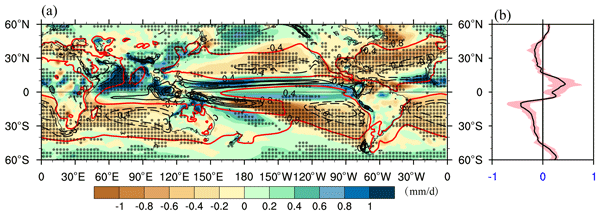
Understanding the potential processes responsible for large-scale hydrological cycle changes in a warmer climate is of great importance. Our study implies that an imbalance in interhemispheric atmospheric energy during the mid-Pliocene could have led to changes in the dynamic effect, offsetting the thermodynamic effect and, hence, altering mid-Pliocene hydroclimate cycling. Moreover, a robust westward shift in the Pacific Walker circulation can moisten the northern Indian Ocean.
Arthur M. Oldeman, Michiel L. J. Baatsen, Anna S. von der Heydt, Henk A. Dijkstra, Julia C. Tindall, Ayako Abe-Ouchi, Alice R. Booth, Esther C. Brady, Wing-Le Chan, Deepak Chandan, Mark A. Chandler, Camille Contoux, Ran Feng, Chuncheng Guo, Alan M. Haywood, Stephen J. Hunter, Youichi Kamae, Qiang Li, Xiangyu Li, Gerrit Lohmann, Daniel J. Lunt, Kerim H. Nisancioglu, Bette L. Otto-Bliesner, W. Richard Peltier, Gabriel M. Pontes, Gilles Ramstein, Linda E. Sohl, Christian Stepanek, Ning Tan, Qiong Zhang, Zhongshi Zhang, Ilana Wainer, and Charles J. R. Williams
Clim. Past, 17, 2427–2450, https://doi.org/10.5194/cp-17-2427-2021, https://doi.org/10.5194/cp-17-2427-2021, 2021
Short summary
Short summary
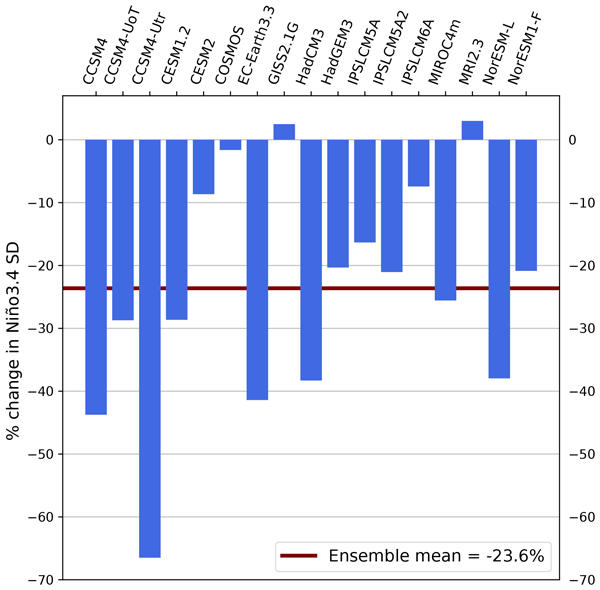
In this work, we have studied the behaviour of El Niño events in the mid-Pliocene, a period of around 3 million years ago, using a collection of 17 climate models. It is an interesting period to study, as it saw similar atmospheric carbon dioxide levels to the present day. We find that the El Niño events were less strong in the mid-Pliocene simulations, when compared to pre-industrial climate. Our results could help to interpret El Niño behaviour in future climate projections.
Katherine A. Crichton, Andy Ridgwell, Daniel J. Lunt, Alex Farnsworth, and Paul N. Pearson
Clim. Past, 17, 2223–2254, https://doi.org/10.5194/cp-17-2223-2021, https://doi.org/10.5194/cp-17-2223-2021, 2021
Short summary
Short summary
The middle Miocene (15 Ma) was a period of global warmth up to 8 °C warmer than present. We investigate changes in ocean circulation and heat distribution since the middle Miocene and the cooling to the present using the cGENIE Earth system model. We create seven time slices at ~2.5 Myr intervals, constrained with paleo-proxy data, showing a progressive reduction in atmospheric CO2 and a strengthening of the Atlantic Meridional Overturning Circulation.
Charles J. R. Williams, Alistair A. Sellar, Xin Ren, Alan M. Haywood, Peter Hopcroft, Stephen J. Hunter, William H. G. Roberts, Robin S. Smith, Emma J. Stone, Julia C. Tindall, and Daniel J. Lunt
Clim. Past, 17, 2139–2163, https://doi.org/10.5194/cp-17-2139-2021, https://doi.org/10.5194/cp-17-2139-2021, 2021
Short summary
Short summary
Computer simulations of the geological past are an important tool to improve our understanding of climate change. We present results from a simulation of the mid-Pliocene (approximately 3 million years ago) using the latest version of the UK’s climate model. The simulation reproduces temperatures as expected and shows some improvement relative to previous versions of the same model. The simulation is, however, arguably too warm when compared to other models and available observations.
Ellen Berntell, Qiong Zhang, Qiang Li, Alan M. Haywood, Julia C. Tindall, Stephen J. Hunter, Zhongshi Zhang, Xiangyu Li, Chuncheng Guo, Kerim H. Nisancioglu, Christian Stepanek, Gerrit Lohmann, Linda E. Sohl, Mark A. Chandler, Ning Tan, Camille Contoux, Gilles Ramstein, Michiel L. J. Baatsen, Anna S. von der Heydt, Deepak Chandan, William Richard Peltier, Ayako Abe-Ouchi, Wing-Le Chan, Youichi Kamae, Charles J. R. Williams, Daniel J. Lunt, Ran Feng, Bette L. Otto-Bliesner, and Esther C. Brady
Clim. Past, 17, 1777–1794, https://doi.org/10.5194/cp-17-1777-2021, https://doi.org/10.5194/cp-17-1777-2021, 2021
Short summary
Short summary
The mid-Pliocene Warm Period (~ 3.2 Ma) is often considered an analogue for near-future climate projections, and model results from the PlioMIP2 ensemble show an increase of rainfall over West Africa and the Sahara region compared to pre-industrial conditions. Though previous studies of future projections show a west–east drying–wetting contrast over the Sahel, these results indicate a uniform rainfall increase over the Sahel in warm climates characterized by increased greenhouse gas forcing.
Paul J. Valdes, Christopher R. Scotese, and Daniel J. Lunt
Clim. Past, 17, 1483–1506, https://doi.org/10.5194/cp-17-1483-2021, https://doi.org/10.5194/cp-17-1483-2021, 2021
Short summary
Short summary
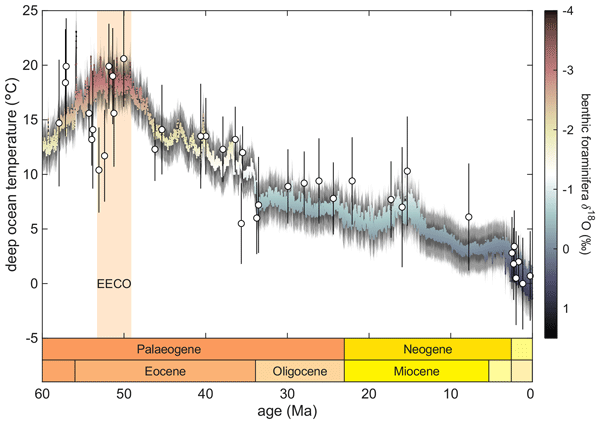
Deep ocean temperatures are widely used as a proxy for global mean surface temperature in the past, but the underlying assumptions have not been tested. We use two unique sets of 109 climate model simulations for the last 545 million years to show that the relationship is valid for approximately the last 100 million years but breaks down for older time periods when the continents (and hence ocean circulation) are in very different positions.
Daniel J. Lunt, Deepak Chandan, Alan M. Haywood, George M. Lunt, Jonathan C. Rougier, Ulrich Salzmann, Gavin A. Schmidt, and Paul J. Valdes
Geosci. Model Dev., 14, 4307–4317, https://doi.org/10.5194/gmd-14-4307-2021, https://doi.org/10.5194/gmd-14-4307-2021, 2021
Short summary
Short summary
Often in science we carry out experiments with computers in which several factors are explored, for example, in the field of climate science, how the factors of greenhouse gases, ice, and vegetation affect temperature. We can explore the relative importance of these factors by
swapping in and outdifferent values of these factors, and can also carry out experiments with many different combinations of these factors. This paper discusses how best to analyse the results from such experiments.
Zhongshi Zhang, Xiangyu Li, Chuncheng Guo, Odd Helge Otterå, Kerim H. Nisancioglu, Ning Tan, Camille Contoux, Gilles Ramstein, Ran Feng, Bette L. Otto-Bliesner, Esther Brady, Deepak Chandan, W. Richard Peltier, Michiel L. J. Baatsen, Anna S. von der Heydt, Julia E. Weiffenbach, Christian Stepanek, Gerrit Lohmann, Qiong Zhang, Qiang Li, Mark A. Chandler, Linda E. Sohl, Alan M. Haywood, Stephen J. Hunter, Julia C. Tindall, Charles Williams, Daniel J. Lunt, Wing-Le Chan, and Ayako Abe-Ouchi
Clim. Past, 17, 529–543, https://doi.org/10.5194/cp-17-529-2021, https://doi.org/10.5194/cp-17-529-2021, 2021
Short summary
Short summary
The Atlantic Meridional Overturning Circulation (AMOC) is an important topic in the Pliocene Model Intercomparison Project. Previous studies have suggested a much stronger AMOC during the Pliocene than today. However, our current multi-model intercomparison shows large model spreads and model–data discrepancies, which can not support the previous hypothesis. Our study shows good consistency with future projections of the AMOC.
David K. Hutchinson, Helen K. Coxall, Daniel J. Lunt, Margret Steinthorsdottir, Agatha M. de Boer, Michiel Baatsen, Anna von der Heydt, Matthew Huber, Alan T. Kennedy-Asser, Lutz Kunzmann, Jean-Baptiste Ladant, Caroline H. Lear, Karolin Moraweck, Paul N. Pearson, Emanuela Piga, Matthew J. Pound, Ulrich Salzmann, Howie D. Scher, Willem P. Sijp, Kasia K. Śliwińska, Paul A. Wilson, and Zhongshi Zhang
Clim. Past, 17, 269–315, https://doi.org/10.5194/cp-17-269-2021, https://doi.org/10.5194/cp-17-269-2021, 2021
Short summary
Short summary
The Eocene–Oligocene transition was a major climate cooling event from a largely ice-free world to the first major glaciation of Antarctica, approximately 34 million years ago. This paper reviews observed changes in temperature, CO2 and ice sheets from marine and land-based records at this time. We present a new model–data comparison of this transition and find that CO2-forced cooling provides the best explanation of the observed global temperature changes.
Daniel J. Lunt, Fran Bragg, Wing-Le Chan, David K. Hutchinson, Jean-Baptiste Ladant, Polina Morozova, Igor Niezgodzki, Sebastian Steinig, Zhongshi Zhang, Jiang Zhu, Ayako Abe-Ouchi, Eleni Anagnostou, Agatha M. de Boer, Helen K. Coxall, Yannick Donnadieu, Gavin Foster, Gordon N. Inglis, Gregor Knorr, Petra M. Langebroek, Caroline H. Lear, Gerrit Lohmann, Christopher J. Poulsen, Pierre Sepulchre, Jessica E. Tierney, Paul J. Valdes, Evgeny M. Volodin, Tom Dunkley Jones, Christopher J. Hollis, Matthew Huber, and Bette L. Otto-Bliesner
Clim. Past, 17, 203–227, https://doi.org/10.5194/cp-17-203-2021, https://doi.org/10.5194/cp-17-203-2021, 2021
Short summary
Short summary
This paper presents the first modelling results from the Deep-Time Model Intercomparison Project (DeepMIP), in which we focus on the early Eocene climatic optimum (EECO, 50 million years ago). We show that, in contrast to previous work, at least three models (CESM, GFDL, and NorESM) produce climate states that are consistent with proxy indicators of global mean temperature and polar amplification, and they achieve this at a CO2 concentration that is consistent with the CO2 proxy record.
Cited articles
Bentley, M. J., Ó Cofaigh, C., Anderson, J. B., Conway, H., Davies, B., Graham, A. G. C., Hillenbrand, C.-D., Hodgson, D. A., Jamieson, S. S. R., Larter, R. D., Mackintosh, A., Smith, J. A., Verleyen, E., Ackert, R. P., Bart, P. J., Berg, S., Brunstein, D., Canals, M., Colhoun, E. A., Crosta, X., Dickens, W. A., Domack, E., Dowdeswell, J. A., Dunbar, R., Ehrmann, W., Evans, J., Favier, V., Fink, D., Fogwill, C. J., Glasser, N. F., Gohl, K., Golledge, N. R., Goodwin, I., Gore, D. B., Greenwood, S. L., Hall, B. L., Hall, K., Hedding, D. W., Hein, A. S., Hocking, E. P., Jakobsson, M., Johnson, J. S., Jomelli, V., Jones, R. S., Klages, J. P., Kristoffersen, Y., Kuhn, G., Leventer, A., Licht, K., Lilly, K., Lindow, J., Livingstone, S. J., Massé, G., McGlone, M. S., McKay, R. M., Melles, M., Miura, H., Mulvaney, R., Nel, W., Nitsche, F. O., O'Brien, P. E., Post, A. L., Roberts, S. J., Saunders, K. M., Selkirk, P. M., Simms, A. R., Spiegel, C., Stolldorf, T. D., Sugden, D. E., van der Putten, N., van Ommen, T., Verfaillie, D., Vyverman, W., Wagner, B., White, D. A., Witus, A. E., and Zwartz, D.: A community-based geological reconstruction of Antarctic Ice Sheet deglaciation since the Last Glacial Maximum, Quaternary Science Reviews, 100, 1–9, https://doi.org/10.1016/j.quascirev.2014.06.025, 2014. a
Collins, M., Tett, S. F. B., and Cooper, C.: The internal climate variability of HadCM3, a version of the Hadley Centre coupled model without flux adjustments, Climate Dynamics, 17, 61–81, https://doi.org/10.1007/s003820000094, 2001. a
Cox, M. D.: A primitive equation, 3-dimensional model of the ocean, GFDL Ocean Group Technical Report, 1, GFDL/Princeton Univ., https://cir.nii.ac.jp/crid/1571698599200199040 (last access: 23 October 2025), 1984. a
Eyring, V., Bony, S., Meehl, G. A., Senior, C. A., Stevens, B., Stouffer, R. J., and Taylor, K. E.: Overview of the Coupled Model Intercomparison Project Phase 6 (CMIP6) experimental design and organization, Geosci. Model Dev., 9, 1937–1958, https://doi.org/10.5194/gmd-9-1937-2016, 2016. a
Farnsworth, A., Valdes, P. J., Spicer, R. A., Ding, L., Witkowski, C., Lauretano, V., Su, T., Li, S., Li, S., and Zhou, Z.: Paleoclimate model-derived thermal lapse rates: Towards increasing precision in paleoaltimetry studies, Earth and Planetary Science Letters, 564, 116903, https://doi.org/10.1016/j.epsl.2021.116903, 2021. a
Fogwill, C. J., Phipps, S. J., Turney, C. S. M., and Golledge, N. R.: Sensitivity of the Southern Ocean to enhanced regional Antarctic ice sheet meltwater input, Earth's Future, 3, 317–329, https://doi.org/10.1002/2015EF000306, 2015. a, b, c
Fox-Kemper, B., Hewitt, H., Xiao, C., Aðalgeirsdóttir, G., Drijfhout, S. S., Edwards, T. L., Golledge, N. R., Hemer, M., Kopp, R. E., Krinner, G., Mix, A., Notz, D., Nowicki, S., Nurhati, I. S., Ruiz, L., Sallée, J.-B., Slangen, A. B., and Yu, Y.: Ocean, Cryosphere and Sea Level Change, in: Climate Change 2021 – The Physical Science Basis: Working Group I Contribution to the Sixth Assessment Report of the Intergovernmental Panel on Climate Change, edited by: Masson-Delmotte, V., Zhai, P., Pirani, A., Connors, S., Péan, C., Berger, S., Caud, N., Chen, Y., Goldfarb, L., Gomis, M., Huang, M., Leitzell, K., Lonnoy, E., Matthews, J., Maycock, T., Waterfield, T., Yelekçi, O., Yu, R., and Zhou, B., 1211–1362, Cambridge University Press, Cambridge, ISBN 978-1-00-915788-9, https://doi.org/10.1017/9781009157896.011, 2023. a, b, c, d, e, f
Frigola, A., Martin-Martinez, E., Moreno-Chamarro, E., Samsó, M., Loosvelt-Tomas, S., Bretonnière, P.-A., Kuznetsova, D., Lin, X., and Ortega, P.: The North Atlantic mean state in eddy-resolving coupled models: a multimodel study, EGUsphere [preprint], https://doi.org/10.5194/egusphere-2025-547, 2025. a, b
Gent, P. R. and McWilliams, J. C.: Isopycnal Mixing in Ocean Circulation Models, Journal of Physical Oceanography, https://journals.ametsoc.org/view/journals/phoc/20/1/1520-0485_1990_020_0150_imiocm_2_0_co_2.xml (last access: 23 October 2025), 1990. a
Golledge, N. R., Menviel, L., Carter, L., Fogwill, C. J., England, M. H., Cortese, G., and Levy, R. H.: Antarctic contribution to meltwater pulse 1A from reduced Southern Ocean overturning, Nat. Commun., 5, 5107, https://doi.org/10.1038/ncomms6107, 2014. a
Gordon, C., Cooper, C., Senior, C. A., Banks, H., Gregory, J. M., Johns, T. C., Mitchell, J. F. B., and Wood, R. A.: The simulation of SST, sea ice extents and ocean heat transports in a version of the Hadley Centre coupled model without flux adjustments, Climate Dynamics, 16, 147–168, https://doi.org/10.1007/s003820050010, 2000. a, b
Gregory, D., Kershaw, R., and Inness, P. M.: Parametrization of momentum transport by convection. II: Tests in single-column and general circulation models, Quarterly Journal of the Royal Meteorological Society, 123, 1153–1183, https://doi.org/10.1002/qj.49712354103, 1997. a
IMBIE team: Mass balance of the Antarctic Ice Sheet from 1992 to 2017, Nature, 558, 219–222, https://doi.org/10.1038/s41586-018-0179-y, 2018. a
Irvine, P. J., Gregoire, L. J., Lunt, D. J., and Valdes, P. J.: An efficient method to generate a perturbed parameter ensemble of a fully coupled AOGCM without flux-adjustment, Geosci. Model Dev., 6, 1447–1462, https://doi.org/10.5194/gmd-6-1447-2013, 2013. a
Johns, T. C., Gregory, J. M., Ingram, W. J., Johnson, C. E., Jones, A., Lowe, J. A., Mitchell, J. F. B., Roberts, D. L., Sexton, D. M. H., Stevenson, D. S., Tett, S. F. B., and Woodage, M. J.: Anthropogenic climate change for 1860 to 2100 simulated with the HadCM3 model under updated emissions scenarios, Climate Dynamics, 20, 583–612, https://doi.org/10.1007/s00382-002-0296-y, 2003. a
Kennedy-Asser, A. T., Lunt, D. J., Valdes, P. J., Ladant, J.-B., Frieling, J., and Lauretano, V.: Changes in the high-latitude Southern Hemisphere through the Eocene–Oligocene transition: a model–data comparison, Clim. Past, 16, 555–573, https://doi.org/10.5194/cp-16-555-2020, 2020. a
Ma, H., Wu, L., and Li, Z.: Impact of freshening over the Southern Ocean on ENSO, Atmospheric Science Letters, 14, 28–33, https://doi.org/10.1002/asl2.410, 2013. a
Meredith, M., Sommerkorn, M., Cassotta, S., Derksen, C., Ekaykin, A., Hollowed, A., Kofinas, G., Mackintosh, A., Melbourne-Thomas, J., Muelbert, M. M., Ottersen, G., Pritchard, H., and Schuur, E. A.: Polar regions, in: IPCC Special Report on the Ocean and Cryosphere in a Changing Climate, edited by: Pörtner, H.-O., Roberts, D. C., Masson-Delmotte, V., Zhai, P., Tignor, M., Poloczanska, E., Mintenbeck, K., Alegría, A., Nicolai, M., Okem, A., Petzold, J., Rama, B., and Weyer, N., Cambridge University Press, Cambridge, UK and New York, NY, USA, 203–320, https://doi.org/10.1017/9781009157964.005, 2019. a, b
Merino, N., Le Sommer, J., Durand, G., Jourdain, N. C., Madec, G., Mathiot, P., and Tournadre, J.: Antarctic icebergs melt over the Southern Ocean: Climatology and impact on sea ice, Ocean Modelling, 104, 99–110, https://doi.org/10.1016/j.ocemod.2016.05.001, 2016. a
Noble, T. L., Rohling, E. J., Aitken, A. R. A., Bostock, H. C., Chase, Z., Gomez, N., Jong, L. M., King, M. A., Mackintosh, A. N., McCormack, F. S., McKay, R. M., Menviel, L., Phipps, S. J., Weber, M. E., Fogwill, C. J., Gayen, B., Golledge, N. R., Gwyther, D. E., Hogg, A. M., Martos, Y. M., Pena-Molino, B., Roberts, J., van de Flierdt, T., and Williams, T.: The Sensitivity of the Antarctic Ice Sheet to a Changing Climate: Past, Present, and Future, Reviews of Geophysics, 58, e2019RG000663, https://doi.org/10.1029/2019RG000663, 2020. a, b, c
Park, W. and Latif, M.: Ensemble global warming simulations with idealized Antarctic meltwater input, Clim. Dyn., 52, 3223–3239, https://doi.org/10.1007/s00382-018-4319-8, 2019. a, b, c
Pope, V. D., Gallani, M. L., Rowntree, P. R., and Stratton, R. A.: The impact of new physical parametrizations in the Hadley Centre climate model: HadAM3, Climate Dynamics, 16, 123–146, https://doi.org/10.1007/s003820050009, 2000. a
Rasch, D. and Tiku, M. L. (Eds.): Robustness of Statistical Methods and Nonparametric Statistics, Springer Netherlands, Dordrecht, ISBN 978-94-009-6530-0, https://doi.org/10.1007/978-94-009-6528-7, 1984. a
Ren, X., Valdes, P., Lunt, D. J., Haywood, A. M., Hendy, E., Tindall, J. C., Ross, P., and Steinig, S.: Impact of Model Tuning on Simulated Mid-Pliocene Warming, 40, e2024PA004976, https://doi.org/10.1029/2024PA004976, 2025. a, b
Rignot, E., Mouginot, J., Scheuchl, B., van den Broeke, M., van Wessem, M. J., and Morlighem, M.: Four decades of Antarctic Ice Sheet mass balance from 1979–2017, Proceedings of the National Academy of Sciences, 116, 1095–1103, https://doi.org/10.1073/pnas.1812883116, 2019. a
Ross, P.: Deep ocean circulation during the early Eocene: A model-data comparison, Doctoral dissertation, University College London, https://doi.org/10.25560/115506, 2023. a
Schloesser, F., Friedrich, T., Timmermann, A., DeConto, R. M., and Pollard, D.: Antarctic iceberg impacts on future Southern Hemisphere climate, Nat. Clim. Chang., 9, 672–677, https://doi.org/10.1038/s41558-019-0546-1, 2019. a, b
Seidov, D., Barron, E., and Haupt, B. J.: Meltwater and the global ocean conveyor: northern versus southern connections, Global and Planetary Change, 30, 257–270, https://doi.org/10.1016/S0921-8181(00)00087-4, 2001. a, b, c
Smith, D. M., Cusack, S., Colman, A. W., Folland, C. K., Harris, G. R., and Murphy, J. M.: Improved Surface Temperature Prediction for the Coming Decade from a Global Climate Model, Science, 317, 796–799, https://doi.org/10.1126/science.1139540, 2007. a
Stott, P., Tett, S., Jones, G., Allen, M., Mitchell, J., and Jenkins, G.: External Control of 20th Century Temperature by Natural and Anthropogenic Forcings, Science, 290, 2133–2137, https://doi.org/10.1126/science.290.5499.2133, 2001. a
Stouffer, R. J., Seidov, D., and Haupt, B. J.: Climate Response to External Sources of Freshwater: North Atlantic versus the Southern Ocean, Journal of Climate, 20, 436–448, https://doi.org/10.1175/JCLI4015.1, 2007. a
Stuhne, G. R. and Peltier, W. R.: Reconciling the ICE-6G_C reconstruction of glacial chronology with ice sheet dynamics: The cases of Greenland and Antarctica, Journal of Geophysical Research: Earth Surface, 120, 1841–1865, https://doi.org/10.1002/2015JF003580, 2015. a
Swart, N. C., Martin, T., Beadling, R., Chen, J.-J., Danek, C., England, M. H., Farneti, R., Griffies, S. M., Hattermann, T., Hauck, J., Haumann, F. A., Jüling, A., Li, Q., Marshall, J., Muilwijk, M., Pauling, A. G., Purich, A., Smith, I. J., and Thomas, M.: The Southern Ocean Freshwater Input from Antarctica (SOFIA) Initiative: scientific objectives and experimental design, Geosci. Model Dev., 16, 7289–7309, https://doi.org/10.5194/gmd-16-7289-2023, 2023. a, b, c, d, e, f, g, h, i, j, k, l, m, n, o, p
Valdes, P. J., Armstrong, E., Badger, M. P. S., Bradshaw, C. D., Bragg, F., Crucifix, M., Davies-Barnard, T., Day, J. J., Farnsworth, A., Gordon, C., Hopcroft, P. O., Kennedy, A. T., Lord, N. S., Lunt, D. J., Marzocchi, A., Parry, L. M., Pope, V., Roberts, W. H. G., Stone, E. J., Tourte, G. J. L., and Williams, J. H. T.: The BRIDGE HadCM3 family of climate models: HadCM3@Bristol v1.0, Geosci. Model Dev., 10, 3715–3743, https://doi.org/10.5194/gmd-10-3715-2017, 2017. a, b, c, d, e, f, g, h, i, j, k, l, m, n, o, p, q, r
Visbeck, M., Marshall, J., Haine, T., and Spall, M.: Specification of Eddy Transfer Coefficients in Coarse-Resolution Ocean Circulation Models, Journal of Physical Oceanography, https://journals.ametsoc.org/view/journals/phoc/27/3/1520-0485_1997_027_0381_soetci_2.0.co_2.xml (last access: 23 October 2025), 1997. a
Williams, C. J. R., Sellar, A. A., Ren, X., Haywood, A. M., Hopcroft, P., Hunter, S. J., Roberts, W. H. G., Smith, R. S., Stone, E. J., Tindall, J. C., and Lunt, D. J.: Simulation of the mid-Pliocene Warm Period using HadGEM3: experimental design and results from model–model and model–data comparison, Clim. Past, 17, 2139–2163, https://doi.org/10.5194/cp-17-2139-2021, 2021. a
Zika, J. D., England, M. H., and Sijp, W. P.: The Ocean Circulation in Thermohaline Coordinates, Journal of Physical Oceanography, https://doi.org/10.1175/JPO-D-11-0139.1, 2012. a
Short summary
The Antarctic Ice Sheet is melting and adding fresh water into the Southern Ocean, affecting the global climate system. Here, we conduct model experiments in which water is input into the Southern Ocean. We find a significant response of the climate system to this meltwater; however, the manner in which the Antarctic Ice Sheet loses mass does not strongly control this response. The implications are that Antarctic meltwater should be included in future climate model projections.
The Antarctic Ice Sheet is melting and adding fresh water into the Southern Ocean, affecting the...